World

Stock markets rise as Fed set to hike rate

Stock markets rose on Tuesday as the US Federal Reserve began a two-day meeting that is expected to conclude with a big rate increase to tame decades-high inflation.

Central banks worldwide are tightening borrowing costs despite concerns such action could hamper financial recovery from the pandemic and even push major economies into recession.

The US central bank is expected to lift borrowing costs by half a percentage point for the first time since 2000.

With the increase widely forecast, investors will be closely looking for clues on the outlook for futures rate rises after consumer prices accelerated to 8.5 percent in March, the highest level in more than 40 years.

“The markets remain edgy, as the Fed is expected to be aggressive in this monetary policy tightening cycle,” said analysts at Charles Schwab investment firm.

“Moreover, sentiment continues to be hampered by the ongoing war in Ukraine, the recent jump in interest rates, the continued rally in the US dollar, and the economic impact of the covid lockdowns in China,” they wrote.

On Tuesday, the Reserve Bank of Australia lifted interest rates 25 basis points, the first hike since 2010 and by more than expected. Officials also indicated further increases were in the pipeline.

The move sent the Australian dollar briefly rallying more than one percent against the greenback before settling back slightly. 

Victoria Scholar, head of investment at Interactive Investor, said the Bank of England is expected to announce another rate hike on Thursday to its highest level since 2009.

Wall Street was up in midday trading, with the Dow Jones Industrial Average 0.7 percent higher, the S&P 500 gaining one percent and the tech-heavy Nasdaq rising by 0.6 percent.

European markets finished higher, with London up 0.2 percent, Paris adding 0.8 percent and Frankfurt gaining 07 percent following sharp losses Monday.

Traders continued to pore over earnings results from some of the world’s biggest companies.

US drug maker Pfizer reported a 77-percent jump in first quarter revenue thanks to its Covid vaccine, though it lowered its full-year profit forecast due in part of shifts in foreign exchange.

– Oil down –

British energy giant BP said its decision to pull out of Russia as a result of the war in Ukraine pushed it deep into the red in the first three months of this year.

But its underlying performance was strong thanks to a recent surge in oil and gas prices.

On Tuesday, crude futures declined ahead of a regular meeting this week of OPEC+.

The body comprising the Organization of Petroleum Exporting Countries plus Russia and other oil-producing nations must decide on output policy amid tight supply fears triggered by the Ukraine war.

The European Union is preparing a Russian oil embargo but some countries highly dependent on Moscow’s crude are seeking opt-outs from the possible ban.

China’s strict Covid lockdown has weighed on crude prices due to concerns about demand in the world’s top importer of oil.

– Key figures at around 1600 GMT –

New York – Dow: UP 0.7 percent at 33,306.99 points

London – FTSE 100: UP 0.2 percent at 7,561.33 (close)

Frankfurt – DAX: UP 0.7 percent at 14,039.47 (close)

Paris – CAC 40: UP 0.8 percent at 6,476.18 (close)

EURO STOXX 50: UP 0.8 percent at 3,761.19

Hong Kong – Hang Seng Index: UP 0.1 percent at 21,101.89 (close)

Tokyo – Nikkei 225: Closed for a holiday

Shanghai – Composite: Closed for a holiday

Euro/dollar: UP at $1.0519 from $1.0506 on Monday

Pound/dollar: UP at $1.2498 from $1.2489

Euro/pound: UP at 84.16 pence from 84.09 pence

Dollar/yen: UP at 130.17 yen from 130.16 yen

Brent North Sea crude: DOWN 1.1 percent at $106.37 per barrel

West Texas Intermediate: DOWN 1.3 percent at $103.82 per barrel

Civilians reach safety as Russia renews assault on Mariupol plant

Russian forces launched a major assault Tuesday on the Azovstal steel plant, the last hold-out of Ukrainian forces in the devastated southern port city of Mariupol, as 101 civilians who had been trapped in the site for weeks were finally brought to safety.

“We are so thankful for everyone who helped us. There was a moment we lost hope, we thought everyone forgot about us,” evacuee Anna Zaitseva told AFP after arriving in the Ukrainian-held city of Zaporizhzhia, her six-month old baby in her arms.

The United Nations and Red Cross said 101 people were evacuated from the maze of Soviet-era tunnels underneath the sprawling Azovstal plant as part of a five-day operation. 

Another 58 people joined their convoy to Zaporizhzhia from the city of Mangush, outside Mariupol, said Ostan Lubrani, the UN’s Humanitarian coordinator for Ukraine.

She warned there “may be more civilians who remain trapped” in Azovstal, saying the UN was ready to return to bring them to safety.

But Russian forces on Tuesday resumed attacks on the steel plant, where the Ukrainians fighters are making their last stand in Mariupol after almost constant bombardment since Moscow’s invasion on February 24.

– ‘We don’t live, we survive’ –

“A powerful assault on the territory of the Azovstal plant is underway with support from armoured vehicles and tanks,” said Sviatoslav Palamar, deputy commander of Ukraine’s Azov military unit.

Russian forces are also attempting “to land a large number of infantry by boat,” he said, calling for “immediate” efforts to evacuate remaining civilians.

The Russian army confirmed its forces and pro-Moscow separatists were targeting Azovstal with artillery and planes, accusing Azov members and other Ukrainian troops of using a pause in fighting to take up combat positions.

The residents of Mariupol, a strategic port in southern Ukraine, have been living in desperate conditions without food, water and cut off from communications from the outside world.

The city is now largely calm, AFP journalists saw on a recent press tour organised by Russian forces, with the remaining locals emerging from hiding to a ruined city.

Daily life is dominated by the hunt for the most basic of essentials, they say.

“We don’t live, we survive,” said Irina, a 30-year-old video game designer, as she gathered food and water from an aid distribution point. 

– Ukraine’s ‘finest hour’ –

The war in Ukraine has killed thousands of people and displaced more than 13 million, creating the worst refugee crisis in Europe since World War II.

Western countries have backed Ukraine with cash and weapons while imposing unprecedented sanctions against Russia in a so far failed bid to make President Vladimir Putin pull back.

British Prime Minister Boris Johnson on Tuesday pledged another £300 million ($376 million, 358 million euros) in military aid, as he became the first foreign leader to address Ukraine’s parliament since the conflict began.

Speaking via videolink, the premier evoked Britain’s fight against the Nazis in World War II in hailing Kyiv’s resistence as its “finest hour”, and vowed to help ensure “no-one will ever dare to attack you again”.

The European Commission was meanwhile set Tuesday to put to member states a new package of measures, including a phased-out ban on Russian oil, officials said.

The package will also target Russia’s largest bank, Sberbank, which will be excluded from the global banking communications system SWIFT.

– Deadly factory strike –

In the early weeks of the invasion, Russian forces encircled Ukraine’s capital Kyiv but have shifted to the east, including largely Russian-speaking areas, and south.

Ukraine reported attacks on Tuesday in and around Kharkiv, in the Zaporizhzhia and Donetsk regions.

At least 10 people were killed and 15 were wounded in a Russian strike on a  factory in the east Ukrainian city Avdiivka, the local governor said on social media. 

Russia’s defence ministry meanwhile said its forces had struck a logistics centre at a military airfield in the region around the Black Sea port of Odessa, used for the delivery of foreign-made weapons.

Storage facilities containing Turkey’s Bayraktar drones as well as missiles and ammunition from the United States and Europe have been destroyed, it said.

East of Odessa, the centre of Mykolayiv was also hit overnight, according to the Ukrainian presidency, while officials said investigations are underway into possible “torture and murder” during Russia’s occupation of the region.

– ‘Halt weapons to Ukraine’ –

Ukrainian prosecutors say they have pinpointed more than 8,000 war crimes carried out by Russian troops and are investigating 10 Russian soldiers for suspected atrocities in the town of Bucha, near Kyiv.

In a phone call with French President Emmanuel Macron on Tuesday, Putin accused Ukrainian forces of committing war crimes and claimed the EU was “ignoring” them, according to the Kremlin.

Putin told Macron “the West could help stop these atrocities by putting relevant pressure on the Kyiv authorities, as well as halting the supply of weapons to Ukraine”.

Putin also said Kyiv was not ready for “serious work” on ending the conflict.

Elsewhere in eastern Ukraine, the Ukrainian military said Russians were continuing to advance towards Lyman and Sloviansk, a major urban hub in the eastern Donbas region whose capture would be a significant Russian gain.

Ukrainian soldiers in Lyman told AFP they have rigged with explosives a railway bridge over the Donets river on the way to Sloviansk, and were waiting for orders to blow it up.

“It’s never easy to destroy one of your own pieces of infrastructure. But between saving a bridge or protecting a city, there’s no question at all,” said one, going by the nom de guerre of “The Engineer”.

The United States warned on Monday that Moscow was preparing imminently to annex the eastern regions of Lugansk and Donetsk, planning to “engineer referenda” to join Russia sometime in mid-May.

Pro-Russian separatists in the two regions declared independence in 2014, but Moscow has so far stopped short of formally incorporating them as it did that year with the Crimean peninsula. 

burs-ar/yad

French left closes ranks to hobble Macron in parliamentary vote

France’s left-of-centre parties were on Tuesday close to a broad alliance for June parliamentary polls, hoping that a united front can offer stiff opposition in President Emmanuel Macron’s second term after a disappointing presidential election.

Greens and Communists have fallen into line behind the hard-left France Unbowed (LFI) movement, and the once-mighty Socialist Party (PS) is expected to follow.

“The different parts of the left are not as irreconcilable as all that,” PS negotiator Pierre Jouvet told Europe 1 radio.

He said the talks were “a few steps from a historic agreement” — while acknowledging that there were “some adjustments” to party programmes and constituency allocations to fine-tune before a deal was sealed.

“There are some sticking points, sometimes on substance but mostly about seats,” said LFI negotiator Manuel Bompard.

A strong showing from LFI leader Jean-Luc Melenchon saw him fall just short of reaching the second round run-off in the April presidential vote, while other left candidates were all but wiped out.

After Macron’s presidential win, Melenchon immediately called on voters to “elect him prime minister” and hand the left a National Assembly majority to block the centrist’s plans.

Surveys from recent days suggest most French voters would prefer Macron, widely attacked for his pro-business reforms seen as favouring the rich, to “cohabit” with a prime minister from another political school of thought.

Like the presidential election, the legislative polls in France’s 577 constituencies work in a two-round system — meaning alliances off the bat offer the best chance of making it to the run-off.

“I think that if we’re being reasonable, we have to get things finalised today” with just weeks until the first round on June 12, LFI lawmaker Eric Coquerel said.

– Fear of ‘disappearance’ –

At stake in the negotiations are important policy issues — with LFI’s proposal to unilaterally “disobey” the provisions of some European Union treaties a particular sticking point for more moderate potential allies.

Last week, the PS indicated that it could broadly accept 12 of Melenchon’s core policy proposals, including raising the minimum wage, reducing the retirement age to 60 and rolling back labour market reforms.

Party leaders appear determined to press on despite opposition from heavyweights like former president Francois Hollande, in power just five years ago before the Socialists’ precipitous fall from grace.

He has warned the proposed left-wing tie-up could amount to the “disappearance” of the Socialists.

And his former prime minister Bernard Cazeneuve wrote on Facebook that party leaders had “lost their compass”, warning he would leave the PS if the deal went ahead.

A tie-up with LFI “would confirm the repudiation of our convictions and the forgetting of what we have accomplished,” he said.

Other PS figures have called for any alliance deal to be subject to a vote by members — so far brushed off by the party’s negotiators.

Behind the euphoria at overcoming the traditionally fragmented French left’s differences, the junior partners are also eyeing how constituencies will be parcelled out between the parties, with each hoping to run on the united ticket in a maximum of “winnable” seats.

The Greens will run for 100 seats, with 30 seen as winnable, while the PS hopes to add to its existing parliamentary group of 25 MPs.

“Unbelievable that all these people supposedly shot through with principles are ready to abandon all convictions… for a handful of seats,” Sacha Houlie, a pro-Macron MP, tweeted on Monday.

“And they want to govern our country?” he added, potentially foreshadowing the majority’s line of attack on its new opponents.

Spanish government on defensive over spyware claims

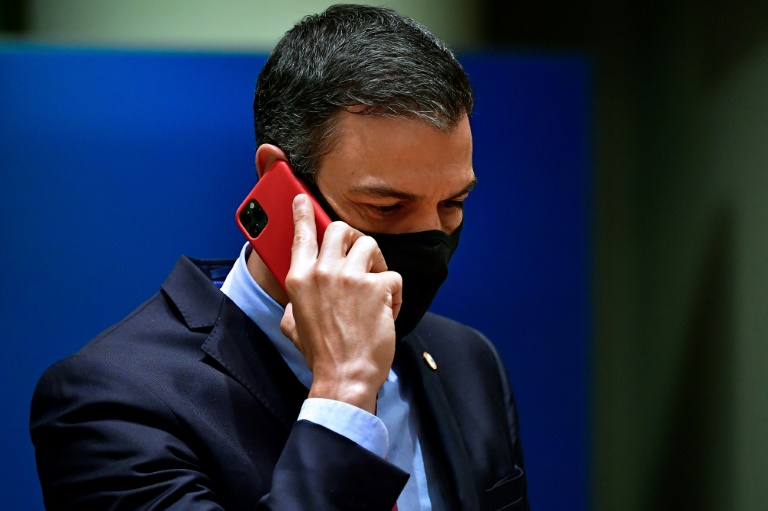
Spain’s fragile coalition government was on the defensive Tuesday over its announcement that the mobile phones of the premier and defence minister were tapped using Pegasus spyware.

Felix Bolanos, a cabinet minister, told a news conference on Monday that the phones of Socialist Prime Minister Pedro Sanchez and Defence Minister Margarita Robles were hacked last year using the spyware made by Israel’s NSO Group.

The disclosure followed accusations from Catalonia’s regional government that Spain’s intelligence services used Pegasus to hack the mobile phone of dozens of separatist politicians.

According to Canadian cybersecurity watchdog Citizen Lab, the phones of over 60 people linked to the Catalan separatist movement had been targets of spyware after a failed independence bid in 2017.

The allegations have poisoned the central government’s relations with Catalan separatist party, ERC. 

Sanchez’s minority government relies on the ERC to pass legislation and remain in power until the next general election due at the end of 2023.

The ERC and the conservative opposition on Tuesday questioned the timing of the disclosure that Sanchez’s phone had been hacked.

The government has “suddenly gone from being the alleged perpetrator to victim. It has no credibility,” said Gabriel Rufian, ERC’s bench leader in parliament.

“There are a ton of unanswered questions. The explanations given were pathetic,” he told a news conference, adding the affair could “put an end to the legislature”.

– Bid to ‘earn sympathy’ –

Esteban Gonzalez Pons, a senior official with the main opposition conservative Popular Party (PP), accused the government of “announcing a national security breach with a one-year delay to earn sympathy” from the Catalans.

During an interview with news radio Ser on Tuesday, Bolanos said the government was only informed of the phone hacking “this weekend”.

Bolanos said on Monday the phone hacking was an “external attack”, adding the details of the incidents in May and June 2021 had been sent to Spain’s high court for investigation.

Asked during the radio interview if Morocco was responsible, he said it was important “not to make assumptions”.

“We don’t know who it is,” he added.

At the time of the hacking, Madrid and Rabat were engulfed in a diplomatic crisis sparked by Spain’s decision to host a Western Sahara independence leader for medical treatment.

An investigation published last year by 17 media organisations accused Morocco of using Pegasus, which infiltrates mobile phones to extract data or activate a camera or microphone to spy on their owners. Rabat denies the allegations.

NSO Group claims the software is only sold to government agencies to target criminals and terrorists, with the green light of Israeli authorities.

The company has been criticised by global rights groups for violating users’ privacy around the world and it faces lawsuits from major tech firms such as Apple and Microsoft.

Ukrainians decry 'suffering' in Russian-controlled areas

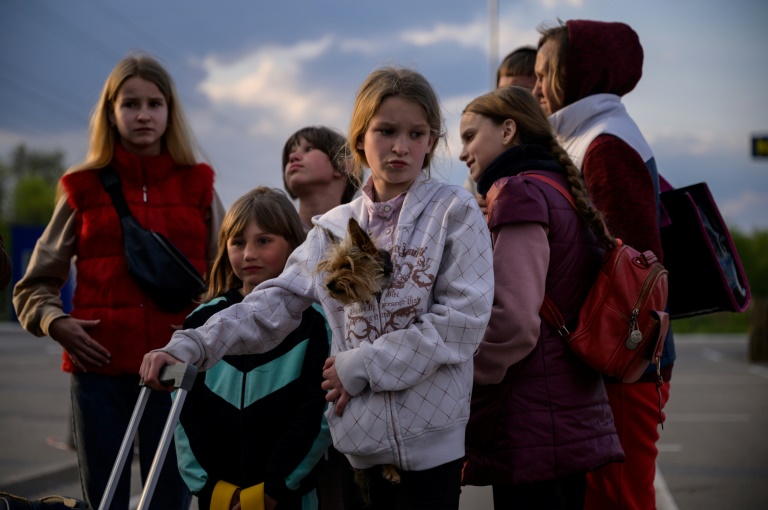
Ukrainian civilians fleeing Russian-occupied parts of the country allege violence, extortion and theft at the hands of Russian troops, not to mention daily humiliation at checkpoints.

“We suffered and suffered and suffered,” said Igor Kydryavtsev, one of 10 Ukrainians who spoke to AFP about living under Russian control in southern Ukraine’s Kherson region for around two months.

“If you say a single word in Ukrainian and someone hears you and tells them, they come to your house and take you away,” he said.

“Some come back, others don’t. You can’t live like that.”

Kydryavtsev, 35, is with his wife and daughter in Zaporizhzhia, a major southern industrial city still in Ukrainian hands and a gateway for those fleeing the war.

With the frontline only a few dozen kilometres away and Russian troops advancing, hundreds of people arrive in Zaporizhzhia every day from Russian-occupied territory, some just passing through, but others to stay.

Among them is Natacha Borch who, with her two children, two and six, fled the Orikhiv region, south of Zaporizhzhia.

“They were constantly drunk,” she said, referring to Russian troops.

– ‘Shot them in the legs’ –

“They went down the streets shining their torches at windows and sometimes opening fire.”

She said she knew some people taken prisoner in their own cellars, bound hand and foot.

The mother of one of her friends was abducted. “Nobody knows what happened to her.”

She accused the Russians of wanting “money and cars. And if someone wasn’t ready to give their car, they shot them in the legs.”

Several of the people who talked to AFP did so only on condition of anonymity.

None of them referenced anything like the atrocities being investigated in the commuter town of Bucha near Kyiv, where the discovery of bodies in civilian clothes, on the street or buried in shallow graves shocked the world and prompted accusations of war crimes.

“We had a quiet life,” said Kydryavtsev. “Then they arrived and destroyed everything.”

“They take your stuff. They take your cars. They take the crops from the farm workers.”

– ‘A great many collaborate’ –

The question of land is particularly sensitive in Ukraine, which before the war was an agricultural giant exporting its crops around the world.

In late April, the prosecutor’s office in Zaporizhzhia accused Russian soldiers of stealing 61 tonnes of corn from the region.

For many of the refugees, checkpoints were the most ubiquitous of the humiliations inflicted by the Russians.

One farmer, speaking on condition of anonymity told AFP that on three occasions he was forced to strip to his underpants after Russian soldiers insisted on checking that he had no pro-Ukraine tattoos.

That was almost standard procedure, said Sergui Pochinok, who with his wife and four children fled Tokmak, a town south of Zaporizhzhia, after it fell to the Russians at the beginning of the invasion.

“We saw people in their underwear at every checkpoint,” he recalled.

Not every Ukrainian got the same treatment, however. For while some endured and some resisted, others simply collaborated with the invaders.

Tokmak had 30,000 inhabitants before the war. “A great many people collaborate with the Russians,” said Olesya Pochinok.

– ‘Watch out’ –

She was particularly outraged at one Ukrainian officer, whose job it was to find new recruits. It took him barely two days before he defected to the Russian side, she said.

“The criminals are now working with the Russians,” she said.

“The city is under their protection, they hand out the humanitarian aid”, she said, just leaving it in a heap so people had to fight for their food.

Russia has justified its invasion of Ukraine as a means of stopping Russian-speaking people being oppressed, particularly in the southern and eastern parts of the country where their offensive is now concentrated.

Borch remembers an armoured car parked at the corner of her street.

“People were bringing fruits to the soldiers,” she said, outraged. “There were girls who were giving themselves to them.”

All those who spoke to AFP described empty shops and pharmacies in Russian-controlled territories, as daily goods became unaffordable for anyone on a tight budget.

Sugar tripled in price, said the farmer accusing collaborators of looking to turn a profit.

Of Polohy’s 20,000 inhabitants, around 500 were actively collaborating with the occupiers, he claimed.

“We have a group on Viber,” he said. “Sometimes there is a message with a surname, which says: ‘We know who you are. Watch out.’.”

US reviewing tariffs on Chinese goods set to end in July

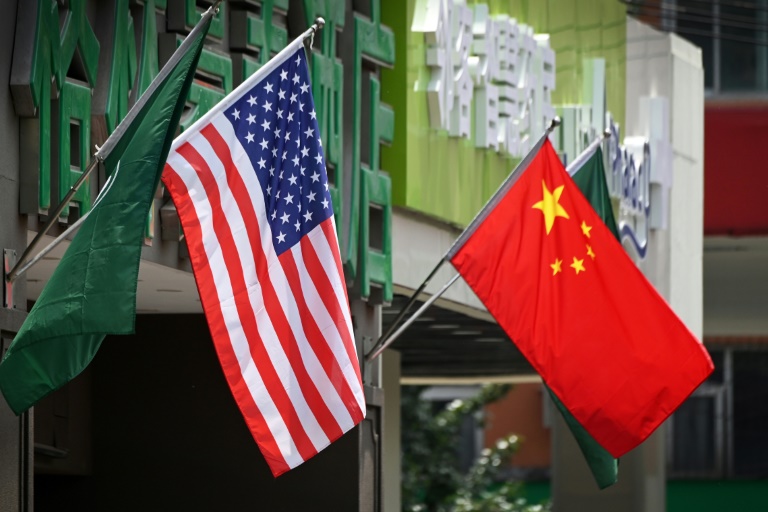
American tariffs on hundreds of billions of dollars of Chinese imports are due to expire in July, but could be extended if enough industries ask for it, US officials said Tuesday.

With Americans facing the highest inflation in more than four decades and companies struggling to find key supplies, President Joe Biden has faced increasing calls to get rid of the punitive duties imposed during the trade war launched by his predecessor Donald Trump.

The tariffs were first imposed in 2018, eventually ramping up to cover about $350 billion in annual imports from China in retaliation for Beijing’s theft of American intellectual property and forced transfer of technology.

The measures will lapse July 6 unless there is a request to continue them, at which point they would be subject to review.

US trade officials said Tuesday they are officially reaching out to the public to seek comment on whether to extend the tariffs, including sending letters to 600 firms that expressed support for the measures.

“Under the statute, the tariffs would expire at the four-year anniversary unless we go through this process and get a request for the continuation of action,” a senior official with the office of the US Trade Representative (USTR) told reporters.

The official declined to say whether high prices would be a consideration, but said any review will look at “the effects of such actions on the United States economy, including consumers.”

Foreign companies have long complained about Beijing’s failure to protect know-how and patents, and in some cases forcing firms to share information with domestic partners as the price for doing business in the massive Chinese market.

Prior to Trump, US administrations had sought to resolve the issues through dialogue and gentle pressure, but Trump pulled out all the stops, sparking retaliation from Beijing on US goods.

And despite a “phase one” trade pact that took effect in February 2020, USTR Katherine Tai said the hardline measures have not “incentivized” Beijing to alter its practices.

USTR will look at input from “all stakeholders on how they view the tariffs whether they want to be increased, decreased (or) modified,” another official said.

Much-maligned rats unlikely to spark next pandemic: study

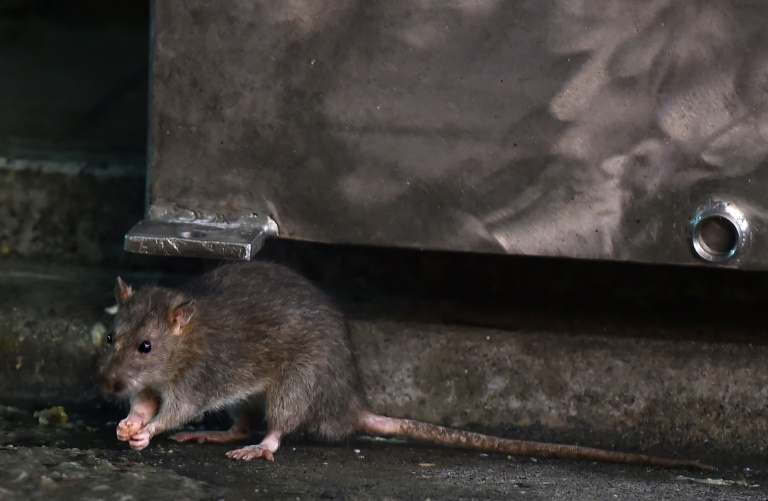
Rats have been seen as filthy disease-spreaders since at least the time of the plague, but new research shows that rodents and other city-dwelling animals are less likely to cause the next pandemic than previously thought.

Researchers at Georgetown University in Washington DC studied data on about nearly 3,000 mammals, expecting to find that those living in urban environments hosted more viruses that could be caught by humans, because they were in such close contact.

They found that urban animals did in fact carry 10 times as many kinds of disease — but also that more than 100 times as many studies had been published about them. 

When the researchers corrected for this massive bias — a long-standing scientific preference to study animals scuttling under our feet rather than hiding in rainforests — they were surprised to find that rats were no more likely to be the source of a new human disease than other animals.

However, “it’s still not good idea to get too close and friendly to urban wildlife,” said Greg Albery, a disease ecologist who led the study published in the Nature Ecology and Evolution journal on Monday. 

“These urban animals are unlikely to be the source of the next ‘Disease X’, but they’re still often a source of well-known important diseases,” he told AFP, giving the example of leptospirosis, a bacterial disease commonly spread by rats.

The threat from another common target of city disdain — the pigeon — was “almost certainly” also exaggerated due to research bias, he said.

Because we have been studying animals living in cities for so long, “we know so much about their parasites that there are relatively few unknowns there; rural wildlife is much more uncertain and more likely to provide us with the next ‘Big Threat’.”

Jonathan Richardson, a professor of urban ecology at the University of Richmond, said it was an important study because the authors “rightfully highlight the over-representation of data coming from urban mammal research”.

But he told AFP that it is still fair to describe rats as “disease sponges” because humans are in such regular contact with them.

Richardson said his research has found that urban rats harbour more than 200 pathogens and parasites that could jump over to humans, while nearly 80 percent of rats in some cities carry leptospirosis.

– ‘Important pathway into humans’ – 

Albery and his study co-author Colin Carlson published research last week showing climate change could increase the risk of new epidemics.

They found that as animals like bats flee to cooler areas, they will mingle with other species for the first time and create new opportunities for diseases that could later infect humans.

Albery said urban mammals could play a role in that process.

“If a bat meets a rat and gives it a novel disease, and then if that rat has greater access to human areas, that provides an important pathway into humans,” he said.

His global warming research also showed that new opportunities for viruses to jump between animals would now take place closer to populated areas, rather in forests.

“The host-pathogen network is about to change substantially, so what we know now about urban parasites is likely to become outdated quickly,” Albery said.

“We need improved surveillance both in urban and wild animals so that we can identify when a pathogen has jumped from one species to another — and if the receiving host is urban or in close proximity to humans, we should get particularly concerned.”

Pressure on OPEC+ eases amid oil demand fears

Major oil producers led by Saudi Arabia and Russia meet Thursday with less pressure to open tabs more widely than planned as China’s Covid lockdown threatens demand.

The meeting on Thursday also comes as the European Union is eyeing a ban on Russian oil imports, following similar moves by the United States, Britain and Canada.

The alliance known as OPEC+ slashed output in 2020 when oil prices crashed due to the pandemic.

When demand picked up again last year as countries emerged from lockdowns, the coalition began to modestly increase production each month.

But the United States has led calls for OPEC+ to raise output even further as prices soared to new heights earlier this year.

Russia’s invasion of Ukraine sent prices rocketing higher and they have mostly remained above $100 a barrel.

Despite the pressure, analysts expect the group to stick to the usual increase of around 400,000 barrels per day.

– Covid and inflation –

Oil prices fell on Tuesday but are still high with Brent above $106.

“The price slide was sparked by concerns that the ongoing coronavirus lockdowns in China could seriously dampen oil demand there,” said Carsten Fritsch, commodities analyst at Commerzbank.

The world’s second-largest oil consumer and biggest oil importer is facing its worst coronavirus outbreak since spring 2020 and has imposed a lockdown in Shanghai, forcing most of its 25 million inhabitants to stay home for weeks.

Also weighing on the market are fears of a global economic slowdown caused by Russia’s invasion of Ukraine, which began in late February.

Amid skyrocketing inflation, the International Monetary Fund (IMF) has sharply lowered its forecasts for global growth for 2022.

OPEC+ also has revised down its forecasts for global oil demand.

– Oil embargo? –

As the market remains tense, OPEC+ members are continuing to struggle to meet even the modest output increase, according to John Plassard, analyst at banking group Mirabaud.

Production in Libya, a key player in Africa, has fallen by about 600,000 barrels a day, Oil and Gas Minister Mohammed Aoun told AFP late last month.

Since mid-April, Libya’s two major export terminals and several oil fields have been held hostage to the country’s latest political schism.

Russian supply could also take a hit as the EU prepares to ban imports from the country.

EU ambassadors are expected to meet Wednesday to review a European Commission proposal for a phased ban on oil imports from Russia over six to eight months, with Hungary and Slovakia allowed to take a few months longer, EU officials told AFP.

In 2021, Russia supplied the bloc’s 27 members with 30 percent of their crude oil and 15 percent of their petroleum products.

“With an EU ban on Russian oil imports growing likelier than a further ramp-up in OPEC+ output, tightening supply conditions should keep oil prices well supported,” said Han Tan, an analyst for Exinity Group.

US faces seismic abortion shift, Biden backs 'fundamental' right

President Joe Biden called on American voters Tuesday to defend the “fundamental” right to abortion after a leaked draft suggested the Supreme Court is poised to strike down the longstanding decision protecting a woman’s right to terminate a pregnancy.

The opinion by the court’s conservative majority hit Washington like a thunderclap late Monday, setting up a potentially historic turning point on a hot-button issue that is now certain to dominate November’s midterm elections.

If the draft is made official — which could happen within months — it would shred half a century of constitutional protections for abortion rights, and give free rein to Republican-controlled states which are already leading an all-out push to curtail the procedure.

Biden’s Democrats stand broadly united in support of abortion rights — and rallied immediately in defense of the watershed 1973 Roe v. Wade decision.

While he cautioned the draft had not been verified, Biden said US voters will have to step up in defense of the right if the Supreme Court moves ahead.

“I believe that a woman’s right to choose is fundamental, Roe has been the law of the land for almost fifty years, and basic fairness and the stability of our law demand that it not be overturned,” the US leader said in a statement.

If the draft proves authentic, “it will fall on voters to elect” officials who back abortion rights in the coming midterm elections, he said, vowing to work to pass legislation in Congress that codifies Roe v. Wade.

– ‘Roe v. Wade is going to go!’ –

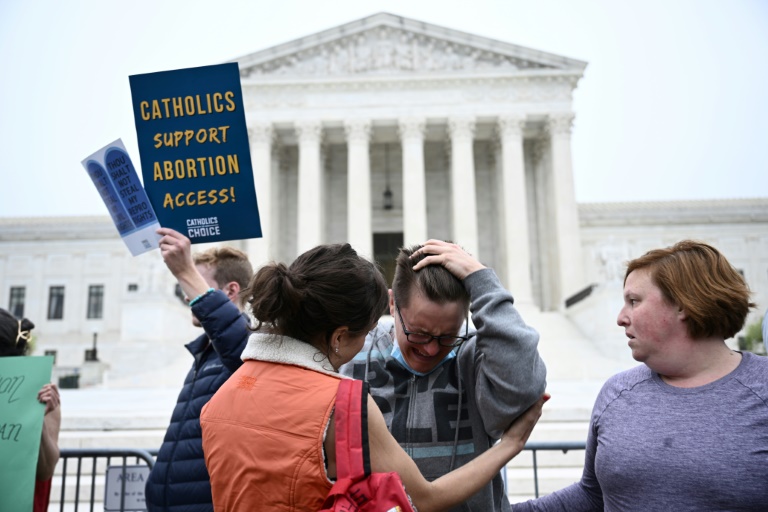
Crowds of protesters from both camps descended on the Supreme Court building in Washington in the wake of Monday’s leak.

On Tuesday morning, two opposing groups — small but vocal — stood shouting chants at each other, with anti-abortion activists yelling “Abortion is violence. Abortion is oppression” and “Hey Hey Ho Ho Roe v. Wade is going to go!”

In Roe v. Wade, the nation’s highest court held that access to abortion is a constitutional right.

In a subsequent 1992 ruling, Planned Parenthood v. Casey, the court guaranteed a woman’s right to an abortion until the fetus is viable outside the womb, which is typically around 22 to 24 weeks of gestation.

Most developed countries allow abortions on request up to a gestational limit, most often 12 weeks. 

Roe v. Wade makes the United States one of a handful of nations to allow the procedure without restriction beyond 20 weeks of pregnancy — although many others allow it past that point for specific reasons.

Reproductive rights have been under attack in many parts of the United States as Republican-led states move to tighten restrictions, with some seeking to ban all abortions after six weeks, before many women know they are pregnant.

In December, hearing oral arguments about a Mississippi law that would ban most abortions after 15 weeks, the Supreme Court appeared inclined to not only uphold that law but to toss out Roe v. Wade.

Overturning the ruling would spell a massive victory for generations of Republicans who have fought tooth and nail to curb abortion rights, and would effectively leave the nation’s 50 individual states to determine whether to protect or outlaw the procedure.

Striking it down “would be an answer to prayer,” House Republican Jackie Walorski tweeted following news of the leak.

– ‘Wrong from the start’ –

The draft opinion was written by Justice Samuel Alito and according to news outlet Politico has been circulating since February inside the court — dominated 6-3 by conservatives following the nomination of three justices by former president Donald Trump.

Politico stressed the document it obtained is a draft and justices do sometimes change their votes before a final ruling.

Such a leak while a case is still pending is an extraordinary breach of Supreme Court custom, and Republicans have demanded an investigation into how the draft was made public.

The 98-page draft majority opinion calls Roe v. Wade decision enshrining the right to abortion “egregiously wrong from the start.”

“We hold that Roe and Casey must be overruled,” Alito writes in the document, labeled as the “Opinion of the Court” and published on Politico’s website. 

“It is time to heed the Constitution and return the issue of abortion to the people’s elected representatives.”

The Guttmacher Institute, a pro-choice research group, has said 26 states are “certain or likely” to ban abortion if Roe v. Wade is overturned.

Democratic governors of several states including California, New Mexico and Michigan swiftly announced plans to enshrine abortion rights into law even if the court overturns Roe, with California Governor Gavin Newsom tweeting: “Women will remain protected here.”

st-mlm/ec

Online media fuelling divisions, global tensions: report

Unregulated online content has spread disinformation and propaganda that have amplified political divisions, fanned international tensions and even contributed to Russia’s invasion of Ukraine, a media watchdog said Tuesday.

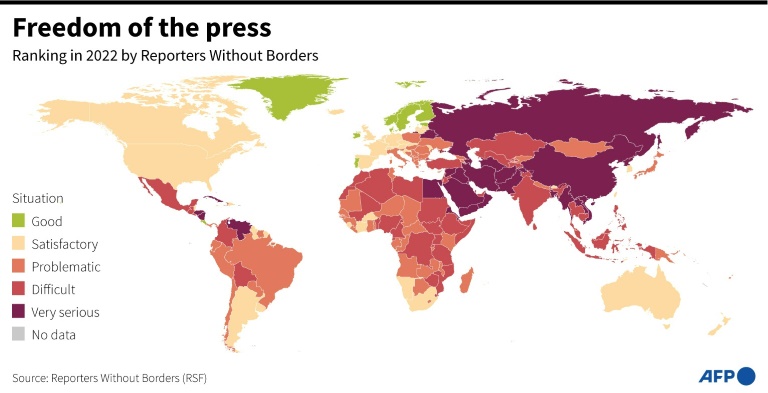
Reporters Without Borders, widely known by its French acronym RSF, presented its findings in the 2022 edition of its annual World Press Freedom Index.

Democratic societies, it said, are increasingly fractured by social media spreading disinformation and media pursuing a “Fox News model”, referring to the controversial US right-wing television network.

Autocratic regimes meanwhile tightly control information within their societies, using their leveraged position to wage “propaganda wars” against democracies and fuel divisions within them.

Such polarisation is becoming more “extreme,” worldwide, RSF’s director of operations and campaigns Rebecca Vincent told a news conference in London.

She pointed to the deaths of journalists in the Netherlands and Greece as well as the case of Julian Assange, the WikiLeaks founder who risks extradition and trial in the US for the publication of secret files.

The report showed how Russia, where state-run media overwhelmingly dominates and independent outlets are largely stifled, waged a propaganda war before its invasion of Ukraine.

Evgeniya Dillendorf, a correspondent for the independent Novaya Gazeta newspaper, said the main reason for lack of media diversity in Russia “is not pressure but lack of independent business which would finance it, and the lack of independent judicial system that would defend it”.

Novaya Gazeta has suspended publication for the duration of Moscow’s military intervention to avoid being shut down.

“The creation of media weaponry in authoritarian countries eliminates their citizens’ right to information but is also linked to the rise in international tension, which can lead to the worst kind of wars,” RSF Secretary-General Christophe Deloire said.

The “Fox News-isation” of Western media also posed a “fatal danger for democracies because it undermines the basis of civil harmony and tolerant public debate”, he added.

Deloire urged countries to adopt legal frameworks to protect democratic online information spaces.

– Record ‘very bad’ –

The situation is “very bad” in a record 28 countries, according to this year’s ranking of 180 countries and regions.

The lowest ranked were North Korea (180th), Eritrea (179th) and Iran (178th), with Myanmar (176th) and China (175th) close behind.

Russia (155th) and its ally Belarus (153rd) were also among the most repressive.

Based on the previous calendar year, this does not reflect Russia’s massive media crackdown since President Vladimir Putin sent troops into Ukraine.

Hong Kong’s position plummeted dozens of places to 148th, reflecting Beijing’s efforts to use “its legislative arsenal to confine its population and cut it off from the rest of the world”, RSF said.

“It is the biggest downfall of the year, but it is fully deserved due to the consistent attacks on freedom of the press and the slow disappearance of the rule of law in Hong Kong,” Cedric Alviani, head of RSF’s Taiwan-based East Asia bureau, told AFP.

Just eight countries were ranked as “good”, down from 12 last year.

Nordic countries Norway, Denmark and Sweden again topped the index, while the Netherlands fell from sixth to 28th after top crime reporter, Peter R. de Vries, was gunned down on an Amsterdam street last July.

The Free Press Unlimited group called the fall in the Netherlands “alarming news” and unprecedented, as the country had always been in the top 10 since 2002.

RSF commended Moldova (40th) and Bulgaria (91st) this year due to government changes and “the hope it has brought for improvement in the situation for journalists”. 

But it noted “oligarchs still own or control the media” in both.

Media polarisation was “feeding and reinforcing internal social divisions in democratic societies” such as the United States (42nd), it said.

That trend was even starker in “illiberal democracies” such as Poland (66th), a European Union country where RSF noted suppression of independent media.

The NGO, launched in 1985 and which has published the yearly index since 2002, has become a thorn in the side of autocratic and despotic regimes around the world.

This year’s listing used five new indicators to define press freedom — political context, legal framework, economic context, sociocultural context, and security — to reflect its “complexity”.

Close Bitnami banner
Bitnami