World

Tunisian president dissolves top judicial watchdog, alleging bias

Tunisian President Kais Saied on Sunday dissolved a top independent judicial watchdog, accusing it of bias in his latest controversial move since he sacked the government last year.

Saied has broadened his grip on power since July 25, when he ousted the prime minister and froze parliament before later moving to rule by decree in Tunisia — the cradle of the 2011 Arab Spring uprisings that ousted a series of autocratic leaders.

Many in the North African nation welcomed his moves against a political system described as corrupt and ineffective, in the only democracy to have emerged from the revolts.

But political figures and rights groups have warned of a slide towards authoritarianism, and world leaders have expressed deep concern.

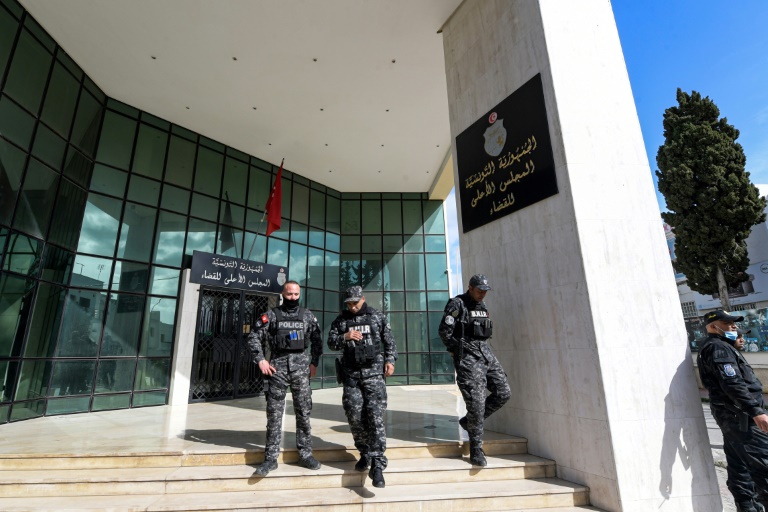
In a move sparking further unease, Saied announced he was dissolving the Supreme Judicial Council (CSM), which he accused of serving political interests.

The council “is a thing of the past”, he said according to video footage released by the Tunisian presidency.

The CSM rejected the move in a statement Sunday, citing the “absence of a legal and constitutional framework” authorising Saied to dissolve it.

CSM members vowed to continue holding their seats on the independent constitutional body set up in 2016 to guarantee the judiciary’s good functioning and independence. 

But Saied accused it of corruption on a grand scale, saying: “In this council, positions and appointments are sold and made according to affiliations.”

“You cannot imagine the money that certain judges have been able to receive, billions and billions,” the head of state added.

– ‘Illegal and unconstitutional’ –

Analysts and political opponents say the government is seeking to clamp down on the Islamist-inspired Ennahdha party, which has controlled parliament and the various governments since the 2011 revolution toppled veteran leader Zine El Abidine Ben Ali.

The Geneva-based International Commission of Jurists said the president’s corruption accusations were “unfounded”.

The CSM “has defended the independence of the judiciary” and “any decree to dissolve it is illegal and unconstitutional,” and dissolution “would mean the end of the separation of powers.”

Ennahdha spokesman Imed Khemiri denounced the decision, which he said “touches on the independence of the judiciary”.

It is “a grave precedent that Tunisia never had to submit to, even in the time of the dictator” Ben Ali, Khemiri told AFP.

The president also accused the CSM of delaying politically sensitive investigations into the assassinations of left-wing opposition figures Chokri Belaid and Mohamed Brahmi.

The Islamic State group claimed both killings, while Ennahdha, which denounced Saied’s power grab as a “coup”, has been accused by many of blocking the investigations.

Belaid was shot three times outside his home in February 2013, and Brahmi was killed in similar circumstances in July the same year.

The “July 25 movement” — composed of Saied supporters — on Saturday had called on the president to dissolve the CSM in order to “purge” the judiciary of “corrupt magistrates”.

The CSM has 45 members, two thirds of whom are judges elected by parliament. They, in turn, choose the remaining third.

Saied last month stripped its members of transport and living allowances.

– ‘Not capable’ of reform –

Saied has also already called for a July referendum on constitutional reforms. On Sunday he said he was working “on a provisional decree” to reorganise the judicial watchdog.

The judiciary “which has not been capable of reforming itself or of deciding major cases provided an ideal occasion” for Saied to again bang his fist on the table, analyst Abdellatif Hannachi said.

Rallies on Sunday in the capital Tunis commemorated the ninth anniversary of Belaid’s assassination. Hundreds of protesters demanding “fair and independent justice” chanted slogans backing the president. 

Ibrahim Bouderbala, president of the National Bar Association, attended the demonstration and expressed support for the president’s move.

Belaid’s brother Abdelmajid also backed Saied, accusing Ennahdha of having “manipulated and slowed down” the case.

“Until we have dissolved the CSM we will never have the truth,” he said.
Costa Ricans choose among 25 presidential candidates

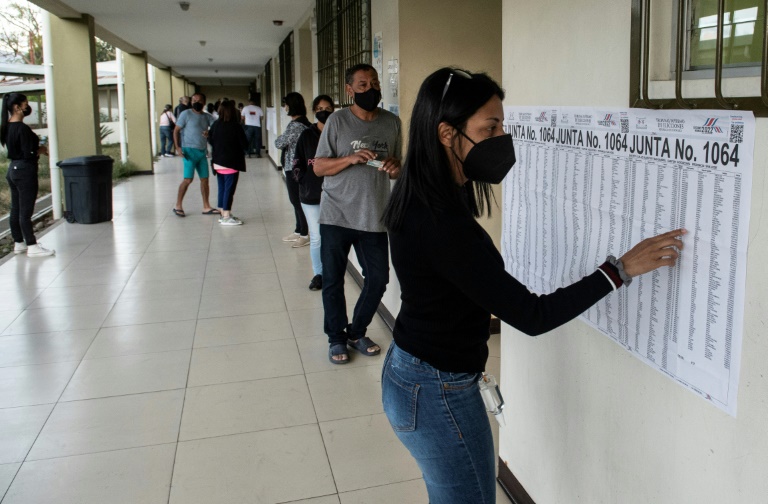
Costa Ricans headed to the polls Sunday to choose a new president from a crowded field, with no clear favorite for tackling growing economic concerns in one of Latin America’s stablest democracies.

Voting kicked off at 6:00 am (1200 GMT) and polls will remain open for 12 hours in this tourism-friendly nation of five million people. 

The national election tribunal is expected to announce results some three hours after polls close, but a presidential runoff in April is anticipated.

Often referred to as the region’s “happiest” country, Costa Rica is nonetheless grappling with a growing economic crisis.

“Voting is the most important weapon we have to solve problems,” said 35-year-old Francisco Zeledon, the first voter in line at his polling station. “We have to solve poverty and create jobs for people.”

The ruling Citizens’ Action Party (PAC) appears set for a bruising defeat. 

The economy has tanked under President Carlos Alvarado Quesada. And the PAC candidate, former economy minister Welmer Ramos, seems to be paying the price for sky-high anti-government feeling, with only 0.3 percent of people expressing support.

“The ruling party is completely weakened and has no chance” after two successive terms in office, said political analyst Eugenia Aguirre.

“The presidential unpopularity figure of 72 percent is the highest since the number was first recorded in 2013,” she added.

It means the country’s traditional political heavyweights — the centrist National Liberation Party (PLN) and the right-wing Social Christian Unity Party (PUSC) — could return to the fore after decades of a near political duopoly only recently broken by the PAC.

According to one poll published this month, former president Jose Maria Figueres (1994-98) of the PLN leads with just over 17 percent of stated support, followed by the PUSC’s Lineth Saborio on just under 13 percent.

“This country has a million and a half people living in poverty and half a million in extreme poverty,” Figueres said Sunday. “There is a housing shortage of 160,000 homes. We have never experienced these things in this magnitude.”

He said he hopes to accumulate the 40 percent of the vote needed to avoid a second round, though analysts said the fragmentation of the field meant that was impossible.

Presidents in Costa Rica cannot seek immediate re-election.

– Problems have ‘worsened’ –

If no candidate receives 40 percent, there will be a runoff on April 3 between the top two.

Polls show about a third of the country’s 3.5 million voters are undecided as they are faced with a choice from 25 presidential candidates.

Unemployment, corruption and living costs are top concerns. 

Costa Rica is known for its eco-tourism and green policies: its energy grid is entirely run on renewable sources.

Unlike many of its volatile Central American neighbors, Costa Rica has no army, has had no armed conflicts since 1948 and no dictator since 1919.

But the worsening economic situation has hit confidence in the political class.

Voters under 40 have only known “periods in which not only problems have not been resolved, but they have worsened,” university student Edgardo Soto, an undecided voter, told AFP.

– ‘Frustration’ –

Unemployment has been steadily rising for more than a decade and reached 14.4 percent in 2021.

Apathy and abstentionism are features of Costa Rican elections.

In 2018, 34 percent of voters stayed away, though participation is technically obligatory.

Polls show evangelical Christian singer Fabricio Alvarado Munoz of the right-wing New Republic Party (PNR) in third spot with just over 10 percent.

He commands support from the evangelical community, which makes up about 20 percent of Costa Rica’s population.

“It has been a physically tiring campaign,” Alvarado said after voting, “but we are happy and expect to achieve our goal and win these elections.”

In fourth place is economist Rodrigo Chaves of the newly formed centrist Social Democratic Progress Party. The highest-polling left-wing candidate is Jose Maria Villalta of the Broad Front.

“I hope that whoever wins really thinks of the people,” said 77-year-old Mayra Sanchez after voting in the canton of Moravia, “and not of themselves.”

Cyclone Batsirai kills 10, displaces tens of thousands in Madagascar

Cyclone Batsirai killed at least ten people and displaced nearly 48,000 when it struck Madagascar overnight, the national disaster management agency said on Sunday.

Cyclone Batsirai later weakened but not before wreaking havoc in the poor Indian Ocean island nation which is still reeling from a deadly tropical storm earlier this year.

Parts of the country were lashed with heavy rains and wind before the cyclone made landfall in Mananjary. 

It uprooted trees, destroyed buildings and forced residents to weigh down flimsy corrugated iron roofs along its path, AFP correspondents saw.

The rain will cause flooding across parts of the country, Madagascar’s meteorological office said on Sunday.

Batsirai made landfall in Mananjary on Saturday night as an “intense tropical cyclone”, packing winds of 165 kilometres per hour (102 miles per hour), Faly Aritiana Fabien of the country’s disaster management agency told AFP.

His colleague responsible for risk management in the same agency, Paolo Emilio Raholinarivo, listed 10 dead, but gave no further details.

However the national meteorological office — which had warned of “significant and widespread damage” — said on Sunday that Batsirai, Shona word for help others, “has weakened”.

The cyclone’s average wind speed had almost halved to 80 kilometres per hour (50 miles per hour), while the strongest gusts had scaled back to 110 km/h from the 235 km/h recorded when it made landfall, Meteo Madagascar said.

– Bodies emerge from cemetery –

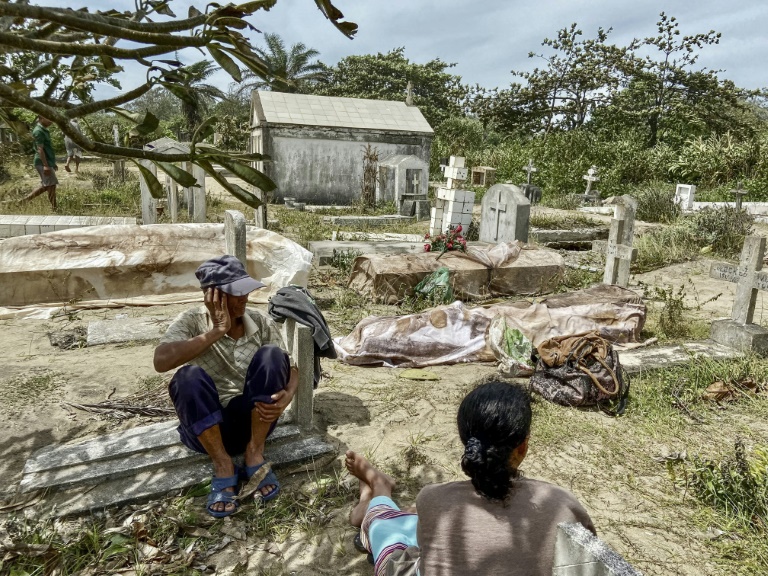
At a cemetery in the eastern town of Mahanoro, overlooking the sea, Marie Viviane Rasoanandrasana, sat on the ground watching over the bodies of her husband, her father-in-law and her daughter.

The waves of the rising sea eroded the sandy hill which was part of a graveyard. Several graves were ripped open leaving some bodies, including those of her family, exposed.

“A few days ago the sea was far away, but this morning I was told the waves had washed away part of the cemetery,” the widow, 54, said. 

“We are sad,” she said. “We’ve already had damages at home because of the cyclone. Now this!

“Daily life is already very hard,” she said, adding the family would be forced to rebury the remains in a temporary grave until they raise enough money for a “proper burial”.

“It’s not even a year since I tiled my daughter’s grave,” she said.

– ‘City almost 95% destroyed’ –

In Mananjary, the epicentre of the cyclone when it lashed Madagascar, residents estimated that most of the town was ravaged.

“Mananjary is completely destroyed, no matter where you go everything is destroyed,” said one resident named Faby. Another man, Fana, was certain “almost 95 percent of the city has been destroyed”

Inland in Antsirabe, 365 km northwest of Mananjary, the storm uprooted large trees in the town’s public park.

The Meteo-France weather service had earlier predicted Batsirai would present “a very serious threat” to Madagascar, after passing Mauritius and drenching the French island of La Reunion with torrential rain.

At least 131,000 people were affected by Ana across Madagascar in late January. Close to 60 people were killed, mostly in the capital Antananarivo.

Ana also hit Malawi, Mozambique and Zimbabwe, causing dozens of deaths.

The World Food Programme pointed to estimates from national authorities that around 595,000 people could be directly affected by Batsirai, and 150,000 more might be displaced due to new landslides and flooding.

The storm poses a risk to at least 4.4 million people in total, the International Federation of Red Cross and Red Crescent Societies said.

The ex-French colony off Africa’s southeastern coast is in the midst of a six-month rainy season that often results in casualties and widespread damage. 

In 2018, the country suffered a double whammy with Cyclone Ava killing 51 people in January and tropical storm Eliakim leaving 20 people dead two months later.

And in March 2017, at least 78 people perished in Cyclone Enawo.

Global warming has increased the risk of flooding and tropical storms, as the atmosphere retains more water and rainfall patterns are disrupted. 

Southern parts of Madagascar are reeling from the worst drought in four decades.

South Africa’s President Cyril Ramaphosa told a summit of African leaders meeting in Addis Ababa on Sunday that the continent was “experiencing the worst impacts of phenomena associated with global warming such as droughts, floods and cyclones”. 

“Despite not being responsible for causing climate change, it is Africans who are bearing both the brunt and the cost,” he said.

strs-sn/gw

Cyclone Batsirai kills six, displaces tens of thousands in Madagascar

Cyclone Batsirai killed at least six people and displaced nearly 48,000 when it struck Madagascar overnight, the national disaster management agency said on Sunday.

Cyclone Batsirai weakened overnight but not before wreaking havoc in the poor Indian Ocean island nation which is still reeling from a deadly tropical storm earlier this year.

The eastern district of Mananjary was lashed with heavy rains and wind before the cyclone made landfall, uprooting trees, destroying buildings and forcing residents to weigh down flimsy corrugated iron roofs, an AFP correspondent saw.

The rain will cause flooding across parts of the country, Madagascar’s meteorological office said on Sunday.

Batsirai made landfall in Mananjary on Saturday night as an “intense tropical cyclone”, packing winds of 165 kilometres per hour (102 miles per hour), Faly Aritiana Fabien of the country’s disaster management agency told AFP.

His colleague responsible for risk management in the same agency, Paolo Emilio Raholinarivo, listed the numbers of dead and their location in a text message to AFP, but gave no further details.

However the national meteorological office — which had warned of “significant and widespread damage” — said on Sunday that Batsirai, Shona word for help others, “has weakened”.

The cyclone’s average wind speed had almost halved to 80 kilometres per hour (50 miles per hour), while the strongest gusts had fallen back to 110 km/h from the 235 km/h recorded when it made landfall, Meteo Madagascar said.

– Bodies emerge from cemetery –

At a cemetery in the eastern town of Mahanoro, overlooking the sea, Marie Viviane Rasoanandrasana, sat on the ground watching over the bodies of her husband, her father-in-law and her daughter.

The waves of the rising sea eroded the sandy hill which was part of a graveyard. Several graves were ripped open and some bodies, including those of her family, were exposed.

“A few days ago the sea was far away, but this morning I was told the waves had washed away part of the cemetery,” the widow, 54, said. 

“We are sad,” she said. “We’ve already had damages at home because of the cyclone. Now this!

“Daily life is already very hard,” she said, adding the family would be forced to rebury the remains in a temporary grave until they raise enough money for a “proper burial”.

“It’s not even a year since I tiled my daughter’s grave,” she said.

– ‘City almost 95% destroyed’ –

In Mananjary, the epicentre of the cyclone when it lashed Madagascar, residents estimated that most of the town was ravaged.

“Mananjary is completely destroyed, no matter where you go everything is destroyed,” said one resident named Faby. Another man, Fana, was certain “almost 95 percent of the city has been destroyed. We implore the state to come and help us as soon as possible”.

Inland in Antsirabe, 365 km northwest of Mananjary, the storm uprooted large trees in the town’s public park.

The Meteo-France weather service had earlier predicted Batsirai would present “a very serious threat” to Madagascar, after passing Mauritius and drenching the French island of La Reunion with torrential rain.

At least 131,000 people were affected by Ana across Madagascar in late January. Close to 60 people were killed, mostly in the capital Antananarivo.

Ana also hit Malawi, Mozambique and Zimbabwe, causing dozens of deaths.

The World Food Programme pointed to estimates from national authorities that around 595,000 people could be directly affected by Batsirai, and 150,000 more might be displaced due to new landslides and flooding.

The storm poses a risk to at least 4.4 million people in total, the International Federation of Red Cross and Red Crescent Societies said.

The former French colony off Africa’s southeastern coast is in the midst of a six-month rainy season that often results in casualties and widespread damage. 

In 2018, the country suffered a double whammy with Cyclone Ava killing 51 people in January and tropical storm Eliakim leaving 20 people dead two months later.

And in March 2017, at least 78 people perished in Cyclone Enawo.

Global warming has increased the risk of flooding and tropical storms, as the atmosphere retains more water and rainfall patterns are disrupted. 

Southern parts of Madagascar are reeling from the worst drought in four decades.

South Africa’s President Cyril Ramaphosa told a summit of African leaders meeting in Addis Ababa on Sunday that the continent was “experiencing the worst impacts of phenomena associated with global warming such as droughts, floods and cyclones”. 

“Despite not being responsible for causing climate change, it is Africans who are bearing both the brunt and the cost,” he said.

strs-sn/har

Elizabeth II marks Platinum Jubilee with 'Queen Camilla' announcement

Queen Elizabeth II on Sunday became the first British monarch to reign for seven decades, announcing her “sincere wish” that Camilla, the wife of her heir Prince Charles, should ultimately be known as Queen Consort.

Britain’s longest-serving monarch acceded to the throne aged 25 on February 6, 1952, following the death of her father King George VI.

She marked the historic date quietly at Sandringham, her estate in eastern England where her father died.

But in a major statement on the future of the royal family, the 95-year-old released a message to the nation, saying “it is my sincere wish that, when that time comes, Camilla will be known as Queen Consort”.

This means Camilla, now 74, would be crowned alongside Charles, now 73, and known to the public as Queen Camilla, royal experts said.

Charles said the couple were “deeply conscious of the honour represented by my mother’s wish”, which would accord Camilla the full title of a monarch’s wife.

He praised Camilla, saying: “my darling wife has been my own steadfast support throughout”.

The heir-to-the throne also paid tribute to the Queen’s “devotion to the welfare of all her people”, which “inspires still greater admiration with each passing year”.

The Queen said she hoped that when Charles becomes king, the British people would give him and Camilla “the same support that you have given me”.

Camilla was long vilified for her role in the break-up of Charles’ marriage to Princess Diana.

Recognising the sensitivities, when the couple married in 2005, the royal family announced she would be known as Princess Consort after Charles became king.

But she has gradually won plaudits as the future king’s loyal wife.

Londoners who spoke to AFP were divided over the announcement.

“I’m delighted. I think it’s high time,” said Angela Roberts, an 80-year-old retiree.

“It’s before my time but a lot of the people who grew up with Diana being the next Queen effectively, they feel like she was wronged by the royal institution,” said Tobias Fox, a 24-year-old software engineer.

“I don’t think a lot of people will be too happy that Camilla has got this role.”

“I think she’ll do well, but I think there will always be that shadow of the past that overcasts her reign,” said Alice Tomlinson, a 25-year-old working in marketing.

– ‘Historic reign’ –

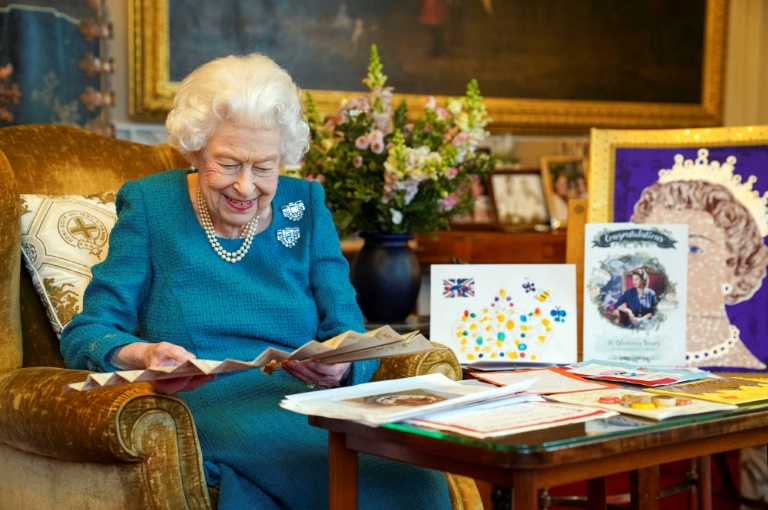
Stressing that the Queen is still actively working, Buckingham Palace released a photo taken at Sandringham this week showing her going through one of her famous red dispatch boxes used for government business.

Behind her is a photo of her late father.

Prime Minister Boris Johnson praised the Queen’s “inspirational sense of duty and unwavering dedication”.

With the main Platinum Jubilee celebrations set for June, he said wanted “to come together as a country to celebrate her historic reign”.

World leaders paid tribute Sunday including German Chancellor Olaf Schulz and Canada’s Justin Trudeau, who said she “has has been a constant presence in the life of Canadians, offering steadfast leadership in times of change, hardship, or uncertainty”.

Four days of festivities are planned for early June, coinciding with the anniversary of her 1953 coronation, including a military parade and music concert, street parties, a nationwide “Big Jubilee Lunch” and a “Platinum Pudding Competition”.

During her reign, the Queen has remained a constant through periods of huge social and political upheaval — a living link to Britain’s post-war and imperial past.

In her message addressed to the public signed “Your servant, Elizabeth R”, the Queen renewed a pledge she first gave in a broadcast on her 21st birthday “that my life will always be devoted to your service”.

In September 2015, she surpassed Queen Victoria’s 63 years and seven months on the throne and, despite some health concerns over the past year, her latest message showed she is determined to continue her record-breaking reign.

After husband Philip’s death in April last year, the Queen returned to public and official engagements, including hosting world leaders at the G7 summit.

She was forced to slow down on advice from doctors, however, after an overnight hospital stay in October sparked public concern.

Since then, she has largely stayed at Windsor Castle and made few public appearances.

But on Saturday, the Queen held a reception for locals at Sandringham, reportedly her largest in-person public engagement since the autumn health scare.

jj-video-am/gw

Firing from Afghanistan kills 5 Pakistan troops

At least five Pakistan soldiers were killed by firing from neighbouring Afghanistan, Islamabad said Sunday, in an attack claimed by the Pakistani Taliban.

It comes just days after Baloch separatists in the southwest killed nine Pakistan troops in a series of brazen attacks that officials said involved planners from Afghanistan as well as India.

After seizing power in August, Afghanistan’s Taliban pledged terror groups would not be allowed to operate from the country, but Pakistan militant groups have long taken sanctuary across the porous border.

They include the Tehreek-e-Taliban Pakistan (TTP), which on Sunday claimed responsibility for the attack in the Kurram district of rugged Khyber Pakhtunkhwa province.

The TTP has been emboldened by the return to power of the Taliban in Afghanistan and has stepped up attacks since a month-long truce with the Pakistan government ended last year.

The Taliban are separate groups in both countries, but share a common ideology and draw from people who live on either side of the border.

The TTP said it killed six Pakistani troops in Saturday night’s attack, but the Pakistan military’s public relations wing (ISPR) said five Frontier Corps members had died.

“Own troops responded in a befitting manner,” it said, adding “terrorists suffered heavy causalities”.

Pakistan “strongly condemns the use of Afghan soil by terrorists”, ISPR said.

The army “is determined to defend Pakistan’s borders against the menace of terrorism, and such sacrifices of our brave men further strengthen our resolve”.

– Premier in China –

It took four days until Saturday for Pakistani troops to put an end to assaults by separatists in Balochistan province, with the army putting the final death toll at 20 militants and nine soldiers.

The ISPR said intelligence agents intercepted communications during those assaults on army posts that showed militants had links to Afghanistan and India.

Separatists have waged an insurgency in the vast southwestern province for years, fuelled by anger that its abundant reserves of natural resources are not relieving citizens from crushing poverty.

The fighting came as Pakistani Prime Minister Imran Khan was making an official visit to China, which has invested significantly in Balochistan, further stoking tensions.

Chinese investments in Balochistan are part of Beijing’s Belt and Road Initiative.

A Pakistani security official told AFP on Friday that the attacks were an attempt to derail Khan’s visit to China.

The China-Pakistan Economic Corridor (CPEC) project linking China’s far-western Xinjiang region with the strategic port of Gwadar in Balochistan has sparked claims that the vast influx of investment does not benefit locals.

While the economic corridor offers a lucrative gateway for China to the Indian Ocean, the security of its workers has long been a concern.

Pakistan’s government announced late last year it had entered a month-long truce with the TTP, facilitated by Afghanistan’s Taliban, but that expired on December 9 after peace talks failed to make progress.

The TTP has been blamed for hundreds of suicide bomb attacks and kidnappings across the country, and for a while held sway over vast tracts of the country’s rugged tribal belt, imposing a radical version of Islamic law.

But after the 2014 massacre of nearly 150 children at a Peshawar school, the Pakistan military sent huge numbers of troops into TTP strongholds and crushed the movement, forcing its fighters to retreat to Afghanistan.

Earlier this week the Afghan Taliban again insisted foreign militant groups would not be allowed to operate inside the country.

“This is our responsibility and we have made a promise,” Foreign Minister Amir Khan Muttaqi told AFP in an interview.

“We stand on this word, and we are working on it day and night — to strengthen our borders and our security.”

Morocco, world mourn 'little Rayan' after well rescue fails

Morocco was in shock Sunday after emergency crews found a five-year-old boy dead at the bottom of a well in a tragic end to a five-day rescue operation that gripped the nation and the world.

The ordeal of “little Rayan” since he fell down the 32-metre (100-foot) well on Tuesday gained global attention and sparked an outpouring of sympathy online, with the Arabic Twitter hashtag #SaveRayan trending.

“The fall of a child who reminded the whole world of the values of humanity,” read one Moroccan newspaper headline, while others bemoaned the “tragic epilogue” that had brought “sadness and shock”.

The boy’s father said he had been repairing the well when the boy fell in, close to the family home in the village of Ighrane in the Rif mountains of northern Morocco.

“Little angel, you fought until the end, a hero”, said one Twitter user called Anouar, while another said “he has brought people together around him”.

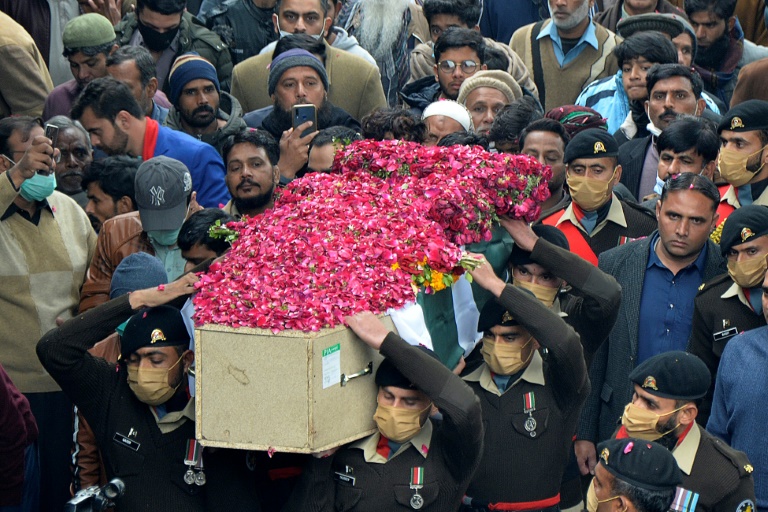
The funeral is to be held on Monday, provincial council head Abderahim Bouazza said.

Throughout the major digging operation to extricate Rayan from the bottom of the well shaft, authorities had cautioned that they did not know whether he was alive.

The shaft, just 45 centimetres (18 inches) across, was too narrow for the boy to be reached directly, and widening it was deemed too risky — so earth-movers dug a wide slope into the hill to reach him from the side.

The operation made the landscape resemble a construction site, and red-helmeted civil defence personnel had at times been suspended by rope, as if on a cliff face.

– From hope to sorrow –

Rescue crews, using bulldozers and front-end loaders, had excavated the surrounding red earth down to the level where the boy was trapped, and drill teams began creating a horizontal tunnel to reach him from the side.

On Saturday morning, the head of the rescue efforts, Abdelhadi Tamrani, said images from a camera sent down showed the child “lying on his side”, and that while it was “impossible” to confirm he was alive there were “very high hopes”.

But progress slowed as the drill teams worked by hand to avoid any vibrations that might bring the brittle soil down on the child, local authorities said.

Late Saturday evening, crowds cheered when the rescue workers broke through the final stretch of earth to reach the boy, and volunteer digger Ali Sahraoui cleared the last soil away with his hands.

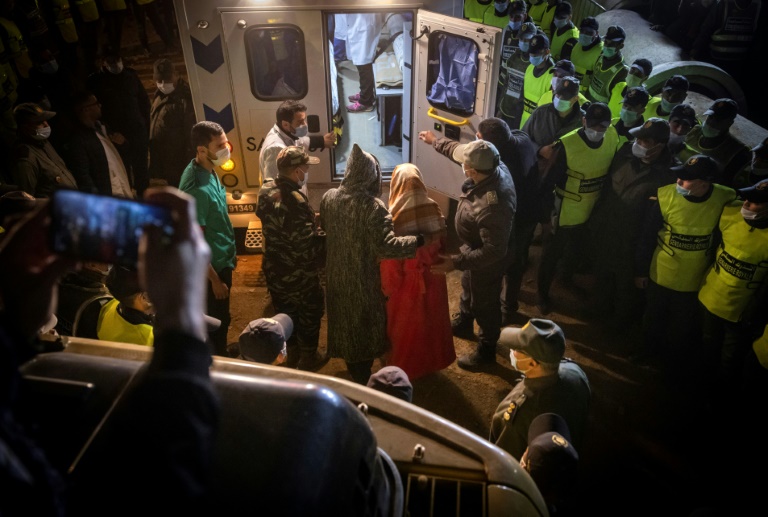
But soon after, AFP correspondents saw the boy’s parents walk down the slope into the horizontal tunnel, visibly crushed. They returned and boarded an ambulance without saying a word.

– Race against time –

It was Morocco’s royal cabinet that announced he had been found dead.

“Following the tragic accident which cost the life of the child Rayan Oram, His Majesty King Mohammed VI called the parents of the boy who died after falling down the well,” a statement from the royal court said.

Thousands of people had gathered to watch the rescue beside the giant pit, singing songs to urge on the diggers, who worked through the nights under floodlights.

Many of the watchers prayed, chanting in unison “Allahu akbar” (God is greatest).

Workers had tried to get oxygen and water down to the child but it was not clear whether he was able to use them, AFP correspondents reported.

The race against time to rescue Rayan was followed live across the world, and as soon as the tragic conclusion was announced, tributes poured in.

Pope Francis, while mourning the loss of Rayan, praised the “beautiful” sight of “how all the people gathered together” to try to save a child.

“Our hearts broke last night,” Israeli President Isaac Herzog said in a condolence message to King Mohammed.

French President Emmanuel Macron said: “I want to say to the family of little Rayan and to the Moroccan people that we share your pain.” 

“Rayan’s courage will stay in our memories and continue to inspire us,” wrote AC Milan’s Algerian midfielder Ismael Bennacer in a tweet, accompanied by a drawing of a child being lifted into the sky, carried by a heart-shaped balloon marked with the colours of Morocco.

“We all of us had been holding out hope that little Rayan would make it,” Moroccan-American novelist Laila Lalami wrote on Twitter. “This is all so tragic.”

hic-fs-isb-agr/fka/pjm/it

Ukraine plays down Russian invasion fears as US sounds alarm

Ukraine on Sunday pushed back at “apocalyptic predictions” over a potential Russian invasion, after officials in the United States sounded dire warnings that Moscow had stepped up its preparations for a major incursion.  

US officials said the Kremlin has assembled 110,000 troops along the border with its pro-Western neighbour but intelligence assessments have not determined if President Vladimir Putin has actually decided to invade. 

The Russian force amassed on the frontier is growing at a rate that would give Putin the firepower he needs for a full-scale invasion — some 150,000 soldiers — by mid-February, US officials have said.

They assess Putin wants all possible options at his disposal: from a limited campaign in the pro-Russian Donbas region of Ukraine to a full-scale invasion.

Russia denies that it is planning an incursion into Ukraine.

“Do not believe the apocalyptic predictions. Different capitals have different scenarios, but Ukraine is ready for any development,” Ukraine’s Foreign Minister Dmytro Kuleba wrote on Twitter. 

“Today, Ukraine has a strong army, unprecedented international support and the faith of Ukrainians in their country. It is the enemy who should fear us.”

Presidency advisor Mykhailo Podolyak insisted that the chances of finding a diplomatic solution to the crisis remained “substantially higher than the threat of further escalation”.

Kyiv — backed up by some European allies — has consistently sought to play down fears of an imminent attack as it tries to avoid inflicting further harm on its struggling economy.

Podolyak said the latest Russian moves were “no surprise” as Moscow has sought to keep up pressure on Kyiv by conducting large-scale troop rotations, manoeuvres and weapon deployments on a regular basis since massing forces at the border last spring. 

“How long will such Russian activity last and for what purpose is it maintained? Only the Kremlin can know the exact answer to this question,” he said. 

– European diplomatic push –

The stark warnings from the US — part of a deliberate attempt from Washington to pre-empt any Russian actions — come as Europe pushes to defuse the crisis. 

French President Emmanuel Macron heads to Moscow Monday and Kyiv Tuesday seeking to de-escalate the crisis and push forward a stalled peace plan for the festering conflict with Russian-backed separatists in eastern Ukraine. 

German Chancellor Olaf Scholz will also visit the region for talks with Putin and Ukrainian President Volodymyr Zelensky the following week in a bid to further the diplomatic efforts. 

US officials said if Moscow does opt for a full-scale attack, the invading force could take the capital Kyiv and topple Zelensky in a matter of 48 hours.

They estimated such an attack would leave 25,000 to 50,000 civilians dead, along with 5,000 to 25,000 Ukrainian soldiers and 3,000 to 10,000 Russian ones.

It could also trigger a refugee flood of one to five million people, mainly into Poland, the officials added.

President Joe Biden has reacted to the buildup by dispatching some 3,000 American forces to bolster NATO’s eastern flank, with a new batch of US soldiers arriving in Poland on Sunday.

The move angered Moscow, which has issued demands for NATO to guarantee Ukraine will not enter the alliance and withdraw forces from member states in eastern Europe. 

But US National Security Advisor Jake Sullivan told Fox News Sunday that Biden “is not sending forces to start a war or fight a war with Russia in Ukraine”.

“We have sent forces to Europe to defend NATO territory,” he said.

– Special forces, naval buildup –

US intelligence has concluded that Russia is continuing to muster a major military force on its border with Ukraine.

Two weeks ago, a total of 60 Russian army battalions were positioned to the north, east and south of Ukraine, particularly in the Crimean peninsula, which Russia annexed after an invasion in 2014.

By Friday, there were 80 battalions and 14 more were en route from elsewhere in Russia, US officials said. 

They added that some 1,500 Russian special forces soldiers known as Spetsnaz arrived along the Ukraine border a week ago.

Russia has also announced what it calls joint military manoeuvres with Belarus, where it has sent several battalions to the north of Kyiv.

A major Russian naval force is also positioned in the Black Sea, equipped with five amphibious vessels that could be used to land troops on Ukraine’s southern coast, the US officials said.

They added that another six amphibious craft were observed leaving apparently on their way to the Black Sea.

In other deployments, Russia has positioned fighter planes near Ukraine, as well as bombers, missile batteries and anti-aircraft batteries, US officials said.

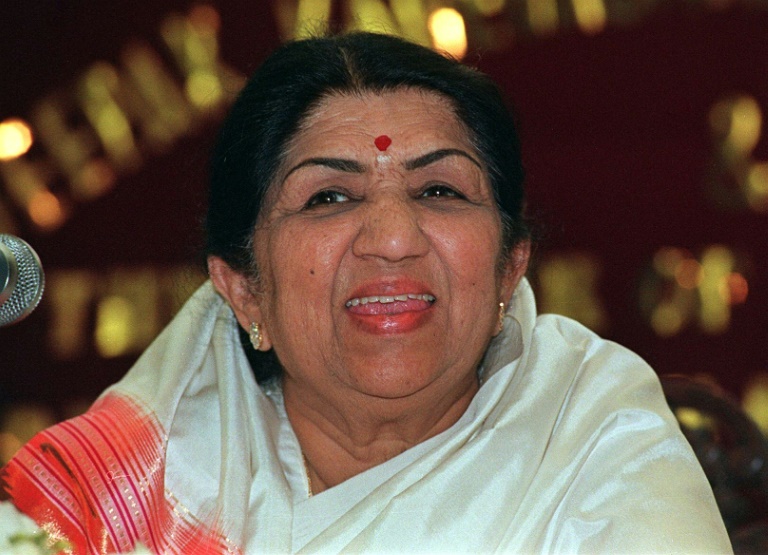
Lata Mangeshkar: 'Nightingale of India' dies aged 92

Bollywood superstar Lata Mangeshkar, known to millions as the “Nightingale of India” and a regular fixture of the country’s airwaves for decades, died Sunday morning at the age of 92.

Mangeshkar’s high-pitched melodies were an instantly recognisable feature of Indian cinema, with her work appearing in more than 1,000 films. 

She passed away in a Mumbai hospital after being admitted to its intensive care unit several weeks ago with Covid-19 symptoms.

“Heartbroken, but blessed to have known & loved this incredible soul,” said actor Anil Kapoor, best known internationally for his role as a game show host in Danny Boyle’s “Slumdog Millionaire”.

“Lataji holds a place in our hearts that will never be taken by anyone else. That’s how profoundly she has impacted our lives with her music.”

Mangeshkar was born in 1929 in Indore, central India, and started her musical training under the tutelage of her father Deenanath, singing in his theatrical productions when she was just five years old.

Her father’s death when she was 13 forced her to take on the role of breadwinner for four younger siblings, and the family eventually moved to Mumbai in 1945.

There she pursued a career as a playback singer, recording tracks to be mimed by actors, and her voice soon became a staple of Bollywood blockbusters.

In a move reflecting her huge following, she was invited by the government to sing a patriotic tribute to soldiers killed in the 1962 Indo-China war at India’s Republic Day commemorations in January 1963.

Her rendition of “Oh the People of My Country” reportedly moved then-prime minister Jawaharlal Nehru to tears.

In the following decades, composers and film producers vied to sign the prolific Mangeshkar for their movies.

“I composed keeping Lata Mangeshkar’s range and voice quality in mind,” composer Anil Biswas said in an interview.

“She had a wide range, and one could think of more complicated melodies than with the earlier untrained singers.”

– ‘Stalwart of Indian culture’ –

Mangeshkar dominated Bollywood music for more than half a century, and is considered by many to be the Indian film industry’s greatest-ever playback singer.

Mangeshkar was not shy about taking a stand when it came to raising her prices or asking for a share of the royalties earned on her songs.

Her longevity and discipline saw her lend her voice to teenage actresses who were 50 years her junior. 

Critics complained that her dominance left little room for newer singers to thrive, but her audience remained loyal, ensuring that her songs ruled the charts.

She was also known for her quirks, such as never singing with her shoes on and always writing out each song by hand before recording it.

In 2001, Mangeshkar was awarded India’s highest civilian honour the Bharat Ratna, and she received France’s Legion d’Honneur in 2009 in recognition of her contribution to Indian music and cinema.

Though she dropped out of school, saying she only ever took classes for one day, Mangeshkar was fluent in several languages. 

Her oeuvre included devotional and classical albums and spanned around 27,000 songs in dozens of languages including English, Russian, Dutch and Swahili.

Authorities have declared two days of national mourning for the singer.

Her body was publicly cremated in a Mumbai park on Sunday evening with Prime Minister Narendra Modi and others laying flowers on her funeral pyre.

“Coming generations will remember her as a stalwart of Indian culture, whose melodious voice had an unparalleled ability to mesmerise people,” Modi said.

News of her death prompted an outpouring of grief from film industry luminaries, and a crowd gathered outside her Mumbai home as Bollywood titan Amitabh Bachchan and other celebrities arrived to pay their respects.

“Her voice touches the soul of every Indian,” 56-year-old fan Rajesh Kumar Ram told AFP from the scene.

“Her songs have been with us all through our lives,” he added.

Mangeshkar was equally revered across the border in Pakistan, where TV channels spent the day broadcasting rolling coverage of her death and playing songs from her repertoire.

“The subcontinent has lost one of the truly great singers the world has known,” said Pakistani Prime Minister Imran Khan. 

“Listening to her songs has given so much pleasure to so many people all over the world.”

Costa Ricans choose among 25 presidential candidates

Costa Ricans began trooping to the polls Sunday to choose a new president from a crowded field, with no clear favorite for tackling growing economic concerns in one of Latin America’s stablest democracies.

Voting kicked off at 6:00 am (1200 GMT) and polls will remain open for 12 hours in this tourism-friendly nation of five million people. 

The national election tribunal is expected to announce results some three hours after polls close, but a presidential runoff in April is anticipated.

Often referred to as the region’s “happiest” country, Costa Rica is nonetheless grappling with a growing economic crisis, and the ruling Citizen’s Action Party (PAC) is set for a bruising defeat.

The economy has tanked under President Carlos Alvarado Quesada. And the PAC candidate, former economy minister Welmer Ramos, seems to be paying the price for sky-high anti-government feeling, with only 0.3 percent of people expressing support.

“The ruling party is completely weakened and has no chance” after two successive terms in office, said political analyst Eugenia Aguirre.

“The presidential unpopularity figure of 72 percent is the highest since the number was first recorded in 2013,” she added.

It means the country’s traditional political heavyweights — the centrist National Liberation Party (PLN) and the right-wing Social Christian Unity Party (PUSC) — could return to the fore after decades of a near political duopoly only recently broken by the PAC.

According to one poll published this month, former president Jose Maria Figueres (1994-98) of the PLN leads the race with just over 17 percent of stated support, followed by the PUSC’s Lineth Saborio on just under 13 percent.

Presidents cannot seek successive re-election.

“I hope that those who win really think of the people and not of themselves,” said 77-year-old retiree Mayra Sanchez, who arrived to vote early in San Jose.

– Problems have ‘worsened’ –

To win outright in Sunday’s first round, a candidate needs 40 percent of the vote, otherwise there will be a runoff on April 3 between the top two.

Polls show that about a third of the country’s 3.5 million voters are undecided as they are faced with a choice from 25 presidential candidates.

Unemployment, corruption and living costs are top concerns. 

Costa Rica, with coastlines on both the Pacific and the Caribbean, is known for its eco-tourism and green policies: its energy grid is entirely run on renewable sources.

Unlike many of its volatile Central American neighbors, Costa Rica has no army, has had no armed conflicts since 1948 and no dictator since 1919.

But the worsening economic situation has hit confidence in the political class. 

Voters under 40 have only known “periods in which not only problems have not been resolved, but they have worsened,” university student Edgardo Soto, an undecided voter, told AFP.

– ‘Frustration’ –

Unemployment has been steadily rising for more than a decade and reached 14.4 percent in 2021.

Apathy and abstentionism are features of Costa Rican elections.

In 2018, 34 percent of voters stayed away, though participation is technically obligatory.

Polls show evangelical Christian singer Fabricio Alvarado Munoz of the right-wing New Republic Party (PNR) in third spot with just over 10 percent.

He commands support from the evangelical community, which makes up about 20 percent of Costa Rica’s population.

In fourth place is economist Rodrigo Chaves of the newly formed centrist Social Democratic Progress Party. The highest-polling left-wing candidate is Jose Maria Villalta of the Broad Front. 

For the PLN’s Figueres, 67, the crowded field “is a reflection of this whole frustration that has built up.”

“If there are 25 options, it is because the parties are not understanding the needs of a society that is changing right before their eyes,” he said.

Close Bitnami banner
Bitnami