World

Twitter users vote to oust Elon Musk as CEO

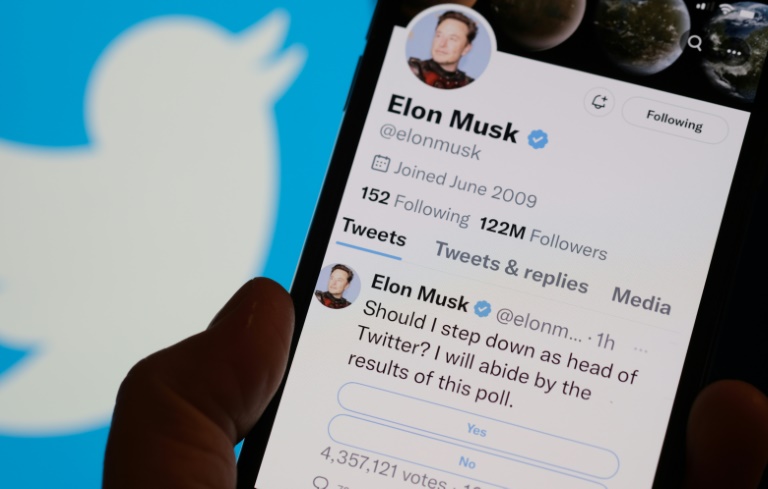
Twitter users voted on Monday to oust owner Elon Musk as CEO in a highly unscientific poll he organized and promised to honor, just weeks after he took charge of the social media giant.

A total of 57.5 percent of more than 17 million accounts voted for him to step down. Musk, who is also the boss of car maker Tesla and rocket firm SpaceX, has not yet responded.

“The question is not finding a CEO, the question is finding a CEO who can keep Twitter alive,” the South African-born billionaire tweeted before the vote closed.

In a response to another tweet he added: “No one wants the job who can actually keep Twitter alive. There is no successor.”

Musk has fully owned Twitter since October 27 and has repeatedly courted controversy as CEO, sacking half of its staff, readmitting far-right figures to the platform, banning journalists and trying to charge for previously free services.

Analysts have also pointed out that the stock price of Tesla has slumped by one-third since the Twitter takeover and the share price briefly rallied by 3.3 percent on Monday before fading.

“It’s hard to ignore the numbers since [Twitter] deal closed,” tweeted investment expert Gary Black, saying he reckoned Tesla’s board was putting pressure on Musk to quit his Twitter role.

In discussions with users after posting his latest poll, Musk renewed his warnings that the platform could be heading for bankruptcy.

– ‘Won’t happen again’ –

Resorting to Twitter’s polling feature has been a favorite strategy of Musk’s to push through decisions, including the reinstatement of the account of former president Donald Trump.

Paris-based Reporters Without Borders, which defends the freedom of the press around the world, said the polls were a “crude and cynical” ploy.

“These methods appear to be democratic procedures, but in reality they are…the opposite of democracy,” said the group’s head Christophe Deloire.

The unpredictable entrepreneur posted his latest poll shortly after trying to extricate himself from yet another controversy.

On Sunday, Twitter users were told they would no longer be able to promote content from other social media sites.

But Musk seemed to reverse course a few hours later, writing that the policy would be limited to “suspending accounts only when that account’s *primary* purpose is promotion of competitors.”

“Going forward, there will be a vote for major policy changes. My apologies. Won’t happen again,” he tweeted.

The attempted ban had prompted howls of disapproval and even bemused Twitter cofounder Jack Dorsey, who had backed Musk’s takeover.

He questioned the new policy with a one-word tweet: “Why?”

– ‘Perfect storm’ –

Musk has generated a series of controversies in his short reign.

Analyst Dan Ives from Wedbush called his tenure a “perfect storm.” 

He flagged that “advertisers have run for the hills and left Twitter squarely in the red ink potentially on track to lose roughly $4 billion per year.”

Shortly after taking over the platform, Musk announced the site would charge $8 a month to verify account holders’ identities, but had to suspend the “Twitter Blue” plan after an embarrassing rash of fake accounts. It has since been relaunched.

On November 4, with Musk saying the company was losing $4 million a day, Twitter laid off half of its 7,500-strong staff.

Musk also reinstated the account of Donald Trump — though the former US president indicated he had no interest in the platform — and said Twitter would no longer work to combat Covid-19 disinformation.

In recent days, he suspended the accounts of several journalists after complaining some had published details about the movements of his private jet, which he claimed could endanger his family.

Employees of CNN, The New York Times and The Washington Post were among those affected in a move that drew sharp criticism, including from the European Union and the United Nations.

The Washington Post’s executive editor Sally Buzbee said the suspension of journalist Taylor Lorenz’s account “further undermines Elon Musk’s claim that he intends to run Twitter as a platform dedicated to free speech.”

Some of the suspended accounts have since been reactivated.
Things to know about global biodiversity agreement

After years of negotiations, the world has agreed a landmark deal to protect vanishing species and ecosystems.

Here are some of the strengths of the pact agreed at the UN meeting in Montreal called COP15, as well as where it fell short.

– ’30 by 30′ –

The cornerstone of the agreement is the so-called 30 by 30 goal — a pledge to protect 30 percent of the world’s land and seas by 2030 — up from about 17 percent of land and seven percent of oceans currently. 

The oceans target had reportedly been opposed by some countries but made it into the final text. Some experts had said 30 percent is a low aim, insisting that protecting 50 percent would be better. 

– Indigenous rights –

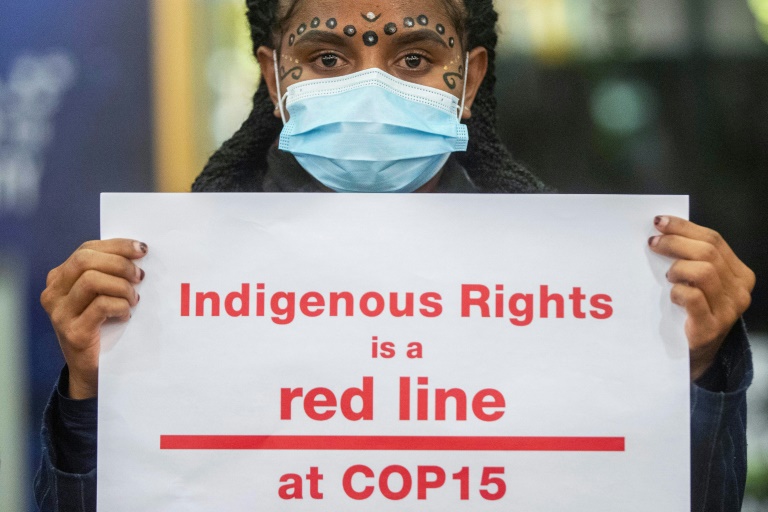
Indigenous rights were addressed throughout the text, including in areas covered by the 30 by 30 pledge — safeguarding Indigenous peoples’ right to remain stewards of land they use and ensuring they are not subject to evictions in the name of conservation.

The International Indigenous Forum on Biodiversity praised the text for its “strong language on respect for the rights of Indigenous Peoples and local communities.”

– Funding – 

The text approves the objective for rich countries to provide “at least US$20 billion per year by 2025, and … at least US$30 billion per year by 2030,” approximately double and then triple the current international aid for biodiversity.

Developing countries were seeking a new funding mechanism, but developed nations said it would take several years to create.

A halfway solution was adopted: a “trust fund” within an existing financial mechanism called the Global Environment Facility, as a stepping stone towards a new fund.

– Pesticides –

The accord prescribes efforts for “reducing the overall risk from pesticides and highly hazardous chemicals by at least half.”

Some delegates and campaigners had argued that the emphasis should be on overall pesticide “use” which is easier to measure. But specialists said some pesticides are powerful in small quantities so the emphasis should be on “risk.”

– Genetic sequencing –

The framework demands people receive benefits from “genetic resources” originating in their countries: natural assets, such as medicine or cosmetic ingredients in plants, which may be sourced in a developing country but then have their genetic information mapped and shared with researchers and companies abroad.

The text calls on parties to “ensure the fair and equitable sharing of benefits that arise from the utilization of genetic resources and from digital sequence information” and “traditional knowledge” associated with them.

– Business –

Despite common fears of “greenwashing” at environment summits, several delegates and observers said businesses played a largely positive role at COP25. But some noted lacked a strong mandate for businesses to assess and report on their biodiversity impacts — the accord instead merely urged countries to “encourage” them to do so.

Eliot Whittington, director of policy at the says Cambridge Institute for Sustainability Leadership, said the accord should “prompt a new mandatory disclosure framework for larger businesses… something the business community has supported vigorously at COP15.”

– Milestones –

The document sets a mechanism for implementation of the deal, but it is less strict than the Paris climate agreement. Campaigners complained the COP15 text did not contain enough “milestones” for marking progress.

For example, the text says human-induced extinction of known threatened species must be halted, and, by 2050, the extinction rate of all species reduced tenfold — but there aren’t targets that countries must hit before that year.

EU reaches gas price cap agreement, angering Russia

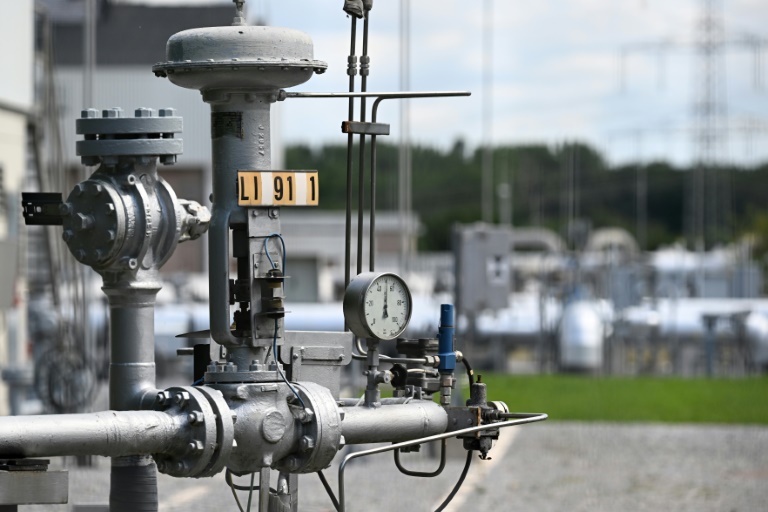
EU energy ministers on Monday overcame months of wrangling to agree a price cap for natural gas in the bloc, drawing an immediate warning from Russia that the move was “unacceptable”.

The price ceiling was fixed at 180 euros per megawatt hour, but with conditions attached and a word of caution from the European Commission that it may suspend the measure if “the risks outweigh the benefits”.

The aim of the cap on gas prices traded within the European Union is to mitigate an energy crunch brought on by Russia’s invasion of Ukraine.

EU countries are worried that they will have a hard time filling gas storage tanks in time for next winter.

Russia — before the war, the top exporter of gas to the EU — has turned off the taps in retaliation for a series of crippling sanctions against it designed to deplete its income used for its war.

The Kremlin has already said it won’t supply oil to countries applying a distinct EU embargo on its shipments of crude, and on Monday lashed out at the gas price cap.

“This is a violation of the market price-setting, an infringement on market processes, any reference to a (price) cap is unacceptable,” Kremlin spokesman Dmitry Peskov was cited as saying by Russian state-run news agencies. 

– Divisive issue –

The EU price cap will apply from February 15 and run for a year.

It will be triggered if the European benchmark price for natural gas futures goes above 180 euros per megawatt hour for three consecutive days.

That ceiling would then apply on trades for at least following 20 working days. For the cap to be deactivated, there has to be three consecutive days of trading below the 180-euro ceiling.

The mechanism is in response to high gas prices seen in Europe in August, which briefly soared to nearly 340 euros per megawatt hour, rattling EU governments.

The price of gas in Europe has since fallen, but remains historically high, and was trading at just under 112 euros per megawatt hour on Monday.

The gas price cap divided EU countries. 

Many said it was urgent to bring it in to force down energy costs. But others — led by economic powerhouse Germany — feared it could provoke suppliers of liquified natural gas (LNG) to snub Europe in favour of more lucrative Asian markets.

– Consequences –

The European Commission was also wary of the consequences of a price cap, and it initially proposed a ceiling of 275 euros and a two-week period above that number before it could be activated.

But that proposal met fierce objections from countries, such as Spain and Greece which made other broadly-backed energy measures — including joint gas purchases and speeded-up authorisations for renewable energy sources — contingent on a viable price cap.

Monday’s meeting saw Germany agree to the much lower price cap, and the much shorter triggering period to unlock the entire package.

“It wasn’t an easy thing to achieve,” Maltese Energy Minister Miriam Dalli said.

In acknowledgement of Germany’s concerns, a condition attached to the price cap is that futures prices for gas in Europe must to be at least 35 euros more than that paid for LNG on global markets.

EU energy commissioner Kadri Simson also said the European Securities and Markets Authority (ESMA) and the bloc’s Agency for the Cooperation of Energy (ACER) would present a “data report” on the likely consequences of the unprecedented price cap before it takes effect.

“The Commission stands ready to suspend ex-ante the activation of the mechanism, if an analysis from ECB (European Central Bank), ESMA and ACER shows that the risks outweigh the benefits,” she said.

France’s energy minister, Agnes Pannier-Runacher, said that, with the price cap agreed, attention must now turn to a longer-term reform of the EU’s energy market, notably unhitching the price of gas from that of electricity.

Global 'peace pact' signed to protect nature

Countries reached a historic deal on Monday to reverse decades of environmental destruction threatening the world’s species and ecosystems, in what the UN chief hailed as “a peace pact with nature.”

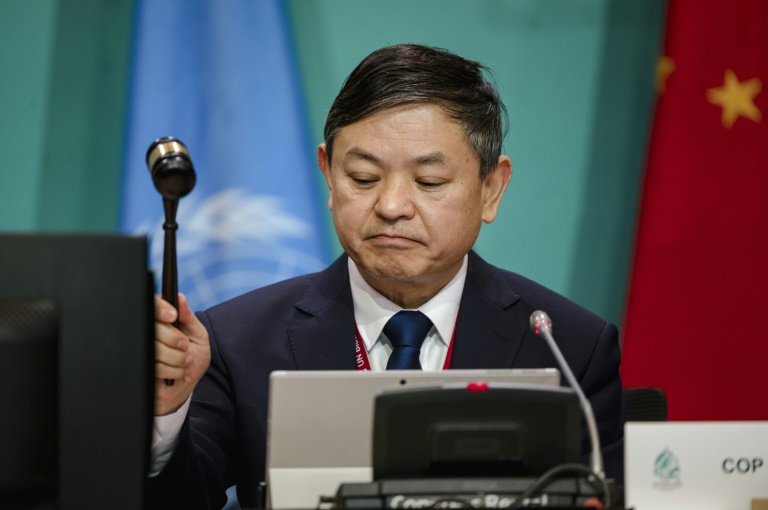
After the marathon COP 15 biodiversity summit in Montreal ran into the small hours, chair Chinese Environment Minister Huang Runqiu, declared the deal adopted and banged his gavel, sparking loud applause.

“We are finally starting to forge a peace pact with nature,” UN Secretary-General Antonio Guterres said, hailing the accord.

EU chief Ursula von der Leyen said the deal was a “foundation for global action on biodiversity, complementing the Paris Agreement for Climate.”

And the United States hailed the outcome as a “turning point,” voicing appreciation for the role of frequent adversary China. State Department spokesman Ned Price called the deal “sweeping and ambitious.”

American President Joe Biden supports the deal and has launched his own “30 by 30” plan domestically, but the United States is not formally a party to the biodiversity convention because of opposition by Republicans in Congress.

After four years of fraught negotiations, more than 190 other states rallied behind the Chinese-brokered accord aimed at saving Earth’s lands, oceans and species from pollution, degradation and the climate crisis.

“We have in our hands a package which I think can guide us all to work together to hold and reverse biodiversity loss, to put biodiversity on the path of recovery for the benefit of all people in the world,” Huang told the assembly.

He overruled an objection from the Democratic Republic of Congo, which had refused to back the text, demanding greater funding for developing countries.

– Biggest conservation deal ever –

The deal pledges to secure 30 percent of the planet as a protected zone by 2030, stump up $30 billion in yearly conservation aid for the developing world and halt human-caused extinctions of threatened species.

Environmentalists have compared it to the landmark plan to limit global warming to 1.5C under the Paris agreement, though some warned that it did not go far enough.

Brian O’Donnell of the Campaign for Nature called it “the largest land and ocean conservation commitment in history.”

“The international community has come together for a landmark global biodiversity agreement that provides some hope that the crisis facing nature is starting to get the attention it deserves,” he said.

“Moose, sea turtles, parrots, rhinos, rare ferns and ancient trees, butterflies, rays, and dolphins are among the million species that will see a significantly improved outlook for their survival and abundance if this agreement is implemented effectively.”

The CEO of campaign group Avaaz, Bert Wander, cautioned: “It’s a significant step forward in the fight to protect life on Earth, but on its own it won’t be enough. Governments should listen to what science is saying and rapidly scale up ambition to protect half the Earth by 2030.”

– Indigenous rights –

The text pledges to safeguard the rights of Indigenous people as stewards of their lands, a key demand of campaigners.

But observers noted it pulled punches in other areas — for example, only encouraging businesses to report their biodiversity impacts rather than mandating them to do so.

The 23 targets in the accord also include saving hundreds of billions of dollars by cutting environmentally destructive farming subsidies, reducing the risk from pesticides and tackling invasive species.

– Funding fight –

At times, the talks looked at risk of collapsing as countries squabbled over money.

How much the rich countries will send to the developing world, home to most of the planet’s biodiversity, was the biggest sticking point.

Developing countries had been seeking the creation of a new, bigger fund for aid from the Global North. But the draft text instead suggested a compromise: creating a fund under the existing Global Environment Facility (GEF).

That concern was echoed by the Democratic Republic of Congo, home to the Congo Basin, a rich haven of biodiversity.

Current financial flows for nature to the developing world are estimated at around $10 billion per year.

A DRC delegate spoke up in the plenary to demand annual funding rise to $100 billion — but Huang declared the framework passed, angering DRC’s allies.

Ethiopia's largest bank says Tigray services resume

The Commercial Bank of Ethiopia said Monday that it has resumed financial services in some towns in the war-torn region of Tigray, enabling residents to access their funds after a shutdown lasting more than a year.

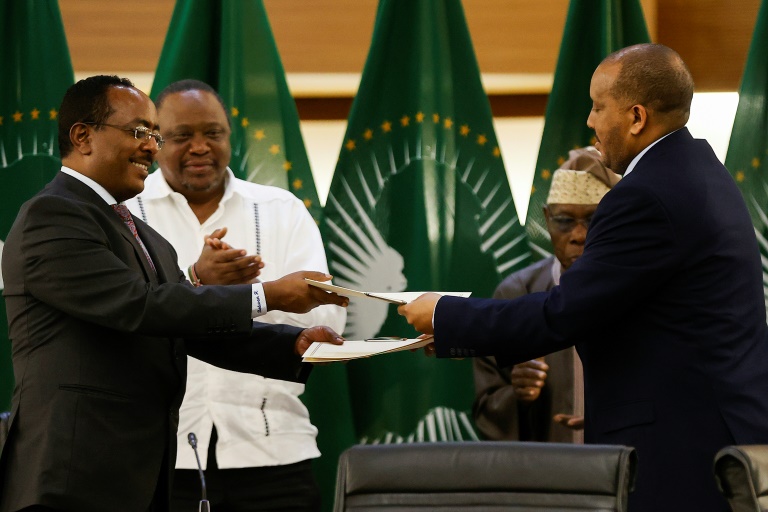
The announcement follows the signing of a peace deal between the federal government and Tigrayan rebels last month, aimed at ending the brutal two-year conflict and humanitarian crisis in northern Ethiopia.

“Following the peace agreement reached recently, the (CBE) branches we have in Shire, Alamata and Korem cities have started receiving money sent from abroad and locally as well as depositing money,” the country’s largest bank said in a statement.

“Our bank was forced to suspend its banking services because of the instability in the northern part of the country,” the statement said.

“Conditions permitting we will continue with our efforts to expand our services and step by step restart services in all branches.”

Access to northern Ethiopia is severely restricted and Tigray has been under a communications blackout for more than a year, making it impossible for journalists to independently verify the situation on the ground.

– Humanitarian disaster –

Since the November 2 peace agreement inked in South Africa, fighting between federal troops and the Tigray People’s Liberation Front has ceased, with the TPLF saying that 65 percent of its forces have “disengaged” from battle lines.

Earlier this month, the country’s electricity operator announced that the capital of Tigray had been reconnected to the national power grid after more than a year of cuts caused by the conflict.

The war left Tigray devastated and lacking access to basic services including banking, electricity, fuel and communications for more than a year.

Humanitarian aid has trickled into the north since the agreement but remains well short of meeting the population’s acute needs.

The death toll resulting from the war is unclear, but the International Crisis Group think-tank and Amnesty International have described it as one of the bloodiest in the world. 

All sides have been accused of abuses, while the United Nations says the conflict has displaced more than two million people and driven hundreds of thousands to the brink of famine.

The peace deal is aimed at ending the hostilities, disarming Tigrayan fighters, restoring federal government authority and reopening access to the region.

But the agreement makes no mention about the withdrawal of Eritrean forces, who have backed Ethiopia’s government during the conflict and been accused of horrific abuses.

Since the truce was agreed, the TPLF has regularly denounced Eritrean troops for allegedly committing human rights violations in Tigray.

According to the UN World Food Programme, more than 13 million people in northern Ethiopia now depend on humanitarian aid, including more than 90 percent of Tigray’s population of six million.

Prime Minister Abiy Ahmed sent troops to Ethiopia’s northernmost region in November 2020, accusing the TPLF, then the regional ruling party, of attacking federal army camps.

The TPLF dominated politics in the Horn of Africa nation for nearly three decades before Nobel Peace Prize laureate Abiy took office in 2018.

US lawmakers call for insurrection, fraud charges against Trump

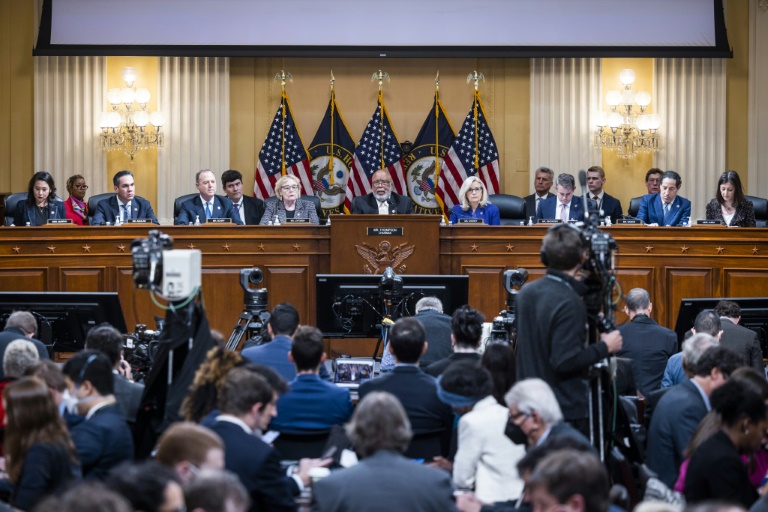
The panel probing last year’s assault on the US Capitol on Monday recommended Donald Trump be charged with crimes including insurrection — raising the stakes in an investigation that could put the former president in jail.

The House of Representatives select committee called for the indictment — as well as charges of obstruction of an official proceeding and conspiracy to defraud the United States — after an 18-month probe into the storming of Congress on January 6, 2021.

At least five people died after a mob whipped up by Trump’s false claims of a stolen election, and directed to march on Congress by the defeated president, ransacked the seat of US democracy in a thwarted bid to prevent the transfer of power to President Joe Biden.

The bipartisan committee voted unanimously to refer the charges to the Justice Department after opening remarks by vice-chair Liz Cheney in which she accused Trump of “a clear dereliction of duty” in failing to immediately attempt to stop the riot and called him “unfit for any office.”

“No man who would behave that way at that moment in time can ever serve in any position of authority in our nation again,” she said.

The referrals are seen as largely symbolic, as the panel has no control over charging decisions, which rest with the Justice Department.

Jack Smith, a largely independent special prosecutor appointed by Attorney General Merrick Garland, is leading his own investigation into Trump related to the 2020 election.

But the lawmakers’ move is nevertheless historic, as Congress has never made a criminal referral against a sitting or former president, and it will add to the clamor among Trump’s opponents for criminal charges.

It is also a major blow to Trump amid a series of missteps in the weeks since he announced a comeback bid for the White House — including the Republicans’ poor midterm election showing in states where the tycoon endorsed candidates.

Charges could result in a ban from public office for the 76-year-old, who still wields considerable power in the Republican Party, and even prison time.

“To cast a vote in the United States is an act of faith and hope,” committee chairman Bennie Thompson said.

“That faith in our system is the foundation of American democracy. If the faith is broken, so is our democracy. Donald Trump broke that faith.”

– ‘Trump knew he lost’ –

The seven Democratic and two Republican panel members are winding down their work before the end of the year, and have compiled their findings into an eight-chapter report set to be released on Wednesday. 

The committee’s case is that Trump “oversaw and coordinated a sophisticated seven-part plan to overturn the presidential election and prevent the transfer of presidential power.”

Investigators say the plot began with Trump’s campaign to spread allegations he knew were false that the election was marred by widespread fraud.

He is accused of trying to corrupt the Justice Department and of pressuring his vice president Mike Pence, as well as state election officials and legislators, to overturn the vote by violating the Constitution and the law.

“The most dramatic example of this campaign of coercion was the president’s January 2 2021 call to Georgia secretary of state Brad Raffensperger, in which the president urged the secretary to find 11,780 votes he needed to change the outcome in that state,” Congressman Adam Schiff said.

Trump is also accused of summoning and assembling the mob in Washington, and directing it toward the Capitol despite knowing it was armed with assault rifles, handguns and numerous other weapons. 

And for hours he ignored pleas from his team to take action to stop the violence, lawmakers say.

The committee showed a reel of video and audio highlights from its 10 public hearings, including footage of the riot and extracts of interviews with top former Trump aides.

The clips were shown under headings such as “Trump knew he lost,” “Trump summoned the mob,” and “Trump didn’t stop the riot once underway.” 

Democratic panel member Zoe Lofgren said Trump’s false fraud claims — far from being spontaneous — were part of a deliberate attempt to sow distrust in democracy that began long before the insurrection.

Lofgren repeated the panel’s suggestion that Trump allies had engaged in witness tampering, alleging that someone linked to the former president had offered potential employment to a witness prior to their testimony.

Lofgren said a witness was also told by a lawyer linked to Trump that she could pretend to not remember facts as she was giving evidence.

Lofgren also returned to an accusation previously leveled by the panel that Trump had “raised hundreds of millions of dollars with false representations made to his online donors.”

Trump has repeatedly disparaged the House panel on his own Truth Social platform, calling the members “Democrats, misfits and thugs.”

Honeywell to pay $160 mn to settle US, Brazil bribe case

US industrial giant Honeywell will pay $160 million to settle criminal and civil probes in Brazil and the United States over bribes in order to win business from two national oil companies, the government said Monday.

Company officials offered about $4 million in payments to a former high-ranking Petrobras official between 2010 and 2014 to win a $425 million contract to design and build an oil refinery for the Brazilian petroleum giant, the Department of Justice said in a statement.

In exchange for the bribe, the Petrobras official provided “inside information and secret assistance” that enabled a Honeywell unit to win a contract from which it made $105.5 million in profits, the DOJ said.

“Honeywell UOP conspired to bribe a high-ranking official at Petrobras to win a contract from the company, effectively stifling competition,” said Michael Glasheen, an acting assistant director of the FBI Washington Field Office, which worked with agents in Brazil on the matter.

“Bribery schemes like this one transcend borders, and collaboration with our foreign partners is crucial to the fight against international corruption.”

About half of the $160 million in penalties went to settle a parallel civil case launched by the US Securities and Exchange Commission.

Besides the Petrobras matter, the SEC settlement also concerned charges that Honeywell in 2011 paid more than $75,000 in bribes to Algerian government officials to win business with Sonatrach, Algeria’s state-owned oil company.

Record year for auction houses Christie's and Sotheby's

Auction house Christie’s on Monday announced record sales of $8.4 billion in 2022, outshining its rival Sotheby’s, which also posted its best-ever result at $8 billion for the year.

Christie’s racked up $7.2 billion in auctions and another $1.2 billion in private sales, easily topping the $7.1 billion it made in 2021 as the art world emerged from the Covid-19 pandemic, which greatly hindered auction operations.

“In 2022, despite a challenging macro-environment, Christie’s has achieved our highest ever global sales,” chief executive officer Guillaume Cerutti said, referring to economic challenges sparked by inflation and the war in Ukraine.

He noted “the resilience of the art and luxury markets, the remarkable success of several major art collections — including the unforgettable Paul Allen sale — and the expertise and hard work of our teams around the world.”

Allen, the co-founder of Microsoft alongside Bill Gates, died in 2018. In 2009, he signed the “Giving Pledge” — a promise to donate the majority of one’s wealth to charity.

His extensive collection, spanning 500 years of art history, raked in a massive $1.6 billion. Five works went for more than $100 million each, including a Cezanne, a Van Gogh and a Gauguin.

And at a separate Christie’s sale in May, a famed Andy Warhol portrait of Marilyn Monroe — “Shot Sage Blue Marilyn” — sold for $195 million, setting a record for a piece of 20th century art.

– Who was buying? –

This year at Christie’s, buyers from North and South America accounted for more of total sales as compared with 2021 — 40 percent of the value versus 35 percent — while Asian buyers were on the decline.

Nevertheless, according to French billionaire Francois Pinault, whose holding company Artemis controls Christie’s, Asian buyers were “absolutely crucial” to the overall success of the Allen sale. 

The auction house said its banner year was fueled by a “new generation of collectors”: 35 percent of all buyers in 2022 were first-time clients, and 34 percent of them qualify as millennials.

Asia has the “fastest-growing base of new collectors,” Christie’s said. 

Cerutti noted that cars and real estate did not figure in the results.

Last week, Sotheby’s announced a year-end total sales projection of $8 billion, as compared with $7.3 billion in 2021. That data includes art and luxury items, but also homes and collector cars.

The auction house — owned by French-Israeli telecoms magnate Patrick Drahi — also noted that its client base in Asia was “rapidly expanding,” and that those collectors were “spending more per person on average than collectors from elsewhere.”

Record year for auction houses Christie's and Sotheby's

Auction house Christie’s on Monday announced record sales of $8.4 billion in 2022, outshining its rival Sotheby’s, which also posted its best-ever result at $8 billion for the year.

Christie’s racked up $7.2 billion in auctions and another $1.2 billion in private sales, easily topping the $7.1 billion it made in 2021 as the art world emerged from the Covid-19 pandemic, which greatly hindered auction operations.

“In 2022, despite a challenging macro-environment, Christie’s has achieved our highest ever global sales,” chief executive officer Guillaume Cerutti said, referring to economic challenges sparked by inflation and the war in Ukraine.

He noted “the resilience of the art and luxury markets, the remarkable success of several major art collections — including the unforgettable Paul Allen sale — and the expertise and hard work of our teams around the world.”

Allen, the co-founder of Microsoft alongside Bill Gates, died in 2018. In 2009, he signed the “Giving Pledge” — a promise to donate the majority of one’s wealth to charity.

His extensive collection, spanning 500 years of art history, raked in a massive $1.6 billion. Five works went for more than $100 million each, including a Cezanne, a Van Gogh and a Gauguin.

And at a separate Christie’s sale in May, a famed Andy Warhol portrait of Marilyn Monroe — “Shot Sage Blue Marilyn” — sold for $195 million, setting a record for a piece of 20th century art.

– Who was buying? –

This year at Christie’s, buyers from North and South America accounted for more of total sales as compared with 2021 — 40 percent of the value versus 35 percent — while Asian buyers were on the decline.

Nevertheless, according to French billionaire Francois Pinault, whose holding company Artemis controls Christie’s, Asian buyers were “absolutely crucial” to the overall success of the Allen sale. 

The auction house said its banner year was fueled by a “new generation of collectors”: 35 percent of all buyers in 2022 were first-time clients, and 34 percent of them qualify as millennials.

Asia has the “fastest-growing base of new collectors,” Christie’s said. 

Cerutti noted that cars and real estate did not figure in the results.

Last week, Sotheby’s announced a year-end total sales projection of $8 billion, as compared with $7.3 billion in 2021. That data includes art and luxury items, but also homes and collector cars.

The auction house — owned by French-Israeli telecoms magnate Patrick Drahi — also noted that its client base in Asia was “rapidly expanding,” and that those collectors were “spending more per person on average than collectors from elsewhere.”

Women lack basics in crisis-hit Lebanon's crowded prisons

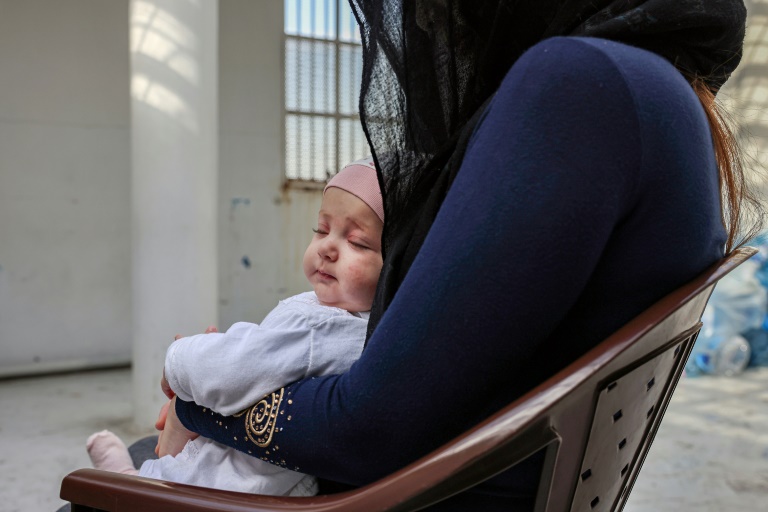
Nour is raising her four-month-old daughter in Lebanon’s most overpopulated women’s prison, struggling to get formula and nappies for her baby as the country’s economy lies in tatters.

“I don’t have enough milk to breastfeed, and baby formula isn’t readily available,” said the 25-year-old, who was detained eight months ago on drug-related accusations.

“Sometimes my daughter doesn’t have formula for three days,” she added, as green-eyed Amar wriggled on her lap.

Lebanese authorities have long struggled to care for the more than 8,000 people stuck in the country’s jails.

But three years of an unprecedented economic crisis mean even basics like medicines are lacking, while cash-strapped families struggle to support their jailed relatives.

Essentials like baby formula have become luxuries for many Lebanese, as the financial collapse — dubbed by the World Bank as one of the worst in recent world history — has pushed most of the population into poverty.

A months-long judges’ strike has exacerbated the situation in prisons, contributing to overcrowding.

Nour said she and her daughter shared a cell at the Baabda women’s prison with another 23 people, including two other babies.

She said she sometimes kept Amar in the same nappy overnight while waiting for her parents to bring fresh supplies, but said even they can “barely help with one percent of my baby’s needs”.

In a hushed voice, she said the shower water gave her and her daughter rashes, but that Amar had never been examined by a prison doctor.

“We all make mistakes, but the punishment we get here is double,” Nour said.

– ‘We need basics’ –

Inmates at the prison, located outside the capital Beirut, spoke to AFP in the presence of the prison director and declined to provide their surnames.

Around them, in the facility’s breakroom, paint peeled off the walls and water dripped from the ceiling.

Rampant inflation and higher fuel prices have also prevented families from visiting their jailed relatives regularly.

Bushra, another inmate, said she had not seen her teenage daughter for nine months because her family could not afford transportation.

She was detained earlier this year on slander allegations and has been in jail ever since.

“I miss my daughter,” said the tattooed 28-year-old, as her eyes welled up with tears.

“So many mothers here cannot even see their children,” she added.

Interior Minister Bassam Mawlawi said in September that Lebanon’s economic crisis had “multiplied the suffering of inmates”.

His ministry has appealed for more international support for the prison system, citing overcrowding, poor maintenance and shortages of food and medications.

Inmate Tatiana, 32, expressed helplessness at her and her family’s situation. She said her mother had slipped into poverty and was living on just $1 a day.

Prisoners “need basics: shampoo, deodorant, clothes,” said Tatiana, who has been waiting for a court hearing for nearly three years.

“But our parents cannot afford them for themselves, how can they buy those things for us?” she added, dark circles lining her eyes.

– ‘Absent state’ –

Tatiana is among the nearly 80 percent of Lebanon’s prison population languishing in pre-trial detention, according to interior ministry figures. Prison occupancy stands at 323 percent nationwide.

The country’s already slow judiciary has been paralysed since August, when judges started an open-ended strike to demand better wages.

Inmates told AFP they slept on dirty mattresses strewn on the floor in a one-toilet cell shared between more than 20 people.

Baabda women’s prison director Nancy Ibrahim said more than 105 detainees were crammed into the jail’s five cells, compared to around 80 before the economic collapse.

Non-governmental organisations help with everything from food to “medications, vaccinations for the children” and maintenance, she told AFP from her office at the facility.

Rana Younes, 25, a social worker at Dar Al Amal, said her organisation helps women prisoners get the basics including sanitary pads, and also provides legal assistance and even funding for cancer treatments.

She said prisoners sometimes missed court hearings because authorities failed to secure fuel or transportation for them.

Dar Al Amal has spent thousands of dollars on repairs for worn-out pipes and trucked-in water supplies at the Baabda prison, said organisation director Hoda Kara.

“Parents can no longer help, the state is absent, so we try to fill the gap,” she said.

Close Bitnami banner
Bitnami