World

Bomb wounds Russian in C.Africa, France denies claim it was responsible

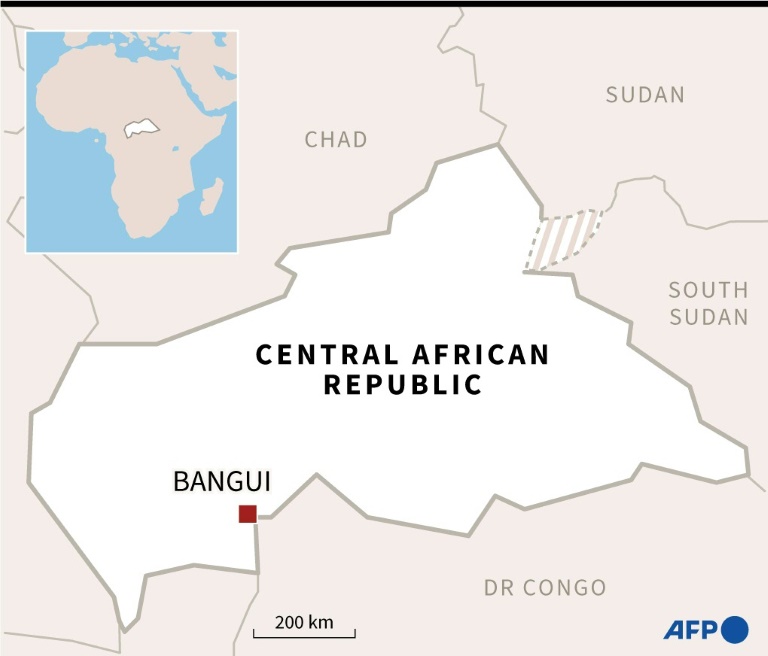
A Russian representative in the Central African Republic was badly wounded Friday after opening a parcel bomb, Moscow’s embassy said, as a prominent pro-Kremlin figure claimed France was behind the blast, which Paris denied.

France rejected the claim by the boss of Russia’s Wagner mercenary group, Yevgeny Prigozhin, that Paris was involved and should be designated a state sponsor of terrorism.

Central Africa has been battling civil war since 2013 and is at the heart of Russia’s bid for strategic influence in Africa.

The last French troops deployed in CAR left on Thursday following a chill in relations caused by closer ties between Bangui and Moscow and the deployment of Russian forces, which some countries say includes Wagner mercenaries.

“The head of the Russia House (cultural centre) received an anonymous parcel on Friday, opened it and an explosion happened,” the embassy said, quoted by the official TASS news agency.

The centre’s head Dmitry Sytyi was hospitalised with “serious injuries,” it added.

“I have already requested the Russian foreign ministry to initiate the procedure to declare France a state sponsor of terrorism,” Prigozhin was quoted as saying in a statement released by his company, Concord.

He called for a “thorough investigation” into “the terrorist methods of France and its Western allies — the United States and others.”

France’s top diplomat on Friday denied Prigozhin’s claims.

“This information is false and is a good example of Russian propaganda and the fanciful imagination that sometimes characterises it,” Foreign Minister Catherine Colonna told AFP during a visit to Morocco.

– ‘Son’s head’ –

Prigozhin, an ally of Russian President Vladimir Putin, said it was unclear if Sytyi would make it.

“Russian doctors are doing everything they can in the Bangui hospital to save him,” Prigozhin said.

Before losing consciousness, Prigozhin claimed Sytyi saw a note that allegedly said: “This is for you from all the French, the Russians will get out of Africa.”

Prigozhin said Sytyi first received a parcel from Togo on November 11. It contained a picture of his son residing in France and a note saying “next time he will receive his son’s head” if the Russians do not leave Africa.

Prigozhin said Sytyi opened a new package on Friday because he had thought it would contain his son’s head.

Russia’s RIA Novosti agency quoted a Russian diplomat saying Sytyi received the parcel at his home, away from the cultural centre. “He received it, took it into his house and opened it,” the diplomat said.

The centre in downtown Bangui remained open on Friday. No police presence could be seen around the building where traffic was normal, AFP reporters said.

France, the former colonial power, dispatched up to 1,600 troops to help stabilise CAR after a coup in 2013 unleashed a civil war along sectarian lines.

Over the last few years, friction has grown between the two nations over a mounting Russian military presence.

In 2018, Moscow sent instructors to the country, and in 2020 followed this with hundreds of paramilitaries to help President Faustin Archange Touadera defeat rebels advancing on the capital.

France, the UN and others say they are mercenaries from the Kremlin-backed Wagner group, who have been linked with atrocities and looting of resources.

Sanctioned by Washington and Brussels, Prigozhin has emerged as one of Putin’s most loyal lieutenants after Moscow sent troops to Ukraine on February 24.

In November, the European Parliament recognised Russia as a “state sponsor of terrorism”, accusing its forces of carrying out atrocities during its offensive in Ukraine.

Analysts doubt Ukrainian claims about Russian offensive

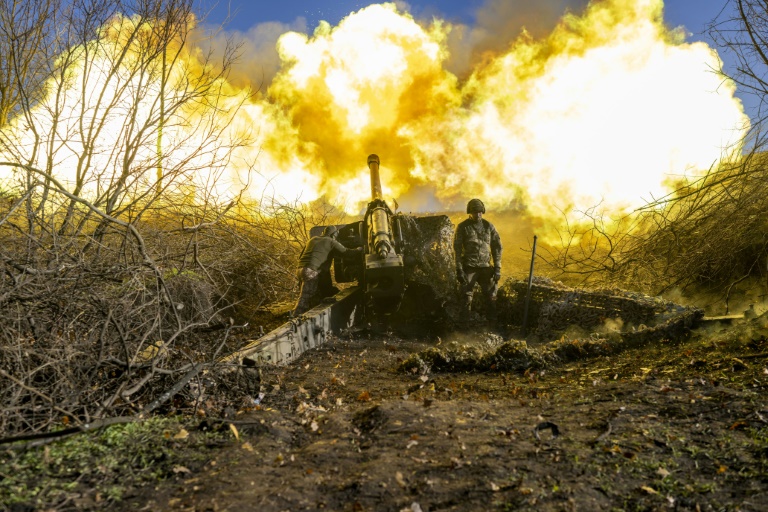
Ukraine claims that Russia is preparing a fresh offensive against Kyiv early next year, but analysts doubt that Moscow can regenerate its battered forces for such a major operation is so short a timeframe.

Speaking to The Economist magazine this week, Ukrainian commander-in-chief General Valeriy Zaluzhny said he expected a new Russian assault on Kyiv in the first months of 2023.

“The Russians are preparing some 200,000 fresh troops. I have no doubt they will have another go at Kyiv,” Zaluzhny said.

A major Russian attack could come “in February, at best in March and at worst at the end of January,” he added.

Although Russia mobilised 300,000 reservists between September and October, military experts say the new troops are unlikely to be sufficiently trained or equipped to attempt another storming of the Ukrainian capital.

A first attempt in February and March ended in humiliation thanks to fierce defensive efforts by Ukraine coupled with major supply, intelligence and command problems in the Russian ranks. 

“Such an offensive does not appear very probable to me, but it’s not impossible at the same time,” independent Russian military analyst Alexander Khamchikhin told AFP.

Discussing Russian capabilities recently, US military expert Michael Kofman also judged Russia going on the offensive as a “rather unlikely scenario”.

“They have significant ammunition constraints and the Russian military’s performance now is very closely tied to the availability of artillery ammunition fires,” Kofman told the War on the Rocks podcast.

Asked about the comments on Friday, the White House cast doubt on them.

“We aren’t seeing any indication that there’s an imminent move on Kyiv,” said White House spokesman John Kirby.

Pentagon spokesman Pat Ryder declined “to get into speculating on potential future ops” but added that “we know that Russia continues to try to take offensive action.”

– Russian commander –

Russia’s future military capabilities in Ukraine will depend in large part on new commander Sergey Surovikin, a veteran of Moscow’s wars since the Soviet invasion of Afghanistan.

The shaven-headed general with a reputation for ruthlessness has been tasked with integrating the newly drafted soldiers and regenerating Russia’s badly damaged combat units.

Australian general Mick Ryan stressed that Surovikin was also working on unifying Russia’s fractured command system and trying to better integrate air support with ground operations.

“Surovikin commands an army that suffers from low morale and keeps losing its people and best equipment,” Ryan wrote in Foreign policy magazine.

“So far, evidence suggests that the troops Russia has mobilized to replace the dead and injured are not receiving the kind of demanding training they need to succeed.”

He warned, however, that the Siberia-born commander was “almost certainly drawing up battle plans that are clearly focused, unlike past assaults that spread Russia’s troops thin.”

– Western help –

Any attack on Kyiv would be immensely complicated and the city would be almost impossible to capture without destroying it.

“Taking a city without destruction is difficult, apart from cases where there is a decision to surrender, such as in Paris in 1940,” Khamchikhin said.

Pascal Ausseur, director of the Mediterranean Foundation for Strategic Studies, a France-based think-tank, said the Ukrainian claims were an effort to concentrate minds in Western capitals.

Ukraine has held out since February and turned the tide of Russia’s invasion thanks to an influx of Western financial help and high-tech weaponry.

“The Ukrainians are shouting ‘keep helping us, don’t let us down’,” Ausseur told AFP. “These statements are destined for the West to say ‘we can still lose everything’.”

They might also be a diversion tactic as Ukraine looks to go on the attack in the southeast as the ground freezes in mid-winter, making it easier for vehicles to travel off-road.

“I would find it strange for the Ukrainians to put themselves in defensive positions which would stop them launching an offensive operations before March,” Ausseur said.

burs-dla/adp/js/jj

Goldman Sachs to cut up to 8% of staff: reports

Goldman Sachs could cut up to eight percent of its staff, or around 4,000 jobs, according to reports Friday, as the financial giant eyes sluggish global growth in 2023.

The job cuts are expected early in 2023, according to reports in Semafor and CNBC that said the final figure could ultimately be smaller than eight percent.

Goldman Sachs typically trims about one to five percent of headcount each year, targeting underperforming staff.

This year’s culling will be deeper than usual in light of the uncertain economic outlook and the growth in Goldman’s staffing in recent years, a person familiar with the matter told AFP.

Goldman’s staff stood at 49,100 at the end of October, up nearly 30 percent from the end of 2019 after hiring campaigns and acquisitions.

The move comes as Goldman Sachs and other investment banks have seen a big drop in fees tied to initial public offerings and described a cloudy outlook for merger and acquisition advising in 2023 due to economic uncertainty.

At a financial conference last week, Goldman Chief Executive David Solomon said capital markets activity had also been weaker than expected, with clients “taking risk down” after a volatile year.

“At the same time, we continue to see headwinds on our expense lines, especially in the near term,” Solomon said. “Ultimately, we will remain nimble and we will size the firm to reflect the opportunity set that we see in front of us.”

Pristine Colombian island in tug of war over coast guard base

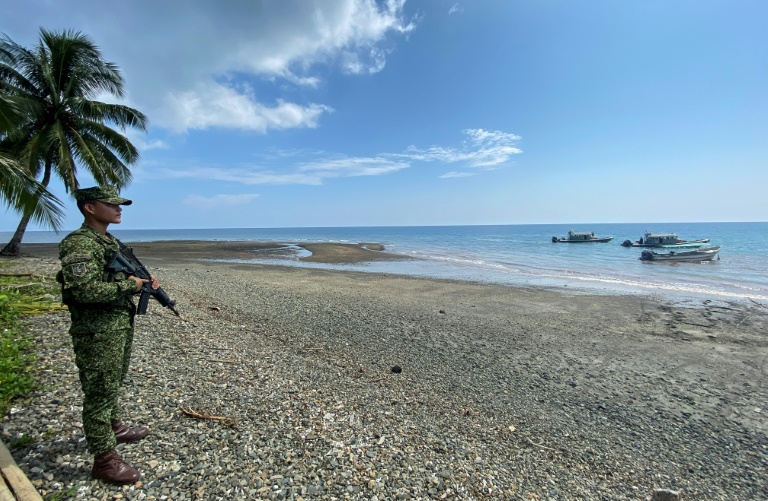
Just off Colombia’s Pacific coast lies a dot of an island that is postcard perfect: mountains, lush jungle, pristine beaches, humpback whales and other animals that find the place irresistible.

Enter the Colombian military, which is building a US-financed coast guard station on Gorgona Island, and a spat is served up — one that is challenging Colombia’s new leftist president, Gustavo Petro, to make good on promises to fight climate change and be an environmental champion.

Environmental groups filed a class action lawsuit last month asking a judge to suspend construction of the base, which the navy says will help it fight drug trafficking and other crime.

“But even better would be for Dr Petro to fulfill the promises he made as a candidate,” said Jorge Robledo, a former senator serving as spokesman for the conservation groups who filed the suit.

“If the president, who is commander in chief of the armed forces, wants to end this project he can do it in a second,” said Robledo.

He said Petro, who took office in August, has to fulfill the ambitious conservation and climate change program he campaigned on.

The navy says the coast guard base will give it a tactical advantage in fighting drug trafficking and environmental crimes like poaching.

“If the project is not carried out, the ones who come out winning are the criminals,” coast guard commander Javier Bermudez told AFP.

Gorgona — the name comes from the snake-haired gorgons of Greek mythology — is situated in a maritime corridor used to smuggle drugs northward.

Bermudez said three environmental impact studies have been done to assess the risk posed by the base.

-Fragile ecosystem –

Some say the protected nature reserve set up on and around Gorgona Island is as rich in biodiversity as the Galapagos islands off the coast of Ecuador.

Colombians know it for a darker reason, however: it used to house a prison where prisoners deemed to be the most dangerous were sent and tortured. That facility operated from the 1960s until 1984.

These days the island 60 kilometers (40 miles) off the southwestern coast of Colombia is better known for its tourists, who are lured by its coral reefs, exotic fauna and lush forests.

Felipe Gulh, a biologist at the University of the Andes, said the base construction work will surely harm the island, which is only 11 kilometers long and four kilometers wide.

He called Gorgona a fragile biological sanctuary where any kind of human intervention will hurt the coral reefs, fish and animals. 

In 2015 the government agency that grants environmental certification approved construction of the base, which will feature a 132 meter dock, a radar installation and housing for military personnel.

The project is receiving financing from the United States, which is the main partner of Colombia — the world’s top cocaine producer — in fighting drug trafficking.

The navy says that in waters near the island a variety of crimes are committed in addition to drug smuggling: contraband, illegal fishing, deforestation, poaching, sea pollution and others.

“Why build a base on the island when it could just as well be on the coast?” Gulh asked. “A 60 kilometer distance from the island to land should not make much of a distance what with the technology that we have today” when it comes to surveillance, he said.

– ‘Environmental authority’ –

Some 6,400 tourists visit the island every year, and have to make an awkward disembarkation because it has no dock at present, said Daniel Agudelo, who runs the nature parks on Gorgona and says the base project is feasible.

Commander Bermudez of the coast guard said the base is needed to fight crime.

“We cannot have protected areas made out of paper. We need the work of police to exercise that environmental authority,” he said.

Guhl said the project must be halted because “from a biological standpoint, Gorgona Island is a treasure.” 

Putin 'planning for a long war' in Ukraine: NATO chief

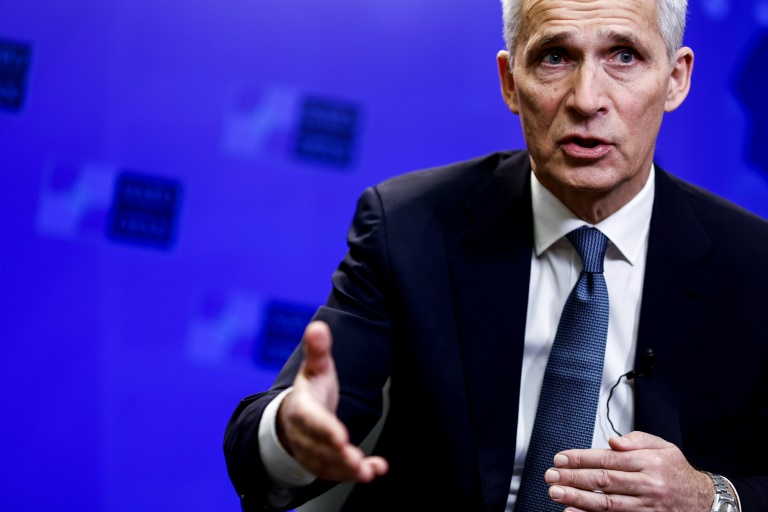
Russia is readying for a protracted war in Ukraine and Kyiv’s NATO backers must keep sending weapons until President Vladimir Putin realises he “cannot win on the battlefield”, alliance chief Jens Stoltenberg told AFP on Friday.

Almost 10 months into Moscow’s invasion, Kyiv’s forces have inflicted a succession of defeats on the Kremlin that have seen swathes of territory liberated.

But NATO Secretary General Stoltenberg warned there was no sign Putin had “given up his overall goal of controlling Ukraine”.

“We should not underestimate Russia. Russia is planning for a long war,” Stoltenberg said in an interview. 

“We see that they are mobilising more forces, that they are willing to suffer also a lot of casualties, that they are trying to get access to more weapons and ammunition,” he added.

“We have to understand that President Putin is ready to be in this war for a long time and to launch new offensives.”

NATO allies, led by the United States, have sent billion of dollars of weaponry to Ukraine that have helped it turn the tables in the conflict and put Moscow on the back foot.

“Most likely this war will end at the negotiating table, as most wars do,” Stoltenberg said, insisting any solution should ensure “Ukraine prevails as a sovereign, independent nation.

“The fastest way to achieve that is to support them militarily so President Putin understands that he cannot win on the battlefield but has to sit down and negotiate in good faith.”

– ‘Ramping up production’ –

In response to its setbacks on the battlefield, Moscow has unleashed waves of missile and drone strikes against Ukraine’s civilian energy infrastructure.

US reports say Washington is finalising plans to send its most advanced Patriot missile batteries to Ukraine to add to other Western air-defence systems provided to Kyiv.

Stoltenberg said there was a “discussion going on” about delivering Patriots, but pointed out that NATO allies had to make sure there was enough ammunition and spare parts to keep weapons sent so far working.

“We have a dialogue among allies on additional systems, but it becomes more and more important to ensure that all the systems that are delivered are functional.”

Ukraine’s demands for more weapons and a huge flow of ammunition have drained the stockpiles of NATO members and sparked fears the alliance’s defence industries may not be able to produce enough.

“We are ramping up production to do exactly that: to be able both to replenish our own stocks for deterrence and defence, and to continue to provide support to Ukraine for the long haul,” Stoltenberg said. 

In the short term, that means more shifts at factories to maximise output and over time bolstering joint purchases of weapons and giving industry “long-term demand signals so they can invest more,” he said.

– ‘Pivotal moment’ –

Putin’s full-scale invasion of Ukraine has been a seismic shock for the West. 

It has forced NATO to carry out its biggest adaptation since the end of the Cold War by massively bolstering its eastern flank and it has seen Finland and Sweden push to enter the alliance.

“This is the most dangerous security crisis we have been in in Europe since the Second World War,” Stoltenberg said. 

“This is a pivotal moment for security.”

Stoltenberg said that while there had been a drop-off recently in nuclear threats from Putin, the alliance remained “vigilant and will constantly monitor what they do.

“Nuclear rhetoric in reference to potential use of nuclear weapons is reckless, is dangerous,” the NATO chief said. 

“His aim is of course to deter us from supporting Ukraine, but he will not succeed in doing that.”

Stoltenberg’s current term as NATO head is set to expire towards the end of 2023, after allied leaders in March extended his tenure for an extra year because of the war raging in Ukraine. 

The former Norwegian prime minister, 63, remained non-committal on whether he would definitely leave the post next year, saying only “I have no other plans”.

He would not be drawn on calls from some for a woman to succeed him as NATO’s first female secretary general. 

“My focus is on fulfilling my responsibilities as secretary general of NATO in a way that ensures that this alliance continues to stand together,” he said. 

“That’s my only focus and then I leave it to the heads of state and government to decide what happens after my term.”

Protests strand 5,000 tourists in Machu Picchu gateway city

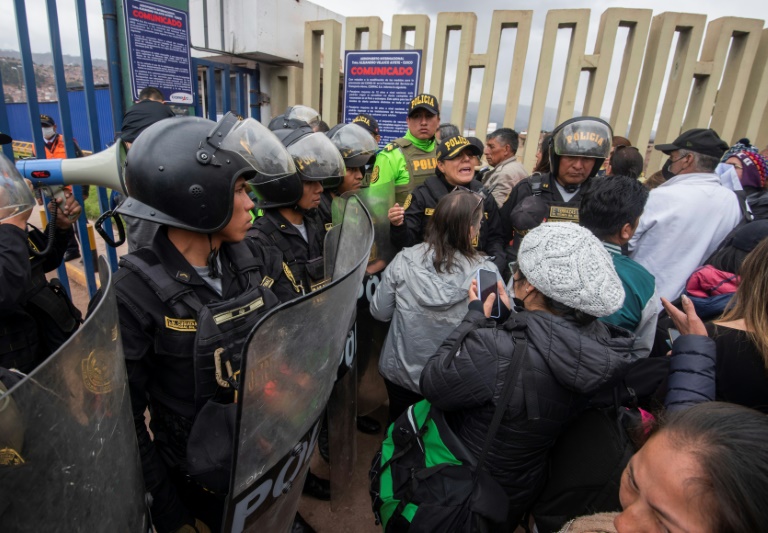
Around 5,000 tourists have been left stranded in Cusco, the Peruvian gateway city to the Inca citadel of Machu Picchu, due to protests against the ousting of president Pedro Castillo, a local mayor said Friday.

Cusco international airport, which serves numerous tourist sites in the region, has been closed since Monday when protesters tried to storm the terminal. It is Peru’s third largest airport.

Several major roads in Cusco, the old Inca capital, have also been blocked by protesters.

“There are 5,000 tourists stranded in the city of Cusco, they are in their hotels waiting for flights to restart,” Darwin Baca, mayor of the nearby town of Machu Picchu, told AFP.

The rail service that serves Machu Picchu has been suspended since Tuesday, leaving around 800 tourists stranded in the small town at the foot of the mountain where the Inca citadel stands.

Around 200 mostly American and European tourists have left the town on foot along the train tracks in a bid to reach the town of Ollantaytambo, 30 kilometers (20 miles) away, from where they would be able to take a train to Cusco.

“What they fear is getting to Cusco and then not being able to go to their country because this could get worse,” said Baca.

Trouble broke out in Peru last week after Castillo was impeached and arrested following his attempt to dissolve parliament and rule by decree.

Initially detained for seven days, Castillo was on Thursday ordered to spend 18 months in pre-trial detention.

The leftist former schoolteacher stands accused of rebellion and conspiracy, and could be jailed for up to 10 years if found guilty, according to public prosecutor Alcides Diaz.

Castillo’s successor Dina Boluarte has declared a nationwide state of emergency for 30 days.

Authorities say 18 people have been killed in clashes between protesters and security forces over the last week.

Another six people have died in incidents related to road blocks, such as being prevented from reaching a hospital.

At least 340 people have been injured in the clashes, according to Peru’s rights ombudsman. Police say more than 200 officers are among the injured.

UK royals declare peace after race row with charity head

Buckingham Palace on Friday declared a reconciliation between Prince William’s godmother and a black British woman who was repeatedly asked where she was “really” from.

Sistah Space charity founder Ngozi Fulani was grilled at a palace reception on November 29 by Susan Hussey, who refused to accept that she was British.

After Fulani revealed the exchange, the 83-year-old Lady Hussey stepped down from her role as a household companion to Queen Consort Camilla, the wife to King Charles III.

William’s spokesman said at the time: “Racism has no place in our society.”

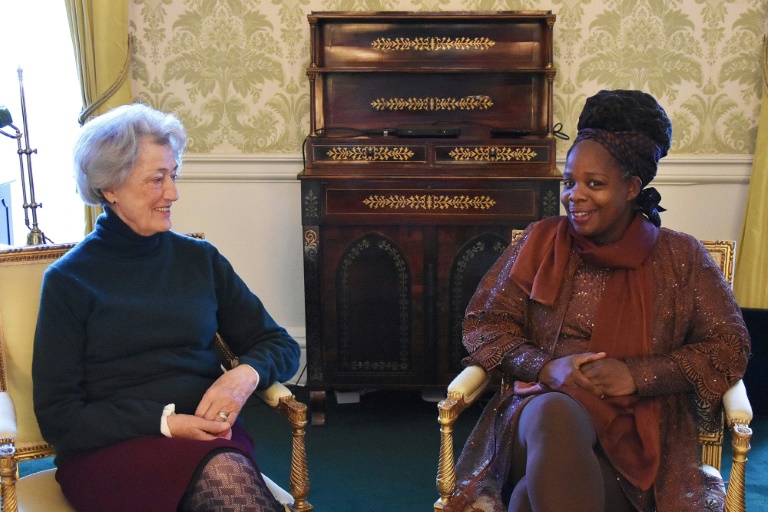
Fulani and Hussey on Friday held a meeting at Buckingham Palace and said in a joint statement issued by royal officials it was “filled with warmth and understanding”.

Hussey offered her “sincere apologies” and pledged to learn more about the racial sensitivities involved, while Fulani accepted the apology “and appreciates that no malice was intended”.

Fulani, who works to help black survivors of domestic abuse, had received “the most appalling torrent of abuse on social media and elsewhere”, the palace noted, after she was forced to suspend her charity work to protect her clients and staff.

Charles, Camilla and other royals “are pleased that both parties have reached this welcome outcome”, the statement concluded.

The row erupted in the days before William’s estranged brother Prince Harry and wife Meghan issued fresh allegations of racism in the family, in their Netflix documentary series.

Foreign Secretary James Cleverly, who like Meghan is mixed race, rallied to the royals’ defence at the weekend.

He said there was no stronger supporter of a multicultural Britain than Charles, Harry’s father.

“And I think the royal family’s attitude to this country reflects the modern country that we see,” Cleverly told Sky News.

pjit/phz/pvh

France confirms contract to develop next-generation fighter jet

The French army on Friday officially awarded the contract to develop a new European combat jet, a key project in the push to integrate the continent’s military capabilities and reduce its reliance on American equipment.

French and German officials announced the deal last month, burying the hatchet after months of dispute over how the industrial work would be shared out for the stealth delta-wing aircraft.

European planemaker Airbus and France’s Dassault Aviation, joined by Spain’s Indra and a host of subcontractors, will collaborate on the so-called Future Combat Air System against a rival project, Tempest, pursued by Britain, Italy, Sweden and Japan.

“This historic contract, worth 3.2 billion euros [$3.4 billion], will cover the work on a demonstrator of the FCAS and its components for around three and a half years,” the companies said in a statement.

Analysts estimate it will cost 100 billion euros to develop the new jet and its cutting-edge technologies including artificial intelligence for a linked “combat cloud” of drones, scheduled to be operational in 2040.

“This is a major step forward with an important project to protect our strategic interests,” French Defence Minister Sebastien Lecornu said in a statement.

Upon completion of the development phase, known as 1B, the countries will negotiate the actual construction phase for the jets, with the first flight demonstrations expected in 2028 or 2029.

“The political agreement on the FCAS is a big step forward and — especially in the current international context — an important signal of the excellent cooperation between France, Germany and Spain,” the office of French President Emmanuel Macron said when the deal was announced last month. 

So far no other European nations have signed on to build the new plane, and a previous French-German plan to build a common fighter failed, leading to the development of the Rafale and Eurofighter jets currently in use.

Germany had also worried many in Paris last March when it announced a deal to buy 35 F-35 jets from US firm Lockheed Martin. 

The planes are certified to carry US nuclear warheads kept in Europe as part of the NATO defence alliance — which the new French-German jets are also expected to do.

Stocks, oil prices extend losses on recession fears

Stock markets dropped further Friday on prospects of more aggressive rises in interest rates to fight inflation, renewing concerns over the global economy entering recession next year.

After a healthy rally in recent weeks fuelled by signs that price rises were slowing, the US Federal Reserve, European Central Bank and Bank of England this week crushed any Christmas spirit by hiking borrowing costs again by sizeable amounts and warning of more pain.

While inflation in most countries has started coming down — helped by a drop in energy costs — it remains at multi-decade highs.

Observers have warned that economies could be heading for a period of stagflation where prices keep rising but growth stalls.

“In a nutshell, it is all about fears over a sharper economic slowdown in 2023 than previously expected,” noted Fawad Razaqzada, market analyst at City Index trading group.

“While macro data have been weak of late, there was still hope that the downturn might be short-lived and that a recession might be avoided in some regions altogether, amid signs of inflation peaking in some regions like the US.”

The latest rate hikes came as data showed US and UK retail sales dropping in November as consumers — key drivers of growth — feel the pinch from high prices and rate hikes.

– Recession on horizon? –

Eurozone and London shares all closed firmly in the red.  

Wall Street stocks meanwhile extended losses too, dropping more than one percent by mid-session.

OANDA analyst Craig Erlam said the prospect of a “Santa rally” was fading.

“Going into December, there was growing optimism that policymakers could be a source of optimism going into the new year but instead, they’ve taken on the role of grinch, bringing a swift end to the celebrations,” he added.

Earlier, Asia had also seen losses, with Tokyo closing down 1.9 percent.

On the upside, Hong Kong rose on progress in talks over allowing US officials to audit Chinese firms listed in New York, easing concerns about a possible delisting of some big names such as Alibaba and Tencent.

The news provided a little more help to Hong Kong traders, whose sentiment has been lifted also by China’s shift away from the economically damaging zero-Covid policy as well as moves to open the city further to overseas visitors.

And a report in Hong Kong’s South China Morning Post said the border with mainland China would be fully reopened next month, providing another much-needed boost to the beleaguered economy.

However, the mood was soured a little by a US decision to put 36 Chinese companies including top producers of advanced computer chips on a trade blacklist, severely restricting their access to any US technology.

– Key figures around 1645 GMT –

London – FTSE 100: DOWN 1.3 percent at 7,332.12  points (closing)

Frankfurt – DAX: DOWN 0.7 percent at 13,893.07 (closing)

Paris – CAC 40: DOWN 1.1 percent at 6,452.63 (closing)

EURO STOXX 50: DOWN 0.8 percent at 3,804.02  

New York – Dow: DOWN 1.2 percent at 32,800.82 

Tokyo – Nikkei 225: DOWN 1.9 percent at 27,527.12 (close)

Hong Kong – Hang Seng Index: UP 0.4 percent at 19,450.67 (close)

Shanghai – Composite: FLAT at 3,167.86 (close)

West Texas Intermediate: DOWN 2.6 percent at $74.13 per barrel

Brent North Sea crude: DOWN 2.9 percent at $78.84 per barrel

Euro/dollar: DOWN at $1.0605 from $1.0627 on Thursday

Pound/dollar: DOWN at $1.2163 from $1.2175

Euro/pound: DOWN at 87.18 pence from 87.26 pence

Dollar/yen: DOWN at 136.60 yen from 137.80 yen

Pope to return three Parthenon fragments to Athens

Pope Francis is to return to Greece three fragments of Athens’ Parthenon temple, in what the Vatican called Friday a gesture of friendship.

The fragments from the Parthenon on the Acropolis, a UNESCO World Heritage Site, have been held for centuries in the papal collection and Vatican Museums.

Francis has decided “to donate” them to the Orthodox Archbishop of Athens, “as a concrete sign” of his desire to nurture interreligious relations, the Vatican said.

No date was given for the return of the fragments.

Greece’s cultural ministry welcomed the restitution, saying in a statement that it appreciated the pope’s “spiritual and fraternal gesture towards the Greek Orthodox Church”.

The Parthenon is one of the most famous ancient monuments in the world.

The temple was originally dedicated to the goddess Athena, before being transformed into a church and then a mosque.

The marble fragments include the head of a horse, one of the four horses drawing Athena’s mythical chariot, according to the Vatican Museums website.

It comes from the west front of the building, on which Athena and Poseidon — the god of the sea — were shown competing for dominion over Attica.

The second is the head of a young boy, believed to be depicted carrying a tray of voting cakes, which were offered during a procession to commemorate the founding of Athens.

The last is a bearded male head from an area of the building featuring a battle between the Lapiths, a mythical group of people, and Centaurs — creatures part horse, part man.

The Parthenon has not been a place of worship since it was partially destroyed during an attack by the Venetians in 1687, then looted.

Its fragments were scattered throughout the main museums of the world.

Since the beginning of the 20th century, Greece has been trying to recover them.

In 2008, the Vatican returned a fragment from the North frieze of the Parthenon, which it had been given in the early 19th century.

But others are less willing to set what some see as a dangerous precedent on returns.

The UK government warned the British Museum in London this month against a possible plan to hand back key pieces, saying it was legally forbidden to break up its vast collection.

Close Bitnami banner
Bitnami