World

Half of Europeans vaccinated as Germany warns on rising virus cases

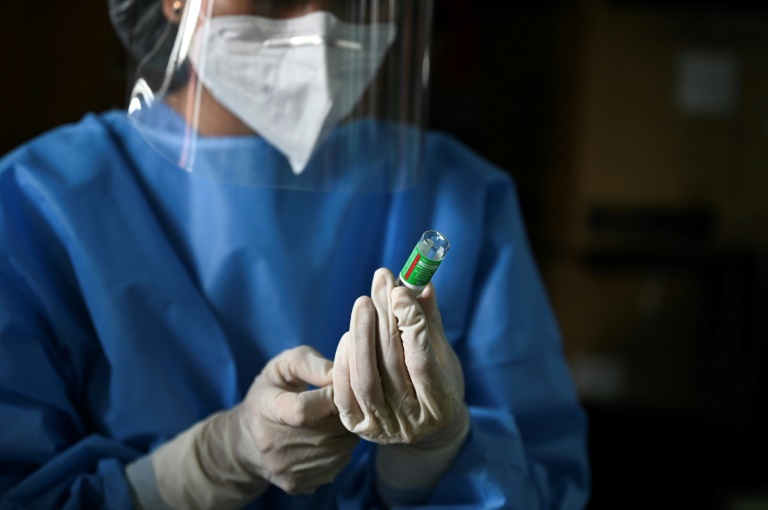
More than half of all European adults are now fully vaccinated, the EU said on Thursday, as  countries across Europe and Asia battle fresh outbreaks blamed on the fast-spreading Delta variant. 

The European Central Bank said uncertainty over the wave of infections meant it was keeping the cash taps open to ensure the nascent economic recovery isn’t snuffed out.

German Chancellor Angela Merkel said cases in her country were rising “exponentially”, while in Japan the delayed Olympic Games were set to open with almost no spectators and with a blanket of Covid rules in place.

The spotlight, meanwhile, once again turned on the origins of the virus after the WHO called for an audit of the Chinese lab at the heart of speculation about where it first emerged, sparking a fiery response from Beijing.

More than four million people have died from the virus since December 2019, and though rates of vaccination are picking up globally, Delta is fuelling a rise in infections and prompting governments to re-impose anti-virus measures.

The EU said on Thursday that 200 million Europeans had been fully vaccinated, more than half of the adult population but still short of a 70 percent target set for the summer. 

The fresh data came as Merkel urged more Germans to get jabs, sounding the alarm over a fresh spike in cases in Germany. 

“We are seeing exponential growth,” she told a news conference in Berlin, adding that “every vaccination… is a small step towards a return to normality”.

Germany has seen an incidence rate of 12.2 new cases per 100,000 people over the past seven days — more than double rates in early July.

“With a rising incidence rate, it could be that we need to introduce additional measures,” she said.

– Dominant Delta –

Germany joins a number of European nations that have seen cases climb in recent weeks fuelled by the Delta variant, first detected in India. 

European Central Bank chief Christine Lagarde warned of growing economic uncertainty caused by Delta, as the bank kept its vast stimulus for the eurozone firmly in place following a meeting of its 25-member governing council.

“The euro area economy is rebounding strongly,” Lagarde said, but the Delta variant could damp the post-lockdown recovery “in services, especially in tourism and hospitality”, she said.

France this week rolled out new rules requiring a so-called health pass for all events or places with more than 50 people before being extended to restaurants, cafes and shopping centres in August.

People need to show proof of vaccination or a negative test to gain access, after the country reported a new surge — more 21,000 new cases on Wednesday, the highest level since early May.

Cases are also soaring in the UK, where most restrictions were lifted this week, and on Thursday British supermarkets warned of possible food shortages because staff were being forced to self-isolate. 

Countries in Asia are seeing some of their worst outbreaks to date, with Indonesia becoming a new global hotspot as Vietnam and Thailand face new anti-virus rules.

In Tokyo, the Olympics were due to open on Friday after a year-long pandemic delay.

Spectators are mostly banned, and athletes, journalists and organisers are subject to strict virus measures. 

“It’s completely different from the last Games (in 1964) when the whole city was filled with festive mood,” said 80-year-old Tokyo resident Michiko Fukui. 

With no clear end to the pandemic in sight, attention turned once again to the international probe origins of the virus. 

The WHO said last week that the probe should include audits of Chinese labs, but Chinese Vice Health Minister Zeng Yixin said on Thursday that he was “extremely surprised” by the WHO plan, which he said showed “disrespect for common sense and arrogance towards science”.

burs-jv/jxb/pbr
'Hotel Rwanda' hero to learn 'terror' trial verdict in August

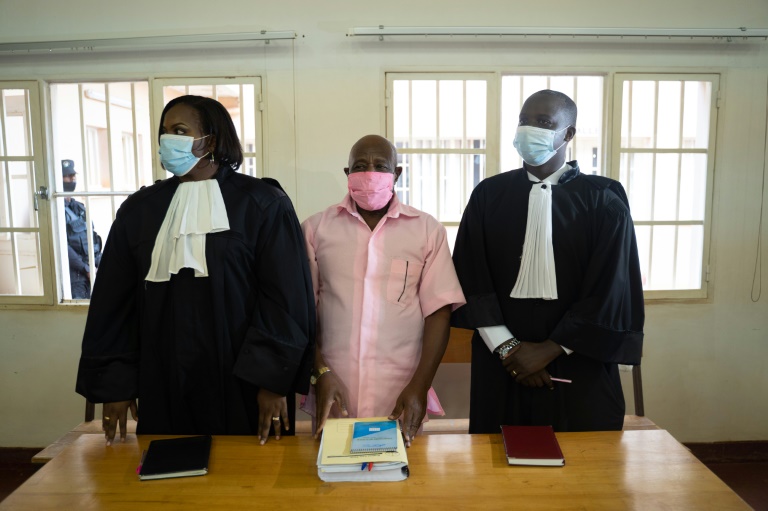
A Kigali court said on Thursday it will issue its verdict next month against detained “Hotel Rwanda” activist turned government critic Paul Rusesabagina, who is charged with terrorism in a trial denounced as political by his supporters.

Prosecutors last month sought a sentence of life in prison against Rusesabagina, who inspired the Hollywood film over his actions during the 1994 genocide that saved the lives of about 1,000 people.

Judge Antoine Muhima said the verdict in the trial against Rusesabagina and 20 other defendants, which opened in February, would be delivered on August 20.

Rusesabagina was arrested in August when a plane he believed was bound for Burundi landed in Kigali instead, a move his supporters describe as a kidnapping. 

The 67-year-old ethnic Hutu faces nine charges, including terrorism, but has boycotted the trial since March, accusing the court of “unfairness and lack of independence”.

The judge defended the conduct of the trial, saying: “Whoever wanted to speak was given the time. No one was denied their right to speak.”

– Conflicting testimony –

Rusesabagina, the former manager of Kigali’s Hotel des Mille Collines, was portrayed by Don Cheadle in the 2004 film that told how he sheltered people during the genocide in which an estimated 800,000 died, most of them ethnic Tutsis.

He subsequently became a prominent and outspoken critic of President Paul Kagame, a Tutsi. He has lived in exile in the US and Belgium since 1996.

Kagame’s government accuses him of supporting the National Liberation Front (FLN) rebel group which is blamed for attacks in 2018 and 2019 that killed nine people.

Rusesabagina has denied any involvement in the attacks, but was a founder of the Rwandan Movement for Democratic Change (MRCD), an opposition group of which the FLN is seen as the armed wing. 

Seeking a life term, prosecutor Jean Pierre Habarurema said last month that Rusesabagina “encouraged and empowered the fighters to commit those terrorist acts”.

During the trial, his co-defendants gave conflicting testimony over the level of Rusesabagina’s involvement with the FLN and its fighters.

The announcement of the verdict date came just days after a media investigation claimed that Rusesabagina’s daughter was spied on using Pegasus malware developed by Israeli company NSO.

Carine Kanimba, a US-Belgian dual national, has played a key role in efforts to free Rusesabagina and has accused the authorities of torturing him and depriving him of his rights.

“Countries that hold fair trials and prosecute strong cases don’t resort to tapping attorney-client conversations or seizing attorney-client documents,” Rusesabagina’s US-based lawyer Peter Choharis said in a statement issued by the Paul Rusesabagina Foundation on Tuesday. 

Batch of 736,000 Chinese vaccines arrives in Myanmar

A batch of Chinese Covid-19 vaccines arrived in Myanmar on Thursday, an AFP reporter said, as the coup-wracked country battles a devastating new surge in cases.

Myanmar has been in turmoil since the military ousted civilian leader Aung San Suu Kyi, and the latest wave of the pandemic has struck with many hospitals empty of pro-democracy medical staff.

The shipment contained 736,000 Sinopharm doses, according to media controlled by the State Administration Council — as the junta dubs itself.

The junta has purchased four million vaccines from China, it said earlier this month, adding Beijing will donate a further 2 million.  

But widespread anger at the coup — and fear of being seen to cooperate with the regime — is keeping many away from military-run hospitals. 

Instead, volunteer groups across the country are fighting desperate battles to source precious oxygen and bring the dead for cremation. 

On Thursday, a shadow government of ousted lawmakers said it had formed its own Covid taskforce, and would seek international support to procure vaccines.

The “National Unity Government”, whose members are in exile or underground, did not make clear how it would be able to secure and administer vaccine doses in Myanmar.   

Around 1.75 million people have so far been vaccinated in the country of 54 million, according to authorities.

Beijing enjoys exceptional leverage over Myanmar and has refused to label the military action a coup.

Myanmar on Wednesday reported 6,701 new cases — up from around 100 per day in early June.

Earlier this month, state media reported junta leader Min Aung Hlaing had agreed to buy two million vaccines from Russia — another major ally — without specifying which shot.

Myanmar’s creaking healthcare system had struggled to respond to Covid even before the generals’ putsch.

Swathes of the country were put under partial lockdown last year, although enforcement was often lax in the developing nation where many face a stark choice between following regulations and feeding their families.

'Hotel Rwanda' hero to learn 'terror' trial verdict in August

A court in Rwanda said Thursday it will issue its verdict next month against detained “Hotel Rwanda” activist turned government critic Paul Rusesabagina, who is charged with terrorism in a trial denounced as political by his supporters.

Prosecutors last month sought a sentence of life in prison against Rusesabagina, who inspired the Hollywood film over his actions during the 1994 genocide that saved the lives of about 1,000 people.

Judge Antoine Muhima said the verdict in the trial against Rusesabagina and 20 other accused, which opened in February, would be delivered on August 20.

The former manager of Kigali’s Hotel des Mille Collines was portrayed by Don Cheadle in the 2004 film that told how he sheltered people during the genocide in which an estimated 800,000 died, most of them ethnic Tutsis.

Rusesabagina subsequently became a prominent and outspoken critic of President Paul Kagame.  He has lived in exile in the US and Belgium since 1996.

The 67-year-old was arrested in August when a plane he believed was bound for Burundi landed in Kigali instead, a move his supporters describe as a kidnapping. He faces nine charges, including terrorism.

Kagame’s government accuses him of supporting the National Liberation Front (FLN) rebel group which is blamed for attacks in 2018 and 2019 that killed nine people.

Rusesabagina has denied any involvement in the attacks, but was a founder of the Rwandan Movement for Democratic Change (MRCD), an opposition group of which the FLN is seen as the armed wing. 

The announcement of the verdict date came just days after a media investigation claimed that Rusesabagina’s daughter was spied on using Pegasus malware developed by Israeli company NSO.

Carine Kanimba, a US-Belgian dual national, has played a key role in efforts to free Rusesabagina.

Norway marks decade since Breivik massacre with anti-extremism plea

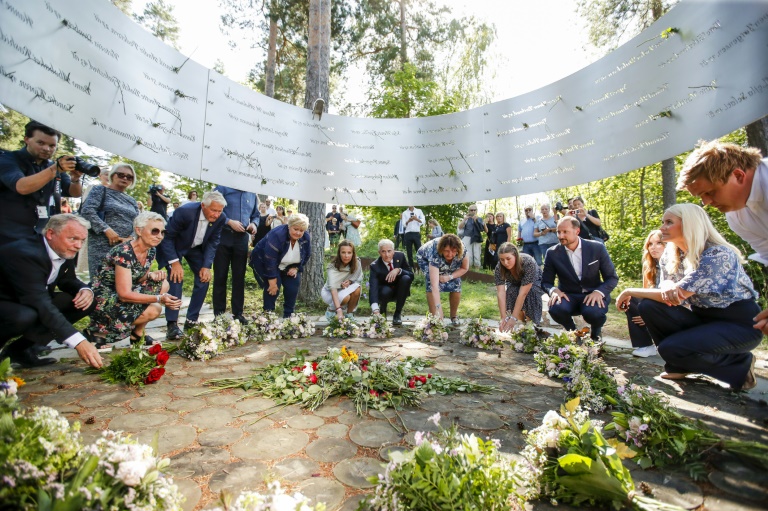
Survivors of Norway’s worst massacre since World War II called on Thursday for the country to stand up against the hatred that motivated right-wing extremist Anders Behring Breivik’s killing spree exactly 10 years ago.

Breivik set off a bomb outside the building housing the government’s office in Oslo killing eight people before shooting dozens at a summer camp organised by the Labour Party’s youth league (AUF) on the island of Utoya, leaving another 69 dead — most of them teenagers. 

“July 22 was not a random act. It was not a natural disaster,” Astrid Eide Hoem, a survivor who has since become head of the AUF, said in a speech on Utoya Thursday afternoon.

“It was a targeted political terror attack, driven by an extremist right-wing ideology. By hate.” 

The shootings on the island lasted 72 minutes, as Breivik stalked and shot panicked young people trapped on the tiny island.

– ‘Hate can kill again’ –

Breivik later said he had aimed to stage “a fireworks display” to draw attention to a 1,500-page anti-immigrant, anti-Marxist screed he dubbed a “manifesto” targeting those he blamed for ushering in the multiculturalism he abhorred.

“Ten years ago we travelled to Utoya to change the world. But then our world was changed forever,” Eide Hoem said.

“The deadly racism and right-wing extremism live among us. Hate has killed before and hate can kill again.” 

The 26-year-old ended her speech with a call to action: “Now we must settle our accounts with racism and right-wing extremism. Every single day.”

She and other survivors feel that even 10 years on Norway has still not truly faced up to the ideology that drove Breivik. 

Speaking to survivors and relatives of the victims at a morning ceremony near the government complex where Breivik detonated his 950-kilogram homemade bomb, Prime Minister Erna Solberg urged empathy and tolerance. 

“We must not let hate stand unopposed,” Solberg said.

Church bells nationwide rang out in honour of the victims just after midday.

Shortly after the attacks, NATO chief Jens Stoltenberg — who was Labour prime minister at the time — promised to respond with “more democracy” and “more humanity”.

“Ten years ago, we met hatred with love,” Stoltenberg said in a speech during a church memorial service on Thursday.

“But the hatred is still present.” 

This week vandals scrawled “Breivik was right” on a memorial for Benjamin Hermansen, who was killed by neo-Nazis in 2001.

Stoltenberg also referenced the 2019 attempted attack by Philip Manshaus, who opened fire into a mosque on the outskirts of Oslo before being overpowered by worshippers.

The Norwegian intelligence service (PST) also warned this week the kind of ideas that drove the killings in 2011 were “still a driving force” for extremists at home and abroad. 

“We must dare to talk about what happened even if it is uncomfortable,” Crown Prince Haakon told survivors and relatives of the victims sitting on the Utoya lawn in the afternoon sun. 

– Open wounds –

Breivik, who is now 42, was sentenced to 21 years in prison but the sentence can be extended indefinitely. 

Many of the survivors still suffer from psychological trauma, including post-traumatic stress, anxiety, depression and headaches, a recent paper by the Norwegian Centre for Violence and Traumatic Stress Studies found. 

“When you’ve been through something like this, you don’t go back to being the person you were,” Eide Hoem told AFP in an interview.

“I have trouble sleeping, I’m afraid, and I think I’ll have to live with this all my life.” 

'Utterly ruined': the debris-strewn aftermath of China's record rains

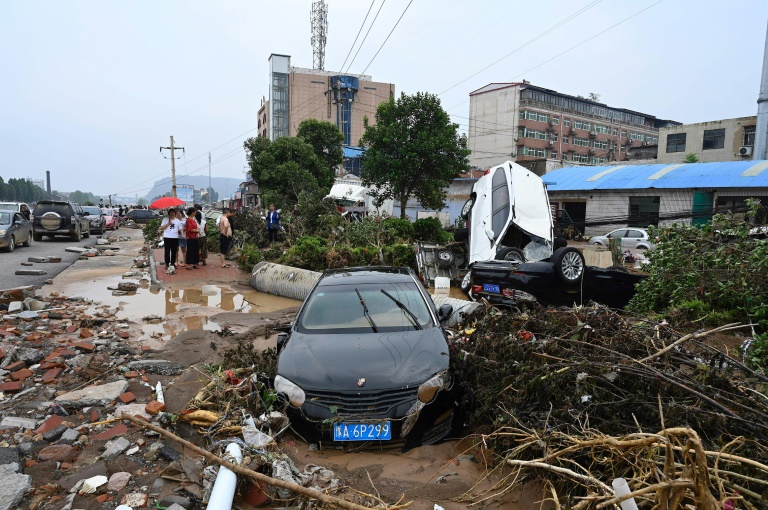
Homes in ruins, pulverised roads and a sea of mud coating cars, the once affluent central Chinese town of Mihe was still in shock Thursday as residents turned to food handouts and slept rough after record-breaking storms.

Devastated locals surveyed the damage as the rains finally subsided, treading carefully on smashed paving through tangles of collapsed electricity poles and wires.

“I’ve lost everything, it’s all been washed away,” said one middle-aged resident, before bursting into tears. 

Many had barely eaten for days, with water, electricity and phone signal cut off.

“Mihe used to be a lively, prosperous town but now it’s utterly ruined,” a 22-year-old university student surnamed Du told AFP.

AFP was given rare access to join a rescue mission in stricken Henan province, joining a large team of volunteers that drove hundreds of miles through the night to offer help.

With cars full of food, water and supplies, the Blue Sky Rescue team arrived at Mihe early Thursday.

Volunteer Wang Lang said they arrived in that town in response to calls from local firefighters about stranded residents, and worked with the authorities to “evacuate residents and recover bodies”.

At least two people were killed in their homes in the area during the storms, they said, as calls kept coming in throughout the day of other fatalities — including a girl trapped by a falling tree.

So far 33 deaths have been reported across Henan province during the floods, but the number is expected to rise as storms subside and rescue operations continue across a heavily populated area where communications have been severely disrupted. 

Hundreds of thousands of people have been affected by the floods across Henan province, with farmland ruined by floodwaters and transport paralysed.

With many out of signal, a student from the province started an open-source spreadsheet for relatives to list lost or stranded loved ones.

The list, shared on social media, quickly racked up hundreds of names.

As their work continued through Thursday, rescuers with shovels and helmets battled a thick layer of mud at least a foot deep, trying to return some sense of normality to reeling residents.

“When I first arrived here and saw villagers scavenging for corn cobs from the fields, I felt very sad,” said one volunteer in his thirties, surnamed Zhou.

Ths smaller, one-storey houses were the worst hit, and Blue Sky helped to drive some of the elderly relatives out of the devastated town to higher ground.

Locals recounted stories of being pulled from flooded homes to safety, scrambling to higher floors and watching neighbouring houses come down in the onslaught.

“We couldn’t evacuate in time because my elderly disabled grandma couldn’t leave the house,” said one 16-year-old school student surnamed Zhang, who said their house had completely flooded.

“I was pretty scared I’d drown.”

Half of Europeans vaccinated as Germany warns on rising virus cases

More than half of all European adults are now fully vaccinated, the EU said Thursday, as several countries across Europe and Asia battle fresh outbreaks blamed on the fast-spreading Delta variant.  

German Chancellor Angela Merkel said cases in her country were rising “exponentially”, while in Japan the delayed Olympics Games were set to open with almost no spectators and with a blanket of Covid rules in place.

And the spotlight once again turned to the virus’ origins after the WHO called for an audit of the Chinese lab at the heart of speculations about where the virus first emerged, sparking a fiery response from Beijing.

More than four million people have now died from the virus since it first emerged in December 2019, and though vaccines are picking up globally, Delta is fuelling a rise in infections and prompting governments to re-impose anti-virus measures to avoid dreaded new waves.

The EU said on Thursday that 200 million Europeans had been fully vaccinated, more than half of the adult population but still short of a 70 percent target set for the summer. 

The fresh data came as Merkel urged more Germans to get vaccinated, sounding the alarm over a fresh spike in cases in Germany. 

“The infection figures are rising again and with a clear and worrying dynamic,” Merkel told a press conference in Berlin. 

“We are seeing exponential growth,” she said, adding that “every vaccination… is a small step towards a return to normality”.

Germany on Thursday recorded 1,890 new infections over the past 24 hours and an incidence rate of 12.2 new cases per 100,000 people over the past seven days — more than double rates in early July.

“With a rising incidence rate, it could be that we need to introduce additional measures,” she said.

– Dominant Delta –

Germany joins a number of European nations that have seen cases climb in recent weeks. 

The new outbreaks have been largely fuelled by the Delta variant, first detected in India, which is expected to become the dominant strain of the virus over the coming months, the World Health Organization (WHO) said Wednesday.

It has now been recorded in 124 territories — 13 more than last week — and already accounts for more than three-quarters of sequenced specimens in many major countries. 

France this week rolled out new rules requiring a so-called health pass for all events or places with more than 50 people before being extended to restaurants, cafes and shopping centres in August.

People need to show proof of vaccination or a negative test to gain access, after the country reported a new surge — more 21,000 new cases on Wednesday, the highest level since early May.

Cases are also soaring in the UK, where most restrictions were lifted this week, and on Thursday British supermarkets warned of possible food shortages because staff were being forced to self-isolate. 

Countries in Asia are seeing some of their worst outbreaks to date, with Indonesia becoming a new global hotspot as Vietnam and Thailand face new anti-virus rules.

In Tokyo, the Olympics were due to open Friday after a year-long pandemic delay, though it promised to be a Games like no other in history. 

Spectators are mostly banned, and athletes, journalists and organisers are subject to strict virus measures during the event being held under a Covid cloud. 

“It’s completely different from the last Games (in 1964) when the whole city was filled with festive mood,” said 80-year-old Tokyo resident Michiko Fukui. 


– Psychological strain –

With no clear end to the pandemic in sight, attention turned once again to the international probe origins of the virus. 

The WHO said last week that a second stage of the probe should include audits of Chinese labs, as the US increases pressure for an investigation into a biotech lab in Wuhan.

Long dismissed as a right-wing conspiracy theory and vehemently rejected by Beijing, the idea that Covid-19 may have emerged from a lab leak has been gaining momentum.

But China’s vice health minister Zeng Yixin told reporters Thursday that he was “extremely surprised” by the WHO plan, which he said showed “disrespect for common sense and arrogance towards science”.

Elsewhere on Wednesday, the agency focused on another aspect of the pandemic: a mounting mental health crisis brought on by anxieties around catching the virus, the psychological impact of lockdowns and isolation, along with stresses linked to unemployment and financial worries. 

“Everyone is affected in one way or another,” the WHO said in a statement at a meeting in Athens Thursday.   

“The mental health impacts of the pandemic will be long term and far-reaching.”

burs-jv/jxb

Chinese city picks through the debris after record rains kill 33

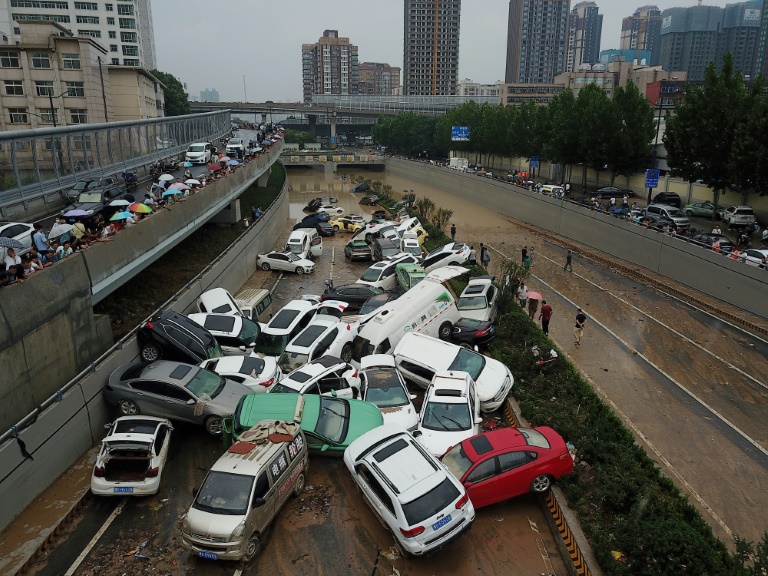
Piles of cars were strewn across a central Chinese city Thursday as shocked residents picked through the debris of a historic deluge that claimed at least 33 lives, with rescue efforts ongoing and hundreds seeking to find their relatives.

An unprecedented downpour dumped a year’s rain in just three days on the city of Zhengzhou, weather officials said, instantly overwhelming drains and sending torrents of muddy water through streets, road tunnels and the subway system.

Hundreds of thousands of people in the area were also affected by the floods, with farmland inundated and road and rail links severed.

In worst-hit Zhengzhou, grim images of horror inside the subway system were relayed in real-time over social media, showing water rising during Tuesday’s rush hour from the ankles of passengers to their necks.

At least a dozen people died before rescuers were able to cut survivors free from carriages.

Questions were swirling Thursday over how prepared authorities were for the disaster. Angry Weibo users questioned why the metro was not closed earlier, with one thread racking up more than 160 million views Thursday.

“Why was it that water levels on the street were almost waist-high, but the subway was still allowing commuters in?” asked one.

In a sign of mounting pressure, the transport ministry put out a statement ordering rail operators to “absorb the lessons of recent incidents”, warning them to close stations quickly when faced with severe weather.

As the water retreated — with piles of cars a monument to its deadly power — residents prepared for the next wave of bad weather Thursday, moving vehicles to higher ground and trying to plot journeys out from the stricken city, where communications and power were still patchy.

With many streets still flooded, trucks pumped muddy water from underground tunnels as meteorologists issued “red” rain alerts, warning of the threat of fresh landslides and flooding in surrounding areas.

Residents queued to receive emergency water and instant noodles, as blackouts added to the challenges.

“I am waiting for the power to be restored, but it may take several more days I think,” Chen, the owner of a local restaurant, told AFP.

– ‘Lost everything’ –

In Mihe township in Gongyi city — one of the worst-affected areas — residents surveyed the wreckage left behind as the rain stopped Thursday. 

“I’ve lost everything, it’s all been washed away. I had nothing to eat (while my house was flooded),” said a local resident, a middle-aged woman surnamed Song.

The human cost looked set to rise as rescuers scoured through debris. 

An open-source spreadsheet, started by a student from Henan, was circulating on social media and listed hundreds of missing or stranded people across the province.

One woman whose relatives were listed on the spreadsheet told AFP that communications and power in the village near Gongyi county were both down, making it difficult to get information.

“Most houses in my hometown have been flooded by mudslides,” she said.

The state-run Global Times newspaper shared a video of rescuers pulling a three-month-old baby from a collapsed building in Zhengzhou.

The newspaper said the baby’s mother was still missing.

– Topography, typhoon, climate –

Questions turned to how China’s bulging cities could be better prepared for freak weather events, which experts say are happening with increased frequency and intensity due to climate change.

Anyang city, north of Zhengzhou, issued a red alert Thursday for heavy downpours after some areas received over 100 millimetres of rain, ordering schools to close and most workers to stay at home.

The changing climate is also making these kinds of extreme weather events more common as the world continues to heat up.

Henan province is striated by rivers, dams and reservoirs, many constructed decades ago to manage the flow of floodwater and irrigate the agricultural region. 

But endless city sprawl is putting pressure on drainage.  

State media rebuked suggestions that dams played a part in subverting the normal flow of water.

Madagascar says it foiled bid to assassinate president, six arrested

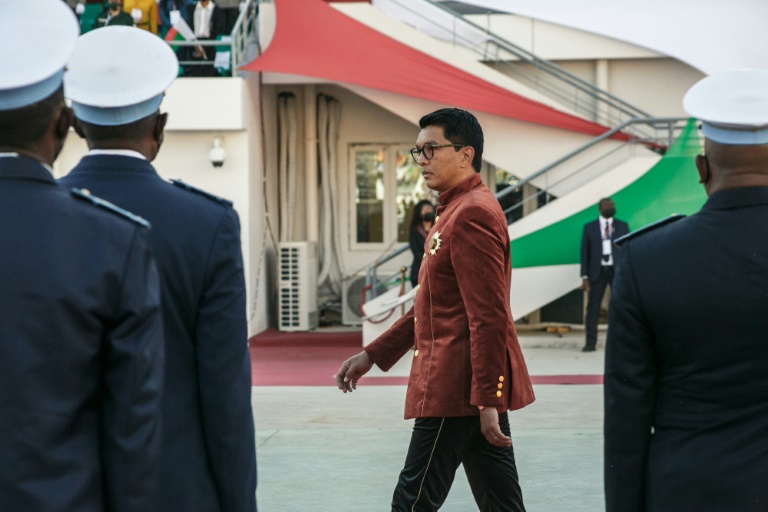
Madagascar said Thursday it had foiled an attempt to assassinate President Andry Rajoelina and arrested six people, two of whom according to diplomatic sources were French nationals.

“Several foreign and Madagascar nationals were arrested on Tuesday, July 20, as part of an investigation into an attack on state security,” prosecutor Berthine Razafiarivony said in a statement.

“According to evidence in our possession, these individuals devised a plan to eliminate and neutralise various Madagascan figures, including the head of state,” she said.

The statement gave no details about the alleged operation.

Public Security Minister Fanomezantsoa Rodellys Randrianarison said six arrests had been made, comprising “a foreigner, two dual nationals and three Madagascans.”

“The police had information about this affair for months,” he told a news conference on Thursday.

They swooped to make simultaneous arrests in different locations and seized money and weapons, he said.

“There are also official documents which prove their involvement,” he said. “The foreigner hid his harmful schemes behind his business activity.”

Two French nationals are among those who were arrested on Tuesday, diplomatic sources told AFP.

The two are retired military officers, according to the Taratra, a local news agency operation to the communications ministry.

A LinkedIn profile of one of those names describes him as the director of an investment company and as advisor to international investors in Madagascar.

The other individual named by Taratra is a French-Madagascan dual national who was an advisor to Rajoelina until 2011.

Rajoelina, 47, first seized power in March 2009 from Marc Ravalomanana with the backing of the military.

He won the last vote in December 2018, beating his main rival and predecessor Ravalomanana in an election beset by allegations of fraud.

– Troubled country –

Stretching across 587,000 square kilometres (nearly 227,000 square miles), Madagascar is the world’s fourth largest island, bigger than Spain or Thailand in size.

The country is world-renowned for its unique wildlife and vanilla but has a long history of coups and unrest since gaining independence from France in 1960.

The announcement of the assassination plot comes after several months of turbulence and threats to journalists reporting on the country’s coronavirus pandemic and a burgeoning famine in the south of the country.

On Madagascar’s Independence Day celebrations on June 26, the gendarmerie announced they had foiled an assassination attempt on their boss, General Richard Ravalomanana, who is also Rajoelina’s right-hand man.

In April, nine TV and radio programmes were blocked on the grounds that they were “liable to disturb public order and security and harm national unity.”

Rivo Rakotovao, a former caretaker president, said he condemned any kind of assassination bid but feared that the announcement could be a precursor for a heavier hand by Rajoelina, who is already under fire for his grip on the levers of power.

“The situation should not be exploited to harm democracy in Madagascar,” he told AFP.

– ‘DJ’ Rajoelina –

Rajoelina made his mark in events management and media before bursting on to the political scene in 2007. 

Promoting a youthful, energetic image, he earned the nickname of “Disc Jockey,” a reference to the parties he used to host in the capital Antananarivo.

After becoming the city’s mayor, he used his own Viva broadcasting channel to help generate a national following, putting himself forward as the leading opponent to Ravalomanana.

In 2009, he came to power as leader of a transitional authority and pushed through a constitutional change that, among other things, lowered the minimum age for presidential candidates from 40 to 35, thus making him eligible to bid for the top job.

Under international pressure, Rajoelina did not contest the 2013 election and instead backed his victorious former finance minister, Hery Rajaonarimampianina.

The two quickly fell out, however. In December 2018, after hotly-contested elections in which he hosted lavish rallies with performance artists and fireworks.

Madagascar is heavily dependent on foreign aid, and nine out of 10 people live on less than $2 a day. 

The country has virtually been under a lockdown since the Covid-19 pandemic hit last year and its southern region is in the grips of a famine.

India denies millions have died from Covid-19

The Indian government rejected on Thursday recent studies suggesting that millions of people have died in the country from Covid-19, several times the official toll of almost 420,000.

It said in a statement however that several Indian states were now “reconciling” their data after dealing with a spike in cases in April and May.

On Tuesday a study by US research group the Center for Global Development suggested anywhere from 3.4 million to 4.7 million people had died in India, between eight and 11 times the official number.

That would give the country the world’s highest number of fatalities. Currently its official toll of 419,000 trails the United States on 610,000 and Brazil with 545,000.

The study is the latest to cast doubt on India’s official numbers, pointing to poor record-keeping and the death rate per million being around half the global average.

Researchers have looked in particular at “excess mortality”, the number of additional fatalities compared with normal times, and at death rates in other countries.

But the Indian government said Thursday it was an “audacious assumption that the likelihood of any given infected person dying is the same across countries”.

The studies, it said, ignored “factors such as race, ethnicity, genomic constitution of a population, previous exposure levels to other diseases and the associated immunity developed in that population”.

Assuming that all excess deaths were from coronavirus was “not based on facts and totally fallacious”, the government said.

It added that India has a “thorough contact tracing strategy”, a “vast availability” of testing labs and that while some cases may go undetected, “missing out on deaths is unlikely”.

The statement however left some room for blame against local authorities, saying the health ministry “only compiles and publishes data sent by the state governments” and that it had been “repeatedly advising” states on properly recording deaths.

States overwhelmed by the surge in April and May have now been “advised to conduct thorough audits that could have been missed”, and several have in recent weeks updated their figures, it said.

Maharashtra, India’s worst-hit state, has upped its death toll by around 15,000 while Bihar added about 4,000 and Madhya Pradesh 1,500.

Close Bitnami banner
Bitnami