World

Madagascar prosecutors say foiled assassination bid on president

Prosecutors in Madagascar said Thursday they had foiled an attempt to assassinate President Andry Rajoelina and made several arrests.

“Several foreign and Madagascar nationals were arrested on Tuesday, July 20, as part of an investigation into an attack on state security,” prosecutor Berthine Razafiarivony said in a statement released overnight.

There was “a plan to eliminate and neutralise various Madagascan figures, including the head of state,” Razafiarivony said.

“At this stage of the investigation, which is ongoing, the prosecutor-general’s office assures we will shed light in on this case,” she added.

Two French nationals are among those who were arrested on Tuesday, diplomatic sources told AFP.

The two suspects are reputedly retired military officers, according to the Taratra, a local news agency operation to the Communications ministry.

During the country’s Independence Day celebrations on June 26, the gendarmerie announced that they had foiled an assassination attempt on their boss, General Richard Ravalomanana, who is also Rajoelina’s right-hand man.

Rajoelina, 47, first seized power in March 2009 from Marc Ravalomanana with the backing of the military.

He won the last vote in December 2018 beating his main rival and predecessor Ravalomanana in an election beset by allegations of fraud.

The former French colony has had a long history of coups and unrest since gaining independence from France in 1960.

The island is internationally famed for its unique wildlife and vanilla but is heavily dependent on foreign aid. Nine out of 10 people live on less than $2 a day.

The country has been under a lockdown since the Covid-19 pandemic hit last year and its southern region is in the grips of a famine.

Security clampdown in Indian capital for new farmers' protest

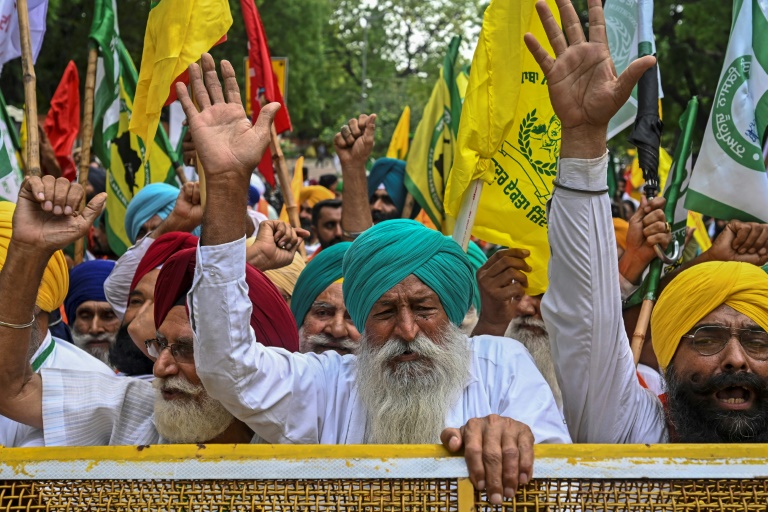
Thousands of security forces deployed across New Delhi on Thursday for protests by farmers who are renewing a campaign against government agriculture reforms.

After an earlier rally turned into a riot, authorities allowed only 200 farmers to enter the centre of the capital.

Police manned barricades and roadblocks around Delhi as the farmers were ferried to the protest site in buses.

The farmers have vowed to stage a demonstration every day during a parliament session that ends on August 13.

“As long as parliament is on, we will protest here. Wherever we are stopped and there are barricades, we will sit there and have our own ‘farmer’s parliament’,” said Devinder Singh, one of the farmers.

Sonia Mann, a Punjabi actor and activist, was also among the 200. She shouted a message to Prime Minister Narendra Modi: “You must think about the plight of the farmers and you must repeal the three farm laws.”

In parliament, opposition MPs staged their own protest calling for the repeal of the laws which have divided the country of 1.3 billion people.

The farmers and opposition parties say the changes will give control of the agriculture industry, which dominates the Indian economy, to private conglomerates and put many small farms out of business.

The government, which has suspended implementation of the laws since the protests started in November, says the measures will boost farmers’ revenues by allowing them to sell produce on open markets.

The farmers have been camping on the outskirts of Delhi since November in what has become the biggest challenge to Modi since he came to power in 2014.

In January, thousands of farmers clashed with police and drove tractors into security barriers in a citywide rampage that left one farmer dead and nearly 400 police injured.

Eighteen killed in Ecuador prison riots

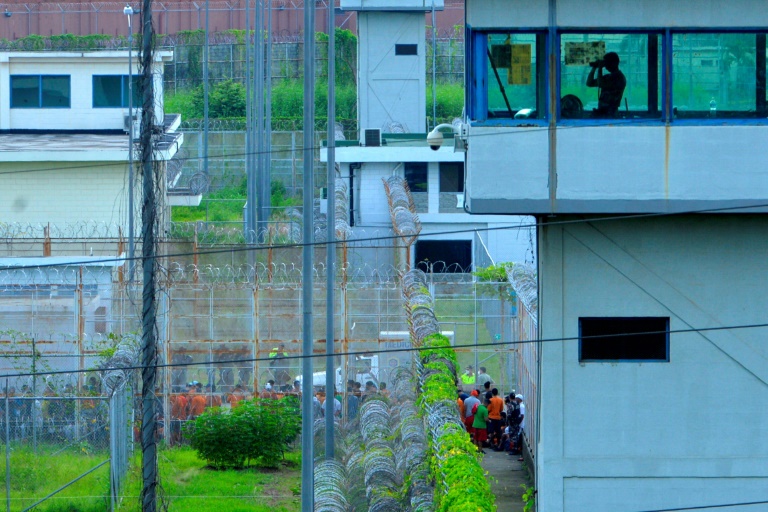
Riots at two prisons in Ecuador on Wednesday left at least 18 dead and more than 50 injured, including police officers, authorities said, updating an earlier toll.

Elite police units have regained control of the two prisons, one in the southwest province of Guayas and the other in the central Andean province of Cotopaxi, the SNAI prisons management body said in a statement late Wednesday.

Ten inmates died and 35 others were injured, along with six police officers, in the violence at the Cotopaxi prison.

Eight inmates lost their lives and three police were injured at the Guayas facility.

The SNAI had earlier reported eight dead in Guayas and around 20 injured in Cotopaxi.

The two jails previously experienced violent riots in February, when clashes between rival gangs vying for control of the country’s main prisons left 79 inmates dead in a single day.

In February’s riots, inmates were left decapitated and burnt in violence that exposed the power of prison gangs and shocked the South American nation.

Ecuador’s prison system has about 60 facilities with capacity for 29,000 inmates. But overcrowding is around 30 percent, with 38,000 detainees watched by 1,500 guards that experts say it would take 4,000 to effectively control.

According to the Ombudsman, there were 103 murders in Ecuador’s prisons in 2020. 

In an attempt to counter the violence, then-president Lenin Moreno had declared a state of emergency several times, including for three months last year.

Since the start of the pandemic, Ecuador has used alternative sentences for minor offenses to reduce the prison population and has managed to reduce overcrowding from 42 percent to about 30 percent.

Dozen Thai student activists charged with royal defamation

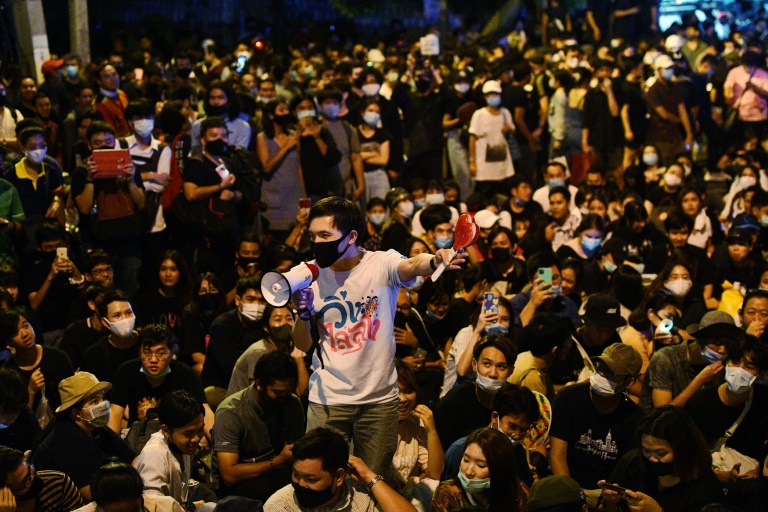
A dozen Thai pro-democracy student activists were charged with royal defamation and sedition on Thursday, their lawyers said, over a rally last year that demanded reforms to Thailand’s unassailable monarchy.

The pro-democracy movement, which has been largely led by student activists, kicked off a year ago due to public discontent over Prime Minister Prayut Chan-O-Cha’s administration.

One key protest demand that emerged was monarchy reforms, a once-taboo issue that spilled into public discussion due to the student-led rallies that drew tens of thousands at their peak.

At one such protest in October last year, thousands marched to the German embassy in defiance of the king, who has spent long periods of time in Germany.

“All 12 have been charged with 112 (lese majeste) and 116 (sedition), with the youngest being 20 years old,” said the Thai Lawyers for Human Rights group, which represents the students.

“The main reason for the charges is the rally and speeches delivered in front of the German embassy.”

Lawyers are requesting bail for the students.

Abolishing Thailand’s draconian lese majeste law — which carries a maximum penalty of 15 years per charge — is among one of the key demands in the pro-democracy movement. 

Critics have long said the law is broadly overused to target political opponents. 

Scores of protesters have been hit with the royal insult law, with the most prominent figures earning multiple charges for different protests.

Other key demands of the movement include the resignation of Prayut — a former military chief who masterminded the 2014 coup — and for a rewrite to Thailand’s military-scripted constitution. 

But in recent months, as Thais weather a deadly Covid-19 surge, protesters have pivoted their grievances to Prayut’s handling of the pandemic. 

This week, the hashtag “Prayut Get Out” started trending as Thailand placed more provinces under a partial lockdown amid a record number of new infections on a near-daily basis. 

Currently there are more than 453,000 Covid-19 cases and 3,697 deaths — the bulk of the toll detected since April after an outbreak in night clubs frequented by Bangkok’s political elite.

Norway calls for opposition to hate 10 years after massacre by neo-Nazi

Norway’s prime minister on Thursday called for the country to stand up against the hatred that killed 77 people on July 22, 2011, ten years after the attacks by right-wing extremist Anders Behring Breivik.

“We must not let hate stand unopposed,” Erna Solberg said in a speech at a memorial ceremony near the government headquarters in Oslo.

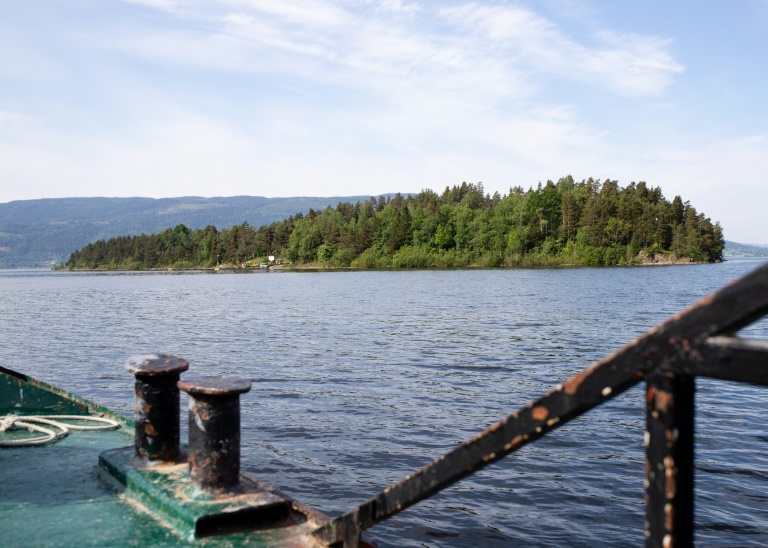
This was the place where Breivik set off a bomb that killed eight people before going on a shooting spree at a summer camp for left-wing youths on the island of Utoya, killing another 69 — most of them teenagers. 

Speaking to survivors and relatives of the victims, Solberg stressed that much had been done in the last 10 years to improve security and combat radicalisation and extremism.

“The most important preparedness, we have to build within each of us,” she said, adding it would serve as “a fortified bulwark against intolerance and hate speech, for empathy and tolerance.”

The Scandinavian nation had been mostly spared from extremist violence until the attacks on July 22, 2011.

After the morning memorial ceremony at the government headquarters, church masses and another ceremony on Utoya in the afternoon will mark the anniversary. At noon (1000 GMT), church bells nationwide will ring.

Shortly after the attacks, the then-Labour Party prime minister and current NATO chief Jens Stoltenberg promised to respond with “more democracy” and “more humanity”.

– ‘Driving force’ –

But 10 years on, many of the survivors of Utoya feel that Norway still has not truly faced up to the ideology that drove Breivik. 

“The deadly racism and right-wing extremism are still alive and well in our midst,” Astrid Eide Hoem, a survivor who has since become head of the Labour Party’s youth league (AUF), which organised the camp, said in a speech during Thursday morning’s ceremony. 

“They live on the internet, they live around the dinner table, they live in many people that many (other) people listen to,” she continued.

“It is now, once and for all, that we must say that we do not accept racism, that we do not accept hatred.”

The Norwegian intelligence service (PST) also warned this week, that “the far-right ideas that inspired the attack are still a driving force for right-wing extremists at home and abroad.” 

Breivik’s actions had inspired several violent attacks over the past decade, the PST said, including those targeting mosques in New Zealand’s Christchurch and Oslo.

On Tuesday, vandals scrawled “Breivik was right” on a memorial for Benjamin Hermansen, who was killed by neo-Nazis in 2001 in what was billed as Norway’s “first racist crime”.

In 2012, Breivik, then 42, was sentenced to 21 years in prison. His sentence can be extended indefinitely and the extremist will likely spend the rest of his life behind bars. 

A year earlier, Breivik had disguised himself as a police officer and planted the car bomb that shattered the government headquarters in Oslo and killed eight people.

He then made his way to Utoya, where he hunted down his 69 other victims, most of them teenagers.

For many of the survivors, the psychological trauma remains an open wound. 

A third were still suffering last year from major disorders, including post-traumatic stress, anxiety, depression and headaches, a recent paper by the Norwegian Centre for Violence and Traumatic Stress Studies found. 

“When you’ve been through something like this, you don’t go back to being the person you were,” Eide Hoem told AFP in an interview.

“I have trouble sleeping, I’m afraid, and I think I’ll have to live with this all my life,” she added. 

Elin L’Estrange, another survivor, told AFP: “If someone today tells me that they want me dead, I take it very seriously.” 

Chinese city picks through the debris after record rains kill 33

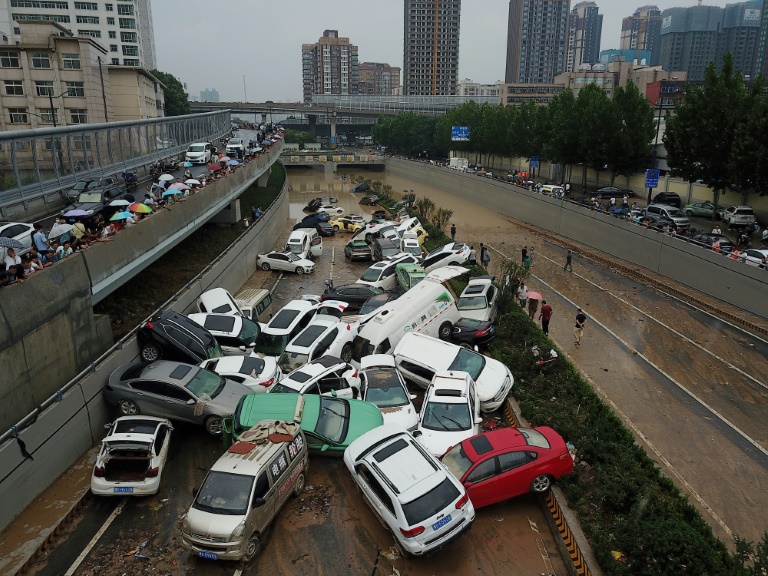
Piles of cars were strewn across a central Chinese city Thursday as shocked residents picked through the debris of a historic deluge that claimed at least 33 lives, with rescue efforts ongoing as more heavy rain threatens surrounding regions.

An unprecedented downpour dumped a year’s rain in just three days on the city of Zhengzhou, weather officials said, instantly overwhelming drains and sending torrents of muddy water through streets, road tunnels and the subway system.

Hundreds of thousands of people in the area surrounding the city were also affected by the floods, with farmland inundated and road and rail links severed.

In worst-hit Zhengzhou, grim images of horror inside the subway system were relayed in real-time over social media, showing water rising during Tuesday’s rush hour from the ankles of passengers to their necks.

At least a dozen people died before rescuers were able to cut survivors free from carriages.

Questions were starting to swirl Thursday over how prepared authorities were for the disaster. Angry users took to Weibo to question why the metro was not closed earlier, with one thread racking up more than 92 million views Thursday.

“Why was it that water levels on the street were almost waist-high, but the subway was still allowing commuters in?” asked one.

In a sign of mounting pressure, the transport ministry put out a statement ordering rail operators nationally to “absorb the lessons of recent incidents and… improve their emergency plans”, warning them to close stations quickly when faced with severe weather.

As the water retreated — with piles of cars a monument to its deadly power — residents prepared for another day of bad weather Thursday, moving vehicles to higher ground and trying to plot journeys out from the stricken city, where communications and power were still patchy.

Trucks pumped muddy water from underground tunnels as business owners counted the cost of the torrent and meteorologists issued “red” rain alerts, warning of the threat of fresh landslides and flooding in surrounding areas.

Mass communication blackouts added to the challenges, with state TV reporting telecommunications equipment and cables were damaged in the floods.

“I am waiting for the power to be restored, but it may take several more days I think,” Chen, the owner of a local food and pork sandwich restaurant, told AFP.

“My losses? They are okay, compared to what happened in the tunnel there,” he said, gesturing towards the tunnel where floods trapped many cars on Tuesday — potentially with motorists still inside.

The death toll looked set to rise as rescuers scoured through debris.

The state-run Global Times newspaper shared a video on its social media feed of rescuers pulling a three-month-old baby from a collapsed building in Zhengzhou.

The newspaper said the baby’s mother was still missing.

– Topography, typhoon, climate –

Questions turned to how China’s bulging cities could be better prepared for freak weather events like Tuesday’s storm, which experts say are happening with increased frequency and intensity due to climate change.

Anyang city, a short journey north of Zhengzhou, issued a red alert on Thursday for heavy downpours after some areas received over 100 millimetres of rain, ordering schools to close and most workers to stay at home.

Weather experts dissected the reasons behind Tuesday’s record downpours. 

Chen Tao, chief forecaster of the National Meteorological Center (NMC), said a mix of Henan’s topography and Typhoon In-Fa favoured the rains.

Although the typhoon has not landed in China, under the influence of winds, “a large amount of water vapour from above the sea gathered towards Henan”, providing a source of water for the downpours, Chen said.

The changing climate is also making these kinds of extreme weather events more common as the world continues to heat up, with catastrophes seen across the world.

Henan province, like much of China, is striated by rivers, dams and reservoirs, many constructed decades ago to manage the flow of floodwater and irrigate the agricultural region. 

But endless city sprawl is putting pressure on drainage.  

State media rebuked suggestions that dams may have had a part to play in subverting the normal flow of water, with the Global Times citing experts as saying construction had “no direct connection to flooding”.

Dominican Republic president gets third Covid jab

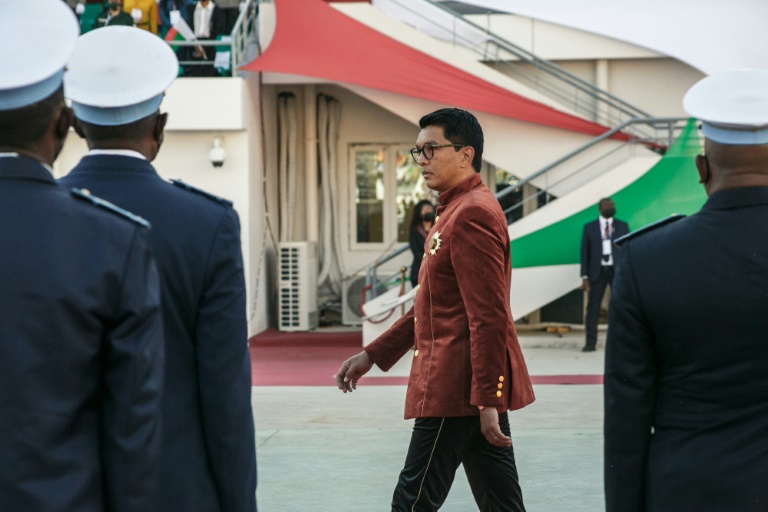
The Dominican Republic’s President Luis Abinader received a third Covid vaccine dose on Wednesday and urged the population of the tourism-reliant Caribbean nation to follow his example.

The 54-year-old, who had previously received two doses of the Chinese Sinovac vaccine from Sinopharm, this time received a Pfizer shot at a gymnasium transformed into a vaccination center near the National Palace in Santo Domingo.

“I ask the entire population to continue to be vaccinated with the first and second dose, and the third to reinforce it. This is what will allow us to achieve normalization,” he told journalists who attended the vaccination.

With a population of 10.5 million, the Dominican Republic has recorded nearly 340,000 infections and about 4,000 deaths since the start of the pandemic, according to official figures.

Just under 5.4 million people, or more than half the population, have received a first shot while more than 3.8 million received the second.

The Caribbean nation launched a campaign for a third shot in early July, with health authorities saying the emergence of new variants has justified the need for a third dose.

In all, the Dominican Republic has ordered around 34 million shots: 14 million Sinovac, 10 million AstraZeneca and 10 million Pfizer, according to official figures. 

The tourism-dependent nation said in early July that visitor arrivals had recovered to 80 percent of pre-pandemic numbers.

Famed for its beaches, in particular the seaside resort of Punta Cana, the Dominican Republic welcomed 6.5 million visitors in 2019. The tourism sector accounts for 8.4 percent of GDP and employs 7.5 percent of the country’s workforce.

Chinese city picks through the debris after record rains kill 33

Piles of cars were strewn across a central Chinese city Thursday as shocked residents picked through the debris of a historic deluge that claimed at least 33 lives, with more heavy rain threatening surrounding regions.

An unprecedented downpour dumped a year’s rain in just three days on the city of Zhengzhou, weather officials said, instantly overwhelming drains and sending torrents of muddy, swirling water through streets, road tunnels and the subway system.

Hundreds of thousands of people in the surrounding area have been affected by the flood, authorities said, as farmland was inundated and road and rail links severed.

In worst-hit Zhengzhou, grim images of the horror inside the subway system were relayed in real-time over social media, showing water rising during Tuesday’s rush hour from the ankles of passengers to their necks.

At least a dozen people died before rescuers were able to cut survivors free from carriages.

As the water retreated — with piles of cars a monument to its deadly power — residents prepared for another day of bad weather, moving vehicles to higher ground and trying to plot journeys out from the stricken city, where communications and power were still patchy.

Trucks pumped muddy water from underground tunnels as business owners counted the cost of the torrent and meteorologists issued “red” rain alerts, warning of the threat of fresh landslides and flooding in the surrounding areas.

“I am waiting for the power to be restored, but it may take several more days I think,” Chen, the owner of a local food and pork sandwich restaurant, told AFP.

“My losses? They are okay, compared to what happened in the tunnel there,” he said gesturing towards the tunnel where floods trapped many cars on Tuesday — potentially with motorists still inside.

– Topography, typhoon, climate –

Questions turned to how China’s bulging cities could be better prepared for freak weather events like Tuesday’s storm, which experts say are happening with increased frequency and intensity due to climate change.

Anyang city, a short journey north of Zhengzhou, issued a red alert on Thursday for heavy downpours after some areas had received over 100 millimetres of rain, ordering schools to close and most workers to stay at home.

Weather experts dissected the reasons behind Tuesday’s record rains. 

Chen Tao, chief forecaster of the National Meteorological Center (NMC), said a mix of Henan’s topography and Typhoon In-Fa favoured the rains.

Although the typhoon has not landed in China, under the influence of winds, “a large amount of water vapour from above the sea gathered towards Henan”, providing a source of water for the downpours, Chen said.

The changing climate is also making these kinds of extreme weather events more common as the world continues to heat up, with catastrophes seen across the world.

Henan province, like much of China, is striated by rivers, dams and reservoirs, many constructed decades ago to manage the flow of floodwater and irrigate the agricultural region. 

But endless city sprawl is putting pressure on drainage.  

State media rebuked suggestions dams may have had a part to play in subverting the normal flow of water, with the Global Times citing experts as saying “construction had no direct connection to flooding”.
Olympics VP defiant after 'mansplaining' backlash

International Olympic Committee vice-president John Coates on Thursday denied bullying a female politician to attend the Tokyo Games opening ceremony, after some labelled him a “mansplaining dinosaur”.

Coates, also the head of the Australian Olympic Committee, publicly berated Queensland Premier Annastacia Palaszczuk over her plans not to attend the event, after her state capital Brisbane was named 2032 host city late Wednesday.

“You are going to the opening ceremony,” he said, crossing his arms and sitting back in his chair.

“I’m still the deputy chair of the candidature leadership group and so far as I understand, there will be an opening and closing ceremony in 2032 and all of you are going to get along there and understand the traditional parts of that, what’s involved in an opening ceremony,” he said.

“So none of you are staying behind and hiding in your rooms, alright?”

Palaszczuk — one of the most senior women in Australian politics — was visibly uncomfortable, staying silent throughout his monologue.

“I don’t want to offend anybody, so,” she said later in the press conference, before trailing off.

Australian lawmakers pilloried Coates for his behaviour, calling on him to apologise and even resign.

“John Coates should resign on return from Tokyo,” independent senator Rex Patrick tweeted. “He’s a social and political dinosaur who has spent far too long in the rarefied, self-interested @Olympics bubble.”

Social media users also called out Coates for his “bullying” of the centre-left leader.

“Someone asked what the definition of a mansplaining dinosaur looked like and Coates simply raised his hand,” one tweeted.

Former Swimming Australia CEO Leigh Russell labelled it “disgusting” while conservative MP Darren Chester called it a “disrespectful performance which reeked of arrogance”.

In a statement released by the Australian Olympic Committee, Coates said that his comments had been “completely misinterpreted by people who weren’t in the room”.

“The Premier and I have a long standing and very successful relationship. We both know the spirit of my remarks and I have no indication that she was offended in any way,” he said.

Palaszczuk, who is under political pressure for flying to Tokyo during the pandemic, played down the incident, telling public broadcaster ABC that Coates was “fantastic” and the “driving force behind us securing the Olympics”.

Most Australians are prevented from travelling overseas due to strict international border closures, while about half the country’s population of 25 million is currently under lockdown.

China says WHO plan to audit labs in Covid origins probe 'arrogant'

China on Thursday said a WHO proposal to audit Chinese labs as part of further investigation into the origins of the coronavirus pandemic showed “disrespect” and “arrogance towards science”.

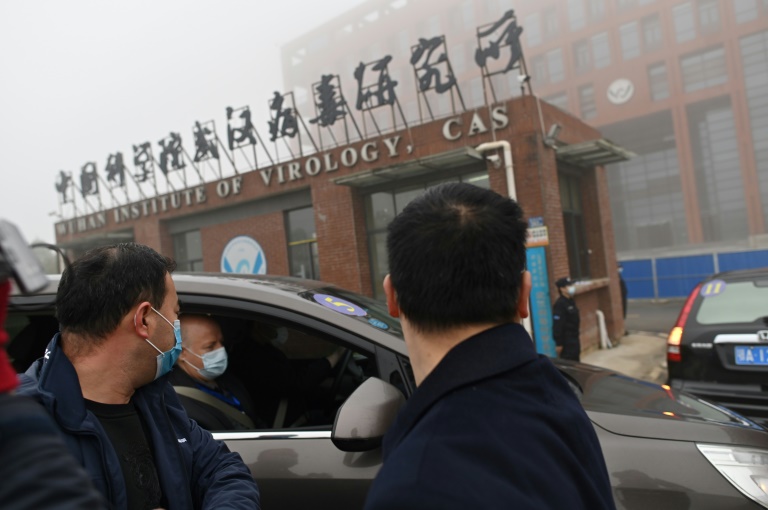
Last week, the World Health Organization said a second stage of the international probe should include audits of Chinese labs, amid increasing pressure from the United States for an investigation into a biotech lab in Wuhan. 

The proposal outlined by WHO chief Tedros Adhanom Ghebreyesus included “audits of relevant laboratories and research institutions operating in the area of the initial human cases identified in December 2019” — referring to the Chinese city of Wuhan.

But China’s vice health minister Zeng Yixin told reporters Thursday that he was “extremely surprised” by the plan, which he said showed “disrespect for common sense and arrogance towards science”.

Long derided as a right-wing conspiracy theory and vehemently rejected by Beijing, the idea that Covid-19 may have emerged from a lab leak has been gaining momentum.

Beijing has repeatedly insisted that a leak would have been “extremely unlikely”, citing the conclusion reached by a joint WHO-Chinese mission to Wuhan in January.

At the same time, Chinese officials and state media have pushed an alternate theory that the virus could have escaped from the US military research lab at Fort Detrick, Maryland.

Nationalist tabloid Global Times said it had collected five million signatures from Chinese web users on a petition to investigate the US lab.

Top officials have also amplified theories that the virus may have been imported with frozen food.

– ‘No accidents’ –

Yuan Zhiming, director of the National Biosafety Laboratory at the Wuhan Institute of Virology, told Thursday’s press conference “no pathogen leakage or staff infection accidents have occurred” since the lab opened in 2018.

Zeng hit back at what he called “rumours” about the lab, insisting that it had “never carried out gain-of-function research on coronaviruses, nor is there a so-called manmade virus”.

His comments were in reference to the type of research that has featured heavily in theories about a possible lab leak.

China has in recent days faced accusations from the WHO that it had not shared the necessary raw data during the first phase of the investigation, with Tedros urging Beijing to “be transparent, to be open and cooperate” on a second phase.

Tedros on Friday also called for more studies of animal markets in and around Wuhan.

The UN health agency has been under intensifying pressure for a new, more in-depth investigation of how the disease that has killed more than four million people around the world first emerged.

The WHO was only able to send a team of independent, international experts to Wuhan in January, more than a year after Covid-19 first surfaced there, to help Chinese counterparts probe the pandemic’s origins.

Thursday’s comments come ahead of a weekend trip to China by US Deputy Secretary of State Wendy Sherman to address deteriorating ties between the two countries.

It is the highest-level visit under President Joe Biden and comes amid tensions between the two powers over issues including the pandemic’s origins, human rights and cybersecurity.

Close Bitnami banner
Bitnami