World

Suck it up: Study probes elephants' suction powers

Elephants are known to use versatile trunks to grab objects big and small, drink great draughts, and sniff out water kilometres away. 

But a tusker’s proboscis can also switch to vacuum mode to eat, with suction power ranging from faint to ferocious, researchers said Wednesday.

A team from the Georgia Institute of Technology observed the world’s largest land mammal suck up rutabaga, draw chia seeds out of water, and pick up large tortilla chips without breaking them, the scientists reported in the Journal of the Royal Society Interface.

Up to now, it was thought that only fish exhibited this kind of suction prowess.

Experiments were carried out with the help of a 34-year-old female African elephant from Zoo Atlanta, including tests to see how she would deal with rutabaga chunks of varying size and number.

They observed that while the elephant used its sensitive prehensile tip to grab on to big chunks, she preferred suction to consume larger quantities of smaller pieces.  

“A loud vacuuming sound accompanies the suction as food is quickly drawn onto the tip of the trunk,” a team led by David Hu, Georgia Tech wrote. 

The elephant chose not to use vacuum power, however, when offered grains of bran measuring about 1 millimetre, “presumably to avoid getting the grains lodged in its trunk,” the study noted.

“Instead, the trunk tip squeezed the bran together to pick them up.”

– Precision and power – 

The study found that elephants generate suction force not only by using their huge lungs, but also by increasing the diameter of their nasal passages. 

Using ultrasound imaging, the scientists watched the elephant use muscle contractions to dilate its nostrils up to 30 percent, increasing trunk capacity more than 60 percent.

By observing the elephant drinking water from a container with chia seeds at the bottom, they were able to calculate that she sucked in the fluid at a flow rate equivalent to 24 shower heads at once. 

The elephant inhaled at speeds nearly 30 times faster than a human sneeze.

The suction ability displayed was not just powerful, but precise.

In one test, researchers placed a tortilla chip on the flat surface of a force plate, which measures movement strength.

Weighing in at about 100 kilogrammes (220 pounds), the elephant’s trunk could smash the chip with very little pressure.

But instead of grabbing it, the elephant applied suction near to or directly on the chip to guide it into its sensitive prehensile “fingers”. 

Despite the chip’s hard-to-grab thinness and fragility, the elephant “could usually pick it up without breaking it”. 

The laboratory that conducted the study specialises in biomechanics, with particular interest in how animal behaviours can influence the development of robot technology.

The study notes how elephant trunk mechanics have already influenced existing technologies, citing robots that refuel ships or deliver air or water to victims trapped under debris.
Biden honors victims of 'forgotten' Tulsa race massacre, 100 years on

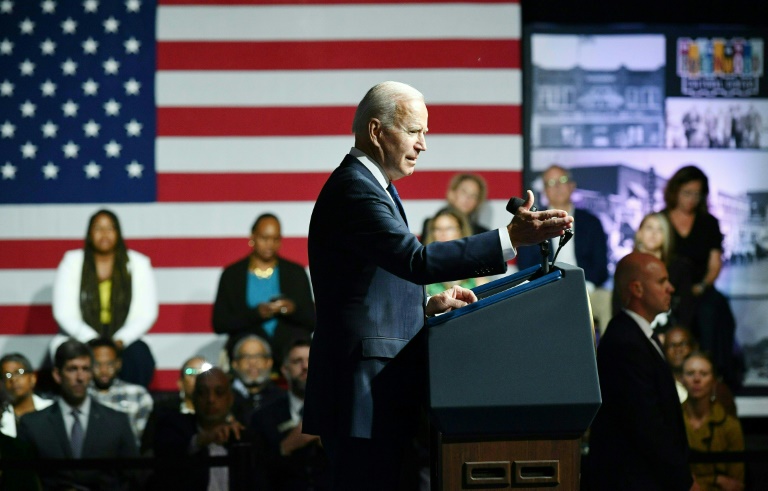
President Joe Biden led emotional commemorations on Tuesday to honor victims of the 1921 race massacre in Tulsa, Oklahoma, saying the United States must learn from one of the worst episodes of racist violence in the country’s history.

The Democratic leader marked the centenary of the massacre by meeting survivors in the city, after the White House announced new initiatives including billions of dollars in grants to address racial disparities in wealth, home ownership and small business ownership.

“This was not a riot, this was a massacre,” Biden said to loud applause. “(It was) among the worst in our history — but not the only one and, for too long, forgotten by our history.

“As soon as it happened, there was a clear effort to erase it from our collective memories… for a long time the schools in Tulsa didn’t even teach it, let alone schools elsewhere.”

On May 31, 1921, a group of Black men went to the Tulsa courthouse to defend a young African American man accused of assaulting a white woman. They found themselves facing a mob of hundreds of furious white people.

Tensions spiked and shots were fired, and the African Americans retreated to their neighborhood, Greenwood.

The next day, at dawn, white men looted and burned the neighborhood, at the time so prosperous it was called Black Wall Street.

In 2001, a commission created to study the tragedy concluded that Tulsa authorities themselves had armed some of the white rioters.

The mayor of Tulsa formally apologized this week for the city government’s failure to protect the community.

– Fill the silence –

Historians say that as many as 300 African American residents lost their lives, and nearly 10,000 people were left homeless.

“I come here to help fill the silence because in silence, wounds deepen,” Biden said.

“As painful as it is, only in remembrance do the wounds heal. We just have to choose to remember (and) memorialize what happened here in Tulsa, so it can’t be erased… We simply can’t bury pain and trauma forever.

“At some point there’ll be a reckoning, an inflection point, like we are facing right now as a nation.”

The United States has been embroiled in debate over racism in recent years, fuelled by the killing in 2020 of African American George Floyd, who suffocated under the knee of white Minneapolis officer Derek Chauvin.

The killing sparked nationwide protests, and Chauvin’s recent conviction for murder was hailed as an milestone against police impunity, but many allege racial injustice and police brutality remain widespread.

The president — who is popular with Black Americans voters — also used his speech to slam efforts to undermine voting rights among Black people. There was “an unprecedented assault on our democracy,” he said.

– Stark inequalities –

On April 19, some of the last survivors of the Tulsa massacre testified before US Congress and asked that the country recognize their suffering.

A 2001 commission recommended that Greenwood residents receive compensation, but reparations have not been paid, and Biden did not address the subject directly.

Beyond financial compensation, city residents were counting on Biden’s visit to bring more attention to a tragedy that long remained taboo.

Tulsa has also begun to excavate mass graves, where many Black victims of the massacre are buried, in an effort to shed more light on the city’s dark past.

“Some injustices are so heinous, so horrific, so grievous they can’t be buried no matter how hard people try,” Biden, who was the first US president to commemorate the massacre, said.

In Tulsa, Oklahoma, once a slave-owning state and a stronghold of the Ku Klux Klan, racial disparities remain stark.

There are marked inequalities between the northern part of Tulsa, which is predominantly Black, and the south, which is mostly white.

Local activist Kristi Williams, who is descended from some of the massacre victims, told AFP she wanted Biden to “do us right.”

“It’s been 100 years, and we have been impacted negatively, from housing, economic development, our land has been taken,” she said. “This country, right now has an opportunity to right this wrong.”

Huge sinkhole threatens to swallow Mexican home

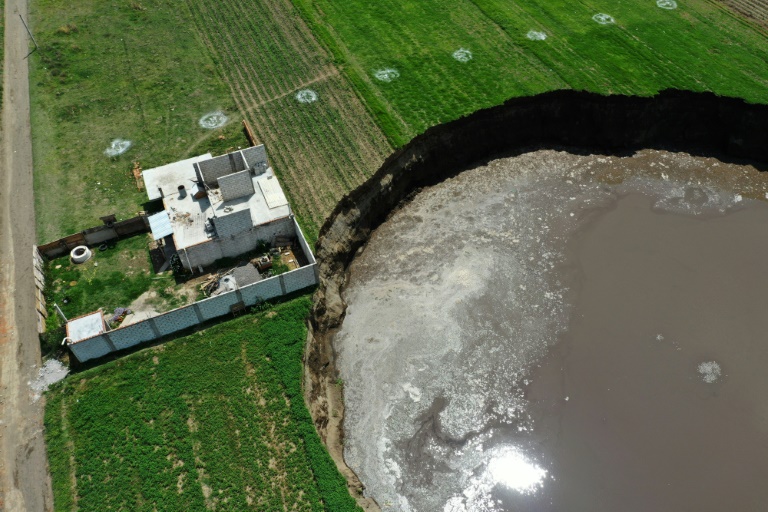
A giant sinkhole that was expanding by dozens of meters each day has alarmed residents in a rural area of central Mexico where it was threatening to swallow a house.

When the Sanchez family heard a loud crash on Saturday they first thought that it was a lightning strike.

But they soon discovered that the ground had collapsed just meters from their home in a field in Santa Maria Zacatepec in the state of Puebla.

The hole, which is full of water, was about 30 meters (nearly 100 feet) wide by Sunday.

It rapidly grew to 60 meters on Monday and around 80 meters on Tuesday, the authorities said, coming perilously close to the house of the Sanchez family, who fear they will be left homeless.

“We have nothing. We’re not from here. We have no relatives. We’re alone,” Heriberto Sanchez, originally from the southeastern state of Veracruz, told the media.

Scientists and the authorities were considering hypotheses including a geological fault or variations in the soil’s water content as the possible causes.

As the sinkhole has grown, large chunks of earth continually have broken away from the rim, scaring off onlookers approaching a security cordon set up by the authorities.

In a video posted on social media, two men were seen approaching the hole shortly before it expanded suddenly, forcing them to run to safety.

“It will grow until nature decides, when the water stops exerting pressure,” Puebla state governor Miguel Barbosa said.

“The important thing now is public safety,” he said, adding that the authorities would compensate those affected.

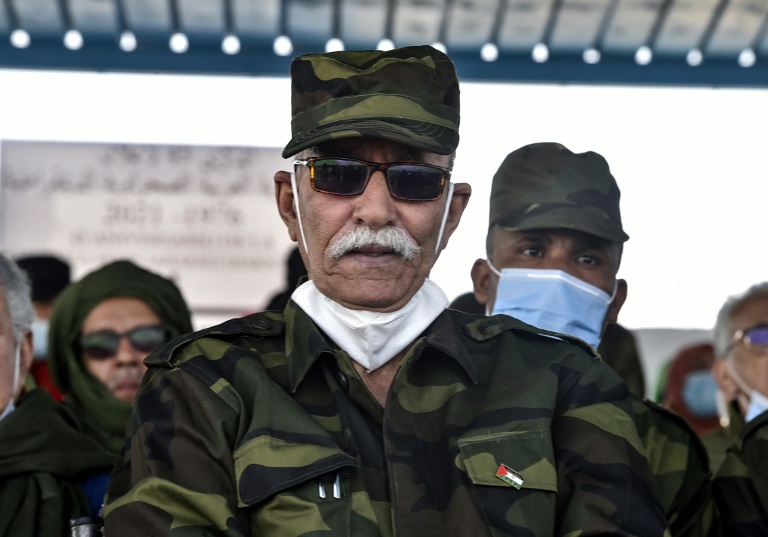
Polisario leader leaving Spain after court ruling

The leader of Western Sahara’s independence movement will leave Spain on Tuesday night, the Spanish government said, after his reception for medical treatment triggered a diplomatic row between Rabat and Madrid.

The announcement by Madrid came just hours after a Spanish judge declined to order that Polisario Front leader Brahim Ghali, who is under investigation in Spain for torture and genocide, be taken into custody.

The decision meant there was nothing to stop Ghali from leaving Spain, a scenario feared by Morocco and the complainants who wanted him to face trial in the country.

Ghali denied the allegations against him as he testified by video conference from a hospital in northern Spain where he has been recovering from a severe case of Covid-19.

Ghali “planned to leave Spain tonight on a civilian plane from Pamplona airport”, the Spanish foreign ministry said, adding it had informed Morocco.

“Mr Ghali’s freedom of movement is not limited” because the judge had not ordered him into custody, it stressed. 

The ministry did not say where his flight was headed, but the likely destination was believed to be Algeria, which supports the Polisario Front.

– Two investigations –

Spain says he was allowed into the country in April for treatment as a humanitarian gesture but the move has greatly angered Morocco.

The dispute is widely believed to have been at the root of a brief migrant crisis last month, when 10,000 people surged into Spain’s tiny North African enclave of Ceuta as Moroccan border guards looked the other way.

Ghali is facing two investigations in Spain following accusations of genocide, murder, torture and disappearances made against him by a Sahrawi activist and a Spain-based Western Sahara rights group.

During the closed-door hearing at the National Court in Madrid, the judge turned down a request from the complainants for Ghali to be taken into custody and turn over his passport, saying he posed no flight risk.

Ghali, who is also the president of the Sahrawi Democratic Arab Republic, a self-declared state since 1976, was only asked to provide an address and a telephone number in Spain where he could be reached.

Spanish government spokeswoman Maria Jesus Montero said Ghali could “return to his country of origin, where he came from” once he had recovered his health.

– Algerian plane returns –

Spanish online newspaper El Confidencial reported that an Algerian government plane had departed on Tuesday morning to the Spanish city of Logrono where Ghali is hospitalised to pick him up — but had then been turned back.

A “state” jet flying from Algeria to Logrono turned back on instructions from the Spanish military, a spokesman for civil air authority Enaire told AFP.

Citing diplomatic sources, Spain’s El Pais newspaper said Ghali was “critically ill” when he arrived on a medicalised Algerian government plane on April 18, bearing a diplomatic passport.  

It said he was admitted to the hospital under a false name for “security reasons”.

Rabat, which considers Ghali to be a war criminal, has demanded a “transparent investigation” into Ghali’s arrival in Spain with what it said was a forged passport. 

His Polisario Front has long fought for the independence of Western Sahara, a desert region bigger than Britain, which was a Spanish colony until 1975. 

Morocco controls 80 percent of the territory, while the rest — an area bordering Mauritania that is almost totally landlocked — is run by the Polisario Front.

– ‘Totally false’ –

One of the lawsuits relates to allegations of torture at Sahrawi refugee camps in Tindouf, a town in western Algeria.

The accusations were made in 2020 by Sahrawi activist Fadel Breika, who also holds Spanish nationality. 

While a Spanish court initially rejected the complaint, it agreed to reopen the case earlier this year.

“The tortures are confirmed by thousands of witnesses,” said Breika’s lawyer, Maria Jose Malagon Ruiz del Valle.

The second investigation relates to allegations of genocide, murder, terrorism, torture and disappearances made in 2007 by the Sahrawi Association for the Defence of Human Rights (ASADEDH) which is based in Spain.

Ghali’s lawyer, Manuel Olle, said the accusations against his client “are totally false” and are “politically motivated to target the credibility of the Sahrawi people”.

The UN refers to Western Sahara as a “non-self-governing territory”.

After 16 years of war, Rabat and the Polisario signed a ceasefire in 1991, but a UN-backed referendum on self-determination has been repeatedly postponed.

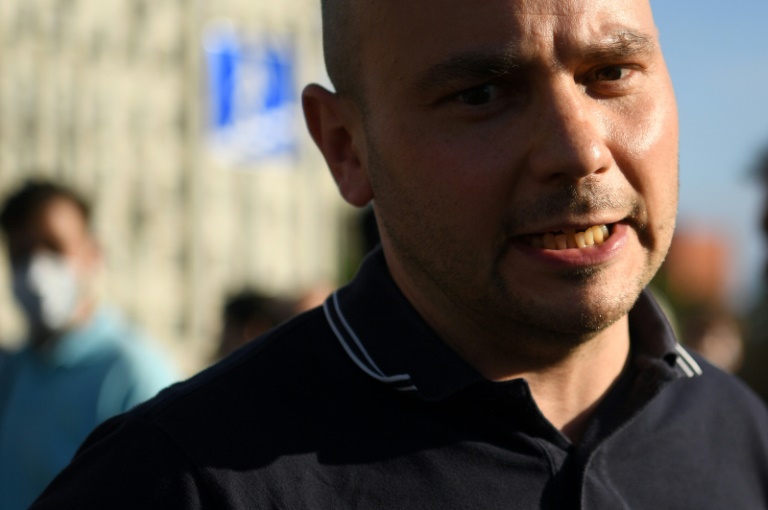
Kremlin critic Dmitry Gudkov detained

Prominent Kremlin critic Dmitry Gudkov was detained  and faced possible jail time Tuesday as authorities ramped up pressure on dissenters ahead of upcoming parliamentary elections.

Gudkov’s arrest came after police late Monday detained another Kremlin opponent, Andrei Pivovarov, after stopping his foreign-bound plane as it taxied down a runway and yanking him off the flight.

The detentions of Gudkov, 41, and Pivovarov, 39, were the latest in what Kremlin critics have described as a campaign of intimidation against President Vladimir Putin’s foes ahead of parliamentary elections in September.

“Dmitry Gudkov has been arrested,” his father Gennady Gudkov said on Twitter, adding he had been detained over unpaid rent from 2015.

“Vindictive and petty villains have captured my country and are destroying normal people,” said Gennady Gudkov, a former opposition lawmaker.

Dmitry Gudkov faces up to five years in prison if convicted.

Earlier in the day police conducted searches at his country house outside Moscow as well as the homes of his allies and relatives.

“I don’t know what the formal reason (for the searches) is. The real one is clear,” he said on messaging app Telegram earlier Tuesday.

– Activist pulled off plane –

On Monday, police detained fellow activist Pivovarov pulling him off the Warsaw-bound plane in Saint Petersburg. 

Pivovarov’s removal from the plane came after authorities in Belarus on May 23 diverted an EU airliner to Minsk to arrest a dissident on board, provoking an international outcry.

Pivovarov, the former executive director of Open Russia, a recently disbanded pro-democracy group, said the plane was taxiing toward take-off when it turned back.

Police searched his Saint Petersburg apartment overnight and a criminal probe was launched against the activist for cooperating with an “undesirable organisation,” Pivovarov’s team said on Facebook.

Pivovarov faces up to six years in prison if convicted.

On Tuesday, Pivovarov was moved to the southern city of Krasnodar where the criminal probe was launched.

The Krasnodar branch of the Investigative Committee, which probes major cases, said in a statement that Pivovarov had in August 2020 published materials in support of an “undesirable organisation.” 

The statement also accused the activist of attempting to flee from investigators on Monday. 

Open Russia, founded by self-exiled Putin critic Mikhail Khodorkovsky, announced last week it was shutting down to shield its members from prosecution.

The group was designated an “undesirable” organisation in Russia in 2017 in line with a law targeting foreign-funded groups accused of political meddling.

– ‘Audacious move’ –

The European Union called for Pivovarov’s immediate release and said his case “confirms a continuous pattern of shrinking space for civil society, the opposition and critical voices as well as independent media” in Russia.

Amnesty International called Pivovarov’s detention an “audacious move.”

“In spite of its recent self-dissolution to prevent the authorities from targeting its members, the witch-hunt against Open Russia continues,” Natalia Zviagina, Amnesty director in Russia, said in a statement.

“Andrei Pivovarov must be immediately released.”

Polish airline LOT, which operated Pivovarov’s flight, said the plane was taxiing when Russian air traffic control ordered the crew to return to the parking position. 

Poland said it was looking into the issue.

“This is an unusual action because if the Russians wanted to detain this person they could have done so before boarding. The question is why it was done exactly at that moment,” Deputy Foreign Minister Piotr Wawrzyk told state broadcaster TVP.

“The standards of the civilised world do not apply there.”

Putin’s leading domestic opponent, Alexei Navalny, was sentenced in February to two-and-a-half years in a penal colony on old fraud charges that he says are politically motivated, and authorities are gearing up to outlaw his political network.

Navalny’s Anti-Corruption Foundation said that the Russian authorities had “opted for the toughest scenario” ahead of the September parliamentary polls.

“They are removing everyone from the political arena,” the foundation said.

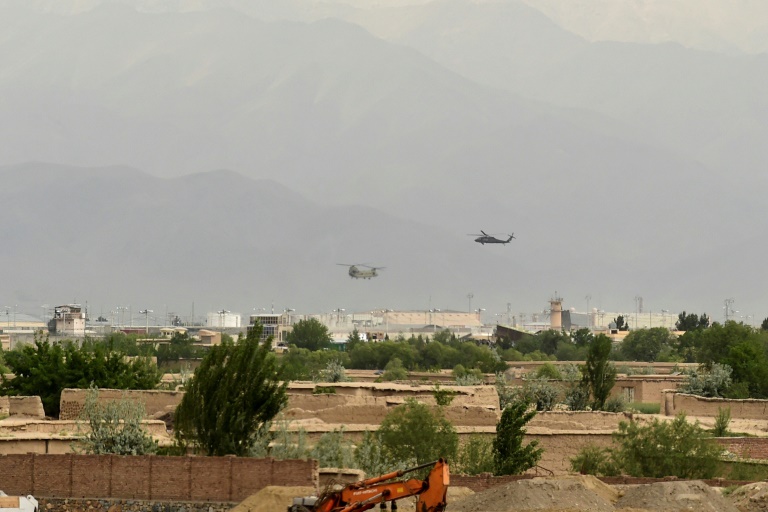
US to hand Bagram base to Afghan forces in 20 days, says official

The US military will hand over its main Bagram Air Base to Afghan forces in about 20 days, an official said Tuesday, as Washington carries out its final withdrawal after nearly two decades of war.

The vast base, built by the Soviets in the 1980s, is the biggest military facility used by US and NATO forces in Afghanistan, with tens of thousands of troops stationed there during the peak of America’s military involvement in the violence-wracked country.

“I can confirm we will hand over Bagram Air Base,” a US defence official told AFP without specifying when the transfer would take place.

An Afghan security official said the handover was expected in about 20 days, and the defence ministry had set up special committees to manage it.

In Washington, the Pentagon indicated that the pace of the withdrawal was picking up. As of Monday, US Central Command estimated it had completed 30-44 percent of the so-called “retrograde” process.

It has shipped the equivalent of 300 loaded C-17 transport planes out of the country.

In April, President Joe Biden set a target of September to remove all the 2,500 US troops and some 16,000 civilian contractors out of the country, aiming to end the US military’s two-decade-old presence.

– Handing over bases –

Bagram base was the centre for nationwide command and air operations for the past two decades.

It also houses a prison that held thousands of Taliban and jihadist inmates over the years.

Washington had already handed over six military bases to Afghan forces before May 1, when it began accelerating the final withdrawal of troops.

Last month it completed the withdrawal from Kandahar Airfield in southern Afghanistan, once the second-largest foreign military base in the country.

The US withdrawal comes despite bloody clashes across the country between the Taliban and Afghan forces.

In the latest violence to rock the capital Kabul, at least 10 civilians were killed and 12 wounded in two separate blasts targeting passenger buses in the city late on Tuesday, police said.

In a separate incident, an explosion caused a power outage leaving several parts of Kabul in darkness.

Peace talks were launched in September in Qatar between the Taliban and Afghan government, but so far have failed to strike any deal to end a war that has killed tens of thousands of people over nearly two decades.

On Tuesday, a group of Afghan government negotiators reached Doha in the hope of resuming stalled talks.

“Our team is ready for serious negotiations. There is no military solution to this conflict,” Najia Anwari, spokeswoman for the Ministry of Peace, told AFP, adding that no date had been fixed for resuming the talks.

Fawzia Koofi, one of four women negotiators from the government team, said on Twitter before leaving for Doha that she hoped for a “meaningful and result based negotiation this time to end the bloodshed and suffering of my people”.

“We need to see more willingness and sincerity in the talks as the few months ahead of us are crucial for Afghanistan and the region.”

Last month the two sides had agreed to speed up the talks, with the Taliban saying the dialogue would begin after the festival of Eid al-Fitr that ended on May 16.

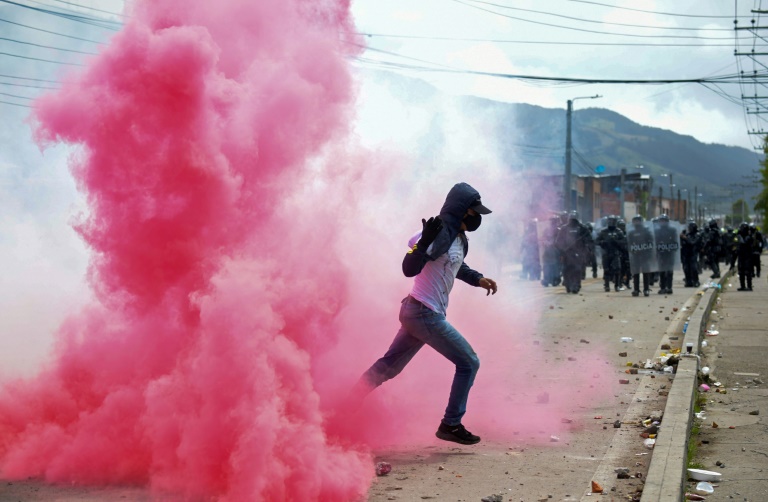
First signs of appeasement in talks between Colombian government, protesters

Colombian protesters made cautious overtures towards the government Tuesday in talks seeking to end weeks of violent social unrest that has left dozens of people dead and hundreds injured.

The National Strike Committee, which represents labor unions, students and indigenous peoples, among others, said there were “approaches for lifting” road blockades that have hamstrung transport for weeks on end, particularly in the country’s south.

Lifting the roadblocks is a precondition of the government for any settlement with the protesters, who in turn insist President Ivan Duque recognize violence committed by the security forces against them.

“The progress being made towards lifting the blockades is very important for Colombians,” presidential adviser Emilio Archila said on Tuesday, in the first signs of appeasement since talks started on May 7, with many pauses along the way.

The National Strike Committee, though representing a large block of protesters, does not speak for all groups that have been engaged in demonstrations in Duque’s government since April 28.

But a deal with the committee is seen as a major step towards resolving the crisis.

“The youth of Cali has said that the people of the strike committee do not represent us. We will not give up and we will not stop until the fire is put out,” Andres Velasquez, a protest leader in the city of Cali, at the heart of the unrest, told W Radio.

The government blames the roadblocks for the deaths of two babies in ambulances that were unable to move, and for massive economic losses as goods deliveries were affected even as the country reels from the economic impacts of the coronavirus pandemic.

– ‘Deep concern’ –

The number of blockades has been reduced from 800 at the beginning of the protests to 36 today, said Defense Minister Diego Molano.

Talks with the strike committee were held at a neutral venue in Bogota on Tuesday as the country reeled from the most violent day in the prolonged crisis so far, with clashes resulting in at least 13 deaths as thousands protested in Cali last Friday, prompting a military deployment to the city and elsewhere.

The protests were initially against a proposed tax increase Colombians said would leave them poorer even as they struggled with pandemic-related losses of income.

The proposal was quickly withdrawn, but the protests morphed into a wider denunciation of the government and the armed forces.

Poverty, joblessness, inequality and the fallout from the coronavirus epidemic have sparked widespread anger and resentment in Colombia.

In five weeks of unrest, 59 people have died across Colombia according to official data, with more than 2,300 civilians and uniformed personnel injured. 

The NGO Human Rights Watch says it has “credible reports” of at least 63 deaths nationwide in the first major uprising since a 2016 peace deal with guerilla groups ended decades of civil war.

A crackdown by the armed forces on protesters has drawn international condemnation, and on Sunday UN rights chief Michelle Bachelet voiced “deep concern” after the violence in Cali.

Meatpacking giant JBS believes Russia behind hack that hit plants

An American subsidiary of Brazilian meat processor JBS told the US government that it has received a ransom demand in a cyberattack it believes originated in Russia, which has forced some plants to cut production.

JBS received the demand from “a criminal organization likely based in Russia” following an attack that has affected its operations in Australia and North America, White House spokeswoman Karine Jean-Pierre said on Tuesday.

The White House statement comes as yet another major US sector finds its operations under duress, less than a month after a major cyberattack temporarily shut down the Colonial Pipeline network supplying about 45 percent of the fuel consumed on the US east coast.

“The White House has offered assistance to JBS, and our team and the Department of Agriculture have spoken to their leadership several times in the last day,” Jean-Pierre said. 

“The White House is engaging directly with the Russian government on this matter and delivering the message that responsible states do not harbor ransomware criminals.”

Brazil-based JBS is a sprawling meat supplier with operations in the United States, Australia, Canada, Europe, Mexico, New Zealand and Britain.

“JBS USA determined that it was the target of an organized cybersecurity attack, affecting some of the servers supporting its North American and Australian IT systems,” the company said in a statement Monday.

– Numerous plants impacted –

JBS said its backup servers were not affected by the incident, but the statement did not offer details on the status of its plants. The company did not immediately respond to AFP queries.

The company’s Australian facilities were said to have been paralyzed by the attack, with up to 10,000 meat workers being sent home without pay, according to a union representative.

“It’s affecting JBS processing facilities around (Australia),” AMIEU Queensland branch secretary Matt Journeaux told AFP. “They have stood down workers across JBS operations.”

Journeaux said there was no word yet from the company on when operations will resume.

Several plants in North America were also affected by the incident.

The Facebook page for JBS’ Green Bay, Wisconsin plant said there would be no production Monday. Another plant in Utah was also not operating, said a person who answered the phone and declined to give his name.

A plant in Iowa said four departments would not operate on Monday, while remaining units were working normally, according to its Facebook page.

JBS’ Canada division canceled some operations on Monday and early Tuesday, but said on Facebook later in the day that normal production would resume.

The United Food and Commercial Workers local representing workers in Colorado and Wyoming said “kill” and “fabrication” shifts were canceled on Monday, according to its Facebook page.

– Cybersecurity vulnerabilities –

Colonial’s multi-day shutdown in May sparked panic buying in some eastern states, and ended when the company paid $4.4 million in ransom to the hackers.

The online vulnerabilities of US oil conduits led the federal government last week to impose cybersecurity requirements on petroleum pipelines for the first time.

The JBS and Colonial Pipeline incidents follow a 2020 hack of the SolarWinds software company. Last week, Microsoft warned that the state-backed Russian group behind the SolarWinds attack had re-emerged with a series of attacks on government agencies, think tanks and other groups.

“The cybersecurity landscape is constantly evolving and we must adapt to address new and emerging threats,” Homeland Security Secretary Alejandro Mayorkas said in a statement Thursday.

Israeli parties in final sprint to build anti-Netanyahu coalition

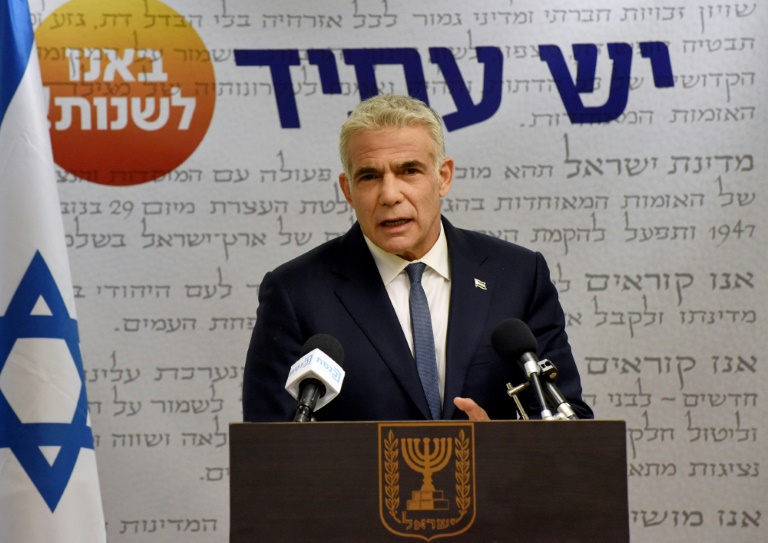
Israeli politicians battling to unseat veteran Prime Minister Benjamin Netanyahu were racing against the clock Tuesday in talks to build a “change” coalition composed of bitter ideological rivals.

They have until a minute before midnight (2059 GMT) Wednesday to cobble together an administration that would end 12 straight years of rule by the hawkish heavyweight, Israel’s longest-ruling premier.

The high-stakes push is led by former TV presenter Yair Lapid, a secular centrist, who on Sunday won the crucial support of hardline religious nationalist Naftali Bennett, a tech multi-millionaire.

“The coalition negotiation team sat all night and made progress toward creating a unity government,” a Bennett spokesman said in a statement.

But to reach a 61-seat majority in the 120-seat Knesset, their unlikely alliance would also have to include other left and right-wing parties — and would probably need the support of Arab-Israeli politicians.

That would result in a government riven by deep ideological differences on flashpoint issues such as Jewish settlements in the Israel-occupied West Bank and the role of religion in politics.

Lapid, leader of the Yesh Atid party, was tasked with forming a government by President Reuven Rivlin after Netanyahu again failed to put together his own coalition following Israel’s fourth inconclusive election in less than two years.

Lapid has reportedly agreed to allow Bennett, who heads the Yamina party, to serve first as a rotating prime minister in a power-sharing agreement, before swapping with him half way through their term.

As lawmakers were entering the 11th hour a source close to the negotiations told AFP negotiators were hammering away to “finalize a deal as soon as possible.”

– ‘Greater goal’ –

Israel’s latest political turmoil adds to the woes of Netanyahu, who is on trial for criminal charges of fraud, bribery and breach of trust while in office — accusations he denies.

If he were to lose power, he would not be able to push through changes to basic laws that could give him immunity, and would lose control over certain Justice Ministry nominations.

The last-minute talks also follow a flare-up of fighting between Israel and Palestinian militants in the Gaza Strip, which ended after 11 days of deadly violence with an Egyptian-brokered ceasefire on May 21.

Netanyahu, who served an earlier three-year term in the 1990s, had warned on Sunday of “a left-wing government dangerous to the state of Israel”.

The premier, who heads the right-wing Likud party and has developed a reputation as a wily political operator, was scrambling to scupper the new alliance.

Likud’s lawyers tried to hobble the emerging coalition by challenging Bennett’s right to serve first as prime minister, given that it was Lapid who was charged with forming the government.

But the legal adviser to Israel’s president knocked down the challenge.

Opponents of the possible alternative government meanwhile accused Bennett and his right-wing partners of betraying their voters.

Spokesmen for both Lapid and Bennett confirmed to AFP that the two have received additional security protection.

Lapid said Monday that obstacles remained to build the coalition, but added: “That’s our first test — to see if we can find smart compromises in the coming days to achieve the greater goal.”

In order to build the anti-Netanyahu bloc, Lapid must sign individual agreements with seven parties, whose members would then vote in parliament to confirm their coalition.

They include the hawkish New Hope party of Netanyahu’s former ally Gideon Saar and right-wing secular nationalist Avigdor Lieberman’s pro-settlement Yisrael Beitenu party.

The centrist Blue and White party of Defence Minister Benny Gantz, the historically powerful centre-left Labor party and the dovish Meretz party would also join.

– Arab Israeli support? –

If all those parties indeed sign on, the emerging alliance still needs the backing of four more lawmakers.

For that, Lapid is counting on parties representing Palestinian citizens of Israel, which have not yet announced their intentions.

Mansour Abbas, head of the Islamic conservative Raam party, which has four seats, has generally voiced openness to any arrangement that improves living conditions for Israel’s 20 percent Arab minority of Palestinian descent.

Political analyst Afif Abu Much said Tuesday that Abbas would not pursue ministerial posts, but wanted chairmanship of two parliament committees and budgets for Arab communities.

He also aimed to revoke a law that has hardened penalties for illegal construction, which is seen to impact Arab communities disproportionately.

“They don’t want to be part of the government,” Abu Much told AFP. “What they want is to be the address of the Arab people in Israel.”

Political scientist Jonathan Rynhold warned that it would be unwise at this point to write off Netanyahu, “the best card player by miles”.

If Lapid fails to muster a majority, and lawmakers cannot agree on another candidate for prime minister, Israelis will return, yet again, to the polls.

Abbas told reporters Tuesday that negotiations appeared to be heading “in a good direction”.

But, he said: “until it’s finished, nothing is finished.”

Biden to honor Tulsa massacre victims, 100 years on

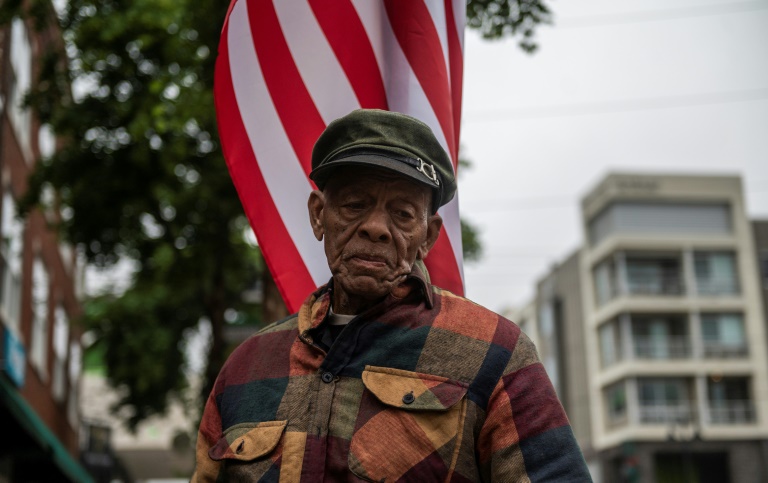
US President Joe Biden traveled Tuesday to Oklahoma to honor the victims of a 1921 racial massacre in the city of Tulsa, where African American residents are hoping he will hear their call for financial reparations 100 years on.

“I just want him to feel our pain,” said local activist Kristi Williams.

The Democratic leader landed Tuesday afternoon in Tulsa, where he was to mark the centenary by meeting with survivors of one of the worst episodes of racial violence in US history.

Ahead of his arrival, the White House announced a raft of new national initiatives including billions in federal grants to address racial disparities in wealth, home ownership and small business ownership.

Williams, who is descended from some of the massacre victims, wants Biden to “do us right.”

“It’s been 100 years, and we have been impacted negatively, from housing, economic development, our land has been taken,” she told AFP.

“This country, right now has an opportunity to right this wrong.”

On May 31, 1921, a group of Black men had gone to the Tulsa courthouse to defend a young African American man accused of assaulting a white woman. They found themselves facing a mob of hundreds of furious white people.

Tensions spiked and shots were fired, and the African Americans retreated to their neighborhood, Greenwood.

The next day, at dawn, white men looted and burned the neighborhood, at the time so prosperous it was called Black Wall Street.

In 2001, a commission created to study the tragedy concluded that Tulsa authorities themselves had armed some of the white rioters.

The mayor of Tulsa formally apologized Monday for the city government’s failure to protect the community.

As with the economic losses, the human toll is difficult to estimate, but historians say that as many as 300 African American residents lost their lives, and nearly 10,000 people were left homeless.

– ‘It hasn’t changed’ –

Expectations were running high ahead of Biden’s arrival in Tulsa.

“Presidents before should have addressed this, attorney generals and city officials should have addressed this, long before,” said Cleo Harris, a local store owner, told AFP.

Dozens of people gathered under light rain ahead of Biden’s arrival, Greenwood locals rubbing shoulders with people come from out of state for the commemorations. 

Khalid Kamau, 44, said he made the journey from Georgia less to mark the massacre than to celebrate what was once “a successful, self sustaining black community.”

“If it existed once, it can exist again,” he said.

In a statement Tuesday, the White House acknowledged that the destruction in Greenwood “was followed by laws and policies that made recovery nearly impossible.” 

It cited redlining, which locked Black people out of home ownership; federal highways which were built and cut the community off, and chronic disinvestment in Black businesses — moves which have “echoes in countless Black communities across the country.” 

“Because disparities in wealth compound like an interest rate, the disinvestment in Black families in Tulsa and across the country throughout our history is still felt sharply today,” the statement continued.

– Reparations –

In this city in Oklahoma, once a slave-owning state and a stronghold of the Ku Klux Klan, those disparities are clear.

There are marked inequalities between the northern part of Tulsa, which is predominantly Black, and the south, which is mostly white.

Billie Parker, a 50-year-old African American woman, said Tulsa is the same as when she was growing up there. “It hasn’t changed. We’re still separated.”

She said Black residents are still disadvantaged compared to the city’s white residents. Reparations could, she believes, help Greenwood improve its schools.

Reverend Robert Turner, pastor of the historic Vernon AME Church in Greenwood, has launched a petition in support of reparations for the community.

“I hope this country finally does right about the citizens that they have done wrong for centuries, which is African Americans,” he said.

The 2001 commission had recommended that Greenwood residents receive compensation. But so far, reparations have not been paid.

On April 19, some of the last survivors of the Tulsa massacre testified before Congress and asked that the country recognize their suffering.

Beyond financial compensation, city residents are counting on Biden’s visit to bring more attention to a tragedy that long remained taboo.

Tulsa has also begun to excavate mass graves, where many Black victims of the massacre are buried, in an effort to shed more light on the city’s dark past.

For LaShaundra Haughton, 51, the great-granddaughter of some of the survivors, “it is time to heal, it is time to tell the truth, it is time to bring everything to light.”

Close Bitnami banner
Bitnami