World

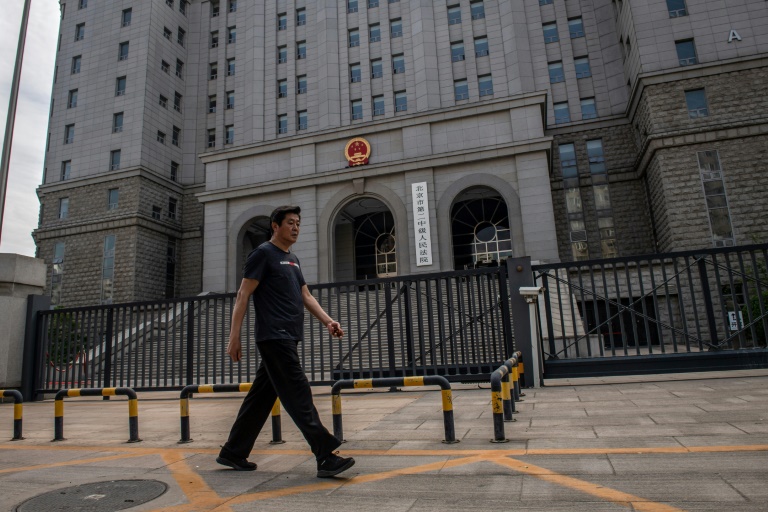
China rejects torture allegations by Australian academic

China on Tuesday denied an Australian academic’s claims that he had been tortured in custody during his two-year detention on espionage charges.

The trial of Chinese-born Australian Yang Jun began behind closed doors Thursday, but the court decided to delay a verdict and a sentence.

The 56-year-old, who also goes by his pen name Yang Hengjun, has told supporters he was tortured while at a secret detention site and fears forced confessions may be used against him.

“The first six months… was a really bad period. They tortured me,” Yang said in a message seen by AFP.

But China denied the claim, saying his trial was handled in accordance with Chinese laws and that Yang’s legal rights were protected.

“Yang Jun was not arbitrarily detained or tortured to extract a confession,” Chinese Foreign Ministry spokesman Wang Wenbin said at a regular briefing Tuesday.

“Such practices are expressly prohibited by Chinese law.”

Canberra has voiced deep concerns over a lack of transparency after its ambassador was denied access to the hearing.

Yang, who has been held since 2019, is one of two high-profile Australians detained in China on spying allegations as tensions escalate between Canberra and Beijing.

Another Australian, TV anchor Cheng Lei, has been held since August accused of “supplying state secrets overseas”.

Relations between Canberra and Beijing have deteriorated sharply in recent years, with disputes over everything from telecoms giant Huawei to the origins of Covid-19.

Australia and New Zealand on Monday also expressed grave concerns over human rights abuses in Hong Kong and the Xinjiang region, as well as China’s island-building spree in the South China Sea that affects freedom of navigation.

China’s foreign ministry said it “firmly opposes” the joint statement issued by Scott Morrison and Jacinda Ardern, chiding the leaders for “irresponsible remarks on China’s internal affairs.”

China has also imposed tariffs on Australian exports worth billions of dollars and cut off diplomatic channels between the two nations.
Heads of global organizations issue joint call for vaccine equality

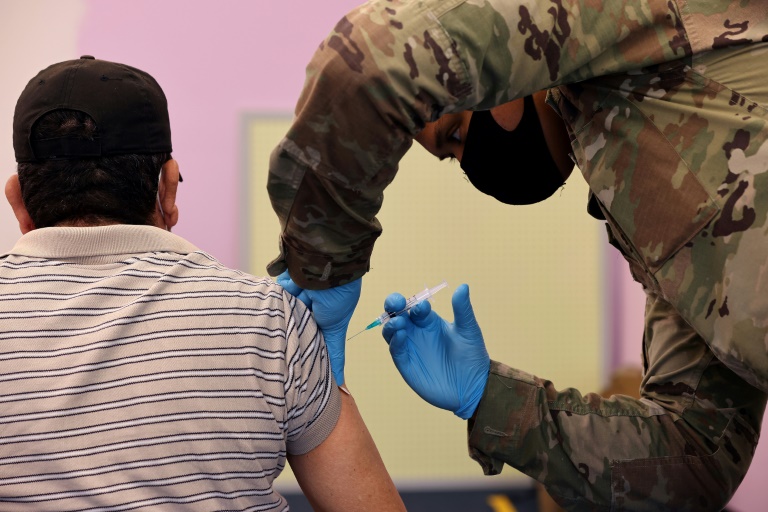
World leaders must make a “new commitment” to a more equal distribution of coronavirus vaccines to bring the pandemic under control, the heads of four major global organizations said on Tuesday.

Their joint rallying cry comes as concerns rise that vaccine inequality between wealthy and poor nations is further complicating and prolonging a pandemic that has killed more than 3.5 million people globally.

Writing in the Washington Post on Tuesday, the heads of the World Health Organization, World Bank, International Monetary Fund and World Trade Organization blamed the gap in vaccination programs for the emergence of virus variants that have fueled fresh outbreaks in the developing world.

“It has become abundantly clear that there will be no broad-based recovery from the Covid-19 pandemic without an end to the health crisis. Access to vaccination is key to both,” they said.

“Ending the pandemic is possible — and requires global action now.”

The joint op-ed was penned by IMF managing director Kristalina Georgieva, WHO director general Tedros Adhanom Ghebreyesus, World Bank president David Malpas, and WTO director general Ngozi Okonjo-Iweala.

They called on the Group of Seven wealthy democracies to agree on a “stepped-up coordinated strategy, backed by new financing, to vaccinate the world” at their next meeting in the United Kingdom later this month.

The officials recommended the G7 agrees to fund a $50 billion plan already put forward by the IMF to accelerate the end of the pandemic.

The WHO had already decried vaccine inequality as “grotesque” in March and its chief Tedros last month asked vaccine-wealthy nations to refrain from giving shots to children and adolescents and instead donate those doses to other nations.

UN-backed program Covax is meant to share vaccines with the poorest nations.

But wealthy countries effectively elbowed out Covax in the early stages of procurement, striking their own deals with drug manufacturers and taking the overwhelming share of the more than 1.8 billion doses of vaccine that have already been injected worldwide.

The G7 member countries, which met in central London under tight coronavirus restrictions last month, committed to financially support Covax.

But there was no immediate announcement on fresh funding to improve access to vaccines, despite repeated calls for the group to do more to help poorer countries.

Decade of Syria war killed nearly 500,000 people: new tally

A decade of war in Syria has left nearly half a million people dead, a war monitor said Tuesday, in a new toll that includes 100,000 recently confirmed deaths.

The Britain-based Syrian Observatory for Human Rights said the conflict has claimed 494,438 lives since it erupted in 2011 with the brutal repression of anti-government protests.

The previous tally, issued by the Observatory in March this year, stood at more than 388,000 dead.

The war monitor has since confirmed an additional 105,015 deaths following months of documentation efforts supported by its network of sources on the ground. 

“The overwhelming majority of these deaths occurred between the end of 2012 and November 2015,” Observatory head Rami Abdel Rahman told AFP, referring to the latest additions. 

Of the recently confirmed fatalities, more than 42,000 are civilians, most of them killed under torture in Syrian regime prisons, according to the monitor. 

Abdel Rahman said that a lull in the fighting allowed his organisation to investigate reports of deaths that had not been included in the overall tally for lack of documentation.

“It provided us with a window to document tens of thousands of cases for which we lacked evidence,” he said.

With government forces having reconquered large swathes of Syria and a ceasefire still holding along the main front line in Idlib region in the northwest, violence levels are at their lowest since the start of the conflict.

– Prison deaths –

The new figures published by the Observatory bring the total civilian death toll to 159,774, with attacks by Syrian government forces and allied militia accounting for the majority of deaths. 

The Observatory also documented a total of at least 57,567 deaths in government prisons and detention centres since 2011, up from the 16,000 confirmed deaths it reported in March. 

It also reported 168,326 deaths among Syrian soldiers and allied militia, with troops accounting for more than half of the tally. 

The conflict has killed 68,393 jihadists, most members of the Islamic State group or of organisations linked to Al-Qaeda, as well as 79,844 other rebels. 

A deal brokered by Turkey and Russia in March 2020 froze a government offensive on the rebel-controlled Idlib enclave which many feared would have caused human suffering on a scale yet unseen in the conflict.

The attention on both sides has since turned to battling the Covid-19 pandemic and 2020 saw the lowest number of conflict-related deaths since the start of the war with 10,000, according to the Observatory.

Today the Damascus government controls more than two thirds of the country after a string of Russia-backed victories since 2015.

President Bashar al-Assad, in power since 2000, was re-elected in May for a fourth seven-year term.

The war has forced more than half the country’s pre-war population to flee their homes.

WHO switches to Greek alphabet for virus variant names

Covid-19 variants are to be known by letters of the Greek alphabet to avoid stigmatising nations where they were first detected, the World Health Organization announced Monday.

The new system applies to variants of concern — the most troubling of which four are in circulation — and the second-level variants of interest being tracked.

“They will not replace existing scientific names, but are aimed to help in public discussion,” said Maria Van Kerkhove, the WHO’s Covid-19 technical lead.

Under the new system, the variants of concern take on the following names: the hitherto so-called British variant B.1.1.7 becomes Alpha; the B.1.351 first discovered in South Africa becomes Beta, while the Brazilian P.1 becomes Gamma.

The so-called Indian variant B.1.617 is split into sub-lineages, of which the B.1.617.2 variant of concern becomes Delta.

The B.1.617.1 variant of interest is called Kappa.

Besides these names, there are two other scientific names in use for each mutation, while different geographic names have been used to describe the same variant.

For example, within Britain, what other countries have been referring to as the British variant is often called the Kent variant — the county in southeast England where it was first discovered.

The lineage names such as B.1.1.7.2 will still continue to be used in scientific circles, for the mutation information that their name conveys.

– ‘Stigmatising and discriminatory’

“While they have their advantages, these scientific names can be difficult to say and recall, and are prone to misreporting,” the WHO said in a statement.

“As a result, people often resort to calling variants by the places where they are detected, which is stigmatising and discriminatory.

“To avoid this and to simplify public communications, WHO encourages national authorities, media outlets and others to adopt these new labels.”

Earlier this month, US President Joe Biden signed a hate crimes law aimed at protecting Asian Americans who have suffered a surge in attacks during the Covid-19 pandemic.

US anti-extremism groups say the number of attacks and hate crimes against Asian Americans has exploded since the beginning of the crisis.

They lay some of the blame with former president Donald Trump, who repeatedly referred to Covid-19 as the “China virus”.

The WHO has been trying to come up with simplified new nomenclature for the variants for several months.

The Greek alphabet contains 24 letters but there is no plan yet as to where to go next if they are exhausted.

Epsilon, Zeta, Eta, Theta and Iota have already been ascribed to variants of interest.

Close Bitnami banner
Bitnami