World

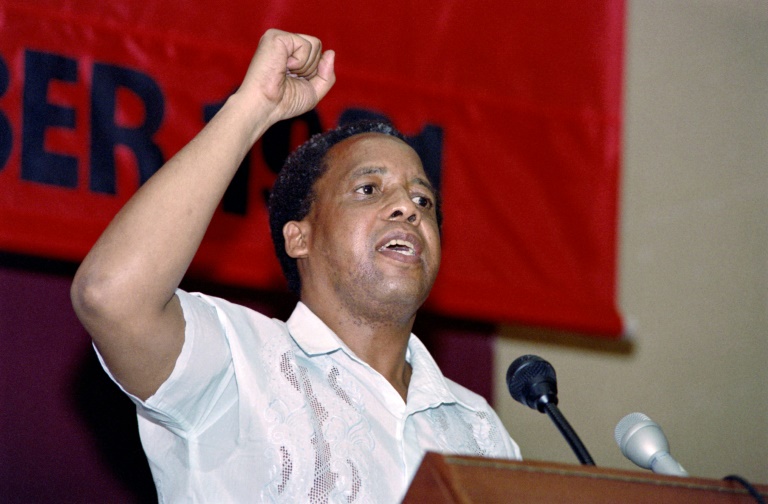
Killer of S.African anti-apartheid hero Hani stabbed in jail: prison

The killer of South African anti-apartheid hero Chris Hani has been stabbed in jail, days after the country’s top court ordered him to be released on parole, the prison services said Tuesday.

The Department of Correctional Services (DCS) said it was “able to confirm an unfortunate stabbing incident” involving Janusz Walus, who has spent nearly three decades in jail for the 1993 killing.

Walus, a 69-year-old far-right immigrant from then-communist Poland, was due to be released by Thursday, under an order issued last week by the Constitutional Court that ignited angry protests. 

The prison service said Walus was “stable” and receiving necessary health care, without giving details.

“It is alleged that Walus was stabbed by another inmate from the same housing unit,” it said, adding that an investigation was underway.

A DCS spokesman told AFP the incident occurred Tuesday afternoon and that Walus is being held at the Kgosi Mampuru II Correctional Centre in Pretoria.

Walus had been handed a life sentence for gunning down Hani, a hugely popular figure and fierce opponent of the apartheid regime. 

He was the general secretary of the South African Communist Party (SACP) and chief of staff of Umkhonto we Sizwe, the armed wing of the now-ruling African National Congress (ANC).

He was shot dead in the driveway of his house on April 10, 1993 in Boksburg, a suburb east of Johannesburg.

The shooting occurred just as negotiations to end apartheid were entering their final phase, stoking protests and rioting in black townships that some feared would erupt into civil war.

Then-ANC president Nelson Mandela appeared on national television to appeal for calm, a move that helped ease tensions and open the way to South Africa’s first multi-racial elections the following year.

– Parole controversy –

The Constitutional Court on November 21 granted Walus parole and gave the prison service 10 days in which to release him.

Walus “was convicted of (a) very serious crime… cold-blooded murder”, said Chief Justice Raymond Zondo.

He “seemed to have been intent on derailing the attainment of democracy by this country”, Zondo said. 

Even so, said Zondo, the law entitled Walus to parole. 

ANC lawmakers vowed Tuesday “to strengthen the laws that govern the granting of parole”.

“We are saddened by the fact that an unrepentant murderer of the hero of our struggle will walk free,” the ANC caucus said in a statement.

They also condemned what they described as “statements by white supremacist and Neo-Nazi groups in Poland that have hailed Walus’ release on parole”.

President Cyril Ramaphosa last week said the decision to parole the murderer of the “iconic figure in our struggle” was “disappointing” and “unfortunate”.

The decision was described as “diabolical” by Hani’s widow and unleashed angry protests by the ANC and SACP.

More protests led by the ANC, the SACP and the labour federation COSATU have been announced for Wednesday, to be staged outside the prison where Janus is being held.

At the weekend, Hani’s grave and memorial — a national heritage site — in a suburb east of Johannesburg were vandalised.

In a joint statement with trade unions, the ANC and SACP condemned the attack and said it came in the context of a judgement that “pleased unrepentant apartheid perpetrators”. 

On Monday, the home affairs ministry announced Walus would have to serve his parole in South Africa, saying he should not be allowed to return home to Poland given the “heinous crime committed”. 

Walus immigrated to South Africa from then-communist Poland in 1981 at the height of the white-minority apartheid rule.

His accomplice Clive Derby-Lewis, who supplied the gun that shot Hani, was released in 2015 on medical parole after 22 years in jail. He died of lung cancer in 2016, aged 80.
IMF may have to lower China growth forecasts: director

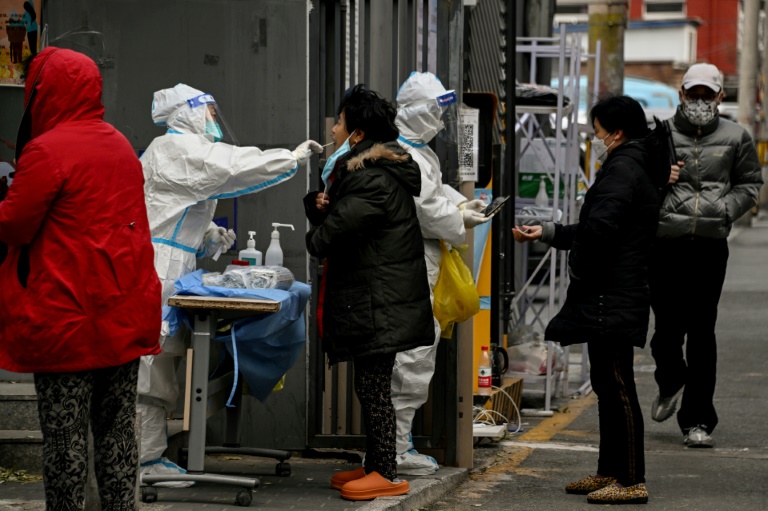
The International Monetary Fund may have to slash its growth forecasts for China, managing director Kristalina Georgieva warned Tuesday, after protests erupted opposing Beijing’s strict policies to combat Covid.

“There is indeed the possibility that, in this time of very high uncertainty, we might have to revise these projections down,” Georgieva said, referring to the fund’s forecasts for China.

In October, the IMF cut its projection for the world’s number two economy to 3.2 percent this year as it is weighed down by Covid-zero policies, as well as a slowdown in the property sector.

It projected China’s growth would rise to 4.4 percent next year. 

Beijing’s tough approach involves compelling local governments to impose snap lockdowns and quarantine orders, and limit freedom of movement in response to minor outbreaks.

Demonstrations not seen in decades erupted in major cities at the weekend opposing Covid lockdowns and demanding greater political freedoms.

Georgieva, speaking in Berlin after meeting Chancellor Olaf Scholz and heads of other international financial organisations, said China was “looking into its zero-Covid policy with a perspective to shift to more targeted response to Covid cases”.

This was aimed at ensuring “less interruptions to the Chinese economy, and less negative spillover for the rest of the world,” she said.

“We have been supportive of looking into what China can do to make its Covid policy more effective for China itself and for its role in the world economy.”

HSBC bank sells Canadian ops for over US$10 bn

HSBC has agreed to sell its Canadian division to Royal Bank of Canada for US$10.1 billion, the Asia-focused banking giant announced Tuesday.

The large sale comes after UK-listed HSBC faced calls from biggest shareholder Ping An Insurance Group to cut costs and shift more resources to Asia.

HSBC added in a statement that it would use the funds to invest in its core business and return cash to investors.

“We decided to sell following a thorough review of the business… and concluded that there was a material value upside from selling,” said chief executive Noel Quinn.

The divestment is expected to be completed in late 2023.

“HSBC Canada offers the opportunity to add a complementary business and client base in the market we know best and where we can deliver strong returns and client value,” RBC president and CEO Dave McKay said in a separate statement.

“This also positions us as the bank of choice for commercial clients with international needs, newcomers to Canada and affluent clients who need global banking and wealth management capabilities.”

China’s Ping An has urged HSBC to spin off its Asian operations in a bid to unlock shareholder value amid tensions between Beijing and the West.

Shares rose 4.4 percent to 510.10 pence in late afternoon deals on London’s rising stock market.

“HSBC’s policy for some time has been to pivot toward Asia and the sale of the Canadian business is the latest step in that mix shift,” said AJ Bell investment director Russ Mould.

“Pressure from Ping An could be accelerating the changes, especially if HSBC’s board remains keen to avoid a full break-up.”

German inflation unexpectedly slows in November

German inflation unexpectedly slowed in November after months of increases, preliminary data showed Tuesday, as sky-high energy prices begin to ease.

The inflation rate in Europe’s top economy fell back to 10 percent this month, federal statistics agency Destatis said, after hitting a record high of 10.4 percent in October.

Analysts surveyed by Factset had expected an acceleration of 10.5 percent in November.

The surprise dip comes as “energy prices have eased slightly”, Destatis said, although it noted they were still 38.4 percent higher than a year earlier.

As in other countries across Europe, Germany’s recent consumer price hikes have been fuelled by soaring food and energy costs in the wake of Russia’s war in Ukraine.

The German government has unveiled a 200-billion-euro ($207-billion) energy fund to shield households and businesses from price shocks, and has raced to diversify supplies after Russia cut gas deliveries.

Tuesday’s inflation data offered a “very small breather” for a country bracing for a difficult winter, said ING bank economist Carsten Brzeski. 

But he cautioned it was too soon to hope inflation was on a downhill path.

“The pass-through of higher wholesale gas prices is still in full swing. Many households will see the first price increase only as of January 1,” he said.

European Central Bank President Christine Lagarde echoed that sentiment Monday, when she said the eurozone had not yet reached peak inflation.

Like other central banks around the world the ECB has moved aggressively to curb red-hot inflation, lifting its key interest rates by two percentage points since July.

Lagarde has repeatedly said the bank would continue to raise rates in its battle to bring inflation back to its two-percent target.

The next rate hike is expected at the ECB’s upcoming December 15 meeting.

Japanese company aims to put first private lander on Moon, with UAE rover on board

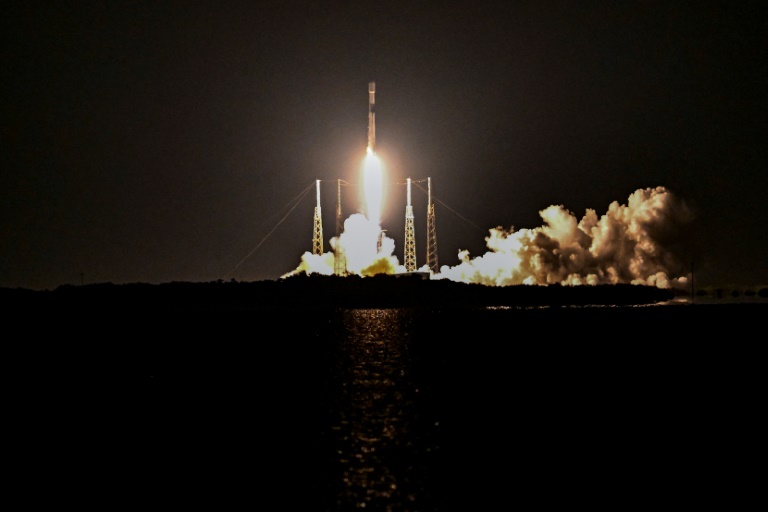
SpaceX is set Wednesday to launch the first private — and Japanese — lander to the Moon.

A Falcon 9 rocket is scheduled to blast off at 3:39 am (0839 GMT) from Cape Canaveral, Florida, with a backup date on Thursday.

Until now, only the United States, Russia and China have managed to put a robot on the lunar surface.

The mission, by Japanese company ispace, is the first of a program called Hakuto-R. 

The lander would touch down around April 2023 on the visible side of the Moon, in the Atlas crater, according to a company statement.

Measuring just over 2 by 2.5 meters, it carries on board a 10-kilogram rover named Rashid, built by the United Arab Emirates. The oil-rich country is a newcomer to the space race but counts recent successes including a Mars probe in 2020. If it succeeds, Rashid will be the Arab world’s first Moon mission.

“We have achieved so much in the six short years since we first began conceptualizing this project in 2016,” said ispace CEO Takeshi Hakamada.

Hakuto was one of five finalists in the international Google Lunar XPrize competition, a challenge to land a rover on the Moon before a 2018 deadline, which ended without a winner. But some of the projects are still ongoing.

Another finalist, from the Israeli organization SpaceIL, failed in April 2019 to become the first privately-funded mission to achieve the feat, after crashing into the surface while attempting to land.

ispace, which has just 200 employees, says it “aims to extend the sphere of human life into space and create a sustainable world by providing high-frequency, low-cost transportation services to the Moon.”

Future missions are set to contribute to NASA’s Artemis program. Artemis-1, an uncrewed test flight to the Moon, is currently underway.

The US space agency wants to develop the lunar economy in the coming years by building a space station in orbit around the Moon and a base on the surface.

It has awarded contracts to several companies to develop landers to transport scientific experiments to the surface. 

Among them, the American companies Astrobotic and Intuitive Machines should take off in 2023, and could arrive at their destination before ispace by taking a more direct route, according to reports.

Chile ceramics, Colombian wisdom get UNESCO heritage status

Two social traditions from South America were honored Tuesday as UNESCO recognized the rapidly disappearing skill required to make black pottery in Chile and the ancient knowledge of Colombian Indigenous groups as intangible cultural heritage practices. 

The United Nations’ cultural agency wrote on Twitter that it had added the centuries-old ceramics skills of mainly women in the Chilean towns of Quinchamali and Santa Cruz de Cuca to its list of cultural heritage in need of urgent preservation.

Techniques to make the black earthenware, which is adorned with white accents, are applied to functional items such as cups and plates and to more decorative items such as figurines of farm animals or rural people.

According to the UNESCO nomination form, there are only five male and 74 female potters currently carrying on the tradition, many of whom are elderly, meaning that in 10 years, there would only be 12 active potters under 60.

The knowledge is passed down through women.

Another threat to the tradition is the planting of pine and eucalyptus forests in the area, making it difficult for the potters to secure the clay and guano needed to produce the ceramics.

Being on the List of Intangible Cultural Heritage in Need of Urgent Safeguarding will allow Chile to access financing to preserve the tradition.

It also gives international recognition to an important cultural practice.

“Being added to the Urgent Safeguarding list means the ceramic tradition of Quinchamali and Santa Cruz de Cuca will endure, but it also allows me to secure my future as a potter,” Nayadet Nunez, 31, told AFP.

– Ancestral Colombian knowledge –

UNESCO also granted intangible cultural heritage status to an ancestral system of knowledge held by four Indigenous Colombian communities who live in the world’s highest coastal mountain system.

UNESCO said that the Arhuaco, Kankuamo, Kogui and Wiwa peoples had essential knowledge to “take care of mother nature, humanity and the planet.”

Colombia’s culture ministry said that, as tourism grows in the mountainous area, the Indigenous groups “play a fundamental role in guaranteeing the protection of the eco-system … and avoiding the loss of their cultural identity.”

The four groups, distinct but related, live on the slopes of the pyramid-shaped Sierra Nevada de Santa Marta in northern Colombia and dress in traditional white clothes and woven straw hats.

“The System of Knowledge entails an extensive understanding of the territory, through which the sea, rivers, stones, mountains, and snow-capped peaks are recognized as the totality of a single living body,” read the nomination form.

To its inhabitants, the Sierra Nevada is the center of the world, surrounded by an invisible “black line” taking in the sacred sites of their ancestors, according to Survival International, an NGO that defends Indigenous rights.

They believe it is their role to maintain the balance of the universe.

burs-fb/caw

Killer of S.African anti-apartheid hero Hani stabbed in jail: prison

The killer of South African anti-apartheid hero Chris Hani has been stabbed in jail, days after the country’s top court ordered him to be released on parole, the prison services said Tuesday.

The Department of Correctional Services (DCS) said it was “able to confirm an unfortunate stabbing incident” involving Janusz Walus, who has spent nearly three decades in jail for the 1993 killing.

Walus, a 69-year-old far-right immigrant from then-communist Poland, was due to be released by Thursday, under an order issued last week by the Constitutional Court that ignited angry protests. 

The prison service said “Walus is stable” and receiving necessary health care, without giving details.

“It is alleged that Walus was stabbed by another inmate from the same housing unit,” it said, adding that an investigation was underway.

A DCS spokesman told AFP the incident occurred “today, in the afternoon”.

Walus is being held at the Kgosi Mampuru II Correctional Centre in Pretoria, the spokesman said.

Walus had been handed a life sentence for gunning down Hani, a hugely popular figure and fierce opponent of the apartheid regime. 

He was the general secretary of the South African Communist Party (SACP) and chief of staff of Umkhonto we Sizwe, the armed wing of the now-ruling African National Congress (ANC).

He was shot dead in the driveway of his house on April 10, 1993 in Boksburg, a suburb east of Johannesburg.

The shooting occurred just as negotiations to end apartheid were entering their final phase, stoking protests and rioting in black townships that some feared would erupt into civil war.

Then-ANC president Nelson Mandela appeared on national television to appeal for calm, a move that helped ease tensions and open the way to South Africa’s first multi-racial elections the following year.

– Parole controversy –

The Constitutional Court on November 21 granted Walus parole and gave the prison service 10 days in which to release him.

Walus “was convicted of (a) very serious crime… cold-blooded murder”, said Chief Justice Raymond Zondo.

He “seemed to have been intent on derailing the attainment of democracy by this country”, Zondo said. 

“His conduct nearly plunged this country into civil unrest.”

Even so, said Zondo, the law entitled Walus to parole. 

President Cyril Ramaphosa last week said the decision to parole the murderer of the “iconic figure in our struggle” was “disappointing” and “unfortunate”.

The decision was described as “diabolical” by Hani’s widow and unleashed angry protests by the ANC and SACP.

More protests led by the ANC, the SACP and the labour federation COSATU have been announced for Wednesday, to be staged outside the prison where Janus is being held.

At the weekend, Hani’s grave and memorial — a national heritage site — in a suburb east of Johannesburg were vandalised.

In a joint statement with trade unions, the ANC and SACP condemned the attack and said it came in the context of a judgement that “pleased unrepentant apartheid perpetrators”. 

On Monday, the home affairs ministry announced Walus would have to serve his parole in South Africa, saying he should not be allowed to return home to Poland given the “heinous crime committed”. 

Walus immigrated to South Africa from then-communist Poland in 1981 at the height of the white-minority apartheid rule.

His accomplice, Clive Derby-Lewis, who supplied the gun that shot Hani, was released in 2015 on medical parole after 22 years in jail. He died of lung cancer in 2016, aged 80.

China's nuclear arsenal to more than triple by 2035: Pentagon

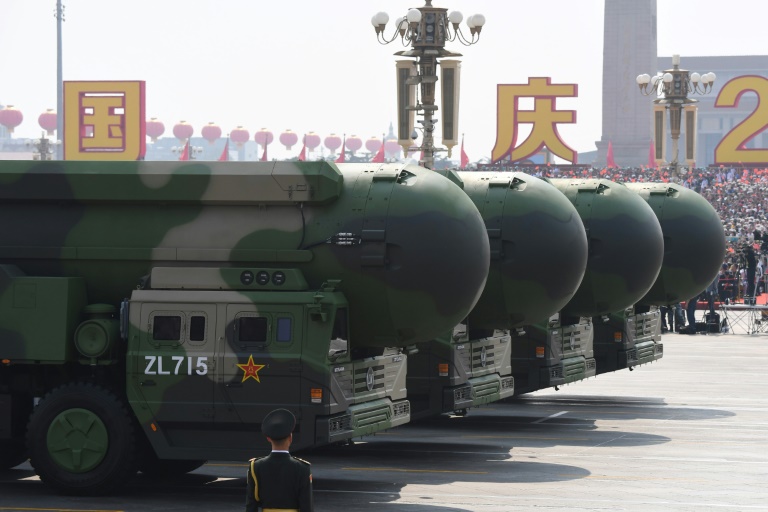
China’s nuclear arsenal is likely to more than triple to 1,500 warheads by 2035, the Pentagon said in a Tuesday report that also highlighted the increasing sophistication of the country’s air force.

Washington has identified Beijing as the most consequential challenge to the United States, and the annual report on China’s military emphasized improvements to both its nuclear and conventional forces.

“The Department of Defense estimates that (China’s) operational nuclear warheads stockpile has surpassed 400,” the report said. “If China continues the pace of its nuclear expansion, it will likely field a stockpile of about 1,500 warheads” by 2035.

That figure would still however lag far behind the arsenals of the United States and Russia, which each include several thousand nuclear warheads.

China “probably intends to develop new nuclear warheads and delivery platforms that at least equal the effectiveness, reliability and/or survivability” of those under development by the United States and Russia, the report said.

Beijing is also working to modernize its ballistic missile arsenal, launching some 135 in testing during 2021 — “more than the rest of the world combined,” excluding those fired in conflicts.

China is “developing new intercontinental ballistic missiles (ICBMs) that will significantly improve its nuclear-capable missile forces,” the report said.

And Beijing’s air force — the third-largest in the world with more than 2,800 aircraft — is making strides.

It is “rapidly catching up to Western air forces and continues to modernize with the delivery of domestically built aircraft and a wide range of UAVs,” according to the report.

– ‘New normal’ –

“This trend is gradually eroding longstanding and significant US military technical advantages… in the air domain.”

A senior US defense official, speaking before the report’s release, said the Chinese air force is “trying to… progress rapidly on all fronts,” including on the equipment it operates as well as its pilots and other personnel.

The report takes aim at the way in which China is employing its military in the Asia-Pacific region, saying it has “adopted more coercive and aggressive actions.”

“Throughout 2021 and into 2022, (Chinese) vessels and aircraft have exhibited a sharp increase in unsafe and unprofessional behavior,” risking “a major incident or accident,” the report said — an issue US Defense Secretary Lloyd Austin raised in a recent meeting with his Chinese counterpart Wei Fenghe.

China’s military “increased provocative and destabilizing actions” during 2021 around Taiwan, the self-governing democratic island Beijing claims as its own.

Beijing lashes out at any diplomatic action that might lend Taiwan legitimacy, and responded to an August 2022 visit by US House Speaker Nancy Pelosi by holding its largest and most aggressive exercises around the island since the 1990s.

Both sides have since moved to lower the temperature, but the senior defense official said that while Chinese military activity around Taiwan has decreased, it is still higher than before.

Beijing is “establishing kind of a new normal in terms of the level of military activity around Taiwan following the speaker’s visit,” the official said.

“Even though we don’t see an imminent invasion, obviously, that sort of an elevated level of… intimidating and coercive activity around Taiwan” is a source of concern.

Ukraine urges allies to speed up support for winter of war

Ukraine urged NATO members Tuesday to speed up weapons deliveries and help restore its shattered power grid, as Western allies vowed to bolster support to aid Kyiv through winter in the face of Russia’s attacks. 

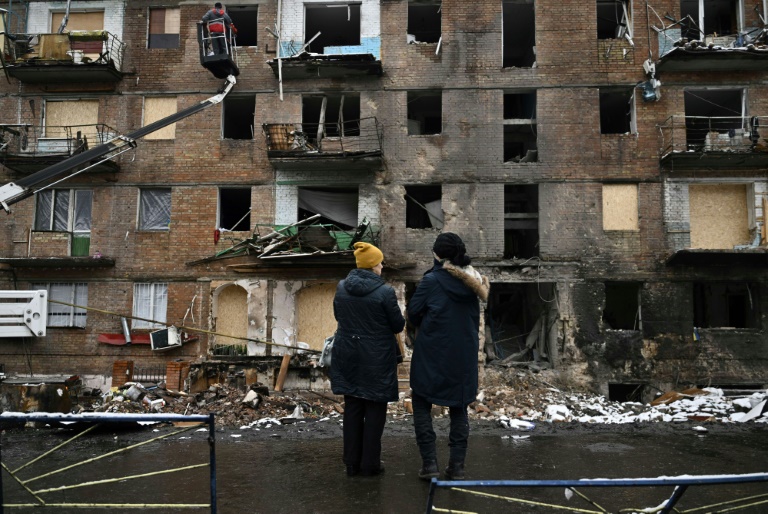
Moscow has unleashed waves of strikes against Ukraine’s energy infrastructure as its troops are pushed back on the ground, plunging millions of people into darkness. 

Ukraine’s Foreign Minister Dmytro Kuleba called for supplies of weapons, especially advanced air defence systems, to come “faster, faster, faster” as he joined a two-day meeting of NATO foreign ministers in the Romanian capital Bucharest.  

“When we have transformers and generators, we can restore our system, our energy grid, and provide people with decent living conditions,” Kuleba said. 

“When we have air defence systems, we will be able to protect this infrastructure from the next Russian missile strikes.”

“In a nutshell, Patriots and transformers is what Ukraine needs the most”, he said, referring to the US-made Patriot missile defence system. 

The appeal came as NATO chief Jens Stoltenberg accused Russian President Vladimir Putin of targeting infrastructure in a bid to use the winter as “a weapon of war” against Ukraine. 

Stoltenberg said NATO allies had pledged more support for Ukraine to fix its infrastructure and would keep on sending arms and air defences to help it better protect itself.

He said there was an “ongoing discussion” on supplying the Patriot systems that Washington and others have been so far refused to give to Kyiv.

“NATO is not a party to the war. But we will continue to support Ukraine. For as long as it takes, we will not back down,” Stoltenberg said. 

He said he expected Russia to carry out more attacks on Ukraine’s grid as the Kremlin suffers defeats on the ground and warned Europe should “be prepared for more refugees”. 

US Secretary of State Antony Blinken has announced a package worth $53 million “to support acquisition of critical electricity grid equipment” by Kyiv. 

A senior US official said the assistance would not be the last and pointed out that the Biden administration had budgeted $1.1 billion for energy spending in Ukraine and neighbouring Moldova.

– ‘Keep calm, give tanks’ –

“This targeting of civilian infrastructure, of energy infrastructure is obviously designed to try and freeze the Ukrainians into submission,” said British Foreign Secretary James Cleverly. 

“I don’t think it’ll be successful.”

Allies have given arms worth billions of dollars to Ukraine, but Kyiv is pleading for more air defence, tanks and longer-range missiles to push the Kremlin’s forces back.

But there are growing concerns that weapon stores in some NATO countries are running low as stockpiles have been diverted to Ukraine. 

Lithuanian Foreign Minister Gabrielius Landsbergis said his request to fellow NATO ministers was simple: “Keep calm and give tanks”. 

Germany, which currently chairs the G7, convened a meeting on the sidelines of the NATO gathering to discuss the energy crisis caused by the war in Ukraine.

Germany’s foreign minister Annalena Baerbock said the participants had looked to “better understand and prioritise the most urgent needs” ahead of an international conference in Paris on December 13. 

Separately, German Chancellor Olaf Scholz spoke to Ukrainian President Volodymyr Zelensky and said Germany would dispatch 350 generators and provide financial assistance to repair energy infrastructure worth 56 million euros ($57 million).

– ‘Door is open’ –

NATO said the meeting in Bucharest has showcased its unity on continuing to support Ukraine as Moscow’s war against its neighbour drags into its tenth month. 

The alliance did not, however, make any progress on Ukraine’s request to join, despite reiterating it remained committed to its pledge made some 14 years ago that Kyiv would one day become a member.

Stoltenberg insisted that the “door is open” to new members but said the focus now was on assisting Ukraine in its fight with Moscow. 

“We are discussing how to further strengthen our partnership with Ukraine, and also help them move towards a NATO membership,” he said. 

NATO has bolstered its eastern flank in the face of Russia’s war by sending more troops and equipment to countries neighbouring Ukraine, like Romania.

Non-NATO Moldova, which has also seen blackouts caused by the fallout from the attacks on neighbouring Ukraine, will attend the alliance’s talks on Wednesday along with Bosnia and Georgia. 

Besides the war in Ukraine, the ministers will take stock of progress in the accession of NATO candidates Finland and Sweden, already ratified by 28 of the 30 member countries but which remains suspended awaiting a green light from Hungary and Turkey.

The Finnish, Swedish and Turkish foreign ministers met on the sidelines of the meeting, but Ankara did not signal that there had been any steps forward. 

Trade tensions overshadow Macron's showy White House visit

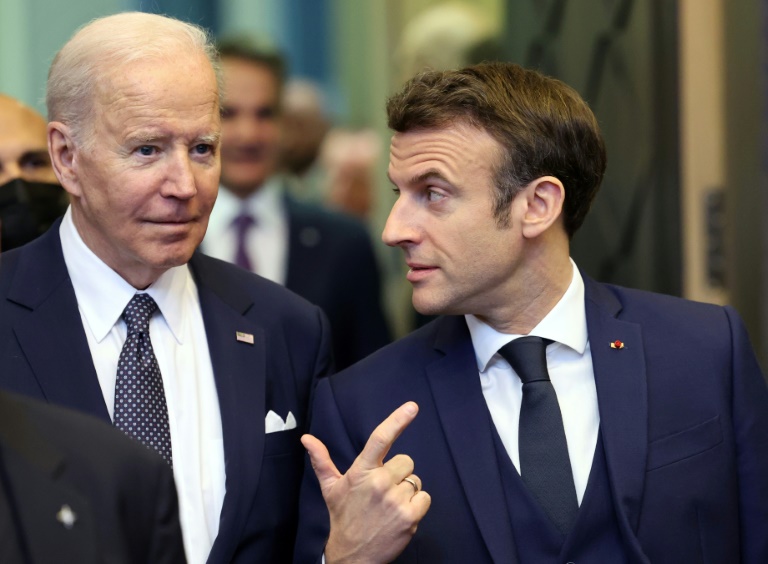
French President Emmanuel Macron was set to arrive in Washington Tuesday for a rare state visit hosted by Joe Biden, but hard-nosed disagreements about US-EU trade will loom over the pomp and ceremony at the White House.

Due to Covid delays, this is the first formal state visit of Biden’s presidency and US officials say the choice of France for the honor reflects both deep historical ties and their intense current partnership in confronting Russia over its war in Ukraine.

Biden will host Macron with a full ceremonial military welcome, a poignant visit to Arlington National Cemetery, an Oval Office sit down, a private dinner with their spouses Wednesday and the state banquet on Thursday, where Grammy-award winning American musician Jon Batiste will perform.

Compared to Macron’s edgy first experience of a state visit as the guest of Donald Trump in 2018, this trip — concluding with a stop Friday to the once-French city of New Orleans — will be a carefully choreographed display of transatlantic friendship.

Certainly the diplomatic furor that erupted last year when Australia canceled a deal for French submarines and instead signed up for US nuclear subs is now buried.

But even with little risk of Trump-style fireworks, Macron has major grievances to air.

– Trade war? –

Top of these is tension over Biden’s signature green industry policy, the Inflation Reduction Act, or IRA, which will pump billions of dollars into climate-friendly technologies, with strong backing for American-made products.

Europeans fear an unfair US advantage in the rapidly emerging sector just as they are reeling from the economic consequences of the Ukraine war and Western attempts to end reliance on Russian energy supplies.

Talk in Europe is now increasingly on whether the bloc should respond with its own subsidies for homegrown products, effectively starting a trade war.

“China favors its own products, America favors its own products. It might be time for Europe to favor its own products,” French Finance Minister Bruno Le Maire told France 3 radio on Sunday.

Martin Quencez, deputy director of the Paris office of think-tank GMF, said Macron will tell Biden “there’s a contradiction between an administration that constantly talks of alliances… and at the same time takes a decision like the IRA that will impact allies’ economies.” 

Another gripe in Europe is the high cost for US liquid natural gas exports — surged to try and replace canceled Russian deliveries.

Responding to accusations that the United States is effectively profiteering from the Ukraine war, a senior US administration official said this was a “false claim.”

The official also played down IRA-related tensions, saying a “very constructive set of conversations” is underway on how to prevent European companies from being shut out.

To underline the importance of the issue for Paris, Macron met with dozens of business executives ahead of his departure to Washington, urging them to keep investing in France. These included representatives from US giants Goldman Sachs and McDonald’s.

– Strategizing on China, Ukraine –

The breadth of Macron’s entourage — including the foreign, defense and finance ministers, as well as business leaders and astronauts — illustrates the importance Paris has put on the visit.

However, at the White House, a senior official said the main goal is to nurture the “personal relationship, the alliance relationship” with France — and between Biden and Macron.

That more modest sounding goal will include improving coordination on helping Ukraine to repel Russia and the even more vexing question of how to manage the rise of the Chinese superpower.

“We are not allies on the same page,” one adviser to Macron told AFP, forecasting “challenging” talks with Biden.

Despite his strong support for Kyiv, Macron’s insistence on continuing to maintain dialogue with Russian President Vladimir Putin has irked American diplomats.

The China question — with Washington pursuing a more hawkish tone and EU powers trying to find a middle ground — is unlikely to see much progress.

“Europe has since 2018 its own, unique strategy for relations with China,” tweeted French embassy spokesman Pascal Confavreux in Washington.

A senior US official said even if their approaches were “not identical,” they should be at least “speaking from a common script.”

Close Bitnami banner
Bitnami