World

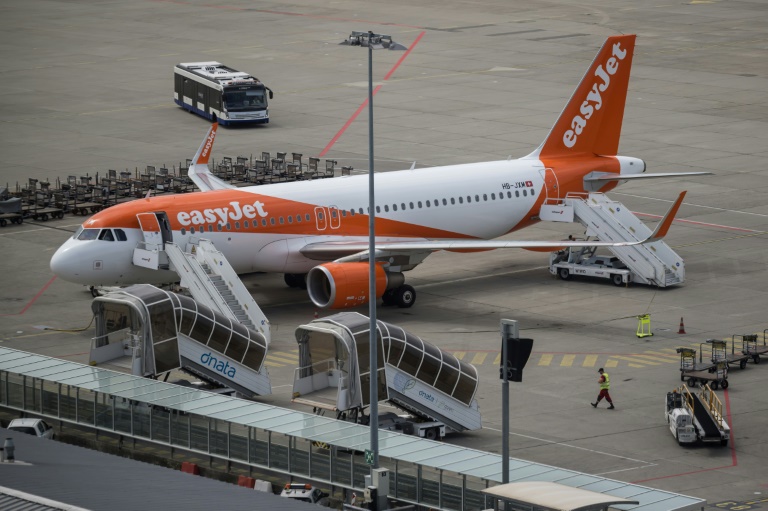
EasyJet flies into third straight annual loss

British airline EasyJet on Tuesday confirmed a third annual loss in a row, which was however far less than during the worst of the Covid pandemic.

The no-frills carrier, which flies mainly across Europe, posted a loss after tax of £169 million ($203 million) for its financial year to the end of September.

That compared with a net loss of £858 million in 2020/21, EasyJet added in a statement.

The Covid pandemic ravaged global aviation, grounding planes worldwide and forcing airlines to slash thousands of jobs in 2020.

Demand has recovered sharply after most lockdowns were lifted. However, airlines and airports are struggling to recruit sufficient staff after having axed so many positions.

“EasyJet has achieved a record bounce back this summer,” chief executive Johan Lundgren said in the statement.

He added that during the current “tough” economic climate, consumers would still look to go on holiday but seek out value, helping the no-frills carrier to do better than more established rivals.

“Legacy carriers will struggle in this high-cost environment,” Lundgren said.

EasyJet revenue soared to £5.8 billion from £1.5 billion. 

Passenger numbers more than trebled to almost 70 million.

“Freed from the holding pattern restrictions of the pandemic, EasyJet is beginning to emerge from the clouds,” said Richard Hunter, head of markets at Interactive Investor.

“The outlook is also relatively upbeat, with revenue per seat for next year expected to increase by more than 20 percent.”

EasyJet’s share price was however down more than four percent following the results update.

“EasyJet is doing everything it can to accelerate its recovery from Covid, but there just isn’t enough momentum to swing the company back to positive earnings,” said AJ Bell investment director Russ Mould.

Less than half of population is Christian: UK census

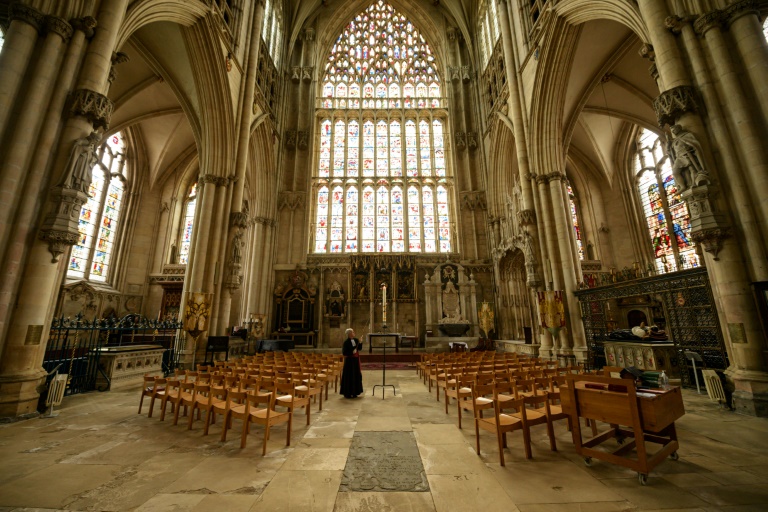
For the first time, less than half of the population in England and Wales identifies as Christian, according to census data released Tuesday. 

The 10-yearly census carried out in 2021 showed rapid growth for the Muslim population, but “no religion” was the second most common response after Christian, the Office for National Statistics (ONS) said.

In an increasingly secular age, Archbishop of York Stephen Cottrell said it was no “great surprise” that the Christian proportion was declining over time.

But he said that, facing a cost-of-living crisis and war in Europe, people still needed spiritual sustenance.

“We will be there for them, in many cases, providing food and warmth. And at Christmas millions of people will still come to our services,” said the archbishop.

“At the same time, we will be looking beyond our immediate surroundings, remembering we are part of a global faith, the largest movement on Earth and its greatest hope for a peaceful, sustainable future.”

The religion question was added to the UK census in 2001. It remains voluntary to answer, but fully 94.0 percent of respondents did, according to the ONS.

Some 27.5 million people or 46.2 percent in England and Wales described themselves as Christian, down 13.1 percentage points from 2011.

“No religion” rose by 12 points to 37.2 percent or 22.2 million, while Muslims stood at 3.9 million or 6.5 percent of the population, up from 4.9 percent before.

The next most common responses were Hindu (1.0 million) and Sikh 524,000), while Buddhists overtook Jewish people (273,000 to 271,000).

The ONS has been releasing key sections from last year’s census piecemeal, and the latest dealt with religion and ethnic identity. 

Data for Scotland and Northern Ireland are released separately.

It found the number of people in England and Wales identifying their ethnic group as white had fallen by around 500,000 since 2011, from 86.0 percent to 81.7 percent.

The proportion identifying as white and from the British Isles stood at 74.4 percent, down six points from 2011.

The category of “other white” grew, in a decade when Britain saw continued immigration from eastern Europe both before and after its Brexit referendum in 2016.

But the ONS noted that respondents could also choose from more options than in 2011, encouraging them to list other identities.

The second most common ethnic group after white was “Asian, Asian British or Asian Welsh” at 9.3 percent, up from 7.5 percent a decade ago.

Within that group, most respondents identified their family heritage as Indian, followed by Pakistani, “other Asian”, Bangladeshi and Chinese.

The next largest ethnic group was the fast-growing African population, followed by Caribbean.

African evangelical churches have proliferated in London and elsewhere, providing some succour to the Christian share.

S.African anti-apartheid hero Hani's tomb vandalised

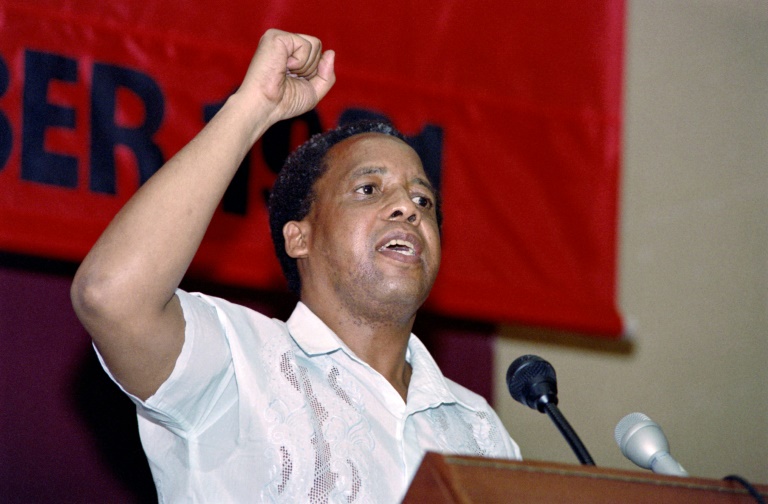
The grave of anti-apartheid hero Chris Hani has been vandalised, days after a South African court ordered the far-right gunman who killed him to be released on parole, city officials said on Tuesday.

The city of Ekurhuleni, where the tomb and memorial site of the late Communist Party leader are located, said the authorities had opened an investigation. 

“The monument was vandalised on Saturday night. One of the pillars is badly damaged, one side just fell off. And the electric lighting system was stolen,” Ekurhuleni spokesman Zweli Dlamini told AFP. 

The monument comprises four marble columns symbolising the pillars of the struggle against white rule led by the African National Congress (ANC), the party of Nelson Mandela. 

Hani, a hugely popular figure and fierce opponent of the apartheid regime, was shot dead in the driveway of his house in 1993, only a year before South Africa’s first multi-racial elections.

The shooting occurred just as negotiations to end apartheid were entering their final phase, stoking tensions that some feared would erupt into civil war.

Last week, South Africa’s top court controversially ordered the release on parole of Janusz Walus, the Polish immigrant who shot Hani dead.

Walus, 69, has served nearly three decades of a life sentence for the murder.

The decision, which Hani’s widow described as “diabolical”, has led to protests by the ruling ANC, and the South African Communist Party (SACP).

In a joint statement with trade unions, the two parties condemned the vandalisation of Hani’s memorial as a “provocative attack.”

They said it came in the context of a judgment that “pleased unrepentant apartheid perpetrators.” 

On Monday, the home affairs announced Walus would have to serve his parole in South Africa, saying he should not be allowed to return home to Poland given the “heinous crime committed.” 

All regions experienced water extremes in 2021: UN

All regions of the world saw water extremes last year — both floods and droughts — and billions of people had insufficient freshwater, the United Nations said on Tuesday.

Large areas of the planet recorded drier than normal conditions in 2021, the UN’s World Meteorological Organization said in its first annual State of Global Water Resources report.

The report assesses the effects of changes in the climate, environment and society on the Earth’s freshwater resources — limited supplies that are under growing demand — so they can be managed better.

“The impacts of climate change are often felt through water — more intense and frequent droughts, more extreme flooding, more erratic seasonal rainfall and accelerated melting of glaciers — with cascading effects on economies, ecosystems and all aspects of our daily lives,” said WMO head Petteri Taalas.

“And yet there is insufficient understanding of changes in the distribution, quantity and quality of freshwater resources.”

Some 3.6 billion people face inadequate access to freshwater at least one month per year. That is forecast to rise to more than five billion by 2050, the report said.

Between 2001 and 2018, 74 percent of all natural disasters were water-related, according to UN studies.

In 2021, all regions saw devastating water extremes, the report said.

There were record-breaking floods in western Europe and the Amazon, while water levels in rivers in Paraguay and southern Brazil dropped to an all-time low.

The report assessed streamflow — the volume of water flowing through a river — over a 30-year period.

Drops in water volumes were twice as widespread as rises.

Major river basins in the Americas and central Africa saw water volumes shrink. Rivers in northern India and southern Africa saw above average increases.

– Frozen resources –

Terrestrial water storage — all water on the land surface and in the subsurface — shrank more than it grew, the report said.

Negative hotspots included Patagonia, the Ganges and Indus headwaters, and the southwestern United States.

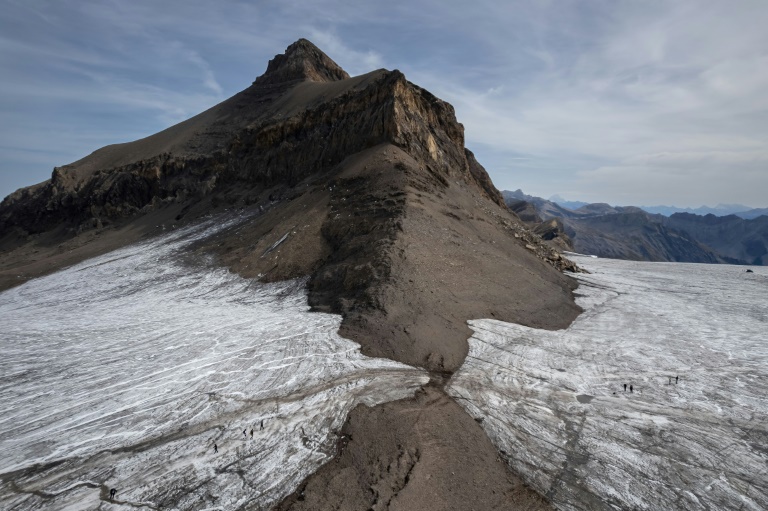
“Some of the hotspots are exacerbated by (over-extraction) of groundwater for irrigation. The melting of snow and ice also has a significant impact in several areas, including Alaska, Patagonia and the Himalayas,” the WMO said.

The world’s biggest natural reservoir of freshwater is the cryosphere — glaciers, snow cover, ice caps and permafrost — and changes to this reservoir affect food production, health and the natural world, the report said.

Around 1.9 billion people live in areas where drinking water is supplied by glaciers and snow melt but these glaciers are melting increasingly fast, it stressed.

It urged authorities to speed up the introduction of drought and flood early warning systems to help reduce the impact of water extremes.

All regions experienced water extremes in 2021: UN

All regions of the world saw water extremes last year — both floods and droughts — and billions of people had insufficient freshwater, the United Nations said on Tuesday.

Large areas of the planet recorded drier than normal conditions in 2021, the UN’s World Meteorological Organization said in its first annual State of Global Water Resources report.

The report assesses the effects of changes in the climate, environment and society on the Earth’s freshwater resources — limited supplies that are under growing demand — so they can be managed better.

“The impacts of climate change are often felt through water — more intense and frequent droughts, more extreme flooding, more erratic seasonal rainfall and accelerated melting of glaciers — with cascading effects on economies, ecosystems and all aspects of our daily lives,” said WMO head Petteri Taalas.

“And yet there is insufficient understanding of changes in the distribution, quantity and quality of freshwater resources.”

Some 3.6 billion people face inadequate access to freshwater at least one month per year. That is forecast to rise to more than five billion by 2050, the report said.

Between 2001 and 2018, 74 percent of all natural disasters were water-related, according to UN studies.

In 2021, all regions saw devastating water extremes, the report said.

There were record-breaking floods in western Europe and the Amazon, while water levels in rivers in Paraguay and southern Brazil dropped to an all-time low.

The report assessed streamflow — the volume of water flowing through a river — over a 30-year period.

Drops in water volumes were twice as widespread as rises.

Major river basins in the Americas and central Africa saw water volumes shrink. Rivers in northern India and southern Africa saw above average increases.

– Frozen resources –

Terrestrial water storage — all water on the land surface and in the subsurface — shrank more than it grew, the report said.

Negative hotspots included Patagonia, the Ganges and Indus headwaters, and the southwestern United States.

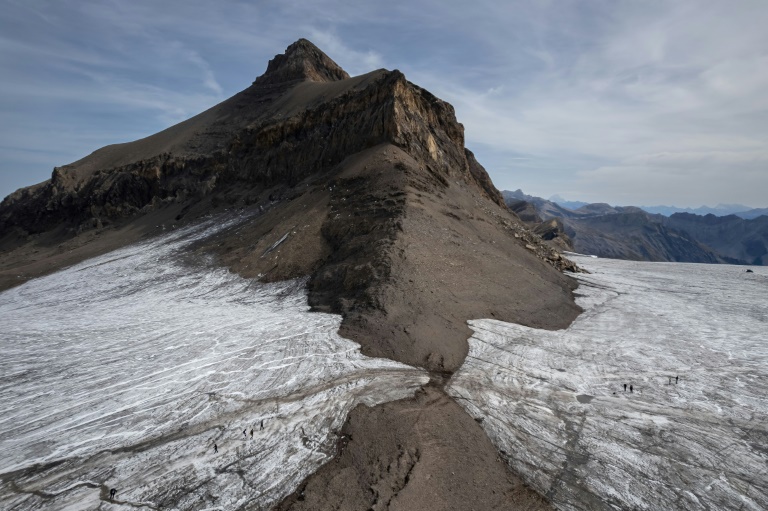
“Some of the hotspots are exacerbated by (over-extraction) of groundwater for irrigation. The melting of snow and ice also has a significant impact in several areas, including Alaska, Patagonia and the Himalayas,” the WMO said.

The world’s biggest natural reservoir of freshwater is the cryosphere — glaciers, snow cover, ice caps and permafrost — and changes to this reservoir affect food production, health and the natural world, the report said.

Around 1.9 billion people live in areas where drinking water is supplied by glaciers and snow melt but these glaciers are melting increasingly fast, it stressed.

It urged authorities to speed up the introduction of drought and flood early warning systems to help reduce the impact of water extremes.

All regions experienced water extremes in 2021: UN

All regions of the world saw water extremes last year — both floods and droughts — and billions of people had insufficient freshwater, the United Nations said on Tuesday.

Large areas of the planet recorded drier than normal conditions in 2021, the UN’s World Meteorological Organization said in its first annual State of Global Water Resources report.

The report assesses the effects of changes in the climate, environment and society on the Earth’s freshwater resources — limited supplies that are under growing demand — so they can be managed better.

“The impacts of climate change are often felt through water — more intense and frequent droughts, more extreme flooding, more erratic seasonal rainfall and accelerated melting of glaciers — with cascading effects on economies, ecosystems and all aspects of our daily lives,” said WMO head Petteri Taalas.

“And yet there is insufficient understanding of changes in the distribution, quantity and quality of freshwater resources.”

Some 3.6 billion people face inadequate access to freshwater at least one month per year. That is forecast to rise to more than five billion by 2050, the report said.

Between 2001 and 2018, 74 percent of all natural disasters were water-related, according to UN studies.

In 2021, all regions saw devastating water extremes, the report said.

There were record-breaking floods in western Europe and the Amazon, while water levels in rivers in Paraguay and southern Brazil dropped to an all-time low.

The report assessed streamflow — the volume of water flowing through a river — over a 30-year period.

Drops in water volumes were twice as widespread as rises.

Major river basins in the Americas and central Africa saw water volumes shrink. Rivers in northern India and southern Africa saw above average increases.

– Frozen resources –

Terrestrial water storage — all water on the land surface and in the subsurface — shrank more than it grew, the report said.

Negative hotspots included Patagonia, the Ganges and Indus headwaters, and the southwestern United States.

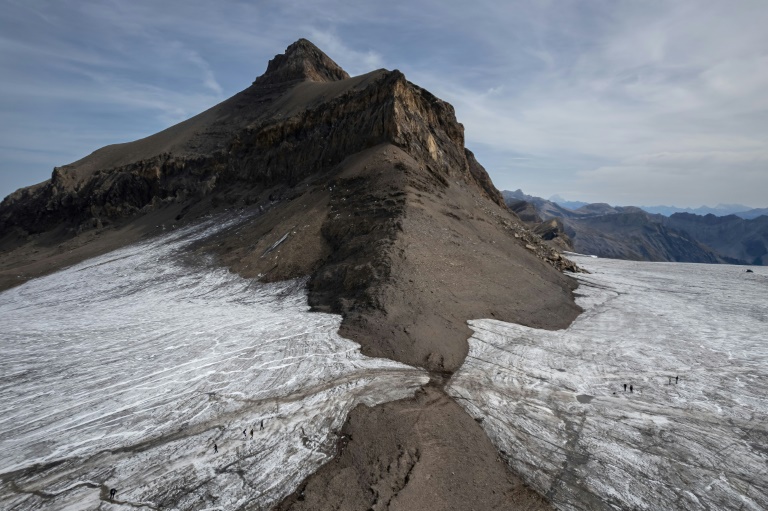
“Some of the hotspots are exacerbated by (over-extraction) of groundwater for irrigation. The melting of snow and ice also has a significant impact in several areas, including Alaska, Patagonia and the Himalayas,” the WMO said.

The world’s biggest natural reservoir of freshwater is the cryosphere — glaciers, snow cover, ice caps and permafrost — and changes to this reservoir affect food production, health and the natural world, the report said.

Around 1.9 billion people live in areas where drinking water is supplied by glaciers and snow melt but these glaciers are melting increasingly fast, it stressed.

It urged authorities to speed up the introduction of drought and flood early warning systems to help reduce the impact of water extremes.

Chinese cities under heavy policing after protests

China’s major cities of Beijing and Shanghai were blanketed with security on Tuesday in the wake of nationwide rallies calling for political freedoms and an end to Covid lockdowns. 

The country’s leadership faced a weekend of protests not seen in decades as anger over unrelenting lockdowns fuels deep-rooted frustration with its political system. 

A deadly fire last week in Urumqi, the capital of the northwestern region of Xinjiang, was the catalyst for the wave of outrage, with protesters taking to the streets in cities around China. 

The demonstrators said Covid-19 restrictions were to blame for hampering rescue efforts, claims the government has denied as it accused “forces with ulterior motives” of linking the fire deaths to the strict Covid controls.

Anger over lockdowns has widened to calls for political change, with protesters holding up blank sheets of paper to symbolise the censorship to which the world’s most populous country is subjected.

– ‘So many police’ –

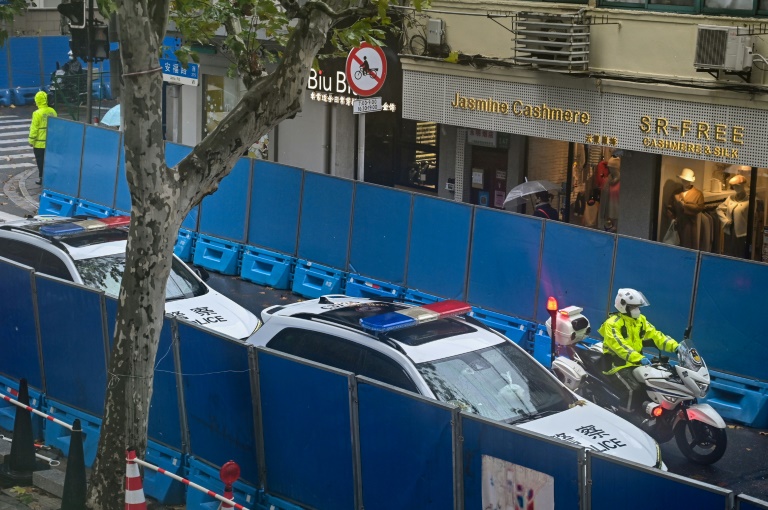
More protests had been planned for Monday night but did not materialise. AFP journalists in Beijing and Shanghai noted a heavy police presence of hundreds of vehicles and officers on the streets.

People who had attended weekend rallies told AFP on Monday they had received phone calls from law enforcement officers demanding information about their movements.

In Shanghai, near a site where weekend protests saw bold calls for the resignation of President Xi Jinping, bar staff told AFP they had been ordered to close at 10:00 pm (1400 GMT) for “disease control”. 

Small clusters of officers were deployed to metro exits near the protest site.

AFP journalists saw officers detaining four people throughout Monday, releasing one later, with a reporter counting 12 police cars within 100 metres along Wulumuqi street in Shanghai, the focal point of Sunday’s rally.

Frustration with zero-Covid remained palpable despite the overwhelming police deployment.

“The (zero-Covid) policies now -– they’re just too strict. They kill more people than Covid,” one 17-year-old passerby, who asked to be identified only as Ray, told AFP.

He said he had been surrounded by police when passing through the area.

A man can be heard in an audio recording shared with AFP asking for his address. In response, Ray insists law enforcement officers do not “have the right” to demand it.

Some rallies did go ahead elsewhere on Monday night. 

In semi-autonomous Hong Kong, where mass democracy protests erupted in 2019, dozens gathered at the Chinese University to mourn the victims of the Urumqi fire.

“Don’t look away. Don’t forget,” protesters shouted.

In Hangzhou, just over 170 kilometres (105 miles) southwest of Shanghai, there was strict security and sporadic protests in the city’s downtown, with one attendee telling AFP that 10 people were detained. 

“The atmosphere was disorderly. There were few people and we were separated. There were lots of police, it was chaos,” she said.

– ‘Many died in vain’ –

Such widespread rallies are exceptionally rare, with authorities harshly clamping down on all opposition to the central government.

But China’s strict control of information and continued travel curbs have made verifying protester numbers across the vast country challenging.

US President Joe Biden is monitoring the unrest, the White House said Monday.

Solidarity protests also mushroomed around the world.

“Officials are borrowing the pretext of Covid, but using excessively strict lockdowns to control China’s population,” one 21-year-old Chinese participant in a Washington protest, who gave only his surname, Chen, told AFP. 

“They disregarded human lives and caused many to die in vain,” he said.

– ‘No longer afraid’ –

China’s leaders are committed to zero-Covid, which compels local governments to impose snap lockdowns and quarantine orders, and limit freedom of movement in response to minor outbreaks.

But there are signs that some local authorities are taking steps to relax some of the rules and dampen the unrest — and that authorities may be seeking a path out of the rigid policy.

Beijing has banned “the practice of barring building gates in closed-off residential compounds”, the official news agency Xinhua said on Sunday.

The practice has fuelled public anger as people found themselves locked in their homes during minor outbreaks. 

China’s National Health Commission announced on Tuesday a renewed effort to expand low vaccination rates among the elderly — long seen as a key obstacle to relaxing zero-Covid. 

Many fear that lifting the policy while swaths of the population remain not fully immunised could overwhelm China’s healthcare system and cause more than a million deaths.

Just 65.8 percent of people over 80 are fully vaccinated, NHC officials told a news conference.

China has also not yet approved mRNA vaccines, which are proven to be more effective, for public use.

They also said local efforts “inconsistent with national policies” had caused a “great impact on people’s work and life”, but did not suggest a change in policy was imminent.

Chinese cities under heavy policing after protests

China’s major cities of Beijing and Shanghai were blanketed with security on Tuesday in the wake of nationwide rallies calling for political freedoms and an end to Covid lockdowns. 

The country’s leadership faced a weekend of protests not seen in decades as anger over unrelenting lockdowns fuels deep-rooted frustration with its political system. 

A deadly fire last week in Urumqi, the capital of the northwestern region of Xinjiang, was the catalyst for the wave of outrage, with protesters taking to the streets in cities around China. 

The demonstrators said Covid-19 restrictions were to blame for hampering rescue efforts, claims the government has denied as it accused “forces with ulterior motives” of linking the fire deaths to the strict Covid controls.

Anger over lockdowns has widened to calls for political change, with protesters holding up blank sheets of paper to symbolise the censorship to which the world’s most populous country is subjected.

– ‘So many police’ –

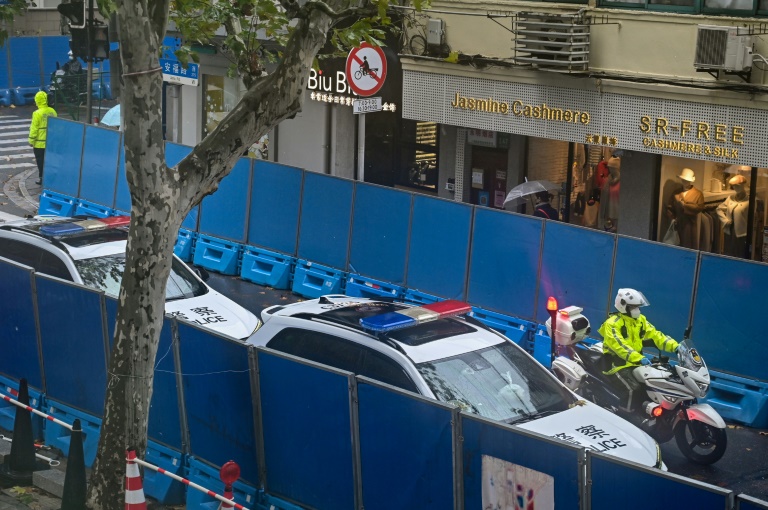
More protests had been planned for Monday night but did not materialise. AFP journalists in Beijing and Shanghai noted a heavy police presence of hundreds of vehicles and officers on the streets.

People who had attended weekend rallies told AFP on Monday they had received phone calls from law enforcement officers demanding information about their movements.

In Shanghai, near a site where weekend protests saw bold calls for the resignation of President Xi Jinping, bar staff told AFP they had been ordered to close at 10:00 pm (1400 GMT) for “disease control”. 

Small clusters of officers were deployed to metro exits near the protest site.

AFP journalists saw officers detaining four people throughout Monday, releasing one later, with a reporter counting 12 police cars within 100 metres along Wulumuqi street in Shanghai, the focal point of Sunday’s rally.

Frustration with zero-Covid remained palpable despite the overwhelming police deployment.

“The (zero-Covid) policies now -– they’re just too strict. They kill more people than Covid,” one 17-year-old passerby, who asked to be identified only as Ray, told AFP.

He said he had been surrounded by police when passing through the area.

A man can be heard in an audio recording shared with AFP asking for his address. In response, Ray insists law enforcement officers do not “have the right” to demand it.

Some rallies did go ahead elsewhere on Monday night. 

In semi-autonomous Hong Kong, where mass democracy protests erupted in 2019, dozens gathered at the Chinese University to mourn the victims of the Urumqi fire.

“Don’t look away. Don’t forget,” protesters shouted.

In Hangzhou, just over 170 kilometres (105 miles) southwest of Shanghai, there was strict security and sporadic protests in the city’s downtown, with one attendee telling AFP that 10 people were detained. 

“The atmosphere was disorderly. There were few people and we were separated. There were lots of police, it was chaos,” she said.

– ‘Many died in vain’ –

Such widespread rallies are exceptionally rare, with authorities harshly clamping down on all opposition to the central government.

But China’s strict control of information and continued travel curbs have made verifying protester numbers across the vast country challenging.

US President Joe Biden is monitoring the unrest, the White House said Monday.

Solidarity protests also mushroomed around the world.

“Officials are borrowing the pretext of Covid, but using excessively strict lockdowns to control China’s population,” one 21-year-old Chinese participant in a Washington protest, who gave only his surname, Chen, told AFP. 

“They disregarded human lives and caused many to die in vain,” he said.

– ‘No longer afraid’ –

China’s leaders are committed to zero-Covid, which compels local governments to impose snap lockdowns and quarantine orders, and limit freedom of movement in response to minor outbreaks.

But there are signs that some local authorities are taking steps to relax some of the rules and dampen the unrest — and that authorities may be seeking a path out of the rigid policy.

Beijing has banned “the practice of barring building gates in closed-off residential compounds”, the official news agency Xinhua said on Sunday.

The practice has fuelled public anger as people found themselves locked in their homes during minor outbreaks. 

China’s National Health Commission announced on Tuesday a renewed effort to expand low vaccination rates among the elderly — long seen as a key obstacle to relaxing zero-Covid. 

Many fear that lifting the policy while swaths of the population remain not fully immunised could overwhelm China’s healthcare system and cause more than a million deaths.

Just 65.8 percent of people over 80 are fully vaccinated, NHC officials told a news conference.

China has also not yet approved mRNA vaccines, which are proven to be more effective, for public use.

They also said local efforts “inconsistent with national policies” had caused a “great impact on people’s work and life”, but did not suggest a change in policy was imminent.
Putin ally Kudrin steps down from audit chamber

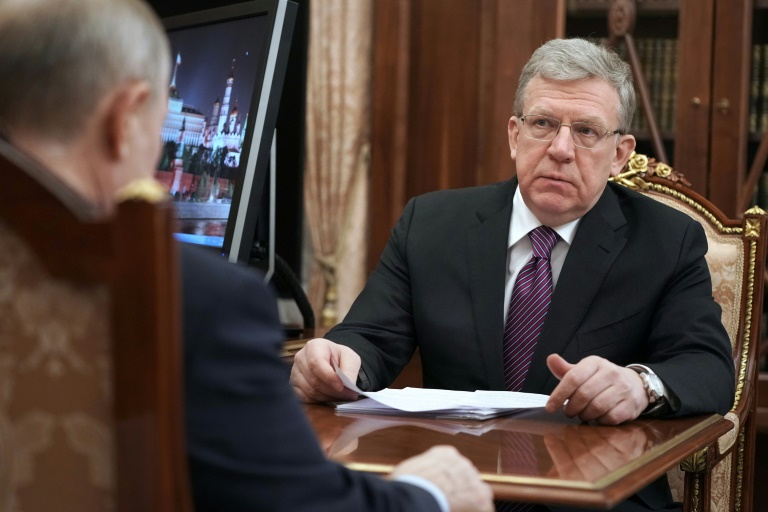
A longtime ally of Russian President Vladimir Putin, Alexei Kudrin, stepped down Tuesday as the head of the country’s audit chamber amid reports he will oversee the reconstruction of tech giant Yandex following sanctions over Ukraine.

Kudrin, a former finance minister who has a reputation of being an economic liberal in Moscow, has been in Russian politics since the 1990s.

The 62-year-old said he was “leaving the post of Chairman of the Audit Chamber” after “around 25 years in the public sector.”

“Now I would like to focus on large projects that are related to the development of private initiatives in a broad sense, but at the same time have a significant impact on people.”

He held the post since 2018, appointed after Putin was re-elected for a fourth term in the Kremlin.

Last week, Russian state news agency TASS reported that Kudrin will be given a senior role in Yandex before the new year.

“The decision has been taken,” TASS quoted a source as saying. 

Yandex — often dubbed the “Russian Google” — has a search engine and also provides Russia’s main taxi and food delivery service. 

It is registered in the Netherlands and has European, UK and US subsidiaries, but the bulk of its business is in Russia and Russian-speaking countries. 

Last week, its board of directors said it will weigh “options to restructure the group’s ownership and governance in light of the current geopolitical environment.”

It said this could include developing some of its services — including self-driving technologies, cloud computing and data labelling — “independently from Russia.”

It added that the company “anticipates” that it will “in due course be renamed”.

Yandex said it could “divest ownership and control of all other businesses in the Yandex Group”, such as advertising, e-commerce and food delivery.

This summer Yandex said it was selling its search engine — the largest in the Russian-language internet — to the government-controlled VK group which owns the country’s largest social network VKontakte. 

Putin ally Kudrin steps down from audit chamber

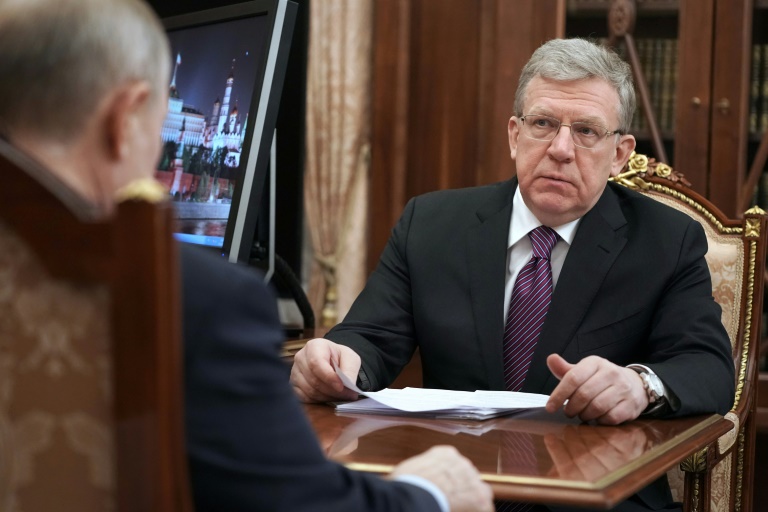
A longtime ally of Russian President Vladimir Putin, Alexei Kudrin, stepped down Tuesday as the head of the country’s audit chamber amid reports he will oversee the reconstruction of tech giant Yandex following sanctions over Ukraine.

Kudrin, a former finance minister who has a reputation of being an economic liberal in Moscow, has been in Russian politics since the 1990s.

The 62-year-old said he was “leaving the post of Chairman of the Audit Chamber” after “around 25 years in the public sector.”

“Now I would like to focus on large projects that are related to the development of private initiatives in a broad sense, but at the same time have a significant impact on people.”

He held the post since 2018, appointed after Putin was re-elected for a fourth term in the Kremlin.

Last week, Russian state news agency TASS reported that Kudrin will be given a senior role in Yandex before the new year.

“The decision has been taken,” TASS quoted a source as saying. 

Yandex — often dubbed the “Russian Google” — has a search engine and also provides Russia’s main taxi and food delivery service. 

It is registered in the Netherlands and has European, UK and US subsidiaries, but the bulk of its business is in Russia and Russian-speaking countries. 

Last week, its board of directors said it will weigh “options to restructure the group’s ownership and governance in light of the current geopolitical environment.”

It said this could include developing some of its services — including self-driving technologies, cloud computing and data labelling — “independently from Russia.”

It added that the company “anticipates” that it will “in due course be renamed”.

Yandex said it could “divest ownership and control of all other businesses in the Yandex Group”, such as advertising, e-commerce and food delivery.

This summer Yandex said it was selling its search engine — the largest in the Russian-language internet — to the government-controlled VK group which owns the country’s largest social network VKontakte. 

Close Bitnami banner
Bitnami