World

Rich nations target $20 bn to wean Indonesia off coal

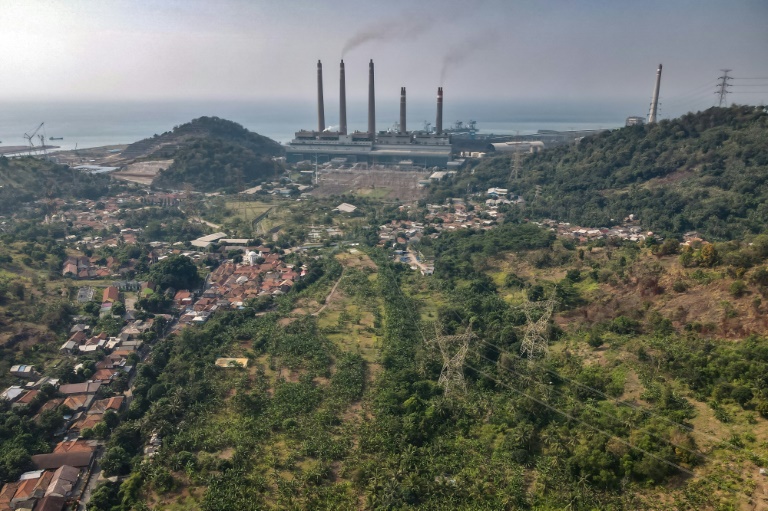
Rich nations pledged Tuesday to raise at least $20 billion to help wean Indonesia off coal and reach carbon neutrality by 2050, a decade earlier than planned, the White House said.

The United States, Japan, Canada and six European countries signed the accord with Jakarta on the sidelines of the G20 summit in Bali to ensure a “just power sector transition” away from Indonesia’s coal-dependent economy, they said in a statement released by the White House.

Under the deal, Indonesia, home to the world’s third-largest rainforest, pledges to be carbon-neutral by 2050, — 10 years earlier than previously planned — and to almost double its renewable energy generation by 2030.

Indonesian President Joko Widodo hailed the deal, which follows a similar agreement for South Africa last year, as a model that could be replicated in other countries to meet the world’s climate goals.

“Indonesia is committed to using our energy transition to achieve a green economy and drive sustainable development,” he said, pledging the deal would help “accelerate this transition”.

Sponsors of the agreement said Jakarta had committed to an ambitious shift to clean energy in return for $10 billion in public sector finance and $10 billion in private funding over three to five years.

The financing included “grants, concessional loans, market-rate loans, guarantees and private investments” for the country, which has one of the largest coal reserves in the world.

US President Joe Biden said the deal showed “countries can dramatically cut emissions and increase renewable energy while… creating quality jobs and protecting livelihoods and communities.”

– ‘Work in progress’ –

Indonesia has at times questioned climate deals, including a 2021 agreement to end deforestation by 2030 it signed, warning it could hinder the country’s economic development.

But despite the new incentives, experts cautioned that a lot of work remained for Indonesia to meet the demands of the partnership.

“It’s a work in progress. But Indonesia has gotten to enough comfort level with the scale of finance that they want to go ahead with it. There will be a lot of follow up work,” said Friederike Roder, senior director for EU and G20 at NGO Global Citizen.

But he warned: “There is concern that the finance is not adequate for the total transformation that is needed”.

Indonesian officials welcomed the pact despite the worries.

The deal shows “we can create a more sustainable world for our grandchildren, our citizens, and the future generation,” Indonesia’s coordinating minister of maritime and investment affairs Luhut Binsar Pandjaitan told a press conference.

The donor pledge announced on Tuesday was part of a slew of projects announced under an infrastructure partnership — aimed as a counter-balance to China’s Belt and Road Initiative — to provide support to developing nations.

They ranged from funding for digital projects in the Pacific to investment in the sustainable mining of nickel and cobalt in Brazil and powering solar projects in Honduras.
Nigeria's ancient Benin Bronze treasures go digital

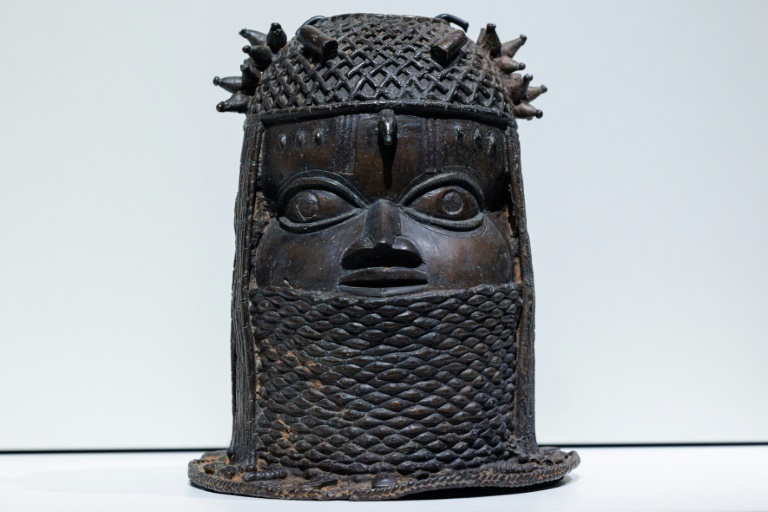
Nigeria’s famed Benin bronzes — artefacts stolen during British colonial rule and scattered across the globe — have a new online archive that aims to become a digital record of the treasures.

Thousands of 16th to 18th century metal plaques, sculptures and objects were looted from the ancient Kingdom of Benin and ended up in museums and with art collectors across the US and Europe. Many experts hail them as the zenith of African art.

As Nigeria negotiates their return, “Digital Benin” (https://digitalbenin.org/) provides a centralised hub of images and descriptions of more than 5,000 artefacts held in 131 institutions around the world.

“It is unique, new possibility to see all the objects together and to compare them,” Barbara Plankensteiner, director of Germany’s MARKK museum and one of the project’s founders, told AFP.

“It is really helpful for research for Nigerian scholars to be able to access knowledge they had not been able to before.”

The project, which began planning and research two years ago, was launched at an official event at the weekend in Benin City, in southern Nigeria’s Edo State, the heart of the former Benin Kingdom.

The platform contains a vast collection of images and details of artefacts categorised by the type of object from figureheads to shields and ceremonial roosters.

It details all the institutions where artefacts are held, from the British Museum with more than 900 objects to places like Toledo Museum of Art which has just one commemorative Queen Mother head statue.

Readers can also scroll through the story of the Benin Kingdom, its royalty, its chiefs and festivals, with a special section dedicated to oral history.

The project comes online as international momentum grows for the restoration of African artefacts from former colonial powers Britain, France, Germany and Belgium.

Nigeria’s neighbour Benin earlier this year inaugurated an exhibition of artworks and treasures returned by France after two years of negotiations.

Those 26 pieces were stolen in 1892 by French colonial forces from the capital of the former Kingdom of Dahomey.

Germany is in the process of returning hundreds of Benin Bronze artefacts to Nigeria, where a new museum is being built in Benin City to house artefacts.

Many of the artefacts were originally taken in 1897, when a British military expedition attacked and destroyed Benin City, looting thousands of metal and ivory sculptures and carvings.

“These are our properties,” Edo State Governor Godwin Obaseki said at the event to open the platform. “They were taken from us and they should be returned to us.”

The Kingdom of Benin, which despite its name was located in what is now southwestern NIgeria, traces its roots back to the first century BC.

It expanded through military conquest and commerce, which with the arrival of Europeans in the 16th century developed into trade in slaves, ivory and spices.

Russia under pressure as G20 voices unease over Ukraine war

Russia faced mounting diplomatic pressure Tuesday to end its war in Ukraine, as G20 allies and critics alike rued the painful global impact of nearly nine months of conflict.

A draft communique obtained by AFP showed the world’s 20 leading economies coming together to condemn the war’s effects, but still divided on apportioning blame.

The summit has shown that even Russia’s allies have limited patience with a conflict that has inflated food and energy prices worldwide and raised the spectre of nuclear war.

Risking diplomatic isolation, Russia was forced to agree that the “war in Ukraine” — which Moscow refuses to call a war — has “adversely impacted the global economy”.

It also agreed that “the use or threat of use of nuclear weapons” is “inadmissible”, after months of President Vladimir Putin making such threats.

The embattled Russian leader has skipped the summit, staying at home to reckon with a string of embarrassing battlefield defeats and a grinding campaign that threatens the future of his regime.

Rubbing salt in Russia’s wounds, Ukrainian leader Volodymyr Zelensky — fresh from a visit to liberated Kherson — delivered an impassioned video appeal to G20 leaders.

Zelensky told leaders from China’s Xi Jinping to America’s Joe Biden that they could “save thousands of lives” by pressing for a Russian withdrawal.

“I am convinced now is the time when the Russian destructive war must and can be stopped,” he said, sporting his now-trademark army-green T-shirt.

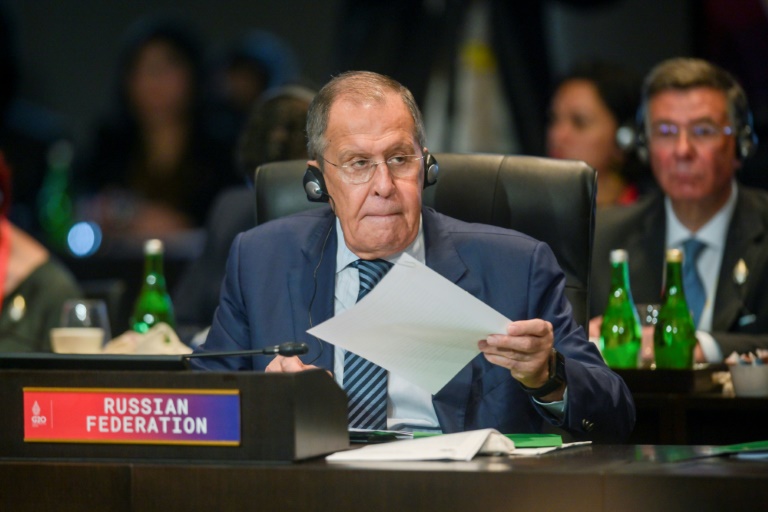
Putin’s delegate, Foreign Minister Sergei Lavrov, whose summit preparation was disrupted by two hospital health checks for an undiagnosed ailment, remained in the room throughout Zelensky’s address, diplomatic sources said.

His most notable diplomatic victory was an acknowledgement in the communique that while “most members” of the G20 condemned Putin’s invasion, “there were other views and different assessments”.

“All problems are with the Ukrainian side, which is categorically refusing negotiations and putting forward conditions that are obviously unrealistic,” Lavrov told reporters.

Leaders must now sign off on the final text before the summit ends on Wednesday. 

– ‘Immense’ suffering –

The United States and its allies used the summit to broaden the coalition against Russia’s invasion and scotch Moscow’s claims of a war of East versus West.

Many “see Russia’s war in Ukraine as the root source of immense economic and humanitarian suffering in the world”, said a senior US official.

Russia’s G20 allies China, India and South Africa refrain from publicly criticising Putin’s war, and the draft joint statement is replete with diplomatic fudges and linguistic gymnastics.

But it gives a growing sense of the worldwide impact of the war.

G20 members Argentina and Turkey are among the nations worst hit by food inflation worldwide, but there was scarcely a country around the table unaffected.

“The war is affecting everyone,” said Argentine Foreign Minister Santiago Cafiero. 

“In the northern hemisphere the merchants of death broker lethal arms sales, but in the southern hemisphere food is costly or scarce — what kills are not bullets or missiles, but poverty and hunger.”

There was also a hint at growing Chinese unease with Russia’s prosecution of the war when presidents Xi and Biden met late Monday.

“It’s clear that the Russians are very isolated,” said one Western official. “I think some countries engaged with Russia but… I did not see any gestures of great solidarity.”

– Grain corridor –

A deal expiring Saturday that allows Ukraine to export grain through the Black Sea is a focus of summit conversations, with leaders expected to urge its “full, timely and continued implementation”.

Ukraine is one of the world’s top grain producers, and the Russian invasion blocked 20 million tonnes of grain in its ports before the United Nations and Turkey brokered the deal in July.

The summit build-up focused heavily on Xi, who is making only his second overseas trip since the pandemic began and has stolen the spotlight as leaders line up to speak with him.

Xi and Biden cooled Cold War rhetoric during three hours of talks on Monday, taking some of the heat out of their simmering rivalry.

“The world expects that China and the United States will properly handle the relationship,” Xi told Biden.

Former US diplomat Danny Russel described the meeting as broadly positive. 

“We should beware of prematurely declaring the strategic rivalry over. However, we saw a deliberate effort to stabilise a dangerously overheated relationship.”

UK budget predicted to be a nightmare before Christmas

Britain will Thursday hike taxes and slash public spending in a government budget that signals a return to austerity despite a cost-of-living crisis and recession headwinds.

Conservative Prime Minister Rishi Sunak, who took office just three weeks ago, has vowed to fix the economic havoc created by his short-lived predecessor Liz Truss.

Even though he is mindful of soaring energy bills and food prices with UK inflation at a 40-year high and interest rates ballooning, the budget is widely seen as triggering a new era of austerity, similar to the one that followed the 2008 global financial crisis.

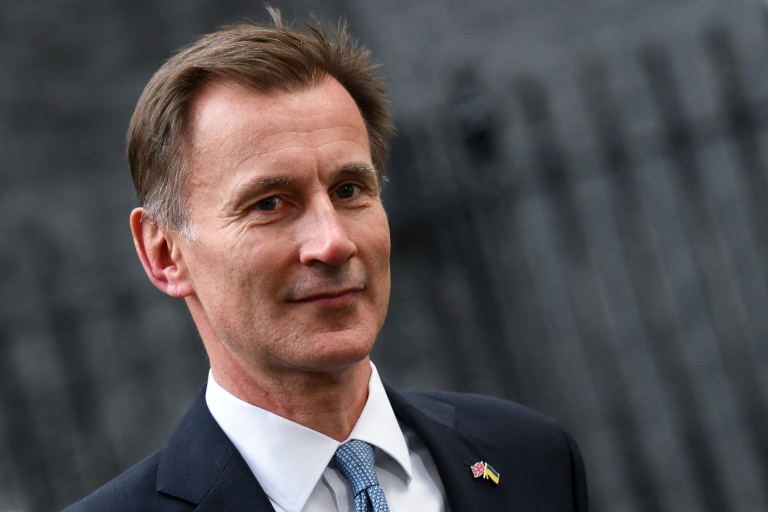
Finance minister Jeremy Hunt will present his crucial budget in parliament, alongside official growth and inflation forecasts unlikely to bring joy to an economy battered also by Brexit and costly government help during the Covid pandemic.

“Tackling inflation is my absolute priority and that guides the difficult decisions on tax and spending we will make,” Hunt said Tuesday. 

“Restoring stability and getting debt falling is our only option to reduce inflation and limit interest rate rises,” he added after official data showed UK unemployment creeping up.

Chancellor of the Exchequer Hunt is expected to unveil tax hikes and spending cuts of up to £60 billion ($70.5 billion) to bring down debt, media reports suggested.

Heading into the budget, he has likened himself to the penny-pinching miser Ebenezer Scrooge in Charles Dickens’ festive favourite “A Christmas Carol”.

– Recession –

Britain is likely already in recession after its economy shrank in the third quarter and is set to do so again in the final three months of the year, according to the Bank of England.

The BoE, which is raising interest rates to combat sky-high inflation, has warned the UK economy may experience a record-long recession until mid-2024.

It comes after the central bank went on an emergency buying spree of UK government bonds after Truss’s unfunded tax-slashing budget sparked a collapse in the pound and an explosion in state borrowing costs during her 49-day tenure.

That cost her the leadership, but not before Truss had fired her finance minister Kwasi Kwarteng, replacing him with Hunt.

The new chancellor has set about reversing the much-criticised budget by curtailing a freeze in domestic fuel bills that have surged largely owing to the invasion of Ukraine by major energy producer Russia. 

Reports suggest that Hunt will now go further, freezing income tax rate thresholds, meaning more people are dragged into higher tax brackets.

To help the poorest with rocketing energy bills, the government is expected to ramp up a windfall tax on oil and gas giants, whose profits have surged on fallout from the Ukraine war.

The Financial Times on Tuesday added that Hunt is preparing a windfall tax on firms generating electricity, whose profits have also soared this year. 

– ‘Devastating consequences’ –

The pound and bond markets have regained somewhat of an even keel after Sunak took the helm and political turmoil subsided, but retail lenders’ mortgage rates remain elevated.

“I would really want people to be reassured that… all the decisions we make will have fairness and compassion at their heart,” Sunak said this week.

Hoping that Sunak sticks to his word, chief executives of Britain’s biggest supermarkets published an open letter Tuesday urging the government to offer free school meals to far more children than the very poorest.

“We are committed to doing all we can to support (children)…, with several actions set to be implemented in the coming months, but we cannot do this alone,” said the letter co-signed by bosses of supermarkets including Britain’s biggest retailer Tesco.

“We strongly urge you to consider the scale of children’s food insecurity across the UK and act without delay to prevent its devastating consequences.”

– ‘Austerity 2.0’ –

Britain’s main opposition Labour party has slammed Sunak, arguing that a second wave of austerity is not the answer.

“I don’t believe that austerity 2.0, after the austerity that we have gone through… is the right approach,” said Labour’s finance spokeswoman Rachel Reeves.

“Public services are already on their knees,” added Reeves, calling it a “badge of shame” that nurses were planning to strike this winter.

Tens of thousands of staff in various industries have already gone on strike across Britain this year as inflation erodes wages.

Biden, Erdogan discuss Ukraine grain exports: White House

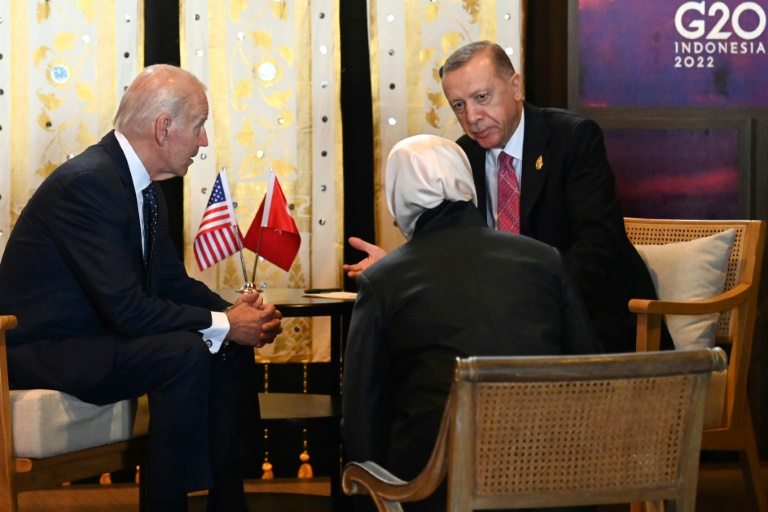
US President Joe Biden and his Turkish counterpart Recep Tayyip Erdogan on Tuesday discussed a deadly bombing in Istanbul and international efforts to export Ukrainian grain, the White House said.

The two leaders talked on the margins of the G20 summit in Bali, Indonesia, touching on several of the issues at the heart of the close, but often contentious US-Turkish relationship.

In a readout, the White House said Biden expressed “deep condolences” for the deaths of six people in a bomb attack in a busy street in Istanbul on Sunday, underlining that “we stand with our NATO ally.”

The Turkish government blames the attack on a Kurdish militant group, the PKK, which has denied involvement. On Monday, Turkish Interior Minister Suleyman Soylu refused to accept condolences issued by the US embassy, saying Washington helps to arm Kurdish fighters in northern Syria.

“We do not accept the US embassy’s message of condolences. We reject it,” he said.

The Biden-Erdogan meeting also covered an international deal to ship Ukrainian grain exports safely out across the Black Sea for world markets.

The arrangement with Russia, which is attacking Ukraine’s Black Sea coast, is vital to helping stem disruptions to global food supplies but is set to expire on Saturday.

“President Biden expressed his appreciation to President Erdogan for his efforts to renew the Black Sea Grain Initiative, which they both agreed has been critical to improving global food security amid Russia’s war and that the initiative must continue,” the White House said.

A third sensitive issue was “close coordination” on the NATO alliance, with Turkey currently holding up membership bids by Finland and Sweden.

British PM raises oil with Saudis as Biden shuns crown prince

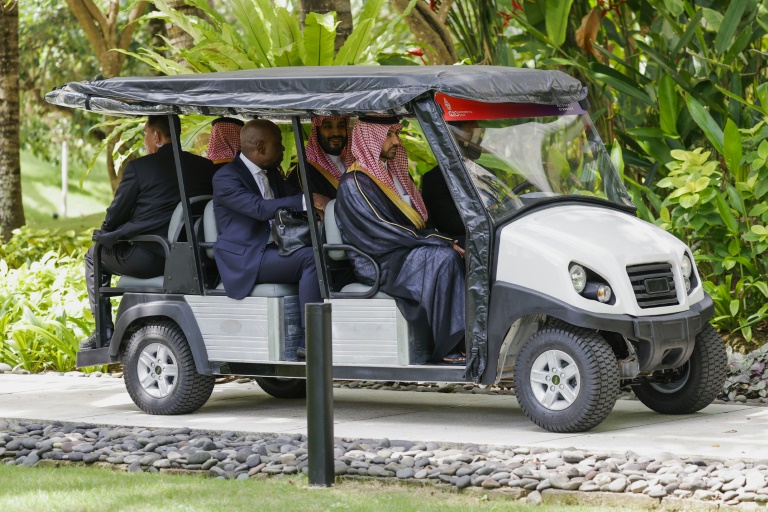
British Prime Minister Rishi Sunak called Tuesday for efforts to stabilise oil markets in talks with Saudi Arabia’s crown prince, who was shunned by US President Joe Biden over an output cut.

The new British prime minister met separately with Crown Prince Mohammed bin Salman, the oil-rich kingdom’s effective ruler, as they gathered for the Group of 20 summit on the Indonesian resort island of Bali.

“In light of the global increase in energy prices sparked by Russia’s invasion of Ukraine, the prime minister said he hoped the UK and Saudi Arabia could continue to work together to stabilise energy markets,” a Downing Street spokesperson said.

The engagement contrasts with the cold shoulder by Biden, with US officials saying they were not planning any meeting with the prince, known by his initials MBS, even on a lower level.

Biden was outraged after the Saudi-led OPEC+ oil cartel decided to cut production by two million barrels a day from November, adding pressure to global prices and potentially boosting revenue for energy exporter Russia, counteracting the US-led campaign to isolate Moscow over its invasion of Ukraine.

Biden warned Saudi Arabia of consequences over the move, which some of his aides saw as an effort to boost the rival Republican Party days ahead of US congressional elections in which inflation was a top issue.

Saudi Arabia insisted it was only considering economic factors but the move infuriated Biden as he had taken political risks in June by visiting the kingdom on a mission to ensure the flow of oil.

Biden as a candidate had vowed to make Prince Mohammed, a close ally of former US president Donald Trump, a pariah over human rights.

Declassified US intelligence said that the prince ordered the killing and dismemberment of US-based Saudi journalist Jamal Khashoggi.

The Downing Street spokesperson said Sunak raised with Prince Mohammed “the importance of further progress on social reforms, including on women’s rights and freedoms” in the ultra-conservative kingdom.

They also discussed the “destabilising activity” of Iran, Saudi Arabia’s regional rival, the spokesperson said.

Trump acolyte Kari Lake loses Arizona governor race

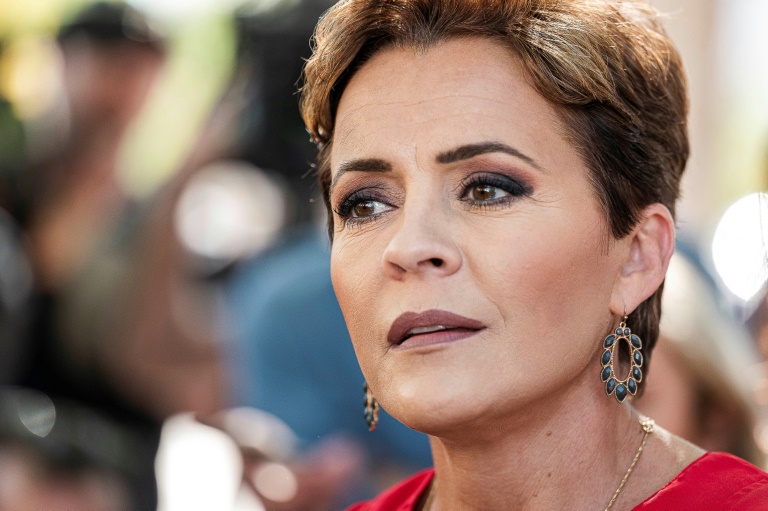
Donald Trump loyalist and prominent election denier Kari Lake has lost her bid to be governor of Arizona, US networks projected Monday, rounding out a difficult week for the former president as he readies a new run for the White House.

Lake, a former TV anchor, had been seen as one of Trump’s most reliable picks heading into the midterm elections, but her defeat caps a run of results that have raised doubts about the former president’s place in the Republican Party.

The projections by major US TV networks come after a week of intense scrutiny of the vote count in Arizona, where Lake and her supporters have repeatedly cast doubt on the competence and integrity of officials.

“Democracy is worth the wait,” tweeted Lake’s opponent, Democrat Katie Hobbs.

“Thank you, Arizona. I am so honored and so proud to be your next Governor.”

But Lake, who has built her brand on skepticism of the mainstream media and the political establishment appeared to reject the projections.

“Arizonans know BS when they see it,” she tweeted, using a euphemism for nonsense.

– Election denial –

If confirmed by election officials, Hobbs’s victory would mark an end to a bitter election campaign which Lake joined in earnest when she quit local broadcast journalism last year.

The former anchor married her made-for-tv smile to the flame-throwing political style of Trumpism, delighting the Make America Great Again wing of her party.

She made denial of the 2020 presidential election win by Joe Biden a key tenet of her campaign, and said that she would not have validated his victory if she had been in the governor’s mansion at the time.

Her caustic attacks on journalists and election officials, including the Republicans heading key departments in hotly contested Maricopa County, earned her plaudits with the base.

But they also led to warnings that she was stoking trouble in a country still reeling from the January 2021 assault on the Capitol by Trump supporters.

Democratic National Convention chair Jaime Harrison on Monday tweeted his congratulations to Hobbs along with the phrase: “Sanity wins!”

Hobbs thanked the voters after her projected win.

“For the Arizonans who did not vote for me, I will work just as hard for you — because even in this moment of division, I believe there is so much more that connects us,” she said in a statement quoted by US media.

Trump, who is expected on Tuesday to announce his entry to the 2024 race for the White House, took to his Truth Social platform to denounce the call.

“Wow! They just took the election away from Kari Lake. It’s really bad out there!” he wrote, without explaining who “they” were.

– Scrutiny –

Lake had declared herself “100 percent confident” that she would prevail, but — in line with Trump’s playbook — had expended a lot of energy sowing doubt about the election system.

Supporters seized upon minor problems with vote tabulation machines in Maricopa County, the home of America’s fifth biggest city, Phoenix, which left some people standing in short lines last Tuesday.

Officials have forcefully insisted that no legitimate vote would be excluded, and mounted a well-organized social media campaign to push back at falsehoods circulating online as the count plodded methodically on.

Arizona has been under intense scrutiny for two years since Biden eked out a narrow win in the state.

Maricopa County became ground zero for election deniers, who made unfounded claims about ballot stuffing, despite repeated investigations that turned up no evidence of wrongdoing.

The slow-moving count in Arizona has been the subject of national — and international — fascination this week as it became increasingly clear that election deniers across the United States had fared badly.

Lake was thought of as a leading light in the movement, and Republican Party insiders — as well as media pundits — have noted that regardless of the result, she could be well placed for a spot on a future White House ticket.

Kenyan security guard expelled by Qatar torn about watching World Cup

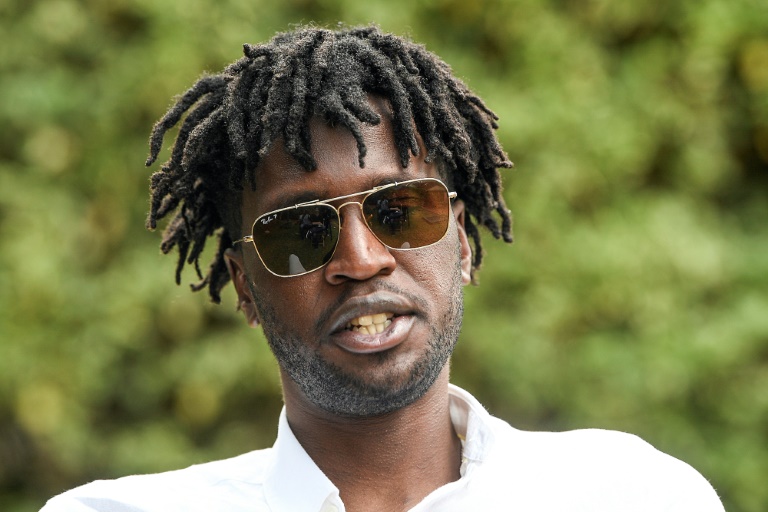
Malcolm Bidali, a Kenyan security guard expelled from Qatar after complaining about working conditions, is feeling conflicted about watching the World Cup that starts this week.

“Saying that I won’t watch the World Cup would be a lie,” the 30-year-old said.

“But looking at the stadiums, I can’t help but wonder how many people have not been paid, how many have suffered terrible working conditions… how many have lost their lives.”

Bidali became an outspoken activist for migrant workers after being held for four weeks and then expelled from the Gulf state in 2021.

Qatar has faced widespread criticism over its treatment of foreign workers, rights for women and the LGBTQ community in the runup to the tournament to end on December 18.

Rights groups have complained about unpaid wages and unreported deaths on construction sites.

Qatar has carried out major reforms that have been praised by international unions but Bidali is among the doubters.

“When all the cameras have left, all the journalists have left, all the fans have left, it will be the migrant workers and employers and the state, and I believe it will be very difficult to keep even the already introduced reforms, leave alone introducing new ones,” said Bidali.

“But I hope I am wrong.”

– ‘Similar to slavery’ –

Bidali arrived in Qatar in January 2016 and worked as a security guard watching images from CCTV cameras on a screen for 12 hours a day.

He had no complaints about his conditions. He earned about $420 a month — a lot more than he would in Kenya — and lived in a villa with other migrant workers. 

Bidali said his nightmare started when he moved to another company where he was only paid $350 a month and moved into a 20-square-metre room which he shared with five other men.

The beds, he said, were infested with lice and the kitchen with cockroaches. 

Bidali said he owed $1,200 to a Kenyan recruiting agency — which helped him get his job and organise a flight and visa — so at first said nothing.

But he eventually wrote email complaints to Qatar’s labour and interior ministries. According to Bidali, they did not reply.

Then Migrant-Rights.org, a specialist non-government group, contacted him and he started writing anonymous blogs about the lives of labourers in the wealthy Gulf state. 

“Working conditions in Qatar are similar to slavery,” he said.

“You find yourself in a situation that is very difficult to come out of, where someone basically owns you. Someone decides very big aspects of your life, from what time you wake up to what time you go to sleep, what type of food you eat, where you live, who you associate with.”

– ‘Psychological pressure’ –

The so-called “kafala” sponsorship system for foreign workers used to dominate in Qatar as it still does in most Gulf states.

But it has been largely dismantled in recent years. Workers can now change jobs and leave the country without the permission of their employer.

Qatar also introduced a minimum wage and new regulations on working in heat.

Bidali said he started to have problems when he wrote a story that mentioned a member of Qatar’s royal family. 

He was detained by the national security agency on May 4, 2021 and said he was not allowed to see a lawyer. He also complained of “psychological pressure” including having a permanent light in his cell and losing track of the day and time.

Qatar accused him of receiving money from a “foreign agent” to take part in spreading “misinformation”, but he was eventually freed following protests from the NGO and the professional footballers’ union.

He was banned from the leaving the country, but following international publicity and diplomatic support was expelled in August 2021 after being ordered to pay a $6,000 fine.

The Qatari authorities would not respond to Bidali’s latest comments. In May they said that he had received “legal advice and representation”.

US probe of journalist's death 'important step': Abu Akleh family

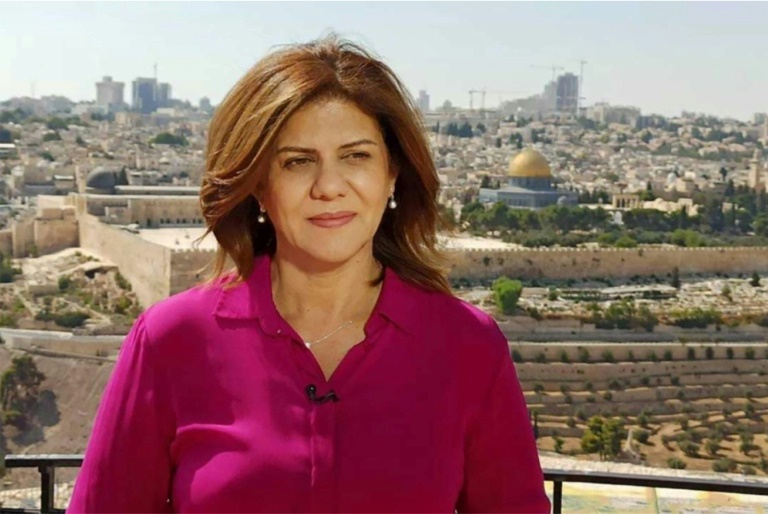
The family of Al Jazeera journalist Shireen Abu Akleh, who was likely killed by an Israeli soldier, on Tuesday praised a US decision to open a probe into her death.

“This is an important step,” a statement from the Palestinian-American family said, voicing hope for a “truly independent, credible and thorough probe.”

Abu Akleh was killed while covering an Israeli army raid in the occupied West Bank on May 11.

The veteran Al Jazeera reporter was wearing a bulletproof vest marked “Press” and a helmet when she was shot in the head in the Jenin refugee camp, a historic flashpoint in the Israeli-Palestinian conflict.  

The Israeli army conceded on September 5 that one of its soldiers had likely shot Abu Akleh after having mistaken her for a militant.

The Abu Akleh family statement noted that it had been asking for a US probe “since the begining”.

“It is what the United States should do when a US citizen is killed abroad, especially when they were killed, like Shireen, by a foreign military.”

Defence Minister Benny Gantz said Israel “will not cooperate with an external investigation”.

“The decision taken by the US Justice Department to conduct an investigation into the tragic passing of Shireen Abu Akleh, is a mistake. The IDF (Israeli army) has conducted a professional, independent investigation, which was presented to American officials with whom the case details were shared,” Gantz said in a statement. 

The Federal Bureau of Investigation has refused to confirm or deny the investigation.

But Politico reported that the FBI was probing the May 11 shooting. 

– No prosecution –

The Israeli army’s top lawyer has said that criminal charges against the soldier likely involved in the shooting were not merited, as the the invidual was acting in what Israel considered to be an active combat zone. 

Prime Minister Yair Lapid has also rejected suggestions the soldier should be prosecuted.

“I will not allow an IDF soldier that was protecting himself from terrorist fire to be prosecuted just to receive applause from abroad,” Lapid told a military ceremony.

Last week, Abu Akleh’s family and colleagues told UN investigators that she had been deliberately targeted as part of Israel’s “wide-scale war” on Palestinian media workers, and called for accountability and justice.

Doha-based Al Jazeera and the Qatari state have also alleged the Abu Akleh was deliberately targeted by Israeli soldiers. 

Rich nations target $20 bn to wean Indonesia off coal

Rich nations pledged Tuesday to raise at least $20 billion to help wean Indonesia off coal and reach carbon neutrality by 2050, a decade earlier than planned, the White House said.

The United States, Japan, Canada and six European countries signed the accord with Jakarta on the sidelines of the G20 summit in Bali to ensure a “just power sector transition” away from Indonesia’s coal-dependent economy, they said in a statement released by the White House.

Under the deal, Indonesia, home to the world’s third-largest rainforest, pledges to be carbon-neutral by 2050, 10 years earlier than previously planned, and to almost double its renewable energy generation by 2030.

Indonesian President Joko Widodo hailed the deal as a model that could be replicated in other countries to meet the world’s climate goals.

“Indonesia is committed to using our energy transition to achieve a green economy and drive sustainable development,” he said in a statement.

“We are grateful for the cooperation and the support from our international partners to realise its full implementation that will accelerate this transition.”

Sponsors of the deal said Jakarta had committed to an ambitious shift to clean energy in return for $10 billion in public sector finance and $10 billion in private funding over three to five years.

The financing included “grants, concessional loans, market-rate loans, guarantees and private investments” for the country, which has one of the largest coal reserves in the world.

US President Joe Biden praised Jakarta’s “tremendous leadership” in sealing the partnership.

“The resulting new and accelerated targets demonstrate how countries can dramatically cut emissions and increase renewable energy while advancing a commitment to creating quality jobs and protecting livelihoods and communities,” he said.

Indonesia had questioned the terms of a 2021 deal to end deforestation by 2030 signed by over 100 countries, including the Southeast Asian archipelago, arguing it would hinder the country’s economic development.

The donor pledge announced on Tuesday was part of a slew of projects announced under an infrastructure partnership — aimed as a counter-balance to China’s Belt and Road Initiative — to provide support to poor and developing nations.

They ranged from funding for digital projects in the Pacific, to investment in the sustainable mining of nickel and cobalt in Brazil and powering solar projects in Honduras.
Close Bitnami banner
Bitnami