World

Turbulence ahead: Airline on the block in Sri Lanka reforms

Dozens of state-owned Sri Lankan companies employing tens of thousands of people could be restructured or closed as part of an IMF bailout of the bankrupt country, with the country’s airline top of the list for reform.

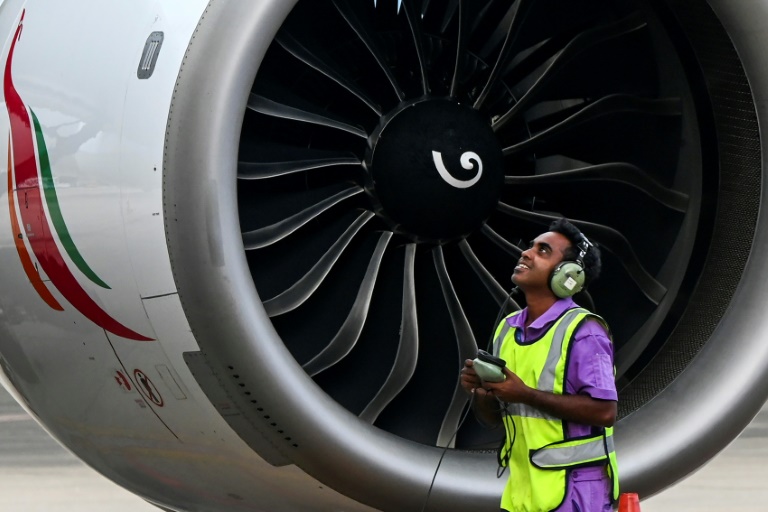
With nearly 6,000 staff, SriLankan Airlines is the biggest and most expensive of the cash-haemorrhaging, sclerotic companies that have drained the budget and compounded the worst financial crisis in national history.

According to treasury figures, the carrier was losing $4.50 for every dollar it earned at the start of this year. It has not turned a profit since 2008, when its chief executive was sacked for offending the country’s then-leader.

“Even those who have never stepped into a Sri Lankan aircraft are paying to subsidise the airline,” government spokesman Manusha Nanayakkara told reporters this month. 

“We can’t continue like this.”

Sri Lanka defaulted on its $51 billion foreign debt in April and is now neck-deep in the arduous process of renegotiating its obligations with creditors.

Its 22 million people suffered through months of food and fuel shortages, and at the peak of the crisis, a furious mob stormed government buildings and chased Sri Lanka’s former president into exile. 

The International Monetary Fund (IMF) has given preliminary approval to a $2.9 billion bailout, and the government hopes to be able to access the first tranche by the end of the year.

Terms of the deal have yet to be released, but IMF cash is usually conditional on painful reforms, such as tax hikes, removing consumer subsidies, and privatising or closing underperforming state firms.

The country has more than 300 state enterprises, ranging from nut farms to fuel retailers, and the top 52 firms lost nearly $2.4 billion between January and April — around $140 million a week.

SriLankan Airline’s future is the most urgent priority, and the government last month instructed the finance ministry to begin its restructuring, ideally by attracting outside investment.

But finding a company willing to pour money into the airline will be immensely challenging, analysts say, given its history of interference, mismanagement and turbulent partnerships.

– ‘It’s even more difficult now’ –

In 1998, Emirates bought a minority stake in the carrier and took over its management. 

It stayed in the black for most of the next decade, although one of its most profitable years was — ironically — 2001, when the Tamil Tigers separatist movement attacked the country’s main international airport. 

Several of the airline’s planes were destroyed in the July attack, but insurance payouts and the removal of excess capacity offset a downturn in ticket sales. 

But the partnership was terminated and the chief executive sacked by then-president Mahinda Rajapaksa in 2008 after the carrier refused to bump fare-paying passengers to make room for members of his family returning from a jaunt in London. 

The leader packed SriLankan’s management with relatives and loyalists, several of whom now face corruption charges, and the airline has bled cash since.

Rajapaksa even started a rival state-owned airline named after himself, a colossal failure that was eventually merged into SriLankan — along with its accumulated losses.

Authorities tried to sell a 49 percent stake in SriLankan back in 2017 when the island nation’s tourism market was booming, but even then private equity firm TPG eventually withdrew its bid after deciding it was not a viable operation.

Airlines are “generally not that attractive” to investors, Singapore-based aviation analyst Brendan Sobie told AFP, “particularly airlines that are government owned and have a lot of legacy issues, have a lot of debt, like SriLankan does”.

“There’s not many foreign airlines, particularly in this post-Covid environment, that are even looking or considering buying stakes in airlines overseas,” he added, and the track record for strategic investments in the sector was “very bad”.

“It’s very difficult,” he said.

– ‘We are a bankrupt country’ –

SriLankan chairman Ashok Pathirage acknowledges the airline’s current balance sheet is not an attractive proposition.

“If you try to privatise the whole thing, people will come and ask the government to take half of the debt,” Pathirage told AFP. 

But he said SriLankan could settle about half of its liabilities by splitting off and selling profitable business arms, including its virtual monopoly on catering and ground handling at Colombo airport.

Trade union leaders and employees support a restructuring along those lines, on the condition that no jobs are cut.

“The airline is losing money not because of the staff, but expensive leases and poor financial structures,” a cabin crew member, who requested anonymity, told AFP.

But selling off the airline’s profitable divisions would leave the rump operations generating even bigger losses for the government.

Former state finance minister Eran Wickramaratne told AFP that if authorities could not find an investor, the airline should be grounded permanently before it could burden the public further.

“We are a bankrupt country,” he said. “We have not been able to service our debt and that reality has struck home.”
Seoul's military says it salvaged North Korean missile debris

South Korea’s military said Wednesday it had retrieved and analysed debris from a missile the North fired across the two countries’ de facto maritime border during a recent blitz of launches.

North Korea fired more than 20 missiles on November 2, including one short-range ballistic missile that crossed the Northern Limit Line, prompting a rare warning for residents of South Korea’s Ulleungdo island to seek shelter in bunkers.

Seoul’s military said at the time it was the “first time since the peninsula was divided” at the 1953 end of Korean War hostilities that a North Korean missile had landed so near the South’s territorial waters.

Shortly after, South Korea dispatched a salvaging vessel to search for the missile, which landed in waters some 5,000 to 6,500 feet deep (1,500 to 2,000 meters), Seoul-based specialist site NK News reported.

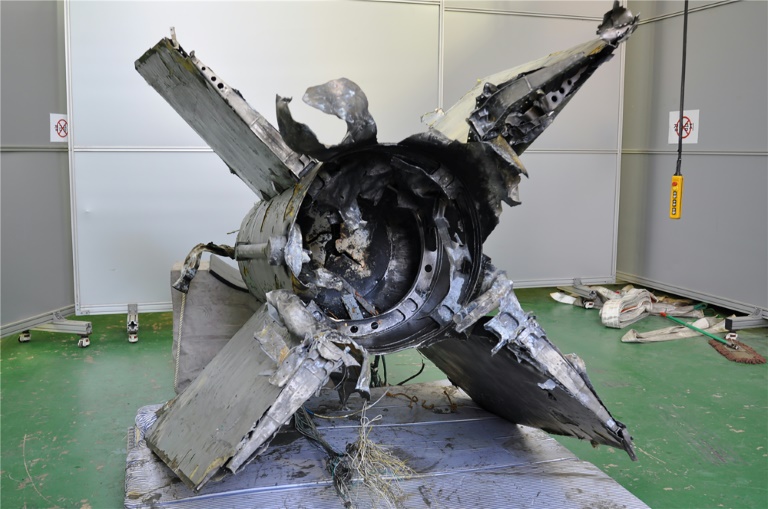
On Wednesday, the defence ministry said in a statement that it had successfully retrieved a three-meter-long, two-meter-wide piece of debris, which it identified as a North Korean SA-5 missile.

“The SA-5 is a missile that can also be used as a ground-to-ground missile,” it said.

“Russia recently used a similar ground-to-air missile as a ground-to-ground missile in the Ukraine war,” the statement added.

The announcement comes a day after Pyongyang denied US claims that it was covertly providing artillery ammunition to Moscow for its war in Ukraine.

Last week, White House national security spokesman John Kirby said North Korea was supplying “a significant number of artillery shells” to Russia under cover of shipments to the Middle East or Africa, adding it was not clear whether Moscow had received them.

Earlier this month, Pyongyang carried out a record-breaking blitz of weapons launches — including an intercontinental ballistic missile — in response to the biggest-ever joint air drills by Seoul and Washington.

The United States and South Korea have warned that such missile launches could culminate in a nuclear test by North Korea.

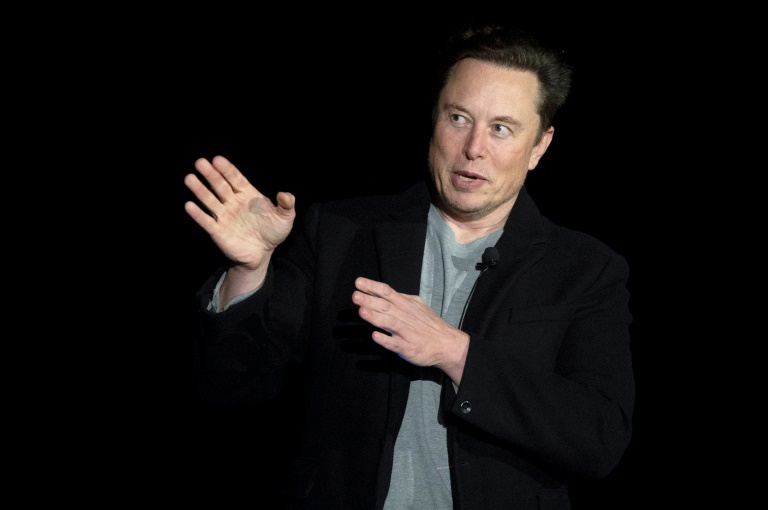
Elon Musk sells nearly $4bn in Tesla stock: SEC filing

Tesla chief Elon Musk sold nearly $4 billion worth of shares in the electric car company, SEC filings showed Tuesday, more than a week after he closed his $44 billion acquisition of Twitter.

Musk has been pushing for ways to pay for the massive deal, for which he took on billions of dollars in debt and earlier sold $15.5 billion worth of shares in Tesla.

On Tuesday, documents filed with the US Securities and Exchange Commission (SEC) indicated that he had disposed of more than another 19 million shares, worth in excess of $3.9 billion.

Musk took control of Twitter and fired its top executives in late October, after a drawn-out back-and-forth between the world’s richest person and the influential social media company.

The billionaire initially tried to step back from the deal after his unsolicited offer was accepted in April.

He said in July that he was canceling the contract because he had been misled by Twitter over the number of fake “bot” accounts, allegations rejected by the company.

After Musk sought to terminate the sale, Twitter filed a lawsuit to hold the entrepreneur to the agreement. With a trial looming, he revived his takeover plan.

– Overhaul –

On Friday, Twitter sacked half of its 7,500-strong staff as its new owner launched an overhaul of the company.

Jack Dorsey, who co-founded Twitter in 2006 and stepped down as CEO last year, tweeted to apologize for growing the site too quickly, following news of the firings.

Musk has been searching for ways for the social media platform to make money after the buyout, including an idea to charge users $8 a month for verified accounts.

The move would help overcome a potential loss of advertisers, Twitter’s main source of revenue, after many top brands put their ad buys on hold, uneasy about Musk’s well-known disdain for content controls.

Musk’s actions and statements since taking over the reins of Twitter have prompted concern, including warnings from the United Nations.

UN rights chief Volker Turk has urged Musk to make respect for human rights a priority for the social network.

Musk has insisted that content moderation remains a priority for Twitter and that he would create a council dedicated to the task.

Musk’s decision to pull Twitter off the stock market has allowed him to make major changes quickly, but it also took the company more heavily into debt, a risky choice for a money-losing business.

Asian markets turn tepid after China factory data

Asian stocks made a positive start Wednesday following gains on Wall Street but lost momentum as factory gate prices in China fell for the first time in nearly two years.

Shares in Tokyo and Hong Kong rose at the open, with the United States bracing for a tense night of midterm election results.

But they dipped in mid-morning trade after official data showed the world’s second-largest economy languishing under Beijing’s strict zero-Covid policy.

Markets had climbed in New York and Europe on Tuesday as polls opened in crucial US elections that will shape the political fortunes of President Joe Biden.

Biden’s Democrats are facing a gargantuan struggle to hang onto control of Congress, and a Republican victory could pave the way for a White House comeback bid by Donald Trump.

Such a result could also lead to political deadlock in Washington — a prospect welcomed by investors “as it prevents any significant shifts in policy,” according to Scope Markets analyst James Hughes.

At the same time, market players are eying US inflation data due on Thursday, causing the dollar to retreat, said Edward Moya, senior market analyst at OANDA.

“The dollar got crushed today as a short-covering move accelerated as investors embraced risk appetite ahead of the midterm elections and Thursday’s pivotal inflation report,” he said in a note late Tuesday.

Tokyo was down 0.2 percent at the break, while Hong Kong lost 0.1 percent in morning trade, with Shanghai up 0.3 percent.

Other Asian markets were mostly higher, with Taipei up 1.4 percent, Seoul gaining 1.1 percent and Singapore up 0.3 percent. Sydney rose 0.6 percent while Jakarta was flat.

Speculation over how long Beijing will stick with its harsh lockdown-and-testing policies designed to stamp out Covid-19 has fuelled volatility in Chinese markets in recent days.

Official data showed Wednesday that China’s producer price index (PPI) fell by 1.3 percent on-year in October, pushing it into negative territory for the first time since December 2020.

The consumer price index (CPI) — the main gauge for retail inflation — rose by 2.1 percent on-year in October, moderating slightly from September’s two-year high of 2.8 percent.

Some stocks turned negative after “China inflation data printed a rather gloomy picture, with PPI remaining deflationary and CPI much weaker than expected, pointing to waning demand,” Stephen Innes of SPI Asset Management said in a note.

“Rolling lockdowns in China, as Covid cases rebound, are catching oil traders leaning the wrong way,” he added. Both main crude indexes were down more than 2.5 percent.

– Key figures around 0230 GMT –

Tokyo – Nikkei 225: DOWN 0.2 percent at 27,827.16 (break)

Hong Kong – Hang Seng Index: DOWN 0.1 percent at 16,539.83

Shanghai – Composite: UP 0.3 percent at 3,072.68

Pound/dollar: UP at $1.1544 from $1.1468 on Tuesday

Euro/dollar: UP at $1.0074 from $1.0005

Dollar/yen: DOWN at 145.465 yen from 146.26 yen

Euro/pound: UP at 87.28 pence from 87.23 pence

West Texas Intermediate: DOWN 3.3 percent at $88.79 per barrel

Brent North Sea crude: DOWN 2.6 percent at $95.32 per barrel

New York – Dow: UP 1.0 percent at 33,160.83 (close)

London – FTSE 100: UP 0.1 percent at 7,306.14 (close)

Inside the 'living hell' of Cambodia's scam operations

Trafficked, beaten and locked up far from his family in China, Lu was one of thousands of people in Cambodia forced to operate online scams to line their captors’ pockets.

Covid shutdowns had left the builder out of work, so when he heard he could earn $2,000 a month on a construction project in Cambodia, he jumped at the chance.

But he soon realised he had been lured by a scamming gang to a compound in the seaside resort of Sihanoukville, along with hundreds of others.

There he was forced to work 12 to 16 hour shifts, trawling social media and dating apps on a hunt for victims to scam out of huge sums.

“Once I arrived it was too late to escape,” Lu told AFP. “But as long as I was alive, I would keep trying.”

People from countries around Asia — including Vietnam, the Philippines, Thailand, Malaysia, China, Taiwan, Hong Kong, Bangladesh and India — have been sucked into similar operations.

Some, like 34-year-old Lu, have made it out, though thousands of others are feared still trapped.

In August, the UN special rapporteur on the situation of human rights in Cambodia, Vitit Muntarbhorn, said the trafficking victims “were experiencing a living hell often resulting in torture and even death”.

– Metal bars and barbed wire – 

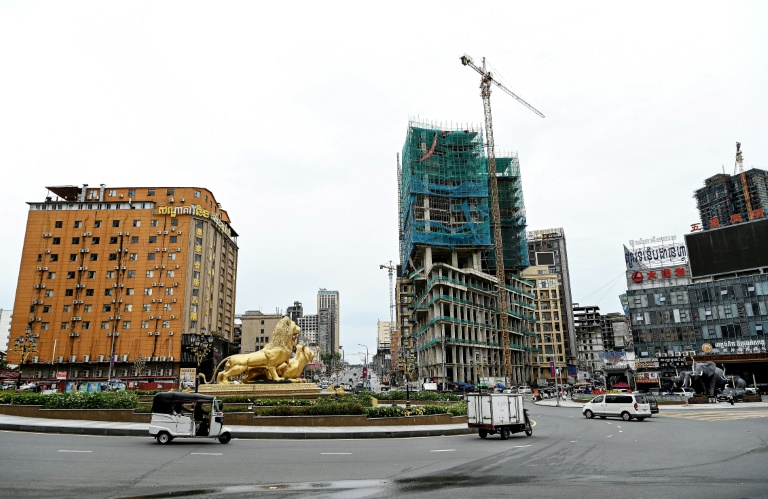
Sihanoukville was once a sleepy resort town, but it was transformed by a vast influx of Chinese investment.

Dozens of casinos sprang up in recent years, making it a hub for Chinese gamblers and drawing in international crime groups.

As travel restrictions bit during the pandemic, these groups shifted their focus.

Jeremy Douglas, of the United Nations Office for Drugs and Crime (UNODC), said “criminal groups moved casino businesses online, and some then did a pivot and added online and phone scams”.

One gang member told AFP on condition of anonymity that the first people to fall prey to operations like his were Chinese nationals already in Cambodia.

Then gangs started trafficking people into the country.

Douglas of the UNODC said “thousands, and some have estimated possibly tens of thousands” of people have been ensnared.

To stop victims from escaping, compounds were installed with metal window bars and barbed wire.

“Once they arrived in the compound, they could not leave,” the gang member said.

“People were beaten or tortured and sold if they refused to scam others.”

Within Cambodia, some were sold on to other gangs, the source said. Those with good IT or English-language skills could be sold for up to $50,000.

– ‘The real mafia’ – 

AFP interviewed four trafficking victims who said they too received lucrative job offers during the pandemic.

A 38-year-old Malaysian Chinese man called Roy described flying to Phnom Penh and being met by a woman in smart office wear who whisked him through immigration and into a car for the five-hour drive to Sihanoukville.

There, he was taken to a complex of apartment blocks a dozen or so storeys tall, housing a mix of accommodation and office rooms.

“It just looked like a normal office, with three rows of tables with monitors and keyboards, just like a cybercafe,” Roy told AFP.

But he said “once you get in you know you’re not doing customer service”.

Roy and others like him had their passports taken away, and were instructed to set up fake profiles on apps and dating sites including TikTok, Facebook, Instagram and WhatsApp.

Under the constant threat of violence, they would groom targets to pour money into crypto currency or other investment platforms.

Others were forced to build online “love” relationships with their targets and to scam them under the guise of needing help to pay debts off.

There are no reliable figures on how much money the gangs have netted from the scams, though the UN’s Douglas said the numbers are “staggering”.

It is not clear where the money ends up, he added, though criminal proceeds are often bundled together with online betting profits, with many of the scam compounds located near legal gambling businesses.

The gang member in Sihanoukville told AFP he did not know who he was ultimately working for.

“We don’t know who is who,” he said. “They are the real mafia.”

– ‘Shock, kick, shock’ –

Forced scammers who resisted paid a high price. Construction worker Lu said he was “beaten quite often” because he was caught trying to escape.

Others said gang members used electric batons to inflict shocks, or forced workers into rooms too small to stand in, depriving them of water, food and light for hours.

“They ask someone to lie down and then kick them, like a dog,” Roy said.

“Sometimes (they would) get an electric shock, kick and shock. They would get a five-minute to 10-minute beating.”

Some, like Roy, were fortunate.

After being told he would have to buy his way out for $20,000, he was rescued after contacting Taiwanese victims group the Global Anti-Trafficking Organisation (GASO).

The group works with Cambodian officials to facilitate rescues and repatriate citizens.

Others have taken a more dramatic approach — in August dozens of Vietnamese workers escaped a casino in southern Kandal province and swam across a river back to their homeland.

Attention on the issue has grown: in July the United States downgraded Cambodia in its annual human trafficking report.

After months of official denials, Prime Minister Hun Sen ordered a hunt for ringleaders and authorities launched a string of high-profile raids in August.

In September, police freed more than 1,000 foreigners from three Sihanoukville compounds.

At one site, a swoop netted nearly 9,000 mobile phones, 800 computers — and chillingly, handcuffs and electric shock instruments.

It was during one such raid that Lu was released.

– Crackdown or relocation? – 

Still, international observers and rights groups are sceptical of the depth of the government’s crackdown.

Jacob Sims, International Justice Mission’s Cambodia director, said the efforts need to go further than raids and rescues.

“Criminal accountability for the ringleaders of the transnational organised crime networks is absolutely essential if we hope to eradicate this issue,” he said.

There are fears that rather than shutting down, the groups are simply relocating.

“Today it is an operation in Cambodia, but tomorrow a gang under pressure uproots and shifts to Myanmar, Laos or the Philippines — and this has happened,” the UN’s Douglas said.

Back in Cambodia, those rescued by police, like Lu, face an uncertain future.

While he has evaded immigration detention, he told AFP he cannot afford to return to his wife and nine-year-old child in China.

A spokesperson for China’s foreign ministry told AFP the government was working with Cambodia and other countries to fight transnational crime, and that it “resolutely upholds both the safety and legal rights and privileges of Chinese citizens abroad”.

Lu said he had received no help from the Chinese embassy.

“The Chinese embassy only has one thing to say: ‘Adults have to pay for their decisions,'” he said.

burs-rbu/pdw/ser

Inside the 'living hell' of Cambodia's scam operations

Trafficked, beaten and locked up far from his family in China, Lu was one of thousands of people in Cambodia forced to operate online scams to line their captors’ pockets.

Covid shutdowns had left the builder out of work, so when he heard he could earn $2,000 a month on a construction project in Cambodia, he jumped at the chance.

But he soon realised he had been lured by a scamming gang to a compound in the seaside resort of Sihanoukville, along with hundreds of others.

There he was forced to work 12 to 16 hour shifts, trawling social media and dating apps on a hunt for victims to scam out of huge sums.

“Once I arrived it was too late to escape,” Lu told AFP. “But as long as I was alive, I would keep trying.”

People from countries around Asia — including Vietnam, the Philippines, Thailand, Malaysia, China, Taiwan, Hong Kong, Bangladesh and India — have been sucked into similar operations.

Some, like 34-year-old Lu, have made it out, though thousands of others are feared still trapped.

In August, the UN special rapporteur on the situation of human rights in Cambodia, Vitit Muntarbhorn, said the trafficking victims “were experiencing a living hell often resulting in torture and even death”.

– Metal bars and barbed wire – 

Sihanoukville was once a sleepy resort town, but it was transformed by a vast influx of Chinese investment.

Dozens of casinos sprang up in recent years, making it a hub for Chinese gamblers and drawing in international crime groups.

As travel restrictions bit during the pandemic, these groups shifted their focus.

Jeremy Douglas, of the United Nations Office for Drugs and Crime (UNODC), said “criminal groups moved casino businesses online, and some then did a pivot and added online and phone scams”.

One gang member told AFP on condition of anonymity that the first people to fall prey to operations like his were Chinese nationals already in Cambodia.

Then gangs started trafficking people into the country.

Douglas of the UNODC said “thousands, and some have estimated possibly tens of thousands” of people have been ensnared.

To stop victims from escaping, compounds were installed with metal window bars and barbed wire.

“Once they arrived in the compound, they could not leave,” the gang member said.

“People were beaten or tortured and sold if they refused to scam others.”

Within Cambodia, some were sold on to other gangs, the source said. Those with good IT or English-language skills could be sold for up to $50,000.

– ‘The real mafia’ – 

AFP interviewed four trafficking victims who said they too received lucrative job offers during the pandemic.

A 38-year-old Malaysian Chinese man called Roy described flying to Phnom Penh and being met by a woman in smart office wear who whisked him through immigration and into a car for the five-hour drive to Sihanoukville.

There, he was taken to a complex of apartment blocks a dozen or so storeys tall, housing a mix of accommodation and office rooms.

“It just looked like a normal office, with three rows of tables with monitors and keyboards, just like a cybercafe,” Roy told AFP.

But he said “once you get in you know you’re not doing customer service”.

Roy and others like him had their passports taken away, and were instructed to set up fake profiles on apps and dating sites including TikTok, Facebook, Instagram and WhatsApp.

Under the constant threat of violence, they would groom targets to pour money into crypto currency or other investment platforms.

Others were forced to build online “love” relationships with their targets and to scam them under the guise of needing help to pay debts off.

There are no reliable figures on how much money the gangs have netted from the scams, though the UN’s Douglas said the numbers are “staggering”.

It is not clear where the money ends up, he added, though criminal proceeds are often bundled together with online betting profits, with many of the scam compounds located near legal gambling businesses.

The gang member in Sihanoukville told AFP he did not know who he was ultimately working for.

“We don’t know who is who,” he said. “They are the real mafia.”

– ‘Shock, kick, shock’ –

Forced scammers who resisted paid a high price. Construction worker Lu said he was “beaten quite often” because he was caught trying to escape.

Others said gang members used electric batons to inflict shocks, or forced workers into rooms too small to stand in, depriving them of water, food and light for hours.

“They ask someone to lie down and then kick them, like a dog,” Roy said.

“Sometimes (they would) get an electric shock, kick and shock. They would get a five-minute to 10-minute beating.”

Some, like Roy, were fortunate.

After being told he would have to buy his way out for $20,000, he was rescued after contacting Taiwanese victims group the Global Anti-Trafficking Organisation (GASO).

The group works with Cambodian officials to facilitate rescues and repatriate citizens.

Others have taken a more dramatic approach — in August dozens of Vietnamese workers escaped a casino in southern Kandal province and swam across a river back to their homeland.

Attention on the issue has grown: in July the United States downgraded Cambodia in its annual human trafficking report.

After months of official denials, Prime Minister Hun Sen ordered a hunt for ringleaders and authorities launched a string of high-profile raids in August.

In September, police freed more than 1,000 foreigners from three Sihanoukville compounds.

At one site, a swoop netted nearly 9,000 mobile phones, 800 computers — and chillingly, handcuffs and electric shock instruments.

It was during one such raid that Lu was released.

– Crackdown or relocation? – 

Still, international observers and rights groups are sceptical of the depth of the government’s crackdown.

Jacob Sims, International Justice Mission’s Cambodia director, said the efforts need to go further than raids and rescues.

“Criminal accountability for the ringleaders of the transnational organised crime networks is absolutely essential if we hope to eradicate this issue,” he said.

There are fears that rather than shutting down, the groups are simply relocating.

“Today it is an operation in Cambodia, but tomorrow a gang under pressure uproots and shifts to Myanmar, Laos or the Philippines — and this has happened,” the UN’s Douglas said.

Back in Cambodia, those rescued by police, like Lu, face an uncertain future.

While he has evaded immigration detention, he told AFP he cannot afford to return to his wife and nine-year-old child in China.

A spokesperson for China’s foreign ministry told AFP the government was working with Cambodia and other countries to fight transnational crime, and that it “resolutely upholds both the safety and legal rights and privileges of Chinese citizens abroad”.

Lu said he had received no help from the Chinese embassy.

“The Chinese embassy only has one thing to say: ‘Adults have to pay for their decisions,'” he said.

burs-rbu/pdw/ser

China's ultra-rich squeezed by slowing economy: Hurun ranking

The wealth of China’s billionaires this year dropped by the largest amount in more than two decades, according to an annual ranking, as zero-Covid curbs and a property market crisis stall the world’s second-largest economy.

The Hurun China Rich List, released Tuesday, said the total wealth of all individuals with a minimum net worth of 5 billion yuan ($691 million) dropped by 18 percent to $3.5 trillion.

Only 1,305 people made it onto the list — an 11 percent net decrease compared with last year, and the biggest drop in 24 years. 

The fortunes of China’s ultra-rich have been battered by Beijing’s harsh zero-Covid policy, which has heavily disrupted production and supply chains.

They have also taken a hit from stock market routs during a two-year crackdown on the tech industry, and suffered from geopolitical volatility caused by events such as the war in Ukraine.

The property and healthcare sectors were hit especially hard, according to the list.

Property developer Yang Huiyan of Country Garden Holdings lost the most personal wealth at $15.7 billion this year, while Pony Ma, founder of tech and gaming giant Tencent, lost $14.6 billion after a sweeping crackdown on the gaming industry last year.

China’s three richest people stayed the same as last year, with Zhong Shanshan, founder of bottled water company Nongfu Spring, increasing his wealth by 17 percent to $65 billion.

Zhang Yiming, the founder of TikTok parent ByteDance, retained second place but saw his wealth drop by 28 percent to $35 billion after the company’s valuation dropped.

Alibaba founder Jack Ma fell from fifth to ninth place after losing 29 percent of his wealth to $25.7 billion, while Pony Ma slipped from fourth place to fifth.

Nearly 300 individuals listed last year were absent from this year’s list, most from the property industry, which has faced a spiralling debt crisis after the government imposed borrowing curbs in 2020. 

The chairman of property giant Evergrande, Xu Jiayin, fell out of the 100 richest to 172nd place as his company sagged under over $300 billion of debt.

The International Monetary Fund has predicted that China’s annual GDP growth will only reach 3.2 percent this year.

House of hordes: UK's parliament swells after PM upheaval

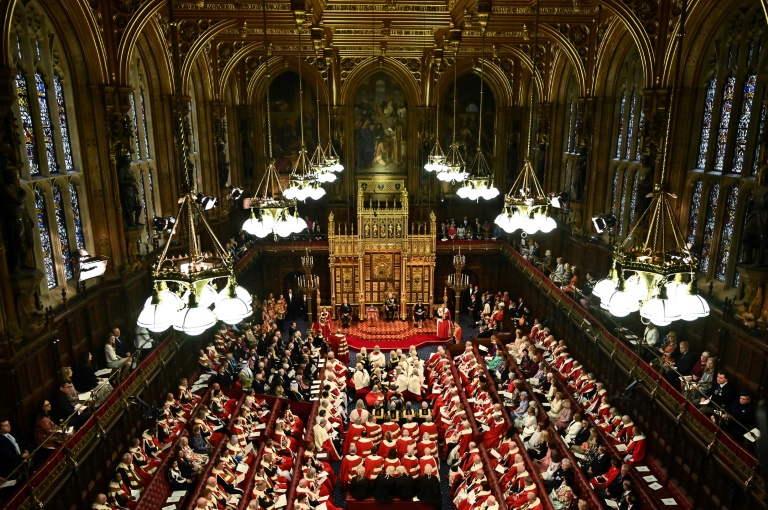
Britain’s House of Lords shares some characteristics with the Chinese National People’s Congress: their signature colours are red, and neither is elected by popular vote. 

They are also the world’s two largest legislatures.

After the rapid-fire departures this year of Boris Johnson and Liz Truss from 10 Downing Street, the House of Lords is set to grow even bigger, despite demands for a reduction.

With around 800 members, the upper chamber of the UK parliament lags behind the nearly 3,000 delegates that make up China’s unicameral congress.

But the House of Lords is comfortably larger than any other chamber in a democracy. India, with a population of 1.4 billion, caps the membership of its upper house at 250.

The Lords has long been subject to demands for reform to make it more representative and less “a chamber festering with grotesques and has beens”, in the words of a parliamentary writer in The Times newspaper.

However, by convention, departing prime ministers are entitled to nominate a “resignation honour’s list” -– typically allies, aides and associates who are elevated to peerages. 

Johnson’s 20-strong resignation list is being reviewed by a vetting committee, and some of his picks are likely to prove controversial.

Truss has the same entitlement to reward her followers, despite serving only 49 days.  

Her successor Rishi Sunak will respect the convention and not meddle in their selections, his official spokesman told reporters on Tuesday.

– Baron of Siberia –

Before resigning, Johnson had already elevated about 90 peers during his three years in office, including his brother Jo, flouting an official recommendation to scale back the chamber.

In 2020, Johnson installed his Moscow-born friend Evgeny Lebedev as “Baron Lebedev of Hampton in the London Borough of Richmond upon Thames and of Siberia in the Russian Federation”, despite the reported objections of UK intelligence chiefs to the newspaper tycoon.

Once dominated by hereditary peers, the chamber today is composed of lifetime political appointees along with people nominated after serving in prominent public or private-sector roles, and Church of England clerics.

Many have been donors to the ruling Conservatives including Peter Cruddas, who was made a peer by Johnson against the advice of the Lords vetting body following a “cash for access” political scandal.

A reform commission including senior Tory Lords recommended in 2017 that the chamber be reduced to 600 members, only allowing one entrant for every two departures.

The report has languished since, with successive governments proving reluctant to dispense with their powers of patronage, especially when the House of Lords is busy frustrating their legislative agenda.

But all sides pay lip service to the idea of change. Only 29 percent of the Lords are women, and its membership is hardly national, with just under half coming from London and southeast England.

The opposition Labour party has vowed to resurrect a reform drive begun by Tony Blair’s government in the late 1990s. 

One idea would see the House of Lords replaced by an indirectly elected assembly of regions and UK nations, with the power to refer the government to the Supreme Court in the case of constitutional breaches.

– ‘Democratically unacceptable’ –

“The system is the problem — it’s not just the recent turmoil of changing prime ministers,” said Jess Garland, director of policy at the Electoral Reform Society. 

“The blueprint for reform is there. There’s a real democratic need for the lords to be appointed by the people who are ultimately affected by their laws,” she told AFP.

“We might see a list of lords from Liz Truss at some point. But to have no say in who sits there is democratically unacceptable.”

As it stands, the upper chamber cannot override legislation sent from the popularly elected House of Commons. But it can amend and delay bills.

The House of Lords enjoys far more influence than the ornamental National People’s Congress, which is set in March to rubber-stamp the Communist Party’s decision last month to grant a historic third term to President Xi Jinping.

Since Xi took control of China in 2012, Britain is on its fifth prime minister. 

The latest, Sunak, believes the upper house plays a “vitally important role” in UK democracy, according to his spokesman.

But he said constitutional reform was not an “immediate priority”, as the new prime minister tackles an economic crisis inherited from Truss — some of whose authors could now be rewarded with titles.

China factory gate prices fall for first time in nearly two years

Factory gate prices in China were down for the first time in nearly two years last month, official data showed Wednesday, as falling global commodity prices made their mark on an economy ailing under strict Covid controls.

The producer price index (PPI) fell by 1.3 percent on-year in October, according to the National Bureau of Statistics (NBS), pushing it into negative territory for the first time since December 2020.

The figure represented a reduction from September’s 0.9 percent rise.

“In October, demand in some industries rose, and the national PPI rose slightly month-on-month,” said NBS statistician Dong Lijuan.

“But owing to the high comparison base from the same period last year, the year-on-year figure went from growth into decline.”

“Factory-gate inflation is likely to continue falling over the coming quarters due to a further decline in global commodity prices and a higher base for comparison,” said Julian Evans-Pritchard, senior China economist at Capital Economics.

“We expect it to stay in negative territory through the final months of the year and much of 2023.”

The consumer price index — the main gauge for retail inflation — rose by 2.1 percent on-year in October, the NBS said, moderating slightly from September’s two-year high of 2.8 percent.

Consumers in China have been largely spared the impact of a global surge in food and energy costs following Russia’s invasion of Ukraine.

“Under the impact of factors including a drop in consumer demand after the (National Day) holiday and last year’s high base of comparison, the rise in consumer prices somewhat fell back,” Dong said.

– Zero-Covid impact –

China is the last major economy wedded to a zero-Covid strategy, stamping out emerging outbreaks as they occur through snap lockdowns, mass testing and strict quarantines.

Authorities in areas where cases arise frequently invoke the policy to shut down businesses and confine people to their homes at short notice.

Much of the country also remains under a patchwork of travel restrictions, roiling international supply chains and hammering domestic demand.

The Chinese economy beat expectations to grow 3.9 percent in the third quarter, but analysts expect that it will fall well below this year’s official growth target of around 5.5 percent.

Brazil transition takes shape, Bolsonaro keeps low profile

The head of Luiz Inacio Lula da Silva’s transition on Tuesday picked a team to smooth the leftist’s ascent to Brazil’s presidency, while outgoing President Jair Bolsonaro remained uncharacteristically silent after his election loss.

Lula’s vice-president-elect Geraldo Alckmin named a political council and a team of economists, among others, who will lay the groundwork for the changeover of government on January 1.

“We are working, the future has already begun,” Lula wrote on Twitter.

On Wednesday, Lula will meet with the leaders of both chambers of Congress in Brasilia to discuss budget issues as he looks to implement his campaign promises of increased social spending, while grappling with a struggling economy.

Lula, who will be serving a third term as president, is facing a far tougher outlook than the commodities-fueled boom he presided over in the 2000s. 

The economics team appointed by Alckmin includes economists Andre Lara Resende and Persio Arisa, who helped draw up a plan to halt hyperinflation in Brazil in the nineties.

– ‘A great sadness’ –

Meanwhile, Bolsonaro has all but disappeared from public view and even his beloved social media accounts.

The far-right president responded to his defeat in the October 30 runoff election with nearly two days of silence as his supporters blocked highways in protest and urged the military to intervene to keep him in power.

Bolsonaro finally made a brief statement on November 1, saying he would respect the constitution. However, he neither conceded defeat nor congratulated Lula. 

He posted a video the following night, urging supporters to stop blocking highways — though he encouraged “legitimate demonstrations.”

The protesters largely acquiesced, though a handful of rogue roadblocks remain, as well as demonstrations outside military bases.

Bolsonaro, 67, has remained silent since.

According to his public agenda, he has been holed up at his official residence since November 1, when he met with cabinet ministers.

Newspaper O Globo reported Bolsonaro was home with “health issues,” had a fever and appeared exhausted, citing sources close to the president.

Bolsonaro’s office did not immediately respond to questions about his health from AFP.

The leader of the president’s Liberal Party (PL), Valdemar Costa Neto, said Bolsonaro’s silence was “natural” given his narrow loss — 50.9 percent of the vote to 49.1 percent, the tightest presidential race in Brazil’s modern history.

“When you lose an election like that, you feel it in your heart,” Neto told a news conference.

“It’s a great sadness.”

– Enigmatic tweet –

Bolsonaro has not posted to his usually bustling Twitter account since the runoff, except last Wednesday’s video and an enigmatic picture posted Tuesday, showing the president standing before a crowd of supporters, a Brazilian flag in the background.

Bolsonaro has even stopped giving his weekly live address on Facebook, one of the main communication channels he has relied on to speak to his base throughout his presidency.

The rest of the Bolsonaro clan has also been unusually quiet online since the election.

The day after, Senator Flavio Bolsonaro, the president’s eldest son, posted a message saying, “Dad, I’m with you no matter what.”

Sunday, he posted two other messages condemning alleged “censorship” of his father’s supporters on social media — a frequent complaint from the pro-Bolsonaro camp as Brazilian authorities have moved to block disinformation online.

Congressman Eduardo Bolsonaro, Flavio’s younger brother, meanwhile shared a post from new Twitter owner Elon Musk promising to “look into” claims that pro-Bolsonaro users’ accounts were unfairly suspended.

Close Bitnami banner
Bitnami