World

Jihadist fears cast shadow on Niger-Benin border

Observers of troubled West Africa have long fretted that jihadists who have rampaged across the Sahel are eyeing a southward push to the Gulf of Guinea.

But for people living on the border between Niger and Benin, that concern is already a daily reality.

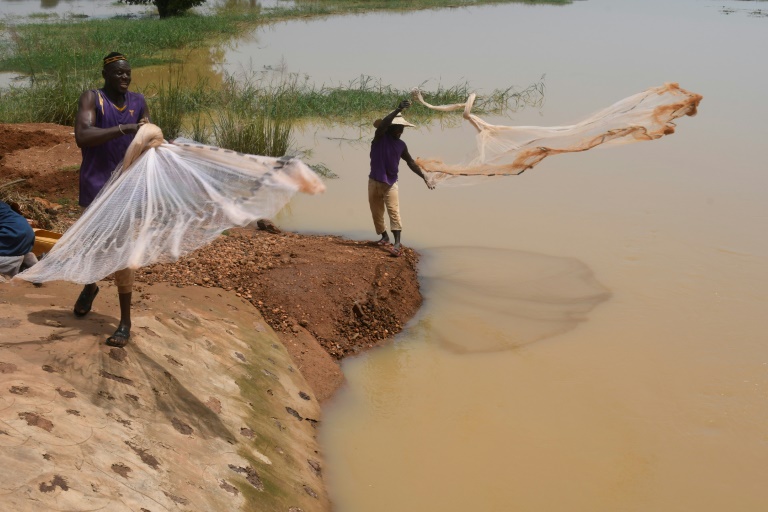
“We live in fear,” said Sani Harouna, a fisherman who earns a living on the Niger River, which marks the border between the two countries.

To the north of the great river lies the vast, semi-desert state of Niger, the poorest country in the world by the UN’s development index.

The country is battling two insurgencies that have swept in from its neighbours.

One is a longstanding Boko Haram campaign on the southeastern border with Nigeria, while the other is a dynamic seven-year offensive in the southwest.

It swept in from Mali, where al-Qaeda and Islamic State group jihadists are active, and has also pushed into neighbouring Burkina Faso.

To the river’s south lies Benin, one of a trio of coastal states along with Togo and Ivory Coast which analysts fear are next in line.

Last month, armed men attacked a customs post in Malanville, Benin’s closest town to Niger, killing two men.

“The terrorists are on the border, and if they are pursued in Benin, they will fall back to Niger,” said another fisherman, Mamane Sani Harouna.

“It’s these waters that must be watched — they can make it easier for the terrorists to infiltrate, and around here there are too many wooded areas” that can serve as boltholes, he said.

– ‘Corridor’ –

Gaya district is part of the Dosso region which borders Benin and Nigeria.

So far Dosso has escaped violent attacks, and its relative safety means that truckers prefer to use it as a corridor to reach Benin’s port of Cotonou rather than cross Burkina.

“There is a security challenge, the threat is real,” Assimou Abarchi, the prefect — the state’s most senior official — for Gaya told AFP. 

“But up till now, thanks be to God, we sleep soundly and we wake up in good shape.”

“Right now it’s calm. There are just petty thieves who steal our animals and sell them to butchers,” said a Nigerien trader who was crossing the bridge to sell milk in Benin.

But the corridor and the river are also a potential flashpoint.

Officials say they are used to provide fuel and supplies for terrorists based in Mali.

“Motorcyclists sneak across from Nigeria to northern Mali and canoes involved in smuggling are equipped with powerful motors,” an official in Gaya said.

– Pipeline –

The corridor is also being used as the outlet for a planned pipeline for Niger’s oil, which is scheduled to reach the world market via Benin next year.

In a visit to military forces in Dosso last week, Nigerien President Mohamed Bazoum promised to create a “fully-equipped battalion” for the Gaya area to help strengthen surveillance of the 266-kilometre (165-mile) border with Benin.

He called for the military to “find the right response” to “cutting off” the jihadists’ supply lines.

“Benin is a strategic partner for Niger,” he said. 

“Given that we know how these forces (the jihadists) behave, and their intentions for opening up fronts on the other side of the border, we are obliged to act preventatively,” he said.

Benin and Niger in July signed an agreement to fight “terrorism” through joint military operations and exchanges of information.

Dosso already has a rapid-response battalion of more than 500 troops, which has been trained and equipped by France with pickup trucks and heavy weapons.

Ethiopia vows to seize airports, other sites in Tigray

Ethiopia’s government on Monday vowed to seize control of airports and other federal facilities in war-torn Tigray, a day after the African Union appealed for a ceasefire to the conflict.

AU Commission chair Moussa Faki Mahamat called for an immediate and unconditional truce as combat intensified in northern Ethiopia, where pro-government forces and rebels from the Tigray region have been fighting for nearly two years.

Faki also urged the rivals to “recommit to dialogue” after both sides accepted an AU invitation to peace talks that failed to materialise as violence spiralled.

The authorities in Tigray said Sunday they were “ready to abide by an immediate cessation of hostilities” and called on the international community to press the government to come to the table.

Addis Ababa said in a statement Monday it was “committed to the peaceful resolution of the conflict through the AU-led peace talks”.

But it said it would pursue this along with “defensive measures” to protect Ethiopia’s sovereignty and territorial integrity from internal and external threats.

“It is thus imperative that the Government of Ethiopia assumes immediate control of all airports, other federal facilities, and installations in the region,” the statement from the Government Communication Service said.

UN chief Antonio Guterres, the United States and other Western powers have voiced alarm over the worsening violence in Tigray and called for a peaceful settlement to “this catastrophic conflict”.

Prime Minister Abiy Ahmed’s government and the Tigrayan authorities were to attend AU-led negotiations in South Africa earlier this month but they did not go ahead, with logistical problems cited as one obstacle. 

– ‘Deep regret’ –

Ethiopian forces along with troops from neighbouring Eritrea have meanwhile stepped up an offensive near Shire, a city of 100,000 people in northwestern Tigray, where civilian casualties have been reported in heavy shelling.

US aid chief Samantha Power on Sunday warned “the risk of additional atrocities and loss of life is intensifying” around Shire, and accused Ethiopian and Eritrean forces of indiscriminate attacks.

On Friday, an aid worker from the International Rescue Committee was among three civilians killed in an attack in Shire left others injured.

The IRC staffer was distributing food to “vulnerable” civilians including women and children, said the World Food Programme (WFP), which condemned the targeting of aid personnel.

Britain’s minister for Africa, Gillian Keegan, said she was “appalled” by the attack.

“This is the 24th aid worker killed in Tigray since the start of the conflict. Civilians and aid workers must be protected and #NotATarget,” Keegan wrote on Twitter.

The Ethiopian government said its army strove to “avoid combat operations within urban areas to prevent civilian casualties” but urged aid workers to “distance themselves from TPLF military assets”.

“The Government of Ethiopia deeply regrets any harm that might have been inflicted on civilians, including humanitarian personnel,” the GCS said, adding it would investigate such incidents.

Abiy, who won the Nobel Peace Prize in 2019, sent troops into Tigray in November 2020 after accusing the Tigray People’s Liberation Front (TPLF) of attacking army camps.

The TPLF had dominated Ethiopia’s ruling political alliance for decades before Abiy took power in 2018.

The ensuing conflict has killed an unknown number of civilians and unleashed a massive humanitarian crisis in Tigray and other parts of northern Ethiopia.   

Britain junks budget tax measures as Truss hangs by thread

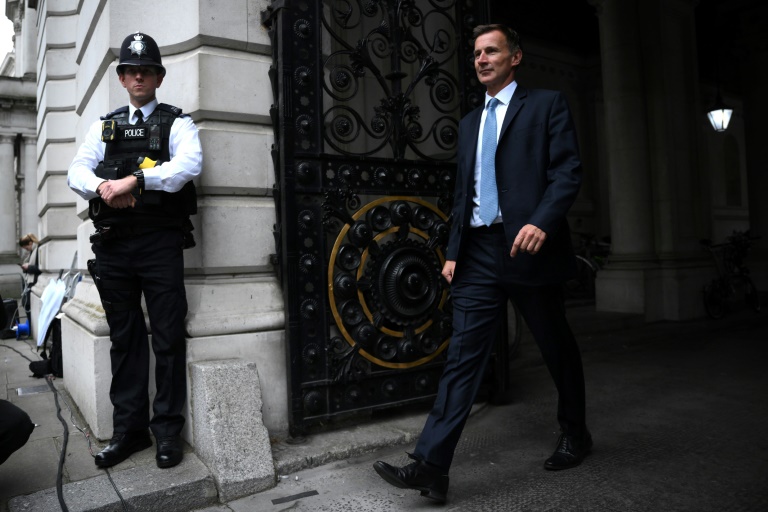
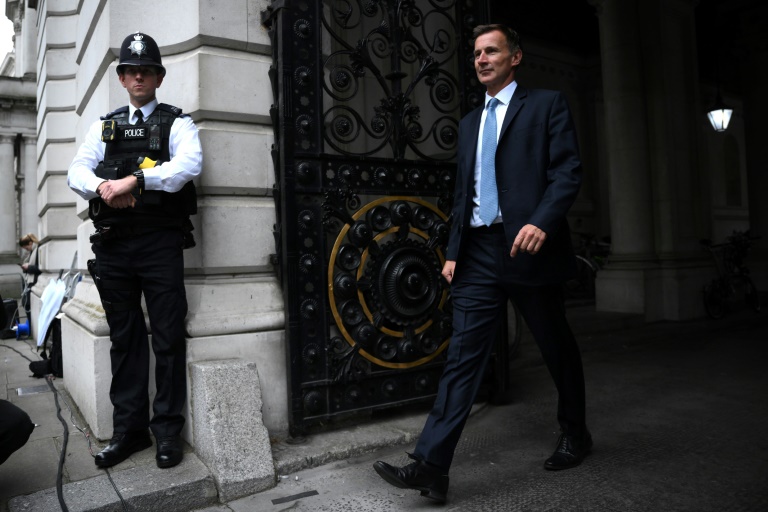
Britain’s new finance chief Jeremy Hunt on Monday axed debt-fuelled tax cuts to further calm market turmoil, in another major government U-turn that appears to leave Liz Truss’s position as prime minister in a precarious state.

Hunt estimated that the tax changes would raise about £32 billion ($36 billion) per year, after economists estimated the government faced a £60-billion black hole in the public finances. He also warned of spending cuts.

Chancellor of the Exchequer Hunt, parachuted into the job on Friday to replace sacked Kwasi Kwarteng, said no government could control markets — but stressed his action could give certainty over the health of public finances.

“We will reverse almost all the tax measures announced… three weeks ago,” Hunt said in a televised statement, conceding last month’s budget from his predecessor had harmed the public purse.

“The most important objective for our country right now is stability,” he added in a contrite statement. 

– Tax U-turns –

Hunt scrapped plans to axe the lowest rate of income tax, and curbed the government’s flagship energy price freeze — pulling the plug in April instead of late 2024.

After April, the government will “review” its energy support package, he said.

A proposed reduction in shareholder dividend tax was also binned, along with planned tax-free shopping for tourists and a freeze on alcohol duty.

The announcement comes as Truss’ governing Conservative party tanks in the opinion polls amid Britain’s worsening cost-of-living crisis.

Truss fired her close friend Kwarteng on Friday after their recent tax-slashing budget sparked markets chaos — fuelling intense speculation over her political future one month after taking office.

“No government can control the markets but every government can give certainty about the sustainability of public finances,” Hunt added Monday.

Britain’s fourth finance minister in as many months will address lawmakers over his plans at 1430 GMT.

His action sent the British pound briefly jumping to $1.1331, while bond yields dipped.

Last month’s notorious budget sent bond yields spiking and the pound collapsing to a record dollar-low on fears of rocketing UK debt.

– ‘Difficult decisions ahead’ –

Tax reductions were the centrepiece of the ill-starred budget, but they were financed via huge borrowing.

Truss had already staged two humiliating budget U-turns, scrapping tax cuts for the richest earners and on company profits.

Following his appointment, Hunt hit the ground running Saturday with a warning of tax hikes as he dramatically reversed course on Truss’s radical programme of economic reform.

“There will be more difficult decisions I am afraid, on both tax and spending, as we deliver our commitment to get debt falling as a share of the economy over the medium term,” he said Monday.

“All departments will need to redouble their efforts to find savings, and some areas of spending will need to be cut.”

Hunt already warned that he was not taking anything off the table” amid speculation of painful cutbacks on critical areas like defence, hospitals and schools.

Hunt met over the weekend with the governor of the Bank of England, Andrew Bailey, and the head of the Debt Management Office to discuss his plans.

In the wake of the earlier turmoil, the BoE launched emergency buying of UK government bonds — a policy that ended Friday.

The furore over the budget has reportedly sparked a plot to oust the prime minister.

UK media reported that senior Conservative members of parliament were plotting to unseat Truss, aghast at the party’s performance since she replaced scandal-hit Boris Johnson on September 6.

Party grandee and former leader William Hague said Truss’ premiership was “hanging by a thread” after Kwarteng was unceremoniously fired.

Britain junks budget tax measures as Truss hangs by thread

Britain’s new finance chief Jeremy Hunt on Monday axed debt-fuelled tax cuts to further calm market turmoil, in another major government U-turn that appears to leave Liz Truss’s position as prime minister in a precarious state.

Hunt estimated that the tax changes would raise about £32 billion ($36 billion) per year, after economists estimated the government faced a £60-billion black hole in the public finances. He also warned of spending cuts.

Chancellor of the Exchequer Hunt, parachuted into the job on Friday to replace sacked Kwasi Kwarteng, said no government could control markets — but stressed his action could give certainty over the health of public finances.

“We will reverse almost all the tax measures announced… three weeks ago,” Hunt said in a televised statement, conceding last month’s budget from his predecessor had harmed the public purse.

“The most important objective for our country right now is stability,” he added in a contrite statement. 

– Tax U-turns –

Hunt scrapped plans to axe the lowest rate of income tax, and curbed the government’s flagship energy price freeze — pulling the plug in April instead of late 2024.

After April, the government will “review” its energy support package, he said.

A proposed reduction in shareholder dividend tax was also binned, along with planned tax-free shopping for tourists and a freeze on alcohol duty.

The announcement comes as Truss’ governing Conservative party tanks in the opinion polls amid Britain’s worsening cost-of-living crisis.

Truss fired her close friend Kwarteng on Friday after their recent tax-slashing budget sparked markets chaos — fuelling intense speculation over her political future one month after taking office.

“No government can control the markets but every government can give certainty about the sustainability of public finances,” Hunt added Monday.

Britain’s fourth finance minister in as many months will address lawmakers over his plans at 1430 GMT.

His action sent the British pound briefly jumping to $1.1331, while bond yields dipped.

Last month’s notorious budget sent bond yields spiking and the pound collapsing to a record dollar-low on fears of rocketing UK debt.

– ‘Difficult decisions ahead’ –

Tax reductions were the centrepiece of the ill-starred budget, but they were financed via huge borrowing.

Truss had already staged two humiliating budget U-turns, scrapping tax cuts for the richest earners and on company profits.

Following his appointment, Hunt hit the ground running Saturday with a warning of tax hikes as he dramatically reversed course on Truss’s radical programme of economic reform.

“There will be more difficult decisions I am afraid, on both tax and spending, as we deliver our commitment to get debt falling as a share of the economy over the medium term,” he said Monday.

“All departments will need to redouble their efforts to find savings, and some areas of spending will need to be cut.”

Hunt already warned that he was not taking anything off the table” amid speculation of painful cutbacks on critical areas like defence, hospitals and schools.

Hunt met over the weekend with the governor of the Bank of England, Andrew Bailey, and the head of the Debt Management Office to discuss his plans.

In the wake of the earlier turmoil, the BoE launched emergency buying of UK government bonds — a policy that ended Friday.

The furore over the budget has reportedly sparked a plot to oust the prime minister.

UK media reported that senior Conservative members of parliament were plotting to unseat Truss, aghast at the party’s performance since she replaced scandal-hit Boris Johnson on September 6.

Party grandee and former leader William Hague said Truss’ premiership was “hanging by a thread” after Kwarteng was unceremoniously fired.

WHO seeking quick bucks from business via foundation

The World Health Organization is sourcing rapid response financing directly from companies to help tackle international crises, through the foundation it set up to bridge the shortfall from member states.

The WHO Foundation — set up in May 2020 as the UN health agency scrambled for resources to fight the Covid-19 pandemic — was created to marshal new resources from business and philanthropists.

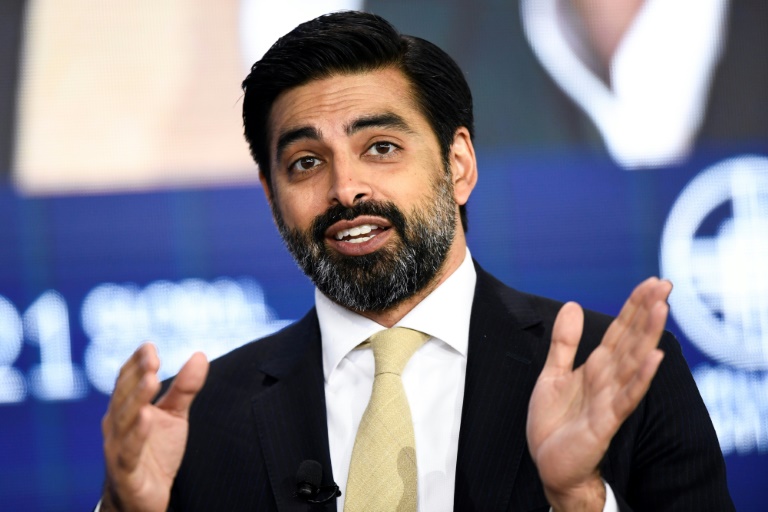
The foundation, which went live in January 2021, aims to “mobilise more support for the WHO, from the public, from businesses, from philanthropists,” its chief executive Anil Soni told AFP. 

“No organisation, no sector can solve the challenges that the world is facing alone,” the 46-year-old American said.

The WHO has a two-year budget of $5.8 billion but its financial independence has steadily declined. 

Its 194 member states provide barely 16 percent of the organisation’s financing through membership fees.

The rest comes from voluntary contributions, of which 88 percent are “specified”, meaning the money goes to projects earmarked by the donors.

And with national budgets tightening around the world, governments “are having to make tough decisions about where they give their money”, said Soni.

“That’s why we should do more with the private sector.”

– ‘Matchmaker’ –

The foundation says it exists because the WHO lacks sufficient resources to fulfil its mandate.

The list of health crises currently being combated by the WHO includes Covid-19, the cholera outbreak in Haiti, the war in Ukraine, the devastating floods in Pakistan, monkeypox and attempts to get aid into Ethiopia’s besieged Tigray region.

The foundation has raised $30 million since the start of 2021 — money which has mainly been focused on supporting the WHO’s emergency response to Covid-19 and the war in Ukraine.

“Part of our job is to be a matchmaker, is to make sure that we can facilitate dialogue and share information,” said Soni.

“So the WHO sees the benefit of working with the private sector, and the private sector sees the power of the WHO.”

The foundation has around 40 staff compared to more than 8,600 for the WHO, which is also based in Geneva.

– Innovation investments –

Soni admits that some — including within the WHO — fear the risk of private companies holding too much sway over the organisation, which makes decisions on the usage and approval of drugs, vaccines and treatments.

He insisted mechanisms were in place to prevent any company from influencing such decisions.

“But to close the door to all of the private sector — that doesn’t work,” he said.

On September 19, the WHO Foundation announced that it had partnered with venture capital firm OurCrowd to launch a $200 million investment fund focused on breakthrough health technologies.

OurCrowd will raise the money and a share of the profits will go to the WHO.

In addition, the companies in which the fund has invested will have to commit to ensuring fair access to their new technologies — one of the WHO’s chief gripes during the pandemic response, as poorer nations went to the back of the queue for Covid vaccines and treatments.

– Flexible friends –

On September 22, the foundation announced the launch of the Health Emergencies Alliance partnership — a vehicle for companies and philanthropists who want to support the WHO in tackling health emergencies on a regular basis.

The partnership, which is in its infancy, hopes to get financing to the front line swiftly and effectively.

The French laboratory pharmaceutical giant Sanofi was the first to sign up, said Soni, with discussions ongoing with other companies.

Those who join the programme will pay a set amount to the foundation each year, without the donation being earmarked for a particular situation, allowing the WHO to respond to emergencies flexibly.

And when a health emergency suddenly springs up, these companies will, within 24 hours, have the possibility of raising additional resources for the response, from their clients, employees and the company itself, capitalising while the emotion on breaking disasters is still strong.

The alliance should see companies being able to respond even more quickly to emergencies while offering greater funding flexibility to the WHO, Soni explained.

Climate protesters scale major UK bridge

Two UK climate protesters scaled a major road bridge over the River Thames on Monday causing huge traffic delays, days after activists threw tomato soup over Vincent van Gogh’s “Sunflowers” masterpiece.

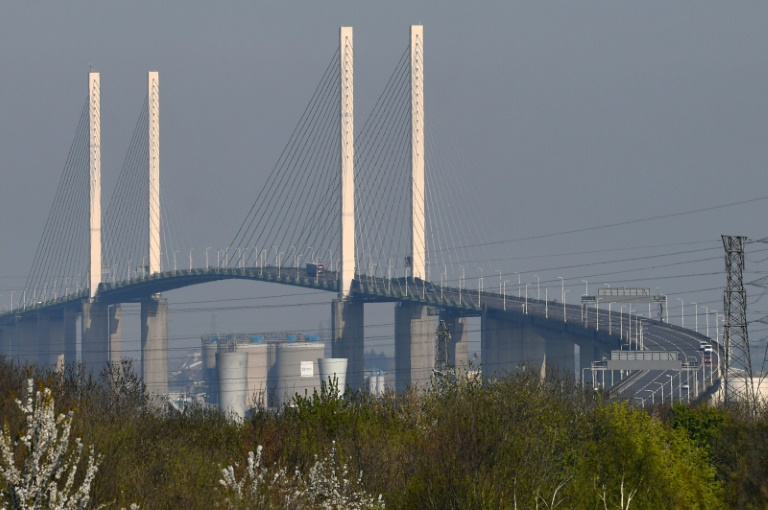
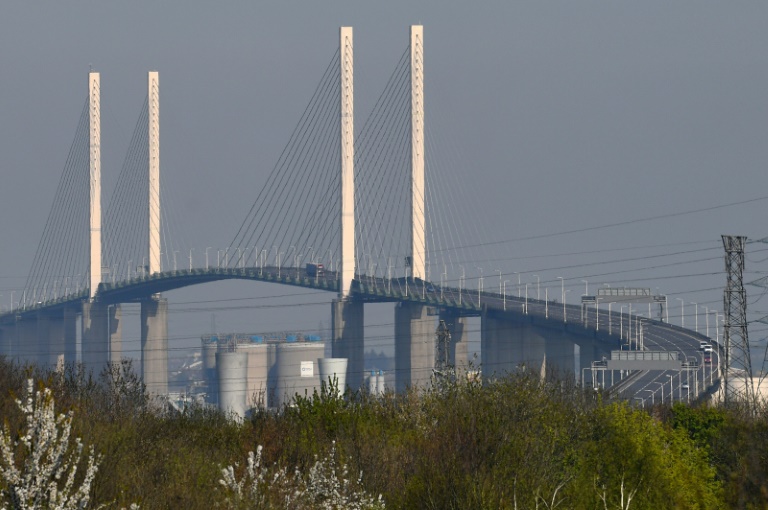
The Just Stop Oil protesters climbed more than 80 metres (260 feet) up one of the towers of the Queen Elizabeth II Bridge, which is used by an estimated 160,000 vehicles a day and links up to one of Europe’s busiest motorways.

One activist said he was protesting because government policies were accelerating the climate emergency.

The closure caused major delays for motorists for whom the bridge, known as the Dartford Crossing, is the only way to cross the Thames to the east of London.

“Two people climbed up onto high cables early this morning,” Essex Police said on Twitter.

“The QEII bridge is closed to allow us to resolve the situation as safely as possible.” 

One of the protesters, Morgan Trowland, posted on Twitter a clip of himself at the top of the bridge.

“I’m willing to do this ‘cos I’m not willing to sit back and see everything burn,” he wrote.

The 39-year-old, who said he was a bridge design engineer, said he felt compelled to take action because of government policies.

“Our government has enacted suicidal laws to accelerate oil production — killing human life and destroying our environment,” he said.

“I can’t challenge this madness in my desk job, designing bridges, so I’m taking direct action, occupying the QE2 bridge until the government stops all new oil.”

Another protester, identified as Marcus, a 33-year-old teacher, added: “Only direct action will now help to reach the social tipping point we so urgently need.”

Police said the bridge, which is used for southbound traffic, was closed before dawn. Traffic was diverted through a tunnel under the river, which is normally only used for northbound traffic.

“This incident may take some time to resolve due to the complexities of safely getting people down from height,” an Essex police spokesman added.

The bridge, 30 kilometres (18 miles) east of central London, connects directly at both ends with the M25 London Orbital route.

On Saturday, two protesters appeared in court a day after throwing tomato soup over the van Gogh painting at London’s National Gallery.

The painting itself was protected by a screen but damage was caused to the frame, according to the gallery in Trafalgar Square.

Also on Saturday, nearly 30 demonstrators from the group glued themselves to the tarmac when they blocked a major road in east London.

UK Home Secretary Suella Braverman has threatened a police clampdown on “direct-action” protests, including by Just Stop Oil.

Just Stop Oil says climate change poses an existential crisis for humanity and its direct tactics are justified.

Climate protesters scale major UK bridge

Two UK climate protesters scaled a major road bridge over the River Thames on Monday causing huge traffic delays, days after activists threw tomato soup over Vincent van Gogh’s “Sunflowers” masterpiece.

The Just Stop Oil protesters climbed more than 80 metres (260 feet) up one of the towers of the Queen Elizabeth II Bridge, which is used by an estimated 160,000 vehicles a day and links up to one of Europe’s busiest motorways.

One activist said he was protesting because government policies were accelerating the climate emergency.

The closure caused major delays for motorists for whom the bridge, known as the Dartford Crossing, is the only way to cross the Thames to the east of London.

“Two people climbed up onto high cables early this morning,” Essex Police said on Twitter.

“The QEII bridge is closed to allow us to resolve the situation as safely as possible.” 

One of the protesters, Morgan Trowland, posted on Twitter a clip of himself at the top of the bridge.

“I’m willing to do this ‘cos I’m not willing to sit back and see everything burn,” he wrote.

The 39-year-old, who said he was a bridge design engineer, said he felt compelled to take action because of government policies.

“Our government has enacted suicidal laws to accelerate oil production — killing human life and destroying our environment,” he said.

“I can’t challenge this madness in my desk job, designing bridges, so I’m taking direct action, occupying the QE2 bridge until the government stops all new oil.”

Another protester, identified as Marcus, a 33-year-old teacher, added: “Only direct action will now help to reach the social tipping point we so urgently need.”

Police said the bridge, which is used for southbound traffic, was closed before dawn. Traffic was diverted through a tunnel under the river, which is normally only used for northbound traffic.

“This incident may take some time to resolve due to the complexities of safely getting people down from height,” an Essex police spokesman added.

The bridge, 30 kilometres (18 miles) east of central London, connects directly at both ends with the M25 London Orbital route.

On Saturday, two protesters appeared in court a day after throwing tomato soup over the van Gogh painting at London’s National Gallery.

The painting itself was protected by a screen but damage was caused to the frame, according to the gallery in Trafalgar Square.

Also on Saturday, nearly 30 demonstrators from the group glued themselves to the tarmac when they blocked a major road in east London.

UK Home Secretary Suella Braverman has threatened a police clampdown on “direct-action” protests, including by Just Stop Oil.

Just Stop Oil says climate change poses an existential crisis for humanity and its direct tactics are justified.

China delays release of economic data during key political meeting

China said Monday it will delay the release of economic growth figures, as the country’s leadership gathers for a major meeting set to hand President Xi Jinping a historic third term in office.

The announcement comes a day before analysts had expected Beijing to publish some of its weakest quarterly growth figures since 2020 with the economy hobbled by Covid-19 restrictions and a real estate crisis.

The National Bureau of Statistics (NBS) said the release of growth figures for the third quarter along with a host of other economic data would be “postponed”, without specifying a reason or giving a new timeline.

The delay comes as officials from China’s ruling Communist Party meet in Beijing for their 20th Congress, which is set to rubber stamp Xi’s bid to rule for another term.

Zhao Chenxin, senior official at the National Development and Reform Commission, told reporters on Monday that “the economy rebounded significantly in the third quarter”.

“From a global perspective, China’s economic performance is still outstanding,” he said.

But many analysts expect the world’s second-largest economy to struggle to reach its growth target this year of around 5.5 percent, with the International Monetary Fund lowering its forecast for GDP expansion to 3.2 percent.

A panel of experts polled by AFP last week predicted an average of three percent growth in 2022 — a long way off the 8.1 percent seen last year.

That would be China’s weakest growth rate in four decades, excluding 2020 when the global economy was hammered by the emergence of the coronavirus.

The NBS said it would also postpone the release of monthly data on indicators including real estate and retail sales.

Last week customs authorities delayed the release of September trade figures without providing an explanation.

– China ‘in a bind’ –

Nick Marro, lead for global trade at the Economist Intelligence Unit, told AFP that signs point to “a really ugly Q3 data print, at a time when the party is focused on highlighting its policy achievements, while minimising any missteps”.

Alicia Garcia Herrero, chief economist at Natixis, said “nothing, not even GDP data release, can disturb the coronation of Xi Jinping”.

The delay “puts China in a bind”, Marro added.

“If it comes out with a rosier-than-expected data print, the national statistics bureau will inevitably face questions around data veracity,” he said.

China’s economy has been hit hard by the government’s strict zero-Covid policy.

The country is the last of the world’s major economies to continue to follow the strategy, which imposes tight travel restrictions, mass PCR testing and obligatory quarantines.

It also involves sudden and strict lockdowns — including of businesses and factories — that have disrupted production and weighed heavily on household consumption.

China is also battling an unprecedented crisis in its real estate sector — historically a major driver of growth that accounts for more than a quarter of GDP when combined with construction.

Following years of explosive growth fuelled by easy access to loans, Beijing launched a crackdown on excessive debt in 2020.

Property sales are now falling across the country, leaving many developers struggling and some owners refusing to pay their mortgages for unfinished homes.

Britain fast-tracks fiscal plans as Truss hangs by thread

Britain’s new finance chief Jeremy Hunt will Monday bring forward fiscal measures to further calm markets turmoil, in another government U-turn that appears to have left Liz Truss’s position as prime minister hanging by a thread.

Chancellor of the Exchequer Hunt, parachuted into the job on Friday to replace sacked Kwasi Kwarteng, will at 1000 GMT trail measures from a fiscal plan due October 31.

Hunt, who is Britain’s fourth finance minister in as many months, will also address lawmakers over his plans at 1430 GMT.

The news sent the British pound surging more than one percent against the dollar, while bond yields fell sharply on investor relief.

Truss fired her close friend Kwarteng on Friday after their recent tax-slashing budget sparked markets chaos, fuelling intense speculation over her political future one month after taking office.

Hunt’s announcement “will support fiscal sustainability”, the Treasury said in a statement, after last month’s notorious budget had sent bond yields spiking and the pound collapsing to a record dollar low on fears of rocketing debt.

“This follows… further conversations between the prime minister and the chancellor over the weekend, to ensure sustainable public finances underpin economic growth,” the Treasury added.

– ‘Too far, too fast’ –

Tax reductions were the centrepiece of the ill-starred budget, but they were financed via huge borrowing.

Truss has already staged two humiliating budget U-turns, scrapping tax cuts for the richest earners and on company profits.

Following his shock appointment, Hunt hit the ground running Saturday with a warning of tax hikes as he dramatically reversed course on right-wing Truss’ radical programme of economic reform.

The mini budget on September 23 went “too far, too fast”, he declared over the weekend.

And Hunt warned he was “not taking anything off the table” amid speculation of painful spending cutbacks on critical areas like defence, hospitals and schools.

Hunt met with the governor of the Bank of England and the head of the Debt Management Office to discuss his plans late on Sunday.

In the wake of turmoil, the BoE was forced to launch an emergency bond-buying policy but this ended on Friday.

The furore over the budget, which also contained a costly freeze on domestic energy prices to ease Britain’s cost of living crisis, has reportedly sparked a plot to oust the prime minister.

British media reported that senior Conservative members of parliament were plotting to unseat Truss, aghast at the party’s collapse in opinion polls since she replaced Boris Johnson on September 6.

Party grandee and former leader William Hague said Truss’ premiership was “hanging by a thread” after Kwarteng was unceremoniously fired.

– Another U-turn –

Monday’s news sent the UK’s 30-year bond yield sliding to 4.46 percent.

“The bringing forward of the fiscal statement is in itself another U-turn, given that the government had been sticking to the Halloween date for its release, even on Friday,” noted Hargreaves Lansdown analyst Susannah Streeter.

“But worries that the bond markets in particular will take fright again has prompted fresh urgency for damage limitation so a roll-back of planned tax cuts is now expected.”

Britain fast-tracks fiscal plans as Truss hangs by thread

Britain’s new finance chief Jeremy Hunt will Monday bring forward fiscal measures to further calm markets turmoil, in another government U-turn that appears to have left Liz Truss’s position as prime minister hanging by a thread.

Chancellor of the Exchequer Hunt, parachuted into the job on Friday to replace sacked Kwasi Kwarteng, will at 1000 GMT trail measures from a fiscal plan due October 31.

Hunt, who is Britain’s fourth finance minister in as many months, will also address lawmakers over his plans at 1430 GMT.

The news sent the British pound surging more than one percent against the dollar, while bond yields fell sharply on investor relief.

Truss fired her close friend Kwarteng on Friday after their recent tax-slashing budget sparked markets chaos, fuelling intense speculation over her political future one month after taking office.

Hunt’s announcement “will support fiscal sustainability”, the Treasury said in a statement, after last month’s notorious budget had sent bond yields spiking and the pound collapsing to a record dollar low on fears of rocketing debt.

“This follows… further conversations between the prime minister and the chancellor over the weekend, to ensure sustainable public finances underpin economic growth,” the Treasury added.

– ‘Too far, too fast’ –

Tax reductions were the centrepiece of the ill-starred budget, but they were financed via huge borrowing.

Truss has already staged two humiliating budget U-turns, scrapping tax cuts for the richest earners and on company profits.

Following his shock appointment, Hunt hit the ground running Saturday with a warning of tax hikes as he dramatically reversed course on right-wing Truss’ radical programme of economic reform.

The mini budget on September 23 went “too far, too fast”, he declared over the weekend.

And Hunt warned he was “not taking anything off the table” amid speculation of painful spending cutbacks on critical areas like defence, hospitals and schools.

Hunt met with the governor of the Bank of England and the head of the Debt Management Office to discuss his plans late on Sunday.

In the wake of turmoil, the BoE was forced to launch an emergency bond-buying policy but this ended on Friday.

The furore over the budget, which also contained a costly freeze on domestic energy prices to ease Britain’s cost of living crisis, has reportedly sparked a plot to oust the prime minister.

British media reported that senior Conservative members of parliament were plotting to unseat Truss, aghast at the party’s collapse in opinion polls since she replaced Boris Johnson on September 6.

Party grandee and former leader William Hague said Truss’ premiership was “hanging by a thread” after Kwarteng was unceremoniously fired.

– Another U-turn –

Monday’s news sent the UK’s 30-year bond yield sliding to 4.46 percent.

“The bringing forward of the fiscal statement is in itself another U-turn, given that the government had been sticking to the Halloween date for its release, even on Friday,” noted Hargreaves Lansdown analyst Susannah Streeter.

“But worries that the bond markets in particular will take fright again has prompted fresh urgency for damage limitation so a roll-back of planned tax cuts is now expected.”

Close Bitnami banner
Bitnami