World

Oil prices climb as OPEC+ cuts output

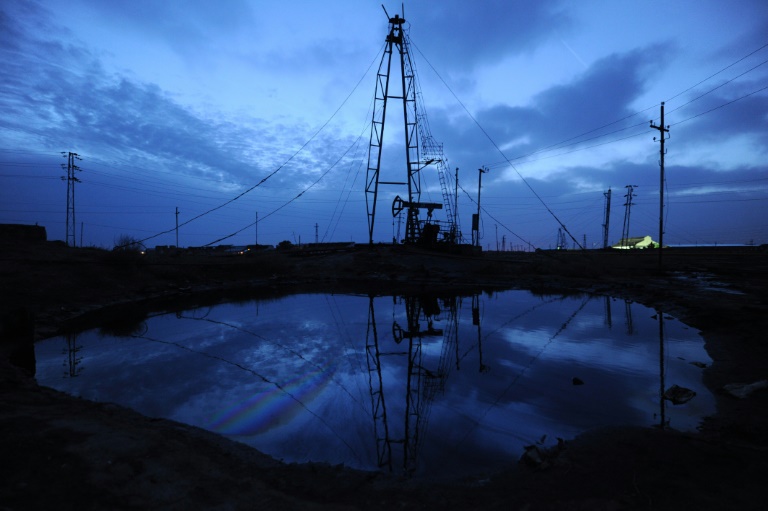
Oil prices climbed Wednesday as OPEC and its Russia-led allies announced a major cut in output, while a stocks rally ran out of gas.

In Vienna, ministers from the 13-nation OPEC cartel and a group of 10 exporters led by Russia agreed to reduce production by two million barrels a day from November.

It is the biggest cut since the height of the Covid pandemic in 2020 and came despite concerns it could fuel inflation further and push central banks to hike interest rates even more.

Oil prices had slid in recent weeks back to the levels before the war in Ukraine on concerns of a global slowdown, but have surged in recent days on expectations of the production cut.

The main international crude contract, Brent, jumped two percent following the decision before finishing at $93.37 a barrel, up 1.7 percent.

“Oil futures are expected to continue their rally in the short and medium term, but continued concerns over a global recession and rising inflation are likely to limit the long-term upside,” said Srijan Katyal of the international brokerage ADSS.

Swissquote analyst Ipek Ozkardeskaya warned that the big cut could “backfire” on OPEC+ if investors fear it will push inflation higher and force central banks to hike interest rates so much that it triggers a recession.

“The higher the energy prices, the sharper the central banks must kill demand to pull the prices lower,” she said before the decision was announced.

– Rally loses steam –

Meanwhile, a stocks rally triggered by hopes the US Federal Reserve could let up in its campaign of aggressive interest rate hikes to tame inflation has petered out.

European stocks finished lower across the board while Wall Street’s main indices saw modest declines following a volatile session.

US economic reports Wednesday were solid, with private-sector hiring in September topping expectations and services industry activity moderating slightly, but still robust.

“Market participants are being forced to contend with the possibility that the Fed won’t acquiesce to the stock market’s hopeful wishes,” said analyst Patrick O’Hare at Briefing.com.

In currency trading, the pound took another beating as a speech by British Prime Minister Liz Truss failed to reassure investors about her controversial fiscal plans. 

“As Prime Minister Liz Truss took to the stage to try and shore up her support among her party and the country, the pound fell further back and government borrowing costs rose slightly,” said market analyst Susannah Streeter at Hargreaves Lansdown brokerage. 

“The speech will do little to quell dissent over worries that public services will bear the brunt of the tax cuts plans” she added.

– Key figures around 2030 GMT –

Brent North Sea crude:  UP 1.7 percent at $93.37 per barrel

West Texas Intermediate: UP 1.4 percent at $87.76 per barrel

New York – Dow: DOWN 0.1 percent at 30,273.87 (close)

New York – S&P 500: DOWN 0.2 percent at 3,783.28 (close)

New York – Nasdaq: DOWN 0.3 percent at 11,148.64 (close)

London – FTSE 100: DOWN 0.5 percent at 7,051.60 (close) 

Frankfurt – DAX: DOWN 1.2 percent at 12,516.22 (close)

Paris – CAC 40: DOWN 0.9 percent at 5,985.46 (close)

EURO STOXX 50: DOWN 1.1 percent at 3,447.72 (close)

Tokyo – Nikkei 225: UP 0.5 percent at 27,120.53 (close)

Hong Kong – Hang Seng Index: UP 5.9 percent at 18,087.97 (close)

Shanghai – Composite: Closed for a holiday

Pound/dollar: DOWN at $1.1326 from $1.1476 on Tuesday

Euro/dollar: DOWN at $0.9889 from $0.9986

Euro/pound: UP at 87.29 pence from 87.01 pence

Dollar/yen: UP at 144.59 yen from 144.13 yen

burs-jmb
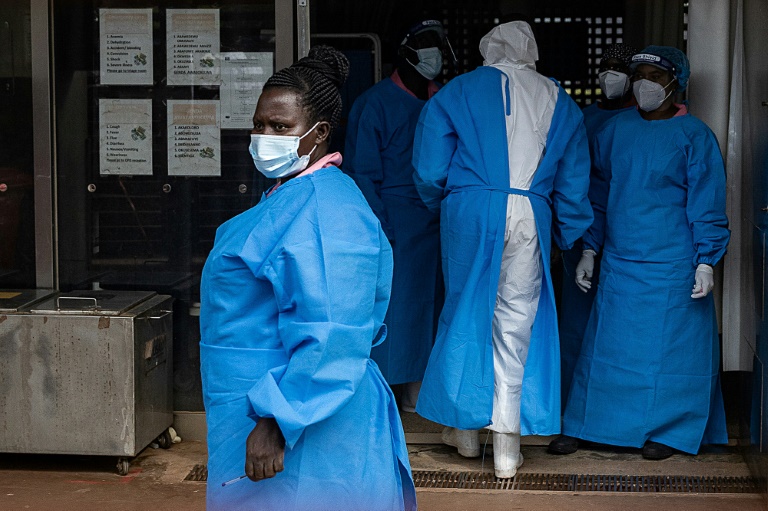
Uganda Ebola outbreak death toll 29, says WHO

Sixty-three confirmed and probable cases have been reported in the Ebola outbreak in Uganda, including 29 deaths, the World Health Organization said Wednesday.

WHO chief Tedros Adhanom Ghebreyesus lamented that the outbreak, declared two weeks ago, was taking a deadly toll on health workers as well as patients.

There are six species of the Ebolavirus genus and the one circulating in Uganda is the Sudan ebolavirus — for which there is currently no vaccine.

“So far, 63 confirmed and probable cases have been reported, including 29 deaths,” Tedros told a press conference in Geneva.

“Ten health workers have been infected and four have died. Four people have recovered and are receiving follow-up care.”

The east African nation’s Health Minister Jane Ruth Aceng Ocero said that a 58-year-old anaesthetist had died of Ebola early Wednesday, following the deaths of a Tanzanian doctor, a health assistant and a midwife.

– Candidate vaccines –

Tedros said the vaccines used successfully to curb recent outbreaks of the Zaire ebolavirus species in the neighbouring Democratic Republic of Congo (DRC) did not provide cross-protection against the Sudan ebolavirus.

“However, several vaccines are in various stages of development against this virus, two of which could begin clinical trials in Uganda in the coming weeks, pending regulatory and ethics approvals from the Ugandan government,” he said.

There are at least six candidate vaccines against the Sudan species, of which three have made it far enough to be tested on humans, producing so-called Phase 1 safety and immunogenicity data.

They could “proceed to be used in the field in a sort of ring vaccination campaign”, WHO’s chief scientist Soumya Swaminathan said.

She mentioned a candidate vaccine from the University of Oxford and another from the Sabin Vaccine Institute, and said which one goes into trials may depend on which one actually has doses ready to deploy.

“Realistically it may take another four to six weeks,” she said.

Swaminathan said plans were also afoot for testing potential therapeutics.

– WHO sending specialists, resources –

The initial outbreak was discovered in the central district of Mubende.

There are gold mines in the Mubende area which attract people from across Uganda, as well as other countries, the WHO’s Africa regional office said.

“The mobile nature of the population in Mubende increases the risk of a possible spread of the virus,” it said.

Infections have since been found in Kassanda, Kyegegwa and Kagadi districts.

The WHO’s Geneva headquarters has released $2 million from its contingency fund for emergencies and is working with partners to support the health ministry by sending additional specialists, supplies and resources, Tedros said.

Ugandan President Yoweri Museveni has vowed not to impose any lockdowns to tackle the disease, saying last week that there was “no need for anxiety”.

– Haemorrhagic fever –

Ebola is an often-fatal viral haemorrhagic fever named after a river in DR Congo where it was discovered in 1976.

Human transmission is through bodily fluids, with the main symptoms being fever, vomiting, bleeding and diarrhoea.

Outbreaks are difficult to contain, especially in urban environments.

People who are infected do not become contagious until symptoms appear, which is after an incubation period of between two and 21 days.

Uganda has experienced several Ebola outbreaks, most recently in 2019 when at least five people died.

The neighbouring DRC last week declared an end to an Ebola virus outbreak that emerged in eastern North Kivu province six weeks ago.

The worst epidemic, in West Africa between 2013 and 2016, killed more than 11,300 people. The DRC has had more than a dozen epidemics, the deadliest killing 2,280 people in 2020.

rjm-burs/nl/pvh

Amid Ukraine war, US flies Russian cosmonaut to ISS

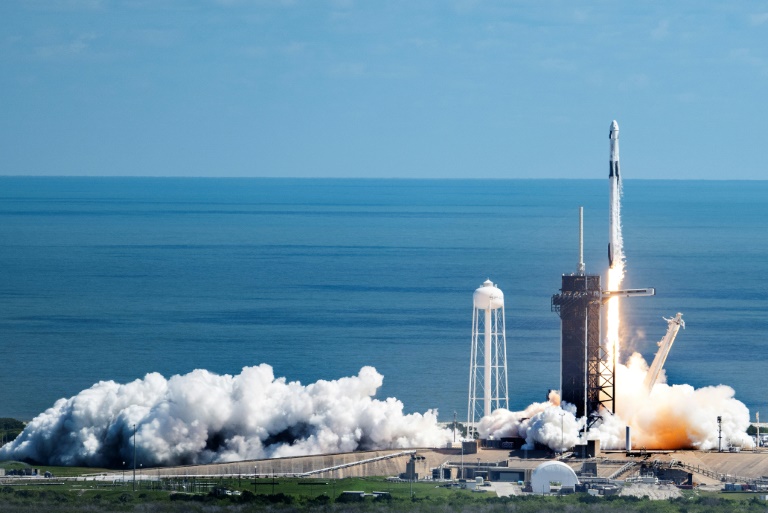
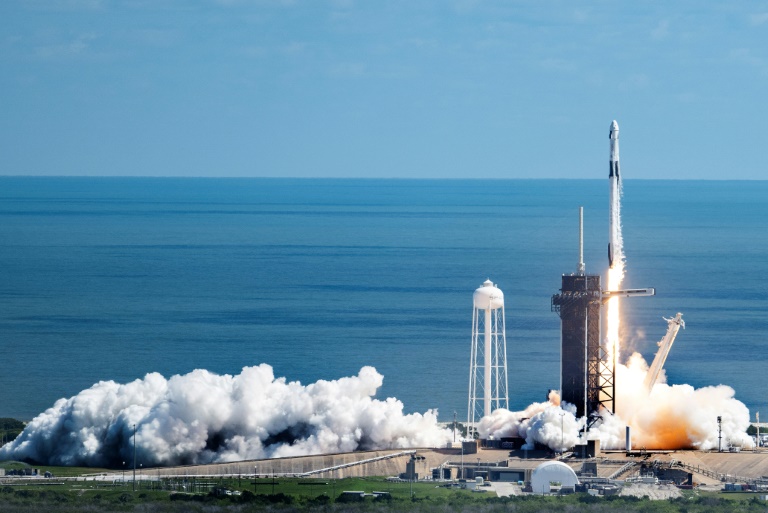
A SpaceX rocket carrying a Russian crew member blasted off from Florida Wednesday on a voyage that carries significant symbolism as war rages in Ukraine.

Anna Kikina, the only female cosmonaut in service, is part of the Crew-5 mission, which also includes one Japanese and two American astronauts.

“Let’s do this,” said Nicole Mann, commander of the Crew Dragon capsule and the first Native American woman in space, shortly before liftoff from the Kennedy Space Center in Florida at noon.

Docking is scheduled for Thursday at 4:57 pm Eastern Time (2057 GMT).

Two weeks ago, an American astronaut took off on a Russian Soyuz rocket for the orbital platform.

The long-planned astronaut exchange program has been maintained despite soaring tensions between the United States and Russia since Moscow’s invasion of Ukraine in February.

Ensuring the operation of the ISS has become one of the few remaining areas of cooperation between the United States and Russia.

In a post-launch briefing, Sergei Krikalev, head of the human space program at Roscosmos, hailed the occasion as the start of a “new phase of our cooperation,” evoking the historic Apollo-Soyuz mission of 1975, a symbol of detente at the height of the Cold War. 

Krikalev, a former cosmonaut respected by his American colleagues, has been on something of a charm offensive after the last head of Roscosmos, Dmitry Rogozin, earlier this year threatened to withdraw cooperation and let the ISS crash over US or European territory.

While Russia has announced plans for its own station, analysts believe it would be difficult to build in the next few years, and withdrawing from ISS would effectively ground Moscow’s civilian space program.

– Fifth female cosmonaut, first female Native American – 

Kikina, 38 and an engineer by training, is the fifth Russian female professional cosmonaut to go into space.

“I hope in the near future we have more women in the cosmonaut corps,” the Novosibirsk native told AFP in August.

The Soviet Union put the first woman in space, Valentina Tereshkova, in 1963, nearly 20 years before the first American woman, Sally Ride. Since then, the United States has flown dozens more women.

It is also the first spaceflight for American astronauts Mann and Josh Cassada, but the fifth for Japan’s Koichi Wakata.

Mann is the first indigenous woman to go to space with NASA. According to her NASA biography she is registered with the Wailacki of the Round Valley Indian Tribes.

She holds a master’s degree in mechanical engineering from Stanford, served as a test pilot in the F/A-18 Hornet and Super Hornet, and flew 47 combat missions in Iraq and Afghanistan.

– ISS future unclear – 

Kikina is the first Russian to fly with Elon Musk’s SpaceX which, along with Boeing, has a “taxi service” contract with NASA.

Musk himself waded into the conflict by proposing on Twitter a peace deal that involved re-running, under UN supervision, annexation referendums in Moscow-occupied regions of Ukraine and acknowledging Russian sovereignty over the Crimean peninsula. 

The post enraged Ukrainians, including the country’s envoy to Germany, who responded with an expletive. 

Tensions between Moscow and Washington have increased considerably in the space field after the announcement of American sanctions against the Russian aerospace industry, in response to the invasion of Ukraine.

Russia announced this summer that it wanted to leave the ISS “after 2024” in favor of creating its own station, albeit without setting a precise date.

Krikalev declared Monday he hoped to extend that date. 

On Wednesday he went further still, telling reporters: “We are thinking about building (a) new space station. We start preliminary design of it. 

“And there is no final decision yet but we are going to keep flying International Space Station as long as our new infrastructure will build.”

The United States, for its part, wants to continue operating until at least 2030, then transition to commercially run stations.

As things stand, the ISS cannot function without joint cooperation, as the US side is responsible for power and life support and the Russian side for propulsion and maintaining orbit.

Amid Ukraine war, US flies Russian cosmonaut to ISS

A SpaceX rocket carrying a Russian crew member blasted off from Florida Wednesday on a voyage that carries significant symbolism as war rages in Ukraine.

Anna Kikina, the only female cosmonaut in service, is part of the Crew-5 mission, which also includes one Japanese and two American astronauts.

“Let’s do this,” said Nicole Mann, commander of the Crew Dragon capsule and the first Native American woman in space, shortly before liftoff from the Kennedy Space Center in Florida at noon.

Docking is scheduled for Thursday at 4:57 pm Eastern Time (2057 GMT).

Two weeks ago, an American astronaut took off on a Russian Soyuz rocket for the orbital platform.

The long-planned astronaut exchange program has been maintained despite soaring tensions between the United States and Russia since Moscow’s invasion of Ukraine in February.

Ensuring the operation of the ISS has become one of the few remaining areas of cooperation between the United States and Russia.

In a post-launch briefing, Sergei Krikalev, head of the human space program at Roscosmos, hailed the occasion as the start of a “new phase of our cooperation,” evoking the historic Apollo-Soyuz mission of 1975, a symbol of detente at the height of the Cold War. 

Krikalev, a former cosmonaut respected by his American colleagues, has been on something of a charm offensive after the last head of Roscosmos, Dmitry Rogozin, earlier this year threatened to withdraw cooperation and let the ISS crash over US or European territory.

While Russia has announced plans for its own station, analysts believe it would be difficult to build in the next few years, and withdrawing from ISS would effectively ground Moscow’s civilian space program.

– Fifth female cosmonaut, first female Native American – 

Kikina, 38 and an engineer by training, is the fifth Russian female professional cosmonaut to go into space.

“I hope in the near future we have more women in the cosmonaut corps,” the Novosibirsk native told AFP in August.

The Soviet Union put the first woman in space, Valentina Tereshkova, in 1963, nearly 20 years before the first American woman, Sally Ride. Since then, the United States has flown dozens more women.

It is also the first spaceflight for American astronauts Mann and Josh Cassada, but the fifth for Japan’s Koichi Wakata.

Mann is the first indigenous woman to go to space with NASA. According to her NASA biography she is registered with the Wailacki of the Round Valley Indian Tribes.

She holds a master’s degree in mechanical engineering from Stanford, served as a test pilot in the F/A-18 Hornet and Super Hornet, and flew 47 combat missions in Iraq and Afghanistan.

– ISS future unclear – 

Kikina is the first Russian to fly with Elon Musk’s SpaceX which, along with Boeing, has a “taxi service” contract with NASA.

Musk himself waded into the conflict by proposing on Twitter a peace deal that involved re-running, under UN supervision, annexation referendums in Moscow-occupied regions of Ukraine and acknowledging Russian sovereignty over the Crimean peninsula. 

The post enraged Ukrainians, including the country’s envoy to Germany, who responded with an expletive. 

Tensions between Moscow and Washington have increased considerably in the space field after the announcement of American sanctions against the Russian aerospace industry, in response to the invasion of Ukraine.

Russia announced this summer that it wanted to leave the ISS “after 2024” in favor of creating its own station, albeit without setting a precise date.

Krikalev declared Monday he hoped to extend that date. 

On Wednesday he went further still, telling reporters: “We are thinking about building (a) new space station. We start preliminary design of it. 

“And there is no final decision yet but we are going to keep flying International Space Station as long as our new infrastructure will build.”

The United States, for its part, wants to continue operating until at least 2030, then transition to commercially run stations.

As things stand, the ISS cannot function without joint cooperation, as the US side is responsible for power and life support and the Russian side for propulsion and maintaining orbit.

Amid high US inflation, online insurance offers mislead elderly

One advertisement on Facebook promises zero-cost dental care for elderly Americans hit hard by rising medical bills. Another, on Instagram, offers free groceries in exchange for an email and phone number.

But the ads are misleading, at best.

So bad is the problem of deceptive Medicare marketing that a US congressional committee has asked 15 states to investigate. Big insurance companies, worried about their reputations and potential fines, have started to take note.

“If there’s money to be made in finding customers for a particular product or service, chances are there will be a firm trying to get people to click on links on Facebook,” said John Breyault, an expert on fraud and scams at the National Consumers League.

Between 2020 and 2021, complaints from the tens of millions of Americans aged 65 and older who qualify for federal health insurance more than doubled, according to the Centers for Medicare and Medicaid Services (CMS).

Many complaints mention firms that hawk Medicare Advantage plans, which are provided by private companies.

The online offers examined by AFP allude to genuine benefits in some of those plans. “Flex cards,” for example, are offered to some chronically ill beneficiaries to help pay for out-of-pocket expenses.

“With inflation taking a bigger bite out of people’s pocketbooks for things like groceries and gas and other day-to-day expenses, an ad promising you help with that could be particularly enticing,” Breyault said.

Claims of free dental care and grocery cards have circulated widely on social media since January 2022, when enrollment for Medicare Advantage began.

But the benefits are only available to a comparatively small audience. And as older, typically unwaged citizens are hit by rising prices, watchdogs say they could be misled into changing their plans during traditional Medicare enrollment in October.

– ‘Money at stake’ –

Over the past nine months, dozens of Facebook pages have promoted free grocery cards and dental care in hundreds of English- and Spanish-language posts — some of which were boosted as ads and later removed for violating platform policies, an AFP analysis shows.

One Facebook page called Senior Savings Club promoted a webpage promising a “spending card for free groceries” in dozens of posts, according to the Facebook Ad Library, a public archive of paid advertisements on Meta platforms.

The site’s terms and conditions link to another website owned by Assurance IQ, a subsidiary of US insurance firm Prudential Financial. Bill Launder, a spokesperson for the Fortune 500 company, said a marketing firm created the video ad.

“Prudential, through its business unit Assurance IQ, terminated that affiliate marketing relationship due to concerns about misleading marketing practices,” he told AFP.

Other marketing companies also appear to be publishing Facebook ads and posts laced with misleading claims.

A Facebook account sharing a webpage that advertises “no-cost vision and dental benefits” — which Medicare does not usually provide — is run by WeCall Media. The North Carolina company says on its website that it generates leads for clients such as Assurance and State Farm, another insurance firm.

David Lipschutz, associate director of the Center for Medicare Advocacy, said there are “very heavy incentives” for companies to push Medicare Advantage plans over other kinds of federal health insurance because agents can make more commission.

“There’s a lot of money to be made and a lot of money at stake,” he said.

AFP contacted WeCall for comment, but no response was forthcoming.

– ‘Do your research’ –

In comments on dozens of posts reviewed by AFP, Facebook users said they never received the promised grocery cards or dental care — and chasing those offers can have unintended consequences.

In a May 2022 letter to US congressional leaders, the National Association of Insurance Commissioners said states had seen an uptick in consumer complaints about “inappropriate or confusing marketing practices” that lead people to enroll in plans “without adequately understanding the coverage.”

“It is possible for some people to get some of the stuff that’s being advertised,” Lipschutz said. “But what’s completely left out is that you have to join plan X in order to do it, which could completely disrupt your health coverage.”

To avoid getting duped, Amy Nofziger, director of fraud victim support with AARP, once known as the American Association of Retired Persons, suggested people “tread lightly and do your research.”

“A lot of ads that are on social media are not vetted the way that people think they are,” she said.

Blinken hails 'shared approach' with Chile

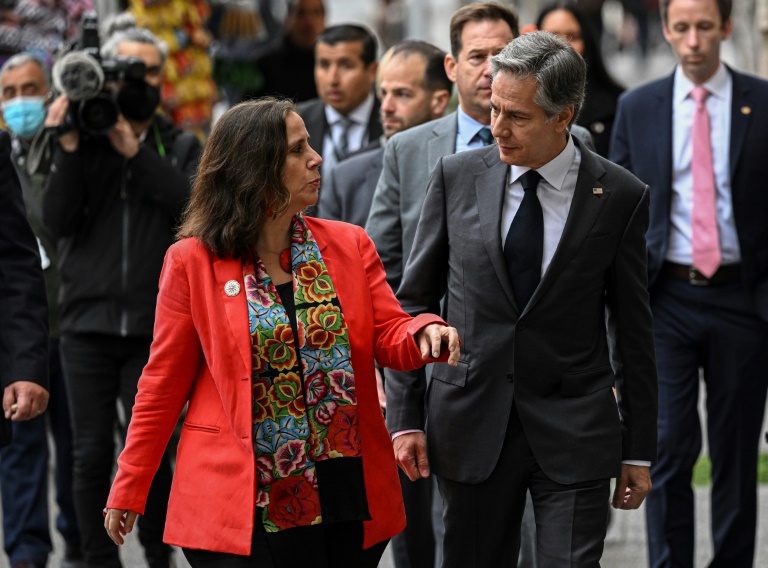
US Secretary of State Antony Blinken on Wednesday hailed a “shared approach and shared priorities” with Chile under President Gabriel Boric, one of a string of leftist leaders recently elected in Latin America. 

This was Blinken’s first visit to Chile, with which the United States historically has had close ties, on a regional trip that started on Monday in Colombia and will take him next to Peru.

Items on the agenda included regional security and migration.

Hailing the United States and Chile’s “shared approach and shared priorities,” Blinken said the countries would strive together for “building more equitable and inclusive economies… dealing with the issues that are front and center in the lives of our people.”

The three countries on Blinken’s itinerary had all recently elected leaders on the left of the political spectrum, which in Latin America has traditionally been strongly anti-American.

Asked about this, Blinken said: “my own sense is that what motivates electorates is the desire to see their governments actually address their concerns and produce concrete results.”

If they fail, he added: “chances are they’ll be voted out.”

In Santiago Wednesday, Blinken met 36-year-old Boric, elected in December at the head of a leftist-alliance that includes the Communist Party, as well as his Chilean counterpart Antonia Urrejola.

American officials state privately that they are encouraged by Boric’s first steps as president, which have included backing a new constitution to replace the one inherited from the era of US-backed dictator Augusto Pinochet.

Blinken also addressed disagreements on regional issues.

In June, Boric was among Latin American leaders to criticize Washington’s decision not to invite Nicaragua, Cuba and Venezuela — all under US sanctions — to a Summit of the Americas held in Los Angeles.

“We have to come together to have better development of our nations,” the Chilean leader said at the time, adding that “exclusion is not the way.”

“We have to hold the Cuban government to account just as we would any other government for denying the Cuban people those rights. We may have different approaches on the best way to do that,” Blinken said on Wednesday.

Urrejola said they also discussed Venezuela, including stalled talks in Mexico on resolving the country’s political and economic crises.

The dialogue held under the auspices of a contact group of European and Latin American countries, was suspended by Venezuela last October.

Urrejola said she hoped the group could “resume talks with the government of (Nicolas) Maduro, as well as with the Venezuelan opposition,” adding that the goal was for “Venezuela in 2024 having free and democratic elections.”

Blinken will travel to Lima next to attend the annual meeting on Thursday of the Organization of American States.

Spain lawmakers pass bill honouring Franco-era victims

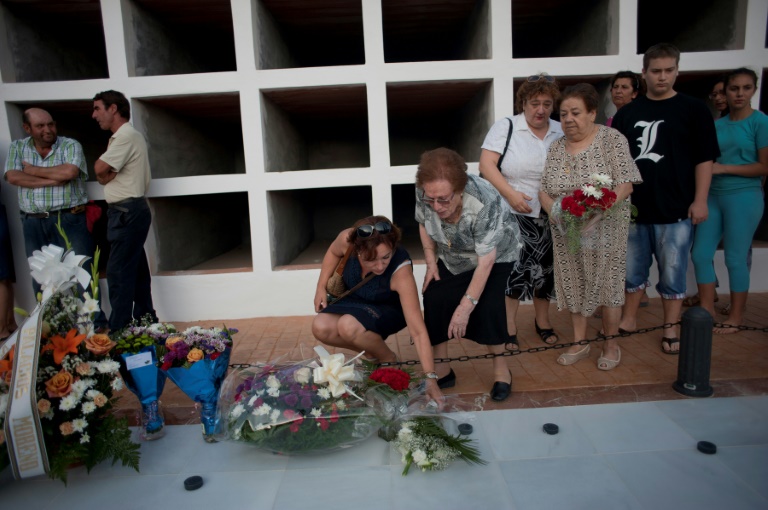
Almost five decades after the death of Francisco Franco, Spanish lawmakers passed a flagship law Wednesday seeking to honour the victims of the 1936-1939 civil war and the ensuing dictatorship.

Honouring those who died or suffered violence or repression during war and decades of dictatorship that followed has been a top priority for the left-wing government of Prime Minister Pedro Sanchez since he came to power in 2018.

The senate approved the law — which aims to pay homage to those who died, were subjected to violence or persecution during the Franco years — with 128 votes in favour, 113 against and 18 abstentions.

Known as the “law of democratic memory”, the legislation seeks to advance the search for and exhumation of victims buried in mass graves and upending decades-old political convictions.

“Today we are taking another step towards justice, reparation and dignity for all victims,” tweeted Sanchez after the vote. 

But it threatens to fuel tensions in a nation where public opinion is still divided over the legacy of the dictatorship that ended with Franco’s death in 1975.

The right-wing opposition Popular Party (PP) has vowed to overturn the law if elected in the next election, which is due by the end of 2023.

“History cannot be built on the basis of forgetting and silencing the vanquished” of the civil war, reads the preamble to the law.

Franco assumed power after the civil war in which his Nationalists defeated Republicans, leaving the country in ruins and mourning hundreds of thousands of dead. 

While his regime honoured its own dead, it left its opponents buried in unmarked graves across the country.

– Finding mass graves –

The bill, which was approved by the lower house of parliament in July, will for the first time make unearthing mass graves a “state responsibility”.

It also calls for a national DNA bank to be established to help identify remains and for the creation of a map of all mass graves in the country.

“The state must exhume the remains of the victims of the Franco dictatorship,” Sanchez told parliament in July.

“There are still 114,000 people who were forcibly disappeared in Spain, mostly Republicans,” he said, referring to people whose fate was deliberately hidden. 

Only Cambodia, he said, had more “disappeared” people than Spain, its population suffering atrocities under 1975-1979 Khmer Rouge regime. 

Up until now, it has been associations who have led the search for those who went missing during the Franco era, as portrayed in Spanish director Pedro Almodovar’s most recent film “Parallel Mothers”.

The new legislation seeks to build on a 2007 “historical memory” law, which experts and activists say fell short of excavating the hundreds of still untouched mass graves scattered across Spain.

Sanchez’s predecessor, Mariano Rajoy of the PP, famously bragged that he had not spent a euro of public money in furthering the provisions within the law. 

– Annulling Franco-era convictions –

The new law will also annul the criminal convictions of opponents of the Franco regime and appoint a prosecutor to probe human rights abuses during the war and the ensuing dictatorship.

Previous attempts to bring Franco-era officials to justice in Spain have been blocked by an amnesty agreement signed by political leaders after his death.

The deal was seen as essential to avoid a spiral of score-settling as officials sought to unite the country and steer it towards democracy. 

And the law will also mean that for the first time, “stolen babies” will be recognised as victims of Francoism. 

Those babies were newborns who were taken away from “unsuitable” mothers — Republican or left-wing opponents of the regime, then unwed mothers or poor families.

But not everyone was pleased with the outcome of the vote, with the Association for the Recovery of Historical Memory (ARMH) saying the new legislation did not go far enough. 

The law “perpetuates impunity for the Francoists” because it leaves the amnesty agreement in force, “it will not put anyone on trial” nor will it “compensate the families of the disappeared”, it said in a statement. 

The PP has accused the government of needlessly opening the wounds of the past with the law.

This is Sanchez’s second major effort to tackle the Franco legacy.

In 2019, he had Franco’s remains removed from a vast grandiose mausoleum near Madrid and transferred to a discreet family plot, despite opposition from the late dictator’s relatives and right-wing parties. 

OPEC+ delivers Biden diplomatic slap with output cut

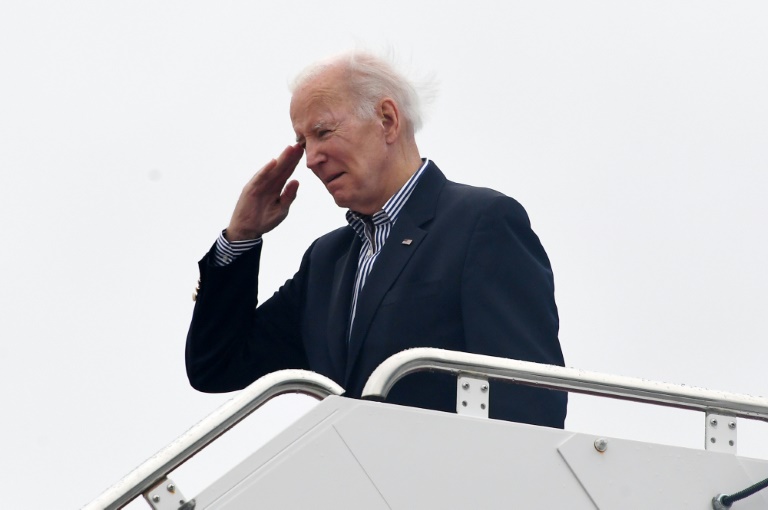
President Joe Biden got a diplomatic slap in the face Wednesday with the OPEC+ cartel’s decision to ignore both his efforts at isolating Russia and desperate attempts to hold down fuel prices ahead of midterm elections.

“The president is disappointed by the shortsighted decision by OPEC+,” National Security Advisor Jake Sullivan and top economic advisor Brian Deese said in a statement.

That sounded like understatement.

Biden has been trying for months to walk an economic and geopolitical tightrope in which he lowers fuel costs for Americans while simultaneously cutting major energy exporter Russia from revenues needed to finance its war on Ukraine.

And with just five weeks before midterm elections where the Democrats hope to cling on to control of Congress, Biden was having some success. Average gasoline costs have fallen by more than $1 a gallon from politically damaging highs earlier this year, while the US-led Western coalition confronting Russia remains solid going into winter.

So the decision by Saudi-led OPEC and a set of Russian-dominated allies, collectively known as OPEC+, was a shock.

Saudi Arabia is one of the closest US allies and the biggest single purchaser of top-end US weaponry. Biden himself spent considerable political capital in July by visiting the kingdom and meeting with de facto leader Crown Prince Mohammed bin Salman, the man US intelligence has identified as approving the 2018 murder of Washington Post journalist Jamal Khashoggi.

White House Press Secretary Karine Jean-Pierre reflected the administration’s frustration, saying “it’s clear that OPEC+ is aligning with Russia with today’s announcement.”

Senator Chris Murphy, an ally of Biden, was blunter.

“I thought the whole point of selling arms to the Gulf States despite their human rights abuses, nonsensical Yemen War, working against US interests in Libya, Sudan etc, was that when an international crisis came, the Gulf could choose America over Russia/China,” he tweeted.

– Price rise looms –

Higher fuel prices have already inflicted severe damage on Biden’s standing this year. Unlike other areas of inflation, fuel prices are literally emblazoned on large signs at gas stations, while motorists in many cases have no option other than to pay up.

As president, however, there are limits on what Biden can do to fight the trend.

The White House said Biden was ordering another dip into the country’s Strategic Petroleum Reserve, with 10 million barrels set to be put on the market next month in an attempt to dampen prices rises.

However, those reserves are fast emptying out after record withdrawals ordered by the administration, starting back in March. The reserves are now at their lowest level since July 1984 and it is not clear when the administration plans to purchase a refill.

The next releases will continue “as appropriate to protect American consumers and promote energy security, and (Biden) is directing the secretary of energy to explore any additional responsible actions to continue increasing domestic production in the immediate term,” a White House statement said.

In addition, the administration will “consult with Congress on additional tools and authorities to reduce OPEC’s control over energy prices,” the statement said.

But Andy Lipow, from Lipow Oil Associates, said Wednesday’s decision by OPEC+ demonstrates “the waning influence of the US on OPEC to maintain an adequate supply of oil.”

“The US can’t release strategic petroleum reserves forever, and eventually it will run out and OPEC knows it,” he said.

The only solution, in his view, is to get “more oil out of the ground.” 

That, however, runs against Biden’s climate crisis priorities and a major effort to move the country away from oil and gas.

“Today’s announcement is a reminder of why it is so critical that the United States reduce its reliance on foreign sources of fossil fuels,” the White House said.

Nord Stream leaked less methane than feared: atmospheric monitor

Leaks from the Nord Stream gas pipelines released some 70,000 tonnes of the powerful greenhouse gas methane, researchers said Wednesday, less than previously thought. 

The Nord Stream 1 and 2 pipelines, which connect Russia to Germany, had already been at the centre of geopolitical tensions for months as Russia cut back gas supplies to Europe in suspected retaliation against Western sanctions following Moscow’s invasion of Ukraine.

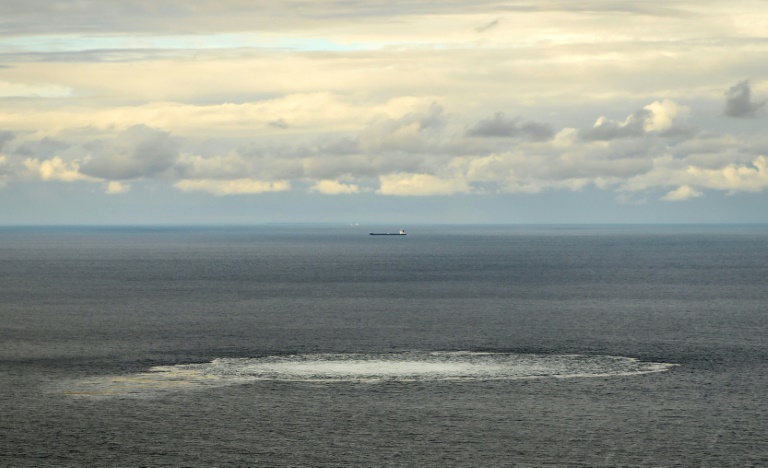
Then last week massive gas plumes were spotted in the Baltic Sea above the pipelines in what NATO has said appeared to be an act of sabotage. 

Although they were not in operation, they both still contained gas, which spewed up through the water and into the atmosphere.

Researchers from France’s Atomic Energy and Alternative Energies Commission said they were “surprised” that data from monitoring stations across Europe led them to conclude that 70,000 tonnes of the planet-heating gas methane had been released.

Other estimates, based on the amount of gas thought to be in the pipes and the pressure levels, had led to estimates several times higher, they said. 

Scientists have expressed concerns about the climate and environmental impacts of the leaks — which have largely stopped — but stressed that the amounts of methane involved were a tiny fraction of global emissions.

“These are important figures,” said Philippe Ciais, a researcher at the Laboratory of Climate and Environmental Sciences, who led the latest French research. 

He added that the amount of methane estimated to have been released was equivalent to two percent of French carbon emissions or the emissions of Paris for an entire year. 

“This is not good news, but not a climate bomb,” said Philippe Ciais, underlining that these initial findings would need to be verified by other modelling work. 

Methane is responsible for roughly 30 percent of the global rise in temperatures to date, even though it is far less abundant in the atmosphere than CO2.

– Gas plumes –

The researchers used readings from stations of the European observation network Icos, which monitors the fluxes of atmospheric concentrations of greenhouse gases. 

The data was then modelled according to some 10,000 scenarios to come up with the estimates for the leak. 

With the winds, the fumes first rose towards southern Sweden, then turned west where they were detected passing over parts of Norway and the United Kingdom. 

Later the wisps of methane were faintly registered at the tip of western France in Brittany. 

Ciais said it was unclear why the leak would be smaller than previously assumed. 

One theory would be that there might have been less gas in the pipes than previously thought, he said, or that more than expected was dissolved in the sea water, which is normal in less powerful gas pipe leaks. 

The readings showed emissions peaked on September 27 and then began to subside, with a smaller surge on October 1. 

All of the four leaks were off the Danish island of Bornholm, two located in nearby Sweden’s exclusive economic zone, and the two others in the Danish one.

The Swedish coastguard on Monday said it could no longer observe gas emanating from the leak on the Nord Stream 1 pipeline, but bubbles from a smaller leak could still be seen above Nord Stream 2 on Monday afternoon.

Natural gas is composed primarily of methane. 

This is about 28 times more powerful than carbon dioxide on a century-long timescale — although it only lingers in the atmosphere for about a decade, compared to hundreds or thousands of years for carbon dioxide.

Awkward anniversary as French far-right marks 50 years

France’s far-right leader Marine Le Pen said her anti-immigration party was “ready to govern” Wednesday as it marked 50 years since its founding, an awkward anniversary that has highlighted her troubled relationship with her father.

The party’s financial difficulties and the continuing bitterness and rivalry inside the Le Pen family clan mean there are no major celebrations for the half-century landmark.

Jean-Marie Le Pen, Marine’s father and the co-founder of the National Front in 1972, has not been invited to a conference on Thursday which is the only event planned for the occasion.

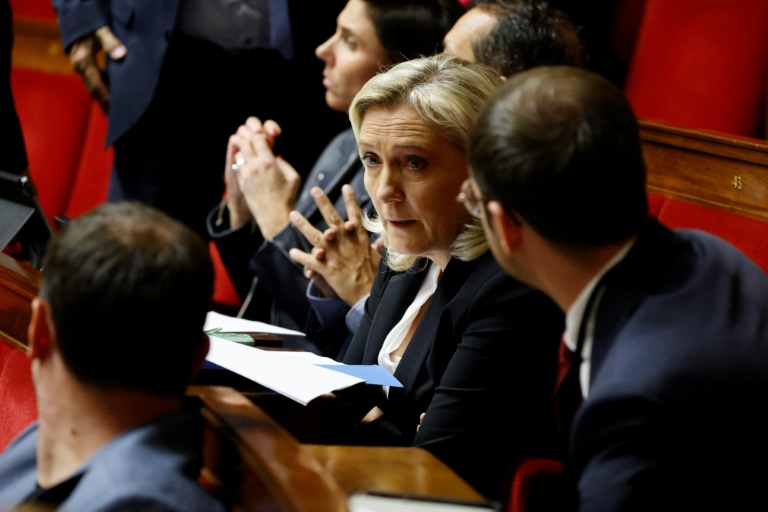
“From a protest party, we have become a party that is ready to govern,” Marine Le Pen told parliament on Wednesday, with the reference to her father heading a mere “protest party” likely to further displease him. 

“Today I wish to pay tribute to all of the activists that for 50 years have worked for the national cause,” she added.

After replacing Jean-Marie as head of the party after his nearly 40-year stint at the helm, Le Pen ejected him in 2015 as part of her strategy of cleaning up the National Front’s image.

Three years later, she changed the party’s name from the National Front to National Rally (RN) as a re-branding exercise intended to further distance herself from the legacy of anti-Semitism and racism associated with her father.

The move has paid dividends at the ballot box, moving the party from the fringes to the political mainstream. 

At her third tilt at the presidency, Le Pen scored her party’s highest ever result in April, winning 41 percent of votes against President Emmanuel Macron who was elected for a second term.

Concerns about crime, immigration and the rising cost of living then saw her party increase its representation in parliament 10-fold in June elections to a historic high of 89 seats, making it the biggest opposition group.

“From hope to power, we continue!” the interim president of the party, Jordan Bardella, who replaced Le Pen when she stood for the presidency, wrote on Twitter.

– Moderate image? –

Many far-right MPs and senior party figures were reportedly reluctant to mark the 50th anniversary of the National Front (FN) at all, given the associations with Jean-Marie who is viewed as toxic by a majority of the French electorate.

The low-level event on Thursday was seen as a compromise and will focus on the party’s success in spotlighting themes such as immigration, Euroscepticism, job losses due to globalisation, and Islamism.

Jean-Marie is to host a garden party later this month at the family’s chateau outside Paris.

“Marine Le Pen says today that thanks to the FN of her father, questions such as the immigration and the dangers of globalisation have been debated, but at the end of the day for 10 years she has been wearing herself out trying to get rid of her father’s provocative image on every issue,” wrote political journalist Alba Ventura at RTL radio.

After the parliamentary elections in June, Le Pen ordered her new MPs to dress smartly for parliament and is determined to position her party as the most credible opposition party to Macron’s centrist alliance.

According to a major polling study published this week by Le Monde newspaper and the Cevipof political research group in Paris, the hard-left France Unbowed opposition group was seen as “too radical” by 53 percent of French people.

Only 34 percent thought the same of Le Pen’s party.

Jean-Yves Camus, an expert on the far-right at the left-leaning Jean-Jaures Foundation, a think-tank, said Le Pen had partially succeeded in distancing herself from her father.

“It’s impossible to completely cut off one’s filiation and the RN can never escape history. But afterwards you’re not defined your whole life by your beginnings,” he told AFP.

If Le Pen become French president one day, it would mark a political earthquake for Europe.

“At some point, if you cultivate your ground for 50 years with a certain zeal, you could end up with the conjunction of a man or a woman and a moment,” Camus said.

Close Bitnami banner
Bitnami