World

Biden vows solidarity with Iran women as protests spread

US President Joe Biden vowed solidarity with Iranian women Wednesday as eight people were reported killed in growing protests over the death of a young woman arrested by morality police.

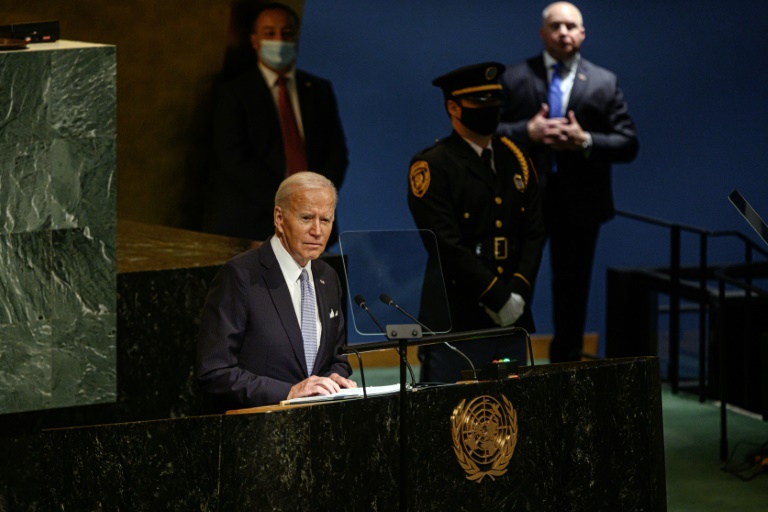
Addressing the United Nations shortly after a defiant speech by Iranian President Ebrahim Raisi, Biden saluted the protesters while renewing his support for reviving a nuclear accord with Tehran.

“Today we stand with the brave citizens and the brave women of Iran who right now are demonstrating to secure their basic rights,” Biden told the General Assembly.

Public anger has flared in the Islamic republic since authorities on Friday announced the death of 22-year-old Mahsa Amini, who had been held for allegedly wearing a hijab headscarf in an “improper” way.

Activists said the woman, whose Kurdish first name is Jhina, had suffered a fatal blow to the head, a claim denied by officials, who have announced an investigation.

Some women demonstrators have defiantly taken off their hijabs and burned them in bonfires or symbolically cut their hair before cheering crowds, video footage spread on social media has shown.

“No to the headscarf, no to the turban, yes to freedom and equality!” protesters in Tehran were heard chanting in a rally that has been echoed by solidarity protests abroad.

Protests filled cities, especially in northern Iran, for a fifth straight night Wednesday, with activists reporting clashes in cities including Urmia and Sardasht.

In southern Iran, video footage purportedly from Wednesday showed demonstrators setting fire to a gigantic picture on the side of a building of general Qassem Soleimani, the Revolutionary Guards commander killed in a 2020 US strike in Iraq.

Iranian state media reported that street rallies had spread to 15 cities, with police using tear gas and making arrests to disperse crowds of up to 1,000 people.

London-based rights group Article 19 said it was “deeply concerned by reports of the unlawful use of force by Iranian police and security forces,” including the use of live ammunition.

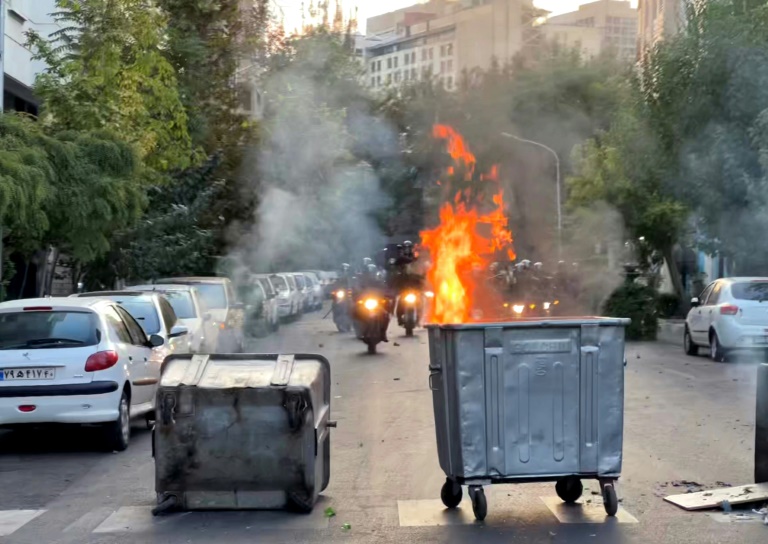
Demonstrators hurled stones at security forces, set fire to police vehicles and garbage bins and chanted anti-government slogans, the official IRNA news agency said.

“Death to the dictator” and “Woman, life, freedom,” protesters could be heard shouting in video footage that spread beyond Iran, despite online restrictions reported by internet access monitor Netblocks.

– ‘Double standards’ –

In his UN address, Raisi pointed to the deaths of Indigenous women in Canada as well as Israeli actions in the Palestinian territories and the Islamic State group’s “savagery” against women from religious minority groups.

“So long as we have this double standard, where attention is solely focused on one side and not all equally, we will not have true justice and fairness,” Raisi said.

He also pushed back on Western terms to revive a 2015 nuclear accord, insisting that Iran “is not seeking to build or obtain nuclear weapons and such weapons have no place in our doctrine.”

British Foreign Secretary James Cleverly said that “the Iranian leadership should notice that the people are unhappy with the direction that they have taken.”

“They could abandon their nuclear weapons aspirations. They could stop the repression of voices within their own country. They could stop their destabilizing activities,” he told AFP at the United Nations.

“A different path is possible. That is the path that we want Iran to take and that is the path that will see them with a stronger economy, a more happy society and a more active part in the international community.”

French President Emmanuel Macron said he asked Raisi in a meeting Tuesday to show “respect for women’s rights.”

– ‘Significant shock’ –

The protests are among the most serious in Iran since November 2019 unrest over fuel price rises.

The wave of unrest over Amini’s death “is a very significant shock, it is a societal crisis,” said Iran expert David Rigoulet-Roze of the French Institute for International and Strategic Affairs.

Demonstrations first erupted Friday in Amini’s home province of Kurdistan, where governor Ismail Zarei Koosha said Tuesday three people had been killed in “a plot by the enemy.”

Kurdistan police commander Ali Azadi on Wednesday announced the death of another person, according to Tasnim news agency.

Two more protesters “were killed during the riots” in Kermanshah province, the region’s prosecutor Shahram Karami was quoted as saying by Fars news agency, blaming “counter-revolutionary agents.”

Additionally, Norway-based Kurdish rights group Hengaw said two protesters, aged 16 and 23, had been killed overnight in West Azerbaijan province.

An additional 450 people had been wounded and 500 arrested, the group said — figures that could not be independently verified.

burs/sjw-fz-sct/mlm/wd

Neptune's delicate rings captured in new Webb image

The James Webb Space Telescope has turned its gaze away from the deep universe towards our home Solar System, capturing an image of a luminous Neptune and its delicate, dusty rings in detail not seen in decades, NASA said Wednesday.

The last time astronomers had such a clear view of the farthest planet from the Sun was when NASA’s Voyager 2 became the first and only space probe to fly past the ice giant for just a few hours in 1989.

Now Webb’s unprecedented infrared imaging capabilities has provided a new glimpse into Neptune’s atmosphere, said Mark McCaughrean, a senior advisor for science and exploration at the European Space Agency.

The telescope “takes all that glare and background away” so that “we can start to tease out the atmospheric composition” of the planet, McCaughrean, who has worked on the Webb project for more than 20 years, told AFP.

Neptune appears as deep blue in previous images taken by the Hubble Space Telescope due to methane in its atmosphere.

However the near-infrared wavelengths captured by Webb’s primary imager NIRCam shows the planet as a greyish white, with icy clouds streaking the surface.

“The rings are more reflective in the infrared,” McCaughrean said, “so they’re much easier to see”.

The image also shows an “intriguing brightness” near the top of Neptune, NASA said in a statement. Because the planet is tilted away from Earth and takes 164 years to orbit the Sun, astronomers have not yet had a good look at its north pole.

Webb also spotted seven of Neptune’s 14 known moons.

– Strange moon – 

Looming over Neptune in a zoomed-out image is what appears to be a very bright spiky star, but is in fact Triton, Neptune’s strange, huge moon haloed with Webb’s famed diffraction spikes.

Triton, which is larger than dwarf planet Pluto, appears brighter than Neptune because it is covered in ice, which reflects light. Neptune meanwhile “absorbs most of the light falling on it”, McCaughrean said.

Because Triton orbits the wrong way around Neptune, it is believed to have once been an object from the nearby Kuiper belt which was captured in the planet’s orbit.

“So it’s a pretty cool to go and have a look at,” said McCaughrean.

As astronomers sweep the universe searching for other planets like our own, they have found that ice giants such as Neptune and Uranus are the most common in the Milky Way.

“By being able to look at these ones in great detail, we can key into our observations of other” ice giants,” McCaughrean said.

Operational since July, Webb is the most powerful space telescope ever built, and has already unleashed a raft of unprecedented data. Scientists are hopeful it will herald a new era of discovery.

Research based on Webb’s observations of both Neptune and Triton is expected in the next year.

“The kind of astronomy we’re seeing now was unimaginable five years ago,” McCaughrean said.

“Of course, we knew that it would do this, we built it to do this, it is exactly the machine we designed.

“But to suddenly start seeing things in these longer wavelengths, which were impossible before… it’s just absolutely remarkable.”

Biden lashes Putin as he backs reformed UN

US President Joe Biden on Wednesday accused Russia of “shamelessly” violating the international order by invading Ukraine, as he pledged billions in food aid and backed an expansion of UN Security Council seats for the developing world.

Biden sought to woo the world in an address to the United Nations hours after Russian President Vladimir Putin called up reservists to fight in Ukraine, a step Western powers portrayed as desperation.

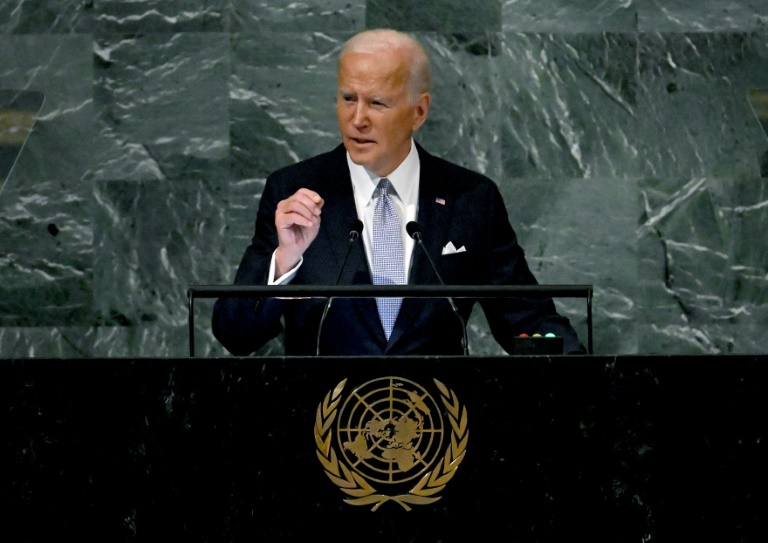
“Russia has shamelessly violated the core tenets of the United Nations Charter,” Biden told the General Assembly.

“Let us speak plainly. A permanent member of the United Nations Security Council invaded its neighbor — attempted to erase the sovereign state from the map.”

After a frontal denunciation of Russia, Biden focused much of his address on the interests of the developing world, where resentment has built in some quarters over the West’s massive spending on weapons for Ukraine.

Biden announced another $2.9 billion for a fund aimed at addressing global food insecurity, which has worsened markedly since the invasion of Ukraine, a major grain exporter.

He also threw his support behind an expansion of the Security Council, an idea mulled for decades but which has previously seen low US enthusiasm.

Biden said the United States would back permanent seats for Africa and Latin America in addition to its previous support to include Japan and India.

He also promised the United States would “refrain from the use of the veto, except in rare, extraordinary situations, to ensure the council remains credible and effective.”

Russia in recent years has been the most frequent user of its veto power. The United States, China, France and Britain also enjoy vetoes, a legacy of the power dynamics at the end of World War II.

Russia has previously scoffed at US high-mindedness on the Security Council, pointing to how former president George W. Bush circumvented it to invade Iraq.

– Calls to pressure Russia –

The General Assembly is meeting in person after two years of disruptions due to the pandemic. Only one leader was granted an exception to speak via video — Ukrainian President Volodymyr Zelensky, who addresses the world body later Wednesday.

Just as world leaders were meeting, Russian allies announced they would hold referendums in occupied territory on annexation and Putin announced the mobilization of reservists, showing he is in no hurry to end the war.

French President Emmanuel Macron, speaking on the sidelines of the General Assembly, said that the world must put “maximum pressure” on Putin whose decisions “will serve to isolate Russia further.”

Standing at the UN rostrum late Tuesday, German Chancellor Olaf Scholz said the world was “facing a new fragmentation” after years of hope following the end of the Cold War and his own nation’s reunification.

“Major global crises are piling up before us and are combining and reinforcing one another. Some have even seen this as a harbinger of a world without rules,” he said.

Scholz said that Putin will “only give up his war and his imperialist ambitions if he realizes he cannot win.”

“We stand firmly at the side of those under attack — for the protection of the lives and the freedom of the Ukrainians, and for the protection of our international order,” he said.

– No ‘Cold War’ with China –

Amid warnings of rising global division, Biden also sought to calm tensions with China, days after he again promised US support if Beijing invades Taiwan.

“Let me be direct about the competition between the United States and China,” Biden said. “As we manage shifting geopolitical trends, the United States will conduct itself as a reasonable leader. We do not seek conflict, we do not seek a Cold War.”

The Biden administration has been encouraged by Putin’s acknowledgement of Chinese concerns when he met President Xi Jinping last week.

On Wednesday, China called for a “ceasefire through dialogue” in Ukraine. It has previously offered moral support to Russia but US officials say Beijing has not accepted requests for material help.

Among other leaders addressing the United Nations was Iranian President Ebrahim Raisi, who traveled to New York just as protests spread in his country over the death of a woman arrested by morality police.

Biden said that Americans “stand with the brave women of Iran” after the death of Mahsa Amini, a 22-year-old who allegedly was beaten to death after not wearing her headscarf in compliance with the clerical state’s guidelines.

Raisi accused the West of “double standards” as he mentioned the killings of Indigenous women in Canada.

Raisi was trailed by protesters in New York with dissidents filing human rights lawsuits against the hardline cleric over his role as a judge during mass executions in the 1980s.

bur-sct/mlm/ec

Hurricane Fiona heads toward Bermuda, US advises citizens to defer travel

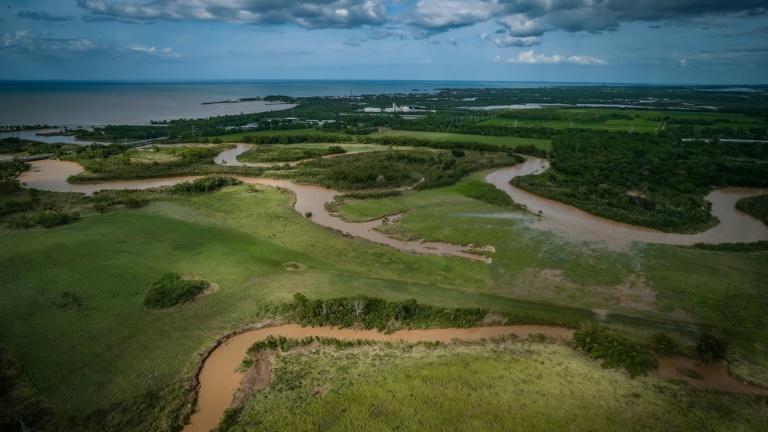
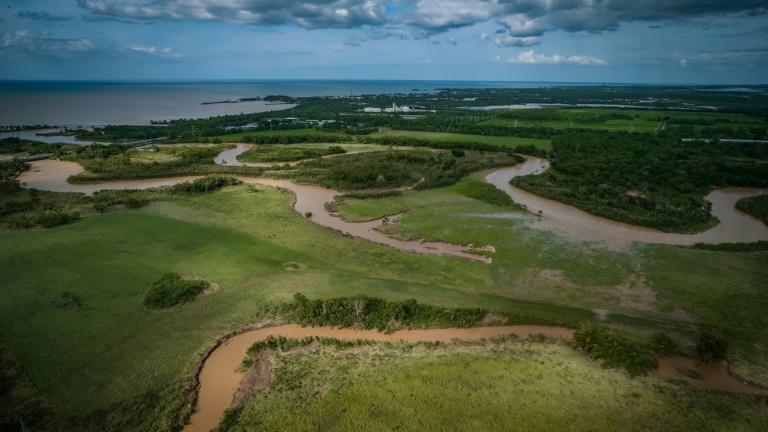
Hurricane Fiona churned toward Bermuda as a powerful Category 4 storm on Wednesday as Puerto Rico struggled to restore power and water after receving a crushing blow.

The US National Hurricane Center (NHC) said Fiona was expected to approach Bermuda, a British territory of some 64,000 people, late on Thursday.

In Washington, the State Department advised Americans to reconsider travel to Bermuda and authorized family members of US government personnel to leave.

“US citizens in Bermuda wishing to depart the island should depart now, ahead of Hurricane Fiona’s arrival,” it said in a travel advisory.

Fiona was upgraded overnight to a Category 4 hurricane, the second highest level on the Saffir-Simpson scale.

The NHC said the storm was packing maximum winds of 130 miles per hour (210 kilometers per hour) as it headed north toward Bermuda at around eight miles per hour.

“On the forecast track, the center of Fiona will continue to move away from the Turks and Caicos today, approach Bermuda late on Thursday and approach Atlantic Canada late Friday,” the NHC said.

“A storm surge will cause elevated water levels along the coast of Bermuda,” it said. “Near the coast, the surge will be accompanied by large and destructive waves.”

Fiona has left a trail of destruction across the Caribbean and killed four people in Puerto Rico, according to a US Federal Emergency Management Agency (FEMA) official quoted by The Washington Post.

One death was reported in the French overseas department of Guadeloupe and another in the Dominican Republic.

FEMA administrator Deanne Criswell is in Puerto Rico and toured flood damaged areas with the governor of the US territory, Pedro Pierluisi.

– ‘Will not stop’ –

FEMA said it was sending hundreds of additional personnel to Puerto Rico to help with relief efforts on the island, which suffered widespread power outages.

Pierluisi said the storm had caused catastrophic damage on the island of three million people, with some areas receiving more than 30 inches (76 centimeters) of rain.

US President Joe Biden has declared a state of emergency in Puerto Rico, which is still struggling to recover from Hurricane Maria five years ago.

LUMA, the Puerto Rico power company, said more than 2,000 utility workers were assessing damage and working to restore electricity to hundreds of thousands of customers.

“LUMA and all our partners will not stop until every customer is restored and the entire grid is reenergized,” its public safety manager Abner Gomez said in a statement.

The storm also left around hundreds of thousands of people in Puerto Rico without drinking water as a result of power outages and flooded rivers, officials said.

In the Dominican Republic, President Luis Abinader declared three eastern provinces to be disaster zones: La Altagracia — home to the popular resort of Punta Cana — El Seibo and Hato Mayor.

After years of financial woes and recession, Puerto Rico in 2017 declared the largest bankruptcy ever by a local US administration. 

Later that year, the double hit from hurricanes Irma and Maria added to the misery, devastating the electrical grid on the island — which has suffered from major infrastructure problems for years.

The grid was privatized in June 2021 in an effort to resolve the problem of blackouts, but the issue has persisted, and the entire island lost power earlier this year.

Hurricane Fiona heads toward Bermuda, US advises citizens to defer travel

Hurricane Fiona churned toward Bermuda as a powerful Category 4 storm on Wednesday as Puerto Rico struggled to restore power and water after receving a crushing blow.

The US National Hurricane Center (NHC) said Fiona was expected to approach Bermuda, a British territory of some 64,000 people, late on Thursday.

In Washington, the State Department advised Americans to reconsider travel to Bermuda and authorized family members of US government personnel to leave.

“US citizens in Bermuda wishing to depart the island should depart now, ahead of Hurricane Fiona’s arrival,” it said in a travel advisory.

Fiona was upgraded overnight to a Category 4 hurricane, the second highest level on the Saffir-Simpson scale.

The NHC said the storm was packing maximum winds of 130 miles per hour (210 kilometers per hour) as it headed north toward Bermuda at around eight miles per hour.

“On the forecast track, the center of Fiona will continue to move away from the Turks and Caicos today, approach Bermuda late on Thursday and approach Atlantic Canada late Friday,” the NHC said.

“A storm surge will cause elevated water levels along the coast of Bermuda,” it said. “Near the coast, the surge will be accompanied by large and destructive waves.”

Fiona has left a trail of destruction across the Caribbean and killed four people in Puerto Rico, according to a US Federal Emergency Management Agency (FEMA) official quoted by The Washington Post.

One death was reported in the French overseas department of Guadeloupe and another in the Dominican Republic.

FEMA administrator Deanne Criswell is in Puerto Rico and toured flood damaged areas with the governor of the US territory, Pedro Pierluisi.

– ‘Will not stop’ –

FEMA said it was sending hundreds of additional personnel to Puerto Rico to help with relief efforts on the island, which suffered widespread power outages.

Pierluisi said the storm had caused catastrophic damage on the island of three million people, with some areas receiving more than 30 inches (76 centimeters) of rain.

US President Joe Biden has declared a state of emergency in Puerto Rico, which is still struggling to recover from Hurricane Maria five years ago.

LUMA, the Puerto Rico power company, said more than 2,000 utility workers were assessing damage and working to restore electricity to hundreds of thousands of customers.

“LUMA and all our partners will not stop until every customer is restored and the entire grid is reenergized,” its public safety manager Abner Gomez said in a statement.

The storm also left around hundreds of thousands of people in Puerto Rico without drinking water as a result of power outages and flooded rivers, officials said.

In the Dominican Republic, President Luis Abinader declared three eastern provinces to be disaster zones: La Altagracia — home to the popular resort of Punta Cana — El Seibo and Hato Mayor.

After years of financial woes and recession, Puerto Rico in 2017 declared the largest bankruptcy ever by a local US administration. 

Later that year, the double hit from hurricanes Irma and Maria added to the misery, devastating the electrical grid on the island — which has suffered from major infrastructure problems for years.

The grid was privatized in June 2021 in an effort to resolve the problem of blackouts, but the issue has persisted, and the entire island lost power earlier this year.

Biden rebukes Putin after new Ukraine escalation

US President Joe Biden tore into Vladimir Putin Wednesday as he addressed the United Nations just hours after the Russian leader dramatically escalated his seven-month war in Ukraine by calling up his country’s military reservists.

Biden accused Putin of “shamelessly” violating the UN Charter and castigated him over a veiled threat to use nuclear weapons — after Putin said his promise to use all military means in Ukraine was “no bluff.”

“Russia has shamelessly violated the core tenets of the United Nations Charter,” Biden said as he addressed the UN General Assembly, warning that “a nuclear war cannot be won and must never be fought.”

Russian forces have attacked Ukrainian schools, railway stations and hospitals during a war that Biden said was aimed at “extinguishing Ukraine’s right to exist as a state.”

John Kirby, spokesman for the White House’s National Security Council, had said ahead of Biden’s address that Washington was taking Putin’s “irresponsible” apparent threat to use nuclear weapons “seriously” and warned it could alter its “strategic posture” if need be.

Putin’s mobilization call came as Moscow-held regions of Ukraine prepare to hold annexation referendums this week, ramping up the stakes in the conflict by allowing Moscow to accuse Ukraine of attacking Russian territory.

Four Russian-occupied regions of Ukraine — Donetsk and Lugansk in the east and Kherson and Zaporizhzhia in the south — said on Tuesday that they would hold the votes over five days beginning Friday.

In a pre-recorded address to the nation early on Wednesday, Putin accused the West of trying to “destroy” his country through its backing of Kyiv. Russia needed to support those in Ukraine who wanted to “determine their own future”, he said.

The Russian leader announced a partial military mobilization, with Defense Minister Sergei Shoigu telling state television that some 300,000 reservists would be called up.

– ‘Not a bluff’ –

“When the territorial integrity of our country is threatened, we will certainly use all the means at our disposal to protect Russia and our people. This is not a bluff,” Putin said.

“Those who are trying to blackmail us with nuclear weapons should know that the wind can also turn in their direction,” Putin added.

But Ukrainian President Volodymyr Zelensky said in an interview with Germany’s Bild media group released Wednesday that he did not think Putin would resort to nuclear weapons.

“Tomorrow, Putin can say — as well as Ukraine, we want part of Poland, otherwise we will use atomic weapons. We cannot make these compromises,” he said. 

Separately, Zelensky’s foreign minister Dmytro Kuleba called Western allies to increase military aid to Kyiv and further isolate Moscow.

On the sidelines of the UN gathering, French President Emmanuel Macron urged the world to “put maximum pressure” on Putin, whose decisions “will serve to isolate Russia further.”

German Chancellor Olaf Scholz denounced the call-up as “an act of desperation” in a “criminal war” he said Russia could not win.

In the wake of the reservist announcement flights out of Russia to neighboring ex-Soviet countries were booked up for days to come, airline data showed, in what appeared to be a rush to quit the country. Prices for remaining seats skyrocketed.

The sudden flurry of moves by Moscow this week came with Russian forces in Ukraine facing their biggest challenge since the start of the conflict.

In a sweeping Ukrainian counter-offensive in recent weeks, Kyiv’s forces have retaken hundreds of towns and villages that had been controlled by Russia for months.

In a rare admission of military losses from Moscow, Shoigu said on Wednesday 5,937 Russian soldiers had died in Ukraine since the launch of the military intervention in February.

– World peace ‘in jeopardy’ –

As Putin made his announcement, residents were clearing rubble and broken glass from a nine-story apartment block hit by an overnight missile strike in the eastern Ukrainian city of Kharkiv.

“They want to liberate us from what? From our homes? From our relatives? From friends? What else?” she told AFP. “They want to free us from being alive?” said a 50-year-old resident, who gave her name as Galina.

The referendums follow a pattern established in 2014, when Russia annexed the Crimea peninsula from Ukraine after a similar vote.

Like in 2014, Washington, Berlin and Paris denounced the latest ballots, saying the international community would never recognize the results.

Beijing, which so far has tacitly backed Moscow’s intervention called on Wednesday for a “ceasefire through dialogue” after Putin’s address and in likely reference to the referendums said the “territorial integrity of all countries should be respected”.

NATO Secretary General Jens Stoltenberg meanwhile denounced Putin’s “dangerous and reckless nuclear rhetoric.”

And EU foreign policy chief Josep Borrell on Wednesday accused Putin of putting world peace “in jeopardy”.

“Putin’s announcement of sham referenda, partial military mobilization and nuclear blackmail are a grave escalation,” Borrell wrote on Twitter.

“Threatening with nuclear weapons is unacceptable and a real danger to all,” he said. 

Kyiv said the referendums were meaningless and vowed to “eliminate” threats posed by Russia, saying its forces would keep retaking territory regardless of what Moscow or its proxies announced.

Missiles hit apartments in Ukraine city, as Putin mobilises

Residents of Ukraine’s second city Kharkiv found themselves under bombardment again Wednesday as Russian missiles struck apartment blocks and a railway yard.

The salvo will spur fears that Moscow’s forces, having been driven back from the city limits, are targeting homes and key infrastructure to hurt civilian morale.  

“Our area was relatively quiet, and now you see what happened,” Lyubov Grygorivna, 65, told AFP outside a badly damaged housing block.

Kharkiv, a major hub in the northeast just 40 kilometres (24 miles) south of the Russian border, was attacked on the first day of the February 24 invasion, but its Ukrainian defenders held on to the city.

In recent weeks it has been spared from more intense bombardments as a Ukrainian counter-offensive swept Russian land forces from the region. Russia can, however, still launch missiles from its own territory.

Approaching retirement after 45 years working in the neighbourhood municipal services, Grygorivna was loudly directing clean-up crews clawing through rubble. 

“The war is a disaster. It’s terrifying. It’s painful … It’s miserable. How can you stand things like this?” she asked.

“So many have lost their homes and winter is coming. It’s terrible. Every night we go to bed scared. But we keep on working. They shoot and we work,” she added.

– Civilian targets hit –

The mayor of Kharkiv, Igor Terekhov, said four projectiles had struck the Kholodnohirskyi district overnight, hitting two housing blocks, a building site and some civil infrastructure.

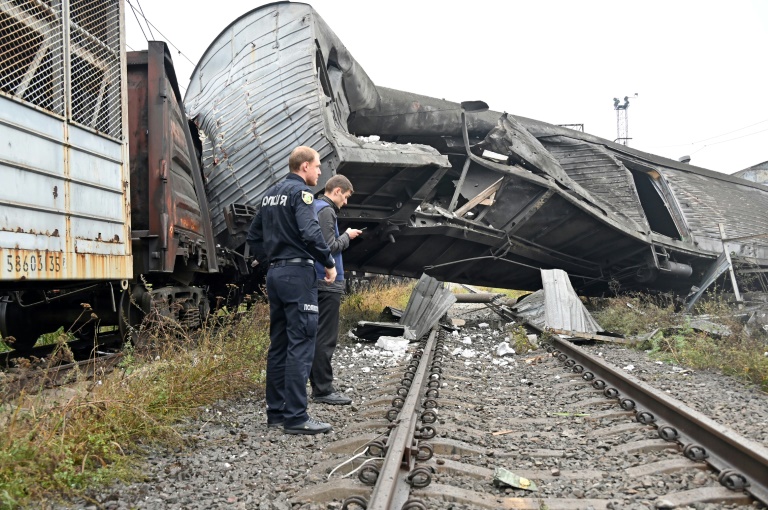
At the railway freight marshalling yard, site manager Oleksandr Brykov confirmed that a missile had hit freight cars and a section of track, the first major strike on the cargo network since April.

Nearby, two freight cars lay ripped apart and a huge crater was visible under buckled rails and discarded wheel springs.

In one residential block, 10 residents were trapped until rescuers could arrive, but officials spoke of only one wounded.

Air raid sirens continued through the day, mingling with bells from the gilded domes of the Saint Sofia Church, where Orthodox worshippers gathered to mark the nativity of the Virgin Mary. 

Lyubov Prokopivna, an 85-year-old retiree, surveyed the wreckage in her apartment on the upper floor of the nine-storey Slavi 11 block of modest privately owned flats in the Zalintyne neighbourhood.

She had been staying at her son’s house at 2:00 am when the missile hit.

“I usually sleep in the bedroom. All the windows were broken, the TV, everything is a mess. If I had been here, I wouldn’t have survived,” she said. 

– ‘Close the sky’ –

Anna Verbytska, 41, was asleep with her husband on a lower level. 

Her family were unharmed, but the windows blew in and the water is now cut off. 

She swept up the glass quietly, as 12-year-old daughter Sofia slept on the sofa, exhausted after a night caring for Tasya the cat.

“The heating system is damaged, and winter is coming. The car was damaged too,” she said, as four burly neighbours carried a stunned elderly lady down the dusty staircase in a blanket.

The renewed bombardment of their homes was a bitter blow for many Ukrainians, coming as Russian President Vladimir Putin mobilised reservists in a bid to seize back the initiative in the conflict.

“I ask all the Russians, may God give them the wisdom to escape, to ignore (the mobilisation), to leave… to wake up finally, but not to come fight us,” said 63-year-old Svitlana.

“You see? They kill civilians. There’s nothing here except gardens and civilian homes. I’m turning to you, the international community, close the sky above Kharkiv. Don’t let (Putin) destroy us,” she said.

Another local resident, Galyna, 50, said she “can’t understand the people he is calling on to fight us”. 

“We are protecting our homeland. This is Ukraine and they are fighting a war… for what? Against who?” she said.

“They want to liberate us from what? From our homes? From our relatives? From friends? What else? From life… they want to free us from being alive.”

War fears at another Ukraine nuclear site

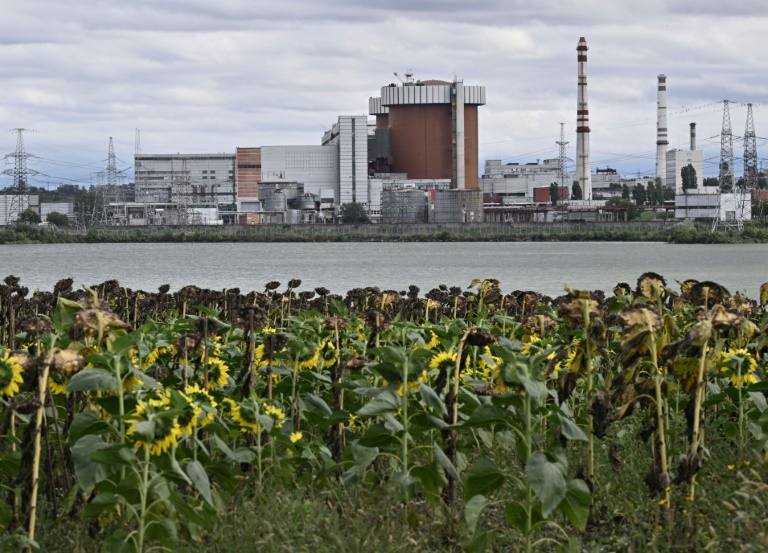
A vast crater several metres deep in empty land strewn with wild grass bears witness to the shelling this week at the Pivdennoukrainskpower plant site in southern Ukraine, the latest sign of nuclear risk in the war-scarred nation.

Small shards of grey metal, similar to rocket and missile fragments that litter innumerable fighting-damaged Ukrainian places, dot the loamy earth gouged out by the impact.

A few dozen metres from the gaping hole, a building that AFP was not permitted to visit during a media visit organised by the Ukrainian nuclear energy agency Energoatom appeared to have had its doors and windows blown out. 

“That’s where the blast of the explosion went towards,” said Ivan Zhebet, security chief at the Pivdennoukrainsk plant in the southern Mykolaiv region.

Zhebet then pointed in the direction that the projectile arrived from.   

A compass reading by an AFP journalist indicated that it was fired from the southeast, territory under Russian control.

On the other side of the crater another building was less damaged but minus most of its windows.

The shell struck shortly after midnight on Monday, just minutes after an air raid warning sounded in nearby Yuzhnourainsk, a town that had until then been relatively calm.

Residents told AFP that they heard a thud and lightbulbs in their houses flickered on and off, a sign that the power supply was struggling to stay on. 

Others said they saw a flash of light in the sky.

– Catastrophe fears – 

All the residents questioned by AFP worried that the nuclear site — which directly provides jobs for 6,000 of the town’s 42,000-strong population and indirectly for many more — would be hit.

They also voiced fears that the conflict might spark a catastrophe similar to what befell northern Ukraine’s Chernobyl power station in 1986, the world’s worst nuclear disaster to date.

Pivdennoukrainskis the third nuclear site to be caught up in a conflict that began with Russia’s invasion in February.

Early in the war there was fighting around Chernobyl, while Europe’s largest atomic facility — the Zaporizhzhia nuclear plant in Russian-held territory — has become a hot spot for concerns after tit-for-tat claims of attacks there.

The Ukrainian army rejected any idea that the strike at Pivdennoukrainsk could have been accidental. 

The missile, “seemingly an Iskander, targeted the installation,” it said in a Facebook message Monday.

According to Pierre Grasser, a Paris-based expert on Russian defence, it was possible that the cabling network, transformers or air defence systems which Ukrainians and Russians often place near strategic sites were targeted.

“The Iskander’s ballistic missile system is pretty precise — in the order of 20 metres,” Grasser told AFP.

– ‘Frightening’ –

Monday’s attack was not the first close call at the Pivdennoukrainsk plant since February. 

Soon after the invasion as Russian forces sought to break through at Mykolaiv and reach the strategic Black Sea port of Odessa, they advanced as far as Voznesensk, just 25 kilometres (15 miles) from the nuclear installation.

Several buildings in Yuzhnourainsk were hit by shells while the Ukrainian army destroyed the main bridge in order to hinder the Russian advance. 

“They wanted to take Odessa, they wanted to take our plant. But our lads prevented them from doing so,” Nataliya Stoikova, a department head at Pivdennoukrainsk, said with pride.

But Monday’s bombardment “shocked” her, she added.

“The danger is really frightening. If something were to happen (at Pivdennoukrainsk) or Zaporizhzhia, the accident at Chernobyl would be almost small” by comparison.

US home sales fall for seventh straight month in August

Existing home sales slipped in August to the lowest in two years, marking a seventh straight monthly decline, according to industry data released Wednesday showing continued slowing in the US housing market as mortgage rates surge.

Sales of all types of homes and condos fell 0.4 percent from July even while prices eased in the month, the National Association of Realtors (NAR) said.

The report comes on the same day the Federal Reserve was poised to deliver another big increase in the key interest rate, a move that will boost borrowing costs with further repercussions for the critical housing market.

“The housing sector is the most sensitive to and experiences the most immediate impacts from the Federal Reserve’s interest rate policy changes,” said NAR chief economist Lawrence Yun. “The softness in home sales reflects this year’s escalating mortgage rates.”

The median home price fell for the second month in a row to $389,500, coming down from a record-high $413,800 in June, the report said. 

The housing market soared during the pandemic as Americans, flush with savings, took advantage of bargain mortgage rates to snap up homes. But as the Federal Reserve has raised interest rates aggressively to combat scorching inflation, sales have taken a hit.

Existing home sales dropped 19.9 percent from the August 2021 level, with the most drastic declines occurring in the lowest price homes, according to NAR. The median price was still 7.7 percent above the year-ago figure.

The sales pace last month slowed to an annual rate of 4.80 million, seasonally adjusted, better than analysts forecast but still the lowest since May 2020.

Economists warn that further slowing is likely.

Last month’s “marginal decline in sales does not mean that the floor has been reached. Sales lag mortgage applications, which continue to fall, pointing to further significant declines,” said Ian Shepherdson of Pantheon Macroeconomics.

Mortgages costs have continued to escalate: The 30-year fixed rate jumped to 6.25 percent last week according to the Mortgage Bankers Association, the highest rate since October 2008.

Existing home sales make up 90 percent of the US real estate market.

Sales last month varied by region, with the Northeast and West recording increases, while the Midwest dropped and the South remained unchanged.

Stocks advance ahead of US rate hike

Stock markets pushed higher Wednesday as traders awaited another hefty US interest rate hike from the Federal Reserve.

The dollar reached the highest level in 20 years against a basket of major rival currencies with investors seeking safety as Russia escalates operations in its war against Ukraine.

The Dollar index, which compares the US unit against currencies including the euro, pound and yen, jumped to 111.06 points, also as the Fed prepares a third successive jumbo rate hike to combat decades-high inflation.

The British pound hit a new 37-year low at $1.1305, even as the Bank of England prepares to announce its own large interest rate hike Thursday.

“Global stock markets remain under pressure as investors await the Federal Reserve’s much-anticipated interest rate decision today, keep a close eye on the energy crisis in Europe, and weigh other risks including a slowing Chinese and global economies,” said City Index analyst Fawad Razaqzada.

Although European and US equity indices were advancing ahead of the Fed’s decision, Razaqzada said he believes “the path of least resistance is to the downside and the selling pressure will likely resume amid a bearish macro-outlook.”

Stocks have taken a battering since hotter-than-expected US inflation data last week solidified expectations that the Fed will announce another 75 basis-point lift, with some predicting a full percentage-point move.

The current Fed rate is 2.25 to 2.50 percent.

“The Fed is having to be cruel in order to restore price stability,” noted Russ Mould, investment director at AJ Bell.

“Higher rates will cause pain to households and businesses, with the jobs market being closely watched for signs of redundancies and hiring freezes.”

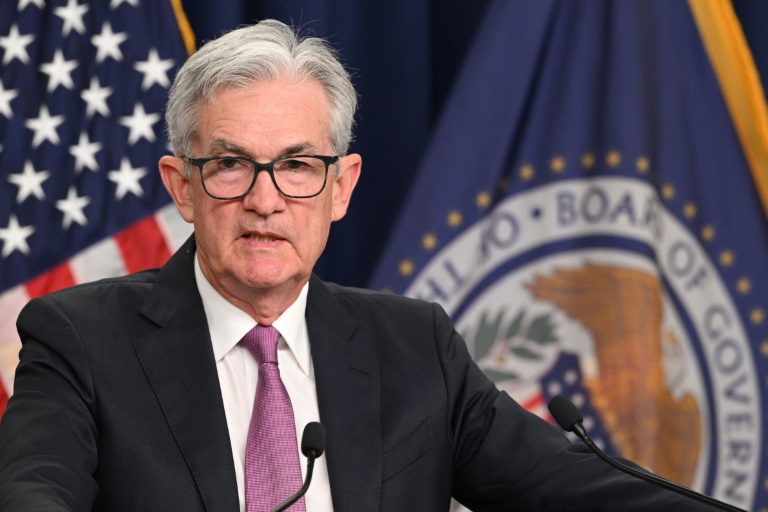
In the event of no surprises on the rate hike, the US central bank’s forecast and post-meeting comments from boss Jerome Powell will be the main attraction for investors.

Briefing.com analyst Patrick O’Hare said investors will be looking at the updated projection for the peak of this cycle of interest rate hikes, or the terminal rate, with the market now expecting a peak of 4.50-4.75 percent by May 2023.

If the Fed’s projection is lower, then a relief rally could come about, depending on what Powell says in his press conference, he said.

If Powell “strikes a softer tone than he did at the Jackson Hole Conference (of central bankers) in late August, suggesting the Fed may be getting close to a point where it can pause its rate hikes, then the stock market should respond quite favorably,” said O’Hare.

Other central banks are meeting this week. On Tuesday, policymakers in Sweden surprised markets by unveiling a one percentage-point hike.

Adding to the cautious mood was Vladimir Putin’s announcement of a “partial mobilisation” as Russia’s president upped the ante in his battle against Ukraine.

Putin backed annexation referendums in four regions in Russian-held parts of Ukraine and issued a thinly-veiled threat about using nuclear weapons.

The moves mark an escalation in the seven-month war, which has roiled markets and sparked an energy crisis.

Oil prices surged nearly three percent on Wednesday before turning negative. They have wilted in recent months on weaker demand expectations fuelled by recession fears.

“Crude oil prices have edged higher in the wake of this morning’s hawkishness from Russia, however once again progress has been difficult, as recession concerns dominate,” said Michael Hewson at CMC Markets.

Asian stock markets closed lower Wednesday, reversing Tuesday’s bounce.

– Key figures at around 1530 GMT –

New York – Dow: UP 0.4 percent at 30,840.96 points

EURO STOXX 50: UP 0.7 percent at 3,491.87

London – FTSE 100: UP 0.6 percent at 7,237.64 (close)

Frankfurt – DAX: UP 0.8 percent at 12,6767.15 (close)

Paris – CAC 40: UP 0.9 percent at 6,031.33 (close)

Tokyo – Nikkei 225: DOWN 1.4 percent at 27,313.13 (close)

Hong Kong – Hang Seng Index: DOWN 1.8 percent at 18,444.62 (close)

Shanghai – Composite: DOWN 0.2 percent at 3,117.18 (close)

Pound/dollar: DOWN at $1.1329 from $1.1384 Tuesday

Euro/dollar: DOWN at $0.9877 from $0.9970

Euro/pound: DOWN at 87.12 pence from 87.63 pence 

Dollar/yen: UP at 144.11 yen from 143.72 yen

Brent North Sea crude: DOWN 1.0 percent at $89.71 per barrel

West Texas Intermediate: DOWN 1.1 percent at $83.01 per barrel

burs-rl/lth

Close Bitnami banner
Bitnami