World

Salvini: Italian nationalist leader eclipsed by rival

Matteo Salvini turned his once regional League party into a national force in government, but the far-right leader has seen his star eclipsed by the more polished Giorgia Meloni.

The League looks set to return to power after Sunday’s elections but, according to polls, with far less support than in 2018, making him a junior partner in a right-wing coalition led by Meloni’s post-fascist Brothers of Italy.

Meloni pursues a similar far-right, eurosceptic, “Italians First” platform to Salvini, but she puts a more polished, some say more respectable face on their policies — despite her links to Italy’s neo-fascist movement.

Many supporters also see her as a clean break from the past.

Salvini, 49, has been in and out of government since the last general election in 2018, joining the populist Five Star Movement and later, Prime Minister Mario Draghi’s national unity coalition.

Meloni, whose party won just four percent of the vote in 2018, was the only political leader to keep out of Draghi’s team, making her the only real opposition.

“I like her. She’s a straightforward, nice person… Let’s try a change,” said Paolo Berardi, a 50-something former Salvini supporter at one of Meloni’s rallies last month.

– Closed ports –

Born in Milan on March 9, 1973, Salvini was just 17 when he joined the then-Northern League, a secessionist party dedicated to autonomy for Italy’s northern regions whose members routinely insulted poorer southern Italians as “parasites”.

But after rising through the ranks, he transformed the party into a national force, shifting its attention onto the EU, the euro and the tens of thousands of migrants arriving on Italy’s shores yearly from north Africa.

When he was interior minister in 2019 — also serving as deputy prime minister — Salvini blocked several charity rescue ships carrying migrants from disembarking in Italy, under his party’s “closed ports” policy.

The move saw him prosecuted in Sicily on charges of kidnapping and abuse of office, in an ongoing trial he has worn as a badge of honour.

Subtlety is not his style — he was often seen holding a Roman Catholic rosary or a Bible on the campaign trail, once even calling publicly on the Virgin Mary to carry him to victory.

He pulled out of government in 2019 after securing a stunning 34 percent of the vote in European Parliament elections, in the hope of sparking a new national vote that he might win.

However, he was outmanoeuvred by his coalition allies who formed a new administration without him.

– Russia ties –

During this election campaign, Salvini has focused on immigration but also on demanding help for households and businesses hit by soaring energy prices.

At the same time, he has demanded tax cuts, notably a blanket “flat tax” of 15 percent.

Salvini has moved away from earlier demands for Italy to leave the EU’s single currency but continues to strongly criticise Brussels.

Last year he attended a meeting with other far-right leaders including Hungary’s Viktor Orban and France’s Marine Le Pen to discuss their plans to “reform” the bloc.

The war in Ukraine has sparked fresh scrutiny of his ties to Russia, whose president, Vladimir Putin, he has long admired, even wearing T-shirts bearing Putin’s face.

Salvini criticised Western sanctions on Russia for being ineffective, putting him at odds with Meloni, who has strongly supported Ukraine.

US and Canadian warships sail through Taiwan Strait

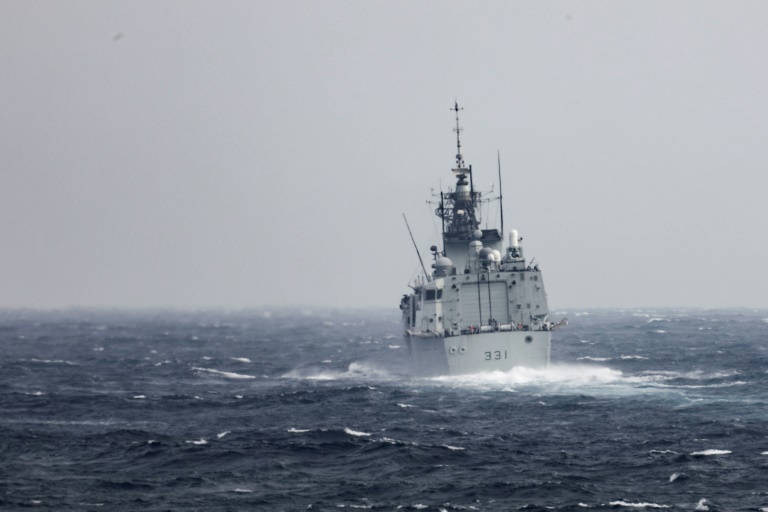
A US destroyer and a Canadian frigate sailed through the Taiwan Strait on Tuesday in the latest joint operation aimed at reinforcing the route’s status as an international waterway.

Beijing views as its own both democratic Taiwan and the narrow body of water separating the island from mainland China — one of the world’s busiest shipping channels.

The United States has long used “freedom of navigation” passages through the Taiwan Strait to push back against Chinese claims and Western allies have increasingly joined these operations.

The USS Higgins, an Arleigh Burke-class destroyer, in cooperation with the Royal Canadian Navy’s Halifax-class frigate HMCS Vancouver “conducted a routine Taiwan Strait transit September 20 (local time)… in accordance with international law”, the US Navy’s Seventh Fleet said.

“The ship transited through a corridor in the Strait that is beyond the territorial sea of any coastal State.”

Canada said the HMCS Vancouver was en route to join an ongoing mission to enforce UN sanctions against North Korea when it transited with the USS Higgins.

“Today’s routine Taiwan Strait transit demonstrates our commitment to a free, open and inclusive Indo-Pacific,” Canadian Defense Minister Anita Anand said in a statement, using another term for the Asia-Pacific region.

A spokesman for China’s Eastern Theatre Command described the latest transit as “public hype”.

“The troops are always on high alert, resolutely counteract all threats and provocations, and resolutely defend national sovereignty and territorial integrity,” Colonel Shi Yi said, according to Chinese state broadcaster CCTV.

British, Canadian, French and Australian warships have made passages through the Taiwan Strait in recent years, sparking protests from Beijing.

They also frequently ply the South China Sea, another vital shipping area that Beijing insists comes under its domain despite a 2016 Hague ruling that dismissed its claims as well as rival ones from multiple neighbours.

The last time US and Canadian warships sailed through the Taiwan Strait was 11 months ago when the destroyer USS Dewey and frigate HMCS Winnipeg made the trip.

The latest joint passage came a day after President Joe Biden again declared that US troops would come to Taiwan’s aid in the event of a Chinese invasion.

This was the fourth time Biden made such comments, despite Washington’s longstanding official policy of “strategic ambiguity” — designed both to ward off a Chinese invasion and discourage Taiwan from provoking Beijing by formally declaring independence.

Each time after Biden’s comments, the White House said there was no change in US policy on Taiwan.

Meloni: Italy's far-right 'Christian mother' on brink of power

From teenage activist who praised Mussolini to favourite to become Italy’s first woman prime minister, Giorgia Meloni has had quite a journey, leading her far-right party to the brink of power.

Opinion polls put Italy’s right-wing coalition on course for victory in Sunday’s elections, with Meloni’s Brothers of Italy on top.

Often intense and combative as she rails against the European Union, mass immigration and “LGBT lobbies”, the 45-year-old has swept up disaffected voters and built a powerful personal brand.

“I am Giorgia, I am a woman, I am a mother, I am Italian, I am Christian,” she declared at a 2019 rally in Rome, which went viral after it was remixed into a dance music track.

Brothers of Italy grew out of the country’s post-fascist movement, but Meloni has sought to distance herself from the past, while refusing to renounce it entirely.

She advocates traditional Catholic family values but says she will maintain Italy’s abortion law, which allows terminations but permits doctors to refuse to carry them out.

However, she says she wants to “give to women who think abortion is their only choice the right to make a different choice”.

– Ready to govern –

Born in Rome on January 15, 1977, Meloni was brought up in the working-class neighbourhood of Garbatella by her mother, after her father left them.

She has long been involved in politics, at 31 was the youngest minister in post-war Italian history, and co-founded Brothers of Italy in 2012.

In 2018 general elections, her party secured just four percent of the vote, but is now polling at more than 24 percent.

Such a result on Sunday would put Meloni ahead of not just her rivals but also her coalition allies, Matteo Salvini’s anti-immigration League and Forza Italia’s Silvio Berlusconi, in whose government she served in 2008.

Meloni has benefited from being the only party in opposition for the past 18 months, after choosing to stay out of outgoing Prime Minister Mario Draghi’s national unity government.

At the same time she has sought to reassure those who question her lack of experience, her slogan “Ready” adorning billboards up and down the country.

Wary of Italy’s huge debt, she has emphasised fiscal prudence, despite her coalition’s call for tax cuts and higher social spending.

Her stance on Europe has moderated over the years — she no longer wants Italy to leave the EU’s single currency, and has strongly backed the bloc’s sanctions against Russia over the Ukraine war.

However, she says Rome must stand up more for its national interests and has backed Hungarian Prime Minister Viktor Orban in his battles with Brussels.

– Neo-fascist past –

Meloni was a teenage activist with the youth wing of the Italian Social Movement (MSI), formed by supporters of fascist dictator Benito Mussolini after World War II.

At 19, campaigning for the far-right National Alliance, she told French television that “Mussolini was a good politician, in that everything he did, he did for Italy”.

After being elected an MP for National Alliance in 2006, she shifted her tone, saying the dictator had made “mistakes”, notably the racial laws, his authoritarianism and entering World War II on the side of Adolf Hitler’s Nazi Germany.

Her party takes its name from the first line of Italy’s national anthem and its logo includes the same flame used by MSI, in the green, white and red of the country’s flag.

She has refused calls to change the logo, insisting the flame has “nothing to do with fascism” — and blaming talk to the contrary on “the left”.

“The Italian right has handed fascism over to history for decades now,” she said in a trilingual video message sent to foreign correspondents last month.

She insists that within her party “there is no room for nostalgic attitudes”.

Meloni has a daughter, born in 2006, with her TV journalist partner.

Looking for reasons to be cheerful about climate action

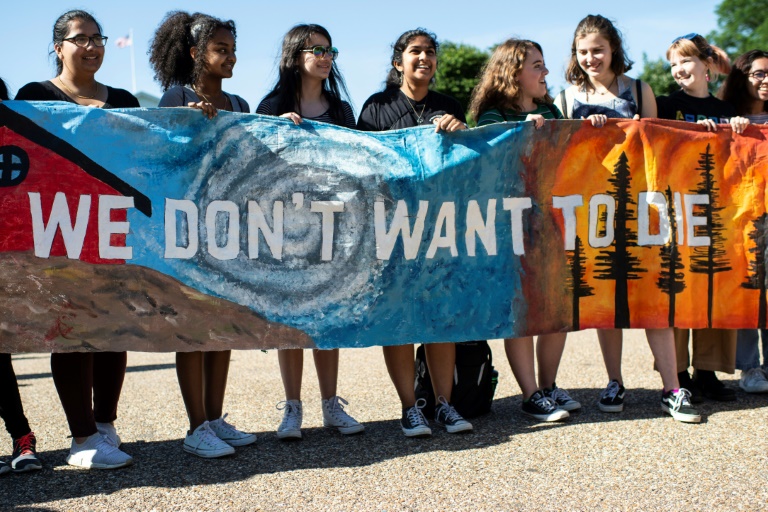
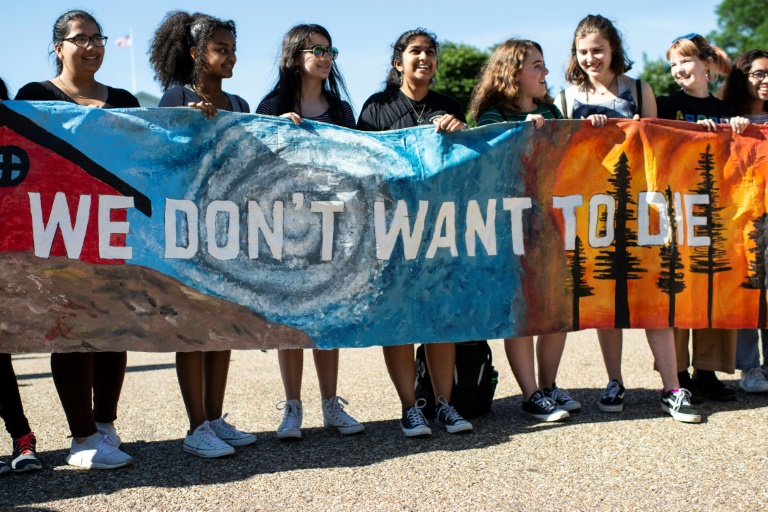
With a sunny smile to the camera Alaina Wood delivers a burst of “good climate news” to her young TikTok audience, trying to reassure them that it is not too late for action on global warming.  

This cheerfulness is not because Wood has somehow failed to notice the litany of storms, floods and heatwaves battering the world and the dire projections of what is to come if fossil fuel emissions are not slashed. 

But the 26-year-old sustainability scientist — along with others working on climate change — worries that the barrage of bad news is causing “climate doomism”, a sense of hopelessness that they fear may undermine action.

“I took a deep dive into optimism,” said Wood, whose day job is in waste and water systems and who posts to her more than 300,000 followers under the name @thegarbagequeen. 

The aim is to inspire action. 

“If I’m going to talk about the harsh realities of it, I’m going to give them something to do with that anxiety,” the American told AFP.

Her positive climate videos, filmed at home in Tennessee or while hiking in the countryside, cover everything from the recovery of a threatened species to early-stage technology for decarbonising cement.

A major new US climate and health bill, signed into law in August, has proven a useful counterpoint to those who say “voting doesn’t matter”, she said.

Wood said she sees the sentiment that it is “too late” to do anything, mainly from users in the US or other wealthy countries, adding that people in the direct path of the most severe climate impacts do not have the option to give up.  

– Doomerism –

The most downbeat tend to be teenagers, she said, echoing concerns about high levels of climate anxiety among young people worldwide.   

One survey of 16- to 25-year-olds in 10 countries found almost 60 percent were very worried about climate change. 

Because every fraction of a degree matters as the planet heats, climate scientists say it is never too late to act to cut fossil fuel emissions — although delay makes impacts worse and actions harder and more costly.

But the nearly 1.2 degrees Celsius (34 degrees Fahrenheit) of global warming since pre-industrial times has unleashed devastating extremes. It can be difficult to look on the bright side. 

“Even my most optimistic followers are turning to climate doom because of all the climate disasters this summer, and I don’t know what to do,” Wood wrote on Twitter in late August. 

The resulting online rows — over whether fear or optimism are the correct response — led her to contemplate a temporary break from social media. 

– ‘You need hope’ –

They also reflect an intense debate among scientists, activists and in the media on how to talk about the enormous scale of the threat to humans and the natural world without overwhelming people. 

“Fear will wake us up, but fear is not the motivator for long-term action,” said climate scientist Katharine Hayhoe, who has written a book on the subject. 

“You need hope when things are dark. Hope is the chance that there is a better future that’s possible if you do everything you can to work towards it.” 

While climate denial has in recent years sunk to the murkier depths of the internet as impacts become harder to ignore, Hayhoe said “doomerism” is taking its place.

“If we decide there’s nothing we can do that will make a difference, we will do nothing,” she told AFP earlier this year. 

“And if we do nothing, we are doomed.” 

Even people who feel they have done their bit — giving up meat or cutting out air travel — fall into despair, Hayhoe said, partly down to an “obsession with individual action” in the US and other wealthy countries.

The co-founder of direct action protest movement Extinction Rebellion (XR), Gail Bradbrook, can agree.

– Better, not best –

She believes that while people are “hardwired” to act for the good of the community, that is undermined by a consumerist system.

But the former research scientist said those behind XR’s creation in 2018 were not motivated by hope or despair.

“It was from a sense of determination to see change happen,” she told AFP.

Likening the need for the bitter truth to a cancer patient wanting an honest diagnosis, Bradbrook said it was important to understand the causes of the climate, biodiversity, health, inequality crises.  

And then have agency to act. 

Even if the situation were irredeemably dire, she said, “what else are you wanting to do with your life?”

Wood remains upbeat on her path of optimism and proud of the impact of her videos, including getting her TikTok followers to call the White House asking President Joe Biden to declare a climate emergency.

“We can make the future better,” she said.

“It may not be the best, because the best would have been if we prevented climate change from happening in the first place. But we can make society better and healthier.”

Looking for reasons to be cheerful about climate action

With a sunny smile to the camera Alaina Wood delivers a burst of “good climate news” to her young TikTok audience, trying to reassure them that it is not too late for action on global warming.  

This cheerfulness is not because Wood has somehow failed to notice the litany of storms, floods and heatwaves battering the world and the dire projections of what is to come if fossil fuel emissions are not slashed. 

But the 26-year-old sustainability scientist — along with others working on climate change — worries that the barrage of bad news is causing “climate doomism”, a sense of hopelessness that they fear may undermine action.

“I took a deep dive into optimism,” said Wood, whose day job is in waste and water systems and who posts to her more than 300,000 followers under the name @thegarbagequeen. 

The aim is to inspire action. 

“If I’m going to talk about the harsh realities of it, I’m going to give them something to do with that anxiety,” the American told AFP.

Her positive climate videos, filmed at home in Tennessee or while hiking in the countryside, cover everything from the recovery of a threatened species to early-stage technology for decarbonising cement.

A major new US climate and health bill, signed into law in August, has proven a useful counterpoint to those who say “voting doesn’t matter”, she said.

Wood said she sees the sentiment that it is “too late” to do anything, mainly from users in the US or other wealthy countries, adding that people in the direct path of the most severe climate impacts do not have the option to give up.  

– Doomerism –

The most downbeat tend to be teenagers, she said, echoing concerns about high levels of climate anxiety among young people worldwide.   

One survey of 16- to 25-year-olds in 10 countries found almost 60 percent were very worried about climate change. 

Because every fraction of a degree matters as the planet heats, climate scientists say it is never too late to act to cut fossil fuel emissions — although delay makes impacts worse and actions harder and more costly.

But the nearly 1.2 degrees Celsius (34 degrees Fahrenheit) of global warming since pre-industrial times has unleashed devastating extremes. It can be difficult to look on the bright side. 

“Even my most optimistic followers are turning to climate doom because of all the climate disasters this summer, and I don’t know what to do,” Wood wrote on Twitter in late August. 

The resulting online rows — over whether fear or optimism are the correct response — led her to contemplate a temporary break from social media. 

– ‘You need hope’ –

They also reflect an intense debate among scientists, activists and in the media on how to talk about the enormous scale of the threat to humans and the natural world without overwhelming people. 

“Fear will wake us up, but fear is not the motivator for long-term action,” said climate scientist Katharine Hayhoe, who has written a book on the subject. 

“You need hope when things are dark. Hope is the chance that there is a better future that’s possible if you do everything you can to work towards it.” 

While climate denial has in recent years sunk to the murkier depths of the internet as impacts become harder to ignore, Hayhoe said “doomerism” is taking its place.

“If we decide there’s nothing we can do that will make a difference, we will do nothing,” she told AFP earlier this year. 

“And if we do nothing, we are doomed.” 

Even people who feel they have done their bit — giving up meat or cutting out air travel — fall into despair, Hayhoe said, partly down to an “obsession with individual action” in the US and other wealthy countries.

The co-founder of direct action protest movement Extinction Rebellion (XR), Gail Bradbrook, can agree.

– Better, not best –

She believes that while people are “hardwired” to act for the good of the community, that is undermined by a consumerist system.

But the former research scientist said those behind XR’s creation in 2018 were not motivated by hope or despair.

“It was from a sense of determination to see change happen,” she told AFP.

Likening the need for the bitter truth to a cancer patient wanting an honest diagnosis, Bradbrook said it was important to understand the causes of the climate, biodiversity, health, inequality crises.  

And then have agency to act. 

Even if the situation were irredeemably dire, she said, “what else are you wanting to do with your life?”

Wood remains upbeat on her path of optimism and proud of the impact of her videos, including getting her TikTok followers to call the White House asking President Joe Biden to declare a climate emergency.

“We can make the future better,” she said.

“It may not be the best, because the best would have been if we prevented climate change from happening in the first place. But we can make society better and healthier.”

Asian traders resume selling as another jumbo Fed hike looms

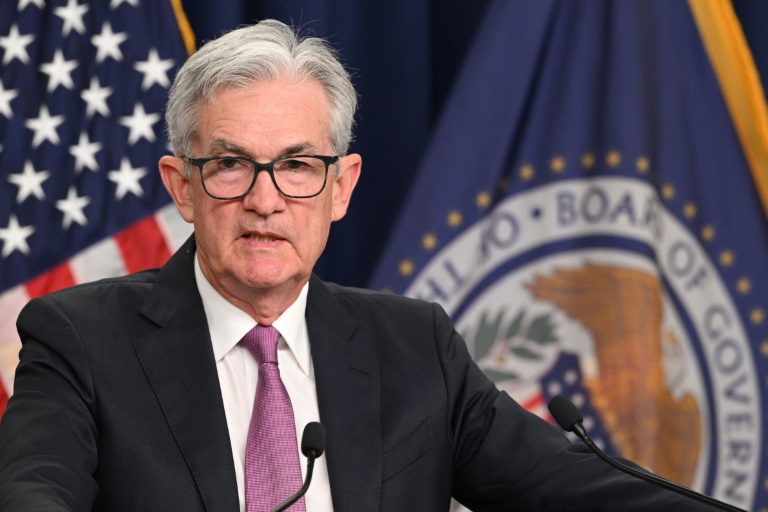
Asian markets resumed their downward spiral Wednesday after a brief respite the previous day, as traders prepared for what many expect to be a third successive jumbo interest rate hike by the Federal Reserve.

Equities around the world have been clattered by fears of a recession in major economies as central banks ramp up borrowing costs to combat the highest inflation in decades, which has been compounded by the Ukraine war and supply chain snarls.

Adding to the dour mood, four regions in Russian-held parts of Ukraine said they will hold weekend referendums on annexation by Moscow — a move that risks escalating the conflict as President Vladimir Putin could claim an attack in those regions was an attack on Russia.

But for now all eyes are on Washington, where the Fed is due to conclude its latest policy meeting, with most analysts predicting it will announce another 75 basis-point lift though some have tipped a full percentage-point move.

However, while the hike has largely been priced into the markets, the US central bank’s forecast and post-meeting comments from boss Jerome Powell are the main attraction for investors.

“Volumes remain light and the mood cautious, with few looking to take on large positions before hearing what the Fed says and where policy makers see rates going by the end of the hiking cycle,” Fiona Cincotta, at City Index, said.

“This is what will drive the markets, not the rate hike… but what the Fed plans to do next.”

Fed officials have for months stuck to the mantra that they will only ease up on their hawkish drive when inflation comes down and remains subdued.

This has led many to warn that rates are unlikely to come down anytime soon, possibly as late as 2024, with a recession more than likely in the United States as well as other major economies.

– ‘Long and ugly’ recession? –

Other central banks are also meeting this week.

On Tuesday, officials in Sweden surprised markets by unveiling a one percentage-point hike, while the United Kingdom and Switzerland are expected to announce more increases.

While there is debate on how bad any contraction will be, Nouriel Roubini, who predicted the 2008 economic meltdown, said he saw a “long and ugly” recession by the end of the year that would not likely end until the end of 2023 with severe consequences for equities.

“Even in a plain vanilla recession, the S&P 500 can fall by 30 percent,” he said, adding that “a real hard landing”, which he has forecast, could see it give up 40 percent.

In early trade, Asian markets were back in the red, reversing Tuesday’s rate bounce.

Tokyo, Hong Kong, Sydney and Manila were all down more than one percent, while there were also losses in Shanghai, Seoul, Wellington, Taipei and Jakarta.

Part of the reason for the weakness is the sharp slowdown in China, which has been battered by a series of Covid-linked lockdowns this year that have seen tens of millions of people shut away and factories close down for months.

In light of that — as well as the Ukraine war and rate hikes — the Asian Development Bank on Wednesday cut its 2022 growth forecast for developing Asia and warned of “global headwinds” to the recovery.

– Key figures at around 0230 GMT –

Tokyo – Nikkei 225: DOWN 1.4 percent at 27,308.66 (break)

Hong Kong – Hang Seng Index: DOWN 1.4 percent at 18,515.54

Shanghai – Composite: DOWN 0.4 percent at 3,110.55

Euro/dollar: DOWN at $0.9969 from $0.9977 on Tuesday

Dollar/yen: DOWN at 143.64 yen from 143.72 yen

Pound/dollar: DOWN at $1.1380 from $1.1384

Euro/pound: DOWN at 87.60 pence from 87.63 pence 

West Texas Intermediate: DOWN 0.1 percent at $83.85 per barrel

Brent North Sea crude: FLAT at $90.63 per barrel

New York – Dow: DOWN 1.0 percent at 30,706.23 (close)

London – FTSE 100: DOWN 0.6 percent at 7,192.66 (close)

— Bloomberg News contributed to this story —

Istanbul mayor who upstaged Erdogan faces political ban

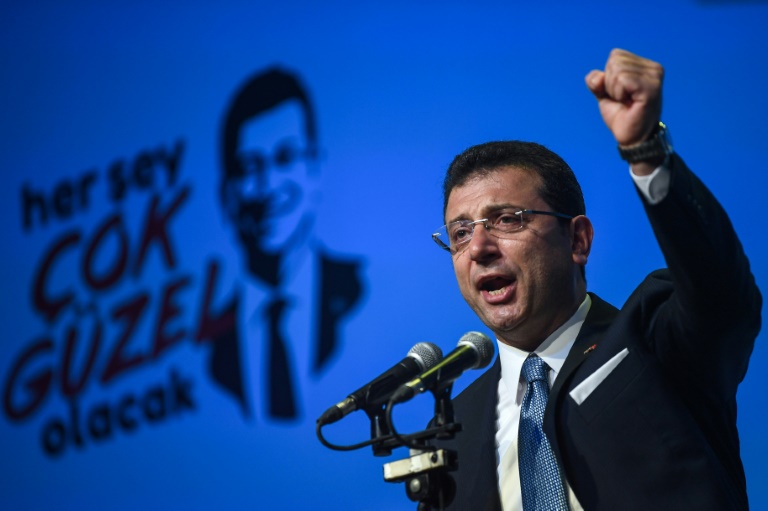
Istanbul’s popular mayor faces the threat of being banned from politics on Wednesday in a trial stemming from his surprise election victory over an ally of President Recep Tayyip Erdogan in 2019.

Ekrem Imamoglu’s fate is being watched closely for signs of judicial independence nine months before a general election in which Erdogan will struggle to extend his two-decade rule.

The 52-year-old Imamoglu is the most internationally recognised of the opposition leaders who might run against Erdogan.

He also has the most intense personal rivalry with the powerful Turkish leader.

Imamoglu was stripped of his narrow March 2019 win over the ruling party’s candidate after Erdogan — who launched his own career as Istanbul mayor and viewed the city as his second home — refused to recognise the result.

Elections officials reported discovering hundreds of thousands of “suspicious votes” after Imamoglu had been sworn into office.

Their decision to call a re-run election for that June sparked global condemnation and mobilised a groundswell of support for Imamoglu that included former ruling party voters.

Imamoglu won the second election by more than 800,000 votes.

But the usually soft-spoken mayor let his lingering bitterness at the ruling party spill over in November 2019.

“Those who cancelled the March 31 election are idiots,” he told reporters at the time.

– Appeals process –

Erdogan’s ruling AKP party seized on the remark and sued the mayor for “insulting” public officials.

Prosecutors have asked for Imamoglu to be banned from politics and jailed for 15 months — a relatively light sentence that almost never sees people put behind bars.

Defence lawyer Kemal Polat told AFP the mayor would immediately appeal against any ban and keep his job while the case wound its way through the courts.

“Imamoglu can remain in his current position as mayor until the end of the appeals process. He would not have to resign,” Polat said.

The mayor was due to appear in court on Wednesday to hear the verdict.

Turkey’s Western allies accuse Erdogan of undermining the independence of the courts and using them against political opponents following a failed military putsch in 2016.

Erdogan responded to the coup attempt with sweeping purges that saw thousands jailed on “terrorism” and other charges.

Everyone from human rights leaders and civil servants to opposition politicians — many of them from the main pro-Kurdish party — were jailed in mass trials that instilled fear across swathes of Turkish society.

– Knockout –

The West sternly urged Erdogan to abide by European court rulings demanding the release of several of his rivals.

Turkey’s status as a strategic member of NATO and a Muslim-majority democracy in a volatile part of the world has helped to preserve Erdogan’s ties with the West.

But the saga over the 2019 vote turned Imamoglu into a global figure whose sentencing could raise the diplomatic stakes ahead of next year’s vote.

The court case comes with Turkey’s fractured opposition parties still arguing over which candidate to field against Erdogan next June.

Imamoglu and Mansur Yavas — elected mayor of Ankara in 2019 — have emerged as two of the more popular opposition options because of their success at the ballot box.

Polls show both Imamoglu and Yavas beating Erdogan in a run-off election that would be called if no one picked up 50 percent of the vote in the first round.

Imamoglu’s office accused the ruling party of trying to “eliminate him from the upcoming elections”.

Some political analysts agree.

“The authorities could be tempted to knock (Imamoglu) out of the race,” said analyst Sinan Ulgen of the Istanbul-based Edam research institute.

“The opposition would then find its hands tied because it cannot take the risk of calling for protests for fear of legitimising the possible repressions that would follow,” he explained.

Alarm grows over deadly Iran crackdown on protests

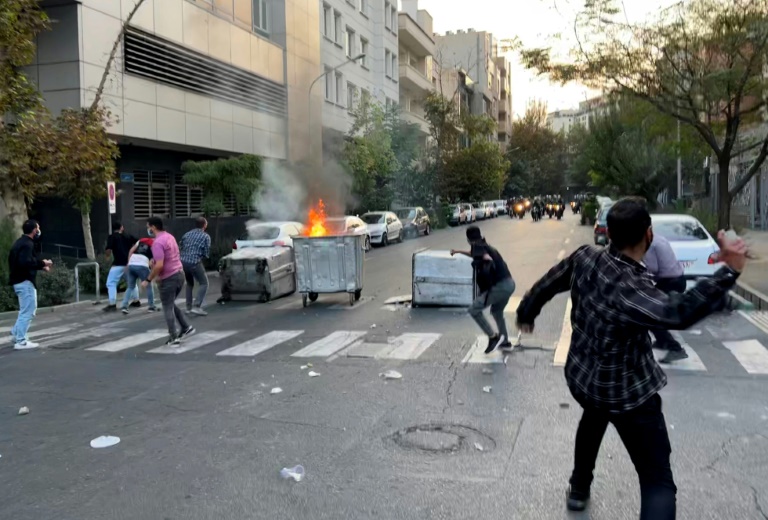
International alarm mounted on Tuesday over a deadly crackdown in Iran against protests that erupted over the death of young Iranian woman Mahsa Amini following her arrest by Tehran’s notorious morality police.

Amini, 22, died on Friday three days after she was urgently hospitalised following her arrest by police responsible for enforcing Iran’s strict dress code for women.

Activists said she suffered a blow to the head in custody but this has not been confirmed by Iranian authorities, who have opened an investigation.

Women and men took to the streets in cities and towns across the country for the fourth evening in a row Tuesday, despite the deaths of at least three people in the protests on Monday, shouting slogans against Iran’s clerical leadership, images posted on social media showed.

The protests are among the most serious in Iran since the November 2019 unrest over fuel price rises, and marked this time by the presence of large numbers of women.

They have on occasion removed their headscarves in defiance of the Islamic republic’s strict laws and sometimes even set them on fire or symbolically cut their hair.

The protests first erupted in Iran’s northern Kurdistan province where Amini was from. They have now spread across the country to Tehran and also major cities including Rasht in the north and Bandar Abbas in the south as well as the holy city of Mashhad in the east.

Kurdistan province governor Ismail Zarei Koosha confirmed the deaths of three people, insisting they were “killed suspiciously” as part of “a plot by the enemy”, according to the Fars news agency.

Activists say, however, that dozens of people have also been wounded and accuse the security forces of using live fire that has caused the casualties.

New York-based Human Rights Watch said witness accounts and videos circulating on social media “indicate that authorities are using tear gas to disperse protesters and have apparently used lethal force in Kurdistan province”.

In Geneva, the United Nations said acting High Commissioner for Human Rights Nada Al-Nashif expressed alarm at Amini’s death and the “violent response by security forces to ensuing protests”.

She said there must be an independent investigation into “Mahsa Amini’s tragic death and allegations of torture and ill-treatment”.

– ‘Stop further state killings’ –

The Kurdish human rights group Hengaw, which is based in Norway, said it had confirmed a total of three deaths in Kurdistan province — one each in Divandareh town, Saqqez and Dehgolan.

It added that 221 people had been wounded and another 250 arrested in Kurdistan, where there had also been a general strike on Monday.

A 10-year-old girl — images of whose blood-spattered body have gone viral on social media — was wounded in the town of Bukan but alive, Hengaw added.

Images posted on social media have shown fierce clashes especially in Divandareh between protesters and the security forces, with sounds of live fire.

Protests continued on Tuesday in Kurdistan, around Tehran’s main universities and also, unusually, at the Tehran bazaar, images showed.

“Death to the dictator”, and “Woman, life, freedom”, protesters shouted, while demonstrators were shown starting fires and seeking to overturn police vehicles in several cities.

“It is not surprising to us that we are seeing people of all walks of life come out in Iran to object vigorously to that, and say that is not the kind of society that they want to live in,” said US National Security Adviser Jake Sullivan.

Norway-based Iran Human Rights (IHR) NGO director Mahmood Amiry-Moghaddam said countries with diplomatic relations with Iran must act “to stop further state killings by supporting the people’s demands to realise their basic rights”.

– ‘Systemic persecution’ –

IHR said security forces used batons, tear gas, water cannon, rubber bullets and live ammunition in certain regions to “crush the protests”.

The Netblocks internet access monitor noted a more than three-hour regional internet blackout in Kurdistan province and also partial disruptions in Tehran and other cities during protests on Monday.

The situation will add to pressure on Iran’s ultra-conservative President Ebrahim Raisi who is in New York for the UN General Assembly this week where he was already set to face intense scrutiny over Iran’s human rights record.

Dissidents and ex-prisoners on Tuesday announced in New York the filing of a civil lawsuit against Raisi, over his role as a judge in the 1980s when thousands of people were sentenced to death in the country.

Cameron Khansarinia, political director of the advocacy group National Union for Democracy in Iran, said the complainants were “echoing the cries we hear today on the streets of Iran”.

Strengthening Hurricane Fiona heads north off Turks and Caicos

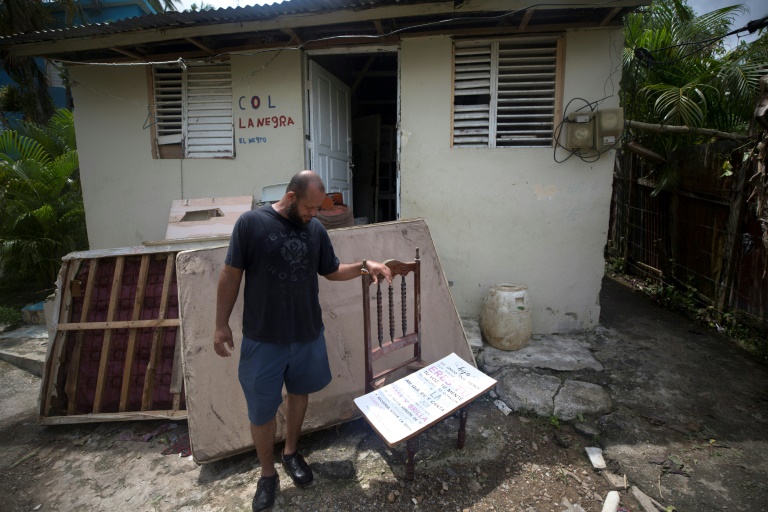
Hurricane Fiona continued its slow and devastating march northward after slamming the Turks and Caicos Islands as a powerful Category 3 storm on Tuesday and leaving a trail of destruction in Puerto Rico and the Dominican Republic.

The US National Hurricane Center (NHC) said Tuesday evening that the storm had moved 75 miles (120 kilometers) north of Turks and Caicos, though it was still producing strong winds and heavy rains on portions of the British territory that is home to some 38,000 people.

NHC aircraft had also measured an uptick in Fiona’s maximum windspeeds, now at 125 miles per hour, making it a major hurricane.

At least five people have died as the storm churned across the Caribbean — one in the French overseas department of Guadeloupe and two each in Puerto Rico and the Dominican Republic.

After leaving the Turks and Caicos Islands, Fiona began a slow crawl northwards on a path that could see the strengthening storm approach Bermuda late Thursday.

“Hurricane Fiona has proven to be an unpredictable storm,” Anya Williams, the deputy governor of Turks and Caicos, said in a broadcast.

Williams said no casualties or serious injuries had been reported in Turks and Caicos, but she urged residents to continue to shelter in place.

Blackouts were reported on Grand Turk and several other islands in the archipelago and 165 people were admitted to shelters, she said, adding that Britain’s Royal Navy and the US Coast Guard are standing by to provide assistance.

Dominican Republic President Luis Abinader has declared three eastern provinces to be disaster zones: La Altagracia — home to the popular resort of Punta Cana — El Seibo and Hato Mayor.

Authorities said Tuesday that more than 10,000 people had been moved to “safe areas,” while some 400,000 are without electricity.

Footage from local media showed residents of the east coast town of Higuey waist-deep in water trying to salvage personal belongings.

“It came through at high speed,” Vicente Lopez told AFP in Punta Cana, bemoaning the destroyed businesses in the area.

– ‘I have food and water’ –

US President Joe Biden has declared a state of emergency in Puerto Rico and dispatched the head of the Federal Emergency Management Agency to the island, which is still struggling to recover from Hurricane Maria five years ago.

“We’re sending hundreds of additional personnel to support all affected communities,” FEMA Administrator Deanne Criswell said Tuesday after a tour with Pedro Pierluisi, the island’s governor. 

Pierluisi said the storm had caused catastrophic damage on the island of three million people since Sunday, with some areas receiving more than 30 inches (76 centimeters) of rain.

Michelle Carlo, medical advisor for Direct Relief in Puerto Rico, told CBS News that “a lot of people in Puerto Rico are suffering right now.”

“About 80 percent of Puerto Ricans are still without power and about 65 percent are without water service,” Carlo said.

Across Puerto Rico, Fiona caused landslides, blocked roads and toppled trees, power lines and bridges, Pierluisi said.

A man was killed as an indirect result of the power blackout — burned to death while trying to fill his generator, according to authorities.

On Monday afternoon, Nelly Marrero made her way back to her home in Toa Baja, in the north of Puerto Rico, to clear out the mud that surged inside after she evacuated.

“Thanks to God, I have food and water,” Marrero — who lost everything when Hurricane Maria devastated Puerto Rico — told AFP by telephone.

The hurricane has left around 800,000 people without drinking water as a result of power outages and flooded rivers, officials said.

After years of financial woes and recession, Puerto Rico in 2017 declared the largest bankruptcy ever by a local US administration. 

Later that year, the double hit from hurricanes Irma and Maria added to the misery, devastating the electrical grid on the island — which has suffered from major infrastructure problems for years.

The grid was privatized in June 2021 in an effort to resolve the problem of blackouts, but the issue has persisted, and the entire island lost power earlier this year.

Strengthening Hurricane Fiona heads north off Turks and Caicos

Hurricane Fiona continued its slow and devastating march northward after slamming the Turks and Caicos Islands as a powerful Category 3 storm on Tuesday and leaving a trail of destruction in Puerto Rico and the Dominican Republic.

The US National Hurricane Center (NHC) said Tuesday evening that the storm had moved 75 miles (120 kilometers) north of Turks and Caicos, though it was still producing strong winds and heavy rains on portions of the British territory that is home to some 38,000 people.

NHC aircraft had also measured an uptick in Fiona’s maximum windspeeds, now at 125 miles per hour, making it a major hurricane.

At least five people have died as the storm churned across the Caribbean — one in the French overseas department of Guadeloupe and two each in Puerto Rico and the Dominican Republic.

After leaving the Turks and Caicos Islands, Fiona began a slow crawl northwards on a path that could see the strengthening storm approach Bermuda late Thursday.

“Hurricane Fiona has proven to be an unpredictable storm,” Anya Williams, the deputy governor of Turks and Caicos, said in a broadcast.

Williams said no casualties or serious injuries had been reported in Turks and Caicos, but she urged residents to continue to shelter in place.

Blackouts were reported on Grand Turk and several other islands in the archipelago and 165 people were admitted to shelters, she said, adding that Britain’s Royal Navy and the US Coast Guard are standing by to provide assistance.

Dominican Republic President Luis Abinader has declared three eastern provinces to be disaster zones: La Altagracia — home to the popular resort of Punta Cana — El Seibo and Hato Mayor.

Authorities said Tuesday that more than 10,000 people had been moved to “safe areas,” while some 400,000 are without electricity.

Footage from local media showed residents of the east coast town of Higuey waist-deep in water trying to salvage personal belongings.

“It came through at high speed,” Vicente Lopez told AFP in Punta Cana, bemoaning the destroyed businesses in the area.

– ‘I have food and water’ –

US President Joe Biden has declared a state of emergency in Puerto Rico and dispatched the head of the Federal Emergency Management Agency to the island, which is still struggling to recover from Hurricane Maria five years ago.

“We’re sending hundreds of additional personnel to support all affected communities,” FEMA Administrator Deanne Criswell said Tuesday after a tour with Pedro Pierluisi, the island’s governor. 

Pierluisi said the storm had caused catastrophic damage on the island of three million people since Sunday, with some areas receiving more than 30 inches (76 centimeters) of rain.

Michelle Carlo, medical advisor for Direct Relief in Puerto Rico, told CBS News that “a lot of people in Puerto Rico are suffering right now.”

“About 80 percent of Puerto Ricans are still without power and about 65 percent are without water service,” Carlo said.

Across Puerto Rico, Fiona caused landslides, blocked roads and toppled trees, power lines and bridges, Pierluisi said.

A man was killed as an indirect result of the power blackout — burned to death while trying to fill his generator, according to authorities.

On Monday afternoon, Nelly Marrero made her way back to her home in Toa Baja, in the north of Puerto Rico, to clear out the mud that surged inside after she evacuated.

“Thanks to God, I have food and water,” Marrero — who lost everything when Hurricane Maria devastated Puerto Rico — told AFP by telephone.

The hurricane has left around 800,000 people without drinking water as a result of power outages and flooded rivers, officials said.

After years of financial woes and recession, Puerto Rico in 2017 declared the largest bankruptcy ever by a local US administration. 

Later that year, the double hit from hurricanes Irma and Maria added to the misery, devastating the electrical grid on the island — which has suffered from major infrastructure problems for years.

The grid was privatized in June 2021 in an effort to resolve the problem of blackouts, but the issue has persisted, and the entire island lost power earlier this year.

Close Bitnami banner
Bitnami