World

US plans funds for new Atlantic grouping on ocean health, security

The United States on Tuesday led an initiative of 18 Atlantic nations to step up cooperation in the ocean, putting another $100 million on the table to support the environment and maritime security while curbing rampant illegal fishing.

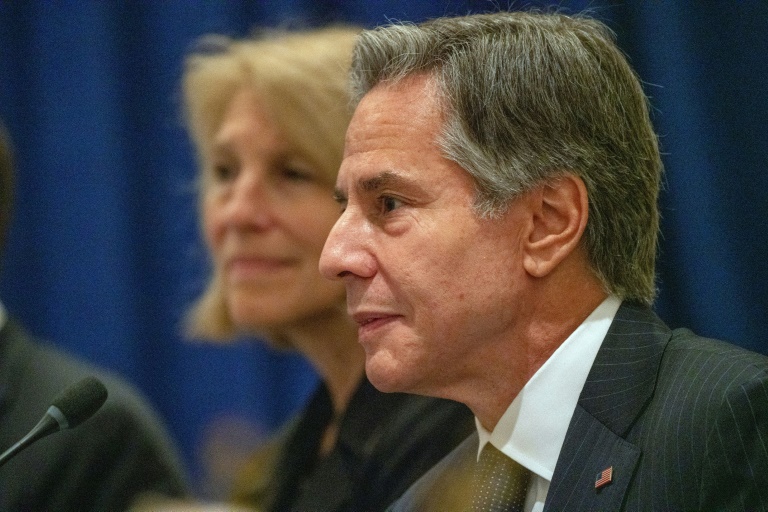
On the sidelines of the UN General Assembly in New York, Secretary of State Antony Blinken met jointly with the foreign ministers of Angola, Brazil, Ghana, Portugal and Senegal in what he said was the product of a year of diplomacy.

The nations will work together to “imagine together what greater cooperation across the entire Atlantic Ocean — both North and South — might look like,” Blinken said at the meeting.

“We know we can’t take for granted the free and open maritime trade that employs so many of our citizens, the undersea cables that connect us, the fish stocks and wildlife that sustain us,” he said.

“Only together can we address rising challenges and threats to our Atlantic future.”

The White House released a joint statement of 18 nations that also included Britain, Canada, Spain and Norway as they explore forming the grouping.

The statement called for action together against piracy, unregulated fishing and the impacts of pollution and climate change.

“The Atlantic Ocean also offers untapped economic potential, from natural resources to new technologies,” it said. “No country alone can solve the cross-boundary challenges in the Atlantic region or fully address the opportunities before us.”

Subject to congressional approval, President Joe Biden’s administration will devote another $100 million next year to the effort, in addition to around $400 million already spent each year on maritime initiatives in the Atlantic, a senior US official said.

According to UN figures, one in five fish caught in the Atlantic comes from illegal fishing, translating into losses of up to $23 billion per year.

“That harms coastal communities that rely on sustainable fish stocks for their income, for food.  It fuels corruption. It threatens the health and biodiversity of our oceans,” Blinken said.

The initiative comes as the Biden administration puts a growing focus on environmental cooperation around the world, including on the health of the oceans.

The administration has already put a high priority on the Pacific, seen as an area of potential conflict amid the rapid rise of China.

The joint statement said that the new Atlantic grouping will look to develop a “sustainable ocean economy” and improve cooperation on search and rescue operations and fighting piracy.

The initiative involves Brazil weeks ahead of elections in the Atlantic power, where President Jair Bolsonaro — an ally of business who has long been skeptical on climate — is trailing in polls as he seeks another term.
Hertz to buy some 175,000 GM EVs through 2027

US rental car giant Hertz will buy up to 175,000 electric vehicles from General Motors by the end of 2027, the companies announced Tuesday, as the auto industry grapples with concerns over climate change and petroleum dependency.

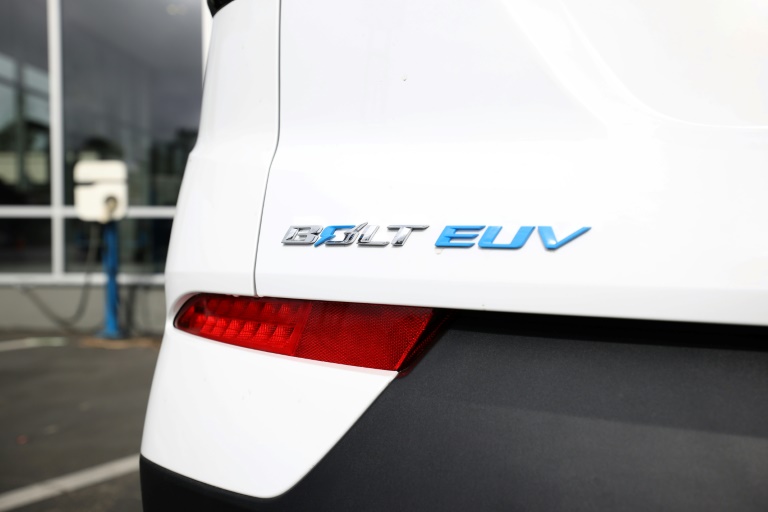
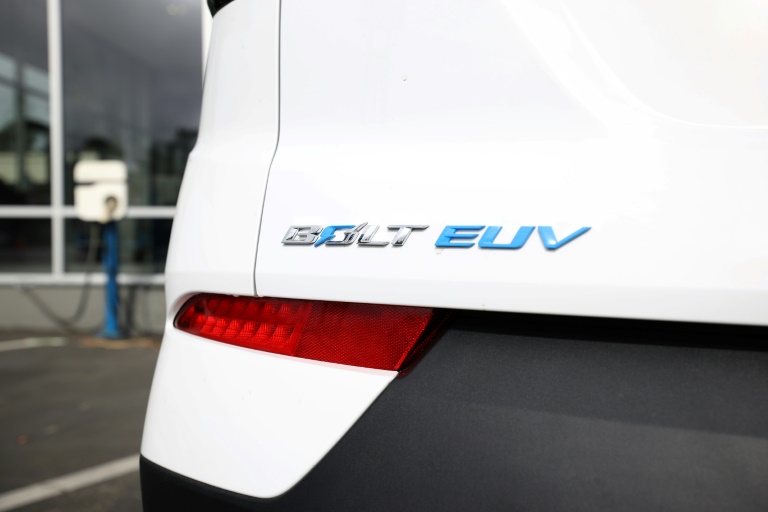
First deliveries, which will consist of BOLT EVs and EUVs, should take place in the first quarter of 2023, according to the joint statement.

Subsequent purchases will depend on how fast General Motors (GM) ramps up production of electric vehicles. The automaker says it plans to manufacture one million a year in North America by 2025. 

Hertz will be able to select from GM’s Chevrolet, Buick, GMC, Cadillac and BrightDrop EV brands, according to the press release.

“With the vehicle choice, technology and driving range we’re delivering, I’m confident that each rental experience will further increase purchase consideration for our products and drive growth for our company,” GM CEO Mary Barra said.

Hertz, which is aiming for one-quarter of its fleet to be comprised of electric vehicles by 2024, has already signed agreements for 100,000 Teslas and 65,000 Polestars, an electric car firm controlled by Sweden’s Volvo and its Chinese owner Geely.

While gasoline-powered cars still dominate US roads, auto giants are unveiling more and more EVs as they pump billions of dollars in investment in a bid to wrest control of a growing market from Tesla and newer upstarts.

In addition to its agreement with Hertz, GM announced Tuesday it has entered into a partnership with the Environmental Defense Fund to ensure that at least 50 percent of its new vehicles sold by 2030 are zero emitting.

The end goal is to eliminate all tailpipe emissions from passenger vehicles sold by GM by 2035, Barra said.

Hertz to buy some 175,000 GM EVs through 2027

US rental car giant Hertz will buy up to 175,000 electric vehicles from General Motors by the end of 2027, the companies announced Tuesday, as the auto industry grapples with concerns over climate change and petroleum dependency.

First deliveries, which will consist of BOLT EVs and EUVs, should take place in the first quarter of 2023, according to the joint statement.

Subsequent purchases will depend on how fast General Motors (GM) ramps up production of electric vehicles. The automaker says it plans to manufacture one million a year in North America by 2025. 

Hertz will be able to select from GM’s Chevrolet, Buick, GMC, Cadillac and BrightDrop EV brands, according to the press release.

“With the vehicle choice, technology and driving range we’re delivering, I’m confident that each rental experience will further increase purchase consideration for our products and drive growth for our company,” GM CEO Mary Barra said.

Hertz, which is aiming for one-quarter of its fleet to be comprised of electric vehicles by 2024, has already signed agreements for 100,000 Teslas and 65,000 Polestars, an electric car firm controlled by Sweden’s Volvo and its Chinese owner Geely.

While gasoline-powered cars still dominate US roads, auto giants are unveiling more and more EVs as they pump billions of dollars in investment in a bid to wrest control of a growing market from Tesla and newer upstarts.

In addition to its agreement with Hertz, GM announced Tuesday it has entered into a partnership with the Environmental Defense Fund to ensure that at least 50 percent of its new vehicles sold by 2030 are zero emitting.

The end goal is to eliminate all tailpipe emissions from passenger vehicles sold by GM by 2035, Barra said.

Kyrgyz leader seeks talks with Tajikistan after deadly clashes

Kyrgyzstan’s leader said Tuesday he is prepared to negotiate as long as it takes with Tajikistan to resolve a deadly border dispute, while also vowing his forces would not cede “a centimeter” of land.

The worst violence between the two ex-Soviet countries in years erupted last week on their contested border, raising fears of a large-scale conflict. At least 94 people have been killed, according to the two governments.

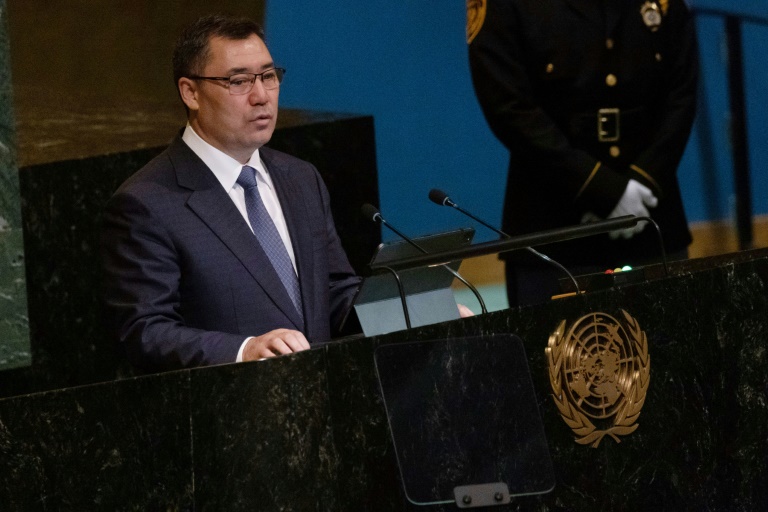
Kyrgyzstan President Sadyr Japarov, in an address to the United Nations General Assembly, said some 140,000 Kyrgyz civilians have been evacuated from border settlements and were being provided assistance.

“For the sake of my people, I am ready to spend… as much time as possible to solve this issue once and for all,” he said of the tensions which have simmered and occasionally spilled into open conflict. 

“Of course, whatever the solution is, it should be mutually beneficial,” he said.

Clashes regularly erupt between the two Central Asian neighbors, as around half of their 970-kilometer (600-mile) border is still to be demarcated.

Japarov said there was a “will and readiness on our part” to continue negotiations under any legal format with Tajikistan, adding that he welcomed any mediation efforts by international bodies such as the United Nations and the Organization for Security and Cooperation in Europe.

Japarov met on Friday with his Tajik counterpart Emomali Rahmon at a summit in Uzbekistan, where the two ordered their forces to draw down after a tentative ceasefire was reached.

While declaring his openness to further talks, Japarov also directly accused Tajikistan of “unjustified armed aggressions” against Kyrgyzstan and said his country reserves the right “to respond accordingly.”

He also said Kyrgyzstan has “documented evidence” of the “illegal and ill-intentioned actions of the Tajik side.”

Japarov emphasized: “the Kyrgyz side does not claim foreign lands, nor does it intend to give a centimeter of its land to anyone.”

On Sunday Tajikistan said 35 of its citizens had been killed, including 12 who died in a drone strike on a mosque, while Kyrgyzstan said 59 people died in the southern border region of Batken.

US Fed opens policy meeting with steep rate hike on the table

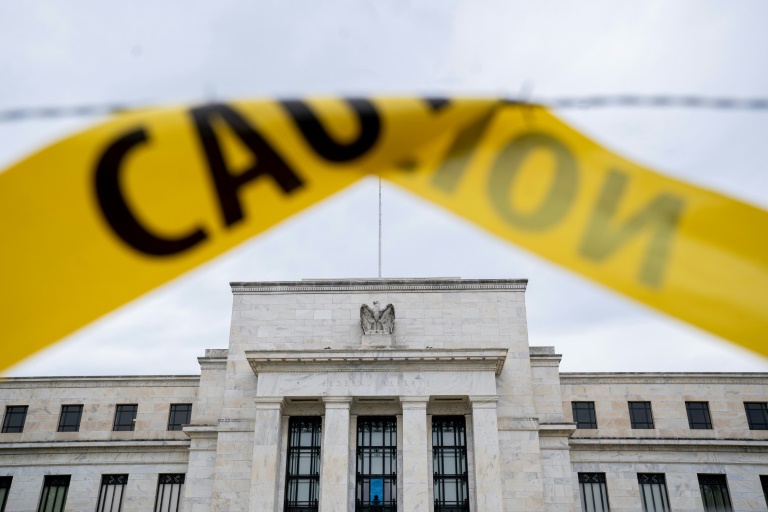
US central bankers opened their two-day policy meeting on Tuesday with another steep interest rate hike seen as a near certainty amid stubbornly high inflation.

American families have felt the squeeze of soaring prices, which have risen at the fastest pace since the early 1980s, and Federal Reserve Chair Jerome Powell has made it clear officials will continue to act aggressively to cool the economy.

Many economists are expecting a third straight three-quarter point rate hike when the meeting concludes Wednesday, an unprecedented action.

Fed officials have been united in the message that the US central bank cannot risk letting inflation take hold due to the damaging impact on workers and businesses, but analysts warn that the risks of recession are rising.

“The inflation rate will continue to call the tune for the path of monetary policy, despite rising risks of a recession in 2023,” said Kathy Bostjancic of Oxford Economics, who projects a downturn early next year. 

“We see higher-for-longer inflation, more aggressive Fed monetary policy tightening, and negative spillover effects from a weakening global backdrop combining to push the US economy into a mild recession in H1 2023.”

The Fed’s policy-setting Federal Open Market Committee (FOMC) is scheduled to announce its decision at 1600 GMT Wednesday.

Markets have been roiled in recent days by the decidedly hawkish statements from central bankers, and Powell’s press conference after the meeting will be closely scrutinized for information on what he thinks the next steps will be.

– More hikes coming? –

Despite the welcome drop in gasoline prices at the pump in recent weeks, the disappointing consumer price report for August, released last week, showed housing, food and medical costs continued to rise. And when volatile food and energy prices are stripped out, so-called core inflation accelerated.

It is not just current high inflation that concerns policymakers, but the fear that consumers and businesses begin to expect rising prices will become a permanent feature, which could set off a dangerous spiral and a phenomenon called stagflation.

That fear has driven the Fed to front-load its rate hikes, rather than pursuing the more customary course of small, gradual steps over a longer period. 

The US central bank has cranked up the benchmark lending rate four times this year, including two straight three-quarter-point hikes in June and July.

The aim is to raise the cost of borrowing and cool demand — and it is having an impact: Home mortgage rates have now topped six percent for the first time since 2008.

And recent statements from Fed officials indicate more rate hikes are coming, and no cuts until inflation is under control — dousing hopes that had built up in markets following the July policy meeting.

The FOMC also will release the quarterly forecasts from members, which will show how they feel about the direction of the economy and the impact of the policy moves, and how soon inflation will come down.

US Fed opens policy meeting with steep rate hike on the table

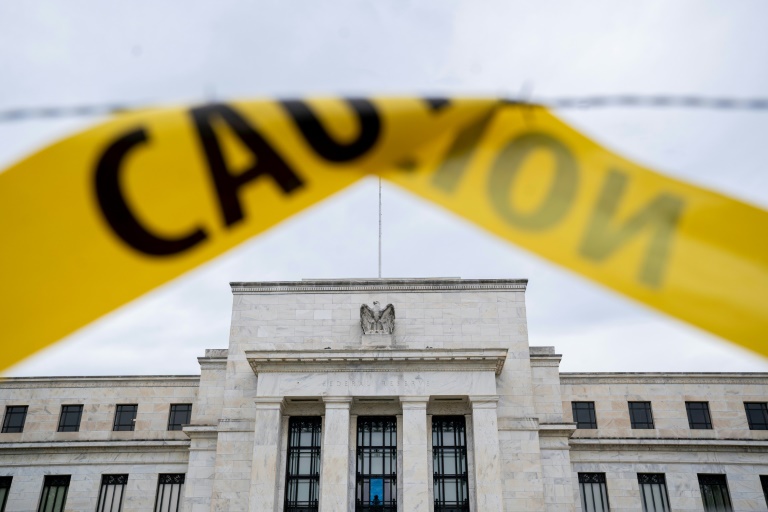
US central bankers opened their two-day policy meeting on Tuesday with another steep interest rate hike seen as a near certainty amid stubbornly high inflation.

American families have felt the squeeze of soaring prices, which have risen at the fastest pace since the early 1980s, and Federal Reserve Chair Jerome Powell has made it clear officials will continue to act aggressively to cool the economy.

Many economists are expecting a third straight three-quarter point rate hike when the meeting concludes Wednesday, an unprecedented action.

Fed officials have been united in the message that the US central bank cannot risk letting inflation take hold due to the damaging impact on workers and businesses, but analysts warn that the risks of recession are rising.

“The inflation rate will continue to call the tune for the path of monetary policy, despite rising risks of a recession in 2023,” said Kathy Bostjancic of Oxford Economics, who projects a downturn early next year. 

“We see higher-for-longer inflation, more aggressive Fed monetary policy tightening, and negative spillover effects from a weakening global backdrop combining to push the US economy into a mild recession in H1 2023.”

The Fed’s policy-setting Federal Open Market Committee (FOMC) is scheduled to announce its decision at 1600 GMT Wednesday.

Markets have been roiled in recent days by the decidedly hawkish statements from central bankers, and Powell’s press conference after the meeting will be closely scrutinized for information on what he thinks the next steps will be.

– More hikes coming? –

Despite the welcome drop in gasoline prices at the pump in recent weeks, the disappointing consumer price report for August, released last week, showed housing, food and medical costs continued to rise. And when volatile food and energy prices are stripped out, so-called core inflation accelerated.

It is not just current high inflation that concerns policymakers, but the fear that consumers and businesses begin to expect rising prices will become a permanent feature, which could set off a dangerous spiral and a phenomenon called stagflation.

That fear has driven the Fed to front-load its rate hikes, rather than pursuing the more customary course of small, gradual steps over a longer period. 

The US central bank has cranked up the benchmark lending rate four times this year, including two straight three-quarter-point hikes in June and July.

The aim is to raise the cost of borrowing and cool demand — and it is having an impact: Home mortgage rates have now topped six percent for the first time since 2008.

And recent statements from Fed officials indicate more rate hikes are coming, and no cuts until inflation is under control — dousing hopes that had built up in markets following the July policy meeting.

The FOMC also will release the quarterly forecasts from members, which will show how they feel about the direction of the economy and the impact of the policy moves, and how soon inflation will come down.

Moscow-held Ukraine regions to vote on annexation by Russia

Moscow-held regions of Ukraine will urgently vote on annexation by Russia, separatist officials said Tuesday, as Kyiv’s troops wrest back territory captured by Moscow’s forces.

Separatist authorities in the eastern Donetsk and Lugansk regions, as well as in the southern Kherson and Zaporizhzhia regions, said they would hold the vote over five days beginning Friday this week.

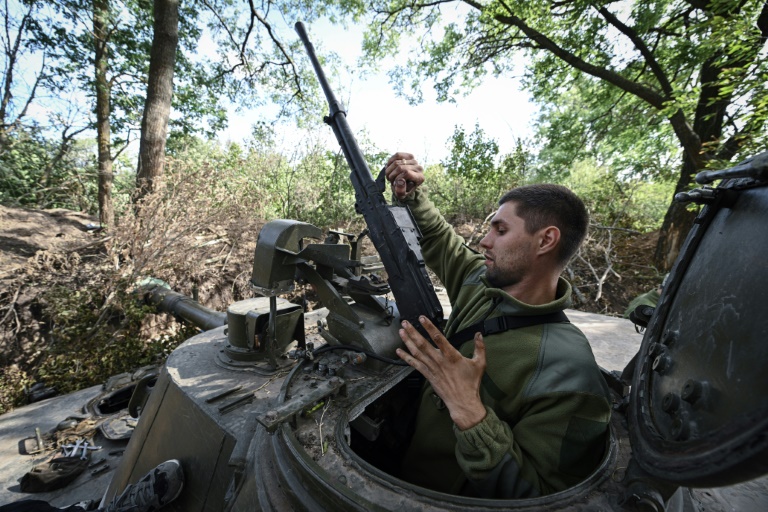
The regions are on the frontlines of a sweeping Ukrainian counter-offensive that has seen Kyiv’s forces retake hundreds of towns and villages that had been controlled by Russia for months.

Their integration into Russia would represent a major escalation of the conflict as Moscow could try to say it was defending its own territory from Ukrainian forces.

Washington, Berlin and Paris denounced the ballots and said the international community would never recognise the results while NATO said the votes marked a “further escalation” of the war.

Kyiv said the “sham” referendums were meaningless and vowed to “eliminate” threats posed by Russia, saying its forces would keep retaking territory regardless of what Moscow or its proxies announced.

Denis Miroshnichenko, a separatist leader in the Lugansk region, said pro-Moscow lawmakers had voted to hold the vote from September 23 to 27.

Shortly afterwards, a news portal associated with separatist authorities in Donetsk said the region would hold a ballot over the same dates.

Large parts of the industrial Donbas area — made up of Donetsk and Lugansk — have been controlled by Moscow-backed separatists since 2014, after nationwide demonstrations ousted a Kremlin-friendly Ukrainian president.

– ‘Restore historical justice’ –

Russia at the time annexed the Crimean peninsula on the Black Sea from Ukraine with a vote that was criticised by Kyiv and the West, which imposed sanctions in response.

Ahead of the announcement by separatist and pro-Moscow leaders, Russia’s lower house of parliament drafted new legislation tightening prison time for soldiers who surrender, desert or loot.

Authorities in the southern Kherson region of Ukraine also announced on Tuesday they would hold a vote over the same dates.

“The incorporation of the Kherson region into the Russian Federation will secure our territory and restore historical justice,” said the Moscow-installed head of that region, Vladimir Saldo.

He echoed a phrase used earlier in the day by Russia’s former president and prime minister Dmitry Medvedev who invoked correcting historical wrongs, but also said the votes would bolster Russian forces.

“Encroachment into Russian territory is a crime and if it is committed, that allows you to use all possible force in self-defence,” Medvedev, now the deputy chairman of Russia’s security council, said on social media. 

Pro-Moscow authorities in Ukraine’s Zaporizhzhia region — home to Europe’s largest nuclear power plant — also announced they would hold a vote on the region’s “territorial allegiance”.

Ukrainian President Volodymyr Zelensky’s chief of staff, Andriy Yermak, vowed a decisive response from Kyiv.

– ‘Sham’ votes –

“Ukraine will solve the Russian issue. The threat can be eliminated only by force,” Yermak said.

German Chancellor Olaf Scholz denounced the “sham” votes and said they must be rejected by the international community. French President Emmanuel Macron called them a “travesty”.

White House National Security Advisor Jake Sullivan said the referendums were “an affront to the principles of sovereignty and territorial integrity”.

“If this does transpire, the United States will never recognize Russia’s claims to any purportedly annexed parts of Ukraine,” he said.

Ukraine Foreign Minister Dmytro Kuleba said the referendums would change nothing.

“Ukraine has every right to liberate its territories and will keep liberating them whatever Russia has to say,” he said in a statement online.

At the United Nations, Turkish President Recep Tayyip Erdogan called for a “dignified way out” of the seven-month crisis sparked by Russia’s invasion.

The votes come at a decisive moment.

Ukraine’s forces in the east are now pushing towards the village of Bilogorivka whose capture by Russia in May decimated Moscow’s forces as they crossed the Siverskyi Donets river nearby.

Political analyst Tatiana Stanovaya said the vote announcements were a direct result of the success of Ukraine’s counter-offensive in east Ukraine.

Putin, she said, wants to threaten the full use of Russia’s military, including nuclear weapons, in defending Russian territory, including newly annexed regions.

“Putin does not want to win this war on the battlefield. Putin wants to force Kyiv to surrender without a fight,” she said.

The head of Russian state-media group, RT, Margarita Simonyan said the announcements marked either “the eve of our imminent victory or the eve of nuclear war”.

Speaking with newly appointed foreign ambassadors in Moscow on Tuesday ahead of the opening of the UN General Assembly, Putin said that Russia would pursue its “sovereign course.” 

The Russian leader earlier Tuesday met with defence industry representatives and demanded the sector “resolve the problem of the prompt and full provision of defense industry factories with domestically-manufactured components”.

Torture victims come forward after Russian retreat

This month’s dramatic Ukrainian advance north of Kharkiv drove Russian forces back across the border, and uncovered evidence of torture under their occupation.

Ukraine’s military focus has shifted east, but police and prosecutors have taken over the border community of Kozacha Lopan, and have launched an investigation.

The small town’s police station was used during the occupation as a base by a local pro-Russian militia, and alleged torture victims have come forward to testify.

“The people who worked as so-called ‘policemen’ in the so-called ‘People’s Police’ are known,” district war crimes prosecutor Kateryna Shevtsova told AFP.

“Measures for bringing them to justice will be taken in the coming days. Most of them were locals,” she said, at the municipal administration, surrounded by armed police.

Ukraine’s President Volodymyr Zelensky has denounced the Kremlin’s forces as “murderers” and “torturers” — while Moscow has dismissed atrocity claims as “lies”.

“Olexander” — AFP agreed to conceal his real name and identity as he has relatives in Russian-occupied Crimea — said he was arrested on March 22 by gunmen in two SUVs.

His captors, he said, turned out to be militia from the so-called Lugansk People’s Republic, a proxy force set up in 2014 with Moscow’s backing in an eastern enclave of Ukraine.

– ‘Like molten metal’ –

As a veteran of Ukraine’s “Anti-Terrorist Operation”, its war against the Lugansk and Donetsk pro-Russian forces, Olexander said he was a prime target for arrest.

The 40-year-old’s memories of his treatment at the hands of his Russian captors are at once traumatically vivid and painfully confused.

Returning to the scene of his torment in a wrecked railway building three kilometres from the Russian border, he at first took reporters to a dank cellar.

He looked around, but it didn’t feel right. Then he led AFP up to the customs office on the first floor of the Kozacha Lopan train station.

Grabbing a cloth, he swept broken glass from a patch of filthy office floor.

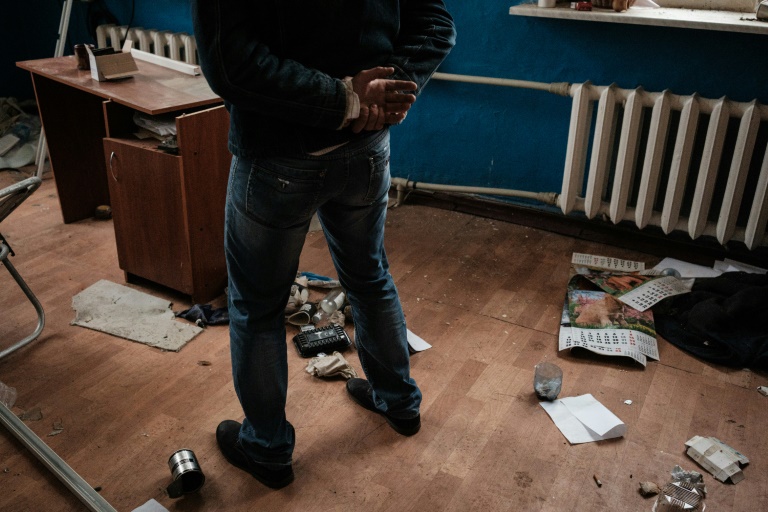
He lay down, twitching to show how he said he flailed and spasmed after Russian militia interrogators attached an electric cable to his penis.

But he was still not sure he had the story right. It wasn’t here either.

He poked around among smashed cabinets and Ukrainian signs defaced with the Russian forces’ “Z” symbol, as a stray dog shivered in the shattered stairwell.

Realisation dawned: It was the next office. Words spilled out of him as he recounted how he was frog-marched into this room, beaten, kicked and given electric shocks.

So violently did he jerk with the cable on his genitals, he said, that his captors had to cushion his head from hitting the floor to keep him conscious for questioning.

“So I was standing here like this and they started kicking me from every direction,” he told AFP, holding his hands behind his head, then stooping and writhing.

“I told them don’t hit me, I have a hernia, but then they pulled down my pants,” he said. “They called it ‘electroshock therapy’ when they hit me with the electricity.”

“I felt like they were pouring molten metal into me, inside of me,” he said.

Olexander was held in the railway station in the small town where he had lived all his life for around five days, then transferred to a larger prison in Hoptivka.

Eventually, on April 17, his captors surprised him by letting him leave, he presumes because they needed space for new Ukrainian prisoners of war.

He made his way back to Kozacha Lopan and, this month, when the town was recaptured by Ukrainian forces, he contacted the Ukrainian police.

– ‘All confirmed’ –

Kozacha Lopan is on a main rail line south across the international border from Russia to the Ukrainian city of Kharkiv and was one of the first towns to fall.

The road from Kharkiv is pitted with huge craters from rockets and shells. Cheap civilian Lada cars daubed with tell-tale “Z” symbols lie wrecked in the ditch.  

Today, the area is under the control of Ukrainian forces but is still tense. Even as the prosecutor conducts her investigation there is the sound of outgoing shell fire.

Shevtsova is moving quickly, convinced that she has all the evidence she needs to round up the suspects she accuses of working with the Russian occupation.

“Today we conducted an inspection of the basements, where, as we all know from the evidence, people were tortured,” she said. “This is all confirmed.”

“Just before that, we inspected the building where the so-called People’s Police were based. In this building there is a basement where people were tortured.”

Dutch unveil 17-bn-euro package for hard-hit households

The Dutch government announced an “unprecedented” 17.2 billion euro package on Tuesday to help citizens facing soaring energy prices and double-figure inflation driven by the ongoing war in Ukraine.

Dutch King Willem-Alexander unveiled the package as he opened parliament in The Hague, amid public cheers and jeers and opinion polls showing dipping confidence in Prime Minister Mark Rutte’s government.

“A direct consequence of the war and the international sanctions against Russia is that gas, electricity and food have become considerably more expensive,” the king said in his speech.

A summary of the new 2023 budget said the government is making 17.2 billion euros available next year and a further 4.9 billion in the following years.

Inflation in the Netherlands was at 12 percent in August according to the Dutch Central Statistics Bureau (CBS), three percent higher than the European Union average and the highest it’s been since the 1970s.

Energy prices rose by a staggering 170 percent and electricity by 149 percent in August, the CBS said.  

To combat the effects, the Dutch government announced a price cap on gas and electricity to be introduced from January 1.

– Cheers and jeers –

Parliament’s opening this year was the first time since the outbreak of the coronavirus pandemic in 2020 that the public was allowed to line the route between the king’s palace and the Royal Theatre in The Hague.

Thousands of onlookers, many decked out in orange, thronged the streets to watch the king pass in his coach. 

But there were also jeers from members of the crowd and some waved upside-down Dutch flags — a symbol of discontent with premier Rutte’s government, particularly amongst farmers.

Several opinion polls published by the NOS national broadcaster — including one conducted by the EenVandaag current affairs programme among 30,000 respondents — “showed that trust in politics are exceptionally low”.

The EenVandaag poll said only 15 percent of respondents still trusted the government.

Rising inflation, energy prices driven by Russia’s war in Ukraine, housing shortages and anger over the government’s climate plans all contributed to loss of trust, the polls said.

“We are here today to tell the government that things just cannot continue this way,” farmer Jan Olsthoorn, 40, told AFP.

“We are standing with our backs to the wall,” said Olsthoorn, wearing a T-shirt sporting an upside-down Dutch flag.  

UN chief warns of 'winter of discontent' as war and climate worsen

The head of the United Nations warned Tuesday of an upcoming “winter of global discontent” from rising prices, a warming planet and deadly conflicts as world leaders sought ways forward on Ukraine and Iran.

The UN General Assembly, the annual gathering of world leaders that clogs Midtown Manhattan, returned in person after two years of pandemic restrictions with only one leader allowed to appear virtually — Ukrainian President Volodymyr Zelensky.

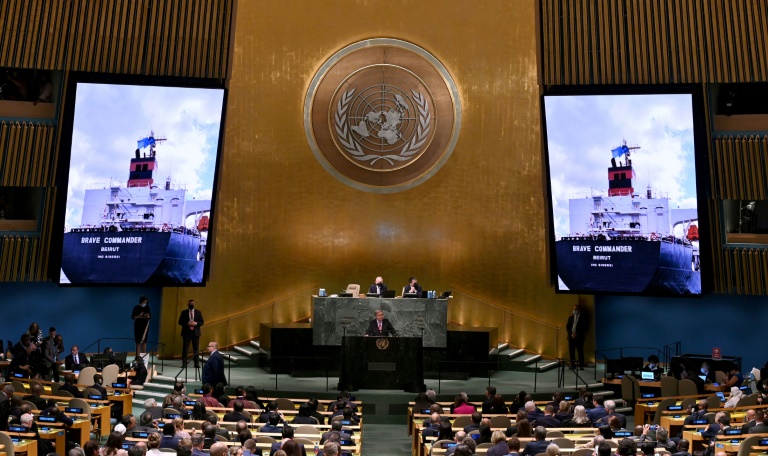
UN Secretary-General Antonio Guterres opened the summit with an image of a ship carrying grain out of Ukraine, a symbol of successful diplomacy, but he warned of a dire state of the planet. 

“A winter of global discontent is on the horizon,” Guterres said. 

“Trust is crumbling, inequalities are exploding, our planet is burning. People are hurting — with the most vulnerable suffering the most.”

With global temperatures rising and a chunk of Pakistan the size of the United Kingdom recently under water, Guterres lashed out at fossil fuel companies and the “suicidal war against nature.”

“Let’s tell it like it is — Our world is addicted to fossil fuels. It’s time for an intervention. We need to hold fossil fuel companies and their enablers to account,” Guterres said.

He called on all developed economies to tax profits from fossil fuels and dedicate the funds both to compensate for damage from climate change and to help people struggling with high prices.

“Polluters must pay,” Guterres said.

– Warnings on Ukraine –

The summit still saw disruption due to the death of Queen Elizabeth II, with President Joe Biden of the United States, by tradition the second speaker on the opening day, instead due to speak on Wednesday.

Just as leaders huddled at the United Nations about the war in Ukraine, Russian-backed forces announced they were going ahead with a move the West had long warned against — referendums on annexation by Moscow.

German Chancellor Olaf Scholz called the votes, to be conducted in the coming days in Russian-occupied Ukrainian territory, a “sham” that were part of “imperialist aggression” by Moscow.

The war in Ukraine, a major grain producer, has sent global food prices spiraling, hitting developing nations especially hard.

Senegalese President Macky Sall, the current chair of the African Union, urged a “negotiated solution” in Ukraine to “avoid the catastrophic risk of a potentially global conflict.”

Turkish President Recep Tayyip Erdogan, who has fashioned himself as a mediator and played a key role in arranging the grain shipments, called for an end to the war that recognizes Ukraine’s sovereignty and territorial integrity.

“Together, we need to find a reasonably practical diplomatic solution that will give both sides a dignified way out of the crisis,” Erdogan told the General Assembly.

Western leaders led by the United States have made clear they do not want the summit to focus exclusively on the Ukraine war itself, mindful of resentment in the developing world to the billions of dollars sent in weapons.

“The brutality of Russia’s war of aggression and its threat to the peace order in Europe have not blinded us to the fact that its dramatic effects are also clearly being felt in many other regions of the world,” German Foreign Minister Annalena Baerbock said.

US Secretary of State Antony Blinken will head a meeting on food security, and Guterres on Monday launched a bid to step up funding for education, badly affected by the pandemic.

– Criticism on Iran –

Among leaders who headed to New York was Iranian President Ebrahim Raisi, a hardliner who took office last year and faced noisy demonstrations on the streets of Manhattan.

While talks with Iran at the United Nations will once again focus on the fate of a 2015 nuclear accord, Raisi traveled as protests grip his country following the death of a young woman arrested by “morality police.”

Chilean President Gabriel Boric, a leftist former student leader, in his UN speech paid tribute to 22-year-old Mahsa Amini, who was arrested by the unit responsible for enforcing the Islamic republic’s strict dress code for women.

Boric called for “an end to abuses by the powerful everywhere,” including Russia’s “unjust war in Ukraine” and “violence against women” in Iran and elsewhere.

Iranian dissidents announced that they had filed a new lawsuit in US courts against Raisi over his role as a judge following the Islamic revolution in which thousands were sentenced to death.

Raisi went ahead with meetings including with French President Emmanuel Macron, who is seeking to revive the nuclear accord trashed by former US president Donald Trump.

Biden supports the accord, under which Iran drastically scaled back nuclear work in return for sanctions relief.

But Raisi has called for “guarantees” a future US leader will not ditch the deal, a promise the Biden administration considers impossible.

Close Bitnami banner
Bitnami