World

Ukraine reveals discovery of mass grave as US announces new aid

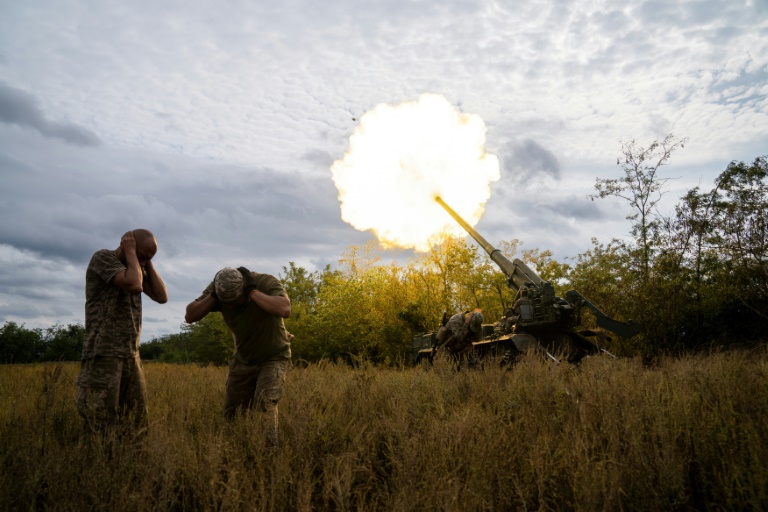
Ukrainian President Volodymyr Zelensky revealed on Thursday the discovery of a mass grave in the recently recaptured town of Izyum, likening it to deaths seen in the cities of Bucha and Mariupol, which have become symbols of Russian atrocities.

Hours later, the United States announced another $600 million in military aid to support Kyiv’s two-week-old counteroffensive aimed at dislodging Russian occupiers.

“We want the world to know what the Russian occupation has caused,” Zelensky said, without giving details on the number of bodies found or their cause of death.

Presidential chief of staff Andriy Yermak accused Russia of murder in a tweet about the mass grave, posting a photo of a forested area dotted with crudely made wooden crosses.

“All bodies will be exhumed and sent for forensic examination,” he said. “Expect more information tomorrow.”

A regional police official, Sergei Botvinov, told Sky News that a burial site with around 440 graves had been discovered in Izyum, with some of the dead shot and others killed in shelling.

“Also we have information that a lot of bodies have not been identified yet. So the reasons of death will be established during the investigations,” he added.

The grim discovery came as the White House on Thursday announced it had approved a new package of up to $600 million in additional military aid for Ukraine, including equipment and services, as well as training. 

Since Russia’s invasion began, the United States has provided more than $15 billion in military assistance to Kyiv.

– ‘As long as it takes’ –

European Union chief Ursula von der Leyen was in Kyiv on Thursday for discussions with Ukraine’s leaders about “getting our economies and people closer”.

Her trip coincided with a meeting between Russian President Vladimir Putin and his increasingly close ally Chinese leader Xi Jinping in ex-Soviet Uzbekistan, where the men hailed their strategic ties in defiance of the West.

“We will never be able to match the sacrifice that the Ukrainians are making,” von der Leyen told reporters during a joint press conference with Zelensky.

“But what we can tell you is that you’ll have your European friends by your side as long as it takes.”

Kyiv gained EU candidacy status in June at the same time as ex-Soviet Moldova, which borders Ukraine and like its neighbour has had Russian troops stationed in an eastern breakaway region.

The historic candidacy vote angered Moscow, which has tried to retain political and military influence in both countries since the collapse of the Soviet Union three decades ago.

EU countries have staunchly supported Ukraine since Moscow invaded in February by hitting Russia with economic penalties. 

Many members of the bloc have also supplied Kyiv with advanced weapons that have helped Ukrainian forces in recent weeks recapture swathes of territory.

Germany’s defence minister pledged more weapons on Thursday, saying Berlin would provide armoured vehicles and rocket launch systems — but not the battle tanks sought by Ukraine.

Von der Leyen said just ahead of her trip that the successive waves of EU sanctions against Russia were “here to stay”.

The Kremlin maintains that Russia has weathered the economic penalties. Moscow has responded by reducing or halting entirely gas flows to European countries.

– Putin praises Xi’s stance –

Ukrainian energy facilities, including Zaporizhzhia — Europe’s biggest atomic plant — have been hit by Russian strikes.

The UN nuclear agency on Thursday asked Russia to withdraw its troops from Zaporizhzhia, diplomats said.

Ukraine’s forces have posted slow but steady gains in the southern Kherson region near the Black Sea.

The Ukrainian presidency said on Thursday that intense fighting was ongoing around that southern front, adding that the military situation “remains extremely difficult”.

Local officials in the region around Zelensky’s hometown of Kryvyi Rih reported fresh Russian strikes Thursday after attacks damaged a dam and saw dozens of homes flooded.

In the eastern Donetsk region, which has been partially controlled by Russian-backed separatists since 2014, fresh shelling killed two civilians and left another 13 wounded.

At the meeting in Uzbekistan, Putin blasted attempts to create a “unipolar world” and praised China’s stance on the conflict.

“We highly appreciate the balanced position of our Chinese friends in connection with the Ukrainian crisis,” Putin told Xi.

Beijing has not explicitly endorsed Moscow’s invasion but it has steadily built economic and strategic ties with Russia over the six months of the war. 

burs-jbr/jmm/wd/dw/smw/it
Charles travels to Wales ahead of 'princes vigil' for queen

King Charles III heads to Wales Friday for the last of his visits to the four nations of the United Kingdom as preparations for the queen’s state funeral gather pace.

With queues to view the coffin of Queen Elizabeth II lying in state reaching over four miles (6.4 kilometres) long, Charles and his three siblings — Princess Anne, Prince Andrew and Prince Edward — were due to hold a family vigil in front of the coffin.

The so-called Vigil of the Princes, with all four royals in ceremonial military uniform, will last for 15 minutes from 1830 GMT.

British officials on Thursday pledged “a fitting tribute” to the queen, who died last Thursday at the age of 96 after a record-breaking 70 years on the throne.

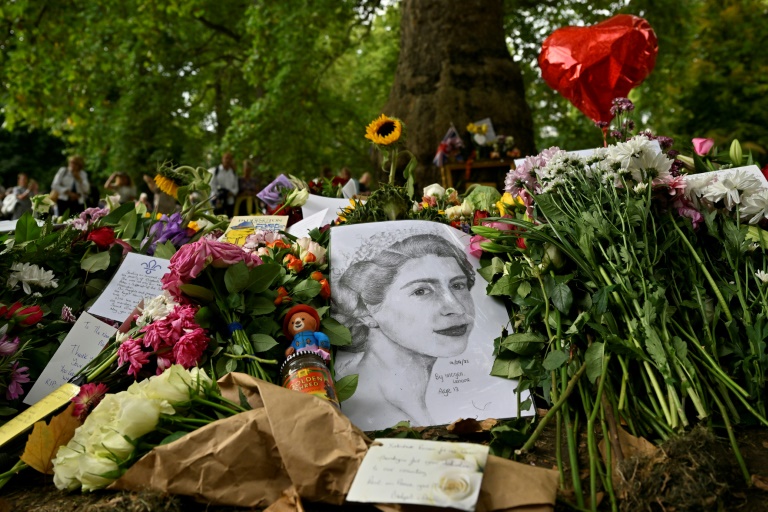
Her death has triggered an outpouring of emotion, with tens of thousands queueing for hours to pay their respects to the late monarch.

Charles, until last week the longest-serving Prince of Wales in history, was due to fly by helicopter to Cardiff early on Friday.

A spokesman for the king said he had a “lifelong commitment to the country’s people” and would have a private audience with the Welsh First Minister Mark Drakeford during his visit.

The king was “resilient and hard working” despite his loss, and “focused on leading the family, the nation and realm and the Commonwealth in mourning for Queen Elizabeth II”, the spokesman added.

– ‘Unique and timeless’ –  

The queen will be honoured with a state funeral — the first Britain has seen in nearly six decades — at Westminster Abbey on Monday morning, with more than 2,000 guests expected.

After the service, the coffin will be transferred by royal hearse to the queen’s Windsor Castle home, west of London, before a committal service at St George’s Chapel attended by many past and present royal staff.

A private burial will follow attended only by members of the royal family in which the queen will be laid to rest alongside her late husband Philip, parents and sister.

US President Joe Biden, Canadian Prime Minister Justin Trudeau, Australian leader Anthony Albanese and France’s Emmanuel Macron have all confirmed their attendance at the funeral, as have Japan’s Emperor Naruhito and numerous other royals.

“The queen held a unique and timeless position in all our lives,” funeral organiser the Duke of Norfolk Edward Fitzalan-Howard, also known as the Earl Marshal, told reporters at a briefing.

“It is our aim and belief that… the next few days will unite people across the globe and resonate with people of all faiths, whilst fulfilling Her Majesty and her family’s wishes to pay a fitting tribute to an extraordinary reign,” he said.

– ‘Peaceful’ –

The state funeral will follow four days of the queen’s coffin lying in state at Westminster Hall.

The line to enter the vast hall where the coffin has lain since late Wednesday has attracted a seemingly endless stream of mourners.

The casket is draped in the Royal Standard flag, with the Imperial State Crown, her ceremonial Orb and Sceptre on top, with tall, flickering candles at each corner.

“It’s very peaceful,” Londoner Rupa Jones, 43, told AFP after emerging from the cavernous space, the oldest part of Britain’s centuries-old parliament, calling the experience “overwhelming”.

She and her aunt had queued for nearly seven hours through the night for their fleeting moment in front of the coffin.

The sombre atmosphere inside is completed with guards in ceremonial uniform posted around the podium in a constant vigil.

Mourners have marked their moment in front of the coffin in various ways, from bows or curtsies to the sign of the cross or by simply removing their hats.

Some wiped away tears. Others brought infants in pushchairs. Old soldiers stopped and gave one last salute to their former commander-in-chief.

By early afternoon Thursday, the queue had grown to more than four miles (6.4 kilometres) along the south bank of the Thames river, with people set to wait through the night.

Organisers have prepared up to 10 miles of queueing infrastructure, with expectations that hundreds of thousands will participate, in particular over the weekend.

Musician Jacqui Smith, who joined the queue on Wednesday evening, was sad but enthusiastic about the reign of the new king.

“I’ve been waiting for it for a long time,” she told AFP from Lambeth Bridge, within sight of Westminster Hall. “I love the queen, but I’m a real Charles fan.”

– Historic title –

William and wife Kate, meanwhile, travelled to Sandringham, the family’s private winter retreat in eastern England, to view the floral tributes left by members of the public.

Charles, 73, was made Prince of Wales by his mother in 1958, and on his first full day as monarch last Friday he bestowed the title on his eldest son.

The historic title has been given to the heir apparent since the start of the 14th century.

Thursday’s visit was the first official engagement conducted by the new Prince and Princess of Wales.

Elizabeth’s youngest son Prince Edward, 58, and his wife Sophie visited Manchester in northwest England to view the civic book of condolence at the city’s central library and floral tributes.

Brazil's Bolsonaro taps wife to woo Evangelicals, women

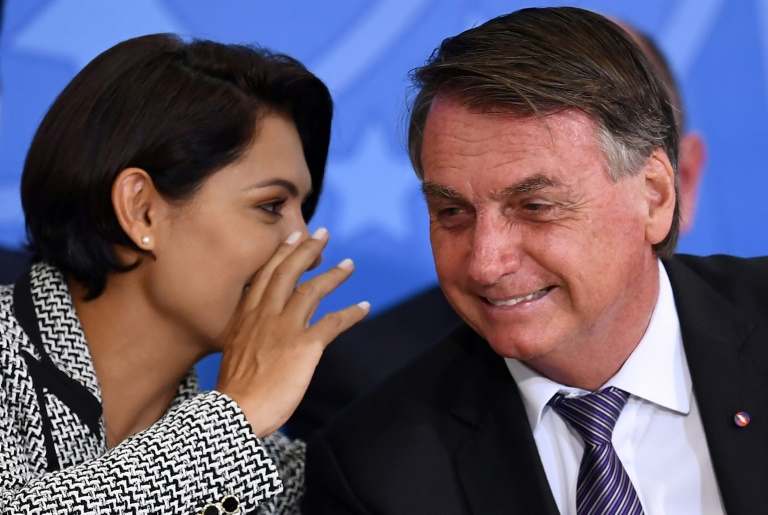
Once a discreetly smiling presence at Brazilian President Jair Bolsonaro’s side, First Lady Michelle Bolsonaro is increasingly wooing Evangelical Christian and women voters to reelect the husband she calls “one of God’s chosen ones.”

Trailing in the polls to his leftist rival Luiz Inacio Lula da Silva, the far-right incumbent has turned to his telegenic, fervently Christian wife to help him with those two key demographic groups ahead of October 2 elections.

A mainly behind-the-scenes presence for most of Bolsonaro’s term, the first lady is now playing a starring role in his campaign — to the point of giving what he himself called the keynote speech when he launched his reelection bid a month ago.

“She’s the most important person here,” Bolsonaro, 67, gushed that day.

He then handed the mic over to his beaming 40-year-old wife, who warned ominously against returning “our enemies” to power and led the crowd in the Lord’s prayer.

Bolsonaro has long struggled with women voters.

In his 2018 campaign, the former army captain was the target of a women-led movement called #EleNao — “not him” — launched by critics who accuse him of misogyny.

He has revived those accusations this time around with controversial campaign-trail behavior such as bragging about his supposed sexual prowess and lashing out at a woman journalist who asked him a tough question during the first presidential debate.

“You must have a crush on me or something,” he told her sarcastically.

Enter the first lady.

“Her role is to make (Bolsonaro) more attractive to women voters,” says Sergio Praca, a political analyst at the Getulio Vargas Foundation.

– Winning strategy? –

Both Bolsonaro and former president Lula are keenly courting women (53 percent of the electorate) and Evangelicals (an estimated 31 percent of Brazil’s 213 million people).

Known for his aggressive style and use of profanities, Bolsonaro has sometimes rubbed both groups the wrong way.

Political analysts say women voters also resent his lack of policies to help them through the country’s post-Covid-19 economic malaise, whose impact has fallen disproportionately on their shoulders.

Michelle, Bolsonaro’s third wife, sends the message the president is a “conservative family man” and “trustworthy” candidate, says Carolina Botelho, a political communication specialist at Rio de Janeiro State University.

The elegant first lady’s increasingly active role has turned heads — including among the electoral authorities, who recently blocked a Bolsonaro campaign ad from television, ruling she had exceeded the time allotted to candidates’ allies.

But it is unclear the strategy is paying off: Bolsonaro’s poll numbers among women have remained essentially flat, with a double-digit lead for Lula.

Michelle “may have reinforced (Bolsonaro’s) standing among women who were already with him, but she hasn’t drawn in those who were against him,” says Botelho.

“She speaks well to a fanatic, radicalized audience, but not to the rest of the population.”

– Religion and politics –

The first lady appears to have greater pull with conservative Christians, given her history of volunteering on church-affiliated charity projects and her close ties with powerful Evangelical pastors and politicians.

“Her main strength is among the Evangelical electorate,” says Adriano Laureno, a political analyst at consulting firm Prospectiva.

Her speaking style “closely resembles a pastor’s,” with constant references to God and a struggle between good and evil, he adds.

In this case, the strategy appears to be working: Bolsonaro holds a double-digit lead over Lula among Evangelicals.

Polls also show a majority of voters in Brazil believe religion should play a role in politics.

The first lady does just that in her public appearances, regularly repeating her husband’s slogan: “Brazil above all, and God above everyone.”

Climate-fueled hunger more than doubles in worst-hit countries: report

From record droughts to catastrophic floods, the world’s worst climate hotspots are seeing a surge in acute hunger, according to an Oxfam report that called on rich nations to drastically cut their emissions and compensate low-income countries.

The analysis, “Hunger in a heating world,” found that acute hunger had risen 123 percent over six years in the ten most-affected nations, defined by the most number of UN weather appeals.

“The effects of severe weather events are already being felt,” Lia Lindsey, Oxfam America’s senior humanitarian policy advisory told AFP, adding the report was timed to pressure world leaders at the UN General Assembly to act.

The countries — Somalia, Haiti, Djibouti, Kenya, Niger, Afghanistan, Guatemala, Madagascar, Burkina Faso and Zimbabwe — have repeatedly been battered by extreme weather over the last two decades. 

An estimated 48 million people across those countries suffer acute hunger, defined as hunger resulting from a shock and causing risks to lives and livelihoods and based on reports compiled by the World Food Programme.

That figure is up from 21 million people in 2016; 18 million people are on the brink of starvation.

The report acknowledges the complexity surrounding the causes of global hunger, with conflict and economic disruption — including those from the Covid-19 pandemic — remaining key drivers. 

“However, these new and worsening weather extremes are increasingly peeling away the abilities of poor people particularly in low-income countries to stave off hunger and cope with the next shock,” it said.

Somalia, for example, is facing its worst drought on record, forcing one million people to flee their homes. 

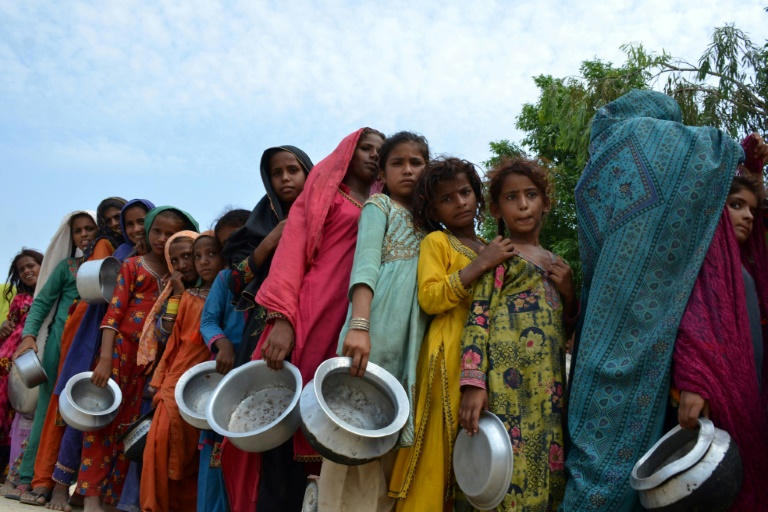
Climate change is also causing more frequent and intense heat waves and other extreme weather including floods, which covered one-third of Pakistan, washing away crops and topsoil and destroying farming infrastructure.

In Guatemala, weather conditions have contributed to the loss of close to 80 percent of the maize harvest, as well as causing a “coffee crisis” in the region that has hit vulnerable communities hardest and forced many to migrate to the United States. 

– ‘Obligation, not charity’ –

Oxfam stressed that climate-fueled hunger is a “stark demonstration of global inequality,” with the countries least responsible for the crisis suffering most from its impact.

Polluting industrialized nations such as those of the G20 are responsible for more than three-quarters of the world’s carbon emissions, while the 10 climate hotspots are collectively responsible for just 0.13 percent.

“Leaders especially of rich polluting countries must live up to their promises to cut emissions,” said Gabriela Bucher, Oxfam International executive director, in a statement. 

“They must pay for adaptation measures and loss-and-damage in low-income countries, as well as immediately inject lifesaving funds to meet the UN appeal to respond to the most impacted countries.”

The UN humanitarian appeal for 2022 comes to $49 billion, which Oxfam noted was equivalent to less than 18 days of profit for fossil fuel companies, when looking at average daily profits over the last 50 years.

Canceling debt can also help governments free up resources, said Bucher, with rich countries holding a moral responsibility to compensate poorer, most-affected countries. 

“This is an ethical obligation, not charity,” she said.

Florida governor flies migrants to wealthy Martha's Vineyard

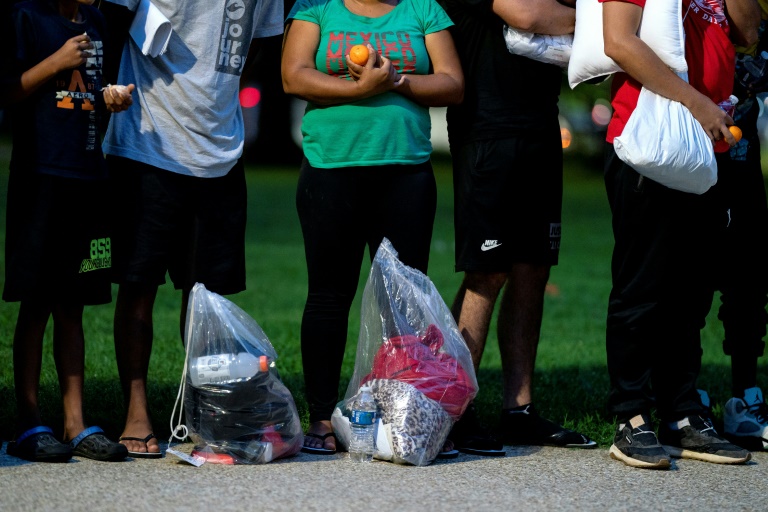
Florida Governor Ron DeSantis took credit Thursday for sending two planeloads of undocumented Venezuelans from Texas to wealthy Martha’s Vineyard, Massachusetts, as Republicans play up immigration issues before November midterm elections.

Around 50 of the migrants, including children, landed Wednesday on the island, where Democratic presidents from John F. Kennedy to Bill Clinton have summered, and former president Barack Obama owns an estate.

“Immigrants are being dropped off on Martha’s Vineyard by chartered flights from Texas. Many don’t know where they are. They say they were told they would be given housing and jobs,” said Dylan Fernandes, a local state legislator. 

Half-a-day later two buses also from Texas deposited dozens of migrants in front of the Washington residence of Vice President Kamala Harris, part of a five-month-old operation by Texas Republican Governor Greg Abbott to pressure Democrats on the immigration issue.

“We are not a sanctuary state. . . We will help facilitate that transport for you to be able to go to greener pastures,” DeSantis said at an official event in Florida Thursday.

“In Florida, we take what is happening at the southern border seriously,” he said.

President Joe Biden slammed the moves as Republicans “playing politics with human beings.” 

“What they’re doing is simply wrong,” said Biden at a Congressional Hispanic Caucus event Thursday evening. “It’s un-American. It’s reckless.” 

– Busing thousands of migrants –

The moves came as DeSantis and Abbott, two of the country’s most prominent and combative Republican governors, have sought to highlight the issue of tens of thousands of migrants trying to cross the southern border into the United States each month.

Abbott, whose state is the first destination for most of the migrants crossing from Mexico, has since April sent about 10,000 of them northward, mainly to Washington, Chicago and New York. These cities have declared themselves “sanctuaries” for migrants — meaning they will not be arrested solely for not having legal immigrant status.

Yet most of those being transported have been permitted to stay in the country by border officials after officially requesting asylum until their cases are reviewed.

The Texas governor, who is seeking re-election in November, said Thursday that Vice President Harris claims the border is secure and denies the existence of an immigration crisis.

“We’re sending migrants to her backyard to call on the Biden administration to do its job & secure the border,” he tweeted.

– Immigration politics –

DeSantis, also in a re-election battle, has supported Abbott, and is also a top contender to run for president under the Republican banner in 2024.

Charlie Crist, the Democrat challenging DeSantis for the Florida governorship, said sending the migrants to Martha’s Vineyard was a wholly political move.

“Florida is spending $12 million to fly innocent migrant children out of our state when that money could be spent on fighting to help Floridians and lower costs,” Crist said on Twitter.

“Everything Ron DeSantis does is to score political points and feed red meat to his base in his thinly veiled attempt to run for president.”

Christina Pushaw, a spokesperson for DeSantis, taunted the Martha’s Vineyard community, which announced efforts to house and feed the migrants.

“Residents of Martha’s Vineyard overwhelmingly support illegal immigration and call for more diversity. Governor DeSantis was kind enough to grant their wishes,” she wrote on Twitter.

“There may be space at the Obamas’ mansion for a few dozen illegal aliens,” she said.

Couple formally charged in Argentine VP assassination attempt

The gunman who tried to shoot Argentina’s Vice President Cristina Kirchner in the face was formally charged Thursday with attempted homicide, as was his girlfriend, court documents showed.

Fernando Sabag Montiel, 35, was caught on stunning video pointing a pistol at Kirchner from close range as she greeted supporters outside her home on September 1.

After Montiel’s weapon failed to go off — for reasons still unknown — he was overpowered and arrested, while his girlfriend Brenda Uliarte, 23, was arrested three days later.

The judge leading the case, Maria Capuchetti, issued charges of attempted aggravated homicide with premeditation against Sabag Montiel and Uliarte, who will remain in police custody, according to court documents seen by AFP.

Judge Capuchetti has yet to issue charges against two of the couple’s acquaintances — Agustina Diaz, 21, and Gabriel Carrizo, 27 — who were both arrested earlier this week.

Authorities had said earlier that there was evidence of “planning and prior agreement” between Montiel and Uliarte, though their motives have not yet been clearly established.

The investigation has been based primarily on analysis of the suspects’ social media accounts, computers and phones. They paid particular attention to the fact that Kirchner’s supporters gathered near her house every night.

This “was studied in detail by the two (defendants) to choose the right time for the attack,” Capuchetti said.

Although the pair have not been shown to be politically radical, Montiel did have tattoos of neo-Nazi symbols.

Uliarte showed clear hostility towards Kirchner online, saying in one message: “I sent (someone) to kill Cristina.”

Kirchner, the 69-year-old former president, enjoys a loyal support base among followers of the center-left Peronist movement.

But she is disliked in equal measure by the political opposition, and is at the center of a heated corruption trial from her time in office.

The day after the attack, tens of thousands of people demonstrated in several Argentine cities to show her support.

Kirchner spoke publicly Thursday for the first time since the attempt on her life, during a meeting in the Argentine Senate with priests and nuns working in the slums around the capital.

“I feel that I am alive thanks to God and the Virgin” Mary, she said.

She also said that Pope Francis, who is Argentine himself, had called her after the attack to express his support.

Argentina’s highly polarized politics have been at the center of debate since the attack, with politicians from both sides blaming each other for fomenting a “climate of hate.”

EU lawmakers say Hungary no longer a 'full democracy'

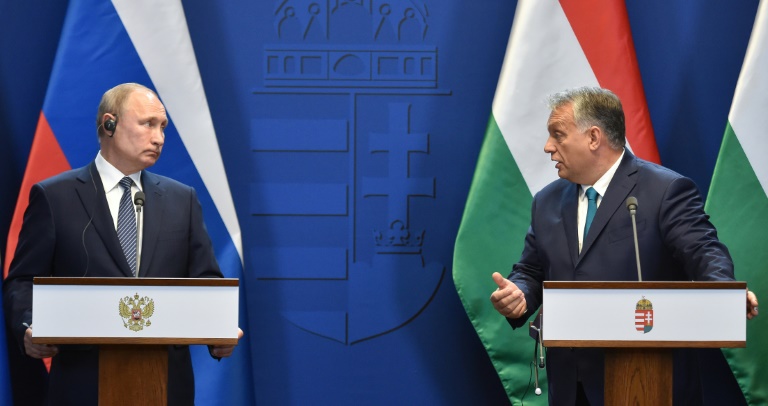
Hungary reacted furiously Thursday to a vote in the European Parliament that declared that the country was no longer a “full democracy” and that the European Union needed to act.

The response came after MEPs voted 433 in favour, 123 against, in favour of the resolution.

It described Hungary as “a hybrid regime of electoral autocracy” in “serious breach” of EU democratic norms.

It blamed European Union inaction for having encouraged the slide away from democracy and said EU Covid recovery funds should be withheld from Budapest until it put its house in order.

The country is ruled by populist Prime Minister Viktor Orban, who maintains close ties to Russian President Vladimir Putin.

The vote was largely symbolic and does not change the course of EU decision making, which requires unanimity of all 27 member states — including Hungary — to adopt positions on major issues, such as sanctions on Russia.

But Hungary’s Foreign Minister Peter Szijjarto told reporters in Budapest: “I consider it an insult against a Hungarian person if someone questions Hungary’s capacity for democracy.”

He said he was astonished that some in Brussels and Strasbourg insisted on “belittling” his country.

– A ‘clear call’ –

With their vote, the EU lawmakers endorsed a parliamentary report that said Hungary had been backsliding on democratic and fundamental rights since 2018 through the “deliberate and systematic efforts of the Hungarian government”.

The lack of action by EU institutions including the commission, which acts as “guardian” of the EU treaties enshrining democratic standards, had exacerbated the degradation, said the report.

Greens MEP Gwendoline Delbos-Corfield, the rapporteur for the report on Hungary, said it had raised a number of concerns.

They include the independence of the judiciary in Hungary, corruption, freedom of expression and academic freedom.

“It is a clear call from the majority of political groups,” she said of the vote.

“Hungary has turned into a hybrid regime of electoral autocracy.”

MEP Fabienne Keller, of the Renew Europe group, argued: “If Hungary was a candidate today to enter the EU, it would no longer be possible.”

EU countries have been treading a careful line around Hungary because of the need to win its assent on major decisions.

But diplomats privately are frustrated with Orban’s cosy relationship with the Kremlin and his blocking of further sanctions on Moscow.

The commission has likewise been careful to avoid overt criticism, but unease over Hungary’s swerve away from rule of law, particularly in failing to curb corruption, is becoming more evident.

– Corruption concerns –

Commission chief Ursula von der Leyen said Wednesday, in her State of the European Union address to the European Parliament, that the EU “must fight for our democracies”.

Her EU executive would work to protect the member states “from the external threats they face, and from the vices that corrode them from within,” she said.

Although she did not name Hungary directly in this context, she pledged legislative action to step up the fight against corruption, including against “illicit enrichment, trafficking in influence and abuse of power”.

Her EU justice commissioner, Didier Reynders, told MEPs in a debate on rule of law breaches in Hungary that the commission “shares a large number of concerns expressed by the European Parliament” regarding Budapest.

The European Parliament in 2018 launched a procedure against the risk Hungary posed to European democratic values.

The EU has also earmarked 5.8 billion euros ($5.8 billion) for Hungary from its Covid recovery fund. But Budapest’s spending plan for the monies has not been signed off by Brussels due to corruption concerns. 

In theory, the mechanism can lead to Hungary losing its right to vote in the Council of the EU, where member states adopt decisions affecting the bloc.

Long lost moon could have been responsible for Saturn's rings

Discovered by Galileo 400 years ago, the rings of Saturn are about the most striking thing astronomers with small telescopes can spot in our solar system.

But even today, experts cannot agree on how or when they formed.

A new study published Thursday in the prestigious journal Science sets out to provide a convincing answer.

Between 100-200 million years ago, an icy moon they named Chrysalis broke up after getting a little too close to the gas giant, they conclude.

While most of it made impact with Saturn, its remaining fragments broke into small icy chunks that form the planet’s signature rings.

“It’s nice to find a plausible explanation,” Jack Wisdom, professor of planetary sciences at MIT and lead author of the new study, told AFP.

Saturn, the sixth planet from the Sun, was formed four and a half billion years ago, at the beginning of the solar system. 

But a few decades ago, scientists suggested that Saturn’s rings appeared much later: only about 100 million years ago.

The hypothesis was reinforced by observations made by the Cassini probe, which orbited Saturn from 2004 to 2017.

“But because no one could think of a way to make the rings 100 million years ago, some people have been questioning the reasoning that led to that deduction,” said Wisdom.

By constructing complex mathematical models, Wisdom and colleagues found an explanation that both justified the timeline, and allowed them to better understand another characteristic of the planet, its tilt.

Saturn has a 26.7 degree tilt. Being a gas giant, it would have been expected that the process of accumulating matter that led to its formation would have prevented tilt.

– Gravitational interactions –

Scientists recently discovered that Titan, the largest of Saturn’s 83 moons, is migrating away from the planet, at a rate of 11 centimeters a year.

This changes the rate at which Saturn’s axis of tilt loops around the vertical — the technical term is “precession.” Think of a spinning top drawing circles. 

Around a billion years ago, this wobble frequency came into sync with Neptune’s wobbly orbit, creating a powerful gravitational interaction called “resonance.” 

In order to maintain this lock, as Titan kept moving out, Saturn had to tilt, scientists argued.

But that explanation hinged on knowing how mass was distributed in the planet’s interior, since the tilt would have behaved differently if it were concentrated more at its surface or the core.

In the new study, Wisdom and colleagues modeled the planet’s interior using gravitational data gathered by Cassini during its close approach “Grand Finale,” its last act before plunging into Saturn’s depths.

The model they generated found Saturn is now slightly out of sync with Neptune, which necessitated a new explanation — an event powerful enough to cause the drastic disruption.

Working through the mathematics, they found a lost moon fit the bill.

“It’s pulled apart into a bunch of pieces and those pieces subsequently get pulled apart even more, and gradually rolls into the rings.”

The missing Moon was baptized Chrysalis by MIT’s Wisdom, likening the emergence of Saturn’s rings to a butterfly emerging from a cocoon.

The team thinks Chrysalis was a bit smaller than our own Moon, and about the size of another Saturn satellite, Iapetus, which is made entirely of water ice.

“So it’s plausible to hypothesize that Chrysalis is also made of water ice, and that’s what it needs to make the rings, because the rings are almost pure water.

Asked whether he felt the mystery of Saturn’s rings stood solved, Wisdom replied, soberly, “We’ve made a good contribution.” 

The Saturn satellite system still holds “a variety of mysteries,” he added.

Climate change likely worsened Pakistan floods: study

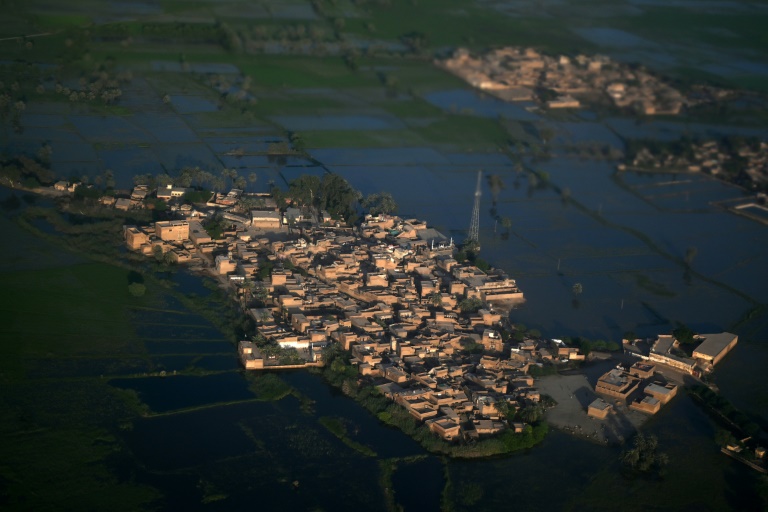
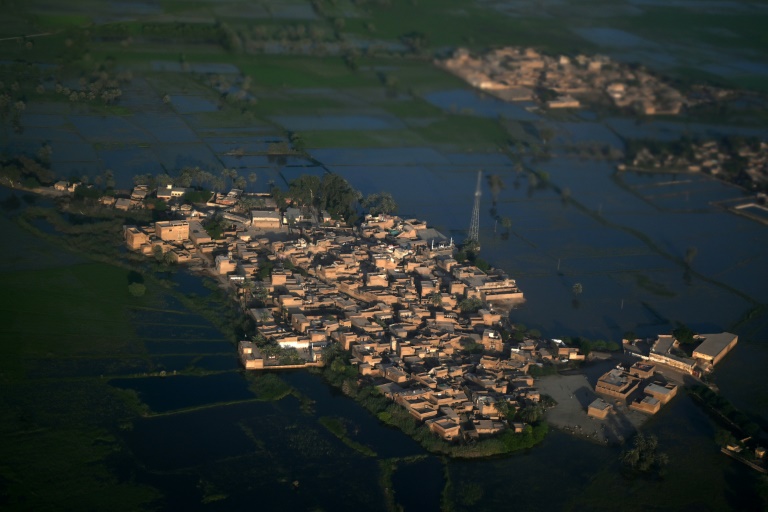
Human-caused climate change likely contributed to the deadly floods that submerged parts of Pakistan in recent weeks, according to a rapid analysis on Thursday looking at how much global heating was to blame.

An international team of climate scientists at the World Weather Attribution group said that rainfall in the worst-hit regions had increased as much as 75 percent in recent decades and concluded that manmade activity likely boosted record levels of August precipitation in Sindh and Balochistan provinces. 

The resulting flooding affected over 33 million people, destroyed 1.7 million homes and killed nearly 1,400 people.

To determine what role global heating played in the downpours, the scientists analysed weather data and computer simulations of today’s climate to determine the likelihood of such an event occurring at the roughly 1.2 degrees Celsius of warming that human activity has caused since the Industrial era.

They then compared that likelihood to data and simulations of conditions in the climate of the past — that is, 1.2C cooler than currently. 

They found that climate change likely increased the 5-day total rainfall for Sindh and Balochistan by up to 50 percent. 

The analysis showed that there was a roughly one percent chance of such an event occurring in any given year in our current climactic conditions.

“The same event would probably have been much less likely in a world without human-induced greenhouse gas emissions, meaning climate change likely made the extreme rainfall more probable,” the team said. 

The authors of the study however stressed that due to large variations in seasonal monsoon rainfall over Pakistan historically, it was not possible to conclude that manmade warming contributed significantly to 60-day total rainfall levels.

“What we saw in Pakistan is exactly what climate projections have been predicting for years,” said Friederike Otto, senior lecturer in Climate Science at Imperial College London’s Grantham Institute. 

“It’s also in line with historical records showing that heavy rainfall has dramatically increased in the region since humans started emitting large amounts of greenhouse gases into the atmosphere.” 

– Finance needed –

Otto said while it was hard to put a precise figure on the extent to which manmade emissions drove the rainfall, “the fingerprints of global warming are evident”.

The World Meteorological Organization this week said that weather-related disasters such as Pakistan’s had increased five-fold over the last 50 years, killing 115 people each day on average. 

The warning came as nations are gearing up for the COP27 climate summit in Egypt in November, where at-risk countries are demanding that rich, historic polluters compensate them for the climate-drive loss and damage already battering their economies and infrastructure. 

Fahad Saeed, researcher at the Center for Climate Change and Sustainable Development in Islamabad, said the floods showed the need for richer nations to radically ramp up funding to help others adapt to climate change — another key ask at COP27.

“Pakistan must also ask developed countries to take responsibility and provide adaptation plus loss and damage support to the countries and populations bearing the brunt of climate change,” he said.

Climate change likely worsened Pakistan floods: study

Human-caused climate change likely contributed to the deadly floods that submerged parts of Pakistan in recent weeks, according to a rapid analysis on Thursday looking at how much global heating was to blame.

An international team of climate scientists at the World Weather Attribution group said that rainfall in the worst-hit regions had increased as much as 75 percent in recent decades and concluded that manmade activity likely boosted record levels of August precipitation in Sindh and Balochistan provinces. 

The resulting flooding affected over 33 million people, destroyed 1.7 million homes and killed nearly 1,400 people.

To determine what role global heating played in the downpours, the scientists analysed weather data and computer simulations of today’s climate to determine the likelihood of such an event occurring at the roughly 1.2 degrees Celsius of warming that human activity has caused since the Industrial era.

They then compared that likelihood to data and simulations of conditions in the climate of the past — that is, 1.2C cooler than currently. 

They found that climate change likely increased the 5-day total rainfall for Sindh and Balochistan by up to 50 percent. 

The analysis showed that there was a roughly one percent chance of such an event occurring in any given year in our current climactic conditions.

“The same event would probably have been much less likely in a world without human-induced greenhouse gas emissions, meaning climate change likely made the extreme rainfall more probable,” the team said. 

The authors of the study however stressed that due to large variations in seasonal monsoon rainfall over Pakistan historically, it was not possible to conclude that manmade warming contributed significantly to 60-day total rainfall levels.

“What we saw in Pakistan is exactly what climate projections have been predicting for years,” said Friederike Otto, senior lecturer in Climate Science at Imperial College London’s Grantham Institute. 

“It’s also in line with historical records showing that heavy rainfall has dramatically increased in the region since humans started emitting large amounts of greenhouse gases into the atmosphere.” 

– Finance needed –

Otto said while it was hard to put a precise figure on the extent to which manmade emissions drove the rainfall, “the fingerprints of global warming are evident”.

The World Meteorological Organization this week said that weather-related disasters such as Pakistan’s had increased five-fold over the last 50 years, killing 115 people each day on average. 

The warning came as nations are gearing up for the COP27 climate summit in Egypt in November, where at-risk countries are demanding that rich, historic polluters compensate them for the climate-drive loss and damage already battering their economies and infrastructure. 

Fahad Saeed, researcher at the Center for Climate Change and Sustainable Development in Islamabad, said the floods showed the need for richer nations to radically ramp up funding to help others adapt to climate change — another key ask at COP27.

“Pakistan must also ask developed countries to take responsibility and provide adaptation plus loss and damage support to the countries and populations bearing the brunt of climate change,” he said.

Close Bitnami banner
Bitnami