World

Ukraine recaptures more ground as Russia strikes back

Ukraine said Monday that its forces regained yet more ground in the past 24 hours and retook an area seven times the size of Kyiv this month, as Russia responded with strikes on some recaptured areas.

The territorial shifts marked one of Russia’s biggest reversals since its troops were turned back from Kyiv in the earliest days of the nearly seven months of fighting, yet Moscow signalled it was no closer to agreeing to a negotiated peace.

The retreat of Russian troops in recent days has drawn weeping and relieved locals into bomb-cratered streets, including on Sunday in the strategic but heavily damaged town of Izyum.

“It’s not enough to say I’m happy. I just don’t have enough words to express myself,” said Yuriy Kurochka, 64. 

Yet by Monday, Moscow had announced air, rocket and artillery attacks on reclaimed areas in the Kharkiv region, a day after Kyiv said Russian strikes on electricity infrastructure had caused power failures.

The retaliatory fire came as Ukraine said forces had retaken more than 20 additional settlements, claiming “Russian troops are hastily abandoning their positions and fleeing”.

Kyiv had already announced the recapture of Izyum in the country’s east, while President Volodymyr Zelensky said Monday that Ukraine’s forces retook a total of 6,000 square kilometres (2,320 square miles) from Russian control in September.

US Secretary of State Antony Blinken on Monday said Ukrainian forces had made “significant progress”, due to their resilience as well as US support.

“It’s too early to tell exactly where this is going. The Russians maintain very significant forces in Ukraine as well as equipment and arms and munitions. They continue to use it indiscriminately against not just the Ukrainian armed forces but civilians and civilian infrastructure as we’ve seen,” Blinken said.

A US think tank, the Institute for the Study of War, tweeted: “Ukraine has turned the tide in its favour, but the current counter-offensive will not end the war.” 

Defence Minister Oleksii Reznikov told French daily Le Monde in a Monday interview that the war has entered a new phase with the help of Western weapons.

Moscow conceded having lost territory — which experts saw as a serious blow to its war ambitions — but Kremlin spokesman Dmitry Peskov said there was no prospect of negotiations.

“The special military operation continues and will continue until the objectives that were originally set are achieved,” he added, using Russia’s terminology for the internationally condemned war. 

– ‘Weapons, weapons, weapons’ –

The Russian strikes hit 15 locations on Sunday, from Kramatorsk in the east to Mykolaiv in the south and Dnipro in between, Ukraine’s military said.

Ukraine had already lost all power from the Russian-controlled Zaporizhzhia nuclear plant, threatened by shelling since February’s invasion.

The country’s nuclear energy agency said the final reactor at the plant — Europe’s largest nuclear power station — had been shut off as a safety measure.

Kyiv and Moscow have shown “signs that they are interested” in creating a security zone around the plant, the UN atomic watchdog said Monday.

“What we need here really is Ukraine and Russia to agree on a very simple principle of not attacking or not shelling the plant,” IAEA director general Rafael Grossi told reporters.

But later Monday, Ukraine foreign ministry spokesman Oleg Nikolenko said the only way to “ensure the nuclear safety and security of the Zaporizhzhia power plant is its de-occupation, demilitarisation and return to Ukrainian control”. 

“All IAEA efforts must be focused on achieving this goal,” he wrote on Twitter.

The speed of Ukraine’s fightback has seemingly caught Russia’s military off guard, bringing swathes of territory Moscow had controlled for months back into Kyiv’s fold.

Images posted by the Ukrainian military showed crates of munitions and military hardware scattered across territory abandoned by Russian forces.

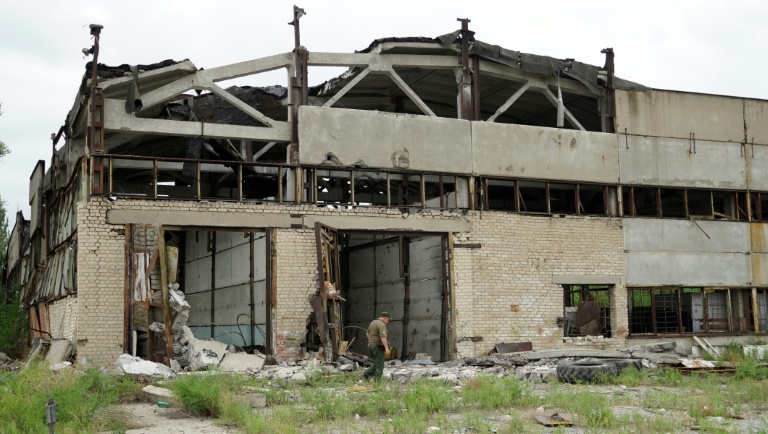
Around the town of Balakliya, AFP journalists saw evidence of fierce battles, with buildings destroyed or damaged and streets mostly deserted.

Ukrainian authorities also claimed to have found four bodies of civilians with “signs of torture” in the recaptured village of Zaliznychne.

Residents reported that Russian troops had killed villagers, the regional prosecutor’s office said. 

Ukraine’s foreign minister used the momentum of the country’s fightback to appeal to Western allies for more stockpiles of sophisticated weapons.

“Weapons, weapons, weapons have been on our agenda since spring. I am grateful to partners who have answered our call: Ukraine’s battlefield successes are our shared ones,” Dmytro Kuleba said.
Uhuru Kenyatta: inscrutable leader leaves a mixed legacy

Puppet or strategist, dilettante or power-hungry heir?

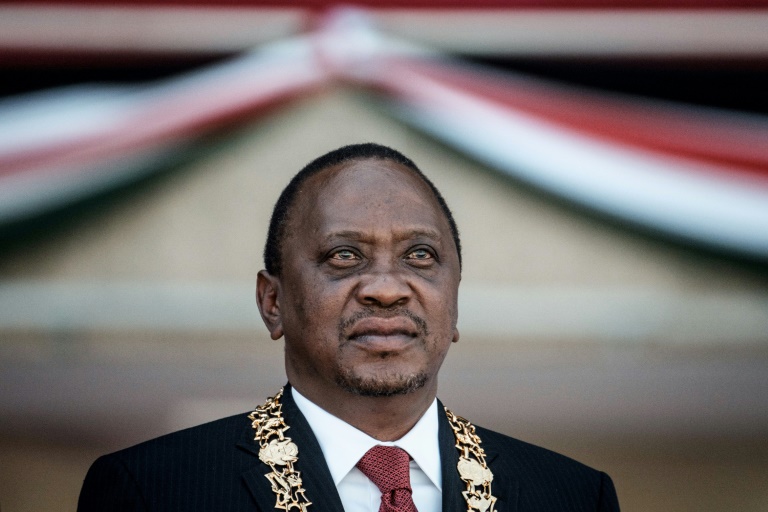
After nearly 10 years in power and a mixed legacy, Uhuru Muigai Kenyatta remains an enigma to many Kenyans as he leaves office.

But one thing is certain: it is impossible to disassociate the outgoing leader from his family, which ranks among Kenya’s richest, with two of Kenya’s four presidents emerging from the Kenyatta dynasty.

Unable to run again after two terms at the helm, his endorsement of historic arch-rival Raila Odinga appeared a cunning move by a kingmaker seeking to influence Kenya’s future long after retirement. 

But the play backfired. 

His deputy and once close ally William Ruto secured victory — and Kenyatta found himself rebuked even in his own heartland, as voters in Mount Kenya turned out for his opponent.

True to form, his motives or future plans remain unclear.

But many believe he will build on the diplomatic legacy crafted since his re-election in 2017.

The 60-year-old has worked hard to raise Kenya’s international stature and fashioned himself as a regional statesman, seeking to resolve conflicts in Ethiopia and the Democratic Republic of Congo.

He also strengthened its status as an East African economic powerhouse, launching several major infrastructure projects including a Nairobi expressway inaugurated in July.

But these projects also caused Kenya’s debt to balloon to about $70 billion.

In his final address to the nation on the eve of Ruto’s inauguration, Kenyatta said the economy had tripled under his watch and Kenya was on track to becoming a middle-income country.

“In all the work I have done as president… I have been guided by the dream of our forefathers: to eliminate poverty, ignorance and disease, to improve the quality of life of all Kenyans and to create conditions for everyone to achieve their dreams,” he said.

– Political alliances –

His avowed fight against corruption has prompted bemusement and even ridicule among Kenyans who have long seen the Kenyatta family as the embodiment of the elite stranglehold on power.

His father Jomo served as independent Kenya’s first president and the family is the country’s largest landowner, with an empire that includes dairy giant Brookside, the NCBA bank and television broadcaster Mediamax.

His own fortune was estimated at $500 million by Forbes in 2011.

Born to Jomo and his fourth wife “Mama” Ngina in October 1961, Uhuru (“freedom” in Swahili) studied in the US and entered politics in the mid-1990s.

Over the years “the prince of Kenyan politics” has allied himself with leaders across the spectrum, from the autocrat Daniel arap Moi — an early mentor — to former president Mwai Kibaki, whom he backed in the 2007 election.

That disputed vote led to an eruption of politically-motivated tribal violence largely involving two of Kenya’s main ethnic groups, the Kikuyu and the Kalenjin, that saw more than 1,100 people killed.

In 2013, Kenyatta — a Kikuyu — allied with Ruto, a Kalenjin, and was elected president. 

Both were indicted by the International Criminal Court for their role in the 2007-2008 killings but the cases eventually collapsed because of what the prosecution said was a relentless campaign of witness intimidation.

Kenyatta’s 2017 re-election bid plunged the country into turmoil, as police cracked down on opposition protests to deadly effect.

His victory was annulled by the Supreme Court, but he won a re-run after his then opponent Odinga boycotted the process.

But in March 2018, the two men stunned the nation by shaking hands and declaring a truce — known simply as “the handshake” — that consigned Ruto to the sidelines.

Kenyatta’s pet political project, the Building Bridges Initiative (BBI) which aimed to expand the executive, hit a roadblock after the Supreme Court ruled it illegal.

Many saw the constitutional proposals, which included the creation of a new prime ministerial post allegedly earmarked for Kenyatta, as a final bid to stay in power after his last term as president.

– ‘Party animal’ –

Kenya’s global profile rose under his watch. He welcomed foreign investors and a succession of visiting dignitaries including former US president Barack Obama and Pope Francis.

Some diplomatic sources characterise him as “a party animal who didn’t want the job” while others describe him as an astute politician with a common touch “who knows how to talk to people”.

A regular churchgoer, he easily mixes with ordinary Kenyans, eagerly gets down on the dance floor and joshes in the local youth slang.

His shy brother Muhoho manages the family finances, while Kenyatta reportedly enjoys driving around Nairobi late at night, incognito and protected by a handful of bodyguards.

Despite many Kenyans suspecting Kenyatta will keep his hand in the game, he himself has dismissed the speculation.

“I don’t want to remain in power as they allege. This is a difficult job,” he told a prayer service last month.

“Ten years for me is enough.”

US Justice Dept agrees to Trump 'special master' suggestion

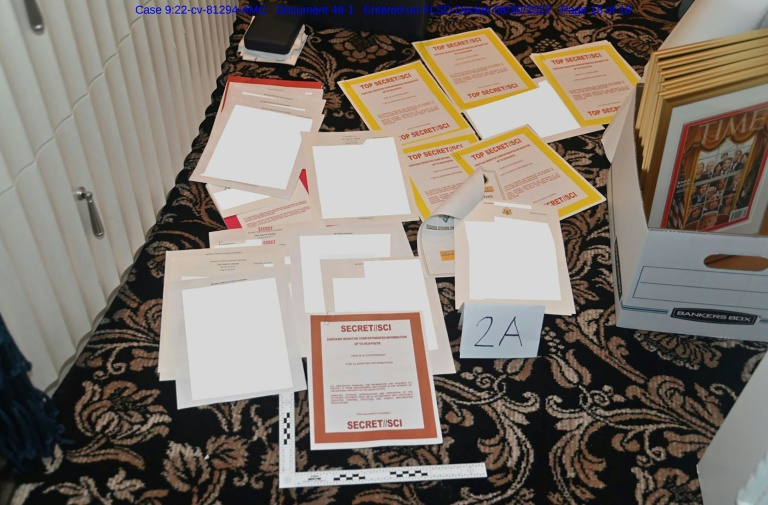
The US Department of Justice will accept the appointment of one of the judges proposed by Donald Trump as a “special master” in the investigation of classified documents seized from the former president’s Florida home last month, it said Monday.

Despite pushback from the department, federal judge Aileen Cannon agreed last week to grant Trump’s request to name an independent reviewer for the case, assigned to look over the hundreds of classified documents taken from his Mar-a-Lago resort in an FBI raid August 8.

Trump is facing mounting legal pressure, with the Justice Department saying top-secret documents were “likely concealed” to obstruct an FBI probe into his potential mishandling of classified materials.

He has denied all wrongdoing, saying the raid was “one of the most egregious assaults on democracy in the history of our country.”

On Friday, Trump’s legal team and the Justice Department each submitted to Judge Cannon the names of two candidates for the role.

But in a court filing earlier Monday, Trump rejected both of the government’s nominations.

The department said in its own court filing later Monday that it would agree to the appointment of Trump suggestion Judge Raymond Dearie, from the Eastern District of New York, in addition to its own nominees.

Justice officials had originally suggested retired federal judges Barbara Jones and Thomas Griffith, and said they would accept any of the three due to their “previous federal judicial experience and engagement in relevant areas of law.”

The filing also noted the department “respectfully opposes the appointment of Paul Huck, Jr,” the Trump team’s second nominee, a federal judge from Florida, “who does not appear to have similar experience.”

Trump’s legal team did not include the reason for rejecting Jones and Griffith in its filing, saying “it is more respectful to the candidates from either party to withhold the bases for opposition from a public, and likely to be widely circulated, pleading.” 

It is now up to Cannon to choose whether to name 78-year-old Dearie to the case.

Government attorneys previously opposed Trump’s special master request all together, arguing that an independent screening for privileged material could harm national security, and was also unnecessary as a team had already completed a screening.

In addition to the documents probe, Trump faces investigations in New York into his business practices, as well as legal scrutiny over his efforts to overturn results of the 2020 election, and for the January 6, 2021, attack on the US Capitol by his supporters. 

Ruto to be sworn in as Kenya's president after divisive poll

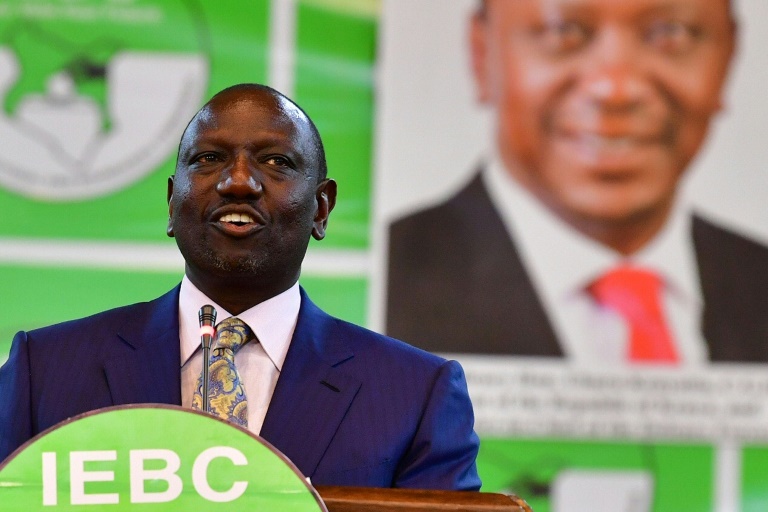
William Ruto will be sworn in as Kenya’s president on Tuesday after narrowly winning the coveted job in a bitterly fought but largely peaceful election.

About 20 heads of state and thousands of spectators are expected to attend his inauguration at a Nairobi stadium.

A notoriously ambitious politician who has been deputy president since 2013, Ruto beat his rival Raila Odinga — who had been backed by outgoing president Uhuru Kenyatta — by less than two percentage points.

He now faces a daunting task to steer a polarised country gripped by a cost-of-living crisis and punishing drought, say analysts.   

The 55-year-old rags-to-riches businessman who once sold chickens on the roadside will become just the fifth president in Kenya’s post-independence history.

By law, Ruto must take the oath of office by 2:00 pm (1100 GMT) on Tuesday, five weeks to the day since the August 9 election.

His rise to State House has been closely watched by the international community, which depends on Kenya as a reliable and stable democratic partner in a turbulent region.

Foreign allies and independent observers praised the conduct of the vote, which was largely peaceful and free of the violence that has marred past elections in the country of 50 million people.

Ruto won by only around 200,000 votes out of 14 million cast but the Supreme Court on September 5 upheld his victory, dismissing claims by his opponents of fraud and mismanagement.

– ‘Hand of brotherhood’ –

Outgoing head of state Kenyatta, who in a stunning turn of events had backed his longtime archrival Odinga in the election race, has promised a smooth transfer of power.

Kenyatta finally shook hands with Ruto at a meeting at the presidential residence on Monday after pointedly failing to publicly congratulate his deputy for several weeks.

Ruto has struck a conciliatory tone, extending a “hand of brotherhood” to his rivals and their supporters.

“We are not enemies. We are Kenyans,” Ruto said after the court’s decision.

But observers say he faces a tough assignment building goodwill after a divisive and expensive political campaign that lasted well over a year and was peppered with acrimony and personal slander.

“This is the time to close ranks, embrace opponents and help forge a united front devoid of cheap political competition,” Kenyan newspaper The Standard wrote in a September 11 editorial.

Many ordinary Kenyans stayed away from the ballot box, with disillusionment particularly among the youth and economic hardship blamed for the low turnout.

The East African political and economic powerhouse is reeling from a once-in-a-generation drought and inflation is at five-year highs. 

Ruto said Sunday that Kenya was “in a deep economic hole” and repeated his pledge to lower the cost of living as a priority upon taking office.

From humble beginnings, the multi-millionaire cast himself as a champion for the downtrodden during his campaign, vowing to create jobs and tackle a cost-of-living crisis.

Among his ambitious promises was the creation of a 50-billion shilling ($415 million) “hustler fund” to provide loans to small businesses, and a commitment to bring down prices for fuel, grain and fertiliser.

– Generous send-off –

The task to turn around the economic fortunes of the country may, however, not be easy, the International Crisis Group (ICG) think tank said, urging Ruto to quickly address the challenges. 

“The 2022 Kenyan elections may have been a success… For Ruto, however, given sky-high popular expectations and an economy in dire straits, governing may well prove tougher than campaigning,” it said in a statement. 

Ruto’s inauguration marks the end of Kenyatta’s nearly decade in power, and one of the rare occasions his powerful family has not been at the apex of Kenyan politics.

Already one of Kenya’s wealthiest citizens, the outgoing president will receive a generous send-off under Kenya’s constitution as he leaves office having served two terms, the maximum allowed by law. 

The 60-year-old will receive a tax-free lump sum of $324,000 and more than $600,000 in allowances every year.

Kenyatta, the son of Kenya’s first president Jomo Kenyatta, will also have access to fully furnished offices, dozens of aides, VIP security and new cars of his choice, replaced every three years. 

Asian stocks rally ahead of key US inflation data

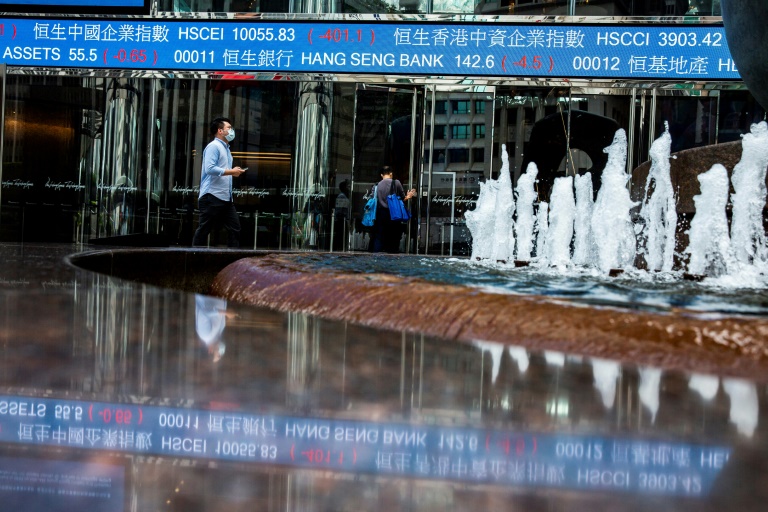
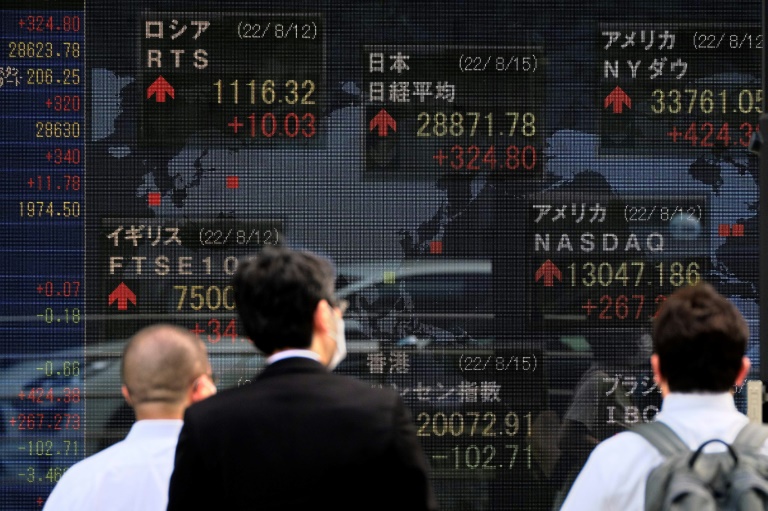
Asian stocks continued a global rally on Tuesday morning, ahead of the release of key US consumer price data that is expected to show slightly slowing inflation in the world’s largest economy.

Stocks rose in Japan, Australia, Singapore and Taiwan at the open, with Hong Kong, South Korea and Shanghai also gaining after reopening following a public holiday.

US consumer price index (CPI) data will be released on Tuesday, with analysts expecting inflation to slow to eight percent, driven mostly by falling gasoline prices. US inflation hit a 40-year high in June, touching 9.1 percent.

The ease in inflation, however, is unlikely to slow the pace of the US Federal Reserve’s tightening of monetary policy, with another 75-basis-point interest rate hike expected at its meeting next week.

The Fed has already instituted two consecutive rate hikes of that amount, and in recent days bank chief Jerome Powell has indicated that the increases will continue until inflation is tamed.

While the overall US inflation number is expected to slow, prices for food and housing are expected to have increased, raising the strain on household budgets.

“Risks remain skewed to the upside, due to an uncertain outlook for key inputs, including agricultural and energy commodities, as well as the pass-through of wage gains in a tight labour market,” according to Barclays US analysts Pooja Sriram and Jonathan Hill.

Last week, the European Central Bank also adopted a policy of monetary tightening, raising its key rate by a historic 75 basis points, with analysts expecting a similar-sized increase at the next policy meeting in October.

– ‘Locked in’ –

US stocks on Monday ended bullish: the broad-based S&P 500 advanced 1.1 percent, continuing the upswing last week that snapped a three-week losing streak.

“Wall Street is locked into Tuesday’s inflation report that will likely show pricing pressure relief but will not change the Fed from maintaining an aggressive stance of tightening monetary policy,” said Edward Moya, senior market analyst at OANDA.

“Even if inflation falls below the 8 percent level, the Fed should still deliver a 75-basis-point rate hike at the September 21st policy decision.”

The euro stabilised in early Asian trading to 1.0125 against the dollar on Tuesday, after a surge a day earlier that saw it gain 1.4 percent against the US currency and 1.6 percent against the yen, before paring those increases in later trading.

Oil prices on Tuesday were down by close to a percentage point, as investors continue to speculate on the effect of slowing demand in overheating major markets, especially in China, where a harsh zero-Covid policy continues to negatively affect economic activity.

In addition to US CPI figures on Tuesday, other key data expected later this week will include US retail sales and industrial production on Thursday; China home and retail sales as well as industrial production on Friday; and Euro area CPI, also on Friday.

– Key figures at around 0230 GMT –

Tokyo – Nikkei 225: UP 0.2 percent at 28,591.50 

Hong Kong – Hang Seng Index: UP 0.3 percent at 19,425.88

Shanghai – Composite: UP 0.1 percent at 3,266.39

New York – Dow: UP 0.7 percent at 32,381.34 (close)

London – FTSE 100: UP 1.7 percent at 7,473.03 points (close)

Euro/dollar: UP at $1.0125 from $1.0120  

Pound/dollar: UP at $1.1682 from $1.1680 

Euro/pound: UP at 86.67 pence from 86.64 pence 

Dollar/yen: DOWN at 142.52 yen from 142.82 yen  

Brent North Sea crude: DOWN 0.8 percent at $93.26 per barrel

West Texas Intermediate: DOWN 0.8 percent at $87.12 per barrel

Asian stocks rally ahead of key US inflation data

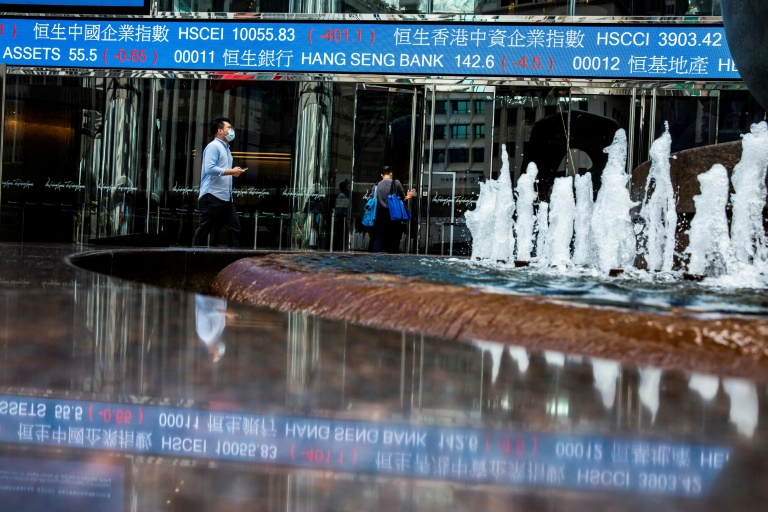
Asian stocks continued a global rally on Tuesday morning, ahead of the release of key US consumer price data that is expected to show slightly slowing inflation in the world’s largest economy.

Stocks rose in Japan, Australia, Singapore and Taiwan at the open, with Hong Kong, South Korea and Shanghai also gaining after reopening following a public holiday.

US consumer price index (CPI) data will be released on Tuesday, with analysts expecting inflation to slow to eight percent, driven mostly by falling gasoline prices. US inflation hit a 40-year high in June, touching 9.1 percent.

The ease in inflation, however, is unlikely to slow the pace of the US Federal Reserve’s tightening of monetary policy, with another 75-basis-point interest rate hike expected at its meeting next week.

The Fed has already instituted two consecutive rate hikes of that amount, and in recent days bank chief Jerome Powell has indicated that the increases will continue until inflation is tamed.

While the overall US inflation number is expected to slow, prices for food and housing are expected to have increased, raising the strain on household budgets.

“Risks remain skewed to the upside, due to an uncertain outlook for key inputs, including agricultural and energy commodities, as well as the pass-through of wage gains in a tight labour market,” according to Barclays US analysts Pooja Sriram and Jonathan Hill.

Last week, the European Central Bank also adopted a policy of monetary tightening, raising its key rate by a historic 75 basis points, with analysts expecting a similar-sized increase at the next policy meeting in October.

– ‘Locked in’ –

US stocks on Monday ended bullish: the broad-based S&P 500 advanced 1.1 percent, continuing the upswing last week that snapped a three-week losing streak.

“Wall Street is locked into Tuesday’s inflation report that will likely show pricing pressure relief but will not change the Fed from maintaining an aggressive stance of tightening monetary policy,” said Edward Moya, senior market analyst at OANDA.

“Even if inflation falls below the 8 percent level, the Fed should still deliver a 75-basis-point rate hike at the September 21st policy decision.”

The euro stabilised in early Asian trading to 1.0125 against the dollar on Tuesday, after a surge a day earlier that saw it gain 1.4 percent against the US currency and 1.6 percent against the yen, before paring those increases in later trading.

Oil prices on Tuesday were down by close to a percentage point, as investors continue to speculate on the effect of slowing demand in overheating major markets, especially in China, where a harsh zero-Covid policy continues to negatively affect economic activity.

In addition to US CPI figures on Tuesday, other key data expected later this week will include US retail sales and industrial production on Thursday; China home and retail sales as well as industrial production on Friday; and Euro area CPI, also on Friday.

– Key figures at around 0230 GMT –

Tokyo – Nikkei 225: UP 0.2 percent at 28,591.50 

Hong Kong – Hang Seng Index: UP 0.3 percent at 19,425.88

Shanghai – Composite: UP 0.1 percent at 3,266.39

New York – Dow: UP 0.7 percent at 32,381.34 (close)

London – FTSE 100: UP 1.7 percent at 7,473.03 points (close)

Euro/dollar: UP at $1.0125 from $1.0120  

Pound/dollar: UP at $1.1682 from $1.1680 

Euro/pound: UP at 86.67 pence from 86.64 pence 

Dollar/yen: DOWN at 142.52 yen from 142.82 yen  

Brent North Sea crude: DOWN 0.8 percent at $93.26 per barrel

West Texas Intermediate: DOWN 0.8 percent at $87.12 per barrel

Pope heads to Kazakhstan on Central Asia peace drive

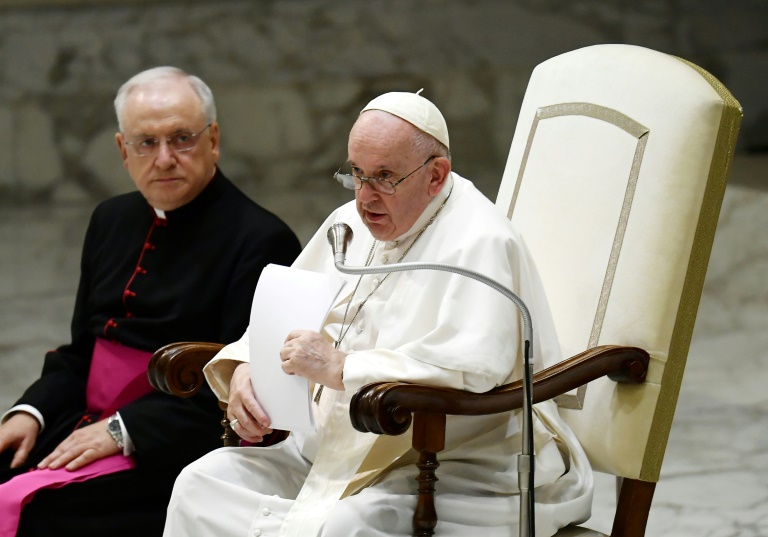
Pope Francis, warned by doctors not to travel to Ukraine in the immediate future, will Tuesday bear a message of peace instead to a tense Central Asia with a three-day trip to Kazakhstan.

The Argentine pope, who is forced by knee pain to use a wheelchair and has admitted he must slow down or consider retirement, will take part in an inter-religious summit in the capital, Nur-Sultan.

The 85-year-old said Sunday that the 38th trip abroad since his election in 2013 would be “an opportunity… to (have a) dialogue as brothers, animated by the common desire for peace, peace that our world is thirsty for”.

Russian Orthodox Patriarch Kirill, a close ally of President Vladimir Putin, was initially expected but has pulled out of the September 14-15 event, dashing hopes of a meeting with Francis over the Ukraine conflict.

While the pope has called for peace and denounced a “cruel and senseless war”, Kirill has defended Putin’s “military operation” and the fight against Russia’s “external and internal enemies”.

About 100 delegations from 50 countries are expected to take part in the event in Kazakhstan, which is just south of Russia and gained independence with the 1991 collapse of the Soviet Union.

“Dialogue, a coming together, the search for peace between different religious and cultural worlds are at the heart of this trip,” Vatican spokesman Matteo Bruni said Monday.

The pope is expected to land Tuesday shortly before 6:00 pm (1200 GMT) in Nur-Sultan, where he will go to the presidential palace and deliver a first speech to the authorities and the diplomatic corps.

– Tensions –

Before that, he will be received by President Kassym-Jomart Tokayev.

The 69-year-old leader is an ally of Russia, though there have been tensions between the two countries since Moscow launched the invasion in February.

Tokayev has refused to support the war and the presence of a large Russian community in the north of Kazakhstan has sparked fears of a revival of Moscow’s imperial ambitions in the area.

Kazakhstan borders other former Soviet republics, as well as China and the Caspian Sea.

On Wednesday, Francis will address the opening of the plenary session of the Congress of Leaders of World and Traditional Religions, before celebrating a mass in the afternoon and winding up his trip Thursday by meeting Catholic leaders.

Chinese President Xi Jinping will be in the country at the same time as Francis, but there is no meeting expected, despite the Vatican hoping to renew a historic accord appointing bishops in China.

Energy-rich Kazakhstan has 19 million inhabitants, 70 percent of whom are Sunni Muslims, while 26 percent are Christians — mainly Russian Orthodox. Less than one percent are Catholic.

Tokayev began a series of reforms after his election in 2019, but the country was rocked by protests over fuel prices earlier this year that left more than 200 people dead and shattered its image of stability.

Francis is the second pope to visit Kazakhstan after John Paul II’s trip in September 2001.

He said last week that doctors had forbidden him from travelling to Ukraine or Moscow for now, as he recovers from a knee problem that has forced him to cancel numerous events at the Vatican.

Florists prepare for soaring sales ahead of queen's funeral

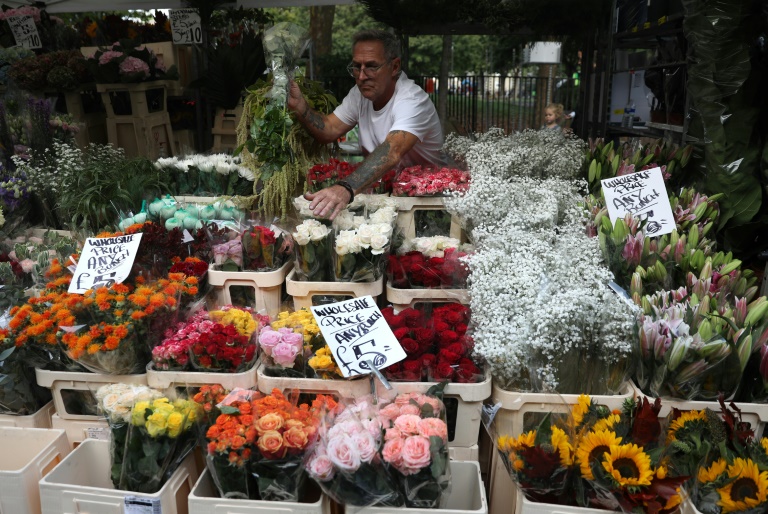
Flower sales are set to blossom for the state funeral of Queen Elizabeth II next week, as Britons rush to pay respects across the country.

Well-wishers descended on London’s vibrant Columbia Road flower market on Sunday to snap up colourful bouquets after Britain’s longest-serving monarch died last Thursday.

Thousands of people have already left cards, flowers, toys and other trinkets outside Buckingham Palace and other royal residences. 

“It’s a lot busier than normal following the passing of the queen,” flower seller Albert Deane told AFP at the weekly market.

“People are buying a lot of roses and chrysanthemums… that last well outside,” added Deane, 39, from beside rows of pastel-coloured hydrangeas.

– Demand ‘significantly high’ –

Demand was “significantly high” in recent days, particularly for the queen’s favourite white lilies, according to the British Florist Association.

“I understand the queen was (also) fond of yellow flowers, so I thought I would pick up yellow lilies,” purchaser Caroline Roberts added at the market.

The queen embodied “stability… even when I was a little girl”.

The 57-year-old spoke to AFP before going to lay her flowers with her daughters at Green Park — a lush oasis located near Buckingham Palace.

A student, Georgia Gomez, picked sunflowers for her tribute to the queen.

“I felt that sunflowers are quite bright, representative of her life, and long-lasting,” the 19-year-old said.

“Laying flowers is just kind of to say thank you for everything that she’s done for our country.

“Paying my respect is something very important and it’s a moment in history that I’m getting to live through.”

French tourist Aurelie Morter, from Montpellier, was also buying a floral tribute.

“We wanted to make a gesture following the death of the queen,” she told AFP.

Some predicted that demand for flowers in the run-up to the funeral will exceed that seen after the death of Princess Diana in 1997.

“When Diana passed away so many flowers were sold that week, it must have been the most flowers I’ve ever sold,” said Rosario Rospo, owner of florist OK Bouquet.

“Next Sunday, just a day before the funeral, it should be very busy, as we’re not too far away from the palace.”

Rospo predicted that demand would be higher “without a doubt”.

– ‘Unprecedented occasion’ –

Columbia Road vendor Deane agreed.

“It’s an unprecedented occasion. I haven’t seen anything (like it) in my lifetime,” he added.

“It will be very busy on Sunday (and) could be one of the busiest ever.”

Around 60 million bouquets were left at Buckingham and Kensington palaces after Diana’s death, in a floral ocean that remained in place for 10 days.

In contrast, British authorities requested this week that well-wishers leave flowers for the queen at a dedicated tribute garden inside the park.

Mourners are also asked to stop leaving non-floral objects — like balloons, lit candles, and soft toys resembling Paddington Bear.

Reports suggest that well-wishes have also been asked to refrain from leaving marmalade sandwiches in tribute — which the queen famously pulled out of her handbag in a Platinum Jubilee skit with fictional character Paddington earlier this year.

Tokyo stocks open higher tracking US gains

Tokyo stocks opened higher on Tuesday, tracking gains on Wall Street, as investors priced in the expectation of further interest rate hikes to tame inflation.

The benchmark Nikkei 225 index was up 0.14 percent, or 40.60 points, at 28,582.71 in early trade, while the broader Topix index was up 0.15 percent, or 2.96 points, at 1,983.18.

“Investors felt encouraged to buy Japan stocks by rallies in the US market, but a wait-and-see attitude may emerge in later trade ahead of the release of the US consumer price index,” Mizuho Securities said in a commentary. 

Wall Street stocks ended with solid gains, continuing an upswing that snapped a three-week losing streak.

Investors are looking ahead to a critical release Tuesday on US consumer prices, followed by Thursday’s report on retail sales — the last major data ahead of the Federal Reserve’s interest rate move next week.

While inflation is expected to have eased in August, largely due to falling gasoline prices, it seems unlikely it will be enough to stave off a third consecutive three-quarter point rate hike from the Fed.

However, National Australia Bank analyst Tapas Strickland believes that “there appears to be a growing consensus that inflation has peaked in the US”.

The dollar fetched 142.62 yen in early Asian trade, against 142.82 yen in New York late Monday.

Among individual equities, game giant Nintendo soared 5.11 percent to 61,970 yen after it said domestic sales of its Splatoon 3 game for Nintendo Switch consoles surpassed 3.45 million in the three days since its September 9 launch.

That marks the best domestic sales level for any Switch software in the three days after launch, Nintendo said.

Sony Group barely moved after it said its music business has fully withdrawn from Russia, trading up just 0.04 percent at 10,765 yen about 40 minutes after the opening bell.

“As the war continues to have a devastating humanitarian impact in Ukraine, and sanctions on Russia continue to increase, we can no longer maintain a presence in Russia, effective immediately,” the company said in a statement sent to AFP.

Automaker Nissan was down 1.34 percent at 545.5 yen after it said Monday night that it would extend by three months a halt to production at its Saint Petersburg plant in Russia.

The decision means production will be on hold until the end of December, with the firm citing ongoing logistical difficulties for the move.

Airlines continued to rally following reports the Japanese government could significantly loosen Covid-linked border controls, with ANA Holdings trading up 2.83 percent at 2,778.5 and Japan Airlines up 2.04 percent at 2,653 yen.

Toyota was down 0.82 percent at 2,053 yen and Honda was off 2.02 percent at 3,639 yen, after a brokerage firm downgraded its estimate of the shares’ performances.

Webb telescope captures 'breathtaking' images of Orion Nebula

The wall of dense gas and dust resembles a massive winged creature, its glowing maw lit by a bright star as it soars through cosmic filaments.

An international research team on Monday revealed the first images of the Orion Nebula captured with the James Webb Space Telescope, leaving astronomers “blown away.”

The stellar nursery is situated in the constellation Orion, 1,350 light-years away from Earth, in a similar setting in which our own solar system was birthed more than 4.5 billion years ago.

Astronomers are interested in the region to better understand what happened during the first million years of our planetary evolution.

The images were obtained as part of the Early Release Science program and involved more than 100 scientists in 18 countries, with institutions including the French National Centre for Scientific Research (CNRS), Western University in Canada, and the University of Michigan.

“We are blown away by the breathtaking images of the Orion Nebula,” Western University astrophysicist Els Peeters said in a statement.

“These new observations allow us to better understand how massive stars transform the gas and dust cloud in which they are born,” she added.

Nebulas are obscured by large amounts of dust that made it impossible to observe with visible light telescopes, such as the Hubble Space Telescope, Webb’s predecessor. 

Webb however operates primarily in the infrared spectrum, penetrating the dust.

This revealed numerous spectacular structures, down to the scale of 40 astronomical units, or the size of our solar system.

These include dense filaments of matter, which could birth new generations of stars, as well as forming stellar systems that consist of a central proto-star surrounded by a disc of dust and gas, in which planets form.

“We hope to gain understanding about the entire cycle of star birth,” said Edwin Bergin, University of Michigan chair of astronomy and a member of the international research team. 

“In this image we are looking at this cycle where the first generation of stars is essentially irradiating the material for the next generation. The incredible structures we observe will detail how the feedback cycle of stellar birth occurs in our galaxy and beyond.”

Webb is the most powerful space telescope ever built, boasting a primary mirror measuring 6.5 meters (more than 21 feet) that is made up of 18 hexagonal, gold-coated segments, as well as a five-layer sunshield the size of a tennis court.

Close Bitnami banner
Bitnami