AFP

Russia and Ukraine address grain crisis in first talks since March

Russia and Ukraine on Wednesday held their first direct negotiations since March in a bid to break an impasse over grain exports that has seen food prices soar and millions face hunger.

The high-stakes meeting involving UN and Turkish officials in Istanbul broke up after slightly more than three hours without the participants speaking to the press.

But a UN spokesman said the global body’s Secretary-General Antonio Guterres would soon brief reporters about “positive” movement at the talks.

“We believe that this is something positive and (Guterres) will talk to you at some length about why that is,” UN spokesman Farhan Haq told reporters in New York.

The stakes could not be higher for tens of millions of people facing the threat of starvation in African and other poor nations because of the battles engulfing one of the world’s main grain-producing regions.

Ukraine is a vital exporter of wheat and grains such as barley and maize. It has also supplied nearly half of all the sunflower oil traded on global markets.

But shipments across the Black Sea have been blocked by Russian warships and mines Kyiv has laid to avert a feared amphibious assault.

– Russian proposals –

The Istanbul negotiations are being complicated by growing suspicions that Russia is trying to export grain it has stolen from Ukrainian farmers in regions under its control.

Russian authorities in Ukraine’s southern region of Kherson on Wednesday countered with accusations that Kyiv’s forces were deliberately burning crops and mining fields.

US space agency data released last week showed 22 percent of Ukraine’s farmland falling under Russian control since the February 24 invasion.

The two sides entered the talks saying that a deal was close but some contentious issues remained.

Ukrainian Foreign Minister Dmytro Kuleba said Kyiv was “two steps from an agreement with Russia”.

Russian defence ministry spokesman Igor Konashenkov said Moscow had “submitted a package of proposals for the speediest practical solution” to the crisis.

Russia said on Tuesday its requirements included the right to “search the ships to avoid the contraband of weapons” — a demand rejected by Kyiv.

– Grain corridors –

NATO member Turkey has been using its good relations with both the Kremlin and Kyiv to try and broker an agreement on a safe way to deliver the grain.

Turkey says it has 20 merchant ships waiting in the region that could be quickly loaded and sent to world markets.

A plan by the UN proposes the ships follow safe “corridors” that run between the known location of mines.

Kyiv has also asked that its vessels be accompanied by warships from a friendly country such as Turkey.

Experts say de-mining the Black Sea is a complex operation that could take months — too long to address the growing global food crisis.

Kuleba said he did not think Moscow actually wanted to reach an agreement because proceeds from grain sales would help support a Western-backed government in Kyiv that the Kremlin brands as “Nazis”.

“They know that if we start to export, we will get proceeds from world markets, and this will make us stronger,” Kuleba said.

– ‘Operational pause’ –

The talks in Istanbul precede a meeting in Tehran next Tuesday between Turkish President Recep Tayyip Erdogan and his Russian counterpart Vladimir Putin.

Erdogan’s ultimate goal is to bring Putin and Ukrainian President Volodymyr Zelensky down to Istanbul for talks aimed at pausing the fighting and launching formal peace talks.

But the Ukrainian army warned this week that Russia was preparing to stage its heaviest attack yet on the Donetsk region — the larger of the two areas comprising the Donbas war zone.

Ukrainian officials said at least five people died in Russian shelling on the region surrounding the Black Sea port city of Mykolaiv.

Emergency services recovering bodies from a destroyed residential building in the Donetsk town of Chasiv Yar said the death toll from a missile strike on Sunday rose to 48, making it one of the deadliest incidents in the war.

“You never get used to war. It’s dreadful and scary,” 60-year-old Lyubov Mozhayeva said in the partially destroyed frontline city of Bakhmut.

The Russian army has not conducted any major ground offensives since taking the last points of Ukrainian resistance in the war zone’s smaller Lugansk region at the start of the month.

Analysts believe the Russians are taking an “operational pause” during which they are rearming and regrouping forces before launching an assault on Sloviansk and Kramatorsk — Ukraine’s administrative centre for the east.

Ukraine is trying to counter the Russians by staging increasingly potent attacks with new US and European rocket systems targeting arms depots.

US officials believe the Russians are trying to recoup their losses by negotiating to acquire hundreds of combat drones from Iran.


Survivors of mass shootings in US appeal for assault weapons ban

Survivors of recent mass shootings in America and relatives of people killed in them pleaded with lawmakers Wednesday to ban the powerful assault weapons used in those massacres.

“I want you to picture my face, my husband’s face, as we read our daughter’s death certificate,” said a tearful Kimberly Rubio, whose daughter Lexi was killed in a shooting at an elementary school in Uvalde, Texas on May 24. 

A total of 19 children and two teachers died in the attack in Texas by a young gunman armed with a military-style semiautomatic rifle.  

Rubio was one of a group of people touched forever by such violence who gathered outside the US Capitol on Wednesday.

“There is one question that should be on the forefront of their minds,” Rubio said of US lawmakers. “What if the gunman never had access to an assault weapon?”

A video released Tuesday shows the gunman walking calmly into Robb Elementary School in Uvalde before he heads to two classrooms and starts shooting. It shows how police milled around in hallways for more than an hour until they finally moved in and killed the gunman. 

The video has infuriated the parents of kids who were killed in the massacre.

“Our country has a problem, a big problem,” said Abby Brosio, who survived a mass shooting in Highland Park outside Chicago on July 4.

That time a gunman with a semi-automatic rifle and shooting from a rooftop on an Independence Day parade killed seven people and wounded more than 30.

In 1994 Congress passed a 10-year ban on assault rifles and certain high-capacity magazines. But lawmakers let it expire in 2004 without renewing the ban and sales of those weapons have soared since then.

After the Uvalde shooting, President Joe Biden appealed to lawmakers to again ban assault rifles or at least raise the minimum age for buying them from 18 to 21.

But Republican lawmakers, who see such a restriction as going against the constitutional right to bear arms, refused to go along with Biden’s proposal.

Spain sounds high alert for scorching heatwave

Most of Spain was put on high alert Wednesday as temperatures rose above 45 degrees Celsius with swathes of western Europe hit by a second heatwave in a matter of weeks.

France and Portugal have also seen scorching temperatures this week, and forest fires have broken out in all three countries.  

Spain’s state meteorological agency Aemet said some regions were “suffocating”, especially the worst affected Andalusia in the south, Extremadura in the southwest and Galicia in the northwest. 

They were all placed on high alert, meaning residents were asked to be cautious and watch the weather forecast. Travel was not advised “unless strictly necessary”.

Apart from the Canary islands, all other regions of Spain were placed on lower levels of alert because of the heat. 

The highest temperature in Spain on Wednesday was recorded in the Andalusian city of Almonte where the mercury hit 45.6 degrees Celsius (114.1 Fahrenheit) at 5:30 pm (1530 GMT).

Several other southern cities such as Seville and Cordoba experienced temperatures above 44 degrees Celsius.

The heatwave, which began last  weekend and is expected to last until Sunday.

Forest fires  have already burned at least 3,500 hectares (8,600 acres) in western Spain near the border with Portugal. 

Authorities in Portugal said one person had died in wildfires, after a body was found in a burned area in the northern region of Aveiro. 

In Spain, nearly 500 residents have been temporarily evacuated due to a fire northwest of Madrid, which firefighters battled to control on Wednesday, regional emergency services said.

Heatwaves have become more frequent due to climate change, scientists say. As global temperatures rise over time, they are expected to become more intense.

Spain has already suffered from drought this year, with water reserves down to 44 percent of capacity, compared to an average of 65 percent at the same period over the past 10 years. 

The hottest temperature ever recorded in Spain was 47.4 Celsius last August. 

Mexico declares drought emergency

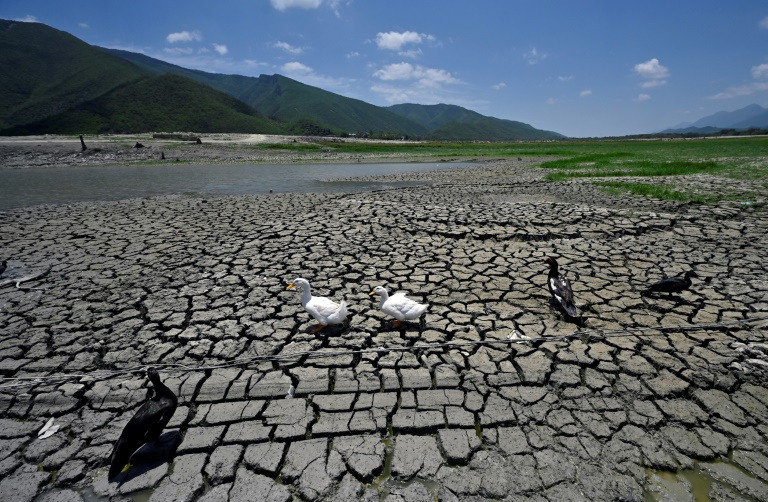
Mexico has declared a drought emergency to enable authorities to take special measures to guarantee water supplies in hard-hit areas.

The steps are designed to deal with the effects of a “severe, extreme or exceptional” drought, the national water authority Conagua said in a statement Tuesday.

Among the measures, holders of water concessions for agricultural or industrial use can be ordered to allow their use by third parties.

Authorities in parts of Mexico, including the northern industrial powerhouse of Monterrey, have been forced to ration water use due to depleted reservoirs.

A heat wave and dearth of rain means that households in Monterrey have had running water for only a few hours a day for several weeks.

In some hillside neighborhoods, it has been more than 50 days since residents last saw a drop from their faucets.

In the northwestern state of Baja California, a lack of water supplies has sparked protests in some towns.

In parts of Mexico City, such as the impoverished district of Iztapalapa — home to 1.8 million people — it is common for the authorities to ration water and send tanker trucks to alleviate shortages.

Biden visits Israel on first Middle East tour as US president

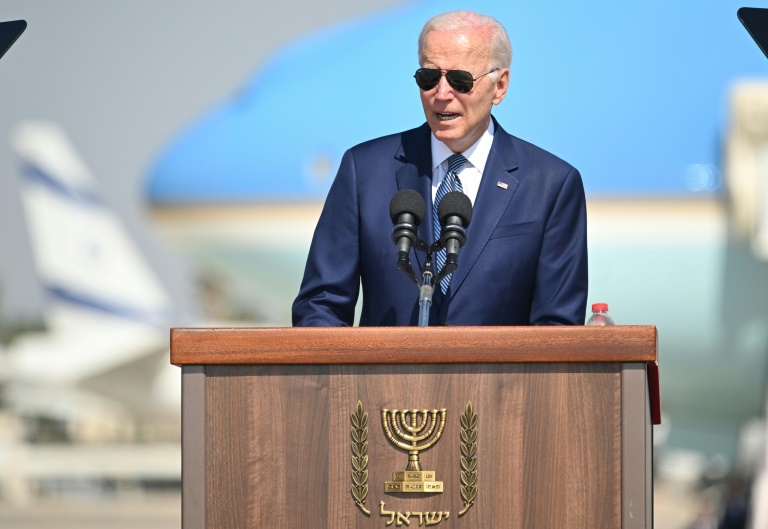
US President Joe Biden on Wednesday kicked off a Middle East tour in Israel where both sides vowed to deepen the Jewish state’s integration in the region as they face their common foe Iran.

Biden — whose first regional visit since taking office will also bring him to Saudi Arabia — pledged strong backing for Israel, which has forged ties with several Arab states in recent years and hopes to do so with Riyadh as well.

“We’ll continue to advance Israel’s integration into the region,” Biden said after Air Force One touched down at Ben Gurion airport near Tel Aviv to a red-carpet welcome, while underscoring Washington’s “bone deep” connection to the Jewish state. 

“I’m proud to say that our relationship with the state of Israel is deeper and stronger in my view than it’s ever been. With this visit, we’re strengthening our connections even further,” the president said. 

Israel’s caretaker prime minister Yair Lapid said that “we will discuss building a new security and economy architecture with the nations of the Middle East”, following US-brokered accords in 2020 with the UAE, Bahrain and Morocco.

“And we will discuss the need to renew a strong global coalition that will stop the Iranian nuclear programme,” he added, amid ongoing efforts by world powers to salvage Iran’s frayed 2015 nuclear deal.

Biden’s visit to Saudi Arabia on Friday will be the major focus of the tour, after he branded the oil-rich kingdom a “pariah” over the 2018 murder of dissident Saudi journalist Jamal Khashoggi.

The trip is seen as part of efforts to stabilise oil markets rattled by the war in Ukraine, through a re-engagement with a long-time key US strategic ally and major energy supplier.

Air Force One will make a first direct flight from Israel to Saudi Arabia amid efforts to build ties between the Jewish state and the conservative Gulf kingdom, which does not recognise Israel’s existence.

– Palestinian anger –

After Biden landed, Israel’s military showed him its new Iron Beam defence system, an anti-drone laser it claims is crucial to countering Iran’s fleet of unmanned aerial vehicles.

Israel insists it will do whatever is necessary to thwart Iran’s nuclear ambitions, and remains staunchly opposed to a restoration of the 2015 deal that gave Tehran sanctions relief.

Iran’s President Ebrahim Raisi warned earlier Wednesday that if Biden’s goal on the trip was to bolster Israel’s security, his “efforts will not create security for the Zionists in any way”. 

After the Israeli military showcase, the US presidential motorcade headed to Jerusalem, where Biden visited the Yad Vashem Holocaust memorial, meeting with survivors of the Nazi genocide and inscribing a note that read: “We must never, ever, forget, because hate is never defeated.”

Israel has raised 1,000 flags across Jerusalem to welcome the US leader, who has not reversed former president Donald Trump’s controversial decision to recognise the city as the capital of the Jewish state.

Biden, 79, will also meet Palestinian leaders angered by what they describe as Washington’s failure to curb Israeli aggression.

The persistent frustrations of Israeli-Palestinian diplomacy are nothing new for Biden, who first visited the region in 1973 after being elected to the Senate.

Palestinians claim Israeli-annexed east Jerusalem as their capital and, ahead of the visit, accused Biden of failing to make good on his pledge to restore the United States as an honest broker in the conflict.

– ‘Two-state solution’ –

“We only hear empty words and no results,” said Jibril Rajoub, a leader of the secular Fatah movement of Palestinian president Mahmud Abbas.

In remarks to Israeli officials at the airport, Biden emphasised his continued backing for Palestinian statehood. 

“A two-state solution,” he said, remains “the best way to ensure” a prosperous future “for Israelis and Palestinians alike”.

But there are no expectations of a new US peace push, with Israel still mired in political gridlock ahead of a November 1 election, the fifth in less than four years.

US-Palestinian ties have been strained by the May killing of Al Jazeera reporter Shireen Abu Akleh while she was covering an Israeli army raid in the West Bank.

The United Nations has concluded the Palestinian-American journalist was killed by Israeli fire. Washington has agreed this was likely, but also said there was no evidence the killing was intentional.

Abu Akleh’s niece Lina told AFP Wednesday that the family remains “outraged” over Washington’s struggles to push for Israeli accountability. 

US Secretary of State Antony Blinken, who is travelling with Biden, on Wednesday invited Abu Akleh’s relatives for talks in Washington, but Lina Abu Akleh told AFP the family’s request to meet American officials in Jerusalem had not yet been answered.  

aue-gl/bs/lg

US consumer prices surge 9.1%, a new 40-year high

US inflation surged to a fresh peak of 9.1 percent in June, further squeezing American families and heaping pressure on President Joe Biden, whose approval ratings have taken a battering from the relentless rise in prices. 

Government data released Wednesday showed a sharp, faster-than-expected increase in the consumer price index compared to May driven by significant increases in gasoline prices.

The 9.1 percent CPI spike over the past 12 months to June was the fastest increase since November 1981, the Labor Department reported.

Energy contributed half of the monthly increase, as gasoline jumped 11.2 percent last month and a staggering 59.9 percent over the past year. Overall energy prices posted their biggest annual increase since April 1980.

While acknowledging the inflation rate was “unacceptably high,” Biden argued that it was “out of date” as it did not reflect a clear drop in energy prices since mid-June.

The recent price drop had provided “important breathing room for American families. And, other commodities like wheat have fallen sharply since this report,” the president said in a statement.

Insisting that tackling inflation was the top priority, Biden admitted his administration needed “to make more progress, more quickly, in getting price increases under control.”

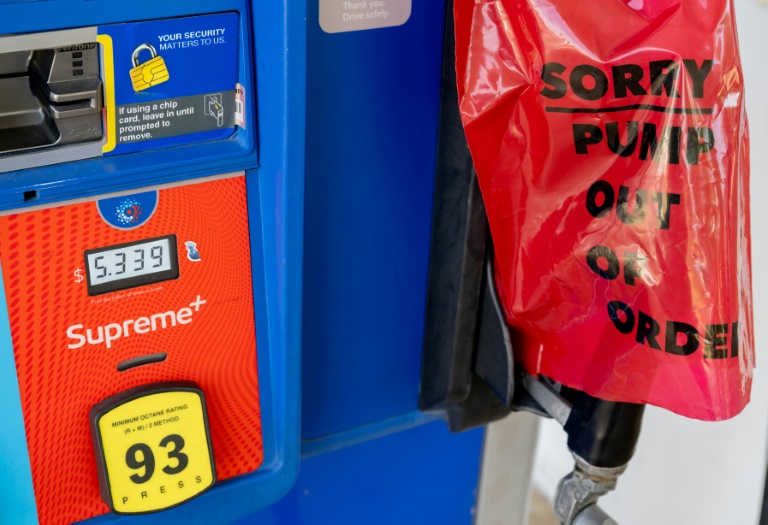
The war in Ukraine has pushed global energy and food prices higher, and US gas prices at the pump last month hit a record of more than $5 a gallon. 

However, energy prices have eased in recent weeks, with oil prices falling below $100 a barrel for the first time since April, which could start to relieve some of the pressure on consumers.

But the Federal Reserve is likely to continue its aggressive interest rate increases as it tries to tamp down the price surge by cooling demand before inflation becomes entrenched.

The US central bank last month implemented the biggest rate hike in nearly 30 years, and economists say another three-quarter-point increase is likely later this month.

Ian Shepherdson of Pantheon Macroeconomics summed up the data in one word: “Ouch.” 

“This report will make for very uncomfortable reading at the Fed,” he said. “It rules out the chance of the Fed hiking by only 50bp this month.”

– Signs of cooling? –

Driven by record-high gasoline prices, the consumer price index jumped 1.3 percent in June compared to May.

But Shepherdson noted some signs of cooling prices in the data and predicted “this will be the last big increase.”

When volatile food and energy prices are stripped out of the calculation, “core” CPI increased 5.9 percent over the past year — still a rapid pace but slowing from the pace in May, according to the data. 

Food and housing prices also rose in June, as did car prices, though the rate has stabilized or slowed from the past month, the report said.

The White House came out ahead of the report to predict it would show “highly elevated” inflation due to rising gasoline prices that have since retreated. 

According to AAA, the national average price at the pump was down to $4.63 a gallon, from $5.01 a month ago.

Mickey Levy of Berenberg Capital Markets said the “broadening” of price increases to more categories is a “cause for concern” for the Fed’s efforts, but “there is reason to believe price increases may moderate in the near term.”

Even so, the big jump left Biden open to intense criticism from opposition Republicans, who blamed Democrats’ spending.

Even Democratic Senator Joe Manchin of West Virginia accused leaders in Washington of ignoring the inflation risk.

“No matter what spending aspirations some in Congress may have, it is clear to anyone who visits a grocery store or a gas station that we cannot add any more fuel to this inflation fire,” Manchin said in a statement.

US consumer prices surge 9.1%, a new 40-year high

US inflation surged to a fresh peak of 9.1 percent in June, further squeezing American families and heaping pressure on President Joe Biden, whose approval ratings have taken a battering from the relentless rise in prices. 

Government data released Wednesday showed a sharp, faster-than-expected increase in the consumer price index compared to May driven by significant increases in gasoline prices.

The 9.1 percent CPI spike over the past 12 months to June was the fastest increase since November 1981, the Labor Department reported.

Energy contributed half of the monthly increase, as gasoline jumped 11.2 percent last month and a staggering 59.9 percent over the past year. Overall energy prices posted their biggest annual increase since April 1980.

While acknowledging the inflation rate was “unacceptably high,” Biden argued that it was “out of date” as it did not reflect a clear drop in energy prices since mid-June.

The recent price drop had provided “important breathing room for American families. And, other commodities like wheat have fallen sharply since this report,” the president said in a statement.

Insisting that tackling inflation was the top priority, Biden admitted his administration needed “to make more progress, more quickly, in getting price increases under control.”

The war in Ukraine has pushed global energy and food prices higher, and US gas prices at the pump last month hit a record of more than $5 a gallon. 

However, energy prices have eased in recent weeks, with oil prices falling below $100 a barrel for the first time since April, which could start to relieve some of the pressure on consumers.

But the Federal Reserve is likely to continue its aggressive interest rate increases as it tries to tamp down the price surge by cooling demand before inflation becomes entrenched.

The US central bank last month implemented the biggest rate hike in nearly 30 years, and economists say another three-quarter-point increase is likely later this month.

Ian Shepherdson of Pantheon Macroeconomics summed up the data in one word: “Ouch.” 

“This report will make for very uncomfortable reading at the Fed,” he said. “It rules out the chance of the Fed hiking by only 50bp this month.”

– Signs of cooling? –

Driven by record-high gasoline prices, the consumer price index jumped 1.3 percent in June compared to May.

But Shepherdson noted some signs of cooling prices in the data and predicted “this will be the last big increase.”

When volatile food and energy prices are stripped out of the calculation, “core” CPI increased 5.9 percent over the past year — still a rapid pace but slowing from the pace in May, according to the data. 

Food and housing prices also rose in June, as did car prices, though the rate has stabilized or slowed from the past month, the report said.

The White House came out ahead of the report to predict it would show “highly elevated” inflation due to rising gasoline prices that have since retreated. 

According to AAA, the national average price at the pump was down to $4.63 a gallon, from $5.01 a month ago.

Mickey Levy of Berenberg Capital Markets said the “broadening” of price increases to more categories is a “cause for concern” for the Fed’s efforts, but “there is reason to believe price increases may moderate in the near term.”

Even so, the big jump left Biden open to intense criticism from opposition Republicans, who blamed Democrats’ spending.

Even Democratic Senator Joe Manchin of West Virginia accused leaders in Washington of ignoring the inflation risk.

“No matter what spending aspirations some in Congress may have, it is clear to anyone who visits a grocery store or a gas station that we cannot add any more fuel to this inflation fire,” Manchin said in a statement.

Stocks tumble, euro dips below $1.00 on US inflation data

Global stocks fell Wednesday and the euro dipped below $1.00 for the first time in nearly 20 years after data showed a surge in US inflation last month, convincing investors that further increases in borrowing costs are on their way.

Stock prices on Wall Street fell after a pick-up in US inflation to 9.1 percent in June increased the risk of a possible recession.

European stock markets also ended the session lower, with London’s blue-chip FTSE-100 index down 0.7 percent, Frankfurt’s DAX down 1.2 percent and Paris’s CAC-40 down 0.7 percent. 

The euro fell below the symbolic level of $1.00 for the first time since December 2002, dipping as low as $.0998, as the prospect of higher interest rates rendered the dollar more attractive to investors. But it soon moved back above parity.

The economic prospects for the 19-country eurozone are also darkening as a possible halt to Russian gas supplies increases the risk of recession.

– Inflation tops 9% – 

US inflation surged to a 40-year high in June on a 12-month basis, much worse than expected, US Labor Department data showed.

“The inflation reading has blown past all expectations today and there is no doubt now that the (Federal Reserve) will be even more aggressive,” said Naeem Aslam, analyst at Avatrade.

“Inflation at 9.1 percent makes you sick as a consumer and as a central banker.” 

Markets fear the reading will prompt the Fed to keep hiking interest rates aggressively after it ramped up borrowing costs by three-quarters of a percentage point last month.

Consumer prices are soaring worldwide after economies reopened from pandemic lockdowns and as the Ukraine war keeps energy prices elevated.

In a further sign of the pressure being felt around the world, the New Zealand and South Korean central banks each lifted interest rates by 0.5 percentage points Wednesday.

It was the steepest increase by Seoul since 1999.

– Europe gas crisis –

Russian energy giant Gazprom said it could not guarantee the good functioning of Nord Stream gas pipeline and did not know if a “critical” turbine engine would be returned from repair in Canada. 

Gazprom started 10 days of maintenance on Nord Stream 1 pipeline on Monday, with the EU — particularly gas-reliant Germany — waiting nervously to see if the taps will be turned back on. 

“A prolonged cut to the gas supply would halt a lot of economic activity, sending (Germany) deep into recession,” said Tapas Strickland at National Australia Bank.

July 21 — when the gas should be switched back on — will be a crucial date, he said.

– Key figures at around 1545 GMT –

New York – Dow: DOWN 0.6 percent at 30,802.71 points

London – FTSE 100: DOWN 0.7 percent at 7,156.37 (close)

Frankfurt – DAX: DOWN 1.2 percent at 12,756,32 (close)

Paris – CAC 40: DOWN 0.7 percent at 6,000.24 (close)

EURO STOXX 50: DOWN 0.9 percent at 3,453.97

Tokyo – Nikkei 225: UP 0.5 percent at 26,478.77 (close)

Hong Kong – Hang Seng Index: DOWN 0.2 percent at 20,797.95 (close)

Shanghai – Composite: UP 0.1 percent at 3,284.29 (close)

Euro/dollar: UP at $1.0084 from $1.0037 Tuesday

Pound/dollar: UP at $1.1919 from $1.1889 

Euro/pound: UP at 84.63 pence from 84.40 pence

Dollar/yen: UP at 137.34 yen from 136.84 yen

West Texas Intermediate: UP 0.2 percent at $96.02 per barrel

Brent North Sea crude: DOWN 0.2 percent at $99.31 per barrel

burs-spm/jj

Israel lasers in on Iranian drone threat as Biden visits

Moments after US President Joe Biden touched down in Tel Aviv on Wednesday, the Israeli military showed him new hardware it says is essential to confronting Iran: anti-drone lasers.

While Israel has long been known for its efforts to thwart Tehran’s nuclear ambitions, Israeli officials have increasingly been sounding the alarm over Iran’s fleet of unmanned aerial vehicles (UAVs).

Earlier this month, the Israeli military said it had intercepted four unarmed drones headed for an offshore gas rig, claiming they were Iranian-made and launched by the Tehran-backed Lebanese group Hezbollah.

As concerns mount over drone warfare, Israel hopes the new “Iron Beam” system will secure its skies.

While not yet operational, the military hardware was described as a “game-changer” in April by then-prime minister Naftali Bennett. 

On Wednesday, the Israeli army showed Biden footage of drones being intercepted by the Iron Dome defence system already in place, and the Iron Beam system which uses laser technology.

“It (Iron Beam) will be operational in very few years, it will be on the ground, integrated with Iron Dome,” Daniel Gold, head of research at Israel’s defence ministry, told AFP.

He said the two systems will “complement each other”.

“They will work together, the brain of Iron Dome — the command and control — will decide in real time who is going to shoot -– the laser or the missile,” he said.

Presenting such technology to Biden is a strategic move for Israel, which saw Washington approve a billion-dollar package in September for the Iron Dome system.

– Low-cost warfare –

Iron Dome has been used countless times to intercept rockets fired by militants from the Gaza Strip, which is controlled by Iran’s ally Hamas.

The defence system costs roughly $50,000 per launch, while Bennett priced the Iron Beam at $3.50 per deployment.

He said the new defence system was “silent” and could “intercept incoming UAVs, mortars, rockets and anti-tank missiles”.

Uzi Rubin, a former Israeli defence ministry specialist in anti-missile systems, said intercepting drones was a significant challenge.

“The laser technology will have more capacity against drones than rockets and missiles,” said Rubin, who is based at the Jerusalem Institute for Strategy and Security.

“It is going to help if we get some American financing” for the Iron Beam, he added. 

– Integrating Israel into region –

For Israel, a priority of Biden’s Middle East tour is broadening US-backed security cooperation among regional countries with shared hostility towards Iran.

The US president will fly Friday to Saudi Arabia, Iran’s main regional rival, following meetings with Israeli and Palestinian officials. 

Saudi Arabia and its neighbour the United Arab Emirates have both come under drone attack by Yemen’s Iran-backed Huthi rebels since 2019.

The Wall Street Journal reported last month that senior Israeli and US military officials had visited Egypt to discuss Iranian drones.

Participants in the talks included the United Arab Emirates and Bahrain, which both normalised ties with Israel in 2020, as well as Saudi Arabia and Qatar, which do not Israel.

Upon arriving in Israel on Wednesday, Biden said “we’ll continue to advance Israel’s integration into the region”.

– ‘Significant platform’ –

According to Eyal Pinko, a former Israeli navy intelligence officer, Israel has been anticipating the rising threat of drones from Iran and its regional proxies.

“Since 2009, there was an understanding among Israeli naval intelligence that Hezbollah’s UAVs would be a threat to Israeli rigs,” said Pinko, a specialist at Tel Aviv’s Bar-Ilan University.

“Iran understood many years ago that drones were force multipliers, a significant platform and relatively cheap,” he told AFP.

The Israeli military has said that it had intercepted in March 2021 two Iranian drones laden with weapons for Gaza militants.

Tehran “is positioning itself as a major drone power in the region”, said a report published in May by the European Council on Foreign Relations think tank.

“The country built up its vast drone fleet over many years mainly out of necessity, aiming to compensate for its old and decaying air force, which has been battered by decades of sanctions,” it added.

Tehran’s fleet includes the “Gaza” drone, which can fly for 35 hours, according to Iran’s Fars News Agency.

On Monday, the White House revealed intelligence that Tehran was “preparing to provide Russia with up to several hundred UAVs… on an expedited timeline” for use in the war in Ukraine.

While Israel aims to counter Iranian UAVs with new technology and regional alliances, it may also be going on the offensive.

In March, Israeli media said the army had launched an attack on an Iranian site storing dozens of armed drones.

But weeks later, Iranian state television broadcast footage of a facility hidden in the mountains: an underground base for scores of military UAVs.

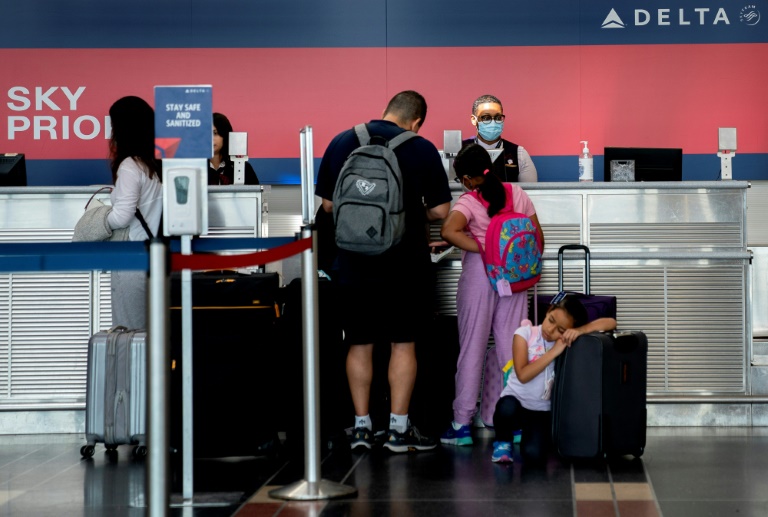
Delta results show strong demand but also cost pressures

Shares of Delta Air Lines tumbled Wednesday as swelling costs pressured quarterly earnings, despite persistently robust demand that so far appears resilient amid inflation. 

The big US carrier reported solid second-quarter operating earnings and said it is on track for “meaningful full year profitability,” a markedly better outlook after the bruising pandemic downturn.

But the results missed analyst expectations, prompting analyst questions about when Delta expects to get costs under control and stabilize operations.

Besides a 41 percent jump in fuel costs compared with the 2019 period, the airline saw increases in labor costs, in part because of elevated overtime pay as it contends with an industry-wide labor crunch that will take time to address.

“The issues we’re facing are temporary,” said Chief Executive Ed Bastian, alluding to a six-week stretch in the just-finished quarter plagued by flight cancellations and delays.

Bastian said operational performance had improved in July after the carrier built in more buffer time for crews between flights 

Delta has also trimmed its plans for near-term growth. It projects third-quarter capacity will be down 15 to 17 percent compared with the 2019 level.

Executives said cost pressures should ease in the second half of the year as Delta puts off growth plans and focuses on improving operations. 

Part of the issue is the onboarding of some 18,000 new staff members since the pandemic. 

Bastian said the carrier had done a good job of hiring people, but that there is a learning curve with new employees that should abate as staff gets experience.

Profits for the quarter were $735 million on $13.8 billion in revenues. That translated into $1.44 per share, below the $1.64 expected by analysts.

Delta’s earnings were released shortly before the June US consumer price index report, which showed a 9.1 percent jump over the last 12 years. Inflation will pinch household disposable income, especially for the less wealthy.

Delta executives insisted they were seeing no erosion in ticket purchases, citing “pent-up demand” after the pandemic.

“We’re not seeing it,” Delta President Glen Hauenstein said of a potential decline. “As of now, we’re enjoying very robust spend.”

Shares fell 6.6 percent to $29.02 in late-morning trading.

Close Bitnami banner
Bitnami