AFP

US data show big jump in unionization campaigns in fiscal 2022

The number of unionization campaigns has jumped in the 2022 fiscal year, according to federal data released Wednesday, reflecting how the tight US labor market has created opportunity for organized labor. 

Through the first three quarters of fiscal 2022 — from October 1 to June 30 — there were 1,935 unionization campaigns filed with the National Labor Relations Board, up 56 percent from the prior year.

The surge in union drives has been a feature of the Covid-19-era US economy, which has also seen an uptick in strikes at John Deere, Kellogg’s and elsewhere amid dissatisfaction with labor conditions and pay levels.

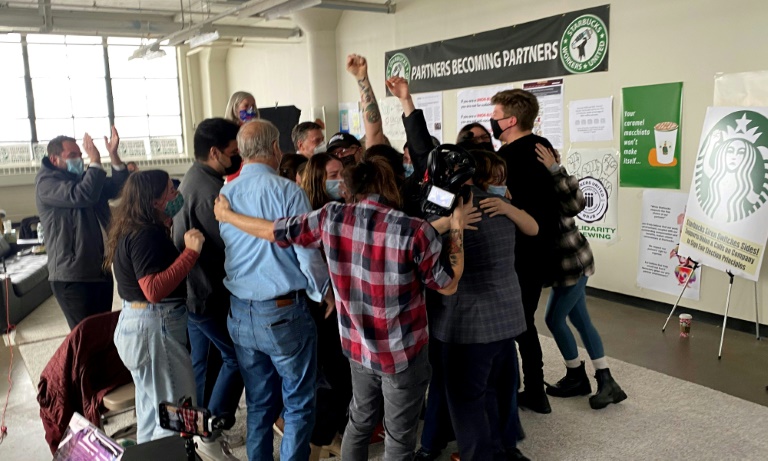
Campaigners have won elections at more than 100 Starbucks stores. Labor also prevailed in a hard-fought election at an Amazon warehouse in April, although Amazon has contested the vote.

These efforts have raised hopes of a possible reversal in the long-running decline of US unionization since the 1980s. The rate fell to 10.3 percent in 2021, with an even lower percent of the private sector unionized.

The NLRB said it is also seeing an uptick in unfair labor practice charges, which are up 14.5 percent, with more union campaigns prompting accusations of violations by employers. 

That increase is posing challenges for the agency, which has had a flat budget since 2010, translating into a 25 percent drop when adjusted for inflation. Overall staffing is down 39 percent since 2002, the NLRB said in a news release.

“The NLRB is processing the most cases it has seen in years with the lowest staffing levels in the past six decades,” said NLRB General Counsel Jennifer Abruzzo. 

“The Agency urgently needs more resources to process petitions and conduct elections, investigate unfair labor practice charges, and obtain full remedies for workers whose labor rights have been violated.”
US data show big jump in unionization campaigns in fiscal 2022

The number of unionization campaigns has jumped in the 2022 fiscal year, according to federal data released Wednesday, reflecting how the tight US labor market has created opportunity for organized labor. 

Through the first three quarters of fiscal 2022 — from October 1 to June 30 — there were 1,935 unionization campaigns filed with the National Labor Relations Board, up 56 percent from the prior year.

The surge in union drives has been a feature of the Covid-19-era US economy, which has also seen an uptick in strikes at John Deere, Kellogg’s and elsewhere amid dissatisfaction with labor conditions and pay levels.

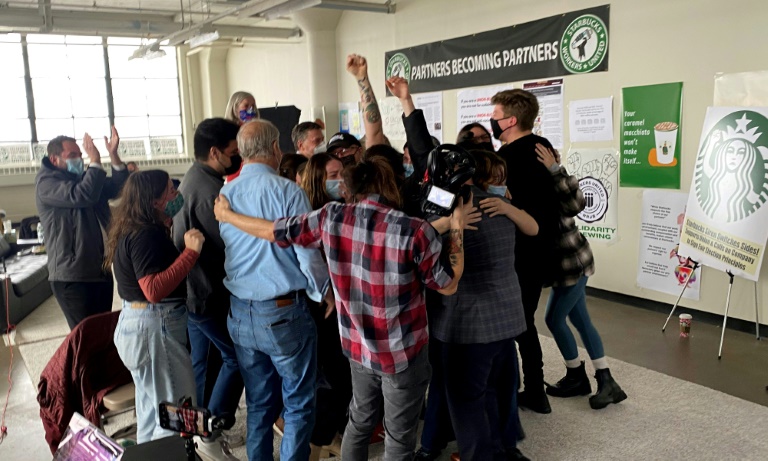
Campaigners have won elections at more than 100 Starbucks stores. Labor also prevailed in a hard-fought election at an Amazon warehouse in April, although Amazon has contested the vote.

These efforts have raised hopes of a possible reversal in the long-running decline of US unionization since the 1980s. The rate fell to 10.3 percent in 2021, with an even lower percent of the private sector unionized.

The NLRB said it is also seeing an uptick in unfair labor practice charges, which are up 14.5 percent, with more union campaigns prompting accusations of violations by employers. 

That increase is posing challenges for the agency, which has had a flat budget since 2010, translating into a 25 percent drop when adjusted for inflation. Overall staffing is down 39 percent since 2002, the NLRB said in a news release.

“The NLRB is processing the most cases it has seen in years with the lowest staffing levels in the past six decades,” said NLRB General Counsel Jennifer Abruzzo. 

“The Agency urgently needs more resources to process petitions and conduct elections, investigate unfair labor practice charges, and obtain full remedies for workers whose labor rights have been violated.”
Stocks tumble while euro dips below $1.00 on US inflation data

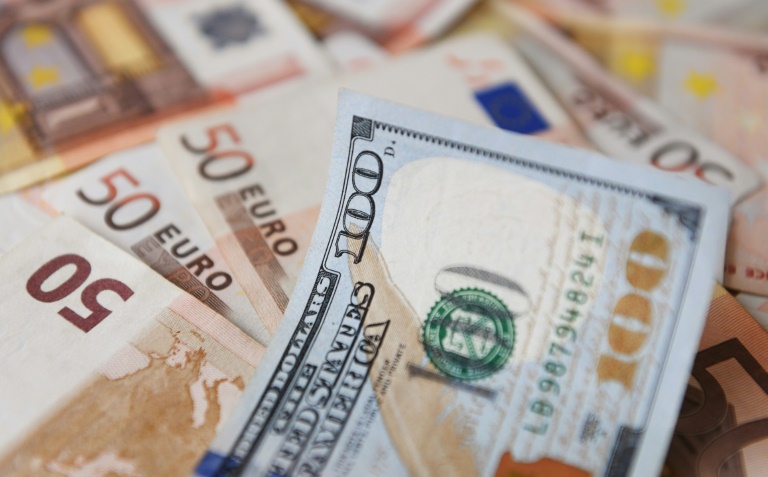
Global stocks fell Wednesday and the euro dipped below $1.00 for the first time in nearly 20 years after data showed a surge in US inflation last month, convincing investors that further increases in borrowing costs are on their way.

Stock prices on Wall Street retreated after a sharp uptick in US inflation to 9.1 percent in June increased the risk of a possible recession. 

The broad-based S&P 500 finished down 0.5 percent.

European stock markets also ended the session lower, while the euro fell below the symbolic level of $1.00 for the first time since December 2002, dipping as low as $.0998, as the prospect of higher interest rates rendered the dollar more attractive to investors. But it soon moved back above parity.

The economic prospects for the 19-country eurozone are also darkening as a possible halt to Russian gas supplies increases the risk of recession.

– Inflation tops 9% – 

US inflation surged to a 40-year high in June on a 12-month basis, much worse than expected, US Labor Department data showed.

Beyond the hit to consumption from high prices, analysts worry the report will prompt the Federal Reserve to adopt even tougher measures to tighten monetary policy, such as a full percentage point interest rate increase at the July 27 meeting.

On Wednesday, Canada’s central bank took that step, raising its lending rate to 2.5 percent.

Oanda’s Edward Moya said that he still expects the Fed to hike 75 basis points in July, “but a strong case could be made for a full-point increase,” according to a note Wednesday.

Consumer prices are soaring worldwide after economies reopened from pandemic lockdowns and as the Ukraine war keeps energy prices elevated.

In a further sign of the pressure being felt around the world, the New Zealand and South Korean central banks each raised interest rates by 0.5 percentage points Wednesday.

It was the steepest increase by Seoul since 1999.

– Europe gas crisis –

Russian energy giant Gazprom said it could not guarantee the good functioning of the Nord Stream gas pipeline and did not know if a “critical” turbine engine would be returned from repair in Canada. 

Gazprom started 10 days of maintenance on Nord Stream 1 pipeline on Monday, with the EU — particularly gas-reliant Germany — waiting nervously to see if the taps will be turned back on. 

“A prolonged cut to the gas supply would halt a lot of economic activity, sending (Germany) deep into recession,” said Tapas Strickland at National Australia Bank.

July 21 — when the gas should be switched back on — will be a crucial date, he said.

– Key figures at around 2030 GMT –

New York – Dow: DOWN 0.7 percent at 30,772.79 (close)

New York – S&P 500: DOWN 0.5 percent at 3,801.78 (close)

New York – Nasdaq: DOWN 0.2 percent at 11,247.58 (close)

London – FTSE 100: DOWN 0.7 percent at 7,156.37 (close)

Frankfurt – DAX: DOWN 1.2 percent at 12,756,32 (close)

Paris – CAC 40: DOWN 0.7 percent at 6,000.24 (close)

EURO STOXX 50: DOWN 1.0 percent at 3,453.97 (close)

Tokyo – Nikkei 225: UP 0.5 percent at 26,478.77 (close)

Hong Kong – Hang Seng Index: DOWN 0.2 percent at 20,797.95 (close)

Shanghai – Composite: UP 0.1 percent at 3,284.29 (close)

Euro/dollar: UP at $1.0061 from $1.0037 Tuesday

Pound/dollar: UP at $1.1893 from $1.1889 

Euro/pound: UP at 84.59 pence from 84.43 pence

Dollar/yen: UP at 137.36 yen from 136.68 yen

West Texas Intermediate: UP 0.5 percent at $96.30 per barrel

Brent North Sea crude: UP 0.1 percent at $99.57 per barrel

burs-jmb/to

US consumer prices surge 9.1%, a new 40-year high

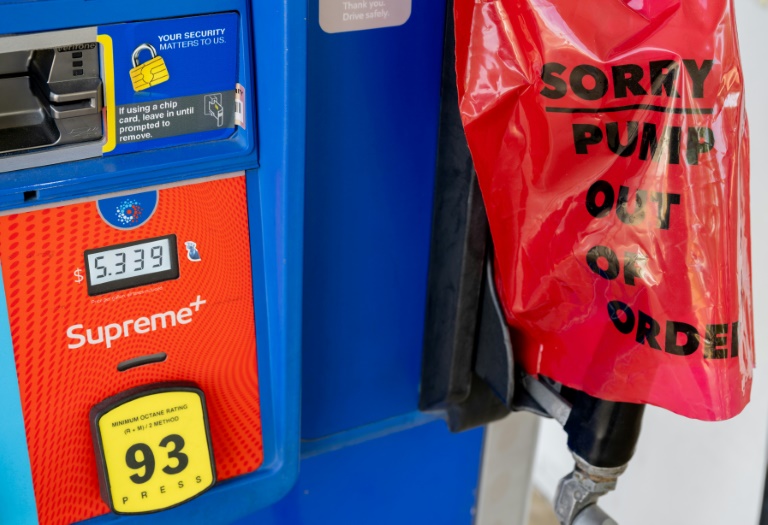
US inflation surged to a fresh peak of 9.1 percent in June, further squeezing American families and heaping pressure on President Joe Biden, whose approval ratings have taken a battering from the relentless rise in prices. 

Government data released Wednesday showed a sharp, faster-than-expected increase in the consumer price index compared to May driven by significant increases in gasoline prices.

The 9.1 percent CPI spike over the past 12 months to June was the fastest increase since November 1981, the Labor Department reported.

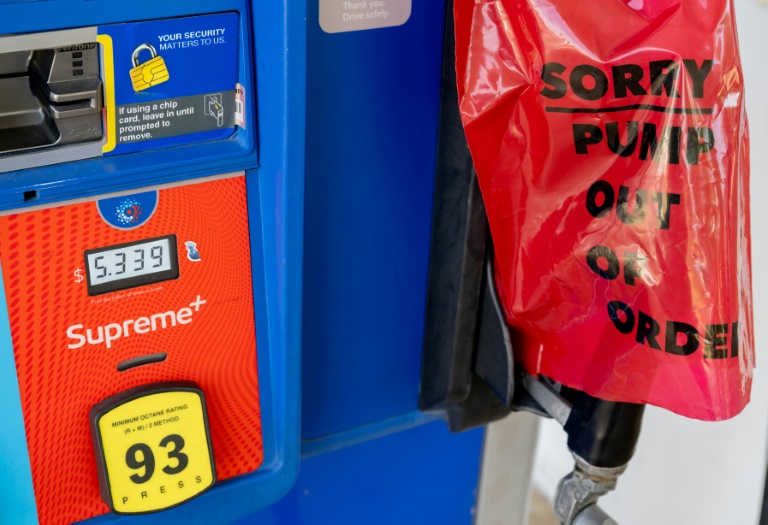
Energy contributed half of the monthly increase, as gasoline jumped 11.2 percent last month and a staggering 59.9 percent over the past year. Overall energy prices posted their biggest annual increase since April 1980.

While acknowledging the inflation rate was “unacceptably high,” Biden argued that it was “out of date” as it did not reflect a clear drop in energy prices since mid-June.

According to AAA, the national average price at the pump was down to $4.63 a gallon, from $5.01 a month ago.

The recent price drop had provided “important breathing room for American families. And, other commodities like wheat have fallen sharply since this report,” the president said in a statement.

Insisting that tackling inflation was the top priority, Biden admitted his administration needed “to make more progress, more quickly, in getting price increases under control.”

The war in Ukraine has pushed global energy and food prices higher, and US gas prices at the pump last month hit a record of more than $5 a gallon. 

However, energy prices have eased in recent weeks, with oil prices falling below $100 a barrel for the first time since April, which could start to relieve some of the pressure on consumers.

The Federal Reserve is likely to continue its aggressive interest rate increases as it tries to tamp down the price surge by cooling demand before inflation becomes entrenched.

The US central bank last month implemented the biggest rate hike in nearly 30 years, and economists say another three-quarter-point increase is likely later this month.

Wall Street stocks declined Wednesday after the release of the report, which added to recession fears, and some analysts worry the report will prompt the Fed to adopt even tougher measures to tighten monetary policy, such as a full percentage point interest rate increase.

Ian Shepherdson of Pantheon Macroeconomics summed up the data in one word: “Ouch.” 

“This report will make for very uncomfortable reading at the Fed,” he said. “It rules out the chance of the Fed hiking by only 50bp this month.”

– Signs of cooling? –

Driven by record-high gasoline prices, the consumer price index jumped 1.3 percent in June compared to May.

But Shepherdson noted some signs of cooling prices in the data and predicted “this will be the last big increase.”

When volatile food and energy prices are stripped out of the calculation, “core” CPI increased 5.9 percent over the past year — still a rapid pace but slowing from the pace in May, according to the data. 

Food and housing prices also rose in June, as did car prices, though the rate has stabilized or slowed from the past month, the report said.

Mickey Levy of Berenberg Capital Markets said the “broadening” of price increases to more categories is a “cause for concern” for the Fed’s efforts, but “there is reason to believe price increases may moderate in the near term.”

Even so, the big jump left Biden open to intense criticism from opposition Republicans, who blamed Democrats’ spending.

Even Democratic Senator Joe Manchin of West Virginia accused leaders in Washington of ignoring the inflation risk.

“No matter what spending aspirations some in Congress may have, it is clear to anyone who visits a grocery store or a gas station that we cannot add any more fuel to this inflation fire,” Manchin said in a statement.

US consumer prices surge 9.1%, a new 40-year high

US inflation surged to a fresh peak of 9.1 percent in June, further squeezing American families and heaping pressure on President Joe Biden, whose approval ratings have taken a battering from the relentless rise in prices. 

Government data released Wednesday showed a sharp, faster-than-expected increase in the consumer price index compared to May driven by significant increases in gasoline prices.

The 9.1 percent CPI spike over the past 12 months to June was the fastest increase since November 1981, the Labor Department reported.

Energy contributed half of the monthly increase, as gasoline jumped 11.2 percent last month and a staggering 59.9 percent over the past year. Overall energy prices posted their biggest annual increase since April 1980.

While acknowledging the inflation rate was “unacceptably high,” Biden argued that it was “out of date” as it did not reflect a clear drop in energy prices since mid-June.

According to AAA, the national average price at the pump was down to $4.63 a gallon, from $5.01 a month ago.

The recent price drop had provided “important breathing room for American families. And, other commodities like wheat have fallen sharply since this report,” the president said in a statement.

Insisting that tackling inflation was the top priority, Biden admitted his administration needed “to make more progress, more quickly, in getting price increases under control.”

The war in Ukraine has pushed global energy and food prices higher, and US gas prices at the pump last month hit a record of more than $5 a gallon. 

However, energy prices have eased in recent weeks, with oil prices falling below $100 a barrel for the first time since April, which could start to relieve some of the pressure on consumers.

The Federal Reserve is likely to continue its aggressive interest rate increases as it tries to tamp down the price surge by cooling demand before inflation becomes entrenched.

The US central bank last month implemented the biggest rate hike in nearly 30 years, and economists say another three-quarter-point increase is likely later this month.

Wall Street stocks declined Wednesday after the release of the report, which added to recession fears, and some analysts worry the report will prompt the Fed to adopt even tougher measures to tighten monetary policy, such as a full percentage point interest rate increase.

Ian Shepherdson of Pantheon Macroeconomics summed up the data in one word: “Ouch.” 

“This report will make for very uncomfortable reading at the Fed,” he said. “It rules out the chance of the Fed hiking by only 50bp this month.”

– Signs of cooling? –

Driven by record-high gasoline prices, the consumer price index jumped 1.3 percent in June compared to May.

But Shepherdson noted some signs of cooling prices in the data and predicted “this will be the last big increase.”

When volatile food and energy prices are stripped out of the calculation, “core” CPI increased 5.9 percent over the past year — still a rapid pace but slowing from the pace in May, according to the data. 

Food and housing prices also rose in June, as did car prices, though the rate has stabilized or slowed from the past month, the report said.

Mickey Levy of Berenberg Capital Markets said the “broadening” of price increases to more categories is a “cause for concern” for the Fed’s efforts, but “there is reason to believe price increases may moderate in the near term.”

Even so, the big jump left Biden open to intense criticism from opposition Republicans, who blamed Democrats’ spending.

Even Democratic Senator Joe Manchin of West Virginia accused leaders in Washington of ignoring the inflation risk.

“No matter what spending aspirations some in Congress may have, it is clear to anyone who visits a grocery store or a gas station that we cannot add any more fuel to this inflation fire,” Manchin said in a statement.

New York stresses monkeypox vaccine 'urgency' as cases rise

New York City has stressed to the US government the “urgency” with which it needs monkeypox vaccines amid a rise in cases, its mayor said Wednesday.

America’s biggest metropolis has recorded 336 infections but that is unlikely to reflect the true numbers, according to the city’s department of health.

Official cases rose from 267 on Tuesday, up from 223 the day before.

Anyone can get and spread monkeypox but many cases have been found in men who have sex with men.

The city of around nine million people is home to a large gay community and health authorities had to apologize this week after its vaccine reservation website crashed when it was overwhelmed with people trying to book appointments.

Some 1,250 slots were available but many social media users expressed frustration at being unable to book an appointment.

Mayor Eric Adams said he had had a telephone meeting with the US Department of Health and Human Services and the Centers for Disease Control and Prevention.

“We discussed the supply constraints that New York City is facing and the urgency to expand our vaccine access footprint to more people, in more neighborhoods, through more partners and providers,” he said in a statement.

New York is due to receive 14,500 doses from the US government this week, adding to the nearly 7,000 it has received since June 23.

Health services are prioritizing the two-dose vaccination for gay, bisexual, or other men who have sex with men, as well as for transgenders and non-binary people.

Monkeypox is a viral illness endemic in West and Central African countries that causes symptoms such as fever and rash.

It is similar to but less severe than smallpox, but can be riskier in immune compromised people. It is primarily spread through close contact.

US judge rejects Amber Heard's demand for new Depp trial

A Virginia judge on Wednesday rejected actress Amber Heard’s demand for a new trial in the defamation case she lost to her former husband Johnny Depp.

Heard’s lawyers had asked Judge Penney Azcarate to set aside the jury verdict awarding $10 million to Depp and declare a mistrial, but the judge denied the request.

Heard had asked for a new trial because one of the seven jurors was not the man summoned for jury service but his son in a case of mistaken identity.

“There is no evidence of fraud or wrongdoing,” Azcarate said, and the juror “met the statutory requirements for service.”

“The juror was vetted, sat for the entire jury, deliberated, and reached a verdict,” the judge said.

The jury in June found Depp and Heard liable for defamation — but sided more strongly with the “Pirates of the Caribbean” star following an intense six-week trial riding on bitterly contested allegations of domestic abuse.

The case, live-streamed to millions, featured lurid and intimate details about the Hollywood celebrities’ private lives.

The jury awarded $10 million in damages to Depp after finding that a 2018 newspaper article penned by Heard on her experience of “sexual violence” was defamatory.

The 59-year-old Depp sued Heard over a Washington Post op-ed in which she did not name him, but described herself as a “public figure representing domestic abuse.”

The 36-year-old Heard, who had counter-sued, was awarded $2 million.

'Unhinged': January 6 committee recounts Trump White House meeting

A White House lawyer described the late-night meeting in the Oval Office as “nuts.” A presidential aide said it was “unhinged.”

President Donald Trump was huddled with three outside advisers proposing outlandish schemes to overturn the results of the 2020 election and keep him in power.

The House panel probing the January 6, 2021 attack on the US Capitol by Trump supporters has unearthed stunning new details about what committee member Jamie Raskin called the “craziest meeting of the Trump presidency.”

Participants in the December 18, 2020 strategy session at the White House were Trump, Sidney Powell, a campaign attorney actively pushing conspiracy theories, former national security adviser Michael Flynn, and Patrick Byrne, the former chief executive of Overstock.com.

According to the committee, they arrived with a draft Executive Order for Trump to sign that would authorize the defense secretary to seize voting machines and for Powell to be appointed a special counsel to investigate the November election won by Democrat Joe Biden.

After Powell, Flynn and Byrne were let into the executive mansion by a junior staffer, White House lawyers were alerted to their unscheduled presence.

Powell said the group were alone with the president for 10 to 15 minutes before White House counsel Pat Cipollone rushed over to the Oval Office, setting a new “land speed record.”

“I didn’t understand how they had gotten in,” Cipollone told the committee. “I was not happy to see the people who were in the Oval Office.

“I don’t think any of these people were providing the president with good advice.”

Cipollone said he was “vehemently opposed” to Powell being named special counsel, and that seizing voting machines was a “terrible idea.”

Raskin said there was a “heated and profane clash” between Cipollone, other White House staffers and the outside advisers lasting more than six hours.

The group was joined at one point by former New York mayor Rudy Giuliani, Trump’s personal attorney, who had been energetically pushing discredited theories of electoral fraud for weeks.

– ‘Throwing insults’ –

“It was not a casual meeting,” White House staff secretary Derek Lyons said. “There were people shouting at each other, throwing insults at each other.”

Cassidy Hutchinson, an aide to Trump’s chief of staff Mark Meadows, could hear the commotion in the Oval Office and texted to another staffer that the West Wing is “UNHINGED.”

Cipollone, the chief White House counsel, said the outside advisers were “attacking me verbally” for not showing loyalty to Trump by investigating claims of election fraud.

“We were pushing back and we were asking one simple question as a general matter: ‘Where is the evidence?'” he said.

Eric Herschmann, another White House lawyer who was there, said Flynn at one point sought to demonstrate alleged election irregularities with diagrams showing “Nest thermostats being hooked up to the internet.”

“It got to a point where the screaming was completely, completely out there,” Herschmann said. “It was late at night. It had been a long day and what they were proposing I thought was nuts.” 

Herschmann said he pointed out that all of Trump’s legal challenges to the election results had been tossed out of court, to which Powell replied: “Well the judges are corrupt.”

“And I say ‘Every one?'” Herschmann said. “Every one of them is corrupt? Even the ones we appointed?”

Herschmann said at one point that Flynn, a retired general, “screamed at me that I was a quitter.”

“So, I yelled back: ‘Either come over, or sit your effing ass back down,'” he said.

Lyons said the meeting ended after midnight having “landed where we started.”

“Which was Sidney Powell was fighting, Mike Flynn was fighting — they were looking for avenues that would enable, that would result in President Trump remaining President Trump for a second term.”

Shortly after the meeting broke up, Trump sent a tweet urging his millions of followers to attend a rally in Washington on January 6, promising it “will be wild.”

Race to find Brazil Amazon species before they disappear

In a remote part of the Brazilian Amazon, a scientific expedition is cataloguing species. Time is of the essence.

“The rate of destruction is faster than the rate of discovery,” says botanist Francisco Farronay, of the National Institute of Amazonian Research (INPA), as he cuts into the bark of an enormous tree and smells its insides.

“It is a race against time.”

The largest rainforest on Earth, still largely unexplored by science, is assailed by deforestation for farming, mining and illegal timber extraction.

According to a MapBiomas study last year, the Amazon lost some 74.6 million hectares of native vegetation — an area equivalent to the entire territory of Chile — between 1985 and 2020.

The destruction accelerated under the government of far-right President Jair Bolsonaro, accused by environmentalists of actively encouraging deforestation for economic gain.

The rainforest is considered vital to curbing climate change for its absorption of Earth-warming CO2.

Since 2019, when Bolsonaro took power, average annual deforestation in the Brazilian Amazon increased by 75 percent compared to the previous decade, according to official figures.

– ‘Science denialism’ –

“Most plant species in the Amazon are to be found in encroached areas,” said Alberto Vicentini, another member of the expedition launched by Greenpeace. 

It is estimated that “we do not know 60 percent of the tree species, and every time an area is deforested, it destroys a part of the biodiversity that we will never know,” said the INPA scientist.

For their research in this remote part of the northern Brazilian state of Amazonas, the team of took a plane from Manaus, flying over hundreds of kilometers of green forest cut by meandering rivers, to Manicore.

From there, a five-hour boat trip by river for a weeks-long expedition to collect plant samples and observe animal behavior, for which they installed cameras and microphones.

The group includes experts in mammals, birds, amphibians, reptiles and fish, trees and flowers. But it is a tough time to be a scientist in Brazil, they say.

“We are living in a moment of science denialism, as we saw with the pandemic in Brazil,” with Bolsonaro railing against masks and vaccines, said Vicentini.

“Research institutions in Brazil are under attack by the policies of this government, universities are suffering many cuts,” he added.

A sheet of newspaper used by one of the botanists in the group to press a flower has the headline: “Increase in wood extraction in Amazonas” with a photo of two trucks leaving the rainforest loaded with logs.

“There are places where no one has ever been, we have no idea what is there,” said INPA biologist Lucia Rapp Py-Daniel.

“Without the resources to investigate, we do not have the necessary information to even explain why we have to conserve” the area, she said.

Resources have been dwindling for a decade — another phenomenon that has sped up under Bolsonaro, according to critics.

In May, Brazil’s two main scientific societies, the Brazilian Academy of Sciences (ABC) and the Brazilian Society for the Advancement of Science (SBPC) warned that funding for scientific research in the country would be cut by almost 3.0 billion reais (about $560 million) this year.

“We should accelerate the pace of research in the face of the destruction, but instead we are slowing down,” says Py-Daniel.

Russia and Ukraine near grain deal in first talks since March

Russia and Ukraine on Wednesday made substantive progress in their first direct talks since March on a deal to relieve a global food crisis caused by blocked Black Sea grain exports.

The high-stakes meeting involving UN and Turkish officials in Istanbul broke up after slightly more than three hours with an agreement to meet again in Turkey next week.

Ukraine is a vital exporter of wheat and grains such as barley and maize, and has supplied nearly half of all the sunflower oil traded on global markets, but shipments have been disrupted since Russia invaded its neighbour in February.

UN Secretary-General Antonio Guterres said the talks had provided a “ray of hope to ease human suffering and alleviate hunger around the world” but cautioned that while he was optimistic, a deal was “not yet fully done”.

Turkey’s defence minister signalled that a final agreement could be announced at the next talks.

“At this meeting, which we will hold next week, all the details will be reviewed once again and the work we have done will be signed,” Hulusi Akar said in a statement.

The stakes could not be higher for tens of millions of people facing the threat of starvation in African and other poor nations because of the battles engulfing one of the world’s main grain-producing regions.

Shipments across the Black Sea have been blocked both by Russian warships and mines Kyiv has laid to avert a feared amphibious assault.

– ‘Joint controls’ –

The negotiations are being complicated by growing suspicions that Russia is trying to export grain it has stolen from Ukrainian farmers in regions under its control.

Russian authorities in Ukraine’s southern region of Kherson on Wednesday countered with accusations that Kyiv’s forces were deliberately burning crops and mining fields.

US space agency data released last week showed 22 percent of Ukraine’s farmland falling under Russian control since the February 24 invasion.

The two sides entered the talks saying that a deal was close but some contentious issues remained.

Russia said Tuesday that its requirements included the right to “search the ships to avoid the contraband of weapons” — a demand rejected by Kyiv.

The initial agreement announced by Akar said the two countries agreed on “joint controls” at ports and on ways to “ensure the safety of the transfer routes”.

– Grain corridors –

Kyiv has asked that a friendly country such as Turkey accompany its ships along safe “grain corridors” that avoid known locations of Black Sea mines.

Experts say de-mining the Black Sea is a complex operation that could take months — too long to address the growing global food crisis.

NATO member Turkey has been using its good relations with both the Kremlin and Kyiv to try to broker an agreement on a safe way to deliver the grain.

Turkey says it has 20 merchant ships waiting in the region that could be quickly loaded and sent to world markets.

– ‘Operational pause’ –

The talks in Istanbul come ahead of a meeting in Tehran next Tuesday between Turkish President Recep Tayyip Erdogan and Russia’s Vladimir Putin.

Erdogan’s ultimate goal is to bring Putin and Ukrainian President Volodymyr Zelensky down to Istanbul for talks aimed at pausing the fighting and launching formal peace talks.

But the Ukrainian army warned this week that Russia was preparing to stage its heaviest attack yet on the Donetsk region — the larger of the two areas comprising the Donbas war zone in eastern Ukraine.

Ukrainian officials said at least five people died in Russian shelling on the region surrounding the Black Sea port city of Mykolaiv.

Emergency services recovering bodies from a destroyed residential building in the Donetsk town of Chasiv Yar said the death toll from a missile strike on Sunday rose to 48.

The overnight attack now represents one of the deadliest incidents of the nearly five-month war.

“You never get used to war. It’s dreadful and scary,” 60-year-old Lyubov Mozhayeva said in the partially destroyed frontline city of Bakhmut.

The Russian army has not conducted any major ground offensives since taking the last points of Ukrainian resistance in the war zone’s smaller Lugansk region at the start of the month.

Analysts believe the Russians are taking an “operational pause” during which they are rearming and regrouping forces before launching an assault on Sloviansk and Kramatorsk — Ukraine’s administrative centre for the east.

Ukraine is trying to counter the Russians by staging increasingly potent attacks with new US and European rocket systems targeting arms depots.

US officials believe the Russians are trying to recoup their losses by negotiating to acquire hundreds of combat drones from Iran.

Close Bitnami banner
Bitnami