AFP

Western Europe wilts under heatwave

France and Britain suffered soaring temperatures Wednesday, edging closer to the blistering heat already engulfing Spain and Portugal as wildfires destroyed vast stretches of Western European forestland.

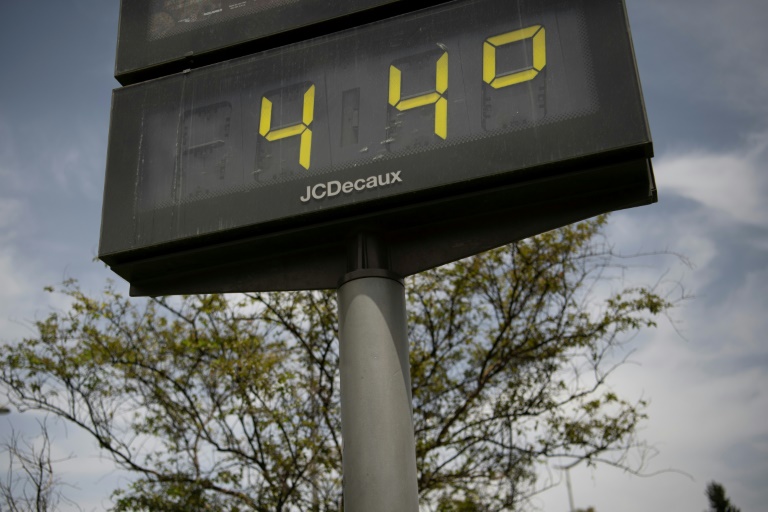
Large parts of the Iberian Peninsula have seen temperatures surpassing 40 degrees Celsius (104 degrees Fahrenheit) this week.

In southwestern France a wildfire raging since Tuesday had ripped through 1,000 hectares of pine trees just south of Bordeaux by Wednesday, prompting the evacuation of 150 residents from their homes.

Near the Dune of Pilat — Europe’s tallest sand dune — another fire consumed about 700 hectares of old pine trees, authorities said, with the blaze still not contained.

Regional prefect Fabienne Buccio told reporters that fires were spread out over five kilometres (three miles), fuelled by dried-out vegetation. 

About 6,000 campers near the dune were evacuated as firefighters worked through the night on the sandy terrain.

Further inland, 500 people were evacuated around the village of Guillos as their homes came under threat from advancing fire.

– ‘It was scary’ –

“There were flames in the top of the trees 30 metres high,” mayor Mylene Doreau told AFP. “We could see them moving towards the village, it was scary.”

Some 600 firefighters have been battling the blazes in the region, aided by waterbomber aircraft.

Prime Minister Elisabeth Borne warned that the heat, forecast to last 10 days, “affects people’s health very quickly, especially that of the most vulnerable”.

Some cities, like Toulouse and Lourdes, have made changes to their Bastille Day celebrations programmes on Thursday to limit the risk of accidental fire, while Nimes cancelled the traditional fireworks altogether.

The prefect of the Paris region, meanwhile, cut the speed limit on motorways and expressways to limit air pollution.

Heatwaves have become more frequent due to climate change, scientists say.

The previous such phenomenon to blight France, Portugal and Spain occurred in mid-June.

– ‘Expect it to worsen’ –

“We do expect it to worsen,” World Meteorological Organization spokeswoman Clare Nullis said Tuesday.

“Accompanying this heat is drought,” she said.

It had also been “a very bad season for the glaciers”, she said.

Last week an avalanche triggered by the collapse of the largest glacier in the Italian Alps — due to unusually warm temperatures — killed 11 people.

The high temperatures are expected to spread to other parts of western and central Europe in the coming days.

Britain issued an “amber” alert — the second highest of three levels — which indicates that the extreme heat will have a “high impact” on daily life and people. Temperatures are forecast to hit 35C in the southeast of the country in the coming days.

A UK climate official said there was a rising chance of a new UK record, beating Britain’s highest recorded temperature recorded on July 25, 2019 — reaching 38.7C at Cambridge Botanic Garden, in eastern England.

In Spain highs of up to 44C are expected in Guadalquivir valley in Seville in the south in coming days.

Spain’s health ministry said people should drink plenty of fluids, wear light clothes and stay in the shade or air-conditioned rooms to avoid their “vital functions” being affected.

– ‘A bit oppressive’ –

People making a living working outdoors struggled.

“The temperature is a bit oppressive,” said Miguel Angel Nunez, a 54-year-old bricklayer at a construction site in central Madrid.

The Aemet meteorological agency said parts of the country were “suffocating”, especially Andalusia in the south, Extremadura in the southwest and Galicia in the northwest.

Those areas were placed on high alert, meaning residents were asked to be cautious and keep a close eye on the weather forecast. Travel was not advised “unless strictly necessary”.

Between January 1 and July 3, more than 70,300 hectares of forest went up in smoke in Spain, the government said — almost double the average of the last ten years.

Authorities in Portugal said one person had died in forest fires, after a body was found in a burned area in the northern region of Aveiro. 

With temperatures set to climb past 40C, Portuguese Prime Minister Antonio Costa urged “a maximum of caution”.

“We have experienced situations like this in the past and we will certainly experience them in the future,” he said.

The whole country is under a “situation of alert” for wildfires that have raged for days and are forecast to go on until at least Friday.

The situation is stirring memories of devastating wildfires in 2017, which claimed the lives of over 100 people in Portugal.

Officials in the town of Sintra near Lisbon closed a series of tourist attractions such as palaces and monuments in a verdant mountain range popular with visitors as a precaution.

burs-jh/ah
Russia and Ukraine try to solve grain crisis in Turkey

Russia and Ukraine met UN and Turkish officials on Wednesday in a bid to break a months-long impasse over grain exports that has seen food prices soar and millions face hunger.

The high-stakes meeting in Istanbul came with Russia’s invasion of Ukraine showing no signs of abating and the sides locked in a furious long-range shooting battle that is destroying towns and leaving people with nothing.

Ukrainian officials said at least five people were killed in Russian shelling on the region surrounding the Black Sea port city of Mykolaiv.

“You can’t run away from war and you never know where it will find you,” 60-year-old agronomist Lyubov Mozhayeva said, while picking up a humanitarian food package in the partially destroyed frontline city of Bakhmut.

The first face-to-face talks between Russian and Ukrainian delegations since another meeting in Istanbul on March 29 comes with the threat of food shortages spreading across the poorest parts of the world.

Ukraine is a vital exporter of wheat and grains such as barley and maize. It has also supplied nearly half of all the sunflower oil traded on global markets.

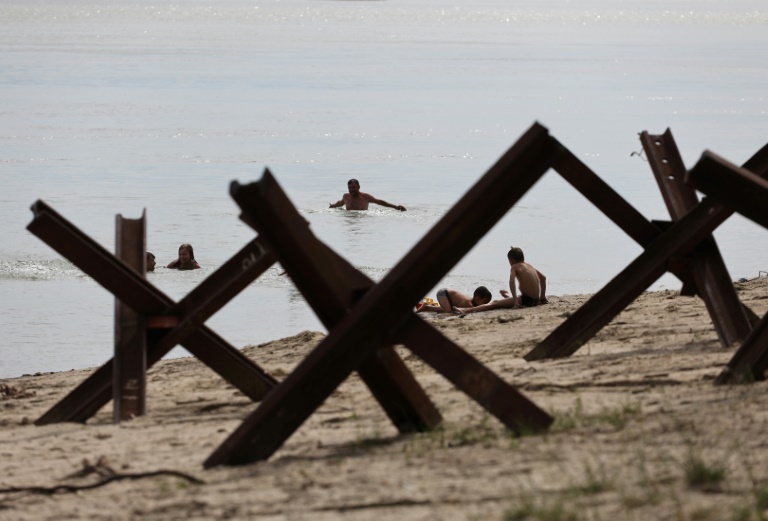
But shipments across the Black Sea have been blocked by Russian warships and mines Kyiv has laid to avert a feared amphibious assault.

– ‘Two steps from agreement’ –

The Istanbul negotiations are being complicated by growing suspicions that Russia is trying to export grain it has stolen from Ukrainian farmers in regions under its control.

US space agency data released last week showed 22 percent of Ukraine’s farmland falling under Russian control since the February 24 invasion.

The two sides say they have made progress but are sticking to firm demands that could collapse the talks.

Ukrainian Foreign Minister Dmytro Kuleba said Kyiv was “two steps from an agreement with Russia”.

“We are in the final stages and everything now depends on Russia,” he told Spain’s El Pais newspaper.

Russia said its requirements included the right to “search the ships to avoid the contraband of weapons” — a demand rejected by Kyiv.

UN Secretary-General Antonio Guterres tried on Tuesday to play down expectations of an imminent breakthrough.

“We are working hard indeed, but there is still a way to go,” the UN chief told reporters.

– Grain corridors –

NATO member Turkey has been using its good relations with both the Kremlin and Kyiv to try and broker an agreement on a safe way to deliver the grain.

Turkey says it has 20 merchant ships waiting in the region that could be quickly loaded and sent to world markets.

A plan by the UN proposes the ships follow safe “corridors” that run between the known location of mines.

Kyiv has also asked that its vessels be accompanied by warships from a friendly country such as Turkey.

Experts say de-mining the Black Sea is a complex operation that could take months — too long to address the growing global food crisis.

Kuleba said he did not think Moscow actually wanted to reach an agreement because proceeds from grain sales would help support a Western-backed government in Kyiv that the Kremlin brands as “Nazis”.

“They know that if we start to export, we will get proceeds from world markets, and this will make us stronger,” Kuleba said.

– ‘Operational pause’ –

The talks in Istanbul precede a meeting in Tehran next Tuesday between Turkish President Recep Tayyip Erdogan and his Russian counterpart Vladimir Putin.

The war in Ukraine has contributed to Turkey’s mounting economic problems and further complicated Erdogan’s path to a third decade in power in elections due within the next year.

Erdogan’s ultimate goal is to bring Putin and Ukrainian President Volodymyr Zelensky down to Istanbul for talks aimed at pausing the fighting and launching formal peace talks.

But the Ukrainian army warned this week that Russia was preparing to stage its heaviest attack yet on the Donetsk region — the larger of the two areas comprising the Donbas war zone.

The Russian army has not conducted any major ground offensives since taking the last points of Ukrainian resistance in the war zone’s smaller Lugansk region at the start of the month.

Analysts believe the Russians are taking an “operational pause” during which they are rearming and regrouping forces before launching an assault on Sloviansk and Kramatorsk — Ukraine’s administrative centre for the east.

Ukraine is trying to counter the Russians by staging increasingly potent attacks with new US and European rocket systems targeting arms depots.

US officials believe the Russians are trying to recoup their losses by negotiating to acquire hundreds of combat drones from Iran.

Former bosses of Fukushima operator ordered to pay $97 billion damages

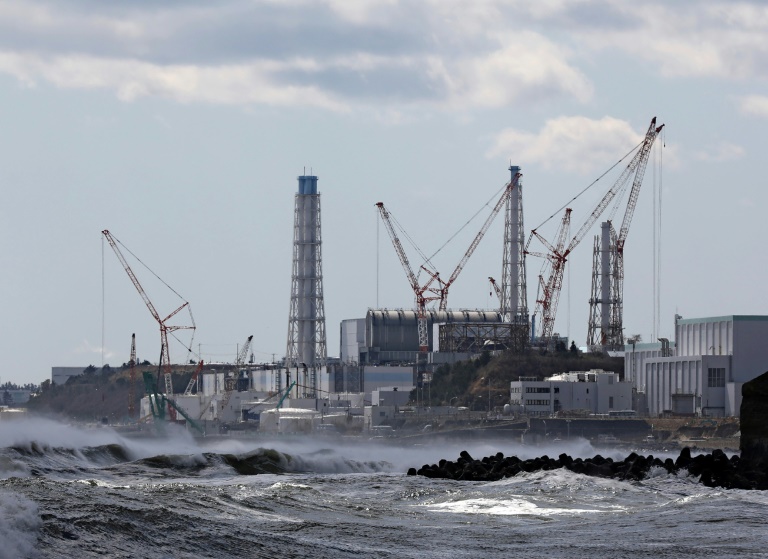
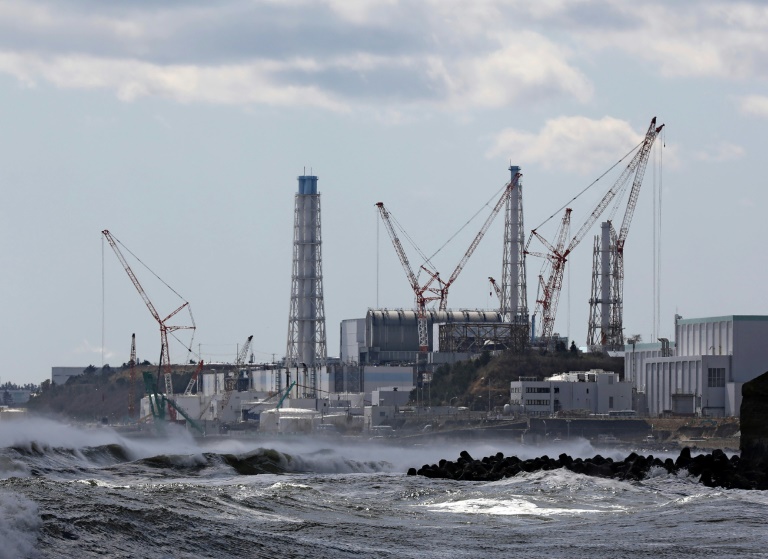
A Tokyo court Wednesday ordered former executives from the operator of the devastated Fukushima nuclear plant to pay 13.32 trillion yen ($97 billion) for failing to prevent the disaster, plaintiffs said.

Four ex-bosses from the Tokyo Electric Power Company (TEPCO) were ordered to pay the damages in a suit brought by shareholders over the nuclear disaster triggered by a massive tsunami in 2011.

Plaintiffs emerged from the Tokyo court holding banners reading “shareholders win” and “responsibility recognised”.

Lawyers for the plaintiffs hailed the ruling, and said they believed it to be the largest amount of compensation ever awarded in a civil lawsuit in Japan.

“Nuclear power plants can cause irreparable damage to human lives and the environment,” the plaintiffs said in a separate statement after the ruling.

“Executives for firms that operate such nuclear plants bear enormous responsibility, which cannot compare with that of other companies.”

The shareholders argued that the disaster could have been prevented if TEPCO bosses had listened to research and carried out preventative measures like placing an emergency power source on higher ground.

Defendants said the studies they were not credible and the risks unpredictable.

But the court ruled nuclear plant operators have “an obligation to prevent severe accidents based on the latest scientific and expert engineering knowledge”, and the executives failed to heed credible warnings.

– ‘Historic’ –

In a statement read to AFP by a TEPCO spokesman, the firm declined to comment on the ruling, saying only: “We again express our heartfelt apology to people in Fukushima and members of society broadly for causing trouble and worry” with the disaster.

The damages are intended to cover the costs to TEPCO for dismantling the reactors, compensating affected residents, and cleaning up contamination.

The lawsuit is designed so the money will go to TEPCO itself, which the plaintiffs own partially as shareholders.

Hiroyuki Kawai, a lawyer representing the plaintiffs, called the decision “historic”.

“We realise that 13 trillion yen is well beyond their capacity to pay,” he told reporters, adding that the plaintiffs expect the men to pay as much as their assets allow.

There was no immediate word on whether the executives would appeal, though the plantiffs’ legal team insisted “if they have heart to feel regret… they should deeply apologise to residents and follow the judgement without appealing”.

The size of the award is enormous. 

As a point of comparison, in 2015 British oil giant BP was ordered to pay $20.8 billion for the Gulf of Mexico oil spill in what was described at the time as the highest fine ever imposed on a company in US history. 

– ‘Retirement years in misery’ –

Three of the Fukushima Daiichi nuclear plant’s six reactors were operating when a massive undersea quake triggered a devastating tsunami on March 11, 2011.

They went into meltdown after their cooling systems failed when waves flooded backup generators, leading to the worst nuclear disaster since Chernobyl.

Around 12 percent of the Fukushima region was once declared unsafe but no-go zones now cover around two percent, although populations in many towns remain far lower than before.

TEPCO has been pursued in the courts by survivors of the disaster as well as shareholders, and six plaintiffs this year took the firm to court over claims they developed thyroid cancer because of radiation exposure.

In 2019, a court acquitted three former TEPCO officials in the only criminal trial to stem from the disaster. 

They were among the four men ordered to pay damages in Wednesday’s ruling: former chairman Tsunehisa Katsumata, former vice presidents Sakae Muto and Ichiro Takekuro and former president Masataka Shimizu.

The men had faced up to five years in prison if convicted of professional negligence resulting in death and injury, but that court ruled that they could not have predicted the scale of the tsunami that triggered the disaster.

Kawai said when the shareholder suit was filed in 2012 that senior managers at TEPCO must be made to pay.

“You may have to sell your house. You may have to spend your retirement years in misery,” he said then.

“In Japan, nothing can be resolved and no progress can be made without assigning personal responsibility.”

TEPCO is currently engaged in a decades-long effort to decommission the plant, a costly and difficult process.

No one was killed in the nuclear meltdown, but the tsunami left 18,500 dead or missing.

Former bosses of Fukushima operator ordered to pay $97 billion damages

A Tokyo court Wednesday ordered former executives from the operator of the devastated Fukushima nuclear plant to pay 13.32 trillion yen ($97 billion) for failing to prevent the disaster, plaintiffs said.

Four ex-bosses from the Tokyo Electric Power Company (TEPCO) were ordered to pay the damages in a suit brought by shareholders over the nuclear disaster triggered by a massive tsunami in 2011.

Plaintiffs emerged from the Tokyo court holding banners reading “shareholders win” and “responsibility recognised”.

Lawyers for the plaintiffs hailed the ruling, and said they believed it to be the largest amount of compensation ever awarded in a civil lawsuit in Japan.

“Nuclear power plants can cause irreparable damage to human lives and the environment,” the plaintiffs said in a separate statement after the ruling.

“Executives for firms that operate such nuclear plants bear enormous responsibility, which cannot compare with that of other companies.”

The shareholders argued that the disaster could have been prevented if TEPCO bosses had listened to research and carried out preventative measures like placing an emergency power source on higher ground.

Defendants said the studies they were not credible and the risks unpredictable.

But the court ruled nuclear plant operators have “an obligation to prevent severe accidents based on the latest scientific and expert engineering knowledge”, and the executives failed to heed credible warnings.

– ‘Historic’ –

In a statement read to AFP by a TEPCO spokesman, the firm declined to comment on the ruling, saying only: “We again express our heartfelt apology to people in Fukushima and members of society broadly for causing trouble and worry” with the disaster.

The damages are intended to cover the costs to TEPCO for dismantling the reactors, compensating affected residents, and cleaning up contamination.

The lawsuit is designed so the money will go to TEPCO itself, which the plaintiffs own partially as shareholders.

Hiroyuki Kawai, a lawyer representing the plaintiffs, called the decision “historic”.

“We realise that 13 trillion yen is well beyond their capacity to pay,” he told reporters, adding that the plaintiffs expect the men to pay as much as their assets allow.

There was no immediate word on whether the executives would appeal, though the plantiffs’ legal team insisted “if they have heart to feel regret… they should deeply apologise to residents and follow the judgement without appealing”.

The size of the award is enormous. 

As a point of comparison, in 2015 British oil giant BP was ordered to pay $20.8 billion for the Gulf of Mexico oil spill in what was described at the time as the highest fine ever imposed on a company in US history. 

– ‘Retirement years in misery’ –

Three of the Fukushima Daiichi nuclear plant’s six reactors were operating when a massive undersea quake triggered a devastating tsunami on March 11, 2011.

They went into meltdown after their cooling systems failed when waves flooded backup generators, leading to the worst nuclear disaster since Chernobyl.

Around 12 percent of the Fukushima region was once declared unsafe but no-go zones now cover around two percent, although populations in many towns remain far lower than before.

TEPCO has been pursued in the courts by survivors of the disaster as well as shareholders, and six plaintiffs this year took the firm to court over claims they developed thyroid cancer because of radiation exposure.

In 2019, a court acquitted three former TEPCO officials in the only criminal trial to stem from the disaster. 

They were among the four men ordered to pay damages in Wednesday’s ruling: former chairman Tsunehisa Katsumata, former vice presidents Sakae Muto and Ichiro Takekuro and former president Masataka Shimizu.

The men had faced up to five years in prison if convicted of professional negligence resulting in death and injury, but that court ruled that they could not have predicted the scale of the tsunami that triggered the disaster.

Kawai said when the shareholder suit was filed in 2012 that senior managers at TEPCO must be made to pay.

“You may have to sell your house. You may have to spend your retirement years in misery,” he said then.

“In Japan, nothing can be resolved and no progress can be made without assigning personal responsibility.”

TEPCO is currently engaged in a decades-long effort to decommission the plant, a costly and difficult process.

No one was killed in the nuclear meltdown, but the tsunami left 18,500 dead or missing.

European stocks fall before key US inflation data

European equities fell Wednesday with traders on edge before key June inflation data in the United States.

The London stock market sank by nearly one percent, around half-way through the session, despite news of rebounding UK economic growth in May.

Eurozone stocks were down by about one percent after a mixed close in Asia.

The euro clawed back slightly, one day after hitting dollar parity for the first time in two decades on concerns about a possible recession in the eurozone.

Oil rebounded slightly having fallen sharply Tuesday on weaker demand expectations.

– Tenterhooks –

“Markets are on tenterhooks ahead of the US inflation data which will hold great sway over the Fed’s rate-hike plans,” said Exinity Markets analyst Han Tan.

“A fresh four-decade high, along with more signs of unabating inflationary pressures, may well force the Fed to punch harder and faster in its battle against runaway consumer prices.”

Markets fear more evidence of red hot US inflation will prompt the Fed to keep hiking interest rates aggressively after it ramped up borrowing costs by three-quarters of a percentage point last month.

US inflation had spiked to a four-decade high of 8.6 percent in May.

Inflation is soaring worldwide after economies reopened from pandemic lockdowns and as the Ukraine war keeps energy prices elevated.

In a further sign of the pressure being felt around the world, the New Zealand and South Korean central banks each lifted interest rates by 0.5 percentage points Wednesday.

It was the steepest increase by Seoul since 1999.

– Europe gas crisis –

The euro held above $1 a day after hitting parity for the first time since late 2002, as a worsening energy crisis fanned expectations that the eurozone would plunge into recession.

With Russian energy giant Gazprom starting 10 days of maintenance Monday on its Nord Stream 1 pipeline, the bloc — and particularly gas-reliant Germany — is waiting nervously to see if the taps are turned back on.

The single currency has been hit also by the European Central Bank’s reluctance to raise rates — in contrast to monetary policy elsewhere.

“A prolonged cut to the gas supply would halt a lot of economic activity, sending (Germany) deep into recession,” said Tapas Strickland at National Australia Bank.

He said July 21 — when the gas should be switched back on — will be a crucial date.

“That date also happens to be the day of the next ECB meeting,” Strickland added. 

“Either of these events are key risk events. Russia playing gas politics by not switching on the gas supply would likely see the euro lurch much lower.”

– Key figures at around 1130 GMT –

London – FTSE 100: DOWN 0.8 percent at 7,149.84 points

Frankfurt – DAX: DOWN 1.0 percent at 12,770.74

Paris – CAC 40: DOWN 0.9 percent at 5,989.00

EURO STOXX 50: DOWN 1.0 percent at 3,451.61

Tokyo – Nikkei 225: UP 0.5 percent at 26,478.77 (close)

Hong Kong – Hang Seng Index: DOWN 0.2 percent at 20,797.95 (close)

Shanghai – Composite: UP 0.1 percent at 3,284.29 (close)

New York – Dow: DOWN 0.6 percent at 30,981.33 (close)

Euro/dollar: UP at $1.0055 from $1.0037 Tuesday

Pound/dollar: UP at $1.1919 from $1.1889 

Euro/pound: DOWN at 84.37 pence from 84.40 pence

Dollar/yen: UP at 137.08 yen from 136.84 yen

West Texas Intermediate: UP 1.0 percent at $96.84 per barrel

Brent North Sea crude: UP 0.6 percent at $100.05 per barrel

Pacific looks to international court for help on climate

Climate-threatened Pacific islands are pushing for the International Court of Justice to throw its weight behind efforts to arrest climate change, with the initiative gaining support at a key regional summit in Fiji Wednesday.

The Pacific nation of Vanuatu is spearheading a campaign to ask the Hague-based tribunal “to protect the rights of present and future generations against the effects of climate change”.

Vanuatu’s Foreign Minister Marc Ati told AFP on Wednesday that he was confident leaders from neighbouring islands, including Australia and New Zealand, would endorse the push at this week’s Pacific Islands Forum in the Fijian capital Suva.

The plan will need the backing of a majority of countries at the United Nations General Assembly in September to be put to the world’s highest court.

Support from the countries meeting at this week’s Fiji summit could be crucial to get the UN vote across the line.

Ati said he had “met with all my counterparts, they confirmed their support”.

The initiative began in a classroom at the University of the South Pacific in 2019.

Some 27 law students wrote to Pacific leaders asking them to take up the campaign — and Vanuatu answered the call.

Fijian university student Vishal Prasad, 26, was one of those involved. 

He told AFP that even a non-binding “advisory opinion” from the International Court of Justice would have “wide-reaching impacts”.

Prasad hopes the court weighing in would spur more ambitious actions on climate change, and put polluters on notice that they will be held accountable.

For young people in the Pacific, “the existential threat, the reality” of climate change “is quite scary”, he said.

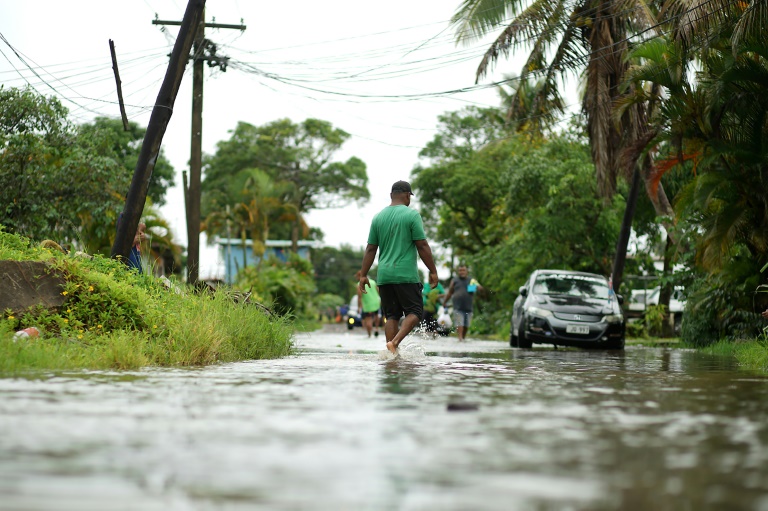
Rising sea levels and stronger storms are already causing serious problems across the Pacific, where many communities live just above sea level.

“We are already seeing impacts on a daily basis. We are seeing the onset of cyclones,” said Prasad. “We are seeing communities being relocated.”

– Skin in the game –

Pacific leaders will discuss Vanuatu’s campaign during the summit’s final meeting on Friday — alongside other key issues for the region including climate and security.

The Pacific summit marks the first time leaders have been able to meet in person since Covid-19 hit, forcing countries across the region to close their borders.

Tuvaluan Foreign Minister Simon Kofe told AFP he would like to see Vanuatu’s campaign supported as it was “consistent with our efforts to protect our people that are impacted by climate change”.

“Tuvalu fully supports that initiative by Vanuatu,” he told AFP.

One country whose position is being closely watched this week is Australia, a major emitter in the region and one of the world’s top fossil fuel exporters.

Prime Minister Anthony Albanese arrived Wednesday in Suva for his first visit to the Pacific as leader, hoping to mend Australia’s fractured relationship with the Pacific after a near-decade at odds on climate policy.

Albanese said he supported “the broad concept” of Vanuatu’s campaign but wanted to see the details of the reference.

“It’s hard for any nation to just sign off sight unseen,” he said.

“But with regard to the general principle, we understand that it is a reasonable principle being put forward.”

Pacific expert Wesley Morgan of the Climate Council said there is still a “robust discussion” about the exact question that would be put to the International Court of Justice.

He said the new Australian government has “its work cut out for it to convince island countries that it is actually serious about tackling climate change”.

The question is “how much skin is Australia prepared to lose” he said.

By the end of the summit “we will find out whether or not Australia has tried to change the language of the question that they would prefer to take to the ICJ” he added.

Former bosses of Fukushima operator ordered to pay $97 bn damages

A Tokyo court Wednesday ordered former executives from the operator of the devastated Fukushima nuclear plant to pay 13.32 trillion yen ($97 billion) for failing to prevent the disaster, plaintiffs said.

Four ex-bosses from the Tokyo Electric Power Company (TEPCO) were ordered to pay the damages in a suit brought by shareholders over the nuclear disaster triggered by a massive tsunami in 2011.

Plaintiffs emerged from the Tokyo court holding banners reading “shareholders win” and “responsibility recognised”.

Lawyers for the plaintiffs hailed the ruling, and said they believed it to be the largest amount of compensation ever awarded in a civil lawsuit in Japan.

“Nuclear power plants can cause irreparable damage to human lives and the environment,” the plaintiffs said in a separate statement after the ruling.

“Executives for firms that operate such nuclear plants bear enormous responsibility, which cannot compare with that of other companies.”

The shareholders argued that the disaster could have been prevented if TEPCO bosses had listened to research and carried out preventative measures like placing an emergency power source on higher ground.

Defendants said the studies they were not credible and the risks unpredictable.

But the court ruled nuclear plant operators have “an obligation to prevent severe accidents based on the latest scientific and expert engineering knowledge,” and the executives failed to heed credible warnings.

In a statement read to AFP by a TEPCO spokesman, the firm declined to comment on the ruling, saying only: “We again express our heartfelt apology to people in Fukushima and members of society broadly for causing trouble and worry” with the disaster.

The damages are intended to cover the costs to TEPCO for dismantling the reactors, compensating affected residents, and cleaning up contamination.

The lawsuit is designed so the money will go to TEPCO itself, which the plaintiffs own partially as shareholders.

Hiroyuki Kawai, a lawyer representing the plaintiffs, called the decision “historic”.

“We realise that 13 trillion yen is well beyond their capacity to pay,” he told reporters, adding that the plaintiffs expect the men to pay as much as their assets allow.

There was no immediate word on whether the executives would appeal, though the plantiffs’ legal team insisted “if they have heart to feel regret… they should deeply apologise to residents and follow the judgement without appealing.”

– ‘Retirement years in misery’ –

Three of the Fukushima Daiichi nuclear plant’s six reactors were operating when a massive undersea quake triggered a devastating tsunami on March 11, 2011.

They went into meltdown after their cooling systems failed when waves flooded backup generators, leading to the worst nuclear disaster since Chernobyl.

Around 12 percent of the Fukushima region was once declared unsafe but no-go zones now cover around two percent, although populations in many towns remain far lower than before.

TEPCO has been pursued in the courts by survivors of the disaster as well as shareholders, and six plaintiffs this year took the firm to court over claims they developed thyroid cancer because of radiation exposure.

In 2019, a court acquitted three former TEPCO officials in the only criminal trial to stem from the disaster. 

They were among the four men ordered to pay damages in Wednesday’s ruling: former chairman Tsunehisa Katsumata, former vice presidents Sakae Muto and Ichiro Takekuro and former president Masataka Shimizu.

The men had faced up to five years in prison if convicted of professional negligence resulting in death and injury, but that court ruled that they could not have predicted the scale of the tsunami that triggered the disaster.

Kawai said when the shareholder suit was filed in 2012 that senior managers at TEPCO must be made to pay.

“You may have to sell your house. You may have to spend your retirement years in misery,” he said then.

“In Japan, nothing can be resolved and no progress can be made without assigning personal responsibility.”

TEPCO is currently engaged in a decades-long effort to decommission the plant, a costly and difficult process.

No one was killed in the nuclear meltdown, but the tsunami left 18,500 dead or missing.

Former bosses of Fukushima operator ordered to pay $97 bn damages

A Tokyo court Wednesday ordered former executives from the operator of the devastated Fukushima nuclear plant to pay 13.32 trillion yen ($97 billion) for failing to prevent the disaster, plaintiffs said.

Four ex-bosses from the Tokyo Electric Power Company (TEPCO) were ordered to pay the damages in a suit brought by shareholders over the nuclear disaster triggered by a massive tsunami in 2011.

Plaintiffs emerged from the Tokyo court holding banners reading “shareholders win” and “responsibility recognised”.

Lawyers for the plaintiffs hailed the ruling, and said they believed it to be the largest amount of compensation ever awarded in a civil lawsuit in Japan.

“Nuclear power plants can cause irreparable damage to human lives and the environment,” the plaintiffs said in a separate statement after the ruling.

“Executives for firms that operate such nuclear plants bear enormous responsibility, which cannot compare with that of other companies.”

The shareholders argued that the disaster could have been prevented if TEPCO bosses had listened to research and carried out preventative measures like placing an emergency power source on higher ground.

Defendants said the studies they were not credible and the risks unpredictable.

But the court ruled nuclear plant operators have “an obligation to prevent severe accidents based on the latest scientific and expert engineering knowledge,” and the executives failed to heed credible warnings.

In a statement read to AFP by a TEPCO spokesman, the firm declined to comment on the ruling, saying only: “We again express our heartfelt apology to people in Fukushima and members of society broadly for causing trouble and worry” with the disaster.

The damages are intended to cover the costs to TEPCO for dismantling the reactors, compensating affected residents, and cleaning up contamination.

The lawsuit is designed so the money will go to TEPCO itself, which the plaintiffs own partially as shareholders.

Hiroyuki Kawai, a lawyer representing the plaintiffs, called the decision “historic”.

“We realise that 13 trillion yen is well beyond their capacity to pay,” he told reporters, adding that the plaintiffs expect the men to pay as much as their assets allow.

There was no immediate word on whether the executives would appeal, though the plantiffs’ legal team insisted “if they have heart to feel regret… they should deeply apologise to residents and follow the judgement without appealing.”

– ‘Retirement years in misery’ –

Three of the Fukushima Daiichi nuclear plant’s six reactors were operating when a massive undersea quake triggered a devastating tsunami on March 11, 2011.

They went into meltdown after their cooling systems failed when waves flooded backup generators, leading to the worst nuclear disaster since Chernobyl.

Around 12 percent of the Fukushima region was once declared unsafe but no-go zones now cover around two percent, although populations in many towns remain far lower than before.

TEPCO has been pursued in the courts by survivors of the disaster as well as shareholders, and six plaintiffs this year took the firm to court over claims they developed thyroid cancer because of radiation exposure.

In 2019, a court acquitted three former TEPCO officials in the only criminal trial to stem from the disaster. 

They were among the four men ordered to pay damages in Wednesday’s ruling: former chairman Tsunehisa Katsumata, former vice presidents Sakae Muto and Ichiro Takekuro and former president Masataka Shimizu.

The men had faced up to five years in prison if convicted of professional negligence resulting in death and injury, but that court ruled that they could not have predicted the scale of the tsunami that triggered the disaster.

Kawai said when the shareholder suit was filed in 2012 that senior managers at TEPCO must be made to pay.

“You may have to sell your house. You may have to spend your retirement years in misery,” he said then.

“In Japan, nothing can be resolved and no progress can be made without assigning personal responsibility.”

TEPCO is currently engaged in a decades-long effort to decommission the plant, a costly and difficult process.

No one was killed in the nuclear meltdown, but the tsunami left 18,500 dead or missing.

Record temperatures in Shanghai as heatwave bakes China

Shanghai roasted under some of its hottest temperatures ever recorded on Wednesday as a searing heatwave in China triggered a flurry of weather alerts and strained the farming and energy sectors.

Swathes of the northern hemisphere have sweltered under extreme heat this week, with France and Britain set to endure soaring temperatures on Wednesday as firefighters in western Europe battle forest blazes.

China has also suffered extreme weather this summer, with record floods last month forcing hundreds of thousands of people out of their homes while other regions have simmered in road-buckling heat.

Scientists say that heatwaves have become more frequent due to climate change, and will likely become longer and more intense as global temperatures continue to rise.

At a central Shanghai weather station on Wednesday, the mercury climbed to 40.9 degrees Celsius (105.6 Fahrenheit) by 2:30 pm, the official news site of the national meteorological service reported.

The figure “matched the record highest air temperature in the local area since records began in 1873,” the article said.

Social media users bemoaned the stifling weather, with one user on the popular Weibo platform saying they “felt like meat on a barbecue when I went for my Covid test just now.”

“Maybe it’ll burn off all the virus,” another commented.

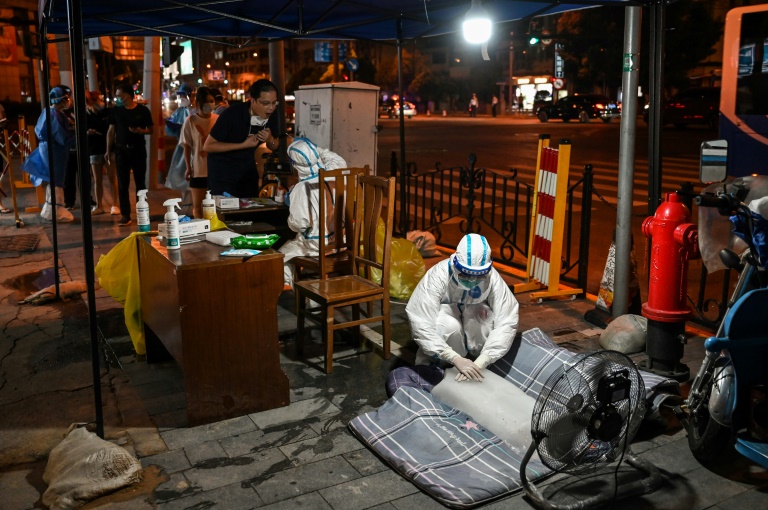
Photos on social media showed health workers in Shanghai sitting or lying on blocks of ice to cool down as they carried out a mass testing drive aimed at stemming a rise in Covid-19 cases.

The economic hub experienced a gruelling virus lockdown earlier this year that confined most of its 25 million residents to their homes for around two months.

A spate of heat warnings were in place across eastern and southern China on Wednesday as authorities warned that temperatures could hit 42C in certain areas. 

Some media outlets reported heat-related deaths.

Authorities have also warned of potential damage to agriculture, saying Monday that the heat was “not conducive” for the growth or harvest of rice, corn, cotton and other crops.

Electricity consumption has hit records in several parts of the country as people and businesses have cranked up air conditioners to stay cool, Bloomberg News reported.

China is no stranger to hot summers, but this year is shaping up to be a scorcher even by the country’s standards.

Authorities in seven provinces last month warned millions of residents not to go outdoors as temperatures edged towards 40C, as state media showed footage of roads that had cracked under extreme heat.

At the same time, multiple places across the south chalked up record rainfall and flood levels after the National Climate Centre forecast “relatively worse” and “more extreme” deluges than previous years.

Biden heads to Israel on first Middle East tour as US president

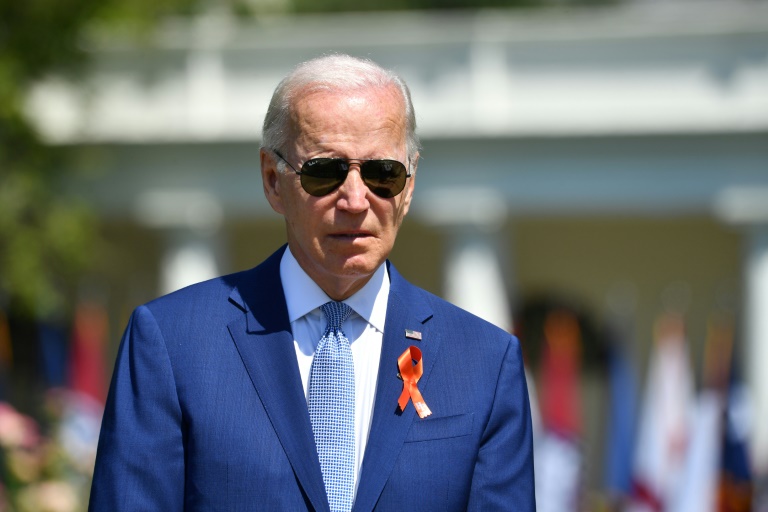
US President Joe Biden was to start a Middle East tour on Wednesday in Israel, where leaders will urge tougher action against their common foe Iran, before a delicate stop in oil-rich Saudi Arabia.

The 79-year-old’s visit to Jeddah on Friday will be the focus of the tour, after Biden branded Saudi Arabia a “pariah” over the 2018 murder of dissident Saudi journalist Jamal Khashoggi.

Air Force One will make a first direct flight from Israel to Saudi Arabia amid efforts to forge a relationship between the Jewish state and the conservative Gulf kingdom that does not recognise Israel’s existence.

Before that, Biden will meet Israeli leaders seeking to broaden cooperation against Iran, and Palestinian leaders angered by what they describe as Washington’s failure to curb Israeli aggression.

The persistent frustrations of Israeli-Palestinian diplomacy are nothing new for Biden, who first visited the region in 1973 after being elected to the Senate.

Israel and Iran were allies then, but they are now sworn enemies that have been engaged in a “shadow war” of attacks and sabotage.

Israel’s caretaker prime minister, Yair Lapid, has said talks “will focus first and foremost on the issue of Iran”.

Iran’s President Ebrahim Raisi warned that if Biden’s goal on the trip was to bolster Israel’s security, he was destined to fail.

“If the visits of the American officials to the countries of the region are to strengthen the position of the Zionist regime… their efforts will not create security for the Zionists in any way,” Raisi said, referring to Israel.

– Jerusalem to Bethlehem –

Moments after Biden lands, Israel’s military will show him its new Iron Beam system, an anti-drone laser it claims is crucial to countering Iran’s fleet of unmanned aerial vehicles.

Israel insists it will do whatever is necessary to thwart Iran’s nuclear ambitions, and is staunchly opposed to a restoration of the frayed 2015 deal that gave Tehran sanctions relief.

Israeli police fanned out across central Jerusalem on Wednesday, with major roads set to close as Air Force One touches down at around 1230 GMT.

Israel has raised 1,000 flags across Jerusalem to welcome the US leader, who has not reversed former president Donald Trump’s controversial decision to recognise the city as the capital of the Jewish state.

Palestinians claim Israeli-annexed east Jerusalem as their capital and, ahead of the visit, accused Biden of failing to make good on his pledge to restore the US as an honest broker in the conflict.

“We only hear empty words and no results,” said Jibril Rajoub, a leader of the secular Fatah movement of Palestinian president Mahmud Abbas.

Biden will meet Abbas in the occupied West Bank city of Bethlehem on Friday, but there is no expectation of bold announcements toward a fresh peace process, meaning the visit could end up deepening Palestinian frustration.

Israel for now is again mired in political gridlock ahead of a November 1 parliamentary election, the fifth in less than four years.

Biden is scheduled to have a short meeting Thursday with Israel’s former prime minister Benjamin Netanyahu, who will try to reclaim power in the upcoming polls.

– Normalisation steps?  –

US-Palestinian ties have been strained by the May killing of Al Jazeera reporter Shireen Abu Akleh while she was covering an Israeli army raid in the West Bank.

The United Nations has concluded the Palestinian-American journalist was killed by Israeli fire. Washington has agreed this was likely, but also said there was no evidence the killing was intentional.

Abu Akleh’s family has voiced outrage over the Biden administration’s “abject response” to her death, and the White House has not commented on their request to meet the president in Jerusalem.

Biden’s trip to Saudi Arabia is seen as part of efforts to stabilise oil markets rattled by the war in Ukraine, by re-engaging with a long-time US key strategic ally and major energy supplier.

Israel hopes the visit will also signal the start of a process toward building diplomatic ties with Saudi Arabia.

Israel expanded its regional reach with US backing in 2020, when it formalised ties with the United Arab Emirates, Bahrain and Morocco — breakthroughs that came after its peace accord with Egypt in 1979 and Jordan in 1994.

While there is no expectation of Saudi Arabia recognising the Jewish state in the immediate future, a senior Israeli official said Tuesday that Biden’s visit marked an important step toward that goal.

Close Bitnami banner
Bitnami