AFP

US firefighters race to protect Yosemite's giant sequoias

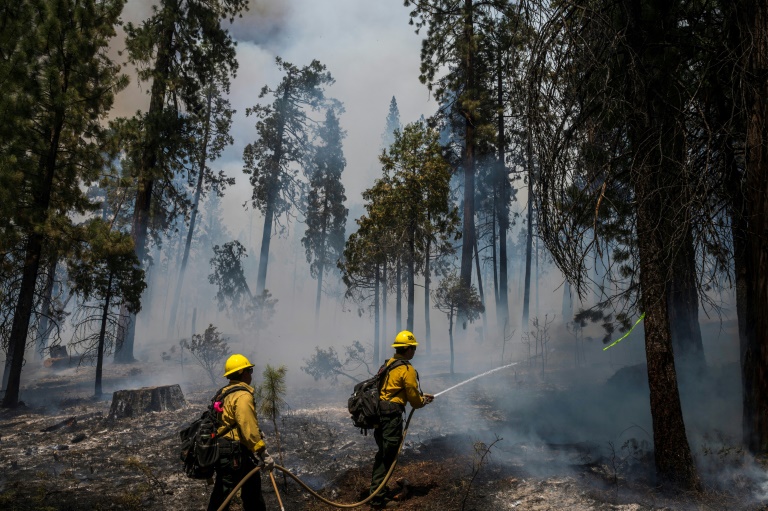
Hundreds of firefighters scrambled Monday to prevent a wildfire engulfing an area of rare giant sequoia trees in California’s Yosemite National Park.

The Washburn fire, in the world-renowned Mariposa Grove of giant sequoias, was first reported on July 7 and doubled in size over the weekend to 2,340 acres (946 hectares), according to a park report.

Yosemite’s fire management service said 545 firefighters were battling the fire, including “proactively protecting” the grove — the largest group of sequoias in Yosemite, with over 500 mature trees.

The previously out-of-control blaze is now 25 percent contained, but the weather is expected to remain hot and dry for the next few days — conditions that do not help efforts to curb the flames.

“We are doing everything we can to put this fire out,” including deploying air tankers and helicopters along with ground crews, Nancy Phillipe, spokeswoman for Yosemite Fire Information, told AFP.

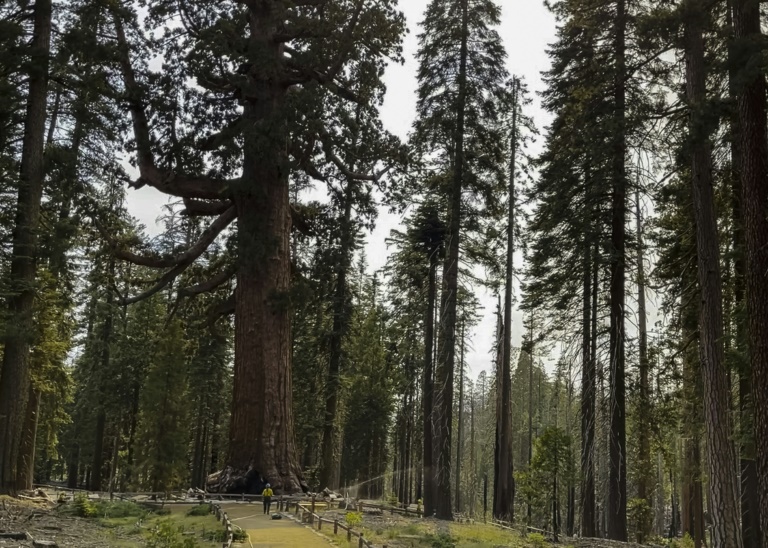
At the Mariposa Grove — which remains closed to the public due to the fire — crews worked to remove quick-burning leaves, sticks and branches as well as drenching the ground and giant sequoias. Large plumes of gray-white smoke were seen over the imposing trees.

The Yosemite fire service tweeted footage of emergency sprinklers set up specifically to douse the grove’s “Grizzly Giant” — the most renowned sequoia in the park, which is the second largest tree in Yosemite at 209 feet (63 meters), and one of the oldest.

Phillipe said the response team was “feeling confident that we’ve set up the trees for as much protection as we can” with the recent efforts, aided by previous prescribed burns.

– ‘A long season’ –

Giant sequoias are the world’s largest trees by volume. Their relatives, the California redwoods, can grow taller — well over 100 meters — but are not as wide.

Both species of tree are adapted to fires, with thick bark that protects them from heat and flames.

In their lifetimes, which are measured in thousands of years, they typically endure many fires, the heat from which helps their cones to open, allowing the seeds to disperse.

But longer, hotter and more aggressive fires can damage them, sometimes irreparably, and California has recently seen multiple severe fire seasons in a row.

Scientists say global warming, which is being driven chiefly by humanity’s unchecked burning of fossil fuels, is making extreme weather events more likely.

Last year, California and other parts of the western United States were ravaged by huge, hot and fast-moving wildfires, driven by years of drought and a warming climate.

Two of those fires in California burned 3,600 giant sequoias, each more than four feet (120 centimeters) in diameter. 

The year before, 10,000 of the giants — up to 14 percent of the world’s total — perished in another fire.

With drought and scorching temperatures, fire chiefs have warned of longer and longer fire seasons.  

More than 3,500 fires have been reported already by California state firefighters CalFire in 2022, burning an estimated 22,900 acres.

“It is only just the beginning of July,” said Phillipe, echoing concern at the lengthening seasons.

“Every year we say ‘wow this is going to be a long season,’ and the seasons are lasting longer and longer.”

US firefighters race to protect Yosemite's giant sequoias

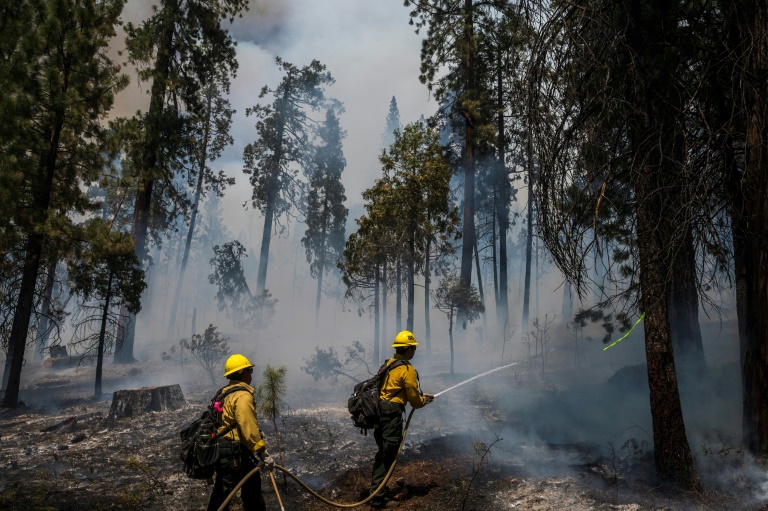
Hundreds of firefighters scrambled Monday to prevent a wildfire engulfing an area of rare giant sequoia trees in California’s Yosemite National Park.

The Washburn fire, in the world-renowned Mariposa Grove of giant sequoias, was first reported on July 7 and doubled in size over the weekend to 2,340 acres (946 hectares), according to a park report.

Yosemite’s fire management service said 545 firefighters were battling the fire, including “proactively protecting” the grove — the largest group of sequoias in Yosemite, with over 500 mature trees.

The previously out-of-control blaze is now 25 percent contained, but the weather is expected to remain hot and dry for the next few days — conditions that do not help efforts to curb the flames.

“We are doing everything we can to put this fire out,” including deploying air tankers and helicopters along with ground crews, Nancy Phillipe, spokeswoman for Yosemite Fire Information, told AFP.

At the Mariposa Grove — which remains closed to the public due to the fire — crews worked to remove quick-burning leaves, sticks and branches as well as drenching the ground and giant sequoias. Large plumes of gray-white smoke were seen over the imposing trees.

The Yosemite fire service tweeted footage of emergency sprinklers set up specifically to douse the grove’s “Grizzly Giant” — the most renowned sequoia in the park, which is the second largest tree in Yosemite at 209 feet (63 meters), and one of the oldest.

Phillipe said the response team was “feeling confident that we’ve set up the trees for as much protection as we can” with the recent efforts, aided by previous prescribed burns.

– ‘A long season’ –

Giant sequoias are the world’s largest trees by volume. Their relatives, the California redwoods, can grow taller — well over 100 meters — but are not as wide.

Both species of tree are adapted to fires, with thick bark that protects them from heat and flames.

In their lifetimes, which are measured in thousands of years, they typically endure many fires, the heat from which helps their cones to open, allowing the seeds to disperse.

But longer, hotter and more aggressive fires can damage them, sometimes irreparably, and California has recently seen multiple severe fire seasons in a row.

Scientists say global warming, which is being driven chiefly by humanity’s unchecked burning of fossil fuels, is making extreme weather events more likely.

Last year, California and other parts of the western United States were ravaged by huge, hot and fast-moving wildfires, driven by years of drought and a warming climate.

Two of those fires in California burned 3,600 giant sequoias, each more than four feet (120 centimeters) in diameter. 

The year before, 10,000 of the giants — up to 14 percent of the world’s total — perished in another fire.

With drought and scorching temperatures, fire chiefs have warned of longer and longer fire seasons.  

More than 3,500 fires have been reported already by California state firefighters CalFire in 2022, burning an estimated 22,900 acres.

“It is only just the beginning of July,” said Phillipe, echoing concern at the lengthening seasons.

“Every year we say ‘wow this is going to be a long season,’ and the seasons are lasting longer and longer.”
Global stocks mostly fall ahead of key US inflation data

Global stock markets mostly fell Monday as investors digested fresh Covid-19 restrictions in China and braced for a key US inflation report, while the dollar strengthened against other currencies.

The euro continued to head towards parity against the dollar as the European Commission said it would again cut its growth forecast for the current year and hike expectations for inflation.

“It is no longer a question of if euro-dollar will fall to one, but more a question of how quickly and will it stop there,” City Index analyst Fiona Cincotta told AFP.

“With energy security concerns rising by the day in Europe, a recession seems almost impossible to avoid,” the expert said. 

At the same time, Friday’s strong US jobs report meant that an interest hike of a full percentage point “can’t be discounted,” Cincotta said. 

“The diverging economic outlooks and the significantly more hawkish Fed means that euro-dollar could comfortably fall below parity,” she said.

This week’s calendar includes the key US consumer price index reading for June, which will be scrutinized for clues about whether the Federal Reserve’s aggressive moves to tighten monetary policy will need to be extended.

OANDA analyst Craig Erlam felt it was “only a matter of time” until euro-dollar hits parity. 

While the European Central Bank is readying to raise interest rates for the first time in 11 years, “It’s offering little support for the single currency as any hikes will simply compound the economic misery at this point,” the analyst said. 

– China growth fears –

The prospect of another coronavirus lockdown sparked an equities sell-off in Hong Kong and Shanghai on Monday.

Hong Kong-listed casino operators were sharply lower after officials in Macau embarked on a week-long lockdown to curb its worst coronavirus outbreak.

There were also losses in Sydney, Seoul, Taipei, Manila, Mumbai, Jakarta and Wellington.

Shanghai recorded more than 120 virus cases at the weekend, having seen its first one of the highly contagious BA.5 Omicron strain, forcing officials to launch another mass testing drive.

With China fixated on its zero-Covid strategy, there is increasing concern that authorities will revert to another painful lockdown. Shanghai residents only emerged from a two-month confinement in June.

There have meanwhile been new infections uncovered in other parts of the country, including Beijing.

However, Tokyo rose as traders welcomed Japan’s ruling bloc securing a strong win in Sunday’s upper house election, held days after the assassination of former premier Shinzo Abe.

The result should provide the government with some stability, while there were also hopes for a cabinet reshuffle and economic stimulus.

Back on Wall Street, stocks closed firmly lower, with the S&P 500 shedding 1.2 percent.

Twitter sank more than 11 percent in the first session since Tesla Chief Executive Elon Musk notified the company he was withdrawing a $44 billion bid to acquire the social media platform.

– Key figures at around 2130 GMT –

New York – Dow: DOWN 0.5 percent at 31,173.84 (close)

New York – S&P 500: DOWN 1.2 percent at 3,854.43 (close)

New York – Nasdaq: DOWN 2.3 percent at 11,372.60 (close)

London – FTSE 100: UNCHANGED at 7,196.59 (close)

Frankfurt – DAX: DOWN 1.4 percent at 12,832.44 (close)

Paris – CAC 40: DOWN 0.6 percent at 5,996.30 (close)

EURO STOXX 50: DOWN 1.0 percent at 3,471.69 (close)

Tokyo – Nikkei 225: UP 1.1 percent at 26,812.80 (close)

Hong Kong – Hang Seng Index: DOWN 2.8 percent at 21,124.20 (close)

Shanghai – Composite: DOWN 1.3 percent at 3,313.58 (close)

West Texas Intermediate: DOWN 0.7 percent at $104.09 per barrel

Brent North Sea crude: UP 0.1 percent at $107.10 per barrel

Euro/dollar: DOWN at $1.0041 from $1.0185 on Friday

Pound/dollar: DOWN at $1.1892 from $1.2033 

Euro/pound: DOWN at 84.38 pence from 84.65 pence

Dollar/yen: UP at 137.41 yen from 136.10 yen

burs-jmb/bfm

Iran to supply Russians with UAVs for Ukraine: White House

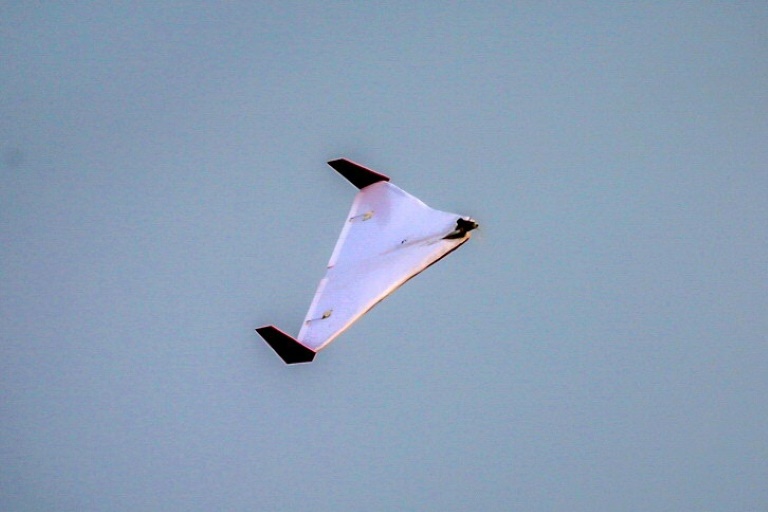
Iran is planning to supply hundreds of drones with combat weapon capabilities to Russia for use in Ukraine, a top US official said Monday.

Jake Sullivan, the White House national security advisor, said the information received by the United States supported views that the Russian military is facing challenges sustaining its weaponry after significant losses in Ukraine.

“The Iranian government is preparing to provide Russia with up to several hundred UAVs (unmanned aerial vehicles), including weapons-capable UAVs, on an expedited timeline,” Sullivan told reporters.

“Our information further indicates that Iran is preparing to train Russian forces to use these UAVs, with initial training sessions slated to begin as soon as early July,” he said.

Sullivan said it was not clear whether Iran had delivered any of the drones to Russia yet.

He noted that Iran’s drones have been used by the Houthi rebels in Yemen to attack Saudi Arabia.

Drones have played a crucial role on both sides of the war in Ukraine, for everything from firing missiles from a distance, to dropping small bombs on targets, to conducting reconnaissance for artillery forces and ground troops.

Ukraine’s forces have had particular success in using Turkish-made Bayraktar armed combat UAVs, and the United States and other allies have supplied Kyiv with many types of smaller drones.

“From our perspective, we will continue to do our part to help sustain the effective defense of Ukraine and to help the Ukrainians show that the Russian effort to try to wipe Ukraine off the map cannot succeed,” Sullivan said.

Trump aide Bannon must stand trial next week, says judge

Former Donald Trump advisor Steve Bannon must stand trial for contempt next week, a judge ruled Monday, despite his belated U-turn in agreeing to testify before the committee investigating the US Capitol riot.

“I see no reason for extending this case any longer,” said Judge Carl Nichols, according to US media reports.

Bannon, the 68-year-old co-founder of far-right media site Breitbart News who led Trump’s successful 2016 election campaign, was among dozens of people called to testify on last year’s insurrection aimed at shutting down Congress over then-president Trump’s baseless claims that widespread voter fraud helped Joe Biden win the 2020 election.

In November last year, Bannon — who served in the White House as Trump’s strategy chief before being sacked — was charged with contempt of Congress after refusing to testify, and his trial is set to begin on July 18.

His lawyers sought to delay the start of the hearings until October, so that they would not take place at the same time as the public hearings of the congressional committee, but the judge refused.

Last weekend, Bannon finally did a U-turn and agreed to cooperate with the investigation, a move prosecutors said was a “last-ditch attempt to avoid accountability” by stalling his court appearance.

Dark-skinned patients get less ICU oxygen due to flawed device: study

Racial minorities receive less oxygen in the intensive care unit than white patients because of a flaw in a medical device found in hospitals across the world, a US study said Monday.

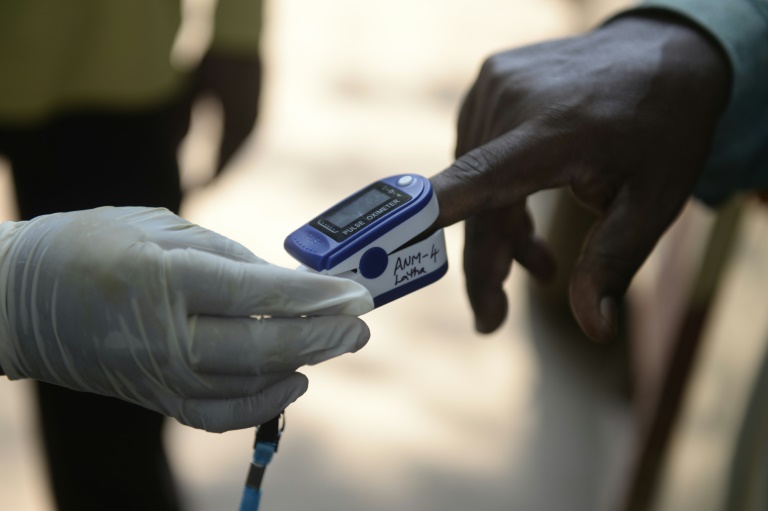
The pulse oximeter, first developed in the 1970s, clips to a patient’s finger and uses red and infrared light absorption to assess hemoglobin. But it is known to generate falsely elevated readings in people with darker skin.

In new research published in JAMA Internal Medicine, Eric Raphael Gottlieb and colleagues looked back at records of 3,069 patients at the Beth Israel Deaconess Medical Center in Boston who spent at least 12 hours in the hospital’s ICU.

They compared oxygen saturation estimates on the pulse ox devices to more accurate direct readings taken of hemoglobin oxygen saturation.

After controlling for other variables, they found that Black, Asian and Hispanic patients were given 0.2 to 0.4 liters per minute less oxygen than their white counterparts.

“Our findings present a unique and compelling opportunity to improve equity through device reengineering and by reevaluating how data are interpreted,” the team wrote.

Another recent study on the same topic showed that measurement biases in oxygen saturation levels was associated with a time delay in eligibility for Covid-19 treatment for Black and Hispanic patients.

An accompanying editor’s note said devices exist that perform more equitably, but have never been widely distributed.

“Health care systems, including academic centers, are large-scale purchasers of pulse oximeters,” the editorial said. “If they make a commitment to buy only devices that function across skin tones, manufacturers would respond.”

Cuba protest crackdown created human rights crisis: HRW

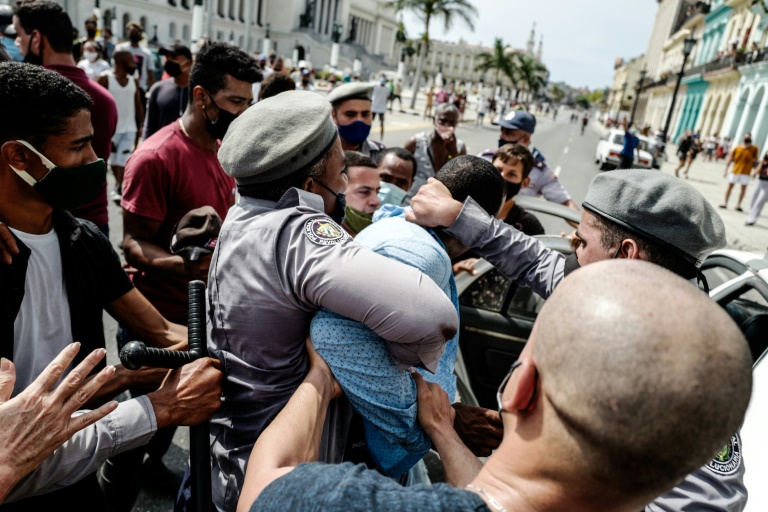
Cuba’s government committed “systematic human rights violations” in response to last summer’s unprecedented anti-government protests, Human Rights Watch (HRW) said in a report Monday.

The report, published on the first anniversary of the demonstrations, accuses the Cuban authorities of having carried out “arbitrary detention, abuse-ridden prosecutions, and torture.”

The aim was to punish protesters and deter future demonstrations, the New York-based NGO said in “Prison or Exile: Cuba’s Systematic Repression of July 2021 Demonstrators.”

“A year ago today, thousands of Cubans protested, demanding rights and freedoms, but the government gave many of them only two options: prison or exile,” Juan Pappier, senior Americas researcher at HRW said.

“Governments in Latin America and Europe should urgently escalate their human rights scrutiny over Cuba and prioritize a concerted, multilateral response before this human rights crisis becomes even worse,” he added.

Mass protests broke out across Cuba on July 11 and 12 last year, with demonstrators demanding freedom amid economic strife, shortages of food and medicine, and growing anger at the government.

They were the biggest protests in Cuba since the 1959 revolution.

A crackdown by the security forces left one dead, dozens injured and 1,300 people detained, according to the Justicia 11J civil society organization.

HRW’s report documents 155 cases of protesters who were unfairly treated.

They include Lorenzo Rosales Fajardo, a 50-year-old evangelical pastor who joined the protests with his 17-year-old son.

Police detained Fajardo, “dragging him, beating him with batons  on his back and face, and knocking out a tooth and several fillings,” HRW said, citing a family member.

When Fajardo’s son asked for his father’s whereabouts, he was detained as well, the report said.

Fajardo was sentenced to seven years in prison in April.

HRW wrote that Cuba’s courts have confirmed convictions against more than 380 protesters and bystanders, including several children.

The rights body said it interviewed more than 170 people in Cuba, including abuse victims, their relatives and lawyers, for the report.

The Cuban government accuses the United States of being behind the protests.

In a statement marking the anniversary, Secretary of State Antony Blinken said the United States “will always remain with the Cuban people in your desire to build a better future.”

US hostage negotiator Richardson to seek Griner's release

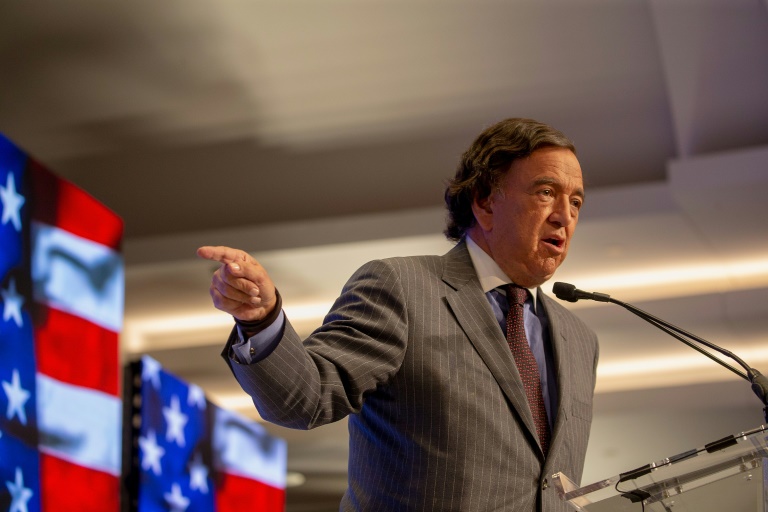
The families of Brittney Griner and Paul Whelan have asked veteran US hostage negotiator Bill Richardson to seek their release from Russia, his office said Monday.

According to news reports, the former US governor and ambassador, who has negotiated the freedom of several Americans held prisoner by other countries, will travel to Russia in the coming weeks for talks.

Mickey Bergman, vice president of the Richardson Center for Global Engagement, would not confirm the reports. 

“What I can say is that both the Whelan and Griner families have asked us to help with the release of their loved ones,” he told AFP.

Richardson has a record since the 1990s of negotiating the release of US citizens imprisoned in countries such as North Korea and Myanmar.

While he acts as a private citizen, his involvement usually has the tacit blessing of the US government.

He held discussions with Russian officials over the past two years for the release of another American, former US Marine Trevor Reed.

Reed was freed in April when the two governments agreed to swap him for Russian pilot Konstantin Yaroshenko, who was jailed in the United States for drug trafficking.

Griner, a two-time Olympic basketball gold medalist and WNBA champion who had played in Russia, was detained in February, just one week before Moscow launched its invasion of Ukraine.

The 31-year-old was charged with drug smuggling for possessing vape cartridges with cannabis oil.

On July 7, she pleaded guilty and now faces up to 10 years in a Russian prison.

Whelan, a security official at an auto parts company and a former US Marine, was arrested in Moscow in December 2018 for allegedly holding classified materials.

He was convicted of espionage in June 2020 and sentenced to 16 years in prison. 

Griner’s case has been enmeshed in the freeze in US-Russia relations since the invasion of Ukraine.

President Joe Biden was accused of ignoring her plight until he spoke on the phone last week with Griner’s wife. 

Shortly after that, Biden also spoke with members of Whelan’s family.

David Whelan, Paul’s brother, underscored that Richardson does not have a mandate from the Biden administration for negotiations.

“The hope is that Governor Richardson may be able to have discussions that are not possible when you are limited to governmental channels,” he told AFP.

After Griner’s conviction, former US ambassador to Russia Michael McFaul urged the Biden administration to exchange imprisoned Russian arms deal Viktor Bout for the two Americans.

“Tragically, the only leverage we have is a Russian in detention,” McFaul said on Thursday on NBC News.

“Viktor Bout is a real criminal… and the Russians want him out,” said McFaul.

A swap “might be the only way to get Brittney Griner out as soon as possible,” he said.

US firefighters race to protect giant sequoias in Yosemite

Hundreds of firefighters scrambled Monday to prevent a wildfire engulfing an area of rare giant sequoia trees in California’s Yosemite National Park.

The Washburn fire, in the Mariposa Grove of giant sequoias, was first reported on July 7 and doubled in size over the weekend to 2,340 acres (946 hectares), according to a park report.

Yosemite’s fire management service said 545 firefighters were battling the blaze, including “proactively protecting” the grove — the largest sequoia grove in Yosemite, with over 500 mature trees.

Further reinforcements were due to be deployed Monday, as the blaze remained out of control with increasingly hot and dry weather forecast, Nancy Phillipe, spokeswoman for Yosemite Fire Information, told AFP.

“It’s still showing zero percent containment,” Phillipe said.

“We are doing everything we can to put this fire out,” including deploying air tankers and helicopters along with ground crews, she added.

At the sequoia grove, crews worked to remove quick-burning leaves, sticks and branches as well as drenching the ground and trees.

The Yosemite fire service tweeted footage of emergency sprinklers set up specifically to douse the grove’s “Grizzly Giant” — the most renowned sequoia in the park, which is the second largest tree in Yosemite at 209 feet (63 meters), and one of the oldest.

Phillipe said the response team was “feeling confident that we’ve set up the trees for as much protection as we can” with the recent efforts, aided by previous prescribed burns.

– ‘A long season’ –

Giant sequoias are the world’s largest trees by volume. Their relatives, the California redwoods, can grow taller — well over 100 meters — but are not as wide.

Both kinds of tree are adapted to fires, with thick bark that protects them from heat.

In their lifetimes, which are measured in thousands of years, they typically endure many fires, the heat from which helps their cones to open, allowing the seeds to disperse.

But longer, hotter and more aggressive fires can damage them, sometimes irreparably, and California has recently seen multiple severe fire seasons in a row.

Scientists say global warming, which is being driven chiefly by humanity’s unchecked burning of fossil fuels, is making extreme weather events more likely.

Last year, California and other parts of the western United States were ravaged by huge, hot and fast-moving wildfires, driven by years of drought and a warming climate.

Two of those fires in California burned 3,600 giant sequoias, each more than four feet (120 centimeters) in diameter. 

The year before, 10,000 of the giants — up to 14 percent of the world’s total — perished in another fire.

With drought and scorching temperatures, fire chiefs have warned of longer and longer fire seasons.  

More than 3,500 fires have been reported already by California state firefighters CalFire in 2022, burning an estimated 22,900 acres.

“It is only just the beginning of July,” said Phillipe, echoing concern at the lengthening seasons. 

“Every year we say ‘wow this is going to be a long season’ and the seasons are lasting longer and longer.”

US firefighters race to protect giant sequoias in Yosemite

Hundreds of firefighters scrambled Monday to prevent a wildfire engulfing an area of rare giant sequoia trees in California’s Yosemite National Park.

The Washburn fire, in the Mariposa Grove of giant sequoias, was first reported on July 7 and doubled in size over the weekend to 2,340 acres (946 hectares), according to a park report.

Yosemite’s fire management service said 545 firefighters were battling the blaze, including “proactively protecting” the grove — the largest sequoia grove in Yosemite, with over 500 mature trees.

Further reinforcements were due to be deployed Monday, as the blaze remained out of control with increasingly hot and dry weather forecast, Nancy Phillipe, spokeswoman for Yosemite Fire Information, told AFP.

“It’s still showing zero percent containment,” Phillipe said.

“We are doing everything we can to put this fire out,” including deploying air tankers and helicopters along with ground crews, she added.

At the sequoia grove, crews worked to remove quick-burning leaves, sticks and branches as well as drenching the ground and trees.

The Yosemite fire service tweeted footage of emergency sprinklers set up specifically to douse the grove’s “Grizzly Giant” — the most renowned sequoia in the park, which is the second largest tree in Yosemite at 209 feet (63 meters), and one of the oldest.

Phillipe said the response team was “feeling confident that we’ve set up the trees for as much protection as we can” with the recent efforts, aided by previous prescribed burns.

– ‘A long season’ –

Giant sequoias are the world’s largest trees by volume. Their relatives, the California redwoods, can grow taller — well over 100 meters — but are not as wide.

Both kinds of tree are adapted to fires, with thick bark that protects them from heat.

In their lifetimes, which are measured in thousands of years, they typically endure many fires, the heat from which helps their cones to open, allowing the seeds to disperse.

But longer, hotter and more aggressive fires can damage them, sometimes irreparably, and California has recently seen multiple severe fire seasons in a row.

Scientists say global warming, which is being driven chiefly by humanity’s unchecked burning of fossil fuels, is making extreme weather events more likely.

Last year, California and other parts of the western United States were ravaged by huge, hot and fast-moving wildfires, driven by years of drought and a warming climate.

Two of those fires in California burned 3,600 giant sequoias, each more than four feet (120 centimeters) in diameter. 

The year before, 10,000 of the giants — up to 14 percent of the world’s total — perished in another fire.

With drought and scorching temperatures, fire chiefs have warned of longer and longer fire seasons.  

More than 3,500 fires have been reported already by California state firefighters CalFire in 2022, burning an estimated 22,900 acres.

“It is only just the beginning of July,” said Phillipe, echoing concern at the lengthening seasons. 

“Every year we say ‘wow this is going to be a long season’ and the seasons are lasting longer and longer.”
Close Bitnami banner
Bitnami