AFP

Heatwave grips Spain as UK readies for soaring temperatures

Spain and Portugal were sweltering in their second heatwave in a month on Monday, with scorching temperatures also expected in France and Britain in the coming days.

People in Spain baked with the temperature in the central town of Candeleda hitting a stifling 43.3 degrees Celsius (110 degrees Fahrenheit) shortly after 6 pm (1600 GMT), according to Spain’s meteorological agency AEMET.

The mercury meanwhile hit 42.4C in the southern city of Seville.

The southwestern cities of Badajoz and Merida also saw temperatures of 42C.

AEMET forecast 46C in Badajoz on Thursday and Friday with Seville predicted to swelter in 45C on Wednesday and Thursday.

“This heatwave really has the potential to be exceptional,” said AEMET spokesman Ruben del Campo.

The current temperature surge began Sunday and could “last nine or ten days, which would make it one of the three longest heat waves Spain has seen since 1975,” he told AFP.

Heatwaves have become more frequent due to climate change, scientists say. As global temperatures rise over time, heatwaves are expected to become more intense.

June had already seen Spain grapple with temperatures above 40C in swathes of the country.

The previous month was Spain’s hottest May since the beginning of the century.

In August 2021 Spain recorded its highest ever temperature when the mercury reached 47.4C in the small southern town of Montoro. 

Meteorologists did not rule out the prospect of that record being broken in the coming days.

The heightened temperatures have been accompanied by a lack of rainfall. 

Reservoirs in Spain stood at 45.3 percent of capacity on Monday, well below the average of 65.7 percent recorded during the same period over the past decade.

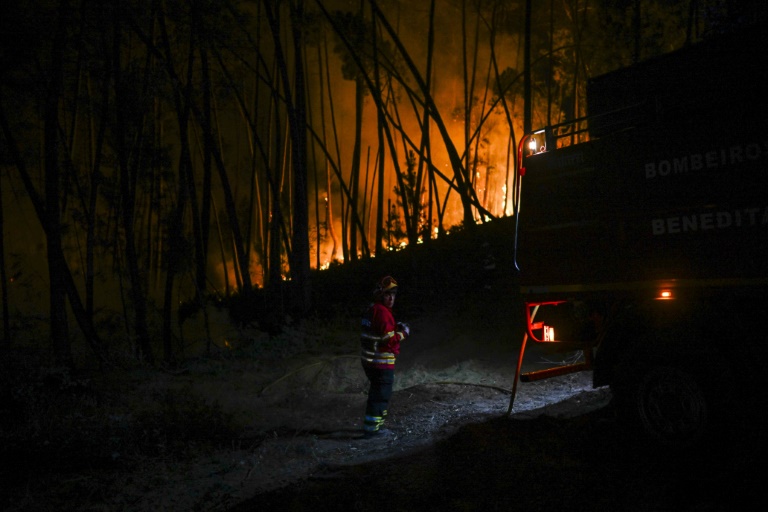
In neighbouring Portugal temperatures topped 44C over the weekend, fuelling wildfires and vast smoke clouds which were visible in the capital Lisbon.

Firefighters brought the largest blaze under control on Monday after it had burned through swathes of the central municipality of Ourem, local officials said.

– ‘Maximum risk’ –

While temperatures eased somewhat in Portugal on Monday they were expected to soar again in the coming days with 44C forecast for the southeastern city of Evora.

“In the coming days we will experience conditions of maximum risk,” Prime Minister Antonio Costa said.

“The slightest lapse in vigilance could result in a fire of significant proportions.”

A front of hot air began pushing into France on Monday, with the mercury rising above 30C across much of the country, according to national weather forecaster Meteo-France.

Temperatures could hit 39C in some parts of France on Tuesday, it added.

The heat wave should reach its peak between Saturday and next Tuesday, said Sebastien Leas of Meteo-France.

Britain on Monday issued an extreme heat warning, with temperatures predicted to hit more than 30C across large parts of England and Wales.

The extreme heat warning was classified as “amber”, the second-highest alert level, indicating a “high impact” on daily life and people.

Met Office deputy chief meteorologist Rebekah Sherwin said the UK highs would continue into early next week.

“From Sunday and into Monday, temperatures are likely to be in excess of 35C in the southeast (of England), although the details still remain uncertain,” she said.
Not just a number: Joe Biden's age in the spotlight

Is Joe Biden too old to be president?

It’s a question that has provided ample fodder for Republicans and right-wing outlets, while Democrats and most of the American media have been reluctant to broach it.

But as the oldest person ever elected to the top US office prepares for a grueling Middle East tour, debate is mounting over his apparent desire to run again in 2024.

The issue puts Democrats in a difficult position as there is no clear alternative to Biden — who turns 80 on November 20.

“He’s fit to be president right now. But he’s too old for the next election,” The Atlantic concluded in recent article, while sharply criticizing right-wing claims that Biden is suffering from dementia.

Disenchantment with Biden runs deep inside his own camp, with a New York Times poll released Monday showing that 64 percent of Democratic voters would prefer another candidate in 2024. His age was cited as the main reason for those who want a change.

The president would be 82 at the beginning of a second term, and 86 at its conclusion. By comparison, Ronald Reagan was 77 when he left office in 1989.

Biden’s “age has become an uncomfortable issue for him and his party,” The New York Times wrote on Saturday, describing a White House that has become protective, even anxious.

Like his predecessors, Biden has exhausting responsibilities, from the war in Ukraine and runaway inflation to gun violence plaguing the country and a fiercely conservative Supreme Court.

– Quiet weekends –

There are certainly many Americans who envy his health, with a checkup last November concluding that he is a “vigorous” man suffering from mild problems with acid reflux and arthritis.

But his appearance betrays the heavy toll taken by the office: his white hair is increasingly thin, his gait cautious.

He sometimes loses his train of thought or stumbles while reading from a teleprompter, and the stutter he overcame as a child periodically resurfaces.

The White House has several times had to walk back inopportune remarks by the president on sensitive diplomatic issues.

Biden gives fewer news conferences and interviews than his predecessors, preferring to publish op-eds in newspapers, the content of which can be carefully controlled.

On the weekends, he often disappears to one of his two homes in Delaware for two or three days. White House correspondents only see him once, at a distance, when he goes to mass.

And when G7 leaders posed for a photo at a June summit, it was impossible to ignore the age gap between Biden and Canadian premier Justin Trudeau, 50, or French President Emmanuel Macron, 44.

– ‘Life begins at 80!’ –

But his aides defend him vigorously, with senior advisor Mike Donilon telling The New York Times that the president wants “to spend four hours planning for how we hit the ground running on domestic policy, when all much younger staff want to do is sleep” on the plane.

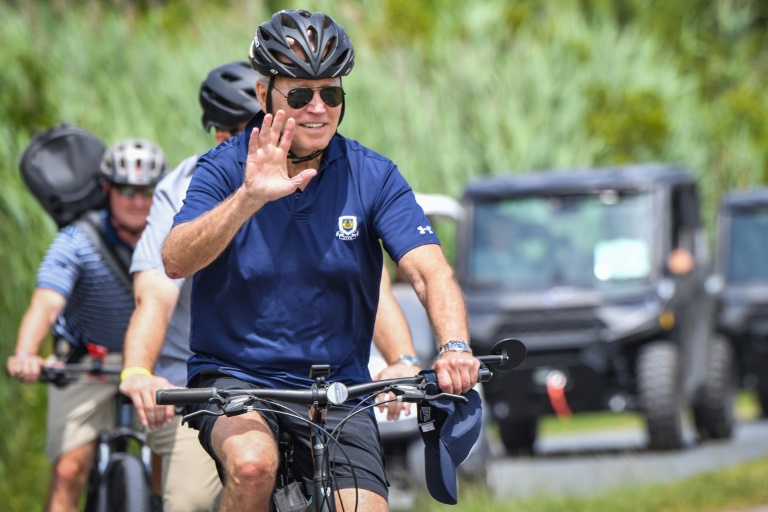
Biden, after a minor but much-publicized bike crash on June 18, made a point of getting back in the saddle on Sunday and joking about his misadventure with reporters.

The president is far from the exception in American politics, where many key players are over 70, including his predecessor Donald Trump, who is currently 76.

Trump — a potential 2024 Republican candidate — knows the age card plays well, and is keen to use it.

“There are many people in their 80s, and even 90s, that are as good and sharp as ever. Biden is not one of them, but it has little to do with his age. In actuality, life begins at 80!” Trump wrote on his social media platform.

– In touch with young voters? –

Beyond health issues, there is also the political question of how a president born during World War II can remain in touch with younger Americans.

How does he respond, for instance, to young demonstrators who protested in front of the White House against the Supreme Court removing the federal right to an abortion?

Biden did not have a clear answer, saying: “Keep protesting. Keep making your point. It’s critically important.”

According to a Morning Consult poll conducted from in April and May, only 43 percent of Democrats between the ages of 18 and 34 believe Biden is keeping his promises.

But who could replace him? Commentators are skeptical about the chances of 57-year-old Vice President Kamala Harris, who would be a natural candidate if Biden withdraws.

A member of the party’s younger guard, such as California Governor Gavin Newsom, 54, or 40-year-old Transportation Secretary Pete Buttigieg, would be another option.

But a frontrunner has yet to emerge from the Democratic camp.

US House committee to 'connect the dots' at Capitol riot hearing

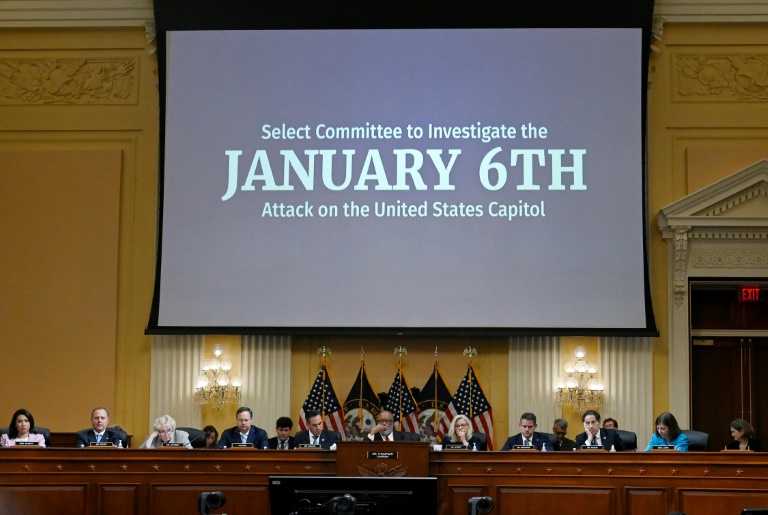
The House committee probing the 2021 assault on the US Capitol will examine connections between associates of former president Donald Trump and far right-wing extremist groups at its seventh hearing on Tuesday.

“We are going to be connecting the dots during these hearings between these groups and those who were trying — in government circles — to overturn the election,” said Democratic Representative Zoe Lofgren.

The lawmaker from California told CNN the session will focus on ties between members of Trump’s inner circle and the Proud Boys and the Oath Keepers.

Members of the two militia groups stormed the Capitol on January 6, 2021 along with thousands of Trump supporters in a bid to prevent certification of Democrat Joe Biden’s election victory.

Jason Van Tatenhove, a former member of the Oath Keepers, is expected to testify at Tuesday’s televised hearing, which begins at 1:00 pm (1700 GMT) and is expected to last at least two hours.

Five members of the Proud Boys were indicted on seditious conspiracy charges in June in connection with the assault on the Capitol. Eleven members of the Oath Keepers have also been charged with seditious conspiracy and three of them have pleaded guilty.

More than 850 people have been arrested in connection with the storming of Congress by Trump supporters, but only those 16 face seditious conspiracy charges, which carry a sentence of up to 20 years in prison.

The committee is trying to determine whether Trump or his associates had a role in planning or encouraging the violent attack on Congress, and has subpoenaed numerous advisors and aides to the former president.

Excerpts may be played on Tuesday from an eight-hour interview the committee held on Friday with former Trump White House counsel Pat Cipollone.

The assault on the Capitol left at least five people dead and 140 police officers injured and followed a fiery speech by Trump to thousands of his supporters near the White House.

Trump was impeached for a historic second time by the House after the Capitol riot — he was charged with inciting an insurrection — but was acquitted by the Senate.

– ‘Pivotal moment’ –

Tuesday’s hearing will be the first since blockbuster testimony by Cassidy Hutchinson, an assistant to Trump’s chief of staff Mark Meadows.

Hutchinson testified that she was told Trump had angrily lunged at his Secret Service driver and grabbed at the steering wheel of his limousine in a bid to join the crowd marching on Congress.

A select committee aide said Tuesday’s hearing will focus on a tweet Trump sent on December 19 telling his supporters to come to Washington on January 6 and promising it will be “wild.”

“They immediately started answering his call by zeroing in on that date,” the aide said. “We’ll talk about how that was a pivotal moment that spurred a chain of events.”

The tweet was sent a little more than an hour after Trump met at the White House with his lawyer Rudy Giuliani, former general Mike Flynn, and Sidney Powell, another attorney, the aide said.

The hearing will also look at attempts by some Republican members of Congress to pressure vice president Mike Pence into blocking the certification of the election results.

A US District Court judge refused meanwhile to delay the trial of former Trump adviser Steve Bannon, who has been charged with contempt of Congress for refusing a subpoena to testify before the congressional committee.

“I see no reason for extending this case any longer,” said Judge Carl Nichols, ordering the trial to begin as scheduled on July 18.

Bannon, 68, recently reversed course and offered to testify but Justice Department prosecutors rejected the move as a “last-ditch attempt to avoid accountability.”

Webb telescope reveals deepest image of early universe

Humanity’s view of the distant cosmos will never be the same.

The James Webb Space Telescope, the most powerful to be placed in orbit, has revealed the clearest image to date of the early universe, going back 13 billion years, US space agency NASA said Monday.

The stunning shot, released in a White House briefing by President Joe Biden, is overflowing with thousands of galaxies and features some of the faintest objects observed, colorized in blue, orange and white tones.

Known as Webb’s First Deep Field, it shows the galaxy cluster SMACS 0723, which acts as a gravitational lens, bending light from more distant galaxies behind it towards the observatory, in a cosmic magnification effect.

Webb’s primary imager NIRCam — which operates in the near infrared wavelength spectrum because light from the early universe has been stretched out by the time it reaches us — has brought these faint background galaxies into focus.

Webb compiled the composite shot in 12.5 hours, achieving well beyond what its predecessor the Hubble Space Telescope could in weeks.

“Fantastic — galaxies upon galaxies upon galaxies,” Jonathan Lunine, chair of the astronomy department at Cornell University, told AFP, rejoicing with the rest of the global astronomy community.

“Even though this is by no means the farthest Webb can see, it’s the deepest image ever taken, and shows the power of this remarkable telescope: tremendous sensitivity, a broad range of wavelengths, and sharp image clarity.”

Avi Loeb, a professor of astronomy at Harvard, explained the reddish arcs are the ancient galaxies, while the light colored circles and ellipses belong to the younger galaxy cluster in the foreground.

He added he was “thrilled” about the idea of Webb looking even closer to the Big Bang, back some 13.8 billion years ago. 

– Stellar nursery –

The next set of images will be released Tuesday, revealing details about the atmosphere of faraway planets, “stellar nurseries” where stars form, galaxies locked in a dance of close encounters, and the cloud of gas around a dying star.

Biden conveyed a sense of awe that Webb is documenting universe imagery from some 13 billion years ago.

“It’s hard to even fathom,” the president said.

“These images are going to remind the world that America can do big things and remind the American people, especially our children, that there’s nothing beyond our capacity.”

Carina Nebula, a stellar nursery, is famous for its towering pillars that include “Mystic Mountain,” a three-light-year-tall cosmic pinnacle captured in an iconic image by Hubble.

Webb has also carried out a spectroscopy — an analysis of light that reveals detailed information — on a gas giant planet called WASP-96 b, which was discovered in 2014.

Nearly 1,150 light-years from Earth, WASP-96 b is about half the mass of Jupiter and zips around its star in just 3.4 days.

Nestor Espinoza, an STSI astronomer, told AFP that previous exoplanet spectroscopies carried out using existing instruments were very limited compared to what Webb could do.

“It’s like being in a room that is very dark and you only have a little pinhole you can look through,” he said of the prior technology. Now, with Webb, “You’ve opened a huge window, you can see all the little details.”

– Million miles from Earth –

Launched in December from French Guiana on an Ariane 5 rocket, Webb is orbiting the Sun at a distance of a million miles (1.6 million kilometers) from Earth, in a region of space called the second Lagrange point.

Here, it remains in a fixed position relative to the Earth and Sun, with minimal fuel required for course corrections. 

A wonder of engineering, the total project cost is estimated at $10 billion, making it one of the most expensive scientific platforms ever built, comparable to the Large Hadron Collider at CERN.

Webb’s primary mirror is over 21 feet (6.5 meters) wide and is made up of 18 gold-coated mirror segments. Like a camera held in one’s hand, the structure must remain as stable as possible to achieve the best shots.

Charlie Atkinson, chief engineer on the James Webb Space Telescope program at lead contractor Northrop Grumman, told AFP that it wobbles no more than 17 millionths of a millimeter.

After the first images, astronomers around the globe will get shares of time on the telescope, with projects selected competitively through a process in which applicants and selectors don’t know each other’s identities, to minimize bias.

Thanks to an efficient launch, NASA estimates Webb has enough propellant for a 20-year life, as it works in concert with the Hubble and Spitzer space telescopes to answer fundamental questions about the cosmos.

Webb telescope reveals deepest image of early universe

Humanity’s view of the distant cosmos will never be the same.

The James Webb Space Telescope, the most powerful to be placed in orbit, has revealed the clearest image to date of the early universe, going back 13 billion years, US space agency NASA said Monday.

The stunning shot, released in a White House briefing by President Joe Biden, is overflowing with thousands of galaxies and features some of the faintest objects observed, colorized in blue, orange and white tones.

Known as Webb’s First Deep Field, it shows the galaxy cluster SMACS 0723, which acts as a gravitational lens, bending light from more distant galaxies behind it towards the observatory, in a cosmic magnification effect.

Webb’s primary imager NIRCam — which operates in the near infrared wavelength spectrum because light from the early universe has been stretched out by the time it reaches us — has brought these faint background galaxies into focus.

Webb compiled the composite shot in 12.5 hours, achieving well beyond what its predecessor the Hubble Space Telescope could in weeks.

“Fantastic — galaxies upon galaxies upon galaxies,” Jonathan Lunine, chair of the astronomy department at Cornell University, told AFP, rejoicing with the rest of the global astronomy community.

“Even though this is by no means the farthest Webb can see, it’s the deepest image ever taken, and shows the power of this remarkable telescope: tremendous sensitivity, a broad range of wavelengths, and sharp image clarity.”

Avi Loeb, a professor of astronomy at Harvard, explained the reddish arcs are the ancient galaxies, while the light colored circles and ellipses belong to the younger galaxy cluster in the foreground.

He added he was “thrilled” about the idea of Webb looking even closer to the Big Bang, back some 13.8 billion years ago. 

– Stellar nursery –

The next set of images will be released Tuesday, revealing details about the atmosphere of faraway planets, “stellar nurseries” where stars form, galaxies locked in a dance of close encounters, and the cloud of gas around a dying star.

Biden conveyed a sense of awe that Webb is documenting universe imagery from some 13 billion years ago.

“It’s hard to even fathom,” the president said.

“These images are going to remind the world that America can do big things and remind the American people, especially our children, that there’s nothing beyond our capacity.”

Carina Nebula, a stellar nursery, is famous for its towering pillars that include “Mystic Mountain,” a three-light-year-tall cosmic pinnacle captured in an iconic image by Hubble.

Webb has also carried out a spectroscopy — an analysis of light that reveals detailed information — on a gas giant planet called WASP-96 b, which was discovered in 2014.

Nearly 1,150 light-years from Earth, WASP-96 b is about half the mass of Jupiter and zips around its star in just 3.4 days.

Nestor Espinoza, an STSI astronomer, told AFP that previous exoplanet spectroscopies carried out using existing instruments were very limited compared to what Webb could do.

“It’s like being in a room that is very dark and you only have a little pinhole you can look through,” he said of the prior technology. Now, with Webb, “You’ve opened a huge window, you can see all the little details.”

– Million miles from Earth –

Launched in December from French Guiana on an Ariane 5 rocket, Webb is orbiting the Sun at a distance of a million miles (1.6 million kilometers) from Earth, in a region of space called the second Lagrange point.

Here, it remains in a fixed position relative to the Earth and Sun, with minimal fuel required for course corrections. 

A wonder of engineering, the total project cost is estimated at $10 billion, making it one of the most expensive scientific platforms ever built, comparable to the Large Hadron Collider at CERN.

Webb’s primary mirror is over 21 feet (6.5 meters) wide and is made up of 18 gold-coated mirror segments. Like a camera held in one’s hand, the structure must remain as stable as possible to achieve the best shots.

Charlie Atkinson, chief engineer on the James Webb Space Telescope program at lead contractor Northrop Grumman, told AFP that it wobbles no more than 17 millionths of a millimeter.

After the first images, astronomers around the globe will get shares of time on the telescope, with projects selected competitively through a process in which applicants and selectors don’t know each other’s identities, to minimize bias.

Thanks to an efficient launch, NASA estimates Webb has enough propellant for a 20-year life, as it works in concert with the Hubble and Spitzer space telescopes to answer fundamental questions about the cosmos.

Webb telescope reveals deepest image of early universe

Humanity’s view of the distant cosmos will never be the same.

The James Webb Space Telescope, the most powerful to be placed in orbit, has revealed the clearest image to date of the early universe, going back 13 billion years, US space agency NASA said Monday.

The stunning shot, released in a White House briefing by President Joe Biden, is overflowing with thousands of galaxies and features some of the faintest objects observed, colorized in blue, orange and white tones.

Known as Webb’s First Deep Field, it shows the galaxy cluster SMACS 0723, which acts as a gravitational lens, bending light from more distant galaxies behind it towards the observatory, in a cosmic magnification effect.

Webb’s primary imager NIRCam — which operates in the near infrared wavelength spectrum because light from the early universe has been stretched out by the time it reaches us — has brought these faint background galaxies into focus.

Webb compiled the composite shot in 12.5 hours, achieving well beyond what its predecessor the Hubble Space Telescope could in weeks.

“Fantastic — galaxies upon galaxies upon galaxies,” Jonathan Lunine, chair of the astronomy department at Cornell University, told AFP, rejoicing with the rest of the global astronomy community.

“Even though this is by no means the farthest Webb can see, it’s the deepest image ever taken, and shows the power of this remarkable telescope: tremendous sensitivity, a broad range of wavelengths, and sharp image clarity.”

Avi Loeb, a professor of astronomy at Harvard, explained the reddish arcs are the ancient galaxies, while the light colored circles and ellipses belong to the younger galaxy cluster in the foreground.

He added he was “thrilled” about the idea of Webb looking even closer to the Big Bang, back some 13.8 billion years ago. 

– Stellar nursery –

The next set of images will be released Tuesday, revealing details about the atmosphere of faraway planets, “stellar nurseries” where stars form, galaxies locked in a dance of close encounters, and the cloud of gas around a dying star.

Biden conveyed a sense of awe that Webb is documenting universe imagery from some 13 billion years ago.

“It’s hard to even fathom,” the president said.

“These images are going to remind the world that America can do big things and remind the American people, especially our children, that there’s nothing beyond our capacity.”

Carina Nebula, a stellar nursery, is famous for its towering pillars that include “Mystic Mountain,” a three-light-year-tall cosmic pinnacle captured in an iconic image by Hubble.

Webb has also carried out a spectroscopy — an analysis of light that reveals detailed information — on a gas giant planet called WASP-96 b, which was discovered in 2014.

Nearly 1,150 light-years from Earth, WASP-96 b is about half the mass of Jupiter and zips around its star in just 3.4 days.

Nestor Espinoza, an STSI astronomer, told AFP that previous exoplanet spectroscopies carried out using existing instruments were very limited compared to what Webb could do.

“It’s like being in a room that is very dark and you only have a little pinhole you can look through,” he said of the prior technology. Now, with Webb, “You’ve opened a huge window, you can see all the little details.”

– Million miles from Earth –

Launched in December from French Guiana on an Ariane 5 rocket, Webb is orbiting the Sun at a distance of a million miles (1.6 million kilometers) from Earth, in a region of space called the second Lagrange point.

Here, it remains in a fixed position relative to the Earth and Sun, with minimal fuel required for course corrections. 

A wonder of engineering, the total project cost is estimated at $10 billion, making it one of the most expensive scientific platforms ever built, comparable to the Large Hadron Collider at CERN.

Webb’s primary mirror is over 21 feet (6.5 meters) wide and is made up of 18 gold-coated mirror segments. Like a camera held in one’s hand, the structure must remain as stable as possible to achieve the best shots.

Charlie Atkinson, chief engineer on the James Webb Space Telescope program at lead contractor Northrop Grumman, told AFP that it wobbles no more than 17 millionths of a millimeter.

After the first images, astronomers around the globe will get shares of time on the telescope, with projects selected competitively through a process in which applicants and selectors don’t know each other’s identities, to minimize bias.

Thanks to an efficient launch, NASA estimates Webb has enough propellant for a 20-year life, as it works in concert with the Hubble and Spitzer space telescopes to answer fundamental questions about the cosmos.

Lobbyist Mark MacGann comes out as Uber Files whistleblower

Lobbyist Mark MacGann on Monday came out as the whistleblower who leaked thousands of compromising documents on US ride-hailing firm Uber to British newspaper The Guardian.

MacGann led Uber’s lobbying efforts in Europe, Africa and the Middle East between 2014 and 2016. He told the British daily he decided to speak out because he believed Uber broke the law in dozens of countries and misled people about the company’s business model.

“I was the one talking to governments, I was the one pushing this with the media, I was the one telling people that they should change the rules because drivers were going to benefit and people were going to get so much economic opportunity,” the 52-year-old said in an interview with The Guardian.

“When that turned out not to be the case — we had actually sold people a lie — how can you have a clear conscience if you don’t stand up and own your contribution to how people are being treated today?”

Uber, which has become a symbol of the “gig economy” of odd-jobs enabled by tech giants, has had the mechanics of its rapid expansion laid bare since Sunday following the leak of a vast trove of documents.

Journalists supplied with the sensitive information have accused the company of having “broken the law” and using aggressive tactics to establish itself in the face of opposition from politicians and taxi companies. 

Uber said MacGann was “in no position to speak credibly” about the company now.

The firm added that it was “noteworthy” that MacGann only blew the whistle after he received 585,000 euros ($588,000) following a lawsuit over a bonus he said Uber owed him.

The Guardian has shared with the International Consortium of Investigative Journalists (ICIJ) some 124,000 documents, dating from 2013 to 2017, including emails and messages from Uber executives at the time, as well as presentations, notes and invoices. 

On Sunday, several news organisations, including the Washington Post, Le Monde and the BBC, published their first articles from the Uber Files.

Uber denied all the accusations against it, including obstructing justice, saying it had changed since the departure of former boss Travis Kalanick, who was accused of creating a toxic workplace culture.

– ‘Deeply unfair’ –

The firm has been embroiled in scandals involving harassment, piracy, industrial spying and legal battles since its creation in 2010.

Le Monde focused particularly on the links between Uber and French President Emmanuel Macron, who is accused of negotiating with the firm a “secret deal” on regulation when he was economy minister between 2014 and 2016.

Macron allegedly held undeclared meetings with Uber executives and helped it consolidate its position in France at a time when it was upending the traditional taxi market.

Irish-born MacGann told The Guardian that the ease with which Uber gained access to the powerful in countries including Britain, France and Russia was “intoxicating” but also “deeply unfair” and “anti-democratic”.

MacGann has also accused Uber of adopting a confrontational strategy towards the taxi industry under Kalanick that personally exposed him in France and Spain.

He said he received death threats and Uber provided him with a bodyguard, adding that the experience had consequences on his mental health and contributed to a diagnosis of post-traumatic stress disorder.

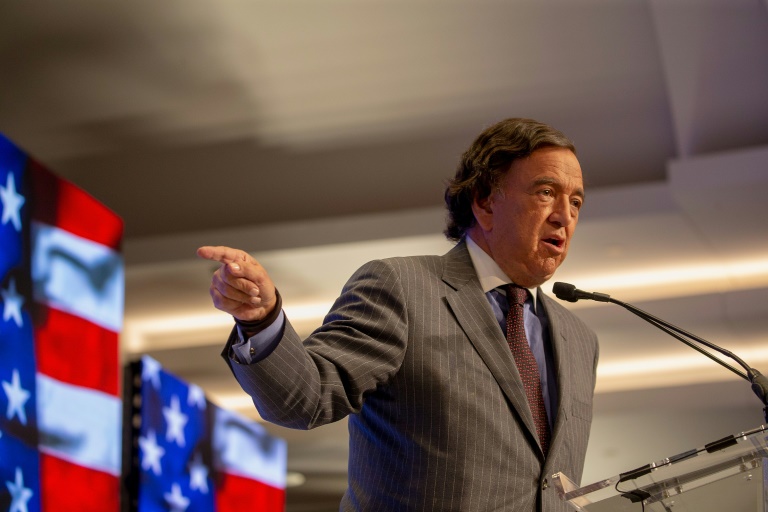
US hostage negotiator Richardson to seek Griner's release

The families of US basketball star Brittney Griner and former Marine Paul Whelan have asked veteran hostage negotiator Bill Richardson to seek their release from Russia, his office said Monday.

According to news reports, the former US governor and ambassador — who has negotiated the freedom of several Americans held prisoner by other countries — will travel to Russia in the coming weeks for talks.

Mickey Bergman, vice president of the Richardson Center for Global Engagement, would not confirm the reports. 

“What I can say is that both the Whelan and Griner families have asked us to help with the release of their loved ones,” he told AFP.

Richardson has had a record since the 1990s of negotiating the release of US citizens imprisoned in countries such as North Korea and Myanmar.

While he acts as a private citizen, his involvement usually has the tacit blessing of the US government.

He held discussions with Russian officials over the past two years for the release of another American, former US Marine Trevor Reed.

Reed was freed in April when the two governments agreed to swap him for Russian pilot Konstantin Yaroshenko, who was jailed in the United States for drug trafficking.

Asked about Richardson’s role, White House national Security Advisor Jake Sullivan said the administration had been in contact with him.

“President Biden is laser-focused on a government-to-government solution to this issue,” Sullivan told reporters.

“We are working directly with the Russian government through appropriate channels to try to bring a speedy resolution not just to her case, but to Paul Whelan’s case as well.”

– Held in Russia –

Griner, a two-time Olympic basketball gold medalist and WNBA champion who had played in Russia, was detained in February, just one week before Moscow launched its invasion of Ukraine.

The 31-year-old was charged with drug smuggling for possessing vape cartridges with cannabis oil.

On July 7, she pleaded guilty and now faces up to 10 years in a Russian prison.

Whelan, a security official at an auto parts company and a former US Marine, was arrested in Moscow in December 2018 for allegedly holding classified materials.

He was convicted of espionage in June 2020 and sentenced to 16 years in prison. 

Griner’s case has been enmeshed in the freeze in US-Russia relations since the invasion of Ukraine.

President Joe Biden was accused of ignoring her plight until he spoke on the phone last week with Griner’s wife. 

Shortly after that, Biden also spoke with members of Whelan’s family.

David Whelan, Paul’s brother, underscored that Richardson does not have a mandate from the Biden administration for negotiations.

“The hope is that Governor Richardson may be able to have discussions that are not possible when you are limited to governmental channels,” he told AFP.

After Griner’s conviction, former US ambassador to Russia Michael McFaul urged the Biden administration to exchange imprisoned Russian arms deal Viktor Bout for the two Americans.

“Tragically, the only leverage we have is a Russian in detention,” McFaul said Thursday on NBC News.

“Viktor Bout is a real criminal… and the Russians want him out,” said McFaul.

A swap “might be the only way to get Brittney Griner out as soon as possible,” he said.

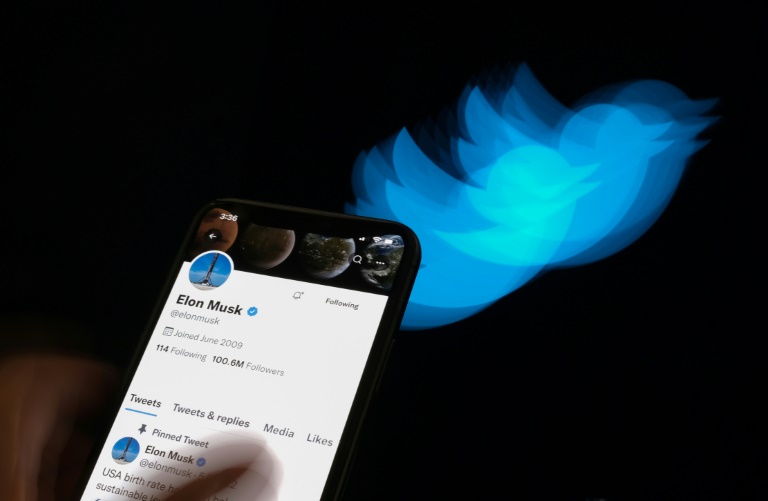
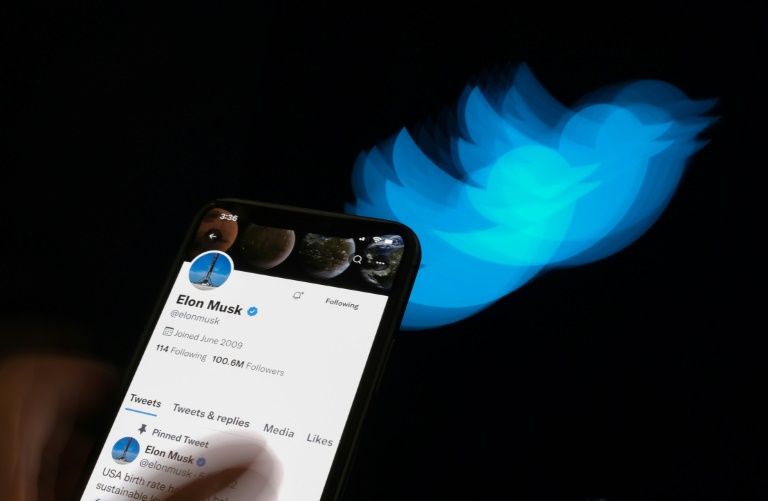
Twitter stock sinks as Musk mocks lawsuit threat

Twitter shares plunged Monday as Elon Musk issued a mocking, defiant commentary about a looming court battle after he ditched a $44 billion buyout of the social media giant.

Shares of the microblogging platform fell 11.3 percent to finish at $32.65, with analysts saying Musk’s exit places the company in a vulnerable state at a challenging moment for its core business.

After weeks of threats, Musk on Friday pulled the plug on the deal, accusing Twitter of “misleading” statements about the number of fake accounts, according to a letter from his lawyers included in a US securities filing.

In his first public remarks since the announcement, Musk took to Twitter late Sunday night to troll the company after it said it would sue to enforce the deal. 

“They said I couldn’t buy Twitter. Then they wouldn’t disclose bot info. Now they want to force me to buy Twitter in court. Now they have to disclose bot info in court,” he wrote in a tweet, with each of the four statements accompanied by pictures of Musk laughing with increasing glee.

A second tweet showed an image of martial arts star Chuck Norris behind a chess board, which Musk captioned, “Chuckmate.”

Twitter offered a fresh rebuttal of its own late Monday, releasing a letter from its legal team to Musk’s lawyers that called the Tesla boss’s grounds for ending the deal “invalid and wrongful,” according to a securities filing.

“Twitter demands that Mr. Musk and the other Musk Parties comply with their obligations under the Agreement, including their obligations to use their respective reasonable best efforts to consummate and make effective the transactions contemplated by the Agreement,” said Twitter attorneys at Wachtell, Lipton, Rosen & Katz. 

The termination of the takeover agreement Musk inked in April sets the stage for a potentially lengthy court battle with Twitter, which initially opposed a transaction with the unpredictable billionaire entrepreneur.

The original merger agreement contained a $1 billion breakup fee.

Twitter has defended its fake account oversight and said it will sue to force Musk to complete the deal.

The social network says the number of fake accounts is less than five percent, a figure challenged by the multi-billionaire who believes the percentage to be much higher.

S&P Global Ratings said Musk’s latest move “carries multiple downside risks” for Twitter, pointing to the precariousness of company revenues tied to advertising given rising recession risk.

The ratings agency said there was risk from even a successful recouping of the $1 billion breakup fee. 

“While the breakup fee could be credit positive, we believe the negative publicity could harm Twitter’s relationships with its advertisers, employees, and investors in all possible scenarios,” S&P said.

– Future ‘in limbo’ –

The latest back-and-forth follows weeks of public squabbling between the sides after Musk amplified the fake accounts issue, causing some analysts to speculate that he was getting cold feet about the deal, which drew criticism from progressive advocacy groups concerned about his political agenda.

Musk’s norm-defying conduct has come as little surprise to longtime watchers of the Tesla and SpaceX chief, who are accustomed to a constant stream of statements that flout or test convention and sometimes provoke a crackdown from regulators.

Some market watchers predicted the deal would fall apart shortly after it was announced, but others still saw a way forward on Monday even in the wake of the latest happenings.

“While the two parties likely are facing a lengthy battle of which the final decision remains very uncertain, we believe Twitter may have the stronger case,” said Morningstar analyst Ali Mogharabi. 

“We also think that a scenario remains where Musk and Twitter reach a new, lower-price agreement.”

But Mogharabi lowered his estimate for Twitter shares to $47 from Musk’s bid price of $54.20, saying: “We expect Twitter will likely face distractions that set back its efforts to grow revenue and expand margins.”

For analyst Dan Ives at Wedbush Securities, “this is a ‘code red’ situation for Twitter and its Board as now the company will go head to head against Musk in a Game of Thrones court battle.”

“We see no other bidders emerging at this time while legal proceedings play out in the courts.”

Briefing.com called the disintegration of the Musk deal “a worst-case scenario for the company in the short-to-intermediate term,” putting Twitter’s “future in limbo and creating a massive distraction.”

Twitter stock sinks as Musk mocks lawsuit threat

Twitter shares plunged Monday as Elon Musk issued a mocking, defiant commentary about a looming court battle after he ditched a $44 billion buyout of the social media giant.

Shares of the microblogging platform fell 11.3 percent to finish at $32.65, with analysts saying Musk’s exit places the company in a vulnerable state at a challenging moment for its core business.

After weeks of threats, Musk on Friday pulled the plug on the deal, accusing Twitter of “misleading” statements about the number of fake accounts, according to a letter from his lawyers included in a US securities filing.

In his first public remarks since the announcement, Musk took to Twitter late Sunday night to troll the company after it said it would sue to enforce the deal. 

“They said I couldn’t buy Twitter. Then they wouldn’t disclose bot info. Now they want to force me to buy Twitter in court. Now they have to disclose bot info in court,” he wrote in a tweet, with each of the four statements accompanied by pictures of Musk laughing with increasing glee.

A second tweet showed an image of martial arts star Chuck Norris behind a chess board, which Musk captioned, “Chuckmate.”

Twitter offered a fresh rebuttal of its own late Monday, releasing a letter from its legal team to Musk’s lawyers that called the Tesla boss’s grounds for ending the deal “invalid and wrongful,” according to a securities filing.

“Twitter demands that Mr. Musk and the other Musk Parties comply with their obligations under the Agreement, including their obligations to use their respective reasonable best efforts to consummate and make effective the transactions contemplated by the Agreement,” said Twitter attorneys at Wachtell, Lipton, Rosen & Katz. 

The termination of the takeover agreement Musk inked in April sets the stage for a potentially lengthy court battle with Twitter, which initially opposed a transaction with the unpredictable billionaire entrepreneur.

The original merger agreement contained a $1 billion breakup fee.

Twitter has defended its fake account oversight and said it will sue to force Musk to complete the deal.

The social network says the number of fake accounts is less than five percent, a figure challenged by the multi-billionaire who believes the percentage to be much higher.

S&P Global Ratings said Musk’s latest move “carries multiple downside risks” for Twitter, pointing to the precariousness of company revenues tied to advertising given rising recession risk.

The ratings agency said there was risk from even a successful recouping of the $1 billion breakup fee. 

“While the breakup fee could be credit positive, we believe the negative publicity could harm Twitter’s relationships with its advertisers, employees, and investors in all possible scenarios,” S&P said.

– Future ‘in limbo’ –

The latest back-and-forth follows weeks of public squabbling between the sides after Musk amplified the fake accounts issue, causing some analysts to speculate that he was getting cold feet about the deal, which drew criticism from progressive advocacy groups concerned about his political agenda.

Musk’s norm-defying conduct has come as little surprise to longtime watchers of the Tesla and SpaceX chief, who are accustomed to a constant stream of statements that flout or test convention and sometimes provoke a crackdown from regulators.

Some market watchers predicted the deal would fall apart shortly after it was announced, but others still saw a way forward on Monday even in the wake of the latest happenings.

“While the two parties likely are facing a lengthy battle of which the final decision remains very uncertain, we believe Twitter may have the stronger case,” said Morningstar analyst Ali Mogharabi. 

“We also think that a scenario remains where Musk and Twitter reach a new, lower-price agreement.”

But Mogharabi lowered his estimate for Twitter shares to $47 from Musk’s bid price of $54.20, saying: “We expect Twitter will likely face distractions that set back its efforts to grow revenue and expand margins.”

For analyst Dan Ives at Wedbush Securities, “this is a ‘code red’ situation for Twitter and its Board as now the company will go head to head against Musk in a Game of Thrones court battle.”

“We see no other bidders emerging at this time while legal proceedings play out in the courts.”

Briefing.com called the disintegration of the Musk deal “a worst-case scenario for the company in the short-to-intermediate term,” putting Twitter’s “future in limbo and creating a massive distraction.”

Close Bitnami banner
Bitnami