AFP

OPEC+ stays the course on oil output boost

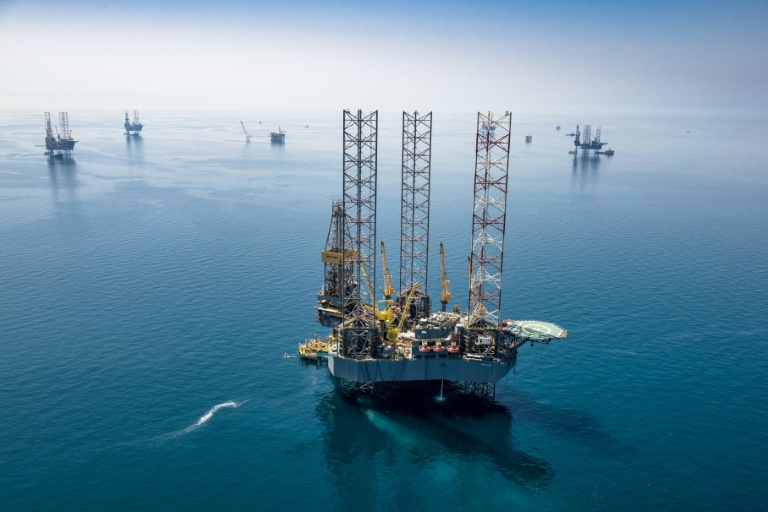
Major oil producers led by Saudi Arabia and Russia stuck to a previously decided output boost on Thursday, despite calls for bigger increases to tame crude prices.

Russia’s invasion of Ukraine has exacerbated concerns about oil supplies, sending prices to record highs this year.

Oil prices fell following the announcement by the 13-nation Organization of the Petroleum Exporting Countries led by Saudia Arabia and its 10 partners headed by Russia.

In their monthly video conference, which lasted about an hour, the 23 members of OPEC+ agreed to add another 648,000 barrels per day in August, the same as for July.

“As expected, OPEC+ stuck to its planned 648,000 barrel increase in August and refrained from any decision beyond then,” said Craig Erlam, a senior market analyst at OANDA trading platform.

This “could add an element of uncertainty to future targets, particularly given recent reports that even Saudi Arabia and UAE are running near capacity,” Erlam added.

– ‘Symbolic’ –

Tamas Varga, an analyst with PVM Energy, said the decision seemed “symbolic” as most OPEC+ members have been failing to meet their output quotas.

“Now all eyes will be on Saudi Arabia and the United Arab Emirates,” Varga said. “Any hint that they also struggle to increase output will probably be met with a fresh wave of buying.”

The 13 members of OPEC, chaired by Saudi Arabia, and their 10 partners, led by Russia, drastically slashed output in 2020 as the coronavirus pandemic and the resulting lockdowns sent demand plummeting.

Since last year, they have been gradually increasing output again. In recent months, the United States and other top oil consumers urged OPEC+ to open the tabs more widely.

The group finally decided at its last meeting in early June to add 648,000 barrels per day to the market in July, up from 432,000 in previous months. 

But the larger-than-expected boost failed to cool prices.

Since Russia invaded Ukraine on February 24, the international benchmark, Brent North Sea Crude, has added around 17 percent, while the US benchmark WTI has jumped more than 18 percent.

Analysts have warned that only a recession may be able to bring down prices.

“The prices will likely push higher unless the recession fears take the upper hand,” said Ipek Ozkardeskaya, an analyst at Swissquote Bank.

“All the talk of a summer of discontent is likely to spill over into the autumn and winter as high oil and gas prices remain a feature of markets,” said Jamie Maddock, an equity research analyst at Quilter Cheviot.

“Attention will now inevitably turn to what OPEC+ does from September,” Maddock added.

– Biden heading to Saudi Arabia –

Production will be back to pre-pandemic levels after August, at least on paper.

Several OPEC+ members have been failing to meet the output quotas, while Iran and Venezuela — and now also Russia — are blocked by sanctions. 

The United Arab Emirates said this week it was close to its oil output ceiling, ahead of a regional visit by US President Joe Biden, who is expected to lobby for increased production.

Biden will visit neighbouring Saudi Arabia, the world’s biggest oil exporter, as part of his tour next month, but analysts doubt it will convince OPEC+ to boost output.

On Monday, at the meeting of the G7 club of industrialised nations in Germany, French President Emmanuel Macron was caught on camera telling Biden details of a conversation with UAE leader Sheikh Mohamed bin Zayed Al-Nahyan.

According to Macron, Sheikh Mohamed said the UAE was at its “maximum” capacity and Saudi Arabia also faced a limit for raising production.
Lost in space: Astronauts struggle to regain bone density

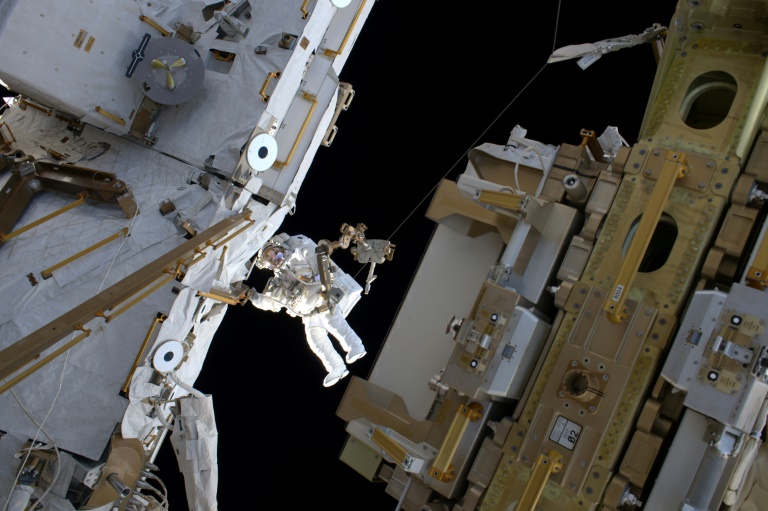
Astronauts lose decades’ worth of bone mass in space that many do not recover even after a year back on Earth, researchers said Thursday, warning that it could be a “big concern” for future missions to Mars.

Previous research has shown astronauts lose between one to two percent of bone density for every month spent in space, as the lack of gravity takes the pressure off their legs when it comes to standing and walking.

To find out how astronauts recover once their feet are back on the ground, a new study scanned the wrists and ankles of 17 astronauts before, during and after a stay on the International Space Station.

The bone density lost by astronauts was equivalent to how much they would shed in several decades if they were back on Earth, said study co-author Steven Boyd of Canada’s University of Calgary and director of the McCaig Institute for Bone and Joint Health.

The researchers found that the shinbone density of nine of the astronauts had not fully recovered after a year on Earth — and were still lacking around a decade’s worth of bone mass.

The astronauts who went on the longest missions, which ranged from four to seven months on the ISS, were the slowest to recover.

“The longer you spend in space, the more bone you lose,” Boyd told AFP.

Boyd said it is a “big concern” for planned for future missions to Mars, which could see astronauts spend years in space.

“Will it continue to get worse over time or not? We don’t know,” he said.

“It’s possible we hit a steady state after a while, or it’s possible that we continue to lose bone. But I can’t imagine that we’d continue to lose it until there’s nothing left.”

A 2020 modelling study predicted that over a three-year spaceflight to Mars, 33 percent of astronauts would be at risk of osteoporosis.

Boyd said some answers could come from research currently being carried out on astronauts who spent at least a year onboard the ISS.

Guillemette Gauquelin-Koch, the head of medicine research at France’s CNES space agency, said that the weightlessness experienced in space is “most drastic physical inactivity there is”.

“Even with two hours of sport a day, it is like you are bedridden for the other 22 hours,” said the doctor, who was not part of the study.

“It will not be easy for the crew to set foot on Martian soil when they arrive — it’s very disabling.”

– ‘The silent disease’ –

The new study, which was published in Scientific Reports, also showed how spaceflight alters the structure of bones themselves.

Boyd said that if you thought of a body’s bones like the Eiffel Tower, it would as if some of the connecting metal rods that hold the structure up were lost.

“And when we return to Earth, we thicken up what’s remaining, but we don’t actually create new rods,” he said.

Some exercises are better for retaining bone mass than others, the study found.

Deadlifting proved significantly more effective than running or cycling, it said, suggesting more heavy lower-body exercises in the future.

But the astronauts — who are mostly fit and in their 40s — did not tend to notice the drastic bone loss, Boyd said, pointing out that the Earth-bound equivalent osteoporosis is known as “the silent disease”.

Canadian astronaut Robert Thirsk, who has spent the most time in space, said that for him bones and muscles took the longest to recover after spaceflight.

“But within a day of landing, I felt comfortable again as an Earthling,” he said in a statement accompanying the research.

US Supreme Court limits government powers to curb greenhouse gases

The US Supreme Court ruled Thursday that the government’s key environmental agency cannot issue broad limits on greenhouse gases, sharply curtailing the power of President Joe Biden’s administration to battle climate change.

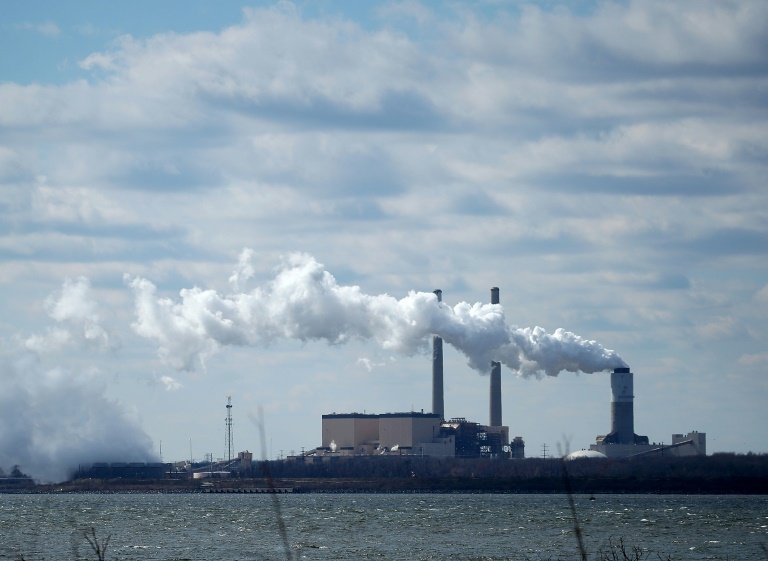
By a majority of 6-3, the high court found that Environmental Protection Agency did not have the power to set broad caps on emissions from coal-fired power plants, which produce nearly 20 percent of the electricity consumed in the United States. 

The decision sets back Biden’s hopes of using the EPA to bring down emissions to meet global climate goals.

It was a significant victory for the coal mining and coal power industry, which had been targeted for tough limits in 2015 by the administration of then president Barack Obama in an effort to slash carbon pollution. 

It was also a victory for conservatives fighting government regulation of industry, with the court’s majority including three right-wing justices named by former president Donald Trump, who had sought to weaken the EPA.

While EPA had the power to regulate individual plants, the court ruled, Congress had not given it such expansive powers to set limits for all electricity generating units.

The majority justices said they recognized that putting caps on carbon dioxide emissions to transition away from coal-generated electricity “may be a sensible solution” to global warming.

But they said the case involved a “major question” of US governance and jurisprudence and that the EPA would have to be specifically delegated such powers by the legislature.

“It is not plausible that Congress gave EPA the authority to adopt on its own such a regulatory scheme,” they said.

“A decision of such magnitude and consequence rests with Congress itself, or an agency acting pursuant to a clear delegation from that representative body,” they said.

The three-member liberal minority of the cases castigated the majority for overruling powers they said EPA did in fact have.

“Today, the court strips the Environmental Protection Agency of the power Congress gave it to respond to ‘the most pressing environmental challenge of our time,'” they said.

EU and New Zealand seal 'state-of-the-art' trade deal

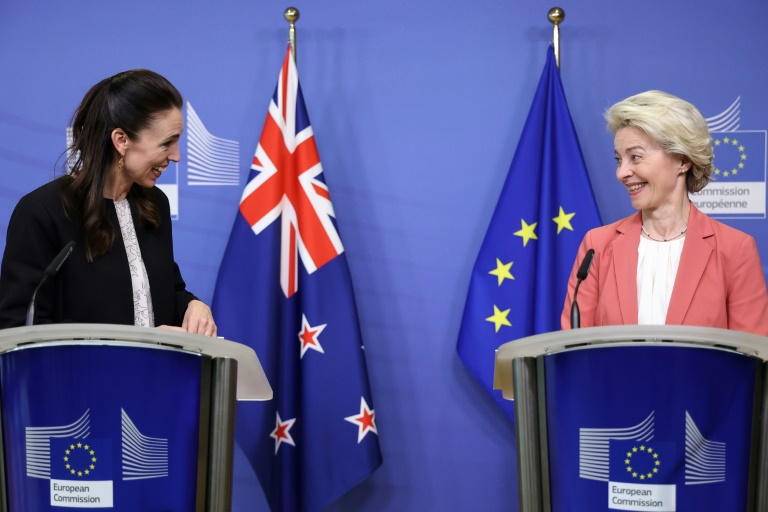
European Commission chief Ursula von der Leyen said Thursday the EU and New Zealand had sealed a free trade deal after four years of talks, promising it would deepen ties.

“This is a historic moment in our cooperation,” von der Leyen told reporters at a joint press statement with New Zealand’s Prime Minister Jacinda Ardern, adding that the deal had come after “tough negotiations”. 

Ardern hailed a “historic further milestone in the strong partnership between two closely-connected like-minded friends.”

The pact brings economies of vastly different sizes closer together: New Zealand has a population of just five million people against the EU’s 450 million.

Once it has survived a long ratification process, the EU said the deal would eliminate all tariffs on its exports to New Zealand and will open markets in key sectors such as financial services, telecommunications, maritime transport and delivery services.

Both sides underlined environmental issues, amid concern in some corners of Europe that trade deals are a threat to climate goals and upholding rights of workers.

“This free trade agreement includes high ambition outcomes in areas related to the Paris Agreement, climate action, labour rights, gender equality, and harmful fishery subsidies,” New Zealand Trade Minister Damien O’Connor told reporters after a final round of talks in Brussels.

His EU counterpart Valdis Dombrovskis called the deal “a state of the art trade deal for the EU” that had “shared values with sustainability at its core.”

The New Zealand agreement, which will be legally finalised over the next months, will have to be agreed by the bloc’s member states as well as European Parliament.

The deal with New Zealand will lend comfort to European countries that had grown increasingly frustrated with the lack of progress on opening new trade ties with international partners.

The EU has struggled in recent years to secure the backing of all 27 member states as well as the European Parliament on trade deals, which were once a central policy for the bloc.

France has led the doubters on the wisdom of trade pacts, and French farmers have voiced concerns that the accord with New Zealand would unfairly open their market to New Zealand imports.

The EU is currently also engaged in talks with India, Indonesia, New Zealand and Australia.

Of particular concern in France is a negotiated deal with the South American trade bloc Mercosur that has yet to be signed as several countries demand concrete commitments from Brazil against the deforestation of the Amazon.

EU and New Zealand seal 'state-of-the-art' trade deal

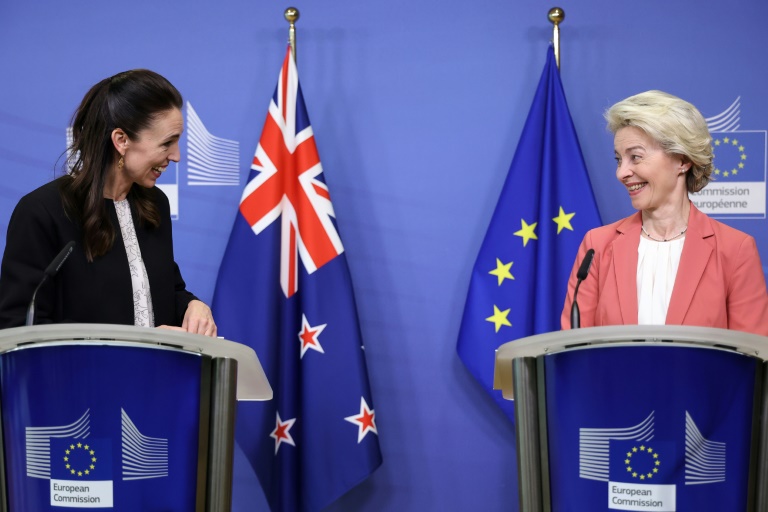
European Commission chief Ursula von der Leyen said Thursday the EU and New Zealand had sealed a free trade deal after four years of talks, promising it would deepen ties.

“This is a historic moment in our cooperation,” von der Leyen told reporters at a joint press statement with New Zealand’s Prime Minister Jacinda Ardern, adding that the deal had come after “tough negotiations”. 

Ardern hailed a “historic further milestone in the strong partnership between two closely-connected like-minded friends.”

The pact brings economies of vastly different sizes closer together: New Zealand has a population of just five million people against the EU’s 450 million.

Once it has survived a long ratification process, the EU said the deal would eliminate all tariffs on its exports to New Zealand and will open markets in key sectors such as financial services, telecommunications, maritime transport and delivery services.

Both sides underlined environmental issues, amid concern in some corners of Europe that trade deals are a threat to climate goals and upholding rights of workers.

“This free trade agreement includes high ambition outcomes in areas related to the Paris Agreement, climate action, labour rights, gender equality, and harmful fishery subsidies,” New Zealand Trade Minister Damien O’Connor told reporters after a final round of talks in Brussels.

His EU counterpart Valdis Dombrovskis called the deal “a state of the art trade deal for the EU” that had “shared values with sustainability at its core.”

The New Zealand agreement, which will be legally finalised over the next months, will have to be agreed by the bloc’s member states as well as European Parliament.

The deal with New Zealand will lend comfort to European countries that had grown increasingly frustrated with the lack of progress on opening new trade ties with international partners.

The EU has struggled in recent years to secure the backing of all 27 member states as well as the European Parliament on trade deals, which were once a central policy for the bloc.

France has led the doubters on the wisdom of trade pacts, and French farmers have voiced concerns that the accord with New Zealand would unfairly open their market to New Zealand imports.

The EU is currently also engaged in talks with India, Indonesia, New Zealand and Australia.

Of particular concern in France is a negotiated deal with the South American trade bloc Mercosur that has yet to be signed as several countries demand concrete commitments from Brazil against the deforestation of the Amazon.

US firefighters adapt to 'new hazards' in electric car blazes

California firefighters ended up using a water-filled pit to douse stubborn flames in a Tesla’s battery compartment earlier this month, illustrating the distinct difficulties in battling electric vehicle blazes. 

As the number of electric cars on America’s roads has jumped, fire crews have had to learn how to attack flames in them that can require hours -– and thousands of gallons of water -– to put out.

Though they can require particular procedures to fight, early indications point to fires in battery-powered cars being no more frequent than their fossil fuel-powered cousins, yet the US government is still gathering data.

US carmaker GM announced Thursday a new training initiative for emergency responders and Tesla has put out guides on how to get a burning battery bank under control. But it’s still up to crews in the field to handle these fires.

“We’re kind of just creeping into the future of firefighting,” said Capt. Parker Wilbourn, a spokesman for the Sacramento Metropolitan Fire District, which handled the burning Tesla.

“This is a new age fire and so we’re having to adapt and find solutions,” he added.

The main difference with electric vehicles is their power source, and lithium-ion batteries burn hot, fast and require large amounts of water to fully extinguish when they catch fire.

Tesla, which dominates America’s electric vehicle market, says it can take 3,000-8,000 gallons (11,000-30,000 liters) of water to put out and cool a battery fire.

“Always establish or request additional water supply early,” Elon Musk’s car company recommends in its emergency response guide. 

Meanwhile, electric-powered vehicles are a steadily growing minority of the over the 275 million vehicles on the road in the United States.

Electrics and hybrids represented nearly 10 percent of US car purchases last year, according to Cox Automotive.

In the case of the June 9 Tesla fire in California, the car was seriously damaged in a crash about three weeks prior and was parked at a junkyard waiting to be dismantled when it started to burn. 

– Risk of ‘thermal runaway’ –

Investigators were working to figure out what caused the fire that took some 4,500 gallons of water to douse, but said there was no indication humans had sparked the blaze.

The batteries can reignite hours or even days after an initial incident, with Tesla recommending the monitoring of battery temperatures for at least 24 hours after a fire.

“It’s not necessarily that they’re more dangerous,” said Michael Gorin, a program manager at nonprofit National Fire Protection Association (NFPA), referring to electric cars. 

“It’s just that it’s a new technology, a new set of hazards,” he added.

He noted electric car blazes don’t appear to be more frequent or dangerous than in fossil fuel-powered vehicles, but America’s road safety agency NHTSA says it does not have enough data to reach conclusions about the rate at which they catch fire.

Lithium-ion batteries can however undergo so-called “thermal runaway” –- an ominous sounding term that refers to an uncontrolled increase in temperature and pressure -– in one cell that can spread to another in a bank of batteries.

The US accident investigation agency NTSB warned in late 2020 of that and other risks linked to the batteries, and recommended car makers follow a common template for their fire response guides in order to help emergency crews.

Fire crews around the world have had to learn the particularities of dealing with the tenacious fires in electric car batteries, and over 250,000 emergency responders in the United States have done training with NFPA, the fire prevention non-profit.

“But I believe it’s 1.1 million firefighters in the United States today,” said Gorin, an NFPA program manager.

GM, in announcing its new training initiative, noted that a key part of encouraging “mass adoption” of electric vehicles is to “support those who play a vital role in the responsible deployment” of the cars: firefighters.

The perception of the vehicles’ safety is key, especially after GM advised owners of some electric Chevrolet Bolt cars last year not to park them indoors or charge them unattended overnight, before initiating a massive recall of all model years. 

Wilbourn, the California fire captain, said one way to ensure safety in the booming electric car market could be some kind of internal fire firefighting capacity built into electric cars.

“Maybe one of those solutions is putting that back on the manufacturer,” he said, noting fire suppression is already a requirement in homes and businesses.

US prices high but stable in May, spending slows

A key US inflation measure showed price increases held steady in the 12 months ended in May, while consumer spending growth slowed sharply, a good sign in the battle against soaring prices.

The trend could offer comfort to consumers and central bankers alike, as a sign the Fed’s aggressive interest rate strategy is starting to have an impact to quell the fastest surge in inflation in more than 40 years.

The personal consumption expenditures (PCE) price index rose 6.3 percent compared to May 2021, still high but the same pace as in the prior month, even as it jumped 0.6 percent compared to April, the Commerce Department reported Thursday.

The index jumped 0.6 percent compared to April, much faster than in the prior month, but slightly below what economists had projected.

But spending edged up just 0.2 percent, less than half the increase in April and part of a steady downward drift as consumers pull back amid surging prices.

Buoyed by a stockpile of savings, helped by massive government aid, consumers have been the lynchpin in the rapid US recovery from the pandemic downturn.

But strong demand clashed with global supply chain snarls and the world’s largest economy has been battered for months by a cresting inflation wave, made more painful by the surge in energy prices sparked by the Russian invasion of Ukraine in late February.

Excluding volatile food and energy prices, PCE rose 0.3 percent in the month, the same as in April, and slowed slightly to 4.7 percent over the past year, the report said.

– Fed inflation battle –

The PCE price index is the Federal Reserve’s preferred inflation gauge, as it reflects consumers’ actual spending, including shifts to lower cost items, unlike the more well-known consumer price index, which jumped 8.6 percent in May.

PCE also gives less weight to things like rent, vehicles and airline fares, which have contributed to the blistering pace of the CPI rise.

The Fed early this month announced the biggest hike in the benchmark lending rate in nearly 30 years, a three-quarter point increase that was the third step in its counteroffensive against rising inflation, which aims to cool demand.

Policymakers are watching the spending and inflation data closely and have signaled there is a good chance of another similar increase in late July, followed by more big steps in coming months.

Ian Shepherdson, chief economist of Pantheon Macroeconomics, noted that the three-month average annual increase fell to the slowest pace since November, and “a sharp easing from the 5.7 percent peak in February.”

“A combination of slower wage gains, lower margin inflation, and the stronger dollar is beginning to drive a clear slowdown in core inflation,” he said. But “It has much further to go.

– Slower spending –

The signs of consumers pulling back will weigh on second quarter GDP growth, after the Commerce Department revised first-quarter consumer spending sharply lower, cutting it to 1.8 percent from 3.1 percent, as the economy contracted 1.6 percent.

The key driver of the slower consumption growth in May was the sharp drop in spending on big-ticket manufactured items, known as durable goods, which fell 3.2 percent in the month, the report said.

Economists note that reflects a pull back on vehicle sales.

Spending on services rose 0.7 percent in the month, the same as in April.

Rubeela Farooqi of High Frequency Economics said the Fed will stick to its efforts to tame prices.

“With the threat from durable inflation in focus, these data are not likely to change the rate trajectory, which remains firmly upward,” she said in an analysis.

US prices high but stable in May, spending slows

A key US inflation measure showed price increases held steady in the 12 months ended in May, while consumer spending growth slowed sharply, a good sign in the battle against soaring prices.

The trend could offer comfort to consumers and central bankers alike, as a sign the Fed’s aggressive interest rate strategy is starting to have an impact to quell the fastest surge in inflation in more than 40 years.

The personal consumption expenditures (PCE) price index rose 6.3 percent compared to May 2021, still high but the same pace as in the prior month, even as it jumped 0.6 percent compared to April, the Commerce Department reported Thursday.

The index jumped 0.6 percent compared to April, much faster than in the prior month, but slightly below what economists had projected.

But spending edged up just 0.2 percent, less than half the increase in April and part of a steady downward drift as consumers pull back amid surging prices.

Buoyed by a stockpile of savings, helped by massive government aid, consumers have been the lynchpin in the rapid US recovery from the pandemic downturn.

But strong demand clashed with global supply chain snarls and the world’s largest economy has been battered for months by a cresting inflation wave, made more painful by the surge in energy prices sparked by the Russian invasion of Ukraine in late February.

Excluding volatile food and energy prices, PCE rose 0.3 percent in the month, the same as in April, and slowed slightly to 4.7 percent over the past year, the report said.

– Fed inflation battle –

The PCE price index is the Federal Reserve’s preferred inflation gauge, as it reflects consumers’ actual spending, including shifts to lower cost items, unlike the more well-known consumer price index, which jumped 8.6 percent in May.

PCE also gives less weight to things like rent, vehicles and airline fares, which have contributed to the blistering pace of the CPI rise.

The Fed early this month announced the biggest hike in the benchmark lending rate in nearly 30 years, a three-quarter point increase that was the third step in its counteroffensive against rising inflation, which aims to cool demand.

Policymakers are watching the spending and inflation data closely and have signaled there is a good chance of another similar increase in late July, followed by more big steps in coming months.

Ian Shepherdson, chief economist of Pantheon Macroeconomics, noted that the three-month average annual increase fell to the slowest pace since November, and “a sharp easing from the 5.7 percent peak in February.”

“A combination of slower wage gains, lower margin inflation, and the stronger dollar is beginning to drive a clear slowdown in core inflation,” he said. But “It has much further to go.

– Slower spending –

The signs of consumers pulling back will weigh on second quarter GDP growth, after the Commerce Department revised first-quarter consumer spending sharply lower, cutting it to 1.8 percent from 3.1 percent, as the economy contracted 1.6 percent.

The key driver of the slower consumption growth in May was the sharp drop in spending on big-ticket manufactured items, known as durable goods, which fell 3.2 percent in the month, the report said.

Economists note that reflects a pull back on vehicle sales.

Spending on services rose 0.7 percent in the month, the same as in April.

Rubeela Farooqi of High Frequency Economics said the Fed will stick to its efforts to tame prices.

“With the threat from durable inflation in focus, these data are not likely to change the rate trajectory, which remains firmly upward,” she said in an analysis.

OPEC+ stays the course on oil output boost

Major oil producers led by Saudi Arabia and Russia stuck to a previously decided output boost on Thursday, despite calls for bigger increases to tame crude prices.

Russia’s invasion of Ukraine has exacerbated concerns about oil supplies, sending prices to record highs this year.

But a respite is not in sight.

In their monthly video conference, which lasted about an hour, the 23 members of OPEC+ agreed to add another 648,000 barrels per day in August, the same as for July.

Analysts had widely expected the move, calling the gathering of the Vienna-based Organization of the Petroleum Exporting Countries and their partners a “rubber stamp” meeting.

Jeffrey Halley, analyst at OANDA trading platform, said before the meeting that he did not expect surprises as “OPEC+ can’t even meet its present targets, and hasn’t for a long time.” 

The 13 members of OPEC, chaired by Saudi Arabia, and their 10 partners, led by Russia, drastically slashed output in 2020 as the coronavirus pandemic and the resulting lockdowns sent demand plummeting.

Since last year, they have been gradually increasing output again. In recent months, the United States and other top oil consumers urged OPEC+ to open the tabs more widely.

The group finally decided at its last meeting in early June to add 648,000 barrels per day to the market in July, up from 432,000 in previous months.

But the larger-than-expected boost failed to cool prices.

– Biden heading to Saudi Arabia –

Since Russia invaded Ukraine on February 24, the international benchmark, Brent North Sea Crude, has added around 17 percent, while the US benchmark WTI has jumped more than 18 percent.

Analysts have warned that only a recession may be able to bring down prices.

“The prices will likely push higher unless the recession fears take the upper hand,” said Ipek Ozkardeskaya, an analyst at Swissquote Bank.

Several OPEC+ members have been failing to meet the output quotas, while Iran and Venezuela — and now also Russia — are blocked by sanctions. 

The United Arab Emirates said this week it was close to its oil output ceiling, ahead of a regional visit by US President Joe Biden, who is expected to lobby for increased production.

Biden will visit neighbouring Saudi Arabia, the world’s biggest oil exporter, as part of his tour next month, but analysts doubt it will convince OPEC+ to boost output.

On Monday, at the meeting of the G7 club of industrialised nations in Germany, French President Emmanuel Macron was caught on camera telling Biden details of a conversation with UAE leader Sheikh Mohamed bin Zayed Al-Nahyan.

According to Macron, Sheikh Mohamed said the UAE was at its “maximum” capacity and Saudi Arabia also faced a limit for raising production.
OPEC+ stays the course on oil output boost

Major oil producers led by Saudi Arabia and Russia stuck to a previously decided output boost on Thursday, despite calls for bigger increases to tame crude prices.

Russia’s invasion of Ukraine has exacerbated concerns about oil supplies, sending prices to record highs this year.

But a respite is not in sight.

In their monthly video conference, which lasted about an hour, the 23 members of OPEC+ agreed to add another 648,000 barrels per day in August, the same as for July.

Analysts had widely expected the move, calling the gathering of the Vienna-based Organization of the Petroleum Exporting Countries and their partners a “rubber stamp” meeting.

Jeffrey Halley, analyst at OANDA trading platform, said before the meeting that he did not expect surprises as “OPEC+ can’t even meet its present targets, and hasn’t for a long time.” 

The 13 members of OPEC, chaired by Saudi Arabia, and their 10 partners, led by Russia, drastically slashed output in 2020 as the coronavirus pandemic and the resulting lockdowns sent demand plummeting.

Since last year, they have been gradually increasing output again. In recent months, the United States and other top oil consumers urged OPEC+ to open the tabs more widely.

The group finally decided at its last meeting in early June to add 648,000 barrels per day to the market in July, up from 432,000 in previous months.

But the larger-than-expected boost failed to cool prices.

– Biden heading to Saudi Arabia –

Since Russia invaded Ukraine on February 24, the international benchmark, Brent North Sea Crude, has added around 17 percent, while the US benchmark WTI has jumped more than 18 percent.

Analysts have warned that only a recession may be able to bring down prices.

“The prices will likely push higher unless the recession fears take the upper hand,” said Ipek Ozkardeskaya, an analyst at Swissquote Bank.

Several OPEC+ members have been failing to meet the output quotas, while Iran and Venezuela — and now also Russia — are blocked by sanctions. 

The United Arab Emirates said this week it was close to its oil output ceiling, ahead of a regional visit by US President Joe Biden, who is expected to lobby for increased production.

Biden will visit neighbouring Saudi Arabia, the world’s biggest oil exporter, as part of his tour next month, but analysts doubt it will convince OPEC+ to boost output.

On Monday, at the meeting of the G7 club of industrialised nations in Germany, French President Emmanuel Macron was caught on camera telling Biden details of a conversation with UAE leader Sheikh Mohamed bin Zayed Al-Nahyan.

According to Macron, Sheikh Mohamed said the UAE was at its “maximum” capacity and Saudi Arabia also faced a limit for raising production.
Close Bitnami banner
Bitnami