AFP

Russia fails to pay debt but denies default

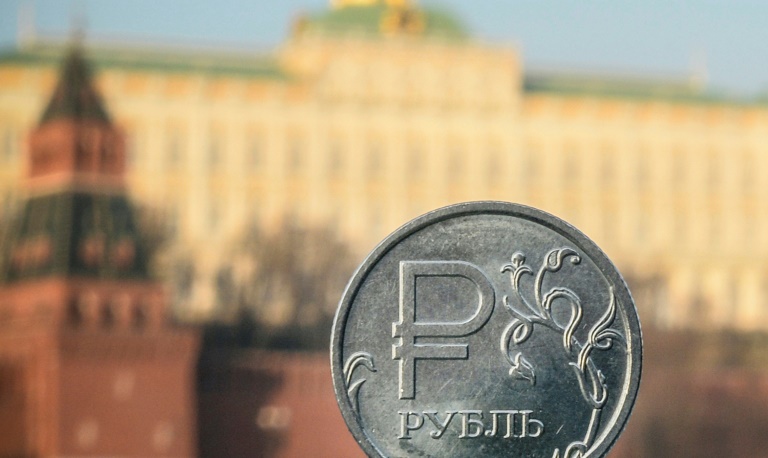
Russia said Monday that two of its debt payments were blocked from reaching creditors, pushing the country closer to its first foreign default in a century due to sanctions over the Ukraine offensive.

The announcement came on the 124th day of Russia’s military intervention in Ukraine, with Western sanctions so far failing to force the Kremlin to change its course.

The Western economic penalties have largely severed the country from the international financial system, making it difficult for Moscow to service its debt.

The Russian authorities insist they have the funds to honour the country’s debt, calling the predicament a “farce” and accusing the West of seeking to drive Moscow into a default artificially.

“There are no grounds to call this situation a default,” Kremlin spokesman Dmitry Peskov told reporters after a key payment deadline expired Sunday.

“These claims about default, they are absolutely wrong,” he said, adding that Russia settled the debt in May.

Russia lost the last avenue to service its foreign-currency loans after the United States removed an exemption last month that allowed US investors to receive Moscow’s payments.

– ‘Vicious circle of decline’ – 

A 30-day grace period for the payment of $100 million in interest payments expired on Sunday night, most of which had to be paid in foreign currency.

Russia had attempted to make the payments, but the finance ministry said Monday that the money had not been transferred to creditors.

International settlement and clearing systems “received funds in full in advance” but the payments were not transferred to the final recipients due to “the actions of third parties,” the ministry said in a statement.

“The actions of foreign financial intermediaries are beyond the Russian finance ministry’s control,” the statement said.

While some experts dismiss the event as a technical default, others say it will have far-reaching consequences.

“This default is important as it will impact on Russia’s ratings, market access and financing costs for years to come,” said Timothy Ash, an emerging markets strategist at BlueBay Asset Management.

“And that means lower investment, lower growth, lower living standards, capital and human flight (brain drain), and a vicious circle of decline for the Russian economy.” 

– ‘Locked Russia out’ –

But Liam Peach, emerging Europe economist at Capital Economics, a research group, said a default was a “a largely symbolic event that is unlikely to have an additional macroeconomic impact”.

“Sanctions have already done the damage and locked Russia out of global capital markets,” Peach said in a note.

The sanctions included freezing the Russian government’s stockpile of $300 billion in foreign currency reserves held abroad, making it more complicated for Moscow to settle its foreign debts.

After the United States closed the payment loophole last month, Russia said it would pay in rubles that could be converted into foreign currency, using a Russian financial institution as a paying agent, even though the bonds do not allow payments in the local currency.

The country last defaulted on its foreign debt in 1918, when Bolshevik revolution leader Vladimir Lenin refused to recognise the massive debts of the deposed tsar’s regime.

Russia defaulted on domestic debt in 1998 when, due to a drop in commodity prices, it faced a financial squeeze that prevented it from propping up the ruble and paying off debts that accumulated during the first war in Chechnya.

The International Monetary Fund’s number two official, Gita Gopinath, said in March that a Russian default would have “limited” impact on the global financial system.

NATO allies to boost high readiness forces to 300,000

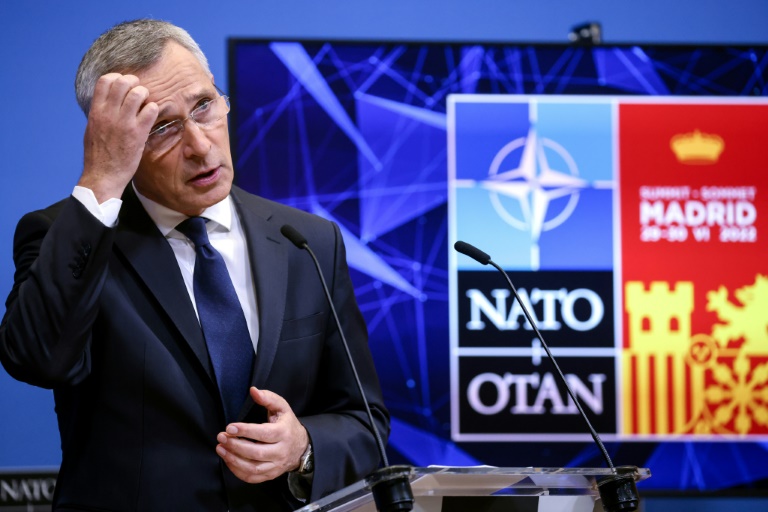
NATO allies will boost high readiness forces to “well over 300,000” troops as they strengthen their defences in response to Russia’s war on Ukraine, alliance chief Jens Stoltenberg said Monday. 

Leaders from the US-led military alliance will meet in Madrid this week for what Stoltenberg said would be a “transformative” summit as it grapples with the fallout of Moscow’s invasion of its pro-Western neighbour.

Stoltenberg said allies would bolster some of their battle group formations along NATO’s eastern flank “up to brigade level” — tactical units of around 3,000-5,000 troops — and ratchet up high readiness numbers to “well over 300,000”.

In addition, more heavy weaponry including air defence systems would be shifted forwards and forces pre-assigned to defend specific NATO members on the alliance’s exposed eastern edge.

“This constitutes the biggest overhaul of our collective defence and deterrence since the Cold War,” Stoltenberg said. 

NATO currently has a high readiness force of around 40,000 troops under its command, but the more than 300,000 troops are expected to form a larger pool that the alliance could tap into in the case of an emergency. 

A NATO official said the new system would be in place next year and improve the alliance’s “ability to respond at very short notice for any contingency” with land, sea, air and cyber assets. 

Stoltenberg also said leaders would agree to bolster NATO’s essential support to embattled Ukraine, whose President Volodymyr Zelensky is set to call in via video link.

– US spearhead –

That package would include “substantial deliveries” of gear like secure communications, anti-drone systems and fuel, and help Ukraine over the longer term to pivot to using more advanced NATO-standard arms. 

This support is separate from weaponry that NATO members — spearheaded by the United States — are already funnelling to Ukraine, including anti-tank rockets, artillery and air defence to help it hold back Russia’s onslaught. 

NATO has been building up its forces in the east of the alliance since Moscow first moved into Ukraine with the annexation of Crimea in 2014. 

The alliance has rushed tens of thousands more troops to the region since Moscow launched its full-scale invasion on February 24. 

NATO now has eight battle groups across its eastern members and Stoltenberg said some of these — likely in the Baltics and Poland — would be bolstered to “brigade level”.

Jittery leaders in the Baltics have pushed for major and permanent troop deployments that could stop the Kremlin’s forces at NATO’s border.

Germany has said it would take the lead on a new brigade in Lithuania — where it already has forces — but most of those troops would be permanently stationed back on home soil. 

Britain’s defence minister has said his country will likely propose a similar set-up for Estonia — where it commands the existing battle group. 

Stoltenberg said he expected other allies to announce forces dedicated to protecting specific eastern members at the summit that starts on Tuesday evening. 

Stock markets extend recovery

Global stock markets mostly advanced on Monday, building upon last week’s advances as speculation that inflation may have peaked tempered expectations about central bank interest rate hikes.

With prices surging at a pace not seen in a generation, central banks have been forced to lift borrowing costs and wind back their ultra-loose monetary policies in recent months, sending a chill across trading floors.

But a string of weak data has led many investors to believe that inflation may have plateaued or is about to, giving room for banks to be less hawkish.

The prospect that rates will not go as high as initially expected helped send Wall Street stocks higher Friday, with the S&P 500 and Nasdaq ending up more than three percent.

Asia continued the rally on Monday while London and Frankfurt closed higher and Wall Street edged up nearing midday. Paris closed lower.

Hong Kong led gainers, climbing more than two percent thanks to a strong performance in Chinese tech firms. 

Indications that China’s crackdown on the sector could be coming to an end added to the upbeat mood in the city.

“Market conviction that perhaps the Fed won’t now hike rates as aggressively as previously feared and/or that rate cuts before the end of 2023 are now an even more realistic prospect… have had a big hand” in boosting sentiment, said National Australia Bank’s Ray Attrill.

While Fed chiefs continue to flag further big interest rate hikes in the pipeline, expectations for a prolonged period of increases have waned, which has in turn taken some heat out of the dollar.

Market analyst Patrick O’Hare at Briefing.com said the question going forward is: “can the market look past a weakening fundamental situation that includes higher interest rates, persistently high inflation, and slower growth?”

The strong rebounds seen last week were possible as the market was so oversold, he said, but may soon hit resistance. 

“That should become increasingly apparent in coming weeks as more companies temper their full-year outlooks” as they release their second quarter earnings.

Bitcoin has also won some support, trading above $21,000 after a recent slump.

Oil prices rose after sharp falls last week.

“We appear to be seeing an interesting moment in oil where a tight market is being priced against a likely economic decline, even a recession, which could help to rebalance it,” said Craig Erlam at trading platform OANDA.

– G7 action over Russia –

Elsewhere, traders were keeping a close eye on the G7 summit in Germany, focused on further coordinated financial action against Russia following its invasion of Ukraine.

Among the new action being weighed by the G7 was a price cap on Russian oil imports and fresh sanctions on Russia’s defence sector, the White House said.

G7 member France urged oil producers to ramp up crude output by “exceptional” volumes owing to Russian supply constraints.

The group — comprising also Britain, Canada, Germany, Italy, Japan and the United States — kicked off their gathering Sunday by announcing plans to ban imports of Russian gold.

It was the latest in a series of sanctions aimed at punishing President Vladimir Putin for his February 24 invasion.

– Key figures at around 1530 GMT –

New York – Dow: UP 0.2 percent at 31,574.20 points

EURO STOXX 50: UP 0.4 percent at 3,547.66

London – FTSE 100: UP 0.7 percent at 7,258.32 (close) 

Frankfurt – DAX: UP 0.5 percent at 13,186.07 (close)

Paris – CAC 40: DOWN 0.4 percent at 6,047.31 (close)

Tokyo – Nikkei 225: UP 1.4 percent at 26,871.27 (close)

Hong Kong – Hang Seng Index: UP 2.4 percent at 22,229.52 (close)

Shanghai – Composite: UP 0.9 percent at 3,379.19 (close)

Euro/dollar: UP at $1.0612 from $1.0559 Friday

Pound/dollar: UP at $1.2305 from $1.2280

Euro/pound: UP at 86.23 pence from 85.95 pence

Dollar/yen: DOWN at 135.13 yen from 135.17 yen

Brent North Sea crude: UP 1.4 percent at $114.74 per barrel

West Texas Intermediate: UP 1.5 percent at $109.28 per barrel

burs-rl/lth

Stock markets extend recovery

Global stock markets mostly advanced on Monday, building upon last week’s advances as speculation that inflation may have peaked tempered expectations about central bank interest rate hikes.

With prices surging at a pace not seen in a generation, central banks have been forced to lift borrowing costs and wind back their ultra-loose monetary policies in recent months, sending a chill across trading floors.

But a string of weak data has led many investors to believe that inflation may have plateaued or is about to, giving room for banks to be less hawkish.

The prospect that rates will not go as high as initially expected helped send Wall Street stocks higher Friday, with the S&P 500 and Nasdaq ending up more than three percent.

Asia continued the rally on Monday while London and Frankfurt closed higher and Wall Street edged up nearing midday. Paris closed lower.

Hong Kong led gainers, climbing more than two percent thanks to a strong performance in Chinese tech firms. 

Indications that China’s crackdown on the sector could be coming to an end added to the upbeat mood in the city.

“Market conviction that perhaps the Fed won’t now hike rates as aggressively as previously feared and/or that rate cuts before the end of 2023 are now an even more realistic prospect… have had a big hand” in boosting sentiment, said National Australia Bank’s Ray Attrill.

While Fed chiefs continue to flag further big interest rate hikes in the pipeline, expectations for a prolonged period of increases have waned, which has in turn taken some heat out of the dollar.

Market analyst Patrick O’Hare at Briefing.com said the question going forward is: “can the market look past a weakening fundamental situation that includes higher interest rates, persistently high inflation, and slower growth?”

The strong rebounds seen last week were possible as the market was so oversold, he said, but may soon hit resistance. 

“That should become increasingly apparent in coming weeks as more companies temper their full-year outlooks” as they release their second quarter earnings.

Bitcoin has also won some support, trading above $21,000 after a recent slump.

Oil prices rose after sharp falls last week.

“We appear to be seeing an interesting moment in oil where a tight market is being priced against a likely economic decline, even a recession, which could help to rebalance it,” said Craig Erlam at trading platform OANDA.

– G7 action over Russia –

Elsewhere, traders were keeping a close eye on the G7 summit in Germany, focused on further coordinated financial action against Russia following its invasion of Ukraine.

Among the new action being weighed by the G7 was a price cap on Russian oil imports and fresh sanctions on Russia’s defence sector, the White House said.

G7 member France urged oil producers to ramp up crude output by “exceptional” volumes owing to Russian supply constraints.

The group — comprising also Britain, Canada, Germany, Italy, Japan and the United States — kicked off their gathering Sunday by announcing plans to ban imports of Russian gold.

It was the latest in a series of sanctions aimed at punishing President Vladimir Putin for his February 24 invasion.

– Key figures at around 1530 GMT –

New York – Dow: UP 0.2 percent at 31,574.20 points

EURO STOXX 50: UP 0.4 percent at 3,547.66

London – FTSE 100: UP 0.7 percent at 7,258.32 (close) 

Frankfurt – DAX: UP 0.5 percent at 13,186.07 (close)

Paris – CAC 40: DOWN 0.4 percent at 6,047.31 (close)

Tokyo – Nikkei 225: UP 1.4 percent at 26,871.27 (close)

Hong Kong – Hang Seng Index: UP 2.4 percent at 22,229.52 (close)

Shanghai – Composite: UP 0.9 percent at 3,379.19 (close)

Euro/dollar: UP at $1.0612 from $1.0559 Friday

Pound/dollar: UP at $1.2305 from $1.2280

Euro/pound: UP at 86.23 pence from 85.95 pence

Dollar/yen: DOWN at 135.13 yen from 135.17 yen

Brent North Sea crude: UP 1.4 percent at $114.74 per barrel

West Texas Intermediate: UP 1.5 percent at $109.28 per barrel

burs-rl/lth

UK MPs debate bill to override N.Ireland Brexit pact

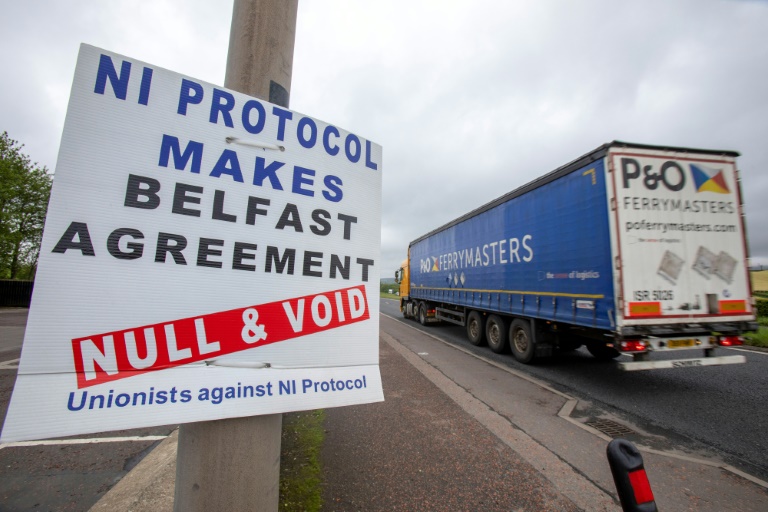
British lawmakers were set Monday to take their first vote on a government bill to overhaul post-Brexit trade arrangements in Northern Ireland, despite EU warnings it is illegal and could spark a trade war.

Prime Minister Boris Johnson insisted the legislation was needed to remove “unnecessary barriers to trade from Great Britain to Northern Ireland.

“All we’re saying is that you can get rid of those, whilst not in any way endangering the EU single market,” he told reporters at a G7 summit in Germany, before British MPs began hours of debate on the bill.

In awkward timing, the MPs were to vote late Monday as Johnson socialises at the G7 with top EU leaders, including European Commission chief Ursula von der Leyen, German Chancellor Olaf Scholz and French President Emmanuel Macron.

Irish premier Micheal Martin rejected Johnson’s attempts to play down the planned changes to the so-called Northern Ireland Protocol, which was agreed as part of the UK’s Brexit withdrawal from the European Union.

Martin said “any unilateral decision to breach international law is a major, serious development.

“There can be no getting out of that,” he said in Dublin, also warning against another government bill to revamp human rights in the UK that could affect a 1998 peace deal for Northern Ireland.

– ‘Legal and necessary’ –

The UK government unveiled its plan to unilaterally change trading terms for the politically fraught British province earlier this month, prompting the EU to pledge legal action.

Brussels says overriding the deal it struck in 2019 with Johnson’s government breaches international law, and has warned of trade reprisals, which Britain can ill-afford as prices surge on the back of the war in Ukraine.

MPs in the House of Commons began debating the controversial “Northern Ireland Protocol Bill” in mid-afternoon, and were to hold an initial vote on whether to proceed with it late in the evening.

Days of further scrutiny and subsequent votes then loom, and Johnson faces disquiet among some of his own Conservatives about the bill after he only narrowly survived a no-confidence vote this month.

Launching the debate, Foreign Secretary Liz Truss said problems were “baked in” to the protocol and wholesale change was needed to entice pro-UK unionists back to a power-sharing government in Belfast.

“It is both legal and necessary,” she said, denying the UK was breaching international law and stressing the need to prioritise the peace process.

“We continue to raise the issues of concern with our European partners, but we simply cannot allow the situation to drift,” Truss added.

– ‘Unrealistic’ –

On Sunday, the bloc’s ambassador to Britain, Joao Vale de Almeida, said the legislation did break international, EU and UK law, and was “unrealistic”.

“We are committed to find the practical solutions on implementation, but we cannot start talking if the baseline is to say everything we have agreed before is to be put aside,” he added.

The protocol requires checks on goods arriving into Northern Ireland from England, Scotland and Wales, to track products that could be potentially headed to the bloc via the Republic of Ireland.

This creates a customs border down the Irish Sea, keeping Northern Ireland in the EU’s customs orbit to avoid a politically sensitive hard border between the territory and EU member Ireland.

Unionist parties and the UK government argue the protocol is threatening the 1998 Good Friday Agreement that ended three decades of violence over British rule in Northern Ireland.

They want checks to be removed on goods, and animal and plant products, travelling from Great Britain through the creation of a “green channel” for goods intended to stay in Northern Ireland.

Protesters reject Ecuador president's 'insensitive' fuel price cut

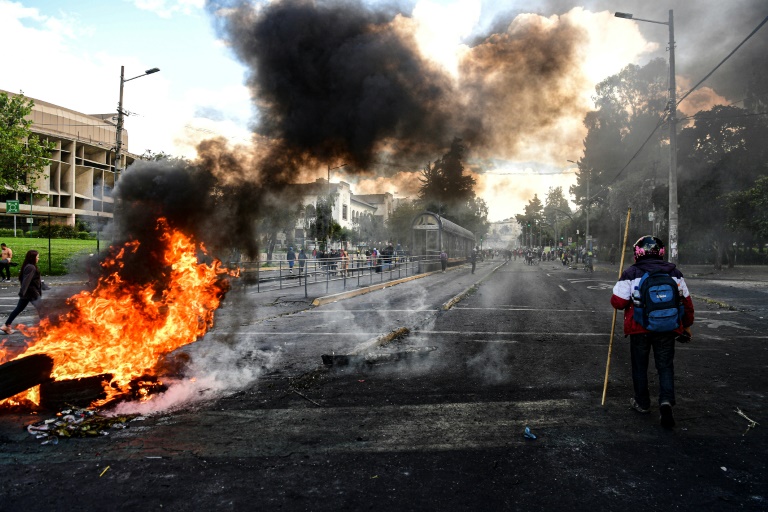
Indigenous protesters in Ecuador vowed Monday to continue a disruptive country-wide protest against high living costs, rejecting a fuel price cut announced by the government as insufficient and “insensitive.”

President Guillermo Lasso on Sunday announced a 10-cents-per-gallon reduction in fast-rising diesel and gasoline prices that sparked the uprising, now in its 15th day and severely hampering the oil-dependent economy.

The cut was not nearly as much as protesters had demanded, and the powerful Confederation of Indigenous Nationalities of Ecuador (Conaie), which has been blockading roads and occupying oil wells since June 13, said the gesture was “not enough, it is insensitive.”

It showed, said a Conaie statement signed by its leader Leonidas Iza, that the government “does not sympathize with the situation of poverty faced by millions of families.”

The group added: “Our struggle is not over.”

Indigenous people make up more than a million of the South American nation’s 17.7 million people, and Conaie is credited with unseating three presidents between 1997 and 2005.

Fuel prices, which are subsidized in oil-producing Ecuador, have risen sharply since 2020, almost doubling for diesel from $1 to $1.90 per gallon and swelling from $1.75 to $2.55 for gasoline.

Conaie wants the price to be lowered to $1.50 per gallon for diesel and $2.10 for gasoline.

– ‘Critical’ level –

An estimated 14,000 protesters are taking part in a nationwide show of discontent against rising hardship in an economy dealt a serious blow by the coronavirus pandemic.

Most of the ire is concentrated in the capital Quito, where some 10,000 people are gathered, mainly from other parts of the country.

Other than fuel price cuts, the protesters also want jobs, food price controls, and more public spending on healthcare and education.

The action has been costly, with losses of some $50 million per day to the economy, and production of fuel — Ecuador’s biggest export — halved from about 520,000 barrels per day, according to the energy ministry.

Hundreds of wells are besieged.

On Sunday, the ministry said oil production had reached a “critical” level and could be halted entirely within 48 hours if the protests continued.

Ecuador’s economy is highly dependent on oil revenues, with 65 percent of output exported in the first four months of 2022.

The demonstrations have also crippled transportation, with roadblocks set up in 19 of the oil-rich country’s 24 provinces, blocking the delivery of food and flowers — another key export — and dealing a blow to tourism.

Shortages are already being reported in the capital, where prices have soared and irate workers and shopowners have launched counter-protests against the disruption of their lives and livelihoods.

– ‘Full force’ –

Lasso, an ex-banker who took office last year, finds himself in a tough spot between the protesters and politicians who blame him for the drawn-out standoff.

At the request of opposition parties, parliament started an impeachment hearing for the president over the weekend, suspended until Tuesday.

Once the hearings conclude, MPs will have 72 hours to vote.

Impeachment would require 92 of the 137 possible votes in the National Assembly, where the opposition holds a fragmented majority.

Seeking to appease protesters, Lasso on Saturday lifted a state of emergency that had been in place in six provinces, with Quito under a night-time curfew.

In two weeks of protests to date, five people have died in clashes with police, and hundreds have been injured on both sides.

International organizations and rights bodies have called for an end to the violence, while Pope Francis on Sunday urged “dialogue.”

Both sides have accused each other of intransigence, and Lasso insisted Sunday that those seeking a peaceful settlement would find an “outstretched hand.”

However, “those who seek chaos, violence and terrorism will face the full force of the law,” the president said.

Iza told followers Sunday in Quito that protesters will gather anew on Monday “to continue fighting in the streets.”

Roman-era mosaic back in Israel as centrepiece of new museum

Israeli authorities on Monday dedicated a new museum near Tel Aviv to a magnificent Roman-era mosaic returning to its original home after years of touring the world’s top museums.

The mosaic, with vibrant colours that have survived the passage of time, measures around 17 by nine metres (55 by 30 feet), depicting roaring lions, elephants in battle, giraffes and dolphins, as well as fruits, flowers in baskets, and sailing vessels. 

It was discovered in the central city of Lod in 1996 and believed to have been the floor of a mansion dating back to the late third-early fourth century.

According to an Israel Antiquities Authority archaeologist, the mosaic is not only “the most luxurious one that we have here in Israel from that period”, but also “unique in its form and character”.

“It shows that artists who did this kind of work in Carthage and in Sicily travelled around the Roman world” and were commissioned for private homes, said Hagit Torge.

The mosaic was disassembled and for around a decade displayed at leading museums in the United States and Europe, while the Lod Mosaic Archaeological Center was being built. The mosaic is to go on show to the public in Israel this summer.

Lod was known as Diospolis in ancient times and served as a district capital. Today it is located near Ben Gurion international airport.

Rare tornado kills one in Netherlands

A tornado ripped through a southwestern Dutch city on Monday, killing at least one person and injuring seven others in the first fatal twister to hit the country for three decades.

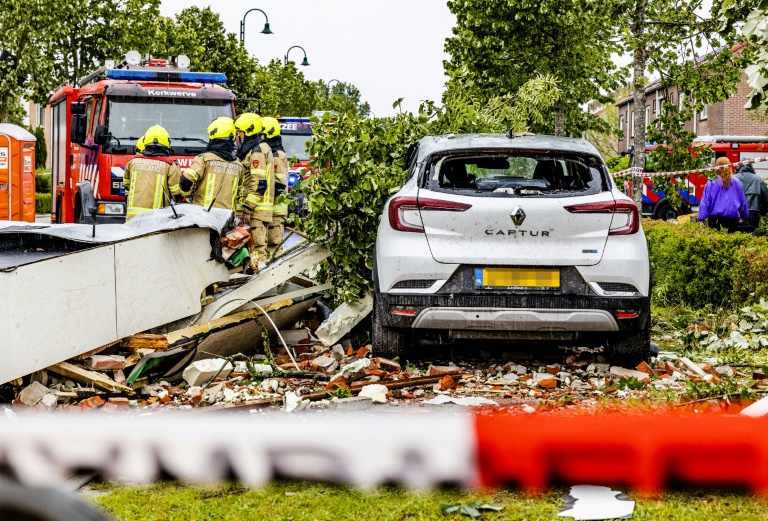
The whirlwind left a trail of destruction through the seaside city of Zierikzee, blowing the roofs off homes and toppling trees onto cars, an AFP journalist at the scene said.

Images on social media showed bits of debris rotating in the air in the fierce winds and a huge funnel descending from stormy clouds as the tornado hit the city in the scenic province of Zeeland.

“The damage is considerable in several streets in Zierikzee. In addition to flying roof tiles and fallen trees, roofs have been blown off four houses,” the Zeeland safety authority said.

It said there had been a “huge deployment” of emergency services.

“In total, in addition to the fatality, seven people were injured as a result of the tornado.  Of these, one person was taken to hospital by ambulance, the others were treated on site.”

Local newspaper, the Provinciale Zeeuwse Courant, said the dead person was a tourist who was hit on the head by a roof tile at the city’s harbour area.

“The whirlwind kept getting bigger. It reminded me of American films, with those storm chasers,” resident Maurice van den Nouweland was quoted as saying by the Dutch national news agency ANP.

“It felt like the room was being vacuumed,” added another resident, Douwe Ouwerkerk, who was at home when the tornado struck. 

He said he saw “roof tiles, a garden pool, something that looked like a tent” lifted off the ground.

– ‘Rare in our country’ –

The tornado hit at the start of the tourism season in Zierikzee, which sits on one of the bridge-connected islands that comprise watery Zeeland province, and whose attractions include a historic harbour and the 15th century “Fat Tower”.

The twister tore a huge piece of black roofing off the top of a block of four terraced houses and dumped it in a residential street, an AFP journalist said.

A mechanical digger was lifting debris from the road near to where a car lay partly crushed by a tree. Firefighters had sealed off the road with tape while they carried out searches.

Footage on social media showed debris swirling through the air while powerful winds whipped through the town. Other images showed the tornado itself spiralling towards the ground as people stopped their cars or left their restaurant tables to watch.

Local authorities were arranging shelter for the inhabitants of dozens of rental homes left temporarily uninhabitable by the whirlwind, and residents were also being offered counselling.

The Netherlands’ flat landscape sitting just above sea level makes it vulnerable to extreme weather, although the Dutch meteorological agency KNMI said it only experiences a few tornadoes a year.

The last fatal one to hit the country was in 1992, the KNMI said, while the deadliest recorded hit the southern villages of Chaam and Tricht on June 25, 1967, killing seven people. There were also deadly twisters in 1972 and 1981.

“Heavy whirlwinds, also called a tornado, are rare in our country,” the KNMI said on its website after Monday’s twister.

“The area in which they occur is usually no larger than a narrow track of two to several tens of kilometres (miles) in length and a few hundred metres (feet) in width.”

Criminal lawyers in England and Wales stage pay strike

Senior criminal lawyers in England and Wales on Monday went on strike in a dispute over pay, just days after rail workers staged stoppages and other sectors threatened industrial action.

Barristers have threatened a series of walkouts over the coming weeks and to refuse to accept new cases or cover for colleagues as part of the action.

The action fuels fears of a “summer of discontent” as a growing number of key worker groups demand pay rises to combat rising inflation, which has hit 9.1 percent — a 40-year high.

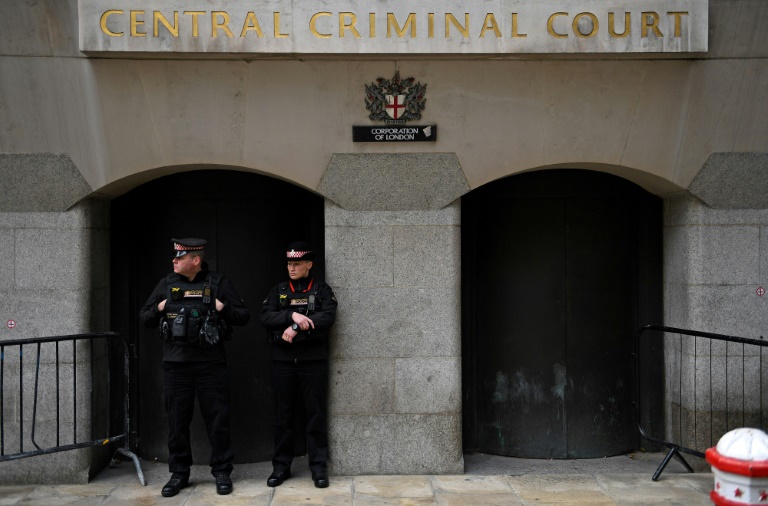
In London, several hundred barristers — some dressed in their trademark horsehair wigs and black gowns — staged a picket outside the Central Criminal Court, known as the Old Bailey. Other lawyers staged similar actions in five other cities including Cardiff and Manchester.

Some held up placards reading “£12,200 median income in first three years, 300 left last year”, in a reference to the pay of the most junior barristers, many of whom are leaving the profession.

Justice Minister Dominic Raab — a former lawyer — hit back, saying the strike action was “regrettable” and would “only delay justice for victims”.

But the lawyers say the strikes are vital to prevent the already creaking criminal justice system hit by cuts and Covid backlogs from grinding to a halt.

– ‘Horrendous’ –

Sarah Jones — a senior barrister or Queen’s Counsel (QC) — said unless action was taken now “in five years time there won’t be a criminal justice system… there simply won’t be anyone to prosecute and defend.

“It means that people who are victims will not have specially trained experts fighting their corner and those accused will not have representation and the system will fail,” she told AFP.

Criminal lawyers are calling for an immediate minimum 15-percent increase to the pay they receive when carrying out state-funded legal aid work.

The legal aid system is designed to ensure access to lawyers for defendants on low incomes.

The government has pledged to implement a proposed 15 percent increase with conditions attached later this year.

But barristers say that is too late and will mean there is no increase in their incomes until late 2023.

They say that unlike lawyers involved in more lucrative commercial legal work they earn very little per hour because years of underfunding has left the system struggling to cope.

Jones said recruitment problems were “horrendous” and even those who did join often left after a few years because they “cannot afford to pay their bills, because they cannot see a future”.

– Nurses, teachers –

Mark Watson, assistant secretary of The Criminal Bar Association (CBA), which represents barristers in England and Wales, said it was a misconception that lawyers especially at the start of their careers were well paid.

A criminal barrister would be paid £124 ($152) for a hearing but that would often require many hours of preparation as well as travel which was often not reimbursed, he said.

The CBA says its strike action will last four weeks, with stoppages increasing by a day each week until a five-day strike beginning on July 18.

Last week, tens of thousands of rail workers staged three one-day walkouts over pay and job security.

The NEU teaching union is threatening to consult members on possible strikes later in the year if their demands are not met.

National Health Service staff are also demanding higher pay. 

In a vote in December, members of the Royal College of Nursing — which includes nurses, midwives and healthcare assistants — said they would be prepared to take strike action.

A failure to secure a 50-percent turnout, however, meant it could not take place.

Public sector union Unison, meanwhile, this month said some of its members in frontline NHS roles but employed by a private company in northwest England had “overwhelmingly” voted to strike in a dispute over pay and holidays.

'Greenwashing': a new climate misinformation battleground

Fossil fuel firms are misleading the public about their moves to cut greenhouse gases and curb climate change — and social media are hosting ads that perpetuate this “greenwashing”, researchers say.

AFP Fact Check took an in-depth look at how this is happening. The full report, including lobbying and communications fact boxes on 10 top oil and gas companies, is at http://u.afp.com/wDuA.

– Talking the talk –

Many companies have vowed to reach the “net zero” level of greenhouse gas emissions needed to keep global warming below 1.5 degrees Celsius under the Paris climate accords, the threshold established by scientists for avoiding the worst impacts.

At the same time, research shows, they are advertising and lobbying for more drilling and burning of the fossil fuels that are heating the Earth’s surface.

Leaders and businesspeople agree that changing how we warm our homes and power industries is no simple task.

But critics say the gap between slogans and action undermines meaningful efforts to cut emissions.

In a study published by the open-access science journal PLOS, scientists analysed the gap between talk and deeds on climate and low-carbon energy by four big oil companies: BP, Shell, ExxonMobil and Chevron.

Their green strategies “are dominated by pledges rather than concrete actions,” concluded the study, under lead author Mei Li of Tohoku University in Japan.

“Until actions and investment behaviour are brought into alignment with discourse, accusations of greenwashing appear well-founded.”

A search on the Facebook pages of big oil and gas firms and the social platform’s Ad Library shows that companies are posting green slogans while also running ads urging customers to “fill up your tank” or win “a year’s worth of gasoline”.

Contacted by AFP, the companies detailed plans to develop lower-carbon energy sources and measures such as carbon capture and storage — a method currently not advanced enough to be very helpful, according to the International Energy Agency (IEA).

ExxonMobil and Chevron spokespeople insisted that due to energy demand, the scenarios foreseen by the Paris deal and the IEA mean fossil fuels will have to play a part in the transition.

–  Walking the walk –

Watchdogs also see greenwashing in environment-friendly but limited gestures by firms that campaigners say distract attention from their climate-harming operations.

Digital monitor Eco-Bot.net monitors cases where an online post “selectively discloses the company’s credentials or portrays symbolic actions to build a friendly brand image.”

It flagged ads and posts on protecting silkworms (Mexican cement firm Cemex), frogs (gas firm TransCanada), possums (Eletronuclear, subsidiary of Brazilian power firm Eletrobras), forests (various companies, including Spanish oil company Repsol) and one by US giant ExxonMobil on recycling fishing ropes in Patagonia. 

New York-based greenwashing researcher Genevieve Guenther told AFP the key is to measure pledges against two standards: the UN Intergovernmental Panel on Climate Change’s (IPCC) net-zero date of 2050 and the IEA’s clean 2021 energy transition roadmap.

The latter says that to meet the 2050 target there would have to be “no investment in new fossil fuel supply projects” from now on. Any company planning new investments while also trumpeting net zero targets, Guenther said, is guilty of greenwashing.

– Delaying tactics –

An analysis by London-based research group InfluenceMap showed the five biggest publicly traded oil and gas companies spent $1 billion over three years to push misleading climate messages on Facebook.

Such amounts are small compared to the billions in revenues of Big Tech and Big Oil — for the latter, the two biggest US companies swung into combined profits of over $38 billion in 2021.

But pushing messages via social media has an outsize impact, said Melissa Aronczyk, an associate communications professor at Rutger University who has co-authored several studies on the subject.

“It is very easy and inexpensive to produce ads and campaigns for social media that can have a massive effect,” she told AFP. 

Facebook says it monitors ads for misleading content just as it does with other forms of information on its platforms.

InfluenceMap analysed thousands of documents “to build up a very detailed picture of how major companies and industry groups are engaging on climate policy and how they are trying to influence debate,” said program manager Faye Holder.

“This greenwashing is essentially a tactic to delay government regulation. It also has the potential to mislead the public, by convincing them that action is already being taken on climate while Big Oil continues to lobby behind the scenes for new oil and gas development.”

In the United States, a Democrat-led committee has been hounding the big oil firms over their lobbying.

“Much of the lobbying has been indirectly done, cleverly, skilfully, cynically done by industry trade groups that have been formed by these companies,” Democratic congressman John Sarbanes told the committee on February 8.

“It is often very hard to disentangle the web of relationships and the sources of funding.”

Close Bitnami banner
Bitnami