AFP

Stock markets extend recovery as rate hike fears subside

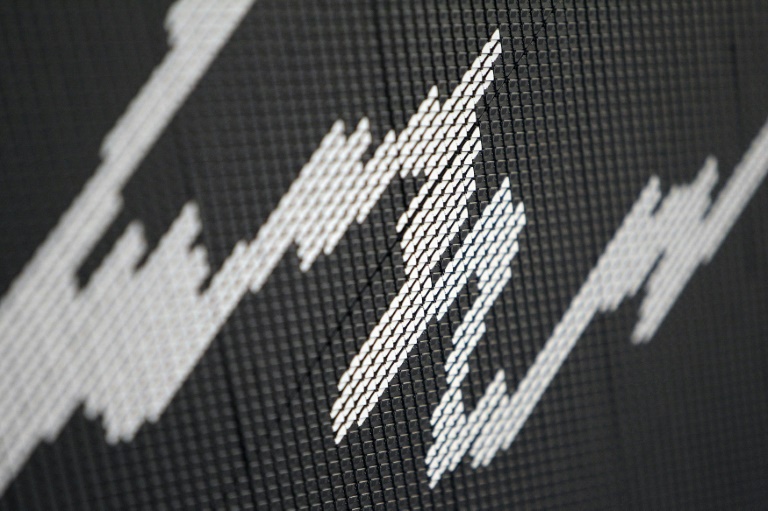
Asian and European markets rallied Monday, building on last week’s advances and following a strong pre-weekend performance on Wall Street as speculation that inflation may have peaked tempered expectations about central bank interest rate hikes.

With prices surging at a pace not seen in a generation, finance chiefs have been forced to lift borrowing costs and wind back their ultra-loose monetary policies in recent months, sending a chill across trading floors.

But a string of weak data has led many investors to believe that inflation may have plateaued or is about to, giving room for banks to be less hawkish.

The prospect that rates will not go as high as initially expected helped send Wall Street stocks higher Friday, with the S&P 500 and Nasdaq ending up more than three percent.

Asia and Europe continued the rally on Monday.

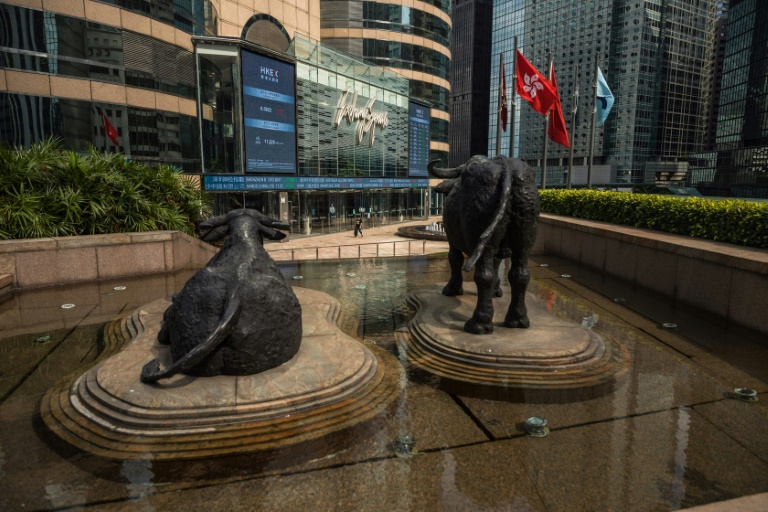
Hong Kong led gainers, climbing more than two percent thanks to a strong performance in Chinese tech firms. 

Indications that China’s crackdown on the sector could be coming to an end added to the upbeat mood in the city.

“Market conviction that perhaps the Fed won’t now hike rates as aggressively as previously feared and/or that rate cuts before the end of 2023 are now an even more realistic prospect… have had a big hand” in boosting sentiment, said National Australia Bank’s Ray Attrill.

While Fed chiefs continue to flag further big interest rate hikes in the pipeline, expectations for a prolonged period of increases have waned, which has in turn taken some heat out of the dollar.

Bitcoin has also won some support, trading above $21,000 after a recent slump.

– G7 action over Russia –

Elsewhere, traders were keeping a close eye on the G7 summit in Germany, focused on further co-ordinated financial action against Russia following its invasion of Ukraine.

Among the new action being weighed by the G7 was a price cap on Russian oil imports and fresh sanctions on Russia’s defence sector, the White House said.

G7 member France meanwhile urged oil producers to ramp up crude output by ‘exceptional’ volumes owing to Russian supply constraints.

The group — comprising also Britain, Canada, Germany, Italy, Japan and the United States — kicked off their gathering Sunday by announcing plans to ban imports of Russian gold.

It was the latest in a series of sanctions aimed at punishing President Vladimir Putin for his February 24 invasion.

– Key figures at around 1100 GMT –

London – FTSE 100: UP 0.6 percent at 7,250.27 points

Frankfurt – DAX: UP 0.8 percent at 13,220.81

Paris – CAC 40: UP 0.1 percent at 6,078.53

EURO STOXX 50: UP 0.7 percent at 3,557.65

Tokyo – Nikkei 225: UP 1.4 percent at 26,871.27 (close)

Hong Kong – Hang Seng Index: UP 2.4 percent at 22,229.52 (close)

Shanghai – Composite: UP 0.9 percent at 3,379.19 (close)

New York – Dow: UP 2.7 percent at 31,500.68 (close)

Euro/dollar: UP at $1.0586 from $1.0559 Friday

Pound/dollar: UP at $1.2282 from $1.2280

Euro/pound: UP at 86.22 pence from 85.95 pence

Dollar/yen: UP at 135.22 yen from 135.17 yen

Brent North Sea crude: UP 0.4 percent at $113.56 per barrel

West Texas Intermediate: UP 0.2 percent at $107.88 per barrel
Billionaire Italian eyewear mogul Del Vecchio dead at 87

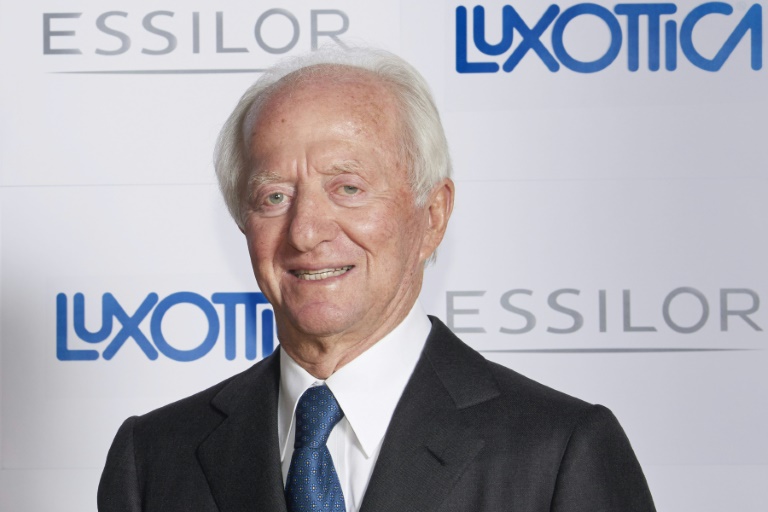
Italy’s second richest man, eyewear magnate Leonardo Del Vecchio, has died aged 87 after building an optical empire that saw him buy up major brands like Ray-Ban, Persol and Oakley.

Del Vecchio was one of Italy’s most successful businessmen, building from scratch an international company that helped turn eyeglasses into a coveted — and pricey — fashion accessory. 

His fortune was worth an estimated $27.3 billion, according to Forbes’ 2022 World’s Billionaires List. 

His company EssilorLuxottica confirmed on Monday that he had “passed away” at the age of 87. 

Del Vecchio had been in intensive care at Milan’s San Raffaele hospital in recent weeks, according to Italian news agency AGI.

Born in Milan on May 22, 1935, to a poor family, he spent part of his youth in an orphanage and began working as a teenager.  

He founded his own company, Luxottica, in 1961, supplying the optical industry with components.

A decade later, Del Vecchio made the strategic decision to control all parts of the production process. 

Luxottica began making its own eyeglasses, distributing them throughout Italy before expanding in Europe through joint ventures.

He spotted the advantage of partnering with fashion design brands, including Giorgio Armani, branched out into retail and snatched up trendy eyewear brands like Ray-Ban, Persol and Oakley.

He signed a first licence agreement with Giorgio Armani in the 1980s, as eyewear morphed into a fashion accessory, a trend that continues today. 

Luxottica also bought such retailers as LensCrafters and Sunglass Hut, allowing the company to tap the consumer market directly without intermediaries.

In 2018, Luxottica merged with France’s Essilor to become EssilorLuxottica, with Del Vecchio serving as chairman. In 2021, the publicly traded company posted 19.8 billion euros ($20.9 billion) in revenue.

“Leonardo Del Vecchio was a great Italian,” said Prime Minister Mario Draghi. 

The European Union commissioner for economic affairs, Italian Paolo Gentiloni called Del Vecchio’s success “an example for today and tomorrow”.  

Ailing oceans in state of 'emergency', says UN chief

A long-delayed conference on how to restore the faltering health of global oceans kicked off in Lisbon on Monday, with the head of the UN saying the world’s seas are in crisis.

“Today we face what I would call an ocean emergency,” UN Secretary General Antonio Guterres told thousands of policymakers, experts and advocates at the opening plenary, describing how seas have been hammered by climate change and pollution. 

Humanity depends on healthy oceans. 

They generate 50 percent of the oxygen we breathe and provide essential protein and nutrients to billions of people every day.

Covering 70 percent of Earth’s surface, oceans have also softened the impact of climate change for life on land. 

But at a terrible cost.

Absorbing around a quarter of CO2 pollution — even as emissions increased by half over the last 60 years — has turned sea water acidic, threatening aquatic food chains and the ocean’s capacity to absorb carbon. 

And soaking up more than 90 percent of the excess heat from global warming has spawned massive marine heatwaves that are killing off precious coral reefs and expanding dead zones bereft of oxygen.

“We have only begun to understand the extent to which climate change is going to wreak havoc on ocean health,” said Charlotte de Fontaubert, the World Bank’s global lead for the blue economy.

Making things worse is an unending torrent of pollution, including a garbage truck’s worth of plastic every minute, according to the United Nations Environment Programme (UNEP). 

On current trends, yearly plastic waste will nearly triple to one billion tonnes by 2060, according to a recent report by the Organisation for Economic Cooperation and Development (OECD). 

– Wild fish stocks –

Microplastics — now found inside Arctic ice and fish in the ocean’s deepest trenches — are estimated to kill more than a million seabirds and over 100,000 marine mammals each year.

Solutions on the table range from recycling to global caps on plastic production. 

Global fisheries will also be in the spotlight during the five-day UN Ocean Conference, originally slated for April 2020 and jointly hosted by Portugal and Kenya. 

“At least one-third of wild fish stocks are overfished and less than 10 percent of the ocean is protected,” Kathryn Matthews, chief scientist for US-based NGO Oceana, told AFP.

“Destructive and illegal fishing vessels operate with impunity in many coastal waters and on the high seas.”

One culprit is nearly $35 billion in subsidies. Baby steps taken last week by the World Trade Organization (WTO) to reduce handouts to industry will hardly make a dent, experts said.

The conference will also see a push for a moratorium on deep-sea mining of rare metals needed for a boom in electric vehicle battery construction.

Scientists say poorly understood seabed ecosystems are fragile and could take decades or longer to heal once disrupted.

Another major focus will be “blue food”, the new watchword for ensuring that marine harvests from all sources — wild caught and farmed — are sustainable and socially responsible.

– Protected areas –

Aquaculture yields — from salmon and tuna to shellfish and algae — have grown by three percent a year for decades and are on track to overtake wild marine harvests that peaked in the 1990s, with each producing roughly 100 million tonnes per year.

The Lisbon meeting will be attended by ministers and even a few heads of state, including French President Emmanuel Macron, but is not a formal negotiating session.

But participants will push for a strong oceans agenda at two critical summits later this year — the COP27 UN climate talks in November, hosted by Egypt, followed by the long-delayed COP15 UN biodiversity negotiations, recently moved from China to Montreal.

Oceans are already at the heart of a draft treaty tasked with halting what many scientists fear is the first “mass extinction” event in 65 million years. A cornerstone provision would designate 30 percent of the planet’s land and ocean as protected areas.

But preparatory negotiations in Nairobi ended on Sunday in deadlock. 

“The agreement is at risk of collapsing on the question of finance,” the environmental diplomacy lead for WWF France told AFP. 

For climate change, the focus will be on carbon sequestration — boosting the ocean’s capacity to soak up CO2, whether by enhancing natural sinks such as mangroves or through geoengineering schemes.

At the same time, scientists warn, a drastic reduction in greenhouse gases is needed to restore ocean health.

Climate activists block IMF Paris office doors

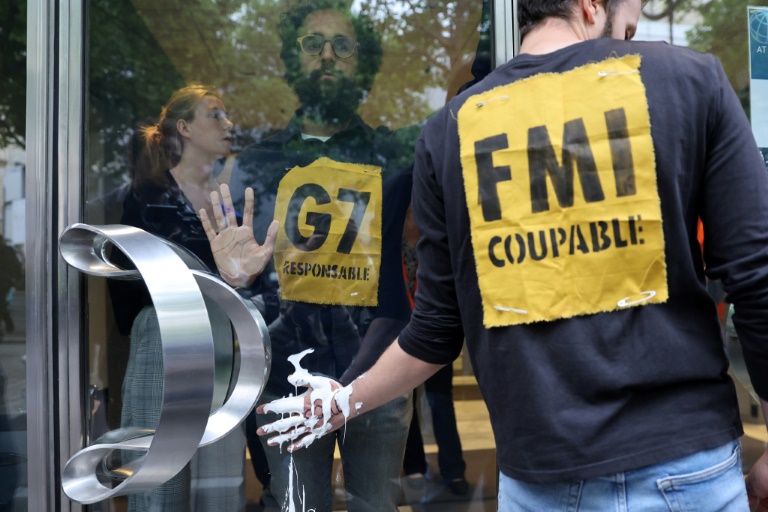
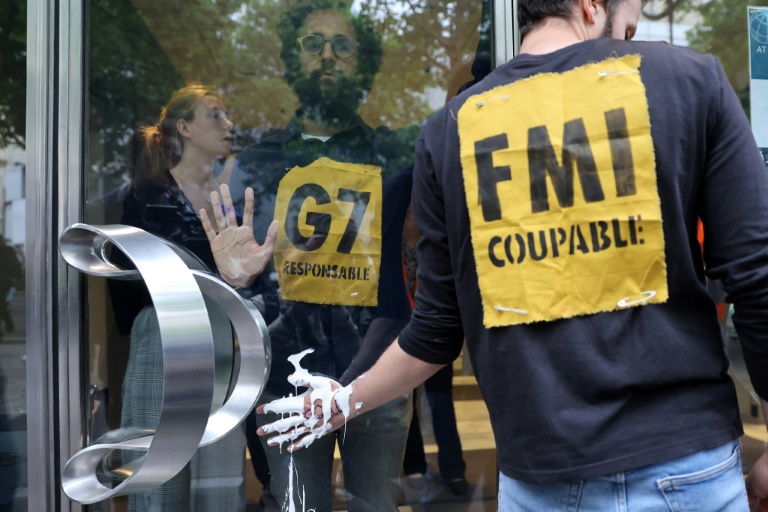
Climate activists on Monday blocked entry to the International Monetary Fund’s Paris office with some gluing their hands to its doors, demanding developing countries’ debt be scrapped to help tackle climate change.

The Paris protest is part of a “Debt for climate” global campaign calling on wealthy-nation leaders attending the G7 summit in Germany to cancel the debts of poorer and less industrialised countries, known as the global south. 

While low-emitting countries in the global south contribute the least to climate change, they tend to be the hardest-hit by the consequences, experts say. 

“We need to give these countries the resources to fight against the climate crisis. They are the first victims and the last ones responsible,” said an Extinction Rebellion activist calling herself “Chalou”, one of dozens in front of the IMF building in Paris’ wealthy 16th district.

Several activists from Extinction Rebellion, Youth for Climate and 350.org glued their hands to glass doors at the building’s entrance, while others sat in front with their arms linked together inside tubes to make it harder to move them.

The group spread a banner reading “G7 responsible, IMF guilty” in front of the building, while some activists scattered fake banknotes marked with the slogan “Stop fossil fuels”.

“The debt crisis is first and foremost the result of an unjust financial system dominated by the richest countries,” activist groups Extinction Rebellion, Attac-France and Youth for Climate France, who organised the Paris action, said in a statement. 

“The G7, the IMF and the World Bank have historical responsibilities in the development of this vicious circle of debt (and) over-exploitation of resources”, they added.

Environmental activists have organised a string of protests in recent weeks to refocus attention on climate change, as the energy crisis and war in Ukraine dominate the news agenda.

Climate activists block IMF Paris office doors

Climate activists on Monday blocked entry to the International Monetary Fund’s Paris office with some gluing their hands to its doors, demanding developing countries’ debt be scrapped to help tackle climate change.

The Paris protest is part of a “Debt for climate” global campaign calling on wealthy-nation leaders attending the G7 summit in Germany to cancel the debts of poorer and less industrialised countries, known as the global south. 

While low-emitting countries in the global south contribute the least to climate change, they tend to be the hardest-hit by the consequences, experts say. 

“We need to give these countries the resources to fight against the climate crisis. They are the first victims and the last ones responsible,” said an Extinction Rebellion activist calling herself “Chalou”, one of dozens in front of the IMF building in Paris’ wealthy 16th district.

Several activists from Extinction Rebellion, Youth for Climate and 350.org glued their hands to glass doors at the building’s entrance, while others sat in front with their arms linked together inside tubes to make it harder to move them.

The group spread a banner reading “G7 responsible, IMF guilty” in front of the building, while some activists scattered fake banknotes marked with the slogan “Stop fossil fuels”.

“The debt crisis is first and foremost the result of an unjust financial system dominated by the richest countries,” activist groups Extinction Rebellion, Attac-France and Youth for Climate France, who organised the Paris action, said in a statement. 

“The G7, the IMF and the World Bank have historical responsibilities in the development of this vicious circle of debt (and) over-exploitation of resources”, they added.

Environmental activists have organised a string of protests in recent weeks to refocus attention on climate change, as the energy crisis and war in Ukraine dominate the news agenda.

Murdered rapper's song pulled from YouTube in India

YouTube has removed a viral music video in India released posthumously by murdered Sikh rapper Sidhu Moose Wala following a complaint by the government.

The song “SYL” talks about the Sutlej-Yamuna Link (SYL) canal which has been at the centre of a long-running water dispute between the late Sikh rapper’s home state of Punjab and neighbouring Haryana.

The track, released posthumously on Thursday, also touches on other sensitive topics such as deadly riots targeting the Sikh community that broke out in India in 1984 and the storming of an important Sikh temple in Amritsar by the army the same year.

It had garnered nearly 30 million views and 3.3 million likes on the singer’s YouTube page before it was pulled down over the weekend. 

“This content is not available on this country domain due to a legal complaint from the government,” said a message posted on the song link.

The song is still available in other countries.

In an email to AFP, a YouTube spokesperson said it had only removed the song in “keeping with local laws and our Terms of Service after a thorough review”.

The government did not immediately respond to enquiries.

Moose Wala’s family termed the removal of the song “unjust” and appealed to the government to take back the complaint, local media reports said.

“They can ban the song but they cannot take Sidhu out of the hearts of the people. We will discuss legal options with lawyers,” uncle Chamkaur Singh was quoted as saying by the Hindustan Times daily.

Moose Wala — also known by his birth name Shubhdeep Singh Sidhu — was shot dead in his car in the northern state of Punjab last month.

The 28-year-old was a popular musician both in India and among Punjabi communities abroad, especially in Canada and Britain.

His death sparked anger and outrage from fans from across the world.

Last week, Indian police arrested three men accused of murdering Moose Wala and seized a cache of weaponry including a grenade launcher.

The men had allegedly acted at the behest of Canada-based gangster Goldy Brar and his accomplice Lawrence Bishnoi who is currently in jail in India.

Moose Wala rose to fame with catchy songs that attacked rival rappers and politicians, portraying himself as a man who fought for his community’s pride, delivered justice and gunned down enemies.

He was criticised for promoting gun culture through his music videos, in which he regularly posed with firearms.

His murder also put the spotlight on organised crime in Punjab, a major transit route for drugs entering India from Afghanistan and Pakistan.

Many observers link the narcotics trade — mostly heroin and opium — to an uptick in gang-related violence and the use of illegal arms in the state.

Vietnam halts scuba diving off popular island to protect coral

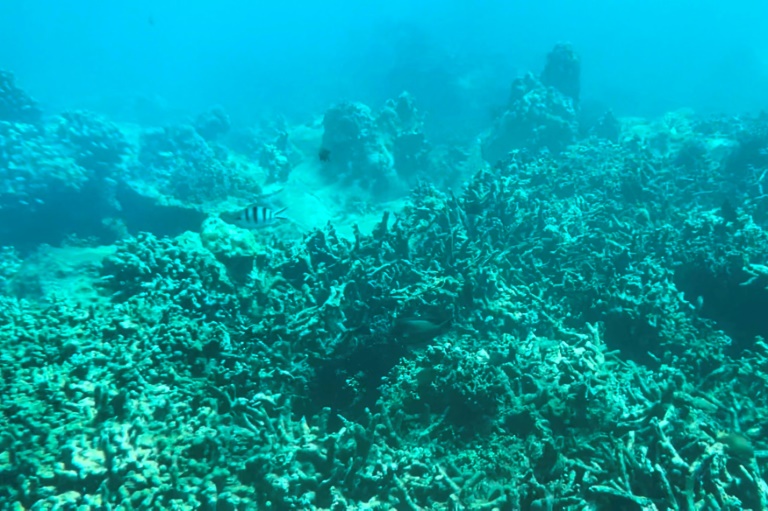
Vietnam has banned swimming and scuba diving at a popular central tourist spot in an attempt to revive its damaged coral reef, officials said Monday.

The communist nation boasts more than 3,200 kilometres of coastline with crystal clear waters, vibrant sea life and sandy beaches that are a huge tourism draw.

Coral reefs across Southeast Asia have been badly hit by global warming, with scientists warning their degradation could have devasting environmental and economic knock-on effects.

Recent photos taken off Hon Mun island — about 14 kilometres from the city of Nha Trang and popular with divers thanks to its diverse ecosystem — showed the reef bleached and damaged.

“The Nha Trang bay management authority decided to halt swimming and scuba diving activities in areas around Hon Mun island,” officials said.

In a statement they said the ban was to “evaluate the condition of sensitive area so that an appropriate plan to enact the sea conservation area” could be made.

Effective from Monday, the ban would last “until further notice”, they added.

Around 60 percent of the coastal bed in the area was covered by living coral in 2020, according to state media, but more recent findings showed that had shrunk to less than 50 percent.

Previously local authorities blamed the shrinking ecosystem on climate change, noting that powerful storms in 2019 and 2021 had damaged the coral.

They also blamed illegal fishing, dredging, construction of industrial parks and waste disposal.

Divers expressed anger over the decision to close the waters.

“Swimming and diving activities were the least influence on the coral reefs, compared to other activities,” diver Nguyen Son, from Ho Chi Minh City, told AFP.

“The ecosystem (around Hon Mun) should have recovered after two years of pandemic,” said diver Trinh Ngoc Sang.

“Without proper management, the fishing vessels came in and destroyed the sea bed,” he told AFP, recalling the sight of rubbish and dead coral during a recent dive.

“It would take dozens of years for the coral reefs to be restored, so they want to close it throughout?”

The United Nations Intergovernmental Panel on Climate Change has warned that 4.5 million people in Southeast Asia and the Indian Ocean region could be affected by damaged coral reefs.

The reefs support about 25 percent of marine biodiversity.

Vietnam’s decision follows a similar move in Thailand, which restricted access to Maya Bay — immortalised in the Leonardo DiCaprio film “The Beach” — to give the local ecosystem a chance to recover.

Japan swelters as heatwave prompts power crunch warning

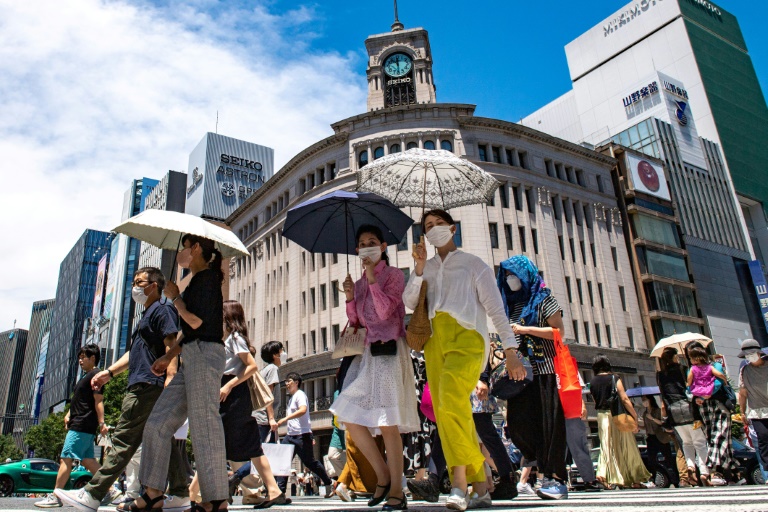
Japan’s government warned Monday of a power crunch as extreme heat hits the country, with temperature records toppling and Tokyo’s rainy season declared over at the earliest date on record.

Temperatures of 35 degrees Celsius (95 degrees Fahrenheit) were forecast in Tokyo throughout Monday, and the mercury is not expected to drop below 34 until Sunday, according to the Japan Meteorological Agency (JMA).

The power warning was initially issued for late Monday afternoon, and was subsequently extended to cover the same time on Tuesday, because solar generation dips as the sun sets.

“We ask the public to reduce energy consumption during the early evening hours when the reserve ratio falls,” Yoshihiko Isozaki, deputy chief cabinet secretary, told a regular press briefing.

But he warned that residents should do what was needed to stay cool and avoid heatstroke.

Much of Japan would normally be experiencing rainy season at this time of year, but the JMA on Monday declared the season over in the Kanto region, home to Tokyo, and neighbouring Koshin area.

It was the earliest end to the season since records began in 1951 and a full 22 days earlier than usual.

The agency also declared an end to rainy season in central Japan’s Tokai and part of southern Kyushu, saying this year’s rainy season in these areas and Kanto-Koshin was the shortest on record.

On Sunday, Isesaki city in Gunma prefecture north of Tokyo logged the hottest temperature ever seen in Japan in June, at 40.2C.

Asako Naruse, 58, was out sightseeing in Ginza alongside pedestrians carrying parasols for shade.

“Every year, July and August are this hot, but it’s the first time I’ve felt such heat in June,” she told AFP.

“I’m from northern Japan, so these temperatures seem really extreme.”

Scientists say record-breaking heatwaves are linked to climate change, which makes extreme weather more common. 

The Earth has already warmed 1.1C since preindustrial times and 2011-2020 was the warmest decade on record.

Japan has committed to achieving carbon neutrality by 2050, but it faces criticism for its continued reliance on coal.

Markets extend rally as rate hike fears subside

Asian and European markets rallied again Monday, building on last week’s advances and following a strong performance on Wall Street as speculation that inflation may have peaked tempered expectations about central bank interest rate hikes.

With prices surging at a pace not seen in a generation, finance chiefs have been forced to lift borrowing costs and wind back their ultra-loose monetary policies in recent months, sending a chill across trading floors.

But a string of weak data has led many investors to believe that inflation may have plateaued or is about to, giving room for banks to be less hawkish.

The prospect that rates will not go as high as initially expected helped send Wall Street stocks higher Friday, with the S&P 500 and Nasdaq ending up more than three percent.

And Asia continued last week’s rally.

Hong Kong led gainers, climbing more than two percent thanks to a strong performance in Chinese tech firms. Indications that China’s crackdown on the sector could be coming to an end added to the upbeat mood in the city.

Tokyo, Shanghai, Seoul, Singapore, Sydney, Manila, Bangkok, Mumbai and Wellington were also well up.

London, Paris and Frankfurt were all up in early trade.

“Market conviction that perhaps the Fed won’t now hike rates as aggressively as previously feared and/or that rate cuts before the end of 2023 are now an even more realistic prospect if recession-like conditions lay ahead, have had a big hand in last week’s improvement in risk sentiment,” said National Australia Bank’s Ray Attrill.

He added that the rally had helped pare about two-thirds of the losses suffered in a painful sell-off from June 9 to 16.

While Fed chiefs continue to flag further big interest rate hikes in the pipeline, expectations for a prolonged period of increases have waned, which has in turn taken some heat out of the dollar.

Bitcoin has also won some support, after falling to as low as $17,600 last week for the first time since December 2020.

“There’s a feeling that things aren’t as bad as we thought they were going to be,” Carol Pepper, of Pepper International, told Bloomberg Radio.

“There’s a hope that perhaps we’ve oversold, perhaps there’s not going to be a recession,” she said.

But others warned that while the markets were enjoying a moment of calm, they were not out of the woods yet.

“Over the last week, equity markets have snapped back from oversold territory, which brought a sense of relief to investors,” said Bank of Singapore’s Eli Lee. 

“It is unsurprising in bear markets to see relief rallies, which can be unpredictable in magnitude and duration. However, we continue to see a fragile environment for risk assets over the next 12 months.”

Traders are keeping an eye on the G7 summit in Germany, which is set to be dominated by Russia’s war in Ukraine.

The leaders agreed money collected from higher trade tariffs imposed on Russian exports should be funnelled as aid to Ukraine, the White House said.

– Key figures at around 0810 GMT –

Tokyo – Nikkei 225: UP 1.4 percent at 26,871.27 (close)

Hong Kong – Hang Seng Index: UP 2.4 percent at 22,229.52 (close)

Shanghai – Composite: UP 0.9 percent at 3,379.19 (close)

London – FTSE 100: UP 0.9 percent at 7,270.69

Dollar/yen: DOWN at 135.06 yen from 135.17 yen late Friday

Pound/dollar: UP at $1.2315 from $1.2280

Euro/dollar: UP at $1.0587 from $1.0559

Euro/pound: UP at 85.97 pence from 85.95 pence

West Texas Intermediate: UP 0.2 percent at $107.80 per barrel

Brent North Sea crude: UP 0.6 percent at $113.72 per barrel

New York – Dow: UP 2.7 percent at 31,500.68 (close)

Markets extend rally as rate hike fears subside

Asian and European markets rallied again Monday, building on last week’s advances and following a strong performance on Wall Street as speculation that inflation may have peaked tempered expectations about central bank interest rate hikes.

With prices surging at a pace not seen in a generation, finance chiefs have been forced to lift borrowing costs and wind back their ultra-loose monetary policies in recent months, sending a chill across trading floors.

But a string of weak data has led many investors to believe that inflation may have plateaued or is about to, giving room for banks to be less hawkish.

The prospect that rates will not go as high as initially expected helped send Wall Street stocks higher Friday, with the S&P 500 and Nasdaq ending up more than three percent.

And Asia continued last week’s rally.

Hong Kong led gainers, climbing more than two percent thanks to a strong performance in Chinese tech firms. Indications that China’s crackdown on the sector could be coming to an end added to the upbeat mood in the city.

Tokyo, Shanghai, Seoul, Singapore, Sydney, Manila, Bangkok, Mumbai and Wellington were also well up.

London, Paris and Frankfurt were all up in early trade.

“Market conviction that perhaps the Fed won’t now hike rates as aggressively as previously feared and/or that rate cuts before the end of 2023 are now an even more realistic prospect if recession-like conditions lay ahead, have had a big hand in last week’s improvement in risk sentiment,” said National Australia Bank’s Ray Attrill.

He added that the rally had helped pare about two-thirds of the losses suffered in a painful sell-off from June 9 to 16.

While Fed chiefs continue to flag further big interest rate hikes in the pipeline, expectations for a prolonged period of increases have waned, which has in turn taken some heat out of the dollar.

Bitcoin has also won some support, after falling to as low as $17,600 last week for the first time since December 2020.

“There’s a feeling that things aren’t as bad as we thought they were going to be,” Carol Pepper, of Pepper International, told Bloomberg Radio.

“There’s a hope that perhaps we’ve oversold, perhaps there’s not going to be a recession,” she said.

But others warned that while the markets were enjoying a moment of calm, they were not out of the woods yet.

“Over the last week, equity markets have snapped back from oversold territory, which brought a sense of relief to investors,” said Bank of Singapore’s Eli Lee. 

“It is unsurprising in bear markets to see relief rallies, which can be unpredictable in magnitude and duration. However, we continue to see a fragile environment for risk assets over the next 12 months.”

Traders are keeping an eye on the G7 summit in Germany, which is set to be dominated by Russia’s war in Ukraine.

The leaders agreed money collected from higher trade tariffs imposed on Russian exports should be funnelled as aid to Ukraine, the White House said.

– Key figures at around 0810 GMT –

Tokyo – Nikkei 225: UP 1.4 percent at 26,871.27 (close)

Hong Kong – Hang Seng Index: UP 2.4 percent at 22,229.52 (close)

Shanghai – Composite: UP 0.9 percent at 3,379.19 (close)

London – FTSE 100: UP 0.9 percent at 7,270.69

Dollar/yen: DOWN at 135.06 yen from 135.17 yen late Friday

Pound/dollar: UP at $1.2315 from $1.2280

Euro/dollar: UP at $1.0587 from $1.0559

Euro/pound: UP at 85.97 pence from 85.95 pence

West Texas Intermediate: UP 0.2 percent at $107.80 per barrel

Brent North Sea crude: UP 0.6 percent at $113.72 per barrel

New York – Dow: UP 2.7 percent at 31,500.68 (close)

Close Bitnami banner
Bitnami