AFP

To charge or not to charge: the Trump dilemma roiling America

A chilling portrait of a US president who knew he’d lost an election but tried to steal it anyway has emerged in testimony on the Capitol assault, posing a perilous question: should prosecutors indict Donald Trump?

In their comments to the congressional committee investigating the deadly violence, White House and Trump campaign staff, lawyers and even family members have drawn the contours of a possible prosecution, outlining potential presidential misconduct culminating in the riot at the Capitol on January 6, 2021.

The picture they have painted is that it was part of a broader “coup” attempt led by the defeated president and his lawyer John Eastman.

“The odds are in favor of the Justice Department indicting Mr. Trump,” Kevin O’Brien, a former assistant US attorney in New York who now specializes in white-collar criminal defense, told AFP.

“The legal case is sound and would be compelling to a jury, assuming prosecutors can establish a link between the plans of Trump and John Eastman to thwart the counting of electoral votes on the one hand, and the insurrection at the Capitol building on the other.”

The committee’s official line has always been that it will leave charging decisions to the proper authorities.

But it has heavily hinted it will accuse Trump of at least two felonies — obstructing Congress’s counting of electoral votes, and joining a criminal conspiracy to defraud the United States.

And the established facts don’t look good for the 76-year-old former reality TV star.

– ‘Clear and present danger’ –

Trump spent weeks ahead of the violence in Washington duping his followers into thinking the election had been stolen. 

He encouraged his supporters to descend on the city on January 6, riled up the huge crowd at his “Stop the Steal” rally and instructed them to march on the Capitol as lawmakers were ratifying the election. 

The committee has presented a trove of text messages suggesting Trump did nothing to stop the violence for hours as increasingly frantic allies tried to get him to call off the mob.

And the House committee’s hearings have positioned the violence within a larger conspiracy to cling to power by intimidating and harassing poll workers, election officials and the federal justice department.

Trump’s defenders argue that he genuinely believed the election was stolen and was engaged in a good faith attempt to protect voters.

But the live testimony and videotaped depositions at the hearings suggest he knew he’d been fairly defeated, given the sheer number of times he was told so by his closest aides.

One of the most credible and impactful witnesses was retired judge J. Michael Luttig, a star in conservative judicial and political circles who testified that Trump presented a “clear and present danger” to US democracy.

While there is a degree of consensus outside of Trump’s support base that he could reasonably be charged, a more fraught question for Attorney General Merrick Garland is whether he should be.

– ‘Above the law’ –

For a start, the burden of proof for conviction in a criminal prosecution is considerably higher than the bar for condemning someone in a congressional hearing.

“A botched prosecution would make Trump stronger and even help re-elect him,” Washington-based Financial Times columnist Edward Luce wrote this week.

“When you strike at a king — even a former one — you must kill him.”

Garland could expect strong public support if he decided to go after Trump, with a new ABC News and Ipsos poll finding almost 60 percent of Americans think the ex-president should face charges.

But Neama Rahmani, a former federal prosecutor in San Diego, said he didn’t think the attorney general had “the stomach” for the fight.

“Indicting a former president would be unprecedented, and it takes an aggressive prosecutor that is willing to take on a difficult and politically charged prosecution,” Rahmani told AFP.

“I don’t think Merrick Garland is that prosecutor.”

Many Americans fear a prosecution would spark widespread civil unrest as Trump’s supporters, feeling under attack, took to the streets. Violence, after all, has already been wielded in Trump’s defense. 

Nicholas Creel, a law professor at Georgia College and State University, argues however that letting Trump walk would make a mockery of the central tenet of American justice that “no man is above the law.”

“While an indictment would violate the norms of not prosecuting former presidents and would almost certainly unleash massive civil upheaval from his supporters… the alternative is to allow him to have attempted a coup unpunished, wounding the nation far more than his prosecution would,” he told AFP.
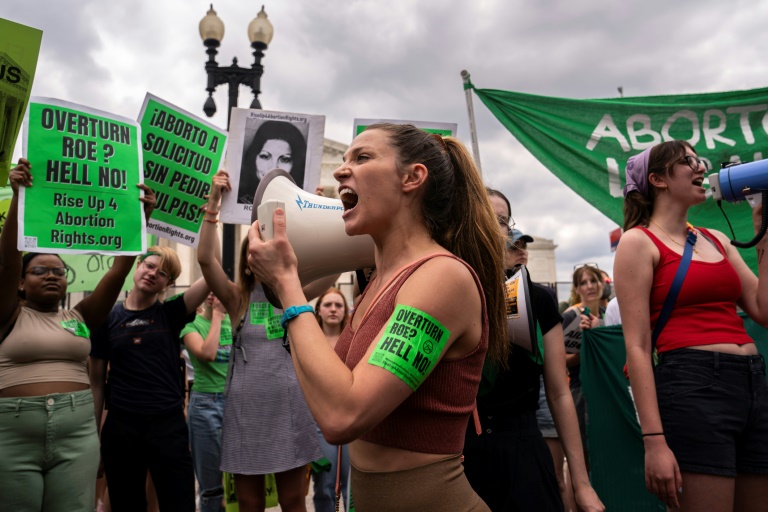
'Your body belongs to Christ': US anti-abortionists see divine hand in court ruling

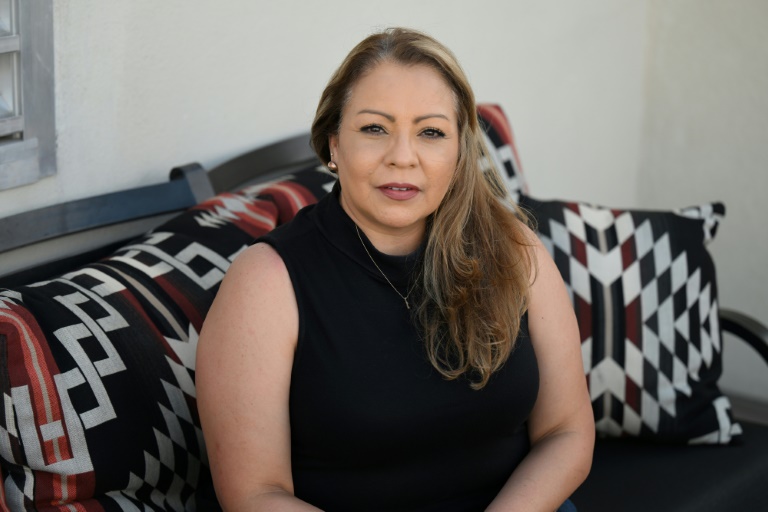
Diana Villanueva’s rapist took her to an abortion clinic when she was just 16 years old and told her to terminate her pregnancy.

She wasn’t greeted by the crowds of protestors who often gather outside facilities in the United States to try to persuade women to change their minds.

But now, this 53-year-old Catholic wishes she had been — because she has been haunted by the termination ever since.

“I was afraid that someone would see me because my mom was very involved in the church and I was afraid that somebody from church was going to be there,” she told AFP.

“But then at the same time, I wish somebody would have been there, because maybe that would have given me the courage to speak out and say: ‘I don’t want to do this’.”

Villanueva now runs a retreat in her native El Paso, Texas, helping women who, like her, regret their abortion.

Devised by psychologist Theresa Burke and present in dozens of countries, “Rachel’s Vineyard” draws on biblical scripture and is described as a way to promote “healing the pain of abortion.”

“The fact of the matter is that abortion affects you,” she said.

“It makes you angry. At first you just want to get rid of the problem, so you don’t think beyond the problem. You want a solution. 

“But after you go through what you go through then you ponder what you did. That’s when the remorse starts kicking in.”

Villanueva discovered Rachel’s Vineyard through her church, and her anti-abortion position — like that of many Americans who disagree with the practice — is heavily colored by her religion.

“A lot of those ladies say: ‘It’s my body, my choice’. It’s not your body; your body belongs to Christ.”

The religious right has long aimed to have the landmark 1973 Roe vs. Wade ruling enshrining the right to abortion in the United States overturned.

On Friday, their prayers were answered when a 6-3 majority on the Supreme Court threw out almost 50 years of settled law, allowing individual states to make their own rules — including banning abortion in all circumstances.

– ‘Women’s rights’ –

Texas has been among those states leading the charge to restrict access to abortions.

A law that came into effect last year bans the procedure when fetal heart activity can be detected — usually around six weeks, a time few women are even aware they are pregnant.

El Paso no longer has any clinics offering abortions, but it stands on the front lines of an expanding fight. 

Just across the border in New Mexico is the small town of Santa Teresa, the destination for women from all over Texas who want to have a safe, legal abortion in a state that has far more liberal rules.

Even so, elements of the Texas law mean that anyone who helps a woman to get an abortion — even the Uber driver who takes her part of the way to the clinic — can be held liable.

Mark Cavaliere, director of the Southwest Coalition for Life, which designs anti-abortion programs and campaigns, defends such tools. 

“Those who perform the procedures are the ones who commit acts of violence against women and children,” he says. 

According to figures from the Guttmacher Institute, a research group that compiles statistics and advocates for abortion rights, 75 percent of women who had an abortion in the United States in 2014 were living below the poverty line or classed as low income.

Cavaliere, a father of five, believes that the Supreme Court’s codification of abortion in 1973 undermined women.

“Roe vs. Wade put an expectation on women to feel like they have to alter, suppress and destroy the normal healthy functions of their natural body in order to meet definitions of success that are really based on male norms,” he said.

“We’re very hopeful that by overturning [the law], we can actually solve the true issues, really solve women’s equality, women’s rights.”

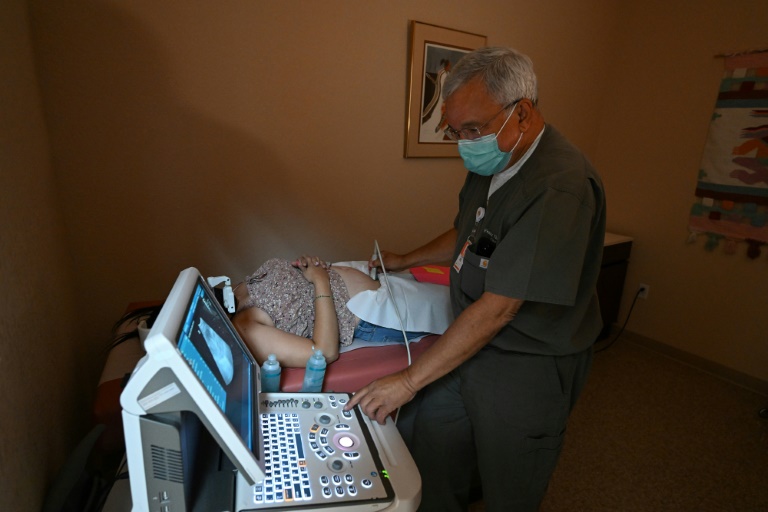
Southwest Coalition for Life hosts programs such as Her Care Connection that, among other initiatives, offers free ultrasounds in a modern mobile clinic. 

The vehicle sometimes parks outside the Women’s Reproductive Health Clinic in Santa Teresa in an attempt to convince women seeking an abortion to continue with their pregnancy. 

Dozens of people gathered for a fundraiser for the van in El Paso last weekend.

The baby race — in which two tots crawled to see who could cross the line first — was the highlight for many in attendance.

Jazzmin Hernandez, a 32-year-old teacher who has no children herself, smiled as she watched one baby overtake the other on the final straight.

For her — unlike for the majority of Americans, according to polling — there are no grey areas.

“It doesn’t matter how the baby was conceived. Nothing justifies ending a child’s life,” she said.

“I think Texas is setting an example, and hopefully other states will follow suit and abortion will be completely banned.”

US abortion reversal spurs online data fears

Fearing a data dragnet weaponized against women seeking abortions and those helping them, privacy groups are warning that pregnancy-related information online might present a serious legal risk and demanding tech companies take action in the wake of America’s revokation of abortion rights.

As states move to ban or restrict the procedure after the Supreme Court’s landmark reversal, worries grew that social media posts or information on apps could be used by authorities to build cases.

For example, geolocation data or an internet search history might serve to incriminate women or those who help them in states that opt to ban abortion.

“This decision opens the door to law enforcement and private bounty hunters seeking vast amounts of private data,” said Center for Democracy and Technology president Alexandra Reeve Givens.

“Tech companies must step up and play a crucial role in protecting women’s digital privacy,” she added.

Google, Facebook parent Meta and others track their users in order to sell ultra-targeted and personalized advertising space. 

Though that information is anonymized, it remains accessible to authorities with a warrant.

The Supreme Court ruling on Friday gives all 50 states the freedom to ban the procedure, and at least eight have already done so. 

Some laws, like one passed in Texas in September, encourage private citizens to launch lawsuits against women suspected of having abortions.

The people who help the women can also be targeted, including for example an Uber driver who took them to the clinic.

More than 40 US Democratic lawmakers in May warned Google of risks posed by its data practices and urged changes.

“Google’s current practice of collecting and retaining extensive records of cell phone location data will allow it to become a tool for far-right extremists looking to crack down on people seeking reproductive health care,” read a letter to Google chief executive Sundar Pichai.

– ‘Unprecedented digital surveillance’ –

Nonprofit digital rights group Fight For The Future echoed the legislators’ plea in an online petition demanding that Google get rid of location data that could be “weaponized against abortion patients and doctors.”

Google did not respond to a request for comment on Friday. Apple and Meta did not reply to requests for comment, either.

Text message logs, email messages, and data from apps such as those used to track menstrual cycles can hold significant pregnancy-related data.

The company behind an app called Natural Cycles which lets women track fertility told AFP that it is working on letting users remain completely anonymous in light of the Supreme Court ruling.

“The goal is to make it so no one — not even us at Natural Cycles -– can identify the user,” said spokesperson Laura Hanafin.

People should tighten privacy settings on devices or platforms, turn off location-sensing features, and use messaging services that scramble exchanges with encryption to prevent snooping, the Electronic Frontier Foundation (EFF) advised.

“There are indeed things users can do to protect themselves, such as using private browser windows, reputable VPNs, and encrypted messaging,” EFF Legal Director Corynne McSherry told AFP.

“But the burden should not rest entirely with the user.”

Tech companies should allow anonymous access, quickly delete data, shun location tracking, encrypt messages by default and more, the EFF said.

“The difference between now and the last time that abortion was illegal in the United States is that we live in an era of unprecedented digital surveillance,” EFF director of cybersecurity Eva Galperin said in a tweet.

“If tech companies don’t want to have their data turned into a dragnet… they need to stop collecting that data now,” she added.

Congresswoman Sara Jacobs, a Democrat from California, has put forward legislation that would require companies to collect only the health information strictly necessary to provide their service.

“We shouldn’t leave it to individual people to have to figure out how to delete things, what apps they can be on and can’t be on,” she told AFP.

“It’s up to us as a government to do our job and protect sensitive health data,” she added.

Abortion decision backs US companies into a tight space

Several large US companies have pledged to provide health coverage for out-of-state abortions, with a few also slamming the Supreme Court decision nullifying federal abortion rights.

But the issue remains a hot potato, requiring companies to navigate dynamic political terrain with potential legal liability at stake. 

“Today’s Scotus (Supreme Court of the United States) ruling puts women’s health in jeopardy, denies them their human rights, and threatens to dismantle the progress we’ve made toward gender equality in the workplace since Roe,” said Yelp Chief Executive Jeremy Stoppelman on Twitter.

“Business leaders must speak out now and call on Congress to codify Roe into law.”

But few other CEOs of large US companies joined Stoppelman Friday in condemning the decision.

More common were statements from companies announcing or reiterating intention to reimburse employees if they need to travel for an abortion.

Friday’s ruling overturned the landmark 1973 “Roe v. Wade” decision enshrining a woman’s right to an abortion, saying individual states can restrict or ban the procedure themselves.

The decision is expected to result in patchwork legal rights across the United States, with abortion legal in progressive states like California and New York and barred in more conservative states like Texas. 

Yelp and Airbnb were among the companies to announce such benefits last September following a Texas law banning abortion after six weeks, or before many women know they are pregnant. 

Others, including Citigroup, Tesla and Amazon, had also announced the benefit in following months.

More companies came forward after a draft version of Friday’s abortion ruling was published in a press leak in May; this group included Starbucks, Levi Strauss and JPMorgan Chase.

On Friday, Disney added its name to the list, assuring employees of access to reproductive care benefits “no matter where they live,” according to a memo reported by CNBC.

But many other large companies have avoided publicly discussing the topic, a dynamic that Wharton business school professor Maurice Schweitzer considers unsurprising.

– Cautionary tale –

“I think we’ll see more companies statements. But companies are facing a challenge. On the one hand, they want to be active, be involved, make a statement, lead on this issue, because particularly for some companies, their employees value this,” Schweitzer said.

“But it’s a complicated issue, because the legal landscape will change,” opening companies up to possible litigation, he added.

Schweitzer pointed to Disney’s recent difficulties in Florida as a cautionary tale.

The entertainment giant found itself between a rock and a hard place as Florida’s legislature advanced what critics have called the “Don’t Say Gay” law, which bans lessons on sexual orientation and gender identity in elementary schools.

After initially staying quiet on the proposal, Disney finally spoke out on the measure, enraging far right Republican Governor Ron DeSantis, who ultimately signed a second law specifically punishing Disney over the row by eliminating the company’s special status surrounding its Orlando theme park.

Disney “ended up frustrating employees by not speaking out early enough, but also incurring costs from a political fights.”

Schweitzer noted that more companies have spoken out in recent years, such as Apple CEO Tim Cook on gay rights and Dick’s Sporting Goods on gun control, which on Friday announced that it will provide up to $4,000 for employees, their spouses or their dependents who have to travel for an abortion.

But the procedure is “more fraught” than many issues, Schweitzer said.

“It’s easier for companies to try to be silent than to wade into it,” he said.

US Supreme Court 'lurches' to the right

Abortion, guns, religion — a US Supreme Court remade by Donald Trump has veered sharply to the right, raising questions about its legitimacy and apprehension about other hot-button issues.

“What’s next?” asked Kim Boberg after the nation’s highest court, in a 6-3 ruling, struck down half a century of constitutional protections of abortion rights.

The 49-year-old Boberg was among the hundreds of protesters gathered on Friday outside the court, kept away by metal barricades symbolizing the gulf between the institution and a majority of Americans.

Steven Schwinn, a law professor at the University of Illinois Chicago, said the court had initially moved “incrementally” under Chief Justice John Roberts, a conservative nominated in 2005 by Republican president George W. Bush.

No longer.

“With a six-justice conservative majority on the court, we’re starting to see it lurch sharply to the political right,” Schwinn said.

Never more so than in the past few days.

On Tuesday, the court said public funds can be used to support families sending children to religious schools, a case challenging longstanding principles of separation of church and state.

On Thursday, the court — just weeks after two horrific mass shootings — said Americans have a fundamental right to carry a handgun in public.

And on Friday, the court overturned “Roe v. Wade,” the landmark 1973 decision enshrining a woman’s right to an abortion.

The rulings were at odds with the views of most Americans who, according to opinion polls, favor stricter gun laws and back legalized abortion.

Even before the series of blockbuster decisions, public confidence in the court was at a historic low.

In a June 1-20 Gallup poll, only 25 percent of US adults surveyed said they have a “great deal” or “quite a lot” of confidence in the court, down from 36 percent a year ago.

– ‘Crisis of legitimacy’ –

Carl Tobias, a law professor at the University of Richmond, said the Supreme Court is going through a “self-inflicted crisis of legitimacy.”

“The justices look like political actors,” Tobias said.

Tracy Thomas, a law professor at the University of Akron, said Americans have long “relied on the court to be an objective decisionmaker of true legal and constitutional principles.”

“Its exposure as just another partisan institution, and one that cannot be responsive to the democratic process, has eroded the reverence for its wisdom,” Thomas said.

Supreme Court justices are nominated for life by the sitting president and Trump tapped three — Neil Gorsuch, Brett Kavanaugh and Amy Coney Barrett, all of whom joined the majority in the abortion, guns and religion cases.

The court is now at the forefront of the “culture war” dividing Americans and may have its sights set on other issues such as LGBTQ rights, contraception and same-sex marriage.

“I think we’re going to start to see states move very quickly to tee up cases for the Supreme Court to overturn these other rights,” Schwinn said.

“I don’t think the courts going to be holding punches anymore,” he said. “I think it’s going to be moving forward full throttle with a politically conservative agenda.”

Democratic President Joe Biden did not mince words in condemning the abortion ruling, calling it the “realization of an extreme ideology.”

It was also the target of a rare public criticism by Attorney General Merrick Garland, who is usually protective of judicial independence.

“The executive branch,” Thomas said, “is no longer going to politely defer to what many view as an illegitimate body.”

– ‘With growing concern…’ –

The abortion opinion was also the subject of an extraordinary breach of the court’s usual secrecy concerning its deliberations.

A draft of the majority opinion gutting Roe v. Wade was leaked in May, prompting an internal probe.

“It undermined trust among justices, clerks and employees,” Tobias said.

The court’s image has also suffered a blow from revelations about the role played by Ginni Thomas, the wife of conservative Justice Clarence Thomas, in trying to overturn the results of the 2020 presidential election in favor of Trump.

The outnumbered liberal justices on the court — Elena Kagan, Stephen Breyer and Sonia Sotomayor — have made their frustrations increasingly clear.

“With growing concern for where this Court will lead us next, I respectfully dissent,” was Sotomayor’s pointed signoff of her dissenting opinion in the religion case.

Bale confirms MLS move to Los Angeles FC

Wales captain Gareth Bale confirmed his move to Major League Soccer’s Los Angeles FC on Saturday following his departure from Spanish giants Real Madrid.

Bale confirmed his plans to join LAFC in a post on Twitter following widespread reports earlier Saturday about the move.

“See you soon, Los Angeles,” the 32-year-old wrote. An accompanying video showed Bale wearing an LAFC shirt and cap.

Earlier the Los Angeles Times said Bale will be eligible to play for LAFC from July 1.

ESPN reported that Bale will fly to Los Angeles at the end of next week to sign a deal which runs to the end of this season, with an option for an additional year.

Bale was once the world’s most expensive player and has spent the last eight seasons with Real Madrid, winning three domestic championships and five Champions League titles.

The Welshman has scored 139 league goals in his club career with 39 goals in 106 internationals for Wales.

Bale played a pivotal role in helping Wales qualify for this year’s World Cup, where they will face the United States, England and Iran in the group stage in Qatar.

It marks the first time Wales have qualified for the tournament since the 1958 finals.

Bale’s signing comes as LAFC bid to build on a strong start to the MLS season. 

The California club lead the Western Conference standings with 30 points from 15 games.

Bale will be the second high-profile international signing the club has made in recent weeks. Former Juventus and Italy international Giorgio Chiellini joined the club earlier this month.

News of Bale’s decision to head to Major League Soccer comes just days after reports in Britain indicated he was in talks with Cardiff over a possible move.

His former club Tottenham and Newcastle were also mooted as possible destinations.

German activists up their game to keep climate centre stage

With climate change pushed down the news agenda as Germany tackles an energy crisis and the war in Ukraine, environmental activists are resorting to increasingly eye-catching stunts to get their message across.

This week, around a dozen activists sprayed a black liquid that looked like oil on the chancellery in Berlin and stood in front of the building with a banner that read: “Save oil instead of drilling.”

Dressed in orange high-visibility jackets and hard hats, the protesters were members of Letzte Generation (“Last Generation”) — a radical protest group that has become the new face of environmental activism in Germany.

“The government has ignored everything else: petitions have been written, a million people have taken to the streets,” said Lina Joansen, a 24-year-old student taking part in the protest. 

The activists want a promise from the government that it will not drill for oil in the North Sea. 

“We know that fossil fuels can only aggravate the climate catastrophe that is already happening,” said law student Myriam Herrmann, 25. 

Six months ago, a new coalition government was elected in Germany on a promise to make climate change one of its top priorities.

The Greens entered power for the first time in more than two decades, forming a coalition with the Social Democrats (SPD) under Chancellor Olaf Scholz and the liberal FDP.

– Ambitious climate plans –

Green party Economy Minister Robert Habeck announced an ambitious 60 billion euro ($68 billion) climate investment plan and promised that Germany would end coal power and generate 80 percent of electricity from renewables by 2030.

But since then, climate concerns have been overshadowed by the war in Ukraine, an acute energy crisis and record inflation.

Germany has accelerated plans to import liquefied natural gas (LNG) by sea, wants to explore new oil and gas reserves in the North Sea, and has even decided to reactivate mothballed coal-fired power plants.

The government has said it is still on target to meet its 2030 climate targets, but the protesters are not convinced.

Herrmann is “incredibly disappointed”, especially with Habeck. “We don’t have time for stopgap solutions any more,” she said.

Letzte Generation was born following a hunger strike last year by activists demanding a law to ban supermarkets from destroying unsold food products.

Earlier this year, small groups of Letzte Generation protesters blocked busy roads in Berlin by sitting down and glueing their hands to the tarmac. More than 100 were arrested.

A few days after the oil protest, the group once again employed these tactics, with about 65 protesters blocking the Frankfurter Tor intersection in Berlin’s Friedrichshain.

– ‘Legitimate means’ –

Civil disobedience is “an established mode of protest in the German environmental movement”, sociologist Michael Neuber told AFP, recalling the anti-nuclear movement of the 1970s and blockades by the Extinction Rebellion in 2019.

Such protests have been overshadowed over the past two to three years by the massive student-led demonstrations of the Fridays for Future movement, but have more recently started to make a comeback. 

“Civil disobedience attracts more attention than demonstrations,” said sociologist Dieter Rucht.

“I see civil disobedience as a legitimate means of political protest, when it is peaceful,” 27-year-old Green party politician Deborah Duering told RBB radio this week, claiming to share the “anxiety” of the activists.

In February, by contrast, many voices within the Green party had criticised Letzte Generation for blocking the roads in Berlin. 

For Herrmann, if politicians want the protests to stop, there is an easy solution.

“It is enough for Scholz and Habeck to declare that they no longer want to encourage oil drilling in the North Sea,” she said.

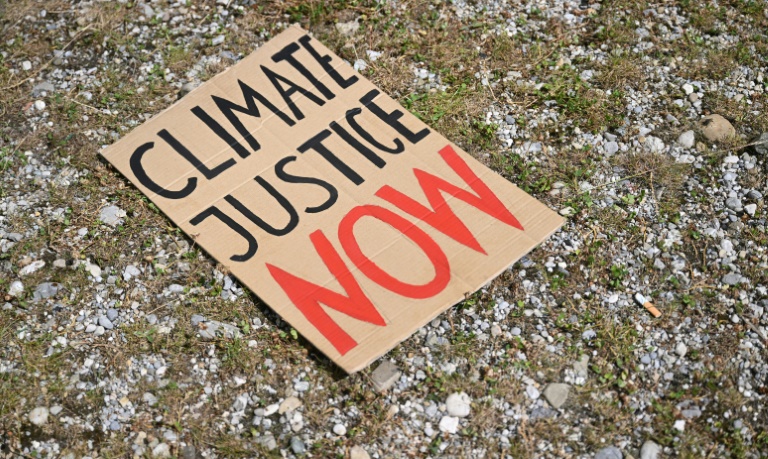
On Saturday in Munich meanwhile, thousands marched to urge G7 leaders gathering in Germany for a summit to do more to fight climate change.

Check out the world's ugliest dog, Mr Happy Face

With a tuft of punk-style hair and a tongue sticking perennially out the side of his mouth, a dog named Mr Happy Face has been crowned the world’s homeliest pooch.

This 17-year-old Chinese crested defeated nine competitors Friday in the World’s Ugliest Dog Contest, a decades-old event held annually in Petaluma, California.

The champ was adopted as a rescue last year by a 41-year-old Arizona musician, Jeneda Benally.

“During the pandemic, I had hoped to either have a baby or adopt a dog. Since having a baby would have been an act of God, I opted to adopt a dog,” Benally said as she introduced this one at the contest.

At the shelter she said she was told about an older dog with health problems, a creature that “could be inbred because he was so ugly.”

“The shelter staff tried to prepare me for what I was about to see. I saw a creature who was indeed old, needed a second chance and deserved to be loved,” said the proud owner.

She said Mr. Happy Face had previously lived with a person who hoarded and conditions were abominable. “He was a survivor of abuse and neglect,” she said.

Vets said that with his poor health the dog might only live a few weeks.

“Love, kindness and mommy kisses have helped him defy the anticipated short life that we all expected him to have with our family,” Benally added.

“His hobbies include sleeping, snoring, woofing in his sleep and making odd sounds when he is happy.”

Contest organizers say this of the contest itself: “Dogs of all breeds and sizes have warmed our hearts and filled our lives with unconditional love. This world-renowned event celebrates the imperfections that make all dogs special and unique.”

FBI seizes Basquiat paintings amid doubts over authenticity

FBI agents seized all 25 works at a Jean-Michel Basquiat exhibit in Florida amid questions about their authenticity, the museum which was showing them said Saturday.

The Orlando Museum of Art said it had complied with a request for access to works at the show called “Heroes and Monsters: Jean-Michel Basquiat” and that the paintings are now in the hands of the Federal Bureau of Investigation.

“It is important to note that we still have not been led to believe the Museum has been or is the subject of any investigation,” museum spokeswoman Emilia Bourmas-Fry said in an email sent to AFP.

The exhibit had been due to close June 30. The museum said it would keep cooperating. The FBI did not immediately reply to AFP’s request for comment.

The paintings were done on scavenged pieces of cardboard and were largely unseen until this exhibit began in February, The New York Times reported in a story on Friday’s confiscation of the works.

The Times said that it had learned last month that one of the works was painted on the back of a shipping box that bore instructions to “Align top of FedEx Shipping Label here.”

But the instructions were in a typeface that was not used until 1994, six years after the artist died, the paper said, quoting a designer who worked for Federal Express.

The FBI seized the paintings with a warrant based on a 41-page affidavit that said the agency’s probe had unearthed “false information related to the alleged prior ownership of the paintings,” the Times said.

The probe also revealed “attempts to sell the paintings using false provenance, and bank records show possible solicitation of investment in artwork that is not authentic.”

The owners of the works as well as the director of the museum, Aaron De Groft, say Basquiat made these paintings in 1982 and sold them to a now deceased television screenwriter named Thad Mumford for $5,000, the Times said. They said Mumford put them in a storage unit and apparently forgot about them for 30 years.

But in the affidavit related to the search warrant, FBI special agent Elizabeth Rivas states that she interviewed Mumford in 2014 and learned that “Mumford never purchased Basquiat artwork and was unaware of any Basquiat artwork being in his storage locker,” the Times said.

If authentic the paintings would be worth around $100 million, it added, quoting art experts. 

Crossing the line: Texans facing ban at home seek abortions next door

When 30-year-old “F” learned that she was pregnant for the eighth time, she just wanted to cry.

A homemaker dependent on her husband’s income, she agonized for three weeks about what to do, but always came to the same conclusion: “I can’t have this child.”

But then she was hit by a second problem.

F’s home state of Texas recently made getting an abortion a lot harder, one of a number of conservative parts of the United States where the political tide has turned against the procedure — despite broad support for abortion rights among the American public.

A new law bans almost all abortions after six weeks, before many women know they’re pregnant — meaning that in Texas, terminating a pregnancy often means traveling out of state. 

Following Friday’s Supreme Court ruling, striking down the national right to an abortion and allowing states to enact tough restrictions or outright bans, that will be the reality for millions more women.

For F, it’s a relatively short drive — 45 minutes from her El Paso home sits the small New Mexico town of Santa Teresa, where the Women’s Reproductive Health Clinic has been operating since 2015 under the state’s more liberal laws.

– Attacks –

Some have travelled much further.

“The hardest part for me was figuring out how I was gonna get here,” says Ehrece, a 35-year-old engineer who came more than 600 miles (1,000 kilometers) from Dallas on a journey that ended with a taxi ride.

“I had the cab driver drop me off at the gas station down the street. And then I kind of walked here, so no one would know where I was going.”

Ehrece, who is in a stable relationship and says she doesn’t want children yet for professional reasons, has good reasons to be cautious.

Texas’ new law allows individuals to sue anyone involved — no matter how tangentially — in an abortion. That includes not only the doctor or nurse who gives care, but even the Uber driver who takes the woman to the clinic.

“They don’t make it easy for you,” said Emily, a 35-year-old yoga teacher who doesn’t want to become a mother. 

“You’re worried that someone’s going to attack you outside the clinic or some nut with a gun is going to come in.”

– ‘How many weeks?’ –

The protesters who gather outside the clinic don’t scare owner Dr Franz Theard.

The 73-year-old obstetrician has been performing abortions since the 1980s; when he began it was amid a wave of violent attacks in the United States that left doctors dead or wounded.

“We’ve been very fortunate that the state of New Mexico has very liberal laws,” he told AFP.

“We have certification for everything. But they’re not hounding us every day. 

“We have to provide reports in Texas, we have to give a report every month of every patient.”

Theard no longer performs surgical abortions, prescribing only abortion by pill: one tablet of Mifepristone, which prevents the pregnancy from progressing, and four tablets of Misoprostol the next day, to induce bleeding. 

In the waiting room, assistant Rocio Negrete fields calls from prospective patients.

“How many weeks along are you?” she asks. “We have appointments but we can only see you if it’s up to week 10.”

Surgical abortions are available in New Mexico later into pregnancy, but abortion by pill is only allowed to around week 10.

Negrete says she is taking an increasing number of calls from people in other states.

But some women, out of fear or for economic reasons — the procedure costs $700 — cross another border in search of alternatives. 

– ‘It’s exhausting’ –

Half an hour’s drive south takes you to the Mexican border town of Ciudad Juarez, where a box of 28 Misoprostol tablets — labelled as treatment for ulcers — is available for between $20 and $50 at numerous pharmacies.

Mifepristone is harder to come by, but AFP did find it.

“Women buy this and don’t know how to take it,” said one pharmacist in Ciudad Juarez with a box of Misoprostol in his hands. 

“It’s a danger, they can hemorrhage, so it’s better to see a doctor.” 

Back in Santa Teresa, all the women a reporter spoke to said it was vital legal abortions remained available.

“If a woman wants to have an abortion, then she’s going to have one,” said Ehrece.

“There’s going to be all types of illegal things going on where women can potentially kill themselves because there’s no one to support them, and there’s nowhere that they can go where you can safely do something about it.”

“It’s exhausting. Honestly, it doesn’t make sense that in this age — in 2022 — we can’t make our own free decisions about what we want to do.”

Close Bitnami banner
Bitnami