AFP

Summer means suffering: how workers survive intense Gulf heat

Like millions of other migrant labourers in the Gulf, one of the world’s hottest and driest regions, construction worker B. Sajay does not welcome summer.

“We work in very high temperatures, this is the nature of our work. And yes, we suffer from severe heat,” the Indian national told AFP in Muscat, the capital of Oman.

Although summer has only just begun, temperatures have already topped 50 degrees Celsius (122 Fahrenheit) in parts of the desert region, which is bearing the brunt of climate change.

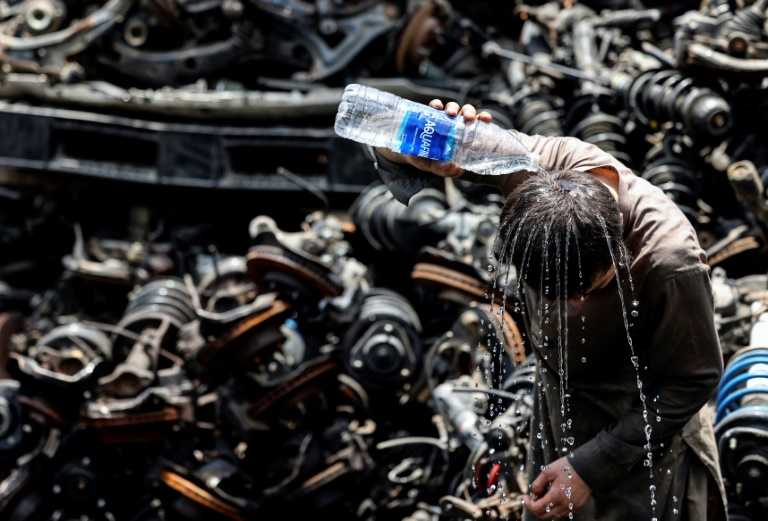
Summer means suffering for anyone working outside, along with risks of dehydration, heat stroke and heart failure, and Gulf countries have banned working outside in the hottest hours of the day.

“The only thing that relieves us is the period of rest… in the middle of the day,” said Sajay, who has been working on building sites for six years.

Last year, a World Health Organization report found the risk of death doubling or tripling on extremely hot days in Kuwait, with a disproportionate effect on non-Kuwaiti men, who make up the bulk of outdoor workers.

Workers from India, Pakistan, Nepal, Sri Lanka and Bangladesh are ubiquitous in the oil-rich Gulf countries, providing cheap labour and filling the jobs shunned by citizens in favour of high-paying government positions.

The imported labourers typically work on construction sites or collect rubbish, sweep the roads or deliver food.

– Unbearable even in the shade –

Between June and August, the oil-producing Gulf countries — Saudi Arabia, United Arab Emirates, Qatar, Kuwait, Bahrain and Oman — ban working outside for about four hours starting from noon. 

Workers return to their dormitories or nestle in any shade they can find. But increasingly, it’s unbearable even in the shade.

On the first day of summer on Tuesday, temperatures reached 50 degrees Celsius in many places, including Saudi Arabia and Kuwait which recorded in May the hottest temperature of the month worldwide, 53.2 degrees Celsius (128.8 Fahrenheit).

“The last 10 years have been the hottest seen in Kuwait,” said Kuwaiti meteorologist Issa Ramadan, adding: “Summer in Kuwait now extends to September, and sometimes to parts of October.”

In Muscat, workers paving a road with asphalt covered their heads with colourful scarves and hats, while others found shade under date palms in the middle of a two-way street. Passersby held umbrellas to protect themselves from the scorching sun.

“In order to complete the eight-hour shift as early as possible, sometimes I start working from six in the morning, stop during the rest period, and then do two more hours,” said Muhammad Mukarram, a Bangladeshi construction worker. 

The region-wide problem has long drawn concern. Human rights groups have urged Qatar, host of this year’s World Cup, to investigate workers’ deaths connected to “heat distress”.

There are no reliable figures on the deaths of migrant workers in Gulf countries, which do not release statistics and have regularly contested estimates released by NGOs and the media.

A recent study by the Vital Signs Partnership, a group of human rights organisations mainly from Asian countries, said that “as many as 10,000 migrant workers from south and southeast Asia die in the Gulf every year”. 

The March 2022 report said that more than half of the cases were recorded as “natural causes” or “cardiac arrest”.

– Deadly heat –

In 2020, a study published in the journal Science Advances found that the Gulf has the hottest and most humid weather anywhere on Earth.

Scientists have calculated that even with shade and unlimited drinking water, a healthy adult will die if “wet-bulb” temperatures — which take into account factors such as humidity, wind speed and cloud cover — exceed 35 Celsius for six hours.

The study showed that there have only ever been 14 occasions on land when the measure exceeded 35C, all in the past two decades and eight of them in the Gulf.

Another study in the journal Nature Climate Change found that “within this century, parts of the… Gulf region could be hit with unprecedented events of deadly heat as a result of climate change”.

“If we do not change course, these temperatures will keep rising over the years, reaching a level where outdoor human activities in the Gulf, such as the hajj pilgrimage, would be nearly impossible in summer,” Julien Jreissati, programme director at Greenpeace MENA, told AFP.

Saudi Arabia is preparing to welcome one million pilgrims next month to perform the annual Muslim rituals.

“The only solution is to reduce our reliance on fossil fuels which are the main driver of climate change and transition gradually but quickly towards renewable energy,” said Jreissati.

Saudi Arabia, the UAE and Bahrain have pledged to reach net zero domestic carbon emissions in the coming decades, while expanding oil production.
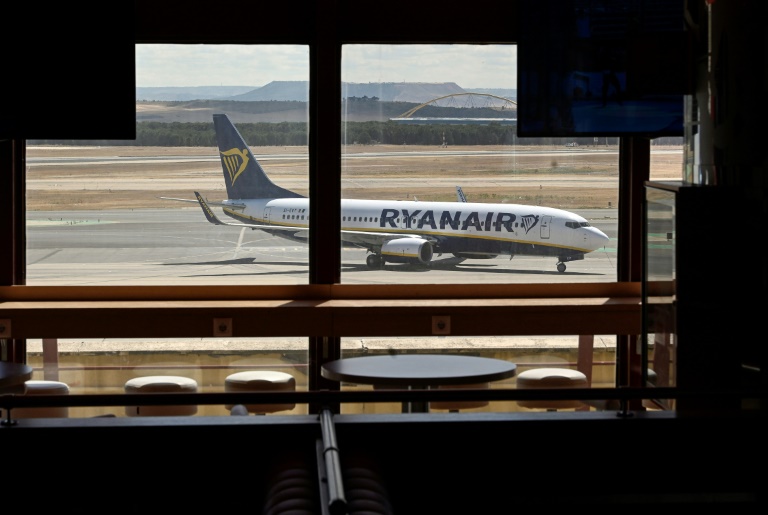
Despite strong summer start, Europe's aviation industry frets

Air traffic is booming this summer, but after European vacations are over will passenger demand hold up?

The question was the focus of the annual congress of the Airports Council International (ACI) Europe in Rome this week, held at the cusp of the approaching peak season.

The summer period is shaping up to be by far the best since the beginning of the coronavirus crisis that has severely affected the airline industry since 2020.

Some airlines, such as Ryanair, and countries, in particular Greece, have already recovered or even exceeded their 2019 daily flight numbers, according to Eurocontrol, a pan-European air traffic agency.

Across the continent, air traffic was last week at 86 percent of the same period in 2019, Eurocontrol said, and expected to reach up to 95 percent in August under its most optimistic estimate.

And companies are filling seats for the coming weeks despite the sharp rise in ticket prices, long lines in various airports from Frankfurt to Dublin to Amsterdam and strikes by flight attendants, pilots or air traffic controllers.  

But after that? 

“Visibility is low because there is a lot of uncertainty,” said Olivier Jankovec, director general of ACI Europe. 

“We’re now in a war economy in Europe, we have the prospect of a quite harsh recession, we have inflation at record levels, so how all of this is going to play into consumer sentiment… the jury’s still out.”

The director general for transport and mobility at the European Commission, Henrik Hololei, echoed that thought.

“We really need to tighten the seatbelt because there’s going to be a lot of turbulence,” he told delegates. 

“We are entering… a period of uncertainty which we have never experienced in the last decade. And that of course is the biggest enemy of the business,” he said. 

– Too many unknowns –

Hololei listed the war in Ukraine, high energy prices and shortages of energy, food and labour.  

“We have also interest rates which are going up for the first time in a decade,” he said. 

The price of jet fuel has doubled over the past year, with a refinery capacity shortage compounding the explosion in crude oil prices. 

Fuel accounts for about a quarter of the operating costs of airlines, which have passed them on to consumers in ticket prices as they seek to refill coffers drained by the two-year health crisis. 

Still, strong demand has returned, confirmed Eleni Kaloyirou, managing director of Hermes Airports, which manages the airports of Larnaca and Paphos in Cyprus, where the high tourist season extends into November. 

“People want to take their holidays,” she said, acknowledging, however, “we do worry about next year”. 

The general manager of Athens International Airport, Yiannis Paraschis, similarly expressed fears that “the increase in energy costs and inflation will consume a great part of European households’ disposable income”.

The head of Istanbul International Airport, Kadri Samsunlu, voiced concerns about inflation’s effect in Western Europe.

And if consumer confidence is damaged, “We don’t know what’s going to happen to the demand,” he warned.

The last unknown hanging over European air travel in the medium term is a possible new outbreak of coronavirus.

“Covid has not disappeared, and it is not a seasonal flu either,” Hololei warned.

Inflation a thorn in the side of Bulgaria rose oil makers

Business is not a bed of roses for Bulgaria’s rose oil makers these days.

Made from Damask roses grown in the aptly named Rose Valley, the oil is a vital ingredient in the perfumes made by the world’s top luxury brands such as Christian Dior, Estee Lauder and Chanel.

But a heatwave has slashed this year’s harvest of rose petals, labour is hard to find and the global surge in energy prices has increased costs for a product so precious that it is dubbed “liquid gold”.

This year’s oil will be “considerably more expensive,” Plamen Stankovski, a partner at rose oil producer and exporter Bulattars, told AFP in his distillery near Pavel Banya, in Bulgaria’s famed Rose Valley.

Production costs for one kilogram of rose oil stood at around 6,000 euros ($6,300) in 2021, but they have surged by as much as 40 percent this year.

The price of petals alone doubled since last year, according to producers.

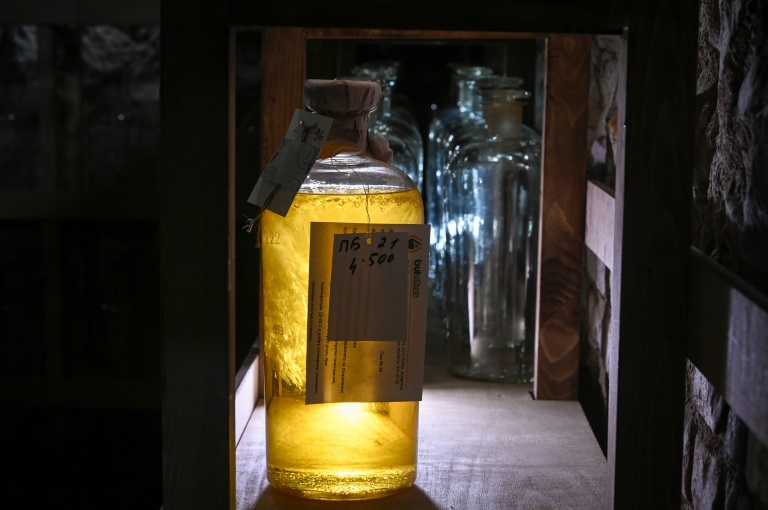
This means that a 4.5-kilo glass jar filled with the thick, golden-yellow oil could sell for more than 45,000 euros this year.

Bulgaria is the world’s top rose oil maker along with Turkey and the distilleries to make the precious substance run on natural gas, diesel and fuel oil — commodities whose prices soared after Russia invaded Ukraine in late February.

“The price of fuel has gone up two or even three times,” Stankovski said.

– ‘Not all roses’ –

Small amounts of rose oil are used in almost every high-quality perfume — not for its aroma, but because its fixative qualities help blend other ingredients and prolong the scent on the skin. 

To produce it, huge amounts of petals are boiled in massive metal vats. The vapours are then distilled to separate the oil in a process nearly unchanged since the days of the Ottoman empire in the 17th century.

On his family’s rose fields near Pavel Banya, Dimitar Dimitrov laments that a chronic labour shortage has plagued the sector for years.

“Picking is the most expensive as it is done solely by hand. If you don’t pick the open roses today, tomorrow they’re gone,” said the 40-year-old, who plucked petals with his father and brother-in-law. 

Fertiliser, fuel, ploughing and pruning have all become more expensive, he said.

With petal prices almost doubling, he said he hoped “this will cover at least our production costs so we don’t end up in the red”.

To make things worse, a heatwave scorched rose buds before they could open, slashing yields and reducing the picking season by half.

The flowers that survived excrete less oil. To extract one kilo of rose oil, 4,000 kilograms of petals are now needed, 15 percent more than usual.

“We are worried by the increased cost of our production,” said exporter Filip Lissicharov, CEO of the Enio Bonchev Production company in the nearby village of Tarnichane.

“The picture is not all roses,” he added.

More fuel is now needed to sustain production, which is interrupted by irregular petal deliveries, but the industry association’s calls for fuel subsidies have thus far gone unanswered by the government. 

Rose oil production is expected to drop below its usual annual haul of 2.5 tonnes.

– Certified as ‘pure’ –

Nearly 100 percent of the oil produced in Bulgaria is exported to places such as France, Germany, Switzerland, the United States, China, Japan, South Korea and Taiwan.

Lissicharov is anxious about how the market will react to higher prices.

“There’s interest (from buyers),” he said. “But whether this interest will turn into deals depends on the price.”

To prevent counterfeit products from entering the market, the oil is certified by a few designated labs, such as the state Bulgarska Rosa Laboratory in Sofia.

The product leaves the lab in hermetically-sealed aluminium flasks with a label that guarantees “100-percent pure and natural genuine Bulgarian rose oil”.

Cutting corners, Stankovski said, is not an option: “Regardless of our troubles, we will preserve the high quality of the rose oil.” 

Energy shock tests G7 leaders' climate resolve

Leaders of the Group of Seven rich nations will be under pressure to stick to climate pledges in Bavaria from Sunday, as Russia’s energy cuts trigger a dash back to planet-heating fossil fuels.

Germany finds itself in an awkward position as G7 summit host, having recently announced that Europe’s biggest economy will burn more coal to offset a drop in Russian gas supplies amid deteriorating ties over the war in Ukraine.

Chancellor Olaf Scholz nevertheless insists the G7 remains committed to the Paris agreement of limiting global temperature increases to 1.5 degrees Celsius, and achieving carbon neutrality by 2050.

But concerns are growing that Scholz will use the gathering to push G7 partners to water down a previous promise to stop financing gas and oil projects abroad by the end of the year.

“That would be a real setback,” said Alden Meyer, a senior associate at climate policy think tank E3G. 

“Scholz could go down in history as the climate backtracking chancellor.”

US President Joe Biden, French President Emmanuel Macron and their counterparts from Britain, Italy, Canada and Japan will all be joining Scholz at the luxurious Elmau Castle from Sunday to Tuesday.

Thousands of people marched in the city of Munich on the eve of the summit to urge G7 leaders to do more to fight climate change.

– ‘Bitter’ coal comeback –

With the impact of the climate crisis already being felt across the globe through devastating floods, rising seas and crop-wilting droughts, the summit will be closely watched for fresh funding pledges to help poor nations cope.

But hopes of a breakthrough are low, as the conflict in Ukraine dominates the agenda and Western attention shifts to the vast sums that will be needed to rebuild the country.

“Before the war there was a clear intent, also from Germany, to really deliver on climate finance and this seems off the table now,” said Susanne Droege, a climate policy analyst at Germany’s Institute for International and Security Affairs (SWP).

Soaring energy prices and fears that Moscow could abruptly cut off supplies have left European nations scrambling to wean themselves off Russian oil, coal and gas.

With renewables like solar and wind power not yet a widely available alternative, countries including Germany, Italy, the Netherlands and Austria are reverting to fossil fuels to plug the gap.

German Energy Minister Robert Habeck, a Green party politician, called the decision to reactivate mothballed coal-fired plants “bitter” but necessary for energy security.

He stressed that Germany was still on track to close its coal plants by 2030 and remained committed to a massive shift towards renewable energy.

Droege said Russia’s aggression in Ukraine had exposed the risks of fossil fuel dependency.

“The only benefit of this war is that… understanding has increased that renewable sources of energy will pay off,” said Droege.

– ‘Empty promises’ –

Environmentalists say a key focus of the G7 climate talks should be on helping the most vulnerable nations that are already bearing the brunt of the climate emergency.

“In the Horn of Africa, a terrible drought is leaving over 18 million people suffering from food insecurity,” Ugandan youth activist Vanessa Nakate told reporters ahead of the summit.

“We are tired of empty promises. We need the G7 countries to put money on the table for loss and damage.”

Scholz himself aims to launch a “climate club” that would see willing nations agree to play by the same rules to avoid competitive disadvantages.

This could include setting carbon pricing standards or uniform regulations on what constitutes green hydrogen. Japan and the United States however have no plans to introduce a national carbon price.

Observers say strong signals are needed from the G7 ahead of the United Nations COP27 climate talks in Egypt in November.

The final G7 statement will be scoured for any walking back of previous pledges, including a promise to largely decarbonise their countries’ electricity sectors by 2035.

A long-standing promise by wealthy nations to spend $100 billion a year from 2020 to help developing countries adapt to climate change remains unmet.

Energy shock tests G7 leaders' climate resolve

Leaders of the Group of Seven rich nations will be under pressure to stick to climate pledges in Bavaria from Sunday, as Russia’s energy cuts trigger a dash back to planet-heating fossil fuels.

Germany finds itself in an awkward position as G7 summit host, having recently announced that Europe’s biggest economy will burn more coal to offset a drop in Russian gas supplies amid deteriorating ties over the war in Ukraine.

Chancellor Olaf Scholz nevertheless insists the G7 remains committed to the Paris agreement of limiting global temperature increases to 1.5 degrees Celsius, and achieving carbon neutrality by 2050.

But concerns are growing that Scholz will use the gathering to push G7 partners to water down a previous promise to stop financing gas and oil projects abroad by the end of the year.

“That would be a real setback,” said Alden Meyer, a senior associate at climate policy think tank E3G. 

“Scholz could go down in history as the climate backtracking chancellor.”

US President Joe Biden, French President Emmanuel Macron and their counterparts from Britain, Italy, Canada and Japan will all be joining Scholz at the luxurious Elmau Castle from Sunday to Tuesday.

Thousands of people marched in the city of Munich on the eve of the summit to urge G7 leaders to do more to fight climate change.

– ‘Bitter’ coal comeback –

With the impact of the climate crisis already being felt across the globe through devastating floods, rising seas and crop-wilting droughts, the summit will be closely watched for fresh funding pledges to help poor nations cope.

But hopes of a breakthrough are low, as the conflict in Ukraine dominates the agenda and Western attention shifts to the vast sums that will be needed to rebuild the country.

“Before the war there was a clear intent, also from Germany, to really deliver on climate finance and this seems off the table now,” said Susanne Droege, a climate policy analyst at Germany’s Institute for International and Security Affairs (SWP).

Soaring energy prices and fears that Moscow could abruptly cut off supplies have left European nations scrambling to wean themselves off Russian oil, coal and gas.

With renewables like solar and wind power not yet a widely available alternative, countries including Germany, Italy, the Netherlands and Austria are reverting to fossil fuels to plug the gap.

German Energy Minister Robert Habeck, a Green party politician, called the decision to reactivate mothballed coal-fired plants “bitter” but necessary for energy security.

He stressed that Germany was still on track to close its coal plants by 2030 and remained committed to a massive shift towards renewable energy.

Droege said Russia’s aggression in Ukraine had exposed the risks of fossil fuel dependency.

“The only benefit of this war is that… understanding has increased that renewable sources of energy will pay off,” said Droege.

– ‘Empty promises’ –

Environmentalists say a key focus of the G7 climate talks should be on helping the most vulnerable nations that are already bearing the brunt of the climate emergency.

“In the Horn of Africa, a terrible drought is leaving over 18 million people suffering from food insecurity,” Ugandan youth activist Vanessa Nakate told reporters ahead of the summit.

“We are tired of empty promises. We need the G7 countries to put money on the table for loss and damage.”

Scholz himself aims to launch a “climate club” that would see willing nations agree to play by the same rules to avoid competitive disadvantages.

This could include setting carbon pricing standards or uniform regulations on what constitutes green hydrogen. Japan and the United States however have no plans to introduce a national carbon price.

Observers say strong signals are needed from the G7 ahead of the United Nations COP27 climate talks in Egypt in November.

The final G7 statement will be scoured for any walking back of previous pledges, including a promise to largely decarbonise their countries’ electricity sectors by 2035.

A long-standing promise by wealthy nations to spend $100 billion a year from 2020 to help developing countries adapt to climate change remains unmet.

Energy shock tests G7 leaders' climate resolve

Leaders of the Group of Seven rich nations will be under pressure to stick to climate pledges in Bavaria from Sunday, as Russia’s energy cuts trigger a dash back to planet-heating fossil fuels.

Germany finds itself in an awkward position as G7 summit host, having recently announced that Europe’s biggest economy will burn more coal to offset a drop in Russian gas supplies amid deteriorating ties over the war in Ukraine.

Chancellor Olaf Scholz nevertheless insists the G7 remains committed to the Paris agreement of limiting global temperature increases to 1.5 degrees Celsius, and achieving carbon neutrality by 2050.

But concerns are growing that Scholz will use the gathering to push G7 partners to water down a previous promise to stop financing gas and oil projects abroad by the end of the year.

“That would be a real setback,” said Alden Meyer, a senior associate at climate policy think tank E3G. 

“Scholz could go down in history as the climate backtracking chancellor.”

US President Joe Biden, French President Emmanuel Macron and their counterparts from Britain, Italy, Canada and Japan will all be joining Scholz at the luxurious Elmau Castle from Sunday to Tuesday.

Thousands of people marched in the city of Munich on the eve of the summit to urge G7 leaders to do more to fight climate change.

– ‘Bitter’ coal comeback –

With the impact of the climate crisis already being felt across the globe through devastating floods, rising seas and crop-wilting droughts, the summit will be closely watched for fresh funding pledges to help poor nations cope.

But hopes of a breakthrough are low, as the conflict in Ukraine dominates the agenda and Western attention shifts to the vast sums that will be needed to rebuild the country.

“Before the war there was a clear intent, also from Germany, to really deliver on climate finance and this seems off the table now,” said Susanne Droege, a climate policy analyst at Germany’s Institute for International and Security Affairs (SWP).

Soaring energy prices and fears that Moscow could abruptly cut off supplies have left European nations scrambling to wean themselves off Russian oil, coal and gas.

With renewables like solar and wind power not yet a widely available alternative, countries including Germany, Italy, the Netherlands and Austria are reverting to fossil fuels to plug the gap.

German Energy Minister Robert Habeck, a Green party politician, called the decision to reactivate mothballed coal-fired plants “bitter” but necessary for energy security.

He stressed that Germany was still on track to close its coal plants by 2030 and remained committed to a massive shift towards renewable energy.

Droege said Russia’s aggression in Ukraine had exposed the risks of fossil fuel dependency.

“The only benefit of this war is that… understanding has increased that renewable sources of energy will pay off,” said Droege.

– ‘Empty promises’ –

Environmentalists say a key focus of the G7 climate talks should be on helping the most vulnerable nations that are already bearing the brunt of the climate emergency.

“In the Horn of Africa, a terrible drought is leaving over 18 million people suffering from food insecurity,” Ugandan youth activist Vanessa Nakate told reporters ahead of the summit.

“We are tired of empty promises. We need the G7 countries to put money on the table for loss and damage.”

Scholz himself aims to launch a “climate club” that would see willing nations agree to play by the same rules to avoid competitive disadvantages.

This could include setting carbon pricing standards or uniform regulations on what constitutes green hydrogen. Japan and the United States however have no plans to introduce a national carbon price.

Observers say strong signals are needed from the G7 ahead of the United Nations COP27 climate talks in Egypt in November.

The final G7 statement will be scoured for any walking back of previous pledges, including a promise to largely decarbonise their countries’ electricity sectors by 2035.

A long-standing promise by wealthy nations to spend $100 billion a year from 2020 to help developing countries adapt to climate change remains unmet.

Moscow tightens economic grip on southern Ukraine

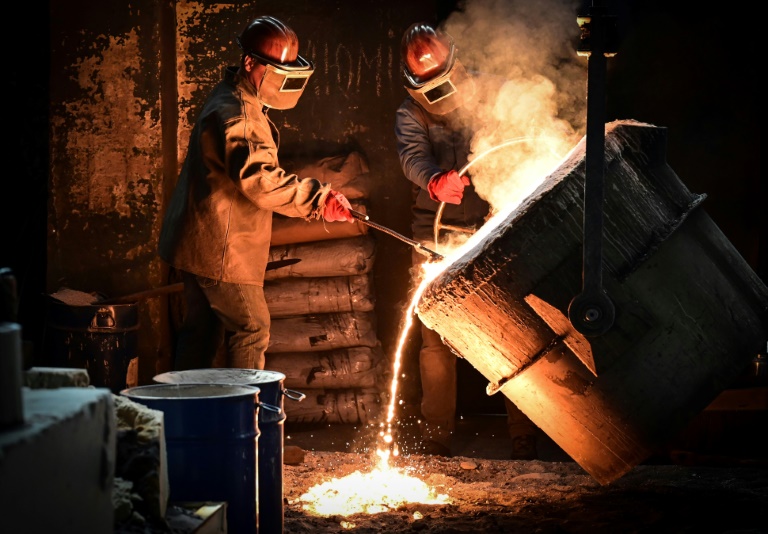
Little appears to have changed for Alexei Andrusenko, the head of a foundry in Ukraine’s southern city of Berdyansk, who is happy to have kept all his staff since Moscow took control of the city.

Andrusenko and his 50 or so employees continue showing up to work every morning to the grey building in the outskirts of the port city on the shores of the Sea of Azov.

But now the factory’s produce — once sold to Ukrainian or international steel groups — will likely be bound for Russia and Kremlin ally Belarus. 

Since Russia sent troops into Ukraine on February 24 and captured territories in the south of the pro-Western country, Moscow has sought to strengthen their economic ties.

“We have no other supply chain,” Andrusenko told AFP during a press trip organised by the Russian army.

He also raised concerns about the depleting stocks of their raw materials that previously came from neighbouring Mariupol, another key Ukrainian city on the shores of the Sea of Azov.

Andrusenko says they are “interested” in working with the Alchevsk steelworks, a large factory with over 10,000 employees that since 2014 has been under the control of pro-Russian separatists of eastern Ukraine’s Lugansk region.

Before Russia sent troops to Ukraine, these deals would never have been possible. 

“The most important thing is to build the right supply chain and to be able to work,” Andrusenko said.

– Port ‘100 percent ready’ – 

The southern Ukrainian regions of Kherson and Zaporizhzhia have been largely under Russia’s control since the first weeks of Moscow’s military campaign, and are now being forcefully integrated into Russia’s economy. 

The main economic asset of Berdyansk is its port, which has remained mostly intact unlike that of Mariupol, the scene of a devastating siege.

In late March, an attack attributed to Ukrainian forces reportedly sank a Russian warship in Berdyansk waters, but today the port is “almost 100 percent ready” to ship grain, says Alexander Saulenko, the Moscow-installed head of Berdyansk.

Ukraine has accused Russia and its allies of stealing its wheat, contributing to a global food shortage caused by grain exports blocked in Ukrainian ports.

According to Saulenko, grain will soon be shipped out from the port, since silos will need to be freed up for the new harvest.

“We have prospects for contracts with Turkey. Russia is an agricultural country, it has enough grain of its own so it would be more profitable to trade elsewhere,” Saulenko said. 

But the most tangible influence of Moscow on the local economy is the introduction of Russia’s national currency since last month.

“Now you can buy everything in both rubles and hryvna,” Ukraine’s currency, the pro-Russian official added. 

According to him, Berdyansk received some 90 million rubles ($1.7 million) from Russia, but state employees are still paid in hryvna and it is impossible to withdraw cash rubles from ATMs. 

– Ties with Russia ‘resuming’ –

Neighbouring Melitopol, about 100 kilometres (60 miles) west of Berdyansk that came under Russian control on March 1, also uses the Russian ruble that is delivered from Crimea, the Black Sea peninsula Moscow annexed from Ukraine in 2014.

“It’s a two-currency zone…. The ruble is delivered thanks to the open road to Crimea. Commercial ties with Russia, interrupted after 2014, are resuming,” says Melitopol’s pro-Russian mayor, Galina Danilchenko. 

“People are happy to accept the ruble… I don’t see any problems,” she added, but for reporters on the press trip it was difficult to speak freely with the city’s residents. 

Back at the Berdyansk foundry, 41-year-old worker Sergey Grigoryev says he just hopes to get paid his salary. 

“In cash, not to my card, because you can’t withdraw from it. In hryvnas or in rubles — I don’t care”. 

Ukraine war robs India's 'Diamond City' of its sparkle

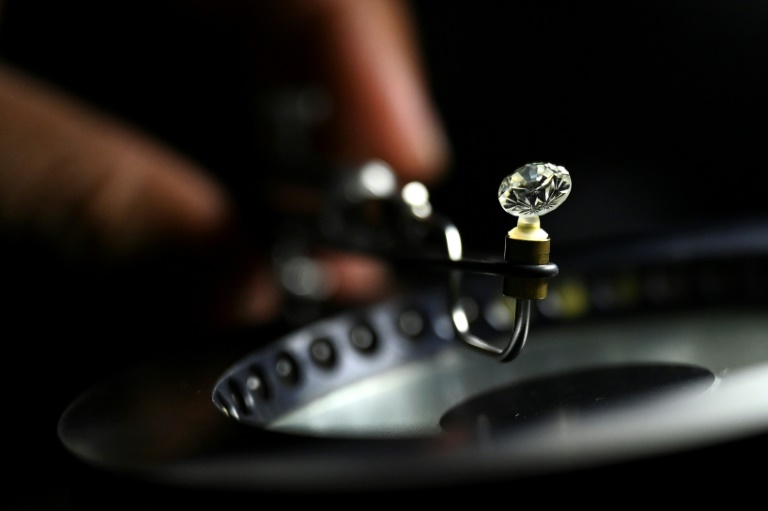
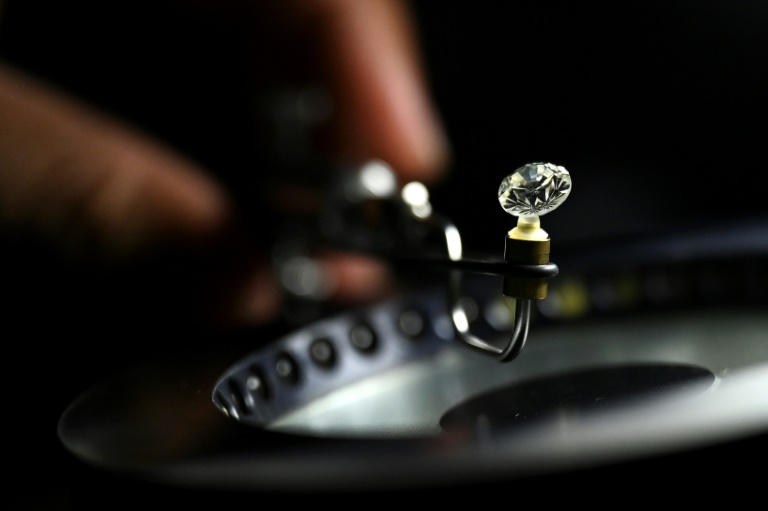
Yogesh Zanzamera lays out his bed on the floor of the factory where he works and lives, one of around two million Indians polishing diamonds in an industry being hit hard by the Ukraine war.

The air reeking from the only toilet for 35-40 people, conditions at workshops like this in Gujarat state leave workers at risk of lung disease, deteriorating vision and other illnesses.

But Zanzamera and others like him have other more immediate worries: the faraway war in Europe and the resulting sanctions on Russia, India’s biggest supplier of “rough” gemstones and a long-standing strategic ally.

“There are not enough diamonds. Because of that, there is not enough work,” Zanzamera, 44, told AFP at the workshop, situated up some dingy stairs in Surat where he has worked since leaving school at 13.

“The war should end. Everybody’s livelihood depends on the war ending.”

His monthly pay packet of 20,000 rupees ($260) is already down 20-30 percent, he says. 

But he is one of the lucky ones — the local trade union estimates that between 30,000 and 50,000 diamond workers in Surat have lost their jobs.

– Rough times –

Originally founded as a port city at the mouth of the Tapi river, Surat earned a reputation as the “Diamond City of India” in the 1960s and ’70s.

Now, some 90 percent of the world’s diamonds are cut and polished in the bustling industrial city and elsewhere in the western state of Gujarat.

Traders in Surat’s crowded Mahidharpura market openly trade diamonds worth millions of dollars on the streets each day, carrying the precious gems loose in paper wrappings.

“If it doesn’t go through Surat, a diamond is not a diamond,” said Chirag Patel, CEO of Chirag Gems.

Russian mining giants like Alrosa traditionally accounted for over a third of India’s rough diamonds, but supply has all but stopped because of Western sanctions.

For Chirag Gems, Russia was even more important, accounting for half the 900 “roughs” that his firm turns into dazzling gems that sell anywhere from $150 to $150,000.

Using state-of-the-art scanning and laser-cutting machines, his factory is better than most, with air-conditioning and exhaust systems protecting workers from inhaling dangerous dust.

But supply has shrunk to a tenth of what it was in the months since Western sanctions cut Russia off from the SWIFT international payments network in March.

“We are not getting goods from Russia because the payments system is stuck due to the war,” Patel, 32, told AFP, saying he is trying to bridge the gap with supplies from South Africa and Ghana.

– Demand at Tiffany’s –

The June-to-September wedding season in the United States is a crucial period for diamond exporters, Patel says.

The US accounted for more than 40 percent of India’s $24 billion exports of cut and polished diamonds in the financial year to March, data from the Gem and Jewellery Export Promotion Council (GJEPC) shows.

But along with supply, traders say demand from the United States and Europe, too, has nosedived in recent months as companies like Signet, Tiffany & Co, Chopard and Pandora refuse to buy diamonds sourced from Russia.

Workers like Dipak Prajapati have suffered the consequences. In May he lost a job in May that paid $320 a month to support his family of six.

“I called the company to ask when I could resume work, but they said they don’t have any work for me and told me to stay home,” the 37-year-old told AFP.

“Sixty percent of the jobs in Surat run on diamonds. Diamonds are the biggest industry in Surat. I don’t know any work other than diamonds.”

His layoff comes close on the heels of pandemic shutdowns.

“We didn’t get any salaries for six to eight months. We had to borrow money from all sides to survive and are still paying back those loans,” Prajapati said.

The Gujarat Diamond Workers’ Union has asked Gujarat’s chief minister for a 10-billion-rupee ($128-million) relief package for workers who have lost their jobs.

“We told him that if the situation does not improve in the coming days, our workers will be compelled to commit suicide,” union vice-president Bhavesh Tank said.

“Surat has given the world so much,” Tank says. “Surat has scrubbed diamonds for the entire world but our diamond workers are now getting scrubbed.”

“We can only pray to God that the war will end. If the war does not end, we don’t know how bad things will get.”

Ukraine war robs India's 'Diamond City' of its sparkle

Yogesh Zanzamera lays out his bed on the floor of the factory where he works and lives, one of around two million Indians polishing diamonds in an industry being hit hard by the Ukraine war.

The air reeking from the only toilet for 35-40 people, conditions at workshops like this in Gujarat state leave workers at risk of lung disease, deteriorating vision and other illnesses.

But Zanzamera and others like him have other more immediate worries: the faraway war in Europe and the resulting sanctions on Russia, India’s biggest supplier of “rough” gemstones and a long-standing strategic ally.

“There are not enough diamonds. Because of that, there is not enough work,” Zanzamera, 44, told AFP at the workshop, situated up some dingy stairs in Surat where he has worked since leaving school at 13.

“The war should end. Everybody’s livelihood depends on the war ending.”

His monthly pay packet of 20,000 rupees ($260) is already down 20-30 percent, he says. 

But he is one of the lucky ones — the local trade union estimates that between 30,000 and 50,000 diamond workers in Surat have lost their jobs.

– Rough times –

Originally founded as a port city at the mouth of the Tapi river, Surat earned a reputation as the “Diamond City of India” in the 1960s and ’70s.

Now, some 90 percent of the world’s diamonds are cut and polished in the bustling industrial city and elsewhere in the western state of Gujarat.

Traders in Surat’s crowded Mahidharpura market openly trade diamonds worth millions of dollars on the streets each day, carrying the precious gems loose in paper wrappings.

“If it doesn’t go through Surat, a diamond is not a diamond,” said Chirag Patel, CEO of Chirag Gems.

Russian mining giants like Alrosa traditionally accounted for over a third of India’s rough diamonds, but supply has all but stopped because of Western sanctions.

For Chirag Gems, Russia was even more important, accounting for half the 900 “roughs” that his firm turns into dazzling gems that sell anywhere from $150 to $150,000.

Using state-of-the-art scanning and laser-cutting machines, his factory is better than most, with air-conditioning and exhaust systems protecting workers from inhaling dangerous dust.

But supply has shrunk to a tenth of what it was in the months since Western sanctions cut Russia off from the SWIFT international payments network in March.

“We are not getting goods from Russia because the payments system is stuck due to the war,” Patel, 32, told AFP, saying he is trying to bridge the gap with supplies from South Africa and Ghana.

– Demand at Tiffany’s –

The June-to-September wedding season in the United States is a crucial period for diamond exporters, Patel says.

The US accounted for more than 40 percent of India’s $24 billion exports of cut and polished diamonds in the financial year to March, data from the Gem and Jewellery Export Promotion Council (GJEPC) shows.

But along with supply, traders say demand from the United States and Europe, too, has nosedived in recent months as companies like Signet, Tiffany & Co, Chopard and Pandora refuse to buy diamonds sourced from Russia.

Workers like Dipak Prajapati have suffered the consequences. In May he lost a job in May that paid $320 a month to support his family of six.

“I called the company to ask when I could resume work, but they said they don’t have any work for me and told me to stay home,” the 37-year-old told AFP.

“Sixty percent of the jobs in Surat run on diamonds. Diamonds are the biggest industry in Surat. I don’t know any work other than diamonds.”

His layoff comes close on the heels of pandemic shutdowns.

“We didn’t get any salaries for six to eight months. We had to borrow money from all sides to survive and are still paying back those loans,” Prajapati said.

The Gujarat Diamond Workers’ Union has asked Gujarat’s chief minister for a 10-billion-rupee ($128-million) relief package for workers who have lost their jobs.

“We told him that if the situation does not improve in the coming days, our workers will be compelled to commit suicide,” union vice-president Bhavesh Tank said.

“Surat has given the world so much,” Tank says. “Surat has scrubbed diamonds for the entire world but our diamond workers are now getting scrubbed.”

“We can only pray to God that the war will end. If the war does not end, we don’t know how bad things will get.”

Fresh protests as new US abortion reality takes shape

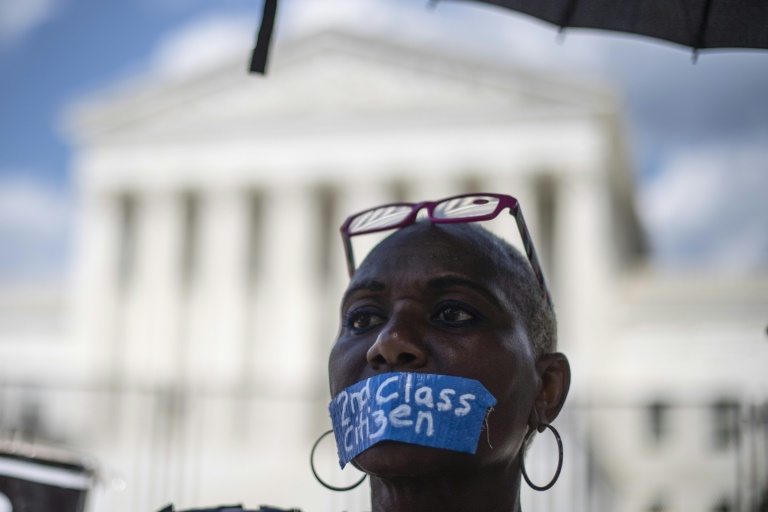
Abortion rights defenders fanned out across America Saturday for a second day of protest against the Supreme Court’s thunderbolt ruling, as state after conservative state moved swiftly to ban the procedure.

The deeply polarized country grappled with a new level of division: between states that will now or soon deny the right to abortion, enshrined since 1973, and those that still allow it.

A few thousand people thronged the streets Saturday outside the fenced-off Supreme Court in Washington, in hot summer weather, carrying signs that read “War on women, who’s next?” and “No uterus, No opinion.”

“What happened yesterday is indescribable and disgusting,” said Mia Stagner, 19, a political science major in college. “Being forced to be a mother is not something any woman should have to do.” 

Demonstrations also took place in Los Angeles, with dozens of smaller rallies from coast to coast.

At least eight right-leaning states imposed immediate bans on abortion — with a similar number to follow suit in coming weeks — after the Supreme Court eliminated 50-year-old constitutional protections for the procedure, drawing criticism from some of America’s closest allies around the world.

Fueling the mobilization, many now fear that the Supreme Court, with a clear conservative majority made possible by Donald Trump, might next set its sights on rights like same-sex marriage and contraception.

President Joe Biden — who has likewise voiced concerns the court might not stop at abortion — spoke out again Saturday against the “shocking decision.”

“I know how painful and devastating the decision is for so many Americans,” said the president, who has urged Congress to restore abortion protections as federal law, and vowed the issue would be on the ballot in November’s midterm elections.

Women in states that severely restrict abortion or outlaw it altogether will either have to continue with their pregnancy, undergo a clandestine abortion, obtain abortion pills, or travel to another state where it remains legal.

But “most women don’t have the time of day or the financial resources to travel across state lines to get an abortion,” Mikayla Marcum, a 23-year-old originally from Texas, told AFP at the Supreme Court on Saturday.

“We are going to see some nightmare scenarios, sadly,” Biden’s spokeswoman Karine Jean Pierre told reporters on Air Force One, as the president headed to Europe for Group of Seven and NATO summits.

“That is not hypothetical,” she said.

– Republican-led states enact bans –

Friday’s demonstrations mostly passed off without incident — although police fired tear gas on protesters in Phoenix, Arizona and a pickup truck drove through a group of protesters in the Iowa city of Cedar Rapids,  running over a woman’s foot.

In Washington on Saturday the scene was once again mostly peaceful — barring the odd shouting match between abortion rights advocates and opponents.

Carolyn Keller, 57, who traveled all the way from New Jersey, said she was enraged by the ruling, warning: “They came after women. They will come after the LGBT community and contraception.”

But counter-protesters like Savannah Craven stood firm.

“It’s not a personal choice to have an abortion, it involves two people and unfortunately that choice ends in the ending of someone’s life,” she told AFP.

As protesters like Craven made clear, while Friday’s ruling represents a victory in the religious right’s struggle against abortion, the movement’s ultimate goal is a nationwide ban.

That goal is now within sight in about two dozen states which are now expected to severely restrict or outright ban and criminalize abortions.

Missouri was first to ban the procedure on Friday, making no exception for rape or incest, joined as of Saturday morning by at least seven other states — Alabama, Arkansas, Kentucky, Louisiana, Oklahoma, South Dakota and Utah.

In Wisconsin, where an 1849 law banning abortion except when saving the life of the mother may go into effect, Governor Tony Evers, a Democrat, vowed to offer clemency to any doctors who face prosecution, according to local media.

In its ruling, the Supreme Court tossed out the argument in Roe v. Wade that women had the right to abortion based on the constitutional right to privacy with regard to their own bodies.

Several Democratic-ruled states, anticipating an influx of patients, have already taken steps to facilitate abortion, and three of them — California, Oregon and Washington — issued a joint pledge to defend access in the wake of the court’s decision.

Abortion providers said they had seen a surge in donations since the ruling, as they braced for the long hard road ahead.

“In the 24 hours following the court’s devastating decision, Planned Parenthood …saw a 40-fold total increase in donations compared to a typical day — more than half of whom are new donors,” Kelley Robinson, vice president of advocacy at the largest abortion provider in the United States, said in a statement to AFP. 

“This is just the beginning, and we won’t back down,” she said.

Close Bitnami banner
Bitnami