AFP

US braces for more protests after Supreme Court abortion ruling

Protesters were expected to pour onto streets across the United States on Saturday as anger flared over the Supreme Court’s decision to strike down the right to abortion.

Several right-leaning states imposed immediate bans on abortion after the court on Friday shredded five decades of constitutional protections for the procedure, prompting leaders around the world to voice concern.

The conservative-dominated court overturned the landmark 1973 “Roe v. Wade” decision enshrining a woman’s right to an abortion, saying individual states could restrict or ban the procedure themselves.

“The Constitution does not confer a right to abortion,” the court said in a 6-3 ruling on one of America’s most bitterly divisive issues. “The authority to regulate abortion is returned to the people and their elected representatives.”

A somber President Joe Biden called the ruling a “tragic error” stemming from “extreme ideology”.

“The health and life of women in this nation are now at risk,” Biden said, warning that other rights such as same-sex marriage and contraception could be threatened next.

The Democratic president urged Congress to restore abortion protections as federal law and said Roe would be “on the ballot” in November’s midterm elections.

Criticism of the Supreme Court decision also came from abroad, including from US allies like Britain, whose Prime Minister Boris Johnson called it “a big step backwards.”

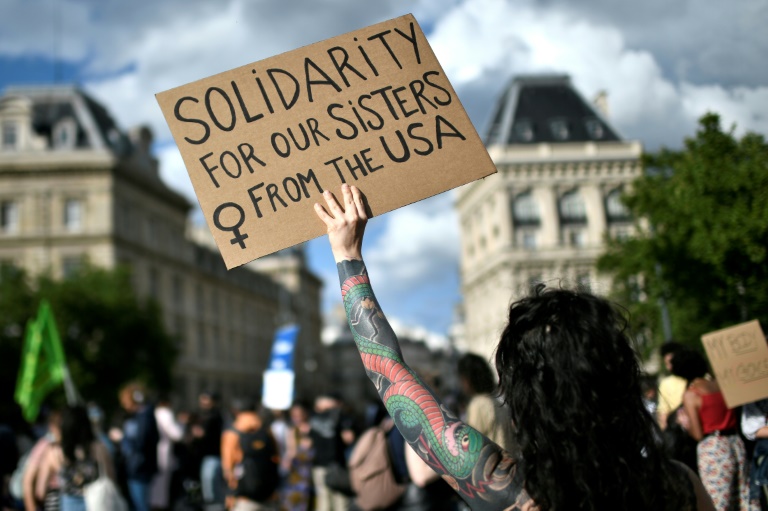
Canada’s leader Justin Trudeau said it was “horrific”, and French President Emmanuel Macron voiced his “solidarity with women whose freedoms are today challenged.”

Acknowledging the international concerns, US Secretary of State Antony Blinken insisted his department would “remain fully committed to helping provide access to reproductive health services and advancing reproductive rights around the world.”

– ‘You have failed us’ –

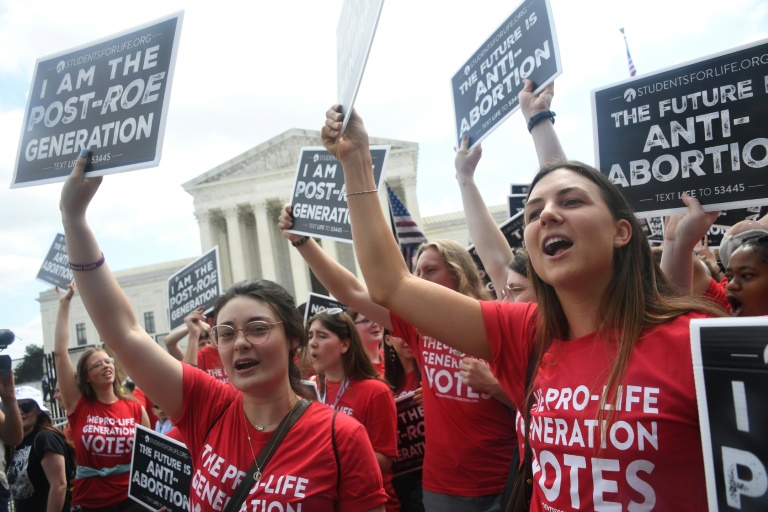
Hundreds of people — some weeping for joy and others with grief — gathered outside the fenced-off Supreme Court on Friday as the ruling came down.

“It’s hard to imagine living in a country that does not respect women as human beings and their right to control their bodies,” said Jennifer Lockwood-Shabat, 49, a mother of two daughters who was choking back tears.

“You have failed us,” read a sign held up by one protester. “Shame,” said another.

But Gwen Charles, a 21-year-old opponent of abortion, was jubilant.

“This is the day that we have been waiting for,” Charles told AFP. “We get to usher in a new culture of life in the United States.”

Just hours after the ruling, Missouri banned abortion — making no exception for rape or incest — and so did South Dakota, except where the life of the mother is at risk.

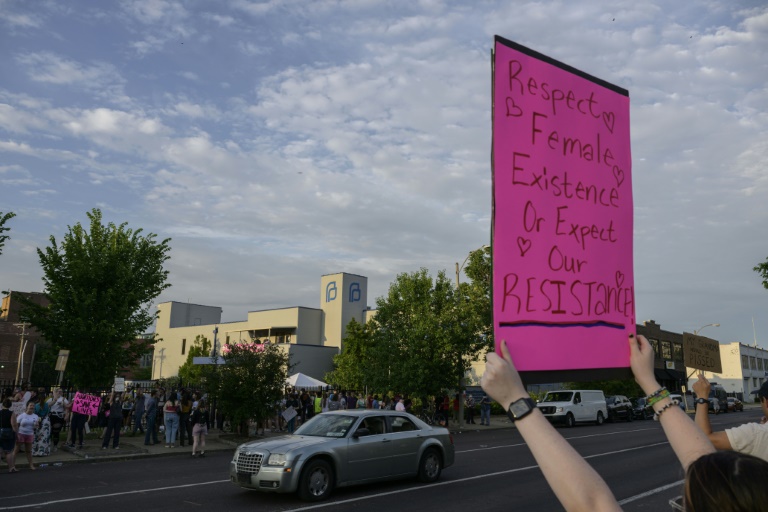
Protesters took to the streets in St. Louis to decry the ban, gathering at what had been Missouri’s last abortion clinic.

“It’s absolutely disturbing,” said Lilian Dodenhoff, 32, standing outside the facility. “So I just immediately reached out to people that I knew shouldn’t be alone right now.”

As of Friday evening, at least seven states had already banned abortion — Alabama, Arkansas, Kentucky, Louisiana, Missouri, Oklahoma, and South Dakota.

Many more are expected to follow suit or severely restrict the procedure. 

Protesters also marched in New York, Boston and other US cities as anger grew. 

“Abortion is a human right, not just for the rich and white,” protesters in New York chanted on Friday.

Democratic Governor Kathy Hochul met the crowd at Union Square, telling reporters abortion rights were “secure” in New York, and that the state would be a “safe harbor” for those unable to receive the procedure in their own states.

“We took action already, we allocated $35 million to support our abortion providers to be able to help our sisters across this nation find their way here,” she said. “This is their safe harbor.”

There were incidents at some demonstrations on Friday, including one in the Iowa city of Cedar Rapids, where a pickup truck drove through a group of protesters, running over at least one woman’s foot, according to local media reports.

In Arizona, CNN reported that authorities used tear gas to disperse protesters on Friday night after they “repeatedly pounded on the glass doors of the State Senate Building,” according to Arizona Department of Public Safety spokesperson Bart Graves.

– ‘Egregiously wrong’ –

In the majority opinion, Justice Samuel Alito said Roe v. Wade was “egregiously wrong.”

“Abortion presents a profound moral issue on which Americans hold sharply conflicting views,” he said. “The Constitution does not prohibit the citizens of each State from regulating or prohibiting abortion.”

The court tossed out the legal argument in Roe v. Wade that women had the right to abortion based on the constitutional right to privacy with regard to their own bodies.

While the ruling represents a victory for the religious right, leaders of the Christian conservative movement said it does not go far enough and they will push for a nationwide ban.

“While it’s a major step in the right direction, overturning Roe does not end abortion,” said the group March for Life.

“God made the decision,” said former Republican president Donald Trump while praising the ruling.

The decision was made possible by Trump’s nomination to the court of three conservative justices — Neil Gorsuch, Brett Kavanaugh and Amy Coney Barrett.

– ‘Will not stop there’ –

The three liberal justices on the court dissented from the ruling.

“One result of today’s decision is certain: the curtailment of women’s rights, and of their status as free and equal citizens,” they said.

Abortion providers could now face criminal penalties and “some States will not stop there,” they warned.

According to the Guttmacher Institute, 13 states have adopted so-called “trigger laws” that will ban abortion virtually immediately.

Ten others have pre-1973 laws that could go into force or legislation that would ban abortion after six weeks, before many women know they are pregnant.

Women in states with strict anti-abortion laws will either have to continue with their pregnancy, undergo a clandestine abortion, obtain abortion pills, or travel to another state where it remains legal.
US Supreme Court strikes down right to abortion

The US Supreme Court on Friday struck down the right to abortion in a seismic ruling that shredded five decades of constitutional protections and prompted several right-leaning states to impose immediate bans.

Protests broke out almost immediately in Washington and elsewhere, with dozens of demonstrations under way or planned across the country Friday evening.

The conservative-dominated court overturned the landmark 1973 “Roe v. Wade” decision enshrining a woman’s right to an abortion, saying individual states can restrict or ban the procedure themselves.

“The Constitution does not confer a right to abortion,” the court said in a 6-3 ruling on one of America’s most bitterly divisive issues. “The authority to regulate abortion is returned to the people and their elected representatives.”

A somber President Joe Biden called the ruling a “tragic error” stemming from “extreme ideology” and said it was a “sad day for the court and the country.”

“The health and life of women in this nation are now at risk,” Biden said, warning that other rights could be threatened next, such as same-sex marriage and contraception.

The Democratic president urged Congress to restore abortion protections as federal law and said Roe will be “on the ballot” in November’s midterm elections.

– ‘You have failed us’ –

Hundreds of people — some weeping for joy and others with grief — gathered outside the fenced-off Supreme Court as the ruling came down.

“It’s hard to imagine living in a country that does not respect women as human beings and their right to control their bodies,” said Jennifer Lockwood-Shabat, 49, a mother of two daughters who was choking back tears.

“You have failed us,” read a sign held up by one protester. “Shame,” said another.

But Gwen Charles, a 21-year-old opponent of abortion, was jubilant.

“This is the day that we have been waiting for,” Charles told AFP. “We get to usher in a new culture of life in the United States.”

Just hours after the ruling, Missouri banned abortion — making no exception for rape or incest — and so did South Dakota, except where the life of the mother is at risk.

“This is a monumental day for the sanctity of life,” Missouri attorney general Eric Schmitt said.

Protesters took to the streets in St. Louis to decry the ban, gathering at what had been Missouri’s last abortion clinic.

“It’s absolutely disturbing,” said Lilian Dodenhoff, 32, standing outside the facility. 

“It doesn’t feel good. You’re just… you know that you have to call on your friends. So I just immediately reached out to people that I knew shouldn’t be alone right now.”

As of Friday evening, at least seven states had already banned abortion — Alabama, Arkansas, Kentucky, Louisiana, Missouri, Oklahoma, and South Dakota.

Many more are expected to follow suit or severely restrict the procedure. 

Protesters also marched in New York and Boston as anger over the Supreme Court decision grew. 

“Abortion is a human right, not just for the rich and white,” protesters in New York chanted on Friday.

Democratic Governor Kathy Hochul met the crowd at Union Square, telling reporters that New York would be a “safe harbor” for those unable to receive abortions in their own states.

“This is the most reactionary, most reactionary Supreme Court, probably in the history of our nation,” she said, adding that abortion rights were “secure” in New York. 

“We took action already, we allocated $35 million to support our abortion providers to be able to help our sisters across this nation find their way here. This is their safe harbor.”

Criticism of the move also came from abroad, including from US allies including Britain, whose Prime Minister Boris Johnson called it “a big step backwards.”

Canada’s leader Justin Trudeau said it was “horrific” and French President Emmanuel Macron voiced his “solidarity with women whose freedoms are today challenged.”

Acknowledging the international concerns, US Secretary of State Antony Blinken insisted his department would “remain fully committed to helping provide access to reproductive health services and advancing reproductive rights around the world.”

– ‘Egregiously wrong’ –

In the majority opinion, Justice Samuel Alito said Roe v. Wade was “egregiously wrong.”

“Abortion presents a profound moral issue on which Americans hold sharply conflicting views,” he said. “The Constitution does not prohibit the citizens of each State from regulating or prohibiting abortion.”

The court tossed out the legal argument in Roe v. Wade that women had the right to abortion based on the constitutional right to privacy with regard to their own bodies.

While the ruling represents a victory in the struggle against abortion by the religious right, leaders of the Christian conservative movement said it does not go far enough and they will push for a nationwide ban.

“While it’s a major step in the right direction, overturning Roe does not end abortion,” said the group March for Life.

“God made the decision,” said former Republican president Donald Trump while praising the ruling.

The decision was made possible by Trump’s nomination to the court of three conservative justices — Neil Gorsuch, Brett Kavanaugh and Amy Coney Barrett.

– ‘Will not stop there’ –

The three liberal justices on the court dissented from the ruling, which came a day after the court ushered in a major expansion of US gun rights.

“One result of today’s decision is certain: the curtailment of women’s rights, and of their status as free and equal citizens,” they said.

Abortion providers could now face criminal penalties and “some States will not stop there,” they warned.

“Perhaps, in the wake of today’s decision, a state law will criminalize the woman’s conduct too, incarcerating or fining her for daring to seek or obtain an abortion,” they said.

According to the Guttmacher Institute, 13 states have adopted so-called “trigger laws” that will ban abortion virtually immediately.

Ten others have pre-1973 laws that could go into force or legislation that would ban abortion after six weeks, before many women know they are pregnant.

Women in states with strict anti-abortion laws will either have to continue with their pregnancy, undergo a clandestine abortion, obtain abortion pills, or travel to another state where it remains legal.
Several Democratic-led states, anticipating an influx, have taken steps to facilitate abortion and three of them — California, Oregon and Washington — issued a joint pledge to defend access in the wake of the court’s decision.

Bangladesh opens bridge plagued by graft claims, lynchings

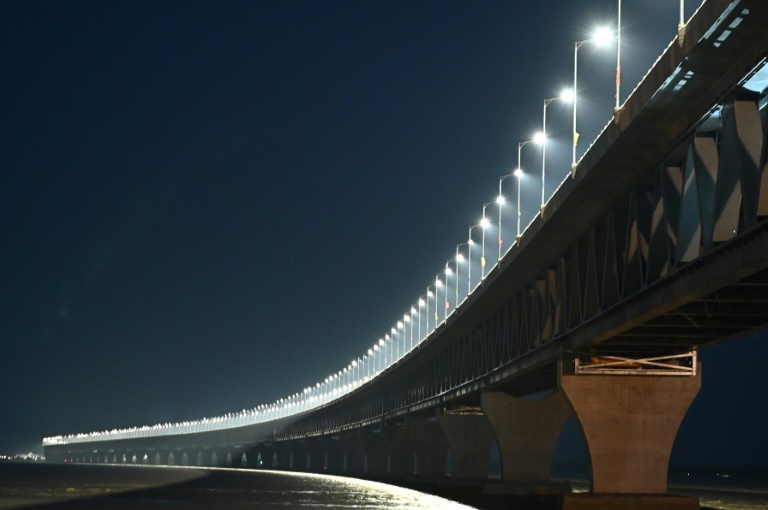
Bangladesh on Saturday opened an important bridge near the capital Dhaka after a long construction plagued by delays, graft allegations, and even deadly lynchings sparked by rumours of human sacrifice.

The inauguration of the Padma Multipurpose Bridge — now officially the country’s longest — caps a key infrastructure goal by Prime Minister Sheikh Hasina in the nearly eight years since construction began.

It ends an economic bottleneck that required freight destined for the country’s poverty-stricken south and the Indian megacity of Kolkata to be slowly ferried over the Padma river, a major tributary of the mighty Ganges.

“This bridge is not just bricks, cement, iron, and concrete,” Hasina told a crowd of nearly a million people who had gathered along the river’s banks for its opening ceremony. 

“This bridge is our pride, a symbol of our capacity, strength and dignity,” the leader added.

But the project was also burdened by other, more vexing associations even before work began. 

Bangladesh financed the $3.87-billion project itself after corruption allegations saw the World Bank and other lenders withdraw finance.

Canadian engineering firm SNC-Lavalin was banned from bidding on World Bank projects for a decade after it was accused of bribing officials over the project.

Prosecutors in Canada eventually declined to pursue corruption charges against company executives after a court ruled some wiretap evidence against them was inadmissible. 

Engineers said building challenges for the project were “immense” as siltation left the bottom of the Padma river unstable, making it difficult to place spans and helping blow out the bridge’s finish date by four years. 

And in 2019, eight people were killed in vigilante lynchings sparked by social media rumours of children being kidnapped and sacrificed as offerings for the bridge’s construction. 

More than 30 others were attacked in connection with the rumours, mostly spread on Facebook, that said human heads were needed to help finish the project.

Despite its troubles, the 6.2-kilometre (3.8-mile) road and rail link has long been signposted as one of the most significant endeavours of Hasina’s tenure.

Local media reported breathlessly on minor construction milestones, such as the completion of one of its 41 concrete spans. 

Major roads across Dhaka were festooned with lights, lasers and decorations to mark Saturday’s inauguration. 

'A tragedy': Missouri's last abortion clinic draws protesters decrying ban

Standing outside what had been the last remaining abortion clinic in Missouri on Friday, Pamela Lukehart choked back tears as she recalled how things were before the landmark 1973 Supreme Court decision enshrining a woman’s right to the procedure.

“Women died getting abortions back then,” the 68-year-old told AFP, her voice breaking as she stood alongside scores of other protesters. 

“We were trying to protect women’s rights, women’s lives, and now they’ve taken all that away from us.”

The conservative-dominated Supreme Court on Friday overturned its monumental decision in Roe v. Wade, putting an end to the federal right to abortions it established nearly 50 years ago. 

The seismic ruling immediately triggered a wave of right-leaning states to impose new bans on the procedure — with Missouri being the first. 

Less than two hours after the court’s decision, the state’s attorney general Eric Schmitt tweeted a photo of himself signing off on the prohibition, calling the occasion “a monumental day for the sanctity of life”.

The swift ban forced the Planned Parenthood clinic on St. Louis’ Forest Park Avenue –- which had been the last facility providing abortions in the state -– to immediately stop offering the procedure.

“Today, for me, it’s tragic because we fought so hard to get this law passed in 1973,” said Lukehart, who was accompanied by her granddaughter Audrey at the protest outside the Planned Parenthood clinic. 

“Now 50 years later, they have jerked this away from us. This is wrong. It’s totally wrong,” she said.

– ‘We cannot stand by’ –

While Midwestern, conservative Missouri was the first state to ban abortions after the ruling, it was not the last.

As of Friday evening, at least six other states had imposed bans: Alabama, Arkansas, Kentucky, Louisiana, Oklahoma, and South Dakota. 

Indiana also announced it would take steps to do the same, and abortion providers in Wisconsin said the procedure was now banned there as well.

Hundreds of protesters took to the streets in St. Louis following the ban, chanting “My body, my choice,” and carrying signs bearing slogans like “Abortion is Healthcare.”

Addressing the crowd through a megaphone, one speaker said: “We cannot stand by while our rights are taken away from us.”

Back at the Planned Parenthood clinic, protester Alec Ryan, 31, said the new bans on abortion would have tangible consequences.

“So there are going to be women and pregnant people who are trapped in abusive marriages because they can’t get an abortion. There are going to be people who are put in situations that they shouldn’t be put into,” he told AFP. 

“It’s going to be a tragedy.”

Linda Locke, who sits on the Planned Parenthood’s board in St Louis, worried about the impact of Friday’s decision on younger generations.

“I have granddaughters, right?” she said. “And they all grew up thinking their body was under their control. And today, it’s just shocking to me and disappointing that the Supreme Court just told them that, ‘No, you don’t… We don’t trust you to make decisions about your own body.'”

Oceans saved us, now we can return the favour

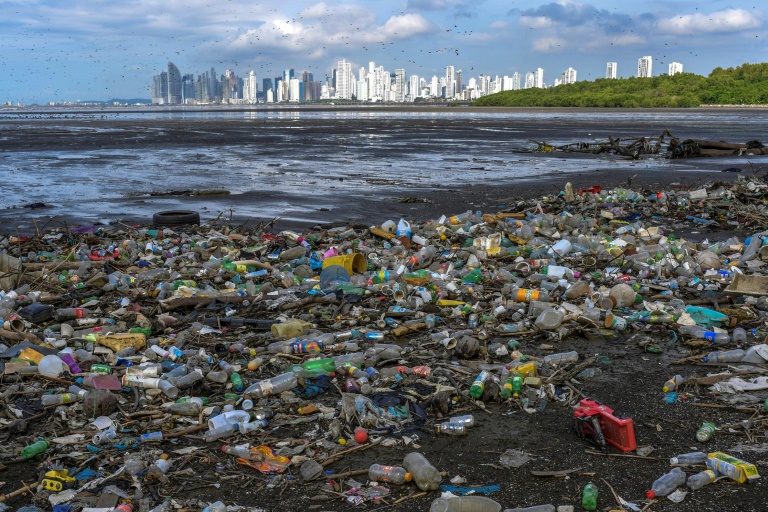
Humanity must heal oceans made sick by climate change, pollution and overfishing in order to rescue marine life and save ourselves, experts warned ahead of a major UN conference opening Monday in Lisbon.

By absorbing — decade after decade — a quarter of CO2 pollution and more than 90 percent of excess heat from global warming, oceans have kept Earth’s terrestrial surface liveable. 

Our species has returned the favour by dumping mountains of plastic waste into the sea, emptying the deep blue of big fish, and poisoning coastlines with toxic chemicals and agricultural runoff that create dead zones bereft of oxygen.

“At least one-third of wild fish stocks are overfished and less than 10 percent of the ocean is protected,” Kathryn Matthews, chief scientist for US-based NGO Oceana, told AFP.

“Destructive and illegal fishing vessels operate with impunity in many coastal waters and on the high seas.”

Nearly $35 billion in subsidies that aggravate overfishing will fall under a harsh spotlight in Lisbon, despite first steps towards a partial ban put in place by the World Trade Organization (WTO) last week.

At the same time, ocean water made acidic by CO2 along with vast marine heatwaves lasting months or longer are killing coral reefs that support a quarter of marine life and provide livelihoods for a quarter of a billion people.

“We have only begun to understand the extent to which climate change is going to wreak havoc on ocean health,” said Charlotte de Fontaubert, the World Bank’s global lead for the blue economy.

– ‘It’s scary’ –

Jointly hosted by Portugal and Kenya, the five-day UN Ocean Conference — delayed from April 2020 by the Covid-19 pandemic — brings together thousands of government officials, businesses, scientists and NGOs in search of solutions.

While they do not all see eye-to-eye on what needs to be done, they largely agree on what is at stake. 

“If we don’t do the right thing, we might end up with a dead ocean,” Rashid Sumaila, a fisheries expert and professor at the University of British Columbia, told AFP. 

“Think about that — Oh man, it’s scary.”

Pollution that could, on current trends, see as much plastic in the seas as fish by mid-century is also on the agenda, with proposals ranging from recycling to outright banning of plastic bags.

From East Asian factory ships prowling the high seas to artisanal fishing boats hugging tropical coastlines, how to make wild fisheries sustainable will be high on the Lisbon agenda.

The new watchword is “blue food” — sustenance from the sea that is both sustainable and equitable.

“Wild ocean fish can provide a climate-friendly, micro-nutrient protein source that can feed one billion people a healthy seafood meal every day — forever,” said Matthews.

Also under the microscope is the booming aquaculture industry, where issues range from the destruction of precious mangrove forests to rampant antibiotic use.

– Year-end summits –

The conference may report trend lines for wild fisheries — which peaked in the 1990s — and seafood farming for the first time, with each producing about 100 million tons per year.

The Lisbon meet will see ministers and even a few heads of state, including French President Emmanuel Macron, but is not a formal negotiating session.

That won’t stop participants, however, from pushing for a strong oceans agenda at two critical summits later this year: the COP27 UN climate talks in November, hosted by Egypt, followed by the long-delayed COP15 biodiversity negotiations, recently moved from China to Montreal.

Oceans are already at the heart of a draft biodiversity treaty tasked with halting what many scientists fear is the first “mass extinction” since a meteor wiped out terrestrial dinosaurs more than 65 million years ago.

A coalition of nearly 100 nations supports a cornerstone provision that would designate 30 percent of the planet’s land and ocean as protected areas.

For climate change, not so much.

Despite global warming’s dire impact and the key role oceans play in soaking up atmospheric CO2, the seven seas have barely rated a mention within ongoing UN climate talks until recently.   

But science has made it clear they need each other: oceans will continue to suffer unless greenhouse gas concentrations stabilise, and the fight against global warming will be doomed if oceans lose their capacity to draw down CO2 and soak up heat.  

German activists up their game to keep climate centre stage

With climate change pushed down the news agenda as Germany tackles an energy crisis and the war in Ukraine, environmental activists are resorting to increasingly eye-catching stunts to get their message across.

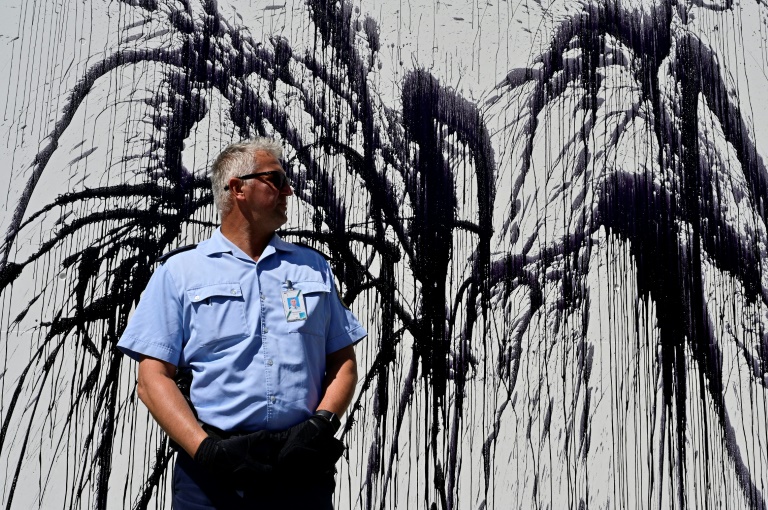
This week, around a dozen activists sprayed a black liquid that looked like oil on the chancellery in Berlin and stood in front of the building with a banner that read: “Save oil instead of drilling.”

Dressed in orange high-visibility jackets and hard hats, the protesters were members of Letzte Generation (“Last Generation”) — a radical protest group that has become the new face of environmental activism in Germany.

“The government has ignored everything else: petitions have been written, a million people have taken to the streets,” said Lina Joansen, a 24-year-old student taking part in the protest. 

The activists want a promise from the government that it will not drill for oil in the North Sea. 

“We know that fossil fuels can only aggravate the climate catastrophe that is already happening,” said law student Myriam Herrmann, 25. 

Six months ago, a new coalition government was elected in Germany on a promise to make climate change one of its top priorities.

The Greens entered power for the first time in more than two decades, forming a coalition with the Social Democrats (SPD) under Chancellor Olaf Scholz and the liberal FDP.

– Ambitious climate plans –

Green party Economy Minister Robert Habeck announced an ambitious 60 billion euro ($68 billion) climate investment plan and promised that Germany would end coal power and generate 80 percent of electricity from renewables by 2030.

But since then, climate concerns have been overshadowed by the war in Ukraine, an acute energy crisis and record inflation.

Germany has accelerated plans to import liquefied natural gas (LNG) by sea, wants to explore new oil and gas reserves in the North Sea, and has even decided to reactivate mothballed coal-fired power plants.

The government has said it is still on target to meet its 2030 climate targets, but the protesters are not convinced.

Herrmann is “incredibly disappointed”, especially with Habeck. “We don’t have time for stopgap solutions any more,” she said.

Letzte Generation was born following a hunger strike last year by activists demanding a law to ban supermarkets from destroying unsold food products.

Earlier this year, small groups of Letzte Generation protesters blocked busy roads in Berlin by sitting down and glueing their hands to the tarmac. More than 100 were arrested.

A few days after the oil protest, the group once again employed these tactics, with about 65 protesters blocking the Frankfurter Tor intersection in Berlin’s Friedrichshain.

– ‘Legitimate means’ –

Civil disobedience is “an established mode of protest in the German environmental movement”, sociologist Michael Neuber told AFP, recalling the anti-nuclear movement of the 1970s and blockades by the Extinction Rebellion in 2019.

Such protests have been overshadowed over the past two to three years by the massive student-led demonstrations of the Fridays for Future movement, but have more recently started to make a comeback. 

“Civil disobedience attracts more attention than demonstrations,” said sociologist Dieter Rucht.

“I see civil disobedience as a legitimate means of political protest, when it is peaceful,” 27-year-old Green party politician Deborah Duering told RBB radio this week, claiming to share the “anxiety” of the activists.

In February, by contrast, many voices within the Green party had criticised Letzte Generation for blocking the roads in Berlin. 

For Herrmann, if politicians want the protests to stop, there is an easy solution.

“It is enough for Scholz and Habeck to declare that they no longer want to encourage oil drilling in the North Sea,” she said.

'Deepest shipwreck': US WWII ship found off Philippines

A US navy destroyer sunk during World War II has been found nearly 7,000 metres (23,000 feet) below sea level off the Philippines, making it the world’s deepest shipwreck ever located, an American exploration team said.

The USS Samuel B Roberts went down during a battle off the central island of Samar on October 25, 1944 as US forces fought to liberate the Philippines — then a US colony — from Japanese occupation.

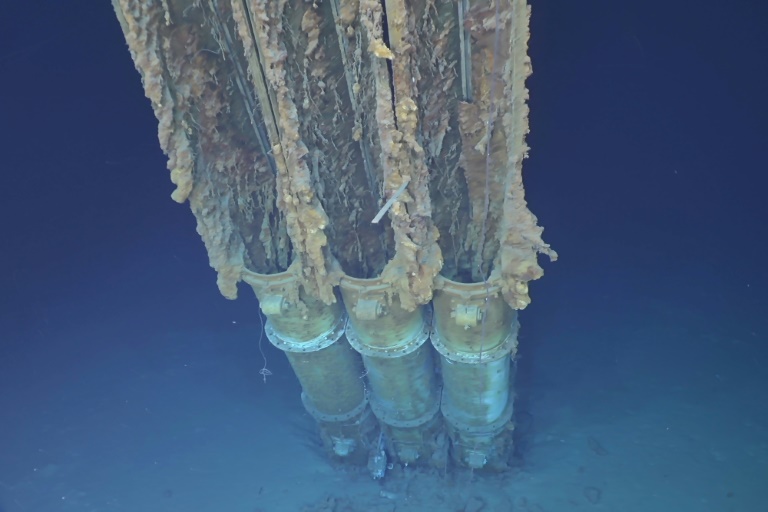
A crewed submersible filmed, photographed and surveyed the battered hull of the “Sammy B” during a series of dives over eight days this month, Texas-based undersea technology company Caladan Oceanic said.

Images showed the ship’s three-tube torpedo launcher and gun mount.

“Resting at 6,895 meters, it is now the deepest shipwreck ever located and surveyed,” tweeted Caladan Oceanic founder Victor Vescovo, who piloted the submersible.

“This small ship took on the finest of the Japanese Navy, fighting them to the end,” he said.

According to US Navy records, Sammy B’s crew “floated for nearly three days awaiting rescue, with many survivors perishing from wounds and shark attacks”. Of the 224 crew, 89 died.

The battle was part of the larger Battle of Leyte, which saw intense fighting over several days between US and Japanese forces.

Sammy B was one of four US ships sunk in the October 25 engagement.  

The USS Johnston, which at nearly 6,500 metres was previously the world’s deepest shipwreck identified, was reached by Vescovo’s team in 2021. 

In the latest search, the team also looked for the USS Gambier Bay at more than 7,000 metres below sea level, but was unable to locate it. 

It did not search for the USS Hoel due to the lack of reliable data showing where it may have gone down.

The wreck of the Titanic lies in about 4,000 metres of water.

'Deepest shipwreck': US WWII ship found off Philippines

A US navy destroyer sunk during World War II has been found nearly 7,000 metres (23,000 feet) below sea level off the Philippines, making it the world’s deepest shipwreck ever located, an American exploration team said.

The USS Samuel B Roberts went down during a battle off the central island of Samar on October 25, 1944 as US forces fought to liberate the Philippines — then a US colony — from Japanese occupation.

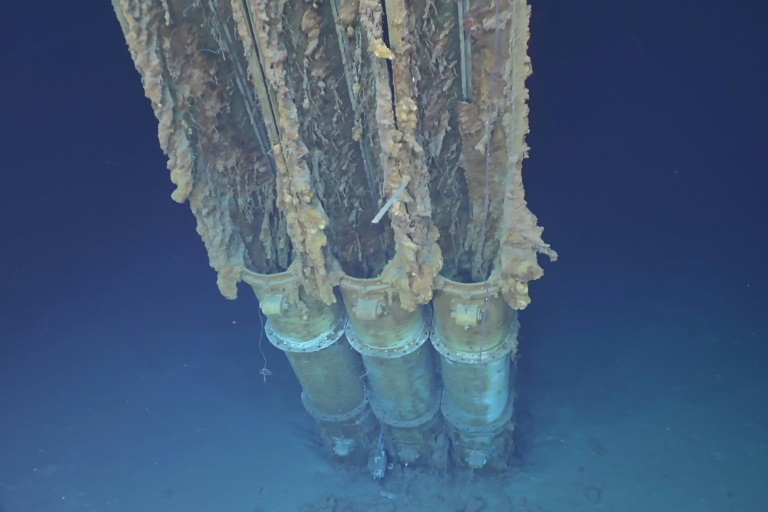
A crewed submersible filmed, photographed and surveyed the battered hull of the “Sammy B” during a series of dives over eight days this month, Texas-based undersea technology company Caladan Oceanic said.

Images showed the ship’s three-tube torpedo launcher and gun mount.

“Resting at 6,895 meters, it is now the deepest shipwreck ever located and surveyed,” tweeted Caladan Oceanic founder Victor Vescovo, who piloted the submersible.

“This small ship took on the finest of the Japanese Navy, fighting them to the end,” he said.

According to US Navy records, Sammy B’s crew “floated for nearly three days awaiting rescue, with many survivors perishing from wounds and shark attacks”. Of the 224 crew, 89 died.

The battle was part of the larger Battle of Leyte, which saw intense fighting over several days between US and Japanese forces.

Sammy B was one of four US ships sunk in the October 25 engagement.  

The USS Johnston, which at nearly 6,500 metres was previously the world’s deepest shipwreck identified, was reached by Vescovo’s team in 2021. 

In the latest search, the team also looked for the USS Gambier Bay at more than 7,000 metres below sea level, but was unable to locate it. 

It did not search for the USS Hoel due to the lack of reliable data showing where it may have gone down.

The wreck of the Titanic lies in about 4,000 metres of water.

Summer travel misery ahead as industry workers in revolt

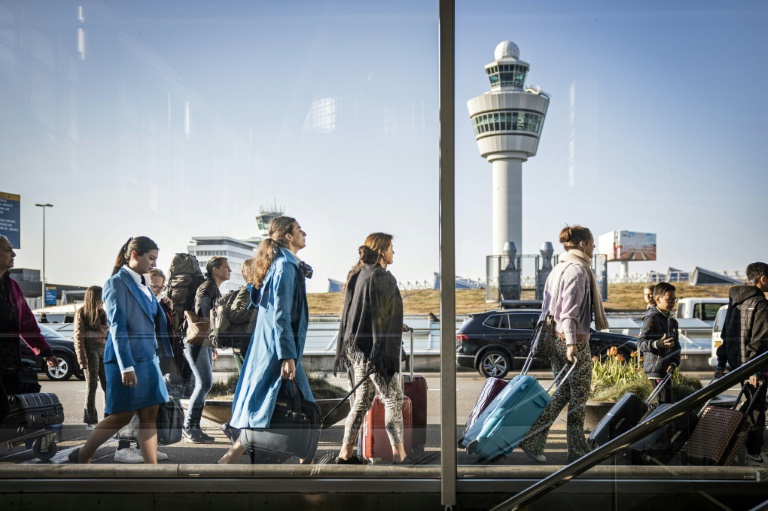
A spiral of worker strikes in Europe’s crucial aviation sector and cancelled flights at a time when millions of travellers are looking to escape for the summer, threaten the sector’s tentative recovery.

Airports and airlines are buckling under the pressure of demand pent up during the pandemic that has been unleashed on understaffed and stretched operations across Europe.

– Cabin crew –

A coordinated strike by Ryanair flight attendants in five European countries has thrown a spotlight on volatile labour relations at low cost airlines. 

“It’s June and colleagues are already exhausted,” said Damien Mourgues, SNPNC trade union representative at Ryanair. 

“Our basic salary is 854 euros ($900) with variables of 8.50 euros per hour” flown, he said. 

In Spain, “we have a basic salary of only 950 euros” and “when you don’t fly, you earn 950 euros, that’s all,” complained Pier Luigi Copellon, a steward based in Barcelona for 14 years. 

At France’s Transavia and Spain’s Volotea the prospect of summer strikes is a growing possibility. 

At Brussels Airlines, which is on strike on Friday, “a crew member works between 50-60 hours over five days on average,” said Claudia de Coster, a cabin purser and a representative of Belgium’s Setca-FGTB union. 

– Airport security officers –

Frontline airport security is suffering more than any other aviation workforce from understaffing as traffic picks up. 

Baggage and passenger screening  officers at inspection points are being forced to manage massive footfall with fewer hands on deck than before. 

“We end up with two or three instead of five per security checkpoint,” said Said Abdou, a Securitas employee at Paris Orly airport and a representative of the CGT union. 

“The pace is so fast. Securitas had hired 17 people recently, they did a day and they didn’t come back — it was too hard,” he said. 

Eight of his colleagues suffered burn-out, he said, because they were refused leave this summer. 

Said Abdou earns 1,500 euros after taxes and deductions, paid 13 times a year, and an individual performance bonus of 500 euros per year after 18 years of service. 

On Monday, a strike by security staff at Brussels’ Zaventem airport led to the cancellation of all the day’s flights. 

– Baggage handlers –

“Among the baggage handlers, there are those who put the luggage on the carousel, those who are squatting in the aircraft hold to pack it up, it’s very tiring,” said Luc Atlan, an organiser in the airport branch of France’s Unsa union. 

Baggage handling companies, which depend on major contracts from the likes of Air France, massively reduced staff at the height of the pandemic. 

The sudden rise in the rate of growth leads to “working under pressure. And with the lack of personnel you go fast and you get hurt. There’s going to be an increasing rate of absences”, said Atlan. 

– Chaperones –

They are less prominent than other front-line workers in the aviation ecosystem, but vital to the smooth running of the airport.

The people charged with accompanying people with reduced mobility are no less essential to the travelling public. 

“We have a lot of delays, a lot of mistakes,” said Ali Khiati, a member of the SUD union’s aviation section. 

“There are people waiting for an hour on the plane,” forcing the plane to remain grounded. 

“When you arrive after an hour, you are shouted at by the captain, by the customers, even though you only got the order five minutes previously,” said Khiati.

“I feel the summer will be catastrophic,” he said, adding that he had never seen anything like it in his 18-year career. 

“A week ago, 21 people in the same day missed their plane. There were 16 who were leaving for Algiers, we put them in a (waiting area) — but there was so much work that the dispatcher forgot about them,” he said . 

US bucks global trend, hit by criticism on abortion

The US Supreme Court’s historic end to nationwide abortion rights on Friday drew unusual criticism from some of America’s closest allies and bucks a global trend to more liberal reproductive rights.

The decision came one day after the Supreme Court also struck down some of the modest restrictions on guns — an issue that, along with the US embrace of the death penalty, has long shocked other Western nations.

British Prime Minister Boris Johnson — a Conservative who worked closely with former president Donald Trump, whose judicial nominations paved the way for Friday’s decision — said the Supreme Court decision will have “massive impacts” worldwide.

“I think it’s a big step backwards. I’ve always believed in a woman’s right to choose and I stick to that view, and that’s why the UK has the laws that it does,” Johnson said on a visit to Rwanda.

Canadian Prime Minister Justin Trudeau denounced the decision across the border as “horrific.”

“No government, politician, or man should tell a woman what she can and cannot do with her body,” Trudeau wrote on Twitter.

French President Emmanuel Macron voiced his “solidarity with women whose freedoms are today challenged” by the US Supreme Court, while Swedish Foreign Minister Ann Linde said that legal and safe abortion was a fundamental right.

“Depriving women of their individual rights is a backlash against decades of hard-fought work,” Linde said.

Among the few world leaders who may be heartened by the ruling is Brazilian President Jair Bolsonaro, an ally of Trump and his own country’s evangelical Christians, who took to Twitter hours before the decision to denounce an 11-year-old girl’s abortion of a fetus that was the result of rape.

– US ‘outlier’ –

US President Joe Biden himself deplored that the top court has “made the United States an outlier among developed nations in the world” as he vowed to keep up efforts to secure legal abortion.

Biden made his remarks on the eve of flying to a summit in Germany, which just Friday repealed a Nazi-era law that limits the information that doctors and clinics can provide about abortion.

And US Secretary of State Antony Blinken made a point of stressing in a statement Friday night that his agency remains “fully committed” to helping provide access to reproductive health services both around the world and among its employees.

Traditionally Catholic Ireland overturned an abortion ban in a 2018 referendum and Latin America, long a stronghold against abortion, has also been moving to liberalize its laws.

Colombia in February legalized abortion up to 24 weeks into pregnancy and Chile shortly afterward said it would enshrine the decriminalization of abortion in its constitution. 

Mexico last year had its own historic Supreme Court decision — declaring the prohibition of abortion unconstitutional.

The United States was one of the first countries to grant a nationwide right to abortion with the 1973 Roe v Wade decision that was overturned Friday after years of mobilization by opponents.

But the United States was also an outlier in its sweeping right to abortion until fetal viability, although advocates stress that few doctors perform late-term abortions except in exceptional circumstances.

Representative Mike Waltz, a Republican, said that the United States had been “one of only a handful of countries in the world that allow abortion on demand, comparable to authoritarian regimes such as China and North Korea.”

“Even most European nations maintain some restrictions for abortions,” he said in a statement.

The Supreme Court decision, he said, “will save millions of innocent, unborn lives.”

But drawing the anger of Republican administrations, a number of aid groups have advocated for legal abortion on the grounds that banning it would only make the procedure less safe and put women’s lives at risk.

David Miliband, president of the International Rescue Committee and a former British foreign secretary, said the Supreme Court decision “marks a dark day for reproductive rights and bodily autonomy not just within the United States but the world over.”

Close Bitnami banner
Bitnami