AFP

US Supreme Court strikes down right to abortion

The US Supreme Court on Friday struck down the right to abortion in a seismic ruling that shredded five decades of constitutional protections and prompted several right-leaning states to impose immediate bans.

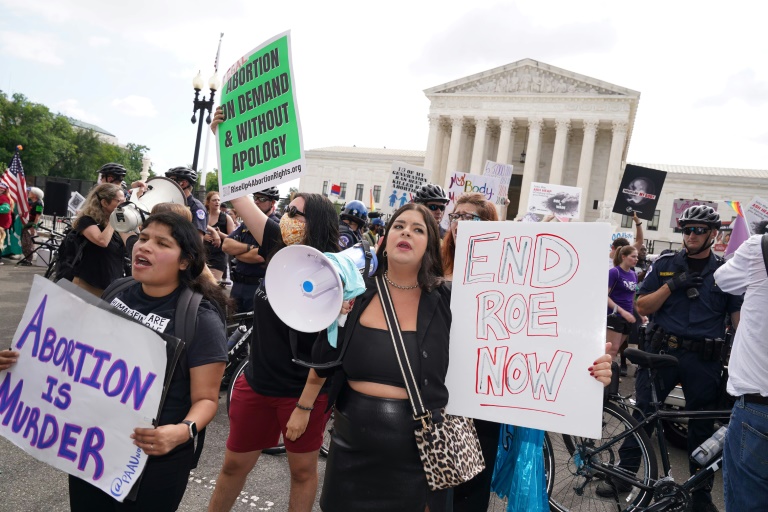
Protests broke out almost immediately in Washington and elsewhere, with dozens of demonstrations under way or planned across the country Friday evening.

The conservative-dominated court overturned the landmark 1973 “Roe v. Wade” decision enshrining a woman’s right to an abortion, saying individual states can restrict or ban the procedure themselves.

“The Constitution does not confer a right to abortion,” the court said in a 6-3 ruling on one of America’s most bitterly divisive issues. “The authority to regulate abortion is returned to the people and their elected representatives.”

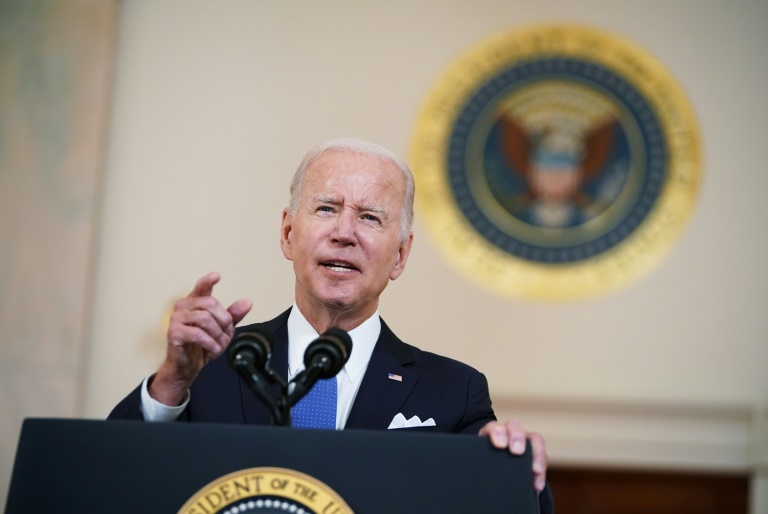
A somber President Joe Biden called the ruling a “tragic error” stemming from “extreme ideology” and said it was a “sad day for the court and the country.”

“The health and life of women in this nation are now at risk,” Biden said, warning that other rights could be threatened next, such as same-sex marriage and contraception.

The Democratic president urged Congress to restore abortion protections as federal law and said Roe will be “on the ballot” in November’s midterm elections. 

– ‘You have failed us’ –

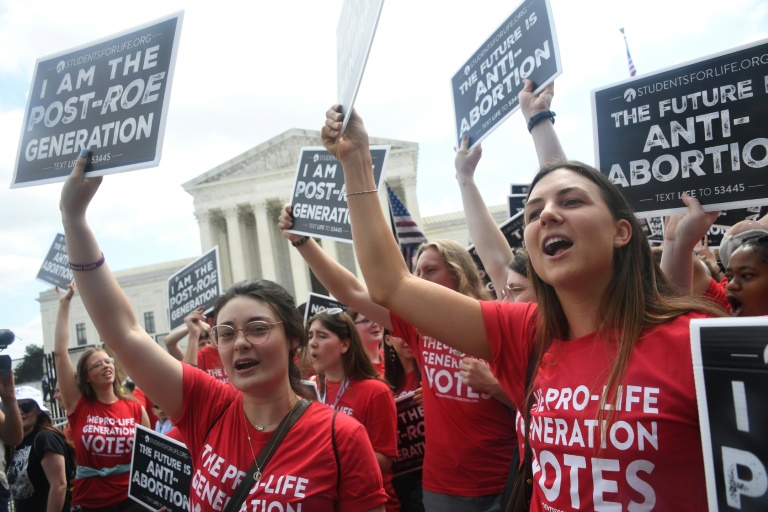
Hundreds of people — some weeping for joy and others with grief — gathered outside the fenced-off Supreme Court as the ruling came down.

“It’s hard to imagine living in a country that does not respect women as human beings and their right to control their bodies,” said Jennifer Lockwood-Shabat, 49, a mother of two daughters who was choking back tears.

“You have failed us,” read a sign held up by one protestor. “Shame,” said another.

But Gwen Charles, a 21-year-old opponent of abortion, was jubilant.

“This is the day that we have been waiting for,” Charles told AFP. “We get to usher in a new culture of life in the United States.”

Just hours after the ruling, Missouri banned abortion — making no exception for rape or incest — and so did South Dakota, except where the life of the mother is at risk.

“This is a monumental day for the sanctity of life,” Missouri attorney general Eric Schmitt said.

As of Friday evening, at least seven states had banned abortion — Alabama, Arkansas, Kentucky, Louisiana, Missouri, Oklahoma, and South Dakota.

Altogether about two dozen states are expected to severely restrict or outright ban and criminalize abortions, forcing women to travel long distances to states that still permit the procedure. 

Protesters marched in New York, Boston and elsewhere as anger over the decision grew. 

“Abortion is health care, health care is a right,” people in a crowd in New York chanted as they marched in Manhattan, NBC news reported.

Criticism of the move came from abroad, including from US allies like Britain, whose Prime Minister Boris Johnson called it “a big step backwards.”

Canada’s Justin Trudeau said it was “horrific,” and French President Emmanuel Macron voiced his “solidarity with women whose freedoms are today challenged.”

– ‘Egregiously wrong’ –

In the majority opinion, Justice Samuel Alito said Roe v. Wade was “egregiously wrong.”

“Abortion presents a profound moral issue on which Americans hold sharply conflicting views,” he said. “The Constitution does not prohibit the citizens of each State from regulating or prohibiting abortion.”

The court tossed out the legal argument in Roe v. Wade that women had the right to abortion based on the constitutional right to privacy with regard to their own bodies.

While the ruling represents a victory in the struggle against abortion by the religious right, leaders of the largely Christian conservative movement said it does not go far enough and they will push for a nationwide ban.

“While it’s a major step in the right direction, overturning Roe does not end abortion,” said the group March for Life.

“God made the decision,” said former Republican president Donald Trump in praising the court’s ruling.

The ruling was made possible by Trump’s nomination of three conservative justices — Neil Gorsuch, Brett Kavanaugh and Amy Coney Barrett.

– ‘Will not stop there’ –

The three liberal justices on the court dissented from the ruling — which came a day after the court ushered in a major expansion of US gun rights.

“One result of today’s decision is certain: the curtailment of women’s rights, and of their status as free and equal citizens,” they said.

Abortion providers could now face criminal penalties and “some States will not stop there,” they warned.

“Perhaps, in the wake of today’s decision, a state law will criminalize the woman’s conduct too, incarcerating or fining her for daring to seek or obtain an abortion,” they said.

According to the Guttmacher Institute, 13 states have adopted so-called “trigger laws” that will ban abortion virtually immediately.

Ten others have pre-1973 laws that could go into force or legislation that would ban abortion after six weeks, before many women even know they are pregnant.

Women in states with strict anti-abortion laws will either have to continue with their pregnancy, undergo a clandestine abortion, obtain abortion pills, or travel to another state where it remains legal.

Several Democratic-ruled states, anticipating an influx, have taken steps to facilitate abortion and three of them — California, Oregon and Washington — issued a joint pledge to defend access in the wake of the court’s decision.
What is causing record floods and heatwaves in China?

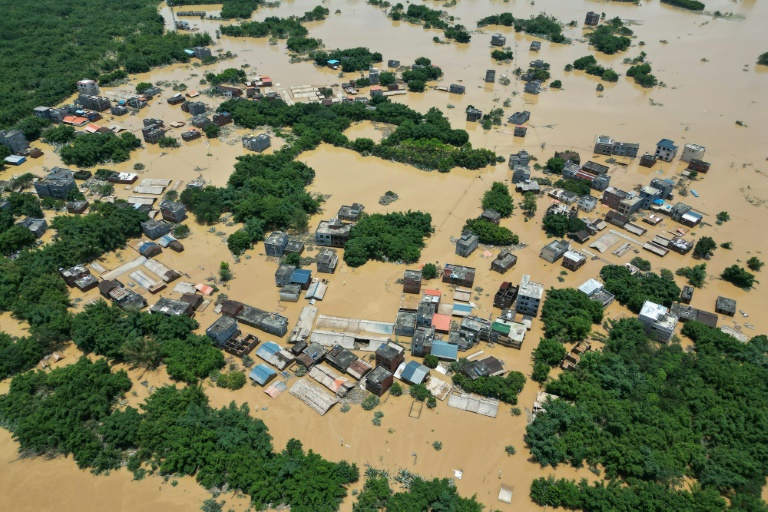
Record floods in southern China this month displaced more than half a million people, while searing heat buckled roads in other parts of the country.

Authorities have issued extreme weather warnings in multiple regions, while experts warned that these phenomena were more evidence of the impact of climate change.

– How bad are the floods? –

Summer floods are common in China, especially in the low-lying Pearl River delta region in the south.

This year, however, the National Climate Center forecast that flooding will be “relatively worse” and “more extreme” than before.

Water levels at one location in Guangdong province “surpassed historical records” this week, according to the ministry of water resources, while parts of neighbouring Fujian province and Guangxi region also reported record rainfall.

More than half a million people were evacuated this month because of the flood threat.

In the cities of Guangzhou and Shaoguan in Guangdong province, heavy rainfall turned roads into rivers and people had to be taken to safety in lifeboats.

Authorities in the province estimated the economic damage from the floods to be more than a quarter of a billion dollars.

– What about the heatwave? –

Seven provinces in northern and central China Wednesday warned millions of residents not to go outdoors as temperatures hit 40 degrees Celsius (104 degrees Fahrenheit).

State broadcaster CCTV this week showed footage of cement roads cracked under extreme heat in central Henan province.

Meanwhile, power demand surged to record levels in several cities in the north this week as residents cranked up the air conditioning to beat the heat.

In China’s second-most populous province Shandong, home to more than 100 million people, electricity use topped 93 million kilowatts on Tuesday, beating the 2020 high of 90 million kilowatts, CCTV said.

– What is the economic cost? –

China’s central economic planner estimates that extreme weather will shave off one to three percent of the country’s GDP every year.

The floods in China last year cost $25 billion — the world’s second-worst flood-related loss after Europe, a study published in April by reinsurer Swiss Re showed.

Chinese Premier Li Keqiang warned Wednesday that floods and heatwaves will affect the production of staple grains, vegetables and pork and push up inflation.

– Why is this happening? –

“Extreme weather and climate events in the country have become more frequent, severe and widespread,” China Meteorological Administration said Wednesday.

It followed a warning in March from Xiao Chan, deputy director of the National Climate Center: “Global warming and La Nina events are contributing to abnormally high temperatures and extreme rain in China.”

As the Earth’s atmosphere gets warmer, it holds more moisture, making downpours more intense.

La Nina refers to the large-scale cooling of surface temperatures in the central and eastern equatorial Pacific Ocean, causing devastating floods in South China, India and Bangladesh.

– What is China doing about it? –

China has built a network of massive dams and “sponge cities” with permeable pavements to try and limit the devastation during the annual flood season.

“But the most damaging recent floods have occurred in areas historically less at risk,” said Scott Moore, a researcher at the University of Pennsylvania focusing on China’s environmental policy.

“This is a classic climate change effect: increased extreme weather in different regions and at different times of year than the historical average.”

China is the world’s biggest coal-burning nation and top emitter of greenhouse gases that lead to climate change.

It aims to become carbon neutral by 2060, but local governments have pushed up investments in both renewables and coal in recent months.

Beijing has also not yet outlined precisely how it intends to achieve its emissions targets.

Environmentalists have warned that without specifying the size of the peak or setting an absolute cap, China can essentially keep increasing emissions until 2030.

– Focus on forecasting? –

A new roadmap for climate change adaptation published by the Chinese government last week says the focus should now shift to predicting extreme weather more accurately using sensors and satellites.

“The usefulness of weather forecasts caps out around 10 days, beyond which their accuracy rapidly drops to that of a coin flip,” think tank Trivium China said in a research note.

“Climate monitoring and forecasting is a whole different ballgame”, helping to predict severe floods and droughts at least a month in advance.

With end of abortion rights, Trump achieves holy grail for supporters

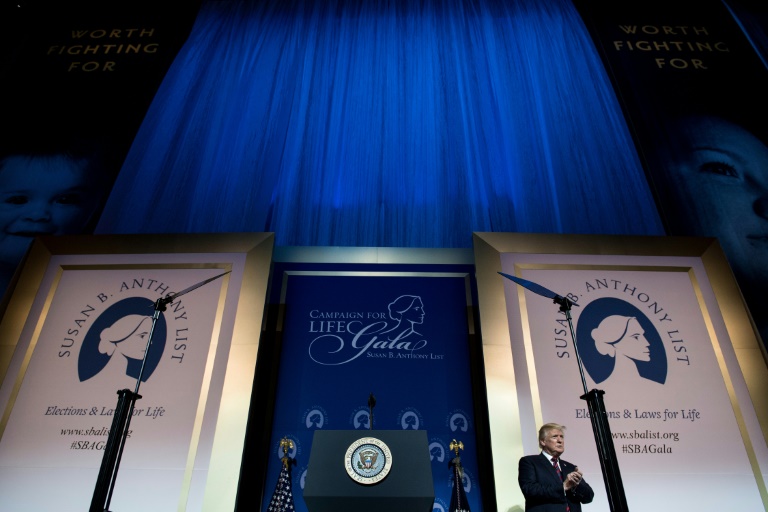
When Donald Trump was elected president in 2016, some evangelical Christians held their noses over his louche lifestyle and manners in a belief he would be a champion on their key battlefield — the judiciary.

Their bet paid off. Trump is no longer in power but his nominations have led America’s Christian right to its holy grail — the Supreme Court ending the nationwide right to abortion.

If there is one point of unanimity among Trump’s supporters and critics both inside and outside the Republican Party, it is that reshaping the judiciary will be one of his most lasting legacies.

Trump over his four-year term was able to nominate three justices, or one-third, of the Supreme Court — all of whom sided with the majority Friday in striking down the 1973 Roe v. Wade decision.

Trump — who in 1999, as a celebrity realtor flirting with politics, called himself “very pro-choice” — said in a statement that the historic ruling was “only made possible because I delivered everything as promised.”

Asked in a Fox News interview if he deserved credit, Trump, who rarely goes to church and is seldom known for modesty, said, “God made the decision.”

Mary Frances Berry, a history professor at the University of Pennsylvania, said that, with the relative youth of his appointees, Trump will likely have an enduring legacy on the courts for years to come.

“One thing we know about Trump is even though some of the promises he makes are outrageous, he usually tries to keep his promises — unlike many politicians.”

The decision comes at a key moment for Trump, who slipped in a recent poll of Republicans as he contemplates a 2024 rematch against President Joe Biden. Trump has also come under new scrutiny in congressional hearings over his attempts to stay in power after his loss which culminated in the January 6, 2021 attack on the US Capitol.

Trump’s secretary of state Mike Pompeo, an evangelical who recently backed a rival candidate in a key primary, wrote on Twitter to Trump that “historians will write about you.”

“Americans, born and unborn, will benefit for decades,” Pompeo said.

– A ‘transaction’ –

Caleb Verbois, a political scientist at Grove City College, a conservative Christian institution in Pennsylvania, said he received a text message from a friend after the abortion decision saying, “My transaction with Trump has finally come due.”

“If you’re a strong political conservative, I think it’s undeniable that the three most important things were his three Supreme Court nominations,” Verbois said.

On his legacy, decades later “you’re going to remember four years of mayhem and social media uproar and January 6 — and then you’re going to remember this.”

Trump took the unprecedented step during his 2016 campaign of releasing a list of people he would nominate to the Supreme Court after initially struggling to solidify support among church-going evangelical Republicans.

“They didn’t like Trump’s personality, they didn’t like his language, they didn’t like his attitude. But they said, it’s justified because of the court,” Verbois said.

Senate Republican leader Mitch McConnell — who has sparred with the former president, notably over January 6 — worked hand in glove with the Trump White House to push through court picks, who require confirmation by the Senate.

Trump’s first Supreme Court justice, Neil Gorsuch, was nominated after McConnell broke precedent by blocking then president Barack Obama from filling an empty seat.

Trump’s second justice, Brett Kavanaugh, survived allegations of sexual harassment and his third, Amy Coney Barrett, was confirmed in just one month, after the death of Ruth Bader Ginsburg, an icon of the left and committed defender of abortion rights.

– Galvanizing opposition? –

Federal judges serve for life and Trump, by virtue of lucky timing and unity in the Republican Senate, was able to name an unusually large number of justices — prompting calls, but no action, to reform the courts.

In four years, Trump filled 28 percent of available seats on the federal bench, almost as many as were chosen over two terms by Obama, who was only able to pick two Supreme Court justices.

House Speaker Nancy Pelosi, a Democrat, cast blame on Trump and McConnell for a decision that gives American women in 2022 “less freedom than their mothers” and, like Biden, vowed to campaign on abortion in November congressional elections.

Some Democrats rued that the abortion ruling proved that elections have consequences and that the party was too complacent in 2016, when Trump narrowly beat Hillary Clinton.

But Mark Bayer, a former chief of staff to a Democratic senator and president of Bayer Strategic Consulting, said the decision could galvanize opposition.

“Donald Trump may expect a political payoff, but this disastrous ruling also will energize voters across the political spectrum who support women’s rights,” Bayer said.

Abortion access threatened in half of US states

The US Supreme Court’s overturning of America’s constitutional right to abortion gives all 50 states the freedom to ban the procedure, with nearly half expected to do so in some form.

– Automatic bans –

Thirteen states, mostly in the conservative and religious south of the country, have in recent years adopted so-called “trigger” laws to come into force virtually automatically after the decision was handed down.

And as of Friday evening, at least seven states had banned the procedure: Alabama, Arkansas, Kentucky, Louisiana, Missouri, Oklahoma, and South Dakota. 

Other states, such as Mississippi, require the attorney general to first confirm that the court has changed the legal framework. 

Texas and Tennessee have set a period of 30 days between the release of the judgment and a new ban coming into force. 

The states differ in how they ban abortions. Idaho provides exceptions for rape or incest but Kentucky only does so if the pregnant woman’s life is in danger.

Laws in Louisiana could see health professionals jailed for up to ten years for carrying out abortions. In Missouri, it’s 15 years.

– Restrictions –

Iowa, Georgia, Ohio and South Carolina are among states that have passed laws restricting abortion after six weeks of pregnancy, before many women even know they are expecting.

The laws have been blocked in the courts, but a federal judge in Ohio gaveled it into law Friday. Similarly, other laws could also take effect soon.

– Complex patchwork –

Ten states, including Arizona and Michigan, have pre-1973 laws banning abortion on the books that they could theoretically revive, though their path forward is uncertain.

In Wisconsin — where the Democratic governor supports abortion rights, but the majority Republican lawmakers do not — Planned Parenthood has said it does not plan to carry out abortions from the end of June, citing a legal risk.

In Michigan, Democratic Attorney General Dana Nessel has added to the confusion by promising not to prosecute people who violate its 1931 law banning abortion.

But local prosecutors will still be able to do so, and the state risks becoming a complex patchwork of laws.

In Arizona, Republican Governor Doug Ducey believes that a law passed this year to ban abortions after 15 weeks of pregnancy will override previous rules. 

Senators in his party do not see it that way and Ducey is expected to go to court to get clarity.

– Others to watch –

According to the Guttmacher Institute, four states have signaled that they are unfavorable to abortion but do not currently have laws prohibiting it.

Lawmakers in Nebraska and Indiana have failed to pass abortion bans. Officials in Montana and Florida have reduced deadlines for terminating a pregnancy, but supreme courts in those states have protected the right to abortion. 

– Liberal states –

Twenty-two states — mostly in the northeast and on the West Coast — will retain the right to abortion and are preparing for an influx of women seeking abortions.

Connecticut and Delaware, for example, have expanded the categories of professionals who are authorized to carry out abortions to include nurses and midwives.

Lawmakers in California have allocated $152 million to assist access to abortion and the governor of New York has pledged $35 million.

US sports stars shocked by 'terrifying' abortion decision

Sports stars across the United States reacted with shock and anger on Friday after the Supreme Court’s decision to scrap the right to abortion after nearly five decades.

WNBA players and teams led a chorus of outrage over the seismic decision which threatens to result in abortion becoming illegal in nearly half of the 50 US states.

The WNBA noted that the conservative-leaning Supreme Court’s abortion decision had come just a day after another bombshell ruling that decreed Americans have a right to carry a handgun in public.

“Are we in a democracy where guns have more rights than women?” the WNBA statement asked.

“This decision shows a branch of government that is out of touch with the country and any sense of human dignity.”

The league said the decision would create a “treacherous pathway” to abortion bans that “reinforce economic, social and political inequalities.”

Many WNBA players and teams took to social media to register disgust at the decision.

WNBA icon and five-time Olympic gold medalist Sue Bird wrote simply: “Gutted.”

Bird’s club, the Seattle Storm, meanwhile declared themselves “furious and ready to fight.”

“People have won the freedom to buy guns with impunity while women have lost the freedom to decide their own future,” the Storm wrote on Twitter. 

Los Angeles Sparks star Lexie Brown added: “How did we get here? So much happening in this country and this is what they want to focus on. It’s really terrifying actually.”

– ‘Cruelty is the point’ –

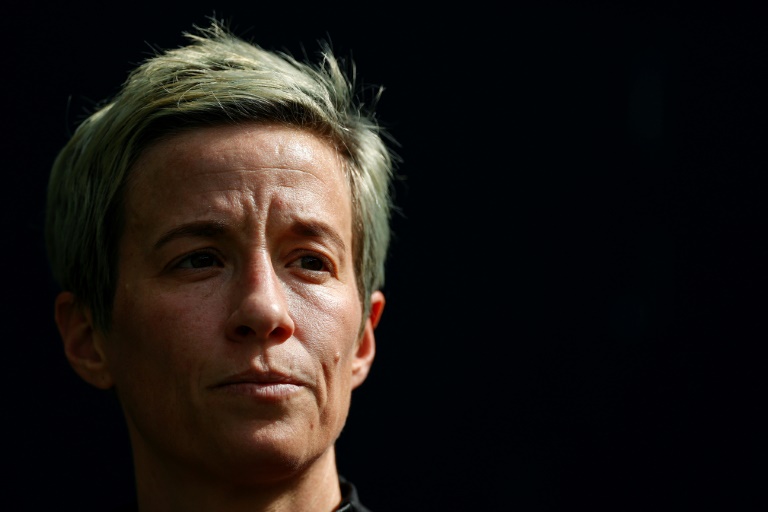
US women’s soccer icon Megan Rapinoe, her voice cracking with emotion, spoke of her sadness in comments to reporters ahead of an international friendly against Colombia this weekend.

“It’s hard to put into words how sad a day this is,” Rapinoe said. “I just can’t understate how sad and how cruel this is.

“The cruelty is the point, because this is not pro-life, by any means.

“It will completely exacerbate so many of the existing inequalities that we have in our country. The right to freedom and the pursuit of happiness and liberty is being assaulted in this instance.”

Rapinoe, who is gay, said she also feared that US constitutional protections on same-sex marriage would eventually be in jeopardy.

“We live in a country that forever tries to chip away what you have innately, what you have been privileged enough to feel your entire life,” Rapinoe said.

US tennis legend Billie Jean King, who wrote in her memoir “All In” of her harrowing experience seeking an abortion in the days before it became a right in the United States, said Friday’s ruling “will not end abortion.”

“What it will end is safe and legal access to this vital medical procedure,” King wrote on Twitter. “It is a sad day for the United States.”

King’s fellow tennis great Martina Navratilova said simply: “The March to Gilead is here”, in a reference to the novel and television drama “The Handmaid’s Tale”, which portrays a dystopian future where women are subjugated and enslaved by men.

Several male sports stars also spoke out against the decision.

NBA icon LeBron James said on Twitter the decision was “absolutely about power & control.”

Seattle Sounders goalkeeper Stefan Frei also contrasted the ruling with the court’s decision on gun control a day earlier.

“Impose a constitutional right to concealed carry of firearms, and following day end the fundamental constitutional protection of reproductive rights!? Our country is actively moving in the wrong direction,” Frei wrote on Twitter. 

“What’s next? This is crazy.”

US passes first major gun bill in decades

US lawmakers broke a decades-long stalemate on firearms control Friday, passing the first major safety regulations in almost 30 years, less than 24 hours after the Supreme Court bolstered the right to bear arms.

Gun regulation is a touchstone issue for both conservatives and liberals in the United States that has consumed national politics amid multiple mass shootings in recent years.

The Democratic-led House of Representatives voted to rubber-stamp a bipartisan Senate gun bill that — while modest — amounts to the first significant piece of legislation to regulate firearms since 1994.

“Let us not judge this legislation for what is not in it, but respect it for what it does. And what it does is save lives. And we are very, very proud of that,” the top Democrat Nancy Pelosi said on the House floor. 

Fourteen Republicans defied their leader Kevin McCarthy to cross the aisle and approve the 80-page package, which advanced from the evenly-divided upper chamber with cross-party backing late Thursday.

That vote came hours after the Supreme Court’s conservative majority had struck down a century-old New York law requiring permits for concealed-carry handguns.

The gun legislation includes enhanced background checks for younger buyers and federal cash for states introducing “red flag” laws that allow courts to temporarily remove weapons from those considered a threat.

Billions of dollars have been allocated to crack down on “straw purchasers” who buy firearms for people who are not allowed them and to curb gun trafficking.

– ‘Long-sought triumph’ –

The deeply-divisive issue of gun control was reignited by two massacres in May that saw 10 Black supermarket shoppers gunned down in upstate New York and 21 people, mostly young children, slain at a school in Texas.

The Supreme court had voted along party lines, with the six Republican appointees in favor of bolstering the constitutional right to bear arms and the three Democratic appointees dissenting.

The ruling was hailed by campaigners for boosted gun rights, but took the shine off what was expected to be a day of jubilation for weapons control activists.

Liberals had been celebrating the congressional action despite disappointment at the limited scope of the legislation, which doesn’t include universal background checks and omits any ban on semi-automatic weapons or high-capacity magazines.

“This decision won’t stop our grassroots army from doing what we’ve done for a decade: fighting to keep our families safe,” added Shannon Watts, founder of gun safety group Moms Demand Action, said after the Supreme Court ruling was announced.

“Just as we’re breaking the logjam in Congress, we’re going to work day-in, day-out to mitigate the fallout in New York and any other states impacted by this decision and elect gun-sense lawmakers up and down the ballot.”

Eric Tirschwell, chief litigation counsel at legal non-profit Everytown Law, said the Supreme Court had misapplied fundamental constitutional principles, and added that the group was “ready to go to court” to defend restrictions.

Top Republicans celebrated the court’s decision.

“This is not just a long-sought triumph for lawful gun owners across America, it is a victory for all citizens and our constitutional order itself,” said Senate Minority Leader Mitch McConnell.

McCarthy hailed the ruling as a victory that “rightfully ensures the right of all law-abiding Americans to defend themselves without unnecessary government interference.”

“The decision comes at an important time — as the Senate considers legislation that undermines Second Amendment freedom,” Wayne LaPierre, the National Rifle Association’s executive vice president, said in a statement.

“This decision unequivocally validates the position of the NRA and should put lawmakers on notice: no law should be passed that impinges this individual freedom.”

US recession would be 'necessary price' to defeat inflation: IMF chief

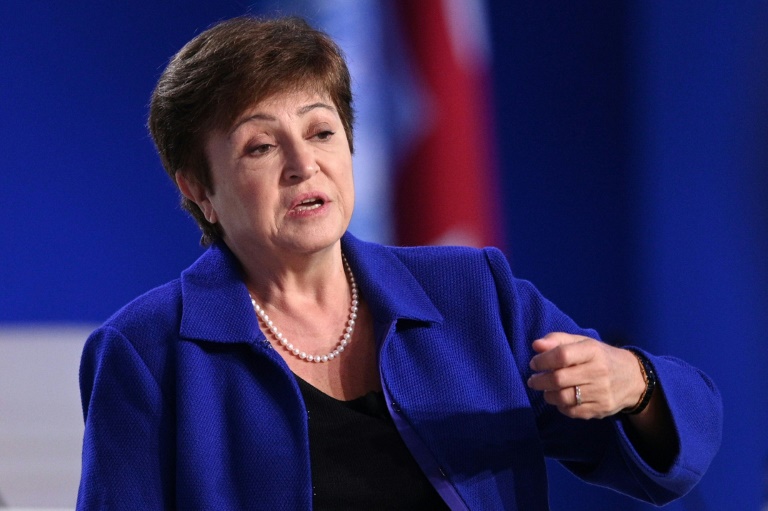
With inflation rising sharply, and the Federal Reserve raising interest rates, the United States is facing an increased risk of a downturn, IMF Managing Director Kristalina Georgieva said Friday.

But any temporary pain caused by a recession would be “a necessary price to pay” to defeat damaging inflation, she said.

The Washington-based crisis lender again slashed its US growth forecast to 2.9 percent, from the 3.7 percent forecast in April, which was cut from the rate predicted at the start of the year.

The world’s largest economy rebounded strongly from the pandemic downturn, but that has come with “unwelcome side effects” of rising prices, Georgieva said.

While the IMF is confident the Fed’s rate hikes will bring down inflation, “We are conscious that there is a narrowing path to avoiding a recession,” she said in a statement.

The Fed last week implemented the biggest increase in its benchmark lending rate in nearly 30 years, as part of its aggressive effort to quell inflation that is at a four-decade high and squeezing American families struggling with rising prices for gasoline, food and housing.

The US economy already was seeing strong demand clashing with supply snarls due to pandemic lockdowns in China and elsewhere, when Russia invaded Ukraine, which has intensified the inflationary pressures.

For 2023, growth is expected to slow to 1.7 percent, but “narrowly avoid” a recession, according to the annual review of the US economy, known as the Article IV consultation.

The IMF chief said the battle against inflation must be the “top priority” despite the impact a US slowdown might have on the global economy.

“Success over time will be beneficial for global growth, but some pain to get to that success can be a necessary price to pay,” she said in response to a question from AFP.

Georgieva met with US Treasury Secretary Janet Yellen and Fed Chair Jerome Powell and the officials “left no doubt as to their commitment to bring inflation back down.”

Nigel Chalk, deputy chief of the IMF’s Western Hemisphere division, said any US recession is likely to be short-lived, given the stockpile of savings and strong business and household balance sheets, and the strong labor market.

“All of those things would help support the economy,” he said. “So if it was hit by negative shock, it should pass relatively quickly and have a relatively quick recovery afterwards.”

– Roll back tariffs –

The IMF also urged Washington to remove punitive trade duties imposed under former president Donald Trump — something President Joe Biden said he is considering and Yellen appears to favor.

“Especially at a time when inflation is high and supply chains are strained… we can see clear benefits in rolling back the tariffs that were introduced over the last 5 years,” Georgieva said in a statement.

However, US Trade Representative Katherine Tai has said the steep tariffs on China offer negotiating “leverage” with Beijing which she is reluctant to give up.

The IMF report said removing tariffs on steel, aluminum, and a range of products from China “would support growth and help reduce inflation.”

The rapid US recovery, helped by low interest rates and hefty government aid, had domestic benefits, reducing poverty and creating more than 8.5 million jobs since the end of 2020, according to the IMF analysis. 

It also offered a boost to the pandemic-ravaged global economy, but fund economists cautioned that it will be “tricky” to avoid recession.

“The stakes are clearly high. Misjudging the policy mix — in either direction — will result in sizable economic costs at home and negative outward spillovers to the global economy.”

However, the report pushed back against comparisons to the inflationary era of the 1980s, noting the economy and the central bank actions are “markedly different.”

US recession would be 'necessary price' to defeat inflation: IMF chief

With inflation rising sharply, and the Federal Reserve raising interest rates, the United States is facing an increased risk of a downturn, IMF Managing Director Kristalina Georgieva said Friday.

But any temporary pain caused by a recession would be “a necessary price to pay” to defeat damaging inflation, she said.

The Washington-based crisis lender again slashed its US growth forecast to 2.9 percent, from the 3.7 percent forecast in April, which was cut from the rate predicted at the start of the year.

The world’s largest economy rebounded strongly from the pandemic downturn, but that has come with “unwelcome side effects” of rising prices, Georgieva said.

While the IMF is confident the Fed’s rate hikes will bring down inflation, “We are conscious that there is a narrowing path to avoiding a recession,” she said in a statement.

The Fed last week implemented the biggest increase in its benchmark lending rate in nearly 30 years, as part of its aggressive effort to quell inflation that is at a four-decade high and squeezing American families struggling with rising prices for gasoline, food and housing.

The US economy already was seeing strong demand clashing with supply snarls due to pandemic lockdowns in China and elsewhere, when Russia invaded Ukraine, which has intensified the inflationary pressures.

For 2023, growth is expected to slow to 1.7 percent, but “narrowly avoid” a recession, according to the annual review of the US economy, known as the Article IV consultation.

The IMF chief said the battle against inflation must be the “top priority” despite the impact a US slowdown might have on the global economy.

“Success over time will be beneficial for global growth, but some pain to get to that success can be a necessary price to pay,” she said in response to a question from AFP.

Georgieva met with US Treasury Secretary Janet Yellen and Fed Chair Jerome Powell and the officials “left no doubt as to their commitment to bring inflation back down.”

Nigel Chalk, deputy chief of the IMF’s Western Hemisphere division, said any US recession is likely to be short-lived, given the stockpile of savings and strong business and household balance sheets, and the strong labor market.

“All of those things would help support the economy,” he said. “So if it was hit by negative shock, it should pass relatively quickly and have a relatively quick recovery afterwards.”

– Roll back tariffs –

The IMF also urged Washington to remove punitive trade duties imposed under former president Donald Trump — something President Joe Biden said he is considering and Yellen appears to favor.

“Especially at a time when inflation is high and supply chains are strained… we can see clear benefits in rolling back the tariffs that were introduced over the last 5 years,” Georgieva said in a statement.

However, US Trade Representative Katherine Tai has said the steep tariffs on China offer negotiating “leverage” with Beijing which she is reluctant to give up.

The IMF report said removing tariffs on steel, aluminum, and a range of products from China “would support growth and help reduce inflation.”

The rapid US recovery, helped by low interest rates and hefty government aid, had domestic benefits, reducing poverty and creating more than 8.5 million jobs since the end of 2020, according to the IMF analysis. 

It also offered a boost to the pandemic-ravaged global economy, but fund economists cautioned that it will be “tricky” to avoid recession.

“The stakes are clearly high. Misjudging the policy mix — in either direction — will result in sizable economic costs at home and negative outward spillovers to the global economy.”

However, the report pushed back against comparisons to the inflationary era of the 1980s, noting the economy and the central bank actions are “markedly different.”

Memorial ceremony held a year after Florida condo collapse

The Florida town of Surfside held a memorial ceremony Friday for 98 people who died exactly a year ago when a seaside condominium collapsed, with relatives of the deceased, rescue workers and politicians on hand.

The tribute was held at the spot where part of the 12-story Champlain Towers South building once stood in this town north of Miami Beach.

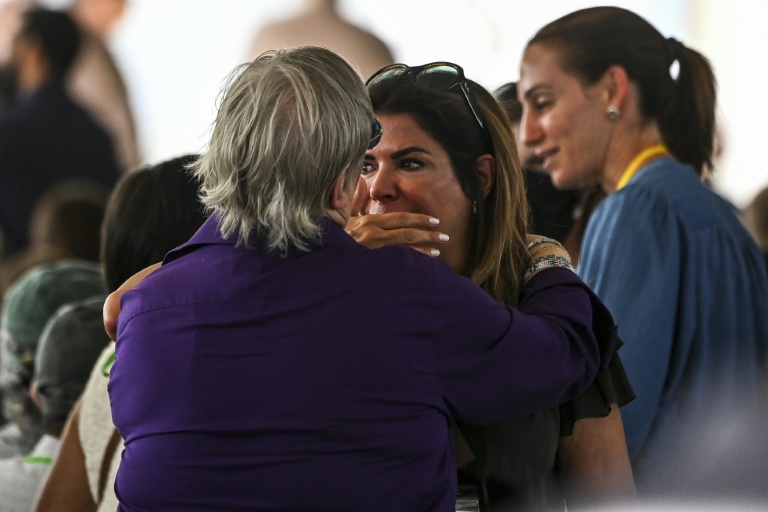
People taking part in the ceremony cried, hugged and clapped as relatives of victims took turns giving speeches.

“I know what it means to feel profound loss. And one year later, time has not healed my broken heart. Like all of you, I carry this extreme void with me,” said Kevin Spiegel, whose 65-year-old wife Judy died that day.

Raquel Oliveira remembered her husband Alfredo Leone, 48, and their five-year-old son Lorenzo, both of whom died in the accident.

“Exactly 365 days ago, my house imploded, collapsed with everything and everyone inside but me. It took my family two weeks to be found,” said Oliveira.

“We need answers. We need justice. We need something that I hate: the word patience,” she added.

First Lady Jill Biden and Florida Governor Ron DeSantis attended the ceremony.

Except for a teenager rescued hours after the tower collapsed, search crews found no survivors in the rubble.

On Thursday, a judge approved a more than $1 billion settlement, most of which will go to survivors of people who died in the accident. 

Words aside, Biden's hands tied on abortion rights

A furious Joe Biden denounced a “tragic error” fueled by “extreme ideology,” urging Americans to set things right at the polls. But words aside — the US president is all-but-powerless to defend the right to abortion.

The 79-year-old Democrat, a staunch Catholic turned abortion rights advocate, kept his remarks brief in addressing the thunderbolt ruling handed down Friday by the Supreme Court.

But in the televised address from the White House, he pulled no punches.

The conservative-dominated court, by overturning “Roe v. Wade,” is “literally taking America back 150 years,” Biden charged. 

“The court has done what it has never done before — expressly take away a constitutional right that is so fundamental to so many Americans,” said Biden — warning that other rights could now be at risk, from contraception to same-sex marriage.

That is the “extreme and dangerous path the court has now taken us on,” he said.

Biden vowed to do everything he could to shield abortion access.

But with the Supreme Court stripping away a half-century-old federal right, handing power to often anti-abortion state legislatures, he acknowledged that his hands are largely tied.

The only way to ensure the right now “is for Congress to restore the protections of ‘Roe v. Wade’ as federal law,” he said. “No executive action from the president can do that.”

“Voters need to make their voices heard,” he said.

Struggling in the polls as inflation surges — and fears mount of a recession — Biden signaled the intention to make abortion a key part of the Democratic campaign to retain control of Congress in November midterm elections.

“This Fall, ‘Roe’ is on the ballot. Personal freedoms are on the ballot — the right to privacy, liberty, equality, are all on the ballot.”

Biden vowed to do “all in my power” to curb the impact of the court’s ruling — citing for instance women’s right to travel out of state to receive reproductive care, and access to abortion pills.

But he did not touch on calls from part of the left for abortion clinics to be built on federal land in conservative states — or for reform of the Supreme Court.

– No questions –

About half of the US states are moving immediately to either ban or severely restrict abortion, responding to decades of activism by the so-called “pro-life” movement, which finally got its chance when Republican president Donald Trump named three more conservative justices to the top court, tilting the balance firmly right.

Biden did not hide his anger as he described some of the laws emerging from states as “jeopardizing the health of millions of women.” 

In some cases, legislators are allowing women to be “punished for protecting their health” and forcing women to “bear their rapist’s child,” he said.

After concluding, Biden turned and left without taking questions from reporters, while the White House daily briefing was canceled — to protests from the press corps.

The next time Biden faces the media will be Saturday morning when he leaves on a days-long trip to Europe.

During back-to-back G7 and NATO summits, the “leader of the free world” will rub shoulders with Western leaders, several of whom have openly denounced the US Supreme Court ruling.

As it happens, his first stop will be Germany, which has just consigned to history a Nazi-era law that limits the information doctors and clinics can provide about abortion.

And by Biden’s own admission, the Supreme Court’s ruling has made the United States an “outlier” among developed nations.

Close Bitnami banner
Bitnami