AFP

Stocks and oil rally as rate-hike worries ebb

Global stock markets and oil prices jumped higher on Friday following recent heavy losses as the weakening economic outlook moderates expectations about central bank monetary tightening.

With a spate of data pointing to an economic slowdown, market watchers said investors now believe central banks may need to deal out less punishing interest rate hikes, and thus the pushing of equity markets into bear market territory may have been an overreach.

The broad-based S&P 500 added 3.1 percent to stand at 3,911.74 at the end of Friday’s session, up almost 6.5 percent for the week in one of the best seven-day stretches in an otherwise downcast 2022.

Earlier, London stocks rallied 2.7 percent with investors brushing aside news of bruising defeats for Britain’s ruling Conservatives in by-elections on Thursday.

The pound firmed against the dollar, despite data showing a drop in UK retail sales volumes as inflation soars.

Paris stocks jumped 3.2 percent in eurozone trade, while Frankfurt rose 1.6 percent with gains tempered by news of the worsening German business climate.

“Stock markets are taking a breather after being beat up… as recession fears took their toll,” OANDA trading platform analyst Craig Erlam told AFP.

But he warned that stock markets remain “vulnerable to another onslaught if the news does not improve”.

Asian stock markets closed higher after Thursday’s gains on Wall Street.

The recoveries come after global markets have been thrown into turmoil for months owing to soaring inflation, interest-rate hikes, the Ukraine war and China lockdowns.

US equity markets tumbled into bear market territory — a drop of more than 20 percent from recent highs — as the US Federal Reserve began to aggressively raise interest rates.

Federal Reserve boss Jerome Powell this week told lawmakers a recession was “certainly a possibility”.

Sentiment in Asia has meanwhile been boosted by comments from Chinese President Xi Jinping suggesting an end to China’s tech crackdown as well as possible new measures aimed at lifting the economy.

Hong Kong shares were among the biggest winners Friday thanks to a rally in tech giants including Alibaba, Tencent and NetEase.

Analysts have been pointing to falling commodity prices, a primary driver of inflation, in the face of a possible recession reducing the need for sharp interest rate hikes as one possible explanation for the renewed bullish sentiment on equity markets. 

– Key figures at around 2020 GMT –

New York – Dow: UP 2.7 percent at 31,500.68 (close)

New York – S&P 500: UP 3.1 percent at 3,911.74 (close)

New York – Nasdaq: UP 3.3 percent at 11,607.62 (close)

London – FTSE 100: UP 2.7 percent at 7,208.81 (close)

Frankfurt – DAX: UP 1.6 percent at 13,118.13 (close)

Paris – CAC 40: UP 3.2 percent at 6,073.35 (close)

EURO STOXX 50: UP 2.8 percent at 3,533.17 (close)

Tokyo – Nikkei 225: UP 1.2 percent at 26,491.97 (close)

Hong Kong – Hang Seng Index: UP 2.1 percent at 21,719.06 (close)

Shanghai – Composite: UP 0.9 percent at 3,349.75 (close)

Euro/dollar: UP at $1.0559 from $1.0523 late Thursday

Pound/dollar: UP at $1.2280 from $1.2260

Euro/pound: UP at 85.95 pence from 85.83 pence

Dollar/yen: UP at 135.17 yen from 134.95 yen 

Brent North Sea crude: UP 2.8 percent at $113.12 per barrel

West Texas Intermediate: UP 3.2 percent at $107.62 per barrel

burs-jmb/bgs

Stocks and oil rally as rate-hike worries ebb

Global stock markets and oil prices jumped higher on Friday following recent heavy losses as the weakening economic outlook moderates expectations about central bank monetary tightening.

With a spate of data pointing to an economic slowdown, market watchers said investors now believe central banks may need to deal out less punishing interest rate hikes, and thus the pushing of equity markets into bear market territory may have been an overreach.

The broad-based S&P 500 added 3.1 percent to stand at 3,911.74 at the end of Friday’s session, up almost 6.5 percent for the week in one of the best seven-day stretches in an otherwise downcast 2022.

Earlier, London stocks rallied 2.7 percent with investors brushing aside news of bruising defeats for Britain’s ruling Conservatives in by-elections on Thursday.

The pound firmed against the dollar, despite data showing a drop in UK retail sales volumes as inflation soars.

Paris stocks jumped 3.2 percent in eurozone trade, while Frankfurt rose 1.6 percent with gains tempered by news of the worsening German business climate.

“Stock markets are taking a breather after being beat up… as recession fears took their toll,” OANDA trading platform analyst Craig Erlam told AFP.

But he warned that stock markets remain “vulnerable to another onslaught if the news does not improve”.

Asian stock markets closed higher after Thursday’s gains on Wall Street.

The recoveries come after global markets have been thrown into turmoil for months owing to soaring inflation, interest-rate hikes, the Ukraine war and China lockdowns.

US equity markets tumbled into bear market territory — a drop of more than 20 percent from recent highs — as the US Federal Reserve began to aggressively raise interest rates.

Federal Reserve boss Jerome Powell this week told lawmakers a recession was “certainly a possibility”.

Sentiment in Asia has meanwhile been boosted by comments from Chinese President Xi Jinping suggesting an end to China’s tech crackdown as well as possible new measures aimed at lifting the economy.

Hong Kong shares were among the biggest winners Friday thanks to a rally in tech giants including Alibaba, Tencent and NetEase.

Analysts have been pointing to falling commodity prices, a primary driver of inflation, in the face of a possible recession reducing the need for sharp interest rate hikes as one possible explanation for the renewed bullish sentiment on equity markets. 

– Key figures at around 2020 GMT –

New York – Dow: UP 2.7 percent at 31,500.68 (close)

New York – S&P 500: UP 3.1 percent at 3,911.74 (close)

New York – Nasdaq: UP 3.3 percent at 11,607.62 (close)

London – FTSE 100: UP 2.7 percent at 7,208.81 (close)

Frankfurt – DAX: UP 1.6 percent at 13,118.13 (close)

Paris – CAC 40: UP 3.2 percent at 6,073.35 (close)

EURO STOXX 50: UP 2.8 percent at 3,533.17 (close)

Tokyo – Nikkei 225: UP 1.2 percent at 26,491.97 (close)

Hong Kong – Hang Seng Index: UP 2.1 percent at 21,719.06 (close)

Shanghai – Composite: UP 0.9 percent at 3,349.75 (close)

Euro/dollar: UP at $1.0559 from $1.0523 late Thursday

Pound/dollar: UP at $1.2280 from $1.2260

Euro/pound: UP at 85.95 pence from 85.83 pence

Dollar/yen: UP at 135.17 yen from 134.95 yen 

Brent North Sea crude: UP 2.8 percent at $113.12 per barrel

West Texas Intermediate: UP 3.2 percent at $107.62 per barrel

burs-jmb/bgs
Friends at first sniff: People drawn to others who smell like them

It’s often said that people who click right away share “chemistry.” 

This expression could be true in the literal sense, according to a new study published in the journal Science Advances on Friday, which finds people with similar body odors are more likely to hit it off as friends.

“Nonhuman terrestrial mammals constantly sniff themselves and each other and, based on this, decide who is friend or foe,” wrote a group of researchers led by Inbal Ravreby at Weizmann Institute of Science in Israel.

Since people seek friends who are similar to themselves, the team hypothesized that humans may smell themselves and others to subconsciously estimate body odor similarity and judge their compatibility.

To find out, they set about collecting samples from pairs of same-sex, non-romantic friends who described themselves as having clicked at first sight, that is to say “where a sense of friendship was formed before extensive biographical information was exchanged,” according to the paper.

After an extensive recruitment effort, they found 20 pairs, half of whom were male, and the other half female, all aged between 22 and 39 years old.

In order to prevent contamination or outside factors influencing their samples, all participants had to follow a strict protocol that included avoiding pungent foods and sleeping away from their partner and pets in a clean cotton T-shirt that was provided to them.

The T-shirts were collected in ziplock bags and tested with an electronic nose — a device equipped with sensors to analyze chemical composition. The researchers found that the odor signatures of “click friends” were statistically more closely matched than odors between non-friends.

To assess whether the eNose results accurately mirrored human perception, the team recruited human smellers and devised a set of tests to check the validity of their result. 

In one of these tests, for example, the human smellers were presented with three odors: two from a pair of click friends, and one outlier. They successfully identified the pairs and rejected the outlier.

– Smell predicted friendships too –

These results seemed to confirm the hypothesis that similar smells might spur friendship, but an alternative explanation was that people who are friends spend a lot of time together and so have similar body-odor shaping experiences, such as where they live and what they eat.

To disentangle these two possibilities, the team devised another test to see whether smell could be a successful predictor in whether two people who’ve never met go on to click.

They recruited 17 strangers and had them all interact with one another in a test called the “Mirror Game” — standing half a meter apart so they could subconsciously smell each other, they were asked to mimic each other’s hand movements for two minutes, without talking to each other.

Chemical similarity in their odors, as tested by the eNose, successfully predicted mutual clicks in 77 percent of cases, and predicted 68 percent of cases where both sides said they did not click.

What’s more, the closer people’s smell was, the more they reported liking each other, understanding one another, and feeling greater chemistry between themselves.

Together, the study’s results “converged to suggest that human same-sex nonromantic click friends smell more similar to each other than expected by chance,” the team concluded.

Humans, unlike other terrestrial mammals, use complex language to interact, and so it’s possible the effects of smell in lab settings were amplified compared to how important they may have been in real life, the team wrote.

“Nevertheless, we think our results imply that we may also be more like other terrestrial mammals in this respect than we typically appreciate.”

Friends at first sniff: People drawn to others who smell like them

It’s often said that people who click right away share “chemistry.” 

This expression could be true in the literal sense, according to a new study published in the journal Science Advances on Friday, which finds people with similar body odors are more likely to hit it off as friends.

“Nonhuman terrestrial mammals constantly sniff themselves and each other and, based on this, decide who is friend or foe,” wrote a group of researchers led by Inbal Ravreby at Weizmann Institute of Science in Israel.

Since people seek friends who are similar to themselves, the team hypothesized that humans may smell themselves and others to subconsciously estimate body odor similarity and judge their compatibility.

To find out, they set about collecting samples from pairs of same-sex, non-romantic friends who described themselves as having clicked at first sight, that is to say “where a sense of friendship was formed before extensive biographical information was exchanged,” according to the paper.

After an extensive recruitment effort, they found 20 pairs, half of whom were male, and the other half female, all aged between 22 and 39 years old.

In order to prevent contamination or outside factors influencing their samples, all participants had to follow a strict protocol that included avoiding pungent foods and sleeping away from their partner and pets in a clean cotton T-shirt that was provided to them.

The T-shirts were collected in ziplock bags and tested with an electronic nose — a device equipped with sensors to analyze chemical composition. The researchers found that the odor signatures of “click friends” were statistically more closely matched than odors between non-friends.

To assess whether the eNose results accurately mirrored human perception, the team recruited human smellers and devised a set of tests to check the validity of their result. 

In one of these tests, for example, the human smellers were presented with three odors: two from a pair of click friends, and one outlier. They successfully identified the pairs and rejected the outlier.

– Smell predicted friendships too –

These results seemed to confirm the hypothesis that similar smells might spur friendship, but an alternative explanation was that people who are friends spend a lot of time together and so have similar body-odor shaping experiences, such as where they live and what they eat.

To disentangle these two possibilities, the team devised another test to see whether smell could be a successful predictor in whether two people who’ve never met go on to click.

They recruited 17 strangers and had them all interact with one another in a test called the “Mirror Game” — standing half a meter apart so they could subconsciously smell each other, they were asked to mimic each other’s hand movements for two minutes, without talking to each other.

Chemical similarity in their odors, as tested by the eNose, successfully predicted mutual clicks in 77 percent of cases, and predicted 68 percent of cases where both sides said they did not click.

What’s more, the closer people’s smell was, the more they reported liking each other, understanding one another, and feeling greater chemistry between themselves.

Together, the study’s results “converged to suggest that human same-sex nonromantic click friends smell more similar to each other than expected by chance,” the team concluded.

Humans, unlike other terrestrial mammals, use complex language to interact, and so it’s possible the effects of smell in lab settings were amplified compared to how important they may have been in real life, the team wrote.

“Nevertheless, we think our results imply that we may also be more like other terrestrial mammals in this respect than we typically appreciate.”

Overjoyed or furious: Abortion reversal hits divided America

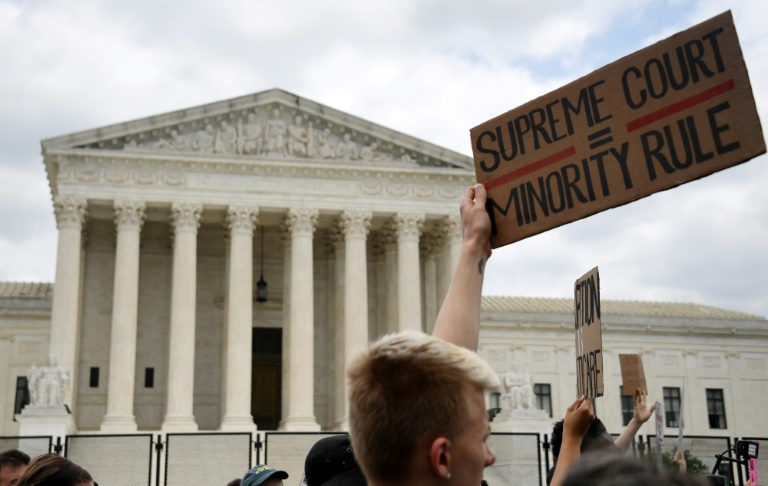
Beaming young women chanted in joy as a machine spat out bubbles and party music blared in front of the US Supreme Court, which had just revoked the federal right to abortion.

Someone shouted “We won” and another cheer rose from the anti-abortion campaigners, one of whom waved a sign bearing a tombstone marked 1973-2022 — the lifespan of that right in America.

“I am so over-the-moon, overjoyed, excited at the overturning of Roe v. Wade. This is a new era of feminism,” Faith Montgomery, an 18-year-old student, shouted over the music.

A parallel demonstration just steps away was filled with rage, disbelief and pledges of resistance against the ruling on one of the most politically incendiary issues in a deeply polarized nation.

“Coat hangers… and whatever crazy things women used to think they could do to get rid of a pregnancy — now we’re going to be back to that again,” said Amy Senkowicz, 63, who was visiting from Florida.

She had a legal abortion when she was 16, just a few years after the 1973 Supreme Court decision that guaranteed women’s right to the procedure, and she was horrified to see that right taken away.

“I think it’s awful,” said the mother of three.

America’s split on the issue was brought into clear relief by the competing demonstrations that at times engaged in shouted debates that did not appear to spill over into violence.

The scene was under heavy police surveillance and riot officers with helmets and shields stood by as some members of Congress spoke outside the fenced and guarded court building.

Congresswoman Sara Jacobs, a Democrat from California, told AFP: “This takes us back to a time when I will have less rights than my mother and grandmother. I’m furious.”

– ‘What’s next?’ –

The decision will likely become a rallying cry for Americans supportive of women’s ability to choose to have an abortion, the way Roe V. Wade was one for decades for conservatives.

Anna Lulis, 24, with an anti-abortion group called Students for Life of America, said activists are already moving on to the next steps in their advocacy.

They will be “informing our community but also going to the states, which are going to now push radical pro-abortion laws, in order to cultivate a culture of life there,” she said.

The decision opens the door for states to restrict or forbid abortion, but does not prevent them from allowing the procedure.

Lulis noted that abortions done with medication will rise after Friday’s ruling, and added her group would be making sure there’s “nothing illegal going on behind the scenes.”

“Our goal is to abolish abortion completely,” she said, arguing there needed to be “common sense medical standards” to protect women’s health in cases where pills are used.

Abortion proponents were also looking at what comes next, especially with key legislative votes coming in November that could sweep away Democrats’ narrow hold on Congress.

“It’s going to be a long, long, long fight to bring things back to the way they were,” said Senkowicz, the mother of three. 

Yet some were left with a feeling that the court has been overrun by the feverish politics of America’s culture wars that have developed around issues like abortion and gun ownership.

“They are beholden and enslaved to the people who nominate them,” said Kim Boberg, 49, referring to the court and its overwhelming conservative majority after three Donald Trump-era appointments.

“It should be above politics but it’s not,” she said, worried about the possibilities the decision could open up.

“So what’s next? Is it the morning after pill? Is it contraception? How many rights have to be taken away before it’s enough?”

Drought hits Italy's hydroelectric plants

Hydroelectric power in Italy has plunged this year thanks to a drought that has also sparked water restrictions and fears for agriculture, industry sources said Friday.

Hydropower facilities, mostly located in the mountains in the country’s north, provide almost one fifth of Italy’s energy demands.

But the lack of rain is causing problems, at a time when Rome is desperately trying to wean itself off its dependence on Russian gas due to the war in Ukraine.

“From January to May 2022, hydro production fell by about 40 percent compared to the corresponding period in 2021,” a spokesman for Utilitalia, a federation of water companies, told AFP.

“Hydro production has been steadily decreasing since July 2021,” he said, blaming “the severe shortage of water even at high levels”.

An industry source told AFP that while the situation was constantly changing, estimates for the first six months of 2022 suggest nationwide hydroelectric generation will be almost half the equivalent period of 2021.

One small plant near Piacenza, southeast of Milan, was shut indefinitely on June 21 due to low levels on the River Po that feeds it, the Enel energy company said.

“Considering the current drought situation, other hydro plants are not operating at full capacity,” a spokesman added, without giving further details.

The Po River is Italy’s largest reservoir of fresh water. Much of it used by farmers, but is suffering its worst drought for 70 years. 

Italy’s largest agricultural association, Coldiretti, said the drought is putting over 30 percent of national agricultural production and half of livestock farming in the Po Valley at risk.

On Friday, the northern region of Lombardy called a state of emergency due to the drought, that recommends, among other measures, less water use by consumers and directs mayors to curtail non-essential water use, such as street washing and watering parks and sportsgrounds.

Further to the west in Piedmont, water is being rationed in more than 200 municipalities, according to the ANSA news agency.

The Maggiore and Garda lakes are both far lower than usual for this time of year, while further south, the level of the River Tiber that runs through Rome has also dropped.

Drought hits Italy's hydroelectric plants

Hydroelectric power in Italy has plunged this year thanks to a drought that has also sparked water restrictions and fears for agriculture, industry sources said Friday.

Hydropower facilities, mostly located in the mountains in the country’s north, provide almost one fifth of Italy’s energy demands.

But the lack of rain is causing problems, at a time when Rome is desperately trying to wean itself off its dependence on Russian gas due to the war in Ukraine.

“From January to May 2022, hydro production fell by about 40 percent compared to the corresponding period in 2021,” a spokesman for Utilitalia, a federation of water companies, told AFP.

“Hydro production has been steadily decreasing since July 2021,” he said, blaming “the severe shortage of water even at high levels”.

An industry source told AFP that while the situation was constantly changing, estimates for the first six months of 2022 suggest nationwide hydroelectric generation will be almost half the equivalent period of 2021.

One small plant near Piacenza, southeast of Milan, was shut indefinitely on June 21 due to low levels on the River Po that feeds it, the Enel energy company said.

“Considering the current drought situation, other hydro plants are not operating at full capacity,” a spokesman added, without giving further details.

The Po River is Italy’s largest reservoir of fresh water. Much of it used by farmers, but is suffering its worst drought for 70 years. 

Italy’s largest agricultural association, Coldiretti, said the drought is putting over 30 percent of national agricultural production and half of livestock farming in the Po Valley at risk.

On Friday, the northern region of Lombardy called a state of emergency due to the drought, that recommends, among other measures, less water use by consumers and directs mayors to curtail non-essential water use, such as street washing and watering parks and sportsgrounds.

Further to the west in Piedmont, water is being rationed in more than 200 municipalities, according to the ANSA news agency.

The Maggiore and Garda lakes are both far lower than usual for this time of year, while further south, the level of the River Tiber that runs through Rome has also dropped.

Trump says God made abortion decision, then takes credit himself

Former US president Donald Trump on Friday said “God made the decision” to end the national right to abortion after the Supreme Court overturned nearly five decades of settled law.

“This is following the Constitution, and giving rights back when they should have been given long ago,” Trump told Fox News after a 6-3 majority said individual states should be allowed to make their own rules on abortion.

Asked if he felt he played a role in this outcome, having appointed three conservative justices to the court while in office, Trump said “God made the decision.”

But a short time later, the 45th president chimed in again to take credit for the ruling.

“Today’s decision, which is the biggest WIN for LIFE in a generation…(was) only made possible because I delivered everything as promised, including nominating and getting three highly respected and strong Constitutionalists confirmed to the United States Supreme Court,” he said in a statement.

“It was my great honor to do so!”

Trump’s four years in office saw the appoinment of three justices that tilted the balance of the Supreme Court to its current conservative majority.

Those appointees were Neil Gorsuch, Brett Kavanaugh and Amy Coney Barrett, all of whom signed on to Friday’s majority decision.

Trump, whose statement carried the familiar scattering of capital letters, castigated Democrats, the media and “RINOs” — a disparaging term for Republicans deemed not sufficiently right-wing — as the “enemy of the people.”

“Even though the Radical Left is doing everything in their power to destroy our Country, your Rights are being protected, the Country is being defended, and there is still hope and time to Save America! 

“I will never stop fighting for the Great People of our Nation!”

Trump, whose actions and inactions around the January 6, 2021 storming of the Capitol are under the spotlight at Congressional hearings, is publicly mulling another run at the White House.

He was defeated in 2020 in his bid for re-election by President Joe Biden, but has refused to accept the result.

US anti-abortion movement turns to states after high-court victory

Emboldened by its landmark win at the Supreme Court, the US anti-abortion movement pivoted immediately Friday to its next goal: to have the procedure banned in each of America’s 50 states.

Declaring the end of constitutional abortion rights a “historic” victory, leaders of the largely Christian conservative “pro-life” movement declared a new phase, in which they would focus at the local level to get state legislatures to end the practice.

But some also said their ultimate goal would be to return to the Supreme Court for a ruling that would give fetuses the same rights as a person, which would equate abortion with murder.

“An entirely new pro-life movement begins today,” said Marjorie Dannenfelser, president of the anti-abortion Susan B. Anthony Pro-Life America campaign — vowing to go on the “offensive for life in every single one of those legislative bodies, in each statehouse and the White House.”

“Over the next few years we will have the opportunity to save hundreds of thousands, even millions of lives by limiting the horror of abortion in many states.”

Other groups echoed that view.

“While it’s a major step in the right direction, overturning Roe does not end abortion,” said the March for Life group in a statement.

– Battle in the states –

Part of their goal has already been achieved, with the conservative-dominated Supreme Court overturning the landmark 1973 “Roe v. Wade” decision enshrining a woman’s right to an abortion.

More than half of all states are now poised to severely restrict or outlaw the practice, 13 of them through so-called “trigger” laws that come into effect almost immediately, based on the high court’s decision.

Within hours of the ruling, Missouri banned abortion — making no exception for rape or incest — and so did South Dakota, except where the life of the mother is at risk.

But a handful of others are moving in the opposite direction, with the most populous state of California pledging jointly with Oregon and Washington to defend abortion access in the wake of the Supreme Court’s ruling.

And so both anti-abortion and abortion rights groups girded for more localized battles, in legislatures, local courts and local elections.

March for Life immediately sent out a fundraising email to boost its local efforts.

“To say that we are elated would be an understatement, but our work does not stop here,” they said of the Supreme Court decision.

They pointed to work by supporters of abortion rights to press for federal legislation and for White House orders protecting access across the country — to justify continued mobilization by their own camp.

“With your support, we have reached the most monumental moment in pro-life history, and we are more energized than ever to continue the fight for life,” they said.

Dannenfelser said her group’s focus includes the legislative elections coming up in November, when Republicans hope to take control from Democrats of the Senate and House of Representatives.

“Today’s outcome raises the stakes of the midterm elections,” she said.

– ‘Personhood’ –

But the movement has broader horizons, hoping ultimately to persuade Congress or the Supreme Court to fully outlaw abortions on the grounds that a fetus or embryo has the same federally protected rights as a person.

“Throughout human history, countless groups of humans have been unjustly deprived of the status of ‘personhood,’ by both society and the law,” said March for Life. “Abortion is no different.”

“We want abortion abolition,” said Americans United for Life.

“We must clarify, as a constitutional matter as much as a matter of fundamental justice, that abortion shall not exist in the United States of America,” the group’s president, Catherine Glenn Foster, said in a statement.

One justice in US abortion ruling sparks fears for same-sex marriage

A written opinion by one justice in the US Supreme Court’s decision to bury abortion rights has ignited fears that other progressive gains, including same-sex marriage and contraception, could also be overturned.

Clarence Thomas, one of the most conservative justices on the court, wrote that “in future cases” also involving privacy “we should reconsider.”

Thomas cited Griswold v Connecticut, which enshrined the right to contraception in 1965; Lawrence v. Texas, which struck down laws penalizing same-sex relationships in 2003, and Obergefell v. Hodges, the 2015 ruling protecting marriage for all.

Same-sex marriage remains a high-value target for Republicans and the religious right in the United States.

Thomas argued that, since the decisions were based on the same provision of the constitution on privacy as abortion rights, the court has “a duty to ‘correct the error’ established in those precedents.”

He also argued it would be necessary to analyze whether other passages of the constitution “guarantee the myriad rights” generated by the right to privacy.

Thomas — whose wife Ginni Thomas has pushed false claims that Donald Trump won the last election — was the only judge making such arguments out of the nine who sit on America’s top court.

– ‘Extreme and dangerous path’ –

But the court’s shift to the right under Trump, who appointed three new conservative justices, has Democrats, activists and progressive groups fearing its future rulings.

“Justice Thomas explicitly called to reconsider the right of marriage equality, the right of couples to make their choices on contraception,” Biden said Friday.

“This is an extreme and dangerous path that the court has now taken us on.”

In a sign of concern within the court itself, the three left-leaning justices who dissented from the majority also said the abortion decision “places in jeopardy other rights, from contraception to same-sex intimacy and marriage.”

The court’s ruling specifically addressed the fears, saying “we have stated unequivocally that ‘[n]othing in this opinion should be understood to cast doubt on precedents that do not concern abortion.'”

Justice Brett Kavanaugh also addressed the concerns in his concurring opinion, writing: “I emphasize what the Court today states: Overruling Roe does not mean the overruling of those precedents, and does not threaten or cast doubt on those precedents.”

But that will do little to dissuade those who point to statements by some of the justices when they appointed — including Kavanaugh — suggesting that they would not vote to overturn Roe.

Close Bitnami banner
Bitnami