AFP

Relief, crushing grief: Woman denied Malta abortion treated in Spain

A pregnant American woman who suffered heavy bleeding while on holiday on Malta but was denied an abortion has flown to Spain where she is “out of harm’s way”, her partner said Friday.

Andrea Prudente, 38, and Jay Weeldreyer, 45, were told their baby had no chance of surviving, but doctors refused to intervene despite her fear of deadly infection due to Malta’s total ban on terminations.

“Medical evacuation got us safely to Spain where Andrea is out of harm’s way and finally receiving the medical care and treatment denied her in Malta,” Weeldreyer said in a text message to AFP.

Asked how they were feeling, he said: “Relief. And the sudden, smashing waves of grief at losing our little girl. 

“We’ve been so consumed with fear and intense focus on Andrea’s safety, that now she’s finally out of harm’s way, there are cascades of mixed emotions that just come in waves.”

In an interview by telephone on Wednesday with AFP, he had condemned the “callous” and “cruel” treatment of Prudente, after she was rushed to hospital during a “babymoon” holiday to the Mediterranean island.

She had suffered heavy bleeding in her 16th week of pregnancy and later her waters broke, with an ultrasound showing a partially detached placenta, he said.

An ultrasound two days later showed no amniotic fluid left, meaning the foetus had “no chance of survival”, according to a doctor with campaign group Doctors for Choice, which was involved with the case.

But doctors had refused to intervene, waiting for Prudente to miscarry naturally, for the baby’s heartbeat to stop or “for her to have a life-threating infection” that would spur them to act, Weeldreyer had explained.

He feared she would not survive if she developed sepsis, saying they were “playing chicken with the death of the mother”.

The couple’s lawyer, Lara Dimitrijevic, posted on social media that Prudente was “weak and exhausted, relieved and grieving”.

The case made headlines around the world as evidence of the intransigence of the law in Malta, the only country in the European Union to have a total ban on abortion.

Women who have abortions face a maximum of three years in prison, while doctors who help them face up to four years, campaigners say.

Doctors for Choice welcomed the fact that Prudente had been able to finally receive help in Spain, saying she was given abortion pills.

But it said many Maltese women did not have that option.

“Are we really prioritising women’s lives, or are we treating them merely as incubators? We can do much better than this as a country,” it said.

US Congress acts on gun violence after setback for activists

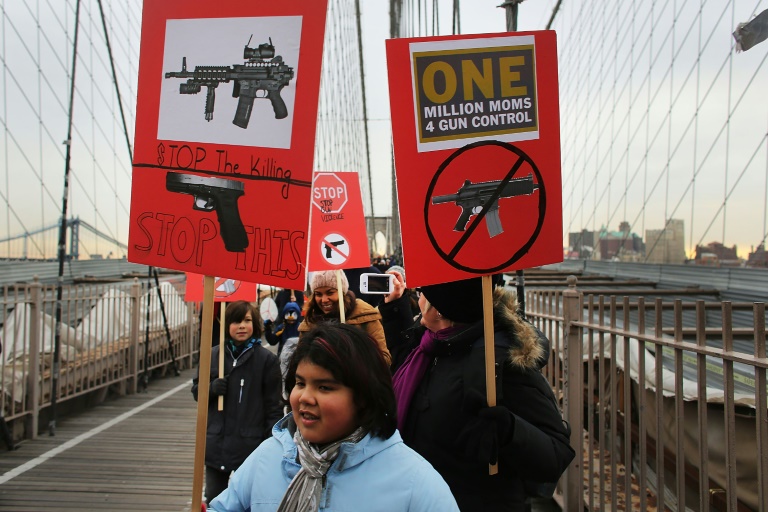
US lawmakers were expected to break a decades-long stalemate with the passage of a limited package on firearms safety Friday, in a watershed week for gun control after the Supreme Court bolstered the right to carry weapons in public.

The highest judicial body in the United States struck down a century-old New York law Thursday that required a person to prove they had a self-defense need for a permit to carry a concealed handgun outside the home.

Hours later, the Senate defied the odds to pass a bipartisan gun bill, with 15 Republicans crossing the aisle to join all 50 Democrats in the first significant piece of legislation to regulate firearms since 1994.

The legislation includes enhanced background checks for younger gun buyers and federal cash for states introducing “red flag” laws that allow courts to temporarily remove guns from those considered a threat.

Billions of dollars have been allocated to crack down on “straw purchasers” who buy firearms for people who are not allowed them and to curb gun trafficking.

Gun control is a touchstone issue for both conservatives and liberals that has consumed Washington amid daily mass shootings in recent years.

The issue was reignited by two massacres in May that saw 10 Black supermarket shoppers gunned down in upstate New York and 21 people, mostly young children, slain at a school in Texas.

A vote to rubber-stamp the 80-page package is expected around midday (1600 GMT) in the House, where Democrats have a 220-210 margin and could afford to lose just four votes if they face a united opposition.

In reality, a handful of Republicans are expected to defy their leader Kevin McCarthy to cross the aisle and approve the measure.

– ‘Long-sought triumph’ –

Democrats and some gun rights activists have voiced disappointment at the modest scope of the legislation, which doesn’t include universal background checks and omits any ban on semi-automatic weapons or high-capacity magazines.

The Supreme court voted along party lines, with the six Republican appointees in favor of bolstering the constitutional right to bear arms and the three Democratic appointees dissenting.

The ruling was hailed by campaigners for boosted gun rights, but took the shine off what was expected to be a day of celebration for weapons control activists.

“This decision won’t stop our grassroots army from doing what we’ve done for a decade: fighting to keep our families safe,” added Shannon Watts, founder of Moms Demand Action. 

“Just as we’re breaking the logjam in Congress, we’re going to work day-in, day-out to mitigate the fallout in New York and any other states impacted by this decision and elect gun-sense lawmakers up and down the ballot.”

Eric Tirschwell, chief litigation counsel at Everytown Law, said the Supreme Court had misapplied fundamental constitutional principles, and said the group was “ready to go to court” to defend restrictions

Top Republicans celebrated the court’s decision.

“This is not just a long-sought triumph for lawful gun owners across America, it is a victory for all citizens and our constitutional order itself,” said Senate Minority Leader Mitch McConnell.

McCarthy hailed the ruling as a victory that “rightfully ensures the right of all law-abiding Americans to defend themselves without unnecessary government interference.” 

“The decision comes at an important time — as the Senate considers legislation that undermines Second Amendment freedom,” Wayne LaPierre, the National Rifle Association’s executive vice president, said in a statement.

“This decision unequivocally validates the position of the NRA and should put lawmakers on notice: no law should be passed that impinges this individual freedom.”

US Supreme Court strikes down constitutional right to abortion

The US Supreme Court on Friday ended the right to abortion in a seismic ruling that shreds half a century of constitutional protections on one of America’s most divisive and bitterly fought issues.

The conservative-dominated court overturned the landmark 1973 “Roe v. Wade” decision that enshrined a woman’s right to an abortion, saying that individual states can now permit or restrict the procedure themselves.

“The Constitution does not confer a right to abortion,” the court said. “The authority to regulate abortion is returned to the people and their elected representatives.”

Hundreds of people — some shedding tears of joy and others weeping with grief — gathered outside the fenced-off Supreme Court, where security was tightened ahead of the ruling.

“It’s hard to imagine living in a country that does not respect women as human beings and their right to control their bodies,” said Jennifer Lockwood-Shabat, 49, a mother of two daughters who was choking back tears.

But Gwen Charles, a 21-year-old opponent of abortion, was jubilant.

“This is the day that we have been waiting for,” she told AFP. “We get to usher in a new culture of life in the United States.”

The Supreme Court ruling will likely set into motion a cavalcade of new laws in roughly half of the 50 US states that will severely restrict or outright ban and criminalize abortions, forcing women to travel long distances to states that still permit the procedure.

In the majority opinion, Justice Samuel Alito said Roe v. Wade was “egregiously wrong.”

“Abortion presents a profound moral issue on which Americans hold sharply conflicting views,” he said. “The Constitution does not prohibit the citizens of each State from regulating or prohibiting abortion.”

The ruling represents a victory of 50 years of struggle against abortion by the religious right — with campaigners now expected to keep pushing for an outright nationwide ban.

The court tossed out the legal argument in Roe v. Wade that women had the right to abortion based on the constitutional right to privacy over their own bodies.

Alito’s opinion largely mirrors his draft opinion that was the subject of an extraordinary leak in early May, sparking demonstrations around the country, with an armed man arrested this month near the home of conservative justice Brett Kavanaugh.

– ‘Never stop fighting’ –

Planned Parenthood, the leading abortion provider in the United States, vowed following the ruling to “never stop fighting” for those in need.

“We know you may be feeling a lot of things right now — hurt, anger, confusion. Whatever you feel is OK. We’re here with you — and we’ll never stop fighting for you,” the organization tweeted.

Former Democratic president Barack Obama denounced the ruling, saying “it relegated the most intensely personal decision someone can make to the whims of politicians and ideologues — attacking the essential freedoms of millions of Americans.”

But former Republican vice president Mike Pence, a leading anti-abortion campaigner, welcomed it, saying the US right to abortion has been consigned to the “ash heap of history.”

“This Supreme Court has righted a historic wrong,” Pence said.

The three liberal justices on the court dissented from the ruling — which came a day after the court ushered in a major expansion of gun rights in the country.

“Whatever the exact scope of the coming laws, one result of today’s decision is certain: the curtailment of women’s rights, and of their status as free and equal citizens,” they said.

The court’s ruling goes against an international trend of easing abortion laws, including in such countries as Ireland, Argentina, Mexico and Colombia where the Catholic Church continues to wield considerable influence.

– ‘Trigger laws’ –

The ruling was made possible by the nomination of three conservative justices to the court by former Republican president Donald Trump — Neil Gorsuch, Kavanaugh and Amy Coney Barrett.

The case before the court was a Mississippi law that would restrict abortion to 15 weeks but while hearing the case in December several justices indicated they were prepared to go further.

According to the Guttmacher Institute, 13 states have adopted so-called “trigger laws” that will ban abortion virtually immediately.

Ten others have pre-1973 laws that could go into force or legislation that would ban abortion after six weeks, before many women even know they are pregnant.

Women living in states with strict anti-abortion laws will either have to continue with their pregnancy, undergo a clandestine abortion or obtain abortion pills, or travel to another state where the procedure remains legal.

Several Democratic-ruled states, anticipating an influx, have taken steps to facilitate abortion and clinics have also shifted their resources.

Travel is expensive, however, and abortion rights groups say any new restrictions will severely impact poor women, many of whom are Black or Hispanic.

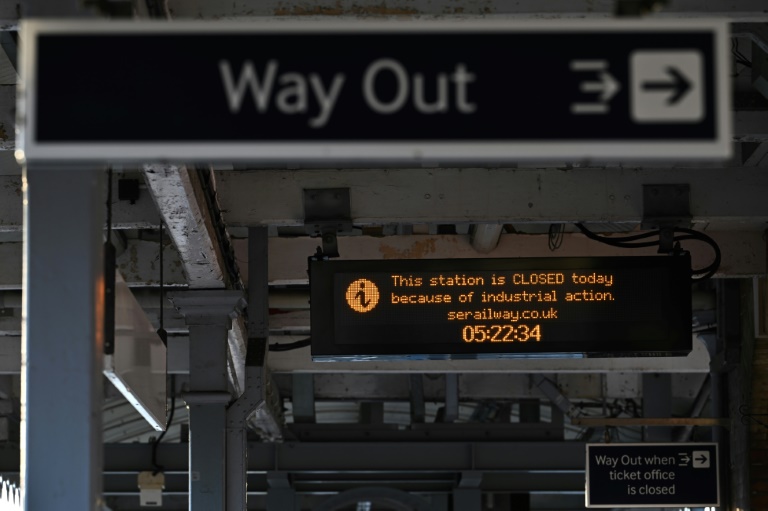
Global trade unions urge UK to resolve rail strike row

International transport trade unions on Friday urged London to negotiate a swift end to Britain’s biggest rail strike in over 30 years, on the eve of the latest walkout.

More than 100 unions have written an open letter to UK Transport Secretary Grant Shapps calling on him to help settle the bitter row over pay, as surging inflation sparks growing industrial unrest.

The letter, coordinated by the International Transport Workers’ Federation, comes one day before the third of this week’s three rail strikes.

“We are writing to call on you to meet with the transport unions to discuss rail workers’ concerns and enable the unions to reach a negotiated settlement to the disputes with rail employers,” the letter read.

And it called upon the government to “defend rail workers’ jobs, pay, conditions and pensions”.

Shapps has so far refused to get involved in negotiations, arguing that they should be held between workers’ trade unions, Network Rail and private-sector railway operating firms.

The letter was signed by unions from across the world, including Asia, Europe, South America and the Middle East.

“We are shocked that … the UK government is set to impose cuts to railway services and scrap infrastructure projects at exactly the time when it should be investing, expanding and promoting public transport, especially the railways to help reduce global emissions from transport,” the letter continued.

“We call on you to do what’s right by these workers and their communities, and call on you to meet urgently with the transport unions.”

The RMT rail union insists strikes are necessary as wages have failed to keep pace with UK inflation, which has hit a 40-year high and is on course to keep rising.

The RMT also accuses Shapps of having “wrecked” negotiations by not allowing Network Rail to withdraw a letter threatening redundancies of 2,900 RMT members.

However, Shapps has called that “a total lie”.

Rail staff went on strike on Tuesday and Thursday — and are also set to do so on Saturday in the absence of a deal.

A Department for Transport spokesperson denied that the government had sought to obstruct any agreement.

“It is entirely false to claim the government is blocking negotiations,” the spokesperson stated.

“We have said from the outset we urge the unions and industry to agree a deal that is fair for railway staff, passengers and taxpayers.”

Separately, British Airways workers at London’s Heathrow airport voted on Thursday to strike over pay.

Members of the GMB and Unite trade unions overwhelmingly backed action and warned of a “summer of strikes” as the nation’s cost-of-living crisis worsens.

Stocks, oil prices push higher

Global stock markets and oil prices rose Friday following recent heavy losses on fears that interest rate hikes aimed at cooling decades-high inflation will spark a global recession.

London stocks rallied 1.7 percent with investors brushing aside news of bruising defeats for Britain’s ruling Conservatives in by-elections on Thursday. 

The pound firmed against the dollar and euro, despite data showing a drop in UK retail sales volumes as inflation soars.

Paris stocks jumped 2.2 percent in eurozone trade, while Frankfurt rose 0.9 percent with gains tempered by news of the worsening German business climate.

“Stock markets are taking a breather after being beat up… as recession fears took their toll,” OANDA trading platform analyst Craig Erlam told AFP.

But he warned that stock markets remain “vulnerable to another onslaught if the news does not improve”.

Asian stock markets closed higher after Thursday’s gains on Wall Street.

Wall Street kept on rising at the opening bell on Friday, with the Dow adding 0.9 percent.

The recoveries come after global markets have been thrown into turmoil for months owing to soaring inflation, interest-rate hikes, the Ukraine war and China lockdowns.

Federal Reserve boss Jerome Powell this week told lawmakers a recession was “certainly a possibility”.

He suggested officials were ready to press on with big rate hikes, following last week’s three-quarter point increase for US borrowing costs that sent markets tanking.

By contrast, the Bank of Japan is sitting tight over interest rate rises, even as the country’s inflation stands at a seven-year high.

Sentiment in Asia has meanwhile been boosted by comments from Chinese President Xi Jinping suggesting an end to China’s tech crackdown as well as possible new measures aimed at lifting the economy.

Hong Kong shares were among the biggest winners Friday thanks to a rally in tech giants including Alibaba, Tencent and NetEase.

Analysts have been pointing to falling commodity prices in the face of a possible recession means reduced need for sharp interest rate hikes as one possible reason for the rebound in sentiment for equities.

“Falling interest rates and falling commodity prices, which typically go hand-in-hand with a growth slowdown, have been held out as developments working in favor of the rebound effort,” said Patrick O’Hare, analyst at Briefing.com.

“There is some truth to that, knowing that rising interest rates and rising commodity prices have been upsetting factors for most of the year, but one has to be careful stretching the credibility of those rally catalysts knowing that slower growth is going to translate into lower earnings growth prospects” for companies, he added.

– Key figures at around 1330 GMT –

London – FTSE 100: UP 1.7 percent at 7,139.90 points

Frankfurt – DAX: UP 0.9 percent at 13,029.12

Paris – CAC 40: UP 2.2 percent at 6,013.21

EURO STOXX 50: UP 1.8 percent at 3,497.44

New York – Dow: UP 0.9 percent at 30,960.32

Tokyo – Nikkei 225: UP 1.2 percent at 26,491.97 (close)

Hong Kong – Hang Seng Index: UP 2.1 percent at 21,719.06 (close)

Shanghai – Composite: UP 0.9 percent at 3,349.75 (close)

Euro/dollar: UP at $1.0531 from $1.0523 late Thursday

Pound/dollar: UP at $1.2278 from $1.2260

Euro/pound: DOWN at 85.77 pence from 85.83 pence

Dollar/yen: UP at 135.07 yen from 134.95 yen 

Brent North Sea crude: UP 1.2 percent at $111.38 per barrel

West Texas Intermediate: UP 1.5 percent at $105.82 per barrel

burs-rl/lth

Stocks, oil prices push higher

Global stock markets and oil prices rose Friday following recent heavy losses on fears that interest rate hikes aimed at cooling decades-high inflation will spark a global recession.

London stocks rallied 1.7 percent with investors brushing aside news of bruising defeats for Britain’s ruling Conservatives in by-elections on Thursday. 

The pound firmed against the dollar and euro, despite data showing a drop in UK retail sales volumes as inflation soars.

Paris stocks jumped 2.2 percent in eurozone trade, while Frankfurt rose 0.9 percent with gains tempered by news of the worsening German business climate.

“Stock markets are taking a breather after being beat up… as recession fears took their toll,” OANDA trading platform analyst Craig Erlam told AFP.

But he warned that stock markets remain “vulnerable to another onslaught if the news does not improve”.

Asian stock markets closed higher after Thursday’s gains on Wall Street.

Wall Street kept on rising at the opening bell on Friday, with the Dow adding 0.9 percent.

The recoveries come after global markets have been thrown into turmoil for months owing to soaring inflation, interest-rate hikes, the Ukraine war and China lockdowns.

Federal Reserve boss Jerome Powell this week told lawmakers a recession was “certainly a possibility”.

He suggested officials were ready to press on with big rate hikes, following last week’s three-quarter point increase for US borrowing costs that sent markets tanking.

By contrast, the Bank of Japan is sitting tight over interest rate rises, even as the country’s inflation stands at a seven-year high.

Sentiment in Asia has meanwhile been boosted by comments from Chinese President Xi Jinping suggesting an end to China’s tech crackdown as well as possible new measures aimed at lifting the economy.

Hong Kong shares were among the biggest winners Friday thanks to a rally in tech giants including Alibaba, Tencent and NetEase.

Analysts have been pointing to falling commodity prices in the face of a possible recession means reduced need for sharp interest rate hikes as one possible reason for the rebound in sentiment for equities.

“Falling interest rates and falling commodity prices, which typically go hand-in-hand with a growth slowdown, have been held out as developments working in favor of the rebound effort,” said Patrick O’Hare, analyst at Briefing.com.

“There is some truth to that, knowing that rising interest rates and rising commodity prices have been upsetting factors for most of the year, but one has to be careful stretching the credibility of those rally catalysts knowing that slower growth is going to translate into lower earnings growth prospects” for companies, he added.

– Key figures at around 1330 GMT –

London – FTSE 100: UP 1.7 percent at 7,139.90 points

Frankfurt – DAX: UP 0.9 percent at 13,029.12

Paris – CAC 40: UP 2.2 percent at 6,013.21

EURO STOXX 50: UP 1.8 percent at 3,497.44

New York – Dow: UP 0.9 percent at 30,960.32

Tokyo – Nikkei 225: UP 1.2 percent at 26,491.97 (close)

Hong Kong – Hang Seng Index: UP 2.1 percent at 21,719.06 (close)

Shanghai – Composite: UP 0.9 percent at 3,349.75 (close)

Euro/dollar: UP at $1.0531 from $1.0523 late Thursday

Pound/dollar: UP at $1.2278 from $1.2260

Euro/pound: DOWN at 85.77 pence from 85.83 pence

Dollar/yen: UP at 135.07 yen from 134.95 yen 

Brent North Sea crude: UP 1.2 percent at $111.38 per barrel

West Texas Intermediate: UP 1.5 percent at $105.82 per barrel

burs-rl/lth

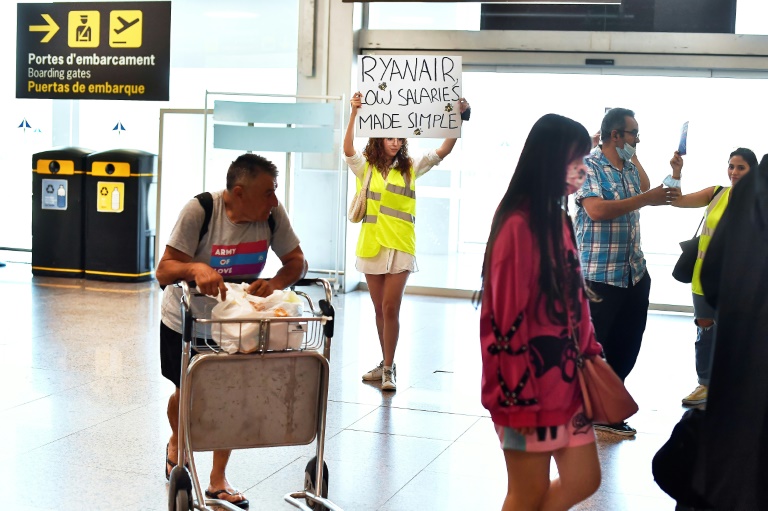
Ryanair, Brussels Airlines strikes disrupt Europe air travel

Strikes by staff at Ryanair and Brussels Airlines over pay and working conditions on Friday forced the cancelation of dozens of flights in Europe as the busy summer travel season gets underway.

The strikes are adding more headaches to passengers and the aviation sector, which has struggled with staff shortages as it struggle to recruit people after massive layoffs during the Covid pandemic.

Ryanair cabin crew unions in Spain, Portugal and Belgium called a three-day strike starting on Friday, and in Italy and France on Saturday.

The biggest impact was felt in Belgium, where the work stoppage led Europe’s biggest budget airline to cancel 127 flights to and from Charleroi airport near Brussels between Friday and Sunday.

Ryanair could only guarantee 30-40 percent of its scheduled flights at the airport, said a spokeswoman for Brussels South Charleroi Airport.

The situation in Belgium was further complicated by a three-day strike by staff at Brussels Airlines, a unit of German airline Lufthansa, which began on Thursday.

The company has cancelled 315 flights to and from Brussels’ international airport during the three-day strike.

The impact of the Ryanair strike was more limited in Portugal, where only two flights we cancelled on Friday morning, according to the SNPVAC union behind the walkout in the country.

It expects the strike to gain force later in the day.

In Spain, where Ryanair employs 1,900 people, no flights we cancelled except those heading to Belgium.

“We didn’t even know there was a strike…we didn’t have any problem at all,” said Manuel Carrion, a Spanish passenger with a Ryanair flight at Madrid airport.

Spain’s transport ministry on Thursday ordered Ryanair to operate 73 percent to 82 percent of flights over the strike period to maintain minimum services.

It argued there needs to be a balance between the “right to strike” and the “interest of travellers”.

– Threats –

But unions said Ryanair had gone beyond what was required and forced staff to maintain 100 percent of flights. Unions said they would take Ryanair to court as a result.

“The company informed staff that all flights were subject to the minimum service, and threated them with disciplinary action,” Ernesto Iglesias of local USO told reporters at Madrid airport.

The airline was not “respecting the law,” he added.

Ryanair cabin crew unions in Spain have called another strike from June 30 to July 2.

A strike on the weekend of June 12 and 13 already prompted the cancellation of about 40 Ryanair flights in France, or about a quarter of the total.

Ryanair boss Michael O’Leary has been dismissive of the strikes, saying earlier this month that most of the company’s flights “will continue to operate even if there is a strike in Spain by some Mickey Mouse union or if the Belgian cabin crew unions want to go on strike.”

– ‘Pushed to the brink’ –

Ryanair’s low-cost rival easyJet also faces nine days of strikes on different days in July at the Barcelona, Malaga and Palma de Mallorca airports.

British Airways workers at London’s Heathrow airport have voted to strike over pay as the cost-of-living crisis worsens in the UK, though no dates were set yet.

The strikes come as air travel has rebounded since Covid-19 restrictions have been lifted.

But the staff shortages have forced airlines to cancel flights, with German carrier Lufthansa cancelling more than 3,000 of them during the summer holidays.

On Monday, the European Transport Workers’ Federation called “on passengers not to blame the workers for the disasters in the airports, the cancelled flights, the long queues and longer time for check-ins, and lost luggage or delays caused by decades of corporate greed and a removal of decent jobs in the sector.”

The Federation said it expects “the chaos the aviation sector is currently facing will only grow over the summer as workers are pushed to the brink.”

Swimming and surfing, Gazans savour a cleaner sea

Palestinians in the Israeli-blockaded Gaza Strip are rediscovering the pleasures of the Mediterranean Sea, after authorities declared the end of a long period of hazardous marine pollution.

“It has been a year since I entered the water,” said 22-year-old surfer Sabah Abu Ghanem.

“As soon as I enter the water and ride the waves, I feel free and happy; all the negative energy is replaced with positive energy,” she told AFP.

Marine pollution has worsened in recent years in Gaza, where insufficient wastewater solutions have turned the Mediterranean into a dump.

The problem has been further exacerbated by the dilapidated infrastructure of the impoverished and overcrowded enclave.

The Gaza Strip is home to 2.3 million Palestinians who have been living under a strict land, sea and air blockade imposed by Israel since the Islamist movement Hamas seized power in 2007.

Only the Rafah crossing between Gaza and Egypt is outside Israeli control and it too has remained largely closed.

Gaza’s only power station, which supplies electricity to wastewater plants, has been repeatedly damaged by Israeli strikes.

But six months ago, a German-funded plant began operating in central Gaza, and now treats 60,000 cubic metres (more than 2 million cubic feet) of wastewater per day, which is half the enclave’s sewage, according to Mohammed Masleh, an official at Gaza’s environment ministry.

– ‘I missed swimming’ –

This is just the first phase of the project, and eventually, the plant could treat all wastewater in the territory.

The quality of marine water in Gaza has already improved significantly.

Now, according to samples collected by Gazan authorities, two-thirds of the enclave’s beaches are suitable for swimming, said Masleh.

With the start of school holidays and hot summer temperatures, the beach offers a refreshing solace for the residents of Gaza, a narrow sliver of land wedged between the Mediterranean, Israel and Egypt.

It’s a turning point for the enclave, where $300 million has gone into wastewater projects over the past decade, according to Maher Najjar, deputy director of the coastal waters authority.

The new treatment plant, located in Bureij, features generators and solar panels for electrical supply.

Najjar said it recovers 60 tonnes of solid waste each day, all of which would previously have ended up in the sea.

But although Sabah Abu Ghanem is back on her surfboard, she is still reluctant to bring along her children, who “have sensitive skin and could be infected.”

Sitting on the beach in Gaza City with her children and grandchildren, Umm Ibrahim Sider was also cautious.

“I said no one is to go in the water but when the kids saw all the people, they went in and we couldn’t stop them,” said the 64-year-old Palestinian.

One of her grandchildren, Ibrahim, 13, insisted on staying in the water despite his eyes having turned red from the salt.

“I have missed swimming in the sea,” he said.

European stocks, oil prices rebound

European stock markets and oil prices recovered Friday following heavy losses this week on fears that interest rate hikes aimed at cooling decades-high inflation will spark a global recession.

London stocks rallied 1.3 percent around midday with investors brushing aside news of bruising defeats for Britain’s ruling Conservatives in by-elections on Thursday. 

The pound firmed against the dollar and euro, despite data showing a drop in UK retail sales volumes as inflation soars.

Paris stocks jumped 1.8 percent in eurozone trade, while Frankfurt rose 0.8 percent with gains tempered by news of the worsening German business climate.

“Stock markets are taking a breather after being beat up… as recession fears took their toll,” OANDA analyst Craig Erlam told AFP.

But he warned that stock markets remain “vulnerable to another onslaught if the news does not improve”.

Asian stock markets closed higher after Thursday’s gains on Wall Street.

The slight recoveries come after global markets have been thrown into turmoil for months owing to soaring inflation, interest-rate hikes, the Ukraine war and China lockdowns.

Federal Reserve boss Jerome Powell this week told lawmakers a recession was “certainly a possibility”.

He suggested officials were ready to press on with big rate hikes, following last week’s three-quarter point increase for US borrowing costs that sent markets tanking.

By contrast, the Bank of Japan is sitting tight over interest rate rises, even as the country’s inflation stands at a seven-year high.

Sentiment in Asia has meanwhile been boosted by comments from Chinese President Xi Jinping suggesting an end to China’s tech crackdown as well as possible new measures aimed at lifting the economy.

Hong Kong shares were among the biggest winners Friday thanks to a rally in tech giants including Alibaba, Tencent and NetEase.

– Key figures at around 1100 GMT –

London – FTSE 100: UP 1.3 percent at 7,110.72 points

Frankfurt – DAX: UP 0.8 percent at 13,010.79

Paris – CAC 40: UP 1.8 percent at 5,991.39

EURO STOXX 50: UP 1.4 percent at 3,485.73

Tokyo – Nikkei 225: UP 1.2 percent at 26,491.97 (close)

Hong Kong – Hang Seng Index: UP 2.1 percent at 21,719.06 (close)

Shanghai – Composite: UP 0.9 percent at 3,349.75 (close)

New York – Dow: UP 0.6 percent at 30,677.36 (close)

Euro/dollar: UP at $1.0543 from $1.0523 late Thursday

Pound/dollar: UP at $1.2304 from $1.2260

Euro/pound: DOWN at 85.68 pence from 85.83 pence

Dollar/yen: UP at 135.02 yen from 134.95 yen 

Brent North Sea crude: UP 1.6 percent at $111.79 per barrel

West Texas Intermediate: UP 1.6 percent at $105.91 per barrel

European stocks, oil prices rebound

European stock markets and oil prices recovered Friday following heavy losses this week on fears that interest rate hikes aimed at cooling decades-high inflation will spark a global recession.

London stocks rallied 1.3 percent around midday with investors brushing aside news of bruising defeats for Britain’s ruling Conservatives in by-elections on Thursday. 

The pound firmed against the dollar and euro, despite data showing a drop in UK retail sales volumes as inflation soars.

Paris stocks jumped 1.8 percent in eurozone trade, while Frankfurt rose 0.8 percent with gains tempered by news of the worsening German business climate.

“Stock markets are taking a breather after being beat up… as recession fears took their toll,” OANDA analyst Craig Erlam told AFP.

But he warned that stock markets remain “vulnerable to another onslaught if the news does not improve”.

Asian stock markets closed higher after Thursday’s gains on Wall Street.

The slight recoveries come after global markets have been thrown into turmoil for months owing to soaring inflation, interest-rate hikes, the Ukraine war and China lockdowns.

Federal Reserve boss Jerome Powell this week told lawmakers a recession was “certainly a possibility”.

He suggested officials were ready to press on with big rate hikes, following last week’s three-quarter point increase for US borrowing costs that sent markets tanking.

By contrast, the Bank of Japan is sitting tight over interest rate rises, even as the country’s inflation stands at a seven-year high.

Sentiment in Asia has meanwhile been boosted by comments from Chinese President Xi Jinping suggesting an end to China’s tech crackdown as well as possible new measures aimed at lifting the economy.

Hong Kong shares were among the biggest winners Friday thanks to a rally in tech giants including Alibaba, Tencent and NetEase.

– Key figures at around 1100 GMT –

London – FTSE 100: UP 1.3 percent at 7,110.72 points

Frankfurt – DAX: UP 0.8 percent at 13,010.79

Paris – CAC 40: UP 1.8 percent at 5,991.39

EURO STOXX 50: UP 1.4 percent at 3,485.73

Tokyo – Nikkei 225: UP 1.2 percent at 26,491.97 (close)

Hong Kong – Hang Seng Index: UP 2.1 percent at 21,719.06 (close)

Shanghai – Composite: UP 0.9 percent at 3,349.75 (close)

New York – Dow: UP 0.6 percent at 30,677.36 (close)

Euro/dollar: UP at $1.0543 from $1.0523 late Thursday

Pound/dollar: UP at $1.2304 from $1.2260

Euro/pound: DOWN at 85.68 pence from 85.83 pence

Dollar/yen: UP at 135.02 yen from 134.95 yen 

Brent North Sea crude: UP 1.6 percent at $111.79 per barrel

West Texas Intermediate: UP 1.6 percent at $105.91 per barrel

Close Bitnami banner
Bitnami