AFP

Drought hits Italy's hydroelectric plants

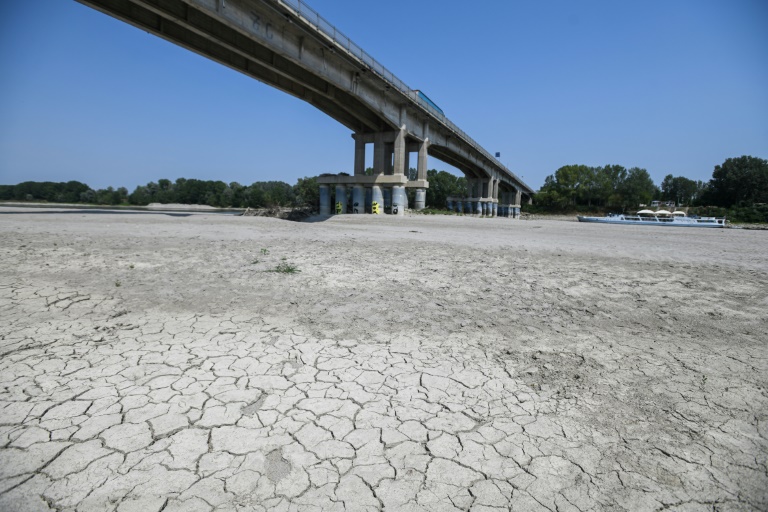
Hydroelectric power in Italy has plunged this year thanks to a drought that has also sparked water restrictions and fears for agriculture, industry sources said Friday.

Hydropower facilities, mostly located in the mountains in the country’s north, provide almost one fifth of Italy’s energy demands.

But the lack of rain is causing problems, at a time when Rome is desperately trying to wean itself off its dependence on Russian gas due to the war in Ukraine.

“From January to May 2022, hydro production fell by about 40 percent compared to the corresponding period in 2021,” a spokesman for Utilitalia, a federation of water companies, told AFP.

“Hydro production has been steadily decreasing since July 2021,” he said, blaming “the severe shortage of water even at high levels”.

An industry source told AFP that while the situation was constantly changing, estimates for the first six months of 2022 suggest nationwide hydroelectric generation will be almost half the equivalent period of 2021.

One small plant near Piacenza, southeast of Milan, was shut indefinitely on June 21 due to low levels on the River Po that feeds it, the Enel energy company said.

“Considering the current drought situation, other hydro plants are not operating at full capacity,” a spokesman added, without giving further details.

The Po River is Italy’s largest reservoir of fresh water. Much of it used by farmers, but is suffering its worst drought for 70 years. 

Italy’s largest agricultural association, Coldiretti, said the drought is putting over 30 percent of national agricultural production and half of livestock farming in the Po Valley at risk.

In the northwest region of Piedmont, water is being rationed in more than 200 municipalities, according to the ANSA news agency.

The Maggiore and Garda lakes are both far lower than usual for this time of year, while further south, the level of the River Tiber that runs through Rome has also dropped.

Drought hits Italy's hydroelectric plants

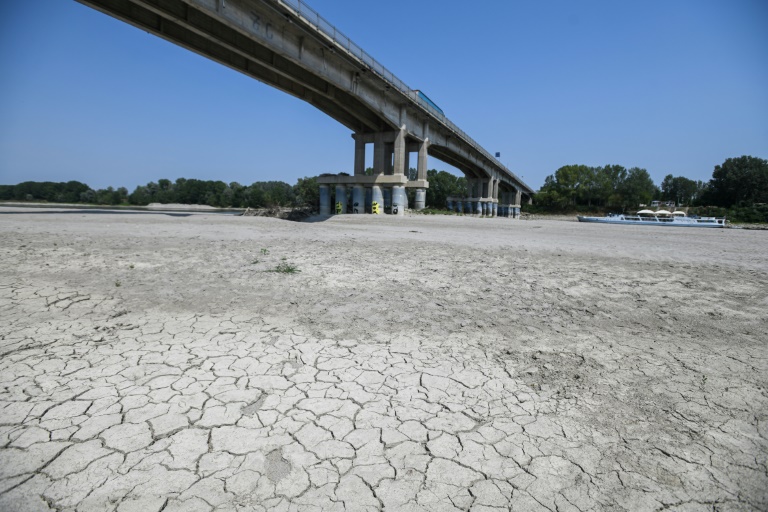
Hydroelectric power in Italy has plunged this year thanks to a drought that has also sparked water restrictions and fears for agriculture, industry sources said Friday.

Hydropower facilities, mostly located in the mountains in the country’s north, provide almost one fifth of Italy’s energy demands.

But the lack of rain is causing problems, at a time when Rome is desperately trying to wean itself off its dependence on Russian gas due to the war in Ukraine.

“From January to May 2022, hydro production fell by about 40 percent compared to the corresponding period in 2021,” a spokesman for Utilitalia, a federation of water companies, told AFP.

“Hydro production has been steadily decreasing since July 2021,” he said, blaming “the severe shortage of water even at high levels”.

An industry source told AFP that while the situation was constantly changing, estimates for the first six months of 2022 suggest nationwide hydroelectric generation will be almost half the equivalent period of 2021.

One small plant near Piacenza, southeast of Milan, was shut indefinitely on June 21 due to low levels on the River Po that feeds it, the Enel energy company said.

“Considering the current drought situation, other hydro plants are not operating at full capacity,” a spokesman added, without giving further details.

The Po River is Italy’s largest reservoir of fresh water. Much of it used by farmers, but is suffering its worst drought for 70 years. 

Italy’s largest agricultural association, Coldiretti, said the drought is putting over 30 percent of national agricultural production and half of livestock farming in the Po Valley at risk.

In the northwest region of Piedmont, water is being rationed in more than 200 municipalities, according to the ANSA news agency.

The Maggiore and Garda lakes are both far lower than usual for this time of year, while further south, the level of the River Tiber that runs through Rome has also dropped.

Ukraine forces to retreat from battleground city

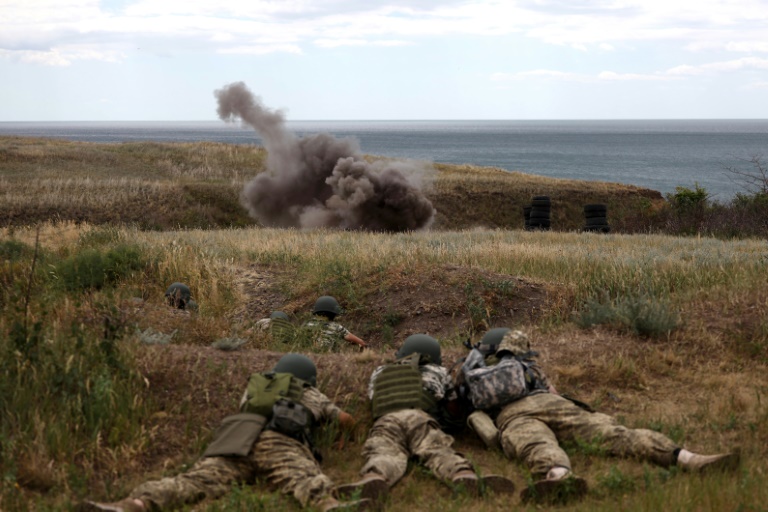
Ukrainian forces will retreat from Severodonetsk after weeks of fierce fighting over the key city, a senior Ukrainian official said Friday, in a major boost to Russia’s goal of seizing a swathe of eastern Ukraine. 

The announcement came shortly after the European Union granted Ukraine candidate status in a show of support for the former Soviet republic, although there is still a long path ahead to membership.

Russia has focused its offensive on the Donbas region of eastern Ukraine after being repelled from the capital Kyiv and other areas following the February invasion. Its forces have gradually made progress despite encountering fierce resistance and sustaining heavy losses. 

The strategically important industrial hub of Severodonetsk has been the scene of weeks of street battles as the outgunned Ukrainians put up a stubborn defence.

But Sergiy Gaiday, the governor of the Lugansk region which includes Severodonetsk, said that Ukrainian military forces in the city had received an order to withdraw. 

“Remaining in positions that have been relentlessly shelled for months just doesn’t make sense,” he said on Telegram, adding that 90 percent of the city had been damaged. 

The Ukrainians had already been pushed back from much of the city, leaving them in control of only industrial areas. 

Capturing Severodonetsk and its twin city of Lysychansk would give the Russians control of Lugansk, and allow them to push further into the wider Donbas.

– Lysychansk under fire –

Gaiday said the Russians were now advancing on Lysychansk, which has been facing increasingly heavy Russian bombardment. 

The situation for those that remain in the city is bleak.

Liliya Nesterenko said her house had no gas, water or electricity and she and her mother were cooking on a campfire. She was cycling along the street, and had come out to feed a friend’s pets. 

But the 39-year-old was upbeat about the city’s defences: “I believe in our Ukrainian army, they should (be able to) cope.”

A representative of pro-Russian separatists in Ukraine earlier told AFP that the resistance by Ukrainian forces trying to defend Lysychansk and Severodonetsk was “pointless and futile”.

“At the rate our soldiers are going, very soon the whole territory of the Lugansk People’s Republic will be liberated,” said Andrei Marochko, a spokesman for the Moscow-backed army of Lugansk.

On Friday, Marochko said on Telegram that all the villages in the neighbouring areas of Zolote and Hirske were now under the control of Russian or pro-Russian forces.

In a video on Marochko’s Telegram channel, a man in military clothing can be seen replacing the Ukrainian flag with the Zolote coat of arms with a hammer-and-sickle red flag. 

Russia’s defence ministry said on Friday that up to 2,000 people were “completely blocked” near Zolote and Hirske, and that around half of Zolote was under Russian control.

– Missiles hit university –

Russia has also intensified its offensive in the northern city of Kharkiv in the past few days. 

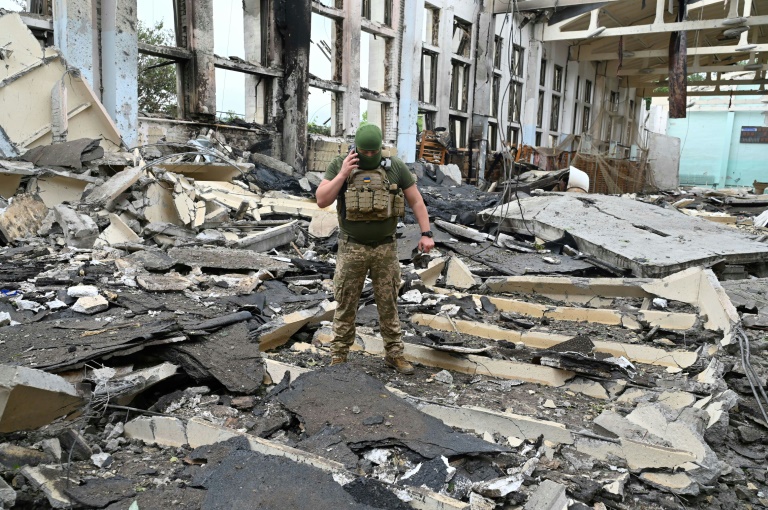
An AFP team at the scene heard strong explosions in the city centre last night and in the morning saw that the Kharkiv Polytechnic Institute had been hit by missiles, breaking windows and causing its roof to partially collapse. 

According to an unidentified military official at the scene, the Russians “thought there might be something military in there but there was not”. 

In the southern Kherson region, a Moscow-appointed official was killed by an explosive device planted in his car, Russian news agencies reported.

The Moscow-appointed deputy head of Kherson, Kirill Stremousov, said the regional head of the department of family, youth and sports had died “as a result of a terrorist act”.

It was the first confirmed death of a pro-Russian official during a string of attacks on pro-Kremlin officials in Ukrainian regions under Russian control.

With Ukraine pleading for accelerated weapon deliveries, the United States announced it was sending another $450 million in fresh armaments, including HIMARS rocket systems, which can launch multiple missiles at extended range. 

Ukraine’s President Volodymyr Zelensky said on Twitter that Ukraine was “grateful” to US President Joe Biden for the decision.

“This support… is now more important than ever,” he said.

– ‘Future equal EU partner’ –

At a Brussels summit Thursday, EU leaders granted candidate status to Ukraine, as well as Moldova.

Zelensky hailed the news as “a unique and historic moment”. 

“Today it is recognised that Ukraine is not a bridge, not a pillow between the West and Russia, not a buffer between Europe and Asia, not a sphere of influence,” Zelensky said in a video address to Ukrainians on Friday. 

“Ukraine is a future equal partner for at least 27 EU countries,” he added.

Kremlin spokesman Dmitry Peskov dismissed Ukraine’s new EU candidacy status as a “domestic European affair”.

Russian President Vladimir Putin has strongly resisted what Moscow sees as attempts to bring the country into NATO. 

But Ukraine’s NATO aspirations are far from being realised and EU membership is at least years away.

burs-sr/ech/sjw/dl

Afghan held in Guantanamo prison freed, say Taliban

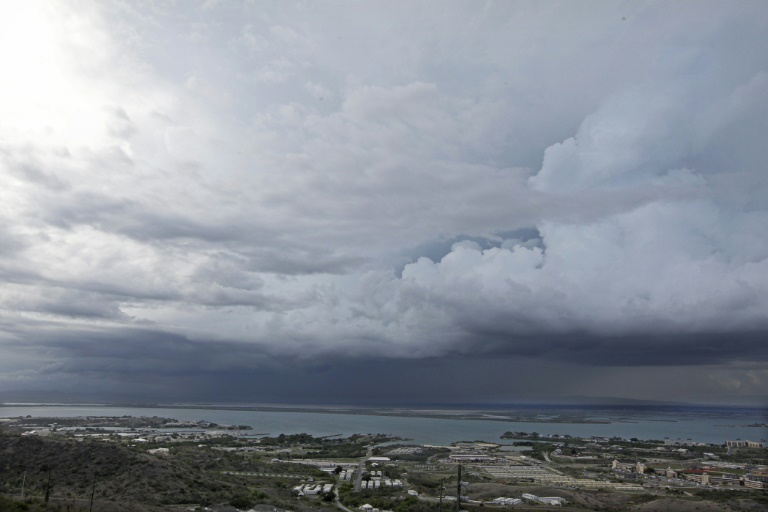
One of the last Afghan detainees held inside the Guantanamo Bay US detention centre in Cuba has been freed after 15 years following negotiations with Washington, his family and Taliban authorities said Friday.

The secretive prison once housed hundreds of suspected militants captured by US forces during America’s “war on terror”, many held without charge or the legal power to challenge their detention.

US authorities faced accusations of torture and abuse against prisoners at the facility, with some allegedly held in cages and subjected to illegal interrogation techniques.

Most of the inmates have been released over the years, including senior Taliban leaders, but Asadullah Haroon had languished without charge.

“The charges against him were false and the release has proved that he was innocent, but who will return those years of his life?” said his brother Roman Khan from Peshawar in Pakistan, where the family live as refugees.

He said they were informed early Friday of Haroon’s freedom.

“It’s like Eid in our house, like a wedding. These are very emotional moments for us,” Khan told AFP.

Haroon, believed to be aged around 40, is now in Qatar. He was arrested by US forces in 2006 while working as a honey trader travelling between Pakistan and Afghanistan.

The US government transferred him in 2007 to Guantanamo Bay, accusing him of being a courier linked to Al Qaeda and serving as a commander with another militant group, Hezb-i-Islami.

His family, who fled to Pakistan during the 1979 Soviet invasion of Afghanistan, have admitted he was a Hezb-i-Islami member like many in their refugee camp, but said he had no links with Al Qaeda.

His release came after “direct and positive” interaction between the Taliban and Washington, Afghanistan government spokesman Zabihullah Mujahid said in a statement.

Mujahid said Haroon was one of two Afghan detainees remaining in Guantanamo Bay.

The other inmate is Muhammad Rahim, accused by the CIA of being a close associate of Al Qaeda founder Osama bin Laden.

US President Joe Biden’s administration has been working to reduce the number of detainees and eventually shut down Guantanamo Bay, which lies on the island of Cuba but is under US jurisdiction.

The Pentagon in April said 37 detainees remained at the sprawling facility.

African economies see reasons for optimism despite crises

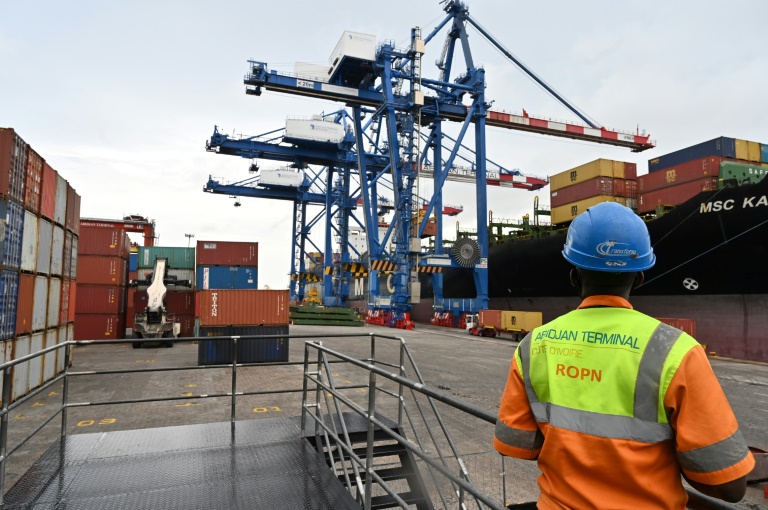
From Covid-19 to the war in Ukraine, external crises have put pressure on African economies, but many on the continent see opportunities to undertake radical reforms.

Africa already showed some resilience during the pandemic as its economic contraction was less severe than in the rest of the world, shrinking by two percent compared to 3.3 percent globally in 2020.

While Russia’s invasion of Ukraine is weighing on the world economy, Africa faces a better outlook again in 2022.

“Africa is headed towards growth of around 3.7 percent, while in North America and Europe there is a real risk of recession”, said economist Lionel Zinsou, formerly prime minister of Benin.

“We haven’t been the biggest victims of the pandemic, and we won’t be the biggest victims of the collateral consequences of the war in Ukraine”, added Zinsou.

The conflict in Europe has fuelled a surge in global inflation, but Zinsou said growing prices for raw materials will compensate for the higher costs of imports in Africa.

Another positive signal is that investor confidence in Africa is up to a higher level than that before the pandemic.

Of 190 business owners in Africa who were questioned, 78 percent voiced confidence about their development prospects — compared to 61 percent before the Covid crisis, according to a report by the Deloitte accountancy firm.

– ‘Opportunity to transform’ –

The fallout from the war in Ukraine, however, remains a threat as it has driven up prices for wheat and other key agricultural products, sparking fears of famine in some countries.

“We are concerned about the slowdown in global growth and the availability for Africa of certain products such as wheat or fertilisers”, Ivory Coast President Alassane Ouattara said during the Africa CEO Forum in Abidjan this month.

Makhtar Diop, general director of the International Finance Corporation (IFC), a branch of the World Bank, said African economies “have taken a hit and haven’t regained their pre-2019 growth rates”.

“The situation remains particularly difficult with inflation which disproportionally affects the poorest populations,” he added.

But some see the situation as a chance for African countries to map out new strategies. 

“We lose a good part of our crops each year due to lack of electricity and cold chain,” said Zinsou, referring to the transport of goods that need to be kept cool across the supply chain.

These losses could be reduced through infrastructure investment, he added.

For Diop, “every crisis is an opportunity to transform the situation structurally. There is potential for the economic transformation of African countries by increasing the added value created on the continent.”

– ‘Gain independence’ –

Some countries have stepped up the pace in recent years. Ivory Coast has built new cashew processing plants, while Nigeria is building a major oil refinery in Lagos. 

In Guinea, foreign companies have recently been tasked with building bauxite processing plants. 

“One of the consequences of the pandemic is that many groups wanted to depend less on foreign imports,” said Emmanuel Gadret, head of Deloitte in francophone Africa. 

Georges Wega, deputy director of international banking networks for the Africa region at France’s Societe Generale financial group, believes that Africa has “a lot of potential” to finance its essential projects.

“This is the time for Africa to gain its independence in many aspects. We need to rely more on funds raised on the continent versus external debt,” he said. 

The African Continental Free Trade Area (AfCFTA), which aims to harmonise customs tariffs across the continent, which is gradually happening, holds out hopes of boosting intra-African trade.

“Africa has been extraordinarily responsive (to the pandemic), financially and technically, and it will be again,” said Zinsou. 

Markets rise as recession talk tempers rate hike expectations

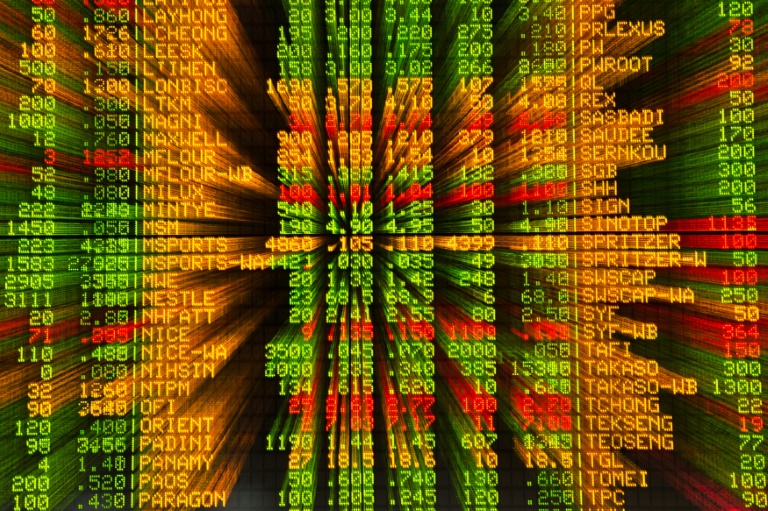
Stocks climbed Friday following another rally on Wall Street as investors try to process central bank moves to fight soaring inflation and the growing possibility that those measures will induce a recession.

Global markets have been thrown into turmoil for months by a perfect storm of crises that have left observers predicting a sharp contraction, including the Ukraine war, China’s lockdown-induced economic troubles, supply chain snarls and spiking energy costs.

Expectations that the Federal Reserve and other central banks will have to keep lifting rates have left many traders fretting that the pain could go on for some time, with sovereign bond yields — key gauges to future rates — continuing to climb.

This week Fed boss Jerome Powell told lawmakers a recession was “certainly a possibility” and suggested officials were ready to press on with big rate hikes, following a three-quarter point lift this month.

However, analysts said speculation that a recession is on the way has helped push yields down in recent days and led traders to scale back their expectations for the length of rate hikes.

Demand concerns have also helped send oil prices — a key driver of inflation — lower with both main contracts down around 15 percent over the past week.

Added to the mix this week are comments from President Xi Jinping suggesting an end to China’s tech crackdown as well as possible new measures aimed at boosting the economy.

“As we have been saying for some time now, for stocks to return to any semblance of form, it would likely require an unlikely upbeat mix of a seamless China growth recovery, a top in US bond yields, and much softer oil prices,” said Stephen Innes at SPI Asset Management.

“While a tall order and still a near-term unlikely combination scenario, the fall in commodity prices, especially oil, should be music to the Fed’s ears, so some could be ticking one or two of those boxes off.”

In early Asia trade investors took their cue from Wall Street, where all three main indexes closed with healthy gains, including a more than one percent advance on the Nasdaq.

Hong Kong was among the biggest winners thanks to a rally in tech giants including Alibaba, Tencent and NetEase.

Tokyo, Mumbai, Shanghai, Sydney, Seoul, Singapore, Taipei, Manila and Jakarta were also well up, while in Europe London, Paris and Frankfurt all rose in the morning.

Lower expectations for US rates and bets on a recession also saw the dollar drop against the safe haven yen, having surged to a 24-year high on the Japanese unit at the start of the week.

“Assuming that the Fed will have to change course sooner than late 2023 isn’t an unreasonable assumption,” said OANDA’s Jeffrey Halley. 

“The Fed and a procession of central banks around the world got inflation completely wrong and have been scrambling to reverse the mistake. Given their track record, assuming they are going to be wrong the other way is completely reasonable in that context.”

– Key figures at around 0810 GMT –

Tokyo – Nikkei 225: UP 1.2 percent at 26,491.97 (close)

Hong Kong – Hang Seng Index: UP 2.1 percent at 21,719.06 (close)

Shanghai – Composite: UP 0.9 percent at 3,349.75 (close)

London – FTSE 100: UP 0.6 percent at 7,063.88

Dollar/yen: DOWN at 134.51 yen from 134.94 yen late Thursday

Pound/dollar: UP at $1.2269 from $1.2259

Euro/dollar: UP at $1.0528 from $1.0526

Euro/pound: DOWN at 85.77 pence from 85.80 pence

West Texas Intermediate: UP 0.1 percent at $104.33 per barrel

Brent North Sea crude: DOWN 0.2 percent at $109.88 per barrel

New York – Dow: UP 0.6 percent at 30,677.36 (close)

Markets rise as recession talk tempers rate hike expectations

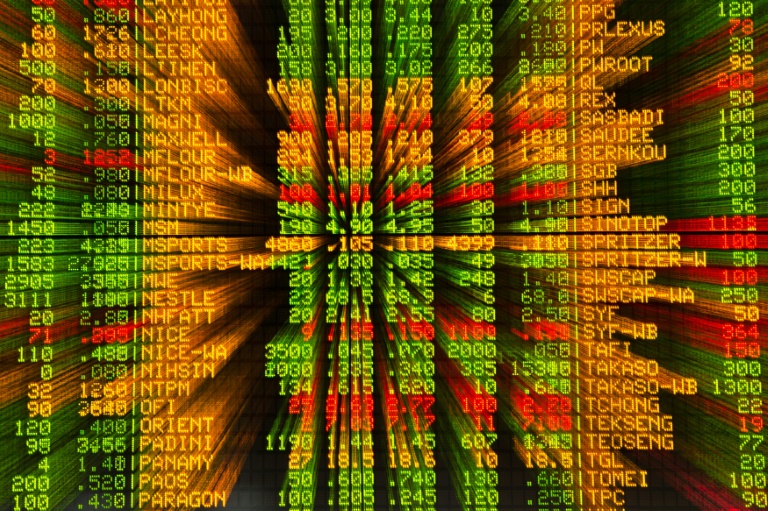
Stocks climbed Friday following another rally on Wall Street as investors try to process central bank moves to fight soaring inflation and the growing possibility that those measures will induce a recession.

Global markets have been thrown into turmoil for months by a perfect storm of crises that have left observers predicting a sharp contraction, including the Ukraine war, China’s lockdown-induced economic troubles, supply chain snarls and spiking energy costs.

Expectations that the Federal Reserve and other central banks will have to keep lifting rates have left many traders fretting that the pain could go on for some time, with sovereign bond yields — key gauges to future rates — continuing to climb.

This week Fed boss Jerome Powell told lawmakers a recession was “certainly a possibility” and suggested officials were ready to press on with big rate hikes, following a three-quarter point lift this month.

However, analysts said speculation that a recession is on the way has helped push yields down in recent days and led traders to scale back their expectations for the length of rate hikes.

Demand concerns have also helped send oil prices — a key driver of inflation — lower with both main contracts down around 15 percent over the past week.

Added to the mix this week are comments from President Xi Jinping suggesting an end to China’s tech crackdown as well as possible new measures aimed at boosting the economy.

“As we have been saying for some time now, for stocks to return to any semblance of form, it would likely require an unlikely upbeat mix of a seamless China growth recovery, a top in US bond yields, and much softer oil prices,” said Stephen Innes at SPI Asset Management.

“While a tall order and still a near-term unlikely combination scenario, the fall in commodity prices, especially oil, should be music to the Fed’s ears, so some could be ticking one or two of those boxes off.”

In early Asia trade investors took their cue from Wall Street, where all three main indexes closed with healthy gains, including a more than one percent advance on the Nasdaq.

Hong Kong was among the biggest winners thanks to a rally in tech giants including Alibaba, Tencent and NetEase.

Tokyo, Mumbai, Shanghai, Sydney, Seoul, Singapore, Taipei, Manila and Jakarta were also well up, while in Europe London, Paris and Frankfurt all rose in the morning.

Lower expectations for US rates and bets on a recession also saw the dollar drop against the safe haven yen, having surged to a 24-year high on the Japanese unit at the start of the week.

“Assuming that the Fed will have to change course sooner than late 2023 isn’t an unreasonable assumption,” said OANDA’s Jeffrey Halley. 

“The Fed and a procession of central banks around the world got inflation completely wrong and have been scrambling to reverse the mistake. Given their track record, assuming they are going to be wrong the other way is completely reasonable in that context.”

– Key figures at around 0810 GMT –

Tokyo – Nikkei 225: UP 1.2 percent at 26,491.97 (close)

Hong Kong – Hang Seng Index: UP 2.1 percent at 21,719.06 (close)

Shanghai – Composite: UP 0.9 percent at 3,349.75 (close)

London – FTSE 100: UP 0.6 percent at 7,063.88

Dollar/yen: DOWN at 134.51 yen from 134.94 yen late Thursday

Pound/dollar: UP at $1.2269 from $1.2259

Euro/dollar: UP at $1.0528 from $1.0526

Euro/pound: DOWN at 85.77 pence from 85.80 pence

West Texas Intermediate: UP 0.1 percent at $104.33 per barrel

Brent North Sea crude: DOWN 0.2 percent at $109.88 per barrel

New York – Dow: UP 0.6 percent at 30,677.36 (close)

Ukraine forces to retreat from battleground city: governor

Ukrainian forces will retreat from Severodonetsk in the face of a brutal Russian offensive that is reducing the battleground eastern city to rubble, a senior Ukrainian official said Friday.

The news came shortly after the European Union made a strong show of support for Ukraine, granting the former Soviet republic candidate status, although there is still a long path ahead to membership.

Capturing Severodonetsk has become a key goal of the Russians as they focus their offensive on eastern Ukraine after being repelled from Kyiv and other areas following their February invasion. 

The strategically important industrial hub has been the scene of weeks of street battles as the outgunned Ukrainians put up a fierce defence. 

But Sergiy Gaiday — governor of Lugansk, which includes the city — said the Ukrainian military would have to retreat. 

“They have received an order” to withdraw, he said on Telegram. 

“Remaining in positions that have been relentlessly shelled for months just doesn’t make sense.”

The city has been “nearly turned to rubble” by continual bombardment, he added. 

“All critical infrastructure has been destroyed. Ninety percent of the city is damaged, 80 percent (of) houses will have to be demolished,” he said. 

The Ukrainians had already been pushed back from much of the city, leaving them in control of only industrial areas. 

Capturing Severodonetsk and its twin city of Lysychansk would give the Russians control of Lugansk, and allow them to push further into the wider Donbas.

– Lysychansk under fire –

Gaiday said the Russians were now advancing on Lysychansk, which has been facing increasingly heavy Russian bombardment. 

AFP journalists driving out of the city Thursday twice had to jump out of cars and lie on the ground as Russian forces shelled its main supply road. 

They saw dark smoke rising over the road ahead, and heard artillery fire and saw flashes of light, while the road was strewn with trees felled by shelling.

The situation for those that remain in the city is bleak.

Liliya Nesterenko said her house had no gas, water or electricity and she and her mother were cooking on a campfire. She was cycling along the street, and had come out to feed a friend’s pets. 

But the 39-year-old was upbeat about the city’s defences: “I believe in our Ukrainian army, they should (be able to) cope.

“They’ve prepared already.”

A representative of pro-Russian separatists in Ukraine earlier told AFP the resistance of Ukrainian forces trying to defend Lysychansk and Severodonetsk was “pointless and futile”.

“At the rate our soldiers are going, very soon the whole territory of the Lugansk People’s Republic will be liberated,” said Andrei Marochko, a spokesman for the Moscow-backed army of Lugansk.

In the southern Kherson region, a Moscow-appointed official was killed in an explosion, Russian news agencies reported, the latest in a string of attacks on pro-Kremlin officials in Ukrainian regions under Russian control.

Interfax reported an explosive device was planted in the car of the victim, who was likely the head of the region’s department of youth policy, family and sports.

With Ukraine pleading for accelerated weapon deliveries, the United States announced it was sending another $450 million in fresh armaments, including Himars rocket systems, which can launch multiple missiles at extended range. 

– ‘Historic’ EU decision –

At a Brussels summit Thursday, EU leaders granted candidate status to Ukraine, as well as Moldova.

Ukraine’s President Volodymyr Zelensky hailed the news as “a unique and historic moment”, adding: “Ukraine’s future is within the EU.”

French President Emmanuel Macron said the decision by EU leaders sent a “very strong signal” to Russia that Europeans support the pro-Western aspirations of Ukraine.

President Vladimir Putin had declared Ukraine to be part of Moscow’s sphere and insisted he was acting due to attempts to bring the country into NATO, the Western alliance that comes with security guarantees.

European powers before the invasion had distanced themselves from US support for Ukraine’s NATO aspirations, and EU membership is at least years away.

Ukraine and Moldova will have to go through protracted negotiations and the European Union has laid out steps that Kyiv must take even before that, including bolstering the rule of law and fighting corruption.

Western officials have accused Russia of weaponising its key exports of gas as well as grain from Ukraine, contributing to global inflation and rising hunger in the world.

A US official warned of new retaliatory measures against Russia at the Group of Seven summit being attended by President Joe Biden in Germany starting Sunday.

Germany ratcheted up an emergency gas plan to its second alert level, just one short of the maximum that could require rationing in Europe’s largest economy, after Russia slashed supplies.

“Gas is now a scarce commodity,” German Economy Minister Robert Habeck told reporters, urging households to cut back on use. 

burs-sr/axn

World's largest bacteria discovered in Guadeloupe

You can see it with the naked eye and pick it up with a pair of tweezers — not bad for a single bacteria.

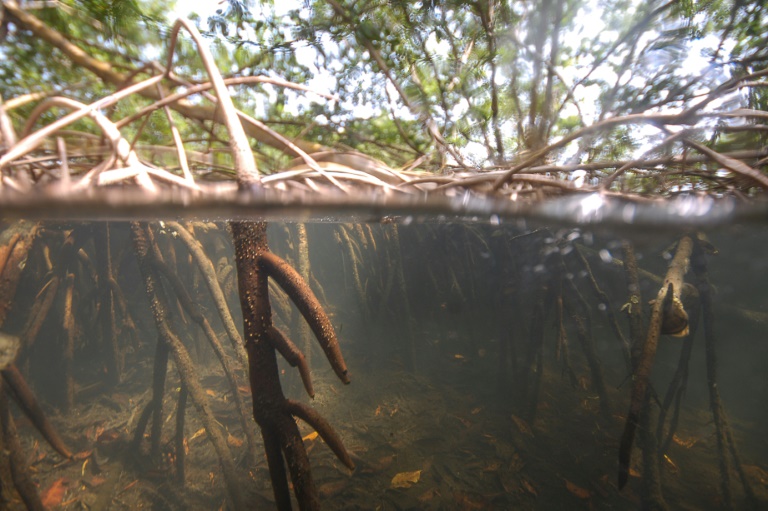
Scientists say they have discovered the world’s largest variety in the mangroves of Guadeloupe — and it puts its peers to shame.

At up to two centimetres (three-quarters of an inch), “Thiomargarita magnifica” is not only around 5,000 times bigger than most bacteria — it boasts a more complex structure, according to a study published in the journal Science on Thursday.

The discovery “shakes up a lot of knowledge” in microbiology, Olivier Gros, professor of biology at the University of the Antilles and co-author of the study, told AFP.

In his laboratory in the Caribbean island group city of Pointe-a-Pitre, he marvelled at a test tube containing strands that look like white eyelashes.

“At first I thought it was anything but a bacterium because something two centimetres (in size) just couldn’t be one”, he said.

The researcher first spotted the strange filaments in a patch of sulphur-rich mangrove sediment in 2009.

Techniques including electronic microscopy revealed it was a bacterial organism, but there was no guarantee it was a single cell.

– ‘As tall as Mount Everest’ –

Molecular biologist Silvina Gonzalez-Rizzo, from the same laboratory, found it belonged to the Thiomargarita family, a bacterial genus known to use sulphides to grow. And a researcher in Paris suggested they were indeed dealing with just one cell.

But a first attempt at publication in a scientific journal a few years later was aborted. 

“We were told: ‘This is interesting, but we lack the information to believe you’,” Gros said, adding that they needed stronger images to provide proof.

Then a young researcher, Jean-Marie Volland, managed to study the bacterium with the Lawrence Berkeley National Laboratory, run by the University of California.

With financial backing and access to some of the best tools in the field, Volland and his colleagues began building up a picture of the colossal bacteria.

It was clearly enormous by bacterial standards — scaled up to human proportions, it would be like meeting someone “as tall as Mount Everest”, Volland said.

Specialist 3D microscope images finally made it possible to prove that the entire filament was indeed a single cell.

But they also helped Volland make a “completely unexpected” discovery.

Normally, a bacterium’s DNA floats freely in the cell. But in the giant species, it is compacted in small structures surrounded by a membrane, he explained.

This DNA compartmentalisation is “normally a feature of human, animal and plant cells, complex organisms… but not bacteria,” Volland said.

Future research will have to determine if these characteristics are unique to Thiomargarita magnifica, or if they can be found in other species of bacteria, Gros said.

Ukraine forces to retreat from battleground city: governor

Ukrainian forces will retreat from Severodonetsk in the face of a brutal Russian offensive that is reducing the battleground city to rubble, a senior Ukrainian official said Friday.

The news came shortly after the European Union made a strong show of support for Ukraine, granting the former Soviet republic candidate status, although there is still a long path ahead to membership.

Capturing Severodonetsk, in the Donbas region, has become a key goal of the Russians as they focus their offensive on eastern Ukraine after being repelled from Kyiv following their February invasion. 

The strategically important industrial hub has been the scene of weeks of street battles as the outgunned Ukrainians put up a fierce defence. 

But Sergiy Gaiday — governor of Lugansk, which includes the city — said the Ukrainian military would have to retreat. 

“They have received an order to do so,” he said on Telegram. 

“Remaining in positions that have been relentlessly shelled for months just doesn’t make sense.”

The city has been “nearly turned to rubble” by continual bombardment, he added. 

“All critical infrastructure has been destroyed. Ninety percent of the city is damaged, 80 percent (of) houses will have to be demolished,” he said. 

The Ukrainians had already been pushed back from much of the city, leaving them in control of only industrial areas. 

Capturing Severodonetsk and its twin city of Lysychansk would give the Russians control of Lugansk, and allow them to push further into the wider Donbas.

– Lysychansk under fire –

Gaiday said the Russians were now advancing on Lysychansk, which has been facing increasingly heavy Russian bombardment. 

AFP journalists driving out of the city Thursday twice had to jump out of cars and lie on the ground as Russian forces shelled the city’s main supply road. 

They saw dark smoke rising over the road ahead, and heard artillery fire and saw flashes of light, while the road was strewn with trees felled by shelling.

The situation for those that remain in the city was increasingly bleak.

Liliya Nesterenko said her house had no gas, water or electricity and she and her mother were cooking on a campfire. She was cycling along the street, and had come out to feed a friend’s pets. 

But the 39-year-old was upbeat about the city’s defences: “I believe in our Ukrainian army, they should (be able to) cope.

“They’ve prepared already.”

A representative of pro-Russian separatists in Ukraine earlier told AFP the resistance of Ukrainian forces trying to defend Lysychansk and Severodonetsk was “pointless and futile”.

“At the rate our soldiers are going, very soon the whole territory of the Lugansk People’s Republic will be liberated,” said Andrei Marochko, a spokesman for the Moscow-backed army of Lugansk.

With Ukraine pleading for accelerated weapon deliveries, the United States announced it was sending another $450 million in fresh armaments, including Himars rocket systems. 

The systems can simultaneously launch multiple precision missiles at an extended range.

– ‘Historic’ EU decision –

At a Brussels summit Thursday, EU leaders granted candidate status to Ukraine, as well as Moldova.

Ukraine’s President Volodymyr Zelensky hailed the news as “a unique and historic moment”, adding: “Ukraine’s future is within the EU.”

French President Emmanuel Macron said the decision by EU leaders sent a “very strong signal” to Russia that Europeans support the pro-Western aspirations of Ukraine.

President Vladimir Putin had declared Ukraine to be part of Moscow’s sphere and insisted he was acting due to attempts to bring the country into NATO, the Western alliance that comes with security guarantees.

European powers before the invasion had distanced themselves from US support for Ukraine’s NATO aspirations, and EU membership is at least years away.

Ukraine and Moldova will have to go through protracted negotiations and the European Union has laid out steps that Kyiv must take even before that, including bolstering the rule of law and fighting corruption.

Western officials have also accused Russia of weaponising its key exports of gas as well as grain from Ukraine, contributing to global inflation and rising hunger in the world.

A US official warned of new retaliatory measures against Russia at the Group of Seven summit being attended by President Joe Biden in Germany starting Sunday.

Germany ratcheted up an emergency gas plan to its second alert level, just one short of the maximum that could require rationing in Europe’s largest economy, after Russia slashed supplies.

“Gas is now a scarce commodity,” German Economy Minister Robert Habeck told reporters, urging households to cut back on use. 

Demand for gas is lower in the summer but shortages could cause problems with heating in the winter.

A Kremlin spokesman reiterated its claim that the supply cuts were due to maintenance and that necessary equipment from abroad had not arrived.

burs-sr/axn

Close Bitnami banner
Bitnami