AFP

Inflation 'shock' punishes Eurozone economy in June: survey

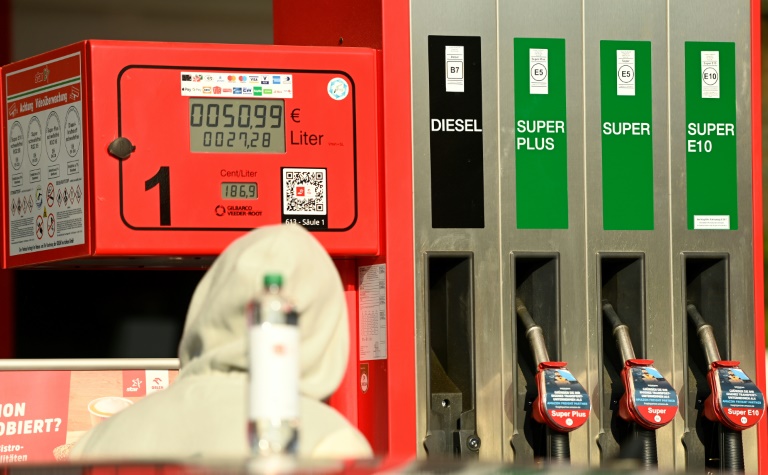
Economic growth in the eurozone plummeted in June, a key survey showed on Thursday, as high prices took the wind out the strong recovery from the deep lows of the coronavirus pandemic.

The closely-watched monthly purchase managers’ index (PMI) by S&P Global fell from 54.8 in May to 51.9. A figure above 50 indicates growth.

The slowdown, caused by a “cost-of-living shock”, is “the most abrupt recorded by the survey since the height of the global financial crisis in November 2008”, excluding the pandemic lockdown, said Chris Williamson, Chief Business Economist at S&P Global.

Since the beginning of the year, the European economy has recovered strongly from the lifting of restrictions linked to the Covid-19 pandemic, which revived tourism to countries like Spain and Greece as well as transport. 

It also benefited from household spending, as consumers burned through savings accumulated during many months of confinement, offsetting the negative impact of the war in Ukraine. 

But in June, the “tailwind” of this pent-up demand “is already fading”, Williamson warned.

The latest data “is now consistent with Gross Domestic Product (GDP) growth of just 0.2 percent for the second quarter, compared to quarterly growth of 0.6 percent at the start of the year”, he said.

“The situation is likely to deteriorate in the second half of the year”, he added, raising the spectre of negative growth and recession.

Markets fluctuate, oil falls again as recession warnings build

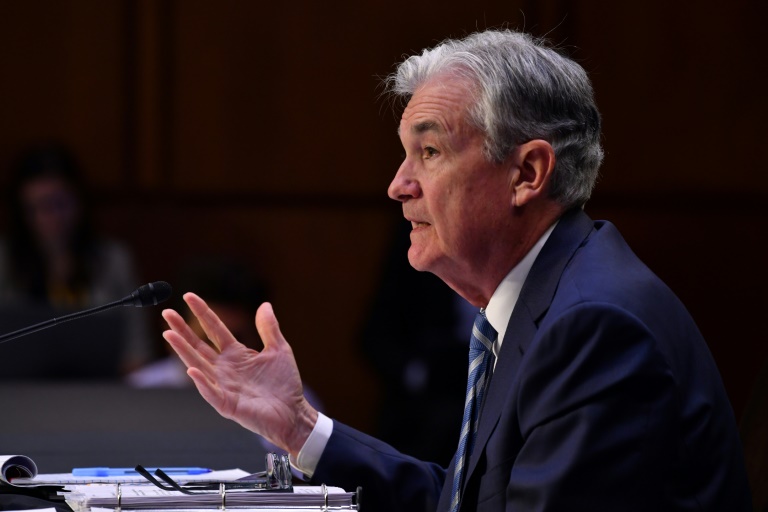
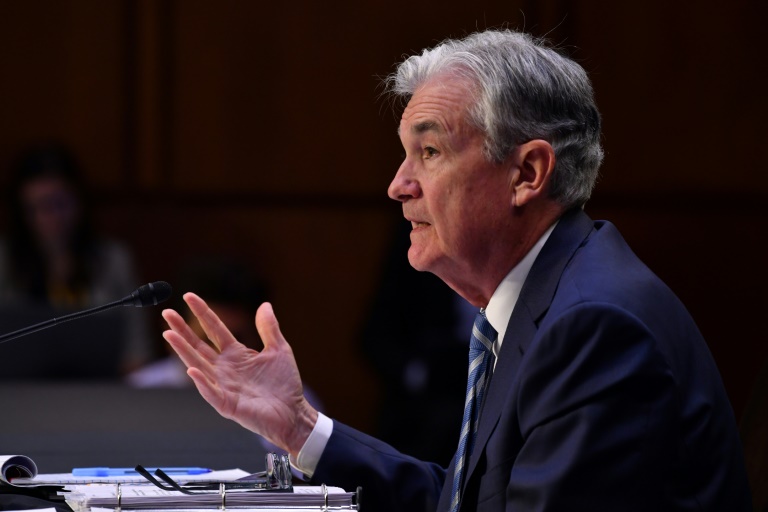
Asian markets mostly rose Thursday on bargain buying after the previous day’s battering, though oil extended losses after US Federal Reserve boss Jerome Powell admitted the economy could tip into recession as the bank hikes interest rates to fight runaway inflation.

Soaring prices and the battle by central banks to rein them in have sent a chill through global trading floors this year, while investors are also having to deal with the uncertainty brought by the Ukraine war and patchy pandemic recovery.

Commentators have warned for some time that the world economy could be heading for another contraction owing to the sharp increase in borrowing costs and rampant inflation, which is at decades highs in several countries.

And on Wednesday, the head of the most powerful central bank in the world told lawmakers it was “certainly a possibility”.

While saying the economy was strong enough for rates to rise, he added that “frankly, the events of the last few months around the world have made it more difficult for us to achieve what we want, which is two percent inflation and still a strong labour market.”

He also warned: “Inflation has obviously surprised to the upside over the past year, and further surprises could be in store.”

The Fed this month hiked rates by 75 basis points and is expected to do the same in July, with some observers predicting two more such moves after that.

After a day of swings, Wall Street ended in negative territory, though off big early lows.

Asia fluctuated in the morning but enjoyed a more positive afternoon, though optimism remains at a premium among investors, and analysts warned it was unlikely to improve anytime soon.

Hong Kong and Shanghai led gains thanks to a pick-up in tech firms after Chinese President Xi Jinping chaired a meeting Wednesday that pushed for “healthy” development of the fintech sector, adding to optimism that a crackdown on the industry may be coming to an end.

Xi also reaffirmed the country’s 5.5 percent growth target for this year despite months of lockdown-induced pain for the economy.

The comments suggest the government will unveil market-friendly measures to boost growth.

Tokyo, Sydney, Singapore, Mumbai, Bangkok and Wellington were higher, but Seoul, Taipei, Manila and Jakarta fell.

London, Paris and Frankfurt sank, with data showing the eurozone economy slowed sharply in June. There were also concerns about Germany after it raised its gas alert level owing to Russia’s war in Ukraine, with the country moving a step closer to rationing.

“Having listened to Powell’s lengthy Senate testimony… it is clear that inflation is the domestic issue at the top of the political agenda,” said SPI Asset Management’s Stephen Innes. 

“Powell consistently bobbed and weaved his way through commenting on anything of fiscal nature but was focused on deploying the tools within the Fed’s power to address their dual mandate” of reining in inflation and keeping unemployment in check. 

“So we should still position for more rate hike fallout to occur.”

Powell’s comments came as other top economists added to the recession talk, with former New York Fed President Bill Dudley saying it was “inevitable within the next 12 to 18 months”.

And Deutsche Bank CEO Christian Sewing said there was a 50 percent chance of a contraction next year.

Elon Musk, JP Morgan boss Jamie Dimon and economist Nouriel Roubini are among several others to have made similar forecasts.

“We are still in an era where uncertainty is elevated and is expected to remain so for quite a while,” said JoAnne Feeney, of Advisors Capital Management, on Bloomberg Television.

“It’s risky right now in terms of the forward outlook for the global economy. Recession risk has clearly risen.”

The prospect of a retreat in the global economy continued to drag oil prices down as traders fret over demand, with both main contracts down around one percent, having tumbled on Wednesday. However, they were well off morning lows.

Brent and WTI have dropped around 15 percent over the past week, even with sanctions on Russian crude exports and China’s gradual reopening from lockdowns.

Adding to the selling was data Wednesday indicating a jump in US stockpiles.

“A slowdown in global growth is a risk to oil demand, which could help ease some of the tightness in the market,” Warren Patterson, at ING Groep, said. 

“Already, we have seen demand estimates revised lower.”

– Key figures at around 0810 GMT –

Tokyo – Nikkei 225: UP 0.1 percent at 26,171.25 (close)

Hong Kong – Hang Seng Index: UP 1.3 percent at 21,273.87 (close)

Shanghai – Composite: UP 1.6 percent at 3,320.15 (close)

London – FTSE 100: DOWN 0.8 percent at 7,029.19

West Texas Intermediate: DOWN 1.9 percent at $104.23 per barrel

Brent North Sea crude: DOWN 1.6 percent at $109.94 per barrel

Dollar/yen: DOWN at 135.43 yen from 136.22 yen late Wednesday

Pound/dollar: DOWN at $1.2181 from $1.2263

Euro/dollar: DOWN at $1.0508 from $1.0570

Euro/pound: UP at 86.27 pence from 86.17 pence

New York – Dow: DOWN 0.2 percent at 30,483.13 (close)

Markets fluctuate, oil falls again as recession warnings build

Asian markets mostly rose Thursday on bargain buying after the previous day’s battering, though oil extended losses after US Federal Reserve boss Jerome Powell admitted the economy could tip into recession as the bank hikes interest rates to fight runaway inflation.

Soaring prices and the battle by central banks to rein them in have sent a chill through global trading floors this year, while investors are also having to deal with the uncertainty brought by the Ukraine war and patchy pandemic recovery.

Commentators have warned for some time that the world economy could be heading for another contraction owing to the sharp increase in borrowing costs and rampant inflation, which is at decades highs in several countries.

And on Wednesday, the head of the most powerful central bank in the world told lawmakers it was “certainly a possibility”.

While saying the economy was strong enough for rates to rise, he added that “frankly, the events of the last few months around the world have made it more difficult for us to achieve what we want, which is two percent inflation and still a strong labour market.”

He also warned: “Inflation has obviously surprised to the upside over the past year, and further surprises could be in store.”

The Fed this month hiked rates by 75 basis points and is expected to do the same in July, with some observers predicting two more such moves after that.

After a day of swings, Wall Street ended in negative territory, though off big early lows.

Asia fluctuated in the morning but enjoyed a more positive afternoon, though optimism remains at a premium among investors, and analysts warned it was unlikely to improve anytime soon.

Hong Kong and Shanghai led gains thanks to a pick-up in tech firms after Chinese President Xi Jinping chaired a meeting Wednesday that pushed for “healthy” development of the fintech sector, adding to optimism that a crackdown on the industry may be coming to an end.

Xi also reaffirmed the country’s 5.5 percent growth target for this year despite months of lockdown-induced pain for the economy.

The comments suggest the government will unveil market-friendly measures to boost growth.

Tokyo, Sydney, Singapore, Mumbai, Bangkok and Wellington were higher, but Seoul, Taipei, Manila and Jakarta fell.

London, Paris and Frankfurt sank, with data showing the eurozone economy slowed sharply in June. There were also concerns about Germany after it raised its gas alert level owing to Russia’s war in Ukraine, with the country moving a step closer to rationing.

“Having listened to Powell’s lengthy Senate testimony… it is clear that inflation is the domestic issue at the top of the political agenda,” said SPI Asset Management’s Stephen Innes. 

“Powell consistently bobbed and weaved his way through commenting on anything of fiscal nature but was focused on deploying the tools within the Fed’s power to address their dual mandate” of reining in inflation and keeping unemployment in check. 

“So we should still position for more rate hike fallout to occur.”

Powell’s comments came as other top economists added to the recession talk, with former New York Fed President Bill Dudley saying it was “inevitable within the next 12 to 18 months”.

And Deutsche Bank CEO Christian Sewing said there was a 50 percent chance of a contraction next year.

Elon Musk, JP Morgan boss Jamie Dimon and economist Nouriel Roubini are among several others to have made similar forecasts.

“We are still in an era where uncertainty is elevated and is expected to remain so for quite a while,” said JoAnne Feeney, of Advisors Capital Management, on Bloomberg Television.

“It’s risky right now in terms of the forward outlook for the global economy. Recession risk has clearly risen.”

The prospect of a retreat in the global economy continued to drag oil prices down as traders fret over demand, with both main contracts down around one percent, having tumbled on Wednesday. However, they were well off morning lows.

Brent and WTI have dropped around 15 percent over the past week, even with sanctions on Russian crude exports and China’s gradual reopening from lockdowns.

Adding to the selling was data Wednesday indicating a jump in US stockpiles.

“A slowdown in global growth is a risk to oil demand, which could help ease some of the tightness in the market,” Warren Patterson, at ING Groep, said. 

“Already, we have seen demand estimates revised lower.”

– Key figures at around 0810 GMT –

Tokyo – Nikkei 225: UP 0.1 percent at 26,171.25 (close)

Hong Kong – Hang Seng Index: UP 1.3 percent at 21,273.87 (close)

Shanghai – Composite: UP 1.6 percent at 3,320.15 (close)

London – FTSE 100: DOWN 0.8 percent at 7,029.19

West Texas Intermediate: DOWN 1.9 percent at $104.23 per barrel

Brent North Sea crude: DOWN 1.6 percent at $109.94 per barrel

Dollar/yen: DOWN at 135.43 yen from 136.22 yen late Wednesday

Pound/dollar: DOWN at $1.2181 from $1.2263

Euro/dollar: DOWN at $1.0508 from $1.0570

Euro/pound: UP at 86.27 pence from 86.17 pence

New York – Dow: DOWN 0.2 percent at 30,483.13 (close)

Russia and China eye NATO's 'Arctic Achilles heel'

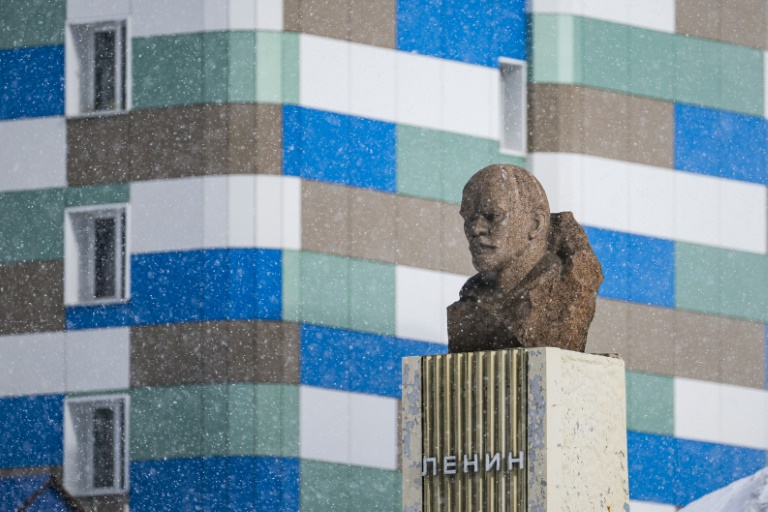
Russian flags flap in the stiff polar breeze, a bust of Lenin looms out of the snow and a vast slogan declares, “Communism is our goal!”

No, this is not some time warp Soviet settlement lost in the Arctic wastes, but a corner of Norway where Moscow can — theoretically at least — mine, build, drill and fish what it likes.

Welcome to Spitsbergen, the largest island of the Svalbard archipelago and “NATO’s Achilles heel in the Arctic”.

These spectacular islands of glaciers and mountain peaks halfway between Norway and the North Pole are a strategic and economic bridgehead not just for Moscow but also for Beijing. 

All because of one of the most bizarre and little-understood international treaties ever concluded, which gives Norway sovereignty but allows the citizens of 46 countries to exploit the islands’ potentially vast resources on an equal footing.

Which is why 370 Russians and Ukrainian miners from the Donbass work in Barentsburg, a cut-off corner of Spitsbergen where the Soviets dug coal for decades and where it is pitch dark for nearly three months of the year.

“Spitsbergen has been covered with Russian sweat and blood for centuries,” Moscow’s consul Sergey Gushchin said.

“I’m not arguing that it’s not Norwegian territory but it’s part of Russian history,” he added.

He makes no attempt to hide that some Ukrainians have left since the Russian invasion in February. 

Moscow has long wanted a bigger say in the archipelago which has been a haunt of its hunters, whalers, fishermen since the 16th century. 

It also insists on calling the islands by the original Spitsbergen rather than the Norwegian Svalbard, the official name since shortly after the treaty handing them to Norway was signed in 1920 while Russia was otherwise engaged with the civil war between Reds and Whites.

– Nuclear submarines –

Nuclear submarines from Russia’s powerful Northern Fleet also have to pass close to Svalbard’s southernmost Bear Island to get into the North Atlantic.

Russia’s “main interest is to avoid a situation (where) others use (the islands) offensively,” said political scientist Arild Moe of Norway’s Fridtjof Nansen Institute.

To make sure that happens they “maintain a reasonable presence and are very attentive to what is going on,” he added. 

After failing to get joint authority of the islands at the end of World War II, Russia is now pushing — without much success — for “bilateral consultations” to lift the brakes on its activities.

With its mines losing money for years, it has diversified into tourism and scientific research.

But with no road to the capital Longyearbyen, visitors have to come to Barentsburg by boat or snowmobile — depending on the season — to admire what was for decades a Soviet showpiece on the Western side of the Iron Curtain.

Barentsburg holds onto its Soviet relics “not because we still have hope for communism but because we value our heritage — and tourists also like taking pictures” of themselves with them, said Russian historian and tourist guide Natalia Maksimishina.

– Ringfencing the Russians –

Moscow accuses Norway of using environmental protection to hamstring its ambitions, with Russian helicopter flights for instance strictly controlled.

“We started to put nature reserves around Russian sites,” admitted former diplomat Sverre Jervell, the architect of Norwegian policy in the Barents Sea which separates the islands from Norway and Russia. 

“Particularly after the end of the Cold War and the collapse of the USSR when Barentsburg struggled to stay afloat.”

This “wasn’t officially” done to curtail the Russians, Jervell said, but in reality that is what happened. “Of course we had good arguments, the environment is very fragile,” he said. 

And Norway was treaty-bound to protect the islands’ nature. “But we particularly protected the areas around Russian sites.”

With another Soviet mining operation at Pyramiden, there was actually more Russians than Norwegians on the islands at the end of the Cold War.

Moscow regularly accuses Oslo of violating one of the most important articles of the 1920 treaty which effectively makes Svalbard a demilitarised zone.

It protests every time a Norwegian frigate docks or NATO lawmakers visit, and is particularly wary of the gigantic Svalsat satellite station near Longyearbyen. 

On a windy plateau near the Global Seed Vault — a “Noah’s Ark” where 1,145,693 seed varieties are frozen in case of catastrophe — some 130 antennae covered by giant golf-ball domes communicate with space. 

They also download data from military satellites, Moscow suspects.

In January, one of two fibre optic cables linking Svalsat with the mainland was mysteriously damaged.

Russia too has been accused of taking liberties with the treaty, like when its then deputy prime minister Dmitry Rogozin — who had been sanctioned by Europe over the annexation of Crimea — turned up unannounced in Svalbard in 2015. 

Or when Chechen special forces made a stopover there the following year on their way to a military exercise close to the North Pole.

Even if experts rule out any repeat of what happened in Crimea in Svalbard, they expect a reaction because of the chill caused by the Russian invasion of Ukraine.

“Svalbard is sensitive to the general international climate,” said Norwegian analyst Moe. “It is somewhere where Russia can easily express its dissatisfaction by putting Norway under pressure.”

– ‘Neutralising NATO’ –

Svalbard is “the Achilles heel of NATO in the Arctic”, said James Wither, a professor at the George C. Marshall European Center for Security Studies in Germany, because its distance from mainland Norway and “peculiar legal status provides a range of possible pretexts for Russian intervention.

“Although the danger of a direct military confrontation remains low, Svalbard is particularly vulnerable to a Russian gamble that offers the strategic payoff of advancing Russia’s long-term objectives of dividing the West and neutralising NATO,” the former British Army officer wrote in 2018.

Norway tries to play down Russian grievances, saying that they are far from new and insists that its sovereignty over the islands is no different to any other part of its territory.

Praised for his rapport with his Russian opposite number Sergei Lavrov when he was foreign minister between 2005 and 2012, Norwegian Prime Minister Jonas Gahr Store is an apostle of Oslo’s “High North, low tensions” doctrine.

“I would not say that we are being tested,” he said, “but there is growing interest in the Arctic from countries from there and from afar.”

“We wish to see the communities in Svalbard developed when it comes to new activities, research, (and) tourism… and that will be done in a transparent fashion,” he added.

Even so, Norway spent 300 million kroner (33.5 million euros) in 2016 buying a huge estate near Longyearbyen, the only one in private hands in the archipelago.

The government justified the expense saying they “wanted the land to be Norwegian” given the supposed interest of foreign, and notably Chinese, investors.

Russia has been quick to play on fears of the arrival of new powers like China.

“If we leave Spitsbergen, then who might come in our place?” said the Russian consul Gushchin from his impressive residence on a hill overlooking Barentsburg. “It might be China for example, or the United States or any member state of the Spitsbergen Treaty.”

– China planting flag –

Like its high-latitude neighbours Greenland, Iceland and the Faroe Islands, Svalbard seems to be in China’s sights. Indeed it now defines itself as a “near-Arctic” state and wants to establish a “Polar Silk Road”.  

With the region heating up three times faster than the planet, shrinking ice floes are opening up economic opportunities and maritime routes, although some are more theoretical than real.

With new fishing grounds and easier access to potential resources like oil and gas fields, everyone is trying to get a foot in the door.

It is hard to miss China’s Institute of Polar Research in Spitsbergen’s third biggest settlement Ny-Alesund, a former mining community now given over to international science.

Two marble lions — symbols of imperial China — guard the entrance of the Norwegian-owned building known as the Yellow River Station by its occupants.

It is a flagrant example of “flag showing”, according to Torbjorn Pedersen, a political science from Norway’s Nord University in Bodo.

“Some foreign capitals… cast their presence there as national stations and strategic footholds, potentially entitling them to political power and influence on the islands and in the wider Arctic region,” he wrote in the Polar Journal last year.

“Some of the research presence in Svalbard may seem geopolitically motivated,” Pedersen added. 

“If consolidated, the strategic presence could potentially embolden some… including great powers, with regional aspirations and become a real security challenge for host nation Norway.”

Oslo takes a dim view of “scientific diplomacy” more suited to Antarctica than a sovereign nation.

In 2019 it began trying to discourage the idea of national research stations from which countries could fly their flag in favour of sharing research facilities. 

The Franco-German station appears to be the first to feel the change. Since 2014 Paris and Berlin have been trying to centralise researchers scattered over several sites in one new building, but they have gotten nowhere.

Privately the Norwegians say they do not want to create a precedent.

“We cannot allow the French to do one thing and refuse the Chinese,” said Jervell. “The principle of the Svalbard Treaty is not to discriminate.”

Russia and China eye NATO's 'Arctic Achilles heel'

Russian flags flap in the stiff polar breeze, a bust of Lenin looms out of the snow and a vast slogan declares, “Communism is our goal!”

No, this is not some time warp Soviet settlement lost in the Arctic wastes, but a corner of Norway where Moscow can — theoretically at least — mine, build, drill and fish what it likes.

Welcome to Spitsbergen, the largest island of the Svalbard archipelago and “NATO’s Achilles heel in the Arctic”.

These spectacular islands of glaciers and mountain peaks halfway between Norway and the North Pole are a strategic and economic bridgehead not just for Moscow but also for Beijing. 

All because of one of the most bizarre and little-understood international treaties ever concluded, which gives Norway sovereignty but allows the citizens of 46 countries to exploit the islands’ potentially vast resources on an equal footing.

Which is why 370 Russians and Ukrainian miners from the Donbass work in Barentsburg, a cut-off corner of Spitsbergen where the Soviets dug coal for decades and where it is pitch dark for nearly three months of the year.

“Spitsbergen has been covered with Russian sweat and blood for centuries,” Moscow’s consul Sergey Gushchin said.

“I’m not arguing that it’s not Norwegian territory but it’s part of Russian history,” he added.

He makes no attempt to hide that some Ukrainians have left since the Russian invasion in February. 

Moscow has long wanted a bigger say in the archipelago which has been a haunt of its hunters, whalers, fishermen since the 16th century. 

It also insists on calling the islands by the original Spitsbergen rather than the Norwegian Svalbard, the official name since shortly after the treaty handing them to Norway was signed in 1920 while Russia was otherwise engaged with the civil war between Reds and Whites.

– Nuclear submarines –

Nuclear submarines from Russia’s powerful Northern Fleet also have to pass close to Svalbard’s southernmost Bear Island to get into the North Atlantic.

Russia’s “main interest is to avoid a situation (where) others use (the islands) offensively,” said political scientist Arild Moe of Norway’s Fridtjof Nansen Institute.

To make sure that happens they “maintain a reasonable presence and are very attentive to what is going on,” he added. 

After failing to get joint authority of the islands at the end of World War II, Russia is now pushing — without much success — for “bilateral consultations” to lift the brakes on its activities.

With its mines losing money for years, it has diversified into tourism and scientific research.

But with no road to the capital Longyearbyen, visitors have to come to Barentsburg by boat or snowmobile — depending on the season — to admire what was for decades a Soviet showpiece on the Western side of the Iron Curtain.

Barentsburg holds onto its Soviet relics “not because we still have hope for communism but because we value our heritage — and tourists also like taking pictures” of themselves with them, said Russian historian and tourist guide Natalia Maksimishina.

– Ringfencing the Russians –

Moscow accuses Norway of using environmental protection to hamstring its ambitions, with Russian helicopter flights for instance strictly controlled.

“We started to put nature reserves around Russian sites,” admitted former diplomat Sverre Jervell, the architect of Norwegian policy in the Barents Sea which separates the islands from Norway and Russia. 

“Particularly after the end of the Cold War and the collapse of the USSR when Barentsburg struggled to stay afloat.”

This “wasn’t officially” done to curtail the Russians, Jervell said, but in reality that is what happened. “Of course we had good arguments, the environment is very fragile,” he said. 

And Norway was treaty-bound to protect the islands’ nature. “But we particularly protected the areas around Russian sites.”

With another Soviet mining operation at Pyramiden, there was actually more Russians than Norwegians on the islands at the end of the Cold War.

Moscow regularly accuses Oslo of violating one of the most important articles of the 1920 treaty which effectively makes Svalbard a demilitarised zone.

It protests every time a Norwegian frigate docks or NATO lawmakers visit, and is particularly wary of the gigantic Svalsat satellite station near Longyearbyen. 

On a windy plateau near the Global Seed Vault — a “Noah’s Ark” where 1,145,693 seed varieties are frozen in case of catastrophe — some 130 antennae covered by giant golf-ball domes communicate with space. 

They also download data from military satellites, Moscow suspects.

In January, one of two fibre optic cables linking Svalsat with the mainland was mysteriously damaged.

Russia too has been accused of taking liberties with the treaty, like when its then deputy prime minister Dmitry Rogozin — who had been sanctioned by Europe over the annexation of Crimea — turned up unannounced in Svalbard in 2015. 

Or when Chechen special forces made a stopover there the following year on their way to a military exercise close to the North Pole.

Even if experts rule out any repeat of what happened in Crimea in Svalbard, they expect a reaction because of the chill caused by the Russian invasion of Ukraine.

“Svalbard is sensitive to the general international climate,” said Norwegian analyst Moe. “It is somewhere where Russia can easily express its dissatisfaction by putting Norway under pressure.”

– ‘Neutralising NATO’ –

Svalbard is “the Achilles heel of NATO in the Arctic”, said James Wither, a professor at the George C. Marshall European Center for Security Studies in Germany, because its distance from mainland Norway and “peculiar legal status provides a range of possible pretexts for Russian intervention.

“Although the danger of a direct military confrontation remains low, Svalbard is particularly vulnerable to a Russian gamble that offers the strategic payoff of advancing Russia’s long-term objectives of dividing the West and neutralising NATO,” the former British Army officer wrote in 2018.

Norway tries to play down Russian grievances, saying that they are far from new and insists that its sovereignty over the islands is no different to any other part of its territory.

Praised for his rapport with his Russian opposite number Sergei Lavrov when he was foreign minister between 2005 and 2012, Norwegian Prime Minister Jonas Gahr Store is an apostle of Oslo’s “High North, low tensions” doctrine.

“I would not say that we are being tested,” he said, “but there is growing interest in the Arctic from countries from there and from afar.”

“We wish to see the communities in Svalbard developed when it comes to new activities, research, (and) tourism… and that will be done in a transparent fashion,” he added.

Even so, Norway spent 300 million kroner (33.5 million euros) in 2016 buying a huge estate near Longyearbyen, the only one in private hands in the archipelago.

The government justified the expense saying they “wanted the land to be Norwegian” given the supposed interest of foreign, and notably Chinese, investors.

Russia has been quick to play on fears of the arrival of new powers like China.

“If we leave Spitsbergen, then who might come in our place?” said the Russian consul Gushchin from his impressive residence on a hill overlooking Barentsburg. “It might be China for example, or the United States or any member state of the Spitsbergen Treaty.”

– China planting flag –

Like its high-latitude neighbours Greenland, Iceland and the Faroe Islands, Svalbard seems to be in China’s sights. Indeed it now defines itself as a “near-Arctic” state and wants to establish a “Polar Silk Road”.  

With the region heating up three times faster than the planet, shrinking ice floes are opening up economic opportunities and maritime routes, although some are more theoretical than real.

With new fishing grounds and easier access to potential resources like oil and gas fields, everyone is trying to get a foot in the door.

It is hard to miss China’s Institute of Polar Research in Spitsbergen’s third biggest settlement Ny-Alesund, a former mining community now given over to international science.

Two marble lions — symbols of imperial China — guard the entrance of the Norwegian-owned building known as the Yellow River Station by its occupants.

It is a flagrant example of “flag showing”, according to Torbjorn Pedersen, a political science from Norway’s Nord University in Bodo.

“Some foreign capitals… cast their presence there as national stations and strategic footholds, potentially entitling them to political power and influence on the islands and in the wider Arctic region,” he wrote in the Polar Journal last year.

“Some of the research presence in Svalbard may seem geopolitically motivated,” Pedersen added. 

“If consolidated, the strategic presence could potentially embolden some… including great powers, with regional aspirations and become a real security challenge for host nation Norway.”

Oslo takes a dim view of “scientific diplomacy” more suited to Antarctica than a sovereign nation.

In 2019 it began trying to discourage the idea of national research stations from which countries could fly their flag in favour of sharing research facilities. 

The Franco-German station appears to be the first to feel the change. Since 2014 Paris and Berlin have been trying to centralise researchers scattered over several sites in one new building, but they have gotten nowhere.

Privately the Norwegians say they do not want to create a precedent.

“We cannot allow the French to do one thing and refuse the Chinese,” said Jervell. “The principle of the Svalbard Treaty is not to discriminate.”
Greece's fire-ravaged Evia will take decades to heal

Nearly a year after Greece’s second-largest island of Evia was devastated by some of the worst wildfires in the country’s history, nature is making a slow comeback.

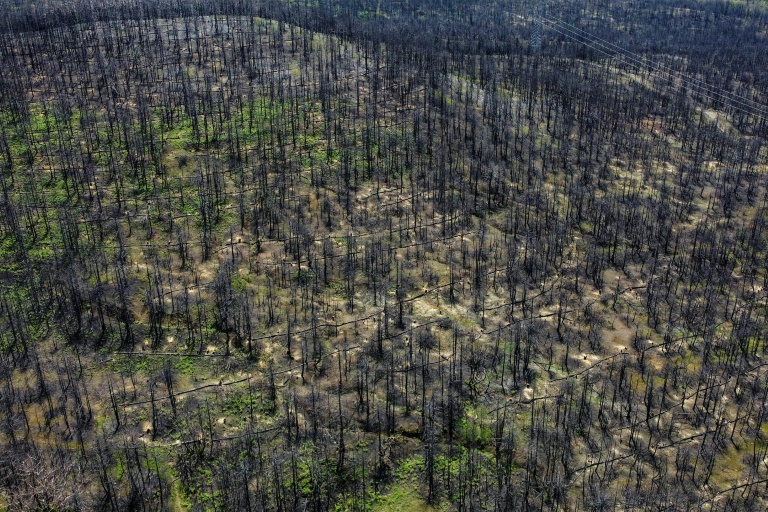
Grass is growing on blackened mountainsides under the carcasses of burnt trees and birds are singing again.

And while the woods and meadows that once produced some of Greece’s best honey will likely need two decades to recover, experts say the best method is to let nature do the heavy lifting itself.

“There is rebirth, in some places better than others,” Nikos Georgiadis of the World Wildlife Fund Greece told AFP.

In two weeks last August, more than 46,000 hectares went up in smoke on Evia — 80 kilometres (50 miles) east of Athens — laying waste to homes, pine forests, olive groves, beehives and livestock after a prolonged heatwave.

– Apocalyptic –

Thousands of locals and tourists fled from the north of the island amid apocalyptic scenes, with authorities forced to stage a mass evacuation to avoid a repeat of the 2018 fire near Athens that claimed over 100 lives.

Three people died in Greek wildfires last year during a brutal summer for a swathe of southern Europe from Spain to France, Italy, Croatia and Cyprus. Blazes also claimed lives in Turkey and Algeria.

Scientists have warned that extreme weather and fierce fires will become increasingly common due to man-made global warming, and Greece’s conservative prime minister has linked the blazes to climate change. 

In the wake of the destruction on Evia, premier Kyriakos Mitsotakis pledged hundreds of millions of euros for reconstruction, reforestation and flood prevention works, and a 1.7-billion-euro ($1.78 billion) overhaul of the civil protection agency.

– Letting nature grow –

Forester Elias Apostolidis, whose company is involved in the state’s reconstruction plan, said inspections so far have shown that only a little human intervention is needed for regrowth.

The worst-hit zones — around five percent of the burned area  — will be replanted with seeds gathered elsewhere on the island, he told AFP.

The fact that the destruction was so total in some areas also enables foresters to replant with more fire-resistant trees.

“We have recorded per species the percentage of plants that survived,” Apostolidis said. 

For example, only six percent of black pine was saved, compared to 42 percent of broadleaf oak, he said.

“This means that some plants are more resistant than others. We now know practically how forests behave in relation to fire and we must take that into account in the future so that we can make them more resistant” to blazes, he said.

But it will take “close to 20 to 25 years” for the forest to be restored, said WWF’s Georgiadis, provided that the area is not grazed and not hit by another wildfire.

Premier Mitsotakis vowed to “rebuild northern Evia better and more beautiful than it was”, announcing an aid package for the region worth 500 million euros.

The state has already removed unsavable trees in some badly affected areas and begun infrastructural works to assist reforestation and prevent soil erosion and flash floods.

– ‘We are done’ –

But for many locals, it is already too late.

Giannis Dimou, a 66-year-old shepherd, lost more than 60 animals and his three goat folds in the fire. 

He now has just a dozen animals left, not enough to keep him in business.

And because his pens were not fully licensed, he was not eligible for state help.

“There is nothing you can do with so few animals left,” he said. “We are done.”

The situation is equally dire for beekeepers on an island that was home to around 40 percent of national honey production.

“The beekeepers of the region are facing huge issues and essentially they won’t be able to collect honey from the area” for years and will have to move elsewhere, said Stathis Albanis, president of the Istiaia beekeepers cooperative. 

Monkeypox vaccine maker Bavarian Nordic ready to meet demand

As the lone laboratory manufacturing a licensed vaccine against monkeypox, Danish company Bavarian Nordic has seen its order book fill up as the usually rare disease spreads around the world. 

“The approval we got in 2019, when we only sold maybe a few hundred doses, all of a sudden became very, very relevant for international health,” the company’s vice president Rolf Sass Sorensen says with a smile at the biotech company’s headquarters in Copenhagen’s harbour.

Bavarian Nordic was caught by surprise by the disease’s sudden spread earlier this year to dozens of countries outside West and Central Africa where it had previously been generally confined.

But Sorensen says he is confident the company can meet global demand even though it only has one production facility.

“With the current demand we can easily supply the global market. We have a couple of million doses in bulk that we can put into vials and make sure that the current outbreak is handled,” he told AFP in an interview.

Bavarian Nordic has an annual production capacity of 30 million vaccine doses.

The Danish company’s smallpox vaccine, marketed as Imvanex in Europe, Jynneos in the US and Imvamune in Canada, is a third-generation serum (a live vaccine that does not replicate in the human body).

It has been licensed in Europe since 2013.

It was designed against smallpox in adults, a disease considered eradicated some 40 years ago, and requires two doses for inoculation.

– World clamouring for vaccine –

According to Sorensen, the vaccine is in stock “in many countries” and can also be used against monkeypox, both before and after exposure to the virus.

“If you are vaccinated a few days after you are exposed, you can also be protected”, he explained.

After getting the green light from the US Food and Drug Administration (FDA) three years ago to use its smallpox vaccine against monkeypox, Bavarian Nordic is now applying to do the same in Europe.

The European Health Emergency Preparedness and Response Authority (HERA), created by the European Commission during the Covid-19 pandemic, has already bought more than 100,000 doses for the 27 EU countries as well as Norway and Iceland.

The first deliveries are due at the end of June for those countries deemed a priority.

The United States has also filled up their stocks with an order for 500,000 doses, in addition to 100 million doses of an older smallpox vaccine previously made by France’s Sanofi but which is known to have some side effects. 

Canada and Denmark have also placed orders with Bavarian Nordic.

Other than these announcements made by the countries themselves, Bavarian Nordic — which also makes vaccines against tick-borne encephalitis, rabies, Ebola, Covid-19 and the RS respiratory virus — does not disclose which countries have placed orders.

“But I can say we have procurement requests from all over the world. We have procurement requests from the US, European countries, Middle Eastern countries, Asian countries”, Sorensen said.

The value of the contracts hasn’t been disclosed either, but for Bavarian Nordic it has clearly been a windfall: it raised its 2022 full-year outlook four times in three weeks.

– Rarely fatal –

Despite the rise in monkeypox cases worldwide, the World Health Organization has not recommended that countries mass vaccinate their populations at this stage.

The United States has so far recommended the vaccination of people who have been in close contact with an infected person, while France has recommended a single dose for contact cases in risk groups who were vaccinated for smallpox before 1980.

The European Medicines Agency approved a smallpox medication, Tecovirimat, for treatment of monkeypox earlier this year, but it is not yet widely available.

Most people recover from monkeypox within several weeks and the disease has only been fatal in rare cases.

Symptoms include lesions, eruptions on the face, palms or soles, scabs, fever, muscle ache and chills.

From January 1 to June 15, the WHO registered more than 2,103 cases and one death in 42 countries. 

Europe has been the epicentre of the outbreak, with 1,773 confirmed cases, or 84 percent of the global total.

Global food crisis 'will kill millions' by disease, health executive warns

The global food crisis sparked by the war in Ukraine will kill millions by leaving the hungriest more vulnerable to infectious diseases, potentially triggering the world’s next health catastrophe, the head of a major aid organisation has warned.

A Russian naval blockade of Ukraine’s Black Sea ports has stopped grain shipments from the world’s fourth-largest exporter of wheat and corn, raising the spectre of shortages and hunger in low-income countries.

The knock-on effects of the food shortages mean many will die not only of starvation but from having weaker defences against infectious diseases due to bad nutrition, Peter Sands, executive director of the Global Fund to Fight Aids, Tuberculosis and Malaria told AFP this week.

“I think we’ve probably already begun our next health crisis. It’s not a new pathogen but it means people who are poorly nourished will be more vulnerable to the existing diseases,” he said in an interview on the sidelines of a G20 health minister meeting in the Indonesian city of Yogyakarta.

“I think the combined impact of infectious diseases and the food shortages and the energy crisis… we can be talking about millions of extra deaths because of this,” he said.

World governments should minimise the impact of the food crisis by providing frontline healthcare to their poorest communities, who will be the most vulnerable, said the British former banker who now heads the $4 billion fund.

“That means focusing on primary healthcare so the healthcare that is delivered in the villages, in the communities. Hospitals are important but when you are faced with this kind of challenge, the most important thing is primary healthcare.”

– ‘Disaster’ –

The battle to contain the spread of coronavirus has taken resources away from the fight against tuberculosis, which killed 1.5 million people in 2020, according to World Health Organization data.

“It’s been a disaster for TB,” said Sands.

“In 2020 you saw globally 1.5 million people less getting treated for TB and tragically that means several hundreds of thousands of people will die but also that those people will infect other people.”

The health expert said solving the food crisis was now paramount in aiding the treatment of the world’s second-deadliest infectious disease.  

The West and Ukraine accuse Russia of trying to pressure them into concessions by blockading vital grain exports to increase fears of global famine.

Moscow has countered by saying that it is Western sanctions that are to blame for shortfalls in the Middle East and Africa.

Germany will host a meeting on the crisis on Friday under the title “Uniting for Global Food Security”, with US Secretary of State Antony Blinken among those attending.

“It is the poor person pandemic and because of that, it hasn’t attracted the same amount of investment in research and development,” Sands said, referring to tuberculosis. 

“This is a tragedy because this is a disease we know how to prevent, how to cure, we know how to get rid of.”

China's Xi calls for stronger fintech oversight, security

A high-level Chinese government meeting led by President Xi Jinping has called for stronger oversight and better security in financial tech, state media reported, with the sector hit hard by a regulatory crackdown.

The government action has pummelled some of China’s biggest tech firms, wiping out hundreds of billions of dollars in market value since last year.

But with the Chinese economy hammered by Covid lockdowns, the government has rolled out a series of support measures, including a call for “predictable” tech regulation.

“Regarding large payment and fintech platform enterprises, Xi called for efforts to improve regulations, strengthen institutional weak links, ensure the security of payment and financial infrastructure, and guard against and defuse potential systemic financial risks,” according to a readout of the Wednesday meeting by the official Xinhua news agency.

The Chinese leader also “called for these enterprises to be better supported in serving the real economy”, Xinhua said.

The officials at the meeting discussed  promoting the “healthy development” of fintech companies, it added, and said “China will tighten oversight” of financial holding firms and internet financial services.

Investors have been heartened in recent weeks by similar statements by the Chinese government, with some perceiving them as signals that the tech crackdown is finally easing.

Hopes also soared this month when dozens of new video games were approved, and tech stocks rose on reports that authorities were wrapping up a cybersecurity probe into ride-hailing giant Didi.

But regulators this month denied reports that they were discussing the potential revival of Ant Group’s scuppered IPO, which would have been the world’s largest public offering at the time.

Ant Group — the payments affiliate of e-commerce giant Alibaba — had its share offering cancelled at the last minute in 2020.

Alibaba was later hit with a $2.75 billion fine over alleged unfair practices.

Ant Group is set to apply for a financial licence as soon as this month, Bloomberg News reported Wednesday, citing unnamed people familiar with the matter.

China's Xi calls for stronger fintech oversight, security

A high-level Chinese government meeting led by President Xi Jinping has called for stronger oversight and better security in financial tech, state media reported, with the sector hit hard by a regulatory crackdown.

The government action has pummelled some of China’s biggest tech firms, wiping out hundreds of billions of dollars in market value since last year.

But with the Chinese economy hammered by Covid lockdowns, the government has rolled out a series of support measures, including a call for “predictable” tech regulation.

“Regarding large payment and fintech platform enterprises, Xi called for efforts to improve regulations, strengthen institutional weak links, ensure the security of payment and financial infrastructure, and guard against and defuse potential systemic financial risks,” according to a readout of the Wednesday meeting by the official Xinhua news agency.

The Chinese leader also “called for these enterprises to be better supported in serving the real economy”, Xinhua said.

The officials at the meeting discussed  promoting the “healthy development” of fintech companies, it added, and said “China will tighten oversight” of financial holding firms and internet financial services.

Investors have been heartened in recent weeks by similar statements by the Chinese government, with some perceiving them as signals that the tech crackdown is finally easing.

Hopes also soared this month when dozens of new video games were approved, and tech stocks rose on reports that authorities were wrapping up a cybersecurity probe into ride-hailing giant Didi.

But regulators this month denied reports that they were discussing the potential revival of Ant Group’s scuppered IPO, which would have been the world’s largest public offering at the time.

Ant Group — the payments affiliate of e-commerce giant Alibaba — had its share offering cancelled at the last minute in 2020.

Alibaba was later hit with a $2.75 billion fine over alleged unfair practices.

Ant Group is set to apply for a financial licence as soon as this month, Bloomberg News reported Wednesday, citing unnamed people familiar with the matter.

Close Bitnami banner
Bitnami