AFP

Record floods threaten southern China

Record floods were expected in parts of southern China Thursday as heavy rains pushed water levels in the Pearl River delta to their highest in almost a century.

Hundreds of thousands of people have been evacuated from the worst-hit parts of the region, which includes Guangdong province, a manufacturing and logistics hub that is home to China’s tech capital Shenzhen.

China’s ministry of water resources on Wednesday placed its highest flood alert on the Pearl River basin, saying water levels at one location “surpassed historical records” and that the provincial capital Guangzhou would be impacted.

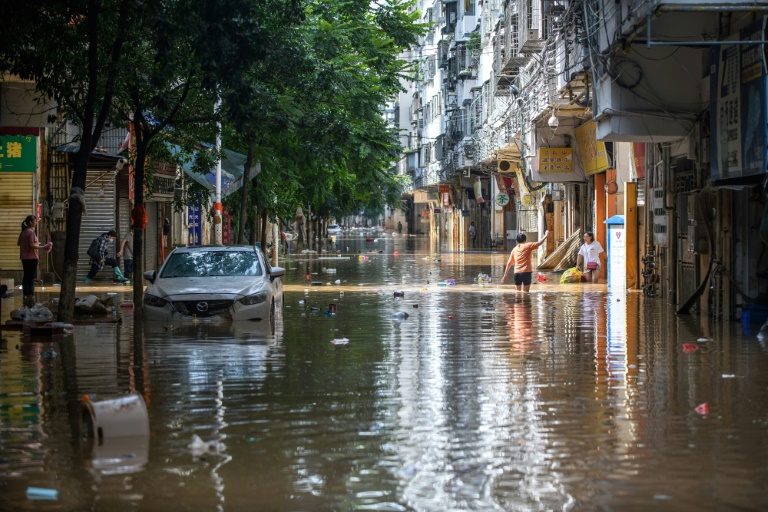
Images from the city of Shaoguan, north of Guangzhou, showed residents on Wednesday making their way through flooded main roads, as water in some areas reached the tops of cars.

The muddy floodwater inundated shops and buildings, and people were seen clearing away the debris.

The low-lying Pearl River delta is home to the economic powerhouses of Guangzhou and Shenzhen, as well as several smaller but densely populated cities with major manufacturing and other industries.

Provincial emergency management authorities said earlier this week that direct economic losses were estimated at 1.7 billion yuan ($253 million).

Under the highest alert level, at-risk areas in Guangdong have been ordered to take all necessary measures including suspending work at factories and closing schools to minimise damage.

Other regions in southern China, including coastal Fujian province and Guangxi, have also been affected by record rains this month, forcing hundreds of thousands to evacuate.

Summer floods are common in parts of China, but these have been getting more extreme in recent years as a result of climate change.

Chinese authorities so far have not directly linked this year’s extreme floods to climate change. 

Some local media have dubbed it a “once-in-a-century flood”, reporting that water levels have surpassed the highest recorded in 1931 and are approaching the area’s worst floods in 1915.

Workers in Chile strike at world's largest copper producer

Workers at Chile’s state mining company Codelco, the largest producer of copper in the world, launched an open- ended strike Wednesday to protest the closure of a foundry in one of the country’s most polluted regions.

Police said they arrested 18 people as striking workers, waving Chilean flags and setting tires on fire, blocked entry to six mining facilities around the country. They did this mainly at the Ventanas foundry, which the government announced last week that it would shut down.

Union leaders said the strike had paralyzed Codelco altogether but Finance Minister Mario Marcel said it had “altered” production but not shut it down.

The Copper Workers Federation said the strike will cost Codelco — which produces around eight percent of the world’s copper amounting to 10-15 percent of Chile’s GDP — $20 million a day. Marcel contested that figure.

The FTC represents around 14,000 Codelco workers and another 40,000 external contractors, according to Pantoja.

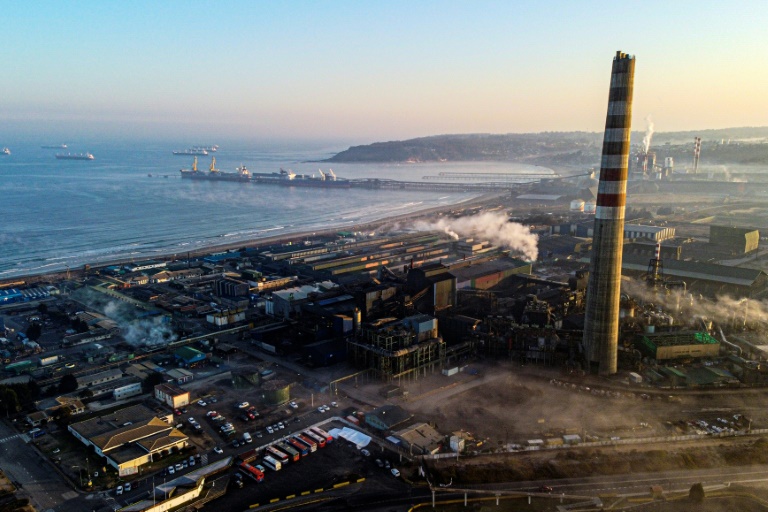
Unions described the closure of the Ventanas foundry, located around 140 kilometers west of the capital Santiago, as “arbitrary,” and are demanding the government invests $54 million to bring the plant up to the highest environmental standards.

– ‘Standards very low’ –

Government spokeswoman Camila Vallejo said the government remains open to dialogue but that it was focused on “a more sustainable model of development.”

“Our standards are very low and if we truly want to meet our environmental commitments we have to be guided by” World Health Organization standards, she added.

Codelco’s decision comes after an incident on June 9 when 115 people, mostly school children, suffered sulphur dioxide poisoning released by heavy industry, provoking the closure of schools in the area.

It was the second such incident in a matter of just three days.

Sulphur dioxide is a classic air pollutant usually linked to the burning of fossil fuels.

Greenpeace described the area around the Ventanas plant as “Chile’s Chernobyl” following a serious incident in 2018 when around 600 people in Quintero and Puchuncavi received medical treatment for symptoms such as vomiting blood, headaches, dizziness, paralysis of their extremities and strange red marks on children’s skin.

Last week, President Gabriel Boric hit out at Chile’s record on polluting the environment.

“We don’t want any more areas of (environmental) sacrifice,” he said.

“There are now hundreds of thousands of people who live in our country exposed to severe degradation of the environment that we have provoked or allowed and, as a Chilean, that makes me feel ashamed.”

Pollution accumulated in the area of Quintero and Puchuncavi, home to around 50,000 people, after the government decided in 1958 to convert it into an industrial center that now hosts four coal-fired power stations and oil and copper refineries.

Workers in Chile strike at world's largest copper producer

Workers at Chile’s state mining company Codelco, the largest producer of copper in the world, launched an open- ended strike Wednesday to protest the closure of a foundry in one of the country’s most polluted regions.

Police said they arrested 18 people as striking workers, waving Chilean flags and setting tires on fire, blocked entry to six mining facilities around the country. They did this mainly at the Ventanas foundry, which the government announced last week that it would shut down.

Union leaders said the strike had paralyzed Codelco altogether but Finance Minister Mario Marcel said it had “altered” production but not shut it down.

The Copper Workers Federation said the strike will cost Codelco — which produces around eight percent of the world’s copper amounting to 10-15 percent of Chile’s GDP — $20 million a day. Marcel contested that figure.

The FTC represents around 14,000 Codelco workers and another 40,000 external contractors, according to Pantoja.

Unions described the closure of the Ventanas foundry, located around 140 kilometers west of the capital Santiago, as “arbitrary,” and are demanding the government invests $54 million to bring the plant up to the highest environmental standards.

– ‘Standards very low’ –

Government spokeswoman Camila Vallejo said the government remains open to dialogue but that it was focused on “a more sustainable model of development.”

“Our standards are very low and if we truly want to meet our environmental commitments we have to be guided by” World Health Organization standards, she added.

Codelco’s decision comes after an incident on June 9 when 115 people, mostly school children, suffered sulphur dioxide poisoning released by heavy industry, provoking the closure of schools in the area.

It was the second such incident in a matter of just three days.

Sulphur dioxide is a classic air pollutant usually linked to the burning of fossil fuels.

Greenpeace described the area around the Ventanas plant as “Chile’s Chernobyl” following a serious incident in 2018 when around 600 people in Quintero and Puchuncavi received medical treatment for symptoms such as vomiting blood, headaches, dizziness, paralysis of their extremities and strange red marks on children’s skin.

Last week, President Gabriel Boric hit out at Chile’s record on polluting the environment.

“We don’t want any more areas of (environmental) sacrifice,” he said.

“There are now hundreds of thousands of people who live in our country exposed to severe degradation of the environment that we have provoked or allowed and, as a Chilean, that makes me feel ashamed.”

Pollution accumulated in the area of Quintero and Puchuncavi, home to around 50,000 people, after the government decided in 1958 to convert it into an industrial center that now hosts four coal-fired power stations and oil and copper refineries.

Markets fluctuate, oil falls again as recession warnings build

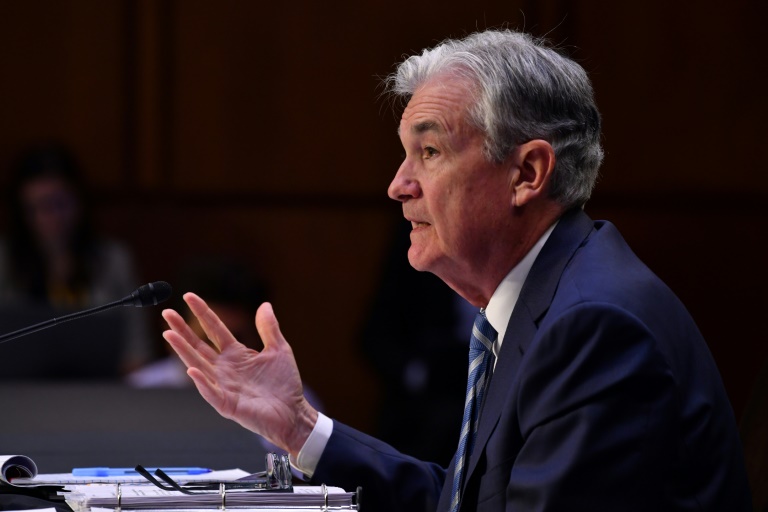
Asian markets struggled Thursday to recover from the previous day’s battering, while oil extended losses, after Federal Reserve boss Jerome Powell admitted the economy could tip into recession as the bank hikes interest rates to fight runaway inflation.

Soaring prices and central banks’ battle to rein them in have sent a chill through global trading floors this year, while investors are also having to deal with the uncertainty wrought by the Ukraine war and patchy pandemic recovery.

Commentators have warned for some time that the world economy could be heading for another contraction owing to the sharp increase in borrowing costs and rampant inflation, which is at decades highs in several countries.

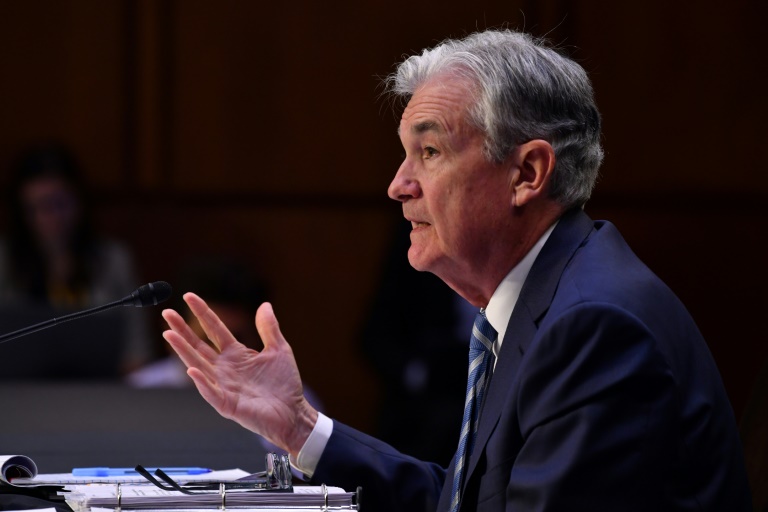
And on Wednesday the head of the most powerful central bank in the world told lawmakers that it was “certainly a possibility”.

While saying the economy was strong enough for rates to rise, he added that “frankly, the events of the last few months around the world have made it more difficult for us to achieve what we want, which is two percent inflation and still a strong labour market.”

He also warned: “Inflation has obviously surprised to the upside over the past year, and further surprises could be in store”.

The Fed this month hiked rates by 75 basis points and is expected to do the same in July, with some observers predicting two more such moves after that.

After a day of swings, Wall Street ended in negative territory, though off big early lows.

Asia fluctuated after a big sell-off Wednesday, with optimism at a premium among investors and analysts saying it is unlikely to improve anytime soon.

Hong Kong, Sydney, Singapore and Wellington were slightly higher but Tokyo, Shanghai, Seoul, Taipei, Manila and Jakarta fell.

“Having listened to Powell’s lengthy Senate testimony… it is clear that inflation is the domestic issue at the top of the political agenda,” said SPI Asset Management’s Stephen Innes. 

“Powell consistently bobbed and weaved his way through commenting on anything of fiscal nature but was focused on deploying the tools within the Fed’s power to address their dual mandate” of reining in inflation and keeping unemployment in check. 

“So we should still position for more rate hike fallout to occur.”

Powell’s comments came as other top economists added to the recession talk, with former New York Fed President Bill Dudley saying it was “inevitable within the next 12 to 18 months”.

And Deutsche Bank CEO Christian Sewing said there was a 50 percent chance of a contraction next year.

Elon Musk, JP Morgan boss Jamie Dimon and Nouriel Roubini are among several others to have made similar forecasts.

“We are still in an era where uncertainty is elevated and is expected to remain so for quite a while,” said JoAnne Feeney, of Advisors Capital Management, on Bloomberg Television.

“It’s risky right now in terms of the forward outlook for the global economy. Recession risk has clearly risen.”

The prospect of a retreat in the global economy continued to drag oil prices down as traders fret over demand, with both main contracts down more than three percent, having tumbled on Wednesday.

Brent and WTI have dropped around 15 percent over the past week, even with sanctions on Russian crude exports and China’s gradual reopening from lockdowns.

Adding to the selling was data Wednesday indicating a jump in US stockpiles.

“A slowdown in global growth is a risk to oil demand, which could help ease some of the tightness in the market,” Warren Patterson, at ING Groep, said. 

“Already, we have seen demand estimates revised lower.”

– Key figures at around 0230 GMT –

Tokyo – Nikkei 225: FLAT at 26,146.71 (break)

Hong Kong – Hang Seng Index: UP 0.2 percent at 21,039.28

Shanghai – Composite: DOWN 0.1 percent at 3,263.02

West Texas Intermediate: DOWN 3.5 percent at $102.51 per barrel

Brent North Sea crude: DOWN 3.2 percent at $108.14 per barrel

Dollar/yen: DOWN at 135.74 yen from 136.22 yen late Wednesday

Pound/dollar: DOWN at $1.2241 from $1.2263

Euro/dollar: DOWN at $1.0561 from $1.0570

Euro/pound: UP at 86.27 pence from 86.17 pence

New York – Dow: DOWN 0.2 percent at 30,483.13 (close)

London – FTSE 100: DOWN 0.9 percent at 7,089.22 (close)

Markets fluctuate, oil falls again as recession warnings build

Asian markets struggled Thursday to recover from the previous day’s battering, while oil extended losses, after Federal Reserve boss Jerome Powell admitted the economy could tip into recession as the bank hikes interest rates to fight runaway inflation.

Soaring prices and central banks’ battle to rein them in have sent a chill through global trading floors this year, while investors are also having to deal with the uncertainty wrought by the Ukraine war and patchy pandemic recovery.

Commentators have warned for some time that the world economy could be heading for another contraction owing to the sharp increase in borrowing costs and rampant inflation, which is at decades highs in several countries.

And on Wednesday the head of the most powerful central bank in the world told lawmakers that it was “certainly a possibility”.

While saying the economy was strong enough for rates to rise, he added that “frankly, the events of the last few months around the world have made it more difficult for us to achieve what we want, which is two percent inflation and still a strong labour market.”

He also warned: “Inflation has obviously surprised to the upside over the past year, and further surprises could be in store”.

The Fed this month hiked rates by 75 basis points and is expected to do the same in July, with some observers predicting two more such moves after that.

After a day of swings, Wall Street ended in negative territory, though off big early lows.

Asia fluctuated after a big sell-off Wednesday, with optimism at a premium among investors and analysts saying it is unlikely to improve anytime soon.

Hong Kong, Sydney, Singapore and Wellington were slightly higher but Tokyo, Shanghai, Seoul, Taipei, Manila and Jakarta fell.

“Having listened to Powell’s lengthy Senate testimony… it is clear that inflation is the domestic issue at the top of the political agenda,” said SPI Asset Management’s Stephen Innes. 

“Powell consistently bobbed and weaved his way through commenting on anything of fiscal nature but was focused on deploying the tools within the Fed’s power to address their dual mandate” of reining in inflation and keeping unemployment in check. 

“So we should still position for more rate hike fallout to occur.”

Powell’s comments came as other top economists added to the recession talk, with former New York Fed President Bill Dudley saying it was “inevitable within the next 12 to 18 months”.

And Deutsche Bank CEO Christian Sewing said there was a 50 percent chance of a contraction next year.

Elon Musk, JP Morgan boss Jamie Dimon and Nouriel Roubini are among several others to have made similar forecasts.

“We are still in an era where uncertainty is elevated and is expected to remain so for quite a while,” said JoAnne Feeney, of Advisors Capital Management, on Bloomberg Television.

“It’s risky right now in terms of the forward outlook for the global economy. Recession risk has clearly risen.”

The prospect of a retreat in the global economy continued to drag oil prices down as traders fret over demand, with both main contracts down more than three percent, having tumbled on Wednesday.

Brent and WTI have dropped around 15 percent over the past week, even with sanctions on Russian crude exports and China’s gradual reopening from lockdowns.

Adding to the selling was data Wednesday indicating a jump in US stockpiles.

“A slowdown in global growth is a risk to oil demand, which could help ease some of the tightness in the market,” Warren Patterson, at ING Groep, said. 

“Already, we have seen demand estimates revised lower.”

– Key figures at around 0230 GMT –

Tokyo – Nikkei 225: FLAT at 26,146.71 (break)

Hong Kong – Hang Seng Index: UP 0.2 percent at 21,039.28

Shanghai – Composite: DOWN 0.1 percent at 3,263.02

West Texas Intermediate: DOWN 3.5 percent at $102.51 per barrel

Brent North Sea crude: DOWN 3.2 percent at $108.14 per barrel

Dollar/yen: DOWN at 135.74 yen from 136.22 yen late Wednesday

Pound/dollar: DOWN at $1.2241 from $1.2263

Euro/dollar: DOWN at $1.0561 from $1.0570

Euro/pound: UP at 86.27 pence from 86.17 pence

New York – Dow: DOWN 0.2 percent at 30,483.13 (close)

London – FTSE 100: DOWN 0.9 percent at 7,089.22 (close)

Biden, fragile at home, faces historic leadership task in Europe

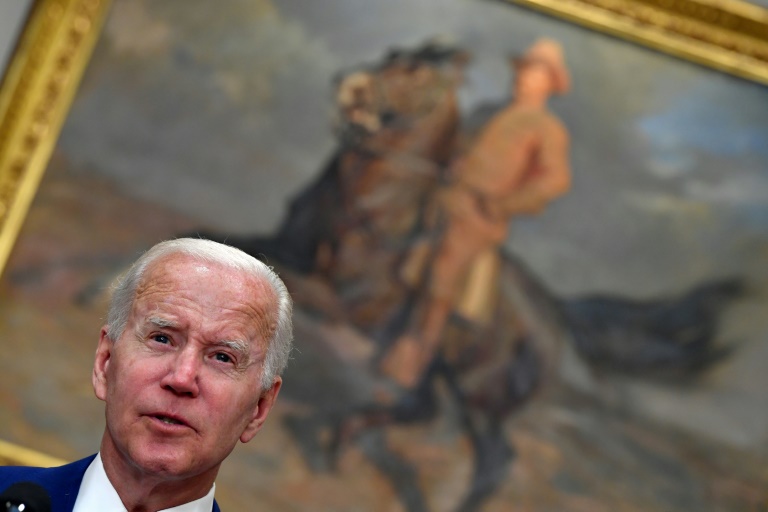
Leader of the free world sounds like a superhero character, but the Joe Biden heading this week to twin European summits is in reality a politically fragile president tasked, somehow, with resolving an unenviable string of diplomatic problems.

Biden arrives Saturday in Germany for the G7 summit of major Western powers, followed next week by the NATO military alliance summit in Madrid.

Both sessions will take place in the shadow of Russia’s Ukraine invasion, but also a global surge in inflation, fears of recession, and the ever-growing challenge of containing China while avoiding open conflict.

For sure, Biden will tout the success of a monumental effort to rally the West and breathe new life into NATO — a “high water mark in transatlantic solidarity in the post-Cold War period,” according to a senior US official.

But the less flattering picture is one of a 79-year-old politician whose approval rating at home has plummeted below 40 percent and whose Democratic party seems likely to lose control of Congress this November, giving way to vengeful Republican opponents.

As Donald Trump — who spent four years in the White House shredding American alliances — prepares his own possible revenge match in the 2024 presidential election, Biden is the first to admit that not all view the United States with confidence.

“I travel the world trying to put things back together,” Biden told an audience of trade union members this month, and “no matter where I go… they look at me and I say — I say, ‘America is back,’  and they look and me and they say: ‘For how long?'”

– Democratic alliances –

Biden refers to his presidency as an inflection point in a battle for the survival of Western democracy against the likes of Russian President Vladimir Putin, as well as against internal attacks, like Trump’s attempt to overturn the 2020 election.

A big part of that campaign is rebuilding alliances and restoring the traditional US role as a first among equals — in contrast to Trump’s policy of treating all countries as bitter rivals.

Both in Germany and Spain, Biden will be able to showcase considerable success, especially concerning the response to Russia’s onslaught in Ukraine.

“He came into office with the express purpose of revitalizing and reinforcing our allies, our alliances and our partnerships around the world and that’s exactly what he’s done,” John Kirby, a White House spokesman, said.

“He has been unafraid to use the convening power of the United States which is still ample, still relevant, still viable. The free world has demonstrated incredible unity.”

– Stress test –

But for all the self-congratulations likely to emanate from Bavaria and Madrid, the Western partners face increasingly tricky blowback from their own sanctions on Russia.

Their coordinated attempt to shut down Russia’s economy and cripple the ruble has clearly not worked so far, while spiraling energy costs are instead exacting a political price on leaders like Biden at home.

A US official said the G7 will “roll out” yet more measures to “increase pressure” on Moscow. But there will also be a parallel question for leaders to ponder.

“How do we maximize pain on Putin’s regime? How do we minimize spill-backs back to the rest of the world? And I think that’s exactly how the discussion around energy markets and energy market challenges will get framed,” the official said.

Amid warnings of Ukraine fatigue setting in across Western capitals, Biden says the transatlantic coalition has to tough it out.

“At some point, this is going to be a bit of a waiting game: what the Russians can sustain and what Europe is going to be prepared to sustain. That’s one of the things we’re going to be speaking in Spain about,” he said.

If that’s going to happen — and if the West is going to stick together through the growing threat of global recession — then much may depend on Biden.

“Leadership matters a lot here,” Kirby said.

“Multilateral leadership matters a lot — because this isn’t just affecting the United States, it’s affecting the whole world.”

US Supreme Court divided over church-state separation

The wall separating church and state is one of the foundational principles of the United States.

Sonia Sotomayor, one of three liberal justices on the Supreme Court, is accusing her conservative majority colleagues of tearing it down.

Sotomayor did not mince words in a dissent to a ruling by the nine-member court this week that the state of Maine cannot deny public funds to religious schools.

“There is nothing neutral about Maine’s program,” Chief Justice John Roberts wrote in an opinion joined by the other five conservative justices.

“The State pays tuition for certain students at private schools — so long as the schools are not religious,” Roberts said. “That is discrimination against religion.”

In a blistering dissent, Sotomayor, who was named to the court by Democratic president Barack Obama, wrote, “what a difference five years makes.”

“In 2017, I feared that the Court was ‘leading us … to a place where separation of church and state is a constitutional slogan, not a constitutional commitment,'” she said.

“Today, the Court leads us to a place where separation of church and state becomes a constitutional violation.”

Sotomayor ended her contribution with a pointed signoff.

“With growing concern for where this Court will lead us next, I respectfully dissent,” she said.

Zachary Heiden, chief counsel at the American Civil Liberties Union of Maine, said the court’s ruling, which comes just days before a highly anticipated abortion rights decision, upended two decades of jurisprudence.

“For over 20 years, every court that has heard a challenge to Maine’s law that prohibits public funding of religious education has upheld its constitutionality,” Heiden said.

“But this Supreme Court has rendered a decision completely contrary to the founding principle of separation of church and state.”

– Trump nominees –

Lia Epperson, a law professor at American University who joined an amicus brief in the case in support of Maine, said the ruling was significant.

“This is the first time the court has explicitly required taxpayers to support something that is a specific religious activity — that is religious instruction,” Epperson said.

Steven Schwinn, a law professor at the University of Illinois Chicago, said the decision was the latest by the Roberts court “on a long trajectory of expanding the roles of religion in public life.”

“The court has not changed the underlying law,” Schwinn said. “It hasn’t gone so far as to overrule prior cases.

“And yet it nevertheless has moved inexorably in the direction of not only inviting religion more into public life but really mandating religion more into public life.”

“It’s done that incrementally,” he added. “You can agree or disagree with the direction the court is taking, it seems to me, but that the court is taking a direction is undeniable.”

During his four years in the White House, president Donald Trump nominated three conservative justices, cementing a 6-3 right-wing majority on the nation’s highest court.   

“If there was any question before there’s quite clearly a majority in favor of religion now,” Schwinn said.

Epperson agreed.

“We do have an increasingly religious and conservative court,” she said. “You will see that reflected in the decisions.

“This is the most Catholic the Supreme Court has ever been in its history in terms of the justices,” she noted.

– ‘Legitimate church’ –

Six of the nine justices are Catholic — Roberts, Clarence Thomas, Samuel Alito, Sotomayor, Brett Kavanaugh and Amy Coney Barrett.

Justices Elena Kagan and Stephen Breyer are Jewish while Justice Neil Gorsuch is Episcopalian.

Ketanji Brown Jackson, who will be replacing the retiring Breyer next term, is Protestant.

According to a Gallup survey, 22 percent of the American adult population identifies as Catholic and 45 percent as non-Catholic Christians.

Two percent identify as Jewish and 21 percent say they have no formal religious identity.

Kevin Welner, a professor specializing in educational policy and law at the University of Colorado Boulder, said the Maine ruling could have some potential pitfalls.

“The example here is ‘Do we really want our government deciding which asserted religious beliefs are geniune?'” he said.

“‘This is a legitimate church. This is an illegitimate church.'”

“You could end up with a situation where eventually the state is going to have to come in and say ‘That’s a religious belief that we’re going to honor and that’s not.'”

Officer in charge of Texas shooting police response suspended

The head of the Uvalde school district police force — who oversaw the response to the school shooting in which 19 children were killed last month in Texas — has been suspended, the superintendent said Wednesday.

The announcement came a day after the head of Texas’ public safety department called the police response to the massacre an “abject failure.”

“From the beginning of this horrible event, I shared that the district would wait until the investigation was complete before making personnel decisions,” Uvalde Consolidated Independent School District Superintendent Hal Harrell said in a statement. 

“Because of the lack of clarity that remains and the unknown timing of when I will receive the results of the investigations, I have made the decision to place Chief (Pete) Arredondo on administrative leave effective on this date,” Harrell said. 

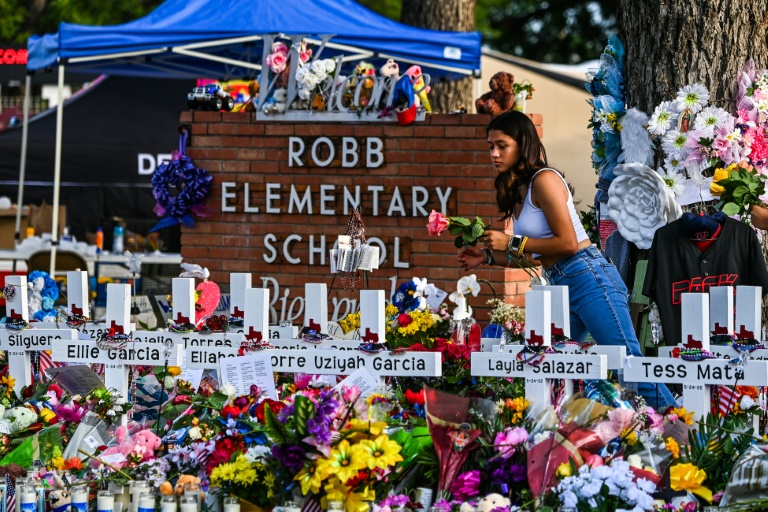
Nineteen young children and two teachers were killed when a teenage gunman went on a rampage at Robb Elementary School on May 24 in America’s worst school shooting in a decade. Police eventually shot and killed the gunman.

Local police have been under intense scrutiny since it emerged that more than a dozen officers waited for an hour outside a pair of adjoining classrooms where the shooting was taking place and did nothing as children lay dead or dying inside.

On Tuesday, Steve McCraw, Texas’ public safety chief, told state senators during a hearing that Arredondo “decided to place the lives of officers before the lives of children.”

“There’s compelling evidence that the law enforcement response to the attack at Robb Elementary was an abject failure and antithetical to everything we’ve learned over the last two decades since the Columbine massacre,” McCraw said, referring to the 1999 Colorado high school shooting that left 13 people dead. It was America’s first major school massacre.

“The officers had weapons, the children had none. The officers had body armor, the children had none. The officers had training, the subject had none,” he testified.

The mayor of Uvalde said Tuesday that Robb Elementary School would be demolished.

“You can never ask a child to go back, or a teacher to go back in that school ever,” Don McLoughlin said at a city council meeting. 

Workers strike at world's largest copper producer, Chile's Codelco

Workers at Chile’s state mining company Codelco, the largest producer of copper in the world, went on an “indefinite” strike on Wednesday, unions said, protesting the closure of a foundry in one of the country’s most polluted regions.

Codelco announced last week that it would close the Ventanas foundry in the towns of Quintero and Puchuncavi.

The Copper Workers Federation (FTC) released a statement saying there was “full support for this paralyzation (of work) in solidarity with the workers at the Ventanas division” from Codelco’s other divisions.

FTC president Amador Pantoja told a local television station the strike will cost Codelco — which produces around eight percent of the world’s copper amounting to 10-15 percent of Chile’s GDP — $20 million a day.

However, Finance Minister Mario Marcel contested that figure.

“For those figures to be correct, all Codelco operations would have to be paralyzed abruptly without this production being recovered in the future and none of those things are happening right now,” said Marcel.

“There is no paralyzation of operations, there’s a disruption of access by groups of workers.”

The FTC represents around 14,000 Codelco workers and another 40,000 external contractors, according to Pantoja.

Unions described the closure of the Ventanas foundry, located around 140 kilometers west of the capital Santiago, as “arbitrary,” and are demanding the government invests $54 million to bring the plant up to the highest environmental standards.

– ‘Standards very low’ –

The entrance to Ventanas was blocked by burning roadblocks and dozens of workers waving Chilean flags on Wednesday.

“No to closure, yes to investment,” read one banner.

Spokeswoman Camila Vallejo said the government “remains open to dialogue” but that it was focused on “a more sustainable model of development.”

“Our standards are very low and if we truly want to meet our environmental commitments we have to be guided by” World Health Organization standards, she added.

Codelco’s decision comes after an incident on June 9 when 115 people, mostly school children, suffered sulphur dioxide poisoning released by heavy industry, provoking the closure of schools in the area.

It was the second such incident in a matter of just three days.

Sulphur dioxide is a classic air pollutant usually linked to the burning of fossil fuels.

Greenpeace described the area around the Ventanas plant as “Chile’s Chernobyl” following a serious incident in 2018 when around 600 people in Quintero and Puchuncavi received medical treatment for symptoms such as vomiting blood, headaches, dizziness, paralysis of their extremities and strange red marks on children’s skin.

Last week, President Gabriel Boric hit out at Chile’s record on polluting the environment.

“We don’t want any more areas of (environmental) sacrifice,” he said.

“There are now hundreds of thousands of people who live in our country exposed to severe degradation of the environment that we have provoked or allowed and, as a Chilean, that makes me feel ashamed.”

Pollution accumulated in the area of Quintero and Puchuncavi, home to around 50,000 people, after the government decided in 1958 to convert it into an industrial center that now hosts four coal-fired power stations and oil and copper refineries.

Key Ukrainian city under 'massive' Russian bombardment

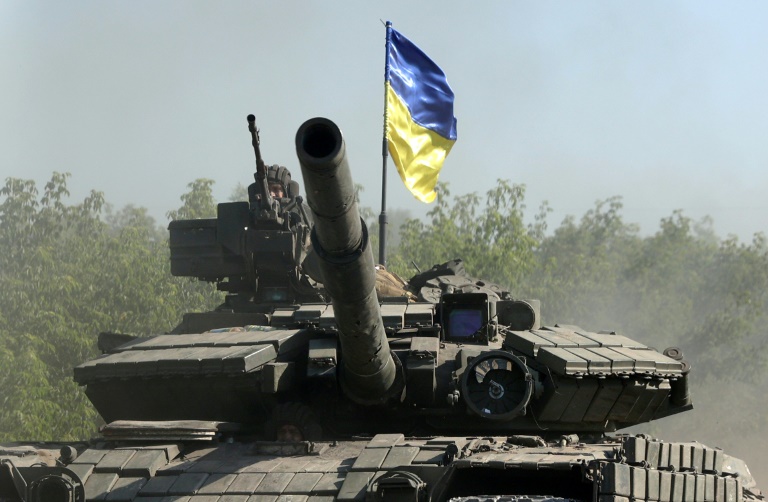
Heavy Russian bombardment of Ukraine’s battleground eastern Lugansk region and key city Severodonetsk has been “hell” for soldiers there, Kyiv said Wednesday, while insisting that defenders would hold on “as long as necessary”.

Moscow’s troops have been pummelling eastern Ukraine for weeks and are slowly advancing, despite fierce resistance from the outgunned Ukrainian military.

With President Vladimir Putin’s forces tightening their grip on the strategically important city of Severodonetsk in the Donbas, its twin city of Lysychansk is now coming under heavier bombardment.

“The Russian army is… just destroying everything” in Lysychansk, Sergiy Gaiday, governor of the Lugansk region, which includes both cities, wrote on Telegram.

“It’s just hell out there,” after four months of shelling in Severodonetsk, across the Donets river, he wrote later.

“Our boys are holding their positions and will continue to hold on as long as necessary,” he added.

Pro-Russian separatists claimed they were close to surrounding both Lysychansk and Severodonetsk.

“Over the past several days enormous work has been accomplished,” Andrei Marochko, an officer in the separatist army of Lugansk, told Russian state television.

– ‘Only grannies left’ –

Taking the two cities would give Moscow control of the whole of Lugansk, allowing Russia to press further into the Donbas.

After being pushed back from Kyiv and other parts of Ukraine following their February invasion, Moscow is seeking to seize a vast eastern swathe of the country.

But daily bombardment also continues in other parts of the country.

The northeastern city of Kharkiv near the Russian border was near empty on Wednesday, AFP reporters said, a day after Russian shelling killed five people there.

Leyla Shoydhry, a young woman in a park near the opera house, said the situation was “very bad”.

“Last night the building next to mine collapsed from the bombardment while I was sleeping,” she said.

Roman Pohuliay, a 19-year-old in a pink sweatshirt, said most residents had fled the city.

“Only the grannies are left,” he said.

In his daily address Tuesday, Ukrainian President Volodymyr Zelensky accused the Russian army of “brutal and cynical” shelling in the eastern Kharkiv region, where the governor said 15 people had been killed over the course of the day.

In a briefing Wednesday, the Russian defence ministry claimed responsibility for a missile strike it said killed a number of Ukrainian troops in the southern city of Mykolaiv.

Mayor Oleksandr Senkevych told Ukrainian television that the strike hit two firms and a school, sparking a blaze that authorities could not put out.

In the central city of Zaporizhzhia, women were training to use Kalashnikov assault rifles in urban combat as Russian forces edged nearer.

“When you can do something, it’s not so scary to take a machine gun in your hands,” said Ulyana Kiyashko, 29, after moving through an improvised combat zone in a basement.

Aid group Doctors Without Borders said it had gathered accounts of an “outrageous lack of care to distinguish and protect civilians” during the war in Ukraine.

Most patients it had evacuated by train blamed Russian or Russian-backed forces for a spectrum of gruesome injuries, it added.

In the southern city of Mykolaiv, two grain storage facilities were hit by Russian missile attacks, their operators Bunge and Viterra said.

– Ship leaves Mariupol –

On the Russian side, officials said Wednesday two drones had hit an oil refinery in the Rostov region bordering Ukraine, causing an explosion and a fire but no casualties.

Away from the battlefield, a senior US official in Washington said President Joe Biden and other Group of Seven leaders holding a summit this weekend in Germany will announce new measures to punish Russia for the invasion.

Moscow summoned Brussels’ ambassador in a dispute with EU member Lithuania over the country’s restrictions on rail traffic to the Russian outpost of Kaliningrad.

The territory is around 1,000 miles (1,600 kilometres) from Moscow, bordering Lithuania and Poland.

By blocking goods arriving from Russia, Lithuania says it is simply adhering to European Union-wide sanctions on Moscow.

The United States made clear its commitment to Lithuania as an ally in NATO, which considers an attack against one member an attack on all.

And Germany urged Russia not to “violate international law” by retaliating against Lithuania.

Also on Wednesday, a Turkish cargo ship left the Russian-occupied city of Mariupol on Ukraine’s Sea of Azov coast.

Moscow and Ankara have negotiated for weeks towards getting millions of tonnes of desperately needed grain out of the war zone and on to Africa and the Middle East.

But it was not immediately clear whether the Azov Concord was carrying wheat.

Turkey’s defence ministry said four-way talks would be held “in the coming weeks” between Russia, Turkey, Ukraine and the United Nations, with media reporting the meeting could happen next week.

Reporters Without Borders (RSF) said in an investigation published Wednesday that a Ukrainian photojournalist, Maks Levin, had been killed and possibly tortured by Russian troops after his capture on March 13.

burs-sr/ah/dw/bfm

Close Bitnami banner
Bitnami