AFP

Key Ukrainian city under 'massive' Russian bombardment

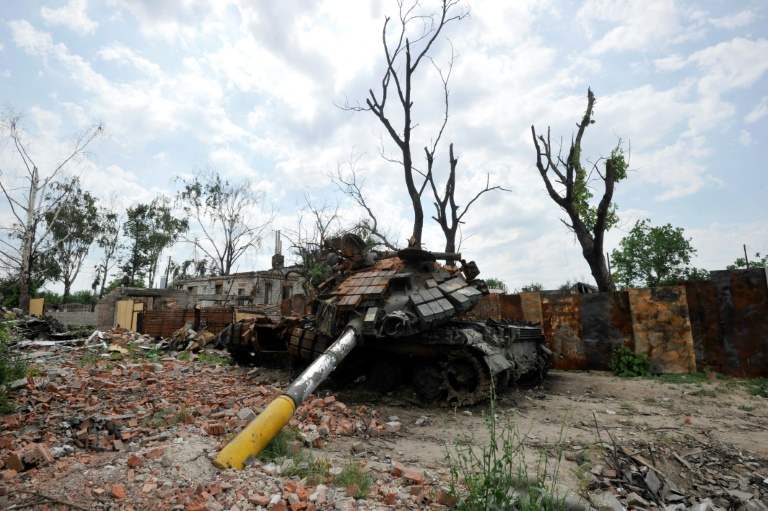
“Massive” Russian bombardment of Ukraine’s battleground eastern Lugansk region and key city Severodonetsk has been “hell” for soldiers there, Kyiv said, while insisting that defenders would hold “as long as necessary”.

Moscow’s troops have been pummelling eastern Ukraine for weeks and are slowly advancing, despite fierce resistance from the outgunned Ukrainian military. 

With President Vladimir Putin’s forces tightening their grip on the strategically important city of Severodonetsk in the Donbas, its twin city of Lysychansk is now coming under heavier bombardment.

“The Russian army is massively shelling Lysychansk,” Sergiy Gaiday, governor of the Lugansk region, which includes both cities, wrote on Telegram.

“They are just destroying everything there… They destroyed buildings and unfortunately there are casualties.”

He later wrote that “it’s just hell out there” after four months of shelling in Severodonetsk, across the Donets river — while adding that “our boys are holding their positions and will continue to hold on as long as necessary”.

Russian forces have been occupying villages in the area, and taking control of the two cities would give Moscow control of the whole of Lugansk, allowing them to press further into the Donbas.

After being pushed back from Kyiv and other parts of Ukraine following their February invasion, Moscow is seeking to seize a vast eastern swathe of the country.

In a briefing Wednesday, the Russian defence ministry claimed responsibility for a missile strike it said killed a number of Ukrainian troops in southern Mykolaiv.

In central Ukrainian city Zaporizhzhia, women were training to use Kalashnikov assault rifles in urban combat as Russian forces edged nearer.

“Of course, when you can do something, it’s not so scary to take a machine gun in your hands,” said Ulyana Kiyashko, 29, after moving through an improvised combat zone in a basement.

– ‘Simply destroys’ –

In his daily address Tuesday, Ukrainian President Volodymyr Zelensky also accused the Russian army of “brutal and cynical” shelling in the eastern Kharkiv region. 

“The Russian army is deaf to any rationality. It simply destroys, simply kills,” he said. 

Fifteen people were killed by Russian shelling in Kharkiv Tuesday, its governor said.

Aid group Doctors Without Borders (MSF) said it had gathered accounts of an “outrageous lack of care to distinguish and protect civilians”.

Among hundreds of patients evacuated by train, more than 40 percent were elderly people or children.

Most said Russian or Russian-backed forces were to blame for a spectrum of gruesome injuries.

“Although we cannot specifically point to an intention to target civilians, the decision to use heavy weaponry en masse on densely populated areas means that civilians are inescapably, and are therefore knowingly, being killed and wounded,” said MSF emergency coordinator Christopher Stokes.

On the Russian side, authorities in the Ukraine-bordering Rostov region said Wednesday that a fire at an oil refinery might have been caused by a drone strike, saying parts of unmanned aircraft had been found at the scene.

Away from the battlefield, Moscow was locked in an increasingly bitter dispute with EU member Lithuania over the country’s restrictions on rail traffic to the Russian outpost of Kaliningrad.

The territory is around 1,000 miles (1,600 kilometres) from Moscow, bordering Lithuania and Poland.

By blocking goods arriving from Russia, Lithuania says it is simply adhering to European Union-wide sanctions on Moscow.

But Moscow accused Brussels of an “escalation” and summoned the EU’s ambassador to Russia.

The United States made clear its commitment to Lithuania as an ally in NATO, which considers an attack against one member an attack on all.

“We stand by our NATO allies and we stand by Lithuania,” State Department spokesman Ned Price told reporters in Washington.

With US-Russia tensions soaring, the State Department on Tuesday confirmed a second American, 52-year-old Stephen Zabielski, was killed fighting for Ukraine.

Two other Americans were captured last week in eastern Ukraine. 

A White House spokesman, John Kirby, voiced alarm at Russian statements that it would not apply the Geneva Conventions on the humane treatment of prisoners to the pair.

“It’s appalling that a public official in Russia would even suggest the death penalty for two American citizens that were in Ukraine,” Kirby told reporters.

In a swipe at Washington, Moscow authorities announced that the official address of the US embassy there had been changed to “1 Donetsk People’s Republic Square” after the name of the breakaway Ukrainian region won a public poll.

Meanwhile in Brussels, ministers unanimously agreed Tuesday to grant Ukraine and neighbour Moldova candidate status for membership in the European Union.

Also on the diplomatic front, Moscow complained that its delegates to an Organization for Security and Cooperation in Europe (OSCE) assembly in Britain next month had been refused UK visas.

– ‘Fight for weapons’ –

Western nations have been pumping billions of dollars of weapons into Ukraine, where Defence Minister Oleksiy Reznikov tweeted that powerful German-made Panzerhaubitze 2000 howitzer artillery had reached his country’s forces.

But Zelensky reiterated Ukrainian calls for faster deliveries of weapons. 

“The lives of thousands of people depend directly on the speed of our partners,” he said in his daily address.

Ukraine meanwhile said it struck a Black Sea oil drilling platform off the Crimea peninsula because Russia was using it as a military installation. 

Ukrainian officials say the rig was being used for military purposes.

burs-sr/tgb/sjw/gw
Biden seeks three-month federal gas tax holiday as prices skyrocket

US President Joe Biden will ask Congress Wednesday to suspend the federal gas tax for three months as skyrocketing prices cause widespread anger among Americans just months before crucial mid-term elections. 

The White House wants to discontinue the 18 cents per gallon tax until September and will call on state governments to do the same to “provide direct relief to American consumers who have been hit with Putin’s price hike,” a senior administration official said.

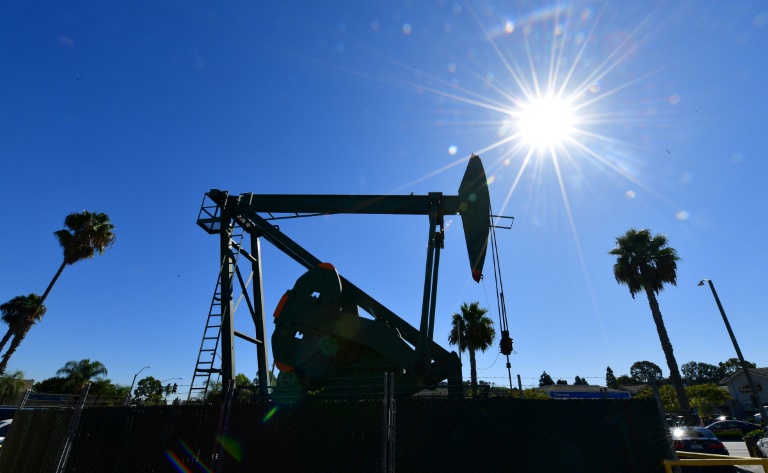
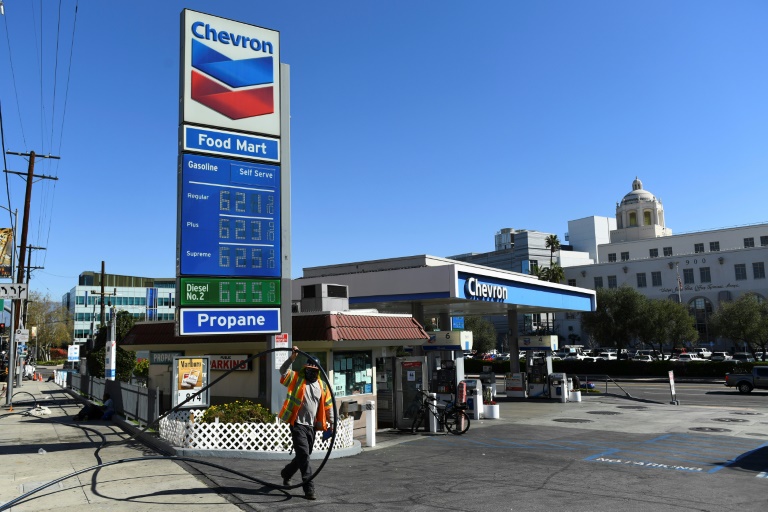
The official noted that gas prices — now averaging near $5 per gallon (3.78 liters) — had gone up almost $2  since Russian President Vladimir Putin began building up forces on the Ukrainian border earlier this year.

“The president recognizes the significant challenge that high gas prices pose to working families,” the official said, while conceding the tax suspension alone would not offset household costs that are rising at the fastest rate in a generation.

Biden, whose popularity has plummeted alongside soaring inflation, has made tackling surging prices his top domestic priority while finding few ready tools at his disposal to directly impact them.

Facing growing public anger over the rising cost of gas, several states including New York and Connecticut have already suspended fuel taxes, while others have delayed planned tax increases.

But according to analysts, some 46 states have yet to act, including California, where gasoline is the most taxed and the most expensive, at well over $6 a gallon.

Federal tax revenues on gas and diesel help pay for the Highway Trust Fund, which maintains roads and supports public transport, but Biden will call on Congress to ensure the estimated $10 billion gap in funding is made up from other sources.

– A dollar less per gallon –

Biden will also urge retailers at gas stations to apply any tax cuts immediately, as well as push refiners to expand their crude-processing capacity in the hope the combined measures could cut the price of gasoline by as much as a dollar per gallon.

Biden has previously taken a number of steps to alleviate the pain at the pump since Russia’s February invasion of Ukraine sent fuel prices soaring not just in the United States, but globally.

Those measures include releasing a million barrels of oil per day from the Strategic Petroleum Reserve, negotiating the release of an additional 60 million barrels from international partners and expanding access to biofuels.

The White House recently called out major oil groups including ExxonMobil and Chevron, denouncing their profit margins as “well above normal” and calling it their patriotic duty to up output.

“Exxon has made more money than God this quarter,” Biden quipped.

Energy Secretary Jennifer Granholm is due to meet with refiners Thursday to urge them to contribute to these measures, including increasing their production output.

Annual inflation in the United States peaked at 8.6 percent in May, a 40-year high. It is 34.6 percent for energy alone.

Warming climate upends Arctic mining town

Tor Selnes owes his life to a lamp. He miraculously survived a fatal avalanche that shed light on the vulnerability of Svalbard, a region warming faster than anywhere else, to human-caused climate change.

On the morning of December 19, 2015, the 54-year-old school monitor was napping at home in Longyearbyen, the main town in the Norwegian archipelago halfway between mainland Norway and the North Pole.

Suddenly, a mass of snow hurtled down from Sukkertoppen, the mountain overlooking the town, taking with it two rows of houses.

Selnes’ home was swept away 80 metres (263 feet). The room where he was sleeping was completely demolished amid “a scraping sound like metal against a road”.

To avoid being buried under the snow, he grabbed onto a ceiling lamp. 

“It’s like I was in a washing machine, surrounded by planks, glass, sharp objects, everything you can imagine”, recalls Selnes.

He survived, suffering just scrapes and bruises. His three children, who were in another part of the house, were unhurt.

But two neighbours — Atle, with whom he played poker the night before, and Nikoline, a two-year-old girl — lost their lives.

The accident, which had been unthinkable in locals’ eyes, sent shockwaves through the small community of under 2,500 people.

“There’s been a lot of talk of climate change ever since I came… but it was kind of difficult to take in or to see,” author and journalist Line Nagell Ylvisaker, who has lived in Longyearbyen since 2005, tells AFP.

“When we live here every day, it’s like seeing a child grow — you don’t see the glaciers retreat,” she says.

– Eye-opener –

In Svalbard, climate change has meant shorter winters; temperatures that yo-yo; more frequent precipitation, increasingly in the form of rain; and thawing permafrost — all conditions that increase the risk of avalanches and landslides.

In the days after the tragedy, unseasonal rains drenched the town. The following autumn, the region saw record rainfalls, and then a new avalanche swept away another house in 2017, this time with no victims.

“Before there was a lot of talk about polar bears, about new species, about what would happen to the nature around us” with climate change, Ylvisaker explains, adding: “The polar bear floating on an ice sheet is kind of the big symbol”.

The string of extreme weather incidents “was really an eye-opener of how this will affect us humans as well”.

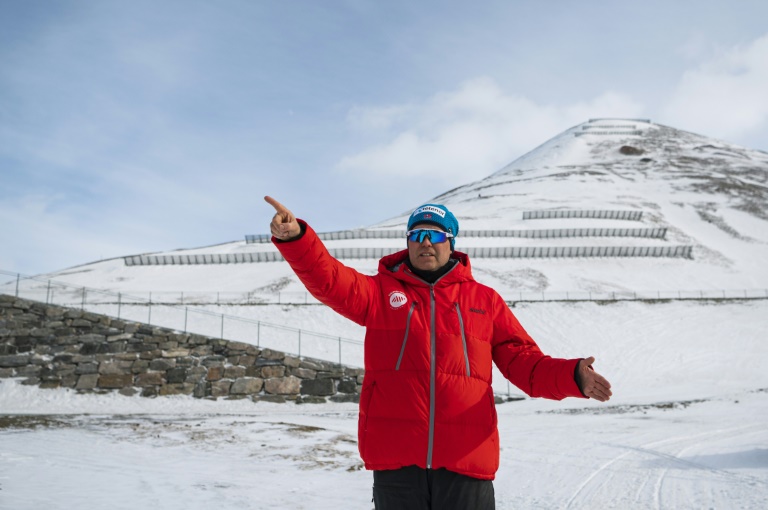
After the two avalanches, authorities condemned 144 homes they considered at risk, or around 10 percent of the town’s homes, and installed a massive, granite anti-avalanche barrier at the foot of Sukkertoppen.

It is an ironic turnaround for Longyearbyen, which owes its existence to fossil fuels.

The town was founded in 1906 by US businessman John Munro Longyear, who came to extract coal. It grew up around the mines in a jumble of brightly coloured wooden houses.

Almost all the mines are now closed, the last one due to shutter next year. An enormous sci-fi-like hangar of trolleys towers over the town, bearing witness to its past as a mining town.

Now it is human-caused climate change that is making its mark on the landscape here.

– Hot spot –

According to Ketil Isaksen, a researcher at the Norwegian Meteorological Institute, the Svalbard region is “the place on Earth where temperatures are rising the most”.

In the northernmost part of the Barents Sea where the archipelago is located, temperatures are rising five to seven times faster than on the planet as a whole, according to a study he co-authored and recently published in scientific journal Nature.

Why? The shrinking sea ice, explain scientists. It normally acts as a layer of insulation preventing the sea from warming the atmosphere in winter and protecting the sea from the sun in summer.

In Longyearbyen, thawing permafrost means the soil is slumping. Lamp posts are tilting and building foundations need to be shored up because the ground is shifting. Gutters, once unnecessary in this cold and dry climate, have started appearing on roofs.

On the edge of town, people used to snowmobile across the now not-so-aptly named Isfjorden (Ice fjord), which hasn’t frozen over since 2004.

Even the famed Global Seed Vault, designed to protect the planet’s bio-diversity from man-made and natural disasters, has had to undergo major renovations after the entrance tunnel bored into a mountainside unexpectedly flooded. 

At the offices of local newspaper Svalbardposten, chief editor Borre Haugli sums up the region’s climate change: “We don’t discuss it. We see it”.  

At least 920 killed in Afghanistan earthquake

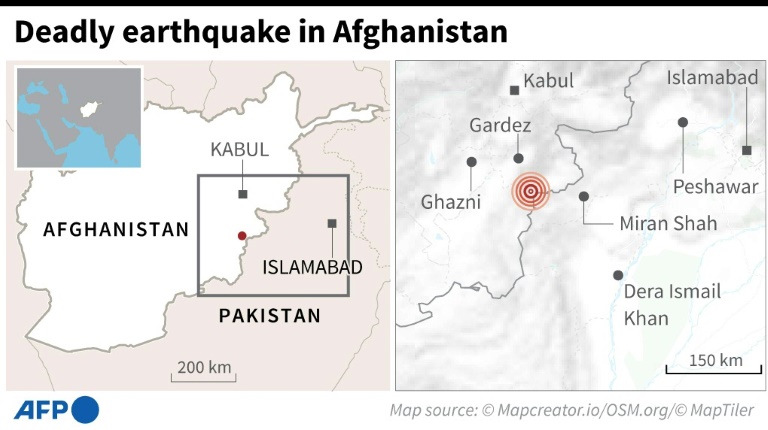
A powerful earthquake struck a remote border region of Afghanistan overnight killing at least 920 people and injuring hundreds more, officials said Wednesday, with the toll expected to rise as rescuers dig through collapsed dwellings.

The 5.9 magnitude quake struck hardest in the rugged terrain of the east, where people already live hardscrabble lives in a country in the grip of a humanitarian disaster made worse by the Taliban takeover in August.

The death toll has climbed steadily all day as news of casualties filtered in from hard-to-reach areas in the mountains, and the country’s supreme leader, Hibatullah Akhundzada, warned it would likely rise further.

“So far the information we have is that at least 920 people have been martyred and 600 injured,” Sharafuddin Muslim, the deputy minister for disaster management, told a press conference in the capital, Kabul.

Earlier, a tribal leader from Paktika province — one of the hardest hit areas — said survivors and rescuers were scrambling to help those affected.

“The local markets are closed and all the people have rushed to the affected areas,” Yaqub Manzor told AFP by telephone.

Photographs and video clips posted on social media showed scores of badly damaged mud houses in remote rural areas.

Some footage showed local residents loading victims into a military helicopter.

– Offers of help –

Even before the Taliban takeover Afghanistan’s emergency response teams were stretched to deal with the natural disasters that frequently struck the country.

But with only a handful of airworthy planes and helicopters, an immediate response is often limited.

“The government is working within its capabilities,” tweeted Anas Haqqani, a senior Taliban official.

“We hope that the International Community & aid agencies will also help our people in this dire situation.”

The United Nations and European Union were quick to offer help.

“Inter-agency assessment teams have already been deployed to a number of affected areas,” the UN Office for the Coordination of Humanitarian Affairs (UNOCHA) in Afghanistan tweeted.

Tomas Niklasson, EU special envoy for Afghanistan, tweeted: “The EU is monitoring the situation and stands ready to coordinate and provide EU emergency assistance to people and communities affected.”

Afghanistan is frequently hit by earthquakes — especially in the Hindu Kush mountain range, which lies near the junction of the Eurasian and Indian tectonic plates.

Scores of people were killed and injured in January when two quakes struck rural areas in the western province of Badghis, damaging hundreds of buildings.

In 2015, more than 380 people were killed in Pakistan and Afghanistan when a 7.5-magnitude earthquake ripped across the two countries, with the bulk of the deaths in Pakistan.

From the Vatican City, Pope Francis offered prayers for the victims of the latest quake.

“I express my closeness with the injured and those who were affected,” the 85-year-old pontiff said at the end of his weekly audience.

The latest earthquake came at a time when Afghanistan is battling a severe humanitarian disaster, worsened by the Taliban takeover of the country.

Aid agencies and the United Nations say Afghanistan needs billions of dollars this year to tackle the crisis.

Aid agencies have particularly stressed the need for greater disaster preparedness in Afghanistan, which remains extremely susceptible to recurring earthquakes, floods and landslides.

The quake was felt as far away as Lahore in Pakistan, 480 kilometres (300 miles) from the epicentre, according to responses posted on the USGS and European Mediterranean Seismological Centre (EMSC) websites.

At least 255 killed in Afghanistan earthquake

A powerful earthquake struck a remote border region of Afghanistan overnight killing at least 255 people and injuring hundreds more, officials said Wednesday, with the toll expected to rise as rescuers dig through collapsed dwellings.

The 5.9 magnitude quake struck hardest in the rugged terrain of the east, where people already live hardscrabble lives in a country in the grip of a humanitarian disaster made worse by the Taliban takeover in August.

“According to the information, the number of earthquake victims so far in the provinces of Paktika and Khost has reached 255 dead and 500 injured,” tweeted government spokesman Mohammad Naeem.

Earlier, another spokesman told AFP many houses were damaged and people still trapped inside.

Yaqub Manzor, a tribal leader from Paktika province, said survivors were mobilising to help those affected.

“The local markets are closed and all the people have rushed to the affected areas,” he told AFP by telephone.

Photographs and video clips posted on social media showed badly damaged mud houses in remote rural areas.

Some footage showed local residents loading victims into a military helicopter.

Even before the Taliban takeover Afghanistan’s emergency response teams were stretched to deal with the natural disasters that frequently struck the country.

But with only a handful of airworthy planes and helicopters, an immediate response is often limited.

Afghanistan is frequently hit by earthquakes — especially in the Hindu Kush mountain range, which lies near the junction of the Eurasian and Indian tectonic plates. 

Scores of people were killed and injured in January when two quakes struck rural areas in the western province of Badghis, damaging hundreds of buildings.

In 2015, more than 380 people were killed in Pakistan and Afghanistan when a 7.5-magnitude earthquake ripped across the two countries, with the bulk of the deaths in Pakistan.

The latest earthquake came at a time when Afghanistan is battling a severe humanitarian disaster, worsened by the Taliban takeover of the country.

Aid agencies and the United Nations say Afghanistan needs billions of dollars this year to tackle the crisis.

Aid agencies have particularly stressed the need for greater disaster preparedness in Afghanistan, which remains extremely susceptible to recurring earthquakes, floods and landslides.

Stocks, oil dive as recession fears return after brief market respite

Equities and oil prices tumbled Wednesday after a brief respite from last week’s painful rout across world markets, with recession fears continuing to build as central banks hike interest rates to combat decades-high inflation.

While Asia, Wall Street and Europe all enjoyed healthy gains on Tuesday, analysts warned the downbeat mood on trading floors means the selling is unlikely to end any time soon.

Federal Reserve boss Jerome Powell’s two-day testimony to Congress this week will be pored over for an idea about officials’ plans for fighting runaway prices, which are being fanned by supply chain snarls, China’s lockdowns and the war in Ukraine.

Most observers expect them to hike rates by three-quarters of a point several more times this year, having announced such a move in June — the sharpest lift in almost 30 years.

However, while many believe the Fed’s front-loaded tightening drive is needed — allowing it to begin cutting sooner as price rises settle back — there is a building consensus that the world’s top economy is heading for a contraction next year.

“The Fed has entered into a policy cocktail that we would describe as hammer time,” Gene Tannuzzo, at Columbia Threadneedle Investments, told Bloomberg Television.

“You have to be planning defensively at this point. There are a lot of questions on all risk assets.”

In Asian trade, Hong Kong, Tokyo, Shanghai, Sydney, Singapore, Seoul, Manila, Taipei, Jakarta and Bangkok were all deep in the red.

London followed suit, dropping more than one percent after official data showed UK inflation had reached a fresh 40-year high.

– Crude prices hammered –

Stephen Innes at SPI Asset Management said that while the selling from last week had abated, traders continued to fret over a recession and the prospect of more rate hikes, adding that the Fed could be more compelled to respond if oil prices surge again and push up inflation further.

“One cause of the market malaise could be the thought of business confidence catching down to consumer confidence; hence the risk in equities is for an earnings downgrade,” he wrote in a note.

“We could see that play out in the context of weaker University of Michigan sentiment on Friday, which could lead investors to conclude US consumers will start tightening their purse strings.

“Indeed, an extremely powerful equity market sell signal.”

Oil prices were feeling the heat from recessionary fears, with both main contracts tanking Wednesday on demand worries caused by any recession, despite China’s reopening moves, the US holiday driving season and tight supplies. 

Still, Goldman Sachs said that with demand still outpacing supplies, the market remains tight.

“Investors should remember that Fed-induced slowdowns are simply a short-term abatement of the symptom, inflation, and not a cure for the problem, underinvestment,” it added.

Bets on the Fed’s rate hikes and the Bank of Japan’s refusal to move from its policy of ultra-low rates continue to pile pressure on the yen, which is sitting at a 24-year low above 136.50 to the dollar.

Japanese Prime Minister Fumio Kishida’s comment that it “is up to the central bank” how to maintain its easy money policy added to pressure on the country’s currency, though famed economist Nouriel Roubini said he expects Tokyo to take action if the yen hits 140.

“If you go well above 140, the BoJ will have to change policy and the first change in policy is going to be yield curve control,” he said referring to a policy of keeping long-term rates artificially at a chosen level.

“So I think another 10 percent fall in the yen will imply a change in policy,” he told Bloomberg Television at the Qatar Economic Forum.

– Key figures at around 0720 GMT –

Tokyo – Nikkei 225: DOWN 0.4 at 26,149.55 (close)

Hong Kong – Hang Seng Index: DOWN 2.4 percent at 21,040.37

Shanghai – Composite: DOWN 1.2 percent at 3,267.20 (close)

London – FTSE 100: DOWN 1.3 percent at 7,057.87

West Texas Intermediate: DOWN 5.1 percent at $103.92 per barrel

Brent North Sea crude: DOWN 5.6 percent at $108.62 per barrel

Euro/dollar: DOWN at $1.04.86 from $1.0535 late Tuesday

Pound/dollar: DOWN at $1.2218 from $1.2273

Euro/pound: UP at 85.81 pence from 85.80 pence

Dollar/yen: DOWN at 136.54 yen from 136.64 yen

New York – Dow: UP 2.2 percent at 30,530.25 (close)

Stocks, oil dive as recession fears return after brief market respite

Equities and oil prices tumbled Wednesday after a brief respite from last week’s painful rout across world markets, with recession fears continuing to build as central banks hike interest rates to combat decades-high inflation.

While Asia, Wall Street and Europe all enjoyed healthy gains on Tuesday, analysts warned the downbeat mood on trading floors means the selling is unlikely to end any time soon.

Federal Reserve boss Jerome Powell’s two-day testimony to Congress this week will be pored over for an idea about officials’ plans for fighting runaway prices, which are being fanned by supply chain snarls, China’s lockdowns and the war in Ukraine.

Most observers expect them to hike rates by three-quarters of a point several more times this year, having announced such a move in June — the sharpest lift in almost 30 years.

However, while many believe the Fed’s front-loaded tightening drive is needed — allowing it to begin cutting sooner as price rises settle back — there is a building consensus that the world’s top economy is heading for a contraction next year.

“The Fed has entered into a policy cocktail that we would describe as hammer time,” Gene Tannuzzo, at Columbia Threadneedle Investments, told Bloomberg Television.

“You have to be planning defensively at this point. There are a lot of questions on all risk assets.”

In Asian trade, Hong Kong, Tokyo, Shanghai, Sydney, Singapore, Seoul, Manila, Taipei, Jakarta and Bangkok were all deep in the red.

London followed suit, dropping more than one percent after official data showed UK inflation had reached a fresh 40-year high.

– Crude prices hammered –

Stephen Innes at SPI Asset Management said that while the selling from last week had abated, traders continued to fret over a recession and the prospect of more rate hikes, adding that the Fed could be more compelled to respond if oil prices surge again and push up inflation further.

“One cause of the market malaise could be the thought of business confidence catching down to consumer confidence; hence the risk in equities is for an earnings downgrade,” he wrote in a note.

“We could see that play out in the context of weaker University of Michigan sentiment on Friday, which could lead investors to conclude US consumers will start tightening their purse strings.

“Indeed, an extremely powerful equity market sell signal.”

Oil prices were feeling the heat from recessionary fears, with both main contracts tanking Wednesday on demand worries caused by any recession, despite China’s reopening moves, the US holiday driving season and tight supplies. 

Still, Goldman Sachs said that with demand still outpacing supplies, the market remains tight.

“Investors should remember that Fed-induced slowdowns are simply a short-term abatement of the symptom, inflation, and not a cure for the problem, underinvestment,” it added.

Bets on the Fed’s rate hikes and the Bank of Japan’s refusal to move from its policy of ultra-low rates continue to pile pressure on the yen, which is sitting at a 24-year low above 136.50 to the dollar.

Japanese Prime Minister Fumio Kishida’s comment that it “is up to the central bank” how to maintain its easy money policy added to pressure on the country’s currency, though famed economist Nouriel Roubini said he expects Tokyo to take action if the yen hits 140.

“If you go well above 140, the BoJ will have to change policy and the first change in policy is going to be yield curve control,” he said referring to a policy of keeping long-term rates artificially at a chosen level.

“So I think another 10 percent fall in the yen will imply a change in policy,” he told Bloomberg Television at the Qatar Economic Forum.

– Key figures at around 0720 GMT –

Tokyo – Nikkei 225: DOWN 0.4 at 26,149.55 (close)

Hong Kong – Hang Seng Index: DOWN 2.4 percent at 21,040.37

Shanghai – Composite: DOWN 1.2 percent at 3,267.20 (close)

London – FTSE 100: DOWN 1.3 percent at 7,057.87

West Texas Intermediate: DOWN 5.1 percent at $103.92 per barrel

Brent North Sea crude: DOWN 5.6 percent at $108.62 per barrel

Euro/dollar: DOWN at $1.04.86 from $1.0535 late Tuesday

Pound/dollar: DOWN at $1.2218 from $1.2273

Euro/pound: UP at 85.81 pence from 85.80 pence

Dollar/yen: DOWN at 136.54 yen from 136.64 yen

New York – Dow: UP 2.2 percent at 30,530.25 (close)

UK inflation hits fresh 40-year high

British annual inflation has hit a fresh 40-year high, official data showed Wednesday, further eroding workers’ wages and pressuring the Bank of England to keep on raising interest rates.

The rate edged higher to 9.1 percent in May from 9.0 percent in April, remaining at the highest level since 1982, the Office for National Statistics (ONS) said in a statement.

UK inflation is set to top 11 percent before the end of the year according to the Bank of England, fuelled by soaring energy prices that have raised the prospect of a global recession.

UK inflation increased in May on “continued steep food price rises and record high petrol prices”, said ONS chief economist Grant Fitzner.

This was offset by clothing costs rising by less than a year earlier and a drop in prices of computer games, he added.

Decades-high inflation is causing a cost-of-living crisis.

Britain’s railway workers are this week staging the sector’s biggest strike action in more than 30 years, as soaring prices erode the value of wages.

– ‘Severe pressure’ –

“The further increase in Consumer Prices Index inflation to 9.1 percent underscores the severe pressure that businesses and households are under,” said David Bharier, head of research at the British Chambers of Commerce.  

“This inflationary surge sits alongside a poor economic outlook and unless the government acts with urgency to encourage businesses to invest, the chances of a recession will only increase.”

Countries around the world are being hit by soaring inflation as the Ukraine war and the easing of Covid restrictions fuel energy and food price hikes.

That has forced central banks to hike interest rates, risking the prospect of recession as higher borrowing costs hit investment and consumers further in the pocket.

The Bank of England has raised its key interest rate five times since December.

“The modest rise in CPI inflation… won’t prevent the Bank of England from raising interest rates further, but it may encourage it to opt again for a quarter-point rate hike at its next meeting in August rather than upping the ante” with a half-point rise, predicted Paul Dales, chief UK economist at Capital Economics.

It comes as Britain faces strikes across other sectors. Lawyers in England and Wales having voted to walk out from next week in a row over legal aid funding.

Teaching staff, workers in the state-run National Health Service and the postal service are also mulling strike action.

Sri Lanka bets on casino magnate to revive wrecked economy

Sri Lankan casino magnate Dhammika Perera entered parliament on Wednesday with a mandate to revive the bankrupt island nation’s wrecked economy — working alongside a premier who once accused him of corruption.

The 54-year-old Perera is a long-time loyalist of the powerful Rajapaksa clan, whom protesters have accused of mismanaging the country into its current predicament.

He replaces President Gotabaya Rajapaksa’s youngest brother, Basil, who resigned from parliament this month after stepping down as finance minister in April.

“He was nominated by the president and will shortly take over the investment promotion portfolio and enter the cabinet,” a ruling party official told AFP. 

Perera will serve in a unity government formed to tackle the crisis alongside Prime Minister Ranil Wickremesinghe, who in 2015 accused the casino boss of being a “demon who protected the corrupt regime of Rajapaksas”.

Wickremesinghe has also described Perera as one of four most corrupt businessmen in the country.

Both men shook hands on Wednesday soon after Perera was sworn into parliament before the chamber’s speaker. 

Perera — who also has interests in banking, hotels, manufacturing, logistics and exports — takes office at a time when Sri Lanka is suffering through months-long shortages of food, fuel and other essential goods. 

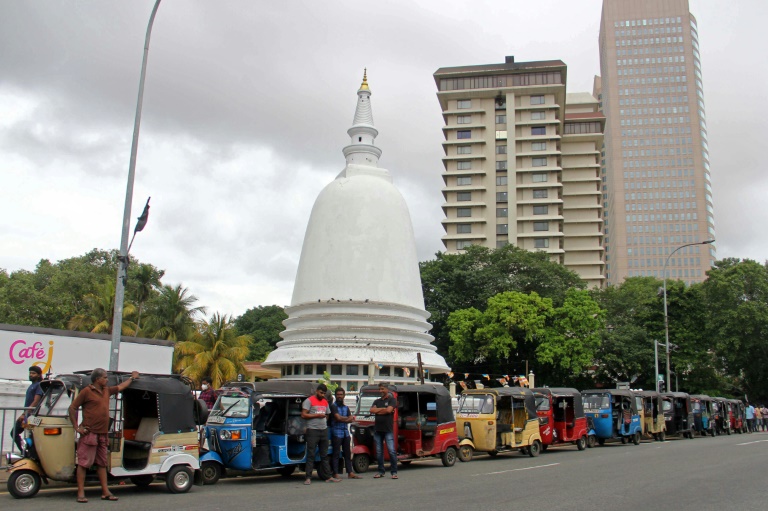
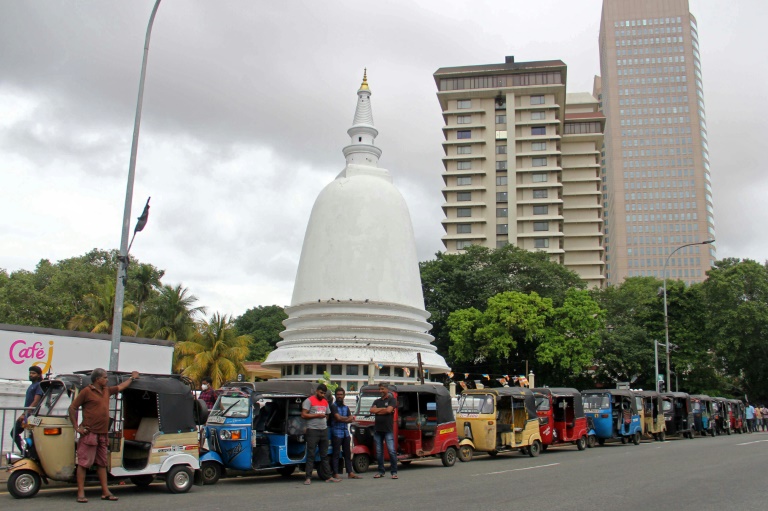
Long queues form outside gas stations each day for scarce petrol supplies, while regular blackouts and runaway inflation have made life difficult for the island nation’s 22 million people.

The government has defaulted on its $51 billion foreign debt and is seeking an International Monetary Fund bailout. 

Perera has claimed to have devised a plan to raise Sri Lanka’s per capita income more than threefold to $12,000 — a figure higher than China’s.

He has also pledged to address Sri Lanka’s critical foreign currency shortage by selling 10-year visas to foreigners willing to deposit at least $100,000 in local bank accounts — a scheme already in place since April. 

Sri Lanka bets on casino magnate to revive wrecked economy

Sri Lankan casino magnate Dhammika Perera entered parliament on Wednesday with a mandate to revive the bankrupt island nation’s wrecked economy — working alongside a premier who once accused him of corruption.

The 54-year-old Perera is a long-time loyalist of the powerful Rajapaksa clan, whom protesters have accused of mismanaging the country into its current predicament.

He replaces President Gotabaya Rajapaksa’s youngest brother, Basil, who resigned from parliament this month after stepping down as finance minister in April.

“He was nominated by the president and will shortly take over the investment promotion portfolio and enter the cabinet,” a ruling party official told AFP. 

Perera will serve in a unity government formed to tackle the crisis alongside Prime Minister Ranil Wickremesinghe, who in 2015 accused the casino boss of being a “demon who protected the corrupt regime of Rajapaksas”.

Wickremesinghe has also described Perera as one of four most corrupt businessmen in the country.

Both men shook hands on Wednesday soon after Perera was sworn into parliament before the chamber’s speaker. 

Perera — who also has interests in banking, hotels, manufacturing, logistics and exports — takes office at a time when Sri Lanka is suffering through months-long shortages of food, fuel and other essential goods. 

Long queues form outside gas stations each day for scarce petrol supplies, while regular blackouts and runaway inflation have made life difficult for the island nation’s 22 million people.

The government has defaulted on its $51 billion foreign debt and is seeking an International Monetary Fund bailout. 

Perera has claimed to have devised a plan to raise Sri Lanka’s per capita income more than threefold to $12,000 — a figure higher than China’s.

He has also pledged to address Sri Lanka’s critical foreign currency shortage by selling 10-year visas to foreigners willing to deposit at least $100,000 in local bank accounts — a scheme already in place since April. 

Close Bitnami banner
Bitnami