AFP

Warming climate upends Arctic mining town

Tor Selnes owes his life to a lamp. He miraculously survived a fatal avalanche that shed light on the vulnerability of Svalbard, a region warming faster than anywhere else, to human-caused climate change.

On the morning of December 19, 2015, the 54-year-old school monitor was napping at home in Longyearbyen, the main town in the Norwegian archipelago halfway between mainland Norway and the North Pole.

Suddenly, a mass of snow hurtled down from Sukkertoppen, the mountain overlooking the town, taking with it two rows of houses.

Selnes’ home was swept away 80 metres (263 feet). The room where he was sleeping was completely demolished amid “a scraping sound like metal against a road”.

To avoid being buried under the snow, he grabbed onto a ceiling lamp. 

“It’s like I was in a washing machine, surrounded by planks, glass, sharp objects, everything you can imagine”, recalls Selnes.

He survived, suffering just scrapes and bruises. His three children, who were in another part of the house, were unhurt.

But two neighbours — Atle, with whom he played poker the night before, and Nikoline, a two-year-old girl — lost their lives.

The accident, which had been unthinkable in locals’ eyes, sent shockwaves through the small community of under 2,500 people.

“There’s been a lot of talk of climate change ever since I came… but it was kind of difficult to take in or to see,” author and journalist Line Nagell Ylvisaker, who has lived in Longyearbyen since 2005, tells AFP.

“When we live here every day, it’s like seeing a child grow — you don’t see the glaciers retreat,” she says.

– Eye-opener –

In Svalbard, climate change has meant shorter winters; temperatures that yo-yo; more frequent precipitation, increasingly in the form of rain; and thawing permafrost — all conditions that increase the risk of avalanches and landslides.

In the days after the tragedy, unseasonal rains drenched the town. The following autumn, the region saw record rainfalls, and then a new avalanche swept away another house in 2017, this time with no victims.

“Before there was a lot of talk about polar bears, about new species, about what would happen to the nature around us” with climate change, Ylvisaker explains, adding: “The polar bear floating on an ice sheet is kind of the big symbol”.

The string of extreme weather incidents “was really an eye-opener of how this will affect us humans as well”.

After the two avalanches, authorities condemned 144 homes they considered at risk, or around 10 percent of the town’s homes, and installed a massive, granite anti-avalanche barrier at the foot of Sukkertoppen.

It is an ironic turnaround for Longyearbyen, which owes its existence to fossil fuels.

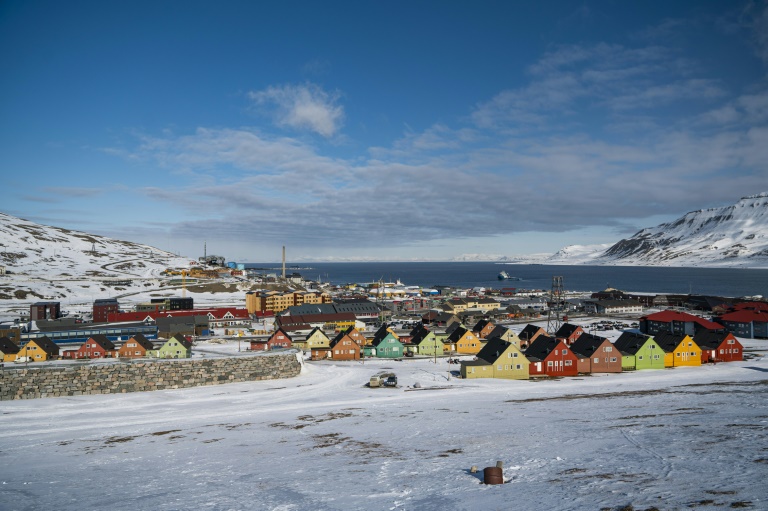
The town was founded in 1906 by US businessman John Munro Longyear, who came to extract coal. It grew up around the mines in a jumble of brightly coloured wooden houses.

Almost all the mines are now closed, the last one due to shutter next year. An enormous sci-fi-like hangar of trolleys towers over the town, bearing witness to its past as a mining town.

Now it is human-caused climate change that is making its mark on the landscape here.

– Hot spot –

According to Ketil Isaksen, a researcher at the Norwegian Meteorological Institute, the Svalbard region is “the place on Earth where temperatures are rising the most”.

In the northernmost part of the Barents Sea where the archipelago is located, temperatures are rising five to seven times faster than on the planet as a whole, according to a study he co-authored and recently published in scientific journal Nature.

Why? The shrinking sea ice, explain scientists. It normally acts as a layer of insulation preventing the sea from warming the atmosphere in winter and protecting the sea from the sun in summer.

In Longyearbyen, thawing permafrost means the soil is slumping. Lamp posts are tilting and building foundations need to be shored up because the ground is shifting. Gutters, once unnecessary in this cold and dry climate, have started appearing on roofs.

On the edge of town, people used to snowmobile across the now not-so-aptly named Isfjorden (Ice fjord), which hasn’t frozen over since 2004.

Even the famed Global Seed Vault, designed to protect the planet’s bio-diversity from man-made and natural disasters, has had to undergo major renovations after the entrance tunnel bored into a mountainside unexpectedly flooded. 

At the offices of local newspaper Svalbardposten, chief editor Borre Haugli sums up the region’s climate change: “We don’t discuss it. We see it”.  
Egypt calls for 'reality check' in UN climate talks

Egypt hopes to jump-start the action needed to face a warming world when it takes the presidency of major UN climate talks in November, but warns that countries need a “reality check” as progress stalls. 

Presiding over the inflection point when a decades-long United Nations climate process switches from negotiation to “implementation”, Egypt has set a high bar for its leadership of this year’s COP27 climate summit.

But the challenge of maintaining international momentum on climate change has been made even harder as the world faces a catalogue of challenges, with Russia’s invasion of Ukraine and spiralling food, energy and economic crises. 

“Because of the geopolitical situation, climate change is being pushed back,” said Ambassador Mohamed Nasr at a meeting in the German city of Bonn meant to lay the groundwork for the Egyptian conference.

“We are facing a big challenge.” 

Outgoing UN climate leader Patricia Espinosa had told delegates that when global leaders gather in Sharm el-Sheikh in November the world will “look nothing like” it did during the climate talks in Glasgow last year. 

The international community has agreed that climate change poses an existential threat to human systems and the natural world. 

But action to cut carbon pollution and prepare for the accelerating impacts is lagging, as is support for vulnerable countries confronting the ravages of a changing climate. 

“It’s time to start the reality check. We have been planning and planning,” said Nasr. Now the question must be: “Is it delivering on the ground or not?”

– Loss and damage –

Nasr said that while Egypt’s presidency of the conference would have “African flavour and African vision”, it would remain resolutely international in focus.

Added to the geopolitical crises are the surging frustrations of vulnerable nations least responsible for climate change over a lack of funding from rich polluters to help them cope with a warming world. 

A promise of $100 billion a year from 2020 is still not met. 

Another flashpoint is “loss and damage”, UN speak for climate damages already incurred. Developing countries have called for a separate financing facility but have only got a “dialogue” instead.

The issue dominated the Bonn talks last week and with little resolved looks likely to be a major theme at COP27 as developing countries push to get it on the agenda. 

“It is not what we hoped for,” said Nasr. 

He said the historic 2015 Paris Agreement was a “very delicate balance” between pushing ever-more ambitious action on emissions reductions alongside work to help countries prepare for future impacts and deal with damages. 

While countries have ramped up ambitions — if not action — to meet the Paris goal of capping warming to 1.5 degrees Celsius above pre-industrial levels, he said the other elements have yet to be afforded the same level of urgency.

“We need to give assurances to the big constituency of developing countries that their priorities are being dealt with on the same level,” said Nasr.  

Another key challenge will be to harness the financial clout of the development banks and private sector to remove barriers hampering the investments needed to reduce emissions and build the infrastructure countries require to grapple with climate change. 

“We need this transformation that has happened here (in the UN process) to find its way into those institutions,” said Nasr, calling for more innovative ways to open up access to investments.  

“We cannot continue in a business-as-usual scenario when it comes to finance.” 

Egypt will release its own updated climate plan within weeks, said Nasr, promising “ambitious targets”, as the country looks to cut emissions in sectors including energy and transport.

But the country, currently battered by record inflation and a severe economic crisis, faces an uphill battle to clean up polluting sectors.

Nasr stressed that “like the overwhelming majority of developing countries, the fulfilment and implementation” of the country’s strategy would depend on appropriate finance.

– ‘Start delivery’ –

The UN’s annual Conference of the Parties involves nearly 200 countries, with hundreds of observers, NGOs and — very often — mass demonstrations designed to ramp up the pressure on political leaders. 

In Glasgow, large, colourful street protests involving young campaigners, indigenous groups and local communities filled the streets for several days.  

Nasr said such gatherings would be allowed around the conference in Egypt, which has outlawed demonstrations, although he said protesters would need to inform and “coordinate with authorities in advance”. 

He also sought to give reassurances about access for observers to the UN process after hotel room costs escalated dramatically for some, adding that the government had booked 10,000 rooms at two- and three-star hotels. 

As for the decision-makers due to gather in Sharm el-Sheikh, he said that after almost three decades of UN climate talks, they know what is needed to reignite momentum.    

“They should make it easier on the presidency and on each other and start delivery,” he said.

Air tickets set to keep climbing from pandemic low: experts

Propelled by inflation, the price of air tickets has begun to take off again after tumbling during the pandemic, a reversal that looks set to intensify due to environmental pressures, experts say.

For members of the International Air Transport Association, gathered in Doha for their annual meeting this week, minds are focused on how far such increases risk undermining passenger growth targets.

The IATA is also pleading for government support in reconciling the long-term commitment to net zero carbon emissions with those ambitious targets.

The aviation industry has just gone through two years where planes flew with rows of empty seats, even as they offered fares much lower than before the Covid-19 pandemic.

But with the sector still mired in the red despite movement restrictions being largely lifted, the bargain bonanza for passengers is very much over.

In the United States, the average price of an internal flight has shot up, from $202 in October 2021 to $336 in May this year, according to the Federal Reserve Bank of Saint Louis.

In the European Union, the price of a return ticket before tax in April returned to that seen in the same month of 2019, after a near-20 percent fall in 2020, according to aviation research specialists Cirium.

The oil price shock stoked by Russia’s invasion of Ukraine is the most obvious factor in these price rises.

Airlines estimate that fuel prices will account for 24 percent of their total costs this year, up five percentage points from last year.

Ticket prices are also being stoked by wider inflation — now at 40-year-highs in developed markets — as well as stronger-than-expected demand for tickets and labour shortages.

– Reality check –

But Scott Kirby, chief executive of United Airlines, said despite the trend clearly rising, prices had yet to shoot beyond historical norms.

“In real terms, pricing is back to 2014 levels… and it’s lower than it was essentially every year before” then, he said.

“So… I don’t think we’re going to see demand destruction.”

But Vik Krishnan, a partner at McKinsey & Co, is cautious about how long the current high demand will last.

“Some of the travel that we’re seeing right now is a function of all the stimulus that governments” pumped into economies during the pandemic, boosting citizens’ spare income, he said.

“The number one discretionary income spending is travel and that’s what people are doing.

But “how long that lasts remains to be seen”, he added.

– Climate crisis versus cheap holidays –

Beyond rising costs and fears that government stimulus will fade, airlines face commitments that sit very uneasily alongside each other.

On the one hand, they target carrying a total of 10 billion passengers by 2050, up from 4.5 billion in 2019.

And yet over the same time horizon, they are beholden to achieving “net zero” carbon emissions.

The total cost of transitioning the sector to “net zero” is estimated by the IATA at an eye-watering $1.55 trillion.

“Airlines don’t have the ability to absorb” the cost of that transition, IATA director general Willie Walsh said this week.

To reduce carbon emissions, the industry focus is on sustainable aviation fuels (SAFs), which are currently two to four times more expensive than fossil-based aviation fuel.

Some governments have already imposed SAF quotas, albeit in small quantities, resulting in airlines in turn imposing surcharges.

On Tuesday, the IATA urged governments to provide subsidies to ensure SAF production reaches 30 billion litres in 2030, up from 125 million litres in 2021. It also wants price curbs.

But even if such subsidies are forthcoming, “the transition to net zero will have to be reflected in ticket prices,” Walsh said.

Could that reverse the long-standing global trend of air travel progressively extending beyond the wealthy?

Krishnan believes such “democratisation” will become “harder”.

But he also said “low cost airlines have unleashed a world where people living in Northern Europe took it for granted that they could go on cheap vacations in Southern Europe”.

It would be “very hard for governments to unwind” such entrenched expectations, he warned.

Key Ukrainian city under 'massive' Russian bombardment

Ukrainian forces are facing “massive” and relentless artillery attacks in a battleground eastern city, Kyiv warned, as Russian troops gained ground throughout the Donbas region.

Moscow’s troops have been pummelling eastern Ukraine for weeks and are slowly advancing, despite fierce resistance from the outgunned Ukrainian military. 

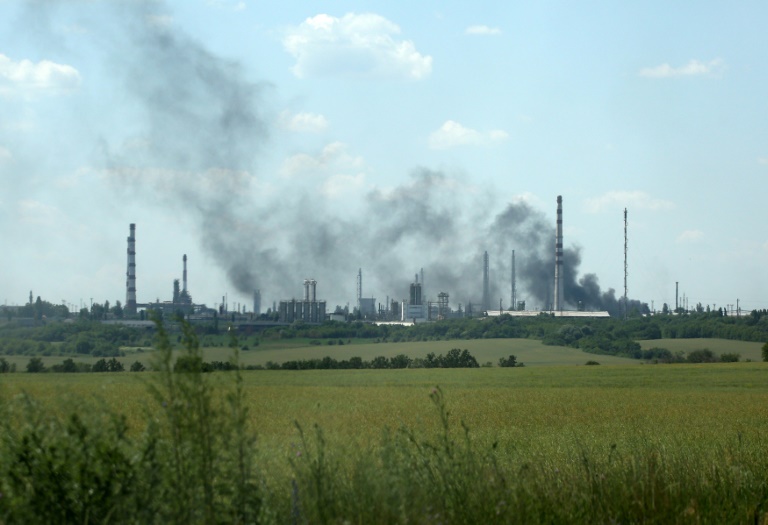
With President Vladimir Putin’s forces tightening their grip on the strategically important city of Severodonetsk in the Donbas, its twin city of Lysychansk is now coming under heavier bombardment.

“The Russian army is massively shelling Lysychansk,” Sergiy Gaiday, governor of the Lugansk region, which includes both cities, wrote on Telegram.

“They are just destroying everything there… They destroyed buildings and unfortunately there are casualties.”

Russian forces have been occupying villages in the area, and taking control of the two cities would give Moscow control of the whole of Lugansk, allowing them to press further into the Donbas.

After being pushed back from Kyiv and other parts of Ukraine following their February invasion, Moscow is seeking to seize a vast eastern swathe of the country.

In Lysychansk, a Russian strike had left a gaping hole in a police station, and damaged nearby apartment blocks, according to AFP journalists in the city. 

The direct hit on the station, on Monday night, wounded 20 police officers, according to authorities.

“Partition walls fell down and the doors were blown out,” said a policeman who gave his nickname as Petrovich, showing the damage to the building. 

– ‘Simply destroys’ –

In his daily address Tuesday, Ukrainian President Volodymyr Zelensky also accused the Russian army of “brutal and cynical” shelling in the eastern Kharkiv region. 

“The Russian army is deaf to any rationality. It simply destroys, simply kills,” he said. 

Fifteen people were killed by Russian shelling in Kharkiv Tuesday, its governor said. 

Away from the battlefield, Moscow was locked in an increasingly bitter dispute with EU member Lithuania over the country’s restrictions on rail traffic to the Russian outpost of Kaliningrad.

The territory is around 1,000 miles (1,600 kilometres) from Moscow, bordering Lithuania and Poland.

By blocking goods arriving from Russia, Lithuania says it is simply adhering to European Union-wide sanctions on Moscow.

But Moscow accused Brussels of an “escalation” and summoned the EU’s ambassador to Russia.

The United States made clear its commitment to Lithuania as an ally in NATO, which considers an attack against one member an attack on all.

“We stand by our NATO allies and we stand by Lithuania,” State Department spokesman Ned Price told reporters in Washington.

With US-Russia tensions soaring, the State Department on Tuesday confirmed a second American, 52-year-old Stephen Zabielski, was killed fighting for Ukraine.

Two other Americans were captured last week in eastern Ukraine. 

A White House spokesman, John Kirby, voiced alarm at Russian statements that it would not apply the Geneva Conventions on the humane treatment of prisoners to the pair.

“It’s appalling that a public official in Russia would even suggest the death penalty for two American citizens that were in Ukraine,” Kirby told reporters.

Ukraine has been seeking membership in the European Union after earlier failing to join NATO.

Ministers on Tuesday were united in granting candidate status to Ukraine as well as Moldova before a formal greenlight later this week, said France’s Europe minister, Clement Beaune, whose country holds the EU’s rotating presidency

Zelensky, who has found hero status in Europe for resisting the invasion, said that he was working the phones to drum up support for EU membership.

“I will do everything for a historic decision of the European Union to be approved. It is important for us,” he said.

– ‘Fight for weapons’ –

Western nations have been pumping billions of dollars of weapons into Ukraine, where Defence Minister Oleksiy Reznikov tweeted that powerful German-made Panzerhaubitze 2000 howitzer artillery had reached his country’s forces.

But Zelensky reiterated Ukrainian calls for faster deliveries of weapons. 

“We fight every day for the supply of modern weapons for our country,” he said in his daily address. “The lives of thousands of people depend directly on the speed of our partners.”

Ukraine meanwhile said it struck a Black Sea oil drilling platform off the Crimea peninsula because Russia was using it as a military installation. 

The rig had Russian garrisons and equipment for air defence, radar warfare and reconnaissance, Sergiy Bratchuk of Odessa’s regional military administration told an online briefing.

Ukraine, its Western backers and the International Criminal Court have all vowed to seek accountability over the war.

US Attorney General Merrick Garland visited Ukraine on Tuesday to discuss prosecution of individuals involved in war crimes.

“There is no place to hide,” Garland said.

burs-sr/je

Spain bets on green hydrogen in clean energy push

As Europe seeks to move way from fossil fuels, Spain is racing ahead in developing green hydrogen, aided by a growing wind and solar power complex in efforts to decarbonise its economy.

Spain accounted for 20 percent of the world’s green hydrogen projects in the first quarter, second only to the United States, home to more than half of them, according to Wood Mackenzie consulting firm.

“A lot of countries are interested in green hydrogen, but in Spain the sector has rapidly accelerated” in recent months, said Rafael Cossent, research associate professor in energy economics at Comillas Pontifical University in Madrid.

The sector is still in its infancy, but the war in Ukraine has prompted the European Union to double its production goal for 2030 as part of efforts to reduce its dependence on Russian energy supplies.

“Spain has become a very attractive country for green hydrogen,” EU chief Ursula von der Leyen said during a visit to the country in May. “A shift is happening … to mass-scale competitive hydrogen”.

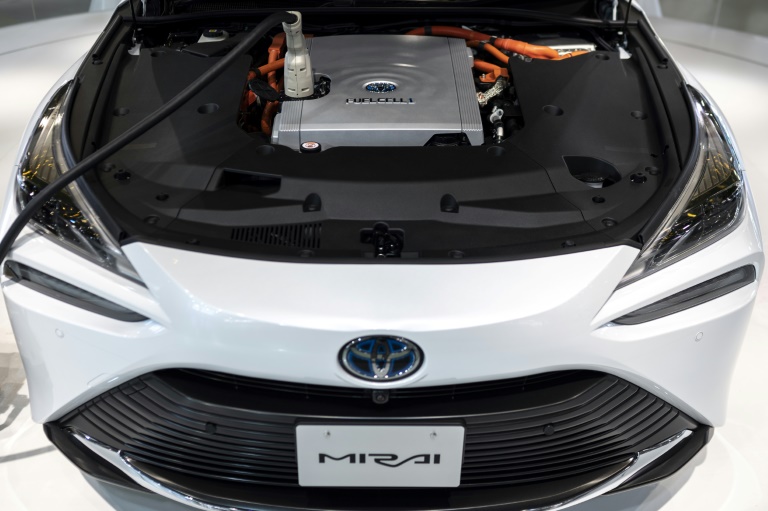
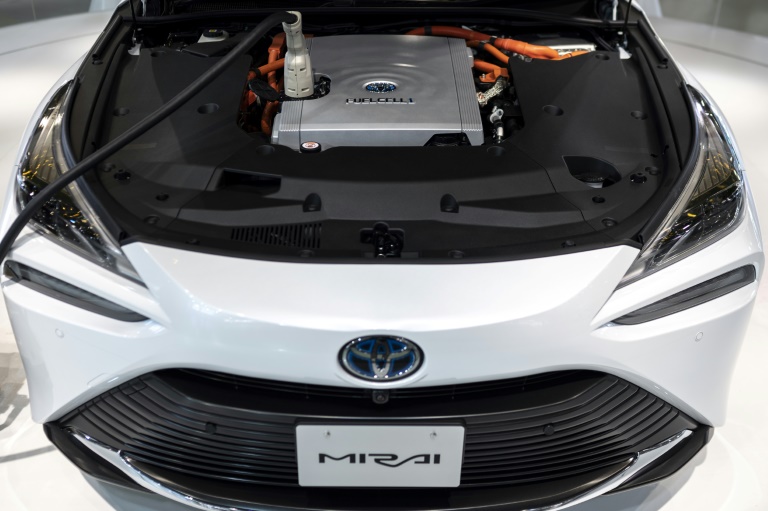
Green hydrogen is produced by passing an electric current through water to split it between hydrogen and oxygen, a process called electrolysis. It is considered green because the electricity comes from renewable sources of energy that don’t create any harmful emissions.

And while fossil fuels emit harmful greenhouse gases when they burn, hydrogen only emits harmless water vapour.

The technology is part of EU efforts to become climate neutral by 2050.

– ‘Great potential’ –

Green hydrogen could replace coal in heavy industries such as steel mills. It can also be used to make fertiliser and is being considered as a potential fuel for buses, trains and aircraft in the future.

A major drawback for green hydrogen, however, has been the high cost of producing it. It is much cheaper to make “grey” hydrogen, but its production requires using fossil fuels that emit greenhouse gases.

But technological progress and the surge in prices of fossil fuels has made green hydrogen more competitive.

Spain has “great potential” because it has a well-developed renewables sector, with important solar and wind resources, said Javier Brey, president of the Spanish Hydrogen Association (AeH2).

Cossent said that Spain has another advantage in its vast natural gas network and LNG terminals, which could be transformed to export hydrogen.

The government launched last year a 1.5-billion-euro ($1.8-billion) plan to support green hydrogen projects over the next three years, tapping a European Union Covid recovery fund to do so.

Adding private investments, close to nine billion euros will be spent by 2030.

– Future energy hub? –

Spanish energy companies such as Iberdrola, Repsol and Enagas have all launched green hydrogen projects. 

Enagas teamed up with global steel giant ArcelorMittal and fertiliser maker Fertiberia for a huge project dubbed HyDeal Espana in northern Asturias region.

The site will have around 15 solar parks that could produce 330,000 tonnes of hydrogen per year by 2030, making it the biggest project of this type in the world, according to the International Renewable Energy Agency.

“This shows the sector has matured,” said Brey of AeH2. “2030 may appear far away, but in reality it’s tomorrow.”

Spain “holds all the cards to become an energy hub,” he added.

But the country still has some obstacles to clear before it can become a leader in the burgeoning sector.

“To win, Spain will have to speed up the deployment of solar and wind farms, as electrolysis consumes a lot of electricity,” Cossent said, adding that projects were stuck in “administrative bottlenecks.”

Spain also lacks energy connectivity with the rest of Europe, but the government has revived a gas pipeline project linking Catalonia and France, which Madrid wants to use to ship hydrogen.

Spain bets on green hydrogen in clean energy push

As Europe seeks to move way from fossil fuels, Spain is racing ahead in developing green hydrogen, aided by a growing wind and solar power complex in efforts to decarbonise its economy.

Spain accounted for 20 percent of the world’s green hydrogen projects in the first quarter, second only to the United States, home to more than half of them, according to Wood Mackenzie consulting firm.

“A lot of countries are interested in green hydrogen, but in Spain the sector has rapidly accelerated” in recent months, said Rafael Cossent, research associate professor in energy economics at Comillas Pontifical University in Madrid.

The sector is still in its infancy, but the war in Ukraine has prompted the European Union to double its production goal for 2030 as part of efforts to reduce its dependence on Russian energy supplies.

“Spain has become a very attractive country for green hydrogen,” EU chief Ursula von der Leyen said during a visit to the country in May. “A shift is happening … to mass-scale competitive hydrogen”.

Green hydrogen is produced by passing an electric current through water to split it between hydrogen and oxygen, a process called electrolysis. It is considered green because the electricity comes from renewable sources of energy that don’t create any harmful emissions.

And while fossil fuels emit harmful greenhouse gases when they burn, hydrogen only emits harmless water vapour.

The technology is part of EU efforts to become climate neutral by 2050.

– ‘Great potential’ –

Green hydrogen could replace coal in heavy industries such as steel mills. It can also be used to make fertiliser and is being considered as a potential fuel for buses, trains and aircraft in the future.

A major drawback for green hydrogen, however, has been the high cost of producing it. It is much cheaper to make “grey” hydrogen, but its production requires using fossil fuels that emit greenhouse gases.

But technological progress and the surge in prices of fossil fuels has made green hydrogen more competitive.

Spain has “great potential” because it has a well-developed renewables sector, with important solar and wind resources, said Javier Brey, president of the Spanish Hydrogen Association (AeH2).

Cossent said that Spain has another advantage in its vast natural gas network and LNG terminals, which could be transformed to export hydrogen.

The government launched last year a 1.5-billion-euro ($1.8-billion) plan to support green hydrogen projects over the next three years, tapping a European Union Covid recovery fund to do so.

Adding private investments, close to nine billion euros will be spent by 2030.

– Future energy hub? –

Spanish energy companies such as Iberdrola, Repsol and Enagas have all launched green hydrogen projects. 

Enagas teamed up with global steel giant ArcelorMittal and fertiliser maker Fertiberia for a huge project dubbed HyDeal Espana in northern Asturias region.

The site will have around 15 solar parks that could produce 330,000 tonnes of hydrogen per year by 2030, making it the biggest project of this type in the world, according to the International Renewable Energy Agency.

“This shows the sector has matured,” said Brey of AeH2. “2030 may appear far away, but in reality it’s tomorrow.”

Spain “holds all the cards to become an energy hub,” he added.

But the country still has some obstacles to clear before it can become a leader in the burgeoning sector.

“To win, Spain will have to speed up the deployment of solar and wind farms, as electrolysis consumes a lot of electricity,” Cossent said, adding that projects were stuck in “administrative bottlenecks.”

Spain also lacks energy connectivity with the rest of Europe, but the government has revived a gas pipeline project linking Catalonia and France, which Madrid wants to use to ship hydrogen.

Ecuadoran Indigenous protester dies in anti-government demos

An Indigenous protester died Tuesday in clashes with law enforcement during a ninth day of demonstrations against the Ecuadorian government, which the military described as a “grave threat.”

The man, a member of the Quichua Indigenous group, was participating in a road block in the Amazon town of Puyo, when there was “a confrontation and this person was hit in the face, apparently with a tear gas bomb,” lawyer Lina Maria Espinosa of the Alliance for Human Rights organization told AFP.

Since June 13, multiple roads have been barricaded nationwide at a cost of hundreds of millions of dollars to the economy, in demonstrations over fuel prices called by the powerful Confederation of Indigenous Nationalities of Ecuador (Conaie).

Dozens of people — police and civilians — have been injured in clashes. 

The death of the protester, identified as Byron Guatatoca, 40, came after a young man died overnight when he fell into a ravine “trying to flee from the military” in a protest on the outskirts of Quito, said Guillermo Churuchumbi, the Indigenous mayor of Cayambe municipality.

The episode prompted the prosecutor’s office to open an investigation into possible homicide. The office was also stoned by protesters, and its glass doors were smashed.

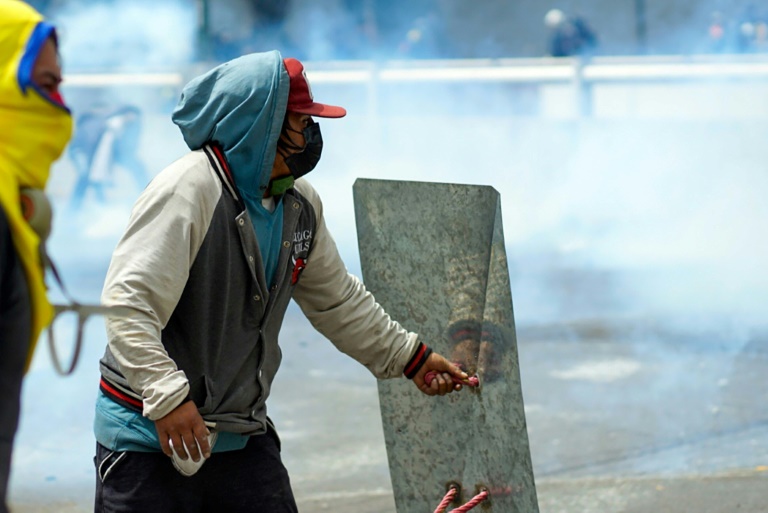
In Quito proper some 500 protesters — among around 10,000 who arrived in the capital from around the country in recent days — were teargassed Tuesday as they blockaded a street with burning tree branches.

They quickly regrouped to march on the CCE culture center — traditionally used by Indigenous people to launch protests but requisitioned by police over the weekend to use as a base. 

“The objective of today is to retake the Casa de la Cultura,” protester Wilson Mazabanda told AFP before police used spray to break up the group.

Earlier in the day, Defense Minister Luis Lara said Ecuador’s democracy “faces a grave threat from… people who are preventing the free movement of the majority of Ecuadorans” with widespread blockades.

Flanked by the heads of the army, navy and air force, Lara warned the military “will not allow attempts to break the constitutional order or any action against democracy and the laws of the republic.”

Quito Mayor Santiago Guarderas said on Twitter the demonstrations “continue to escalate” and that the capital’s markets were running out of supplies.

– ‘Tired of this government’ –

Conaie — credited with helping topple three presidents between 1997 and 2005 — called the demonstrations as Ecuadorans increasingly struggle to make ends meet.

Indigenous people comprise more than a million of Ecuador’s 17.7 million inhabitants and wield much political clout, but are disproportionately affected by rising inflation, unemployment and poverty exacerbated by the coronavirus pandemic.

Thousands of protesters, many of whom had traveled to Quito on foot or on the backs of trucks, took to the streets wielding sticks, fireworks and makeshift shields made of road signs.

“We are already tired of this government,” said Mazabanda, a university student, of ex-banker President Guillermo Lasso’s one-year-old term.

Tito Zamora, a small-scale farmer, added that costs have risen sharply, “but not the price we get for our products.”

Lasso said on Twitter he was ready to participate in “a frank and respectful dialogue process with Conaie and other civil organizations.” 

“It is our duty to reach consensus for the good of the country,” the president said.

– State of emergency –

Fuel prices have risen sharply since 2020, almost doubling for diesel from $1 to $1.90 per gallon and rising from $1.75 to $2.55 for gasoline.

Conaie is demanding a price cut to $1.50 a gallon for diesel and $2.10 for gasoline.

It also wants jobs and food price controls.

The movement has since been joined by students, workers and other Ecuadorans feeling the economic pinch.

Dozens have been arrested, according to human rights observers.

Lasso on Monday extended a state of emergency to cover six of the country’s 24 provinces, with a nighttime curfew in Quito.

Ecuador is losing about $50 million a day as a result of the protests,  without counting oil production — the country’s main export product.

The CEO of state-owned Petroecuador, Italo Cedeno, said Tuesday output had dropped by about 100,000 barrels a day during the protests, in part because demonstrators have targeted both oil wells and power plants.

Ecuador’s parliament voted Monday in favor of a resolution urging the government to conduct a “serious, clear and honest” dialogue with protesters, mediated by the United Nations, the Red Cross, universities and the powerful Catholic Church.

In 2019, Conaie-led protests left 11 people dead and more than 1,000 injured but forced then-president Lenin Moreno to abandon plans to eliminate fuel subsidies.

Spain bets on green hydrogen in clean energy push

As Europe seeks to move way from fossil fuels, Spain is racing ahead in developing green hydrogen, aided by a growing wind and solar power complex in efforts to decarbonise its economy.

Spain accounted for 20 percent of the world’s green hydrogen projects in the first quarter, second only to the United States, home to more than half of them, according to Wood Mackenzie consulting firm.

“A lot of countries are interested in green hydrogen, but in Spain the sector has rapidly accelerated” in recent months, said Rafael Cossent, research associate professor in energy economics at Comillas Pontifical University in Madrid.

The sector is still in its infancy, but the war in Ukraine has prompted the European Union to double its production goal for 2030 as part of efforts to reduce its dependence on Russian energy supplies.

“Spain has become a very attractive country for green hydrogen,” EU chief Ursula von der Leyen said during a visit to the country in May. “A shift is happening … to mass-scale competitive hydrogen”.

Green hydrogen is produced by passing an electric current through water to split it between hydrogen and oxygen, a process called electrolysis. It is considered green because the electricity comes from renewable sources of energy that don’t create any harmful emissions.

And while fossil fuels emit harmful greenhouse gases when they burn, hydrogen only emits harmless water vapour.

The technology is part of EU efforts to become climate neutral by 2050.

– ‘Great potential’ –

Green hydrogen could replace coal in heavy industries such as steel mills. It can also be used to make fertiliser and is being considered as a potential fuel for buses, trains and aircraft in the future.

A major drawback for green hydrogen, however, has been the high cost of producing it. It is much cheaper to make “grey” hydrogen, but its production requires using fossil fuels that emit greenhouse gases.

But technological progress and the surge in prices of fossil fuels has made green hydrogen more competitive.

Spain has “great potential” because it has a well-developed renewables sector, with important solar and wind resources, said Javier Brey, president of the Spanish Hydrogen Association (AeH2).

Cossent said that Spain has another advantage in its vast natural gas network and LNG terminals, which could be transformed to export hydrogen.

The government launched last year a 1.5-billion-euro ($1.8-billion) plan to support green hydrogen projects over the next three years, tapping a European Union Covid recovery fund to do so.

Adding private investments, close to nine billion euros will be spent by 2030.

– Future energy hub? –

Spanish energy companies such as Iberdrola, Repsol and Enagas have all launched green hydrogen projects. 

Enagas teamed up with global steel giant ArcelorMittal and fertiliser maker Fertiberia for a huge project dubbed HyDeal Espana in northern Asturias region.

The site will have around 15 solar parks that could produce 330,000 tonnes of hydrogen per year by 2030, making it the biggest project of this type in the world, according to the International Renewable Energy Agency.

“This shows the sector has matured,” said Brey of AeH2. “2030 may appear far away, but in reality it’s tomorrow.”

Spain “holds all the cards to become an energy hub,” he added.

But the country still has some obstacles to clear before it can become a leader in the burgeoning sector.

“To win, Spain will have to speed up the deployment of solar and wind farms, as electrolysis consumes a lot of electricity,” Cossent said, adding that projects were stuck in “administrative bottlenecks.”

Spain also lacks energy connectivity with the rest of Europe, but the government has revived a gas pipeline project linking Catalonia and France, which Madrid wants to use to ship hydrogen.

Ancient Afghan Buddhist city threatened by Chinese copper mine

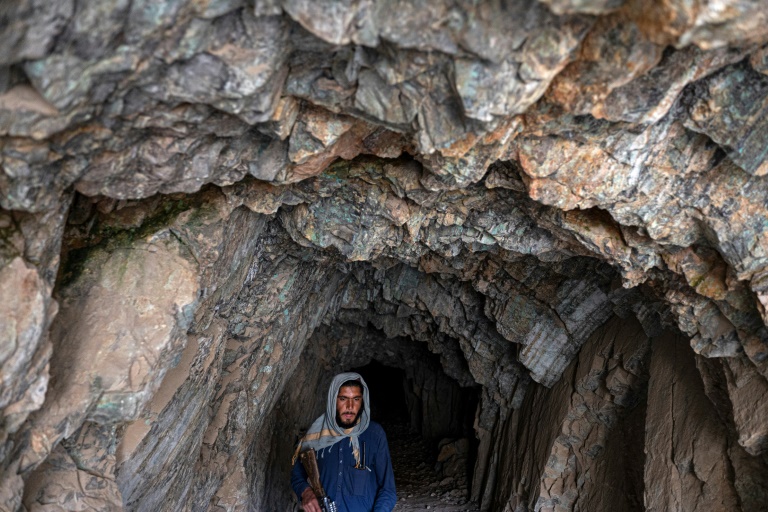
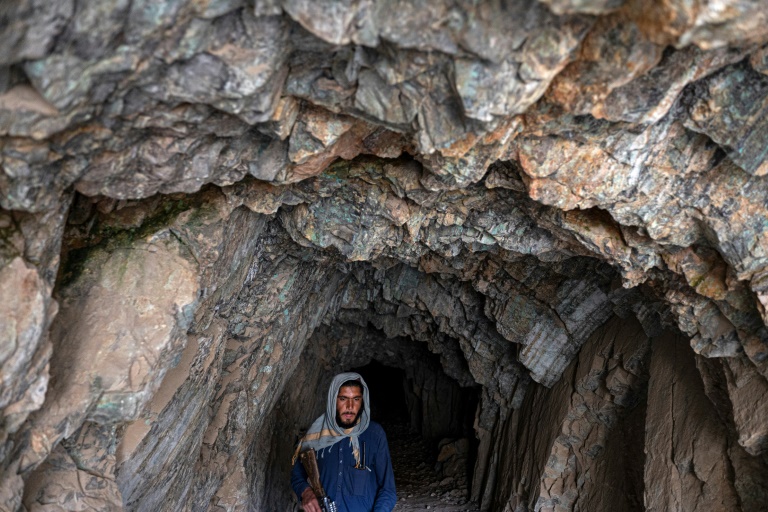
An ancient Buddhist city carved out of immense peaks near Kabul is in danger of disappearing forever, swallowed up by a Chinese consortium exploiting one of the world’s largest copper deposits.

Located at the confluence of Hellenistic and Indian cultures, Mes Aynak — believed to be between 1,000 and 2,000 years old — was once a vast city organised around the extraction and trade of copper.

Archaeologists have uncovered Buddhist monasteries, stupas, fortresses, administrative buildings and dwellings, while hundreds of statues, frescoes, ceramics, coins and manuscripts have also been unearthed.

Despite looting at the beginning of the century, Mes Aynak is “one of the most beautiful archaeological sites” in the world, says Bastien Varoutsikos, an archaeologist for the French company Iconem, which is working to digitise the city and its heritage.

But the need for the Taliban — who returned to power in August last year — to find new revenue streams after international aid was frozen has made mining the project a priority, and could put an end to further archaeological work.

– Mining consortium –

Objects discovered date mainly from the 2nd to 9th century AD, but an earlier occupation is also believed likely, and pottery dating back to the Bronze Age — well before the birth of Buddhism — has also been found.

Forgotten for centuries before being rediscovered by a French geologist in the early 1960s, Mes Aynak, in Logar province, has been compared to Pompeii and Machu Picchu in size and significance.

The ruins, which cover 1,000 hectares, are perched high on a massive peak whose brown flanks betray the presence of copper.

But in 2007 the Chinese mining giant Metallurgical Group Corporation (MCC) headed a state-owned consortium — that later took the name MJAM — and signed a $3 billion contract to mine ore over 30 years.

Fifteen years later, the mine still does not exist — insecurity and disagreements between Beijing and Kabul over financial terms of the contract have caused delays.

The project is once again a priority for both parties, however, and talks are ongoing on how to proceed.

– Duty of preservation –

Fears are rising that a place once considered one of the most prosperous trade hubs on the Silk Road could disappear without oversight.

In the early 2010s, it was “one of the largest archaeological projects in the world”, Varoutsikos told AFP.

MJAM originally suspended the start of operations for three years to allow archaeologists to focus on the area directly threatened by the mine.

That period was inadvertently lengthened as the security situation prevented the Chinese from building planned infrastructure.

As a result, thousands of objects were unearthed — some were taken to the Kabul museum, others kept nearby.

When it was last in power the Taliban shocked the world by dynamiting the giant Buddhas of Bamiyan in March 2001, but today they say they are determined to preserve the findings of Mes Aynak.

“It is the duty of the Ministry of Information and Culture to protect them,” Esmatullah Burhan, the spokesman for the Ministry of Mines and Petroleum, told AFP.

But while the rhetoric seems sincere, many of the remains are simply too bulky or fragile to be moved and seem destined to disappear.

The Chinese favour open-pit rather than underground mining. If this goes ahead, it would open up the copper mountain and bury all the fragments of the past.

– Environmental consequences –

Afghanistan is sitting on huge mineral resources of copper, iron, bauxite, lithium and rare earths estimated to be worth more than a trillion dollars.

The Taliban hope to earn more than $300 million a year from Mes Aynak — about 60 percent of the full state budget for 2022 — and now want to speed up the process.

“This project must begin, it must not be delayed any longer,” they have repeatedly told MJAM in recent weeks, according to Burhan.

The discussions are about “80 percent finished”, says the spokesman, with only technical points remaining to be settled, which should be done soon.

The Taliban are demanding that the contract — which includes the construction of a power station to supply the mine and Kabul, and a railroad to Pakistan — be respected. 

They also insist that the copper be processed locally with an Afghan workforce.

China, whose economy is in dire need of copper, is reluctant to meet these demands.

MJAM, which did not respond to AFP, also continues to demand a reduction in royalties due.

The project is also coupled with concerns about its environmental consequences. 

Copper mining is polluting and requires large quantities of water, and Logar is already an arid region.

According to Burhan, the Taliban are paying “strict attention” to these issues and will ensure that the consortium meets its obligations in this regard.

For now, the delay is some salvation for archeologists.

While there is currently no work going on at the site, Varoutsikos hopes to restart the excavation before the start of mining operations.

But even that will depend on international collaboration and funding, he notes.

Ancient Afghan Buddhist city threatened by Chinese copper mine

An ancient Buddhist city carved out of immense peaks near Kabul is in danger of disappearing forever, swallowed up by a Chinese consortium exploiting one of the world’s largest copper deposits.

Located at the confluence of Hellenistic and Indian cultures, Mes Aynak — believed to be between 1,000 and 2,000 years old — was once a vast city organised around the extraction and trade of copper.

Archaeologists have uncovered Buddhist monasteries, stupas, fortresses, administrative buildings and dwellings, while hundreds of statues, frescoes, ceramics, coins and manuscripts have also been unearthed.

Despite looting at the beginning of the century, Mes Aynak is “one of the most beautiful archaeological sites” in the world, says Bastien Varoutsikos, an archaeologist for the French company Iconem, which is working to digitise the city and its heritage.

But the need for the Taliban — who returned to power in August last year — to find new revenue streams after international aid was frozen has made mining the project a priority, and could put an end to further archaeological work.

– Mining consortium –

Objects discovered date mainly from the 2nd to 9th century AD, but an earlier occupation is also believed likely, and pottery dating back to the Bronze Age — well before the birth of Buddhism — has also been found.

Forgotten for centuries before being rediscovered by a French geologist in the early 1960s, Mes Aynak, in Logar province, has been compared to Pompeii and Machu Picchu in size and significance.

The ruins, which cover 1,000 hectares, are perched high on a massive peak whose brown flanks betray the presence of copper.

But in 2007 the Chinese mining giant Metallurgical Group Corporation (MCC) headed a state-owned consortium — that later took the name MJAM — and signed a $3 billion contract to mine ore over 30 years.

Fifteen years later, the mine still does not exist — insecurity and disagreements between Beijing and Kabul over financial terms of the contract have caused delays.

The project is once again a priority for both parties, however, and talks are ongoing on how to proceed.

– Duty of preservation –

Fears are rising that a place once considered one of the most prosperous trade hubs on the Silk Road could disappear without oversight.

In the early 2010s, it was “one of the largest archaeological projects in the world”, Varoutsikos told AFP.

MJAM originally suspended the start of operations for three years to allow archaeologists to focus on the area directly threatened by the mine.

That period was inadvertently lengthened as the security situation prevented the Chinese from building planned infrastructure.

As a result, thousands of objects were unearthed — some were taken to the Kabul museum, others kept nearby.

When it was last in power the Taliban shocked the world by dynamiting the giant Buddhas of Bamiyan in March 2001, but today they say they are determined to preserve the findings of Mes Aynak.

“It is the duty of the Ministry of Information and Culture to protect them,” Esmatullah Burhan, the spokesman for the Ministry of Mines and Petroleum, told AFP.

But while the rhetoric seems sincere, many of the remains are simply too bulky or fragile to be moved and seem destined to disappear.

The Chinese favour open-pit rather than underground mining. If this goes ahead, it would open up the copper mountain and bury all the fragments of the past.

– Environmental consequences –

Afghanistan is sitting on huge mineral resources of copper, iron, bauxite, lithium and rare earths estimated to be worth more than a trillion dollars.

The Taliban hope to earn more than $300 million a year from Mes Aynak — about 60 percent of the full state budget for 2022 — and now want to speed up the process.

“This project must begin, it must not be delayed any longer,” they have repeatedly told MJAM in recent weeks, according to Burhan.

The discussions are about “80 percent finished”, says the spokesman, with only technical points remaining to be settled, which should be done soon.

The Taliban are demanding that the contract — which includes the construction of a power station to supply the mine and Kabul, and a railroad to Pakistan — be respected. 

They also insist that the copper be processed locally with an Afghan workforce.

China, whose economy is in dire need of copper, is reluctant to meet these demands.

MJAM, which did not respond to AFP, also continues to demand a reduction in royalties due.

The project is also coupled with concerns about its environmental consequences. 

Copper mining is polluting and requires large quantities of water, and Logar is already an arid region.

According to Burhan, the Taliban are paying “strict attention” to these issues and will ensure that the consortium meets its obligations in this regard.

For now, the delay is some salvation for archeologists.

While there is currently no work going on at the site, Varoutsikos hopes to restart the excavation before the start of mining operations.

But even that will depend on international collaboration and funding, he notes.

Close Bitnami banner
Bitnami