AFP

European stocks rise despite recession worries

Europe’s main stock markets rebounded on Monday after a mixed Asian session following tumultuous sessions last week over recession fears.

Bitcoin regained $20,000 after sinking to an 18-month low of $17,599 in weekend deals because risk-averse investors had shunned the world’s most popular cryptocurrency.

London’s FTSE 100 rallied to close 1.5 percent higher, with sentiment boosted by news of a blockbuster takeover offer for publisher Euromoney.

Frankfurt stocks finished 1.1 percent higher while Paris gained 0.6 percent after French President Emmanuel Macron and his allies faced political deadlock after losing their parliamentary majority in weekend elections.

Wall Street, shut on Monday for a US public holiday, had risen on Friday, though the broad-based S&P 500 lost 5.8 precent for the week, its worst performance since 2020.

“Stability often comes before recovery and markets being more composed would suggest investors are no longer panicking,” said Russ Mould, investment director at broker AJ Bell.

Markets were rocked last week by a fierce selloff after the US Federal Reserve’s sharp interest rate hike — the biggest in nearly 30 years — and a warning of more to come as inflation soars.

The Fed’s move was followed by the fifth straight rate increase in Britain and the Swiss central bank’s first hike since 2007, raising concerns that such moves will drive countries into recession.

“There has undoubtedly been a shift in the market mindset over the last week and a half that has weighed heavily on risk assets,” said Craig Erlam, analyst at OANDA online trading platform.

“The prospect of a recession is being considered far more broadly and what’s more, central banks are increasingly resisting the urge to push back against it,” he said.

Cleveland Fed chief Loretta Mester added to the worry, warning that the risk of a US recession was increasing and it would take several years to bring inflation down from four-decade highs to the bank’s two-percent target.

She told CBS’s “Face The Nation” on Sunday that while she was not predicting a contraction, the Fed’s decision not to act sooner to fight rising prices was hurting the economy.

Analysts warned there was likely to be more pain ahead for traders as the Ukraine war — which has sent energy and food prices soaring this year — drags on and uncertainty continues to reign.

Oil prices stabilised on Monday after Friday’s hefty losses on demand worries caused by the prospect of a world recession.

However, US Energy Secretary Jennifer Granholm said prices could continue to surge if the European Union cut off imports of the commodity from Russia in response to the Ukraine war.

– Key figures at around 1620 GMT –

London – FTSE 100: UP 1.5 percent at 7,121.81 points (close)

Frankfurt – DAX: UP 1.1 percent at 13,265.60 (close)

Paris – CAC 40: UP 0.6 percent at 5,920.09 (close)

EURO STOXX 50: UP 0.9 percent at 3,469.33

Tokyo – Nikkei 225: DOWN 0.7 percent at 25,771.22 (close)

Hong Kong – Hang Seng Index: UP 0.4 percent at 21,163.91 (close)

Shanghai – Composite: FLAT at 3,315.43 (close)

New York – Dow: DOWN 0.1 percent at 29,888.78 (close)

Euro/dollar: UP at $1.0528 from $1.0499 late Friday

Pound/dollar: UP at $1.2243 from $1.2241

Euro/pound: UP at 86.02 pence from 85.77 pence

Dollar/yen: UP at 135.06 yen from 135.02 yen

Brent North Sea crude: UP 0.6 percent at $113.78 per barrel

West Texas Intermediate: UP 0.5 percent at $108.52

burs-lth/jj

European stocks rise despite recession worries

Europe’s main stock markets rebounded on Monday after a mixed Asian session following tumultuous sessions last week over recession fears.

Bitcoin regained $20,000 after sinking to an 18-month low of $17,599 in weekend deals because risk-averse investors had shunned the world’s most popular cryptocurrency.

London’s FTSE 100 rallied to close 1.5 percent higher, with sentiment boosted by news of a blockbuster takeover offer for publisher Euromoney.

Frankfurt stocks finished 1.1 percent higher while Paris gained 0.6 percent after French President Emmanuel Macron and his allies faced political deadlock after losing their parliamentary majority in weekend elections.

Wall Street, shut on Monday for a US public holiday, had risen on Friday, though the broad-based S&P 500 lost 5.8 precent for the week, its worst performance since 2020.

“Stability often comes before recovery and markets being more composed would suggest investors are no longer panicking,” said Russ Mould, investment director at broker AJ Bell.

Markets were rocked last week by a fierce selloff after the US Federal Reserve’s sharp interest rate hike — the biggest in nearly 30 years — and a warning of more to come as inflation soars.

The Fed’s move was followed by the fifth straight rate increase in Britain and the Swiss central bank’s first hike since 2007, raising concerns that such moves will drive countries into recession.

“There has undoubtedly been a shift in the market mindset over the last week and a half that has weighed heavily on risk assets,” said Craig Erlam, analyst at OANDA online trading platform.

“The prospect of a recession is being considered far more broadly and what’s more, central banks are increasingly resisting the urge to push back against it,” he said.

Cleveland Fed chief Loretta Mester added to the worry, warning that the risk of a US recession was increasing and it would take several years to bring inflation down from four-decade highs to the bank’s two-percent target.

She told CBS’s “Face The Nation” on Sunday that while she was not predicting a contraction, the Fed’s decision not to act sooner to fight rising prices was hurting the economy.

Analysts warned there was likely to be more pain ahead for traders as the Ukraine war — which has sent energy and food prices soaring this year — drags on and uncertainty continues to reign.

Oil prices stabilised on Monday after Friday’s hefty losses on demand worries caused by the prospect of a world recession.

However, US Energy Secretary Jennifer Granholm said prices could continue to surge if the European Union cut off imports of the commodity from Russia in response to the Ukraine war.

– Key figures at around 1620 GMT –

London – FTSE 100: UP 1.5 percent at 7,121.81 points (close)

Frankfurt – DAX: UP 1.1 percent at 13,265.60 (close)

Paris – CAC 40: UP 0.6 percent at 5,920.09 (close)

EURO STOXX 50: UP 0.9 percent at 3,469.33

Tokyo – Nikkei 225: DOWN 0.7 percent at 25,771.22 (close)

Hong Kong – Hang Seng Index: UP 0.4 percent at 21,163.91 (close)

Shanghai – Composite: FLAT at 3,315.43 (close)

New York – Dow: DOWN 0.1 percent at 29,888.78 (close)

Euro/dollar: UP at $1.0528 from $1.0499 late Friday

Pound/dollar: UP at $1.2243 from $1.2241

Euro/pound: UP at 86.02 pence from 85.77 pence

Dollar/yen: UP at 135.06 yen from 135.02 yen

Brent North Sea crude: UP 0.6 percent at $113.78 per barrel

West Texas Intermediate: UP 0.5 percent at $108.52

burs-lth/jj

No relief as heat wave in US moves east

A heat wave that baked much of the central United States last week will start to move eastward with dangerously high temperatures, forecasters said Monday.

The National Weather Service told Americans to gird for another day of well above normal, near-record or even record-breaking heat from the central Plains to the Upper Midwest.

“Dangerous heat will continue to make headlines,” the service said in an advisory.

The scorching blast will start to drift eastward Tuesday into the Great Lakes region with highs in the upper 90s Fahrenheit (mid 30s Celsius) which is up to 20 degrees F above normal.

Around 120 million people were under some sort of advisory last week as a heat wave burned the Upper Midwest and the Southeast. 

This stemmed from what forecasters called a dome of high pressure, with wild weather such as thunderstorms, flash flooding and extreme rainfall erupting around its edges.

Yellowstone National Park, the oldest in the United States, closed down last week because of extensive flood damage as roads were washed away.

Torrential rainfall and snowmelt sent months’ worth of run-off into rivers in just a couple of days. The sprawling park sits mainly in Wyoming and is home to the Old Faithful geyser.

Helicopters were used to rescue nearly 90 people.

The park said its southern section will reopen to visitors on Wednesday. Park officials say other parts will remain closed for the rest of the season.

As heat scorched the southwest, in Arizona a wildfire burning its way up a mountainside consumed four buildings at the Kitt Peak National Observatory but they apparently did not contain telescopes or other scientific equipment, officials said.

“This is the most threatening fire I can remember at Kitt Peak in the last 25 years,” said Buell Jannuzi, who heads the University of Arizona astronomy department, according to ABC News. 

The university is a tenant at the observatory, which is operated by the National Science Foundation.

No relief as heat wave in US moves east

A heat wave that baked much of the central United States last week will start to move eastward with dangerously high temperatures, forecasters said Monday.

The National Weather Service told Americans to gird for another day of well above normal, near-record or even record-breaking heat from the central Plains to the Upper Midwest.

“Dangerous heat will continue to make headlines,” the service said in an advisory.

The scorching blast will start to drift eastward Tuesday into the Great Lakes region with highs in the upper 90s Fahrenheit (mid 30s Celsius) which is up to 20 degrees F above normal.

Around 120 million people were under some sort of advisory last week as a heat wave burned the Upper Midwest and the Southeast. 

This stemmed from what forecasters called a dome of high pressure, with wild weather such as thunderstorms, flash flooding and extreme rainfall erupting around its edges.

Yellowstone National Park, the oldest in the United States, closed down last week because of extensive flood damage as roads were washed away.

Torrential rainfall and snowmelt sent months’ worth of run-off into rivers in just a couple of days. The sprawling park sits mainly in Wyoming and is home to the Old Faithful geyser.

Helicopters were used to rescue nearly 90 people.

The park said its southern section will reopen to visitors on Wednesday. Park officials say other parts will remain closed for the rest of the season.

As heat scorched the southwest, in Arizona a wildfire burning its way up a mountainside consumed four buildings at the Kitt Peak National Observatory but they apparently did not contain telescopes or other scientific equipment, officials said.

“This is the most threatening fire I can remember at Kitt Peak in the last 25 years,” said Buell Jannuzi, who heads the University of Arizona astronomy department, according to ABC News. 

The university is a tenant at the observatory, which is operated by the National Science Foundation.

Air industry could fly back into black next year, IATA says

Global air transport is on course to return to profit after two pandemic-battered years but the war in Ukraine and the cost-of-living crisis lurk as threats, the industry’s world body said on Monday.

Renewed profitability “appears within reach” in 2023, the International Air Transport Association said, predicting a rebound in passenger levels to 83 percent of pre-pandemic levels this year.

Industry losses are expected to drop to $9.7 billion in 2022, a “huge improvement” from $137.7 billion in 2020 and $42.1 billion in 2021, IATA said in an upgraded industry outlook at its annual general meeting in Doha.

“Airlines are resilient. People are flying in ever greater numbers. And cargo is performing well against a backdrop of growing economic uncertainty,” IATA director general Willie Walsh said.

The air industry was sent reeling by the pandemic, with passenger numbers plunging 60 percent in 2020 and remaining 50 percent down in 2021. Airlines lost nearly $200 billion over two years.

While some firms in the sector went bankrupt, others — often those backed by states — have emerged with profits intact.

IATA said there were positive signs in the latest figures, with North American carriers expected to return an $8.8 billion profit this year.

More than 1,200 aircraft are expected to be delivered in 2022, while cargo volumes should reach a record 68.4 million tonnes “despite economic challenges”, it added.

“Strong pent-up demand, the lifting of travel restrictions in most markets, low unemployment in most countries, and expanded personal savings are fuelling a resurgence in demand that will see passenger numbers reach 83 percent of pre-pandemic levels in 2022,” IATA said.

– Clouds on the horizon –

Turnover should reach 93 percent of 2019 levels this year or $782 billion, a rebound of 54.5 percent on 2021, as revenues from passenger flights more than double to $498 billion.

Cargo, a rare bright spot for air transport in the depths of the pandemic, will retreat slightly with revenues of $191 billion — still double the level of 2019.

Clouds remain on the horizon, however, especially the war in Ukraine after the closure of Russian airspace to several long-haul carriers forced them into costly detours.

Airlines, desperate to put the coronavirus pandemic behind them, are facing a potential summer of chaos with shortages and strikes that could threaten their recovery.

In the past few weeks, delays and cancellations caused by a lack of staff at airports and strikes for better pay have wreaked havoc upon travellers.

The problems originate with the pandemic when airlines and airports laid off thousands of workers during its worst-ever crisis. Now, they are scrambling for employees.

However, Walsh played down the difficulties, saying they weren’t widespread and should ease in time.

High inflation will also erode the purchasing power of consumers, although airlines could profit from rising prices and interest rates as their debts are locked in at lower levels.

Meanwhile, the industry remains wary of new coronavirus variations that could close borders once again. 

China is still bound up with restrictions that are depressing the world’s second-biggest domestic market and are creating “chaos” in global logistics, said IATA’s chief economist Marie Owens Thomsen.

IATA originally planned to hold its annual general meeting in Shanghai, but moved it to Qatar as China, pursuing its “zero-Covid” policy, continues to grapple with the pandemic.

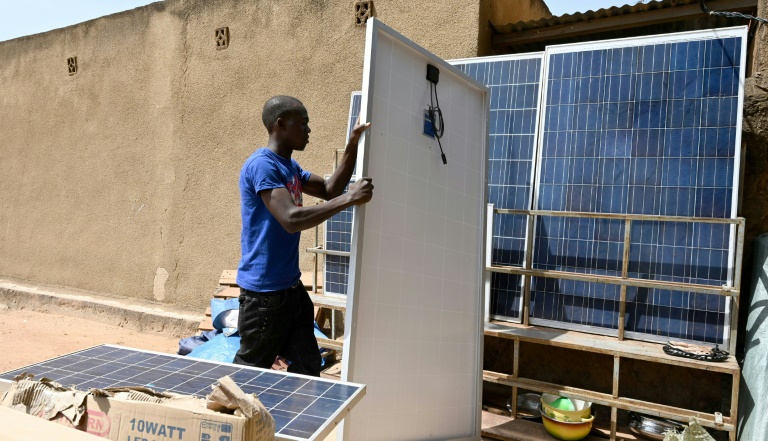
Africa needs $25 bn a year for full electricity access: IEA

The number of Africans with access to electricity fell during the Covid pandemic, but $25 billion in annual investments could bring full coverage by 2030, the International Energy Agency said Monday.

The IEA said 600 million people, or 43 percent of the continent’s population, lack access to electricity — mostly in sub-Saharan Africa.

The number of people living without electricity increased by four percent, or 25 million people, between 2019 and 2021, after a decade of progress.

Before Covid, there had been “lots of good developments in countries such as Ghana, Kenya, Rwanda,” IEA chief Fatih Birol told AFP ahead of the release of the Paris-based agency’s African Energy Outlook 2022.

“But because of Covid and the economic difficulties, we see that this positive trend is reversing now,” Birol said.

Russia’s invasion of Ukraine has added to the economic strains on Africa from the Covid pandemic, as the conflict has sent the prices of energy, food and other commodities soaring, according to the IEA.

“When I look at 2022, with the high energy prices and the economic burden on the African countries, I don’t see many reasons to be hopeful,” Birol said.

But Africa could get universal access to electricity by the end of the decade with $25 billion in annual investment, according to the IEA.

Countries need to give international financial institutions, especially development banks, a “strong mandate” to make Africa and clean energy on the continent “an absolute priority”, Birol said.

“It’s not the case now,” he added.

Africa is facing more severe effects from climate change than most other parts of the world, despite emitting less energy-related carbon dioxide (CO2) than any other region, the IEA said.

“We have to see a huge amount of investment coming in Africa in all parts of the energy system, but the most important one will be clean energy options,” Birol said.

“We would need to double the energy investments to reach our energy and climate goals.”

Renewables — including solar, wind, hydropower and geothermal — could account for over 80 percent of new power generation capacity in Africa by 2030, the IEA report said.

While Africa is home to 60 percent of the best solar resources worldwide, it only has one percent of installed solar energy capacity, according to the report.

Kyiv braces for heavier fighting as Russia-EU tensions climb

Moscow’s blockade of Ukrainian grain exports and a rail transit row sparked fresh tensions between Russia and the European Union on Monday, as Kyiv warned that Russian troops were intensifying their battle for control of eastern Ukraine.

Ukrainian President Volodymyr Zelensky accused Russia of holding Africa “hostage” by blocking wheat deliveries, which has spurred food shortages and fears of famines in vulnerable areas.

Nearly four months after Russia launched its bloody invasion, Zelensky said Ukraine was headed into a “fateful” week with EU leaders set to discuss Kyiv’s bid to become a candidate for bloc membership on Thursday and Friday.

Zelensky warned to expect heavier fighting in the days to come in strategic areas in eastern Ukraine already under relentless Russian bombardment.

Ukraine said Russian troops appeared to be making small gains, including capturing a village near the industrial city of Severodonetsk, a focus of recent fighting.

The fallout from the war continued to reverberate beyond Ukraine’s borders, with Russia threatening EU member Lithuania over its “openly hostile” restrictions on the rail transit of goods to Moscow’s exclave of Kaliningrad.

The Kremlin called the situation “more than serious” and Russia’s foreign ministry said if the cargo transit between Kaliningrad and the rest of Russia “is not restored in full, then Russia reserves the right to take actions to protect its national interests”.

Lithuania said the ban was in line with European sanctions over Moscow’s aggression, while Ukrainian Foreign Minister Dmytro Kuleba said Moscow had no right to threaten the Baltic nation.

– ‘Complex’ grain talks –

The West’s deteriorating relationship with Moscow was highlighted in harsh comments from the EU’s top diplomat Josep Borrell who called Russia’s blockade of vitally needed grain exports from Ukraine “a real war crime”.

“One cannot imagine that millions of tonnes of wheat remain blocked in Ukraine while in the rest of the world people are suffering hunger,” Borrell said as EU foreign ministers met in Luxembourg.

Moscow denies responsibility for the disruption in deliveries, and blames Western sanctions for the logistical upheaval that has pushed up cereal prices and fanned fears of famines in vulnerable regions. 

Zelensky said Ukraine was engaged in “complex multilevel negotiations” to end Russia’s blockade of Ukrainian ports.

“But there is no progress yet… That is why the global food crisis will continue as long as this colonial war continues,” he said in a video address to the African Union.

Germany said it will host a meeting on Friday on the crisis, with US Secretary of State Antony Blinken among those attending.

– Oil site strike –

On the ground, Ukraine’s presidency said the intensity of shelling in the Donetsk area of the eastern Donbas region was “growing along the entire frontline”, leaving at least one person dead over the last 24 hours and injuring seven others, including a child.

Ukraine announced it had lost control of the village of Metyolkine, adjacent to Severodonetsk.

In Severodonetsk, “Russians control most of the residential areas”, the head of the city administration Oleksandr Stryuk told Ukrainian television Monday.

A chemical plant in Severodonetsk where hundreds of civilians are said to be sheltering was being shelled “constantly”, Ukraine said.

Kyiv also reported heavier Russian shelling in the Kharkiv region in the northeast.

The Russians for their part said Ukrainian forces had attacked oil drilling platforms in the Black Sea, off the coast of the Crimea peninsula that was annexed by Russia in 2014.

“This morning the enemy attacked the drilling platforms of Chernomorneftegaz,” Crimea leader Sergey Aksyonov said on Telegram, referring to the Crimea-based oil and gas company.

According to him, five people had been saved, three of them injured, while an air and sea search continued for others.

It was the first reported strike against offshore energy infrastructure in Crimea since Russia launched its invasion.

NATO’s chief Jens Stoltenberg on Sunday warned that the war could grind on “for years” and urged Western countries to be ready to offer long-term military, political and economic aid.

– Energy crisis –

The Ukraine war is fuelling not only a global food crisis but an energy crisis too. 

Hit by punishing sanctions, Moscow has turned up the pressure on European economies by sharply reducing gas supplies, which has in turn sent energy prices soaring. 

Germany has announced emergency measures including increased use of coal to offset a drop in the supply of Russian gas in recent days, but Berlin insisted on Monday it still aimed to close its coal power plants by 2030.

China’s imports of oil from Russia meanwhile jumped by 55 percent year on year in May, customs data showed Monday, helping to make up for losses from Western sanctions as Beijing refuses to publicly condemn Moscow’s war.

Natalia Khalaimova, 54, a resident in Lysychansk, across the river from Severodonetsk, said she wanted Russia and Ukraine to negotiate an end to the war. 

“Every war in any country ends — but the sooner, the better,” she told AFP. “So many civilians are killed. Most of them were not involved in the war at all.”

burs-mfp/imm

Hong Kong floating restaurant sinks in South China Sea

Jumbo floating restaurant, a once famed but financially struggling Hong Kong tourist attraction, sank in the South China Sea after being towed away from the city, its parent company said Monday.

It capsized on Sunday near the Paracel Islands after it “encountered adverse conditions” and began to take on water, Aberdeen Restaurant Enterprises announced in a statement.

“The water depth at the scene is over 1,000 meters, making it extremely difficult to carry out salvage works,” it added.

The company said it was “very saddened by the incident” but that no crew members were injured.

It said marine engineers had been hired to inspect the floating restaurant and install hoardings on the vessel before the trip, and that “all relevant approvals” had been obtained.

The restaurant closed in March 2020, citing the Covid-19 pandemic as the final straw after almost a decade of financial woes.

Operator Melco International Development said last month the business had not been profitable since 2013 and cumulative losses had exceeded HK$100 million ($12.7 million).

It was still costing millions in maintenance fees every year and around a dozen businesses and organisations had declined an invitation to take it over at no charge, Melco added. 

It announced last month that ahead of its licence expiration in June, Jumbo would leave Hong Kong and await a new operator at an undisclosed location.

The restaurant set off shortly before noon last Tuesday from the southern Hong Kong Island typhoon shelter where it had sat for nearly half a century.

Opened in 1976 by the late casino tycoon Stanley Ho, in its glory days it embodied the height of luxury, reportedly costing more than HK$30 million to build.

Designed like a Chinese imperial palace and once considered a must-see landmark, the restaurant drew visitors from Queen Elizabeth II to Tom Cruise. 

It also featured in several films — including Steven Soderbergh’s “Contagion”, about a deadly global pandemic.

Jumbo’s departure from Hong Kong was met with regret and nostalgia from many Hong Kong residents.

Some online commentators described pictures of the floating palace sailing across a charcoal grey ocean towards the horizon as a metaphor for Hong Kong’s future.

The city has seen harsh pandemic restrictions put its status as an international hub at risk, while a national security law imposed by Beijing has stifled dissent, remoulding Hong Kong in China’s authoritarian image.

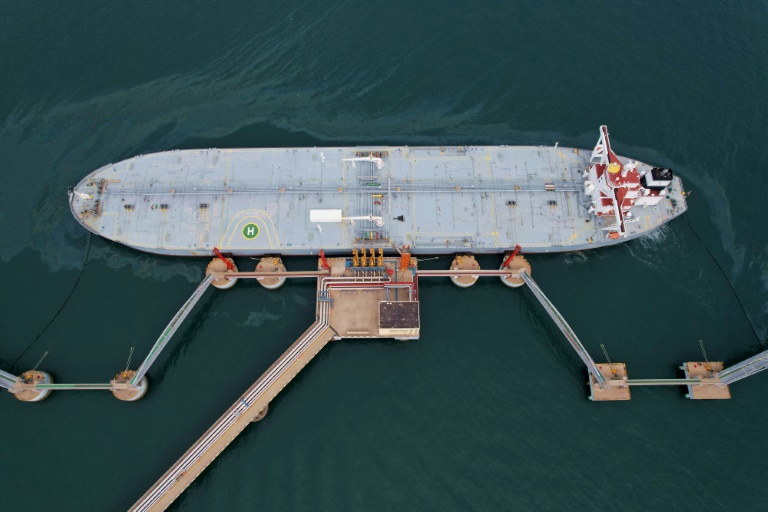
Sanctioned Russia becomes China's main source of oil

China ramped up crude oil imports from Russia in May, customs data showed Monday, helping to offset losses from Western nations scaling back Russian energy purchases over the invasion of Ukraine.

The spike means Russia has overtaken Saudi Arabia to become China’s top oil provider as the West sanctions Moscow’s energy exports.

The world’s second-biggest economy imported around 8.42 million tonnes of oil from Russia last month — a 55 percent rise on-year.

Beijing has refused to publicly condemn Moscow’s war and has instead exacted economic gains from its isolated neighbour.

It imported 7.82 million tonnes of oil from Saudi Arabia in May.

China bought $7.47 billion worth of Russian energy products last month, about $1 billion more than in April, according to Bloomberg News.

The new customs data comes four months into the war in Ukraine, with buyers from the United States and Europe shunning Russian energy imports or pledging to slash them over the coming months.

Asian demand is helping to staunch some of those losses for Russia, especially buyers from China and India.

India bought six times more Russian oil from March to May compared with the same period last year, while imports by China during that period trippled, data from research firm Rystad Energy shows.  

“For now, it is just pure economics that Indian and Chinese refiners are importing more Russian-origin crude oil… as such oil is cheap,” said analyst Wei Cheong Ho.

According to the International Energy Agency’s latest global oil report, India has overtaken Germany in the last two months as the second-largest importer of Russian crude.

China has been Russia’s biggest market for crude oil since 2016.

– ‘No limits’ –

Days before Moscow’s invasion of Ukraine, China’s President Xi Jinping greeted his Russian counterpart Vladimir Putin in Beijing where the two countries declared a bilateral relationship of “no limits”.

Although demand in China remains muted due to Covid restrictions, there has been some improvement in the past month as cities loosen controls after the country’s worst outbreak since the early days of the pandemic.

This has allowed supply chain problems to ease and industrial production to pick up, official data shows.

China’s overall imports from Russia spiked 80 percent in May from a year ago to $10.3 billion, according to customs data.

Beijing’s purchases of Russian liquefied natural gas surged 54 percent on-year to 397,000 tonnes, even as overall imports of the fuel fell.

China has been accused of providing a diplomatic shield for Russia by criticising Western sanctions on Moscow and arms sales to Kyiv.

– Joint goals –

Once bitter Cold War rivals, Beijing and Moscow have stepped up cooperation in recent years as a counterbalance to what they see as US global dominance.

This month they unveiled the first road bridge linking the countries, connecting the far eastern Russian city of Blagoveshchensk with the northern Chinese city of Heihe.

Last week Xi assured Putin of China’s support on Russian “sovereignty and security” in a call between the two leaders. 

The Kremlin said the pair had agreed to ramp up economic cooperation in the face of “unlawful” Western sanctions.

The West has implemented unprecedented sanctions on Russia in retaliation for its war in Ukraine, forcing Moscow to find new markets and suppliers to replace foreign firms that have left Russia following the invasion.

The 27-nation European Union agreed in late May to a package of sanctions that would halt the majority of Russian oil imports.

The United States has already banned all Russian oil but European nations are much more dependent on these imports.

Energy is a major source of income for Putin’s government, and Western nations are trying to isolate Moscow and impede its ability to continue the war.

Sanctioned Russia becomes China's main source of oil

China ramped up crude oil imports from Russia in May, customs data showed Monday, helping to offset losses from Western nations scaling back Russian energy purchases over the invasion of Ukraine.

The spike means Russia has overtaken Saudi Arabia to become China’s top oil provider as the West sanctions Moscow’s energy exports.

The world’s second-biggest economy imported around 8.42 million tonnes of oil from Russia last month — a 55 percent rise on-year.

Beijing has refused to publicly condemn Moscow’s war and has instead exacted economic gains from its isolated neighbour.

It imported 7.82 million tonnes of oil from Saudi Arabia in May.

China bought $7.47 billion worth of Russian energy products last month, about $1 billion more than in April, according to Bloomberg News.

The new customs data comes four months into the war in Ukraine, with buyers from the United States and Europe shunning Russian energy imports or pledging to slash them over the coming months.

Asian demand is helping to staunch some of those losses for Russia, especially buyers from China and India.

India bought six times more Russian oil from March to May compared with the same period last year, while imports by China during that period trippled, data from research firm Rystad Energy shows.  

“For now, it is just pure economics that Indian and Chinese refiners are importing more Russian-origin crude oil… as such oil is cheap,” said analyst Wei Cheong Ho.

According to the International Energy Agency’s latest global oil report, India has overtaken Germany in the last two months as the second-largest importer of Russian crude.

China has been Russia’s biggest market for crude oil since 2016.

– ‘No limits’ –

Days before Moscow’s invasion of Ukraine, China’s President Xi Jinping greeted his Russian counterpart Vladimir Putin in Beijing where the two countries declared a bilateral relationship of “no limits”.

Although demand in China remains muted due to Covid restrictions, there has been some improvement in the past month as cities loosen controls after the country’s worst outbreak since the early days of the pandemic.

This has allowed supply chain problems to ease and industrial production to pick up, official data shows.

China’s overall imports from Russia spiked 80 percent in May from a year ago to $10.3 billion, according to customs data.

Beijing’s purchases of Russian liquefied natural gas surged 54 percent on-year to 397,000 tonnes, even as overall imports of the fuel fell.

China has been accused of providing a diplomatic shield for Russia by criticising Western sanctions on Moscow and arms sales to Kyiv.

– Joint goals –

Once bitter Cold War rivals, Beijing and Moscow have stepped up cooperation in recent years as a counterbalance to what they see as US global dominance.

This month they unveiled the first road bridge linking the countries, connecting the far eastern Russian city of Blagoveshchensk with the northern Chinese city of Heihe.

Last week Xi assured Putin of China’s support on Russian “sovereignty and security” in a call between the two leaders. 

The Kremlin said the pair had agreed to ramp up economic cooperation in the face of “unlawful” Western sanctions.

The West has implemented unprecedented sanctions on Russia in retaliation for its war in Ukraine, forcing Moscow to find new markets and suppliers to replace foreign firms that have left Russia following the invasion.

The 27-nation European Union agreed in late May to a package of sanctions that would halt the majority of Russian oil imports.

The United States has already banned all Russian oil but European nations are much more dependent on these imports.

Energy is a major source of income for Putin’s government, and Western nations are trying to isolate Moscow and impede its ability to continue the war.

Close Bitnami banner
Bitnami