AFP

Sanctioned Russia becomes China's main source of oil

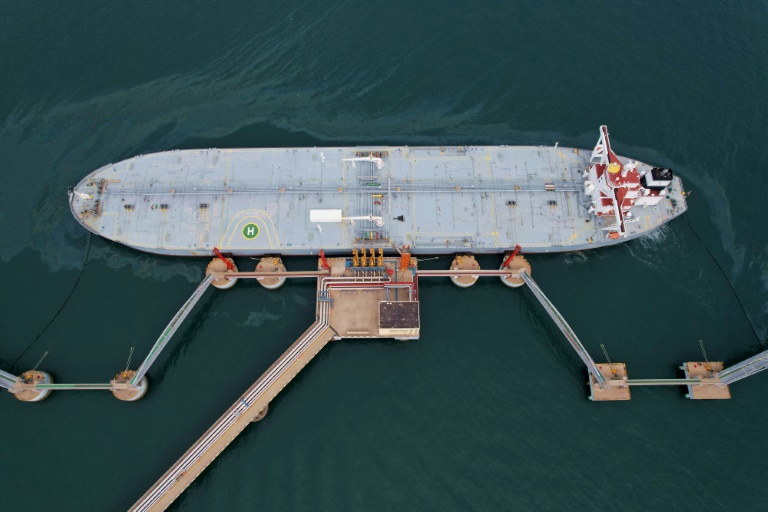
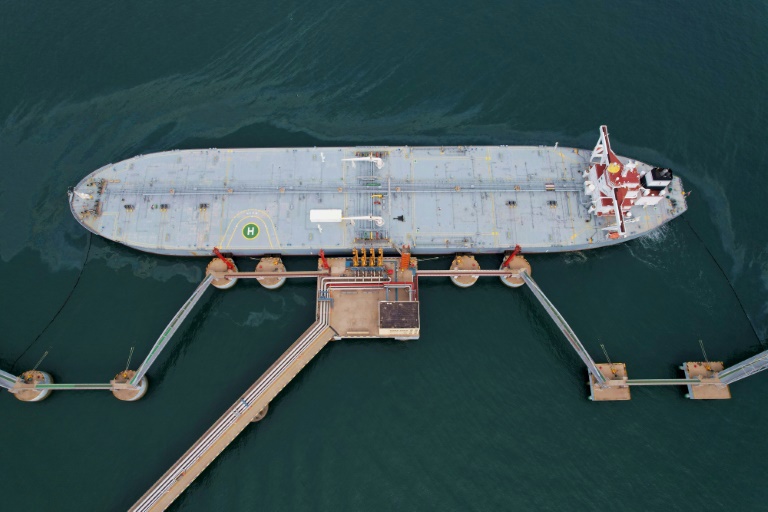
China ramped up crude oil imports from Russia in May, customs data showed Monday, helping to offset losses from Western nations scaling back Russian energy purchases over the invasion of Ukraine.

The spike means Russia has overtaken Saudi Arabia to become China’s top oil provider as the West sanctions Moscow’s energy exports.

The world’s second-biggest economy imported around 8.42 million tonnes of oil from Russia last month — a 55 percent rise on-year.

Beijing has refused to publicly condemn Moscow’s war and has instead exacted economic gains from its isolated neighbour.

It imported 7.82 million tonnes of oil from Saudi Arabia in May.

China bought $7.47 billion worth of Russian energy products last month, about $1 billion more than in April, according to Bloomberg News.

The new customs data comes four months into the war in Ukraine, with buyers from the United States and Europe shunning Russian energy imports or pledging to slash them over the coming months.

Asian demand is helping to staunch some of those losses for Russia, especially buyers from China and India.

India bought six times more Russian oil from March to May compared with the same period last year, while imports by China during that period trippled, data from research firm Rystad Energy shows.  

“For now, it is just pure economics that Indian and Chinese refiners are importing more Russian-origin crude oil… as such oil is cheap,” said analyst Wei Cheong Ho.

According to the International Energy Agency’s latest global oil report, India has overtaken Germany in the last two months as the second-largest importer of Russian crude.

China has been Russia’s biggest market for crude oil since 2016.

– ‘No limits’ –

Days before Moscow’s invasion of Ukraine, China’s President Xi Jinping greeted his Russian counterpart Vladimir Putin in Beijing where the two countries declared a bilateral relationship of “no limits”.

Although demand in China remains muted due to Covid restrictions, there has been some improvement in the past month as cities loosen controls after the country’s worst outbreak since the early days of the pandemic.

This has allowed supply chain problems to ease and industrial production to pick up, official data shows.

China’s overall imports from Russia spiked 80 percent in May from a year ago to $10.3 billion, according to customs data.

Beijing’s purchases of Russian liquefied natural gas surged 54 percent on-year to 397,000 tonnes, even as overall imports of the fuel fell.

China has been accused of providing a diplomatic shield for Russia by criticising Western sanctions on Moscow and arms sales to Kyiv.

– Joint goals –

Once bitter Cold War rivals, Beijing and Moscow have stepped up cooperation in recent years as a counterbalance to what they see as US global dominance.

This month they unveiled the first road bridge linking the countries, connecting the far eastern Russian city of Blagoveshchensk with the northern Chinese city of Heihe.

Last week Xi assured Putin of China’s support on Russian “sovereignty and security” in a call between the two leaders. 

The Kremlin said the pair had agreed to ramp up economic cooperation in the face of “unlawful” Western sanctions.

The West has implemented unprecedented sanctions on Russia in retaliation for its war in Ukraine, forcing Moscow to find new markets and suppliers to replace foreign firms that have left Russia following the invasion.

The 27-nation European Union agreed in late May to a package of sanctions that would halt the majority of Russian oil imports.

The United States has already banned all Russian oil but European nations are much more dependent on these imports.

Energy is a major source of income for Putin’s government, and Western nations are trying to isolate Moscow and impede its ability to continue the war.


ConocoPhillips joins Qatar's mega gas expansion

ConocoPhillips on Monday became the first US energy giant to sign up to help Qatar’s massive natural gas expansion that has drawn global bidders anxious to assure new supplies.

ConocoPhillips’ chunk of the North Field East project is half the size of France’s TotalEnergies, which has a 6.25 percent share, but the same as Italy’s ENI, announced on Sunday, Energy Minister Saad Sherida al-Kaabi told a press conference at which the accord was signed.

No figure for the value of the deal was given but TotalEnergies previously said it had paid $2 billion for its joint venture.

The expansion of the North Field, which has the world’s biggest known natural gas reserves, is estimated to cost more than $28 billion, and will see production increase from the current 77 million tonnes a year to 110 million tonnes by 2027.

The project has taken on growing international importance because of the fallout from the Russian invasion of Ukraine on Europe’s energy supplies.

The joint venture between ConocoPhillips and the state-owned Qatar Energy will last 27 years, but Kaabi said he expected gas from the North Field to last more than 50 years.

The reserves extend into Iranian territory and make up about 10 percent of the world’s known reserves, according to Qatar Energy. 

ConocoPhillips chairman Ryan Lance hailed the deal, saying it would be the “best in the world”.

“The LNG here in Qatar is needed to power world economic prosperity and to help protect against climate change,” he added.

Qatar is expected to announce more partners in the coming days, with ExxonMobil of the United States, Britain’s Shell and Chinese state energy firms among the names mentioned by industry sources as likely contenders. China is already one of the biggest customers for Qatari liquefied natural gas (LNG).

Foreign companies are expected to hold about 25 percent of the project in all.

Kaabi said there was “zero diplomatic element” in the decision on the companies taking part. He said the price paid, technical “competency” and ability to give access to new markets were the key elements determining the selection.

Qatar’s gas is among the cheapest to produce and has fuelled the Gulf state’s economic miracle of the past four decades. It is expected to announce details of another expansion, the North Field South, in coming months.

European stocks aim higher despite recession worries

Europe’s main stock markets rose on Monday after a mixed Asian session, as traders set aside recession fears and French political uncertainty.

Bitcoin regained $20,000 after sinking to an 18-month low of $17,599 in weekend deals because risk-averse investors had shunned the world’s most popular cryptocurrency.

London equities rallied 1.0 percent in midday deals on Monday, with sentiment boosted by news of a blockbuster takeover offer for publisher Euromoney.

But the eurozone was more muted. Frankfurt stocks were up 0.5 percent and Paris gained just 0.3 percent, while oil prices languished on stubborn demand concerns.

Markets were rocked last week by a fierce sell-off after the US Federal Reserve’s sharp interest rate hike — the biggest in nearly 30 years — and a warning of more to come as inflation soars.

“Stability often comes before recovery and markets being more composed would suggest investors are no longer panicking,” said Russ Mould, investment director at broker AJ Bell.

Investors digested news that French President Emmanuel Macron and his allies faced political deadlock after losing their parliamentary majority in a stunning blow for the president and his reform plans.

Wall Street, shut on Monday for a US public holiday, had risen on Friday.

There is a sense among traders, however, that stock markets still have some way down to go before they find a bottom, with data suggesting economies are beginning to feel the pinch.

Cleveland Fed chief Loretta Mester added to the worry. She said the risk of a recession in the United States was increasing and it would take several years to bring inflation down from four-decade highs to the bank’s two percent target.

She told CBS’s “Face The Nation” on Sunday that while she was not predicting a contraction, the Fed’s decision not to act sooner to fight rising prices was hurting the economy.

Analysts warned there was likely to be more pain ahead for traders as the Ukraine war drags on and uncertainty continues to reign.

Oil prices slid on Monday, extending Friday’s hefty losses on demand worries caused by the prospect of a world recession.

However, US Energy Secretary Jennifer Granholm said prices could continue to surge if the European Union cuts off imports of the commodity from Russia in response to the Ukraine war.

– Key figures at around 1115 GMT –

London – FTSE 100: UP 1.0 percent at 7,085.94 points

Frankfurt – DAX: UP 0.5 percent at 13,192.85

Paris – CAC 40: UP 0.3 percent at 5,900.21

EURO STOXX 50: UP 0.6 percent at 3,457.35

Tokyo – Nikkei 225: DOWN 0.7 percent at 25,771.22 (close)

Hong Kong – Hang Seng Index: UP 0.4 percent at 21,163.91 (close)

Shanghai – Composite: FLAT at 3,315.43 (close)

New York – Dow: DOWN 0.1 percent at 29,888.78 (close)

Euro/dollar: UP at $1.0538 from $1.0499 late Friday

Pound/dollar: UP at $1.2256 from $1.2241

Euro/pound: UP at 85.98 pence from 85.77 pence

Dollar/yen: DOWN at 134.74 yen from 135.02 yen

Brent North Sea crude: DOWN 0.4 percent at $112.72 per barrel

West Texas Intermediate: DOWN 0.2 percent at $109.38

Airlines seek govt support for net-zero pledge

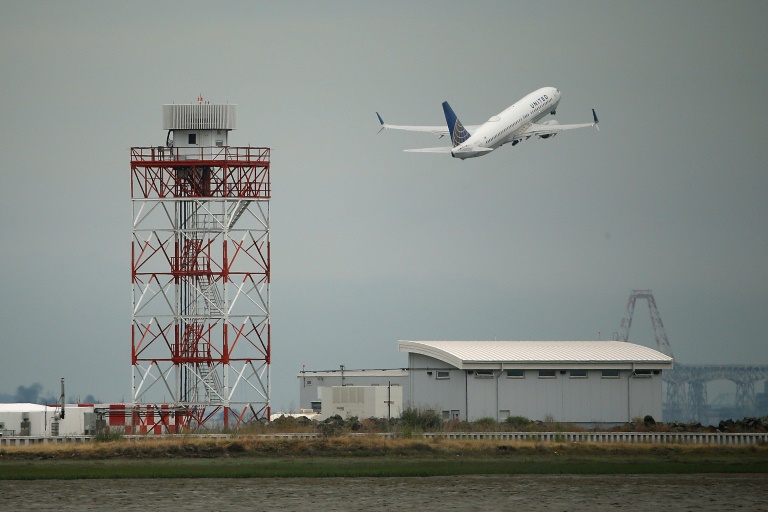
World airlines on Monday called on governments to support the industry’s goal of net-zero carbon emissions by 2050.

The plea at a meeting of the International Air Transport Association (IATA) came three months before a crucial gathering of the United Nations’ intergovernmental agency supporting aviation.

IATA, whose member airlines account for 83 percent of global air traffic, pledged in October to reach net-zero by mid-century, an enormous and costly technological challenge.

“It is critical that the industry is supported by governments with policies that are focused on the same decarbonisation goal,” Willie Walsh, IATA’s director general, said in a statement during the group’s annual general meeting in the Gulf emirate of Qatar. 

IATA’s 2050 target is in accordance with goals of the landmark 2015 Paris climate accord to limit the global average temperature increase to 1.5 degrees Celsius (2.7 Fahrenheit) above pre-industrial levels.

“The decarbonisation of the global economy will require investment across countries and across decades, particularly in the transition away from fossil fuels,” Walsh said.

“Stability of policy matters.” 

His appeal comes three months before the International Civil Aviation Organization meets at the end of September in Montreal, where it is to examine the issue of reducing emissions.

Agreement is far from certain as Russia and China are among companies targeting decarbonisation 10 years later, in 2060.

Chinese airlines voiced objections last year to the IATA target during the group’s meeting in Boston.

In an effort to counter such reluctance as the effects of climate change become increasingly apparent, France, holding the rotating EU presidency, in February published the Toulouse Declaration calling on the entire world to sign up to the goals.

In addition to 42 countries, airports, airlines and other industry players adopted the declaration.

“The industry’s determination to achieve net-zero by 2050 is firm. How would governments explain the failure to reach an agreement to their citizens?” said Walsh. 

The airline industry currently accounts for about three percent of environmentally-harmful CO2 emissions. To reach net-zero it will need a steady ramp-up of renewable jet fuel, other efficiency improvements and the use of carbon capture storage and offsets.

IATA has estimated this would cost companies around $1.55 trillion over 30 years.

Strike forces cancellation of all Brussels flights

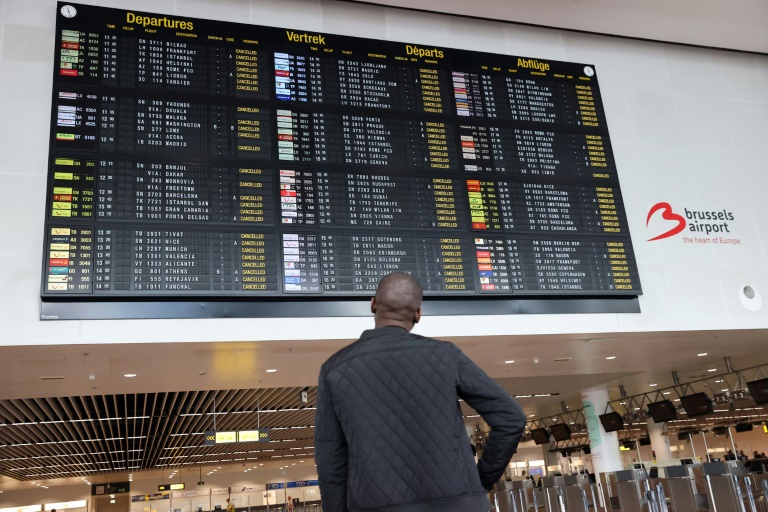
Brussels Airport cancelled all outbound flights on Monday after most security staff joined a nationwide strike for better pay as soaring inflation hit workers’ purchasing power.

The stoppage kicked off a week of travel chaos in several parts of Europe, notably a massive rail strike in Britain from Tuesday and, later on, strikes hitting the continent’s biggest airline Ryanair in multiple countries.

Brussels Airport informed passengers on its site and social media that all departing flights were scrapped for the day — 232 in total.

Only a quarter of arriving flights were still operating. Freight traffic was unaffected.

The departure hall at the airport was largely empty, with only around 100 passengers inside, some lining up to change tickets or get assistance while others slumped resignedly in seats or slept on the floor.

Oleksandr Zayikin, a Ukrainian merchant mariner who had been away for four months, told AFP the strike had prevented a reunion with his wife in Istanbul. He had left before Russia’s invasion of his country.

“I’m upset,” the 29-year-old said, adding he would now probably find a Brussels hotel for a few days.

“In Ukraine it’s not a usual thing, we don’t have such strikes. But I really respect that people do that,” he said.

Maria Antonia, a 20-year-old Romanian student who had a flight booked to return to Bucharest, didn’t see the last-minute messages the airport had written for passengers from late Sunday.

“We didn’t know it was cancelled until we got to the airport,” she said.

“That was a little bit of a hassle. But we can manage it I think.”

Passengers were told to contact their airline to reschedule their flights or seek a refund.

German travel group TUI arranged to have flights that were to have left from Brussels take off from some regional Belgian airports.

The national strike in Belgium was called by the three main unions to push for higher salaries as inflation sent the cost of living higher.

A demonstration was to take place later Monday in the centre of Brussels, with unions expecting up to 70,000 people to march.

Sanctioned Russia becomes China's main source of oil

China ramped up crude oil imports from Russia in May, customs data showed Monday, helping to offset losses from Western nations scaling back Russian energy purchases over the invasion of Ukraine.

The spike means Russia has now overtaken Saudi Arabia to become China’s top oil provider as the West continues to sanction Moscow’s energy exports.

The world’s second-biggest economy imported around 8.42 million tonnes of oil from Russia last month — a 55 percent on-year rise — as Beijing continues to refuse to publicly condemn Moscow’s war while exacting economic gains from its isolated neighbour.

China imported 7.82 million tonnes of oil from Saudi Arabia in May.

In total, China bought $7.47 billion worth of Russian energy products last month, about $1 billion more than April, according to Bloomberg News.  

The new customs data comes four months into the war in Ukraine, with buyers from the US and Europe shunning Russian energy imports or pledging to slash them over the coming months.

But while European powers are scaling back and Russia’s energy exports are falling, Asian demand is helping to staunch some of those losses, especially in China and India.

According to the International Energy Agency’s latest global oil report, India has overtaken Germany as the second-largest importer of Russian crude in the last two months. 

China has been Russia’s biggest market for crude oil since 2016. 

– ‘No limits’ –

Days before Moscow’s invasion of Ukraine, China’s President Xi Jinping greeted his Russian counterpart Vladimir Putin in Beijing, with the two countries declaring a bilateral relationship of “no limits”. 

Although demand in China remains muted, there has been some improvement in the past month as cities began to loosen virus restrictions after the country’s worst Covid outbreak since the early days of the pandemic.

This has allowed some supply chain problems to ease and industrial production to pick up, official data showed.

China’s overall imports from Russia spiked 80 percent from a year ago in May to $10.3 billion, customs data added.

Apart from oil, Beijing’s purchases of liquefied natural gas from Russia also surged 54 percent on-year in May to 397,000 tonnes, even as overall imports of the fuel fell.

Beijing — which has repeatedly refused to condemn Moscow’s bloody invasion of Ukraine — has also been accused of providing a diplomatic shield for Russia by blasting Western sanctions and arms sales to Kyiv.

Once bitter Cold War enemies, Beijing and Moscow have stepped up cooperation in recent years as a counterbalance to what they see as US global dominance.

– Joint goals –

Earlier this month they unveiled the first road bridge linking the two countries, connecting the far eastern Russian city of Blagoveshchensk with the northern Chinese city of Heihe.

Last week, President Xi Jinping assured President Vladimir Putin of China’s support on Russian “sovereignty and security” on a call between the two leaders. 

The Kremlin said the pair had agreed to ramp up economic cooperation in the face of “unlawful” Western sanctions.

The West has adopted unprecedented sanctions against Russia in retaliation for its war in Ukraine, and Moscow is looking for new markets and suppliers to replace the major foreign firms that left Russia following the invasion.

The 27-nation European Union agreed in late May to a package of sanctions that would halt the majority of Russian oil imports.

While the United States had already banned Russian oil, European nations are much more dependent on those imports.

Energy is a major source of income for Putin’s government, and Western nations are trying to isolate Moscow and impede Moscow’s ability to continue the war.

Sanctioned Russia becomes China's main source of oil

China ramped up crude oil imports from Russia in May, customs data showed Monday, helping to offset losses from Western nations scaling back Russian energy purchases over the invasion of Ukraine.

The spike means Russia has now overtaken Saudi Arabia to become China’s top oil provider as the West continues to sanction Moscow’s energy exports.

The world’s second-biggest economy imported around 8.42 million tonnes of oil from Russia last month — a 55 percent on-year rise — as Beijing continues to refuse to publicly condemn Moscow’s war while exacting economic gains from its isolated neighbour.

China imported 7.82 million tonnes of oil from Saudi Arabia in May.

In total, China bought $7.47 billion worth of Russian energy products last month, about $1 billion more than April, according to Bloomberg News.  

The new customs data comes four months into the war in Ukraine, with buyers from the US and Europe shunning Russian energy imports or pledging to slash them over the coming months.

But while European powers are scaling back and Russia’s energy exports are falling, Asian demand is helping to staunch some of those losses, especially in China and India.

According to the International Energy Agency’s latest global oil report, India has overtaken Germany as the second-largest importer of Russian crude in the last two months. 

China has been Russia’s biggest market for crude oil since 2016. 

– ‘No limits’ –

Days before Moscow’s invasion of Ukraine, China’s President Xi Jinping greeted his Russian counterpart Vladimir Putin in Beijing, with the two countries declaring a bilateral relationship of “no limits”. 

Although demand in China remains muted, there has been some improvement in the past month as cities began to loosen virus restrictions after the country’s worst Covid outbreak since the early days of the pandemic.

This has allowed some supply chain problems to ease and industrial production to pick up, official data showed.

China’s overall imports from Russia spiked 80 percent from a year ago in May to $10.3 billion, customs data added.

Apart from oil, Beijing’s purchases of liquefied natural gas from Russia also surged 54 percent on-year in May to 397,000 tonnes, even as overall imports of the fuel fell.

Beijing — which has repeatedly refused to condemn Moscow’s bloody invasion of Ukraine — has also been accused of providing a diplomatic shield for Russia by blasting Western sanctions and arms sales to Kyiv.

Once bitter Cold War enemies, Beijing and Moscow have stepped up cooperation in recent years as a counterbalance to what they see as US global dominance.

– Joint goals –

Earlier this month they unveiled the first road bridge linking the two countries, connecting the far eastern Russian city of Blagoveshchensk with the northern Chinese city of Heihe.

Last week, President Xi Jinping assured President Vladimir Putin of China’s support on Russian “sovereignty and security” on a call between the two leaders. 

The Kremlin said the pair had agreed to ramp up economic cooperation in the face of “unlawful” Western sanctions.

The West has adopted unprecedented sanctions against Russia in retaliation for its war in Ukraine, and Moscow is looking for new markets and suppliers to replace the major foreign firms that left Russia following the invasion.

The 27-nation European Union agreed in late May to a package of sanctions that would halt the majority of Russian oil imports.

While the United States had already banned Russian oil, European nations are much more dependent on those imports.

Energy is a major source of income for Putin’s government, and Western nations are trying to isolate Moscow and impede Moscow’s ability to continue the war.

Russia stepping up attacks, Ukraine says, ahead of EU decision

Russian forces have stepped up their shelling in Ukraine’s Kharkiv and Donetsk regions, Kyiv said Monday, after President Volodymyr Zelensky warned to expect greater hostilities ahead of a historic EU decision on Ukraine’s bid for candidate status.

Nearly four months after Russia launched a bloody invasion of his country, Zelensky said in his evening address on Sunday there had been “few such fateful decisions for Ukraine” as the one it expects from the European Union this week.

“Obviously, we expect Russia to intensify hostile activity this week … We are preparing. We are ready,” he said. 

Leaders of the EU’s 27 member states will discuss at a summit on Thursday and Friday whether to add Ukraine to the list of countries vying for membership.

EU foreign ministers gathering in Luxembourg kicked off the week urging Moscow to stop blocking the export of vitally needed grain from Ukraine, a top global supplier.

“One cannot imagine that millions of tonnes of wheat remain blocked in Ukraine while in the rest of the world people are suffering hunger. This is a real war crime,” the bloc’s top diplomat Josep Borrell said.

Moscow has denied responsibility for the food crisis, and blames Western sanctions for the disrupted deliveries that have pushed up cereal prices and fanned fears of famines in vulnerable regions. 

– Heavy bombardment –

On the ground, Russia appeared to be making some battlefield advances in the east.

In its daily update on Monday, Ukraine’s presidency reported heavier Russian shelling in the Kharkiv region in the northeast.

In the Donetsk region, the intensity of the attacks “is growing along the entire frontline” it said, leaving at least one person dead and injuring seven people, including a child.

Fighting also continued in the key industrial city of Severodonetsk in the east, with Ukraine saying it had lost control of the adjacent village of Metyolkine.

“Unfortunately, we do not control Metyolkine anymore. And the enemy continues to build up its reserves,” the Lugansk regional governor Sergiy Gaiday said in a statement on social media.

Moscow’s forces have for weeks been battling to seize the eastern Donbas region, after being repelled from other parts of the country following their February invasion.

A chemical plant in Severodonetsk where hundreds of civilians are said to be sheltering was being shelled “constantly”, Gaiday said.

NATO’s chief Jens Stoltenberg meanwhile warned on Sunday that the war could grind on “for years” and urged Western countries to be ready to offer long-term military, political and economic aid.

Ukraine has repeatedly urged Western countries to step up their deliveries of arms, despite warnings from nuclear-armed Russia that it could trigger wider conflict.

– Energy crisis –

Russia’s defence ministry said Sunday it launched missile strikes during the past 24 hours, with one attack on a top-level Ukrainian military meeting near the city of Dnipro killing “more than 50 generals and officers”.

It said it also targeted a building housing Western-provided weapons in Mykolaiv, destroying Ukrainian artillery and armoured vehicles.

There was no independent verification of the claims.

Mykolaiv is a key target for Russia as it lies on the route to the strategic port of Odessa.

With Russia maintaining a blockade of Odessa that has trapped grain supplies, residents have turned their attention to rallying the home front effort.

“Every day, including the weekend, I come to make camouflage netting for the army,” said Natalia Pinchenkova, 49, standing by a large Union flag, a show of thanks to Britain for its support for Ukraine.

The Ukraine war is fuelling not only a global food crisis but an energy crisis too. 

Hit by punishing sanctions, Moscow has turned up the pressure on European economies by sharply reducing gas supplies, which has in turn sent energy prices soaring. 

Germany on Sunday announced emergency measures including increased use of coal to ensure it meets its energy needs after a drop in the supply of Russian gas in recent days.

Austria announced it will reopen a mothballed coal power station to combat shortages, and Italian company Eni joined a huge Qatari project to expand production from the world’s biggest natural gas field.

China’s imports of oil from Russia meanwhile jumped by 55 percent year on year in May, customs data showed Monday, as Beijing continued to refuse to condemn Moscow’s war.

Natalia Khalaimova, 54, a resident in Lysychansk, across the river from Severodonetsk, said she wanted Russia and Ukraine to negotiate an end to the war. 

“Every war in any country ends — but the sooner, the better,” she told AFP. “So many civilians are killed. Most of them were not involved in the war at all.”

burs-mfp/yad

Boy killed, three wounded in shooting after Washington concert

A 15-year-old boy was killed and three other people, including a police officer, were wounded in a shooting after a concert in Washington Sunday night, the local police chief said.

The shooting was preceded by two other incidents which caused panic at the unpermitted “Moechella” concert celebrating Juneteenth, with several people injured while running away, DC police chief Robert Contee told reporters.

Police then shut down the sidewalk concert on safety grounds but shortly afterwards, despite a heavy police presence, the shooting occurred nearby in which the boy was killed, Contee said.

“Unfortunately things like this can happen when you have the wrong mix of people, or people who introduce firearms into a situation,” he said.

The officer and two other wounded people were recovering in hospital, he added.

There was no exchange of fire and the gun used had not been recovered, Contee said.

It was not clear if the teenager was targeted but before the incident police had seized two illegal firearms nearby and were chasing another individual with an illegal firearm, the police chief said.

“There’s a theme that you see here: illegal firearms in the hands of people who should not have them make events like this unsafe for people who just want to enjoy the beautiful weather, who want to enjoy Father’s Day, who want to enjoy our city. This is unacceptable,” he said.

“When you have large gatherings in a dense area, all it takes is one person introducing a gun to the situation that makes it deadly. In this case, unfortunately, a 15-year-old lost his life,” Contee added.

The United States is in the midst of a particularly gruesome chapter in its epidemic of gun violence. The most fatal incident in this stretch was a shooting at an elementary school in Uvalde, Texas that left 19 children and two teachers dead on May 24.

Since the start of the year more than 20,000 people have died from firearm violence in the United States, according to an NGO called the Gun Violence Archive. This includes deaths by suicide.

Stock markets mixed as recession worries persist

Markets were mixed Monday having pared earlier losses but sentiment continues to be clouded by fears that central bank moves to rein in soaring inflation will induce a recession.

The tepid performances come after a sell-off last week fuelled by the Federal Reserve’s sharp interest rate hike — the biggest in nearly 30 years — and a warning of more to come, while increases in Britain and Switzerland added to the gloom.

And while the S&P 500 and Nasdaq saw gains on Friday, there is a sense that indexes still have some way down to go before they find a bottom, with economic data suggesting economies are beginning to feel the pinch.

Cleveland Fed chief Loretta Mester added to the worry, saying that the risk of a recession in the United States was increasing and it would take several years to bring inflation down from four-decade highs to the bank’s two percent target.

She told CBS’s “Face The Nation” on Sunday that while she was not predicting a contraction, the Fed’s decision not to act sooner to fight rising prices was hurting the economy.

In Asian trade Monday, Tokyo, Shanghai Sydney, Seoul, Taipei, Bangkok and Wellington were all in the red, though there were gains in Hong Kong, Mumbai, Singapore, Manila and Jakarta.

London edged up, Paris fell and Frankfurt was flat.

Analysts warned there was likely to be more pain ahead for traders as the Ukraine war drags on and uncertainty continues to reign.

“Central banks’ hawkish rhetoric and concerns over a global economic slowdown/recession (are) not helping sentiment and at this stage it is hard to see a turn in fortunes until we see evidence of a material ease in inflationary pressures,” said National Australia Bank’s Rodrigo Catril.

And Stephen Innes of SPI Asset Management added: “Most of these major central banks are praying for some relief from inflation and hoping the data falls in line, but unless there is a detente in the Ukraine-Russia war, escalation will continue to drive energy price fears so it could be a tough road ahead.”

Oil prices were also mixed Monday after suffering a hefty drop Friday over demand worries caused by a possible recession.

However, US Energy Secretary Jennifer Granholm said prices could continue to surge if the European Union cuts off imports of the commodity from Russia in response to the Ukraine war.

She said Joe Biden had called on global suppliers to ramp up output to help temper the price rises, with the president to discuss the issue during an upcoming visit to Saudi Arabia next month.

Bitcoin remained stuck below $20,000 but was up from the $17,599 touched at the weekend, its lowest level since December 2020.

“Rising interest rates, an acute risk-off mood across markets, a thinning of liquidity is all to blame: in short the end of free money from the Fed means the artificial pump that created these assets is no longer working,” said Neil Wilson at Markets.com.

– Key figures at around 0810 GMT –

Tokyo – Nikkei 225: DOWN 0.7 percent at 25,771.22 (close)

Hong Kong – Hang Seng Index: UP 0.4 percent at 21,163.91 (close)

Shanghai – Composite: FLAT at 3,315.43 (close)

London – FTSE 100: UP 0.1 percent at 7,023.44

Dollar/yen: DOWN at 134.73 yen from 134.99 yen late Friday

Pound/dollar: UP at $1.2227 from $1.2221

Euro/dollar: UP at $1.0513 from $1.0493

Euro/pound: UP at 85.97 pence from 85.83 pence

West Texas Intermediate: UP 0.3 percent at $109.85

Brent North Sea crude: DOWN 0.1 percent at $113.00 a barrel

New York – Dow: DOWN 0.1 percent at 29,888.78 (close)

— Bloomberg News contributed to this story —

Close Bitnami banner
Bitnami