AFP

'Freedom at last' for Reagan shooter Hinckley

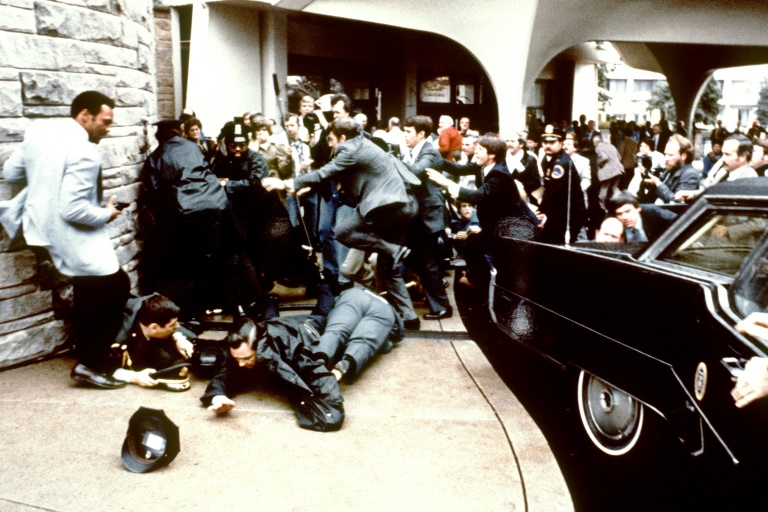
John Hinckley, who tried to assassinate US president Ronald Reagan in 1981, regained his freedom fully on Wednesday, six years after he was released from a psychiatric hospital.

Earlier this month a Washington court ruled that after decades of treatment and psychiatric reviews, Hinckley no longer presented a threat, and conditions set on his life after release would be lifted on June 15.

“After 41 years 2 months and 15 days, FREEDOM AT LAST!!!” he tweeted in celebration Thursday.

Hinckley, now 67, shot Reagan and three others with a revolver outside a Washington hotel on March 30, 1981. Hinckley said he wanted to impress actress Jodie Foster, with whom he became obsessed after watching her in the film “Taxi Driver.”

All four people he shot survived, although Reagan press secretary James Brady was left partially paralyzed and forced to use a wheelchair.

At his trial in 1982, Hinckley was declared not guilty on grounds of insanity, and admitted to St. Elizabeth’s Hospital, a psychiatric institution in Washington, for 34 years.

He was released in September 2016 but required to live with his elderly mother in a gated community in Williamsburg, Virginia under a long list of restrictions.

Those included controls on his movements and monitoring of his electronic devices and online accounts.

He was also forbidden to contact Foster or travel to any area where a current or former president, vice president or member of Congress would be present.

Nor could Hinckley speak to the media or post any writings or memorabilia on the internet, or display them in person without authorization. 

A government report on his status filed to the court on May 19 said his mental health had “remained stable” and that his psychiatric illness had been in “full and sustained remission for decades.”

“He has not reported or exhibited any psychiatric symptoms consistent with a mood, anxiety, or psychotic disorder,” it said.

In recent years Hinckley has undergone music therapy and began playing guitar and singing original folk-country songs on YouTube and other music sites.

In December he announced he would release a CD of his music.
Anthony Fauci, Biden's top Covid advisor, tests positive

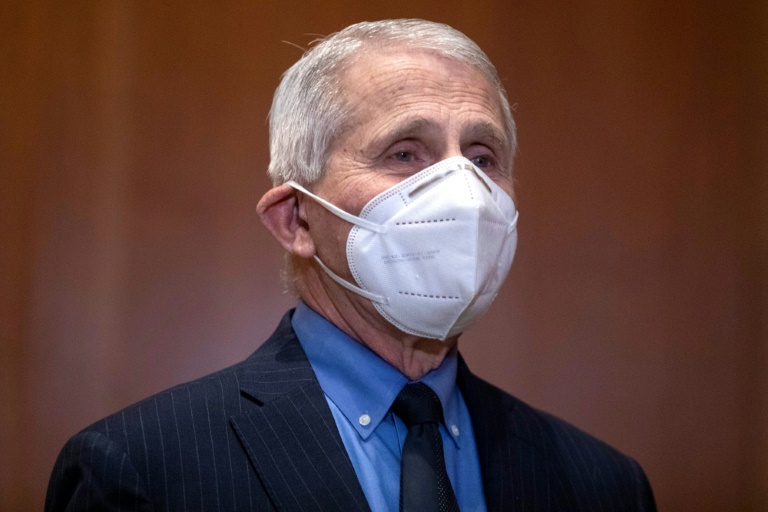
Top scientist Anthony Fauci, the face of America’s response to the Covid-19 pandemic, tested positive Wednesday for the virus on a rapid antigen test but is continuing to work from home while he recovers, the National Institutes of Health said.

“He is currently experiencing mild symptoms,” the NIH said, adding the 81-year-old, who is fully vaccinated and double boosted, had not been in recent close contact with President Joe Biden, whom he serves as chief medical advisor.

“Fauci will follow the COVID-19 guidelines of the Centers for Disease Control and Prevention and medical advice from his physician and return to the NIH when he tests negative,” it said.

Breakthrough infections have risen significantly since the Omicron variant became dominant late last year. Its latest sublineages BA.4 and BA.5, which appear to have advantages in their ability to evade immune protection, are now on the rise. 

As the longtime director of the NIH’s National Institute of Allergy and Infectious Disease, Fauci has led the United States’ response to every pandemic since 1984, winning wide praise for his leadership during the early fight against HIV-AIDS.

When Covid first spread globally from China, he became a trusted source of reliable information for a worried public, exuding a calm and professorial demeanor in his frequent media appearances. 

But his honest takes on America’s failures to come to grips with the virus brought him into conflict with former president Donald Trump, who attacked the physician-scientist frequently towards the end of his term, helping turn him into a hated figure by some on the right.

Fit and energetic, Fauci managed to dodge becoming infected more than two years into the pandemic — taking precautions like excusing himself from the recent White House Correspondents Dinner that became a spreader event despite a vaccine and same-day test requirement. 

He now finds himself in the company of an ever increasing majority of Americans who have contracted the virus — a figure that was as high as 60 percent by February of this year, according to an antibody survey study carried out by the Centers for Disease Control and Prevention, and probably much higher now.

US panel recommends Covid vaccine for youngest children

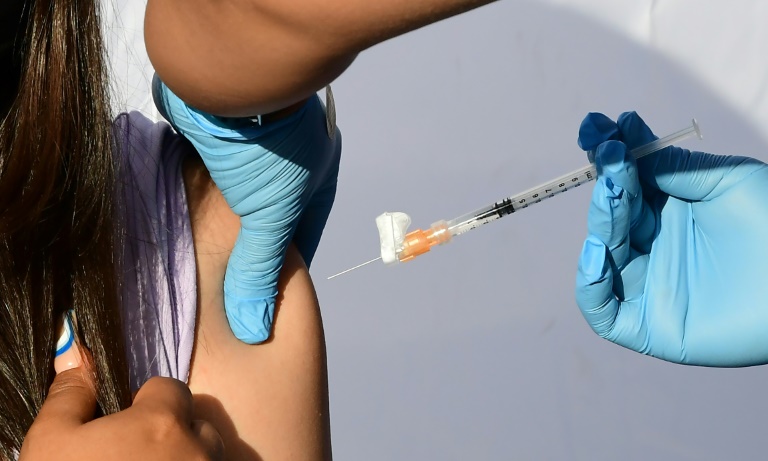
After months of waiting for anxious parents, a panel of experts convened by the US Food and Drug Administration recommended Moderna’s Covid vaccine Wednesday for the nation’s youngest children.

The panelists are now expected to vote soon in favor of also greenlighting the Pfizer vaccine. Formal authorizations should follow quickly, with the first shots in arms expected by next week.

“This recommendation does fill a significant unmet need for a really ignored younger population,” said Michael Nelson, a professor of medicine at the University of Virginia and one of the 21 experts who unanimously said the benefits of the Moderna vaccine outweighed the risks.

Children under five are the only age group not yet eligible for Covid immunization in the United States and most countries. The FDA offers livestreams of its internal deliberations and its stamp of approval is considered the global gold standard.

Opening the meeting, senior FDA scientist Peter Marks said that despite studies showing the majority of children have now been infected with the coronavirus, the high rate of hospitalizations among infants, toddlers and young children during last winter’s Omicron wave underscored the urgent need for vaccination.

“We are dealing with an issue where we have to be careful we don’t become numb to the pediatric deaths because of the overwhelming number of older deaths,” he said. “Every life is important and vaccine-preventable deaths are something we would like to try to do something about.”

The United States has recorded 480 Covid-19 deaths in the 0-4 age group so far in the pandemic, according to latest official data — far higher than even a “terrible flu season,” Marks said.

As of May 2022, there have been 45,000 hospitalizations in that group, nearly a quarter of which required intensive care.

Ahead of the meeting, the FDA posted its independent analyses of the pharmaceutical companies’ vaccines, deeming both safe and effective.

Both vaccines are based on messenger RNA, which delivers genetic code for the coronavirus spike protein to human cells that then grow it on their surface, training the immune system to be ready for when it encounters the real virus. The technology is now considered the leading Covid vaccination platform.

Pfizer is seeking authorization for three doses at three micrograms given to children aged six months through four years, while Moderna asked for the FDA to authorize its vaccine as two doses of a higher 25 micrograms for ages six months through five years.

Both vaccines were tested in trials of thousands of children. They were found to cause similar levels of mild side effects as in older age groups and triggered similar levels of antibodies.

– High protection against severe disease –

Efficacy against infection was higher for Pfizer, with the company placing it at 80 percent, compared to Moderna’s estimates of 51 percent for children aged six-months to two years old and 37 percent for those aged two to five years. 

But the Pfizer figure is based on very few cases and is thus considered preliminary. It also takes three doses to achieve its protection, with the third shot given eight weeks after the second, which is given three weeks after the first.

Moderna’s vaccine should provide strong protection against severe disease after two doses, given four weeks apart, and the company is studying adding a booster that would raise efficacy levels against mild disease.

However, Moderna’s decision to go with a higher dose is associated with higher levels of fevers in reaction to the vaccine compared to Pfizer.

There are some 20 million US children aged four years and under. 

Although obesity, neurological disorders and asthma are associated with increased risk of severe disease among young children, it’s not easy to predict severe outcomes.

In fact, 64 percent of hospitalizations in those under five occurred in patients without comorbidities.

Children can also go on to contract multisystem inflammatory syndrome in children (MIS-C), a rare but serious post-viral condition. Some three to six percent can experience long Covid symptoms for more than 12 weeks.

If the FDA-appointed experts recommend the two vaccines, then the matter will go to another committee convened by the Centers for Disease Control and Prevention for a final say.

White House officials last week said the rollout of 10 million shots at pharmacies and doctors’ offices could begin as soon as June 21.

Media awards highlight human stories of climate crisis

Rising ice melt in Greenland, the impact of relentless heat waves in California, and the precarious future of coastal cities were among subjects featured at the annual Covering Climate Now Journalism Awards unveiled Wednesday.

The winning entries were hailed by judges for capturing the urgency of the global climate crisis, bringing to light “abundant solutions,” and inspiring people and policymakers to act.

Among work honored was an HBO Max documentary on two pre-teen sisters as their sixth-generation family farm in Iowa is battered by cycles of drought and flooding.

The judges said the film succeeded in showing how “a small story becomes a large, important one” with the sisters and their parents taking joy in farm chores but recognizing climate change is rendering their way of life unsustainable.

Justin Worland of Time was named journalist of the year, while AFP won an award for a “globe-spanning” video project on how rising seas will rewrite maps, doom some major cities and impact the world’s poorest.

“Better news coverage is an essential climate solution, a catalyst that makes progress on every part of the problem — from politics to business, lifestyle change to systems change — more likely,” said Mark Hertsgaard, executive director of Covering Climate Now.

The 23 winners were selected from over 900 entries from 65 countries for the awards’ second year.

Other winners included Al Jazeera on a UNESCO World Heritage site in Senegal crumbling beneath rising seas, PBS coverage of the COP26 summit in Scotland, and a Guardian podcast series on Pacific Island nations.

Covering Climate Now is a global media project devoted to reporting on global warming.

Black Death origin mystery solved… 675 years later

A deadly pandemic with mysterious origins: it might sound like a modern headline, but scientists have spent centuries debating the source of the Black Death that devastated the medieval world.

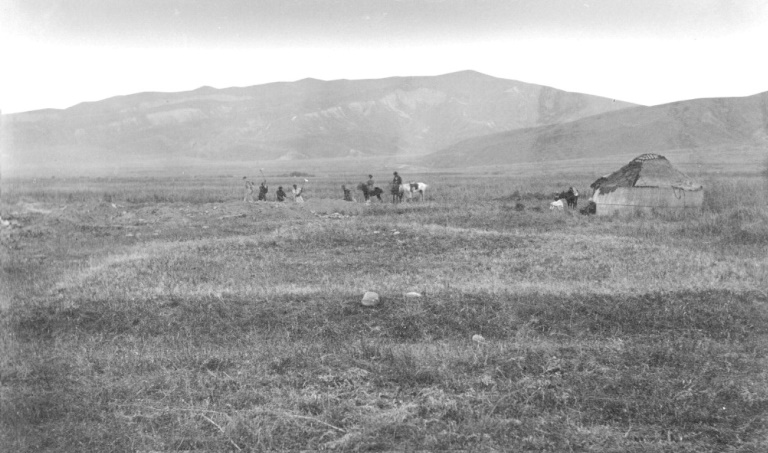
Not anymore, according to researchers who say they have pinpointed the source of the plague to a region of Kyrgyzstan, after analysing DNA from remains at an ancient burial site.

“We managed to actually put to rest all those centuries-old controversies about the origins of the Black Death,” said Philip Slavin, a historian and part of the team whose work was published Wednesday in the journal Nature.

The Black Death was the initial wave of a nearly 500-year pandemic. In just eight years, from 1346 to 1353, it killed up to 60 percent of the population of Europe, the Middle East and Africa, according to estimates.

Slavin, an associate professor at the University of Stirling in Scotland who has “always been fascinated with the Black Death”, found an intriguing clue in an 1890 work describing an ancient burial site in what is now northern Kyrgyzstan.

It reported a spike in burials in 1338-39 and that several tombstones described people having “died of pestilence”.

“When you have one or two years with excess mortality it means that something funny was going on there,” Slavin told reporters.

“But it wasn’t just any year — 1338 and 1339 was just seven or eight years before the Black Death.”

It was a lead, but nothing more without determining what killed the people at the site.

For that, Slavin teamed up with specialists who examine ancient DNA.

They extracted DNA from the teeth of seven people buried at the site, explained Maria Spyrou, a researcher at the University of Tuebingen and author of the study.

Because teeth contain many blood vessels, they give researchers “high chances of detecting blood-borne pathogens that may have caused the deaths of the individuals,” Spyrou told AFP.

– ‘Big Bang’ event –

Once extracted and sequenced, the DNA was compared against a database of thousands of microbial genomes.

“One of the hits that we were able to get… was a hit for Yersinia pestis,” more commonly known as plague, said Spyrou.

The DNA also displayed “characteristic damage patterns,” she added, showing that “what we were dealing with was an infection that the ancient individual carried at the time of their death.”

The start of the Black Death has been linked to a so-called “Big Bang” event, when existing strains of the plague, which is carried by fleas on rodents, suddenly diversified.

Scientists thought it might have happened as early as the 10th century but had not been able to pinpoint a date.

The research team painstakingly reconstructed the Y. pestis genome from their samples and found the strain at the burial site pre-dated the diversification.

And rodents living in the region now were also found to be carrying the same ancient strain, helping the team conclude the “Big Bang” must have happened somewhere in the area in a short window before the Black Death.

The research has some unavoidable limitations, including a small sample size, according to Michael Knapp, an associate professor at New Zealand’s University of Otago who was not involved in the study.

“Data from far more individuals, times and regions… would really help clarify what the data presented here really means,” said Knapp.

But he acknowledged it could be difficult to find additional samples, and praised the research as nonetheless “really valuable”.

Sally Wasef, a paleogeneticist at Queensland University of Technology, said the work offered hope for untangling other ancient scientific mysteries.

“The study has shown how robust microbial ancient DNA recovery could help reveal evidence to solve long-lasting debates,” she told AFP.

Cartier and Amazon target knock-offs in US lawsuits

Amazon and Cartier joined forces Wednesday in US court to accuse a social media influencer of working with Chinese firms to sell knock-offs of the luxury brand’s jewelry on the e-commerce giant’s site.

The online personality used sites like Instagram to pitch Cartier jewelry such as “Love bracelets” to followers and then provided links that led to counterfeit versions on Amazon, one of two lawsuits alleged.

The influencer appeared to be a woman in Handan, China, and the merchants involved in the “counterfeiting scheme” were traced to other Chinese cities, according to court documents.

“By using social media to promote counterfeit products, bad actors undermine trust and mislead customers,” Amazon associate general counsel Kebharu Smith said in a statement.

“We don’t just want to chase them away from Amazon — we want to stop them for good,” Smith added.

The Seattle-based e-commerce giant has booted vendors targeted in the suit from its platform, and teamed with Cartier to urge a federal court to make them pay damages and legal costs for hawking knock-off jewelry there from June 2020 through June 2021.

The “sophisticated campaign” sought to avoid detection by having the social media influencer pitch jewelry as being Cartier, but the vendors made no mention of the luxury brand at their shops at Amazon, the lawsuit said.

Buyers, however, were sent jewelry bearing Cartier trademarks, the companies alleged in court documents.

A second lawsuit accuses an Amazon store operating under the name “YFXF” last year of selling counterfeit Cartier goods, disguising jewelry as unbranded at the website but sending buyers knock-offs bearing the company’s trademark.

Those involved in the scheme “advertised their counterfeit products on third-party social media websites by using ‘hidden links’ to direct their followers to the counterfeit Cartier products, while disguising the products as non-branded in the listings in the Amazon Store,” the lawsuit said.

The companies said that Instagram direct messages and shared links were used to instruct social media followers about how to buy knock-offs at Amazon.

US Fed announces biggest interest rate hike since 1994

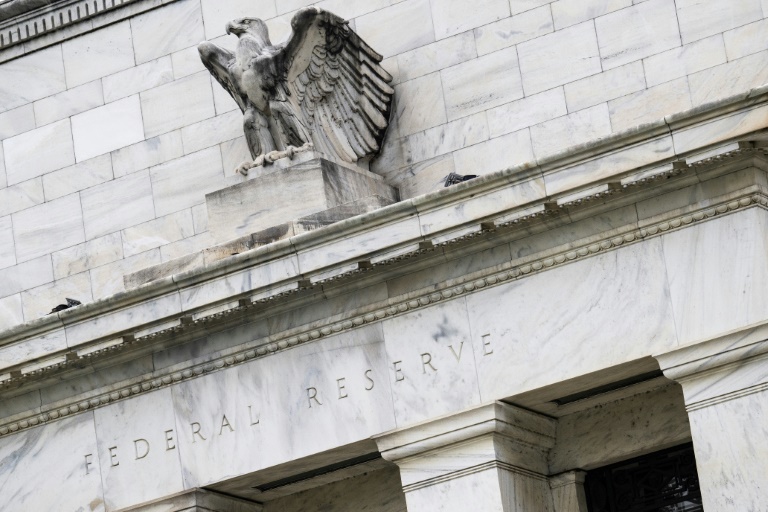
The Federal Reserve announced the most aggressive interest rate increase in nearly 30 years, raising the benchmark borrowing rate by 0.75 percentage points on Wednesday as it battles against surging inflation.

The Fed’s policy-setting Federal Open Market Committee reaffirmed that it remains “strongly committed to returning inflation to its 2 percent objective” and expects to continue to raise the key rate.

Until recently, the central bank seemed set to approve a 0.5-percentage-point increase, but economists say the rapid surge in inflation put the Fed behind the curve, meaning it needed to react strongly to prove its resolve to combat inflation

The super-sized move was the first 75-basis-point increase since November 1994.

Fed Chair Jerome Powell will hold a press conference after the meeting to provide more details on the central bank’s plans, which will be closely watched for signals on how aggressive policymakers will be in coming meetings.

Committee members now see the federal funds rate ending the year at 3.4 percent, up from the 1.9 percent projection in March, according to the median quarterly forecast.

They also expect the Fed’s preferred inflation index to rise to 5.2 percent by the end of the year, with GDP growth slowing to 1.7 percent in 2022 from the previous 2.8 percent forecast.

The FOMC noted that effects of Russia’s invasion of Ukraine are “creating additional upward pressure on inflation and are weighing on global economic activity.”

And ongoing Covid-19 lockdowns in China “are likely to exacerbate supply chain disruptions.”

Kansas City Federal Reserve Bank President Esther George, a noted inflation-hawk, dissented from the committee vote, preferring a smaller, half-point increase.

– Caught off guard –

US central bankers began raising interest rates off zero in March as buoyant demand from American consumers for homes, cars and other goods clashed with transportation and supply chain snarls in parts of the world where Covid-19 remained — and remains — a challenge.

That fueled inflation, which got dramatically worse after Russia invaded Ukraine in late February and Western nations imposed steep sanctions on Moscow, sending food and fuel prices up at a blistering rate.

US gasoline prices have topped $5.00 a gallon for the first time ever and are setting new records daily.

Economists thought March was the peak for consumer price hikes, but the rate spiked again in May, jumping 8.6 percent in the latest 12 months, and wholesale prices surged as well, almost entirely due to soaring costs for energy, especially gasoline.

The Fed was caught off guard with the speed of the price increases, and while policymakers usually prefer to clearly telegraph any policy shift to financial markets, the latest data changed the calculus.

Powell had indicated policymakers were poised to implement another half-point increase in the benchmark borrowing rate this week and a similar move next month, aiming to douse red-hot inflation without tipping the economy into recession and avoid a bout of 1970s-style stagflation.

However, the central bank cannot influence supply issues, and rate hikes only work by cooling demand and slowing the economy — meaning policymakers are walking a fine line between having an impact and doing too much.

And the impact won’t be immediate.

“Monetary policy operates with lags, today’s inflation reflects decisions taken a year ago,” said Adam Posen, head of the Peterson Institute for International Economics and a former central banker.

“Had Fed hiked in 2021Q2/Q3, then inflation now would be different — not least (because) the current global shocks wouldn’t be piling on already high inflation,” he said on Twitter.

US Fed announces biggest interest rate hike since 1994

The Federal Reserve announced the most aggressive interest rate increase in nearly 30 years, raising the benchmark borrowing rate by 0.75 percentage points on Wednesday as it battles against surging inflation.

The Fed’s policy-setting Federal Open Market Committee reaffirmed that it remains “strongly committed to returning inflation to its 2 percent objective” and expects to continue to raise the key rate.

Until recently, the central bank seemed set to approve a 0.5-percentage-point increase, but economists say the rapid surge in inflation put the Fed behind the curve, meaning it needed to react strongly to prove its resolve to combat inflation

The super-sized move was the first 75-basis-point increase since November 1994.

Fed Chair Jerome Powell will hold a press conference after the meeting to provide more details on the central bank’s plans, which will be closely watched for signals on how aggressive policymakers will be in coming meetings.

Committee members now see the federal funds rate ending the year at 3.4 percent, up from the 1.9 percent projection in March, according to the median quarterly forecast.

They also expect the Fed’s preferred inflation index to rise to 5.2 percent by the end of the year, with GDP growth slowing to 1.7 percent in 2022 from the previous 2.8 percent forecast.

The FOMC noted that effects of Russia’s invasion of Ukraine are “creating additional upward pressure on inflation and are weighing on global economic activity.”

And ongoing Covid-19 lockdowns in China “are likely to exacerbate supply chain disruptions.”

Kansas City Federal Reserve Bank President Esther George, a noted inflation-hawk, dissented from the committee vote, preferring a smaller, half-point increase.

– Caught off guard –

US central bankers began raising interest rates off zero in March as buoyant demand from American consumers for homes, cars and other goods clashed with transportation and supply chain snarls in parts of the world where Covid-19 remained — and remains — a challenge.

That fueled inflation, which got dramatically worse after Russia invaded Ukraine in late February and Western nations imposed steep sanctions on Moscow, sending food and fuel prices up at a blistering rate.

US gasoline prices have topped $5.00 a gallon for the first time ever and are setting new records daily.

Economists thought March was the peak for consumer price hikes, but the rate spiked again in May, jumping 8.6 percent in the latest 12 months, and wholesale prices surged as well, almost entirely due to soaring costs for energy, especially gasoline.

The Fed was caught off guard with the speed of the price increases, and while policymakers usually prefer to clearly telegraph any policy shift to financial markets, the latest data changed the calculus.

Powell had indicated policymakers were poised to implement another half-point increase in the benchmark borrowing rate this week and a similar move next month, aiming to douse red-hot inflation without tipping the economy into recession and avoid a bout of 1970s-style stagflation.

However, the central bank cannot influence supply issues, and rate hikes only work by cooling demand and slowing the economy — meaning policymakers are walking a fine line between having an impact and doing too much.

And the impact won’t be immediate.

“Monetary policy operates with lags, today’s inflation reflects decisions taken a year ago,” said Adam Posen, head of the Peterson Institute for International Economics and a former central banker.

“Had Fed hiked in 2021Q2/Q3, then inflation now would be different — not least (because) the current global shocks wouldn’t be piling on already high inflation,” he said on Twitter.

Working 24/7 to save baby manatee orphaned in Colombia

Last September, Tasajerito the manatee was found lost in a Colombian swamp, just three days old and separated from his mother.

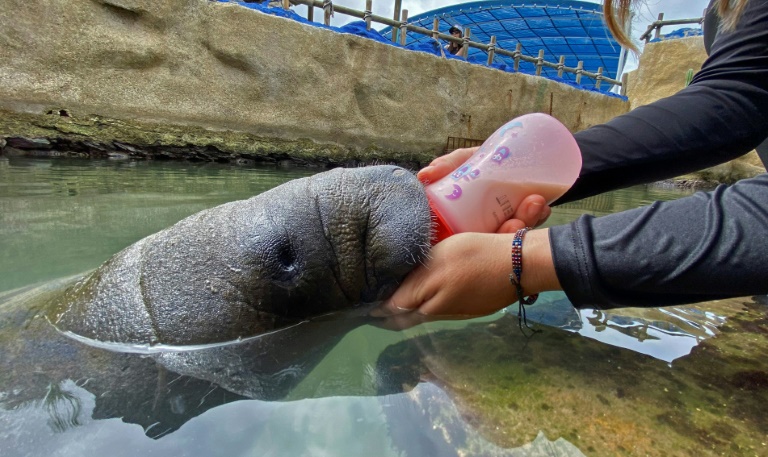
Nine months later, the baby sea cow weighs as much as an adult woman and is bottle fed round the clock by doting aquarium staff.

Though much stronger now, Tasajerito’s prognosis is still touch-and-go, said Angela Davila, a veterinarian at the Rodadero Aquarium in Santa Marta in northern Colombia, near where he was found.

“Tasajerito is… still considered critical,” Davila told AFP. “He appears strong, he appears lively and to be feeding well, but things can change in a heartbeat.”

Rescued by fishermen, Tasajerito was brought to the aquarium with little hope of survival. 

A search for his mother proved fruitless.

Now safely ensconced in a dedicated pool at the aquarium, he has clung to life — increasing his consumption of a special vitamin-boosted milk formula six-fold in a few months.

Today, Tasajerito measures over 1.5 meters (4.9 feet) in length and weighs 53 kilograms (117 pounds).

Yet, he is still “a newborn,” said Rodadero marine biologist Julieth Prieto, who noted that manatees are raised by their mothers for five years and suckle for half that time.

“This makes the rehabilitation process… a challenge because we have to meet those needs that the mother usually provides,” she said.

– ‘Vulnerable’ species –

Tasajerito’s human foster parents are also teaching him to float, dive and swim.

To be released into the wild one day — hopefully in about two years’ time — he will have to grow to between three and four meters in length and weigh some 600 kg.

The American Manatee species (Trichechus manatus), to which Tasajerito belongs, is listed as “vulnerable” to extinction on the International Union for Conservation of Nature (IUCN) Red List, its population of some 10,000 individuals on the decline.

Threats include residential and commercial development, aquaculture and shipping lanes, with watercraft strikes responsible for a large number of deaths, according to the IUCN.

In Colombia, hunting by humans is a major threat, as are hippos — a foreign species introduced by drug trafficker Pablo Escobar, who imported some as pets in the 1980s. 

The hippos now number more than 100, competing for food and space with manatees.

The manatee is one of the world’s largest aquatic mammals, and according to Prieto, fulfils “irreplaceable ecological functions” in its population area that stretches from Brazil’s east coast all the way to the southeastern United States.

Seasonal migrants, they help keep rivers and water channels clear, devouring as much as 50 kg of aquatic plants each every day. 

“If this species were to become extinct, we would have to dredge to restore water flow between rivers, swamps and the sea,” Prieto said.

Deadly heatwaves threaten economies too

More frequent and intense heatwaves are the most deadly form of extreme weather made worse by global warming, with death tolls sometimes in the thousands, but they can also have devastating economic impacts too, experts say. 

The prolonged and unseasonable scorchers gripping the central United States and rolling northward across western Europe, sending the thermometer above 40 degrees Celsius (104 degrees Fahrenheit), are likely to cause both.   

Deadly and costly

Very high temperatures caused nearly 10 percent of the two million deaths attributed to extreme weather events from 1970 to 2019, according to the World Meteorological Organization. 

Virtually all that heat-related mortality, moreover, has been since 2000, especially the last decade: from 2010 to 2019 scorching heat was responsible for half of 185,000 extreme weather deaths registered.

In Europe, heatwaves accounted for about 90 percent of weather-related mortality between 1980 and 2022, the European Environment Agency (EEA) has reported. 

Heatwaves rack up economic costs as well, but they are harder to quantify than damage from a storm or flood, and more difficult to insure. 

But extended bouts of great heat can result in more hospital visits, a sharp loss of productivity in construction and agriculture, reduced agricultural yields, and even direct damage to infrastructure. Excess mortality has an economic cost too.

The EAA estimates that heatwaves in 32 European countries between 1980 and 2000 cost 27 to 70 billion euros. The damages over the last 20 years — which included the deadly heatwave of 2003, with 30,000 excess deaths — would almost certainly be higher.

Premature death

The national public health agency in France, which will be blanketed by extreme conditions over the coming days, has called heatwaves “a mostly invisible and underestimated social burden.”  

In France alone, heatwaves from 2015 to 2020 cost 22 to 37 billion euros due to health expenses, loss of well-being and especially “intangible costs stemming from premature deaths”.  

Reduced productivity

The heatwaves of 2003, 2010, 2015 and 2018 in Europe caused damages totalling 0.3 to 0.5 percent of GDP across the continent, and up to two percent of GDP in southern regions, according to a peer-reviewed study in Nature. 

This level of impact could be multiplied by five by 2060 compared to a 1981-2010 baseline without a sharp reduction in greenhouse gas emissions and measures to adapt to high temperatures, the study warned.

At sustained temperatures of around 33C or 34C, the average worker “loses 50 percent of his or her work capacity”, according to the International Labor Organization (ILO).

The ICO estimates by 2030 heatwaves could reduce the total number of hours worked globally by more than two percent — equivalent to 80 million fulltime jobs — at a cost of 2.4 trillion dollars, nearly 10 times the figure for 1995.

“Climate change-related heat stress will reduce outdoor physical work capacity on a global scale,” The UN’s Intergovernmental Panel on Climate Change (IPCC) said in its most recent synthesis report, noting that in some tropical regions outdoor work may become impossible by the end of the century for 200 to 250 days each year.

Drought and agriculture

Both heatwaves and drought are a major threat to agriculture, and thus food security.

Long-term drought is agriculture’s worst enemy when it comes to extreme weather, but heatwaves can provoke major damage as well.

In 2019, a heatwave caused a nine percent drop in drop in maize yields across France, and a 10 percent decline in wheat, according to the French agricultural ministry.

A 2012 scorcher in the United States led to a 13 percent drop in maize production, and a sharp jump in global prices.

Heatwaves also have a negative impact on livestock production and on milk production, according to the IPCC.

Close Bitnami banner
Bitnami