AFP

Stocks mostly fall as markets await aggressive Fed action

Global equity markets mostly fell on Tuesday as markets awaited a key Federal Reserve decision amid rising expectations for an even tougher rate hike than previously telegraphed.

Panic has swept through trading floors since data on Friday showed US consumer prices rising at their fastest pace in decades on surging energy and food costs caused by the Ukraine war and supply chain snarls.

Investors are now bracing for the Fed’s interest rate decision on Wednesday as the central bank struggles to walk a fine line between reining in inflation and trying to keep the economy on track.

“While there is no doubt that inflation is a considerable challenge for the US at this point, slamming on the brakes too hard risks pushing the economy off its track,” said Tai Hui, chief market strategist for Asia at JP Morgan Asset Management. 

The inflation reading has raised expectations the US central bank could raise rates by a hefty 75 basis points, higher than its previous 0.5-percentage-point hike — something futures markets now consider likely.

“It looks like it’s going to be a 75 basis point hike,” said Quincy Krosby, chief equity strategist of LPL Financial. “We haven’t seen any sign that the Fed wanted to clarify this expectation. In fact, if the Fed stayed with a 50 basis point hike, the market could be disappointed.”

Krosby said the Fed’s sharp increase in lending rates will dampen economic growth but the central bank has little choice at this point.

“The wake-up call was the CPI on Friday and the preliminary consumer confidence,” she said. “The Fed got the message. It needs to maintain its credibility.”

Recession fears sent Wall Street plunging on Monday, with the broad-based S&P 500 stocks index sinking into a bear market, with a drop of more than 20 percent from its recent peak.

After opening higher on Tuesday, US stocks weakened thereafter. The Dow and S&P 500 finished lower, while the Nasdaq mustered modest gains. 

London, Paris, Frankfurt and most Asian equities closed in the red.

Cryptocurrencies have mirrored the falls in the stock markets, with bitcoin tumbling to an 18-month low under $23,000.

Digital currency exchange Coinbase said Tuesday it will lay off 18 percent of staff, citing tight economic conditions and an overly rapid expansion.

– Key figures at around 2030 GMT –

New York – Dow: DOWN 0.5 percent at 30,364.83 (close)

New York – S&P 500: DOWN 0.4 percent at 3,735,48 (close)

New York – Nasdaq: UP 0.2 percent at 10,828.35 (close)

Frankfurt – DAX: DOWN 0.9 percent at 13,304.39 (close)

Paris – CAC 40: DOWN 1.2 percent at 5,949.84 (close)

London – FTSE 100: DOWN 0.3 percent at 7,187.46 (close)

EURO STOXX 50: DOWN 0.8 percent at 3,475.18 (close) 

Tokyo – Nikkei 225: DOWN 1.3 percent at 26,629.86 (close)

Hong Kong – Hang Seng Index: FLAT at 21,067.99 (close)

Shanghai – Composite: UP 1.0 percent at 3,288.91 (close)

Euro/dollar: UP at $1.0420 from $1.0409 late Monday

Pound/dollar: DOWN at $1.1993 from $1.2134

Euro/pound: UP at 86.84 pence from 85.79 pence

Dollar/yen: UP at 135.33 yen from 134.42 yen 

Brent North Sea crude: DOWN 0.9 percent at $121.97 per barrel

West Texas Intermediate: DOWN 2.0 percent at $118.93 per barrel

burs-jmb
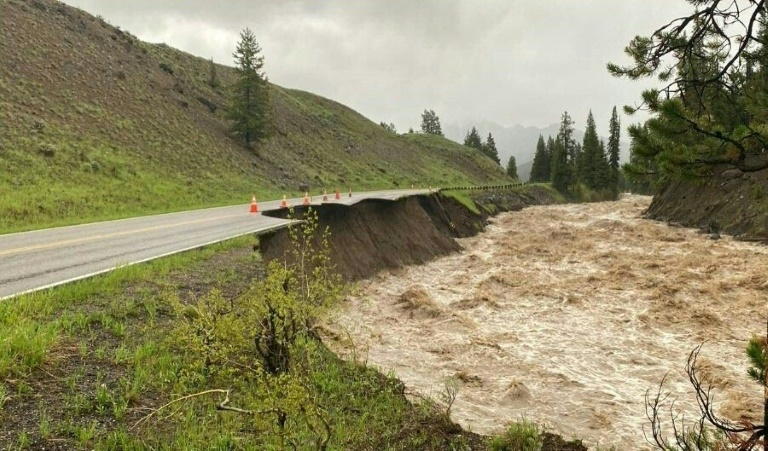
Floods, fires, heat waves: US struggles with climate catastrophes

Raging floods, devastating fires, powerful thunderstorms and a dangerous heat wave affecting a third of the population: the United States was being walloped Tuesday by climate-related catastrophes.

A series of slow motion disasters is gripping the country as it enters summer, with warnings of misery for months to come in some areas.

Around 120 million people were under some sort of advisory as a heat wave scorched the Upper Midwest and the Southeast.

“A dome of high pressure is expected to generate well-above-normal to record-breaking temperatures across the region both today and tomorrow,” with heat indices “well into the triple digits in many locations,” the National Weather Service (NWS) said.

Parts of Indiana, Kentucky and Ohio were warned to expect the mercury to reach 109 degrees Fahrenheit (43 Celsius).

NWS meteorologist Alex Lamers said the high pressure dome was sparking extreme events around its periphery.

“A lot of times you get a pretty big heatwave and if you look around the edges of that you’ll see thunderstorms and tornadoes, flash flooding, extreme rainfall,” he told AFP.

– Storms –

The heat dome’s northern edge, where high temperatures collided with colder air, saw some violent storms Monday.

Hundreds of thousands of people were without power in the Midwest after thunderstorms tore through the area.

That cold front was expected to bring more unsettled weather, with hail and damaging winds forecast.

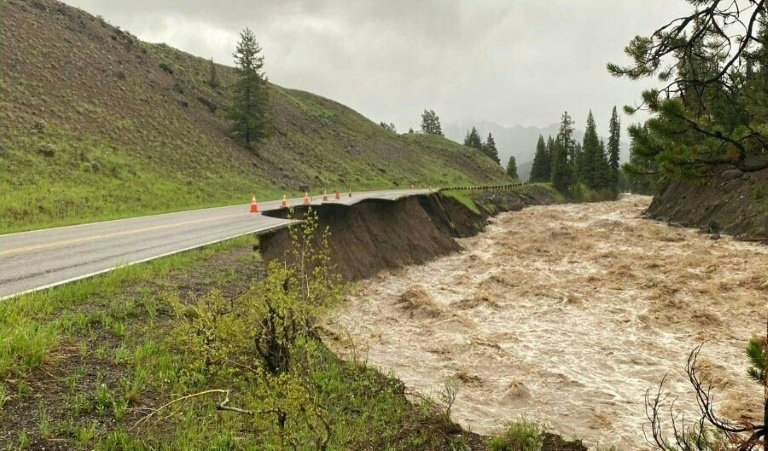
Further west, dramatic photographs and videos published by the National Park Service showed the devastation wreaked by flooding in Yellowstone, the country’s oldest national park.

The 3,400 square-mile (8,900 square-kilometer) park in Wyoming, which is home to the famous Old Faithful geyser, was shuttered on Monday after a flooded river swept away roads and cut off a nearby community.

Rangers warned of “extremely hazardous conditions” and told anyone still in the park to get out.

“Flood levels measured on the Yellowstone River are beyond record levels,” the NPS said on its website.

“Preliminary assessments show multiple sections of roads throughout the park have been either washed out or covered in mud or rocks, and multiple bridges may be affected.”

The small community of Gardiner, which sits just outside the park boundary in the state of Montana, was cut off, with water and power out to several properties, the NPS said.

– Furnace –

There were also warnings of excessive heat for parts of California and Arizona, which were blasted by furnace-like conditions at the weekend.

The soaring temperatures, coupled with a lengthy drought are worsening seasonal wildfires.

Two huge blazes, each of more than 300,000 acres (120,000 hectares), continued to rage Tuesday in New Mexico.

Firefighters battling the Black Fire and the Hermits Peak fire are working to contain flames that are fuelled by exceedingly dry undergrowth.

New Mexico and much of the Southwest has been gripped by a punishing drought that has left rainfall levels below normal for years.

Dozens of other fires have sprung up throughout the region.

Wildfires are an expected part of the natural cycle, which help to remove dead plants and eliminate disease while promoting new growth.

But their size and ferocity has increased in recent years, firefighters say, as effects of the crippling drought make themselves felt.

“Dry conditions and gusty winds are expected to produce another day of elevated to critical fire weather conditions across portions of the Southwest into the central and southern High Plains,” NWS said on its website.

Fire chiefs are warning that 2022 looks set to be a terrible year for wildfires.

“Given the fuel conditions, the fire conditions that we’re here talking about, I foresee a very tough four, five, six months in front of us,” Orange County, California Fire Chief Brian Fennessy said last week.

Scientists say global warming, which is being driven chiefly by humanity’s unchecked burning of fossil fuels, is making extreme weather events more likely.

Lamer, of the National Weather Service, said while it was difficult to conclude the changing climate was behind an individual episode, global warming was an underlying factor.

“Any weather event that you’re looking, there’s some combination of bad luck, the atmosphere has to be set up in a certain way,” he said.

“But they all happen in the context of climate, and basically climate change loads the dice and makes more extreme outcomes more likely.”

Floods, fires, heat waves: US struggles with climate catastrophes

Raging floods, devastating fires, powerful thunderstorms and a dangerous heat wave affecting a third of the population: the United States was being walloped Tuesday by climate-related catastrophes.

A series of slow motion disasters is gripping the country as it enters summer, with warnings of misery for months to come in some areas.

Around 120 million people were under some sort of advisory as a heat wave scorched the Upper Midwest and the Southeast.

“A dome of high pressure is expected to generate well-above-normal to record-breaking temperatures across the region both today and tomorrow,” with heat indices “well into the triple digits in many locations,” the National Weather Service (NWS) said.

Parts of Indiana, Kentucky and Ohio were warned to expect the mercury to reach 109 degrees Fahrenheit (43 Celsius).

NWS meteorologist Alex Lamers said the high pressure dome was sparking extreme events around its periphery.

“A lot of times you get a pretty big heatwave and if you look around the edges of that you’ll see thunderstorms and tornadoes, flash flooding, extreme rainfall,” he told AFP.

– Storms –

The heat dome’s northern edge, where high temperatures collided with colder air, saw some violent storms Monday.

Hundreds of thousands of people were without power in the Midwest after thunderstorms tore through the area.

That cold front was expected to bring more unsettled weather, with hail and damaging winds forecast.

Further west, dramatic photographs and videos published by the National Park Service showed the devastation wreaked by flooding in Yellowstone, the country’s oldest national park.

The 3,400 square-mile (8,900 square-kilometer) park in Wyoming, which is home to the famous Old Faithful geyser, was shuttered on Monday after a flooded river swept away roads and cut off a nearby community.

Rangers warned of “extremely hazardous conditions” and told anyone still in the park to get out.

“Flood levels measured on the Yellowstone River are beyond record levels,” the NPS said on its website.

“Preliminary assessments show multiple sections of roads throughout the park have been either washed out or covered in mud or rocks, and multiple bridges may be affected.”

The small community of Gardiner, which sits just outside the park boundary in the state of Montana, was cut off, with water and power out to several properties, the NPS said.

– Furnace –

There were also warnings of excessive heat for parts of California and Arizona, which were blasted by furnace-like conditions at the weekend.

The soaring temperatures, coupled with a lengthy drought are worsening seasonal wildfires.

Two huge blazes, each of more than 300,000 acres (120,000 hectares), continued to rage Tuesday in New Mexico.

Firefighters battling the Black Fire and the Hermits Peak fire are working to contain flames that are fuelled by exceedingly dry undergrowth.

New Mexico and much of the Southwest has been gripped by a punishing drought that has left rainfall levels below normal for years.

Dozens of other fires have sprung up throughout the region.

Wildfires are an expected part of the natural cycle, which help to remove dead plants and eliminate disease while promoting new growth.

But their size and ferocity has increased in recent years, firefighters say, as effects of the crippling drought make themselves felt.

“Dry conditions and gusty winds are expected to produce another day of elevated to critical fire weather conditions across portions of the Southwest into the central and southern High Plains,” NWS said on its website.

Fire chiefs are warning that 2022 looks set to be a terrible year for wildfires.

“Given the fuel conditions, the fire conditions that we’re here talking about, I foresee a very tough four, five, six months in front of us,” Orange County, California Fire Chief Brian Fennessy said last week.

Scientists say global warming, which is being driven chiefly by humanity’s unchecked burning of fossil fuels, is making extreme weather events more likely.

Lamer, of the National Weather Service, said while it was difficult to conclude the changing climate was behind an individual episode, global warming was an underlying factor.

“Any weather event that you’re looking, there’s some combination of bad luck, the atmosphere has to be set up in a certain way,” he said.

“But they all happen in the context of climate, and basically climate change loads the dice and makes more extreme outcomes more likely.”

Biden signals US-Saudi thaw with prince meeting on Mideast trip

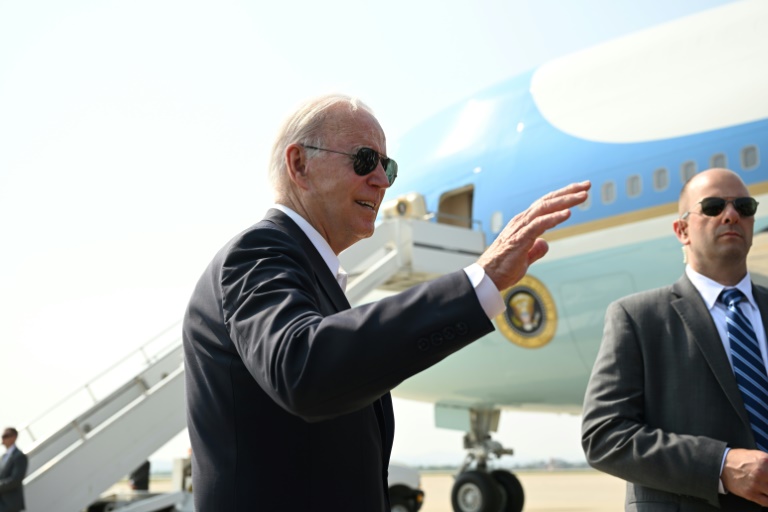
US President Joe Biden will meet with Saudi Arabian Crown Prince Mohammed bin Salman next month, abandoning efforts to ostracize the kingdom’s de facto leader over the horrific murder of a dissident.

The White House ended weeks of speculation Tuesday, announcing that Biden will travel to Israel, the Palestinian West Bank, and Saudi Arabia from July 13-16 — his first trip to the Middle East since taking office.

In addition to meetings with individual leaders in all three places, he will attend a regional Gulf Cooperation Council summit in Saudi Arabia.

Biden is expected to press for increased Saudi oil production, in the hope of taming spiraling fuel costs and inflation at home ahead of midterm congressional elections in which his Democratic party risks a drubbing.

But his meeting with the crown prince, often referred to as MBS, will mark a controversial shift.

As a presidential candidate, Biden said the 2018 murder and dismemberment of Jamal Khashoggi — a Saudi-born US resident known for writing critical articles about the kingdom’s rulers for The Washington Post — had made the country a “pariah.”

US intelligence findings released by the Biden administration identified MBS as the mastermind of the operation.

The White House sought to play down the encounter, not specifically mentioning MBS in its statement.

Pressed by reporters, White House Press Secretary Karine Jean-Pierre said “the president is going to see over a dozen leaders on this trip… We can expect the president to see the crown prince as well.”

Saudi Arabia’s statement was more direct, noting simply that Biden would meet with King Salman and then the young heir to the throne.

– Oil and inflation –

US inflation is at 8.6 percent, the highest rate in 40 years, with high fuel costs largely to blame. Political fallout has been swift as voters vent over Biden’s inability to change global oil markets.

John Kirby, a White House foreign policy spokesman, told MSNBC on Tuesday that oil production “absolutely… is going to be part” of Biden’s discussions in Saudi Arabia.

But while the White House also confirmed that “energy security” will be a topic, officials stressed that the whole trip has broader aims.

Jean-Pierre emphasized that “this visit to the Middle East region culminates months of diplomacy,” as opposed to being driven by recent domestic political concerns.

Biden’s multiple leader-level engagements during the brief yet intense journey will demonstrate “the return of American leadership” to the region, a senior US official told reporters.

– Re-establishing Palestinian links –

The tour starts with meeting Prime Minister Naftali Bennett in Israel, with emphasis on the lavish US support for Israel’s armed forces. That includes the Iron Dome anti-rocket system at a time of tension over ongoing failure to resurrect an international pact curtailing Iran’s nuclear development.

“While in Israel, the president will likely visit an area where these defensive systems are utilized, as well as discuss new innovations between our countries that use  laser technologies to defeat missiles and other airborne threats,” the official said, speaking on condition of anonymity.

“The president will reaffirm the ironclad commitment to Israel’s security.”

Biden will meet Palestinian president Mahmud Abbas, likely in Bethlehem, the US official said.

Biden will stress “his lifelong commitment to a two state solution” for Palestinians and Israelis and restore US ties with Palestinians that were “nearly severed” under his predecessor Donald Trump.

– History and controversy –

Biden’s flight from Israel to Jeddah will be the first by a US president from Israel to an Arab state that does not recognize the country. In 2017, Trump made the journey in reverse.

Once there, Biden will attend the Gulf Cooperation Council meeting with leaders from Bahrain, Kuwait, Oman, Qatar, Saudi Arabia and the United Arab Emirates, as well as being joined by the leaders of Egypt, Iraq and Jordan, the US official said.

A priority for Biden will be maintaining the recently extended truce in Yemen, as well as deterring Iran, “advancing human rights, and ensuring global energy and food security,” the official said.

Biden will also join a virtual summit of the so-called I2-U2 diplomatic group of India, Israel, the UAE and the United States, with focus on “the food security crisis” sparked by Russia’s invasion of major agricultural exporter Ukraine.

The most closely watched meeting will be between Biden and MBS.

The senior official said that despite the Khashoggi murder, the US-Saudi relationship goes back eight decades and while there had been a “recalibration,” there was no desire for “rupture.”

However, one Democratic senator, Ron Wyden, said in a statement that Biden “cannot value Saudi oil more highly than the blood” of MBS’ victims. 

“Embracing MBS only makes our people more vulnerable to the whims of tyrants,” Wyden said.

India all but sinks WTO sustainable fishing deal

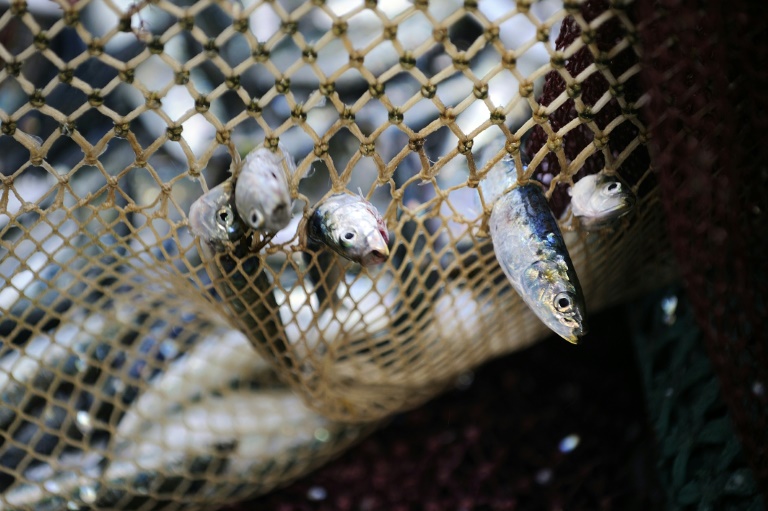
India all but sunk the WTO’s bid to net a long-sought deal on curbing harmful fishing subsidies when it insisted Tuesday it would only sign up if it is given a 25-year exemption from the restrictions.

Negotiations towards banning subsidies that encourage overfishing and threaten the sustainability of the planet’s fish stocks have been going on at the World Trade Organization for more than two decades.

The global trade body only takes decisions by consensus and it was thought that members were tantalisingly close to sealing a deal at their four-day conference of trade ministers which winds up on Wednesday.

But India insisted on carving out a quarter of a century in which to adapt to the proposals on subsidies.

“The transition period of 25 years sought by India is not intended as a permanent carve-out. It is a must-have for us and for other similarly placed non-distant water fishing countries,” Commerce and Industry Minister Piyush Goyal said in a statement.

“We feel that without agreeing to the 25-year transition period, it will be impossible for us to finalise the negotiations, as policy space is essential for the long-term sustainable growth and prosperity of our low-income fishermen.”

The conference mood darkened earlier Tuesday with several diplomats pointing the finger at Indian intransigence on not just fisheries but on every topic being thrashed out at the WTO’s lakeside headquarters.

The WTO conference is trying to strike deals on e-commerce, agriculture, food security, Covid-19 vaccine patents and WTO reform.

“India is being obstructive across the piece, whether it be on e-commerce, fisheries, agriculture,” said one Geneva-based diplomat.

“In no negotiation are they playing a constructive part.”

Goyal said the concerns of a small number of fishermen were prevailing over the lives of nine million fishermen in India.

“This is completely unacceptable! And that is the reason India is opposed to the current text,” he said.

Fishing subsidies is the flagship deal that the WTO’s leader Ngozi Okonjo-Iweala was hoping to get passed at the global trade body’s first ministerial conference in nearly five years, being held in Geneva this week.

The Nigerian former finance minister, who took office in March 2021, has staked her leadership on banging heads together and getting deals over the line, breathing new life into the organisation by proving it has a role to play in tackling big global challenges.

On fisheries, special treatment for the poorest countries is widely accepted, but some self-identified developing countries are demanding exemption from subsidy constraints, including large fishing nations like India — and the idea has met resistance from others.

EU trade commissioner Valdis Dombrovskis earlier urged the assembled ministers to embrace compromise amid the hectic negotiations.

On fisheries, “there are countries taking very strong positions, very far-reaching demands, which in a sense weakens the purpose of this agreement which is to ensure the sustainability of fish stocks and ensure that the way fishing is subsidised does not contribute to unsustainable fishing practices”, he told reporters.

Okonjo-Iweala, who turned 68 on Monday, hoped that a couple of the topics being negotiated in Geneva would reach a conclusion.

“My own dream for my birthday is to get a successful ministerial,” she said.

“One or two packages passed… I think that would do.”

Remi Parmentier, who heads the Varda Group which advises on environmental issues, said on Twitter: “If India is so unhappy at the World Trade Organization, maybe they should just suspend their membership, and let the rest of the members get on.” 

India all but sinks WTO sustainable fishing deal

India all but sunk the WTO’s bid to net a long-sought deal on curbing harmful fishing subsidies when it insisted Tuesday it would only sign up if it is given a 25-year exemption from the restrictions.

Negotiations towards banning subsidies that encourage overfishing and threaten the sustainability of the planet’s fish stocks have been going on at the World Trade Organization for more than two decades.

The global trade body only takes decisions by consensus and it was thought that members were tantalisingly close to sealing a deal at their four-day conference of trade ministers which winds up on Wednesday.

But India insisted on carving out a quarter of a century in which to adapt to the proposals on subsidies.

“The transition period of 25 years sought by India is not intended as a permanent carve-out. It is a must-have for us and for other similarly placed non-distant water fishing countries,” Commerce and Industry Minister Piyush Goyal said in a statement.

“We feel that without agreeing to the 25-year transition period, it will be impossible for us to finalise the negotiations, as policy space is essential for the long-term sustainable growth and prosperity of our low-income fishermen.”

The conference mood darkened earlier Tuesday with several diplomats pointing the finger at Indian intransigence on not just fisheries but on every topic being thrashed out at the WTO’s lakeside headquarters.

The WTO conference is trying to strike deals on e-commerce, agriculture, food security, Covid-19 vaccine patents and WTO reform.

“India is being obstructive across the piece, whether it be on e-commerce, fisheries, agriculture,” said one Geneva-based diplomat.

“In no negotiation are they playing a constructive part.”

Goyal said the concerns of a small number of fishermen were prevailing over the lives of nine million fishermen in India.

“This is completely unacceptable! And that is the reason India is opposed to the current text,” he said.

Fishing subsidies is the flagship deal that the WTO’s leader Ngozi Okonjo-Iweala was hoping to get passed at the global trade body’s first ministerial conference in nearly five years, being held in Geneva this week.

The Nigerian former finance minister, who took office in March 2021, has staked her leadership on banging heads together and getting deals over the line, breathing new life into the organisation by proving it has a role to play in tackling big global challenges.

On fisheries, special treatment for the poorest countries is widely accepted, but some self-identified developing countries are demanding exemption from subsidy constraints, including large fishing nations like India — and the idea has met resistance from others.

EU trade commissioner Valdis Dombrovskis earlier urged the assembled ministers to embrace compromise amid the hectic negotiations.

On fisheries, “there are countries taking very strong positions, very far-reaching demands, which in a sense weakens the purpose of this agreement which is to ensure the sustainability of fish stocks and ensure that the way fishing is subsidised does not contribute to unsustainable fishing practices”, he told reporters.

Okonjo-Iweala, who turned 68 on Monday, hoped that a couple of the topics being negotiated in Geneva would reach a conclusion.

“My own dream for my birthday is to get a successful ministerial,” she said.

“One or two packages passed… I think that would do.”

Remi Parmentier, who heads the Varda Group which advises on environmental issues, said on Twitter: “If India is so unhappy at the World Trade Organization, maybe they should just suspend their membership, and let the rest of the members get on.” 

Russia plans Severodonetsk plant evacuation as it bids to encircle city

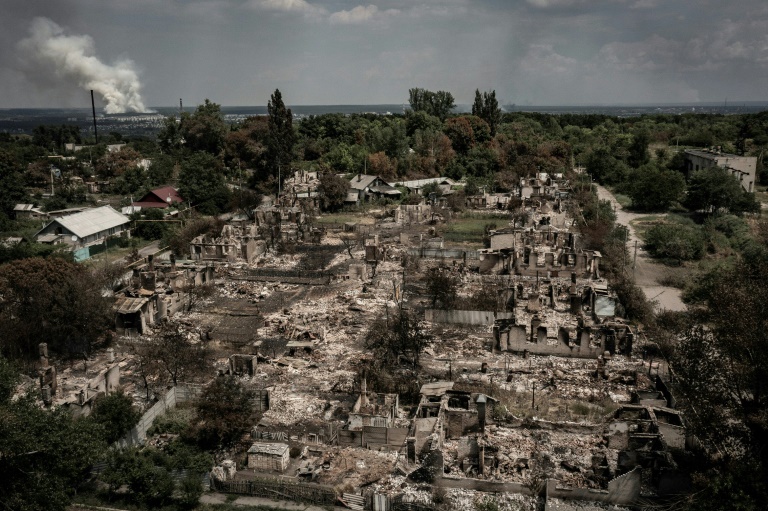
Russia said Tuesday it would establish a humanitarian corridor to evacuate civilians from a chemical plant in Severodonetsk, as the two sides battled for control of the key city in Ukraine’s eastern Donbas region.

Russian forces have stepped up efforts to cut off the Ukrainian troops still in the industrial hub, destroying all three bridges which connect it across a river to Lysychansk.

Ukrainian President Volodymyr Zelensky meanwhile once again appealed for heavy weapons from the West, criticising the “restrained behaviour” of some European leaders.

Moscow has for weeks targeted the twin cities as the last areas in the Lugansk region of the Donbas still under Ukrainian control.

Communication with the city was “complicated” with the situation on the ground changing every hour, the head of Severodonetsk’s administration, Oleksandr Stryuk, told Ukrainian television.

Around 500 civilians were taking shelter under “heavy fire” in the Azot chemical plant in Severodonetsk, Stryuk said. 

The Russian defence ministry said it was “ready to organise a humanitarian operation” on Wednesday to evacuate from the plant to the separatist-controlled part of the Lugansk region.

– ‘Surrender or die’ –

Regional governor Sergiy Gaiday said Monday Ukraine’s forces had been pushed back from Severodonetsk’s centre with the Russians controlling 70 to 80 percent of the city in their attempt to “encircle it”.

Capturing Severodonetsk would open the road to Sloviansk and another major city, Kramatorsk, in Moscow’s push to conquer Donbas, a mainly Russian-speaking region partly held by pro-Kremlin separatists since 2014.

Zelensky, in comments to Danish journalists Tuesday, insisted that the war could only end once Ukrainians were the only ones left on its territory.

How long that took depended “very much” on international support, and “the personalities of the leaders of European states”.

He regretted what he called, “the restrained behaviour of some leaders” which, he said, had “slowed down arms supplies very much”.

Zelensky has repeatedly urged the West to deliver heavy weapons to Ukraine as quickly as possible.

Deputy Defence Minister Anna Malyar on Tuesday said Kyiv had only received 10 percent of the arms it had requested from the West.

– ‘Not safe anywhere’ –

From an elevated position in Lysychansk, an AFP team saw black smoke rising from the Azot factory in Severodonetsk and another area in the city.

The Ukrainian military is using the high ground to exchange fire with Russian forces fighting for control of Severodonetsk, just across the water.

Lysychansk pensioner Valentina sat on the porch of her ground floor apartment, where she lives alone, her two walking sticks to hand.

“I’m having a tough time,” said the 83-year-old former farm worker.

“It’s scary, very scary. Why can’t they agree at last, for God’s sake, just shake hands?”

Along the road from Lysychansk to Kramatorsk, Ukrainian forces were transporting more weapons systems to the front, while specialist vehicles carried tanks for repair.

In the town of Novodruzhesk, close to Lysychansk, there was still a smell of burning and smoke from a group of houses that had been destroyed by fire from shelling at the weekend, with just chimneys left.

“It’s not safe anywhere, it just depends on the time of day, that’s all,” said a soldier standing at the local fire station with a skull logo on his sleeve. 

“There are tons of people (still) here,” he added.

Further away in Sloviansk, Nataliya, 41, a now unemployed cleaner said she was trying to decide whether to evacuate. 

“People will leave again if they start bombing the town heavily,” she told AFP. 

“If it’s like Mariupol, they’ll give us buses. We’ll leave if the Russians enter Sloviansk.”

– ‘Positive signal’ –

The European Union needs to “give a positive signal” to Ukraine and be “open” to granting it candidate status, France’s Europe minister, Clement Beaune, said Tuesday. 

Ukraine has applied to become a member of the bloc, with the European Commission due to give its recommendation in the coming days. But some member states are sceptical about potentially fast-tracking Ukraine’s accession.

The process would “take time”, Beaune said, adding that the first priority was to “stop the war”.

“Ukraine is fighting and defending our shared European values, it must at least be a candidate for EU,” President Zelensky said Tuesday.

Russian energy giant Gazprom said Tuesday it would reduce gas deliveries to the EU via the Nord Stream pipeline by 40 percent, due to the delayed return of compressor units from German company Siemens.

Several European countries, including Germany, where the underwater pipeline makes land, are highly reliant on supplies of Russian gas for their energy needs.

The Kremlin meanwhile said it had not received a request from London to intervene in the case of two Britons sentenced to death by pro-Moscow separatist authorities in eastern Ukraine.

Aiden Aslin and Shaun Pinner, along with Moroccan Brahim Saadun, were convicted of acting as mercenaries for Ukraine by the self-proclaimed Donetsk People’s Republic.

Russia also announced it was blacklisting 49 UK citizens, including defence officials and prominent journalists from the BBC, The Financial Times and The Guardian.

burs-sea/imm/jj

No, Happy the elephant isn't a person, New York's top court says

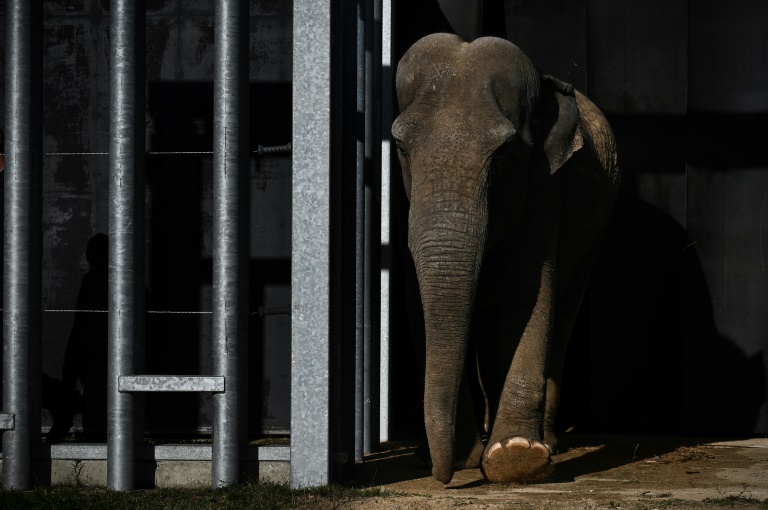
As intelligent as she is, Happy the elephant doesn’t meet the definition of a “person” and is therefore not being illegally confined in the Bronx Zoo, New York’s top court ruled Tuesday in a closely watched case for animal rights.

The state’s Court of Appeals 5-2 verdict against the habeas corpus proceeding filed by the Nonhuman Rights Project (NRP) means Happy will remain in her one-acre lot, where she has lived for 45 years, rather than moving to a much larger sanctuary.

NRP had contended Asian elephant, who was born in the wild in 1971, is an “extraordinarily cognitively complex and autonomous nonhuman” who should be “recognized as a legal person with the right to bodily liberty protected by the common law.”

It was the latest legal defeat for the organization, which has previously made similar petitions on behalf of other elephants as well as chimpanzees throughout the United States.

The majority decision, written by Chief Justice Janet DiFiore, acknowledged “no one disputes that elephants are intelligent beings deserving of proper care and compassion.” 

But she affirmed the decisions of lower courts that previously heard the case, writing: “Because the writ of habeas corpus is intended to protect the liberty right of human beings to be free of unlawful confinement, it has no applicability to Happy, a nonhuman animal who is not a ‘person’ subjected to illegal detention.”

“Granting legal personhood to a nonhuman animal in such a manner would have significant implications for the interactions of humans and animals in all facets of life, including risking the disruption of property rights, the agricultural industry (among others), and medical research efforts,” DiFiore added.

If such relief were granted to elephants, “What of dolphins — or dogs? What about cows or pigs or chickens –species routinely confined in conditions far more restrictive than the elephant enclosure at the Bronx Zoo?”

Reacting to the news, NRP praised the two dissenting judges, and said their views, as well as the fact that the case was heard in New York’s highest court, represented hope for the cause in the future.

Justice Rowan Wilson wrote: “When the majority answers, ‘No, animals cannot have rights,’ I worry for that animal, but I worry even more greatly about how that answer denies and denigrates the human capacity for understanding, empathy and compassion.”

Wilson recalled the case of Ota Benga, a member of the Mbuti pygmy people who was kidnapped from Africa and placed on exhibit at the Bronx Zoo in 1906, attracting a quarter of a million visitors.

Wilson said that while Benga was a human being and Happy was not, “The crucial point from both Mr Benga’s and Happy’s confinement… is that both suffered greatly from confinement that, though not in violation of any statutory law, produced little or no social benefit.”

DiFiore retorted that was “an odious comparison with concerning implications,” adding, “We are unpersuaded.”

She concluded with the observation that enormous interest generated by the case was “a testament to the complicated and ever-evolving relationship between human beings and other animals,” but stressed that ongoing debate should be settled by legislation, not the courts.

Biden blames Republicans, Russia for soaring inflation

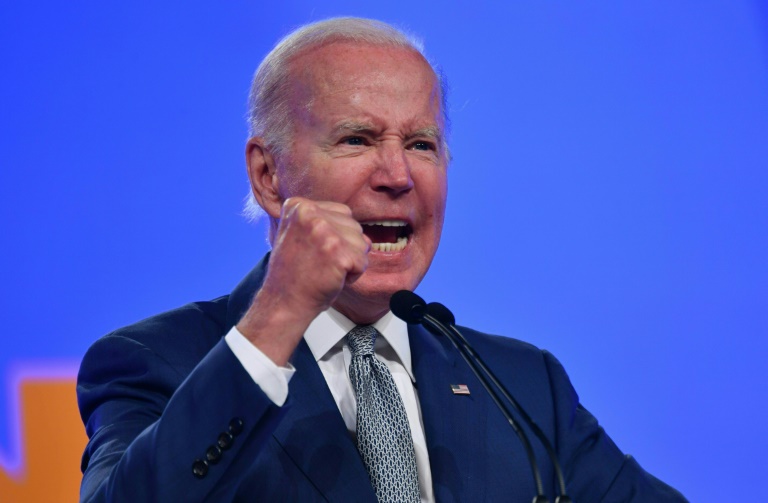
President Joe Biden on Tuesday blamed Republicans and the Russian invasion of Ukraine for soaring US inflation, in a bid to deflect voter anger over his inability to keep prices down.

Speaking to trade unions in Philadelphia on the eve of the Federal Reserve’s likely decision to raise interest rates again, Biden said inflation is “sapping the strength of a lot of families.”

Biden said he feels Americans’ pain, having grown up in a family where news that the price of gasoline had gone up “was a conversation at the dinner table. It mattered.”

But he rejected arguments that his government’s massive spending to stimulate the economy at the tail end of the Covid-19 pandemic was to blame, instead citing shockwaves from Ukraine and Republican obstruction.

“Under my plan for the economy we made extraordinary progress and put America in a position to tackle a worldwide problem,” Biden said of inflationary pressure on economies around the globe.

He said the bloody attack by oil-rich Russia on Ukraine, a major wheat supplier, had sparked fuel and food price increases. 

But he also said “Republicans in Congress are doing everything they can to stop my plans to bring down costs on ordinary families. That’s why my plan is not finished and why the results aren’t finished either.”

Biden said inflation is overshadowing a successful US exit from the pandemic economy, including wage increases, record numbers of applications for small businesses, and “the greatest jobs recovery in American history. People don’t want to talk about these days, but it’s true.”

“Jobs are back but prices are still too high. Covid is down, but gas prices are up. Our work isn’t done,” Biden said.

“But here’s the deal: America still has a choice to make, a choice between a government by the few for the few, or government for all of us, democracy for all of us, an economy for all of us.”

The Fed is battling to tamp down inflation through interest rate hikes, while simultaneously trying to avoid going too far and nudging the economy into recession. A new hike is expected Wednesday.

With approval ratings below 40 percent for the first time and his Democratic party potentially losing its slender control of Congress in November elections, Biden faces growing political peril.

Republican National Committee Chairwoman Ronna McDaniel said Biden “couldn’t care less about” inflation and other economic strains, and that “voters will hold him accountable for his failures in November.”

Mobster's WWII Medal of Freedom going under the hammer

A Medal of Freedom awarded to a notorious mobster by then-US President Harry S. Truman is set to go under the hammer in California.

The honor — a forerunner to the prestigious Presidential Medal of Freedom — was bestowed by Truman on Meyer “The Little Man” Lansky in a secret 1945 ceremony.

Meyer was a leader of the National Crime Syndicate, a confederation of organized crime groups that was responsible for hundreds of murders in the 1930s and 1940s.

But it was for his role in “Operation Husky” during World War II that Lansky and his fellow gangster Charles “Lucky” Luciano were awarded one of the highest civilian honors in the United States.

The two mobsters passed information and contacts to Allied Forces during the 1943 invasion of Sicily, connecting advancing soldiers with high-ranking members of the Sicilian Mafia.

Introductions included to Calogero “Don Calo” Vizzini, a man sometimes dubbed “the boss of bosses” in the Cosa Nostra.

Vizzini helped lead the invading Allies through a difficult mountain pass, as well as providing maps that were key to the defeat in Sicily of Fascist Italy and Nazi Germany.

The medal, which is expected to fetch up to $60,000, is among a raft of mob memorabilia coming up for auction.

– Capone letter from Alcatraz –

Personal items owned by Ben “Bugsy” Siegel are also on the block.

Siegel was a key figure in establishing the Las Vegas strip as we know it today, having overseen the opening of the Flamingo Hotel and Casino.

Hand-painted statues of flamingos — which are expected to fetch up to $3,000 — were gifted to VIPs on the 1946 opening night of the $6 million hotel, ushering in the era of luxury resorts.

The hotel was not, however, an immediate success, and its budget overshoot of $1 million aroused suspicion among other mobsters that Siegel had his hand in the till.

They shot him dead in 1947 at a luxury mansion in Beverly Hills owned by his moll, Virginia Hill.

The collection, which goes under the hammer at Julien’s Auctions in Beverly Hills on August 27 and 28, also includes Siegel’s original Smith and Wesson .38 CTG Revolver and a letter written by Al Capone while imprisoned at Alcatraz.

Other highlights include a collection of home movies from Anthony Spilotro, a member of the “Hole in the Wall” group of murderers and thieves who served as inspiration for Joe Pesci’s character in Martin Scorsese’s 1995 film “Casino.”

“From the good to the bad to the ugly, this fascinating collection of items taken out of the shadows and ripped from the headlines offers an intriguing look at America’s most infamous and colorful underworld figures of organized crime,” said Martin Nolan, executive director of Julien’s Auctions.

Close Bitnami banner
Bitnami