AFP

Yellowstone Park closed as swollen river destroys roads

Yellowstone, one of the best-known national parks in the United States, has been shut because flooding and rockslides have cut roads, leaving some communities stranded.

All entrances to the park remained closed Tuesday, with rangers warning of “extremely hazardous conditions” brought about by a raging river and torrential rainfall.

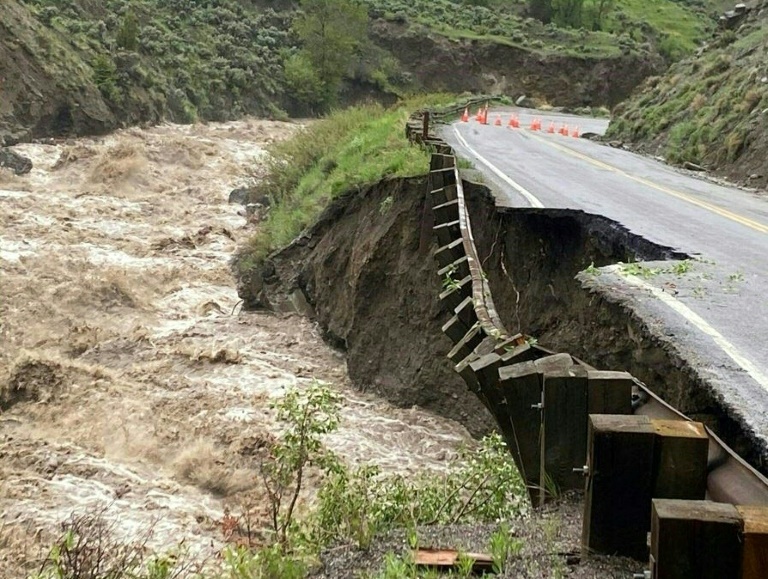
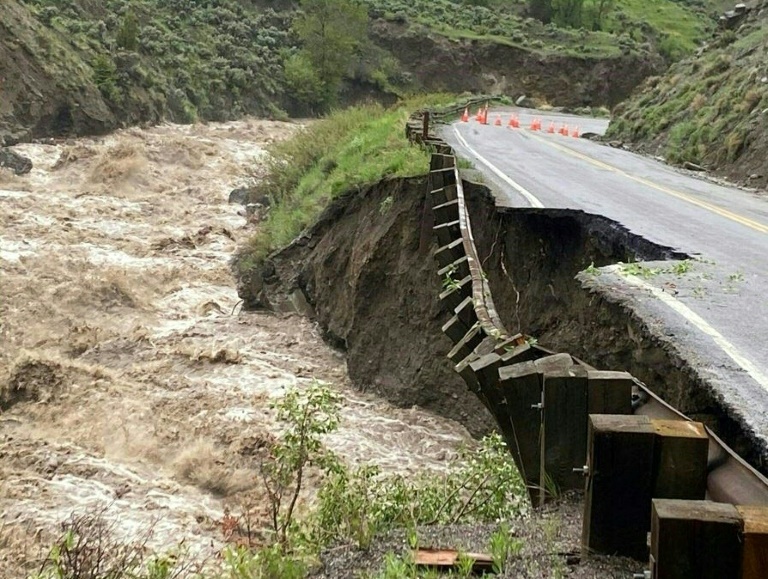
Pictures and video released by the National Park Service show large sections of paved road have fallen into the Gardner River, one of a number of waterways that run through the huge park in Wyoming.

Footage posted on CNN showed a wooden house falling into a river.

“Due to record flooding events in the park and more precipitation in the forecast, we have made the decision to close Yellowstone to all inbound visitation,” Yellowstone superintendent Cam Sholly said Monday.

“Our first priority has been to evacuate the northern section of the park where we have multiple road and bridge failures, mudslides and other issues. 

“The community of Gardiner is currently isolated, and we are working with (local officials) to provide necessary support to residents, who are currently without water and power in some areas.”

“We will not know timing of the park’s reopening until flood waters subside and we’re able to assess the damage throughout the park.”

The northwestern United States has seen heavier than usual rain over the last few weeks.

The National Weather Service said this has combined with rapid snowmelt sparked by high temperatures, which has led to swollen rivers.

Yellowstone Park closed as swollen river destroys roads

Yellowstone, one of the best-known national parks in the United States, has been shut because flooding and rockslides have cut roads, leaving some communities stranded.

All entrances to the park remained closed Tuesday, with rangers warning of “extremely hazardous conditions” brought about by a raging river and torrential rainfall.

Pictures and video released by the National Park Service show large sections of paved road have fallen into the Gardner River, one of a number of waterways that run through the huge park in Wyoming.

Footage posted on CNN showed a wooden house falling into a river.

“Due to record flooding events in the park and more precipitation in the forecast, we have made the decision to close Yellowstone to all inbound visitation,” Yellowstone superintendent Cam Sholly said Monday.

“Our first priority has been to evacuate the northern section of the park where we have multiple road and bridge failures, mudslides and other issues. 

“The community of Gardiner is currently isolated, and we are working with (local officials) to provide necessary support to residents, who are currently without water and power in some areas.”

“We will not know timing of the park’s reopening until flood waters subside and we’re able to assess the damage throughout the park.”

The northwestern United States has seen heavier than usual rain over the last few weeks.

The National Weather Service said this has combined with rapid snowmelt sparked by high temperatures, which has led to swollen rivers.

UK scraps subsidies for electric plug-in cars

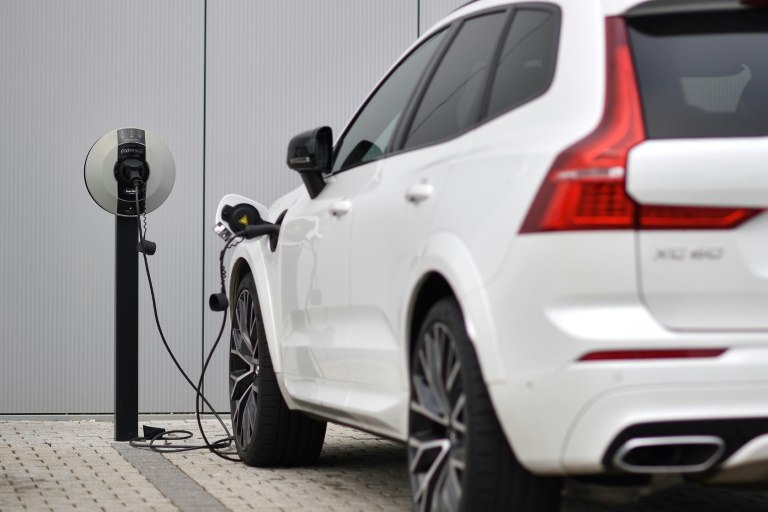
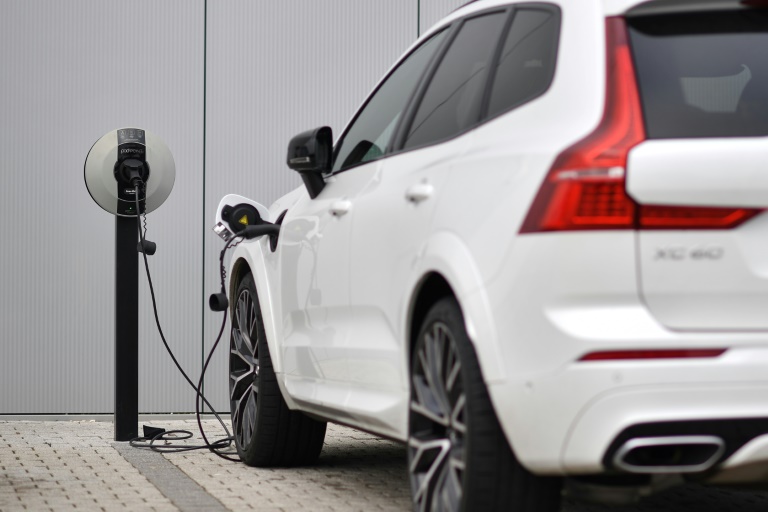
Britain on Tuesday axed its £1,500 ($1,800) subsidy for buyers of new plug-in cars as it focuses on other types of electric vehicles, but the news drew anger from the auto sector.

“The government is today closing the plug-in car grant scheme to new orders after successfully kickstarting the UK’s electric car revolution,” the Department for Transport (DfT) said in a statement.

The grant was launched in 2011 to help encourage Britons to ditch high-polluting diesel and petrol cars.

It has since supported the sale of almost half a million electric cars, the DfT added, stressing that the subsidy was always a “temporary” policy.

Sales of fully electric cars rocketed from less than 1,000 in 2011 to almost 100,000 vehicles in the first five months of this year alone.

However, the government is now switching its focus to offer subsidies on sales of new plug-in electric taxis, motorcycles, vans, trucks and wheelchair-accessible vehicles.

Britain plans to ban new sales of diesel and petrol cars in the UK from 2030, as part of its goal to reach net zero carbon emissions by 2050.

Tuesday’s announcement drew stark criticism from industry body the Society of Motor Manufacturers & Traders (SMMT).

“The decision to scrap the plug-in car grant sends the wrong message to motorists and to an industry which remains committed to government’s net zero ambition,” said SMMT boss Mike Hawes.

“Whilst we welcome government’s continued support for new electric van, taxi and adapted vehicle buyers, we are now the only major European market to have zero upfront purchase incentives for EV car buyers.”

Britain’s automobile sector had stalled last year on pandemic fallout including a semiconductor shortage.

However, greener electric vehicles now account for one in six new car sales.

That rises to just over half of all new car sales, if hybrid vehicles are included.

UK scraps subsidies for electric plug-in cars

Britain on Tuesday axed its £1,500 ($1,800) subsidy for buyers of new plug-in cars as it focuses on other types of electric vehicles, but the news drew anger from the auto sector.

“The government is today closing the plug-in car grant scheme to new orders after successfully kickstarting the UK’s electric car revolution,” the Department for Transport (DfT) said in a statement.

The grant was launched in 2011 to help encourage Britons to ditch high-polluting diesel and petrol cars.

It has since supported the sale of almost half a million electric cars, the DfT added, stressing that the subsidy was always a “temporary” policy.

Sales of fully electric cars rocketed from less than 1,000 in 2011 to almost 100,000 vehicles in the first five months of this year alone.

However, the government is now switching its focus to offer subsidies on sales of new plug-in electric taxis, motorcycles, vans, trucks and wheelchair-accessible vehicles.

Britain plans to ban new sales of diesel and petrol cars in the UK from 2030, as part of its goal to reach net zero carbon emissions by 2050.

Tuesday’s announcement drew stark criticism from industry body the Society of Motor Manufacturers & Traders (SMMT).

“The decision to scrap the plug-in car grant sends the wrong message to motorists and to an industry which remains committed to government’s net zero ambition,” said SMMT boss Mike Hawes.

“Whilst we welcome government’s continued support for new electric van, taxi and adapted vehicle buyers, we are now the only major European market to have zero upfront purchase incentives for EV car buyers.”

Britain’s automobile sector had stalled last year on pandemic fallout including a semiconductor shortage.

However, greener electric vehicles now account for one in six new car sales.

That rises to just over half of all new car sales, if hybrid vehicles are included.

UK airport chaos due to Brexit 'shambles': Ryanair boss

Air travel chaos in Britain is purely down to Brexit “shambles” by hobbling recruitment at airports, Ryanair boss Michael O’Leary said on Tuesday.

The CEO of Europe’s biggest airline also dismissed threats of summer strike action by what he called “Mickey Mouse” unions in Belgium and Spain covering some Ryanair workers.

And he said his company has dropped a controversial pre-boarding questionnaire for South African passport holders requiring them to answer questions in Afrikaans — a language commonly used by just 12 percent of South Africans, many of them white.

O’Leary told AFP that “100 percent” of the woes experienced by air passengers in the UK — including massively long lines and cancelled flights — was because “Brexit has been a shambles”.

“It was delivered by a government led by Boris Johnson that is also a shambles. It was inevitable that Brexit would constrain the labour market, you see,” he said.

O’Leary said Britain’s decision to pursue a hardline departure from the European Union that put a halt to EU workers filling jobs is largely why it was difficult to quickly ramp up recruitment for ground and security staff at UK passports.

Airports and airlines in several countries, including in the EU and the US, have struggled to cope with surging numbers of travellers, many of them keen to fly after months or years of being grounded because of Covid restrictions.

O’Leary said that unlike European rivals Air France and Lufthansa, low-cost Ryanair had fully bounced back from the pandemic and was flying 115 percent of the passenger loads recorded before the coronavirus hit.

Rising inflation was only pushing more passengers into Ryanair seats, he argued, while acknowledging that the airline was raising ticket prices by around 9 percent.

He said the company’s hedging on fuel prices through to March next year was keeping it competitive.

– Strike threats –

But unions in Belgium, Portugal and Spain are threatening to clip Ryanair’s peak summer revenues with strikes later this month to demand better pay and conditions.

O’Leary shrugged off the walk-out warnings.

“We think there will be very few strikes, if any, and those strikes will be meaningless and won’t be noticed by anybody,” he said.

“We operate two and half thousand flights every day. Most of those flights will continue to operate even if there is a strike in Spain by some Mickey Mouse union or if the Belgian cabin crew unions want to go on strike over here,” he added in a media conference.

O’Leary said that, in Belgium, the airline had “reached agreement with the unions representing over 90 percent of our pilots and cabin crew” and was continuing negotiations.

A Portuguese union joined the strike movement on Tuesday, announcing a three-day work stoppage from June 24 to 26 to “draw attention to multiple attacks on the dignity of workers”.

On the controversial Afrikaans test, the Ryanair boss said the company had tried to respond to a rise in detection of false South African passports.

“We suffer a fine of 2,000 euros for every passenger who arrives in Dublin from Bodrum (in Turkey) with a false South African passport,” he said.

He added that, while the airline had been asking South African passport holders to answer local general knowledge and geographical questions in Afrikaans, it got rid of the questionnaire.

“We didn’t think it was appropriate either. So we have ended the Afrikaans test, because it doesn’t make any sense,” he said, adding that “South Africa needs to fix its problems”.

South Africa’s government had called the test “backward profiling”. 

Afrikaans is just one of 11 official languages in South Africa, and it played a role in the oppression of black citizens during apartheid.

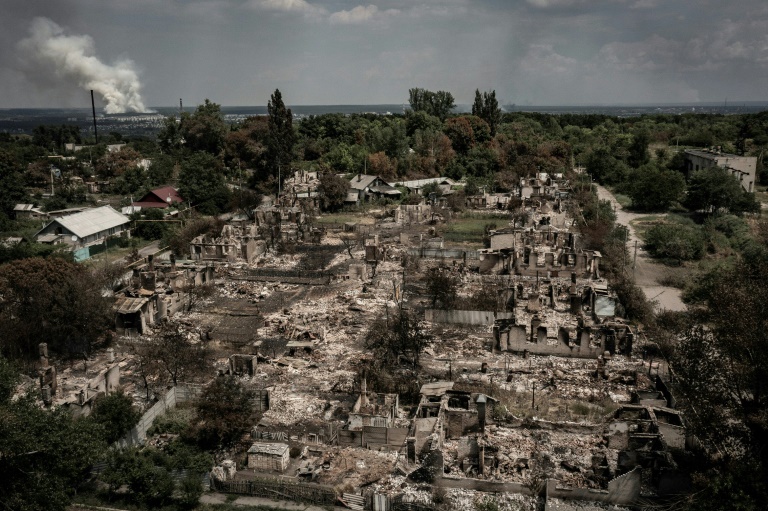
Russia plans Severodonetsk plant evacuation as it bids to encircle city

Russia said Tuesday it would establish a humanitarian corridor to evacuate civilians from a chemical plant in Severodonetsk, as the two sides battled for control of the key city in Ukraine’s eastern Donbas region.

Russian forces have stepped up efforts to cut off the Ukrainian troops still in the industrial hub, destroying all three bridges which connect it across a river to Lysychansk.

Ukrainian President Volodymyr Zelensky meanwhile once again appealed for heavy weapons from the West, criticising the “restrained behaviour” of some European leaders.

Moscow has for weeks targeted the twin cities as the last areas in the Lugansk region of the Donbas still under Ukrainian control.

Communication with the city was “complicated” with the situation on the ground changing every hour, the head of Severodonetsk’s administration, Oleksandr Stryuk, told Ukrainian television.

Around 500 civilians were taking shelter under “heavy fire” in the Azot chemical plant in Severodonetsk, Stryuk said. 

The Russian defence ministry said it was “ready to organise a humanitarian operation” on Wednesday to evacuate from the plant to the separatist-controlled part of the Lugansk region.

– ‘Surrender or die’ –

Regional governor Sergiy Gaiday said Monday Ukraine’s forces had been pushed back from Severodonetsk’s centre with the Russians controlling 70 to 80 percent of the city in their attempt to “encircle it”.

Capturing Severodonetsk would open the road to Sloviansk and another major city, Kramatorsk, in Moscow’s push to conquer Donbas, a mainly Russian-speaking region partly held by pro-Kremlin separatists since 2014.

Zelensky, in comments to Danish journalists Tuesday, insisted that the war could only end once Ukrainians were the only ones left on its territory.

How long that took depended “very much” on international support, and “the personalities of the leaders of European states”.

He regretted what he called, “the restrained behaviour of some leaders” which, he said, had “slowed down arms supplies very much”.

Zelensky has repeatedly urged the West to deliver heavy weapons to Ukraine as quickly as possible.

– ‘Not safe anywhere’ –

From an elevated position in Lysychansk, an AFP team saw black smoke rising from the Azot factory in Severodonetsk and another area in the city.

The Ukrainian military is using the high ground to exchange fire with Russian forces fighting for control of Severodonetsk, just across the water.

Along the road from Lysychansk to Kramatorsk, Ukrainian forces were transporting more weapons systems to the front, including an M777 howitzer, while specialist vehicles were carrying tanks to be repaired.

In the town of Novodruzhesk, close to Lysychansk, there was still a smell of burning and smoke from a group of houses that had been destroyed by fire from shelling at the weekend, with just chimneys left.

“It’s not safe anywhere, it just depends on the time of day, that’s all,” said a soldier standing at the local fire station with a skull logo on his sleeve. 

“There are tons of people (still) here,” he added.

Further away in Sloviansk, Nataliya, 41, a now unemployed cleaner said she was trying to decide whether to evacuate. 

“People will leave again if they start bombing the town heavily,” she told AFP. 

“If it’s like Mariupol, they’ll give us buses. We’ll leave if the Russians enter Sloviansk.”

– ‘Positive signal’ –

The European Union needs to “give a positive signal” to Ukraine and be “open” to granting it candidate status, France’s Europe minister, Clement Beaune, said Tuesday. 

Ukraine has applied to become a member of the bloc, with the European Commission due to give its recommendation in the coming days. But some member states are sceptical about potentially fast-tracking Ukraine’s accession.

The process would “take time”, Beaune said, adding that the first priority was to “stop the war”.

“Ukraine is fighting and defending our shared European values, it must at least be a candidate for EU,” President Zelensky said Tuesday.

Russian energy giant Gazprom said Tuesday it would reduce gas deliveries to the EU via the Nord Stream pipeline by 40 percent, due to the delayed return of compressor units from German company Siemens.

A number of European countries, including Germany, where the underwater pipeline makes land, are highly reliant on supplies of Russian gas for their energy needs.

The Kremlin meanwhile said it had not received a request from London to intervene in the case of two Britons sentenced to death by pro-Moscow separatist authorities in eastern Ukraine.

Aiden Aslin and Shaun Pinner, along with Moroccan Saaudun Brahim, were convicted of acting as mercenaries for Ukraine by the self-proclaimed Donetsk People’s Republic.

“Everything will depend on the appeal from London, and I am sure that the Russian side will be ready to consider it,” Kremlin spokesman Dmitry Peskov told reporters.

Russia also announced it was blacklisting 49 UK citizens, including defence officials and prominent journalists from the BBC, The Financial Times and The Guardian.

burs-sea/gw

Stocks mostly fall as recession fears linger

Stock markets mostly fell on Tuesday as investors fret over the possibility that the US Federal Reserve will move aggressively to combat inflation.

Panic has swept through trading floors since data on Friday showed US consumer prices rising at their fastest pace in decades on surging energy and food costs caused by the Ukraine war and supply chain snarls.

Investors are now bracing for the Fed’s interest rate decision on Wednesday as it struggles to walk a fine line between reining in inflation and trying to keep the economy on track.

“While there is no doubt that inflation is a considerable challenge for the US at this point, slamming on the brakes too hard risks pushing the economy off its track,” said Tai Hui, chief market strategist for Asia at JP Morgan Asset Management. 

The inflation reading has raised expectations that the US central bank could raise rates by a hefty 75 basis points, higher than its previous 50-point hike.

“The mood has turned very negative since the latter half of last week,” said Craig Erlam, analyst at online trading platform OANDA.

“Now all the talk is about if we’re heading for a recession and how bad it will be,” Erlam said.

Those recession fears sent Wall Street plunging on Monday, with the broad-based S&P 500 stocks index sinking into a bear market after dropping more than 20 percent from its recent peak.

After opening higher on Tuesday, US indices diverged near midday, with the S&P 500 flat while the Dow fell and the tech-heavy Nasdaq rose.

“An anaemic and now rapidly disappearing bounce in US markets shows us that investors are very cautious about going bargain-hunting ahead of tomorrow’s momentous Fed decision,” said Chris Beauchamp, chief market analyst at online trading platform IG.

“Not just 75bps but even 100bps are being viewed as a possibility on Wednesday evening, as the committee looks to try and steal a march on inflation,” he said.

London, Paris, Frankfurt and most Asian equities closed in the red.

Oil prices, which have fuelled the global inflation surge, rose more than 1.5 percent, with Brent North Sea Crude, the international benchmark, above $124 per barrel.

Cryptocurrencies have mirrored the falls in the stock markets, with bitcoin tumbling to an 18-month low under $23,000 this week.

Digital currency exchange Coinbase said Tuesday it will lay off 18 percent of staff, citing tight economic conditions and an overly rapid expansion.

– Key figures at around 1545 GMT –

New York – Dow: DOWN 0.4 percent at 30,410.87 points

London – FTSE 100: DOWN 0.3 percent at 7,187.46

Frankfurt – DAX: DOWN 0.9 percent at 13,304.39 

Paris – CAC 40: DOWN 1.2 percent at 5,949.84 

EURO STOXX 50: DOWN 1.1 percent at 3,405.06 

Tokyo – Nikkei 225: DOWN 1.3 percent at 26,629.86 (close)

Hong Kong – Hang Seng Index: FLAT at 21,067.99 (close)

Shanghai – Composite: UP 1.0 percent at 3,288.91 (close)

Euro/dollar: UP at $1.0414 from $1.0412 late Monday

Pound/dollar: DOWN at $1.2004 from $1.2136

Euro/pound: UP at 86.77 pence from 85.76 pence

Dollar/yen: UP at 134.88 yen from 134.42 yen 

Brent North Sea crude: UP 1.7 percent at $124.34 per barrel

West Texas Intermediate: UP 1.5 percent at $122.77 per barrel

burs-lth/pvh

Roman gate closed after bits of ancient stone fall off

Rome’s ruins are such an integral part of the Eternal City that it can be suprising when sometimes bits of them fall off.

Nobody was hurt after a few fragments fell early Tuesday morning from the Porta Maggiore gate, whose monumental double arches once provided a gateway through the third-century Aurelian Walls.

But the monument — which originally supported two of the city’s aqueducts and is now located behind Rome’s main train station — was temporarily closed off while it was checked, according to a statement from the city authorities.

The fragments of tufa — a type of easy-to-cut rock used in Roman-era construction — fell off around 6:15 am, landing on a pavement “without causing any damage to people or things”, it said.

“At first glance, there does not seem to be any further damage,” said the statement, which added that “the overall state of conservation of the monument is good”.

Normal pedestrian and road traffic was not affected.

Residents have long complained about the state of monuments and roads in the city, which draws millions of tourists each year to see such wonders as the Colosseum.

“We really need maintenance here in Rome,” said Veronica Rinaldin, 33, who works near the Porta Maggiore, which is often marred by overgrown weeds and garbage.

A police officer told AFP on condition of anonymity that tufa provided an excellent base for certain plants to grow, and their roots often split the stone.

“It doesn’t happen often. It happens if they are abandoned and neglected,” the officer said.

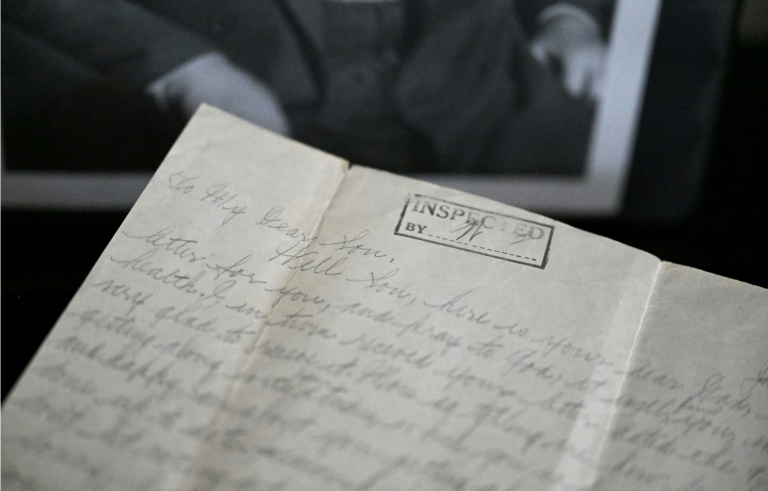
Mobster's WWII Medal of Freedom going under the hammer

A Medal of Freedom awarded to a notorious mobster by then-US President Harry S. Truman is set to go under the hammer in California.

The honor — a forerunner to the prestigious Presidential Medal of Freedom — was bestowed by Truman on Meyer “The Little Man” Lansky in a secret 1945 ceremony.

Meyer was a leader of the National Crime Syndicate, a confederation of organized crime groups that was responsible for hundreds of murders in the 1930s and 1940s.

But it was for his role in “Operation Husky” during World War II that Lanksy and his fellow gangster Charles “Lucky” Luciano were awarded one of the highest civilian honors in the United States.

The two mobsters passed information and contacts to Allied Forces during the 1943 invasion of Sicily, connecting advancing soldiers with high-ranking members of the Sicilian Mafia.

Introductions included to Calogero “Don Calo” Vizzini, a man sometimes dubbed “the boss of bosses” in the Cosa Nostra.

Vizzini helped lead the invading Allies through a difficult mountain pass, as well as providing maps that were key to the defeat in Sicily of Fascist Italy and Nazi Germany.

The medal, which is expected to fetch up to $60,000, is among a raft of mob memorabilia coming up for auction.

Personal items owned by Ben “Bugsy” Siegel are also on the block.

Siegel was a key figure in establishing the Las Vegas strip as we know it today, having overseen the opening of the Flamingo Hotel and Casino.

Hand-painted statues of flamingos — which are expected to fetch up to $3,000 — were gifted to VIPs on the 1946 opening night of the $6 million hotel, ushering in the era of luxury resorts.

The hotel was not, however, an immediate success, and its budget overshoot of $1 million aroused suspicion among other mobsters that Siegel had his hand in the till.

They shot him dead in 1947 at a luxury mansion in Beverly Hills owned by his moll, Virginia Hill.

The collection, which goes under the hammer in Beverly Hills on August 27 and 28, also includes Siegel’s original Smith and Wesson .38 CTG Revolver and a letter written by Al Capone while imprisoned at Alcatraz.

Other highlights include a collection of home movies from Anthony Spilotro, a member of the “Hole in the Wall” group of murderers and thieves who served as inspiration for Joe Pesci’s character in Martin Scorsese’s 1995 film “Casino.”

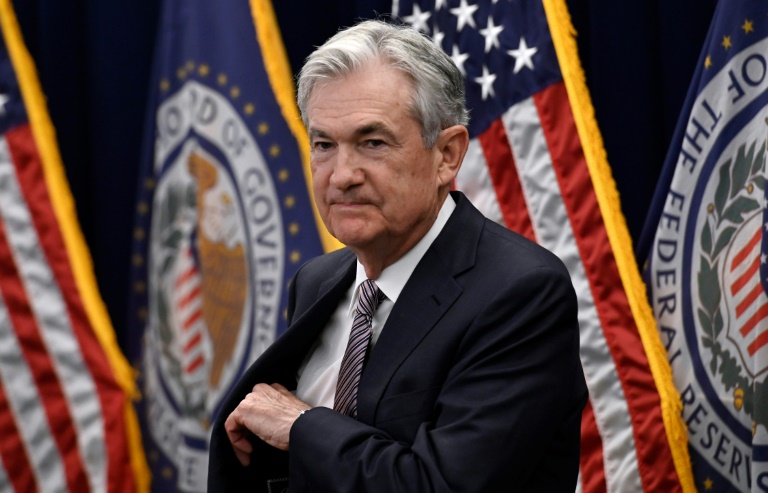
Fed begins meeting with massive hike possible amid price surge

US central bankers opened their two-day policy meeting Tuesday amid a blistering inflation surge that has ignited predictions the Federal Reserve will approve the biggest interest rate hike in more than 27 years.

Fed Chair Jerome Powell has signaled that policymakers were poised to implement another half-point increase in the benchmark borrowing rate this week and another next month.

But a growing number of voices are now calling for a more aggressive three-quarter point hike in response to the big, unexpected jump in the consumer price index in May, which defied widespread expectations the data would show inflation pressures easing.

A Fed spokesperson confirmed the meeting of the policy-setting Federal Open Market Committee began as scheduled at 1500 GMT. Markets will get the rate decision on Wednesday at 1800 GMT.

Officials will debate how high to raise borrowing costs amid surging prices and fears of a bout of 1970s-style stagflation if their efforts to cool the economy clamp down on growth as well.

After dropping the rate to zero since March 2020 in a successful bid to help the world’s largest economy avoid a devastating downturn and recover quickly from the impact of the Covid-19 pandemic, the Fed has raised rates twice, including a big, half-point increase last month.

Low lending rates and the boost from massive federal stimulus caused demand to outstrip supply amid global supply chain snarls, pushing prices higher, and the Russian invasion of Ukraine added more fuel to the inflation fires, sending food and fuel prices soaring.

– Credibility boost or negative surprise? –

Economists thought March was the peak of CPI, but the rate spiked in May, jumping 8.6 percent in the latest 12 months.

“Given the latest information on inflation, we believe that risk-management considerations call for aggressive action to reinforce the Fed’s inflation-fighting credibility,” Barclays analysts said in a commentary.

If policymakers decide on a giant step, it would be the first 75-basis-point increase since November 1994.

But other analysts say the massive step would be unnecessary and could be viewed as panicky, and instead project an additional half-point hike in September.

“With supply improving and demand for goods falling relative to services, margins will compress and inflation will fall much faster than markets and the Fed expect,” Ian Shepherdson of Pantheon Macroeconomics said in an analysis.

He noted that many of the factors driving the price spikes are “outside the Fed’s control, like oil prices.”

The consensus remains for policymakers to stick to the plan, and central bankers are typically loath to surprise markets, although they insist their decisions are “data dependent” and will adjust to evolving situations.

Karl Haeling of LBBW said markets are pricing in at least one 75-basis-point increase in the next three meetings, but chances of that happening this week are “50-50.”

“We believe they will probably avoid raising by 75 bps to reduce risk of an even bigger stock market plunge. But the coming barrage of Fed officials giving public comments after Wednesday will probably suggest that 75 bps is certainly possible at July’s FOMC,” he said.

Barclays said despite the element of surprise, “an aggressive move in June would provide the committee with the biggest bang for its buck, sending a resounding signal of the Fed’s resolve to guide inflation back to its 2 percent target.”

Close Bitnami banner
Bitnami