AFP

US Senate gun measures gain support despite limited scope

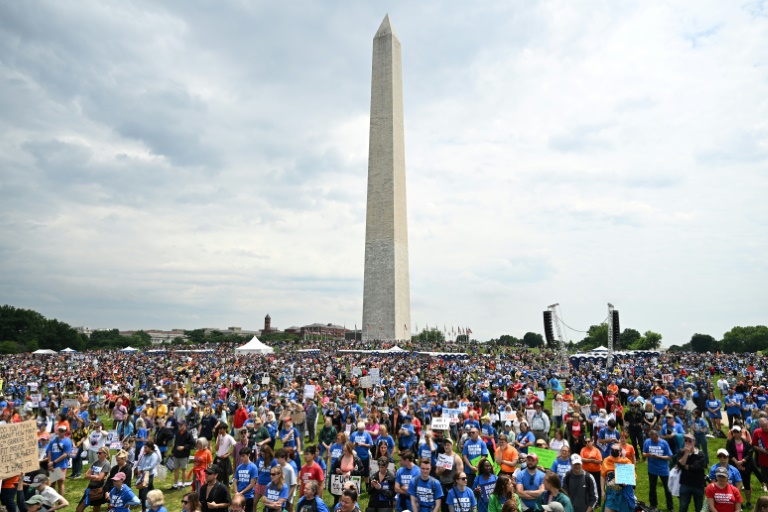
Two horrific massacres in recent weeks have succeeded in bringing Democrats and Republicans close to the most significant federal legislation addressing US gun violence in three decades.

Twenty senators — 10 from each party — reached a deal Sunday to put through legislation that would tighten some rules on gun sales and put more resources toward mental health treatment.

The 10 Republicans are just enough to ensure that the legislation could overcome Senate rules that have allowed the party since the 1990s to block almost every single measure aimed at controlling the flood of personal firearms on the US market.

Their agreement comes less than a month after two shocking mass shootings: first, when 10 African Americans were killed on May 14 at a supermarket in Buffalo, New York, and then less than two weeks later when 19 children and two teachers were shot and killed at an elementary school in Uvalde, Texas.

Those tragedies also brought into focus smaller, but more frequent instances of gun violence across the United States.

Chris Coons, a Senate Democrat who led the chamber’s bipartisan effort, said the legislation could be introduced within days and possibly passed in early July.

“In the wake of the horrifying recent shootings in Buffalo, Uvalde, and across the country, Americans have demanded that the Senate take meaningful steps forward on this issue,” said Coons.

“This framework will save lives. If it becomes law, it will lower the risks of mass shootings, of lethal domestic violence incidents, of violence we see too frequently on our streets.”

– Modest measures –

The senators’ agreed measures are modest, and far short of what US President Joe Biden called for following last month’s tragic killings.

They include: 

– Enhanced background checks for people under 21 buying a gun, allowing a review of juvenile crime and mental health records

– Funding and incentives for states to pass “red flag” laws to keep guns out of the hands of people deemed a danger to themselves or society, and perpetrators of domestic abuse

– Tougher penalties for “straw purchasers” of guns for others that feed illegal firearms trafficking

– Closing loopholes on gun dealer regulations

– Federal support for state investments in school security and mental health programs

But they did not approach demands from gun control advocates, including an outright ban on assault rifles, as was in place from 1994 to 2004, a ban on gun sales to people under 21, mandatory waiting periods in all gun purchases, and bans on high-capacity magazines.

Both the Buffalo and Uvalde shootings were by 18-year-olds using high-powered AR-15-style semi-automatic rifles.

Moreover, whatever gains that come with the legislation could be dealt a setback by a Supreme Court ruling due this month that could overturn state restrictions on carrying guns in public.

– ‘Breaking the logjam’ – 

Even so, gun control advocates cheered the measures, recognizing the potential for a significant shift towards breaking the gun industry’s stranglehold.

“We applaud this historic step forward for gun violence prevention — one born out of the recognition that this nation needs change and action to save American lives from preventable gun violence,” said Kris Brown, president of the Brady: United Against Gun Violence group.

“We’re breaking the logjam in Congress and proving that gun safety isn’t just good policy -– it’s good politics,” said Shannon Watts, founder of the group Moms Demand Action.

– Narrow political margin –

Yet supporters were not fully confident the measures will pass, knowing that the legislation could be blocked if fewer than 10 of the Senate’s 50 Republicans support it.

Working in their favor is that none of the 10 Republicans who agreed to the deal Sunday are standing for reelection in November. Four are retiring, and five won’t face reelection until 2026; one other faces reelection in 2024.

The 20 senators “are committed to each other and to this project,” said Coons.

But the National Rifle Association, which has wielded powerful influence over Republicans for decades, made clear their fundamental opposition.

“NRA will continue to oppose any effort to insert gun control policies, initiatives that override constitutional due process protections and efforts to deprive law-abiding citizens of their fundamental right to protect themselves into this or any legislation,” the group said.

David Hogg, leader of anti-gun violence group March For Our Lives and himself a school shooting survivor, called for action to counter the NRA’s political pressure.

“We’re going to need a lot of gun owners to speak out and let these Republican senators know that they are supported, that the NRA speaks only for the NRA and not the majority of responsible, voting gun owners,” he said.
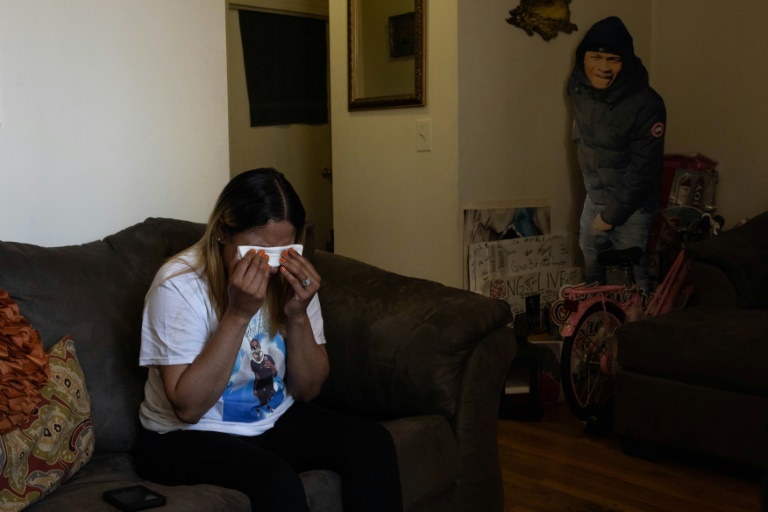

Deaths at New York's Rikers jail: a mother's pain

Lezandre Khadu knows all too well the pain that New York’s Rikers Island prison can cause. Her son, Stephan, died there — one of about 20 deaths at the jail in the past 18 months.

“He died from an inhumane system,” says the 39-year-old, weeping during an interview with AFP in her Brooklyn apartment.

Rikers has long had a reputation for unsanitary conditions and violence but is now arguably facing its most intense scrutiny ever following the deaths, which included suicide, drug overdoses and medical emergencies.

Last month a local court found the Department of Correction (DOC) in contempt for denying detainees access to medical care.

Separately, a federal judge decided not to strip control of the prison from the city but ordered officials to come up with a plan to fix the crisis at the sprawling complex.

For Khadu, any reforms are too late. She says her son was a healthy young man in December 2019 when he entered Rikers, situated in the East River between the Bronx and Queens boroughs.

He had been arrested on charges of conspiracy to commit murder. Like the vast majority of prisoners he was awaiting trial and presumed innocent.

After a few months, Stephan was transferred to a nearby overflow facility — a barge nicknamed “The Boat.”

Khadu says Stephan began suffering seizures in July 2021. She blames a pepper spray that guards use on inmates to restore order called the “cell buster.”

Stephan spent a few days in hospital before being returned to his cell.

On September 22, an inmate found Stephan bleeding from the mouth. He was hospitalized and died that day.

– ‘Tragedy’ –

The city’s medical examiner ruled that Stephan had died from a meningitis infection, a treatable condition, leading to questions about the level of care he received in jail.

Khadu says corrections officers failed to give her son adequate medical attention, claiming he was alone for almost two hours before guards tended to him.

“Nobody cared. My son would still be here if they just would have cared. He didn’t go to jail to die,” she says. 

A DOC spokesperson said Stephan’s death is “under investigation.”

Sixteen people died in or shortly after leaving New York City jails last year, the highest number of reported deaths since 2013, and almost all at Rikers.

Six have died so far in 2022, according to the DOC.

“Every death in custody is a tragedy,” Louis Molina, who was appointed prisons commissioner in January, told AFP in a statement.

“We are working aggressively to improve the conditions at Rikers that began under previous administrations and are committed to ensuring the safety and wellbeing of everyone who works and lives in our facilities,” he added.

Lawmakers and ex-inmates say conditions at Rikers worsened dramatically during the pandemic, largely due to widespread staff shortages.

– Closure? –

Brian Carmichael spent two months inside last year for violating parole for drugs offences. 

“It’s a horror story in there and it’s heartbreaking,” the 58-year-old told AFP, citing gang violence, crumbling buildings and dirty toilets that flood.

Rikers opened in 1932. High profile prisoners have included John Lennon’s killer Mark David Chapman, disgraced producer Harvey Weinstein, rapper Tupac Shakur, Sex Pistols musician Sid Vicious and ex-IMF chief Dominique Strauss-Kahn.

The number of inmates has fallen from around 20,000 in the 1990s to almost 6,000 today.

They are overwhelmingly from Black and Hispanic communities. Many suffer from mental health issues.

Lawyers and criminologists have called for the complex’s closure for years, citing its age, reputation for violence and remote location.

New York City’s previous mayor, Bill de Blasio, announced plans to shut the site by 2026 under a $8.7 million proposal to replace it with smaller facilities.

His successor Eric Adams backed the plan during his election campaign but has been quiet in office on whether he intends to go through with it.

Khadu, a regular at anti-Rikers protests, says she say will campaign for the prison’s closure “until I literally die.”

“I don’t even know how to do anything other than that now. I’m not just speaking for my son. I’m speaking for all the sons,” she says.

15 dead, half million impacted by heavy rains in Guatemala

At least 15 people have died in a dozen mudslides caused by heavy rains that have fallen since early May in Guatemala, where more than 500,000 people have been  affected, officials said Monday. 

Among the 15 fatalities were a woman and her six children, as well as three brothers, all minors, from two indigenous villages, said the office of the Coordination for the Reduction of Natural Disasters (Conred).

Rains accompanied by strong winds caused landslides, floods, and the collapse of infrastructure across large swathes of the Central American country.

Conred said 930 homes had been damaged as well as eight schools, seven bridges and more than 80 roads. 

The regions most affected are those mainly inhabited by indigenous populations, whose communities are most vulnerable to natural disasters.

Nearly 60 percent of Guatemala’s 17 million people live in poverty. Last year rains caused the death of 35 people and impacted almost one in 10 Guatemalans. 

US approves first pill for treatment of alopecia

The Food and Drug Administration on Monday approved a drug called baricitinib as the first oral tablet for  treating severe alopecia areata, an autoimmune disorder affecting more than 300,000 people in the United States every year.

Alopecia causes either temporary or permanent patchy hair loss that can affect any hair-bearing site of the body, leading to emotional distress. The condition has come to the fore recently through high-profile cases including Hollywood actress Jada Pinkett Smith and congresswoman Ayanna Pressley.

“Access to safe and effective treatment options is crucial for the significant number of Americans affected by severe alopecia,” said FDA official Kendall Marcus in a statement. 

“Today’s approval will help fulfill a significant unmet need for patients with severe alopecia areata.”

Baricitinib, which is made by US pharmaceutical company Eli Lilly and known by the trade name Olumiant, belongs to a class of drugs called Janus kinase inhibitors. It works by interfering with the cellular pathway that leads to inflammation.

Its approval for use against alopecia was based on the results of two randomized, controlled clinical trials involving a total 1,200 adults with severe alopecia.

Each trial split participants into three groups: a placebo group, a group that received a two-milligram dose every day, and a group that received a four-milligram dose every day.

After 36 weeks, almost 40 percent of those on the higher dose grew back 80 percent of their scalp hair, compared to around 23 percent of the lower dose group, and five percent of the placebo group.

Around 45 percent of people in the higher dose group also saw significant eyebrow and eyelash regrowth.

The most common side effects included upper respiratory tract infections, headaches, acne, high cholesterol, and increase of an enzyme called creatine phosphokinase.

Prior treatments for alopecia included topical or oral drugs, but these have been considered experimental and none was approved.

Baricitinib was previously approved for treatment of rheumatoid arthritis, and during the Covid pandemic its license was extended to the treatment of hospitalized Covid patients.

US approves first pill for treatment of alopecia

The Food and Drug Administration on Monday approved a drug called baricitinib as the first oral tablet for  treating severe alopecia areata, an autoimmune disorder affecting more than 300,000 people in the United States every year.

Alopecia causes either temporary or permanent patchy hair loss that can affect any hair-bearing site of the body, leading to emotional distress. The condition has come to the fore recently through high-profile cases including Hollywood actress Jada Pinkett Smith and congresswoman Ayanna Pressley.

“Access to safe and effective treatment options is crucial for the significant number of Americans affected by severe alopecia,” said FDA official Kendall Marcus in a statement. 

“Today’s approval will help fulfill a significant unmet need for patients with severe alopecia areata.”

Baricitinib, which is made by US pharmaceutical company Eli Lilly and known by the trade name Olumiant, belongs to a class of drugs called Janus kinase inhibitors. It works by interfering with the cellular pathway that leads to inflammation.

Its approval for use against alopecia was based on the results of two randomized, controlled clinical trials involving a total 1,200 adults with severe alopecia.

Each trial split participants into three groups: a placebo group, a group that received a two-milligram dose every day, and a group that received a four-milligram dose every day.

After 36 weeks, almost 40 percent of those on the higher dose grew back 80 percent of their scalp hair, compared to around 23 percent of the lower dose group, and five percent of the placebo group.

Around 45 percent of people in the higher dose group also saw significant eyebrow and eyelash regrowth.

The most common side effects included upper respiratory tract infections, headaches, acne, high cholesterol, and increase of an enzyme called creatine phosphokinase.

Prior treatments for alopecia included topical or oral drugs, but these have been considered experimental and none was approved.

Baricitinib was previously approved for treatment of rheumatoid arthritis, and during the Covid pandemic its license was extended to the treatment of hospitalized Covid patients.

Amazon to start delivering by drone in California town

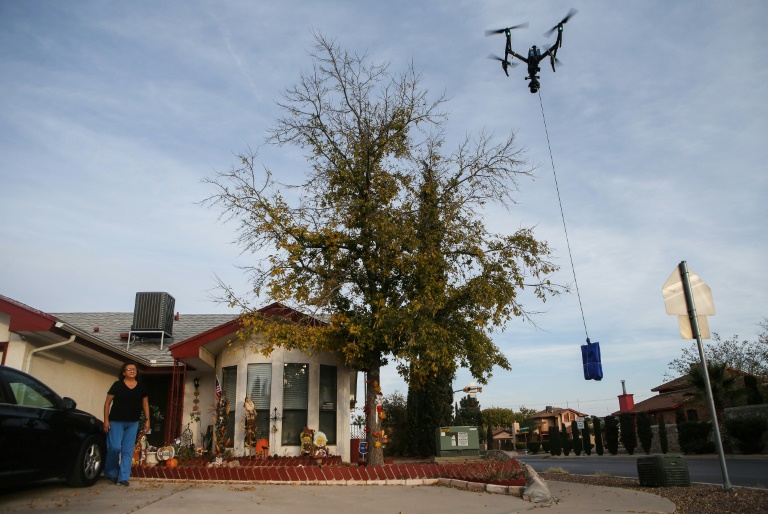
Amazon plans to start flying some purchases to customers later this year, the e-commerce giant said Monday, announcing drone delivery that will debut in a California town.

Retail rival Walmart already offers drone delivery and in May announced it is dramatically ramping up the service, expanding to six states by year-end with the potential to drop off one million packages annually.

Amazon customers in the Northern California town of Lockeford will be able to sign up for free delivery by “Prime Air” drones, the company said in a post.

“Air-eligible” items ordered at the retailer’s website will be packed into drones that will fly to the delivery addresses, deposit packages outside from safe heights, then fly away, according to Amazon.

The drones can carry loads as heavy as five pounds (2.2 kilograms) in packages about the size of a large shoe box, an Amazon spokesperson told AFP.

Items approved for drone delivery will include household products, beauty items, office supplies and tech gear, the spokesperson said.

Amazon said it has created a sophisticated system to enable its drones to detect and avoid aircraft, people, pets and other obstacles.

“We designed our sense-and-avoid system for two main scenarios: to be safe when in transit, and to be safe when approaching the ground,” the company said.

Feedback from the operations in California will be used to expand the drone service.

A variety of companies ranging from new startups to major tech firms such as Google-parent Alphabet are working on autonomous drone delivery.

Alphabet’s project Wing completed its first real-world drone deliveries in 2014 in rural Australia where they successfully transported first-aid supplies, candy bars, dog treats, and water to farmers, according to the company’s website.

Two years after that, Wing drones were used to deliver burritos to students at a university in Virginia.

“The logistics industry is abuzz with all-things drones,” the Amazon team said.

Amazon to start delivering by drone in California town

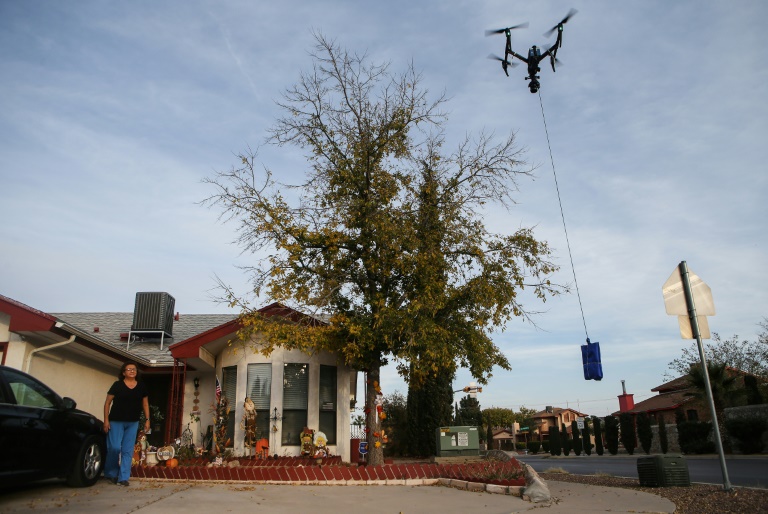
Amazon plans to start flying some purchases to customers later this year, the e-commerce giant said Monday, announcing drone delivery that will debut in a California town.

Retail rival Walmart already offers drone delivery and in May announced it is dramatically ramping up the service, expanding to six states by year-end with the potential to drop off one million packages annually.

Amazon customers in the Northern California town of Lockeford will be able to sign up for free delivery by “Prime Air” drones, the company said in a post.

“Air-eligible” items ordered at the retailer’s website will be packed into drones that will fly to the delivery addresses, deposit packages outside from safe heights, then fly away, according to Amazon.

The drones can carry loads as heavy as five pounds (2.2 kilograms) in packages about the size of a large shoe box, an Amazon spokesperson told AFP.

Items approved for drone delivery will include household products, beauty items, office supplies and tech gear, the spokesperson said.

Amazon said it has created a sophisticated system to enable its drones to detect and avoid aircraft, people, pets and other obstacles.

“We designed our sense-and-avoid system for two main scenarios: to be safe when in transit, and to be safe when approaching the ground,” the company said.

Feedback from the operations in California will be used to expand the drone service.

A variety of companies ranging from new startups to major tech firms such as Google-parent Alphabet are working on autonomous drone delivery.

Alphabet’s project Wing completed its first real-world drone deliveries in 2014 in rural Australia where they successfully transported first-aid supplies, candy bars, dog treats, and water to farmers, according to the company’s website.

Two years after that, Wing drones were used to deliver burritos to students at a university in Virginia.

“The logistics industry is abuzz with all-things drones,” the Amazon team said.

Hollywood stars pen letter calling for responsible gun depictions

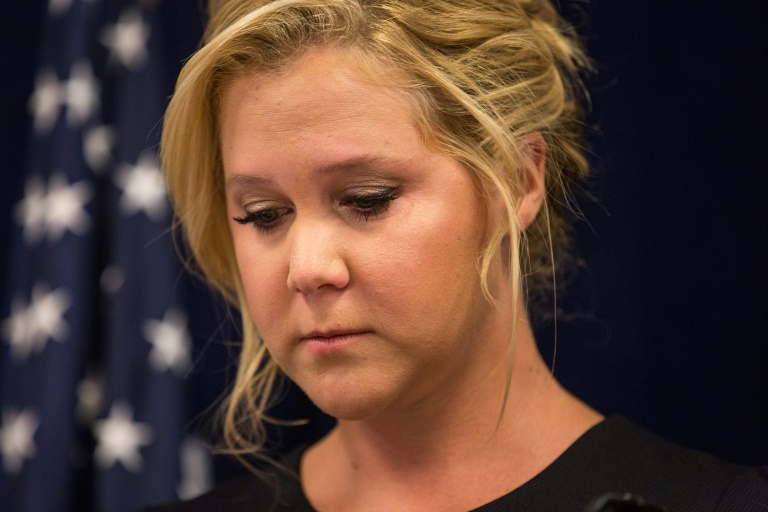
Hollywood stars including Amy Schumer, Julianne Moore and Mark Ruffalo signed a letter published on Monday calling for movies and television shows to depict responsible gun ownership and to limit scenes involving children with firearms.

The open letter, penned in response to recent US mass shootings in Uvalde and Buffalo, was also signed by top producers J.J. Abrams (“Lost”), Shonda Rhimes (“Bridgerton”) and Lucasfilm head Kathleen Kennedy.

“Cultural attitudes toward smoking, drunk driving, seatbelts and marriage equality have all evolved due in large part to movies’ and TV’s influence. It’s time to take on gun safety,” says the letter shared by the Brady Campaign, a gun control nonprofit.

“We are not asking anyone to stop showing guns on screen. We are asking writers, directors and producers to be mindful of on-screen gun violence and model gun safety best practices.”

Suggested measures include showing characters locking their guns up safely, and holding discussions before production begins about whether alternatives to guns could be used without “sacrificing narrative integrity.”

Noting that firearms recently surpassed motor vehicle crashes as the leading cause of death among American minors, the letter asks “colleagues in the creative community” to “limit scenes including children and guns.”

Last month, 10 people were shot and killed in a racist attack on a grocery store in New York state. Ten days later, 19 children and two teachers were murdered during a school rampage in Uvalde, Texas.

Overall, 4,368 US children and adolescents up to the age of 19 died from firearms in 2020, according to the Centers for Disease Control and Prevention (CDC).

The open letter was signed by more than 200 Hollywood figures, also including Jimmy Kimmel, Judd Apatow, Bill Lawrence, Damon Lindelof and Adam McKay.

It noted that guns “are prominently featured in TV and movies in every corner of the globe, but only America has a gun violence epidemic.”

“The responsibility lies with lax gun laws supported by those politicians more afraid of losing power than saving lives.

“We didn’t cause the problem, but we want to help fix it.”

US man charged with gun trafficking, a hard problem to solve

The US Justice Department announced Monday the arrest of a man on charges of illegally trafficking firearms, in a case underscoring the difficulties American authorities face in preventing guns from ending up in the wrong hands.

Demontre Antwon Hackworth, 31, was charged with legally buying at least 92 guns, mostly handguns, between 2019 and 2021 and reselling them without a license — and therefore without performing background checks on the buyers — US Attorney General Merrick Garland said at a press conference. 

Sixteen of the weapons were then used in crimes including homicide, assault and drug trafficking across several US states, as well as in Canada in the year following their resale.

Garland said Hackworth’s arrest illustrates the efforts by his department to tackle gun-trafficking, at a time when the United States has experienced “in recent weeks, mass shooting after mass shooting.”

In May, 10 Black people were killed in a shooting at a New York grocery store, and less than two weeks later 19 children and two teachers were shot and killed at a Texas elementary school.

Those tragedies also brought into focus smaller, but more frequent instances of gun violence across the United States.

Garland added that with the help of specialized units, “we are cracking down on the criminal gun-trafficking pipelines that flood our communities with illegal guns,” citing other recent indictments including a Californian accused of having trafficked 89 weapons, most of them “ghost guns” which do not have a serial number.

“These cases are not easy to investigate or prosecute,” said Chad Meacham, the US attorney for northern Texas who oversaw the investigation leading to Hackworth’s arrest.

“The law enforcement agents literally had to work multiple cases backwards before the identity of someone like this defendant becomes even known,” he said.

The weapons involved in these arrests make up only a mere drop in the United States’ ocean of firearms:

According to the Small Arms Survey project, 393.3 million guns were in circulation among the US civilian population in 2017, or 120 guns for every 100 people in the country.

In 2021, an additional 20 million guns were sold, according to the site Small Arms Analytics, with more than 20,000 firearm homicides recorded the same year by the Gun Violence Archive.

'Bear' market: Inflation fears pummel global stocks

Equity markets dove again Monday, with Wall Street officially entering a bear market as investors bet on more aggressive Federal Reserve rate hikes to address runaway inflation.

Global markets churned in the aftermath of the latest US consumer price data, as bitcoin fell to an 18-month low, the dollar streaked higher and oil prices zig-zagged.

“The hangover from a higher-than-expected US inflation reading is continuing to cause scissoring pain throughout the markets, as it extinguishes the hope the US Federal Reserve might be able to take its foot off the pedal on interest rate rises,” noted AJ Bell investment director Russ Mould.

The S&P 500, the broad-based Wall Street equity index, plummeted 3.9 percent to finish the day at 3,749.53, a drop of more than 20 percent from its most recent peak on January 4 — the definition of a bear market.

Bourses in Paris, Frankfurt, Tokyo and Hong Kong all fell at least two percent.

The report Friday showed US consumer prices jumped 8.6 percent compared to May 2021, hitting a fresh 40-year high, topping expectations and dashing hopes that price pressures had peaked.

The Fed has signaled plans for a second large 0.5 percentage-point interest rate hike on Wednesday. 

But more voices are projecting a three-quarter point increase. Barclays said the more aggressive move was called for “to reinforce credibility and get ahead of inflationary pressures.”

The concerns sent the yield on the 10-year US Treasury note, a proxy for interest rates, above 3.3 percent, the highest level in more than 11 years.

“The market is now thinking much more about the Fed driving rates sharply higher to get on top of inflation and then having to cut back as growth drops,” said SPI Asset Management’s Stephen Innes.

The dollar, however, gained ground against major rivals, benefiting from its status as a haven investment and expectations of rapidly rising interest rates. 

The US currency struck a 24-year peak against the yen before retreating, while it broke above 78 Indian rupees for the first time, and jumped more than one percent versus the pound.

Oil prices shook off early weakness and edged higher despite fresh worries about China, where Beijing launched a new round of mass testing in the city following the latest Covid-19 outbreak.

– Bitcoin crash –

Bitcoin tumbled to an 18-month low of under $23,000 as investors shunned risky assets in the face of the vicious global market selloff. 

The unit took a heavy knock also from news that cryptocurrency lending platform Celsius Network paused withdrawals, citing volatile conditions.

“It is not very surprising to see such a strong downturn as we have noticed an increased correlation over the last few years between traditional stocks, which have also tanked recently, and the cryptocurrency market,” noted XTB chief market analyst Walid Koudmani.

Patrick O’Hare, analyst at Briefing.com, said the carnage in the crypto market “is compounding worries about growth prospects due to the reduced wealth effect that also incorporates falling stock and bond prices.”

– Key figures at around 2040 GMT –

New York – Dow: DOWN 2.8 percent at 30,516.74 (close)

New York – S&P 500 : DOWN 3.9 percent at 3,749.63 (close)

New York – Nasdaq: DOWN 4.7 percent at 10.809.23 (close)

London – FTSE 100: DOWN 1.5 percent at 7,205.81 (close)

Frankfurt – DAX: DOWN 2.4 percent at 13,427.03 (close)

Paris – CAC 40: DOWN 2.7 percent at 6,022.32 (close)

EURO STOXX 50: DOWN 2.7 percent at 3,502.50 (close)

Tokyo – Nikkei 225: DOWN 3.0 percent at 26,987.44 (close)

Hong Kong – Hang Seng Index: DOWN 3.4 percent at 21,067.58 (close)

Shanghai – Composite: DOWN 0.9 percent at 3,255.55 (close)

Dollar/yen: UP at 134.42 yen from 134.41 yen late Friday

Euro/dollar: DOWN at $1.0412 from $1.0519

Pound/dollar: DOWN at $1.2136 from $1.2493

Euro/pound: UP at 85.76 pence from 85.41 pence

Brent North Sea crude: UP 0.2 percent at $122.27 per barrel

West Texas Intermediate: UP 0.2 percent at $120.93 per barrel

burs-jmb/hs

Close Bitnami banner
Bitnami