AFP

The age of outbreaks: Experts warn of more animal disease threats

With the spread of monkeypox across the world coming hot on the heels of Covid-19, there are fears that increasing outbreaks of diseases that jump from animals to humans could spark another pandemic.

While such diseases — called zoonoses — have been around for millennia, they have become more common in recent decades due to deforestation, mass livestock cultivation, climate change and other human-induced upheavals of the animal world, experts say.

Other diseases to leap from animals to humans include HIV, Ebola, Zika, SARS, MERS, bird flu and the bubonic plague.

The World Health Organization said on Thursday that it is still investigating the origins of Covid, but the “strongest evidence is still around zoonotic transmission”.

And with more than 1,000 monkeypox cases recorded globally over the last month, the UN agency has warned there is a “real” risk the disease could become established in dozens of countries.

The WHO’s emergencies director Michael Ryan said last week that “it’s not just in monkeypox” — the way that humans and animals interact has become “unstable”.

“The number of times that these diseases cross into humans is increasing and then our ability to amplify that disease and move it on within our communities is increasing,” he said.

Monkeypox did not recently leap over to humans — the first human case was identified in DR Congo in 1970 and it has since been confined to areas in Central and Western Africa.

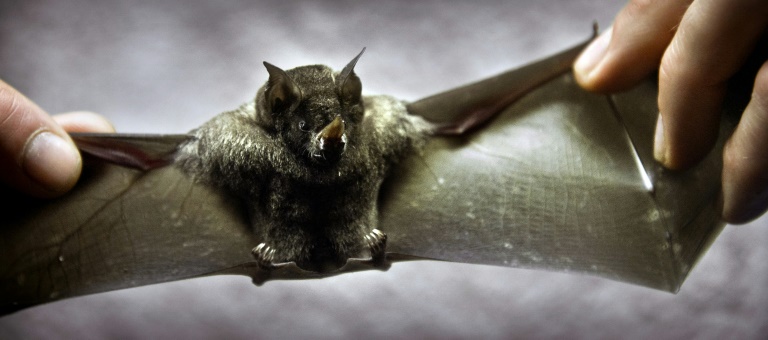
Despite its name, “the latest monkeypox outbreak has nothing to do with monkeys,” said Olivier Restif, epidemiologist at the University of Cambridge.

While it was first discovered in macaques, “zoonotic transmission is most often from rodents, and outbreaks spread by person-to-person contact,” he told AFP.

– Worse yet to come? –

Around 60 percent of all known human infections are zoonotic, as are 75 percent of all new and emerging infectious diseases, according to the UN Environment Programme.

Restif said the number of zoonotic pathogens and outbreaks have increased in the past few decades due to “population growth, livestock growth and encroachment into wildlife habitats”.

“Wild animals have drastically changed their behaviours in response to human activities, migrating from their depleted habitats,” he said.

“Animals with weakened immune systems hanging around near people and domestic animals is a sure way of getting more pathogen transmission.”

Benjamin Roche, a specialist in zoonoses at France’s Institute of Research for Development, said that deforestation has had a major effect.

“Deforestation reduces biodiversity: we lose animals that naturally regulate viruses, which allows them to spread more easily,” he told AFP.

And worse may be to come, with a major study published earlier this year warning that climate change is ramping the risk of another pandemic.

As animals flee their warming natural habitats they will meet other species for the first time — potentially infecting them with some of the 10,000 zoonotic viruses believed to be “circulating silently” among wild mammals, mostly in tropical forests, the study said.

Greg Albery, a disease ecologist at Georgetown University who co-authored the study, told AFP that “the host-pathogen network is about to change substantially”.

– ‘We have to be ready’ – 

“We need improved surveillance both in urban and wild animals so that we can identify when a pathogen has jumped from one species to another — and if the receiving host is urban or in close proximity to humans, we should get particularly concerned,” he said.

Eric Fevre, a specialist in infectious diseases at Britain’s University of Liverpool and the International Livestock Research Institute in Kenya, said that “a whole range of new, potentially dangerous diseases could emerge — we have to be ready”.

This includes “focusing the public health of populations” in remote environments and “better studying the ecology of these natural areas to understand how different species interact”.

Restif said that there is “no silver bullet — our best bet is to act at all levels to reduce the risk”.

“We need huge investment in frontline healthcare provision and testing capacity for deprived communities around the world, so that outbreaks can be detected, identified and controlled without delays,” he said.

On Thursday, a WHO scientific advisory group released a preliminary report outlining what needs to be done when a new zoonotic pathogen emerges.

It lists a range of early investigations into how and where the pathogen jumped to humans, determining the potential risk, as well as longer-term environmental impacts.
UK banks no longer 'too big to fail': BoE

Britain’s biggest banks are no longer “too big to fail” in any future financial shocks, with shareholders rather than taxpayers ready to bear the cost, the Bank of England said Friday.

Following a major review of eight lenders — including Barclays, HSBC, Lloyds and NatWest — the BoE concluded “that if a major UK bank failed today it could do so safely: remaining open and continuing to provide vital banking services to the economy.

“Shareholders and investors, not taxpayers, will be first in line to bear the costs, overcoming the ‘too big to fail’ problem,” the central bank added.

Following the financial global crisis more than a decade ago, the UK taxpayer pumped £137 billion ($171 billion) into the country’s banks, while also being able to benefit from significant BoE support.

The government also took control of Royal Bank of Scotland — rebranded as NatWest ahead of its recent return to the private sector.

Despite the bailouts, “the disruption to the financial system contributed to the UK and global recession that followed. We cannot forget these lessons”, the BoE added Friday.

The central bank was publishing its first assessment of the eight major UK banks’ preparations for resolution under the Resolvability Assessment Framework.

RAF “is a core part of the UK’s response to the global financial crisis, and demonstrates how the UK has overcome the problem of ‘too big to fail'”, said Dave Ramsden, deputy governor for markets and banking at the BoE.

“The UK authorities have developed a resolution regime that successfully reduces risks to depositors and the financial system and better protects the UK’s public funds.”

The other four banks assessed were Nationwide, Santander UK, Standard Chartered and Virgin Money UK.

Markets extend global sell-off on inflation, rate fears

Markets extended a global sell-off Friday after the European Central Bank laid the groundwork to join others in a programme of interest rate hikes, while attention turns to the release of key US inflation data.

After a largely positive start to the week, Asian investors tracked their US and European colleagues in selling up as they contemplate higher borrowing costs and surging prices, which many fear could lead to a recession.

Adding to the unease was news that officials in China had once again locked down millions of people for Covid testing due to another flare-up in cases, dealing a blow to hopes for an economic reopening.

Still, the move helped push down oil prices — a key driver of global inflation — owing to concerns about the impact on demand.

With prices rising at a decades-high pace, central banks have been forced to withdraw the vast financial support measures put in place to combat the impact of the pandemic that helped fuel a rally across markets to record or multi-year highs.

The ECB became the latest to join the tightening campaign, announcing Thursday the end of its bond-buying programme and signalling it will hike rates several times this year.

It also sharply upgraded its inflation forecasts for this year and next while lowering the economic growth outlook.

Focus now turns to the release of US consumer price figures later Friday, with a strong reading likely to give the Federal Reserve more room to be aggressive.

“A robust May… print will probably prompt (policymakers) to hint at a 50 basis point hike for the September meeting,” said SPI Asset Management’s Stephen Innes.

“The tone will remain hawkish and the tough talk on inflation will continue.”

However, he added that “the significant upward revisions to core inflation projections are close to ending. Risk markets could take solace if one or two participants shift to seeing the inflation outlook is more balanced”.

Expectations are that the Fed will hike by half a point for at least three more meetings before January. 

Other commentators also suggested that traders were looking for signs inflation may be close to its highs.

“The big question is whether inflation has peaked or not,” said Matthew Simpson of StoneX Financial. 

“Inflation may have softened to a degree in April, but traders really want to see further evidence that inflation is pointing lower to call ‘peak inflation’ with confidence.

“Besides, one single month of data doesn’t define a trend.”

And OANDA’s Edward Moya said the darkening outlook could provide an argument for the Fed to apply the brakes to hiking later in the year.

“Warning signs about the economy are emerging as weekly jobless claims are starting to rise, China’s Covid situation will prove troublesome for supply chains over the next couple of quarters, and as inflationary pressures broaden and show no sign of easing.

“It seems reductions in global growth forecasts will become a steady theme over the next few months and that should complicate how much more tightening we see from central banks.”

Tokyo, Hong Kong, Sydney, Seoul, Singapore, Taipei, Mumbai, Bangkok, Wellington, Manila and Jakarta were all down.

London, Paris and Frankfurt were also lower in early trade.

However, data showing Chinese producer price inflation eased last month to its lowest level in more than a year provided some cheer and gave officials a little room to unveil fresh stimulus measures for the beleaguered economy.

That helped Shanghai brush off the targeted lockdowns and buck the regional trend to rally more than one percent.

On currency markets the euro continued to struggle against the dollar after the ECB flagged a quarter-point hike, while the yen remained around two-decade lows to the greenback.

– Key figures at around 0810 GMT –

Tokyo – Nikkei 225: DOWN 1.5 percent at 27,824.29 (close)

Hong Kong – Hang Seng Index: DOWN 0.3 percent at 21,806.18 (close)

Shanghai – Composite: UP 1.4 percent at 3,284.83 (close)

London – FTSE 100: UP 1.0 percent at 7,405.26

Euro/dollar: UP at $1.0630 from $1.0620 late Thursday

Euro/pound: UP at 85.15 pence from 84.98 pence

Dollar/yen: DOWN at 133.71 yen from 134.40 yen

Pound/dollar: DOWN at $1.2482 from $1.2495

Brent North Sea crude: DOWN 0.7 percent at $122.27 per barrel

West Texas Intermediate: DOWN 0.6 percent at $120.76 per barrel

New York – Dow: DOWN 1.9 percent at 32,272.79 (close)

Markets extend global sell-off on inflation, rate fears

Markets extended a global sell-off Friday after the European Central Bank laid the groundwork to join others in a programme of interest rate hikes, while attention turns to the release of key US inflation data.

After a largely positive start to the week, Asian investors tracked their US and European colleagues in selling up as they contemplate higher borrowing costs and surging prices, which many fear could lead to a recession.

Adding to the unease was news that officials in China had once again locked down millions of people for Covid testing due to another flare-up in cases, dealing a blow to hopes for an economic reopening.

Still, the move helped push down oil prices — a key driver of global inflation — owing to concerns about the impact on demand.

With prices rising at a decades-high pace, central banks have been forced to withdraw the vast financial support measures put in place to combat the impact of the pandemic that helped fuel a rally across markets to record or multi-year highs.

The ECB became the latest to join the tightening campaign, announcing Thursday the end of its bond-buying programme and signalling it will hike rates several times this year.

It also sharply upgraded its inflation forecasts for this year and next while lowering the economic growth outlook.

Focus now turns to the release of US consumer price figures later Friday, with a strong reading likely to give the Federal Reserve more room to be aggressive.

“A robust May… print will probably prompt (policymakers) to hint at a 50 basis point hike for the September meeting,” said SPI Asset Management’s Stephen Innes.

“The tone will remain hawkish and the tough talk on inflation will continue.”

However, he added that “the significant upward revisions to core inflation projections are close to ending. Risk markets could take solace if one or two participants shift to seeing the inflation outlook is more balanced”.

Expectations are that the Fed will hike by half a point for at least three more meetings before January. 

Other commentators also suggested that traders were looking for signs inflation may be close to its highs.

“The big question is whether inflation has peaked or not,” said Matthew Simpson of StoneX Financial. 

“Inflation may have softened to a degree in April, but traders really want to see further evidence that inflation is pointing lower to call ‘peak inflation’ with confidence.

“Besides, one single month of data doesn’t define a trend.”

And OANDA’s Edward Moya said the darkening outlook could provide an argument for the Fed to apply the brakes to hiking later in the year.

“Warning signs about the economy are emerging as weekly jobless claims are starting to rise, China’s Covid situation will prove troublesome for supply chains over the next couple of quarters, and as inflationary pressures broaden and show no sign of easing.

“It seems reductions in global growth forecasts will become a steady theme over the next few months and that should complicate how much more tightening we see from central banks.”

Tokyo, Hong Kong, Sydney, Seoul, Singapore, Taipei, Mumbai, Bangkok, Wellington, Manila and Jakarta were all down.

London, Paris and Frankfurt opened down.

However, data showing Chinese producer price inflation eased last month to its lowest level in more than a year provided some cheer and gave officials a little room to unveil fresh stimulus measures for the beleaguered economy.

That helped Shanghai brush off the targeted lockdowns and buck the regional trend to rally more than one percent.

On currency markets the euro continued to struggle against the dollar after the ECB flagged a quarter-point hike, while the yen remained around two-decade lows to the greenback.

– Key figures at around 0720 GMT –

Tokyo – Nikkei 225: DOWN 1.5 percent at 27,824.29 (close)

Hong Kong – Hang Seng Index: DOWN 0.1 percent at 21,855.18

Shanghai – Composite: UP 1.4 percent at 3,284.83 (close)

London – FTSE 100: DOWN 0.5 percent at 7,442.31

Euro/dollar: UP at $1.0633 from $1.0620 late Thursday

Euro/pound: UP at 85.13 pence from 84.98 pence

Dollar/yen: DOWN at 133.87 yen from 134.40 yen

Pound/dollar: DOWN at $1.2490 from $1.2495

Brent North Sea crude: DOWN 0.3 percent at $122.72 per barrel

West Texas Intermediate: DOWN 0.3 percent at $121.21 per barrel

New York – Dow: DOWN 1.9 percent at 32,272.79 (close)

Ukrainian forces 'holding on' in key Donbas battles

President Volodymyr Zelensky said Ukrainian forces were “holding on” in the flashpoint eastern city of Severodonetsk where intense street battles with Russian troops could determine the fate of the Donbas region. 

Moscow has concentrated its firepower on the industrial city, which it now mostly controls, with the area’s governor saying on Friday that Russian forces had destroyed a major sports arena.

Pro-Russian rebels sentenced one Moroccan and two British fighters to death on Thursday after they were captured while fighting for Ukraine and accused of acting as mercenaries for Kyiv.

Zelensky said in his evening address on Thursday that several “cities in Donbas, which the occupiers now consider key targets, are holding on”. 

He added that Ukrainian forces have made positive strides in the Zaporizhzhia and Kharkiv regions outside Donbas, and are in the process of “liberating our land”.  

With the fiercest fighting now concentrated in Severodonetsk, governor Sergiy Gaiday — who earlier called for Western artillery to quickly help secure a Ukrainian victory — said “one of the symbols of Severodonetsk was destroyed. The Ice Palace burned down.”

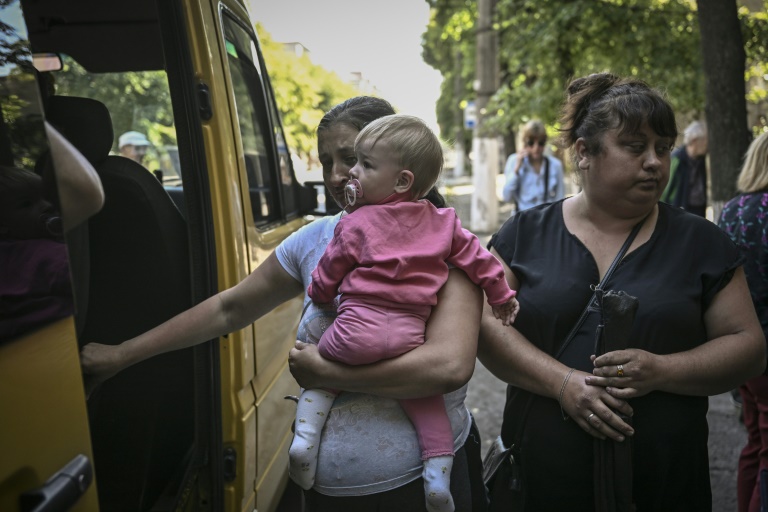
People in the town of Lysychansk, which is located near Severodonetsk, spoke to AFP about the stark choices the war has forced on them: either stay and brave the shelling, or flee and abandon their homes. 

Yevhen Zhyryada, 39, said the only way to access water is by heading to a water distribution site in the town.

“We have to go there under shelling, and under fire,” he said. “This is how we survive.”

But others have chosen to pack up their belongings and get as far away from the fighting as possible. 

“Life made me leave. The constant shelling. And also my grandson. My grandson pleaded with me: ‘Grandma, come to us.’ Only it’s not clear for me where to go, I left their address at home,” Lyubov Akatyeva, 65, said.

Defence Minister Oleksiy Reznikov has said around 100 Ukrainian soldiers were being killed every day in frontline fighting and as many as 500 wounded.

– Death sentence –

Western countries have provided weapons and aid to Ukraine since the February 24 invasion, while some people from abroad have joined the fight against Russian forces.

Separatist authorities in the Donetsk region of the Donbas ordered the death penalty for Aiden Aslin, Shaun Pinner and Saadun Brahim, Russian media reported.

Britain’s Foreign Secretary Liz Truss called the sentence “a sham judgment, with absolutely no legitimacy”, while a spokesman for Prime Minister Boris Johnson said the sentence contravenes prisoner rights under the Geneva Convention.

Britons Aslin and Pinner surrendered in April and Brahim surrendered in March in the eastern town of Volnovakha.

During a trial that lasted three days, the men pleaded guilty to “actions aimed at seizing power and overthrowing the constitutional order of the Donetsk People’s Republic”, Russian news agency Interfax said.

A lawyer representing one of them told the TASS news agency that they would appeal.

– ‘Foreign mercenaries’ –

Pro-Russian separatists have held part of the Donbas region since 2014 and it is now the focus of Moscow’s offensive after its forces were repelled from Kyiv weeks into the invasion.

Russia has repeatedly warned the West against getting involved and said it had targeted a Ukrainian training centre for “foreign mercenaries” in the Zhytomyr region, west of Kyiv.

The Ukrainian presidency said four people were killed in a Russian air strike on Toshkivka, a village around 25 kilometres (16 miles) south of Severodonetsk.

It reported seven other deaths in fighting across the country. 

In Kyiv, Ukraine’s Interior Minister Denys Monastyrsky said the capital was in no immediate danger, but troops were keeping a line of defence all the same.

Russian President Vladimir Putin, meanwhile, appeared to compare his actions to Peter the Great’s conquest of the Baltic coast during his 18th-century war against Sweden.

– Grain crisis –

Zelensky on Thursday called for Russia to be expelled from the UN’s Food and Agriculture Organization (FAO), blaming Moscow for “causing hunger” and spurring the global grain crisis by invading his country.

Ukraine’s Black Sea ports export millions of tonnes of grain each year but have been blocked since the invasion, while Western sanctions on Russia have prevented Moscow from selling much of its grain abroad, sending food prices soaring.

The FAO warned that poor countries will suffer the most from the crisis as they were “paying more but receiving less food”.

The African Union on Thursday urged Kyiv to demine waters around the Ukraine-controlled Odessa port to ease exports, warning of “serious famine” and destabilisation on the continent.

Moscow has also called for Ukraine to demine, but Kyiv has refused for fear of a Russian attack.

burs-dk/ssy/axn

Turkish hilltop where civilisation began

On a sun-blasted hillside in southeast Turkey, the world’s oldest known religious sanctuary is slowly giving up its secrets.

“When we open a new trench, we never know what to expect,” said Lee Clare of the German Archaeology Institute, who has been excavating there since 2013. 

“It is always a big surprise.”

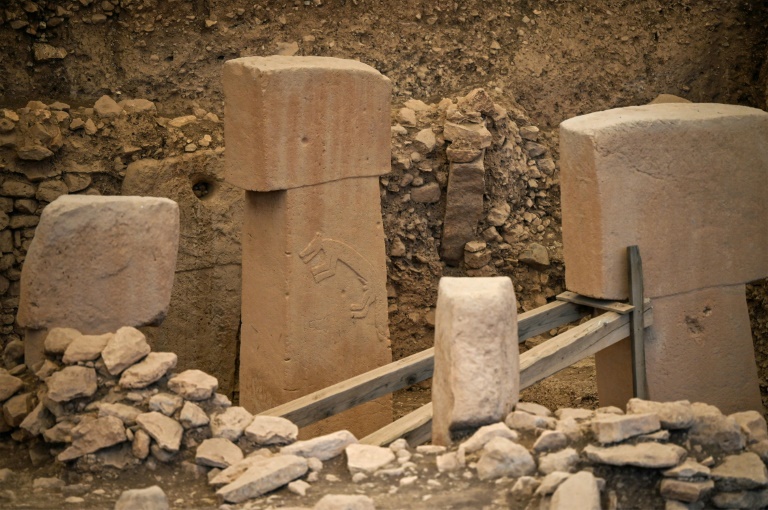
Gobekli Tepe, which means “Potbelly Hill” in Turkish, is arguably the most important archaeological site on Earth. 

Thousands of our prehistoric ancestors gathered around its highly-decorated T-shaped megalith pillars to worship more 7,000 years before Stonehenge or the earliest Egyptian pyramids.

“Its significance is hard to overstate,” Sean Lawrence, assistant professor of history at West Virginia University, told AFP. 

Academics believe the history of human settlement began in these hills close to the Syrian border some 12,000 years ago when groups of Stone Age hunter gatherers came together to construct these sites.

Gobekli Tepe — which some experts believe was never actually inhabited — may be part of a vast sacred landscape that encompasses other nearby hilltop sites that archaeologists believe may be even older.

– Endless mystery –

None of which anyone would have guessed before the German archeologist and pre-historian Klaus Schmidt began to bring the first discoveries to the surface in 1995. 

German and Turkish archaeologists have been labouring in the sun there since, with lengthening queues of tourists now joining them to ponder its many mysteries.

When exactly it all began is even unclear. 

“Exact years are nearly impossible to verify,” Lawrence said. 

“However, the oldest Egyptian monument, the Pyramid of Djoser at Saqqara, was built around 2700 BCE,” more than seven millennia after Gobekli Tepe.

“This was the end of what is often thought of as Stone Age hunter gatherer societies and the beginning of settled societies,” Lawrence added. 

“There remain endless mysteries surrounding the site, including how labour was organised and how the sites were used,” he said. 

Gobekli Tepe has even inspired the Netflix sci-fi psychological thriller series “The Gift”, which turns on one of the ancient inscriptions on its pillars.

Schmidt — who often wore a white traditional turban on the dig — puzzled over the megaliths carved with the images of foxes, boars, ducks, lizards and a leopard for over two decades until his early death at the age of 61 in 2014. 

– ‘Zero point in time’ –

The site was initially believed to be purely ritual in nature. But according to Clare, there is now “good evidence” for the beginning of settled life with some buildings similar to those of the same age found in northern Syria.

Turkey — which in the past has not been renowned for making the best of its vast archaeological heritage — has wholeheartedly embraced the discoveries.

The items excavated from Gobekli Tepe are shown in the impressive archaeological museum in the nearest city, Sanliurfa, which is itself so ancient that Abraham is believed to have been born there.

Indeed its new museum built in 2015 boasts “the most extensive collection of the neolithic era in the world,” according to its director Celal Uludag. “All of the portable artifacts from Gobekli Tepe are exhibited here.” 

“This is a journey to civilisation, (to the) zero point in time,” said Aydin Aslan, head of Sanliurfa Culture and Tourism Directorate.  

“Gobekli Tepe sheds light on pre-history, that’s why it’s a common heritage of humanity,” he said proudly. 

– ‘Go deeper’ –

Last year Turkey’s culture ministry boosted funding for furher excavations in the region as a part of its “Stone Hills” project, including cash for the Karahan Tepe hilltop site — around 35 kilometres from Gobekli Tepe — which some suspect is even older. 

“We will now go deeper because Gobekli Tepe is not the one and only,” Culture Minister Nuri Ersoy said last year. 

The extra funding “gives us a fantastic opportunity to compare our results from Gobekli Tepe with new sites in the Sanliurfa region of the same age,” Clare said. 

Gobekli Tepe has also breathed life back into a poor and long neglected region, which has been further hit by the civil war just across the border. Syrian refugees now make up a quarter of Sanliurfa’s population. 

Over one million tourists visited Sanliurfa in 2019 and the city expects to reach pre-pandemic levels this year. 

“Today Gobekli Tepe has started directly touching the economy of the city,” Aslan said, who hopes that its glorious past could be a key part of the city’s future. 

'No choice': The young UK climate activist pushing protest boundaries

At the age of just 21, former engineering student Louis McKechnie has already been arrested 20 times and spent six weeks in prison.

It’s made him one of the most recognisable faces among Britain’s climate change activists.

In the last two years, he’s been part of a number of groups using increasingly radical, hard-hitting stunts to raise awareness of the issue.

After Extinction Rebellion, Animal Rebellion and Insulate Britain, McKechnie is now a full-time member of Just Stop Oil, which wants a halt to all new fossil fuel projects.

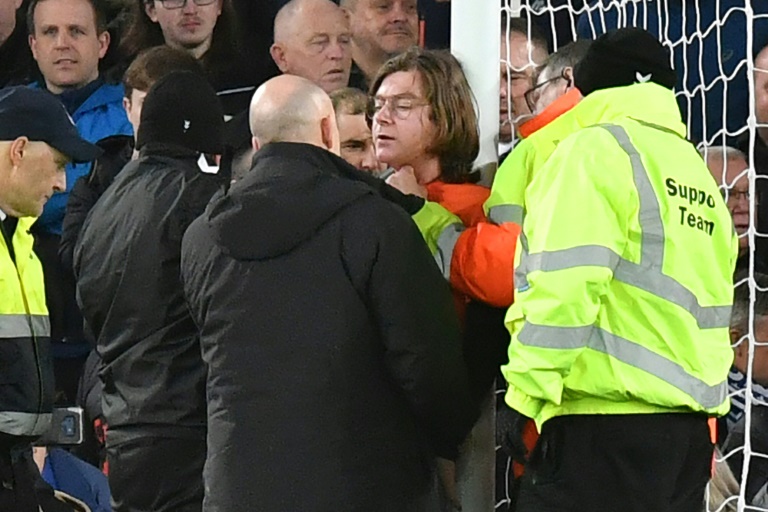
In March, he risked the wrath of football fans when he tied himself to a goalpost in the middle of a match between Newcastle and Everton.

“I was seriously terrified,” he told AFP. “It was 40,000 people screaming ‘wanker, wanker, wanker’.”

Despite feeling a “wave of guilt” at intruding on the fans’ sporting passion, he managed to halt the Premier League fixture for seven minutes.

McKechnie, who used a zip tie around his neck, said he felt vindicated.

“I was doing it for them (the fans) at the same time. Their government is lying to them and they deserve the right to know that,” he said.

One angry fan kicked him in the head but McKechnie said he didn’t feel it. Hundreds of death threats afterward though forced him off social media.

– Selfish minority – 

“I was expecting to be public enemy number one… but it’s a sacrifice I’m perfectly willing to make. We knew we wouldn’t be popular,” said McKechnie.

But he believes it was worth it, if even just a fraction of the crowd looked up Just Stop Oil online afterward to see what it is about.

“I don’t need them to agree with the tactics, just agree with the message,” he said.

Since his first direct action protest — a solo roadblock — McKechnie has disrupted the red carpet at the BAFTA awards.

He spent 53 hours 50 feet (15 metres) off the ground on the pipes of an oil terminal in Scotland and damaged pumps at a petrol station.

It was a protest blockading the London orbital motorway the M25 that landed him behind bars, along with eight other members of Insulate Britain, which campaigns for better home insulation.

He was jailed on his 21st birthday on November 17. 

The judge accused the protesters of breaking “the social contract under which, in a democratic society, the public can properly be expected to tolerate peaceful protest”.

Behind bars, though, he said two inmates approached him shortly after his arrival to say thank you.

The right-wing tabloid press has been particularly critical of the protesters, calling them “eco-anarchists” and accusing them of “sabotage”.

The Daily Mail branded McKechnie an “eco-zealot” and took aim at his long hair and aviator-style glasses, calling him a “John Lennon lookalike”.

The government now wants to bolster its legislative arsenal against the “guerrilla” techniques of what it calls a “selfish minority of protesters” for disrupting the lives of ordinary Britons.

But McKechnie said: “We’re not going to stop, because we can’t afford to. We’re more scared of the climate crisis.” 

– ‘More radical, more outrageous’ – 

McKechnie added he sees no end to the protests, as long as they remain non-violent and do not endanger lives.

“We’re not doing this because it’s fun. We’re doing this because we’re desperate,” he said.

Three decades of demonstrations and petitions have not worked, he noted.

“If things keep not working, we’re going to have to keep escalating. We’re going to have to keep getting more radical, more outrageous.

“Not because we want to, but because we have no choice.”

McKechnie is originally from Weymouth, a small coastal town in southern England that is threatened by rising sea levels.

He was still a child when his mother, a local environmentalist, studied sustainable development in lower income countries.

“A big part of her life was trying to get change through the political system and I saw her try and fail for so many years,” he said.

His father Alex, a teacher, describes his son as a “studious, thoughtful, quiet young man”. 

“He’s not a hooligan,” he told AFP.

“He’s not afraid of confrontation. He’s in the right place at the right time, and that’s very gratifying as a parent to see,” he added. 

For McKechnie, the road might be long but he’s not giving up. 

“We’re trying to educate people,” he said. “It’s working slower than we’d like but it is working.”

Open season: Italy to allow public tenders to manage beaches

Italy has some spectacular beaches but the majority are private, run in an opaque and sometimes shady manner that the government has finally decided to bring into the light.

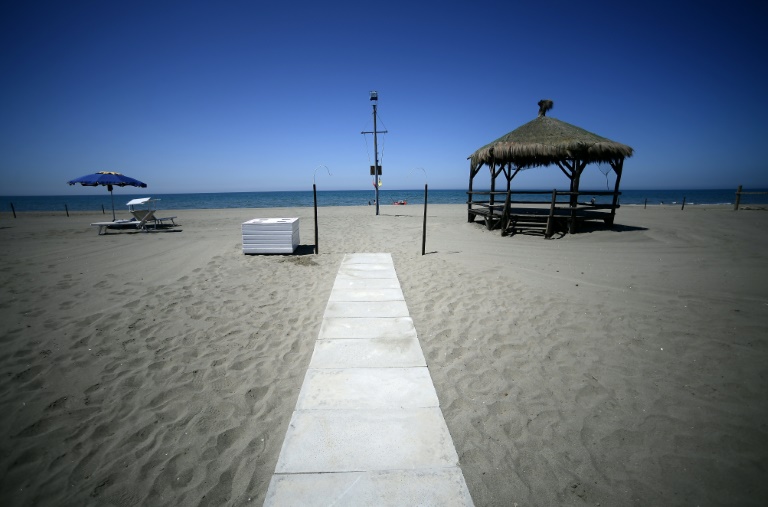
Up and down Italy’s 7,500-kilometre (4,660-mile) coastline, rows of parasols and matching sunbeds fill the sand, with only a few so-called “free beaches” dotted between them.

They provide comfort and shade from the blazing heat, but are also money-making operations, with a set of two loungers and a parasol costing up to 100 euros ($108) a day at peak periods.

Yet the concessions for the beaches have since 1992 been automatically renewed, with the result that they often pay a pittance and are subject to very little oversight — opening the door to tax fraud, mismanagement and even criminal elements.

Following years of pressure from the European Union, Prime Minister Mario Draghi’s government has finally agreed to bring in a public tender system, to take effect from 2024.

Everyone who owns a concession will have to reapply, but details of how to compensate the losers for past investments in parasols, shower units and restaurants are still being ironed out.

Maurizio Rustignoli, head of the Fiba-Confesercenti, a trade union that represents beach managers, says the uncertainty is “unacceptable”.

In Fregene, a popular beach resort north of Rome, Fabio Di Vilio is the third generation of his family to run the La Scialuppa restaurant and resort.

“I think it’s fair if it’s done seriously,” he said of the reform, as he prepared the tropical-style straw parasols for the start of the season last month.

He noted the need “to ensure — if we were to go to auction — that there were no irregularities”. 

But the 38-year-old is frustrated at the lack of thought for concession-holders like him.

“You have to give security to those who have a whole history behind them, it’s not only an economic investment, it’s also a sentimental question,” he told AFP.

– ‘Not always legal’ –

Although the idea of paying to sit by the sea is an unwelcome surprise for many tourists, most Italians are used to the idea, as long as the facilities and the beach are kept clean.

“It would certainly be a good thing if there were more free beaches, provided they do not become, as we often see, a dump,” noted Luca Siciliano, 71, sunbathing on the Fregene beach.

He said it was a “good thing” to introduce more competition into the private establishments.

“Because as we know, and I’m sorry to say, behind all this sometimes there are things that are not always legal,” he said.

As often occurs in Italy, the mafia have got in on the act. 

Last month, the Italian agency that manages assets seized from organised crime groups launched a public call for tenders for a concession in Calabria, home of the ‘Ndrangheta.

And there is also the matter of undeclared revenues. Despite their number — there were just over 12,000 concessions in May 2021, according to official figures — the state only takes in 100 million euros a year from such establishments.

Beaches are managed by local authorities, and there are vast regional differences.

In 2020, 59 concessions in Arzachena, on Sardinia’s exclusive Costa Smeralda, brought in just 19,000 euros — an average of 322 euros paid by each per year, according to daily Il Fatto Quotidiano.

The government has already moved to regularise the system by introducing a minimum annual payment of 2,500 euros.

Even with this, many beach concessions are big business.

According to Il Fatto, almost 6,000 concessions monitored by the finance ministry declared average revenues of 180,000 euros a year — and two thirds failed to declare the full amount.

Old tricks, new crises: how US misinformation spreads

With gun control under debate and monkeypox in the headlines, Americans are facing a barrage of new twists on years-old misinformation in their social media feeds.

Accurate news stories about mass shootings have attracted eyeballs but algorithms have also spurred baseless conspiracy theories from trolls who want to push lies to attract traffic. And thousands have unwittingly shared them on Facebook, Twitter and other sites.

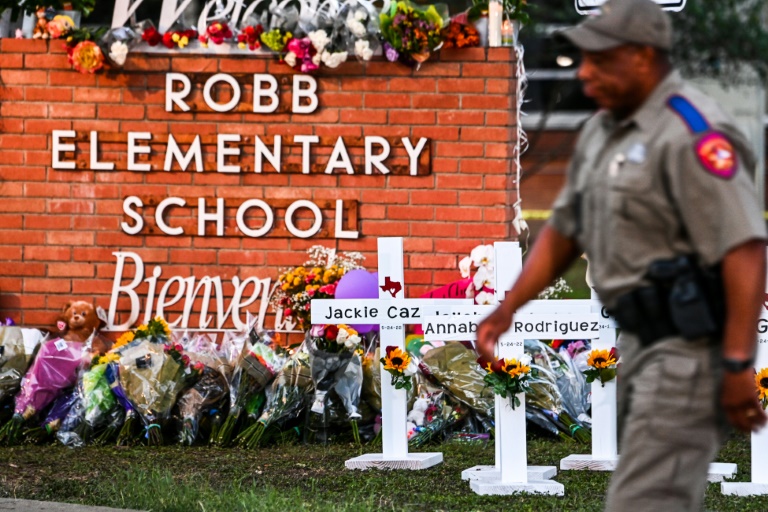
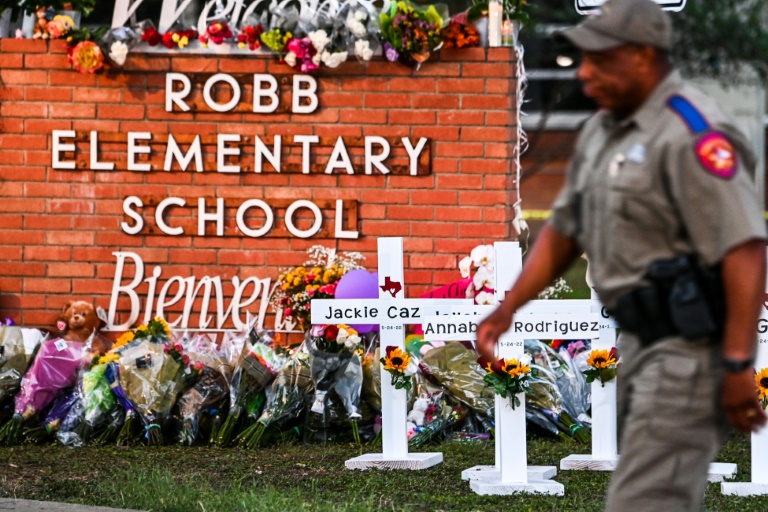
The May 24 attack at Robb Elementary School in Uvalde, Texas was a “false flag” operation aimed at pushing restrictive gun laws, according to Telegram posts from supporters of QAnon. 

Carl Paladino, a New York congressional candidate, was among those who shared a similar theory on Facebook, later deleting it.

Others misidentified a shooting victim as “Bernie Gores” — a made-up name paired with an image of a YouTuber who has been wrongly linked to other major news events, including the Russian invasion of Ukraine.

Experts say such misinformation is part of a pattern in which unscrupulous operators intentionally repurpose old narratives.

“A lot of this stuff is put together almost in this factory production style,” said Mike Caulfield, a misinformation researcher at the University of Washington’s Center for an Informed Public. 

“You have a shooting event, you have these various tropes you can apply.”

Groundless claims of a “false flag” operation, which refers to political or military action that is carried out with the intention of blaming an opponent, can be traced back to the 2012 mass shooting at Sandy Hook Elementary School in Newtown, Connecticut.

After 20 children and six staff members were killed, InfoWars founder Alex Jones falsely claimed the Newtown casualties were “crisis actors” — people who are paid or volunteer to play disaster victims. 

In November 2021, a Connecticut judge found Jones liable for damages in a defamation suit brought by parents of the victims.

But regardless, allegations of staged mass shootings have routinely spread from fringe online networks such as 4chan to mainstream platforms — including the social media feeds of politicians such as Republican congresswoman Marjorie Taylor Greene and, more recently, Arizona state senator Wendy Rogers. 

Hoax posts misidentifying gunmen or victims as internet personalities have also become common.

In the race to capture online attention following breaking news, recycled narratives can be produced quickly and are easier for audiences to digest, Caulfield said. Content producers “make guesses” about what may go viral based on past popular tropes, which can help monetize that attention.

“When you spread this stuff, you want to be seen as in the know,” he said, even though the information is demonstrably false or misleading.

– Copying the Covid-19 playbook –

Similarly, false claims about the recent spread of monkeypox — a rare disease related to smallpox — borrow from Covid-19 misinformation.

Since the outbreak, social media posts have claimed without evidence that the virus is a bioweapon, that the outbreak was planned, and that Microsoft co-founder Bill Gates is behind it. Others have falsely equated monkeypox to other viruses, including shingles.

Those claims resemble debunked conspiracy theories from the early days of the Covid-19 pandemic.

Memetica, a firm that conducts digital investigations, has researched some of the top Covid-19 misinformation recycled for monkeypox. One widespread theory points to a 2021 threat preparation exercise conducted by the Nuclear Threat Initiative (NTI) as purported evidence that the outbreak was planned.

That conspiracy theory is nearly identical to claims about Event 201, a pandemic simulation held in October 2019, that circulated online in early 2020.

“What was surprising to me was how similar (Covid-19 misinformation) is now to monkeypox,” Adi Cohen, chief operating officer at Memetica, told AFP. 

“It’s the same exact story — oh, this is all planned, it’s a ‘plandemic,’ here’s the proof.”

Some monkeypox theories have been shared by conservative figures including Glenn Beck and anti-vaccine advocate Robert F. Kennedy Jr, according to Memetica’s research. Both have previously promoted misinformation about Covid-19.

Cohen said such tactics may be an effective way to get engagement on social media, regardless of the falsity of the information being shared.

“It’s the replication of what seems to work in the past,” he said. “Why work hard when you don’t have to?”

Old tricks, new crises: how US misinformation spreads

With gun control under debate and monkeypox in the headlines, Americans are facing a barrage of new twists on years-old misinformation in their social media feeds.

Accurate news stories about mass shootings have attracted eyeballs but algorithms have also spurred baseless conspiracy theories from trolls who want to push lies to attract traffic. And thousands have unwittingly shared them on Facebook, Twitter and other sites.

The May 24 attack at Robb Elementary School in Uvalde, Texas was a “false flag” operation aimed at pushing restrictive gun laws, according to Telegram posts from supporters of QAnon. 

Carl Paladino, a New York congressional candidate, was among those who shared a similar theory on Facebook, later deleting it.

Others misidentified a shooting victim as “Bernie Gores” — a made-up name paired with an image of a YouTuber who has been wrongly linked to other major news events, including the Russian invasion of Ukraine.

Experts say such misinformation is part of a pattern in which unscrupulous operators intentionally repurpose old narratives.

“A lot of this stuff is put together almost in this factory production style,” said Mike Caulfield, a misinformation researcher at the University of Washington’s Center for an Informed Public. 

“You have a shooting event, you have these various tropes you can apply.”

Groundless claims of a “false flag” operation, which refers to political or military action that is carried out with the intention of blaming an opponent, can be traced back to the 2012 mass shooting at Sandy Hook Elementary School in Newtown, Connecticut.

After 20 children and six staff members were killed, InfoWars founder Alex Jones falsely claimed the Newtown casualties were “crisis actors” — people who are paid or volunteer to play disaster victims. 

In November 2021, a Connecticut judge found Jones liable for damages in a defamation suit brought by parents of the victims.

But regardless, allegations of staged mass shootings have routinely spread from fringe online networks such as 4chan to mainstream platforms — including the social media feeds of politicians such as Republican congresswoman Marjorie Taylor Greene and, more recently, Arizona state senator Wendy Rogers. 

Hoax posts misidentifying gunmen or victims as internet personalities have also become common.

In the race to capture online attention following breaking news, recycled narratives can be produced quickly and are easier for audiences to digest, Caulfield said. Content producers “make guesses” about what may go viral based on past popular tropes, which can help monetize that attention.

“When you spread this stuff, you want to be seen as in the know,” he said, even though the information is demonstrably false or misleading.

– Copying the Covid-19 playbook –

Similarly, false claims about the recent spread of monkeypox — a rare disease related to smallpox — borrow from Covid-19 misinformation.

Since the outbreak, social media posts have claimed without evidence that the virus is a bioweapon, that the outbreak was planned, and that Microsoft co-founder Bill Gates is behind it. Others have falsely equated monkeypox to other viruses, including shingles.

Those claims resemble debunked conspiracy theories from the early days of the Covid-19 pandemic.

Memetica, a firm that conducts digital investigations, has researched some of the top Covid-19 misinformation recycled for monkeypox. One widespread theory points to a 2021 threat preparation exercise conducted by the Nuclear Threat Initiative (NTI) as purported evidence that the outbreak was planned.

That conspiracy theory is nearly identical to claims about Event 201, a pandemic simulation held in October 2019, that circulated online in early 2020.

“What was surprising to me was how similar (Covid-19 misinformation) is now to monkeypox,” Adi Cohen, chief operating officer at Memetica, told AFP. 

“It’s the same exact story — oh, this is all planned, it’s a ‘plandemic,’ here’s the proof.”

Some monkeypox theories have been shared by conservative figures including Glenn Beck and anti-vaccine advocate Robert F. Kennedy Jr, according to Memetica’s research. Both have previously promoted misinformation about Covid-19.

Cohen said such tactics may be an effective way to get engagement on social media, regardless of the falsity of the information being shared.

“It’s the replication of what seems to work in the past,” he said. “Why work hard when you don’t have to?”

Close Bitnami banner
Bitnami