AFP

Toxic cocktail darkens outlook for British pound

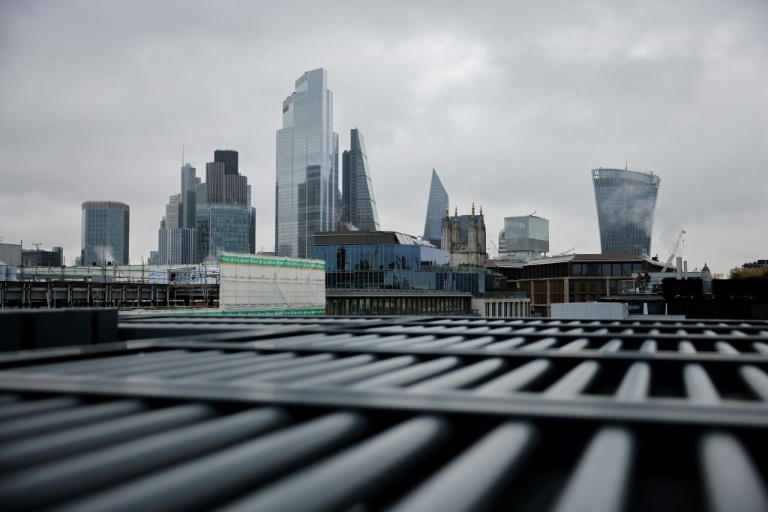
A toxic cocktail of sluggish growth and high inflation, plus Brexit and fallout from the coronavirus pandemic, is set to weigh on the pound in the coming months, economists warned.

Since the start of the year, sterling has fallen by more than seven percent against the dollar, which is benefiting from rises in US interest rates.

The pound has also fallen by 1.7 percent against the euro since the beginning of 2022.

This comes despite the Bank of England having raised UK borrowing costs four times this year to fight inflation.

By contrast, the European Central Bank is waiting until July to raise its key interest rates for the first time in more than a decade.

BoE rate rises have “been insufficient to offset the headwinds weighing on the pound”, said Rabobank analyst Jane Foley. 

“Concerns about growth have been central to the poor performance of the pound,” she said.

Fears of recession in the UK and elsewhere are gaining momentum as soaring inflation — fuelled by rocketing energy prices — hits investment and consumer spending.

Oil and gas demand has surged as economies emerge from pandemic lockdowns, while supplies have been hit by the invasion of Ukraine by major producer Russia. 

Britain’s annual inflation rate stands at nine percent, a 40-year high, while the Bank of England is forecasting the UK economy to contract at the end of the year. 

The Bank of England’s next rate decision is due June 16 when it is expected to take its main borrowing cost above one percent.

“Hiking rates against a sharply slowing economy is never a good look for any currency,” said Bank of America currency strategist, Kamal Sharma.

– Brexit cost –

The pound has dropped to around $1.25 compared with $1.40 before the 2016 vote in favour of Brexit, or Britain’s departure from the European Union.

After the UK entered its first pandemic lockdown in March 2020, sterling sank to $1.14, the lowest level since 1985.

And the pound took a knock this week after embattled British Prime Minister Boris Johnson faced a vote of no confidence from his own Conservative MPs. 

Although Johnson survived, 41 percent of those who voted failed to back him as their leader.

Another big factor affecting the pound is that the BoE “remains wholly unwilling to discuss” the full consequences of Brexit on the UK economy, according to Sharma.

This could partly be due to the fact that it is difficult to pin down the exact financial fallout, with Britain’s departure from the European Union formalised only during the economic shock caused by the Covid-19 pandemic.

Meanwhile, political paralysis in Northern Ireland, a direct consequence of Brexit, poses further problems for the pound, according to economists.

“The added risk is that there is another Brexit bust-up, perhaps over the Northern Ireland Protocol,” Capital Economics analyst Paul Dales told AFP. 

“The latter could result in the pound weakening below $1.22.” 

The protocol was agreed upon as part of Britain’s Brexit divorce deal with Brussels, recognising Northern Ireland’s status as a fragile, post-conflict territory that shares the UK’s new land border with the EU.

But Britain is readying new legislation to rewrite its Brexit commitments to fix trade distortions in the province.

Sharma expressed concern “that the increasing politicisation of UK policy undermines the pound”.

Whatever the financial cost of Brexit, “underpinning the market’s concerns about growth was the recent IMF (International Monetary Fund) projection that the UK is set to have the slowest pace of growth in the G7” group of rich nations next year, said Foley.

Other global financial bodies, such as the Paris-based Organisation for Economic Co-operation and Development (OECD), have also slashed their growth outlooks for Britain, as well as for other major economies.
US Capitol riot probe puts Trump at heart of 'attempted coup'

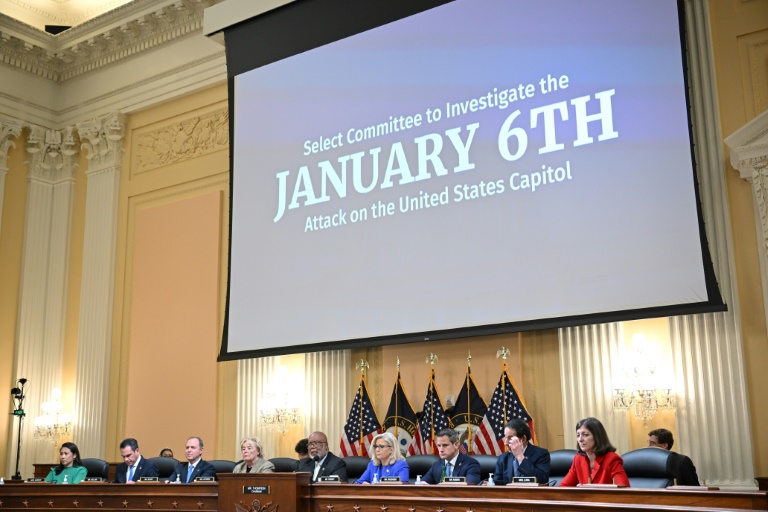
A congressional panel investigating last year’s mob assault on the US Capitol laid out its case Thursday that Donald Trump and his claims of a stolen election were at the heart of what amounted to an “attempted coup” to remain in power.

In a prime-time presentation of its findings from a year-long probe, the special committee sought to persuade a divided country of the existence of a deep-rooted and ongoing plot — orchestrated by the former president — to overturn the result of the 2020 election won by Joe Biden.

“President Trump summoned the mob, assembled the mob and lit the flame of this attack,” the Republican vice chairwoman of the panel, Liz Cheney, said in her opening remarks at the first in a series of hotly anticipated summer hearings.

Minutes earlier, Democratic committee chief Bennie Thompson accused Trump of being “at the center of this conspiracy.”

“January 6 was the culmination of an attempted coup — a brazen attempt, as one rioter put it shortly after January 6 — to overthrow the government. The violence was no accident,” he said.

Rioters acted “at the encouragement of the president of the United States,” to march on Congress and block the formal transfer of power by lawmakers to Biden, he added.

The panel’s carefully produced presentation made use of testimony given behind closed doors by some of Trump’s most senior and trusted advisors, including former attorney general Bill Barr and Trump’s son-in-law and senior aide, Jared Kushner.

– ‘Witch hunt’ –

The panel aims to demonstrate that the violence was part of a broader — and ongoing — drive by Trump and his inner circle to illegitimately cling to or regain power, tearing up the Constitution and more than two centuries of peaceful transitions from one administration to the next.

Thursday’s session and five subsequent hearings over the coming weeks will focus on Trump’s role in the multi-pronged effort to return him to the Oval Office by disenfranchising millions of voters. 

Trump has defiantly dismissed the probe as a baseless “witch hunt” — but the public hearings were uppermost in his mind Thursday as he fired off a largely false tirade on his social media platform, defending the insurrection as “the greatest movement in the history of our Country to Make America Great Again.”

Following the hearing, he lashed out again on Truth Social, accusing the committee of bias and doubling down on his election fraud claims.  

“The Unselect Committee of political HACKS refuses to play any of the many positive witnesses and statements,” he wrote.

The case the committee wants to make is that Trump laid the groundwork for the insurrection through months of lies about fraud in an election described by his own administration as the most secure ever.

His White House is accused of involvement in several potentially illegal schemes to aid the effort, including a plot to seize voting machines and another to appoint fake “alternative electors” from swing states who would ignore the will of their voters and hand victory to Trump. 

– ‘Slipping in people’s blood’ –

Thursday’s hearing featured live testimony from two people who interacted with members of the neofascist organization the Proud Boys on January 6 and in the days leading to the violence.

Emmy-winning British documentary filmmaker Nick Quested testified about his experience shadowing members of the Proud Boys in the days leading up to January 6 and his interactions with them on the day itself.

Quested recalled being shocked by “the anger” he saw among the group’s members, and described the larger rally crowd as transforming “from protesters to rioters to insurrectionists.”

“I was surprised at the size of the group, the anger and the profanity,” he said.

Capitol Police Officer Caroline Edwards, who was present at the breach of the first barricade, described sustaining head injuries in clashes with the Proud Boys, whose leader has been charged with seditious conspiracy, along with four lieutenants.

“I can just remember my breath catching in my throat, because what I saw was just a war scene. It was something like I’d seen out of the movies,” she said.

“I couldn’t believe my eyes. There were officers on the ground — they were bleeding, they were throwing up… I saw friends with blood all over their faces. I was slipping in people’s blood.”

– Court of public opinion –

The series of hearings will differ from Trump’s two impeachments in that he will not be represented in the room as he is not on trial — except perhaps in the court of public opinion.

Nevertheless, a number of his most loyal counter-punchers are expected to circle the wagons, challenging the investigation at every turn. 

“It is the most political and least legitimate committee in American history,” the leader of the House Republican minority, Kevin McCarthy, told reporters.

In fact, Congress has wide-ranging oversight powers, and a Trump-appointed federal judge last month emphatically rejected Republicans’ arguments that the committee is illegitimate.

The panel has not confirmed what it plans to do after the initial slate of hearings, but at least one more presentation and a final report are expected in the fall.

Asteroid samples contain 'clues to origin of life': Japan scientists

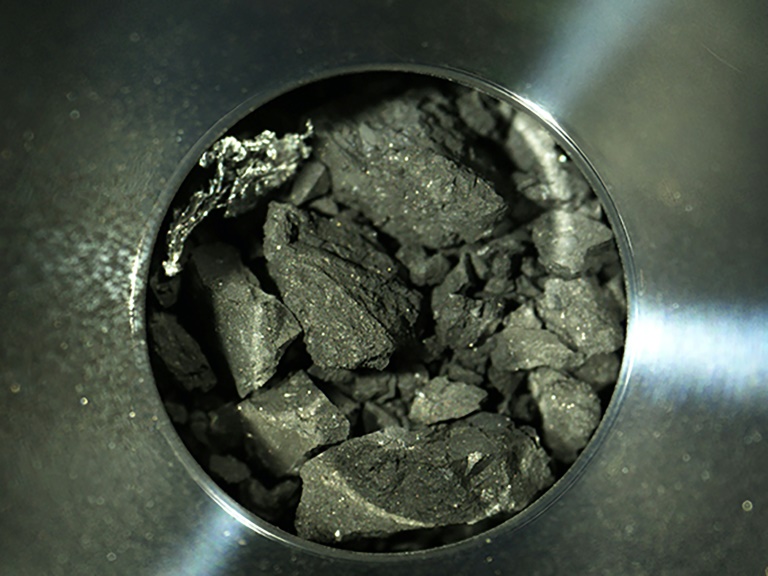
Asteroid dust collected by a Japanese space probe contains organic material that shows some of the building blocks of life on Earth may have been formed in space, scientists said Friday.

Pristine material from the asteroid Ryugu was brought back to Earth in 2020 after a six-year mission to the celestial body around 300 million kilometres away.

But scientists are only just beginning to discover its secrets in the first studies on small portions of the 5.4 grams (0.2 ounces) of dust and dark, tiny rocks.

In one paper published Friday, a group of researchers led by Okayama University in western Japan said they had discovered “amino acids and other organic matter that could give clues to the origin of life on Earth”.

“The discovery of protein-forming amino acids is important, because Ryugu has not been exposed to the Earth’s biosphere, like meteorites, and as such their detection proves that at least some of the building blocks of life on Earth could have been formed in space environments,” the study said.

The team said they found 23 different types of amino acid while examining the sample collected by Japan’s Hayabusa-2 probe in 2019.

The dust and rocks were stirred up when the fridge-sized spacecraft fired an “impactor” into the asteroid.

“The Ryugu sample has the most primitive characteristics of any natural sample available to mankind, including meteorites,” the Japan Aerospace Exploration Agency (JAXA) said in a statement.

It is believed that part of the material was created about five million years after the birth of the solar system and has not been heated above 100 degrees Celsius (210 degrees Fahrenheit).

Another study published in the US-based journal “Science” said the material has “a chemical composition that more closely resembles the Sun’s photosphere than other natural samples”.

Kensei Kobayashi, an astrobiology expert and professor emeritus at Yokohama National University, hailed the discovery.

“Scientists have been questioning how organic matter — including amino acids — was created or where it came from, and the fact that amino acids were discovered in the sample offers a reason to think that amino acids were brought to Earth from outer space,” he told AFP.

Another mainstream theory about the origin of amino acids is that they were created in Earth’s primitive atmosphere through lightning strikes, for example, after Earth cooled down.

Ukrainian forces 'holding on' in key Donbas battles

President Volodymyr Zelensky said Ukrainian forces were “holding on” in the flashpoint eastern city Severodonetsk where intense street battles with Russian troops could determine the fate of the Donbas region. 

Moscow has concentrated its firepower on the industrial city, which it now mostly controls, with the area’s governor saying on Friday that Russian forces had destroyed a major sports arena.  

Pro-Russian rebels sentenced one Moroccan and two British fighters to death on Thursday after they were captured while fighting for Ukraine and accused of acting as mercenaries for Kyiv.

Zelensky said in his evening address on Thursday night that several “cities in Donbas, which the occupiers now consider key targets, are holding on”. 

He added that Ukrainian forces have made positive strides in the Zaporizhzhia and Kharkiv regions, and are in the process of “liberating our land”.  

With the fiercest fighting now concentrated in Severodonetsk, governor Sergiy Gaiday — who earlier called for Western artillery to quickly help secure a Ukrainian victory — said “one of the symbols of Severodonetsk was destroyed. The Ice Palace burned down”.

Western countries have provided weapons and aid for Ukraine since the February 24 invasion, while several people from abroad have joined the fight against Russian forces.

Up to 100 Ukrainian soldiers were being killed every day in frontline fighting and as many as 500 wounded, Defence Minister Oleksiy Reznikov said.

– Death sentence –

Separatist authorities in the Donetsk region of the Donbas ordered the death penalty for Aiden Aslin, Shaun Pinner and Saadun Brahim, Russian media reported.

Britain’s Foreign Secretary Liz Truss called the sentence “a sham judgment with absolutely no legitimacy”.

A spokesman for Prime Minister Boris Johnson said the sentence contravenes the Geneva Convention, under which “prisoners of war are entitled to combatant immunity”.

Britons Aslin and Pinner surrendered in April in the southern port city Mariupol, which was captured by Russian troops after a weeks-long siege. They later appeared on Russian TV calling on Johnson to negotiate their release.

Moroccan Brahim surrendered in March in the eastern town of Volnovakha.

During a trial that lasted three days, the men pleaded guilty to committing “actions aimed at seizing power and overthrowing the constitutional order of the Donetsk People’s Republic”, Russian news agency Interfax said.

A lawyer representing one of them told the TASS news agency that they would appeal.

– ‘Foreign mercenaries’ –

After being repelled from Kyiv weeks into their invasion, Russian President Vladimir Putin’s troops have refocused their offensive on the eastern Donbas. 

Pro-Russian separatists have held part of the region since 2014.

Moscow, which has repeatedly warned the West against getting involved, said it had targeted a Ukrainian training centre for “foreign mercenaries” in the Zhytomyr region, west of Kyiv.

The Ukrainian presidency said four people were killed in a Russian air strike on Toshkivka, a village around 25 kilometres (16 miles) south of Severodonetsk.

It reported seven other deaths in fighting across the country. 

In Kyiv, Ukraine’s Interior Minister Denys Monastyrsky said the capital was in no immediate danger, but troops were keeping a line of defence all the same.

Putin, meanwhile, appeared to compare his actions to Peter the Great’s conquest of the Baltic coast during his 18th-century war against Sweden.

“By fighting Sweden he was grabbing something… He was taking it back,” he told young entrepreneurs in Moscow.

“It is our responsibility also to take back and strengthen”.

– ‘Every day something burns’ –

Zelensky on Thursday called for Russia to be expelled from the UN’s Food and Agriculture Organization (FAO), blaming Moscow for “causing hunger” and spurring the global grain crisis by invading his country.

Ukraine’s Black Sea ports export millions of tonnes of grain each year but have been blocked since the invasion, while western sanctions on Russia have prevented Moscow from selling much of its grain abroad, sending food prices soaring.

The FAO warned that poor countries will suffer the most from the crisis as they were “paying more but receiving less food”.

Africa has been hard hit by the shortage, and the African Union (AU) on Thursday urged Kyiv to demine waters around the Ukraine-controlled Odessa port to ease exports, warning of “serious famine” and destabilisation on the continent.

Moscow has also called for Ukraine to demine, but Kyiv has refused for fear of a Russian attack.

burs-dk/ssy/lb

Asian markets track global sell-off on inflation, rate fears

Asia extended losses across world markets on Friday after the European Central Bank laid the groundwork to join others in a programme of interest rate hikes, while attention turns to the release of key US inflation data.

After a largely positive start to the week, investors tracked their US and European colleagues in selling up as they contemplate higher borrowing costs and surging prices, which many fear could lead to a recession.

Adding to the unease was news that officials in China had once again locked down millions of people to test them owing to another flare-up in cases, dealing a blow to hopes for an economic reopening.

Still, the move helped push down oil prices — a key driver of global inflation — owing to concerns about the impact on demand.

With prices rising at a decades-high pace, central banks have been forced to withdraw the vast financial support measures put in place to combat the impact of the pandemic and helped fuel a rally across markets to record or multi-year highs.

The ECB became the latest to join the tightening campaign, announcing Thursday the end of its bond-buying programme and signalling it will hike rates several times this year.

It also sharply upgraded its inflation forecasts for this year and next while lowering the economic growth outlook.

Focus now turns to the release of US consumer price figures later Friday, with a strong reading likely to give the Federal Reserve more room to be aggressive.

“A robust May… print will probably prompt (policymakers) to hint at a 50 basis point hike for the September meeting,” said SPI Asset Management’s Stephen Innes.

“The tone will remain hawkish and the tough talk on inflation will continue.”

However, he added that “the significant upward revisions to core inflation projections are close to ending. Risk markets could take solace if one or two participants shift to seeing the inflation outlook is more balanced”.

Expectations are that the Fed will hike by half a point for at least three more meetings before January. 

Other commentators also suggested that traders were looking for signs inflation may be close to its highs.

“The big question is whether inflation has peaked or not,” said Matthew Simpson of StoneX Financial. 

“Inflation may have softened to a degree in April, but traders really want to see further evidence that inflation is pointing lower to call ‘peak inflation’ with confidence.

“Besides, one single month of data doesn’t define a trend.”

And OANDA’s Edward Moya said that the darkening outlook could provide an argument for the Fed to apply the brakes to hiking later in the year.

“Warning signs about the economy are emerging as weekly jobless claims are starting to rise, China’s Covid situation will prove troublesome for supply chains over the next couple of quarters, and as inflationary pressures broaden and show no sign of easing.

“It seems reductions in global growth forecasts will become a steady theme over the next few months and that should complicate how much more tightening we see from central banks.”

In early trade, Tokyo, Hong Kong, Sydney, Seoul, Singapore, Taipei, Wellington, Manila and Jakarta were all down.

However, data showing Chinese producer price inflation eased last month to its lowest level in a year provided some cheer to mainland traders with Shanghai edging up slightly.

On currency markets the euro continued to struggle against the dollar after the ECB flagged a quarter-point hike, while the yen remained around two-decade lows on the greenback.

– Key figures at around 0230 GMT –

Tokyo – Nikkei 225: DOWN 1.4 percent at 27,848.79 (break)

Hong Kong – Hang Seng Index: DOWN 0.7 percent at 21,726.41

Shanghai – Composite: UP 0.3 percent at 3,248.75

Euro/dollar: UP at $1.0626 from $1.0620 late Thursday

Euro/pound: UP at 85.05 pence from 84.98 pence

Dollar/yen: DOWN at 134.03 yen from 134.40 yen

Pound/dollar: DOWN at $1.2493 from $1.2495

Brent North Sea crude: DOWN 0.8 percent at $122.10 per barrel

West Texas Intermediate: DOWN 0.8 percent at $120.60 per barrel

New York – Dow: DOWN 1.9 percent at 32,272.79 (close)

London – FTSE 100: DOWN 1.5 percent at 7,476.21 (close)

Brazil police find blood on suspect's boat in case of missing reporter, expert

Traces of blood have been found on the boat of a suspect arrested in connection with the disappearance of a British journalist and a Brazilian indigenous expert in the Amazon, authorities said Thursday, as calls grew to intensify the search.

Dom Phillips, 57, a regular contributor to The Guardian newspaper, and Bruno Pereira, 41, a specialist in indigenous peoples, were reported missing on Sunday after they ventured into the middle of the Amazon rainforest.

“Traces of blood were found on the boat of Amarildo da Costa de Oliveira, 41,” Brazil police said in a statement, adding that the suspect known as “Pelado” was arrested on Tuesday. 

“The material collected is on its way to Manaus,” the capital of the Amazonas state, for expert analysis, the statement added.

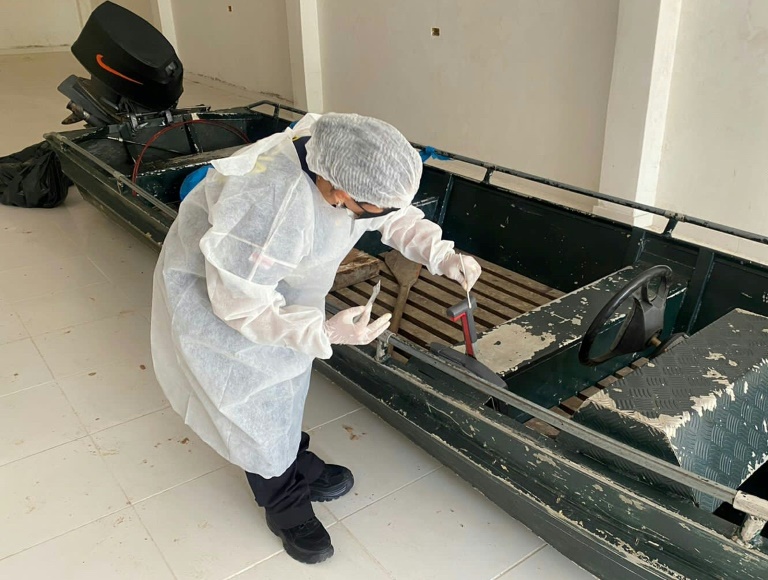
It was accompanied by images of investigators taking photos of what appeared to be a small bloodstain on a blue tarp inside a motorboat with peeling paint. 

The statement is a grim twist in the ongoing search for the two men, whose fate remains unknown.

The Brazilian authorities said they are hopeful of finding the pair alive but do not exclude any outcome, including that of homicide, in a region where trafficking is rife. 

High-profile personalities and environmental and human rights groups have rallied to the cause, urging President Jair Bolsonaro to step up the search. 

“Where is Dom Phillips? Where is Bruno Pereira?” asked the journalist’s sister, Sian Phillips, in a statement to the media during a gathering of around 30 people in front of Brazil’s embassy in London. 

“We want the UK authorities to put pressure on the Brazilian government,” she added, before she and other family members were received by the ambassador.

“We want to carry on with the search. We want to find out what is happening to them and we want anyone responsible for any criminal act to be brought to justice. We want a persistent deep and open investigation,” she added. 

She blamed the Brazilian authorities for delaying the search but said they “all have hope” that the pair will be found.

“He is a great writer and journalist. He is a caring man. He cares about the environment. He loves Brazil,” Phillips said of her brother.

“He’s a great guy and we love him with all our heart.”

Paul Sherwood, Phillips’ brother-in-law, told AFP the family had “been assured that everything has been done that can be done.”  

– Bolsonaro says hopes ‘fade’ each day –

Bolsonaro, who was attending the Summit of the Americas in Los Angeles, said Thursday: “Let’s pray to God that they are still alive.”

But, he added, “With each day that passes, those chances fade.”

He had drawn criticism in past days for appearing to blame the missing men, saying they had undertaken an “unadvisable adventure.”

Phillips and Pereira went missing in the Javari Valley in Amazonas state, located in the west of the Amazon basin, near Peru.

Witnesses said they saw the suspect speeding by in a boat going in the same direction as Phillips and Pereira when they were last seen. Police said the man had been arrested for carrying unlicensed caliber ammunition and drugs.

The remote region is experiencing an escalation in armed violence due to the presence of miners, gold diggers, poachers and drug traffickers.

burs-st/sst/sw

Julie Andrews 'gobsmacked' by Hollywood award, six decades after 'Mary Poppins'

Nearly 60 years after preaching virtues of patience and modesty as Mary Poppins and governess Maria, Julie Andrews declared herself “gobsmacked” to have her career honored at a glitzy Hollywood gala Thursday.

“I didn’t know or think that it would ever come,” the 86-year-old told AFP on the red carpet before receiving the American Film Institute’s life achievement award in Los Angeles, bestowed upon one silver screen legend each year.

“But it’s just as well, because you can’t go around expecting awards and things like that.”

In fact, Andrews won the Oscar for best actress with her very first big-screen role — 1964’s “Mary Poppins” — having rapidly progressed from child singer touring British music halls, to Broadway starlet spotted by Walt Disney.

A year after playing the magical and squeaky-clean nanny, and still in her twenties, Andrews sealed a permanent place among Tinseltown’s elite with “The Sound of Music.”

Five of the actors who played the Von Trapp children — a wealthy Austrian family in need of governess Maria’s singing lessons, and help in evading the Nazis — attended Thursday’s ceremony, along with four of Andrews’ real-life offspring.

Andrews went on to star in a number of films during the 1970s, 1980s and 1990s, with some racy — even topless — scenes, which shocked audiences more used to her straight-laced characters.

In 2000 she was made a Dame by Queen Elizabeth II for services to acting and entertainment.

Following a personal disaster when her vocal chords were damaged in an operation, Andrews revived her career with “The Princess Diaries” (2001) and its sequel in 2004. 

Her voiceover work as Queen Lillian in the “Shrek” animated film series, Gru’s mother in the “Despicable Me” franchise, and Lady Whistledown in the hugely popular Netflix series “Bridgerton” earned her a new generation of young fans.

Andrews was due to receive the AFI award — billed as “the highest honor for a career in film — in 2020 and again in 2021, but the gala was postponed both times due to the pandemic. 

“When they asked me even two-and-a-half years ago — and Covid is what kept us from doing it then — I was gobsmacked,” she said.

Searing US Capitol riot footage revives grim memories of violence

The footage was more violent, more eye-popping than any prime-time network crime show. And it was real.

Video images capturing the raging anger and violence of the mob ransacking the US Congress provided a vivid and visceral picture of the 2021 insurrection on Capitol Hill.

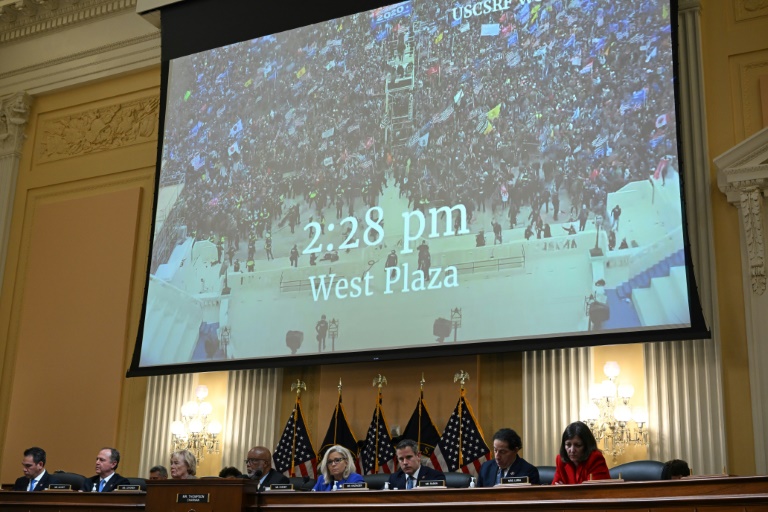
Dozens of journalists, politicians and congressional staffers crammed into the Capitol’s stately Cannon Caucus Room Thursday for the first hearings into the January 6 committee’s findings, their febrile chatter quickly turning to stunned silence as opening speeches were followed by video of the riot playing out on a huge screen.

A minute-by-minute visual breakdown — much of it composed of new footage — served as a painful reminder of the mayhem that played out as a mob attempted to disrupt the formal vote by lawmakers to transfer power from Donald Trump to Joe Biden. 

The committee showed the moment when the mob, spurred on by members of the neofascist Proud Boys, overwhelmed police at the perimeter of the Capitol complex, casting aside barricades as they surged forward.

Police officers were seen desperately trying — and failing — to keep the crowd at bay as rioters climbed scaffolding, hurled chairs and eventually breached the halls of Congress.

The public gallery sat rapt, watching graphic images of the clashes that could have spiraled into a much larger tragedy had lawmakers not been evacuated.

Some people in the public seats looked away at times but many held up phones to record the footage as hordes of rioters — some in tactical gear — were seen streaming into the Capitol through broken windows and other breached entry points. 

The video juxtaposed images of insurrectionists overrunning the complex from the outside with footage of the mob roaming the Capitol — and video and audio of Trump whipping up the crowd beforehand and praising the mob afterwards. 

– ‘Blood, sweat and tears’ –

US Capitol Police officer Caroline Edwards also gave an account of the violence, in which she was concussed when she cracked her head on the Capitol steps after being knocked over by the surging mob.

She spoke of her “literal blood, sweat and tears… shed that day defending the building that I spent countless holidays and weekends working in.”

Measuring roughly the size of two tennis courts, its gilded walls adorned with Corinthian floor-to-ceiling pillars illuminated by crystal chandeliers, the airy, magisterial Cannon Caucus Room in an annex off the main Capitol building is designed to inspire awe. 

Just yards from the main Capitol building in downtown Washington, it was the venue for House Un-American Activities hearings in 1948 during the Soviet “reds under the bed” moral panic, and more recently hearings for Trump’s first impeachment.

The former president — still the nearest thing Republicans have to an official party leader — wasn’t present as lawmakers set out their case that he was to blame for the insurrection that left five dead in January 2021, just across the road.

Yet his presence was almost palpable on “opening night” for a what is certain to be a summer of blockbuster hearings.

Spectators had come to be part of history as the stiffly-named Select Committee to Investigate the January 6th Attack on the United States Capitol opened its case — and history did not disappoint. 

The meticulously stage-managed made-for-TV session was the panel’s first opportunity to show the public what they’ve learned from more than 1,000 witness interviews and 140,000 documents. 

Its central mission has been to assess the catalysts for the violence of a day unparalleled in history. 

But investigators were also tasked with assessing the extent of Trump’s many suspect attempts to cling to power, and how they played into the bloodshed. 

There were excerpts of taped interviews with Trump administration and campaign officials who told members of Trump’s inner circle there was no justification for overturning the election.

Trump’s attorney general Bill Barr was shown telling investigators the defeated president’s claims of fraud involving manipulated voting machines were “complete nonsense.”

Trump’s eldest daughter and former aide Ivanka Trump — speaking for the first time about the fraud claims —  was shown saying she “accepted” Barr’s rebuttal of the bogus allegations.

With no actual prosecutorial powers — the Justice Department is pursuing a parallel criminal investigation — the panel sees its job as convicting Trump in the court of public opinion. 

This may not be a heavy lift, as the question of Trump’s criminality has already been settled in part, by a landmark ruling in March from a federal judge who said it was “more likely than not that President Trump corruptly attempted to obstruct the joint session of Congress on January 6.”

“The illegality of the plan was obvious,” he said.

In US, forgotten Black cemeteries rediscovered

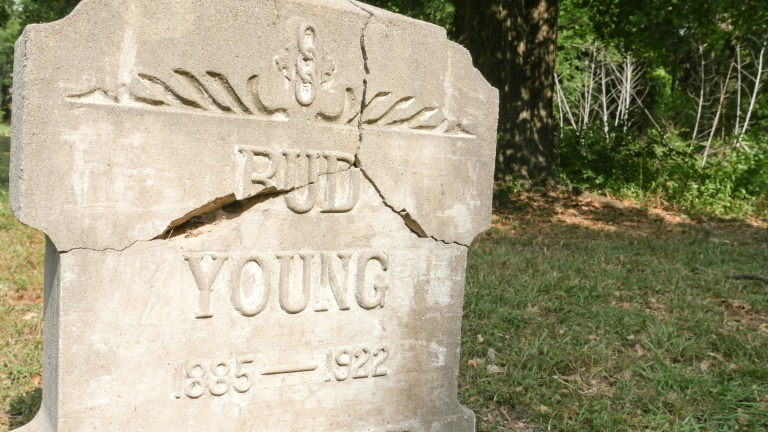
The babies are gone and so are the veterans. Buried at the edge of an African-American cemetery in the US city of Houston, their bodies were washed away by a nearby bayou during major storms in past decades.

Under the blazing Texas sun, dozens of volunteers mowed grass and cleaned tombstones recently to help save what is left of Olivewood Cemetery’s 4,000 graves.

Some parts of the cemetery at first appear forgotten, with broken or dirty headstones.

But the graveyard is in fact receiving newfound care — part of a modern push to preserve Black heritage, as interest in saving neglected or even erased African-American historical sites spikes.

The “George Floyd murder, I think it just was a crystallizing moment,” said Antoinette Jackson, a professor of anthropology at the University of South Florida, explaining the new interest in such places.

African-American cemeteries “have been continually erased and information about them silenced,” she said.

Margott Williams, president of the Descendants of Olivewood nonprofit, laments those whose graves have washed away at the Houston cemetery: “There were babies back there. I don’t see my babies back there anymore. There were veterans back there. I don’t see my veterans back there.” 

To help record the existence of such sites, Jackson created the Black Cemetery Network, which allows people to share the location of African-American graveyards, many of which have been lost to time and neglect.

– Reverse script and seashells –

The reasons for the cemeteries’ disappearance from public knowledge are many.

The oldest plots hold enslaved individuals, who were generally buried on white people’s land. Those white people did not systematically record the graves’ existence, and subsequent landowners, if they knew about them, often ignored them.

Other Black cemeteries have been claimed by local government landgrabs in which the community’s rights to their burial grounds weren’t respected, Jackson said.

Such was the case in Tampa, Florida where Mayor Jane Castor earlier this year apologized for the city’s confiscation of two cemeteries from the Black community to resell in the 1930s to white developers.

In the suburbs of Washington, an attempt to sell to an investor land that was once a slave cemetery is attracting attention, with various groups mobilizing against the move.

And finally, many cemeteries were forgotten after African-Americans were driven from nearby areas due to the construction of infrastructure such as highways or outright gentrification.

At Olivewood Cemetery, a single African-American family still lives nearby in a modest house that is now surrounded by high-end buildings.

The graveyard was only recently classified among the country’s most endangered historic places by the nonprofit National Trust for Historic Preservation.

The move comes decades after Charles Cook first rediscovered the cemetery in 1993, after it was more or less abandoned for 40 years.

“It was a jungle,” he told AFP.

Machete in hand, he cleared it himself and continues its upkeep at his own expense, visiting the graveyard every day. In researching its occupants, he discovered two of his own ancestors were buried there.

A study will soon propose solutions to protect it from the dangers of eroding rainwater and the bayou. How the work will be financed remains to be seen, however.

Nationally, in February, an African-American Burial Grounds Preservation Act was introduced in the US House and Senate “to research, identify, document, preserve, and interpret historic African-American burial grounds,” which Jackson thinks will be adopted in the fall.

In the meantime, on Saturday, anthropology student Jasmine Lee was supervising the Olivewood volunteers. 

She says she is fascinated by the tombs which testify to “cultural, spiritual ideals that were not only founded in practice during enslavement, but carried over into freedom.”

Some of the tombstones’ script is written upside-down or in reverse to trick evil spirits or otherwise allow the dead to read their own names from below.

Elsewhere, shells were used as decorations to evoke a sea voyage, which in some parts of Africa symbolizes departure to the other side.

Further down the way, iron pipes in the ground no doubt helped the spirits get out and amble about.

– Sugar Land 95 –

In Sugar Land, a suburb southwest of Houston, a memorial is in the works to honor 95 African-Americans whose graves were found in 2018 during construction work on school district grounds.

The skeletons, as it would turn out, belonged to prisoners who died between 1878 and 1911 and who had been loaned out by judicial authorities to work the local sugarcane farms. 

The work was grueling and the convicts’ poor health was evident from the state of their bones.

The “convict leasing system,” as it was called, was abolished in Texas in 1912 and at the federal level in 1941.

Shifa Rahman, campaign director for the Convict Leasing and Labor Project, is advocating for the forthcoming memorial to “properly and equitably” educate about what the prisoners “had to endure under the convict leasing system.”

The nonprofit is also calling for DNA tests to identify the remains. 

For now, everyone has an identical tombstone, on which “unknown” is written, followed by a number.

Biden faces discord at Americas summit

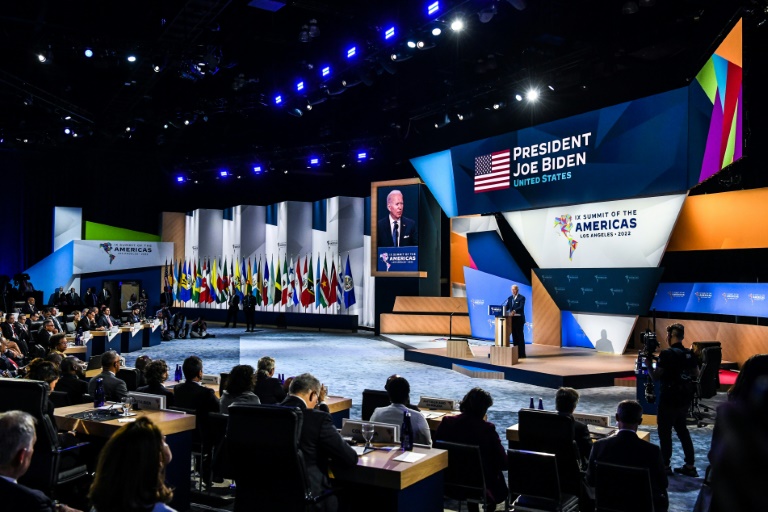
US President Joe Biden faced open criticism Thursday at an Americas summit, along with complaints about foreign pressure by Brazil’s far-right leader, as he sought progress on issues from migration to climate change.

Biden is welcoming leaders from across the hemisphere in Los Angeles in a choreographed bid to show that democracy can work, amid rapid inroads by China in a region long seen by Washington as its turf.

But just after Biden made his pitch at the Summit of the Americas, he heard an earful over his decision to exclude the leftist leaders of Cuba, Nicaragua and Venezuela on the grounds that they are autocrats — a decision that already triggered a boycott by Mexico’s president.

Argentina’s center-left president, Alberto Fernandez, who was persuaded to attend by Biden, said that dialogue “is the best way to promote democracy.”

“Being the host country of the summit doesn’t grant the ability to impose a right of admission on member countries of the continent,” Fernandez said.

Biden heard even more direct criticism from one of the hemisphere’s smallest nations Belize, whose representatives told him it was “inexcusable” not to invite all countries and called the half-century US pressure campaign against Cuba a “crime against humanity.”

Prime Minister John Briceno also questioned whether Biden would follow through financially on lofty promises.

“We know that money is not the problem. In less than three months, two countries in this hemisphere committed $55 billion to Ukraine,” he said, referring to the United States and Canada.

Biden, who applauded politely and greeted each leader, returned to the podium to insist his agenda was on track.

“Notwithstanding some of the disagreements relating to participation, on the substantive matters, what I heard was almost unity and uniformity,” Biden said.

Biden said the United States would raise specifics on how the hemisphere can do better together on improving public health and clean energy.

Biden plans to close the summit Friday with a declaration on migration, a hot-button issue in the United States, despite the snub of the summit by Mexican President Andres Manuel Lopez Obrador.

– Meeting ‘Tropical Trump’ –

Biden met for the first time in Los Angeles with Brazilian President Jair Bolsonaro, an ally of former president Donald Trump, who has questioned the legitimacy of elections both in his country and in Brazil.

Biden steered clear of fireworks in his public appearance with Bolsonaro and saluted Brazil for making “real sacrifices” to protect the Amazon.

“I think the rest of the world should be able to help you preserve as much as you can,” Biden said.

Bolsonaro has horrified environmentalists by championing agribusinesses that have cut down the rainforest, a crucial “sink” for carbon emissions that are heating up the planet.

Bolsonaro told Biden that the Amazon had “incalculable riches” and that “we do our best to defend our interests.”

“Sometimes we feel that our sovereignty is threatened in that area but Brazil preserves its territory well,” Bolsonaro said.

US officials saw at least modest progress with Bolsonaro on climate, with the announcement of a low-key initiative on deforestation and Brazil joining a UN pact on renewable energies.

Biden’s national security advisor, Jake Sullivan, earlier said Biden would not shy away from calling for free elections in Brazil, where Bolsonaro is trailing in polls to former president Luiz Inacio Lula da Silva, a leftist icon controversially jailed for corruption.

Bolsonaro told Biden that he wanted “clean, auditable elections” in the October vote.

Oliver Stuenkel, a professor at the Getulio Vargas Foundation in Sao Paulo, said it was an odd time for Biden’s meeting amid expectations that Bolsonaro will soon be out of power.

But he said Bolsonaro had leverage to request a meeting, boosting his domestic standing, as Biden needed to avoid boycotts of the leaders of both Brazil and Mexico, Latin America’s two most populous nations.

“Basically Bolsonaro is helping Biden avoid a diplomatic flop,” Stuenkel said.

– ‘Inflection point’ –

Latin American summits are often fractious, with the United States for decades on the receiving end of criticism over its efforts to isolate Cuba.

Biden made a veiled plea for understanding as he contrasted himself with Trump, saying, he was offering “proposals that I think are a far cry from what we saw from a previous American administration.”

He said that Latin America and the world stood at an “inflection point.”

“More is going to change in the next 10 years than has changed in the last 30 years in the world,” Biden said.

“I find no reason why the Western Hemisphere over the next 10 years is not developed into the most democratic region in the world.”

Close Bitnami banner
Bitnami