AFP

With inflation on rise, ECB readies tougher action

The European Central Bank is set to announce the end date to its bond-buying stimulus on Thursday, as concerns over the accelerating pace of inflation in the eurozone grip policymakers.

The stop is a prelude to the ECB hiking rates for the first time in over a decade in the weeks that follow, turning the page on an era of ultra-loose monetary policy.

Inflation in the eurozone rose to 8.1 percent in May, the highest level in the history of the currency club and well above the ECB’s own two-percent target.

The surge has largely been driven by the war in Ukraine, which has decisively pushed up the cost of energy, food and raw materials. 

Persistent price pressures have forced the ECB into an “enormous U-turn” since December, said Carsten Brzeski, head of macro at ING bank.

From saying inflation would be “temporary” and warding off interest rate hikes in 2022, the ECB is now racing to catch up with other major central banks in the United States and Britain.

With inflation picking up, “the only really interesting question is why they don’t start hiking rates immediately instead of waiting until July”, Brzeski said.

– ‘Lift off’ –

Under pressure to show the ECB was responding to inflation, President Christine Lagarde set out the likely next steps for the central bank in a blog post in late May.

The unusually clear statement foresaw an end to the ECB’s crisis-era stimulus programme “very early in the third quarter”.

The so-called asset purchase programme, or APP, is the last in a series of debt-purchasing measures worth a total of around five trillion euros ($5.4 trillion) deployed by the ECB since 2014.

Lagarde then went on to reveal ECB policy through the second half of the year, predicting a “lift off” in rates at the governing council’s next meeting in July, with the central bank bringing an end to negative interest rates by the end of September.

Of the ECB’s three main interest rates, the so-called deposit rate — which is normally the interest commercial banks would receive for parking their cash with the ECB overnight — has been negative since 2014.

– ‘Benchmark pace’ –

Still up for discussion in Amsterdam, where the governing council is meeting instead of at its usual venue in Frankfurt, is the size of the first step.

Some members have called on the ECB to follow the US Federal Reserve and bring the curtain down on negative interest rates with a single half-point hike.

The head of the Dutch central bank, Klaas Knot, said in May that such a move was “clearly not off the table”.

But the ECB’s chief economist, Philip Lane, pushed back against suggestions of a big hike, calling 25 basis points — or a quarter of a percentage point — the “benchmark pace”.

ECB followers will be listening carefully to Lagarde’s press conference at 2:30 pm (1230 GMT) for some indication of the prevailing thinking among policymakers.

Lagarde could “give a nod to the hardliners” by leaving the door open to a steeper rise, said Franck Dixmier, head of fixed income at Allianz Global Investors.

The decision will depend to a large extent on how the outlook for the economy changes.

The ECB is scheduled to publish new economic forecasts alongside its policy decisions on Thursday.

Its previous estimates — published in the immediate aftermath of Russia’s invasion of Ukraine — cut projected growth in the eurozone in 2022 to 3.7 percent and saw inflation rising to 5.1 percent.

Looking ahead, the ECB will be keeping a particularly close eye on any serious divergence in borrowing costs across the eurozone, as measured by the difference between yields on individual countries’ bonds and those of Germany — seen as a benchmark of stability.

Currently, the spread between Italian and German 10-year bonds is at its widest since the early stages of the coronavirus pandemic.

Lagarde has previously vowed to act “promptly” if needed, raising the possibility of designing a new instrument “in short order”.

Migrant caravan to continue trek through Mexico Thursday

Thousands of mostly Venezuelan migrants began receiving temporary Mexican visas Wednesday as they prepared to continue their trek toward the United States.

The migrants had set up a temporary camp on a basketball court in the southern Mexican town of Huixtla, some 40 kilometers from where they began their journey on Monday close to the Guatemala border.

Immigration authorities in Huixtla began slowly processing temporary visas for the migrants Wednesday, which will allow them to stay in Mexico for 30 days without fear of being deported, said Luis Garcia Villagran, a coordinator with the Human Dignity Center NGO that is accompanying the caravan.

A Mexican government official confirmed to AFP that humanitarian visas were being issued to the migrants, but Garcia said the process was slow.

“We’re going to the northern border! We’re going with permits, without permits, with buses, without buses, however they want,” said Garcia Villagran.

“We will leave on foot… tomorrow Thursday at 6 am (1100 GMT),” he added.

Huixtla has become a sort of bottleneck for undocumented migrants arriving from Central America, leaving the national immigration center there overwhelmed.

The caravan of people fleeing poverty, violence and political oppression in their homelands, set off on Monday in the same week that US President Joe Biden hosts the Summit of the Americas in Los Angeles, with migration one of the main agenda items.

On Tuesday, the US announced a new commitment to provide $1.9 billion of private funding to Central America with the aim of slowing the migration wave.

This most recent caravan is made up of around 11,000 people, including a group of 70 with handicaps, according to the human rights ombudsman’s office.

Venezuelan Julio Andrade, 43, who lost a leg in a traffic accident, told AFP he was migrating “for a better future, because the situation in my country is terrible. There is no employment, security or medicines.”

While waiting, the Venezuelans sang their national anthem and told jokes about President Nicolas Maduro.

They are hoping to receive special treatment from the United States, which does not recognize Maduro’s 2018 re-election as legitimate.

Another Venezuelan, 29-year-old Gleidys, said she could not understand why Mexican authorities were making it so difficult to receive a temporary visa.

“We don’t want to stay here … we’re passing through,” she said.

The UN says more than six million Venezuelans have left the country in recent years due to the economic and political crises there.

Migrant caravans that traversed Mexico in 2018 and 2019 sparked tensions with the administration of then-US president Donald Trump.

Since then, Mexico has stepped up its border controls and in 2021 more than 300,000 undocumented migrants were detained there.

US fight against opioid overdoses becomes one of racial justice: researcher

In 2020, the death rate from drug overdose among Black people surpassed that of white people in the United States for the first time since 1999, according to a study published this year. 

Its author, Joseph Friedman, a researcher at UCLA University in California, details for AFP the reasons for this recent shift.

– What were the different waves of opioid overdoses in the United States? –

The first wave was overdoses coming from prescription opioids that were essentially provided to the population through the healthcare system … And then, as the US started to cut back heavily on prescription opioid access, a lot of people started using heroin. 

That was associated with a large increase in overdose deaths because people are moving from a less dangerous to a more dangerous form of opioids … And then the third wave is the shift to illicit fentanyl. 

And here is where the US really kind of became an extreme global outlier in terms of overdose. Because illicit fentanyls are potentially several hundred times more potent than heroin by weight. 

And the fourth wave is what we’re seeing very recently, which is a huge increase in polysubstances, which means: basically people are using fentanyls but they’re also mixing them with many different kinds of other substances. Some of this is intentional and much of this is unintentional.

– Why did you start studying racial inequalities in drug overdoses? –

There’s been this narrative, a very powerful kind of cultural narrative in the US, historically, over the past like 10 or 15 years, that addiction and overdose was a quote unquote, white problem. 

And this is something that I have written about critiquing. 

It’s true that during the first wave of the overdose crisis, white overdose death rates were higher than Black overdose deaths rates. In 2010, they were actually double, so approximately twice as high. 

But that has really shifted. Basically after the first wave, we’ve seen overdose deaths rise faster among Black individuals than white individuals. 

So basically, the only time where it was true that white communities were disproportionately affected was because of prescription opioids. 

The roots of that are complex, but it’s pretty clear that that relates to the deep-seated structural racism in the healthcare system, that actually really denies access to controlled substances to people of color.

– What is the situation today? –

Black communities are disproportionately affected by the shift of fentanyls. For the first time since the 1990s, the Black overdose death rate overtook the white overdose death rate in 2020. 

The goals of overdose prevention now really align with the goals of racial justice movements. 

There’s really good evidence that fentanyl has made incarceration a very potent risk factor for overdose death. Immediately after people are released from prison, there’s a huge spike in the risk of overdose death. 

Combined with mass incarceration of Black communities, which we know is a big problem in the US, this is one of the key driving factors. 

With the drug supply becoming so dangerous, it requires a lot of resources to stay safe. Access to health care, access to substance use treatments, access to harm reduction, housing, employment… all of these things give stability. 

And so inequalities in these root conditions are, I think driving inequalities in overdose now. 

People of every racial group use drugs. That’s just a fact of life. Who dies from them is dictated by access to resources and cultural patterns, and there are deep-seated inequalities in terms of the resources that people need to stay safe.

– What do you think the answer should be? –

Basically the war on drugs, this police centric approach, has been an utter failure. 

Our overdose death rates are something like three times higher than the second worst country, and they’re over 20 times the average. 

We have the worst drug overdose death rate in recorded history. There’s never been anything even close to what we’re experiencing right now. 

We would need really, really profound restructuring of the way society spends money on drugs to actually make a difference here. 

Harm reduction is an important solution, but it is not getting at the root issues here. 

Which is access to treatments, and making the drug supply safer. 

In Europe, in many places there’s just heroin prescription programs. That’s the kind of stability that helps people overcome substance use disorder.

Black Americans bear the brunt of fentanyl 'epidemic' in Washington

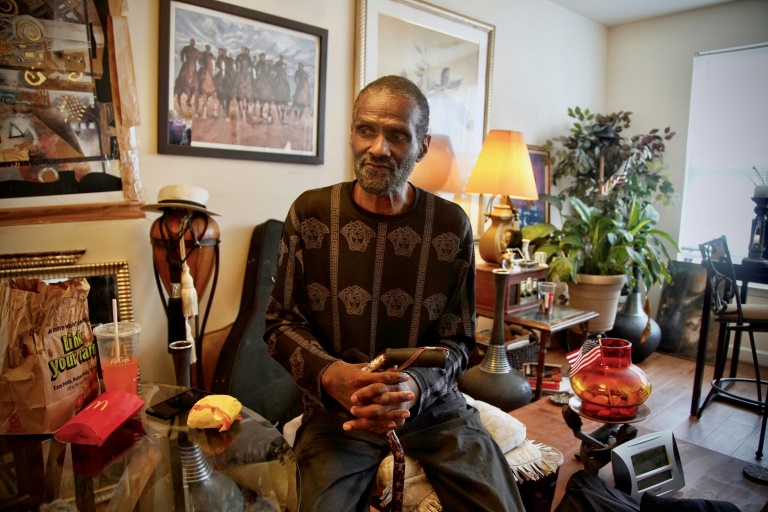
Lorando Duncan wears long-sleeved shirts because his arms bear scars he doesn’t like to show: those of the drugs he has been injecting into his veins for decades. 

Born in the US capital Washington 65 years ago, the slender African American has been using heroin almost all his adult life. 

But the advent of fentanyl, an ultra-powerful and addictive synthetic opioid, changed everything.

“Fentanyl killed a lot of my friends,” he tells AFP beneath a picture of America’s first Black vice president, Kamala Harris, that he has hung in his apartment in Anacostia, one of the poorest neighborhoods in the city. 

“Almost every two weeks, I hear about somebody overdosing on fentanyl.” 

He fears he will be next. “I need to stop… because eventually I’m going to kill myself. And I know it.” 

Fentanyl — sold in powder form and cheap to manufacture, so often used as an additive in other drugs such as heroin — began flooding the market in 2014.

In 2021, 426 people died of opioid overdoses in Washington — five times as many as in 2014. Of them, 95 percent were fentanyl-related, and 85 percent were Black people. Like Lorando, the majority were between 50 and 69 years old.

Heroin users have been at the forefront of this “poisoning” of supply, as experts call it.  

“One day I bought some drug from a guy I know, but I didn’t know it was fentanyl,” says Lorando, a former prisoner now living on disability benefits. 

He passed out, he says, falling on his hip. Now he walks with a cane. 

“When I fell, it was day, and when I woke up, it was nighttime. God woke me up this day,” he says.   

But now he takes fentanyl up to three times a day to feel “normal” and avoid the illness and nausea of withdrawal. 

“Now they use fentanyl to cut heroin. So you basically gonna get fentanyl in everything you buy. Everybody uses fentanyl to cut the dope. Make it potent,” he says.

The problem, he adds, is that users never know what they are going to get. “You’re playing Russian roulette.”

– Building trust – 

In Washington, long dubbed “Chocolate City” because of its large African American population, Black people were already dying from overdoses at twice the rate of white people in 2010, according to one study. 

By 2019, it was 10 times more. For both periods, this disparity was higher than in any state in the country. Experts say one reason is because of how much more vulnerable Black people are — lower income, less likely to own a home, less likely to have access to resources that can keep them stable and supported.

A few grassroots organizations are doing their best to combat the ravages of the drugs. 

Tyrone Pinkney has been working for one of them, the Family and Medical Counseling Service, for 10 years. The 33-year-old travels around the city, especially what he describes as “the crime areas,” in a recreational vehicle. 

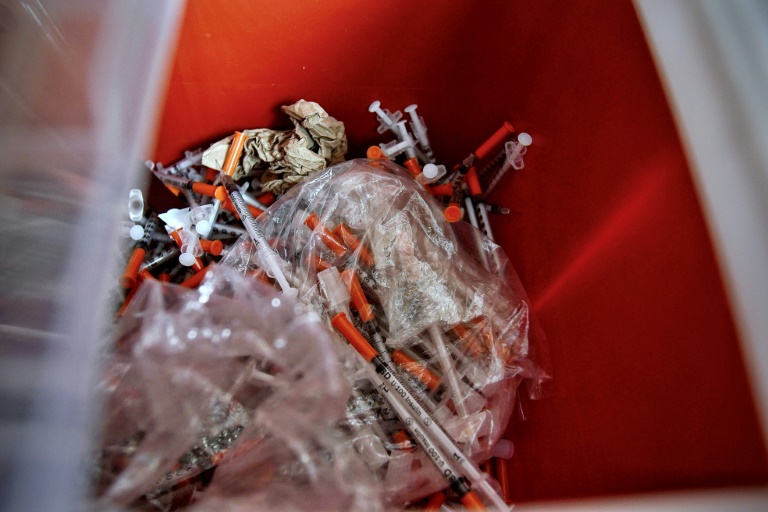
On the RV’s floor is a box containing dirty syringes, collected from visitors who are then given clean ones.

And on the seats are cartons of Narcan, the brand name of naloxone, an antidote capable of blocking the effect of opioids — and thus saving a person in the process of overdosing.  

With a tablet in hand, Pinkney questions the few dozen people who turn up each day, checking for example whether they have been tested for the AIDS virus.  

“It’s not going to keep them from doing what they’re doing. But it’ll keep them safe,” he explains. 

Little by little, bonds of trust are created. On his phone, he scrolls through the names of dozens of “clients,” as he calls them, who can call him in case of need.  

– ‘Perfect storm’ – 

The association helped more than 2,500 people in 2021, and distributed more than 200,000 syringes, according to regional coordinator Mark Robinson.

“It’s an emergency. It’s endemic,” he tells AFP.

“It’s an opioid epidemic, layered beneath a (Covid-19) pandemic, layered beneath a health emergency that was already pre-existing amongst Black and brown people,” he continues, listing the ways in which Washington’s residents are made vulnerable.

“You have multiple epidemics upgrading simultaneously, it’s like a perfect storm. And we’re right in the midst of it.”  

For many, the steps needed to access treatment, such as opioid substitutes methadone or buprenorphine, remain too complex — making it often easier to get drugs than help.  

“We’ve really worked hard on access,” Barbara Bazron, who heads Washington’s department of behavioral health, tells AFP.

For example, users no longer need to go through a dispatch center to receive prescriptions — 70 approved entities can directly receive new patients, she explained. 

More than 5,000 people are currently enrolled in these care programs. 

The city has also prioritized the free distribution of naloxone, giving away 56,000 kits in 2021, and tests to detect whether drugs contain fentanyl. 

City Hall is also “gathering information” on safe injection sites, such as those recently set up in New York, says Bazron, who admits she is willing to look at any option.

“Nothing is off the table,” she says.

Biles, Raisman, other top US gymnasts file $1 bn claim against FBI

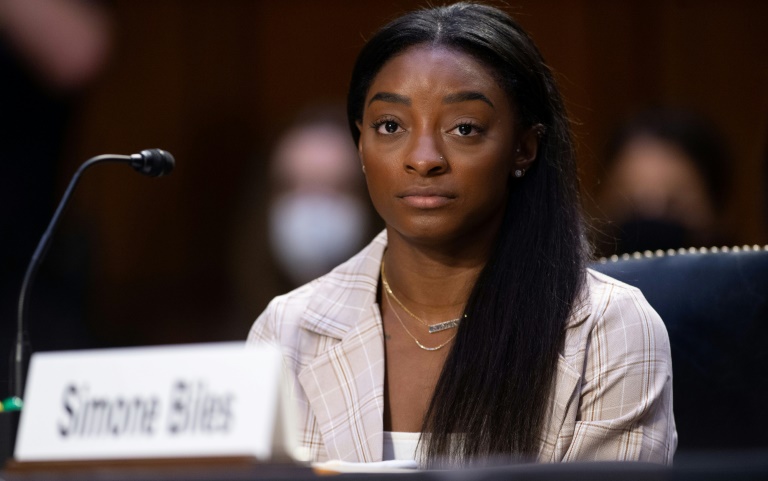
Simone Biles, Aly Raisman and other star US gymnasts filed a $1 billion claim against the FBI on Wednesday for mishandling of the investigation into sexual abuse by predatory former team doctor Larry Nassar.

Nassar, 58, is serving a life sentence after pleading guilty in late 2017 and early 2018 to sexually assaulting athletes while working as a sports medicine doctor at USA Gymnastics and Michigan State University.

Hundreds of women — including Olympic gold medalists Biles, Raisman and McKayla Maroney — have accused Nassar of sexually abusing them during his more than two-decade career.

Biles, Raisman and Maroney are among the more than 90 women who have filed the federal tort claim against the Federal Bureau of Investigation, the law firms handling the case said in a joint statement.

“The majority of claimants consists of over 90 young women and girls who were abused after 2015 due to the FBI’s failure to take required steps to protect them,” they said.

The claim against the FBI comes just days after the Department of Justice announced it was not bringing any charges against two now retired FBI special agents who mishandled the Nassar investigation.

“My fellow survivors and I were betrayed by every institution that was supposed to protect us — the US Olympic Committee, USA Gymnastics, the FBI and now the Department of Justice,” Maroney said in a statement. 

“I had some hope that they would keep their word and hold the FBI accountable,” she said. “It is clear that the only path to justice and healing is through the legal process.”

– ‘Grossly derelict’ –

The law firms said the FBI received credible complaints in July 2015 of Nassar’s sexual assaults and was “then able to immediately end Nassar’s predation.”

“However, the FBI was grossly derelict in their duties by declining to interview gymnasts who were willing to talk about the abuse,” they said.

“As a result, Nassar continued his predatory behavior, sexually assaulting approximately 90 young women and children between July 28, 2015, and September 12, 2016,” they added.

An FBI spokeswoman declined to comment on the legal claim but pointed reporters to testimony before a Senate committee in September 2021 by FBI director Christopher Wray.

Addressing Nassar’s victims, Wray said: “I’m especially sorry that there were people at the FBI who had their own chance to stop this monster back in in 2015 and failed.”

“That’s inexcusable,” the FBI director said. “It never should have happened. And we’re doing everything in our power to make sure it never happens again.”

Nassar’s victims reached a $380 million settlement with USA Gymnastics last year, one of the largest ever recorded for victims of sex abuse.

USA Gymnastics filed for bankruptcy in 2018 after a tidal wave of allegations against Nassar swamped the organization.

Michigan State University reached a $500 million settlement with hundreds of Nassar’s victims in 2018.

Biden reaffirms support for Venezuela's Guaido despite no invitation

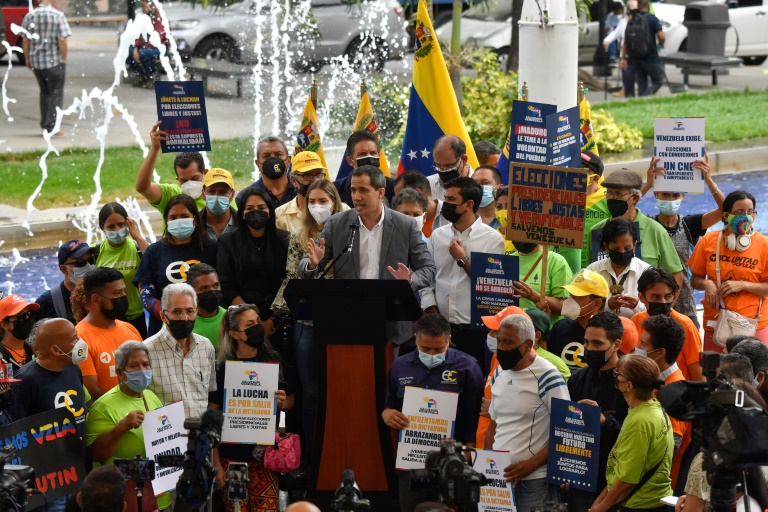
US President Joe Biden reaffirmed support for Venezuelan opposition leader Juan Guaido in a phone call Wednesday, despite not including him in this week’s major Americas summit in Los Angeles.

Biden also said that the United States was ready to provide incentives to President Nicolas Maduro — who was also not invited — if the leftist leader negotiates a compromise with the opposition.

In a statement following Biden’s call with Guaido while aboard Air Force One, the White House made clear it still considers him the “interim president” of Venezuela.

Biden “expressed his support for Venezuelan-led negotiations as the best path toward a peaceful restoration of democratic institutions, free and fair elections,” the White House statement said.

“President Biden reaffirmed the United States is willing to calibrate sanctions policy as informed by the outcomes of negotiations that empower the Venezuelan people to determine the future of their country.”

Former president Donald Trump in 2019 declared Maduro to be illegitimate following elections in which wide irregularities were reported.

Trump ramped up sanctions in a bid to topple Maduro, who presided over a crumbling economy that led millions of Venezuelans to flee.

Most Western and Latin American nations joined suit in recognizing Guaido but some have since privately conceded that Maduro has withstood the pressure.

Biden, hoping to champion democracy, refused to invite Maduro or the leftist leaders of Cuba and Nicaragua on the grounds that they are authoritarians.

The snub led to a boycott of the summit by Mexican President Andres Manuel Lopez Obrador, one of the few major Latin American leaders whose government still recognizes Maduro.

Jake Sullivan, Biden’s national security advisor, said that the decision not to invite Guaido was not part of an attempt to placate Lopez Obrador.

“We thought the best way to lift up our desire to see that Venezuelan-led dialogue and, ultimately, a better future for the Venezuelan people was to focus on the invitations to Venezuelan civil society activists who will participate in various aspects of the summit,” Sullivan told reporters on Air Force One.

The State Department unsuccessfully tried to woo Lopez Obrador by inviting a lower-level Cuban official, a plan that fell through as the United States was angered by a crackdown on dissent on the island.

Guaido, in a statement from his office, thanked the United States for support and said that any shift in international pressure needed to achieve “a negotiated exit to the crisis that results in free, fair and verifiable elections.”

Raising a major issue for the United States at the summit, Guaido said that “the growing Venezuelan migration will only stop when there is a transition to democracy.”

Mexican mega-church leader sentenced for child sex abuse

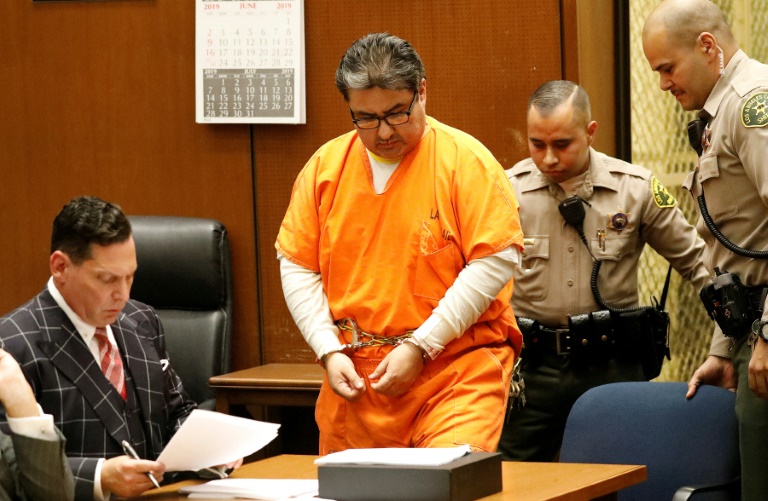
The leader of a Mexican mega-church who pleaded guilty to sexually assaulting three young girls was sentenced in Los Angeles on Wednesday to nearly 17 years in prison.

But the ruling, following a plea deal Naason Joaquin Garcia struck with prosecutors last week, was met with anger by victims, who at an emotional hearing called for their abuser to face trial and the maximum possible sentence.

One victim in court Wednesday condemned officials for “negotiating with this rapist” while another said in a statement read to the court that the justice system “failed us.”

Garcia, head of the La Luz Del Mundo church which claims five million followers worldwide, coerced underage girls into performing sexual acts by telling them that going against his wishes would be acting against God, prosecutors said.

He was arrested at a Los Angeles airport in June 2019. An initial human trafficking and child rape case was thrown out on a technicality, and charges were re-filed.  

Last Friday, on the eve of his trial, the 53-year-old — who claims to be the last apostle of Jesus, and had initially denied all wrongdoing — pleaded guilty to felony crimes of sexual assault of three minors.

These included forcible oral copulation and a lewd act upon a 15-year-old, but not counts of rape, extortion and child pornography.

California attorney general Rob Bonta hailed the sentence as a “critical step forward for justice.”

“While it will never undo the harm and trauma he caused as the leader of La Luz del Mundo, this sentence makes it crystal clear that abusers — no matter who they are — will be held accountable,” he said Wednesday.

Still, Garcia’s church continued to back its leader, issuing a statement Wednesday to “publicly express our support for the Apostle of Jesus Christ” and praising his “integrity, his conduct and his work.”

The Spanish-language statement said evidence against Garcia had been fabricated and that the leader had no choice but to strike a deal as he would not have received a “fair and just” trial.

In court, one victim who said Garcia had stolen both her virginity and her faith begged the judge to “make sure that this man is put away for life.”

“How is this justice?” she asked.

Zuckerberg staying at Meta helm for years 'makes sense': Clegg

Mark Zuckerberg’s presence at the helm of Facebook parent Meta for “many, many years” would be perfectly natural, his global affairs director has told AFP, even as the founders of many tech companies hand off to fresh blood.

Succession at the mega company has been in the headlines in recent weeks with the announcement of the departure of Sheryl Sandberg after 14 years as the firm’s number two.

But while the founders of companies like Amazon, Twitter and Google have all moved on, Zuckerberg has shown no sign of giving up the reins — despite raging criticism over privacy scandals and the rampant spread of misinformation across Facebook.

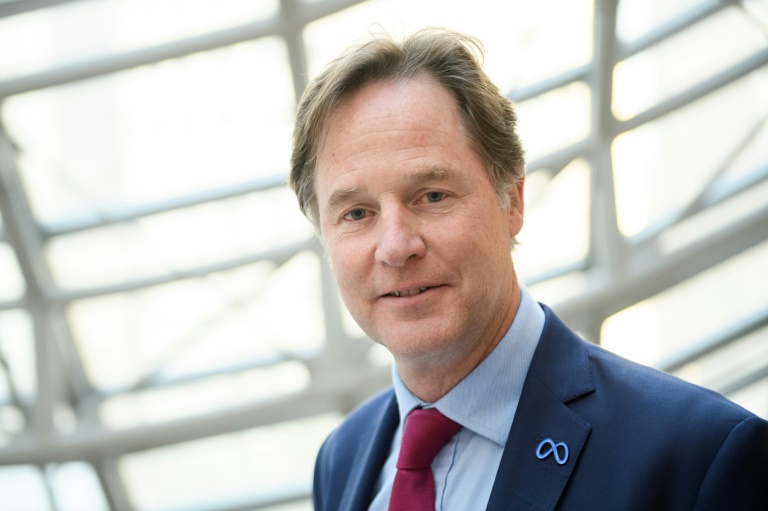
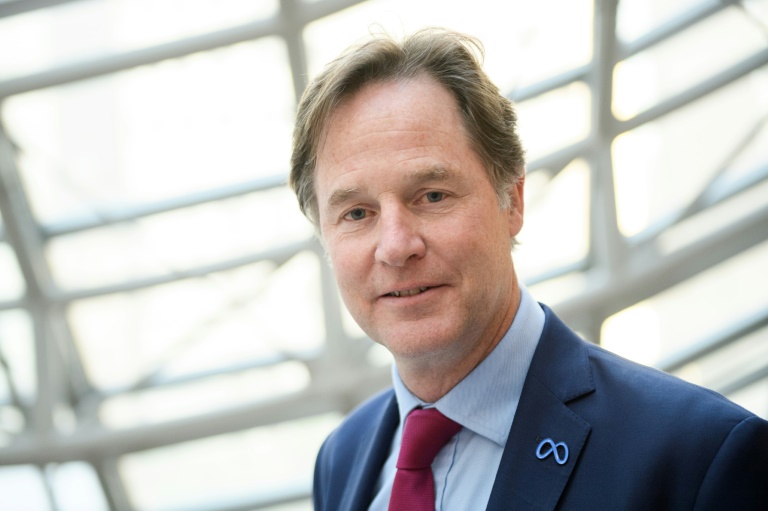
Now as Meta rolls out its plans for the metaverse — the immersive virtual world that it considers the future of the internet — there’s no reason for the 38-year-old to go anywhere anytime soon, said Nick Clegg, the company’s director of global affairs. 

“It’s a multi-year project. It would make sense to me that Mark Zuckerberg would want to continue, to build this new chapter of the company, and that’s going to last for many years, many years,” Clegg told AFP on the sidelines of the Summit of the Americas in Los Angeles.

“He is the founder of the company, of Meta, but he is also the architect of the new chapter, of this construction, of these augmented reality and virtual reality technologies.” 

Facebook bought virtual reality headset maker Oculus in 2014 and launched a social VR platform.

The technology has taken off in the gaming industry, and become popular among players of Fortnite and Roblox.

But Clegg, a former British deputy prime minister, said the metaverse promised great opportunities in the fields of education and medicine, as well as entertainment.

For example, he said, teachers can take their students on a virtual trip through ancient Greece, and medics can learn sophisticated surgical techniques.

And, he said, as hardware improves, the need for specialist equipment will diminish.

“In years to come, people will be able to access these new technologies through their phones,” he said. 

“We are exploring how we can increase access to everyone and not just people who can afford the new and latest hardware.”

Zuckerberg staying at Meta helm for years 'makes sense': Clegg

Mark Zuckerberg’s presence at the helm of Facebook parent Meta for “many, many years” would be perfectly natural, his global affairs director has told AFP, even as the founders of many tech companies hand off to fresh blood.

Succession at the mega company has been in the headlines in recent weeks with the announcement of the departure of Sheryl Sandberg after 14 years as the firm’s number two.

But while the founders of companies like Amazon, Twitter and Google have all moved on, Zuckerberg has shown no sign of giving up the reins — despite raging criticism over privacy scandals and the rampant spread of misinformation across Facebook.

Now as Meta rolls out its plans for the metaverse — the immersive virtual world that it considers the future of the internet — there’s no reason for the 38-year-old to go anywhere anytime soon, said Nick Clegg, the company’s director of global affairs. 

“It’s a multi-year project. It would make sense to me that Mark Zuckerberg would want to continue, to build this new chapter of the company, and that’s going to last for many years, many years,” Clegg told AFP on the sidelines of the Summit of the Americas in Los Angeles.

“He is the founder of the company, of Meta, but he is also the architect of the new chapter, of this construction, of these augmented reality and virtual reality technologies.” 

Facebook bought virtual reality headset maker Oculus in 2014 and launched a social VR platform.

The technology has taken off in the gaming industry, and become popular among players of Fortnite and Roblox.

But Clegg, a former British deputy prime minister, said the metaverse promised great opportunities in the fields of education and medicine, as well as entertainment.

For example, he said, teachers can take their students on a virtual trip through ancient Greece, and medics can learn sophisticated surgical techniques.

And, he said, as hardware improves, the need for specialist equipment will diminish.

“In years to come, people will be able to access these new technologies through their phones,” he said. 

“We are exploring how we can increase access to everyone and not just people who can afford the new and latest hardware.”

Hi-tech herd: Spain school turns out 21st-century shepherds

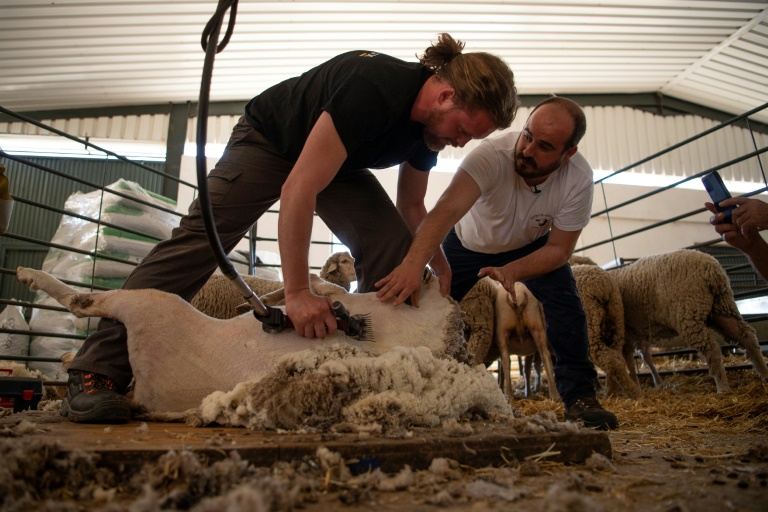
Gripping a sheep firmly between her legs, Vanesa Castillo holds its head with one hand while she tries to shear off its thick fleece with electric clippers. 

“It’s scary!” said Castillo, 37, slightly unnerved by her first attempt at sheep shearing at a school for shepherds in western Spain. 

“You have to pull the animal’s skin taut, really slowly, so you don’t cut it,” explained Jose Rivero, the professional sheep shearer giving the course. 

Sheep shearing is just one of the classes offered at the school in Casar de Caceres in rural Extremadura to counter the flight from the land that has left large swathes of inland Spain thinly populated.

Set up in 2015, the idea was “to bring in people who love the countryside”, said Enrique “Quique” Izquierdo, who runs the school. 

It aims to provide all the training and resources needed to create “a shepherd for the 21st century… with the most up-to-date methods in a sector where the traditional and the cutting-edge merge.”

Much of Spain’s sheep and goat farming is concentrated in rugged Extremadura. The school at Casar de Caceres is one of several across the country, the first set up in the northern Basque Country in 1997. 

– Tech and tradition –

“The traditional image of a shepherd wandering through the fields all day” doesn’t exist any more, said Jurgen Robledo, a vet who said the students are taught how to use many hi-tech tools including milk control programmes.

This year, 10 students are taking the five-month course which also includes hands-on experience of working with animals. 

Thibault Gohier, 26, is learning how to milk goats and to identify whether any of them are sick, which could affect the quality of their milk. 

“You need to use your fingertips as if they were your eyes,” said Felipe Escobero, who heads the farm where the school is based, as they feel a black goat’s mammary lymph nodes at the top of the udder.

When they’re healthy, “they should feel like an almond”, Escobero added. 

The course also covers financial matters and how to fill out certificates attesting to animal welfare or pesticide use. 

Completely free, it is funded by the Cooprado livestock farmers’ cooperative. 

Vet Robledo said modern hi-tech tools mean shepherds can now “measure the individual (milk) production of each animal.

“Such data can let a farmer see if production has dropped due to a subclinical mastitis infection by detecting a drop in production in a certain number of animals.” 

Unlike normal mastitis, such infections don’t cause any visible changes to the milk or udder appearance, making them difficult to detect, although they do affect the farmer’s bottom line by reducing milk production and quality.

– Different backgrounds –

Some students already work in farming and want to specialise, while others are completely new to the field, such as Vanesa Castillo, who is taking the course with her 17-year-old daughter Arancha Morales.

Originally employed at an old people’s home until it shut down two years ago, leaving her scrambling for work, her dream now is to have a sheep farm. 

“We’re looking for a way to bring home some money,” said her daughter, whose father can’t work after having an accident. 

Both women know they face an uphill battle, above all to find an affordable piece of land for their flock, a common problem across Extremadura. 

Thibault Gohier comes from a very different background.

A young Frenchman who loves animals and the countryside, his dream is to have “a bed and breakfast with a small farm attached with about 30 animals” in a mountainous area of France.

As the other students are learning to shear, El Ouardani El Boutaybi is feeding dozens of restless goats who are scampering around a pen. 

“I did the shepherds’ school and all the practical courses in June 2020… and then they took me on to work with them,” said the 20-year-old, who comes from the coastal town of Nador in northeastern Morocco. 

He got to Spain in 2017 after crossing the fence into the Spanish enclave of Melilla in North Africa, where he spent time in a centre for unaccompanied minors before being transferred to the peninsula. 

“I’ve got a future working in the countryside,” he said proudly.

Close Bitnami banner
Bitnami