AFP

Laying out pledges, Biden urges Americas to prove democracy works

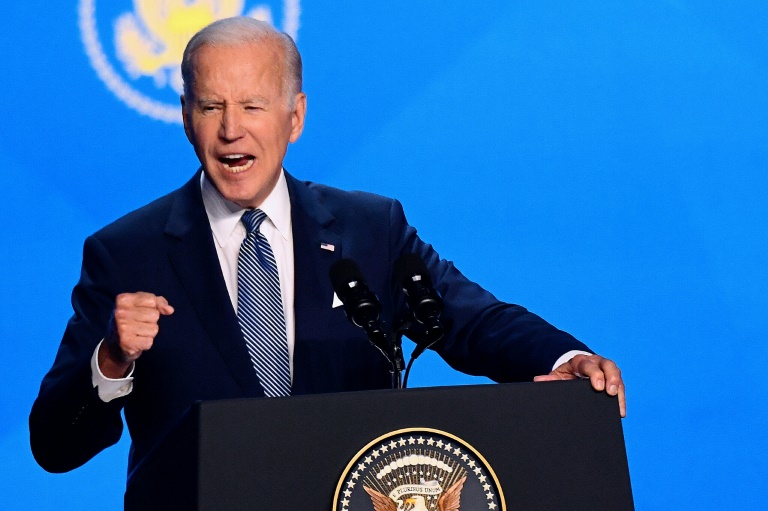
US President Joe Biden on Wednesday urged leaders of the Americas to prove that democracy works as he laid out plans to boost economic cooperation and improve health and food access in a region where China has been making growing inroads.

Welcoming leaders to Los Angeles for the Summit of the Americas, Biden acknowledged differences — with Mexico’s leader refusing to come — but made an impassioned plea for democracy as the best way forward.

“When democracy is under assault around the world, let us unite again and renew our conviction that democracy is not only the defining feature of American histories, but the essential ingredient to Americas’ future,” Biden said. 

“At this summit, we have an opportunity for us to come together around some bold ideas, ambitious actions, and to demonstrate to our people the incredible power of democracy.”

In a theater that plays host to the Emmys, delegations snacking on popcorn watched a Caribbean-influenced dance show choreographed by Emilio Estefan and listened to pop star Sheila E who, in a fitting choice, covered The Beatles’ “Come Together.”

Biden laid out a new regionwide economic plan that was large on ideas but short on commitments, with no promises of further market access or funding.

In an echo of US political debates, Biden said that the United States was looking for economic growth “from the bottom up and the middle out and not the top down.”

“What was true in the United States is true in every country — ‘trickle-down economics’ does not work,” he said to applause.

– More than ‘state dollars’ –

In an implicit contrast to Beijing, Biden’s national security advisor, Jake Sullivan, said the United States was worried less about flashy announcements than about supporting more inclusive growth.

“The United States has never seen its comparative advantages in the world as just leveraging huge numbers of state dollars, but rather leveraging all of the tools available to us,” he told reporters on Air Force One.

Biden announced an initiative worth $300 million to tackle food insecurity — on the rise as Russia’s invasion of Ukraine disrupts grain exports — by coordinating with the hemisphere’s major agriculture nations including Argentina, Brazil and Canada.

The White House also announced a new Americas Health Corps that aims to improve the skills of 500,000 health workers across the region, building on the lessons from Covid-19, which hit the Western Hemisphere especially hard.

China has stepped up its role in Latin America during the pandemic, moving early to supply vaccines, and US nemesis Cuba has long exported its state-employed doctors. 

The announcement comes a day after Vice President Kamala Harris detailed $1.9 billion in private sector investment in impoverished and violence-ravaged El Salvador, Guatemala and Honduras.

The troubles in the so-called Northern Triangle, as well as Haiti, have generated a soaring number of migrants to the United States, setting off a domestic furor as Donald Trump’s Republican Party demands efforts to stop them.

– Meeting with ‘Tropical Trump’ –

Draining US diplomatic energy ahead of the summit, Mexican President Andres Manuel Lopez Obrador refused to attend as he insisted that Biden invite the leftist leaders of Cuba, Nicaragua and Venezuela, shunned on the grounds that they are autocrats.

Mexican Foreign Secretary Marcelo Ebrard attended in Obrador’s stead. Speaking to his counterparts, Ebrard called the exclusion of the three countries “a strategic error” and said Mexico would look at ways to reform regional institutions.

Biden will have a potentially awkward first meeting Thursday with President Jair Bolsonaro of Brazil, Latin America’s most populous nation. 

A Trump supporter, Bolsonaro has raised doubts about the legitimacy both of upcoming voting in Brazil and, on the eve of his trip, of Biden’s own election.

Sullivan said that Biden would not shy away from the topic and would discuss the importance of “open, free, fair, transparent democratic elections.”

The Summit of the Americas is the first in the United States since the inaugural edition in 1994 was held in Miami under Bill Clinton, who proposed a free-trade zone that would span the hemisphere — but exclude communist-ruled Cuba.

The White House billed Biden’s summit as an update to Clinton’s vision. But the US political mood has since dramatically soured on free trade, with Trump rising to power denouncing liberalization as harmful to US workers. 

The Americas Partnership for Economic Prosperity announced by Biden will look at coordinating on standards and supply chains but will not offer new market access — a key incentive offered to the region by China, with its billion-plus consumer market.

Biden last month similarly unveiled an Asian partnership on setting economic standards as he visited Tokyo.

But unlike in Asia, the United States already has free trade deals with a number of major Latin American nations including Mexico, Chile, Colombia and Peru.
Laying out pledges, Biden urges Americas to prove democracy works

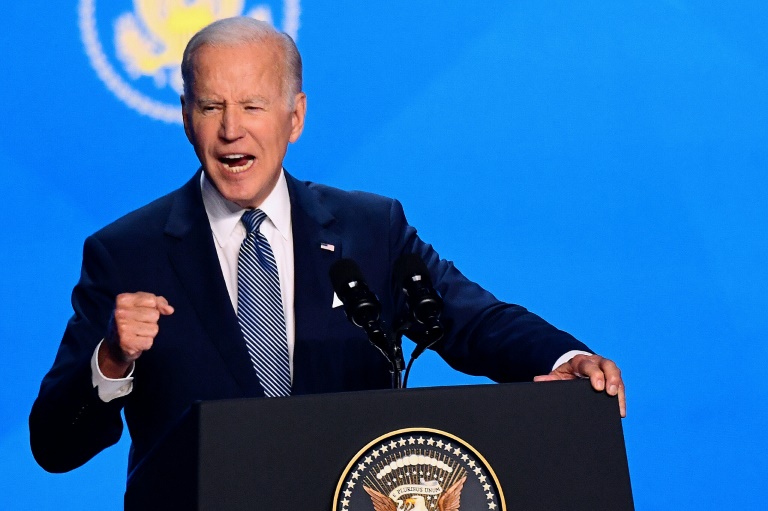
US President Joe Biden on Wednesday urged leaders of the Americas to prove that democracy works as he laid out plans to boost economic cooperation and improve health and food access in a region where China has been making growing inroads.

Welcoming leaders to Los Angeles for the Summit of the Americas, Biden acknowledged differences — with Mexico’s leader refusing to come — but made an impassioned plea for democracy as the best way forward.

“When democracy is under assault around the world, let us unite again and renew our conviction that democracy is not only the defining feature of American histories, but the essential ingredient to Americas’ future,” Biden said. 

“At this summit, we have an opportunity for us to come together around some bold ideas, ambitious actions, and to demonstrate to our people the incredible power of democracy.”

In a theater that plays host to the Emmys, delegations snacking on popcorn watched a Caribbean-influenced dance show choreographed by Emilio Estefan and listened to pop star Sheila E who, in a fitting choice, covered The Beatles’ “Come Together.”

Biden laid out a new regionwide economic plan that was large on ideas but short on commitments, with no promises of further market access or funding.

In an echo of US political debates, Biden said that the United States was looking for economic growth “from the bottom up and the middle out and not the top down.”

“What was true in the United States is true in every country — ‘trickle-down economics’ does not work,” he said to applause.

– More than ‘state dollars’ –

In an implicit contrast to Beijing, Biden’s national security advisor, Jake Sullivan, said the United States was worried less about flashy announcements than about supporting more inclusive growth.

“The United States has never seen its comparative advantages in the world as just leveraging huge numbers of state dollars, but rather leveraging all of the tools available to us,” he told reporters on Air Force One.

Biden announced an initiative worth $300 million to tackle food insecurity — on the rise as Russia’s invasion of Ukraine disrupts grain exports — by coordinating with the hemisphere’s major agriculture nations including Argentina, Brazil and Canada.

The White House also announced a new Americas Health Corps that aims to improve the skills of 500,000 health workers across the region, building on the lessons from Covid-19, which hit the Western Hemisphere especially hard.

China has stepped up its role in Latin America during the pandemic, moving early to supply vaccines, and US nemesis Cuba has long exported its state-employed doctors. 

The announcement comes a day after Vice President Kamala Harris detailed $1.9 billion in private sector investment in impoverished and violence-ravaged El Salvador, Guatemala and Honduras.

The troubles in the so-called Northern Triangle, as well as Haiti, have generated a soaring number of migrants to the United States, setting off a domestic furor as Donald Trump’s Republican Party demands efforts to stop them.

– Meeting with ‘Tropical Trump’ –

Draining US diplomatic energy ahead of the summit, Mexican President Andres Manuel Lopez Obrador refused to attend as he insisted that Biden invite the leftist leaders of Cuba, Nicaragua and Venezuela, shunned on the grounds that they are autocrats.

Mexican Foreign Secretary Marcelo Ebrard attended in Obrador’s stead. Speaking to his counterparts, Ebrard called the exclusion of the three countries “a strategic error” and said Mexico would look at ways to reform regional institutions.

Biden will have a potentially awkward first meeting Thursday with President Jair Bolsonaro of Brazil, Latin America’s most populous nation. 

A Trump supporter, Bolsonaro has raised doubts about the legitimacy both of upcoming voting in Brazil and, on the eve of his trip, of Biden’s own election.

Sullivan said that Biden would not shy away from the topic and would discuss the importance of “open, free, fair, transparent democratic elections.”

The Summit of the Americas is the first in the United States since the inaugural edition in 1994 was held in Miami under Bill Clinton, who proposed a free-trade zone that would span the hemisphere — but exclude communist-ruled Cuba.

The White House billed Biden’s summit as an update to Clinton’s vision. But the US political mood has since dramatically soured on free trade, with Trump rising to power denouncing liberalization as harmful to US workers. 

The Americas Partnership for Economic Prosperity announced by Biden will look at coordinating on standards and supply chains but will not offer new market access — a key incentive offered to the region by China, with its billion-plus consumer market.

Biden last month similarly unveiled an Asian partnership on setting economic standards as he visited Tokyo.

But unlike in Asia, the United States already has free trade deals with a number of major Latin American nations including Mexico, Chile, Colombia and Peru.

Fate of Donbas rests in battleground Ukraine city: Zelensky

Ukrainian soldiers in Severodonetsk are fighting “one of the most difficult” battles against Russian troops since the start of the war, President Volodymyr Zelensky said, adding the fate of the whole Donbas region rests in the eastern city.

Moscow’s forces are concentrating their firepower on the strategically important industrial hub as part of efforts to capture a swathe of eastern Ukraine.

After days of raging street battles, Ukrainian officials conceded that Russian troops control a large part of Severodonetsk, and that their forces might have to pull back due to constant shelling.

In his evening address to the nation, Zelensky said the battle for the city was “very fierce… very difficult. Probably one of the most difficult throughout this war.

“In many ways, the fate of our Donbas is being decided there.”

After being repelled from Kyiv and other parts of Ukraine following their February invasion, Russian President Vladimir Putin’s troops have refocused their offensive on the Donbas region, comprising Lugansk and Donetsk.

The cities of Severodonetsk and Lysychansk, which are separated by a river, were the last areas still under Ukrainian control in Lugansk.

Lysychansk is still in Ukrainian hands but under fierce Russian bombardment.

At the United Nations, Secretary-General Antonio Guterres added his voice to increasingly dire warnings about the conflict’s impact. 

“For people around the world, the war is threatening to unleash an unprecedented wave of hunger and destitution, leaving social and economic chaos in its wake,” he said. 

– Little progress on grain –

At talks in Ankara, Russia and Turkey made little headway in striking a deal to secure safe passage for grain exports stuck in Ukraine due to a Russian sea blockade.

At the request of the United Nations, Turkey has offered its services to escort maritime convoys from Ukrainian ports, despite the presence of mines — some of which have been detected near the Turkish coast.

“We are ready to do this in cooperation with our Turkish colleagues,” Russian Foreign Minister Sergei Lavrov told reporters in Ankara.

Kyiv said it would not demine waters around the Black Sea port of Odessa to allow grain exports, citing the threat of Russian attacks on the city.

Lavrov’s Turkish counterpart Mevlut Cavusoglu called Russian demands for an end to sanctions to help grain onto the world market “legitimate”.

“If we need to open up the international market to Ukrainian grain, we see the removal of obstacles standing in the way of Russia’s exports as a legitimate demand,” he said.

But Kyiv, which was not represented at the Ankara talks, pushed back against claims that Western sanctions on Moscow had sent prices soaring.

“We have been actively communicating, the president and myself, about the true cause of this crisis: it is Russian aggression, not sanctions,” Ukraine’s Foreign Minister Dmytro Kuleba said. 

Before the war, Ukraine was a major exporter of wheat, corn and sunflower oil. Russia’s blockade has been blamed for contributing to soaring prices, stoking fears of a looming food crisis in poor countries.

As he hosted Mediterranean ministers for talks on the global food crisis, Italian Foreign Minister Luigi Di Maio warned “millions” could die unless Russia unblocked Ukraine’s ports.

But Kremlin spokesman Dmitry Peskov rejected suggestions that grain stuck in Ukrainian ports was fuelling the problem.

“As far as we know, there is much less grain than the Ukrainians say. There is no need to exaggerate the importance of these grain reserves,” he told reporters.

– ‘Bombings every day’ –

Severodonetsk appeared close to being captured just days ago but Ukrainian forces launched counterattacks and managed to hold out, despite warnings they were outnumbered by superior forces.

About 800 civilians trapped by the fighting have taken refuge in the city’s Azot chemical factory in the city, according to the lawyer of a Ukrainian tycoon whose company owns the facility. 

Ukrainian authorities have yet to confirm the report.

The situation was also increasingly desperate in other parts of the Donbas. 

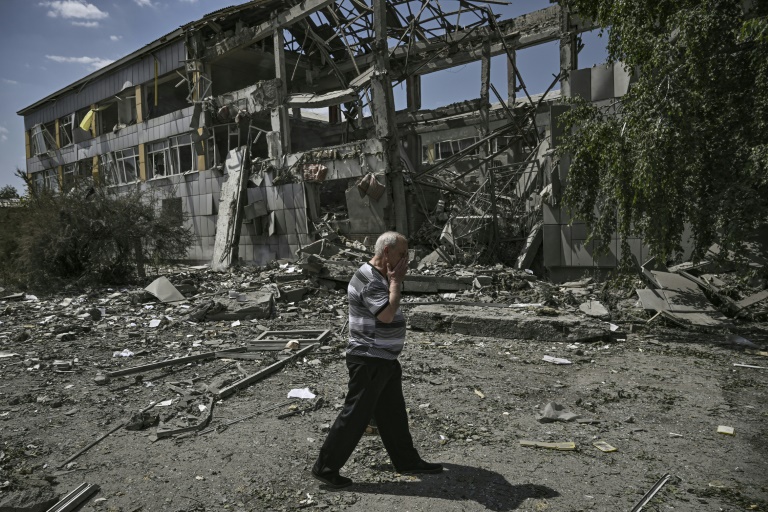
In the city of Bakhmut, an unoccupied school building was reduced to a smouldering wreck after being shelled Wednesday, with burnt books visible among the rubble, according to AFP journalists. No injuries or deaths were reported. 

In Severodonetsk’s twin city Lysychansk, residents who had chosen to stay were facing fierce Russian bombardments. 

“Every day there are bombings and every day something burns. A house, a flat… And there is nobody to help me,” 70-year-old Yuriy Krasnikov told AFP.

“I tried to go to the city authorities, but nobody’s there, everyone has run away.”

There was some rare good news for Ukraine, as their football side clinched a 1-0 Nations League victory over the Republic of Ireland on Wednesday.

The victory — thanks to a free kick from Viktor Tsygankov — lifted the country’s spirits after their painful failure to qualify for the World Cup.

burs-sr/dva

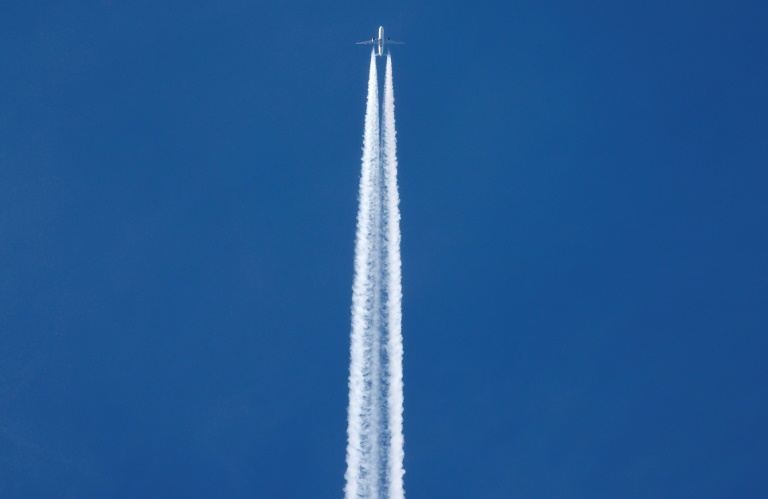
Slash airline emissions to meet Paris targets: report

The world needs “early, aggressive and sustained” government intervention to cut aviation emissions if Paris Agreement temperature goals are to be met, a think tank said Thursday.

Airlines must start to slash emissions before the end of the decade and by 2025 if possible, said the International Council on Clean Transportation (ICCT) in a new report.

The 2015 Paris climate treaty enjoins nations to cap global warming at “well below” two degrees Celsius, and 1.5C if possible.

Earth’s average surface temperature has already risen 1.2C above preindustrial levels.

To project aviation sector emissions, the ICCT ran three models assuming different levels of traffic, fuel efficiency and other factors.

All of them improved on a baseline “business-as-usual” scenario, which would emit nearly 50 billion tonnes of CO2 by mid-century — more than annual emissions from all sources today.

The most optimistic model — which assumes “widespread investments in zero-carbon aircraft and fuels, peaking fossil fuel use in 2025, and zeroing it out by 2050” — would see a reduction of 22.5 billion tonnes of emissions by 2050. 

That would put aviation on course to cut greenhouse gas emissions by “an amount consistent with a 1.75C warming”, said the ICCT.

“But it would require aggressive policies to peak emissions by 2030 at the very latest.”

These findings were more positive than anticipated but remain very ambitious, commented lead author Brandon Graver.

“The all-in strategy to deploy clean planes and fuels cuts emissions even deeper than we expected,” he said.

“But public policies will be needed to peak emissions as early as 2025 to put aviation on a 1.75°C pathway.”

IATA, which represents 290 airlines accounting for 83 percent of global air traffic, pledged last October to achieve net-zero carbon emissions by 2050.

The aviation industry is among the fastest-growing sources of greenhouse gases, and one of the most difficult sectors to decarbonise. 

Many experts are counting on innovations in hydrogen fuels or so-called sustainable air fuels (SAF) made from non-fossil fuel renewable source to meet industry targets.

Improvements in operational efficiency also hold potential for reducing the sector’s carbon pollution.

The International Air Transport Association (IATA) has put the cost of such improvements at $1.55 trillion over 30 years.

IATA projects continued growth in air travel.

The industry expects to carry 10 billion passengers by the middle of the century, more than double the 4.5 billion in 2019, the most recent full year unaffected by the Covid pandemic.

Slash airline emissions to meet Paris targets: report

The world needs “early, aggressive and sustained” government intervention to cut aviation emissions if Paris Agreement temperature goals are to be met, a think tank said Thursday.

Airlines must start to slash emissions before the end of the decade and by 2025 if possible, said the International Council on Clean Transportation (ICCT) in a new report.

The 2015 Paris climate treaty enjoins nations to cap global warming at “well below” two degrees Celsius, and 1.5C if possible.

Earth’s average surface temperature has already risen 1.2C above preindustrial levels.

To project aviation sector emissions, the ICCT ran three models assuming different levels of traffic, fuel efficiency and other factors.

All of them improved on a baseline “business-as-usual” scenario, which would emit nearly 50 billion tonnes of CO2 by mid-century — more than annual emissions from all sources today.

The most optimistic model — which assumes “widespread investments in zero-carbon aircraft and fuels, peaking fossil fuel use in 2025, and zeroing it out by 2050” — would see a reduction of 22.5 billion tonnes of emissions by 2050. 

That would put aviation on course to cut greenhouse gas emissions by “an amount consistent with a 1.75C warming”, said the ICCT.

“But it would require aggressive policies to peak emissions by 2030 at the very latest.”

These findings were more positive than anticipated but remain very ambitious, commented lead author Brandon Graver.

“The all-in strategy to deploy clean planes and fuels cuts emissions even deeper than we expected,” he said.

“But public policies will be needed to peak emissions as early as 2025 to put aviation on a 1.75°C pathway.”

IATA, which represents 290 airlines accounting for 83 percent of global air traffic, pledged last October to achieve net-zero carbon emissions by 2050.

The aviation industry is among the fastest-growing sources of greenhouse gases, and one of the most difficult sectors to decarbonise. 

Many experts are counting on innovations in hydrogen fuels or so-called sustainable air fuels (SAF) made from non-fossil fuel renewable source to meet industry targets.

Improvements in operational efficiency also hold potential for reducing the sector’s carbon pollution.

The International Air Transport Association (IATA) has put the cost of such improvements at $1.55 trillion over 30 years.

IATA projects continued growth in air travel.

The industry expects to carry 10 billion passengers by the middle of the century, more than double the 4.5 billion in 2019, the most recent full year unaffected by the Covid pandemic.

Australian PM says cabinet to address KFC 'cabbage-gate'

Australia’s prime minister joked he would huddle with top officials Thursday to discuss the soaring cost of lettuce and local KFCs’ decision to replace the verdant leaf with a cabbage mix on their Zinger Burgers.

Dubbing the fast-food chain’s decision “crazy”, centre-left leader Anthony Albanese quipped the situation had become a national “crisis”.

Lettuce prices have soared by as much as 300 percent in Australian cities thanks to recent flooding and high global fuel prices.

A single head of iceberg lettuce that once sold for about $2 now goes for close to $8 in Sydney and Melbourne.

As a result, KFC told Australian customers it would reduce the lettuce in its products in favour of a 50-50 lettuce-cabbage mix.

“Cabbage isn’t the same as lettuce. That’s just wrong,” Albanese told Sydney’s KIIS FM radio.

“I’ll put it on the list for the Cabinet meeting today. Cabbage-gate.”

American with monkeypox flees Mexican hospital

A US citizen with monkeypox escaped from a hospital in a Mexican resort and fled the country, local health authorities said Wednesday.

The 48-year-old man, originally from Texas, fled the hospital in Puerto Vallarta on Mexico’s Pacific coast last weekend despite having been told by medical staff that he should be tested for monkeypox and kept in isolation, the state health department said in a statement.

When he arrived at the hospital, the patient had symptoms of “cough, chills, muscle pain and pustule-like lesions on his face, neck and trunk,” the agency said.

After fleeing the medical facility, the Texan then went to the hotel where he was staying with his partner and caught a flight out of Puerto Vallarta on June 4, before authorities were able to locate him.

The US Centers for Disease Control and Prevention confirmed to Mexican authorities on Monday that the patient had returned to the United States where a test confirmed he had monkeypox.

Prior to arriving in Puerto Vallarta on May 27, the individual was in Berlin, Germany, between May 12 and 16, and subsequently in Dallas, Texas.

During his stay in Mexico, he attended parties at the Mantamar Beach Club in the resort town of Jalisco.

Health officials urged anyone who attended the club between May 27 and June 4 to monitor their health.

The World Health Organization said Wednesday that it was aware of more than 1,000 cases of monkeypox in countries where the disease is not endemic. 

Asian markets drop as oil rises and inflation fears ramp up

Asian markets fell Thursday as a rally in oil ramped up inflation fears, with top officials warning of more pain to come as the Ukraine war continues to push prices up and put further pressure on the global economy.

Buyers on Wall Street were in retreat again after data showed US crude and gasoline stockpiles sank, just as the summer driving season begins and leading OPEC member demand would surge further as China reopens.

Adding to the gloom was the OECD’s sharp downward revision of its global growth outlook and doubling of its inflation forecast.

The glum mood was only slightly offset by ongoing optimism that Beijing’s tech crackdown was close to an end.

Both main crude contracts jumped more than two percent Wednesday to three month highs after figures showed the biggest US storage depot had seen a big fall in reserves last week, suggesting elevated prices were not deterring people from driving.

Meanwhile, White House Press Secretary Karine Jean-Pierre said officials expect Friday’s keenly awaited consumer price index will be “elevated”.

The comment lifted expectations that the Federal Reserve will stick to its hawkish path and hike interest rates by half a point for at least three more meetings this year as it tries to bring down inflation from four-decade highs.

Analysts said investors were unlikely to get any reprieve until crude — a key driver of inflation since Russia’s invasion of Ukraine — was brought under control.

“A pullback in crude would be crucial for any prolonged risk rally, given implications for inflation expectations,” said SPI Asset Management’s Stephen Innes. 

“And for the central bank fraternity intent on frontloading rates, chapter two of the current playbook reads that aggressive tightening risks a material decline in housing, consumer confidence, and consumption that will eventually drive their respective economies into recession and send stocks tumbling.

“So until we reach peak inflation, which will trigger a less hawkish Fed and lower recession odds, it could be a gloomy summer for global stock pickers.”

He added that prices were expected to rise further for now as China emerges from months of lockdown, a sentiment that United Arab Emirates Energy Minister Suhail Al-Mazrouei agreed with.

“With the pace of consumption we have, we are nowhere near the peak because China is not back yet,” he told a conference Wednesday. “China will come with more consumption.”

The unease about rising prices and rates saw all three main indexes on Wall Street drop along with European markets, with focus on the European Central Bank’s policy meeting later Thursday.

The ECB is expected to begin winding down its massive bond-buying programme and signal a rate hike was in the pipeline.

Asian traders followed suit Thursday.

Hong Kong dropped, even as tech firms continued to benefit from hopes that China’s crackdown was almost over, while Shanghai, Sydney, Seoul, Singapore, Taipei, Manila and Wellington were also in the red.

Tokyo, however, edged up as the yen sat at two-decade lows owing to widening the monetary policies of the hawkish United States and Japan, which shows no signs of lifting rates.

Investors were jarred by a report from the Organisation for Economic Co-operation and Development, which said it had cut its 2022 growth outlook to three percent — from 4.5 percent predicted in December — owing to the Ukraine war.

It also doubled its inflation estimate to 8.5 percent, a 34-year high. 

“The world is set to pay a hefty price for Russia’s war against Ukraine,” wrote the OECD’s chief economist and deputy secretary-general, Laurence Boone.

And Anna Han, at Wells Fargo Securities, told Bloomberg Television: “Our view is that the chance of recession by the end of 2023 is 40 percent or so.” 

– Key figures at around 0230 GMT –

Tokyo – Nikkei 225: UP 0.2 percent at 28,278.45 (break)

Hong Kong – Hang Seng Index: DOWN 0.7 percent at 21,851.49

Shanghai – Composite: DOWN 0.6 percent at 3,245.66

Brent North Sea crude: UP 0.1 percent at $123.72 per barrel

West Texas Intermediate: UP 0.1 percent at $122.20 per barrel

Dollar/yen: UP at 134.36 yen from 134.29 yen late Tuesday

Euro/dollar: DOWN at $1.0717 from $1.0720 

Pound/dollar: DOWN at $1.2524 from $1.2535

Euro/pound: UP at 85.57 pence from 85.54 pence

New York – Dow: DOWN 0.8 percent to 32,910.90 (close)

London – FTSE 100: DOWN 0.1 percent at 7,593.00 (close)

Laying out pledges, Biden urges Americas to prove democracy works

US President Joe Biden on Wednesday urged leaders of the Americas to prove that democracy works as he laid out plans to boost economic cooperation and improve health and food access in a region where China has been making growing inroads.

Welcoming leaders to Los Angeles to the Summit of the Americas, Biden acknowledged differences — with Mexico’s leader refusing to come — but made an impassioned plea for democracy as the best way forward.

“When democracy is under assault around the world, let us unite again and renew our conviction that democracy is not only the defining feature,” Biden said, “but the essential ingredient to the Americas’ future.”

“At this summit, we have an opportunity for us to come together around some bold ideas, ambitious actions, and to demonstrate to our people the incredible power of democracy,” Biden said.

In a theater that plays host to the Emmys, delegations snacking on popcorn watched a choreographed dance routine by Emilio Estefan and a rendition of The Beatles’ “Come Together” by Sheila E.

Biden laid out a new regionwide economic plan that was large on ideas but short on commitments, with no promises of further market access or funding.

In an echo of US political debates, Biden said that the United States was looking for economic growth “from the bottom up and the middle out and not the top down.”

“What was true in the United States is true in every country — ‘trickle-down economics’ does not work,” he said to applause.

In an implicit contrast to Beijing, Biden’s national security advisor, Jake Sullivan, said the United States was worried less about flashy announcements than about supporting more inclusive growth.

“The United States has never seen its comparative advantages in the world as just leveraging huge numbers of state dollars, but rather leveraging all of the tools available to us,” he told reporters on Air Force One.

Biden announced $300 million in assistance to address the region’s food insecurity, which has been on the rise as Russia’s invasion of Ukraine disrupts grain exports.

The White House also announced a new Americas Health Corps that aims to improve the skills of 500,000 health workers across the region, building on the lessons from Covid-19, which hit the Western Hemisphere especially hard.

The health training will cost $100 million, although the United States will not contribute it all and will seek to raise funds, including through the Pan American Health Organization, an administration official said.

China has stepped up its role in Latin America during the pandemic, moving early to supply vaccines, and US nemesis Cuba has long exported its state-employed doctors. 

The announcement comes a day after Vice President Kamala Harris detailed $1.9 billion in private sector investment in impoverished and violence-ravaged El Salvador, Guatemala and Honduras.

The troubles in the so-called Northern Triangle, as well as Haiti, have generated a soaring number of migrants to the United States, setting off a domestic furor as Donald Trump’s Republican Party demands efforts to stop them.

– Meeting with ‘Tropical Trump’ –

Draining US diplomatic energy ahead of the summit, Mexican President Andres Manuel Lopez Obrador refused to attend as he insisted that Biden invite the leftist leaders of Cuba, Nicaragua and Venezuela, shunned on the grounds that they are autocrats.

Biden will have a potentially awkward first meeting Thursday with President Jair Bolsonaro of Brazil, Latin America’s most populous nation. 

A Trump supporter, Bolsonaro has raised doubts about the legitimacy both of upcoming voting in Brazil and, on the eve of his trip, of Biden’s own election.

Sullivan said that Biden would not shy away from the topic and would discuss the importance of “open, free, fair, transparent democratic elections.”

– Trade deals lite –

Biden has stood firm on democracy at the summit even as he considers going next month to Saudi Arabia, a critical oil supplier. But Biden has moved away from another past goal — free trade.

The Summit of the Americas is the first in the United States since the inaugural edition in 1994 was held in Miami under Bill Clinton, who proposed a free-trade zone that would span the hemisphere — but exclude communist-ruled Cuba.

The White House billed Biden’s summit as an update to Clinton’s vision. But the US political mood has since dramatically soured on free trade, with Trump rising to power denouncing liberalization as harmful to US workers. 

The Americas Partnership for Economic Prosperity announced by Biden will look at coordinating on standards and supply chains but will not offer new market access — a key incentive offered to the region by China, with its billion-plus consumer market.

Biden last month similarly unveiled an Asian partnership on setting economic standards as he visited Tokyo.

But unlike in Asia, the United States already has free trade deals with a number of major Latin American nations including Mexico, Chile, Colombia and Peru.
Laying out pledges, Biden urges Americas to prove democracy works

US President Joe Biden on Wednesday urged leaders of the Americas to prove that democracy works as he laid out plans to boost economic cooperation and improve health and food access in a region where China has been making growing inroads.

Welcoming leaders to Los Angeles to the Summit of the Americas, Biden acknowledged differences — with Mexico’s leader refusing to come — but made an impassioned plea for democracy as the best way forward.

“When democracy is under assault around the world, let us unite again and renew our conviction that democracy is not only the defining feature,” Biden said, “but the essential ingredient to the Americas’ future.”

“At this summit, we have an opportunity for us to come together around some bold ideas, ambitious actions, and to demonstrate to our people the incredible power of democracy,” Biden said.

In a theater that plays host to the Emmys, delegations snacking on popcorn watched a choreographed dance routine by Emilio Estefan and a rendition of The Beatles’ “Come Together” by Sheila E.

Biden laid out a new regionwide economic plan that was large on ideas but short on commitments, with no promises of further market access or funding.

In an echo of US political debates, Biden said that the United States was looking for economic growth “from the bottom up and the middle out and not the top down.”

“What was true in the United States is true in every country — ‘trickle-down economics’ does not work,” he said to applause.

In an implicit contrast to Beijing, Biden’s national security advisor, Jake Sullivan, said the United States was worried less about flashy announcements than about supporting more inclusive growth.

“The United States has never seen its comparative advantages in the world as just leveraging huge numbers of state dollars, but rather leveraging all of the tools available to us,” he told reporters on Air Force One.

Biden announced $300 million in assistance to address the region’s food insecurity, which has been on the rise as Russia’s invasion of Ukraine disrupts grain exports.

The White House also announced a new Americas Health Corps that aims to improve the skills of 500,000 health workers across the region, building on the lessons from Covid-19, which hit the Western Hemisphere especially hard.

The health training will cost $100 million, although the United States will not contribute it all and will seek to raise funds, including through the Pan American Health Organization, an administration official said.

China has stepped up its role in Latin America during the pandemic, moving early to supply vaccines, and US nemesis Cuba has long exported its state-employed doctors. 

The announcement comes a day after Vice President Kamala Harris detailed $1.9 billion in private sector investment in impoverished and violence-ravaged El Salvador, Guatemala and Honduras.

The troubles in the so-called Northern Triangle, as well as Haiti, have generated a soaring number of migrants to the United States, setting off a domestic furor as Donald Trump’s Republican Party demands efforts to stop them.

– Meeting with ‘Tropical Trump’ –

Draining US diplomatic energy ahead of the summit, Mexican President Andres Manuel Lopez Obrador refused to attend as he insisted that Biden invite the leftist leaders of Cuba, Nicaragua and Venezuela, shunned on the grounds that they are autocrats.

Biden will have a potentially awkward first meeting Thursday with President Jair Bolsonaro of Brazil, Latin America’s most populous nation. 

A Trump supporter, Bolsonaro has raised doubts about the legitimacy both of upcoming voting in Brazil and, on the eve of his trip, of Biden’s own election.

Sullivan said that Biden would not shy away from the topic and would discuss the importance of “open, free, fair, transparent democratic elections.”

– Trade deals lite –

Biden has stood firm on democracy at the summit even as he considers going next month to Saudi Arabia, a critical oil supplier. But Biden has moved away from another past goal — free trade.

The Summit of the Americas is the first in the United States since the inaugural edition in 1994 was held in Miami under Bill Clinton, who proposed a free-trade zone that would span the hemisphere — but exclude communist-ruled Cuba.

The White House billed Biden’s summit as an update to Clinton’s vision. But the US political mood has since dramatically soured on free trade, with Trump rising to power denouncing liberalization as harmful to US workers. 

The Americas Partnership for Economic Prosperity announced by Biden will look at coordinating on standards and supply chains but will not offer new market access — a key incentive offered to the region by China, with its billion-plus consumer market.

Biden last month similarly unveiled an Asian partnership on setting economic standards as he visited Tokyo.

But unlike in Asia, the United States already has free trade deals with a number of major Latin American nations including Mexico, Chile, Colombia and Peru.

Close Bitnami banner
Bitnami