AFP

Ukraine claims Russian forces pushed back in east in fierce fighting

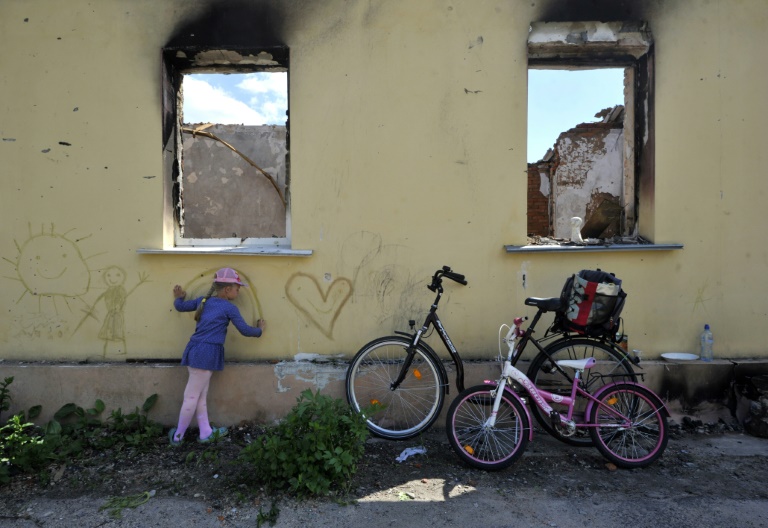
Ukraine said Saturday its forces were managing to push back against Russian troops in fierce fighting in Severodonetsk despite Russia “throwing all its power” into capturing the strategic eastern city.

Lugansk regional governor Sergiy Gaiday said in an interview posted on his official social media that the invading forces had captured most of the city “but now our military have moved them”.

“The Russian army, as we understand, is throwing all its power, all its reserves in this direction,” said Gaiday, who on Friday claimed that Ukrainian troops had won back a fifth of the city.

Severodonetsk is the largest city still in Ukrainian hands in the Lugansk region, where Russian forces have been making gradual advances in recent weeks.

Thousands of people have been killed, millions sent fleeing and towns turned into rubble since President Vladimir Putin ordered Russian troops into Ukraine 101 days ago.

The advance of Russian forces has been slowed by stiff Ukrainian resistance, repelling them from around the capital Kyiv and forcing Moscow to focus on capturing the east.

The press service of Ukraine’s presidential office on Saturday said Russian attacks killed four civilians in the Lugansk region as a whole.

The situation in Lysychansk — Severodonetsk’s twin city, which sits just across a river — looked increasingly dire.

About 60 percent of infrastructure and housing had been destroyed, while internet, mobile networks and gas services had been knocked out, said its mayor Oleksandr Zaika.

In the city of Sloviansk, about 80 kilometres (50 miles) from Severodonetsk, the mayor has urged residents to evacuate in the face of intense bombardment, with water and electricity cut off.

Ukraine also reported two victims from a missile strike on the port of Odessa in the southwest, without specifying if they were dead or injured.

Russia’s defence ministry said it had struck a “deployment point for foreign mercenaries” in the village of Dachne in the Odessa region.

It also claimed a missile strike in the northeastern Sumy region in a place where it said Ukrainian soldiers were receiving training from foreign instructors on using howitzers.

– ‘Shame and hatred’ –

Russian troops now occupy a fifth of Ukraine’s territory and Moscow has imposed a blockade on its Black Sea ports.

But Ukrainian President Volodymyr Zelensky was defiant on Friday.

“Victory will be ours,” he said in a video speech marking the 100th day of the war.

Later, in his nightly address, he dismissed the Russian army as being reduced to “war crimes, shame and hatred” after failing military objectives.

But Kremlin spokesman Dmitry Peskov said “certain results have been achieved”, pointing to the “liberation” of some areas from what he called the “pro-Nazi armed forces of Ukraine”.

The West has sent ever-more potent weapons to Ukraine and piled on ever more stringent sanctions against Moscow, with the European Union on Friday formally adopting a ban on most Russian oil imports.

Putin’s alleged girlfriend, former gymnast Alina Kabaeva, was also added to an assets freeze and visa-ban blacklist.

– Food crisis –

The war has sparked fears of a global food crisis — Ukraine and Russia are among the top wheat exporters in the world.

The United Nations said it was leading intense negotiations with Russia to allow Ukraine’s grain harvest to leave the country.

Putin in a televised interview Friday said there was “no problem” to export grain from Ukraine, via Kyiv- or Moscow-controlled ports or even through central Europe.

The UN has warned that African countries, which imported more than half of their wheat consumption from Ukraine and Russia, face an “unprecedented” crisis.

Food prices in Africa have already exceeded those in the aftermath of the 2011 Arab Spring uprisings and the 2008 food riots.

On Friday, Putin met the head of the African Union, Senegalese President Macky Sall, at his Black Sea residence in Sochi.

After the meeting, Sall said he was “very reassured”, adding that Putin was “committed and aware that the crisis and sanctions create serious problems for weak economies”.

French President Emmanuel Macron, meanwhile, said Putin had made a “historic” error in starting the war.

But he said the Russian leader should not be “humiliated”, and to leave room for diplomacy.

– Media driver killed –

A driver transporting two Reuters journalists in eastern Ukraine was killed and the two reporters were lightly wounded, a spokesman for the international news agency said.

A French volunteer fighter in Ukraine was also killed in combat, the French foreign ministry said.

In areas around the capital Kyiv, which Russian troops retreated from at the end of March, some residents remain in desperate need of assistance.

At an aid distribution point in Horenka, northwest of Kyiv, on Friday a tearful Hanna Viniychuk, 67, said she had joined the long queue in search of some basic necessities after losing her home to Russian bombardment.

“I’m grateful for this help,” she said.

Arkadiy Maznychenko, 75, said: “A lot of houses were burnt, damaged, so people have nothing at all. Everything is shattered, destroyed.”

burs-dt/ach

Tanzania lifts ban on wildlife exports

Tanzania is temporarily rolling back a ban on wildlife exports that was in force for six years to safeguard protected animals and birds in the east African nation, the wildlife service said.

The decision to lift the ban for an initial six months saw conservationists appeal for monitoring processes to guard against poaching, which has been in decline.

“The government has been assessing the business of exporting live wild animals since the ban was imposed and now it has lifted the ban,” Tanzania Wildlife Management Authority said in a statement late Friday.

Traders will have six months from June 6 to December 5 to “clear stocks of animals” that they were unable to sell under the ban, it added. 

Tanzania imposed the ban in 2016 under the authoritarian rule of then president John Magufuli, whose uncompromising leadership style saw him nicknamed “the Bulldozer”. 

The government at the time justified the ban because of “irregularities” in trade, including the shipment of protected animals abroad.

President Samia Suluhu Hassan has sought to break with some of Magufuli’s policies since she came to power last year following his sudden death.

Conservation group WWF cautioned that easing the ban should not undo gains made in protecting wildlife, such as triggering poaching which has been on a decline.

“Proper monitoring mechanisms and data are needed to back such kinds of decisions,” WWF country director Amani Ngusaru told AFP.

Tanzania is famed for its sandy beach archipelago of Zanzibar, wildlife safaris and Mount Kilimanjaro which are a lucrative draw for tourists. 

In 2010, at least 116 animals and 16 birds, some of them protected species, were illegally exported from Kilimanjaro airport in the north of the country aboard a Qatari plane.

They included at least four giraffes, several different types of antelope, hornbills and vultures, according to local media.

Bosphorus sea trade unaffected by Ukraine war, sanctions

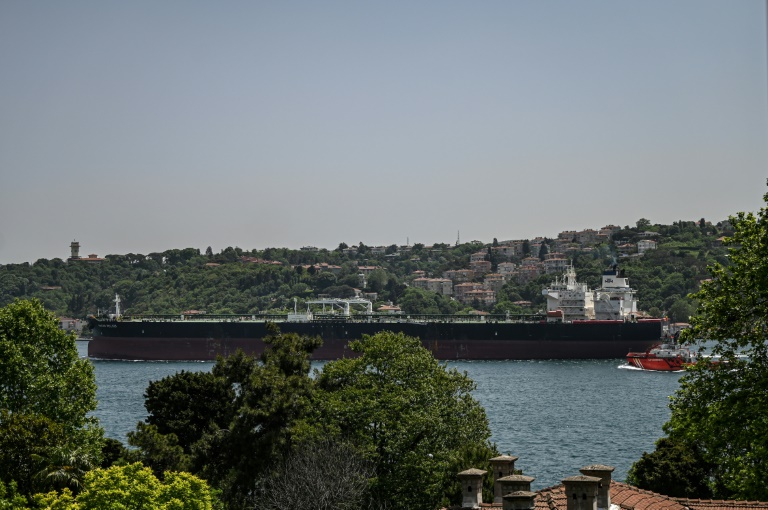
At the gates of the Black Sea, trade is in full swing as freighters and oil tankers sail from the heart of Istanbul to Russian and Ukrainian ports. 

Just after the Russian offensive in Ukraine on February 24 and the first Western sanctions, the largest vessels of international companies plying on these waters were replaced by smaller ships.

The total number of ships on the route remains around the pre-war level of 40,000, according to experts.

“Russia shamelessly steals Ukrainian grain and sends it overseas from Crimea, including to Turkey,” said Vasyl Bodnar, Ukraine’s ambassador to Ankara.

“In May alone, we counted at least 10 passages including two round trips from three vessels flying the Russian flag… Not to mention those that we would have collectively missed.”

From his terrace overlooking the Bosphorus, Yoruk Isik has been a passionate observer of ship movements on this key waterway between the Black Sea and the Mediterranean for a decade now.

While swiftly condemning the Russian offensive in Ukraine, Turkey positioned itself as a neutral mediator and refused to join Western sanctions against Moscow. 

Although Ankara has banned the passage of military vessels through its straits of the Dardanelles and Bosphorus since late February under the Montreux Treaty of 1936, it is not legally entitled to intercept commercial ships or to search them, a diplomatic source said in Ankara.

“We don’t follow the ships on their way out of the Straits. We monitor them 10 kilometres before they enter and 10 kilometres after they leave,” the source said on condition of anonymity.

Elizabete Aunina, a researcher at Amsterdam University, said: “If we look at the vague words of the Montreux treaty it leaves a lot up for interpretation. 

“It did not foresee that merchant vessels could be carrying stolen goods… Turkey has before showed a certain commitment to stick to the very basic interpretation of the Convention as a way to also protect itself from entering deeper into the conflict”.

The European Union imposed an embargo on Russian imports but tankers flying the Greek or Maltese flags are seen sailing through the Bosphorus up to the Black Sea to the Russian ports. 

– Maritime corridors – 

Thanks to real-time tracking applications, a strong network of observers, Russian and Ukrainian activists and satellite images, no vessel escapes Isik’s radar. 

“We can see from end to end, where the ship is getting loaded by the ship,” he said. 

Some freighters loaded the wheat in Ukrainian ports under Russian blockade such as Odessa, Chornomorsk or Mariupol, he said. 

The destination?  Syria — where Russia retains an operational base — and then Lebanon or Egypt.

Isik also identified a flotilla of old Turkish boats, “never seen before in the area” suddenly appearing under a flag of convenience in the Russian port of Novorossiysk — “likely under contract with the Russian government”.

He lists a few names: Kocatepe (now Tanzanian), Barbaros (Equatorial Guinea), Hizir (Malta) and Sampiyon Trabzonsport (Cameroon).

Russian Foreign Minister Sergei Lavrov will visit Turkey on Wednesday to discuss a possible establishment of “sea corridors” — although Ukrainian wheat is being covertly exported to Russia’s benefit, according to experts. 

“This is the information we get but we cannot stop, or check, or question the intention of any cargo ship except if we feel a threat to  Turkish peace or security,” the diplomatic source said. 

But for Isik who keeps the list of cargo ships belonging to the Russian defence ministry and those of private companies operating on its behalf, “what is happening is unacceptable”.

– EU mulling tighter sanctions –

Before the war, Ukraine was on track to becoming the world’s third biggest exporter of wheat and many countries in Africa and the Middle East depend on it.

“If Russia exports Ukrainian products, nobody authorises Turkey to stop the vessels,” said Yucel Acer, professor of international law at the University of Ankara, adding “unless there is a United Nations resolution” — a futile move as long as Russia holds a veto power in the Security Council.

Without openly admitting it, the European Commission has found holes in the current sanctions regime and is preparing to tighten the screws again, said a source in Brussels.

These foresee a new set of sanctions targeting Moscow plans to deprive the European operators of their insurance if their vessels are caught red-handed.

“Most of these vessels are covered by European and British insurance: with this new package, they will no longer be able to use them,” said the source.

“This should have a significant impact.”

But Turkey could do more, said Aunina, from Amsterdam university.

“Following the annexation of Crimea, Turkey technically banned ships from Crimea in its ports: This could be done as well!”

More than 700 monkeypox cases globally, 21 in US: CDC

The US Centers for Disease Control and Prevention (CDC) said Friday it was aware of more than 700 global cases of monkeypox, including 21 in the United States, with investigations now suggesting it is spreading inside the country.

Sixteen of the first 17 cases were among people who identify as men who have sex with men, according to a new CDC report, and 14 were thought to be travel associated.

All patients are in recovery or have recovered, and no cases have been fatal.

“There have also been some cases in the United States that we know are linked to known cases,” Jennifer McQuiston, deputy director of the CDC’s Division of High Consequence Pathogens and Pathology, told reporters on a call. 

“We also have at least one case in the United States that does not have a travel link or know how they acquired their infection.”

Monkeypox is a rare disease that is related to but less severe than smallpox, causing a rash that spreads, fever, chills, and aches, among other symptoms.

Generally confined to western and central Africa, cases have been reported in Europe since May and the number of countries affected has grown since.

Canada also released new figures Friday, counting 77 confirmed cases — almost all of them detected in Quebec province, where vaccines have been delivered.

Though its new spread may be linked to particular gay festivals in Europe, monkeypox is not thought to be a sexually transmitted disease, with the main risk factor being close skin-to-skin contact with someone who has monkey pox sores. 

A person is contagious until all the sores have scabbed and new skin is formed. 

– ‘More than enough vaccine’ –

Raj Panjabi, senior director for the White House’s global health security and biodefense division, added that 1,200 vaccines and 100 treatment courses had been delivered to US states, where they were offered to close contacts of those infected.

There are currently two authorized vaccines: ACAM2000 and JYNNEOS, which were originally developed against smallpox. 

Though smallpox has been eliminated, the United States retains the vaccines in a strategic national reserve in case it is deployed as a biological weapon. 

JYNNEOS is the more modern of the two vaccines, with fewer side effects.

“We continue to have more than enough vaccine available,” Dawn O’Connell, assistant secretary for preparedness and response in the Department of Health and Human Services, told reporters. 

In late May, the CDC said it had 100 million doses of ACAM200 and 1,000 doses of JYNNEOS available, but O’Connell said Friday the figures had shifted, though she could not divulge precise numbers for strategic reasons.

The CDC has also authorized two antivirals used to treat smallpox, TPOXX and Cidofovir, to be repurposed to treat monkeypox.

“Anyone can get monkeypox and we are carefully monitoring for monkeypox that may be spreading in any population, including those who are not identifying as men who have sex with men,” said McQuiston. 

That being said, the CDC is undertaking special outreach in the LGBT community, she added.

A suspected case “should be anyone with a new characteristic rash,” or anyone who meets the criteria for high suspicion such as relevant travel, close contact, or being a man who has sex with men. 

Texas fugitive dies in shootout after allegedly killing five

An escaped murderer suspected of killing five people while on the run was gunned down by Texas police, bringing an end to a three-week-long manhunt after the fugitive’s dramatic escape from a prison bus. 

Gonzalo Artemio Lopez, 46, was serving a life sentence for murder, when he escaped from a prison bus on May 12.

Three weeks after a search that involved local, state and federal officers — as well as a $50,000 reward offered to the public for his capture — police said late Thursday that Lopez was killed during a shootout with authorities.

Texas Department of Criminal Justice (TDCJ) spokesman Jason Clark said that on the day of Lopez’s getaway, he had escaped his restraints and sawed through a metal cage in which he was being held on the bus before assaulting the driver and fleeing.

Authorities became aware of his whereabouts after police were contacted Thursday by someone who had not heard from relatives who were visiting a vacation home in Centerville.

When police went to the home, they discovered the bodies of an adult and four boys — three brothers and their cousin, aged between 11 and 18, as well as their grandfather — and put out an alert for a Chevy Silverado pickup truck that was missing from the residence.

The stolen truck was located later that evening in Jourdanton, about 200 miles (320 kilometers) from where Lopez escaped, authorities said, and was disabled with “spike strips.”

Lopez, who was armed with an AR-15 assault rifle and a handgun, was shot and killed during a gun battle with law enforcement, TDCJ spokesman Clark said.

“Those officers very swiftly shot and killed Lopez, bringing this whole ordeal to an end,” he said, adding that it was “an absolute tragedy” that five individuals have lost their lives.

“We are very saddened that the murders happened but I will tell you that we are breathing a sigh of relief that Lopez will not be able to hurt anyone else,” he said.

– Massive manhunt –

The shaven-headed and heavily-tattooed Lopez, a Mexican mafia gang member, was sentenced to life in prison in 2006 for a murder committed with a pickaxe and kidnapping.

Lopez was being transported some 160 miles by bus from one prison facility to another in Leon County for a medical appointment when he escaped.

There were 15 other prisoners on the bus at the time, according to the authorities, and Lopez was being held in a special metal cage for “high-risk” inmates.

He somehow managed to free himself from restraints, escape from the cage and cut open a gate to attack the bus driver.

Lopez stabbed the driver in the hand and chest in a fight and took the wheel of the bus, authorities said.

Another prison guard shot out the back tires of the bus.

Lopez lost control of the bus less than a mile away and crashed it into a cow pasture. He fled into nearby woods.

He managed to escape detection until late Thursday despite a manhunt that involved hundreds of officers, helicopters, dogs, house-to-house searches and even agents on horseback.

Dutch port's rooftop walk shows post-climate future

As one of the world’s most densely populated countries grapples with climate change, the Dutch are taking to their rooftops.

An organisation in the port city of Rotterdam has built a skywalk linking the roofs of the downtown shopping area to show what the future might look like.

From a village to food cultivation and rainwater storage areas, the “Rooftop Days” association is showing how to unlock the unused space of Europe’s biggest port.

“We want people to experience how great it is to be on a rooftop and what space we have there above the city,” Rooftop Days director Leon van Geest told AFP.

“We are only using three percent of the full potential of the flat rooftops that we have here in our city.”

The bright orange skywalk runs for some 600 metres (1,969 feet), with a heart-stopping “airbridge” section linking the city’s World Trade Centre to a department store, at 29.5 metres above street level.

The walk, which is open until June 24, also features wind turbines, solar panels, art galleries and a drone landing pad. 

If the city authorities give approval for a full-scale rooftop village in future, it is expected to include crops and tiny houses built of sustainable materials. 

– ‘Unique opportunity’ –

With around a third of its land lying below a sea level that creeps higher each year, the Netherlands has become a world leader in adapting to climate change.

The urgency is even greater for the Dutch given that the nation’s 17 million inhabitants are squeezed into Europe’s most densely populated country after tiny Monaco, the Vatican City, Malta and San Marino.

Known for its architectural daring in the decades after it was flattened during World War II, Rotterdam itself is something of a pioneer for the Netherlands, which only uses some 1.8 percent of its roof space. 

Transforming the city could take decades but van Geest says he is “convinced that this will become a reality”.

As the Dutch population becomes increasingly urban, “space is becoming a rare commodity in the city, so we will have to exploit the roof”, he added.

Rotterdammers are enjoying the change of perspective.

“It is a unique opportunity to see Rotterdam from a higher distance,” approved 69-year-old resident Harry Schouten. 

– ‘Intensive rooftops’ –

The “Rooftop Days” have been going on for six years and the latest highlights some of the most successful ideas for a climate-adapted future. 

These include the “Rooftop Field”, a 1,000-square-metre area on the sixth floor of a building which grows vegetables, fruit and edible flowers.

Founder Emile van Rinsum, director of the Rotterdam Environment Centre, said his organisation created the field nearly 10 years ago on the roof of the building where their offices are located.

“It’s really nice” to work a few staircases away from such a green space in the heart of the Netherlands’ second city, he said.

One of its main purposes is for storing water, as climate change makes seasonal rainfall levels increasingly unpredictable.

“On this roof, we can already store 60,000 litres of water,” Van Rinsum said.

Part of the produce grown there is delivered to eateries in Rotterdam, while a restaurant set up near the field is proving “very popular”.

“We call them ‘intensive rooftops’ on which you can walk or, for example, grow food as we do, and that is very important for a city,” he said.

Floods kill at least three in Cuba

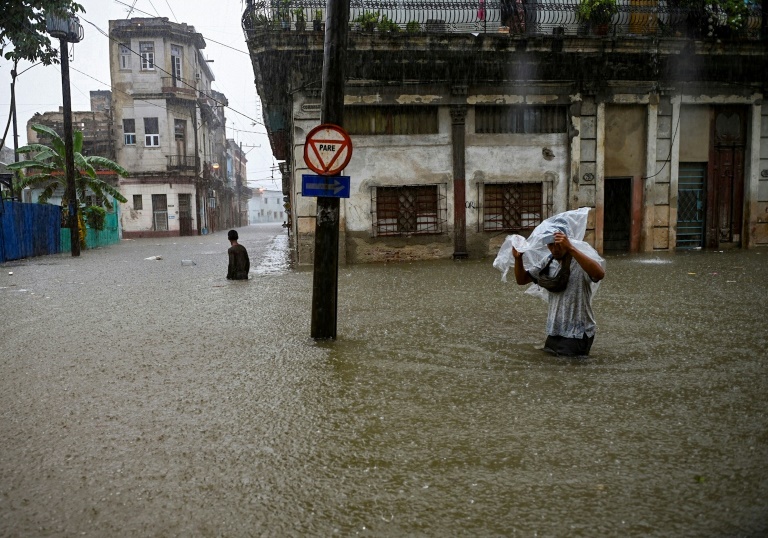
Heavy rains from the remnants of Hurricane Agatha flooded much of western Cuba on Friday, killing at least three people in Havana.

Thousands of residents in the region lost power and a man in Pinar del Rio province also was missing, Cuban officials said.

“Strong, heavy rain and electrical storms have been affecting the western and central regions of Cuba with accumulations greater than 200 millimeters (eight inches), which will continue for the rest of today and tomorrow, Saturday,” the Cuban Weather Office (INSMET) said.

A 44-year-old man, initially thought missing, was found dead Friday evening in the western province of Pinar del Rio after falling into a stream, according to local news site CubaDebate.

They also reported the disappearance of another person in the region.

Agatha had crashed into southern Mexico with the potential to redevelop as a tropical storm in the Atlantic, the Miami-based US National Hurricane Center had said.

So far, heavy rains “have produced floods in localities from Pinar del Rio (western extreme) to Sancti Spiritus (Center) and in the Isla de la Juventud Special Municipality (south of Havana),” INSMET said.

With parts of the capital flooding, state media images showed rescuers in areas of central Havana evacuating people in canoes. 

Nearly 2,000 people have decided to evacuate their homes, authorities say, while about 50,000 customers in the province of Havana are without electricity.

“People are almost waist-deep in water,” said Luis Antonio Torres, first secretary of the Communist Party of Cuba (PPC) in the capital.

He had visited the municipality of Cerro, one of the most damaged areas, where at least one bridge fell and floodwaters seeped into some homes.

The Atlantic hurricane season begins each year on June 1 and ends on November 30, for the North Atlantic, the Gulf of Mexico and the Caribbean. 

Ukraine claims Russian forces pushed back in east in fierce fighting

Russian artillery slammed Ukraine’s eastern Donbas region with fierce fighting over the city of Severodonetsk, but the local governor said there was some progress in pushing back invading forces.

More than 100 days since President Vladimir Putin ordered Russian troops into Ukraine, thousands of people have been killed, millions sent fleeing and towns turned into rubble.

The advance of Russian forces has been slowed by stiff Ukrainian resistance, repelling them from around the capital Kyiv and forcing Moscow to focus on capturing the east, including the Donbas.

Some of the fiercest fighting has been centred on Severodonetsk, where Ukrainian troops are resisting a complete takeover.

“They (Russians) didn’t seize it fully,” Lugansk regional governor Sergiy Gaiday said Friday, saying the invading forces had been pushed back “20 percent”.

“As soon as we get a big amount of Western long-range weapons, we will push their artillery back… and then Russian infantry will run.”

Ukrainian troops were still holding an industrial zone in Severodonetsk, Gaiday had said, a scenario reminiscent of Mariupol, where a steelworks was the port city’s last holdout.

The situation in Lysychansk — Severodonetsk’s twin city, which sits just across a river — looked increasingly dire.

About 60 percent of infrastructure and housing had been destroyed, while internet, mobile networks and gas services had been knocked out, said its mayor Oleksandr Zaika.

In the city of Sloviansk, about 80 kilometres (50 miles) from Severodonetsk, the mayor has urged residents to evacuate in the face of intense bombardment, with water and electricity cut off.

“The situation is getting worse,” student Gulnara Evgaripova told AFP as she boarded a minibus to leave the city.

Ekaterina Perednenko, a paramedic, said: “I am scared that there will be nothing to come back to.”

– ‘Shame and hatred’ –

Russian troops now occupy a fifth of Ukraine’s territory and Moscow has imposed a blockade on its Black Sea ports.

But Ukrainian President Volodymyr Zelensky was defiant on Friday.

“Victory will be ours,” he said in a video speech.

Later, in his nightly address, he dismissed the Russian army. 

“At first it looked threatening. Then dangerous… And now probably just a bitter smile,” he said.

“Because what’s left of it? … War crimes, shame and hatred.”

But Kremlin spokesman Dmitry Peskov said “certain results have been achieved”, pointing to the “liberation” of some areas from what he called the “pro-Nazi armed forces of Ukraine”.

The West has sent ever-more potent weapons to Ukraine and piled on ever more stringent sanctions against Moscow, with the European Union on Friday formally adopting a ban on most Russian oil imports.

Putin’s alleged girlfriend, former gymnast Alina Kabaeva, was also added to an assets freeze and visa-ban blacklist.

– Food crisis –

The war has sparked fears of a global food crisis — Ukraine and Russia are among the top wheat exporters in the world.

The United Nations said it was leading intense negotiations with Russia to allow Ukraine’s grain harvest to leave the country.

Putin in a televised interview Friday said there was “no problem” to export grain from Ukraine, via Kyiv- or Moscow-controlled ports or even through central Europe.

The UN has warned that African countries, which imported more than half of their wheat consumption from Ukraine and Russia, face an “unprecedented” crisis.

Food prices in Africa have already exceeded those in the aftermath of the 2011 Arab Spring uprisings and the 2008 food riots.

On Friday, Putin met the head of the African Union, Senegalese President Macky Sall, at his Black Sea residence in Sochi.

After the meeting, Sall said he was “very reassured”, adding that Putin was “committed and aware that the crisis and sanctions create serious problems for weak economies”.

French President Emmanuel Macron, meanwhile, said Putin had made a “historic” error in starting the war.

But he said the Russian leader should not be “humiliated”, and to leave room for diplomacy.

– Media driver killed –

A driver transporting two Reuters journalists in eastern Ukraine was killed and the two reporters were lightly wounded, a spokesman for the international news agency said.

A French volunteer fighter in Ukraine was also killed in combat, the French foreign ministry said Friday.

In areas around the capital Kyiv, which Russian troops retreated from at the end of March, some residents remain in desperate need of assistance.

At an aid distribution point in Horenka, northwest of Kyiv, a tearful Hanna Viniychuk, 67, said she had come for some basic necessities after losing her home to Russian bombardment.

“I’m grateful for this help,” she said.

burs-qan/mtp

Why US gun violence spikes in warm weather

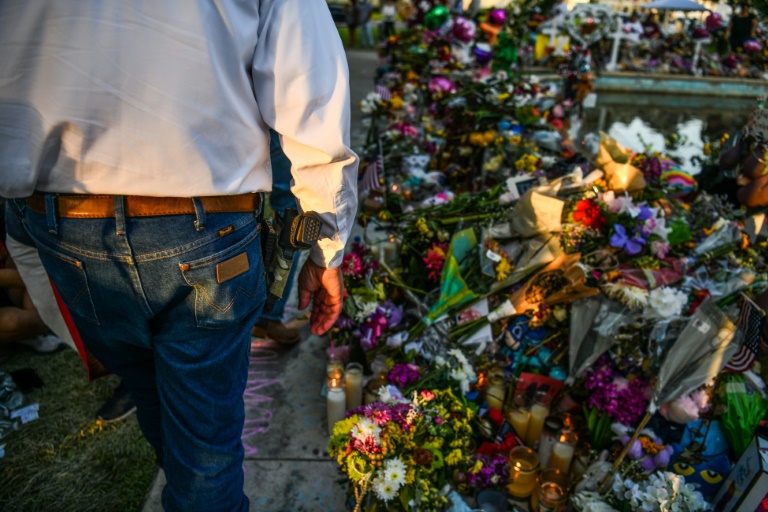
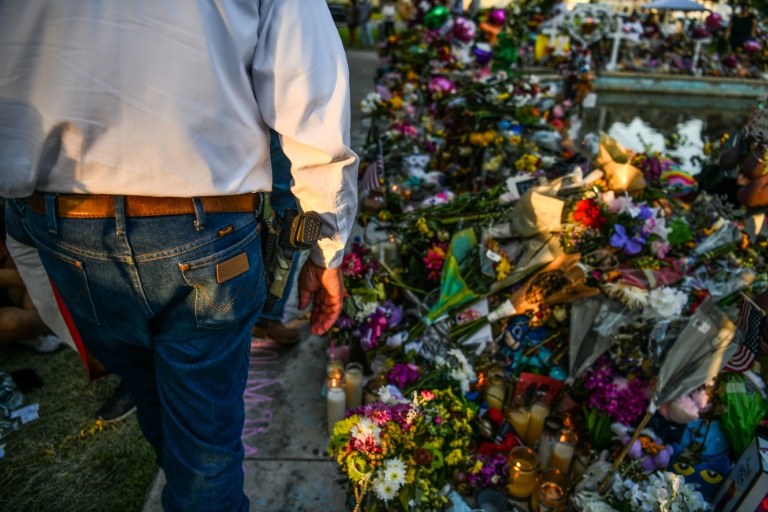
From the Texas school massacre to a Tulsa hospital shooting and many less-reported incidents, a recent spate of gun violence across America bears out a trend police departments have long sworn by: murders go up in warmer weather.

The link has been written about for decades by criminologists, with more recent research drilling down on the precise relationship between temperature and crime rates.

For those who have studied the question, there are common sense as well as potentially less obvious mechanisms at play.

First, the more obvious: “It’s hard to shoot somebody if there’s nobody around,” David Hemenway, a professor of health policy at the Harvard TH Chan School of Public Health, told AFP, explaining why gun crime is lower in bad weather.

A second, more controversial idea is that heat itself — as opposed to weather that encourages people to be out — might rev up conflict.

While there are many causes behind the rising tide of gun violence in the United States, weather could play an increasingly important role in world that is fast warming due to climate change.

– Warm days in cold months – 

Hemenway said he had long been interested in the relationship between heat and higher crime given stereotypes about the north-south divide within the United States and Italy, as well as between the northern European states of Scandinavia and southern Mediterranean countries.

In 2020, he co-wrote a paper in Injury Epidemiology led by his then-graduate student Paul Reeping examining the city of Chicago between 2012 and 2016.

The paper used reports from the Chicago Tribune to get the number of shootings per day, and then matched those against daily high temperature, humidity, wind speed, difference in temperature from historical average, and precipitation type and amount.

They found a 10 degree Celsius higher temperature was significantly associated with 34 percent more shootings on weekdays, and 42 percent more shootings on weekends or holidays. 

They also found a 10C higher than average temperature was associated with 33.8 percent higher rate of shootings.

In other words, said Hemenway, it’s not just heat that’s important, but relative heat: “In the winter, there were more shootings on those days which wouldn’t have been hot in the summer but were warm for winter.”

Another recent paper, led by Leah Schinasi of Drexel University and published in the Journal of Urban Health in 2017, looked at violent crime in Philadelphia.

“I live in Philadelphia, and I remember biking home from work on a very hot day and observing how cranky everyone seemed. I was interested to see if this observation translated to higher rates of crime on hot days,” she told AFP.

She and co-author Ghassan Hamra did indeed find violent crimes happened more often in the warmer months — May through September — and were highest on the hottest days.

The contrast was most striking on comfortable days in the colder months — October through April — compared to colder days in those months. 

When temperatures reached 21C (70F) during that time period, daily rates of violent crime were 16 percent higher compared to 6C (43F) days, the median for those months.

–  ‘Harm reduction’ –

Hemenway believes that both of the main hypotheses on the subject — that more people being outside opens more possibilities of hostile interactions, and that heat itself makes people more aggressive — could be true.

A striking study published by the National Bureau of Economic Research in 2019 involved placing university students in Kenya and California in either hot or cold rooms and measuring the impact on a number of behavioral categories.

It found “heat significantly affects individuals’ willingness to voluntarily destroy other participants’ assets” in the form of gift cards and vouchers.

When it comes to the overall issue of gun violence, there are far bigger drivers than temperature, Hemenway acknowledged.

These include the fact there were an estimated 393 million guns in circulation in the United States in 2020, more than the number of people, while many states have moved in recent years to ease rather than toughen restrictions.

But better understanding the relationship with weather could have policy implications — for example finding more activities for young males to keep them off street corners on the hottest summer days, and boosting police presence in key areas based on forecasts.

“It’s sort of a harm reduction,” said Hemenway. “But even if this wasn’t a gun problem, I suspect we would find the same thing if we had evidence about fights and assaults. What the guns do is make hostile interactions more deadly.”

Why US gun violence spikes in warm weather

From the Texas school massacre to a Tulsa hospital shooting and many less-reported incidents, a recent spate of gun violence across America bears out a trend police departments have long sworn by: murders go up in warmer weather.

The link has been written about for decades by criminologists, with more recent research drilling down on the precise relationship between temperature and crime rates.

For those who have studied the question, there are common sense as well as potentially less obvious mechanisms at play.

First, the more obvious: “It’s hard to shoot somebody if there’s nobody around,” David Hemenway, a professor of health policy at the Harvard TH Chan School of Public Health, told AFP, explaining why gun crime is lower in bad weather.

A second, more controversial idea is that heat itself — as opposed to weather that encourages people to be out — might rev up conflict.

While there are many causes behind the rising tide of gun violence in the United States, weather could play an increasingly important role in world that is fast warming due to climate change.

– Warm days in cold months – 

Hemenway said he had long been interested in the relationship between heat and higher crime given stereotypes about the north-south divide within the United States and Italy, as well as between the northern European states of Scandinavia and southern Mediterranean countries.

In 2020, he co-wrote a paper in Injury Epidemiology led by his then-graduate student Paul Reeping examining the city of Chicago between 2012 and 2016.

The paper used reports from the Chicago Tribune to get the number of shootings per day, and then matched those against daily high temperature, humidity, wind speed, difference in temperature from historical average, and precipitation type and amount.

They found a 10 degree Celsius higher temperature was significantly associated with 34 percent more shootings on weekdays, and 42 percent more shootings on weekends or holidays. 

They also found a 10C higher than average temperature was associated with 33.8 percent higher rate of shootings.

In other words, said Hemenway, it’s not just heat that’s important, but relative heat: “In the winter, there were more shootings on those days which wouldn’t have been hot in the summer but were warm for winter.”

Another recent paper, led by Leah Schinasi of Drexel University and published in the Journal of Urban Health in 2017, looked at violent crime in Philadelphia.

“I live in Philadelphia, and I remember biking home from work on a very hot day and observing how cranky everyone seemed. I was interested to see if this observation translated to higher rates of crime on hot days,” she told AFP.

She and co-author Ghassan Hamra did indeed find violent crimes happened more often in the warmer months — May through September — and were highest on the hottest days.

The contrast was most striking on comfortable days in the colder months — October through April — compared to colder days in those months. 

When temperatures reached 21C (70F) during that time period, daily rates of violent crime were 16 percent higher compared to 6C (43F) days, the median for those months.

–  ‘Harm reduction’ –

Hemenway believes that both of the main hypotheses on the subject — that more people being outside opens more possibilities of hostile interactions, and that heat itself makes people more aggressive — could be true.

A striking study published by the National Bureau of Economic Research in 2019 involved placing university students in Kenya and California in either hot or cold rooms and measuring the impact on a number of behavioral categories.

It found “heat significantly affects individuals’ willingness to voluntarily destroy other participants’ assets” in the form of gift cards and vouchers.

When it comes to the overall issue of gun violence, there are far bigger drivers than temperature, Hemenway acknowledged.

These include the fact there were an estimated 393 million guns in circulation in the United States in 2020, more than the number of people, while many states have moved in recent years to ease rather than toughen restrictions.

But better understanding the relationship with weather could have policy implications — for example finding more activities for young males to keep them off street corners on the hottest summer days, and boosting police presence in key areas based on forecasts.

“It’s sort of a harm reduction,” said Hemenway. “But even if this wasn’t a gun problem, I suspect we would find the same thing if we had evidence about fights and assaults. What the guns do is make hostile interactions more deadly.”

Close Bitnami banner
Bitnami