AFP

Underground abortion group in spotlight, 50 years on

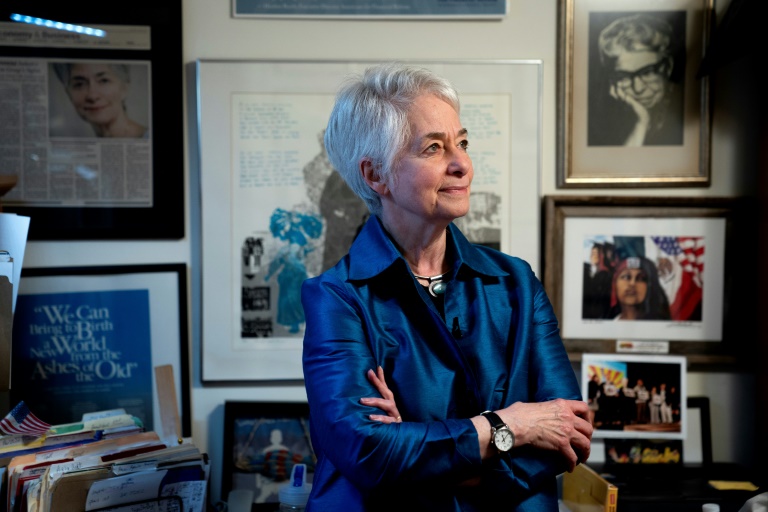
Heather Booth was a student in Chicago in 1965 when she received a call from a friend in need. His sister, he said, was pregnant but not ready to have a child. She was “nearly suicidal.”

Drawing on her contacts in the city, Booth helped the young woman find a doctor willing to perform an illegal abortion — in what she believed would be a one-off “act of goodwill.”

“But word must have spread,” the 76-year-old said in an interview from her home in Washington, more than half a century later.

That one act would grow into an underground network of women called “Jane,” whose members helped end thousands of unwanted pregnancies, safely and without stigma — eventually performing 11,000 abortions themselves.

By January 22, 1973 — when the US Supreme Court’s landmark Roe v. Wade decision created a nationwide right to abortion — seven “Jane” members were awaiting trial.

One of them was Martha Scott, who at the age of 80 — and with the court now expected to repeal that right — looks back defiantly on her decision to break the law many years ago.

“I felt very strongly… that we are doing this illegal thing because it is important to do, because it can’t be done legally,” Scott said in a video interview from her home in Chicago.

“We were just ladies down the street,” she said, but “bad laws require you to choose to act in ways that may be a little risky.”

– ‘Caring community’ –

Booth and Scott, whose journey with the “Janes” is spotlighted in an upcoming HBO documentary, have stark memories of the time before Roe — when desperate women would harm themselves attempting to end their pregnancies.

“Some were taking lye (a caustic ingredient in soap), some were using a coat hanger,” said Booth. “Some were doing damage to themselves, throwing themselves down stairs or off a rooftop.”

Without alternatives, women sought out abortions from illegal providers, many of whom were motivated by profit or unscrupulous in other ways, with little concern for women’s health.

Eleanor Oliver, another former member of the network, said when she sought an illegal abortion in Washington, she was told the doctor might want her to be “a little cozier and friendlier than just a patient.”

Fortunately, said the now-84-year-old Oliver, “he was very businesslike, very official.”

As word got out that Booth could help women get a safe abortion, more and more began contacting her — and she recruited others to help.

To be discreet, they told callers to leave a message for “Jane” — and the group, established as a “caring community,” was born.

After some time, the group discovered their abortionist was not a licensed doctor — a shock that led some members to leave.

But others, said Scott, realized that if a man without professional training could learn how to safely perform abortions, so could they.

– ‘Furious’ –

In May 1972, the police barged into the apartment where the “Jane” collective was operating.

“They kept saying ‘So where’s the doctor?’…’‘Where’s the guy who’s doing abortions?'” recalled Scott, who was in one of the bedrooms-turned-surgeries.

“Well, of course, it wasn’t any guy who was doing abortions… we were doing abortions.”

She and six others were rounded up and taken to jail, where they spent the night — before being released pending trial.

In the wake of Roe v. Wade, the charges against the “Janes” were dropped, and the group disbanded.

Half a century later, though, their work appears relevant all over again, after a leak revealed that the Supreme Court is seriously considering a full reversal of Roe.

Scott was “furious, just furious” at the news — but “not surprised” either, in light of former president Donald Trump’s nomination of three anti-abortion conservative justices, tilting the bench decisively to the right.

If the nationwide right to abortion is struck down — leaving states free to enact “dangerous” restrictions — Scott expects a new generation of activists will need to step up.

“What we need to do is use every tool at our disposal,” echoed Booth.

While conservative-led states are expected to drastically curb abortion rights if given free rein, it would remain legal in many other states — “islands in the storm,” as Booth calls them.

Some, like Illinois, have already moved to loosen their abortion restrictions in anticipation of the Supreme Court decision.

The poorest women — less able to travel out of state — will be the hardest-hit, as seen in Texas where abortions after six weeks have already been effectively banned.

But new medication can safely induce abortions up to 10 weeks into a pregnancy and — though it would still be illegal — can easily be sent through the mail.

And so, Scott and Booth hold out hope that the United States will not be going back to the dark days of back-alley abortions. 

“The abortions won’t stop,” Booth said, citing data that shows one in four American women will terminate a pregnancy at some point in their lifetime.

“It’s not rare, and it needs to be safe.” 

Dutch port's rooftop walk shows post-climate future

As one of the world’s most densely populated countries grapples with climate change, the Dutch are taking to their rooftops.

An organisation in the port city of Rotterdam has built a skywalk linking the roofs of the downtown shopping area to show what the future might look like.

From a village to food cultivation and rainwater storage areas, the “Rooftop Days” association is showing how to unlock the unused space of Europe’s biggest port.

“We want people to experience how great it is to be on a rooftop and what space we have there above the city,” Rooftop Days director Leon van Geest told AFP.

“We are only using three percent of the full potential of the flat rooftops that we have here in our city.”

The bright orange skywalk runs for some 600 metres (1,969 feet), with a heart-stopping “airbridge” section linking the city’s World Trade Centre to a department store, at 29.5 metres above street level.

The walk, which is open until June 24, also features wind turbines, solar panels, art galleries and a drone landing pad. 

If the city authorities give approval for a full-scale rooftop village in future, it is expected to include crops and tiny houses built of sustainable materials. 

– ‘Unique opportunity’ –

With around a third of its land lying below a sea level that creeps higher each year, the Netherlands has become a world leader in adapting to climate change.

The urgency is even greater for the Dutch given that the nation’s 17 million inhabitants are squeezed into Europe’s most densely populated country after tiny Monaco, the Vatican City, Malta and San Marino.

Known for its architectural daring in the decades after it was flattened during World War II, Rotterdam itself is something of a pioneer for the Netherlands, which only uses some 1.8 percent of its roof space. 

Transforming the city could take decades but van Geest says he is “convinced that this will become a reality”.

As the Dutch population becomes increasingly urban, “space is becoming a rare commodity in the city, so we will have to exploit the roof”, he added.

Rotterdammers are enjoying the change of perspective.

“It is a unique opportunity to see Rotterdam from a higher distance,” approved 69-year-old resident Harry Schouten. 

– ‘Intensive rooftops’ –

The “Rooftop Days” have been going on for six years and the latest highlights some of the most successful ideas for a climate-adapted future. 

These include the “Rooftop Field”, a 1,000-square-metre area on the sixth floor of a building which grows vegetables, fruit and edible flowers.

Founder Emile van Rinsum, director of the Rotterdam Environment Centre, said his organisation created the field nearly 10 years ago on the roof of the building where their offices are located.

“It’s really nice” to work a few staircases away from such a green space in the heart of the Netherlands’ second city, he said.

One of its main purposes is for storing water, as climate change makes seasonal rainfall levels increasingly unpredictable.

“On this roof, we can already store 60,000 litres of water,” Van Rinsum said.

Part of the produce grown there is delivered to eateries in Rotterdam, while a restaurant set up near the field is proving “very popular”.

“We call them ‘intensive rooftops’ on which you can walk or, for example, grow food as we do, and that is very important for a city,” he said.

Baby formula plant linked to US shortage resumes production

Production resumed Saturday at an Abbott Nutrition baby formula plant in the US whose closure helped fuel a crippling nationwide shortage.

The facility in Sturges, Michigan has met initial government sanitary requirements for reopening, the company said in a statement. 

The plant, a major producer of formula, shut down and issued a product recall in February after the death of two babies raised concerns over contamination.

Subsequent shortages were particularly worrying to parents of infants with allergies or with certain metabolic conditions. They desperately scoured stores and online sources for the specialized formulas.

Their concerns became so acute that President Joe Biden met virtually this week with infant-food executives and insisted his administration was doing everything it could to help.

The crisis, coming at a time when soaring inflation and supply-chain delays have fanned a growing sense of unease among many ordinary Americans, has been seized on by Biden critics to question the competence of his administration.

– ‘Working hard’ –

Abbott, which controls about 40 percent of the US baby food market, said Saturday that it was restarting production of its hypoallergenic EleCare formula and that the product should be back on store shelves around June 20.

“We’re also working hard to fulfill the steps necessary to restart production of Similac and other formulas,” Abbott said. “We will ramp production as quickly as we can while meeting all requirements.”

The formula shortages, initially caused by supply chain blockages and a lack of workers due to the pandemic, were exacerbated when Abbott closed its Sturges plant.

The plant was shut down amid complaints the plant lacked adequate protections against contamination from bacteria — complaints echoed after a six-week inspection by US Food and Drug Administration agents.

“Frankly, the inspection results were shocking,” FDA chief Robert Califf told members of a House subcommittee last month.

There was standing water in key equipment that presented “the potential for bacterial contamination,” plus leaks in the roof and a lack of basic hygiene facilities, he said.

But Abbott officials, while apologizing for the formula shortage, have said there is no conclusive evidence linking the formula to infant illnesses or deaths.

For Biden, the issue had blown up into a political maelstrom.

He told reporters Wednesday that he was only informed about the looming problem in early April and that he had pulled all the levers of government to resolve shortages ever since.

“I don’t think anyone anticipated the impact of the shutdown of one facility,” Biden said at a virtual meeting with the executives from five companies helping to take up the slack caused by Abbott’s problems.

“Once we learned the extent of it and how broad it was, it kicked everything into gear,” Biden said.

However, some executives said they had been able to tell immediately in February that a crisis was imminent.

“We knew from the very beginning,” said Robert Cleveland, a senior vice president at Reckitt.

Other executives taking part in the video session represented Gerber, ByHeart, Bubs Australia and Perrigo. Notably absent was anyone from Abbott.

Baby formula plant linked to US shortage resumes production

Production resumed Saturday at an Abbott Nutrition baby formula plant in the US whose closure helped fuel a crippling nationwide shortage.

The facility in Sturges, Michigan has met initial government sanitary requirements for reopening, the company said in a statement. 

The plant, a major producer of formula, shut down and issued a product recall in February after the death of two babies raised concerns over contamination.

Subsequent shortages were particularly worrying to parents of infants with allergies or with certain metabolic conditions. They desperately scoured stores and online sources for the specialized formulas.

Their concerns became so acute that President Joe Biden met virtually this week with infant-food executives and insisted his administration was doing everything it could to help.

The crisis, coming at a time when soaring inflation and supply-chain delays have fanned a growing sense of unease among many ordinary Americans, has been seized on by Biden critics to question the competence of his administration.

– ‘Working hard’ –

Abbott, which controls about 40 percent of the US baby food market, said Saturday that it was restarting production of its hypoallergenic EleCare formula and that the product should be back on store shelves around June 20.

“We’re also working hard to fulfill the steps necessary to restart production of Similac and other formulas,” Abbott said. “We will ramp production as quickly as we can while meeting all requirements.”

The formula shortages, initially caused by supply chain blockages and a lack of workers due to the pandemic, were exacerbated when Abbott closed its Sturges plant.

The plant was shut down amid complaints the plant lacked adequate protections against contamination from bacteria — complaints echoed after a six-week inspection by US Food and Drug Administration agents.

“Frankly, the inspection results were shocking,” FDA chief Robert Califf told members of a House subcommittee last month.

There was standing water in key equipment that presented “the potential for bacterial contamination,” plus leaks in the roof and a lack of basic hygiene facilities, he said.

But Abbott officials, while apologizing for the formula shortage, have said there is no conclusive evidence linking the formula to infant illnesses or deaths.

For Biden, the issue had blown up into a political maelstrom.

He told reporters Wednesday that he was only informed about the looming problem in early April and that he had pulled all the levers of government to resolve shortages ever since.

“I don’t think anyone anticipated the impact of the shutdown of one facility,” Biden said at a virtual meeting with the executives from five companies helping to take up the slack caused by Abbott’s problems.

“Once we learned the extent of it and how broad it was, it kicked everything into gear,” Biden said.

However, some executives said they had been able to tell immediately in February that a crisis was imminent.

“We knew from the very beginning,” said Robert Cleveland, a senior vice president at Reckitt.

Other executives taking part in the video session represented Gerber, ByHeart, Bubs Australia and Perrigo. Notably absent was anyone from Abbott.

Greece evacuates Athens suburb under wildfire threat

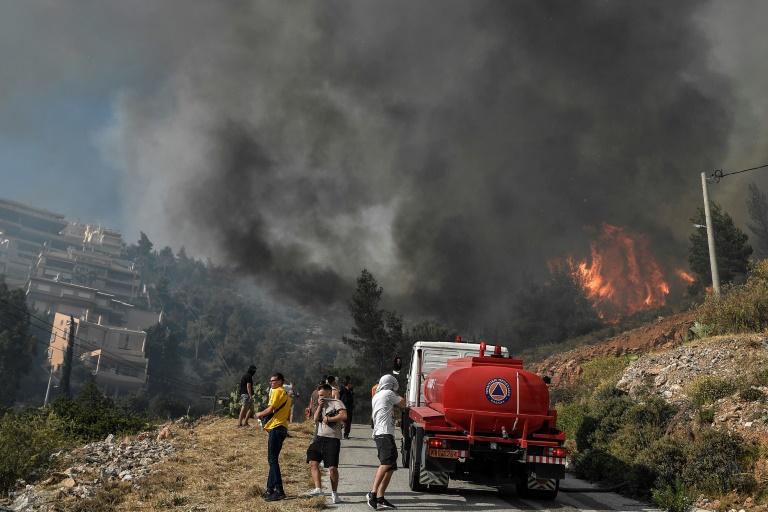
A wildfire whipped by gale-force winds blazed through vegetation in a southern suburb of Athens on Saturday, the fire brigade said, forcing residents to evacuate and damaging about 20 properties.

The Greek Civil Protection agency issued an emergency appeal via SMS for people to leave Ano Voula as the flames reached homes.

Officials reported no casualties but  four more neighbourhoods were evacuated as the wind changed direction and drove the fire front towards the town of Vari, Grigoris Konstantelos, the mayor of Voula, told Skai TV.

Kostantelos said around 20 houses were damaged.

Six water-bombing aircrafts, three helicopters and municipal water tankers supported dozens of firefighters with 20 fire engines.

“The situation is very difficult and the wind does not help,” said Giannis Konstantatos, mayor of  Ellinikon-Argiroupoli, a neighbouring municipality.

“The atmosphere is suffocating, we have difficulty breathing,” he told Athens News Agency.

Police told people to leave their homes in images broadcast by Ant1 TV.

The Fire Brigade told AFP that the wind has dropped a bit so they are hopeful that the fire will slow its pace. 

Skai TV showed footage of a burning house with flames licking inside. 

Giorgos Papanikolaou, the mayor of Glyfada, where the fire first broke out, said it began at a high voltage electricity power station, according to the agency.

Later in the afternoon, a second fire broke out near Athens, in the village of Kouvaras but residential areas were not under threat.

Late in the day, the Fire Brigade told AFP that the wind has dropped raising hopes the spread of the fire will slow.

Last summer, Greece’s most severe heatwave in decades, which authorities blamed on climate change, saw fires destroy more than 100,000 hectares of forest and farmland, the country’s worst wildfire damage since 2007. 

More than 200 firefighters and technical equipment provided by European Union countries will be soon deployed to Greece to help boost the battle against large wildfires.

Bulgaria, Finland, France, Germany, Romania and Norway will take part in the deployment, coordinated by the EU’s Civil Protection Mechanism.

Swiatek brushes aside Gauff to win second French Open title

Iga Swiatek cruised to her second French Open title by dominating teenager Coco Gauff in the final on Saturday, as the world number one claimed her 35th successive victory.

The 21-year-old Polish star stormed to a 6-1, 6-3 win in only 68 minutes on Court Philippe Chatrier, equalling Venus Williams’ record for the longest winning run by a woman in the 21st century.

Swiatek celebrated her sixth straight title this year in the players’ box with her friends and family.

“I told Coco ‘Don’t cry’ and that’s what I am doing. Congrats to Coco,” said an emotional Swiatek.

“You are doing an amazing job. At your age, I was on my first year on tour and I did not know what I was doing. You will find it, I am sure of that.”

A disconsolate Gauff was left sitting on her seat in tears after a nervous performance, punctuated by 23 unforced errors and three double faults.

The 18-year-old American came up short in her bid to become the youngest Grand Slam singles champion since Maria Sharapova won Wimbledon in 2004.

“I want to congratulate Iga, what you’ve done on tour in these past couple of months has been amazing,” said Gauff, as the tears flowed again when she thanked her team.

“I hope we can play in more finals and maybe I can win one… I want to thank my team, I’m sorry I couldn’t get this one today.”

Swiatek, only the 10th woman to win multiple French Opens in the Open era, lost just one set in the tournament — against China’s Zheng Qinwen in the fourth round.

She has now won all three of her career meetings with Gauff, who was playing in her first major final.

Gauff will now turn her attentions to Sunday’s doubles final, where she will face home favourites Caroline Garcia and Kristina Mladenovic alongside compatriot Jessica Pegula.

Swiatek improved her remarkable record in finals, having won her last nine on the WTA Tour.

Swiatek expressed her support for Ukraine during the trophy presentation, despite saying before the final that she does not feel ready to speak about off-court issues.

“I want to say to Ukraine, ‘Stay strong’. The war is still there,” she said, to cheers from the stands.

– Nervous Gauff –

Gauff looked nervous in the opening exchanges and a flurry of unforced errors handed Swiatek a break in the very first game.

The 18th seed found herself 3-0 and a double break down just 16 minutes into the match, as Swiatek’s powerful backhand helped her win a lengthy third game on her fifth break point.

Gauff finally got on the board with a scrappy hold to the delight of the crowd, but she had dropped a set for the first time in the tournament just minutes later.

Swiatek was not playing her best, but a cross-court backhand winner brought up two set points and she took the second opportunity when Gauff fired wide.

The Pole gifted her opponent a potential route back into the match, making four unforced errors to throw away her serve in the first game of the second set.

Swiatek recomposed herself though as the mistakes continued to come from Gauff, breaking back to level at 2-2.

She made it five straight games to move within one of the title, losing only five points in the process.

Gauff dug deep to force Swiatek to serve for the trophy.

But the top seed did just that on her first match point, dropping to the red clay in celebration as Gauff sent a return flying long.

Later Saturday, Marcelo Arevalo of El Salvador became Central America’s first Grand Slam champion when he teamed with Jean-Julien Rojer of the Netherlands to win the men’s doubles title.

The 12th seeds saved three match points in defeating Ivan Dodig of Croatia and Austin Krajicek of the United States 6-7 (4/7), 7-6 (7/5), 6-3 in a little over three hours.

Mariah Carey sued for $20 mn over Christmas smash hit

Mariah Carey has been sued in the United States for alleged copyright infringement over her global hit 1994 song “All I Want for Christmas Is You,” court documents show.

The plaintiff, a musician named Andy Stone, says he co-wrote and recorded a festive song of the same name in 1989 and never gave permission for it to be used.

In the suit filed on Friday in Louisiana, Stone alleges that Carey and her co-writer Walter Afanasieff “knowingly, willfully, and intentionally engaged in a campaign to infringe” his copyright.

He is seeking damages of $20 million for alleged financial loss.

Carey’s song is one of the most successful music singles of all time, topping the charts in more than two dozen countries and enjoying considerable airtime every Christmas.

It features prominently in the 2003 Christmas-themed romantic comedy film “Love Actually.”

The song has sold an estimated 16 million copies worldwide and earned Carey a reported $60 million in royalties over the last three decades.

Stone’s song, released with his band Vince Vance and the Valiants, enjoyed moderate success on Billboard’s country music charts.

Despite having the same titles, the songs sound different and have different lyrics. 

Stone, though, accuses Carey and Afanasieff of aiming to “exploit the popularity and unique style” his song, causing “confusion.”

“Defendants’ unauthorized use of the ‘All I Want for Christmas is You’ in association with their exploitation of the derivative work acts to capitalize on the goodwill and unique talent of Plaintiff in an effort to obtain commercial advantage,” the suit says.

It was unclear why Stone has filed the suit almost 30 years after Carey released her song.

The document states that Stone’s lawyers first contacted Carey and Afanasieff last year but the parties were “unable to come to any agreement.”

Carey’s publicist did not immediately respond to a request for comment from AFP.

It is not uncommon for songs to have the same title. Some 177 works are listed under the title “All I Want for Christmas Is You” on the website of the United States Copyright Office.

Bezos's Blue Origin makes 5th crewed flight into space

Jeff Bezos’s company Blue Origin flew six tourists into space for a 10-minute ride Saturday, successfully carrying out its fifth crewed mission.

The white spacecraft called New Shepard lifted off with a roar from a desert spot in west Texas at 8:26 local time (1326 GMT).

The crew hooted with glee as the rocket reached space, a Blue Origin webcast showed.

The flight included engineer Katya Echazarreta, who at 26 became the youngest American woman in space. The Guadalajara native also became the first Mexican-born woman to go into space.

Her spot was sponsored by Space for Humanity, a program which seeks to democratize access to space and selected her from among 7,000 candidates.

The crew also included the first Brazilian to go into space, Victor Correa Hespanha, as well as businessmen Hamish Harding, Jaison Robinson, Victor Vescovo and Evan Dick.

Dick also flew on New Shepard’s third crewed flight in December.

Ticket prices are a closely guarded secret.

The gumdrop-shaped capsule holding the crew detached from the rocket once the latter took them into the heavens.

The rocket booster part then eased down vertically, letting off a sonic boom at one point, and landed to be reused.

The capsule kept going up until it crossed the so-called Karman line at an altitude of about 100 km (60 miles), which by international convention is considered the boundary between Earth’s atmosphere and space.

At that height the crew experienced weightlessness for a few minutes and could observe Earth’s curvature through big windows in New Shepard.

The capsule then fell back to Earth, with three giant parachutes and retro engines helping it make a gentle landing that kicked up a big cloud of dust.

This flight had been scheduled for May 20 but was delayed because of a problem with one of the spacecraft’s back-up systems. Blue Origin did not give details of the problem.

Blue Origin is a leading player in the nascent space tourism market.

It flew Bezos on its maiden crewed flight in July 2021, and has also flown Star Trek icon William Shatner and Laura Shepard Churchley, the daughter of the first American in space.

Blue Origin’s competitor for this kind of thing is Virgin Galactic.

But since its maiden voyage last July carrying its founder, the business tycoon Richard Branson, the spacecraft has stayed on the ground to undergo modifications.

Bezos's Blue Origin makes 5th crewed flight into space

Jeff Bezos’s company Blue Origin flew six tourists into space for a 10-minute ride Saturday, successfully carrying out its fifth crewed mission.

The white spacecraft called New Shepard lifted off with a roar from a desert spot in west Texas at 8:26 local time (1326 GMT).

The crew hooted with glee as the rocket reached space, a Blue Origin webcast showed.

The flight included engineer Katya Echazarreta, who at 26 became the youngest American woman in space. The Guadalajara native also became the first Mexican-born woman to go into space.

Her spot was sponsored by Space for Humanity, a program which seeks to democratize access to space and selected her from among 7,000 candidates.

The crew also included the first Brazilian to go into space, Victor Correa Hespanha, as well as businessmen Hamish Harding, Jaison Robinson, Victor Vescovo and Evan Dick.

Dick also flew on New Shepard’s third crewed flight in December.

Ticket prices are a closely guarded secret.

The gumdrop-shaped capsule holding the crew detached from the rocket once the latter took them into the heavens.

The rocket booster part then eased down vertically, letting off a sonic boom at one point, and landed to be reused.

The capsule kept going up until it crossed the so-called Karman line at an altitude of about 100 km (60 miles), which by international convention is considered the boundary between Earth’s atmosphere and space.

At that height the crew experienced weightlessness for a few minutes and could observe Earth’s curvature through big windows in New Shepard.

The capsule then fell back to Earth, with three giant parachutes and retro engines helping it make a gentle landing that kicked up a big cloud of dust.

This flight had been scheduled for May 20 but was delayed because of a problem with one of the spacecraft’s back-up systems. Blue Origin did not give details of the problem.

Blue Origin is a leading player in the nascent space tourism market.

It flew Bezos on its maiden crewed flight in July 2021, and has also flown Star Trek icon William Shatner and Laura Shepard Churchley, the daughter of the first American in space.

Blue Origin’s competitor for this kind of thing is Virgin Galactic.

But since its maiden voyage last July carrying its founder, the business tycoon Richard Branson, the spacecraft has stayed on the ground to undergo modifications.

Ukraine says Russia using 'all its power' to capture eastern city

Ukraine said Saturday its forces were managing to push back against Russian troops in fierce fighting in Severodonetsk despite Russia “throwing all its power” into capturing the strategic eastern city.

At least seven civilians were reported killed in the Lugansk region where Severodonetsk is located and in the southern city of Mykolaiv, while a revered wooden church was reported to be on fire because of the fighting.

Lugansk regional governor Sergiy Gaiday said in an interview posted online that the invading forces had captured most of Severodonetsk, but that the Ukrainian military was pushing them back.

“The Russian army, as we understand, is throwing all its power, all its reserves in this direction,” said Gaiday, who on Friday claimed Ukrainian troops had managed to win back a fifth of the city.

Russia’s army however claimed some Ukrainian military units were withdrawing from the city.

The press service of Ukraine’s presidential office said that “street fighting” was continuing in Severodonetsk and “assault operations are underway” in an industrial part of the city.

Severodonetsk is the largest city still in Ukrainian hands in the Lugansk region, where Russian forces have been gradually advancing in recent weeks after retreating or being repelled from other areas, including around the capital Kyiv.

Thousands of people have been killed, millions forced to flee and towns turned into rubble since Russian President Vladimir Putin ordered an all-out assault on his pro-Western neighbour on February 24.

Western powers have slapped increasingly stringent sanctions on Russia and supplied arms to Ukraine but divisions have emerged on how to react.

French President Emmanuel Macron on Friday said Putin had committed a “fundamental error” but said Russia should not be “humiliated” so that a diplomatic solution could be found.

Ukrainian Foreign Minister Dmytro Kuleba reacted on Saturday saying such calls “only humiliate France” and any country taking a similar position.

“It is Russia that humiliates itself. We all better focus on how to put Russia in its place. This will bring peace and save lives,” he said.

– Foreign volunteers killed –

Regardless of diplomatic efforts, the conflict has raged in the south and east of the country.

Ukrainian officials on Saturday announced the death of four foreign military volunteers fighting Russian forces but did not specify when or under what circumstances they died.

The International Legion of Defence of Ukraine, an official volunteer brigade, named the men and published photos of them, saying they were from Germany, the Netherlands, Australia and France.

The deaths of the two men named from the Netherlands and Australia had already been reported and France’s foreign ministry on Friday said a French volunteer fighter had been killed in combat.

Ukraine also reported two victims from a Russian missile strike on Odessa in the southwest, without specifying if they were dead or injured.

Russia’s defence ministry said it had struck a “deployment point for foreign mercenaries” in the village of Dachne in the Odessa region.

It also claimed a missile strike in the northeastern Sumy region on an artillery training centre with “foreign instructors”.

Apart from the human toll, the conflict has caused widespread damage to Ukraine’s cultural heritage.

On Saturday, Ukrainian officials reported that a large Orthodox wooden church, a popular pilgrim site, was on fire and blamed Russian forces.

Russia continues to prove “its inability to be part of the civilized world,” Culture Minister Oleksandr Tkachenko said in a statement.

Russia’s defence ministry blamed “Ukrainian nationalists” for the blaze and said its forces were not operating in the area.

The church was built in 2009 on the site of another church that was blown up in 1947.

– Grain exports ‘no problem’? –

Russian troops now occupy a fifth of Ukraine’s territory and Moscow has imposed a blockade on its Black Sea ports.

The blockade has sparked fears of a global food crisis since Ukraine and Russia are among the top wheat exporters in the world.

The United Nations said it was leading intense negotiations with Russia to allow Ukraine’s grain harvest to leave the country.

Putin in a televised interview Friday said there was “no problem” to export grain from Ukraine, via Kyiv- or Moscow-controlled ports or even through central Europe.

The UN has warned that African countries, which normally import more than half of their wheat consumption from Ukraine and Russia, face an “unprecedented” crisis.

Food prices in Africa have already exceeded those in the aftermath of the 2011 Arab Spring uprisings and the 2008 food riots.

On Friday, Putin met the head of the African Union, Senegalese President Macky Sall, at his Black Sea residence in Sochi.

After the meeting, Sall said he was “very reassured”, adding that Putin was “committed and aware that the crisis and sanctions create serious problems for weak economies”.

burs-dt/ah

Close Bitnami banner
Bitnami